Some insights via the University Factbook…
– Cornell’s enrollment has grown markedly from 2002-2012, from 19,575 to 21,424 students.

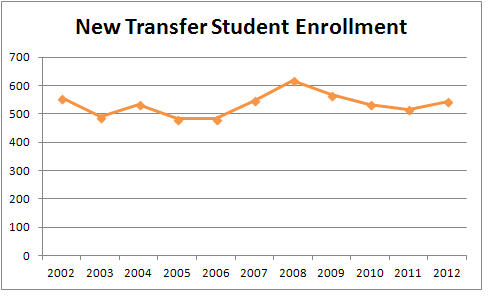
Which is not really the result of increases in undergrad transfers, which show no long-term trend (stays near 550, give or take a few percent).
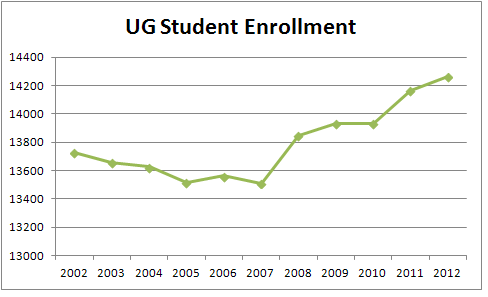
Although UG enrollment has increased 3.9% over the decade (from 13,725 in 2002 to 14,261 in Fall 2012). In effect, undergrads aren’t the major growth component here.
Haha, of course not. Undergrads often require aid. And the proportion of the student population receiving aid has increased over the decade, from 48 to 57 percent:

Worth noting, the primary jump, from 2007 to 2009 (46.73% to 56,49%) ties in pretty well with the enactment of Cornell then-new financial aid policy, and the economic nosedive of the late 2000s.
The growth comes from our workhorses – the grad students, many of whom have stipends and tuition waivers in return for their TA/RA work:

…and our cashcows, the professional students like those pursuing law degrees and MBAs, and paying out for those degrees (Fall 2013 values $57,270/yr and $55,948/yr respectively). Yes, I’m aware many business pay for their employees to get MBAs, but the point is, someone’s ponying up the cash.

Grad students increased from 4288 to 5049 over 10 years (+17.75%) and professional students from 1562 to 2114 (+35.34%).
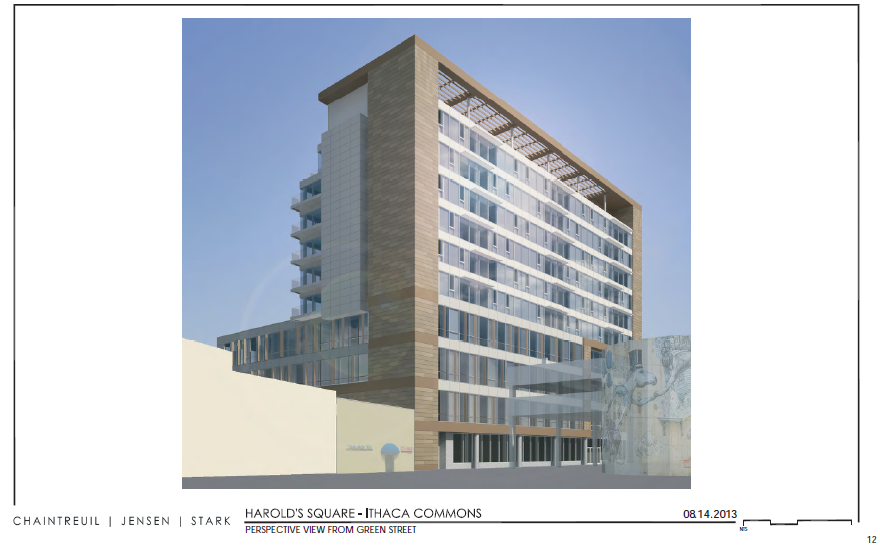
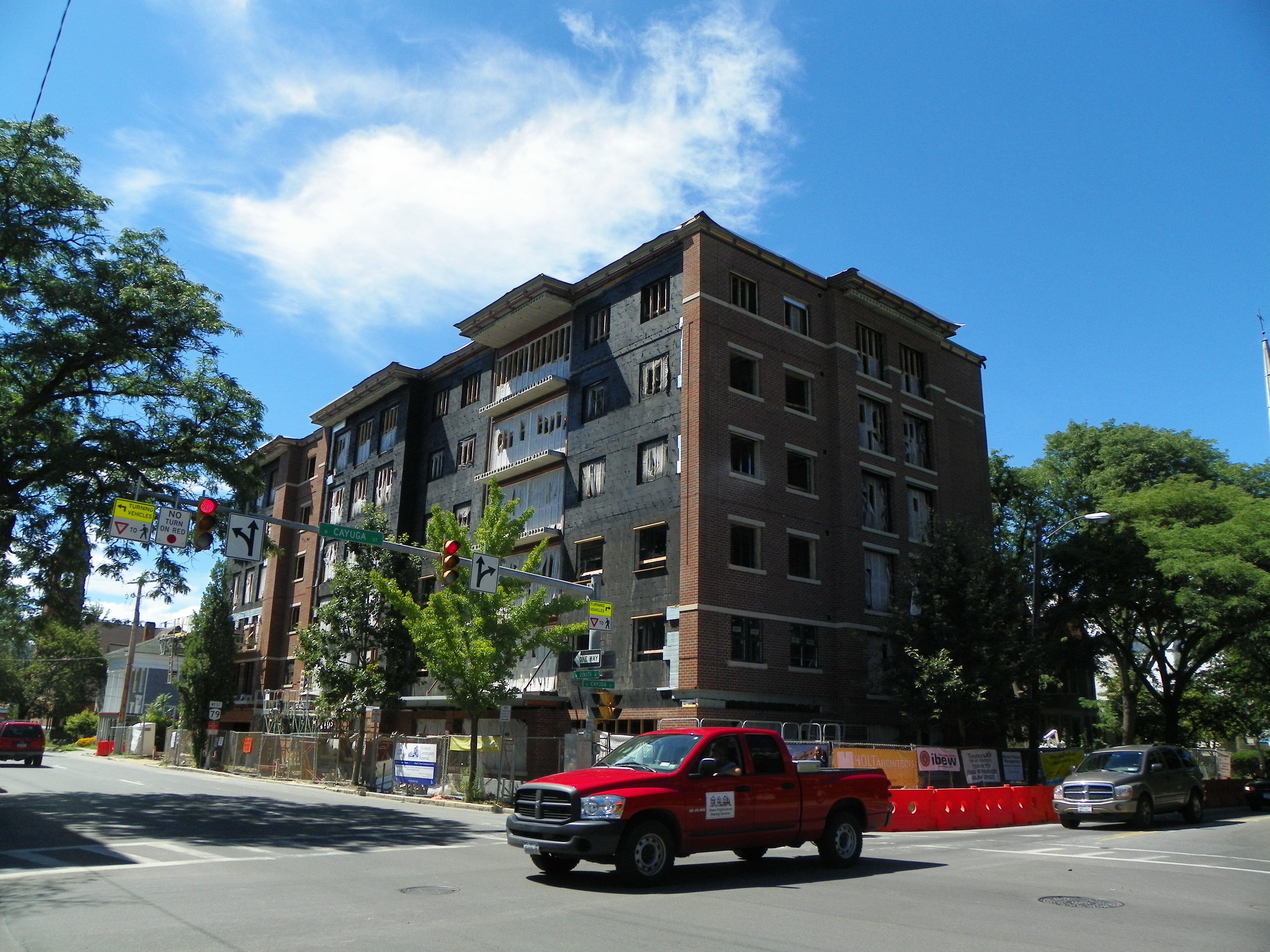
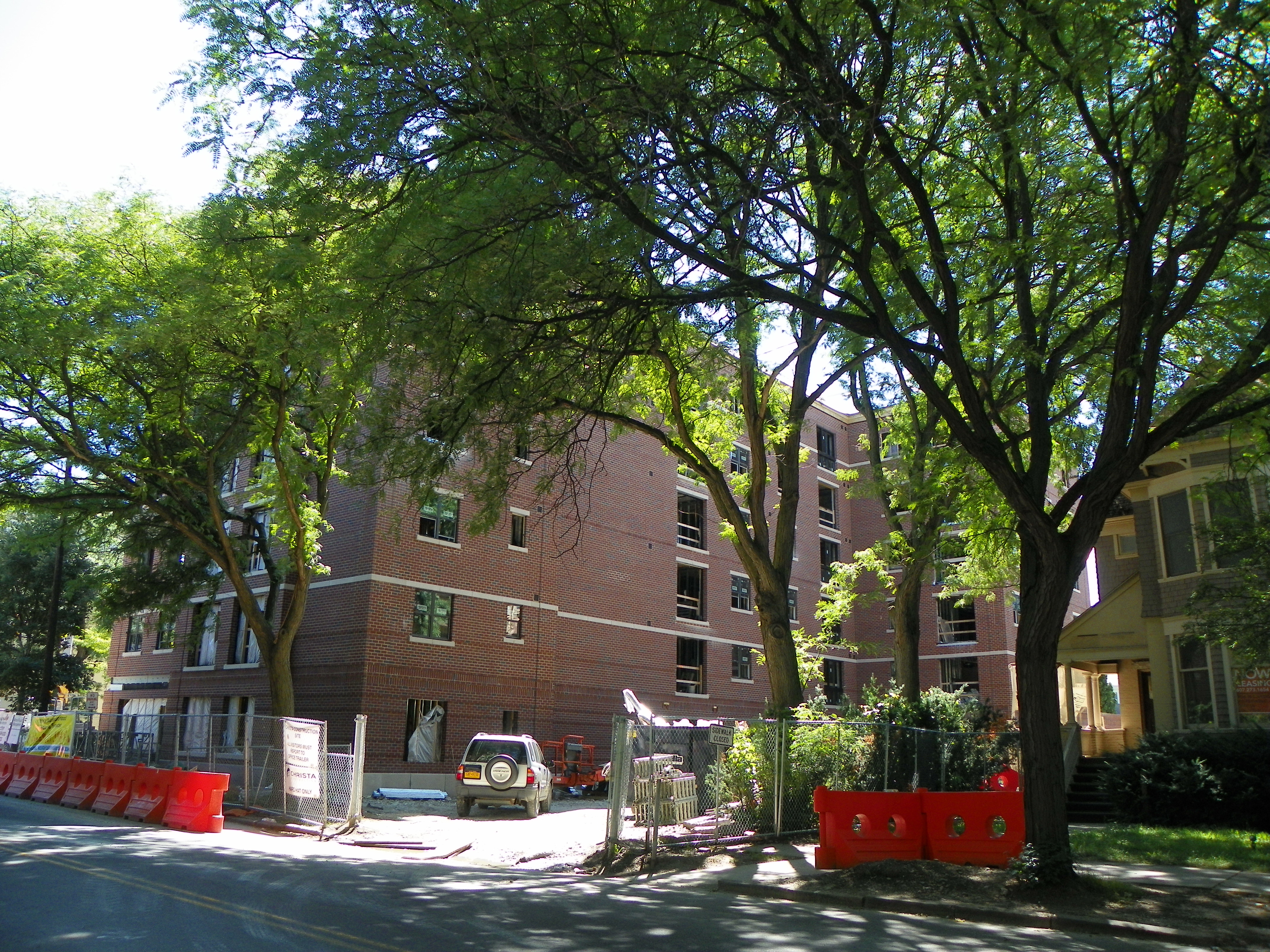
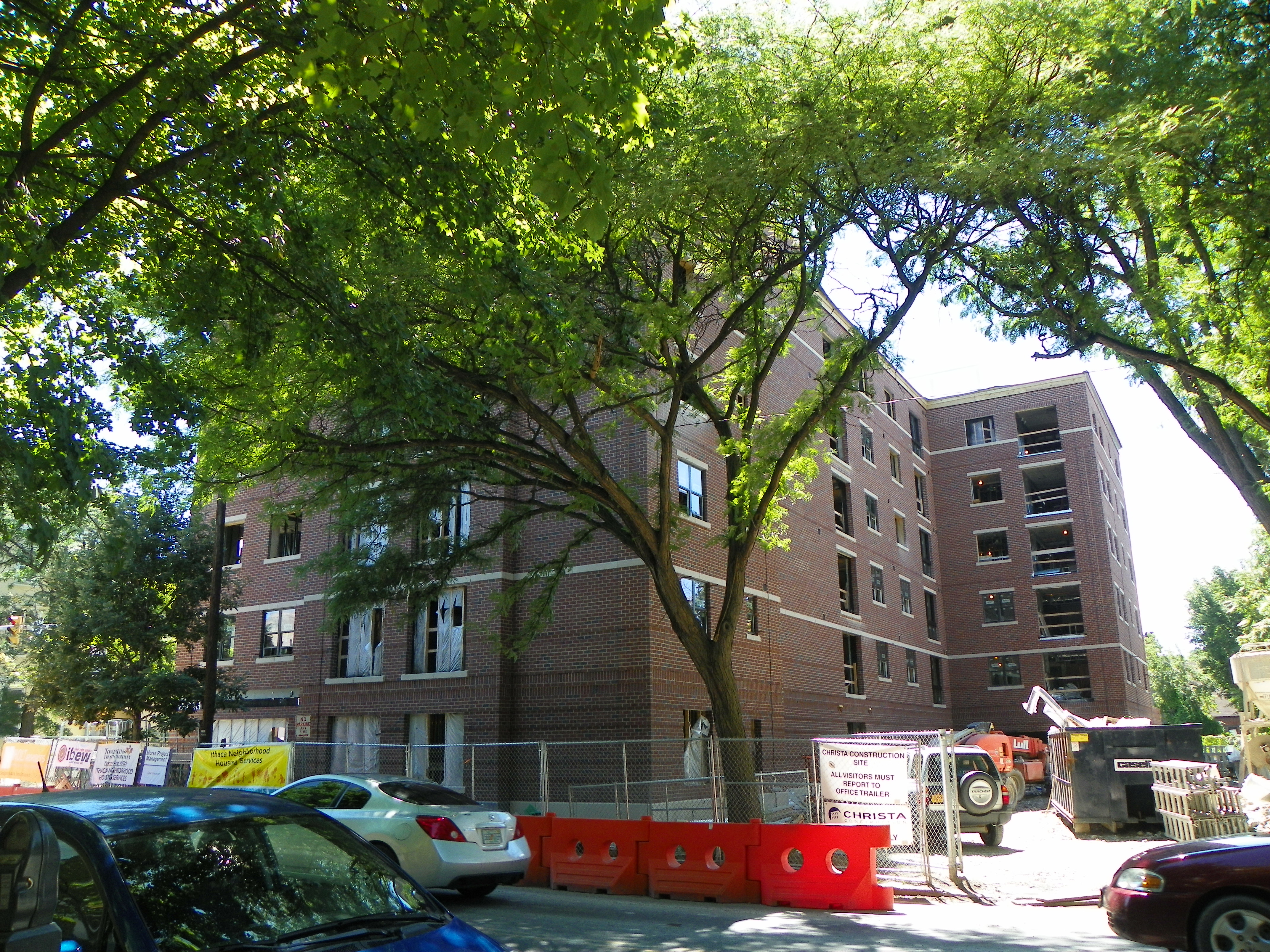
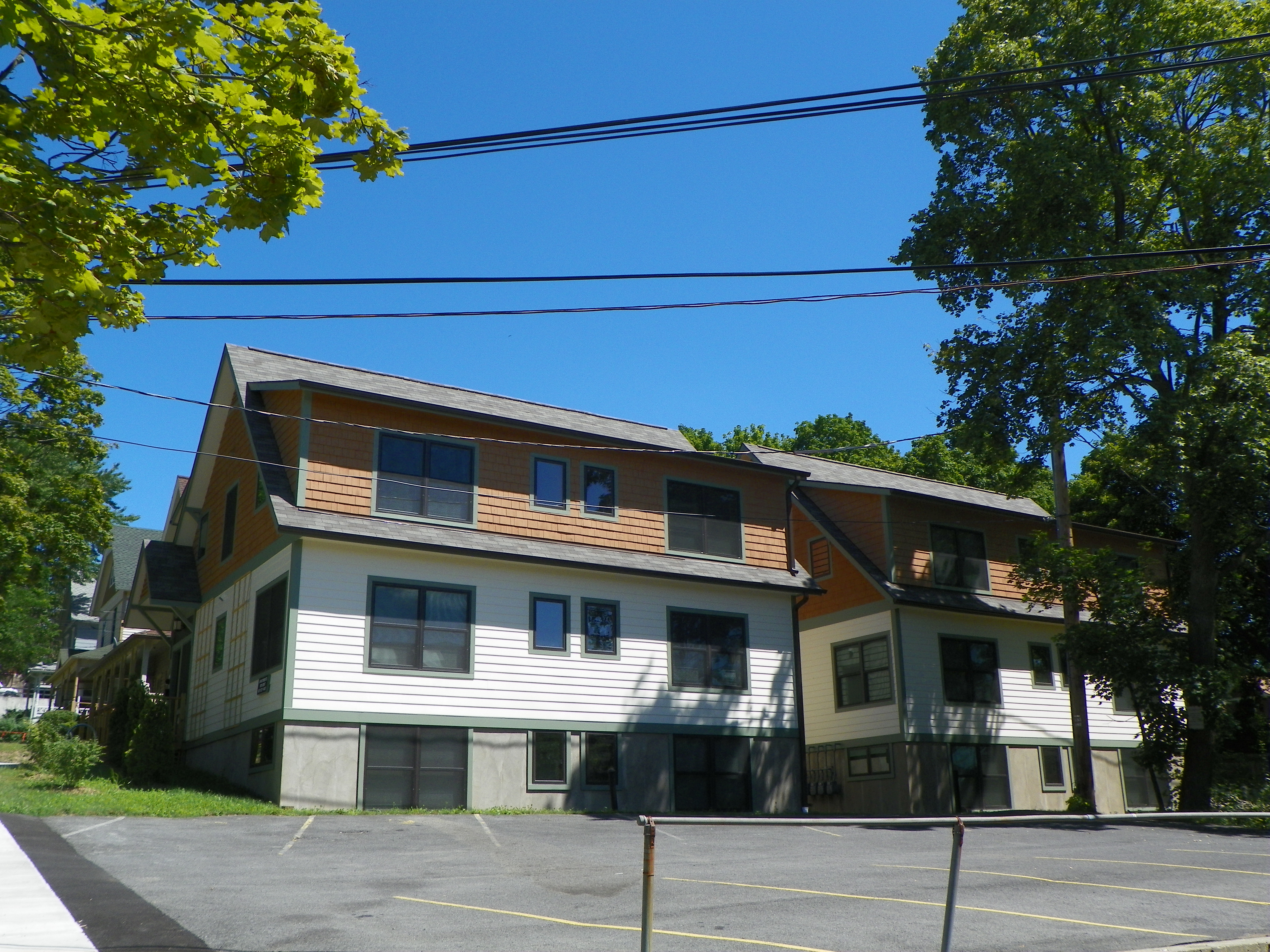
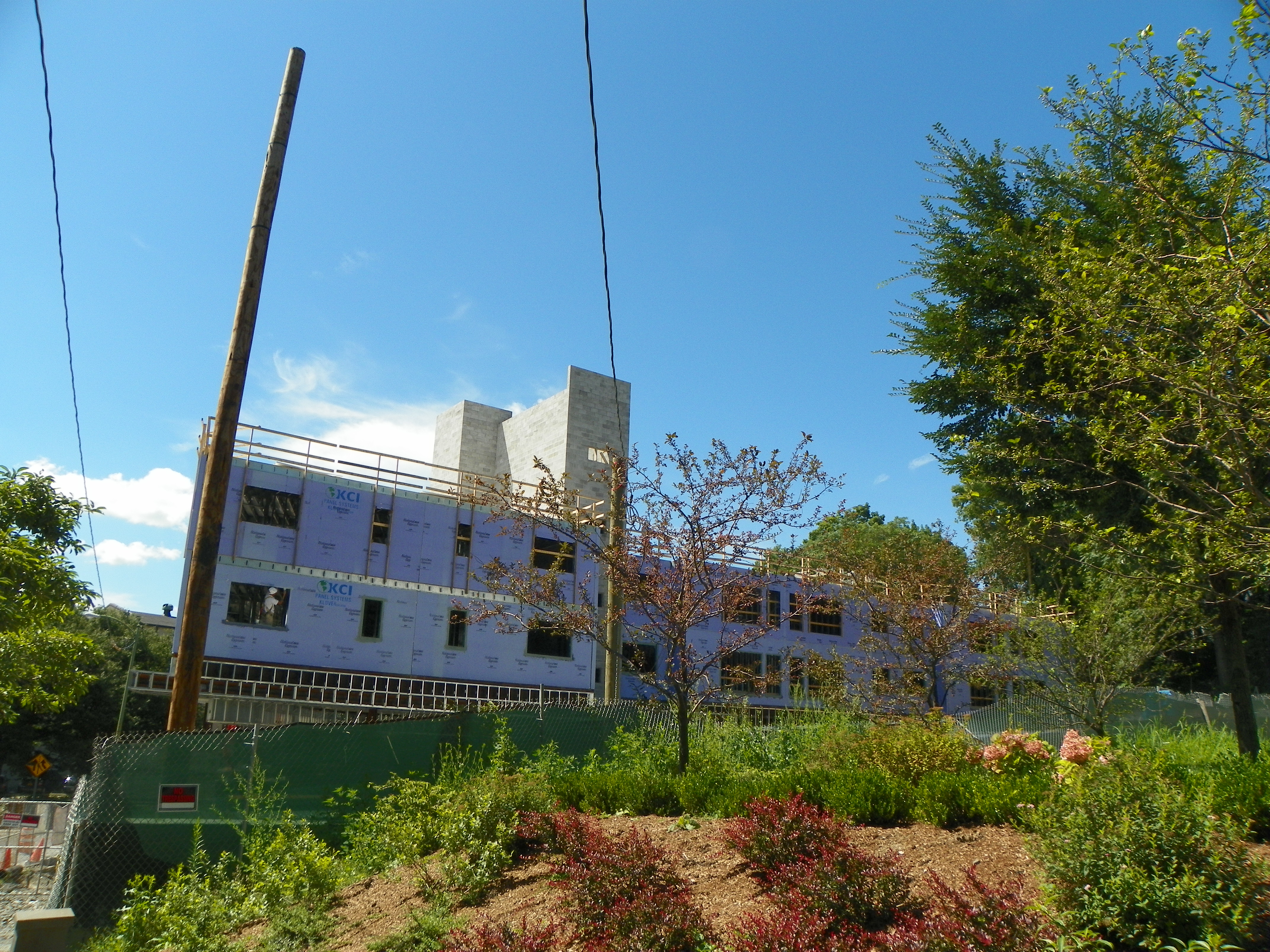
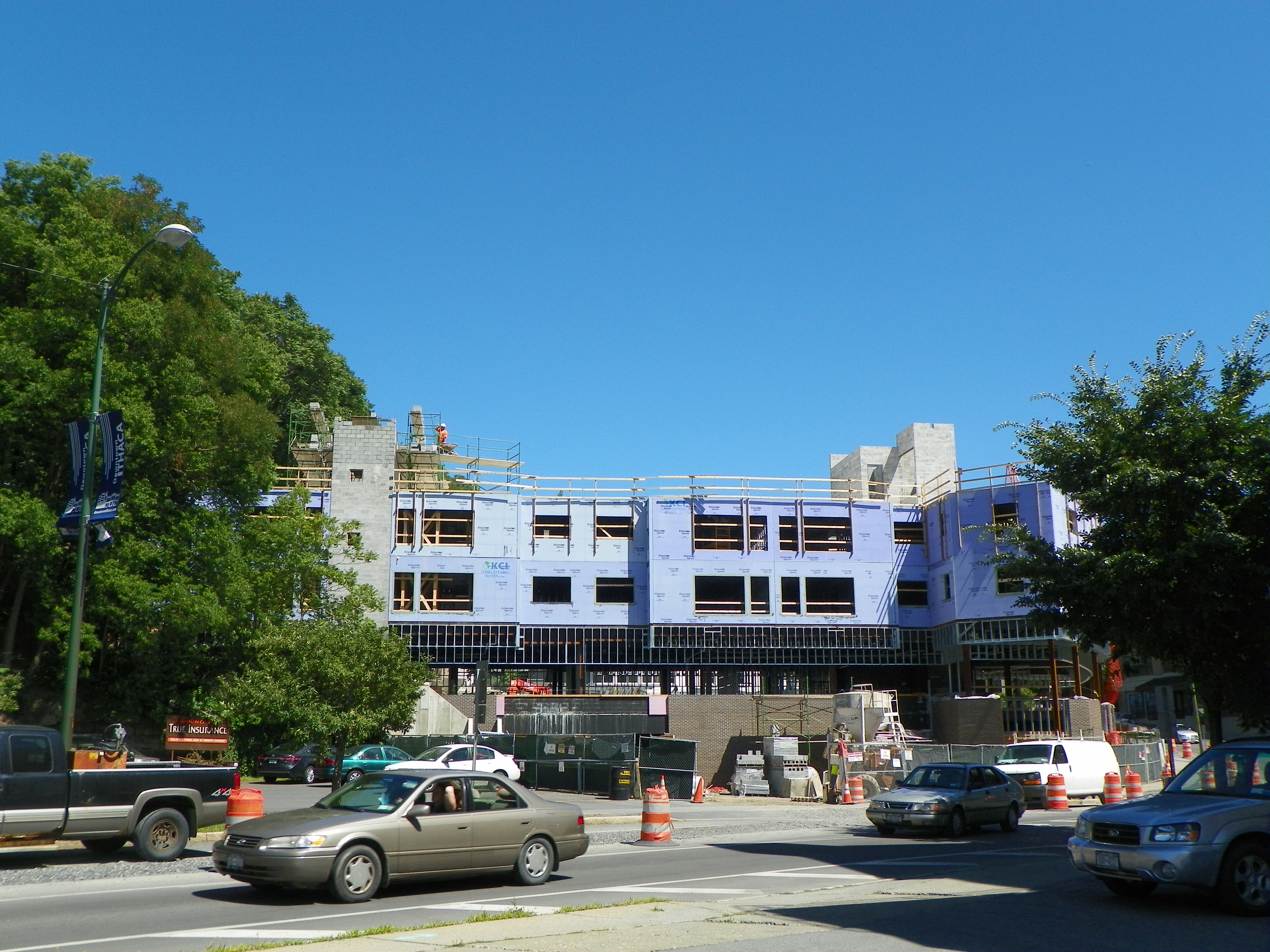
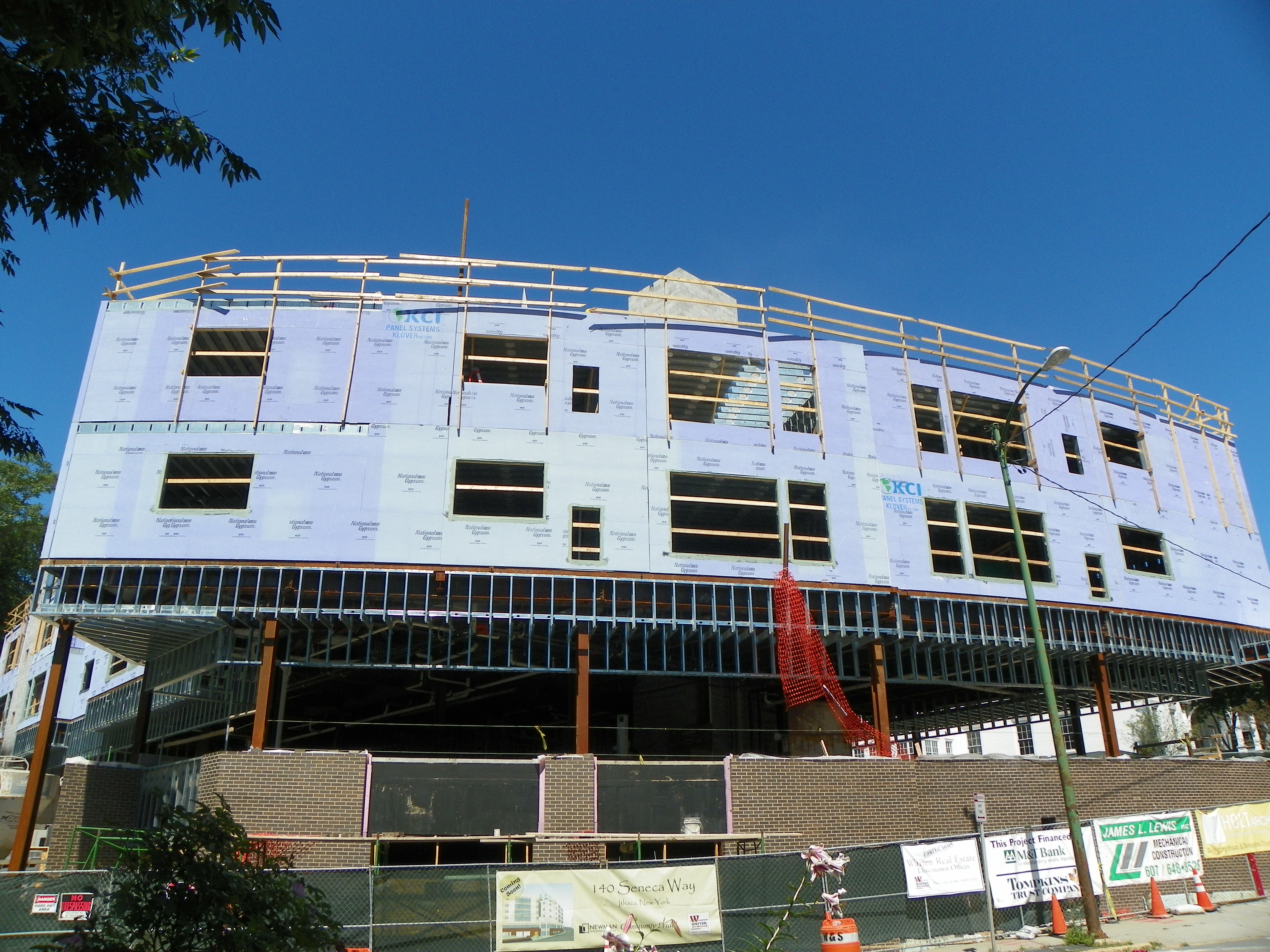
In tying in to the other theme of this blog, all those grad students and professional students have to be housed somewhere, and only a very small number can find space on campus. There you go Ithaca real estate developers, there’s another positive factor in your growing market. Assuming the 2.0 figure for the average number of unrelated people sharing a unit. you get 925 units. West Campus added no new beds, so I’m pretty sure the on-campus resident population from 2002-2012 was nearly static.






 Ithacating in Cornell Heights
