Ithaca Construction Isn’t Ending…Yet

3 03 2009

With all the doom and gloom associated with the current economic times (rightfully so), it’s easy to forget that there are still some projects in the pipeline outside of Cornell, but in the surrounding Ithaca area. Since it’s been a while since I chronicled those, let’s do a quick overview.

Lansing

Ithaca’s northern suburb has a number of different projects  planned. Currently going through the pipeline are the Lansing Commons project (~50 units) and the Cayuga Farms projects (~138 units). The projects are typical suburban development, consisting of single-family homes, townhouses, and a few apartment buildings and commerical office buildings. The buildout would be over a period of several years.

Ithaca (town)

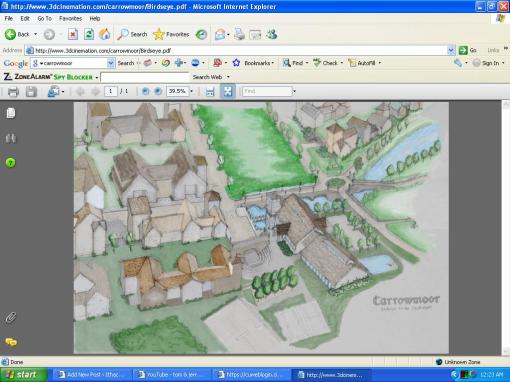
Apart from some minor subdivisions, an electrical substation and a wireless tower, the big project in the town of Ithaca is the Carrowmoor project [2].  The 400-unit project is an eco-friendly development of houses and a small village center of retail and office space. The residential units are a mix of single-family houses, townhouses and apartment buildings. The buildout is also over a period of several years. Building designs are meant to be a throwback to the days of Tudor England (for better of for worse [3 -The website for the development looks like it was built in 2000, and takes a long while to load]).

carrow1

Ithaca City

Two outparcels (small-box retail no doubt) are planned for the SW commerical district. One is in front of the Tops Plaza, the other is next to Wal-Mart. Renovation for the Hangar Theatre, finalized drfats for the Ithaca College Athletics Center, and construction for Urban Outfitters planned downtown location are also going through the board. The Hotel Ithaca is still underway- technically. The 10-story, 100 ft. building is currently being held up because the building has a nine-foot overhang over the Green Street Garage—meaning it’s in city air space, and has to go in front of the board to get approval for that air space [4]. A little bit ridiculous, perhaps, but that’s how it’s done. anyways, the preliminary design has been brought in front of the board, but no image is widely available as of yet.

Technically, the Southwest neighborhood plan is still active too, but that one might just as well be considered in hibernation given the economic situation.

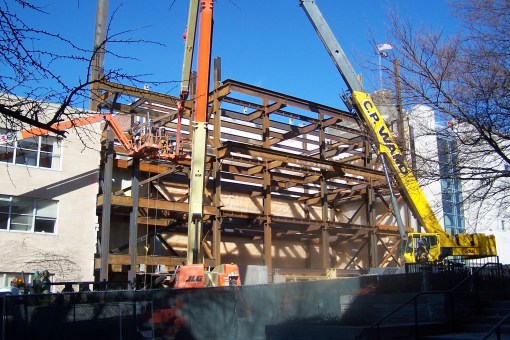
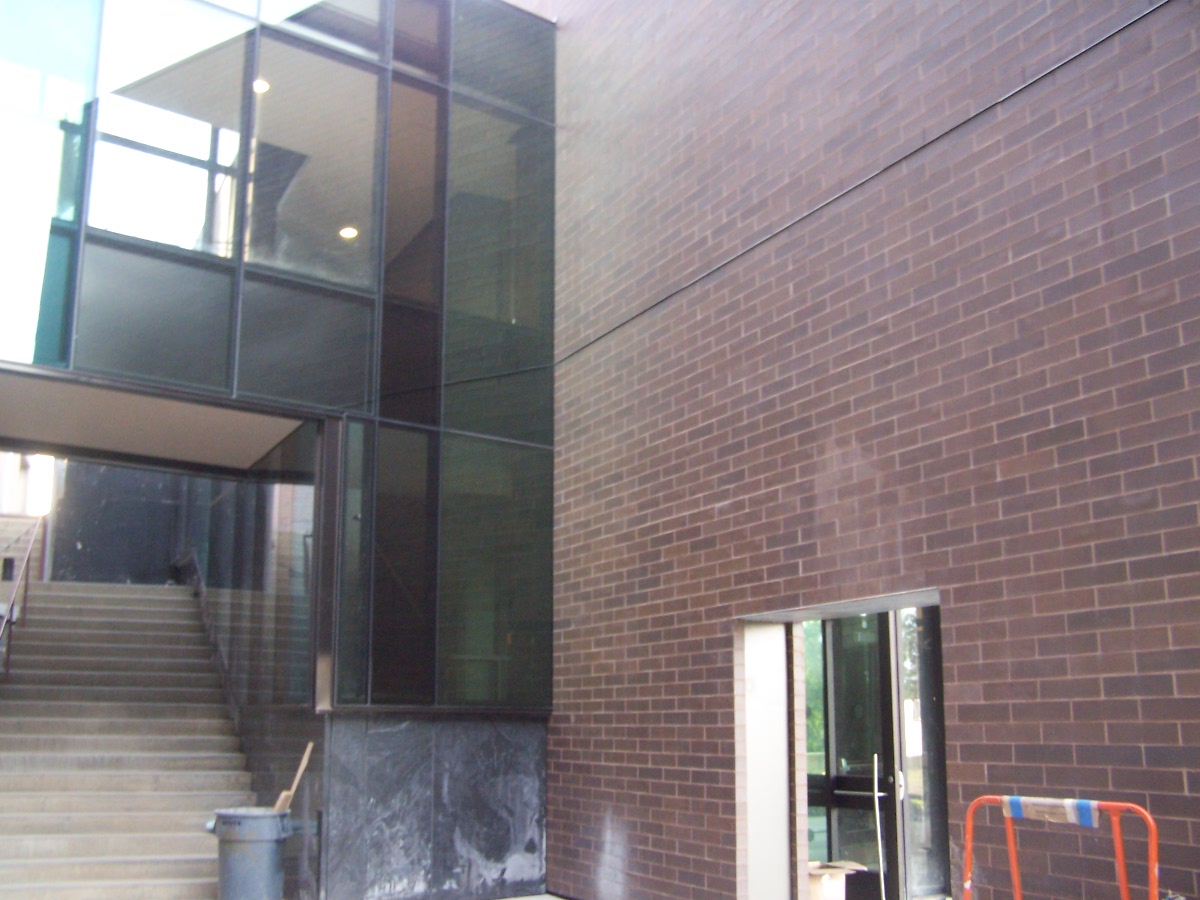
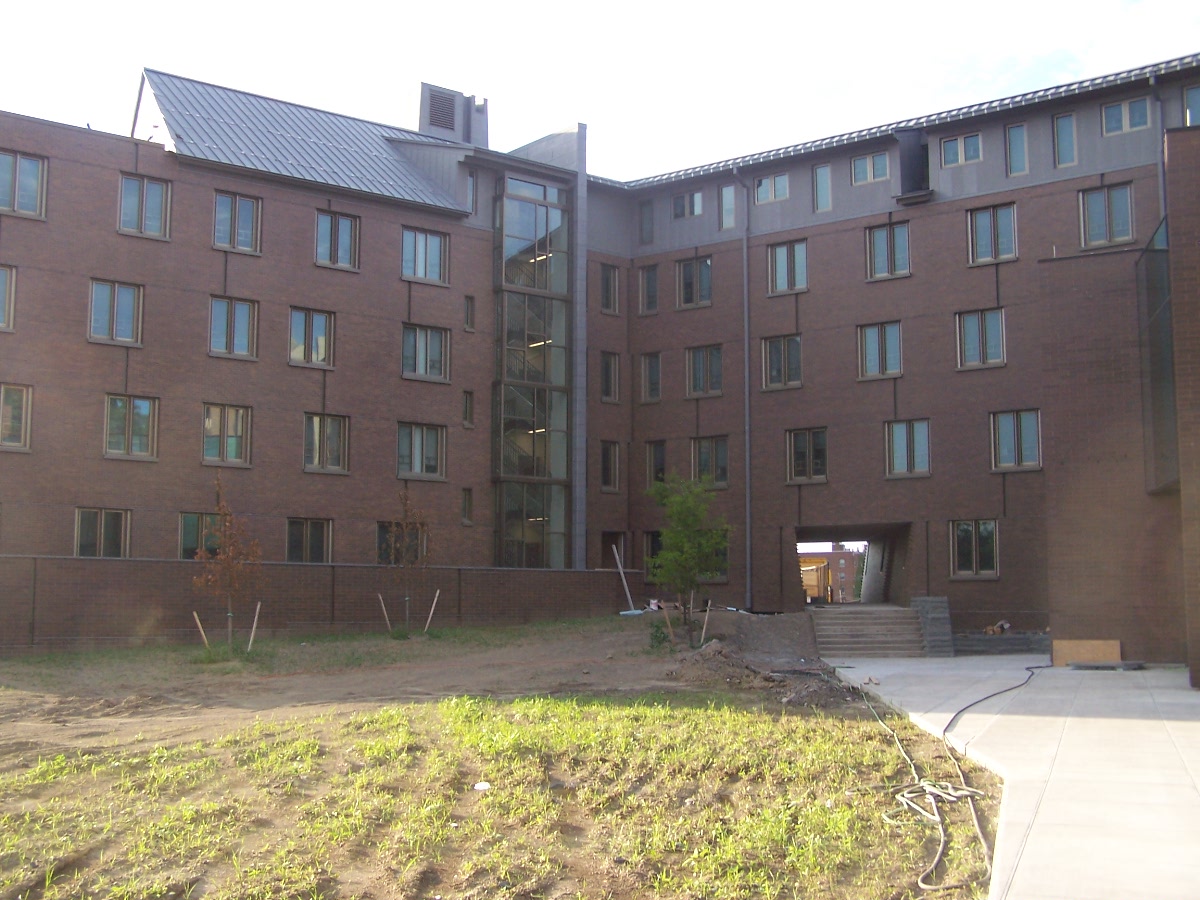
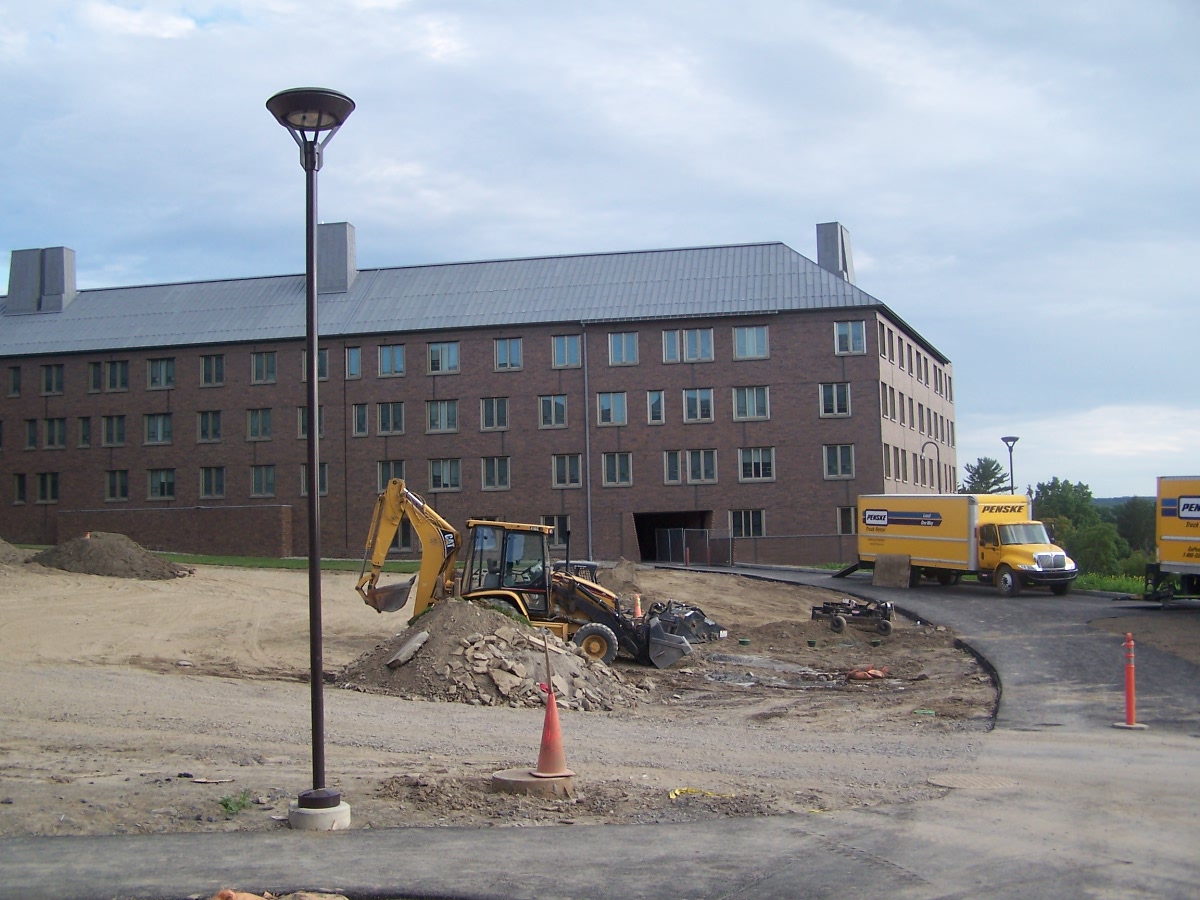
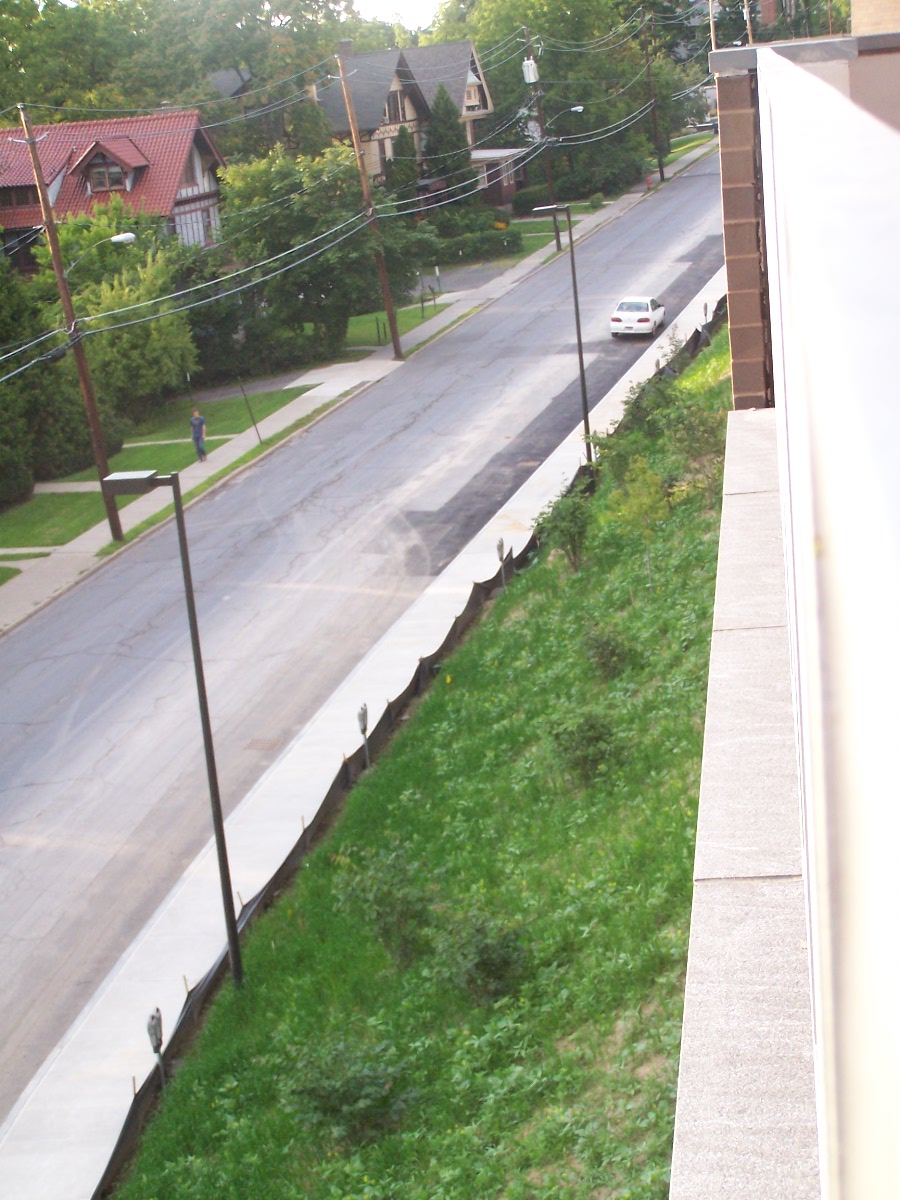
Heck, since I’m writing this, I might as well include progress photos of some of the campus projects.

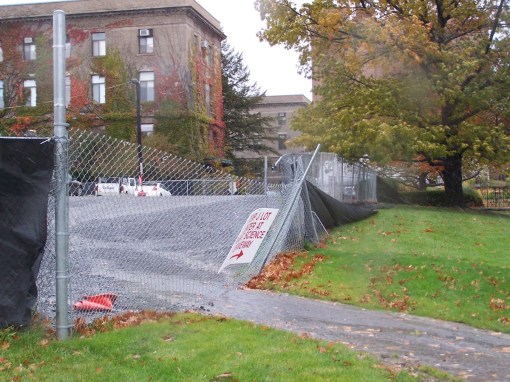
100_3181

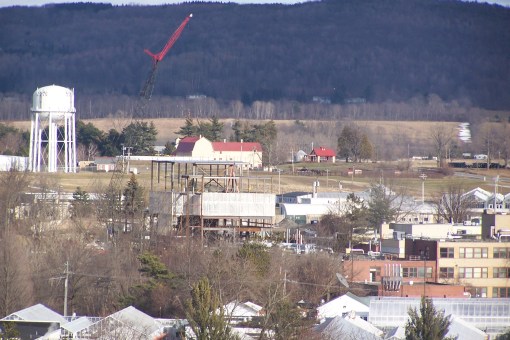
Veterinary School Animal Health Diagnostic Center

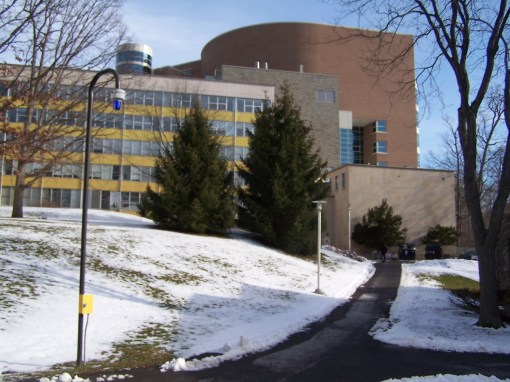
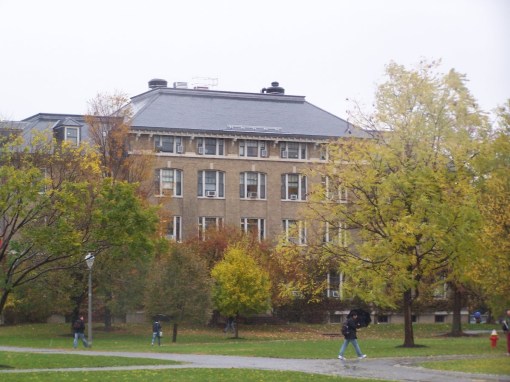
100_3100

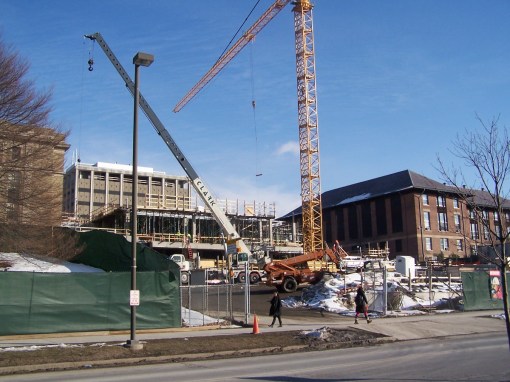
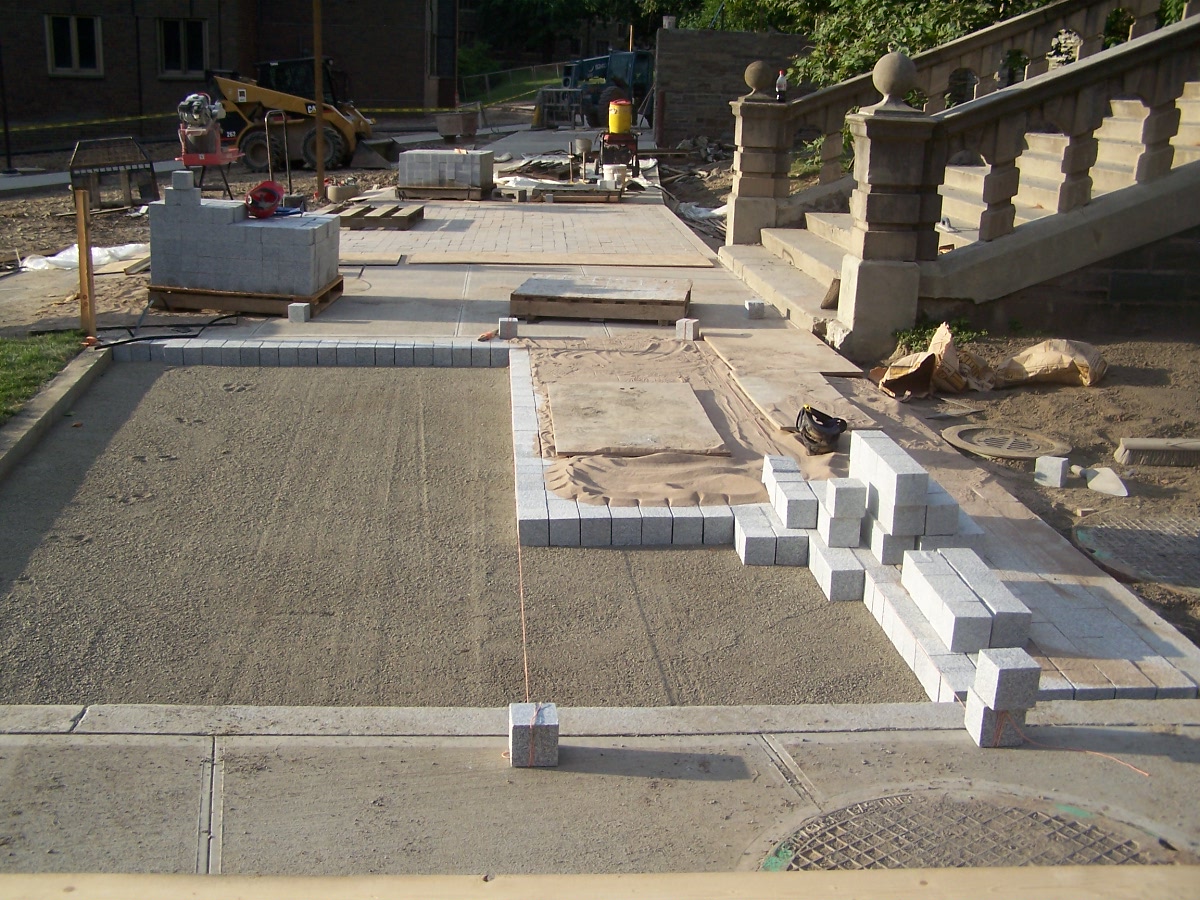
Physical Sciences Building

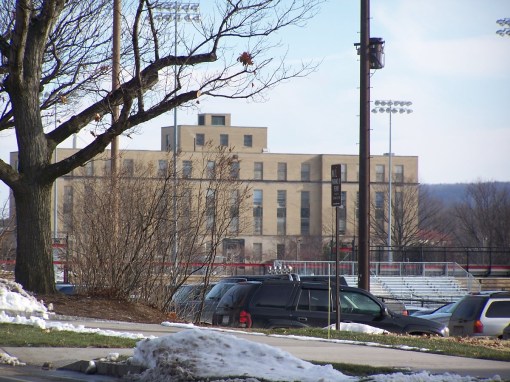
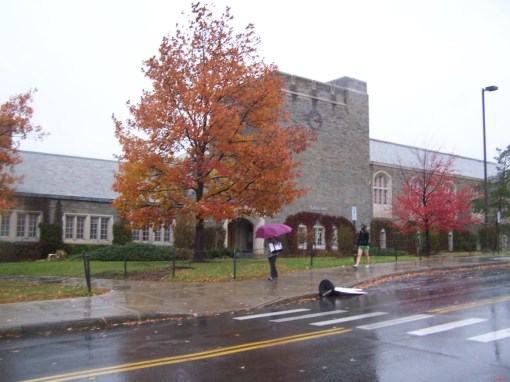
100_3102

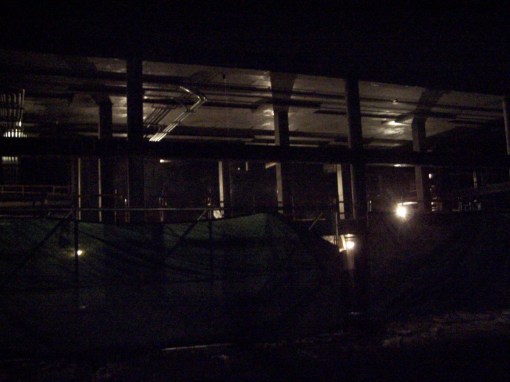
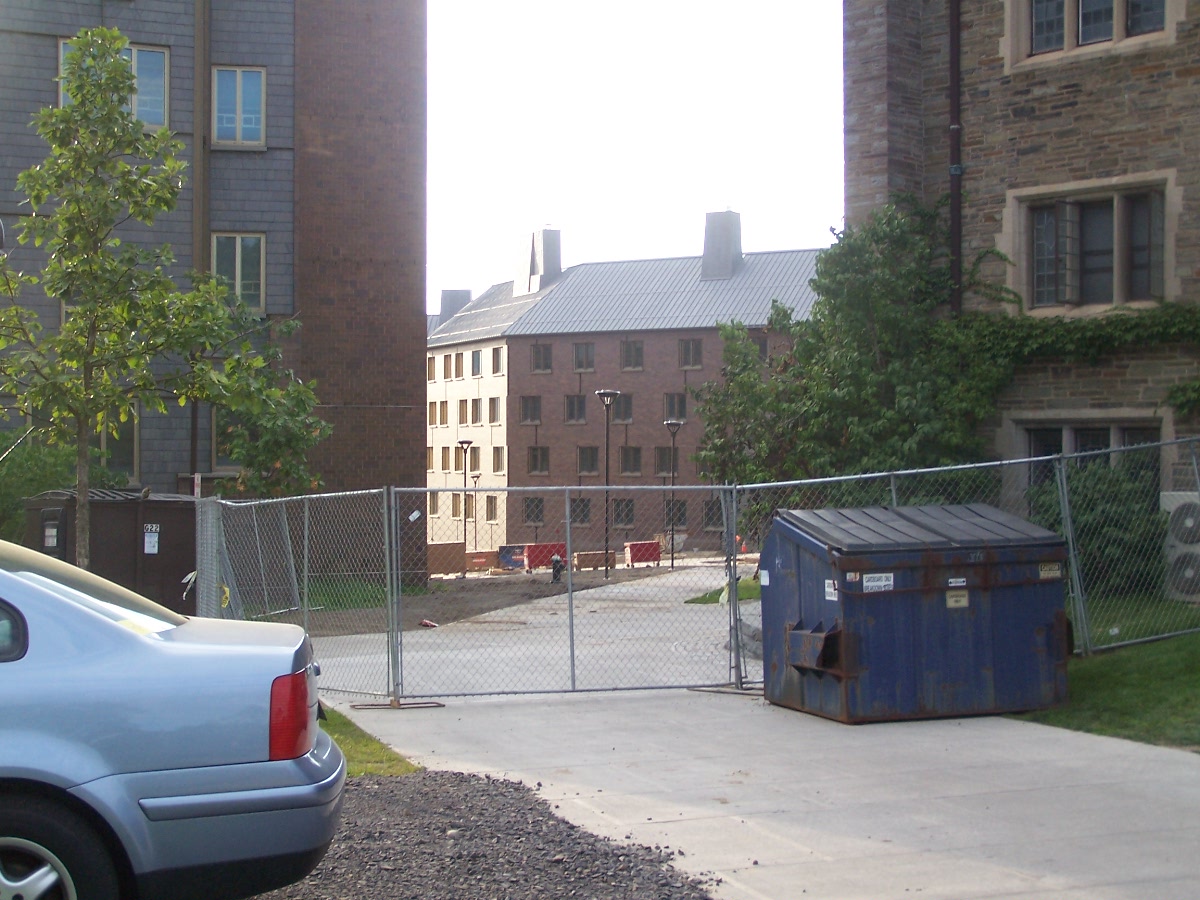
MVR North expansion

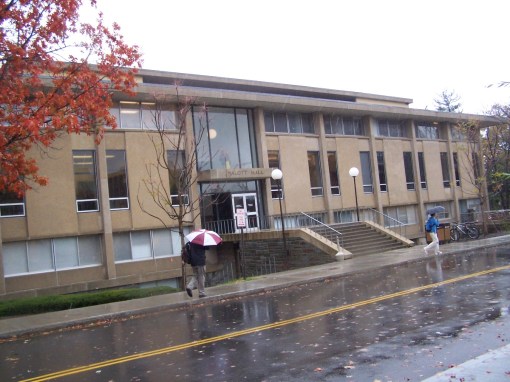
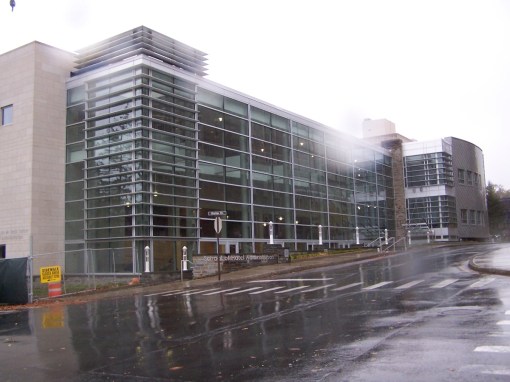
100_3318

 Hotel School Expansion

[1]http://www.lansingstar.com/content/view/4601/66/

[2]http://www.ithaca.com/main.asp?SectionID=16&SubSectionID=83&ArticleID=8385

[3]http://www.3dcinemation.com/carrowmoor/index.html

[4]http://www.theithacajournal.com/article/20090220/NEWS01/902200317/1002


Buildings No One Really Cares About

17 01 2009

So, I had hardly any internet access while I was gone, but it would appear this blog had more than its fair share of hits this past week. It’s probably due to rush, and considering the content of ICH,  I’m not surprised.

But today we’ll just do another photo tour.

100_2496

Since someone asked about it, I decided to make a trip out to Ward Labs on the southern edge of the campus and the engineering quad. Ward Labs, or more properly the Ward Center for Nuclear Sciences, was completed in 1963. At this time, nuclear engineering was experiencing great interest. But after Three Mile Island and Chernobyl, the nation experienced a serious decline in interest in nuclear studies, and the engineering school disbanded it’s Nuclear Science and Engineering program in 1995 [1].  On May 4, 2001, Cornell announced that it would decomission the TRIGA Mark II nuclear reactor inside the facility, due to underutilization and unwanted liability concerning the handling, use and transport of nuclear materials. The reactor was a 500 kilowatt facility used strictly for research and teaching. A dry irradiation facility that uses the radioactive Cobalt-60 was recommended to be maintained at the facility. The building still contained radioactive waste, so when 9/11 happened, road blocks were installed around the facility [2].

Then we fast forward to October 2008. There was a very interesting article written by Munier Salem for the Daily Sun highlighting the increased interest in building new facilties and a revived interest in the field as the energy crisis affected the nation, and how some view the decomissioning as a huge mistake.

Today, with the exception of some offices and little-used labs, the Ward Center is largely abandoned. The building is slated to be torn down under the master plan (assuming our endowment holds out).

100_2497

I felt that since I was there, I should take a photo of Grumman Hall too, if but just to say I have one.

100_2509

I make a big deal about Bradfield, but I never have really mentioned Emerson Hall. Emerson, the low-rise portion of the Bradfield complex, was also completed in 1968 and houses labs and offices for the department of Crop and Soil Sciences. The building is named for Rollins Emerson, who was the head of the Plant Breeding Department for a few decades in the first half of the 20th century.

100_2508

Riley-Robb Hall. This building was built in 1956 and is designed in the stripped classical style [4]. Very, very stripped. The emphasis with this building was on materials, primarily limestone, yellow brick, and marble. Two bas-relief limestone heads flank the entry stairs, the one on the north side being Ceres and the one on the south being Pomona. The building currently houses the Biological and Environmental Engineering program.

Also worth noting is the $6 million dollar renovation for the east wing set to be completed in March. This lab will focus on biofuels research [5].

***

100_2503

Bartels Hall, originally known as Alberding Field House, was completed  in 1990. The building houses the Lindseth Cimbing Wall (the alrgest indoor wall in the country, Cornell claims [6]), basketball courts, artificial turf practice areas and a 5,000 seat indoor sports facility. The building was renamed in 2000 as a thank-you for a $15 million donation from Hank and Nancy Bartels of the class of 1948.  Charles Alberding ’23 was a major benefactor of Cornell athletic programs, but the building was never formally named for him [7].

[1]  http://theuniversityfaculty.cornell.edu/forums/pdfs/Wardrelease.pdf

[2]http://cornellsun.com/node/33101

[3]http://www.genetics.org/cgi/content/full/169/4/1787

[4]http://www.fs.cornell.edu/fs/facinfo/fs_facilInfo.cfm?facil_cd=1062

[5]http://www.news.cornell.edu/stories/March08/biofuels.lab.lm.html

[6]http://www.cornell.edu/search/index.cfm?tab=facts&q=&id=313

[7]http://ezra.cornell.edu/posting.php?timestamp=944542800                        – see Question 11


One Stormy Day on Campus

15 12 2008

I’m not a holiday person. But I am halfway done with finals, which is reason enough to celebrate.

100_2109

Malott Hall, built in 1963, is named for Cornell’s sixth president, Deane Waldo Malott (1951-1963) [1]. The primary donor was William Carpenter ’10, but Carpenter Hall was built six years earlier, so apparently we went with the next best thing. The north building, pictured here, is classic 60’s architecture- notice the giant fishbowl lamps. Malott Hall originally housed the Johnson school until that moved to Sage in 1998; afterwards, the math department moved from White Hall to Malott. The rather Soviet looking north wing was part of a 1977 addition to the original structure. Malott is slated to be torn down under the Cornell Master Plan.

Old Deane Malott, who passed in 1996 at the ripe age of 98, was a conservative, even by 1950s standards. However, he is credited with significantly modernizing Cornell’s liberal arts programs, as well as overseeing a major construction period of the university’s history [2]. Prior to serving at Cornell, Malott was the president of the University of Kansas from 1939 to1951; as a result, they also have a Malott Hall (which houses their pharmacy school).

100_2107

It was a really blustery day.

For the record, this temp parking lot has only been here since the early 2000s, and the site is on the short list for development—after the economic crisis ends, of course. Originally suggested for a Bradfield-mass development (from Carol Kammen, author of Cornell Then and Now), the current master plan proposes a building of only one or two floors that offers general functions, like a visitor’s center.

 100_2106

 I never actually discussed Caldwell Hall in the previous Ag Quad entry. Caldwell was built with state money in 1913 [3]. Named for George Chapman Caldwell, an early professor of Agricultural Chemistry, the building housed soil sciences until it moved to Bradfield in 1969, and residual duties were picked up the entomology department in then-Comstock Hall. Today, Caldwell houses Cornell Abroad, the Cornell Institute of Public Affairs, and an LGBT resource center.

100_2104

Surprise! This went under the radar. In September, Cornell renamed this wing of the ILR Extension building in honor of Jonathan Dolgen ’66 [4]. So, we now have Dolgen Hall. Anyone want to take a guess at the price tag for this?

The building itself was built in 1911 [5], then part of the Vet School. ILR moved in during the late 1940s. The buildings underwent a significant renovation from 2002-2004, but because they were designated landmarks, the exteriors were relatively unaltered.

100_2102

Teagle Hall looks older than it is, in my opinion. The building opened as the men’s sports facility in 1954, and is named for Walter C. Teagle 1899. Apart from going co-ed, the building maintains much of its original use [6,7]. The building is faced with Llenroc and is designed to harmonize architecturally with neighboring Barton Hall. For those bold explorers out there, there is an underground tunnel connecting Barton and Teagle below Garden Avenue.

That’s a clock on the stone wall, by the way.


100_2094

100_20982

hotel-1

The Robert A. and Jan M. Beck Center  is a 35,000 sq. ft addition to the Hotel School that was completed in late 2004, at the cost of 16.2 million dollars [8]. The modern design is similar to the one currently being applied to the  south facade of the school (which is undergoing a 14,ooo sq. ft currently) [9]. Which make sense since both were designed by KSS Architects.

100_2097

Rhodes Hall was completed in 1990 as the Engineering and Theory Center building, and then rededicated to former president Frank Rhodes in 1995 [10]. The building is home to the Computing Theory Center, which housed at one time one of the most powerful supercomputers in the world. Today, I think it just barely cracks the top 500, but then again, pursuit of the most powerful supercomputer is a costly expenditure we probably shouldn’t be dabbling much with at the moment.

Rhodes Hall caused quite the complaint back in the day because of its size. Locals and some faculty/students complained that it overwhelmed the neighboring gorge and was too massive for the site. Not that the overbearing blank wall on the southwest side helps (but it is functional- that’s mechanical space ,and the supercomputer is on the other side of the wall, so they climate-controlled it a-la Bradfield, behind a windowless wall.


[1]http://www.cornell.edu/search/index.cfm?tab=facts&q=&id=487

[2]http://query.nytimes.com/gst/fullpage.html?res=9C05E3D6163AF930A2575AC0A960958260

[3]http://www.cornell.edu/search/index.cfm?tab=facts&q=&id=92

[4]http://www.ilr.cornell.edu/news/DolgenGift_2008.html

[5]http://www.news.cornell.edu/Chronicle/04/10.14.04/ILR_complex.html

[6]http://www.cornellbigred.com/sports/2007/7/30/TeagleHall.aspx

[7]http://www.fs.cornell.edu/fs/facinfo/fs_facilinfo.cfm?facil_cd=2611

[8]http://www.hotelschool.cornell.edu/about/facilities/beck/

[9]http://www.kssarchitects.com/content/project.php?type_id=33&project_id=238

[10]http://www.cornell.edu/search/index.cfm?tab=facts&q=&id=624

[11]http://ezra.cornell.edu/searched.php?search=theory%20center&question=&answer=&starttimestamp=&endtimestamp=&category_id=&offset=30&view=expanded

see:August 4, 1987


Exploring West Campus

15 08 2008

First off, let me say I do not support nor condone any illegal activity, especially for the purpose of information gathering. That being said, going into prohibited construction sites is a lot of fun if you’re careful where you step and you can avoid the workers leaving for the evening.

So, this started when a friend of mine who happened to figure out that I was the writer of this blog sent me a message asking if I could go through the new West Campus and take some photos. Knowing he wasn’t in Ithaca, I decided that I would be happy to oblige this time  (but I certainly won’t be making it a habit).

Token War Memorial shot.

First off, the War Memorial. These photos are actually from my fraternity photo tour last month. The War Memorial was constructed from 1926 to 1931. It honors the 264 Cornellians who were killed in action in World War I. However, it does not honor a 265th death, that of Hans Wagner 1912, who was killed in action while fighting for the Axis Powers [1].

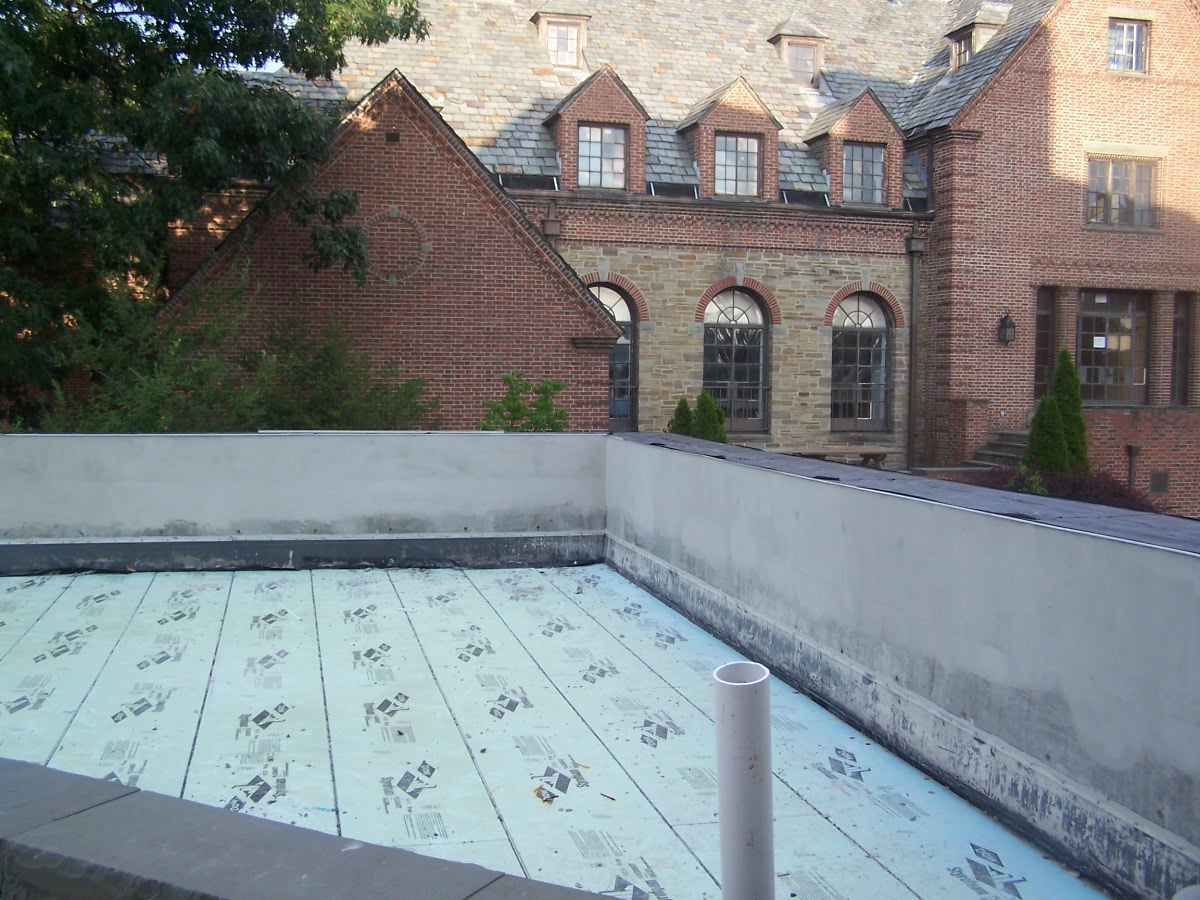
Noyes and Hans Bethe dining hall have grass roofs. Cornell, take note to not follow IC’s folly and set off fireworks right next to a building with a grass roof; it just might catch fire.

Any makeshift fence can be scaled. But why bother when there’s a narrow space between it and the wall?

Base of the War Memorial steps, being renovated.

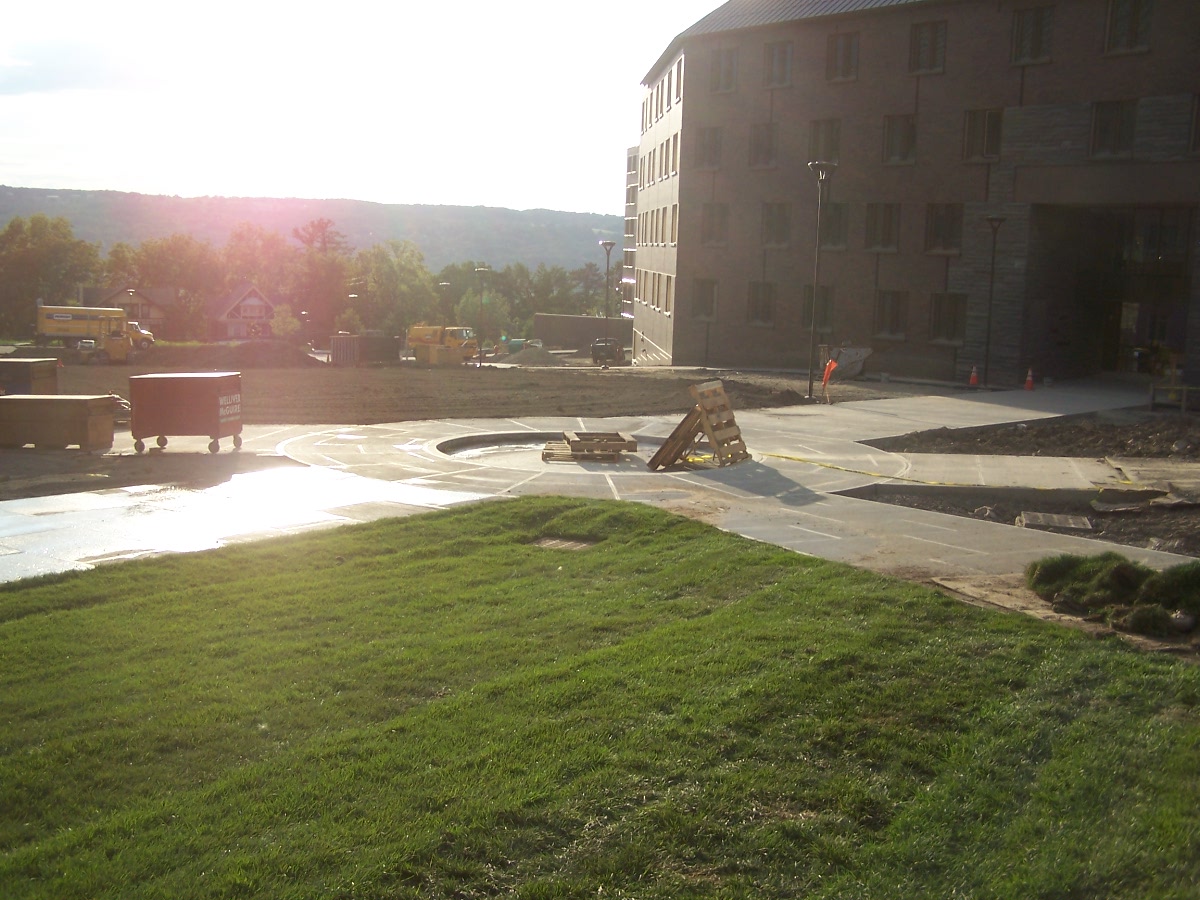
A new central plaza area between House 5 and Bethe.

House 5, south face

Don’t mind my shadow.

Curious horizontal window slits near the entrance of House 5.

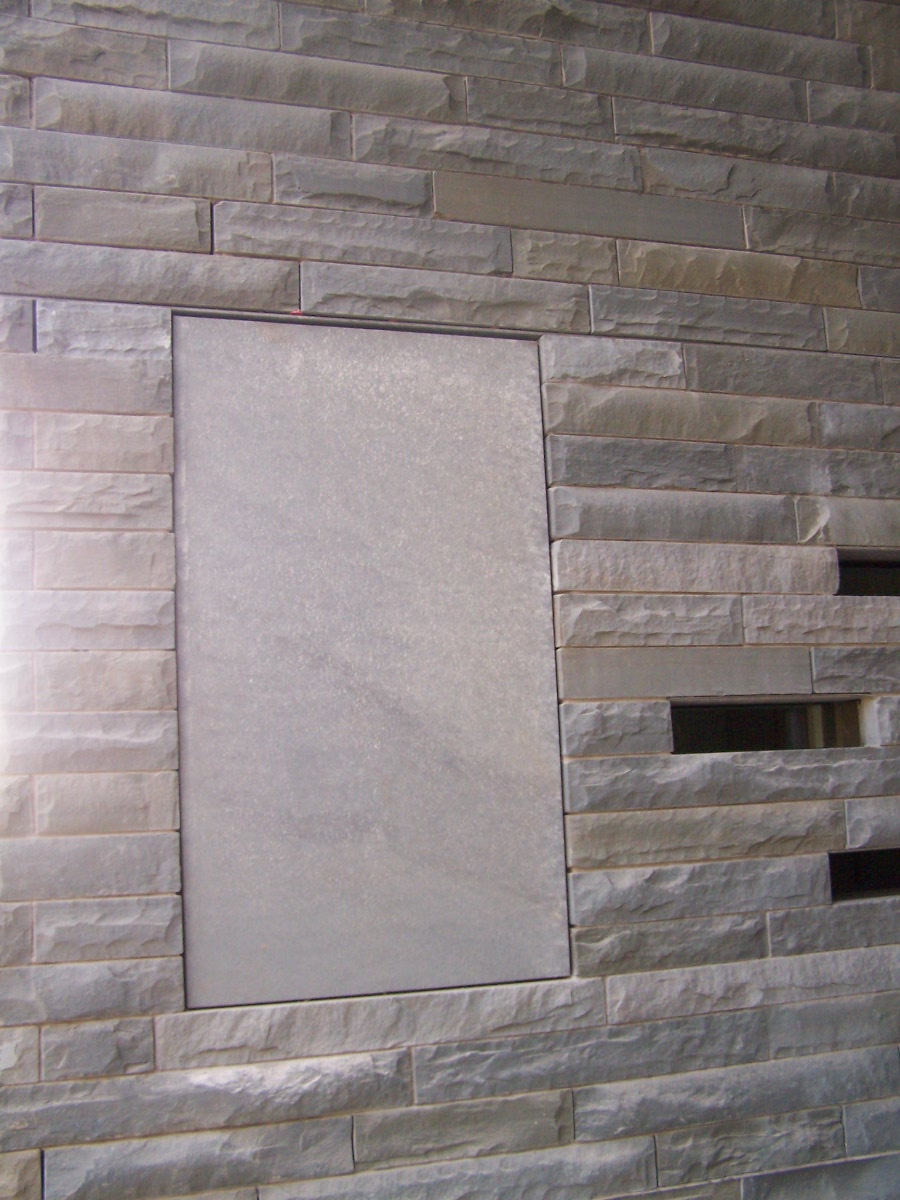
Nameplate, unfinished for now.

House 5 Dining area, NW corner

north face, house 5

House 5 dining area interior, unfinished

Keeton House, north face

Noyes, from Keeton

A corner plaza next to Keeton. Psi Upsilon is in the back.

A plaza/planting area just outside of Keeton.

Keeton’s connective corridor.

A staircase at Keeton that leads under the corridor.

A large blank wall next to the previously mentioned staircase.

Note the coloration of the glass in the connective corridor.

Keeton’s south wing. Notice how the top floor has a different window pattern and uses different materials.

An interesting if not aesthetically pleasing entrance area for Keeton’s north wing.

Had to hide from construction workers by hiding behind the board next to the Penske truck.

The unfinished nameplate for Keeton.

Keeton’s balcony.

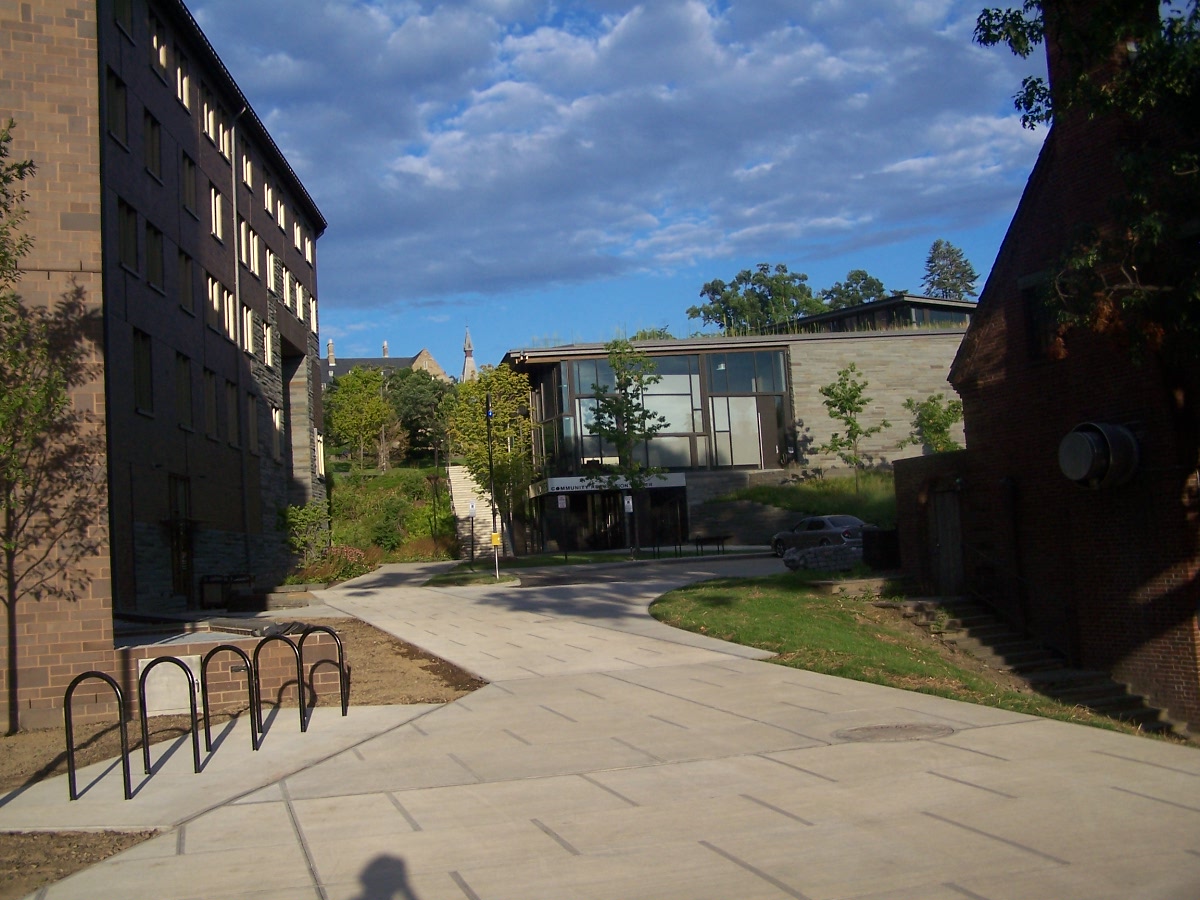
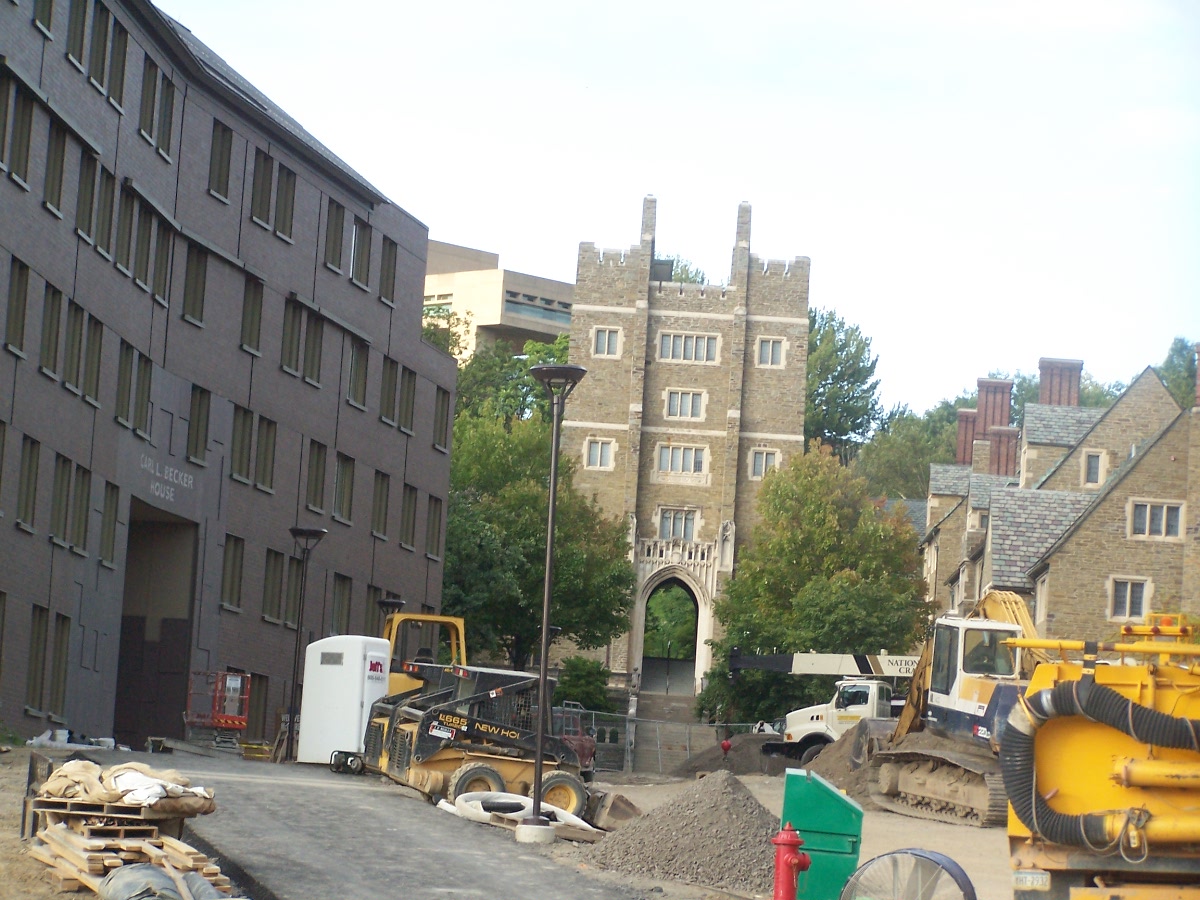
An architecturally interesting juxtaposition of Baker Tower, Becker House and the Johnson Museum.

Keeton’s lobby area

The dining area and an adjacent lounge in Keeton House.

A random hall of dorm rooms in Keeton.

***

Boldt Hall and Tower

ATO painted their house, it seems.

As for the photo request…consider it fulfilled.

[1]http://cornellsun.com/node/19107


The Cornell Master Plan, Part 5 of 5

10 08 2008

Well, it’s about time I wrap this up. I meant to do this a little earlier, but I became a little sick towards the end of last week, so feeling better was more important than maintaining the IiCH blog.

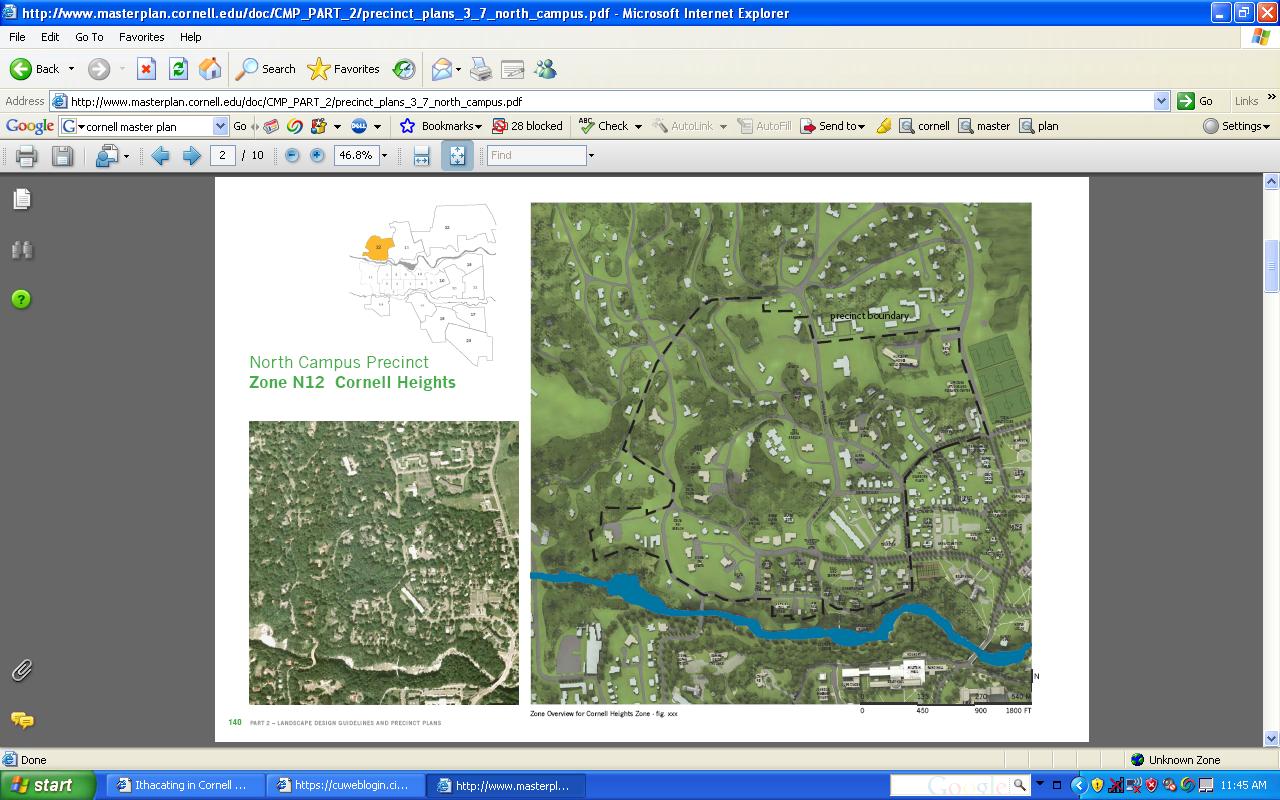
The Cornell Heights precinct sees change listed under the “although no specific development sites have been identified, additional development may be considered on and(sic) case-by-case basis.” Since this is a nationally-recognized histroic district, I wouldn’t expect anything out of character with the current sttuctures in the neighborhood.

Also, to tie this in with the disppearing suspension bridge incident, the image above has also apparently washed out the Stewart Avenue bridge, making it more likely it was just some half-fast work on the image.

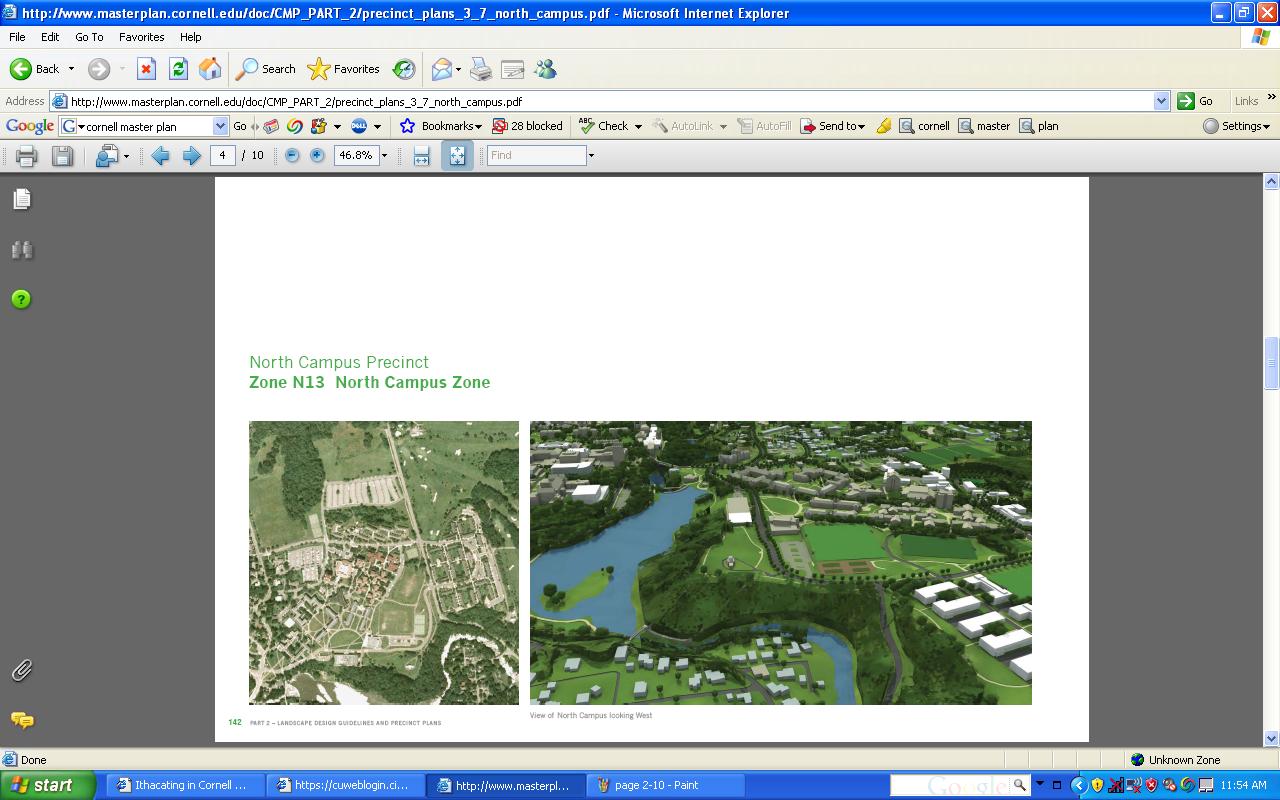
For North Campus proper, there are some notable, but not really controversial changes in the physical plant. The only thing currently underway is the $15 million renovation expansion of Helen Newman designed by architectural firm Dagit-Saylor (they also designed Appel Commons[1]). If the site ever goes back online, you can view the exterior plans for the expansion at this website:

http://residential.alumni.cornell.edu/n_helennewman.cfm

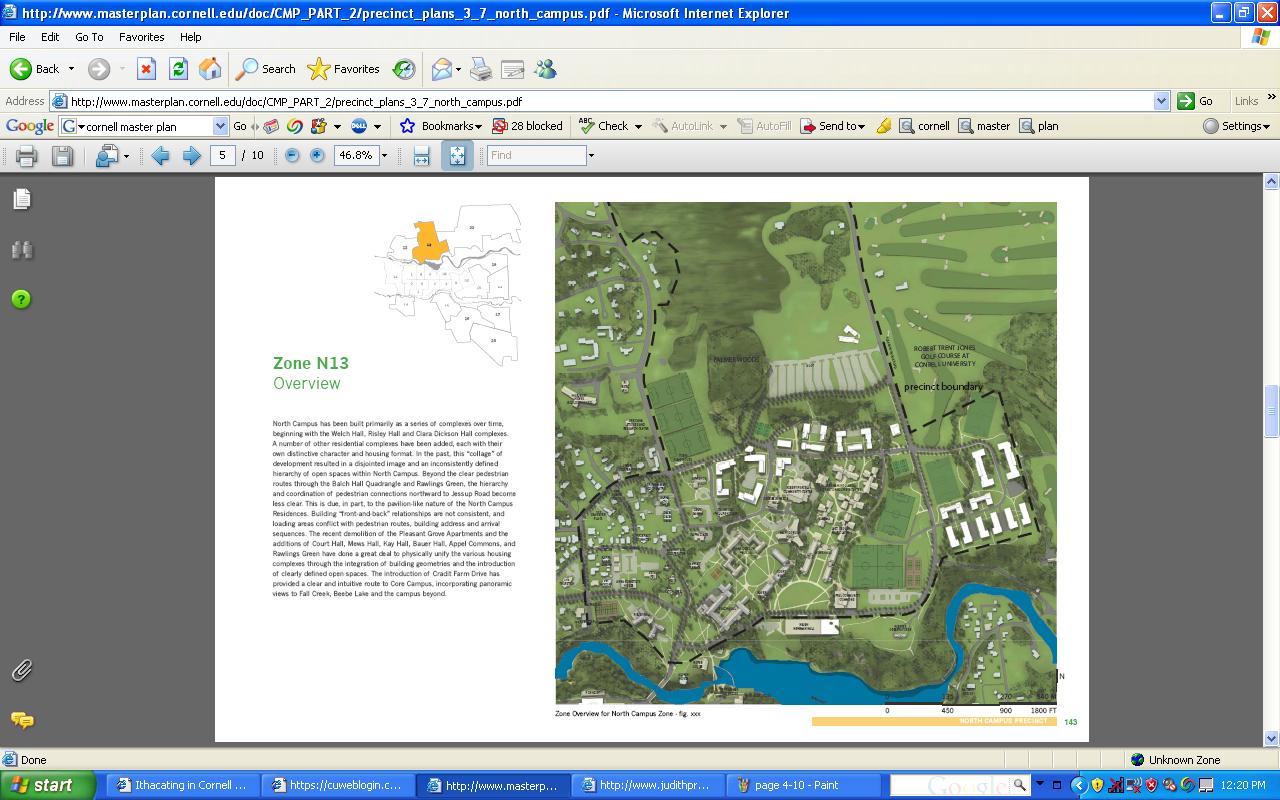
Some of the propsed changes include developing the CC parking lot into dorms, replacing the townhouses with a different set of dorms, and replacing Hasbrouck with some other form of housing. A new dorm would also be built across from the north-facing corner of RPU. I don’t hold much weight for plans for North Campus, probably because the plan developed by Richard Meier in the ’80s was eventually dropped[2], and Cornell just seems to decide spur-of-the-moment what will be built.

The plan suggests that dorm plans be two to four floors in height, but higher heights may be considered depending on the location. The hodge-podge necessitates that new constructions manage to make the North Campus more cohesive without interrupting intuitive pedestrian traffic flow. Which is big and fancy language just to say that it shouldn’t make getting around North more difficult than it already is.

I look at the designs for the more cluster-style developed to reaplce the townhouses and Hasbrouck, and I see a lot of opprotunities to name buildings. I’m sure Cornell could tote that to wealthy alumni that for only $3 million or $5 million, you could get a ten-unit dorm on North named after you. But, they didn’t really do it with the low-rise/high-rises, so they might just leave them nameless. Regardless, it seems rather poor planning that the townhouses, which were built as upperclassmen housing in 1989, would be torn down so soon. More athletic fields would be developed on the sapce freed up by the demolition of Hasbrouck, and some intersections would be realigned to better define the area and improve traffic flow. The idea is thrown out there that further development on Jessup Road have a “main street” character to it.

As for Collegetown, relatively little is mentioned. The plan hinges more on the recommendations of the Collegetown Vision Statement and finalized plan to be released in October of this year. The two primary itmes that are suggested are preserving the housing stock on Linden Avenue, and creating a pedestrian bridge from Eddygate and across the gorge to South Avenue. As someone who frequently commuted between Edgemoor Lane and Cascadilla last year, it wouls have been wonderful if this bridge has existed already. It was a little annoying that to walk a thousand feet as the crow flies, I had to walk up to College Avenue, cross that bridge, and then go down the steep and often icy hill next to the law school. A bridge from Eddygate to South Ave. would have been really nice, and it would definitely serve to make the neighborhood more cohesive with the far southwest portion of campus.

***

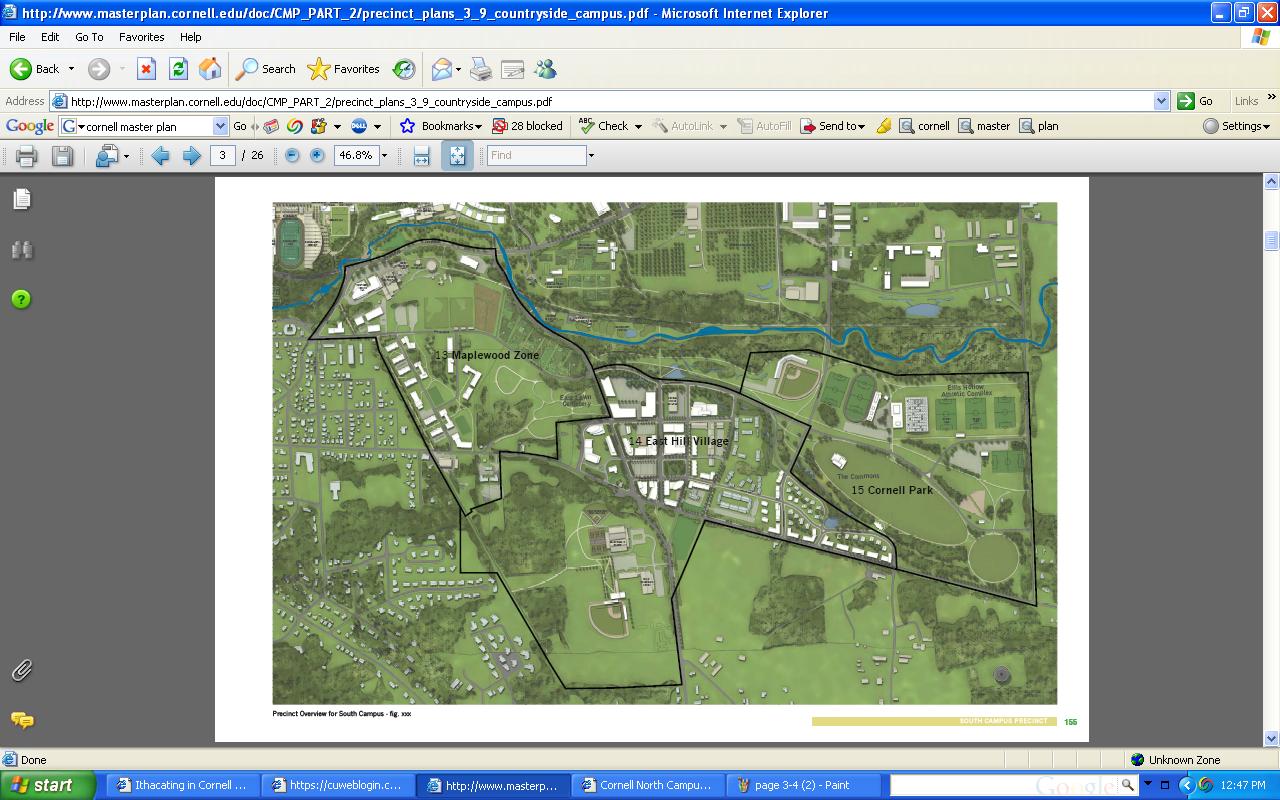
However, plans for a “South Campus” between Maplewood Park and East Hill are extensive. The area is devided into three zones- Maplewood, East Hill Village, and Cornell Park.

In the Maplewood Zone, the Maplewood Park Apartments are entirely replaced with “higher-quality”, more cohesive development. A site for townhouses also exists to the east of Maplewood Park. These areas are expected to be developed in the short-term (perhaps some of the $20 million Cornell is giving to Ithaca for affordable housing should go here?).

The total developed square footage will be between 450,000 and 1,000,000 sq. ft. With 240-480 residential units in the zone.

East Hill Village is an entirely different animal than its predecessor. The East Hill Plaza we currently know is essentially a strip mall, some apartments and a few outlying retail and office buildings (and Oxley Equestrian Center, if you count that). The plan wants to change that.

The area typifies a New Urbanism style development. Mixed-use buildings with an internal grid define most of East Hill Village. Active-use structures, like a grocery store, restaurants and retail stores are encouraged on the street level, with residential and/or office uses on the upper floors.

***

Meanwhile, the little-used fields to the east of East Hill become the site for Cornell’s new athletic fields and facilities (Ellis Hollow Athletic Complex). The park itself might be a large lawn or meadow that is used for general recreation or as a concert venue.

Cornell has big plans and big dreams. However, like any plan, conditions and preferences might change, so it would be unwise to consider everything to be set in stone. Still, it’s interesting that our insitution has such grand aspirations.


[1]http://www.judithpratt.com/Helen%20Newman%20Hall%20Proposal.pdf

[2]http://en.wikipedia.org/wiki/Cornell_North_Campus


The Cornell Master Plan: Part 1 of 5

22 07 2008

So, now that I’m done with the fraternity rush booklet, I’m going to do a new multi-part feature, this one focusing on the Cornell master plan. Look at it this way; I love reviewing the additions to Cornell’s physical plant, so this is the equivalent of giving a hit to a crack addict (okay, maybe not as detrimental to my health. But anyways…)

So, a little background. The plan was first initiated in late 2005 and took about two years to complete the final product [1], which was the culmination of the third and final phase of development. Up to that point, some open sessions were held at Willard Straight and at the Hilton Garden downtown (in Sept. 2007) for members of the community to comment on the findings, needs and projected developments of the university. The work was done by a Toronto-based planning firm, Urban Strategies Inc.

The plan tries to encompass the needs and concerns of the university and its physical plant. Among the primary issues, transportation and parking were major concerns, as well as maintaining a cohesive campus community and spatially harmonious design concepts in the planning of space throughout the campus. Also important was the development of additional facility to maintain Cornell’s capacity to be a top research institution.

So, the plan is set on the time scale of the next 10 to 25 years. The plan considers some of the following parameters; an increase of faculty from 1,600 to 1,700-1,800; an increase in graduate student population from 6,000 to 6,500-7,000; an increase of 700 staff from 8,400 to 9,100; and undergraduate to hold steady arond 13,500. The plan accomodates for 1-2 million more square feet of space, to be constructed in and around the Ithaca campus.

So, my goal is to pick this plan apart, piece by piece, and analyze the crap out of it. But if you want to see and read through the process that led them to create the parameters and design guidelines for the comprehensive master plan, here’s the link: http://www.masterplan.cornell.edu/ (click on part I).

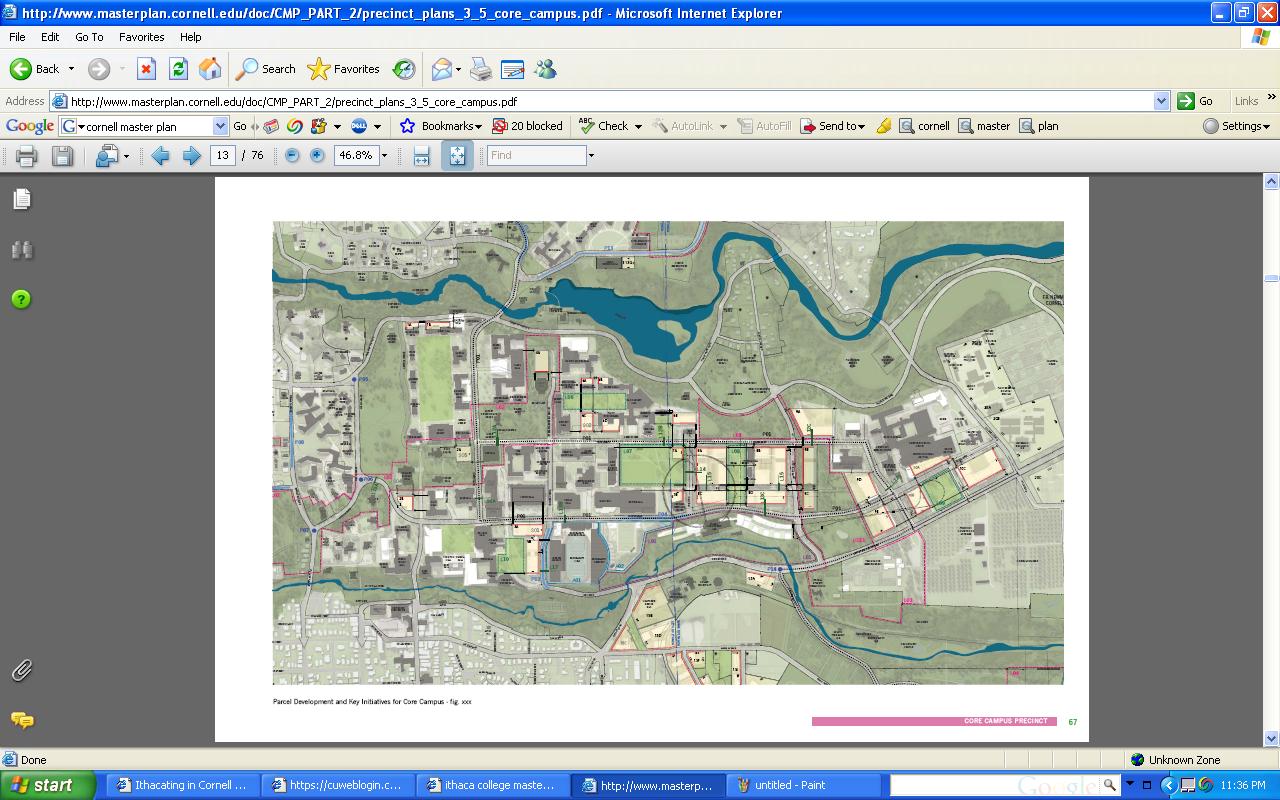
Clicking on part II’s “Core Campus” link, and sitting through the time that it takes for 76.99 MB to download, it opens up to a picture of Olin Libe and McGraw Tower. How pretty. Anyways, it talks about the importance of Central Campus as the hub of university activity. Here, they first mention the new 24-hour hub on the east side; that’ll be discussed more thoroughly in a later entry. One last thing- unless otherwise noted, no building is a concrete plan; they are merely suggestions as to a good way to develop the site. If master plans were always carried out to a tee, we’d have completely gothic west campus [3].

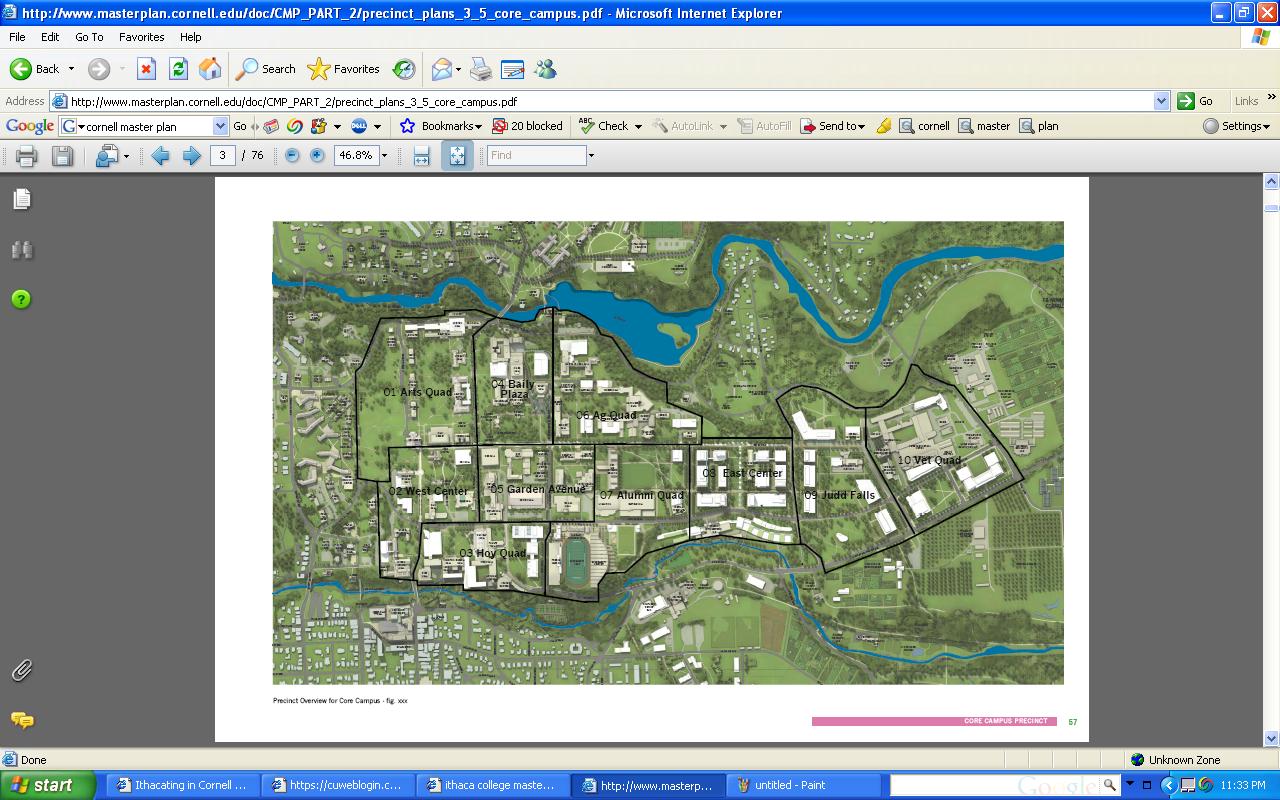
Yay for Prnt Scrn buttons! I’m not doing this with every page, just ones i’m going to focus on. Seriously, I suggest you go to the masterplan website, click on “part II”, “core campus”, and take a look. Or go to the listed source [2].

So, this is the overall plan. It worries me just a teeny bit when they mispell Bailey as “Baily”, since it is a whole area of discussion for them; but I can’t comment, my blog entries are filled with typos.
The page for demolished buildings and removed parking lots. the general goal of the master plan seems to be to hide the parking as much as possible, since it isn’t good for aesthetics, and isn’t pedestrian friendly. However, we still need it, so they shove it underground where possible. Milstein Hall would be a good example of that.

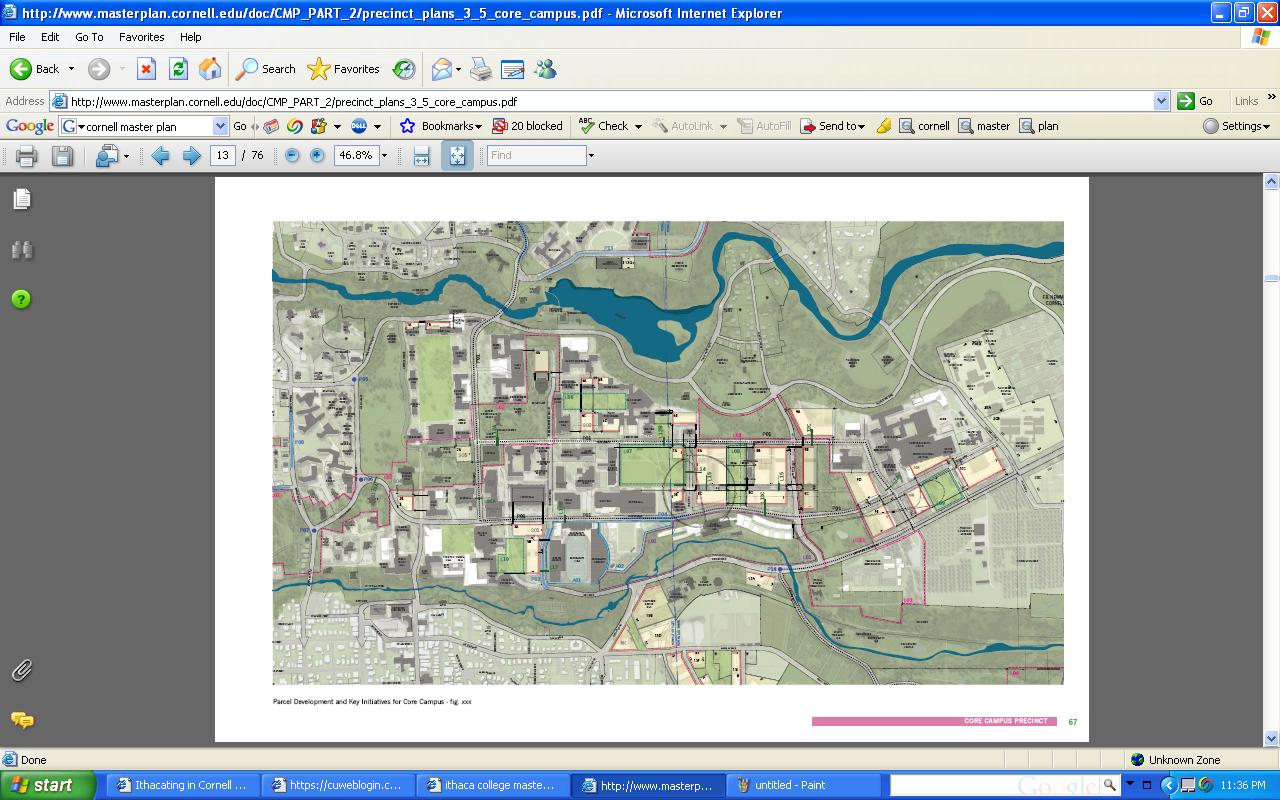
Development focus areas! Notice the massive changes on the east side of campus. Like I said, I’ll discuss those later, but they really stand out here.

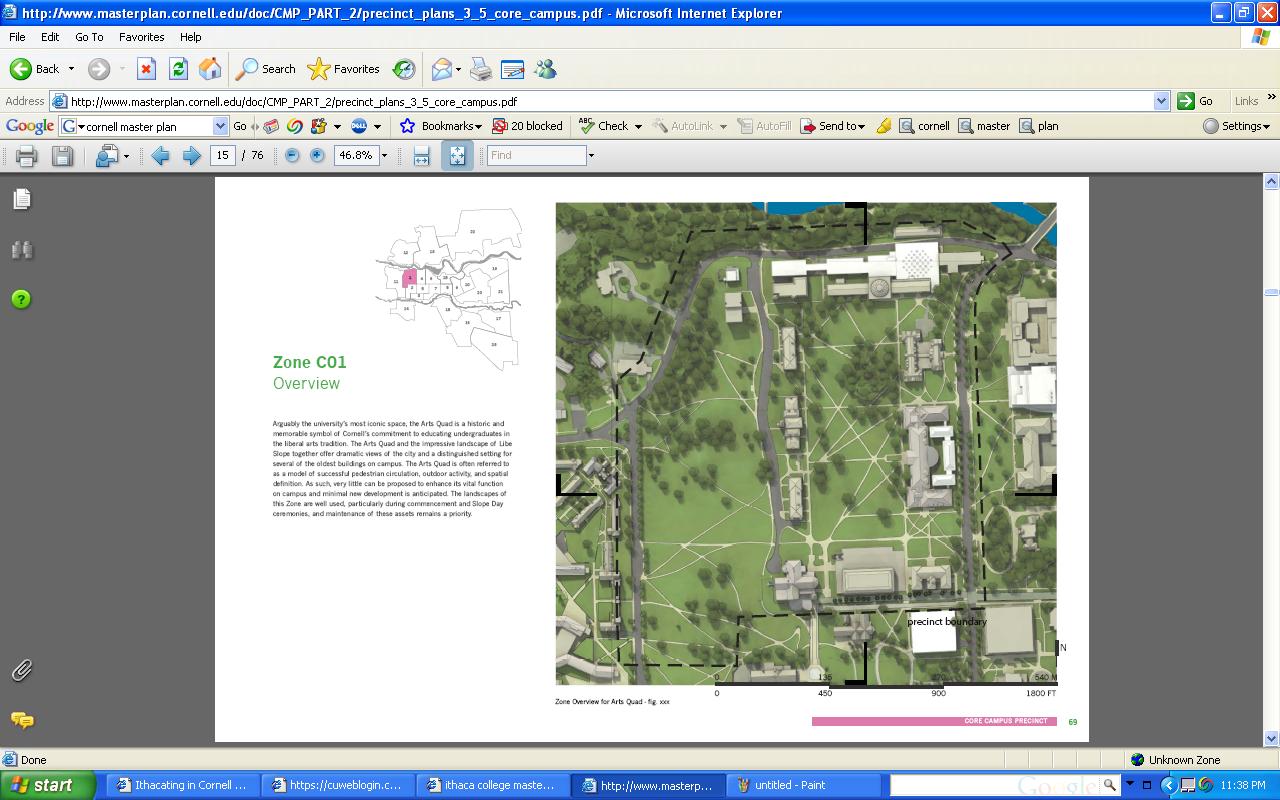
The 3-D image of the improved Arts Quad. Mistein sticks out like an ugly chick in a beauty contest, but there’s hope for the Goldwin Smith extension, for  which planning is currently underway. I’m holding out for something modern yet respectful to the older architecture, like the addition to Lincoln Hall in 1998. 

The overhead. As you’ll notice in the pdf, Milstein has these symmetrical roof features at the top; I feel as if that was an attempt to spice up the miracle box. I’m still not impressed, but you can notice an extension that goes behing Sibley and behind Tjaden. I really hope the arrow means you can still walk between them. An extension of Milstein’s design is perhaps nto the most ideal, but maybe Cornell can come up with something good for the back areas of Tjaden and Sibley. You can also just make out the Johnson Museum addition, which area-wise looks small and quaint compared to the rest of the buildings. At a mostly subterranean 16,000 sq. ft, I s’pose it is.

New stuctures with the thick gray border have been given the go-ahead for planning. The footprints in blacks are areas of potential development suggested by the plan. As we see, the area behind Sibley and Tjaden is seen as the only reasonable space left to develop without disrupting the harmony of the ag quad. The next page states that these buildings would have the same height and massing as their older counterparts, but considering they’re home to Arts and Architecture, I would not be surprised if Cornell were to push for cutting-edge designs if they ever developed those plots, being artistcially daring and all. However, it’s amazing how cutting-edge can be so offensive to the eyes sometimes.

Buildings in mauve-purple? They’re historic. As much as I have a personal vendetta against Rockefeller Hall, particularly Room 203, it would be a major hassle to structurally change it. No demo there anytime soon (I think the story goes that the money John Rockefeller gave to the building went mostly to the interior mechanics, and little on the exterior and finishings, hence the spartan design. He hated it so much when he saw it he vowed never to donate money to Cornell again). My personal wonder is how the hell could Uris Hall be architectually significant. Is that like the equivalent of a massacre monument, to mark that something terrible happened on the land and we should all know about it? Uris Hall could be taken as a massacre on the eyes.

Also on this page are the noted sightlines for the Arts Quad; sightlines will play a bigger role in some others buildings on campus, as to whether they remain or not.

to be continued…

[1]http://www.masterplan.cornell.edu/doc/CMP_Executive_Summary_FINAL-2.pdf

[2]http://www.masterplan.cornell.edu/doc/CMP_PART_2/precinct_plans_3_5_core_campus.pdf

[3]http://en.wikipedia.org/wiki/Cornell_West_Campus


West Campus Photos

9 07 2008

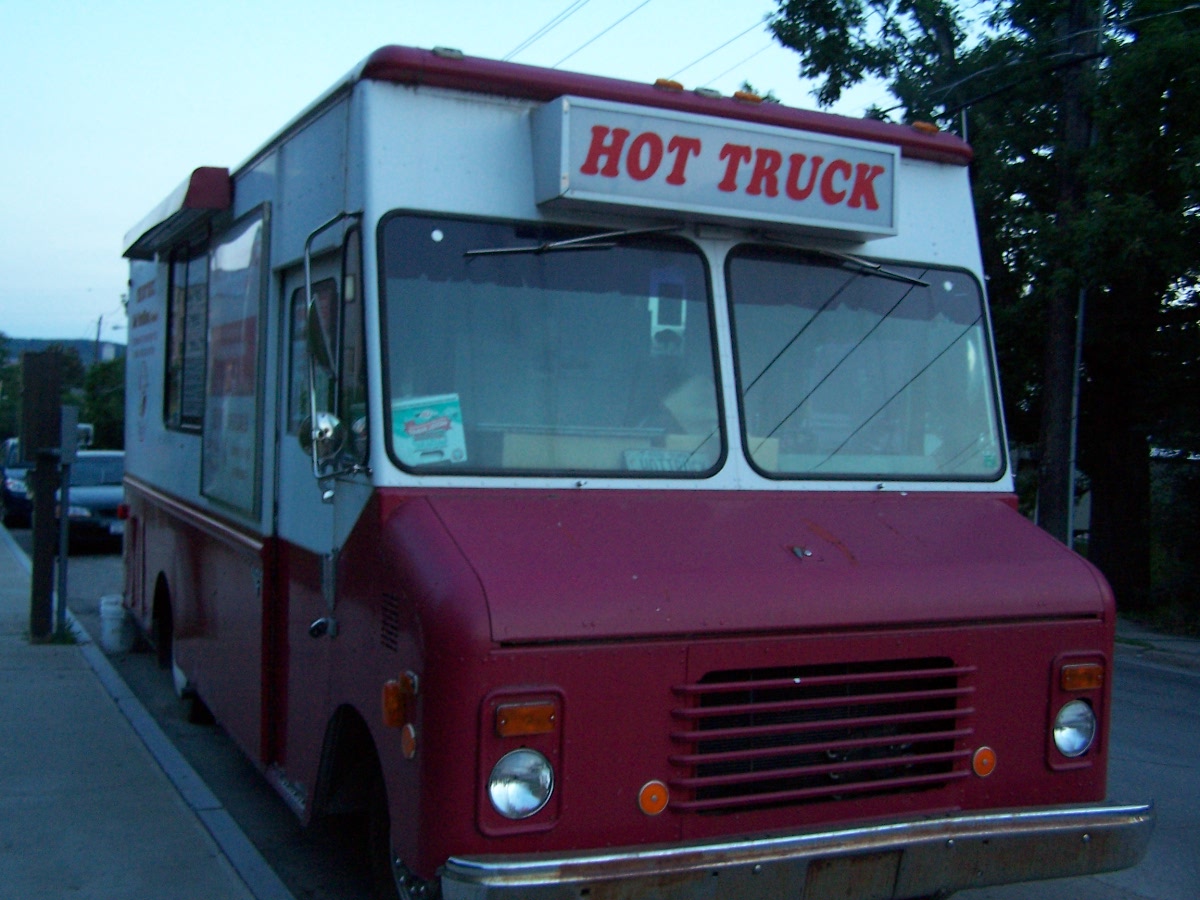
The Hot Truck is a West Campus icon. Located on Stewart Avenue just south of its intersection with University Ave, The Hot Truck[1]. The Hot Truck was founded in 1960 by Bob Petrillose, who called it “The Hot Truck” to differentiate it from “The Cold Truck”, a name that Louie’s Lunch used for its West Campus location from 1962-1981. Today, the truck is operated by Shortstop Deli, and sells subs along with PMPs, a pizza sub sold on french bread.
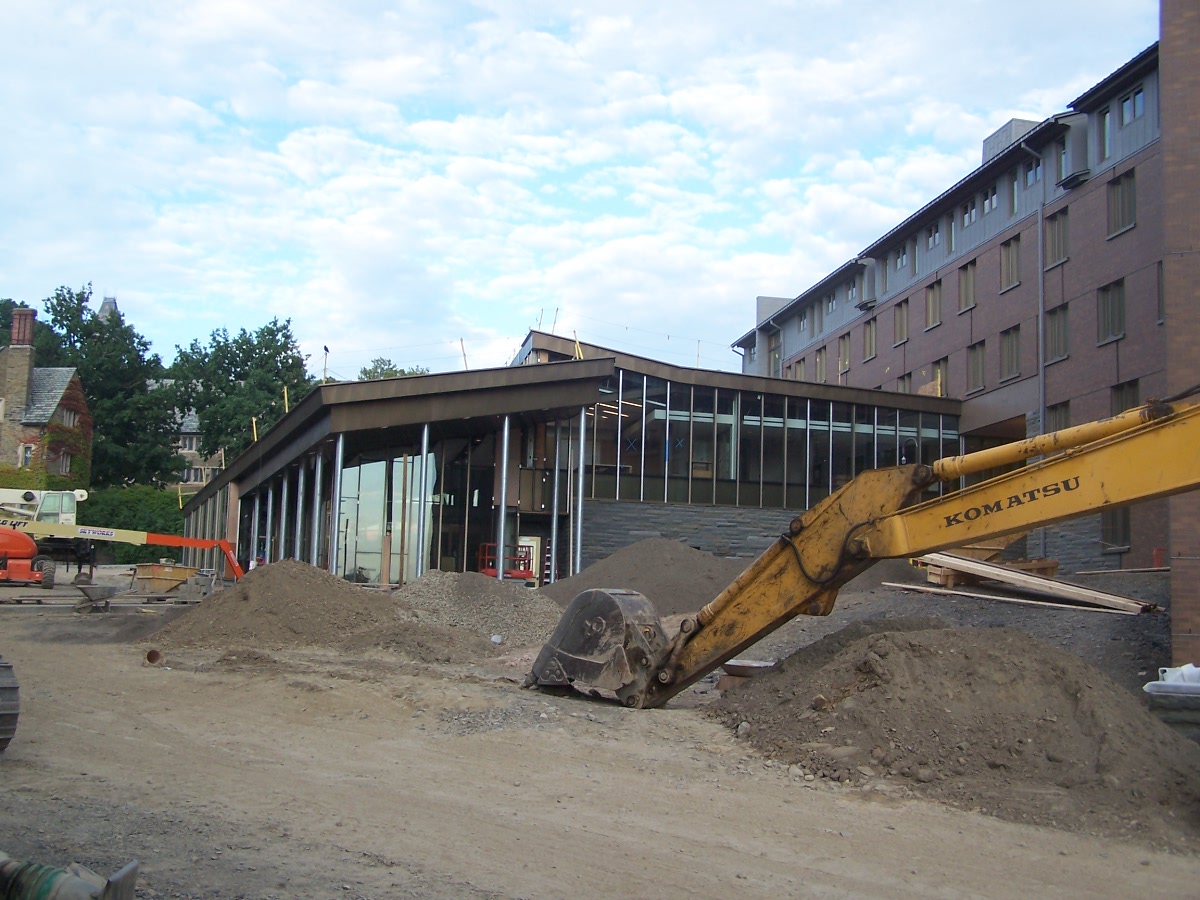
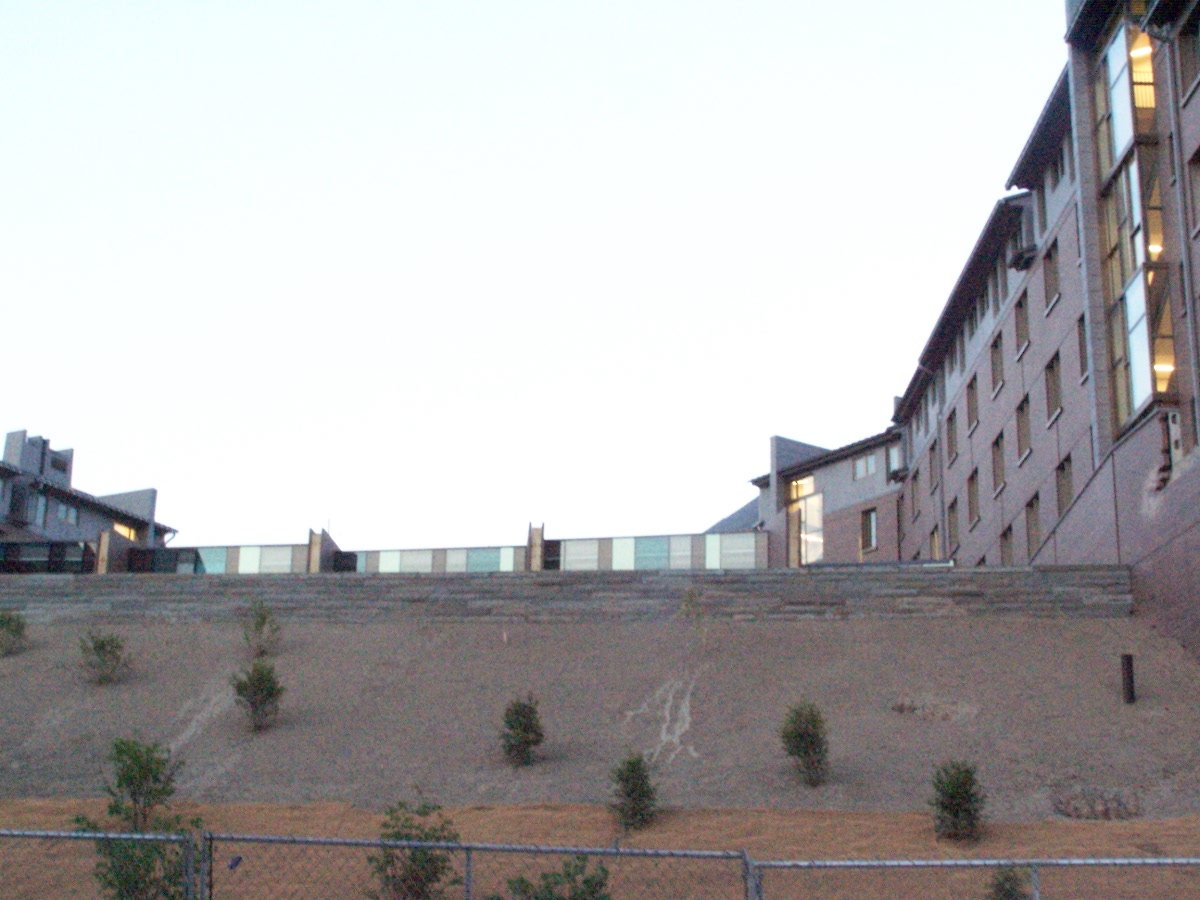
The West Campus houses, under construction. The house in the middle is House 5 until named otherwise. The house on the left is William Keeton House (House 4), slated to open in August 2008. The other three houses have already been opened; Alice Cook House in 2004, Carl Becker House in 2005, and Hans Bethe House in 2007. The houses are part of Cornell West Campus housing initiative. They are open to upperclassmen and transfers. In my experience, the house were astounding quiet whevered I visited, and although the dining was a pleaant experience, the houses were just a little too quiet for my preference. But then, I lived in the crypt that is Cascadilla, so who am I to comment?
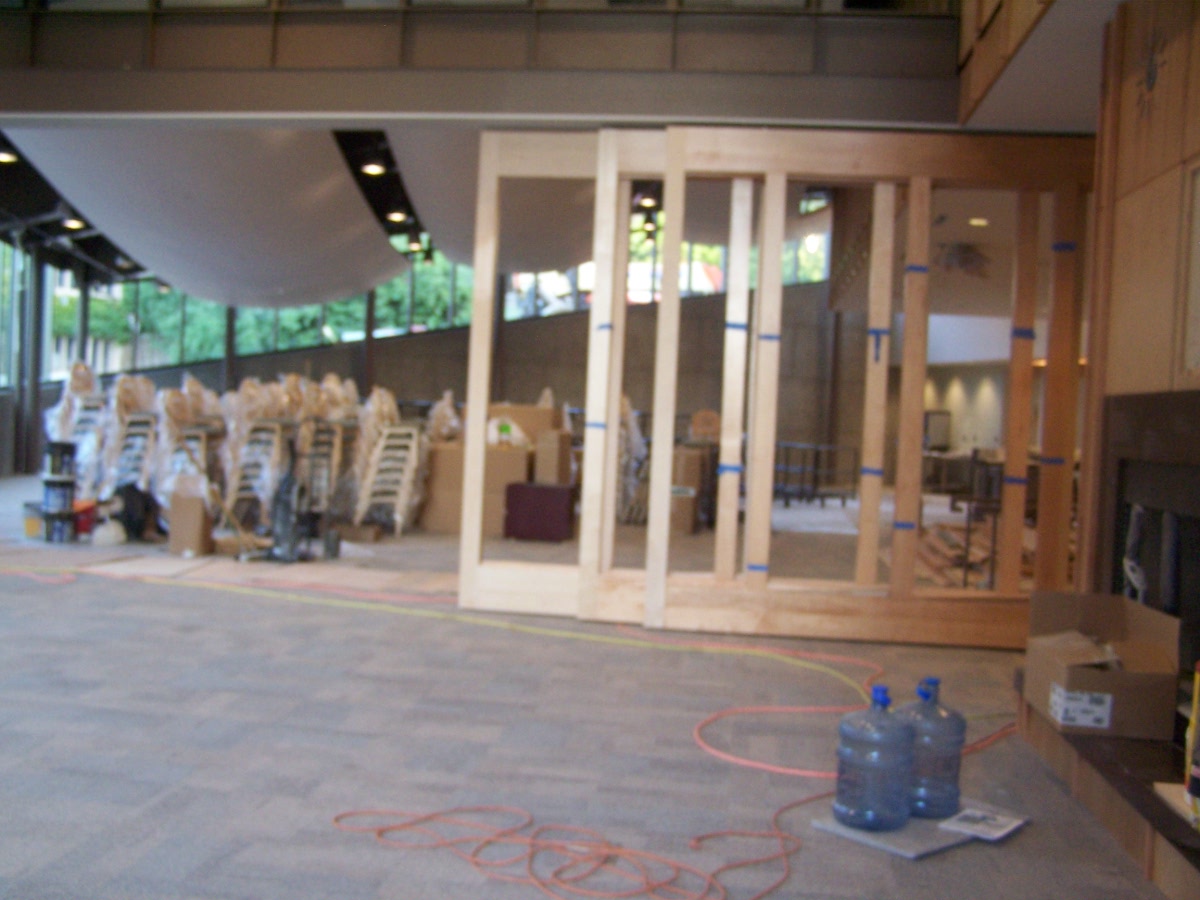
Here, we can see the dining facility for Keeton. Notice that it has a variety of multi-colored glass.

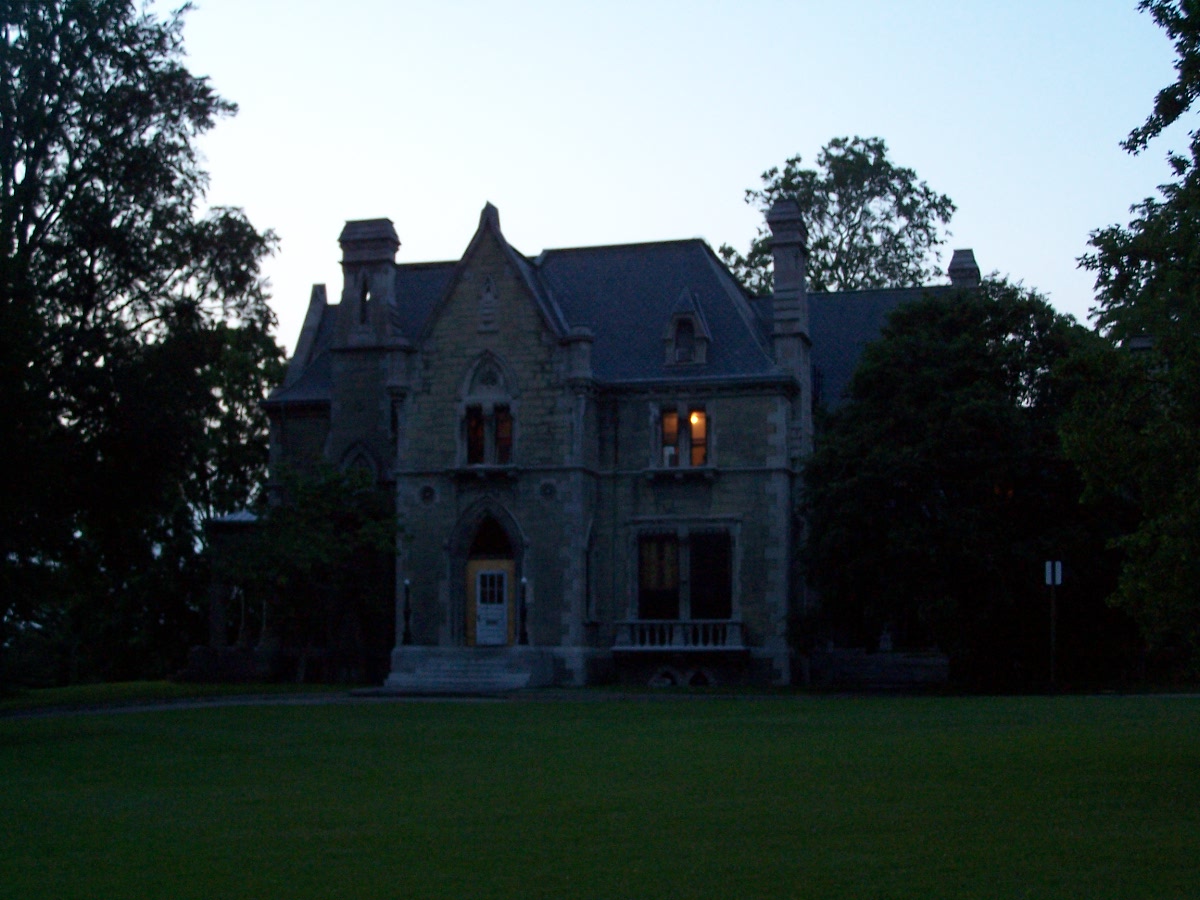
The House of the Cornell chapter of Delta Phi has a truly special history. First of all, the house is colloquially known as “Llenroc”. The house began construction in 1867, as the private residence of Ezra Cornell. However, Cornell passed away in December 1874, and never lived in the house. It was finally completed in 1875, and used as a private residence. The house became the residence of Delta Phi in 1911 [2].

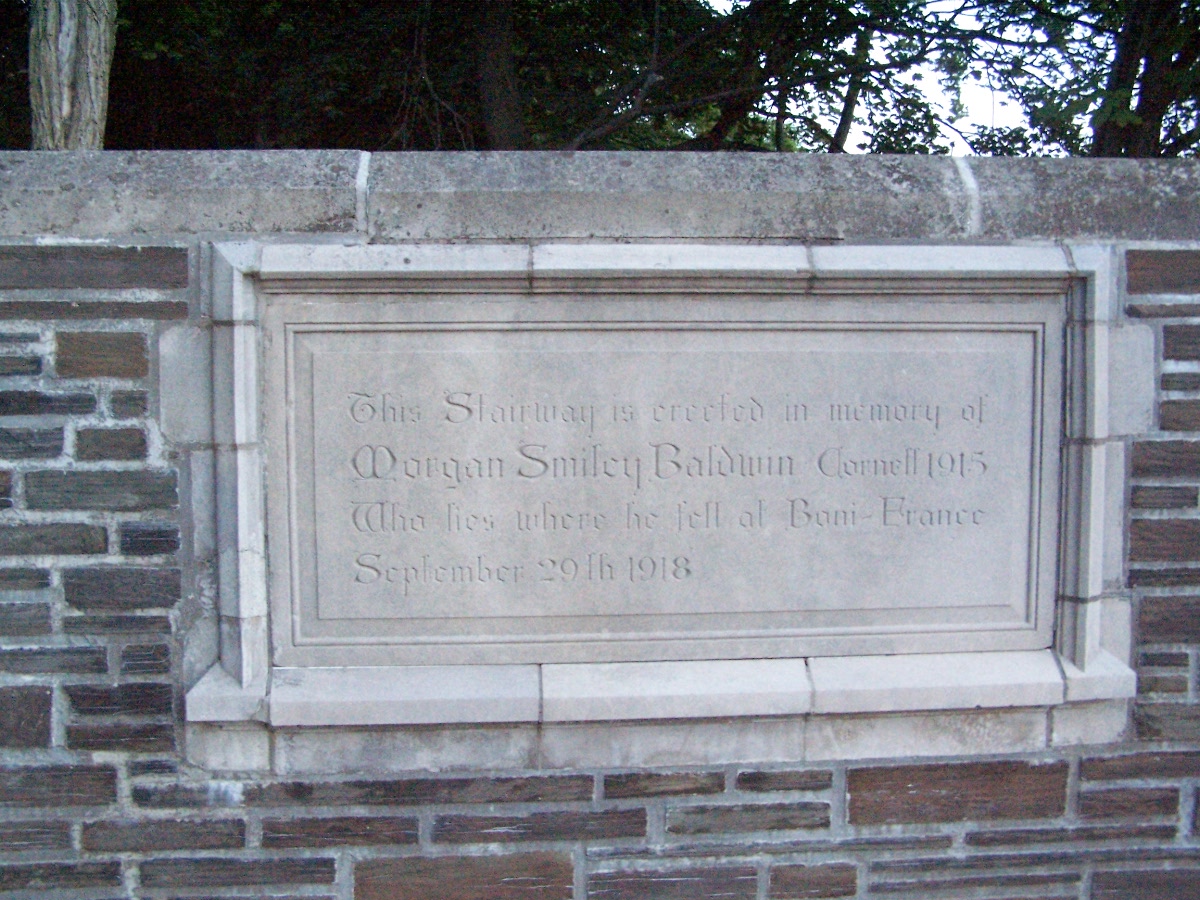
This staircase, also property of Llenroc, was dedicated in 1925 in memoriam to Morgan S. Baldwin 1915 by his father. Baldwin was a member of the Cornell Delta Phi chapter (Pi).

[1]http://en.wikipedia.org/wiki/Cornelliana#Hot_Truck_and_Louie.27s_Lunch

[2]http://en.wikipedia.org/wiki/Llenroc


Olin Libe Renovations

26 06 2008

Is there any hope for a new facade?

~~~

Dear B-,

While the primary focus will be the interior of the building, the
renovation will affect the exterior. The limestone will be removed and
cleaned. Also, the windows will be replaced.

Thanks for writing!

Pat Schafer, co-chair, Olin Library Renovation Committee

~~~

Nope. I was hoping to see its dated, punch card appearance changed too. What makes the building even more of a travesty is that Boardman Hall, the building that was originally on the property, was actually nice looking. Built in 1892 and designed by the same architect as Uris Libe (W.H. Miller), it was the original home of the law school. It was torn down in 1959 [1].

[1]http://ezra.cornell.edu/posting.php?timestamp=1166504400