Spring 2012 Construction Update

2 05 2012

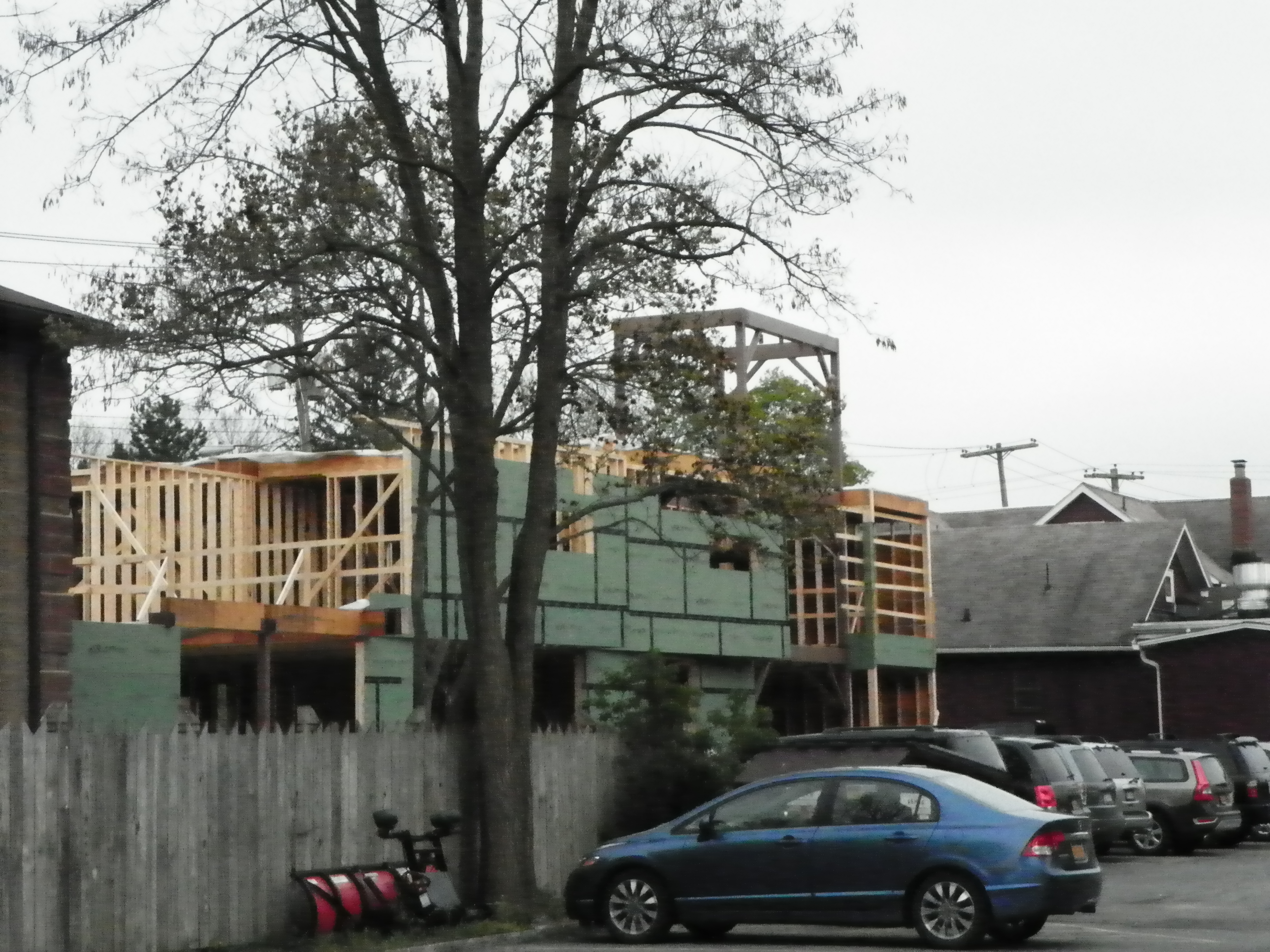
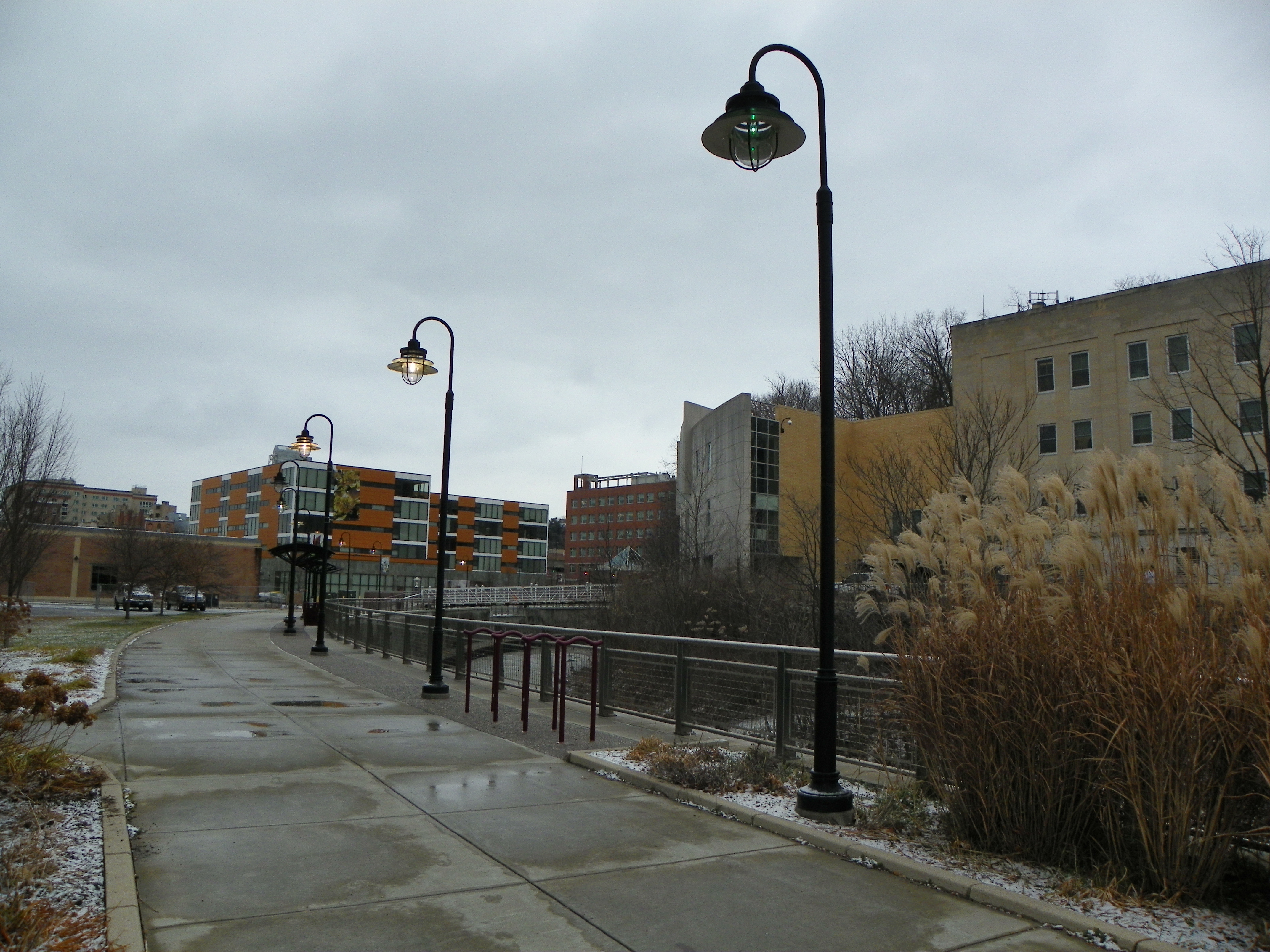
I’m disappointed, and I’m not disappointed. I can’t be at Slope Day itself because of a morning meeting (and to seal my fate that day, I’m having new tires put on my car). On the bright side, I did get a chance last weekend to go to a Cornell alumni reception for my major, and the traffic, one could assume, was a lot better than it would be with thousands of young alumni driving back to the area. I took the downtime between alumni events as an opportunity to do some construction photo updating.

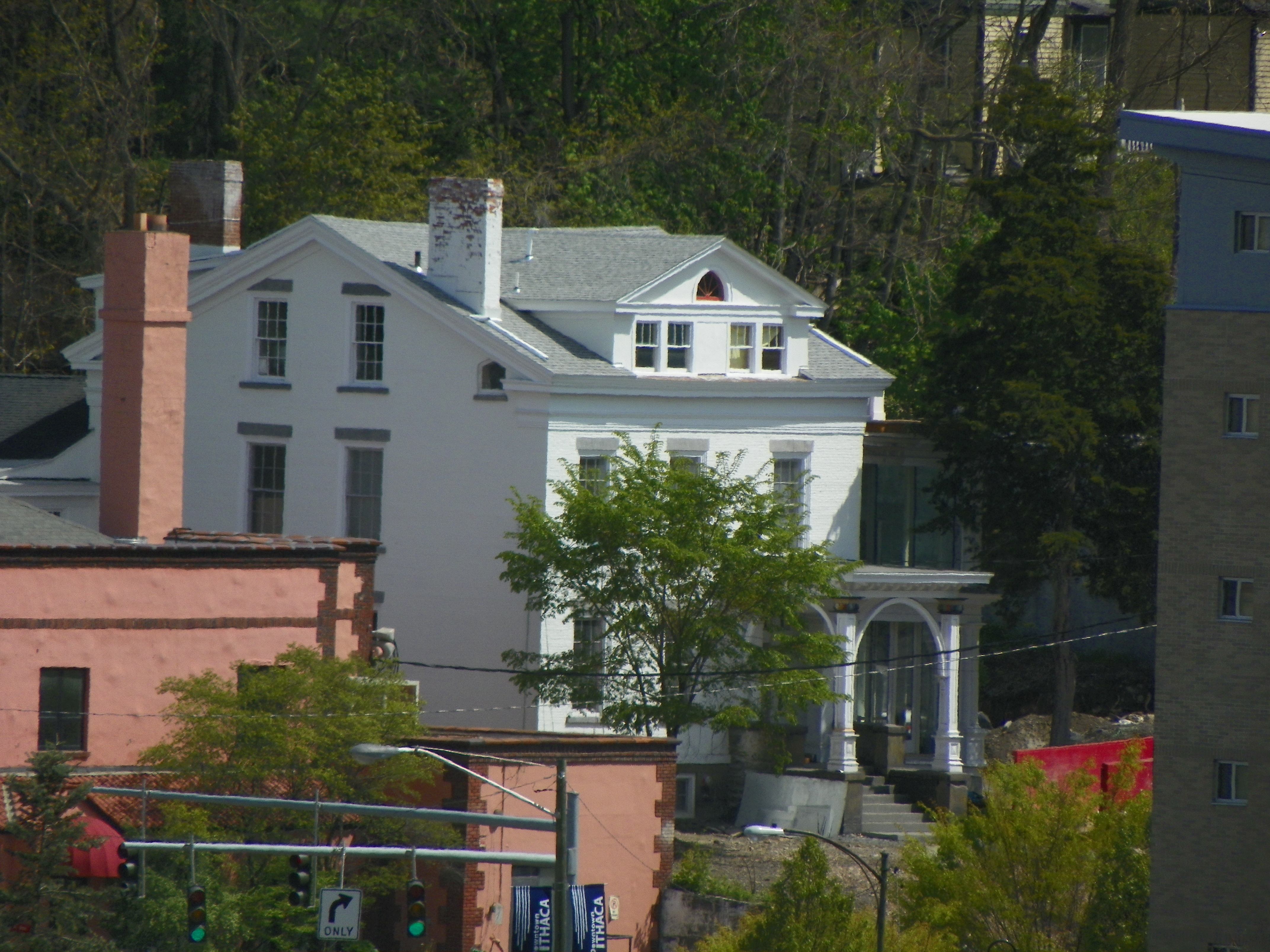
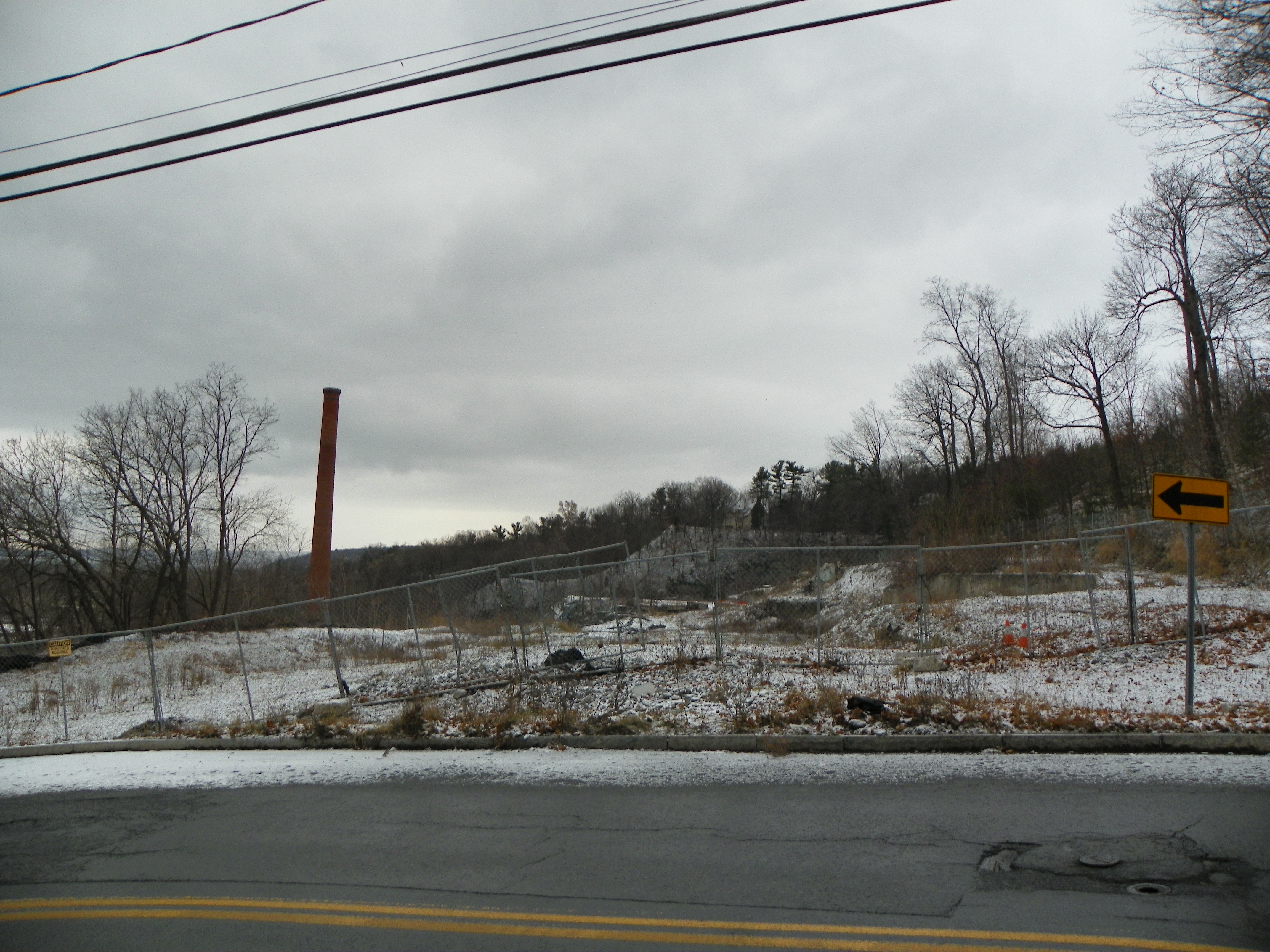
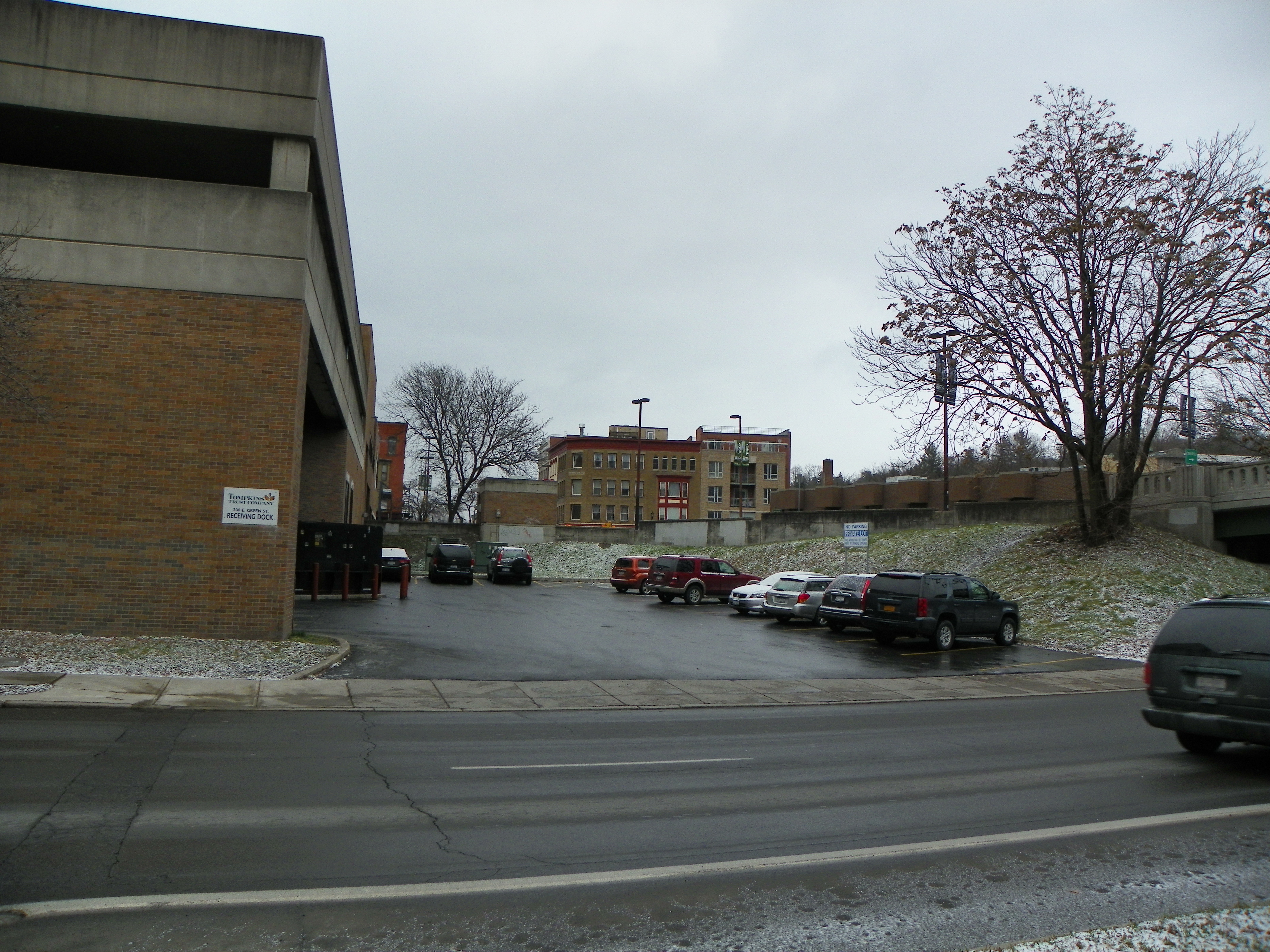
As nice as it would’ve been to report on some downtown construction, all the sites approved or of buildings “underway” appeared to be dormant from the outside – if they’ve started anything, it might be interior demolition, but there wasn’t any demolition equipment at Seneca Way or Breckinridge Place (which, as I have now discovered, is scheduled for May 15th); the latter had a tarp poster, shown above, but that was about it. As kinda expected, significant work has yet to start at the Holiday Inn, Hotel Ithaca and Cayuga Green II.

That being said, it’s not like there was no progress at all in the area. The Argos Inn is nearing completion of its renovation.

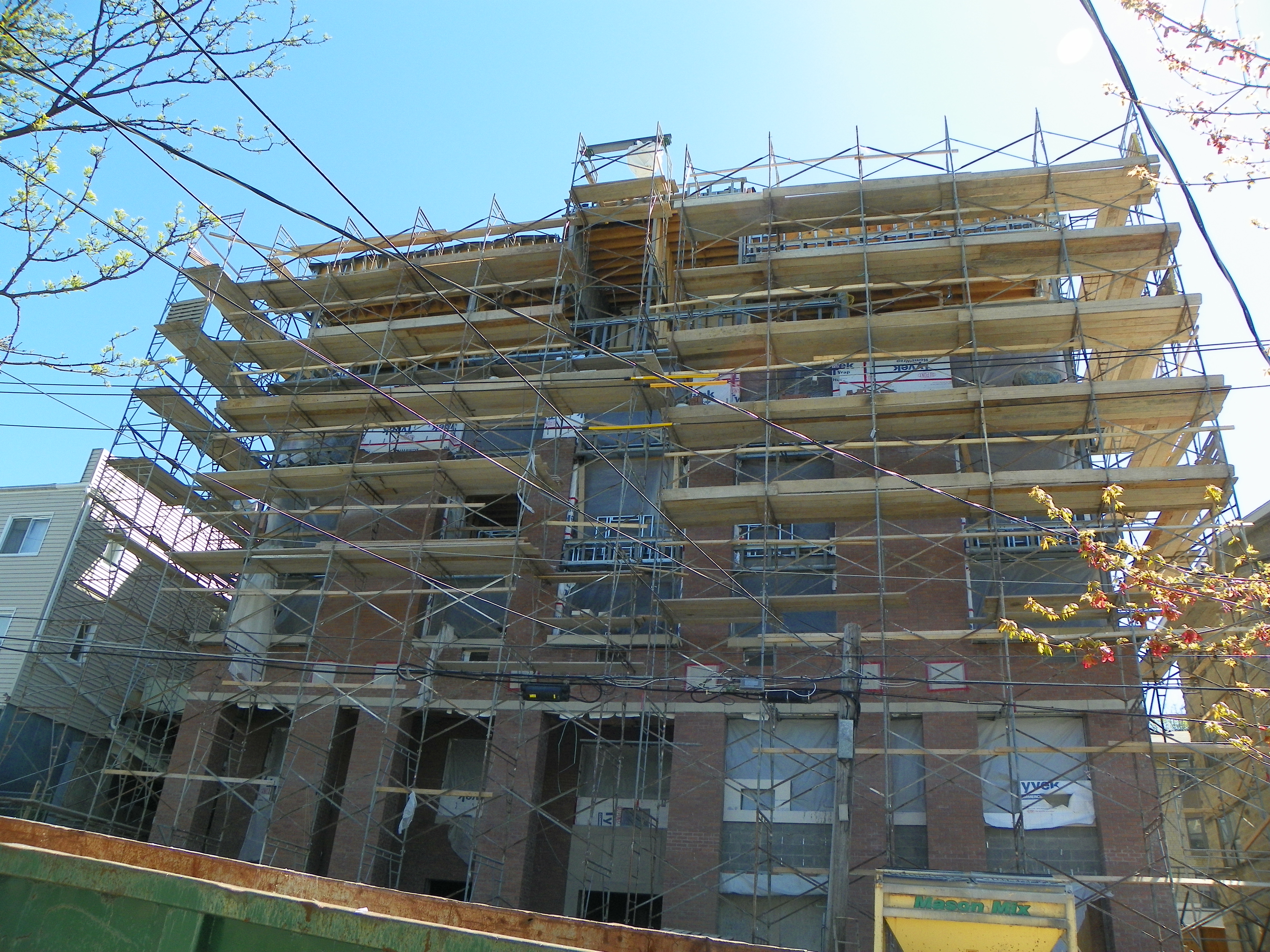
Comparably, construction in Collegetown has been rapid. Here, 309 Eddy is undergoing facade installation, and looks on track for an August completion date.

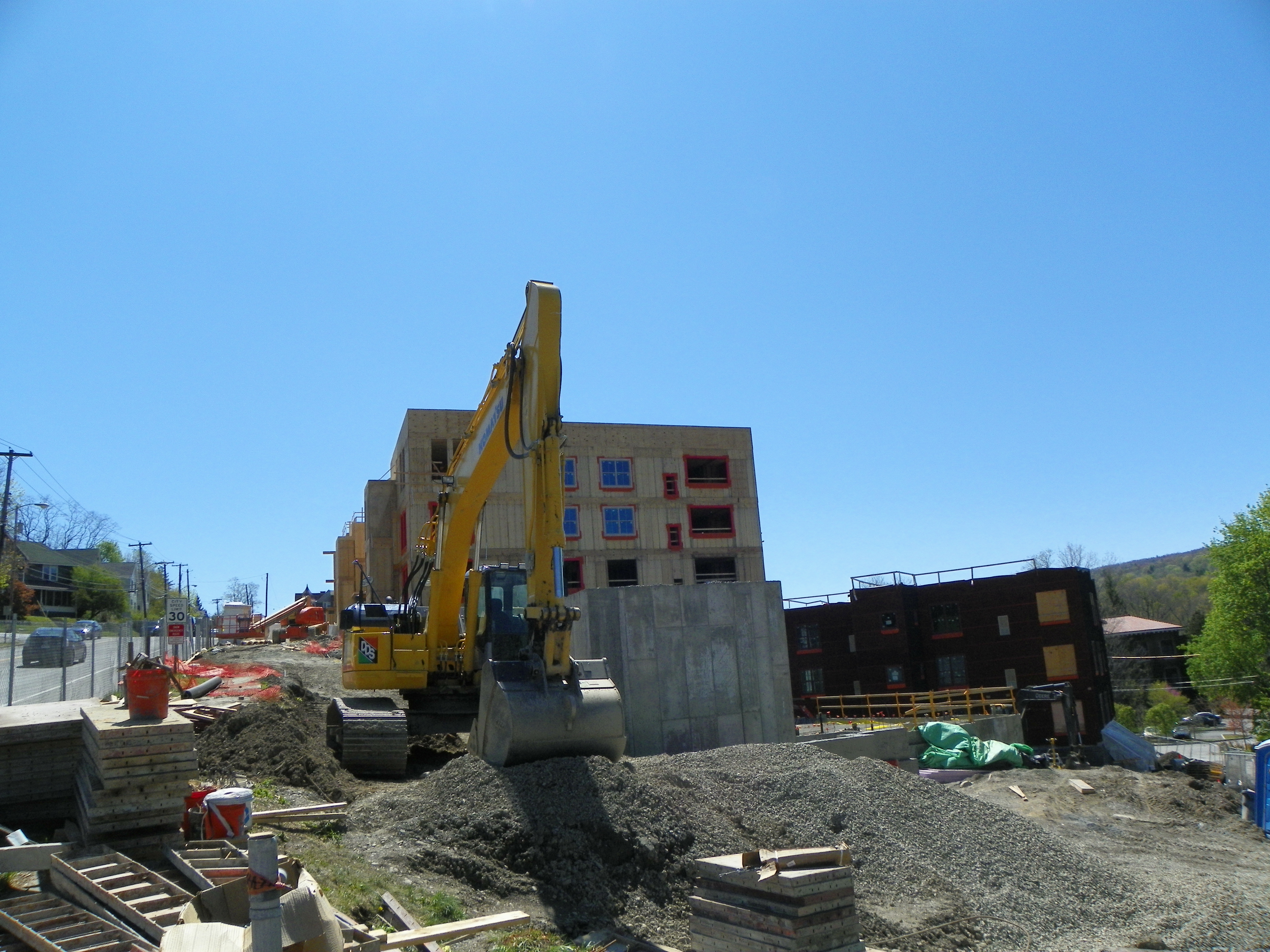
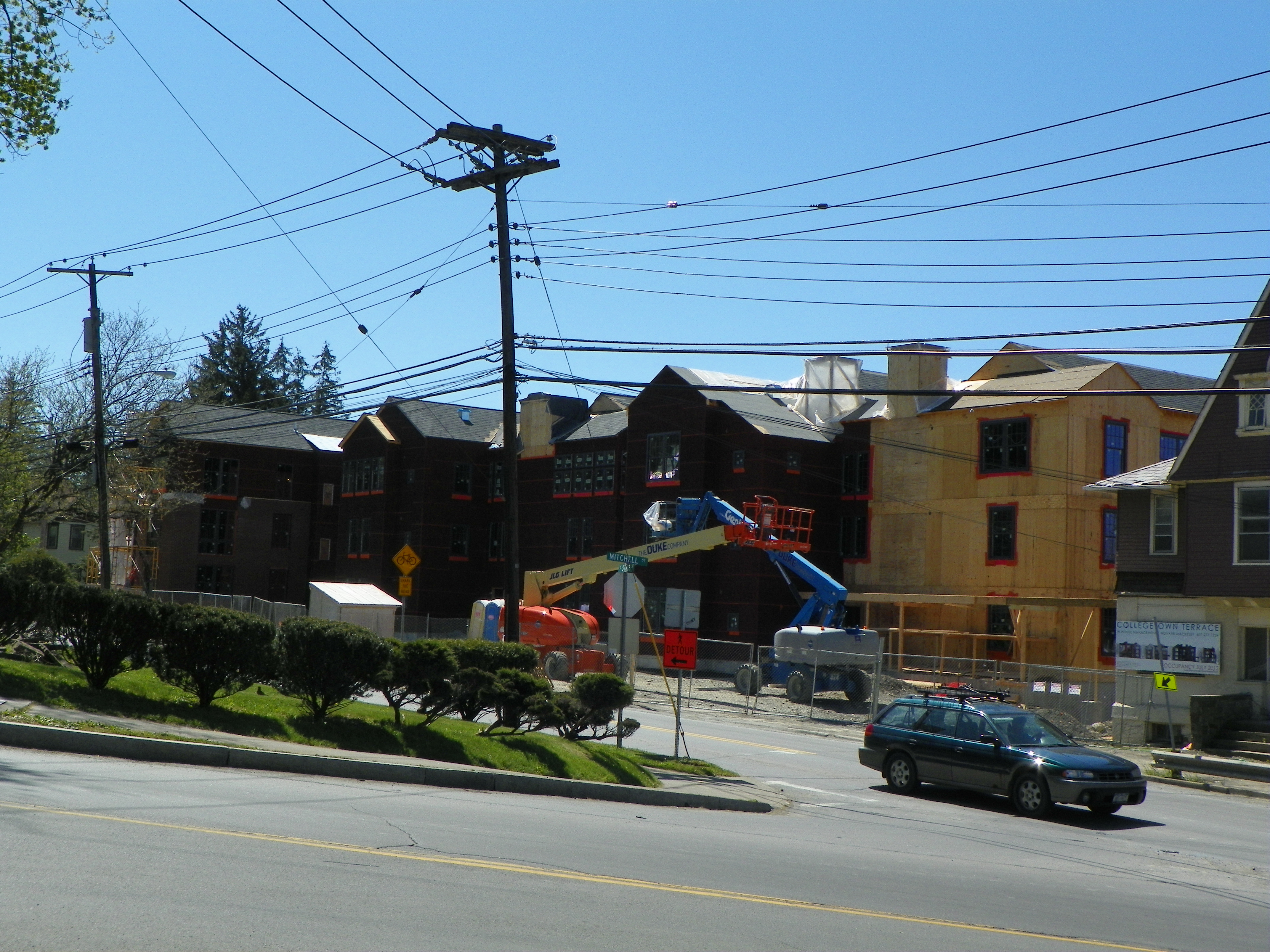
The progress at Collegetown Terrace has been nothing short of astounding. The following photos try to convey a sense of the size and scope of the construction, but I feel they fail to do so. By Ithaca standards, this project is enormous.

Definitely not a fan of the giant concrete pedestal.Here’s to hoping it gets landscaped into obscurity.

The Ithaca College Boathouse nears completion on Inlet Island.

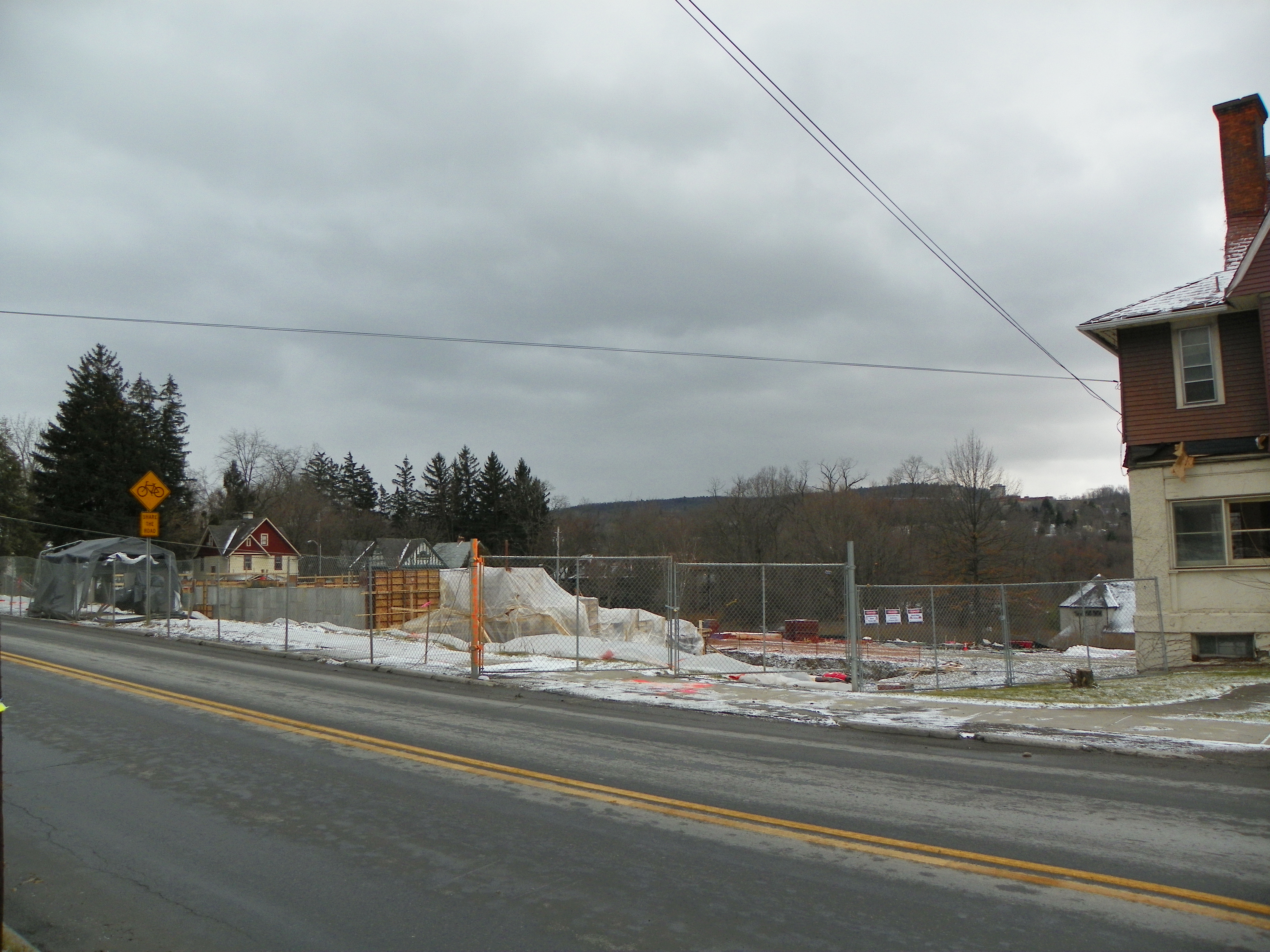
So, this one I only came around by chance, as I was going out with old friends for dinner. Apart from them thinking I’m nuts for taking photo of a building under construction, I’d say this was a pleasant surprise. The building is Magnolia House, a 14-person women’s homeless shelter.

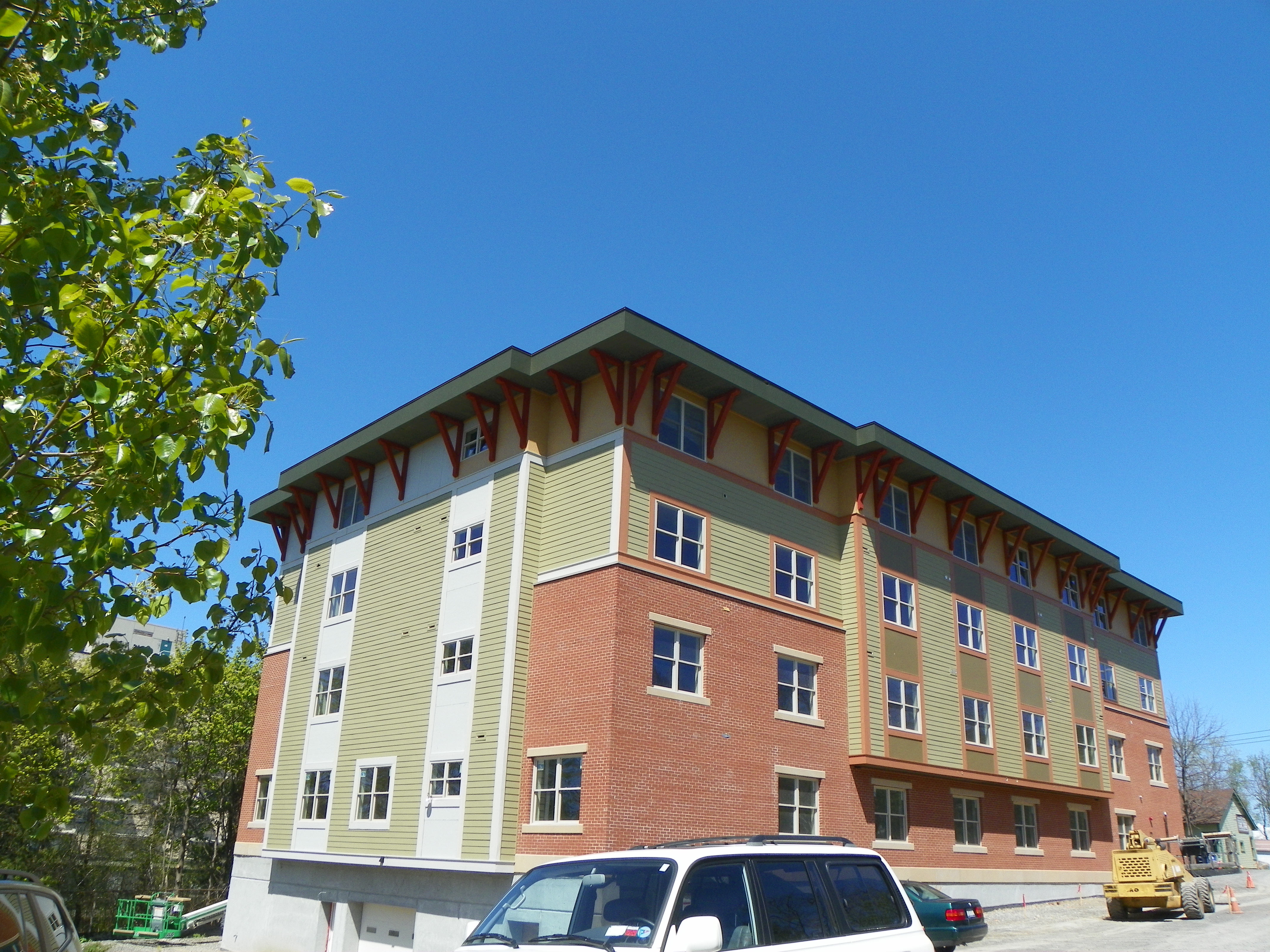
The Coal Yard Apartments Phase II is virtually complete. The 4-story building holds 25 apartments.

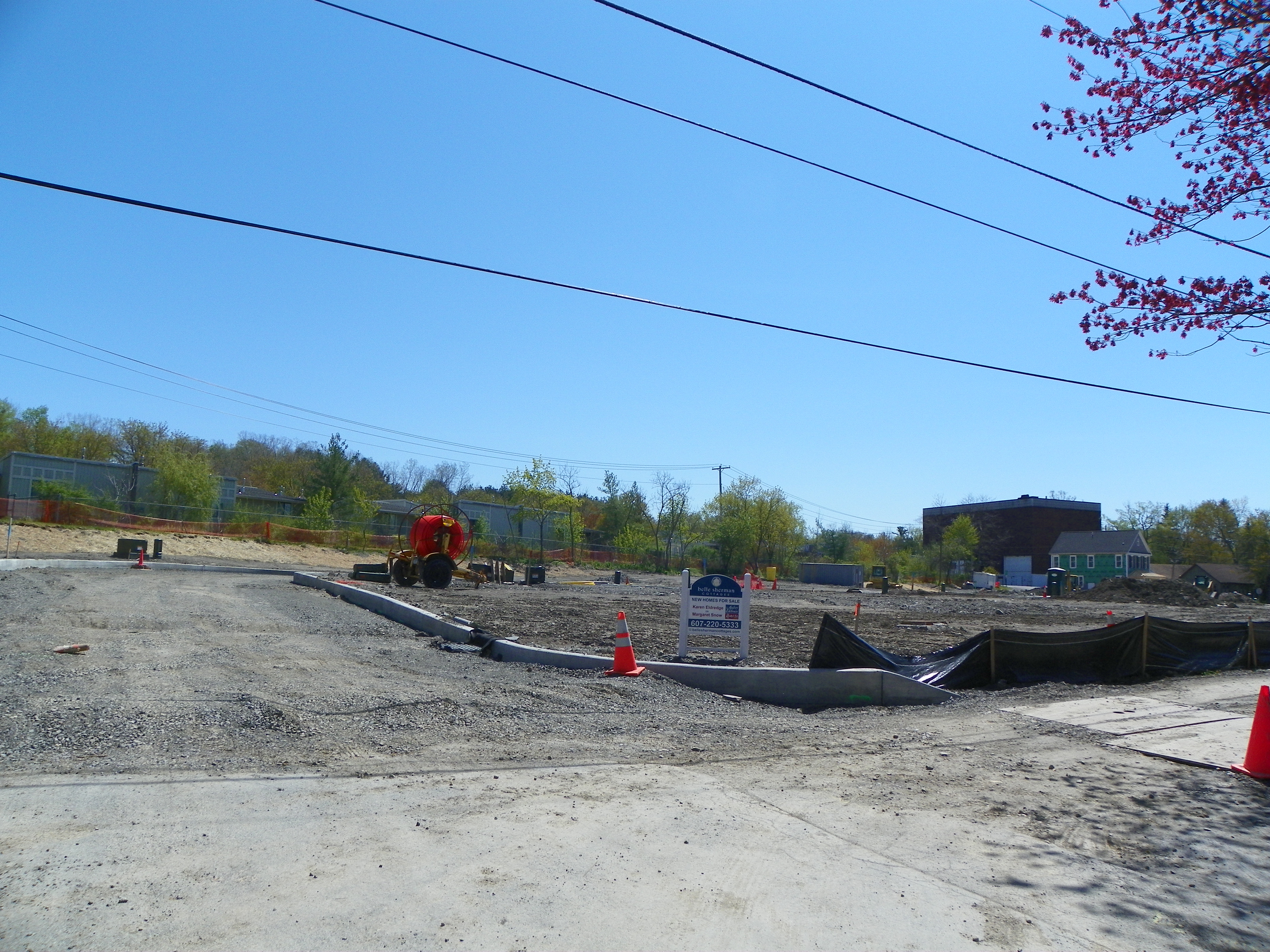
The Vine Street Cottages development continues, with the model unit currently the only building under construction. The project includes 19 houses and 10 townhomes.

Seeing as my computer is lagging substantially with the uploading of all these photos, I think I’ll cut myself some slack and upload the Cornell project photos in a later entry next week.


News Tidbits 4/12/12: Ithaca Plots to Get Rid of its Lots

13 04 2012

Image

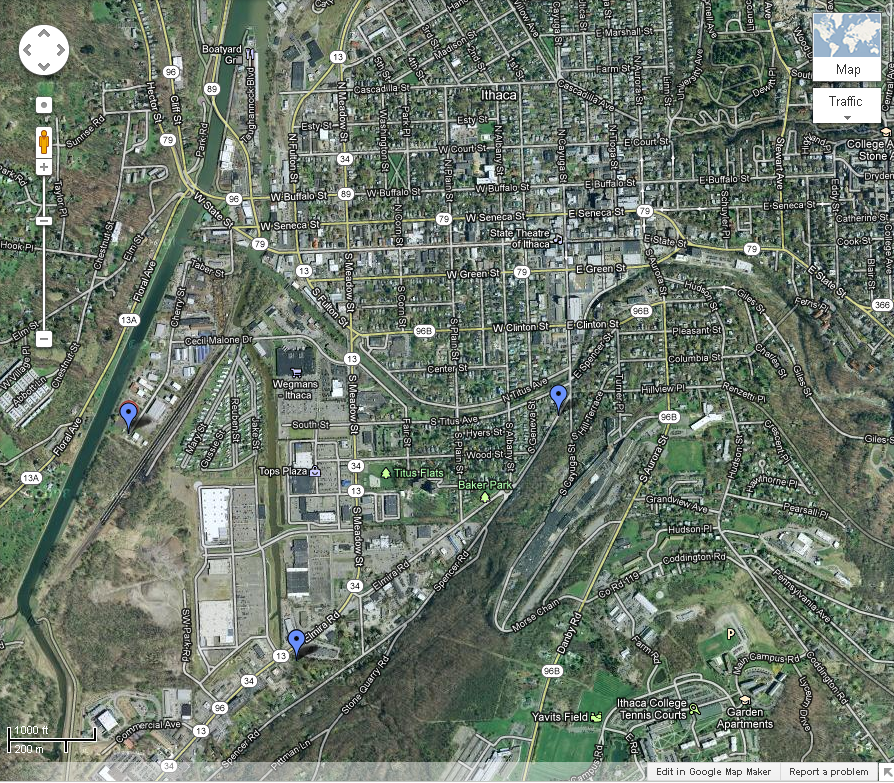
So, Ithaca has a lot of things going for it…and some things that aren’t. One of the unfortunate aspects of being a small city with a large university and a medium-sized college is that a lot of the local land is owned by said institutions, making it tax exempt. In fact, the proportion of tax exempt parcels in the city is right around 60.82 percent, 83.1 percent of which is owned by Cornell. So, this often results in a tight budget situation (Cornell, to its credit, has a Payment In Lieu Of Taxes (PILOT) agreement that pays the city $1.1 million annually, or about 4.5% of the tax value of its holdings; Ithaca College, at last check, pays jack squat). As one might imagine, this is a huge source of controversy, more than enough to merit discussion in a future entry. Anyway, this year, like many, Ithaca is looking at a deficit, to the tune of $3 million. To alleviate some of this burden, the city hopes to sell some of its unused property (at least $120,000 worth) to put it back on the tax roll and hope that someone redevelops it, for further benefit to the community and the city’s bottom line. This entry takes a look at the properties.

First off, the process on how to get rid of the properties has been, for lack of a better word, a clusterf**k. Two parcels have been cleared for sale, since there are no major environmental issues – 213-15 Spencer Street, and 321 Elmira Road.

Image

213-15 Spencer Street is a 0.47 acre property with a value of $124,000. The property is planned to be transferred to the Ithaca Urban Renewal Agency (IURA), which then sells the property for some value to an interested buyer, which in this case looks to be INHS, the local real estate development NPO. In sum, probably going to be developed for an INHS house.

321 Elmira Road is a 0.40 acre property with an assessed value of $189,000, probably because it’s in the middle of the rapidly developing big-box chain district in the southwestern part of the city. The sale of this property will be done via auction with sale to the highest bidder. At 0.40 acres (17,400 sq ft, not including zoning restrictions), don’t expect development here to me more than a small chain store of some variety…if anything at all, given drainage issues on the site.

Cherry Street parcel 100.-2-1.2 (i.e. 300 block). Is an 8.25 acre property in an industrial park with an assessed value of $825,000. This property is tied up in red tape due to some wetland on the south side of the property, but once those 2.25 acres have been subdivided off, the other 6 acres will be given to IURA, to be sold to an entity that will provide “commercial development”, if it gets redeveloped at all (some are calling for no sale due to the sensitive nature of the neighboring wetlands).

Given the tax rate, if all three were sold and assessed at current value (saying Cherry Street’s 6 acres are $600,000 for the sake of argument), you’d get about $32,000 in property tax, not to mention the one-time revenue of the sale itself. All in all, these sales aren’t really anything special, but it will be interesting to see what gets proposed for the Elmira Road and Cherry Street properties if the sales are ever completed.


News Tidbits 3/16/2012: What Lies Ahead for Cook Street

16 03 2012

From Cornell Daily Sun. Image Updated 4/25/2012.

From the Ithaca City Planning Board:

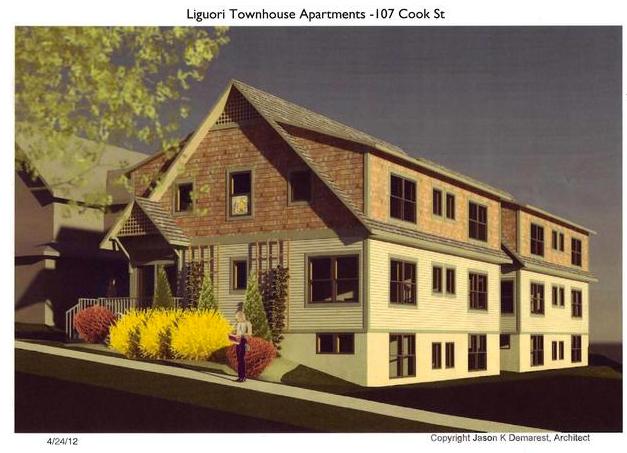
Site Plan Review, Townhouse Apartments, 107 Cook St., Jason Demarest, Applicant for Owner, Dan Liguori. The applicant is proposing to construct two 2‐story townhouses with partially finished basement levels, four parking spaces, and asphalt‐paved access drive, walkways, and landscaping. The buildings are each 2,304 SF with 6,128 SF finished floor area, and contain two 3‐bedroom dwelling units, for a total of 4 new units with 12 new bedrooms. Proposed exterior finishes include brick, fiber cement board, cedar shakes, and stained wood lattice detailing. The project is in the R‐2b Zoning district. This is a Type I Action under the City of Ithaca Environmental Quality Review Ordinance and the State Environmental Quality Review Act (because the site is contiguous to a historic district) and is subject to environmental review.

If the address looks familiar, it should. The ca. 1912 house that stood on the property was engulfed in flames in May of last year, killing a Cornell student. One of the factors that was believed to have weighed in on the fire (which was accidental) was a confusing internal configuration due to subdivision of the original property from single-family into multiple tenants (there were eight units total, housing 13 students).

The first proposal for new development on the property was rejected for a couple of reasons – for not having a porch, and for having a mansard roof that wasn’t much of a mansard roof. The planning board has been fairly adamant that any new property on the street fits in with the current set of buildings. Well, that and fire safety. Old single-family houses that are subdivided are usually grandfathered from the sprinkler requirement as long as the alterations are strictly internal.  The new building would have to have a sprinkler system in order to be approved as a multi-tenant building.

So here we are on proposal two; townhouses, two units in each, 12 bedrooms, so two bedrooms less than the previous proposal and one less than the original building. Based off of description alone, with cedar shake and wood lattice detailing, it sounds like this structure is more in-line with the current style of buildings on Cook Street. I for one will be curious to see how it looks.

Arguably, from a purely financial standpoint, it would be a blunder to not redevelop the property – several new units close to Cornell would fetch a higher going price than neighboring houses, just for being newer and safer. Also, paying taxes on land as highly valued as Inner Collegetown’s probably dissuades the owner from sitting on the property. If one were planning on holding onto the parcel for the long-term, this could be a potentially lucrative setup for the small-scale owner/developer.

Taking a grander view, I wonder if projects like this could be a demonstration of what may lie ahead for some smaller Collegetown properties.  As large new developments open up (CTown Terrace, the Palms proposal, etc.), and assuming a static student population, the rates for older unrenovated buildings will go down and the owner’s revenue will take a hit. This will be further compounded on poorly-maintained properties; owners who suddenly have a building declared unfit by the city, and have to make costly repairs or rebuild (while being excoriated by local residents and officials).  Ii is possible that over the next decade or so, more projects that seek to build smaller but  student-specific properties will be proposed in the area. Quality of design and materials, of course, is up to the owner and requires the city’s approval. In summary, I see the redevelopment of 107 Cook as an illustration of what may lie ahead for Collegetown.


The Rejuvenation of Gannett Health Center

28 02 2012

A while back, I mentioned that the plan for Gannett Health Center was to tear down the current structure and replace it on the same parcel of land with a new 90,000-130,000 sq ft building. While the project is still in the pipeline, a massing proposal suggests one rough idea of the future Gannett:

From HOLT Architects’ portofolio section comes this little nugget of information:

“…the 2007 HOLT Master Plan developed a comprehensive building space program for a 119,000 gsf replacement facility. Concept designs tested the full program fit on the existing central campus site and including substantial new parking requirements. Massing models, single and multi-phase construction sequencing, project costs, and schedules were outlined to assist the university with strategic planning.”

In other words, its a proposal for a new building, but it’s just one possible solution that may or may not be pursued by the university for the new Gannett. The proposal offers up a 119,000 sq ft 5-story (+1 more floor for mechanicals) structure whose massing suggests a curved face to maintain context with Campus Road to its southwest.

A couple of things stand out in the massing concepts. One, the ground textures were not updated to reflect the massing proposal. Two, the revised Hollister Hall can be seen at right (southeast). I’d be inclined to say that that would be based off of the master plan, but the master plan also calls for a demolition of the Cornell Store and Day Hall, which are not included in the imagery. It could be a saved time and effort on behalf of the company, or it could mean that the plans for Hollister are a little more solid than the other master plan suggestions. Either idea is plausible.

Since Gannett is currently only 39,000 sq ft, a building three times larger would leave an indelible impression on the intersection of Campus and College, arguably one of the most prominent on campus. Whether Cornell goes with this massing model, the tiered building in the master plan, or another design (not a hypermodern box, I can hope) remains to be seen in the university’s long-term plans.


News Tidbits 1/31/2012: The Big Red Bandhouse Will NOT Be Open This Summer

31 01 2012

Image Property of Cornell University

http://cornellsun.com/section/news/content/2012/01/31/new-building-big-red-band-will-open-summer

Dear Cornell Daily Sun – If a building starts construction in June 2012 with a tentative completion date of January 2013, in no feasible terms will the building be open by the summer of 2012.

Anyway, semantics aside, the design of the Big Red Bandhouse (or as I like to think of it, Fischell Hall) has been released. It’s a whole lot of Big Red Boring, but I suppose its purpose is more functional than aesthetic. It fits the general theme of ultramodern buildings that the university has more than happy to construct in the past several years.

Image Property of Cornell University

With the extra large front doors open, it kinda resembles a “Dust Buster” portable vacuum.The architects are the same folks responsible for the Plantations Welcome Center.

To allay the fears of the budget-conscious, the building is expected to be paid for entirely by private donations from Big Red Band alumni (in what I imagine will be a veritable inundation of pleas to their alumni to donate). The site is the current location of a small maintenance building (the Schoellkopf Garage), which will be removed and most likely rebuilt somewhere nearby.

I’m not a fan of the design (which should come as no surprise to frequent readers of this blog), but I figure this building was meant to be functional more than anyone else.


News Tidbits 1/19/2012: Ithaca Develops Its Waterfront

19 01 2012

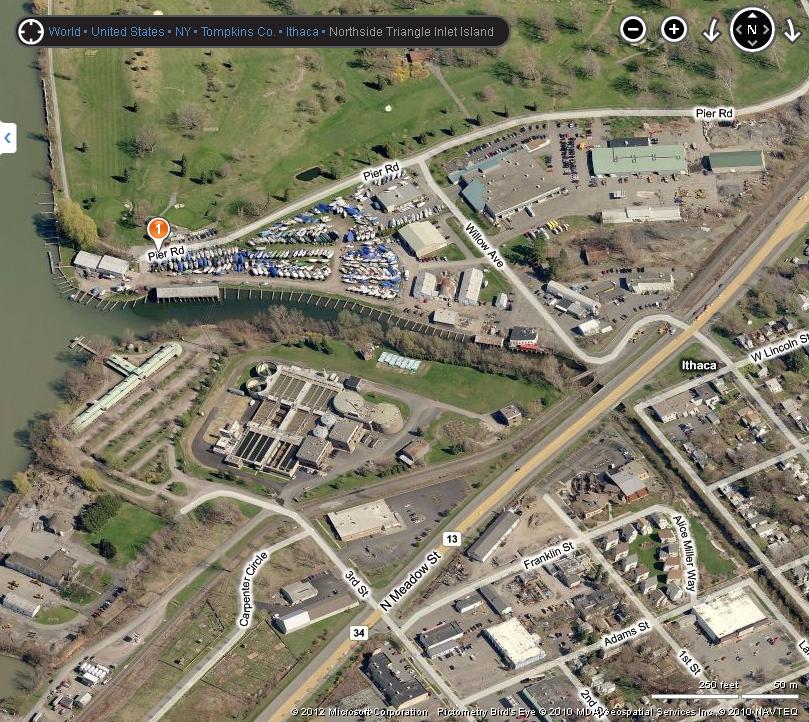
In today’s “Holy crap WTF” factor, the full scale of the Johnson Boatyard project has been released. I expected to hear about the 20 or so townhomes expected, and that was about it. But the project is, uh, quite big by Ithaca standards.

This starts by going back to last year, when Ithaca modified its waterfront zoning to accommodate larger, denser projects (this was not without contention). It appears that Jeff Cleveland, the owner and potential developer, plans to take advantage of that in a big way.

The proposal for the boatyard is as follows

The boatyard itself will be closed and 4 buildings are set to be demolished on the site. In their place will go the following:

11 three-story attached townhouse units with a gross square footage of 62,500 sq ft.

5 5-story mixed-use structures. These will contain 130-150 residential units occupying an area of 215,000 sq ft, and another 15,000 sq ft of retail commercial space. This includes 290 parking spaces on the side of Pier Road, with a roundabout installed at the end of Pier.

A plaza, a waterfront promenade, and a pier along Cascadilla Creek. The seawall will be rebuilt and all the boat slips will be retained. Essentially, the entire 7.8 acre property will be completely redeveloped.

This project would, perhaps, give Ithaca the developed waterfront it never had (or following the opinions of some locals, never wanted). The location is a bit weird because it’s outside of the more developed areas of the city (Inlet island seemed like a more logical winner from the change in zoning).  Walking across the promenade will give a lovely view of some trees…and the wastewater treatment plant right across the water. Unusual project, and surprisingly large project, but it wasn’t clear what was going to be built in what phases (my guess is that it is still the townhouses first, and some staggered development from there). Impressive proposal if but only for the scale of the project.


Where Have All the Drinkers Gone?

13 01 2012

I had first seen rumors of this on facebook, but it was only verified by the Sun sometime last night: The Royal Palm Tavern, or rather, “The Palms”, is closing, after 70ish years of service to the inebriated community (I’ve seen opening dates ranging from the late 1930s to 1944; the Sun went with 1941). The Palms closing next month will mark the third Collegetown bar closing in less than year, following in the footsteps of Dino’s and Johnny O’s.

I think most older readers of this blog have some memory attached to one or more these places. The Alumni Magazine did a nice piece about drinking-holes of yesteryear just back in November, complete with the line “the Royal Palm Tavern—still open, despite recent rumors to the contrary—has served a steady stream of students since the Thirties.” To some extent, I worry with the closure of multiple bars and the restrictions on fraternity parties are only furthering the move to drinking in the rundown houses of Collegetown, arguably a more dangerous environment than the aforementioned options. Let’s be honest, if a third of the drinking establishments in Collegetown have closed, and traffic was pretty high on many nights as it was, the traffic that would go elsewhere might just get frustrated with the lines and crowding and just drink at a private party. For the record, Johnny O’s closed after legal issues and their landlord opted for another tenant, and Dino’s was not allowed to renew their lease. The Palms is closing because of financial issues, and the owners are retiring.

As much as I could pursue an entry just on drinking culture/concerns, I’d rather stick to what I do best – Ithaca history and development. First, the Palms’ property, at 209 Dryden Road,  is not for sale, it has already been sold.

That is, unsurprisingly, a prime, prime piece of property to tap into the more expensive segment of the Collegetown market. Now, being such a prime property carries a hefty price tag, so the developers would have to be fairly deep-pocketed, and in fact they are; it’s the firm Novarr-Mackesey, the same developers of the massive Collegetown Terrace project. The rumor mill has been cranking out the possibility of a mid-rise or high-rise apartment building on the site of the Palms. Unfortunately, at this early stage, it’s hard to say what the proposal will look like.

However, there are two certainties – they’re going to have one hell of a time tearing the Palms down, and if it goes over 60 feet (or over 6 stories, whichever comes first), then it’ll be even more difficult because they’ll need a height variance (B-2b zoning says building should be 6 stories or less, and no more than 60′ feet from base to roof). The zoning could be pliable depending on any fringe benefits for the city or any public enhancements (for example, offering public meeting space). The building was built around the early 1920s, and has operated as a restaurant/bar for virtually all of its life, and is seen as a potential historic landmark. Notably, some of the members of the Planning board also put together the historic buildings document. If Novarr-Mackesey wants to build anything, I see this being a prolonged battle, especially if it needs to go up to the Zoning Board of Appeals, where more objections can be raised.

Honestly, I hope to see something, because if buildings appear totally vacant like this, giving a poor impression to visitors and potential students, that is unacceptable:

Update: The Palms and two neighboring buildings on Dryden were sold last year toan LLC associated with Novarr-Mackesey for $3.75 million, well over their assessed value. In the Cornell Sun, Novarr claims there are no set plans for the location yet, but there will probably be a housing component. Considering his work with Collegetown Terrace, which will not be finished until 2014, it could be a couple years before financing and plans are lined up for the site’s redevelopment – leaving that part of the street rather blighted in the short term.


A Snowy Ithaca Update

30 12 2011

It’s a running joke that Ithaca is “centrally isolated”. Luckily for me, however, I grew up not too far north of Syracuse, so visiting my family for the holidays can also have “pay a visit to Ithaca to update my photo collection” somewhere on the itinerary.

Unfortunately, although I had the date planned well in-advance (I even wrote a list of places to visit so I wouldn’t miss any of my intended targets), it also happened to be one of the coldest and snowiest days yet of the upstate winter. The lake effect had set itself up in a large and fairly strong band south of Syracuse, enveloping a wide swath of land from about Ithaca up through Lafayette. With the passage of a cold front the night before, a brisk northwest wind kicked up, turning a snow day into a windy and snowy day, with near-whiteouts on the interstate.  Combine that with puddles from the heavy rain of the previous evening freezing over, and the driving was a bit of a harrowing experience. At least the old days of practicing controlled skids in a parking lot came in handy. Anyways, the weather slacked off after lunch and I was able to get some photos.
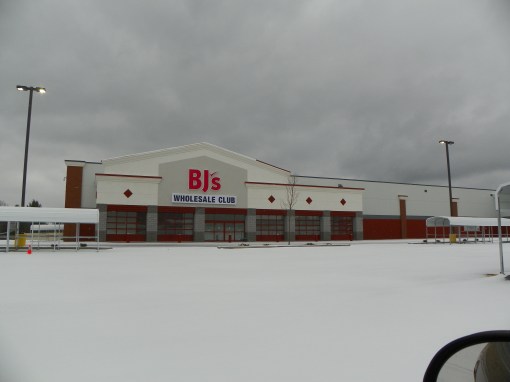
The BJ’s in Lansing (just north of the mall) is near completion. I did not notice any senior homes being built when I visited.
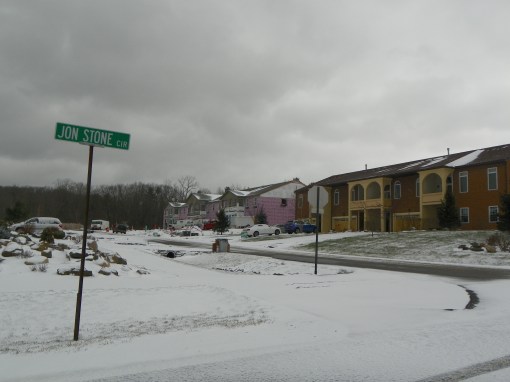
One of the housing projects nearby, Ivar Jonson’s Heights of Lansing. 6 more units of the 80 unit project are under construction in the background. I took photos of some of the Lansing suburban sprawl, but I figured no one would know the difference between a cul-de-sac of McMansions here vs. any other city. I’ll save the photo for another entry that could better use it.

Not much happening with the Ithaca Gun site. The site is cleared, but no construction has taken place. According to an article in the Ithaca Journal, the project is supposed to finish clean-up this year, and the developer plans to finish clean before starting any redevelopment. So probably no construction until 2013.

The site of the Breckenridge Place project. The Women’s Community Building’s days are numbered. According to a very recent Ithaca Times piece, demolition will occur starting in March.

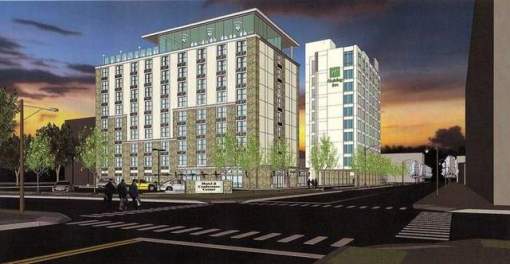
Rendering Courtesy fo Hart Hotels


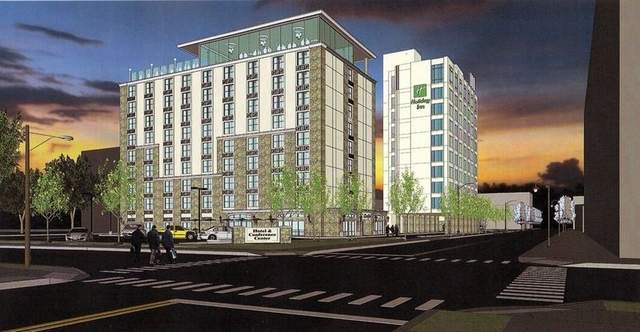
The Holiday Inn has begun the initial phases of proposal with the planning board. The plan calls for the low-rise portion, shown here, to be demolished, with a new conference area and a few more rooms attached to the mid-rise tower of 10 floors. The new hotel would be built at this street corner. I don’t have many faults with the design, except that the east wall looks cheap. Like 1960’s pre-fabricated cheap.

The Cayuga Green Condos site awaits construction. The project is currently unfunded (and therefore stalled), but with a reorganization and a ground floor tenant secured, the developers hope to secure funds and start construction by next summer.

It seems I’ll have a plentiful supply of “before” images. This is the Hotel Ithaca site. I’m willing to venture this project is much like the Cayuga Condos – tenant secured (Gemstone Hotels), but no funding yet in place as a result of the tight loan market for new projects. Hopefully, we’ll hear positive news in 2012.
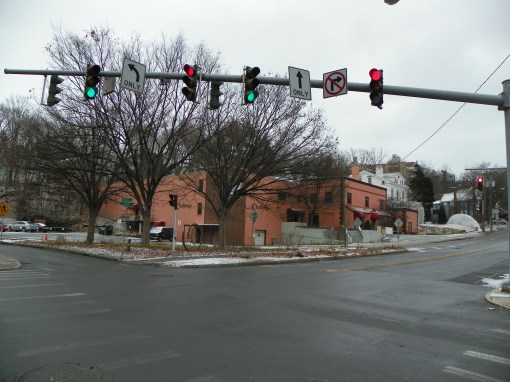
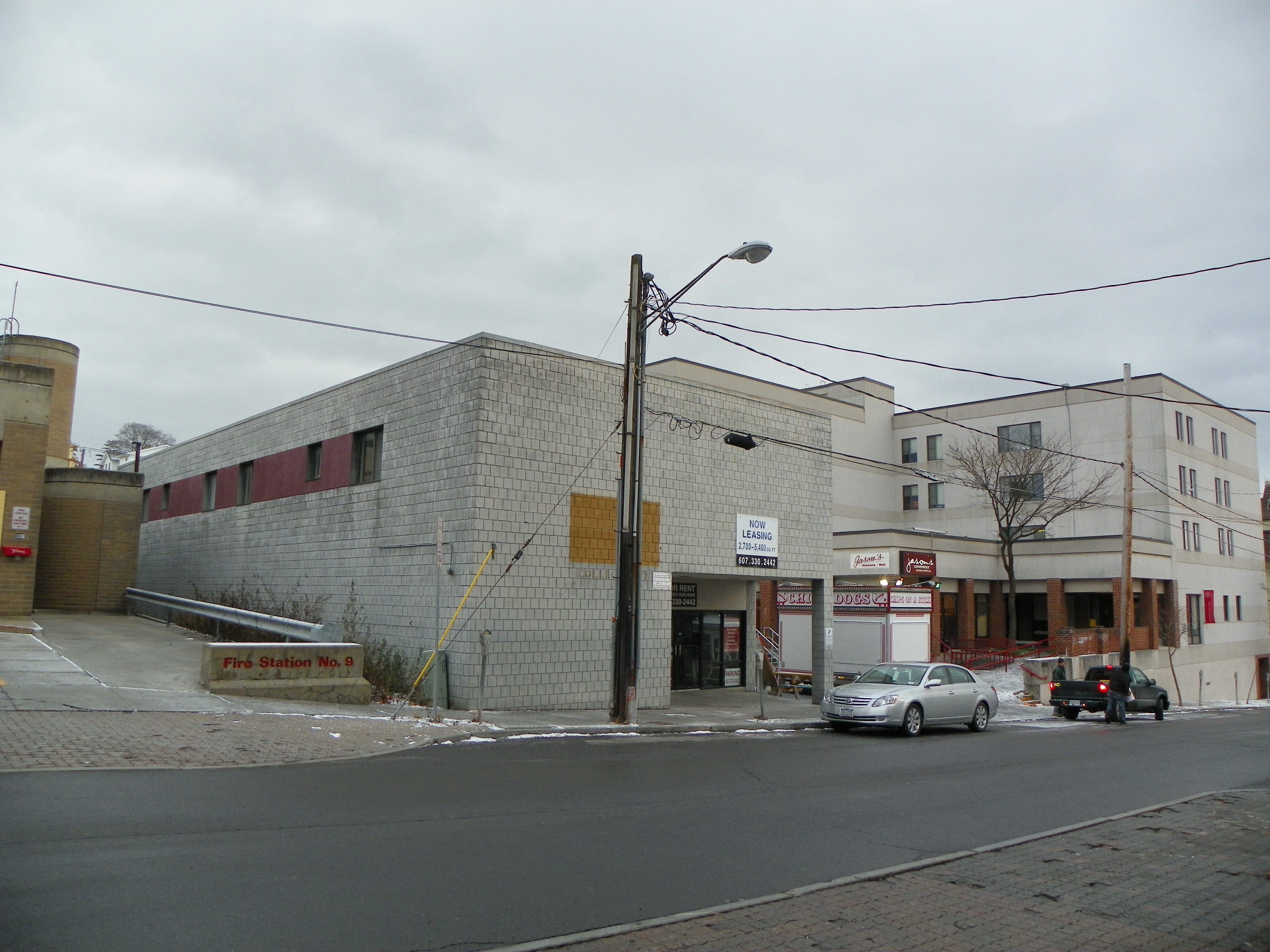
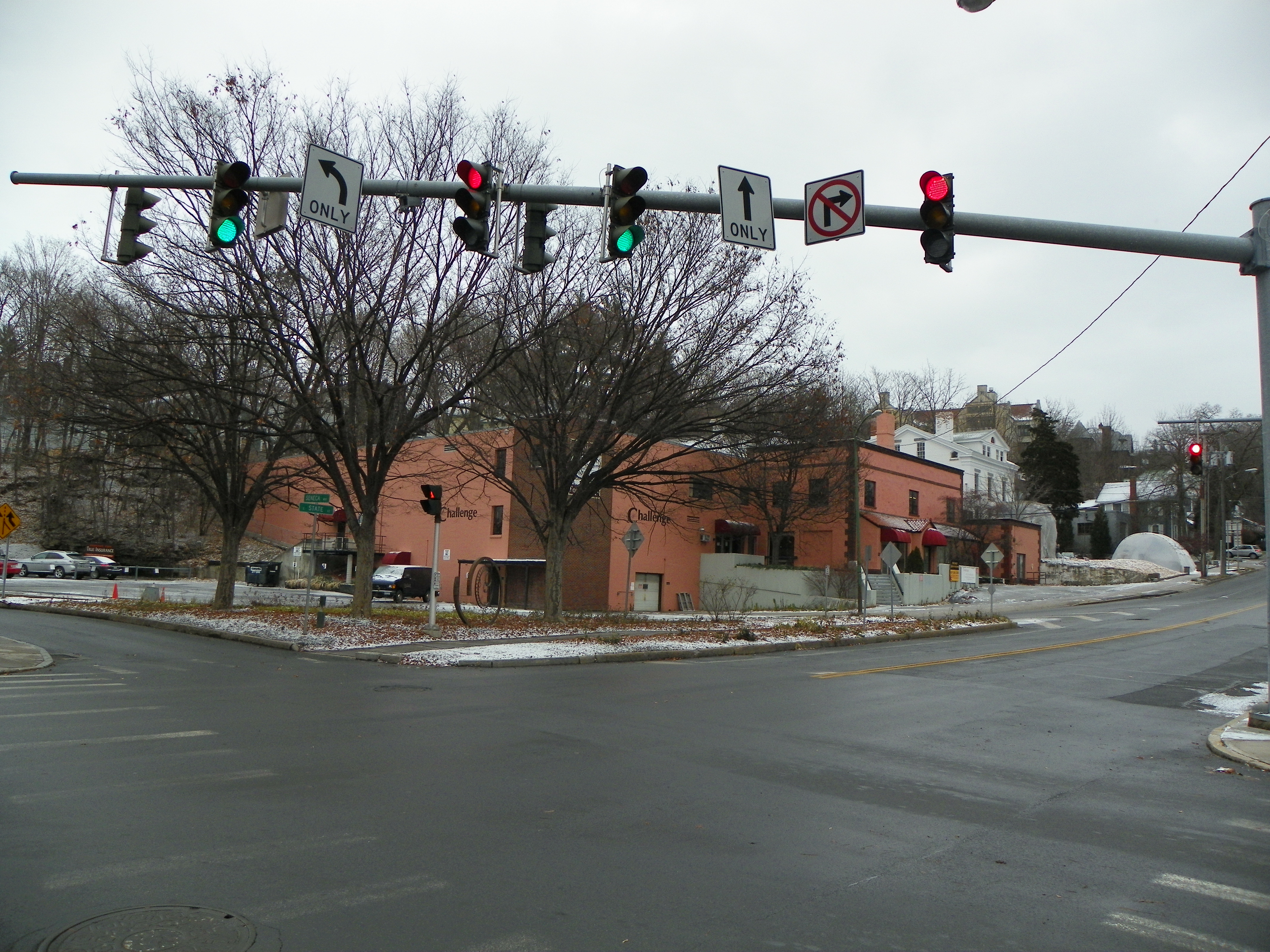
Hm. I’m sure things will be much more interesting one year from now. Here’s the Seneca Way Apartments site. The renovation of the Argos Inn (turning a dilapidated house into a LEED-certified boutique hotel) continues in the background. The Seneca Way project will begin demolition of the old Challenge Industries building this spring, and be built on a (slow if steady) 18-24 month time frame.

Moving towards Collegetown, it was hard to fully capture the sheer size and scale of the Collegetown Terrace. Simply put, it’s massive. The house in the background to the left is the Williams House; the project extends further up the street beyond that. In contrast to Seneca Way, the time frame here is brisk – phase one, consisting of 12 of the 16 new buildings, is expected to be completed by August 2012. The other two phases are expected to be completed in 2013 through early 2014.

I did some mental math – the rental market will see Novarr’s 600 beds come online in the next couple of years, which might be around 5% of the total market. That’s quite an impact, most likely to be felt by the student-oriented apartment complexes furthest from campus.
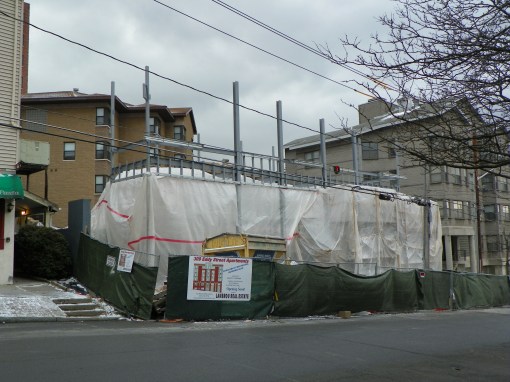
The apartment building under construction at 309 Eddy. Look for a completion date around late summer 2012.

The site of the “Collegetown Crossings” project, formally known as 307 College Avenue. The project is back on the agenda as a sketch proposal, but I’m yet uncertain as to whether it keeps the form of a 6-story 60-unit building with a distinct lack of parking, or if the proposal has been modified.

EDIT 1/23/12: The above rendering (from the Sun, courtesy of the City of Ithaca) is the latest design of the project. The project, if granted approval, will be home to a Greenstar Co-Op Grocery branch. The building would be complete by 2014.
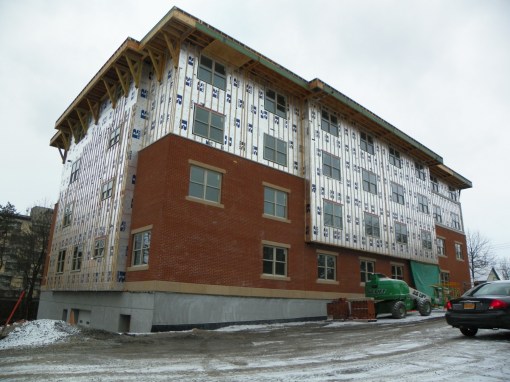
Phase II of the Coal Yard Apartments project off Maple Avenue. The 4-story, 25-unit project looks to be heading towards a spring 2012 completion date.

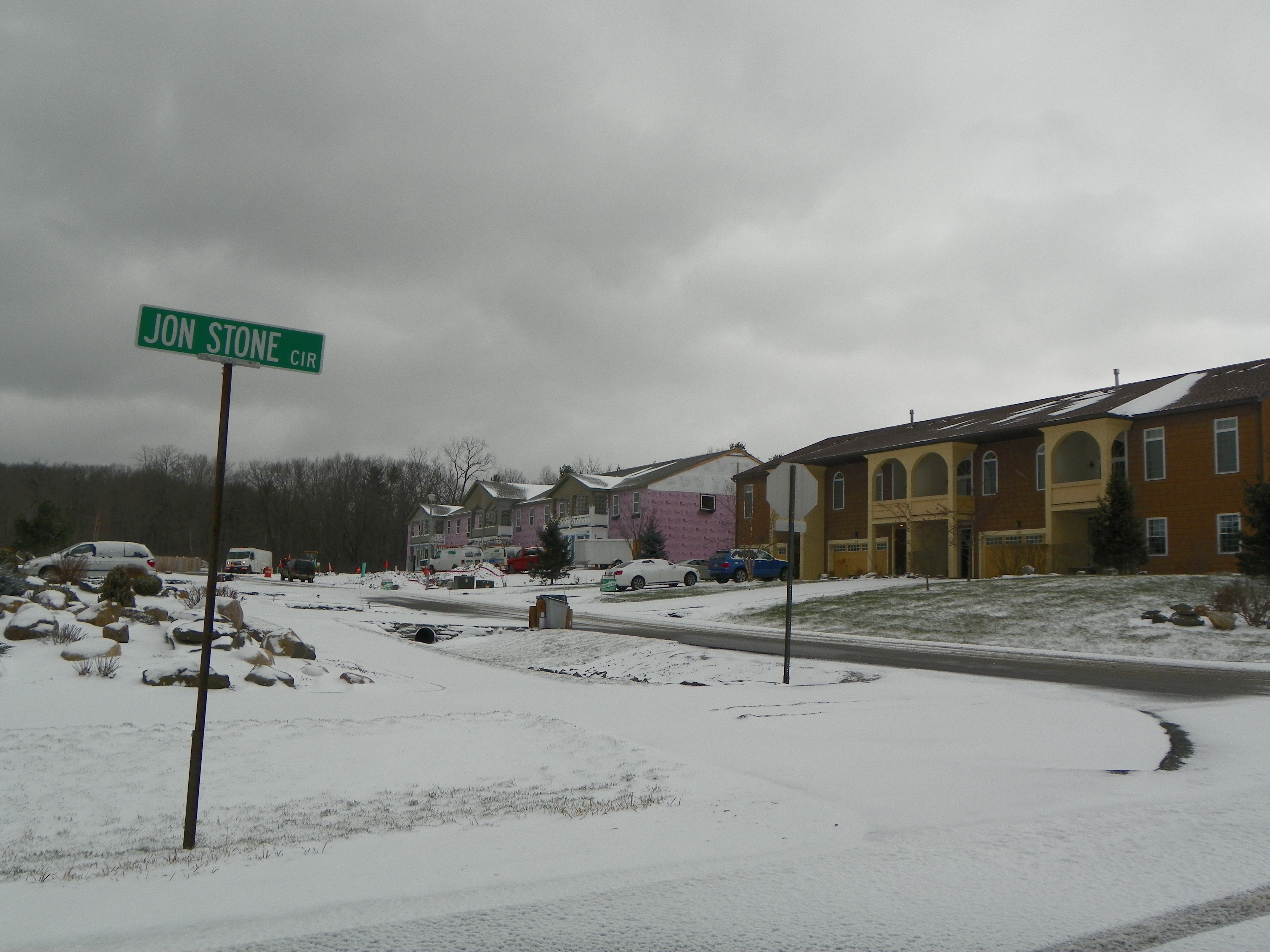
The site for the Vine Street Cottages project has been cleared. Construction of the model house should be complete by the spring. The 29-unit project (19 homes and 10  townhouses) effectively redevelops the eastern edge of the city (Belle Sherman).


The Loyal Opposition to the Tech Campus

19 12 2011
Image Property of Cornell University

Image Property of Cornell University

Congratulations to Cornell on winning the bid for the NYC Tech Campus.

However, to be honest, sometimes I feel like the only alum who doesn’t support the project.

By no means do I not want Cornell to succeed as an institution and give a strong education to those that earn entrance into the university. Plus, it seems unusual given my predilection for the development of physical facilities related to Cornell. It’s just…well, it has to do with Cornell’s identity.

Take Weill for example. Most Cornellians in Ithaca are vaguely aware of Weill’s existence. Certainly, the folks are aware of Cornell being based in Ithaca. But they both function independently. They’re separate institutions that just happen to be under the same Big Red umbrella. From a bureaucratic standpoint, that’s probably for the best. I expect something similar to shape up in the operation of the new Engineering Graduate Campus in New York City.

But some disparities between the two have been troubling. For instance, fund-raising in the “Far Above” campaign. As described in this Metaezra post from June 2010, the campaign was immensely successful for the medical school…but not for the main campus in Ithaca. One line has always stuck out in my mind:

“…so apparently wealthy New Yorkers care more about life-saving research and services than basic research and education a five hour drive from Manhattan.”

This has, in some sense, been my concern with the new campus in New York City. Yes, it will inspire entrepreneurship and innovation and all those other cute buzzwords they like to toss out in brochures. People are also free to donate their money as they choose (as it should be). But to what degree does this development of a new campus affect to the main campus in Ithaca? I’m concerned that so much attention will be paid to this new program that many of our alumni (of which 23% live in the NYC area) will donate to the school in their backyard rather than the one five hours away. By establishing another campus, I also worry that there will be less of a sense of a Cornellian – in my wildest imagination, I fear some future New York City campus alumni will self-segregate themselves – the “I’m a Cornell-New York Campus alum, I don’t associate with Cornell-Ithaca alumni and want nothing to do with THAT Cornell”. At least you can take classes in different undergraduate colleges. I see the mixing of Ithaca and New York activities as fairly rare events. Maybe Stanford was afraid of something similar happening, since the campuses would be 1000s of miles apart.
Maybe I’m being overprotective of the Ithaca campus, or this post will be written off as whining because I don’t like New York City or I don’t support Cornell’s global mission or whatever other reason that floats their boat. But I get nervous when the emphasis seems to be displaced from the campus that Ezra demanded be on his farm on the hills overlooking Cayuga. At the very least, I’m adding my voice to a silent minority that have concerns regarding the proposal.


News Tidbits 11/16/2011: Cayuga Green II Gets a Revival (and a Revision)

16 11 2011

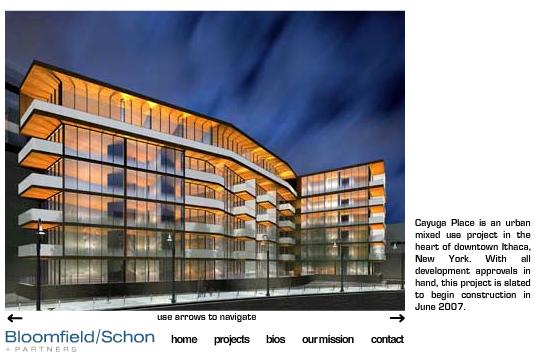
In terms of Ithaca-area development, I consider myself an optimist. But Cayuga Green’s second phase was one of those projects I had written off as left for dead. For a quick background, Cayuga Green is the formal name for the mixed-use project that has been underway on Green Street in downtown Ithaca for about ten years. The project, proposed for a piece of land that was then-used for a large parking ramp/lot, was aimed to revitalize that section of downtown, but was not without controversy due to its use of property tax abatements by developers Bloomfield & Schon. The first phase includes the new Cinemapolis (one of the results of the controversy was to switch from a new multiplex to a new space for Cinemapolis), the redone parking garage, a creekwalk, and the Cayuga Place Apartments, where the new TCAT stop is.  The first phase was completed a couple years ago.

By a fair account, the project has had mixed success. What has been built is doing quite well. Gimme! Coffee, Palmer Pharmacy and Urban Outfitters filled the new commercial space (all of which were new, not companies that moved space), and the apartments had a low vacancy rate. Cinemapolis has adjusted to its new space and the street is rejuvenated. The project spurred nearby development, including Gateway Commons and the Hotel Ithaca project. The caveat comes from the second phase, which was supposed to start in mid 2007. The financial market started to tank, and this phase had never gained financing, government or private. The space it was intended for, behind the city’s new parking garage, was left empty.

It would seem that is about to change. Thanks to a tip from from frequent visitor and favorite old fart “Ex-Ithacan”, the project is going in front of the Planning and Economic Development Board. The revision is for a six-month extension on the site (construction was supposed to start by 12/31/2011, even after a previous delay),  The amendment notes the project seeks no tax abatements, but must go to the Common Council at the end of the month for final approval.

Also notably, the project is revised. The original proposal looked like this (image from developer’s website):

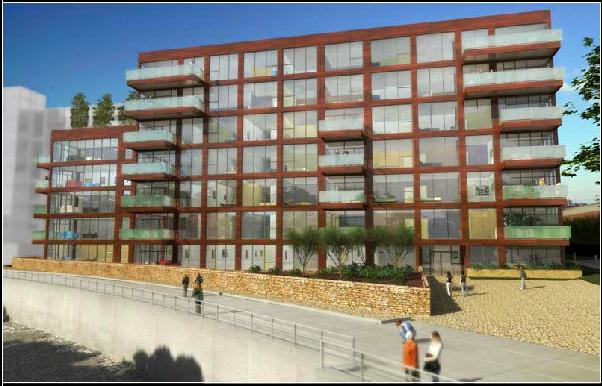
Which was revised to this:

and now looks like…this (from the agenda):

The newest incarnation is 6 stories, 35 units of condos, and 8,500 square feet of office space, of which about 5,000 feet is reserved for the Park Foundation, a local non-profit. No new environmental review is required, which should save time in the approvals process, and that will be handy since final approval and building permit will have to be issued by June 30, 2012.