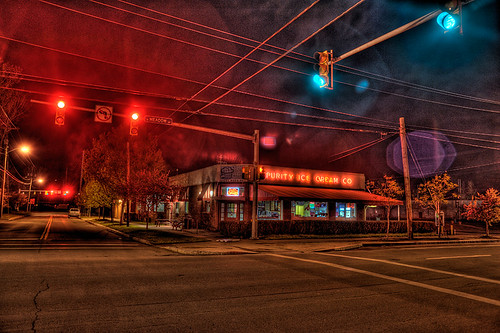
Can a Polluted Past Have A Future?

21 02 2013
Image Property of Welch Construction Inc.

Image Property of Welch Construction Inc.

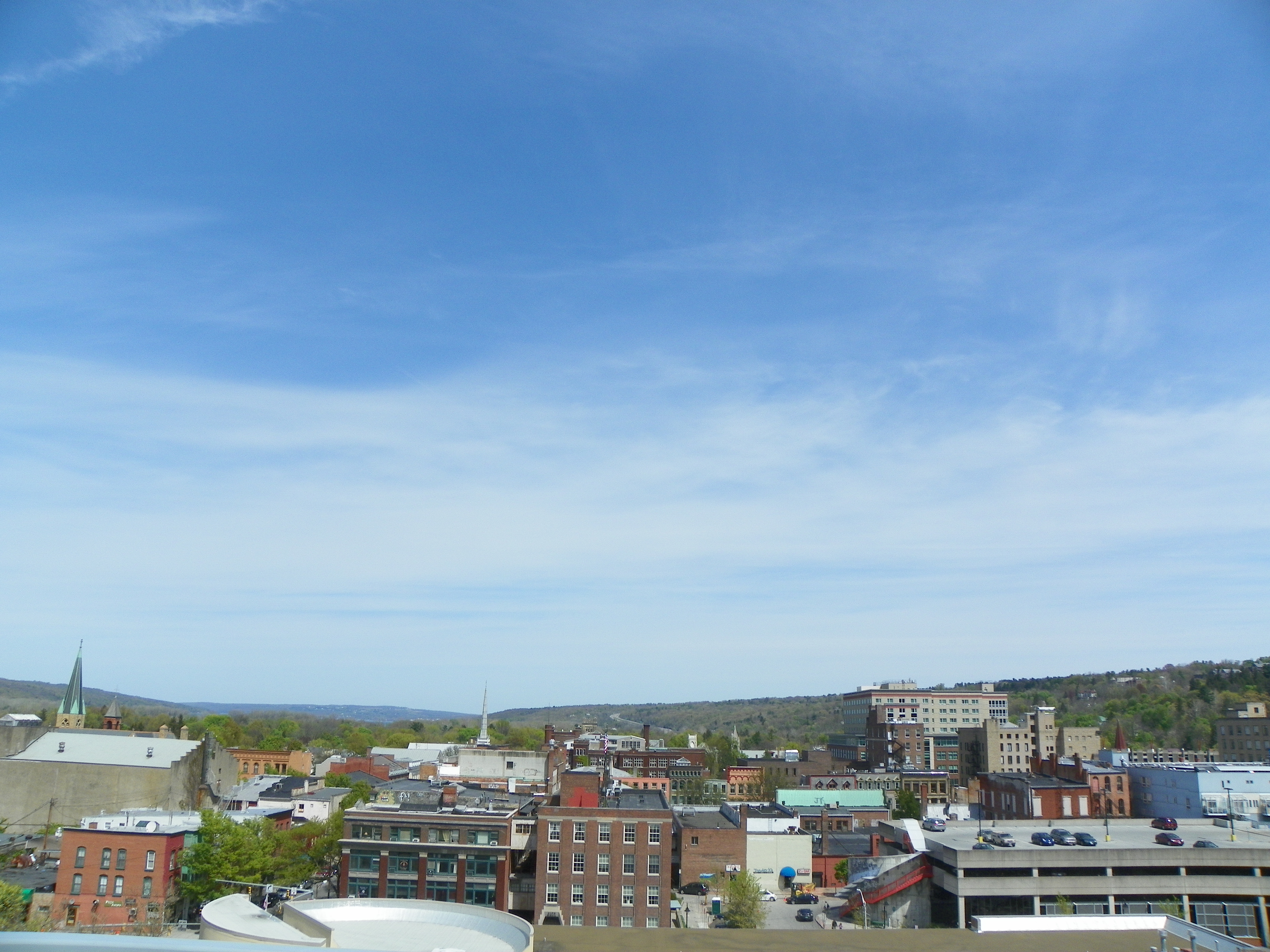
Real estate in Ithaca is fairly warm as markets go (I refuse to call it hot). But there are still some gaping issues in the metro market.  One of the biggest examples is one that can be seen from just about any southward vantage point above the lake lowlands – Emerson Power Transmission.

The property started as Morse Chain, which dates back to 1880 and began the manufacture of automobile chains in 1906.  Morse Chain was acquired by locally prominent BorgWarner in 1929, and the facility continued industrial production until BorgWarner built a new facility near the airport in 1983, selling the factory to Emerson Power Transmission. Throughout the 1960s and 1970s, several chemicals were used for “cutting oils”, removing oils from the manufactured automotive gears, shafts and chains at the tail end of the process. One of those was trichloroethylene, or TCE. TCE is a known carcinogen, and I’ll come back to this in a moment.

Unfortunately, the era of traditional manufacturing was fading in the Ithaca area. Emerson Power Transmission moved about 55 of its corporate senior staff to a suburban Cincinnati facility in 2007 (and I remember reading about it while a student at Cornell). The death knell came in August 2009, when Emerson announced it was closing up shop in Ithaca, putting 228 people out of work (the factory had over 500 people on site as recently as the mid-2000s, and had received tax incentives not long before closure). The closure was recent enough that this blog was already going, and the original entry is here.

At first glance, the property would appear to be potentially salable. It’s a large property in a well-populated and growing area with a substantial uptick in the real estate market. However, there’s one very, very big issue – the TCE contamination.

Although TCE use stopped by the late 1970s, the damage was done, and unknown quanities of it leaked into the groundwater and sewers. The site was declared contaminated by the state in 1988.

Since then, it’s been a series of long and contentious debates about who to hold responsible for what degree of clean-up. The city, the state DEC, and BorgWarner and Emerson had volleyed back and forth on who pays for what. 35 years after the chemical usage is stopped, yet nearby sewers have had to be replaced, soil tested constantly and excavated if contaminated, and groundwater / vapor testing in nearby properties. Essentially, a major environmental headache.

Although the brunt of the burden has fallen on government and Emerson to clean up (BorgWarner gets blame but seems to carry little if any of the cleanup cost), the site has been marketed for sale – $3.9 million for 94 acres plus structures (note that just the groundwater is contaminated, not the structures themselves – this isn’t Ithaca Gun). It was no surprise that with the remediation and continual testing, the site has been a tough sell.

All the more interesting, then, that the local chamber of commerce announced at a recent luncheon that someone is agreeing to purchase the property. Emerson’s in the final steps of reviewing the offer.  The property could be host to a variety of activities – the IJ article mentions a possible small business incubator like the one at the South Hill Business Campus (itself a former factory). Given the location, any number of industrial or commercial applications are possible, maybe even partial/total tear-down and redevelopment. The biggest obstacle apart from the lingering environmental concerns might be the fact that the property is split along the city and town of Ithaca, so both would have to accept any proposed redevelopment.  But still, any progress on the looming, decaying facility would be one of the surest signs of a “reinvention” of the area.


Klarman Hall

16 02 2013
Image Property of Cornell University

Image Property of Cornell University

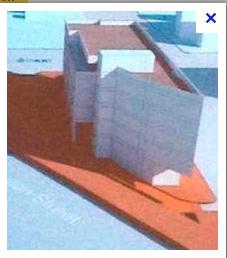
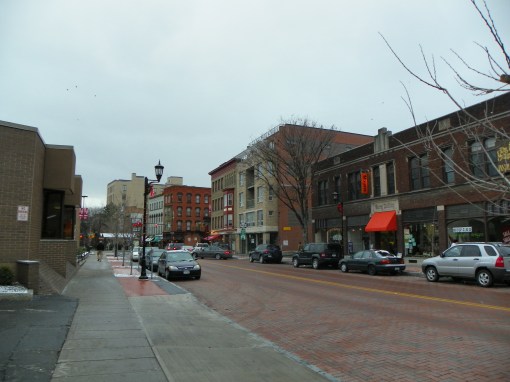
The Humanities Building has a name – Klarman Hall. The building is named for Seth Klarman ’79, a prominent hedge fund manager and large-scale investor in pro-Israel organizations. Considering the construction cost  is at least $61 million, Klarman probably put up at least half of that amount.

A part of me wonders if there’s any cruel humor to be had in an investment banker with strongly pro-Israel views funding a humanities building where most of the students who will walk through those doors will hold an adopted dislike of him (due to his strongly capitalist tendencies, and Israel being an easy target for disdain given the conflict with Palestine). For what it’s worth, Mr. Klarman does keep a very low profile, and is considered fairly conservative as investors go.

Klarman Hall, which I have previously shrugged off as a token glass box, is set for a construction launch this summer, with completion in 2015. The building is planned to be LEED Platinum with low-energy everything and living roofs, and is designed by Koetter, Kim and Associates, a Boston firm founded by Cornell alumni.

In a twist any cynic would enjoy, it was discovered a few years ago that Goldwin Smith, the professor and namesake of the hall Klarman will be contiguous with, was a virulent anti-Semite.


News Tidbits 2/8/13: Even Small Projects Deserve A Blurb

8 02 2013

11-24-2012 195

I held off on posting anything last week (opting instead to post early), because of a hectic work schedule. It seems wrong at first glance that a meteorologist should have a day off during what will be by most accounts a powerful snowstorm; but I work weekends and I already hit my OT limit for the week. So seeing as how most of my “weekend” plans are cancelled, here’s a smattering of news tidbits.

70 new units of eco-friendly housing are planned for West Hill. The complex would be a mixed-income development of townhomes and apartments, clustered for pedestrian ease. Notably in the article, a town councilman asserts that the land was intended for industrial development under the comprehensive plan, not residential, and “it’s not clear to me at this point how it (the proposed housing development) fits in with our overall concept of development in that area”.

Fine and all, except the town put the parcel out to bid six months ago with the goal of residential development of an eco-friendly, mixed-income nature. With a starting bid of $500,000. I guess someone ponied up. I also guess there would be a very costly lawsuit if the town tried to change the rules now. But then, this councilman has always been a notable opponent of West Hill development, so we’ll see how this plays out with the planning board.

– Funds are in place to purchase property for the construction of Ithaca’s first mosque; the Sun article suggests a small parcel near the mall. Kudos, Ithaca, and best of luck to the future house of prayer. I have every faith in Ithaca’s residents and culture to avoid another Murfreesboro from happening.

– An ensemble of small projects form some minor blips on the radar. Two duplexes to built in the Eastern Heights neighborhood. The Palms’s water pipes burst, furthering the building’s inexorable move towards demolition, probably when Novarr-Mackesey’s time frees up with the completion of Collegetown Terrace in 2014. Lansing’s new fire station is near completion, and in a total failure on my part, I had no clue what it was when I took a photo of it in trying to find the senior housing that was supposed to be built with the new BJ’s.


When Things Don’t Work Out

17 01 2013

Frequent readers of this blog are aware that I cover two things – Cornell (its history and physical plant) and new projects and real estate development in the Ithaca area. Now, I’m not going to say I’m beating a dead horse with the former, but I would be lying if I didn’t say it hasn’t been easy coming up with new topics to write about, that aren’t widely available already (ex. the Willard Straight Takeover of 1969), or previous written in this blog.

Fortunately, Ithaca has been undergoing a veritable boom in construction. Just today, I checked the town of Ithaca planning board notes to find yet another multi-unit housing project proposed – “Hawk’s Nest at Springwood”, a 3-story, 50-unit building to be built at the Springwood Townhomes area just east of the intersection of 96B and King Road. The project will be marketed to the 55+ crowd.

hawks nest

This area has seen a cluster of (mostly suburban-style) development in the past few years, with the Holly Creek Townhomes, College Crossings, the Namgyal Monestery, The Country Inn and Suites, The College Circle Apartments (IC) expansion, and a number of private homes. Which, counting that all of the top of my head, gives 184 more beds at IC, and 74+ other housing units. Quite the little burst of activity south of IC.

So, considering the question in a previous entry about historical construction trends, this latest development pushes the private residential units number from 2011-2016 over the 1,000 mark, nothing to sneeze at when the total number of units in the entire metro is just under 42,000. In considering the planned developments north of Ithaca, and single-family homes, the number of units planned in those five years could very well be in the 2000+ range, a proportion highly unusual for upstate New York, and probably only comparable to the Albany metro, where a massive computer chip factory has been underway.

Now, time for the Debbie Downer – I have no expectation all these projects will come to fruition.

In the past, several projects have been downsized, modified, or cancelled. Take Ithaca Gun, a project constantly being re-evaluated due to rapidly increasing costs associated with the site cleanup. The project started off with 160 units, but neighbors complained. It was decreased to 80, then 33, than upped to 45. The final result seems to be a shot in the dark. Because of the uncertainty, I did not include it in the unit count.

Other projects, both current and old, were modified in the planning. The Trebloc Building downtown was originally supposed to be two floors (and I will personally donate a very nice bottle of Finger Lake wine to any developer who proposes to knock that abomination down and replace it with something more fitting). Cayuga Green, covered previously, has been redesigned four times. Collegetown Terrace has undergone at least one major revision and a couple minor ones.

Some projects never see the light of day. The McGraw House, an assisted living facility downtown, considered an expansion in 2009/2010. Then they shelved it. A 400-unit development was planned for West Hill (Carrowmoor), but this also appears to have gone stale.  Cornell’s West Campus was slated to be bedecked in Collegiate Gothic – killed by the Great Depression (among other Cornell proposals and plans that can be found using the search bar). Wal-Mart was once slated for Lansing. The most outlandish serious proposal goes toward a city-sponsored urban renewal plan proposed for Collegetown in 1968. The project would have tore down the heart of Collegetown, and in its place put up an eleven story office building, and 6 to 8 high-rise apartment towers (total 375 units), the tallest being 18 to 21 stories. It also would have included a 600-space parking garage and retail venues.

It’s sort of like “survival of the fittest”. The projects with the most stable funding, and the strongest proposals, tend to win out. Some projects are clearly underway, some go through revisions, some will remain pie-in-the-sky. I do, however, look forward to as many of these projects coming to fruition as possible.


More Than Just Cherries On Top: The Purity Redevelopment Plan

11 01 2013

Now, a part of me was tempted to write something up about a Cornell fraternity that just was thrown off campus for “sexually humiliating” hazing…but then, I realized I’m too far out to care for the stupid crap of the current crop of students. No matter how absolutely, unfathomably asinine it is. Stay classy TEP, it’s a miracle your trashed house didn’t collapse first.

So onto something that catches my interest in a more positive way. I have to issue a slight mea culpa on this, because the news regarding the Purity Ice Cream project has been floating around for a good six weeks already. For those who have yet to experience it, Purity is a fairly well-known local ice cream company, in operation since 1936. The current building, a rather plain one-story brick structure, was completed in 1953.

Of note and of particular relevance here, Purity is in a high-traffic but fairly low density area, on the Corner of Meadow and Cascadilla Streets, west-northwest of downtown. In what I would describe as a rarity for Ithaca, I don’t believe I’ve ever taken a photo of the store. Thank Heaven for aerials and Flickr.

purity1

Purity’s parcel is outlined in red in the above image from Bing Maps. It lies on the cusp of low-to-moderate density residential district (Northside), part of a small commercial district of mostly retail and warehousing. So it lies quite a ways outside the traditional dense clusters of development.

The plans are still pretty conceptual at this point. The owners, Bruce and Heather Lane, seek to keep the original structure and build vertically; rental office and retail space on the lower floors, with 13 to 26 1 and 2-bedroom apartments on the third and higher floors. The facade, in keeping with the original structure, will be brick. The number of stories is to suggested at 4-5, but the first floor would have 16′ ceilings, so it would be fairly likely to top out around 60′, and the new building would be a visual focus point in the generally low-rise neighborhood. Although the area is less built up than some other parts of the city, the owners are seeking to tap into new urbanist concepts, touting the walkability to Greenstar and the Waterfront Trail. The goal is to get the project underway in fall 2013, and the ice cream store will remain open throughout the duration of construction. A structure like this would have a 12-to-18 month time frame.

Not all of the structure would be saved, as the manufacturing space for the Ice Cream would be eliminated; but then, Purity has contracted out the ice cream manufacture to Byrne Dairy since 2006. It seems it would be a loss of underused space at worst.

Now here’s the consequence of my inattentiveness; the rendering is missing. I can come up with some ideas, since John Snyder Arch. is in charge, and they’ve been prolific in the area as of late (their flavor of choice being geometric forms/ modern design). But even with that knowledge, and knowing it was just a sketch plan, I would have liked to have seen the render. But unfortunately, it is missing from the IJ and its sister pubs, and even the article has been deleted (at least there were cached versions; but those did not have the render). Granted, it’s not like I’d be able to post it anyway, given the whole paid subscription thing. But, as the project continues to evolve over the next couple of months, I will attempt to stay on top of this for once, and post a rendering as a soon as a free version becomes available.

Update 1/17: And in fact one has, from Google image search. Sweet. Pun intended.

purity2


Yet Another Hotel for Downtown Ithaca

24 12 2012

12-29-2011 041

It seems downtown Ithaca is in a building frenzy, even beyond sleepy upstate standards. From the Ithaca Times:

At its meeting December 20, the Ithaca Urban Renewal Agency unanimously approved the designation of Lighthouse Hotel, LLC as “a qualified and eligible sponsor” for acquiring properties at 320-324 East Martin Luther King Jr./East State Street through a negotiated sale for the purpose of an urban renewal project. The proposal by Lighthouse Hotel is to develop a $16 million, six-story Hampton Inn & Suites with 92 rooms. The project site would cover four parcels including parking lots owned by the city and the IURA, the Carey Building and 310-312 E. MLK Jr./E. State Street.

Now, this could be a little contentious. The area covered is highlighted below:

lighthouse_hampton

Of the four parcels, two have been parking lots for a long time, and I would not be surprised to see a garage of some sort would be a component of this project (probably above ground, given the water table…otherwise, there is a rather underutilized garage a few blocks south, if the city presses them enough and the developers are willing to play along).

Then there’s the Carey Building. The Carey Building is a two-story structure built in 1922 and named for its developer, broker Henry A. Carey. The building, with its Egyptian Art Deco accents, was designed to match the Strand Theatre to its west.  The Strand Theatre, or what was the Strand, comprises the last parcel. The theatre was built in 1917, closed in 1975, and although attempts were made to save the building, it was torn down in 1993, a victim of poor maintenance. As seen in the aerial, the site is now a parking lot. For practical purposes, the Carey Building is in good structural shape, and is maintained by the locally prominent Travis Hyde properties. The Eagles Building on the SE corner is not a part of the project.

Now, I tend to not be a big fan of Hampton Inns, a middle-rung hotel chain infamous for half-assed design on the cheap. Although a slight improvement over the years, most Hamptons built in the past decade could be described as beige boxes with oversized pillasters and raised parapets. One only has to look towards big-box land for an example – The Hampton Inn “designed” by Sharma Architecture and built in 2003.  Chain hotels are often the architectural equivalent of “fill-in-the-blank”, and as cheaply as possible. Still, one can hope – the average Hampton cost $6-8 million (~$60,000/room) to develop in the mid 2000s, and the budget for this project is $16 million. Hopefully, some of that will go towards something fitting for the city of gorges. In my mind’s eye, it has a more unique look, subtle or off-site parking, and incorporates the Carey Building, or at the very least its street-facing facade.

So in sum, any proposed demolition of the Carey Building might cause a lot of problems for the developer. The IURA’s decision a couple days ago only makes the developer a qualified buyer for the IURA parcel, and does not guarantee any development. And I’m sure there will be many, many meetings ahead for this one before any approvals are granted.

Update 1/9: And courtesy of the agenda comes this rendering and site plan, hosted online by “Ex-Ithacan”:

So much for preserving the Carey Building and subtle parking.


News Tidbits 10/25/12: Harold Square Is Big, Boxy and…Big.

25 10 2012

Well, if I have any right to brag…I’m just going to leave this here. At least I have proven that I’m fairly good at what I write about.

Now, onto what’s actually important. This project is massive. There are few private non-institutional buildings to compare it to in Ithaca. Seneca Place is about as close as one gets dimensionally, but that building is retail, with office and hotel on the upper levels. Harold Square, with its $30 million price tag, will have 60 to 70 apartments, 126,000 sq ft of office space, and retail on the ground floor. At 11 floors and~135 feet, it is a rough tie with the other tallest non-campus building in the county, Titus Tower. As previously mentioned, a building that size would need a zoning variance.
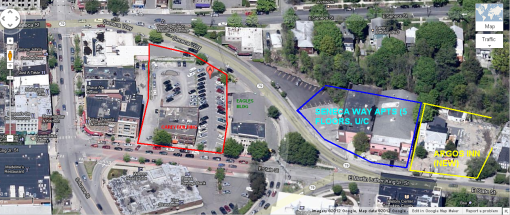
The building would be situated on the Commons, and remove three under-utilized structures (red box): the former Race Office Supply Building, the Night and Day Building, and the former Harold’s Army-Navy Store between them. The developers’ father ran the Army-Navy store for over 30 years and renamed it after himself; and this is from which the project gets its name. The Home Dairy and Benchwarmers  (technically, the Sage Block and W.H. Miller Buildings; yellow box below) would be preserved and renovated.

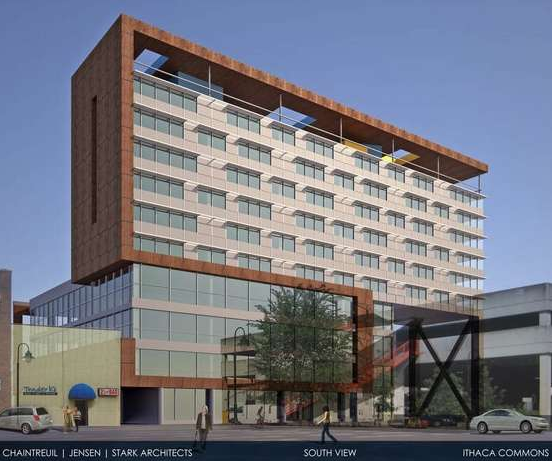
The Commons Side of the building will be four stories of office, more conservatively designed to fit in with the other Commons structures. It’s fairly standard glassy box with a brick veneer, adding some interest by making the middle third 3 floors and the sides four floors. [Update 11/09] The low-res image below comes out of The Ithacan.

The other side…is something else. It would be easier to post renderings, but that’s not okay since the IJ became a subscribers-only site, and I’ll have to wait until a public/free outlet releases them. But I can offer one source – google “harold square ithaca”. The IJ was bound to let some image out for public eye, even if it isn’t for free access (Like with Cascadilla Landing, as soon as free use images become available, I will put them up here). Edit 11/08: And thanks again to the Ithacan for this rendering:

It’s…well, to me anyway…it’s not pretty. It’s big, certainly. But it’s a bit…out of place in Ithaca’s downtown, in my opinion. The design is by Chantreuil, Clark & Jensen of Rochester, who mostly do renovations, but do seem to get their blood flowing with the occasional modern new-build (most of their clients appear to be higher ed; no surprise here). It’s a little more avant-garde than the other modern boxes planned, like the Marriott, Holiday Inn and Cayuga Green. And I don’t know how well a box with a gigantic metal overhang above its top floor will age, let alone a giant exposed metal truss on the southeast corner.  The Commons side is appropriate enough, but I don’t find the south side, with the tower, especially eye-pleasing. Probably because it has misaligned windows, it’s already on my crap list. But, as anyone who’s followed this blog is aware, I’ve never been a huge of modern architecture. So, to each their own.

So, with regards to a time frame, the developer is looking to have the Commons side completed by summer 2014, and the tower at some date thereafter. The developer plans the construction of the building to coincide with the reconstruction of the Commons. That’s assuming it jumps through all the variances it needs, and the Planning Board appreciates modern architecture. If Collegetown Terrace was any indicator, this will not be the final design, so it’ll be worth seeing how this evolves before final site approval is granted.


A New Proposal For Ithaca’s Downtown?

18 10 2012

This month’s planning board agenda doesn’t cover anything I haven’t already mentioned…except for one item giving a sketch plan (the first stage of proposals):

F. Harold Square (Downtown Mixed‐Use Project), David Lubin ― Sketch Plan

Okay, technically two items, because Wal-Mart Plaza (South Meadow Sqaure) wants to add more retail space. But this Harold Square project is far, far more intriguing.

A thorough search for any online documents for this project reveals as much as closing your eyes. However, David Lubin does have an appropriate background – he sits on the Downtown Ithaca Alliance and is employed as the President and CEO of L Enterprises, a real estate development firm based out of Elmira. Google Maps indicates it’s an LLC (Limited-Liability Company, a common feature of development firms) based out of a suburban office building next to the Arnot Mall, and likely developed several green-friendly chain hotels in the Elmira area. So, one could sum this up as the head of a medium-sized, regional developer.

“Downtown mixed-use” is a pretty tempting phrase. Mixed-use would likely be commercial, with residential on upper floors. The commercial may be hotel, as the developer has previously had experience with, or office, with service/retail on the ground floor. Depending on location and size of parcel, the building could legitimately reach 120 feet / 10-12 floors, but given that most of downtown Ithaca’s zoning is a little shorter, 60-100 feet, 5-8 floors (taller floor plates for commercial applications) would be more likely. This is potentially big project for the city, and certainly one to keep an eye on as it goes before the planning board next week.


News Tidbits 10/11/12: Kappa Sigma Reopens its Doors

11 10 2012

Even though I’m old and way out of touch from Greek Life (apart from the overly sentimental newsletter I get each semester from my fraternal alma mater), I’m sharing this because it happened my last semester at Cornell. From the Cornell Daily Sun:

After being shut down for more than two years, the Cornell chapter of the Kappa Sigma fraternity was recently reinstated on campus.

According to Brett Musco ’13, the fraternity president, Kappa Sigma lost its charter from its national chapter in Spring 2010 after violating sanctions that the chapter imposed on them.

A year and a half before it was shut down, the Cornell chapter of Kappa Sigma was found in violation of its national organization’s “risk management policy” and told that it could no longer host events with alcohol, Associate Dean of Students for Fraternity and Sorority Affairs Travis Apgar told The Sun in May 2010.    The fraternity was also required to have any events approved by a regional manager from the national organization, according to Apgar.

When it was discovered that the fraternity hosted an unregistered party with alcohol, the chapter was shut down by the national organization for breaking Kappa Sigma sanctions.

The fraternity house, a property on 600 University Ave., is owned by Cornell and was renovated and turned into student housing by the University for the 2010-2011 and 2011-2012 academic years. However, it was agreed that if Kappa Sigma were ever reinstated on campus, fraternity members could occupy the building again, Musco said.

As part of the process of rebuilding the chapter, Kappa Sigma brothers petitioned for members of the classes of 2012 and 2013 –– who had been expelled from the fraternity –– to be reinstated as brothers.

“Once we got those core guys from those two years reinstated, we could become an interest group,” Musco said. “And then, from an interest group you become a colony, and we became a colony [in] July of 2011.”

According to Musco, while the chapter was not recognized by the IFC or the University, it still participated in rush events and informed potential members of their status.

Though it was not a chapter at the time, the Kappa Sigma colony –– or probationary body of brothers –– participated in formal rush in 2012, according to Musco.

After Rush Week, the members had to follow certain guidelines and submit a petition to regain its status as a chapter.

“A lot came down to learning from the mistakes that the older guys had made and the former chapter had made,” Musco said. “And a lot came down to recruitment and getting new guys to carry the fraternity.”

As a result of Rush Week, the majority of the fraternity’s membership comes from the Class of 2015, Musco said. Kappa Sigma will be participating in Rush Week in January 2013, he added.

***

So, this is an unusual case in the world of GLOs. The chapter was shut down by their national and lost recognition from Cornell. But, they were allowed to recolonize and petition for reinstatement. They also regained their house, because their agreement with Cornell allows them to move back in once they are reinstated (I like to imagine a closet in the dorm where they hid all the lettering and regalia). Now from here, it could go two ways – they fade into obscurity and failure a la Theta Chi in the early 2000s, or they build themselves back up and move on, like Psi Upsilon in 1979.

Speaking personally, about two-thirds of the people I’ve stayed in close contact with post-undergrad have been my old fraternity brothers. And I know that when something happens to the chapter that we don’t like, for instance a poor rush, we try and write it off as “it’s their house to run now”, but it still casts a bittersweet pall over our memories. So from an alumni perspective, I’m glad for their graduated brethren, and I wish them the best.


News Tidbits 9/28/12: No Seriously, I Love A News Deluge…

28 09 2012

I feel like a clearing house at the moment, but a bunch of little tidbits have been proposed/modified lately that merit a brief blurb before I return to non-newsy matters.

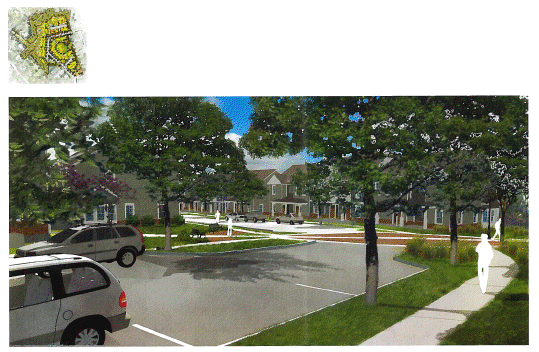
67 new townhouses are proposed for the Eastwood Commons area, a relatively dense development out within the suburban neighborhoods south-southeast of Cornell.

The development consists of duplex-style townhomes with a couple of side streets, not new urbanist but definitely in the realm of nodal development. The town will be pleased.

Worth noting, the land needed for the developed is being bought from Cornell. One of the stipulations for this sale is that Cornell employees be given priority for sales; INHS may offer some programming assistance for CU employees with modest incomes.

News item number two comes out from the Ithacan, IC’s newspaper. The Hotel Ithaca project, which was rebranded to a Marriott, has released an updated rendering. While the cladding, roof-ware and entry area have been changed substantially, the building retains its general shape and configuration (however, the changes still need to be re-approved). The project is shooting for a March 2013 construction launch.

While I would prefer they keep the “Hotel Ithaca” theme with it’s Zinck’s-branded bar, I have no qualms about the proposed design – the lines are clean, vaguely modern, and it seems to fit in with the other recent development in the downtown area (this statement assumes homogeneity is preferable). Also, I’d like someone to explain to me all the tallish buildings in the background – are they attempting to make Ithaca look bigger, or attempting to make the building look smaller?

Last on the news wire is that the Collegetown Crossing project, the rather controversial six-story building proposed for the 300 block of College Avenue. The project has obtained an agreement to a 20-year lease from local grocery store co-op Greenstar. This is important for two reasons – the city and many local residents have expressed strong interest in a C-Town grocery store, and it also makes the project lass likely to be just another empty storefront. However, it’ll be a while before Greenstar has to worry about its second third location, since the project is still caught up in red tape with obtaining zoning variances, especially for parking. This project would likely not open until at least 2014, assuming it gets approved in the next few months.