Craigslist, the Wild West of Ithaca’s Rental Market

14 05 2014

4-8-2013 175

All of the apartments I have ever lived in, I have found through Craigslist. I’ve explored the markets in Ithaca, Albany and the New York City area, and for the most part, I’d say the results were positive.

Sometimes, when I glance at Ithaca development projects, I look at the Ithaca branch of Craigslist postings. Where we once had those cute little printed apartment guides and phone books, now we have a website that shares housing ads with space occupied with postings for old CRT TV stands, scuzzy photos of human anatomy, and the inevitably creepy missed connections. Some of Ithaca and Tompkins County’s smaller projects, the token single-families, duplexs and triplexes that are the bread and butter of the community, are hardly noted in more prominent publications, and barely mentioned in bureaucratic paperwork.  It’s easier to find renderings and so forth through Craigslist (I’m lazy, and just use the keyword “new”, which seems to catch a lot of them).

With that acknowledgement of utility, I still roll my eyes at some of the ads. There’s no real policing of the ads beyond extreme instances, so looking for housing becomes a case of caveat empetor. Some don’t need policing so much as a proofreader, being a schoolteacher’s nightmare of horrific spelling and grammar (especially the dreaded ALL CAPS), but there’s a few out there that are just an outright crock. But someone new to the Ithaca market won’t know that.

To avoid confrontation, I’m not going to link to the culprits. But they’re easy enough to find.

I’ll use my keyword for example: new. There’s one local rental agency that uses the phrase “brand new” to describe a townhouse complex built in 2003. According to them, by care-worn boat of a car is “brand new” (and worth about two months of their rent), as are the Iraq War and rapper 50 Cent‘s first album.

Another example – describing any house as being “in Ithaca” when it’s actually in Newfield, Dryden or Caroline. The most egregious offenders aren’t even in Tompkins County. On a related note,  advertising a house on Coddington Road as “urban living” won’t fool anyone so long as they make an effort to visit the place.

Then we have adjective abuse, which isn’t a new thing but it merits every ounce of scorn it receives. Luxurious is the biggest offender, but affordable is rapidly catching up to it (resulting in the facepalm-worthy phrase “affordable luxury”). We also have “contemporary”, “upscale”, and even “trendy” pokes its ugly head every now and then.

While writing this entry up, I found something especially cringe-worthy, at least for me. Two photos of an apartment being advertised, which I have separated from their post out of politeness. Unless someone happened to rent the same unit and use the same shower curtain, that photo is from when I lived there during 2008-2010. The bedroom photo was my room. In fact, the desk on the left could very well be the exact same one from which I wrote the first post for this blog. Feel free to hate the bedroom color, I shared the room and we were trying to make each room its own color; this one had the soap opera name “Dylan Verdant”. I’m kinda surprised the room is still that color, since that was one of the reasons we left that apartment with our security deposit much, much lighter than when we moved in (the day we learned to have written and signed consent; on the bright side, I’ve always received my full deposit back ever since).

The last thing I’ve learned from Craigslist is that some folks make a veritable mint on graduation weekend. Looking there now, I see 2 nights in a home for $850, a three-night stay in a Cayuga Heights home for $1800 (for 2015, it’s already rented for 2014), and a few places going for more reasonable values of $150-200 per night. Now that’s what I call a vacation fund.



News Tidbits 5/6/14: INHS Wants “Woonerfs”

6 05 2014

greenways2

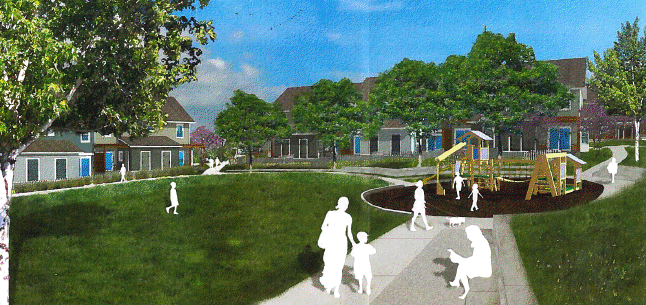
I have to be honest, up to last night, I had no freaking clue what a woonerf was. It sounds like a children’s made-up word (ex. thingamigjig or doohickey; my brother used “pedewa”). But apparently, it’s a legit urban planning concept. Woonerf is Dutch for “living yard”, and is a type of “living street” where equal priority is given to cars, bicyclists, and pedestrians (the speed limit is no more than about 10-12 mph). They’ve seen substantial implementation in Western Europe since their introduction in the 1970s. The more I read about them, the more I get the impression that it’s a curious blend of a thoroughfare and a courtyard, or Ithaca Commons with vehicle traffic.

Image Courtesy of localmile.org

Image Courtesy of localmile.org

I’m not inclined to look up new words without a purpose, and the reason this time around comes courtesy of the planning board of the town of Ithaca, with the following project up for review at the meeting on May 20th:

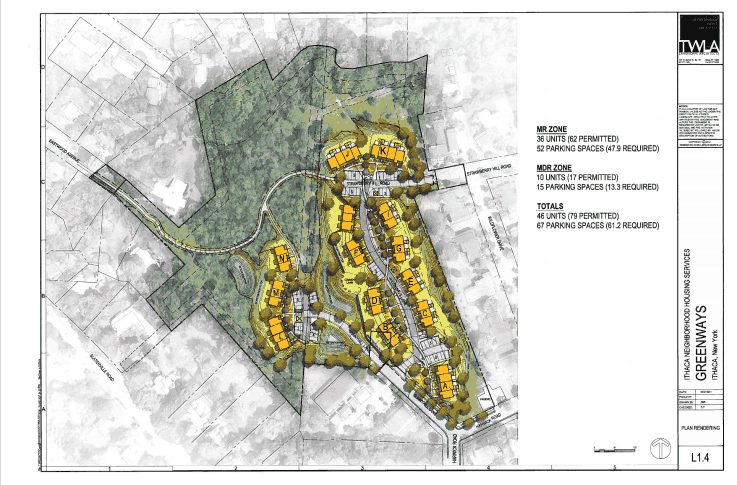
Consideration of a sketch plan for the proposed Greenways project located off Sunnyhill Lane and Strawberry Hill Road, Town of Ithaca, Tax Parcel No.’s 60-1-34.2 and 60.1-1-46.22, Medium Density Residential (MDR) and Multiple Residence Zones (MR). The proposal involves the development of 46 townhouse units west of Eastwood Commons, fronting woonerf-style roads that will connect Sunnyhill Lane and Strawberry Hill Road.The project will also include new parking areas, open space, recreation areas, trails, walkways, landscaping, outdoor lighting, and stormwater facilities. Cornell University, Owner; Ithaca Neighborhood Housing Services, Applicant; Peter Trowbridge, Trowbridge Wolf Michaels Landscape Architects, Agent.

Regular readers will recognize the name Greenways because I’ve latched onto this project and followed it with interest since first proposed about 18 months ago (one could argue I’ve beaten a dead horse here). The project was originally proposed with 67 units, but then dropped to 46 by the time updated specs were submitted in February. The site is still the same, seeking to use woonerfs to connect Sunnyhill Drive and Strawberry Hill Circle. Note that google is not correct here, the street labels are all botched up. An accurate map with the parcels outlined (copied from the county tax map) is included in the lede for this post. Given a preferred completion in October 2015, and that this project consists of 46 units of townhouse-style housing, it makes sense that it would be seeking planning board approvals now.

Image property of Greenways at Eastwood Commons

Image property of Greenways at Eastwood Commons

So make way for the woonerfs, I suppose.

EDIT 5/15: Now we have renders and site plans. It looks like the project will be built in three phases, and access to “Greenways Lane” will be primarily through Strawberry Hill Toad and Sunnyhill Lane. The “woonerfs” seem rather gimmicky in this context.

gways_rev_1

gways_rev_2

gways_rev_3


Ithaca’s Big Plan

29 04 2014

1-2-2014 313

I realize that the city’s comprehensive plan might seem a bit abstract. So let’s break it down into Q and A.

1. What is a comprehensive plan? Is this just more government bureaucracy?

Kinda? A comprehensive plan is the overarching theme for a city and its neighborhoods.  It’s not as specific as zoning is, but it helps determine what zoning should be, given the city’s concerns, desires and goals. So yeah, it’s more documentation, but it’s also allowing the community to determine the “forest” to be created by its “trees”. The plan helps to decide whether a project is appropriate for an area, because the planning board and zoning board will understand the desires for a given location. Used effectively, it may actually save time and mental energy in the long run by establishing a basic framework (i.e. developers will know that the chances of building a massive apartment building in Fall Creek are pretty low).
2. Why does the city need a new comprehensive plan?

The old one dates from 1971. A time when computers were the size of rooms, green was just a color and not a cute term for ecologically sensitive, and the Brady Bunch epitomized the way many wanted to live, in a posh contemporary in the suburbs with a Plymouth Satellite wagon in the garage. Times, and Ithaca itself, have changed. The plan has been amended in bits and pieces, but given its age, it needs a big overhaul, such that a new plan would be the easier option at this point.

3. Just how do they plan on making this plan?

In two parts: Phase I involves the preparation of a city-wide plan that identifies a vision and future goals for the community, and Phase II will include the creation of individual neighborhood or thematic plans, based on Phase I’s results. Committees, focus groups, surveys, meetings with community members, the whole years-long shebang. The current state of affairs can be found located here, and the current planning issues (using community input) is here. A 277-page PDF discussing environmental issues and goals for the plan is here. A draft of the plan, a mere 16 pages, can be viewed here.

4. Sum up the issues for me. I didn’t come here for long PDFs.

Parking’s a b*tch, and people want more walkable neighborhoods. Ithaca is expensive and only getting worse. The Jungle. Development pressures are threatening Ithaca’s historic structures, but the development process is too onerous for most folks to even bother with trying, vacant lot or otherwise. More jobs that aren’t colleges or retail. Protect the gorges and other local, natural amenities.

5. Okay, so what does the community want? What are the big changes?

Under consideration, we have a bunch of overarching themes. Here’s a map:

ith_big_plan_map

Ithaca loves itself some compact, mixed-use developments. If it fits that criterion and it also fits the area, the city wants it. Surface parking lots (231 acres) and vacant parcels (194) comprise just under 10% of the land in the city, and a number of these are what the city hopes to be appealing to developers (if the RFEI for the county library is any clue, the interest is there). Many of the currently developed parcels should be protected – homes in Cornell Heights, Belle Sherman and Fall Creek, for examples. The red spans above are what the city sees as areas for new, dense development – underutilized parcels downtown and on West State, the large swath of big-box land in the southwest, and the frequently-flooding land to the west of big-box land (the city hopes to fix that with dredged soils to raise the land).  Some accommodation for local commercial spaces is created with the “Neighborhood Mixed-Use” land use option. The final plan linked above notes the challenges with each neighborhood, and the desired changes moving forward.

The asterisks denote focus areas, areas the city wants sees significant and unique development opprotunities. There are four – Emerson (which is now in the earliest stages of redevelopment),  the flood-prone/retail-heavy southwest part of the city, the large undeveloped swaths of West Hill, and the Waterfront/Inlet Island. All are seen as very underutilized – all present unique opportunities to significantly expand housing and commercial options, if a developer is willing to fight the adverse factors and work with the city.

6. So are we going to see anything develop out of this?

Explicitly, no. This doesn’t dictate massing of new structures, or curb cuts and sidewalk widths. But it says where Ithaca wants growth to be focused, and where it would be more amenable to playing nice with anyone who comes forward with a plan in those areas.

7. Can I have a say?

Well, the public workshops are this evening, as I write this. But if you can’t/couldn’t attend, feel free to answer the online survey, or email the city planner with your thoughts and concerns.


The Six Contenders for the Old Library

22 04 2014

libe_0414

Most people are aware that the old Tompkins County library is about to be left completely vacant. As covered by Ithaca Builds last fall, the county issued a Request For Expressions of Interest (RFEI), inviting developers to cast their lures and offer proposals, and the plan perceived as best would garner its developer the ability to buy the old library and build on the parcel. The county expressed preference for proposals that were eco-friendly and would create senior housing, so the proposals play to that preference. In a long if thorough process, the County Planning Advisory Board will make a preliminary review, recommend its choices to the legislature, and the legislature will select the finalists, who will be asked to submit more thorough proposals of their initial entries, detailing info such as project financing. The county makes it final selection in November, with sale of the parcel to the winning developer in March 2015.

This is exciting, it’s like watching competitors at an Olympic event.  All proposals can be found at the county website here, individual links are included with each shot below. Feel free to voice your opinion on your favorite proposal in the comments.

1. DPI Consultants

DPI Is a private developer operating out of Rochester. Their group has some previous local involvement, converting the old county jail to offices in the early 1990s, and they were involved with the Johnson Museum addition a few years back.  Their plan calls for 76 condos and 8 apartments in 2 5-story buildings (max buildable height for the parcel is 50 feet, for the record). The condos would be mid-to-upper tier for pricing, and the project would have underground “automated parking”.  This proposal is the only one that does not have a focus on seniors.

dpi_libe_0414

2. Franklin Properties

Franklin Properties of Syracuse has teamed with a group of local firms (STREAM Collaborative and Taitem Engineering, among others) to propose a 68,000 sq ft “wellness center” for the library site, which they call the “Cayuga Community Education Center”. The first two floors would have a cafe and medical offices for doctors and non-profits, with three floors (32 units) of senior housing on top. The building would incorporate solar panels and is aiming for a 2017 opening if selected. The proposal seems to be the only one that reuses the original library, and already has some letters of support from local businesses.
franklin_libe_0414

3. Integrated Acquisition and Development

IAD proposes a LEED-certified, 115,500 sq ft, four-story structure they call “Library Square”, with 90 apartments, conference rooms, a library and fitness center space. The project suggests a late 2016 completion. Parking is behind the L-shaped primary structure. IAD has been involved in the Ithaca area previously, being the owner of several properties in Lansing (Warrenwood, the medical offices of Trimhammer), and the lead developer of several of the office buildings in Cornell’s office park near the airport.

iad_libe_0414

4. INHS (Ithaca Neighborhood Housing Services)

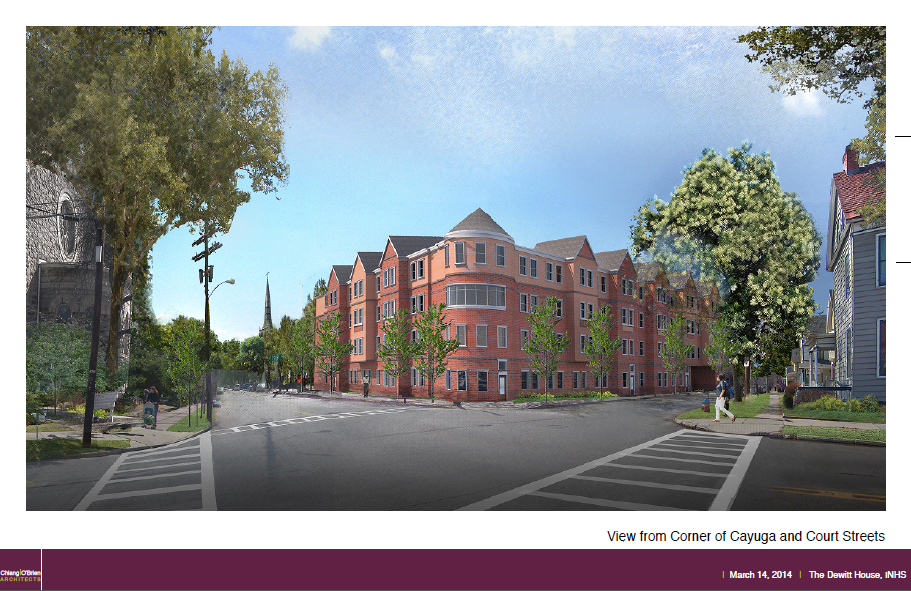
Locally prolific non-profit INHS comes up to bat again, this time proposing a project for the library site. Their proposal, called “DeWitt House”, calls for a 4-story, 60,000-80,000 sq ft building with 60 to 70 units of affordable housing, not specifically geared to seniors. The selling feature is an internal courtyard, along with community space and 6,000-8,000 feet of commercial space for rent. This one also has underground parking. The time frame for this one seems to be the latest, with completion in the 1st quarter of 2018.

inhs_libe_0414

5. Rochester Cornerstone Group / Cayuga Housing Development

Cornerstone is a Rochester based non-profit housing developer. CHD is directed by the same people as the Ithaca Housing Authority, who operate Titus Towers. The proposal consists of 70-80 units of affordable senior housing, in a 4-story 54′ structure (i.e. it would need a zoning variance). The building would have covered ground-level parking and some surface parking. Full occupancy would be in late 2016. Token snark here, but next time, ask the architects not to use the glare tool in your renderings. Building roofs are not shiny.

roccorner_libe_0414

6. Travis Hyde

Ithaca based private developer Travis Hyde submitted the last proposal on this list. Travis Hyde is involved with the renovations of the Carey Building, the construction of Gateway Commons, and further back, Eddygate in Collegetown. Travis Hyde teamed up (once again) with Ithaca-based HOLT Arechitects for their proposal, which is probably the one that discusses architectural context the most out of the six. The 4-story 90,000 sq ft building would have 48 apartments with office and community space at street level. While it discusses providing senior housing, it doesn’t appear to be explicitly senior housing. Parking would be minimal, on the western edge of the site, with mass transit/municipal parking garage incentives being explored. Spring 2017 is the suggested completion date.
travhyde_libe_0414

May the best project win.


Ithaca’s Economic Mystery (Again)

18 04 2014

4-13-2014 078

I don’t consider myself an optimist. Maybe that’s the result of growing up in upstate New York, or working in a field that suffered its share of setbacks due to the recession. I don’t like the term pessimist either, preferring to go with the more socially acceptable term “realist”.

But this IJ article citing the state Labor numbers doesn’t make one damned bit of sense. I’m not even talking about the fact that they threw Ithaca into two separate employment regions (Ithaca and Binghamton, and Ithaca and Syracuse). to quote a section of the article:

“In the Ithaca region, financial activities, trade, transportation and utilities, and leisure and hospitality each added 100 jobs.

The education-and-health-services sector lost 1,300 jobs from March 2013 to March 2014. That sector’s employment was 38,300 this March.”

Doesn’t it seem just a little unusual that the area lost 1,000 jobs? Recalling the headcount numbers for Cornell that were shared last month, the difference in employee headcounts on East Hill over the period of November 2012-November 2013 is a loss of about 50. Ithaca College’s headcount reports 1,822 employees,  about 12 less than the previous year. So those are both from the fall, and the state counts health and education are grouped together, but if we’re talking about 1,000 jobs, and it’s not Cornell or IC that caused it, then who did? I don’t recall any news of a huge layoff in Tompkins County.

The state regional breakdown PDF says the number of jobs went from 70,900 to 69,900 in the region (IJ says 60,900 to 59,900…someone in their office needs to double-check their numbers, because the 2011 average jobs number was 66,194).  The state description of their methodology says they use a time-series regression model and a sampling of 18,000 establishments statewide to determine jobs data. I’m wondering if this is all a quirk in the sampling, given that Ithaca is a small market (and small sample size in turn).

Maybe Ithaca’s economy really is in the crapper. But honestly, it’s not the first time the state has given overly-negative assessments, and the county agencies have to do damage control. But do we really have to go through this every other year?


Belle Sherman Cottages Update, 4/2014

16 04 2014

My last stop, on my out of town. In short order, I mentally debated stopping for photos, missed the turn due to the debating, circled back around, ended up ditching my car in a reserved parking spot at the Coal Yard Apartments complex. Then I ran down the hill, to the development, back up to the hill, and back into my car in the span of five minutes. I’m sure some of the neighbors that were outside Sunday afternoon were a little confused by my behavior.

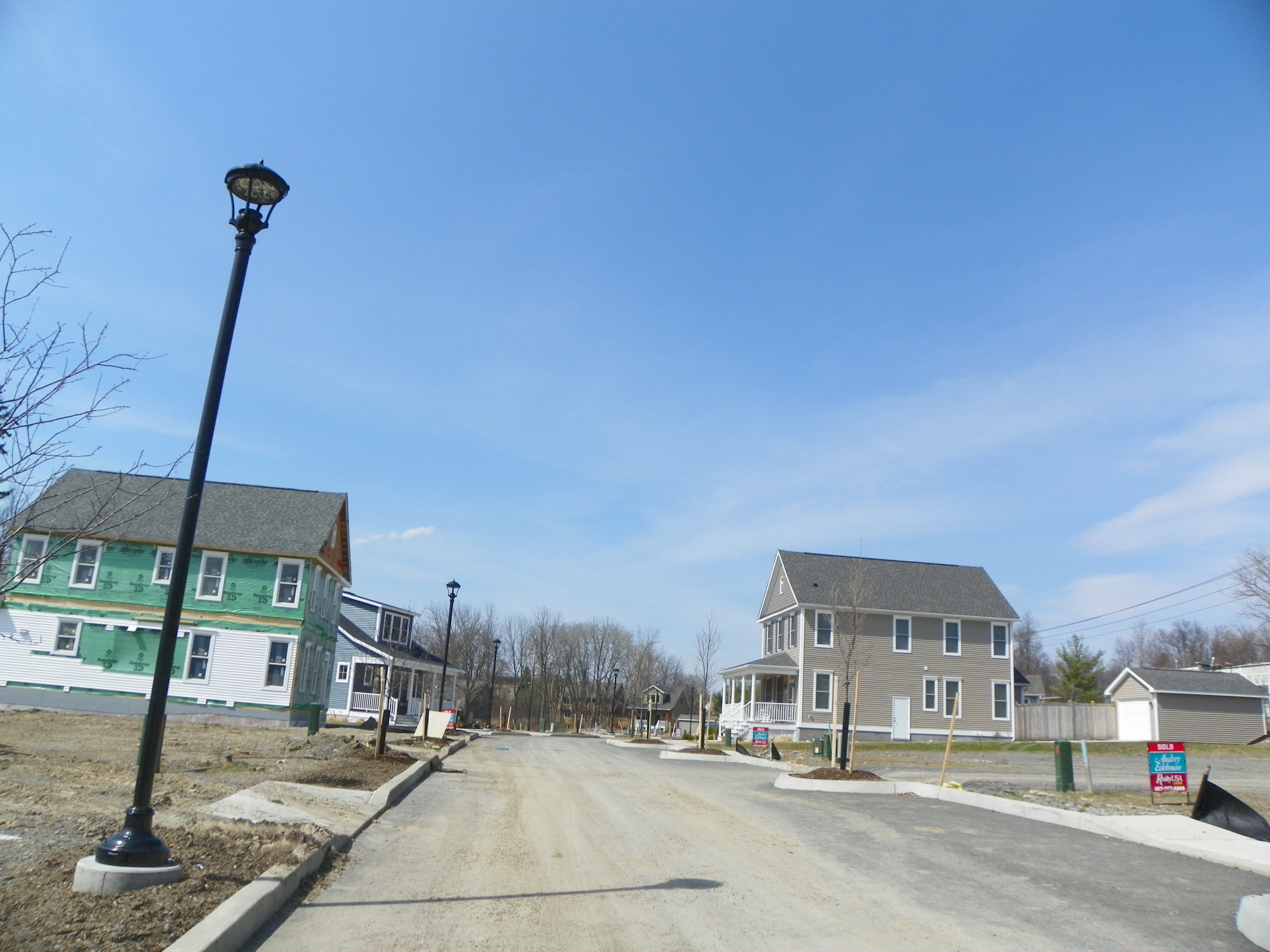
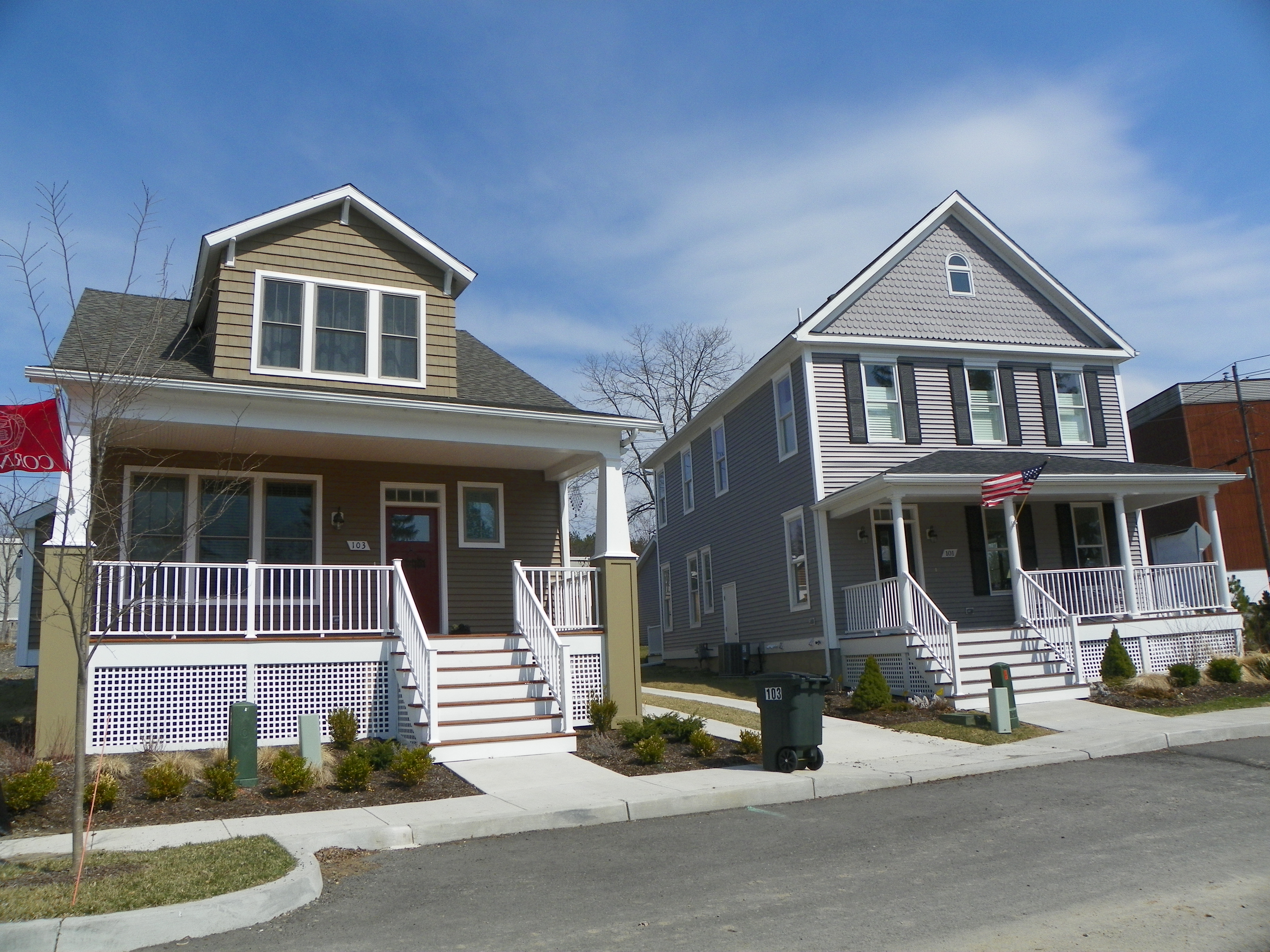
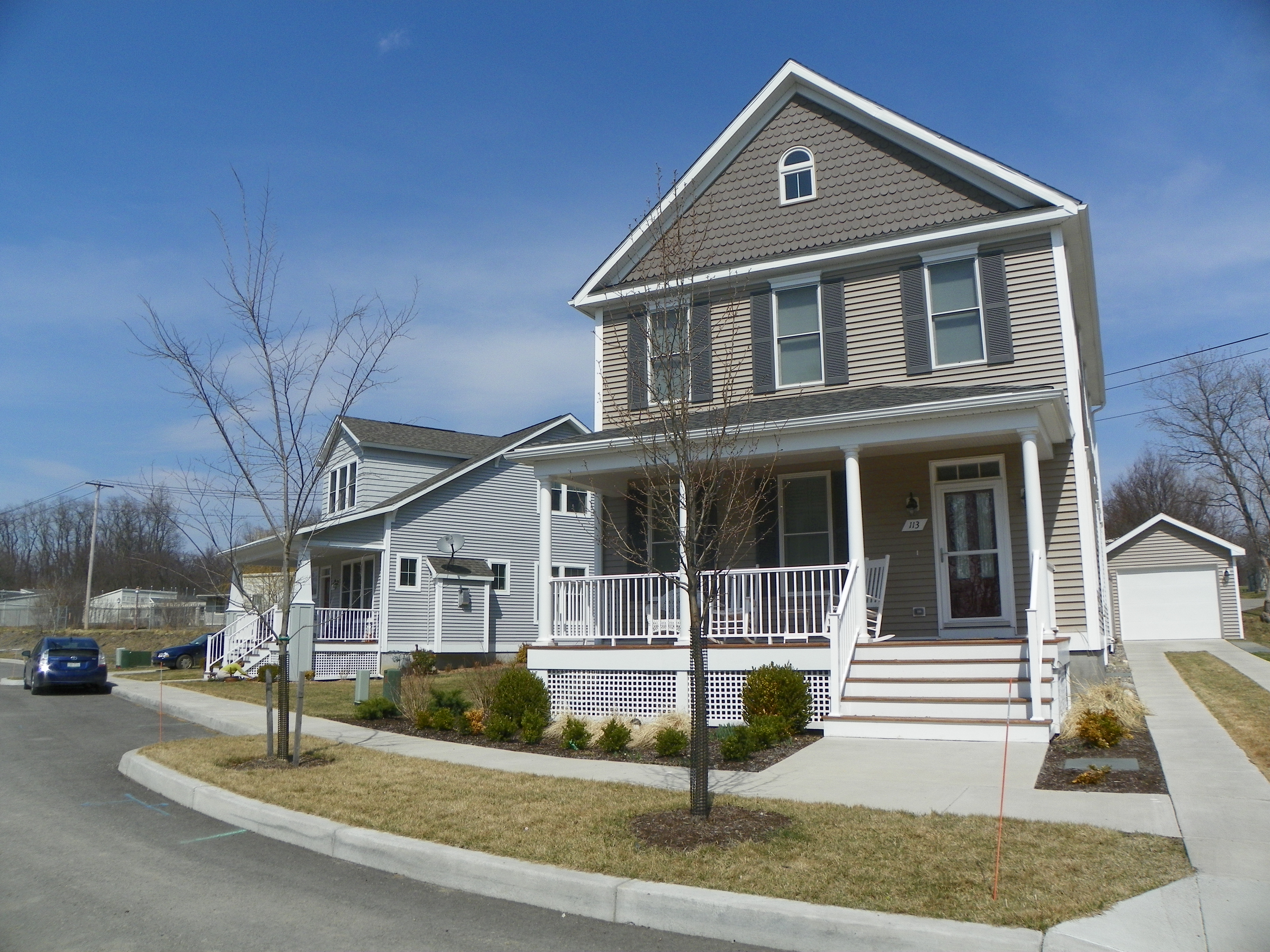
Since my last time through, work was completed on the bungalow on lot 19 (someone gave it red porch trim; I’m guessing the owner), and the “Victorian farmhouse” on lot 13 is well underway, the modular pieces are assembled and it looks like siding swatches are being tested and installed. I expect this house will be done in just a few weeks. According to their facebook page, Q1 2013 was a stellar three months; five lots were sold: lots 4, 6 and 18 (elevations here), the spec house on lot 1, and one of the planned townhouses. That means 10 of the 19 houses planned have been sold. Considering they sold only six houses in the past two years, this is quite an uptick. Looks like Carina Construction will be busy this spring and summer.

4-13-2014 083

4-13-2014 0844-13-2014 0854-13-2014 0864-13-2014 0874-13-2014 0884-13-2014 0894-13-2014 090


Dairy Bar and Bar Argos, 4/2014

15 04 2014

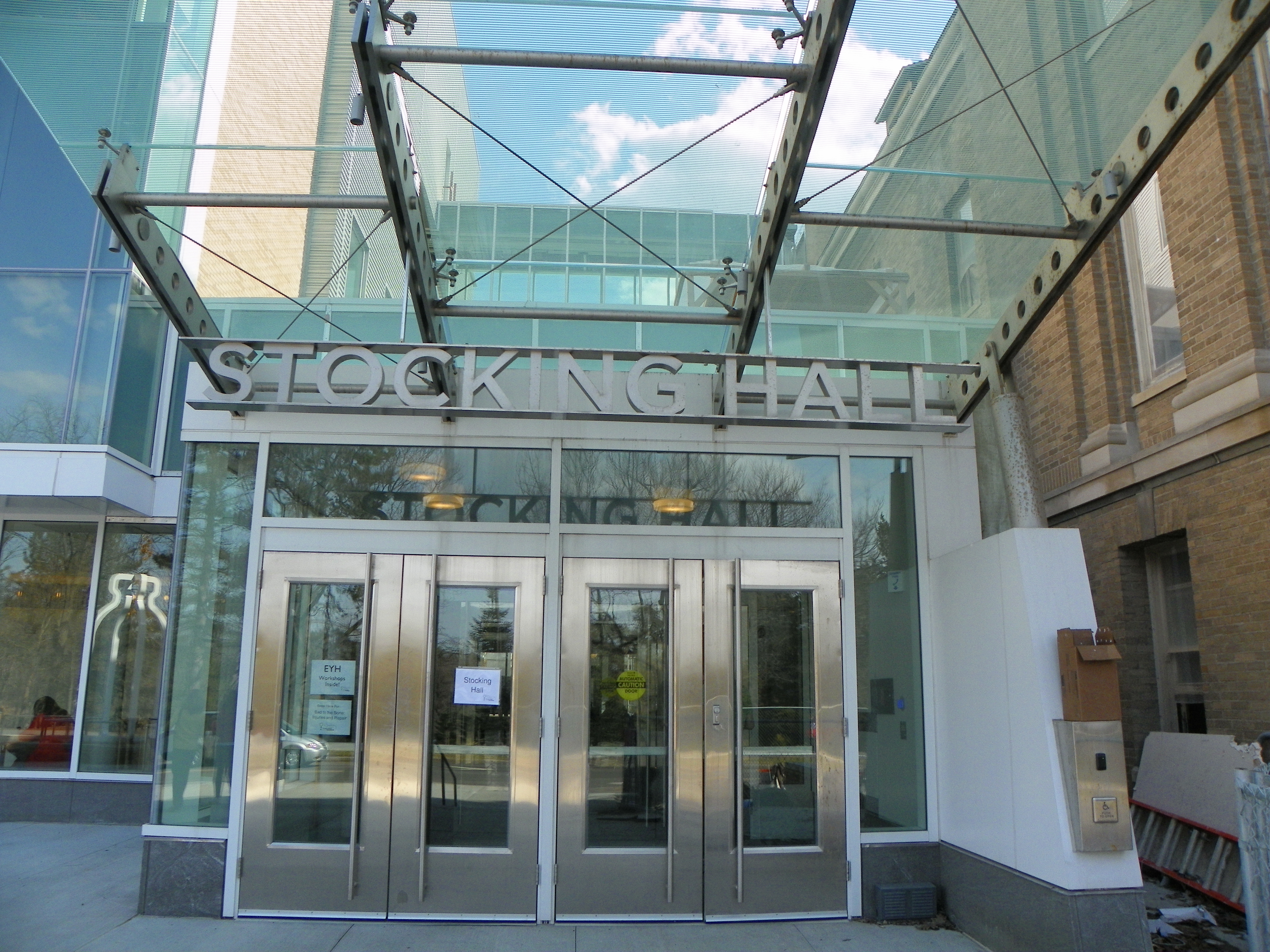
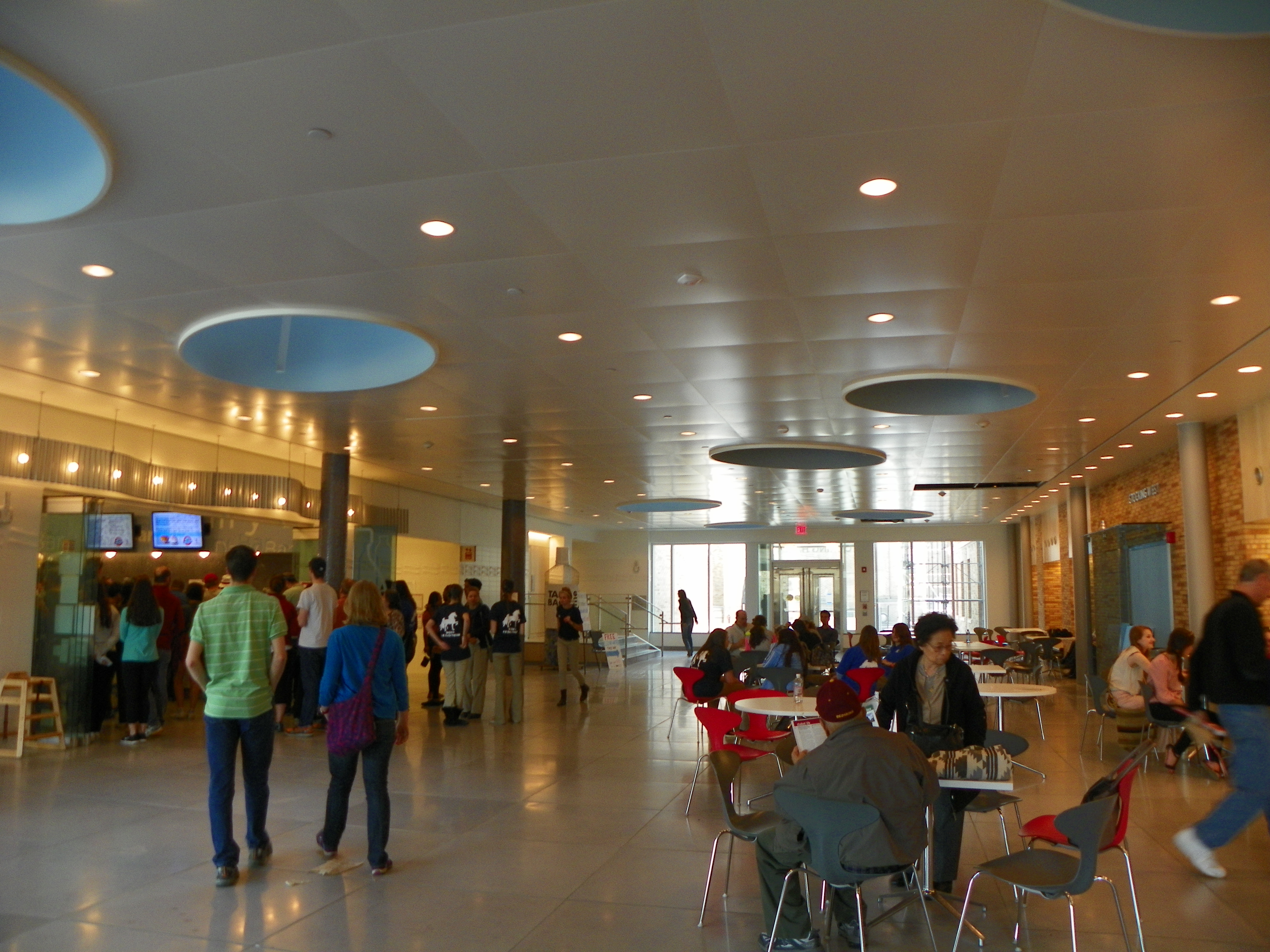
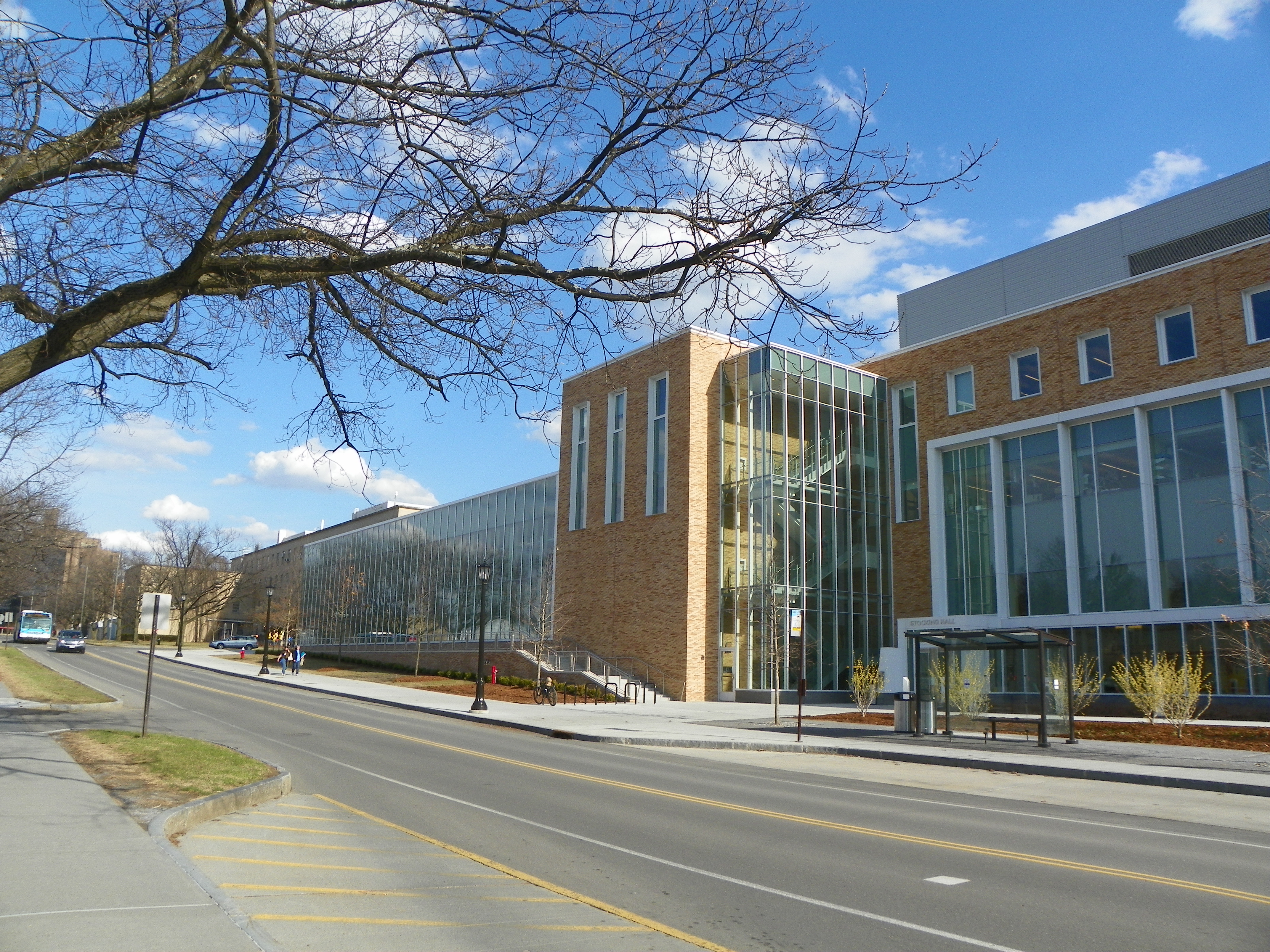
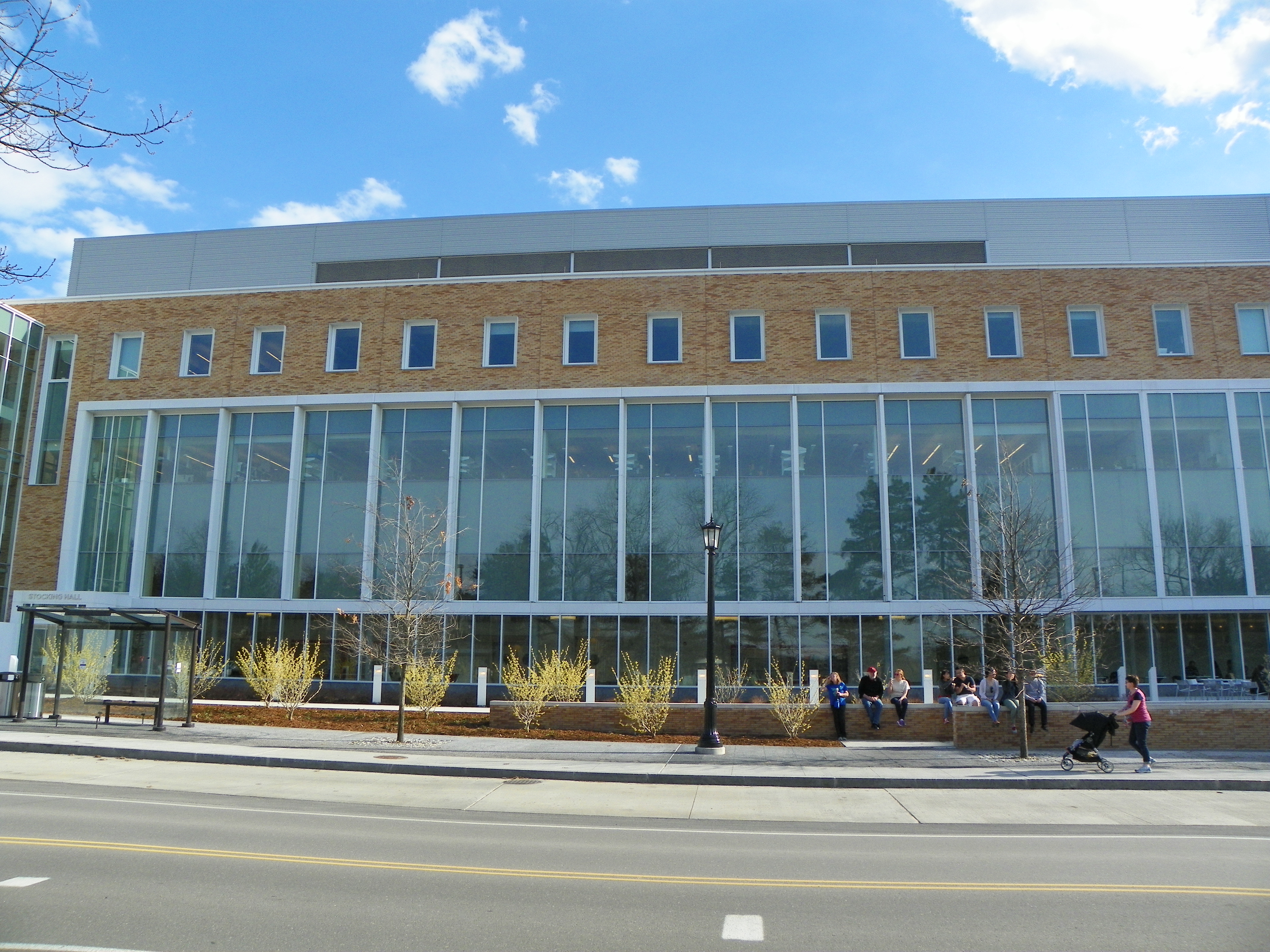
Two of the bars I hit up last weekend. For the former, it was my first time inside the new Stocking Hall (the old one is undergoing renovation, and the project won’t be fully complete until 2015). It was absolutely packed with 4H kids/parents, and Cornell Days kids/parents. To order and receive ice cream was a 40-minute endeavor. But I got my Italian lemon cream cake, and that’s what matters.

4-13-2014 058

4-13-2014 059

4-13-2014 0604-13-2014 0614-13-2014 0644-13-2014 0624-13-2014 0674-13-2014 0664-13-2014 053

4-13-2014 057

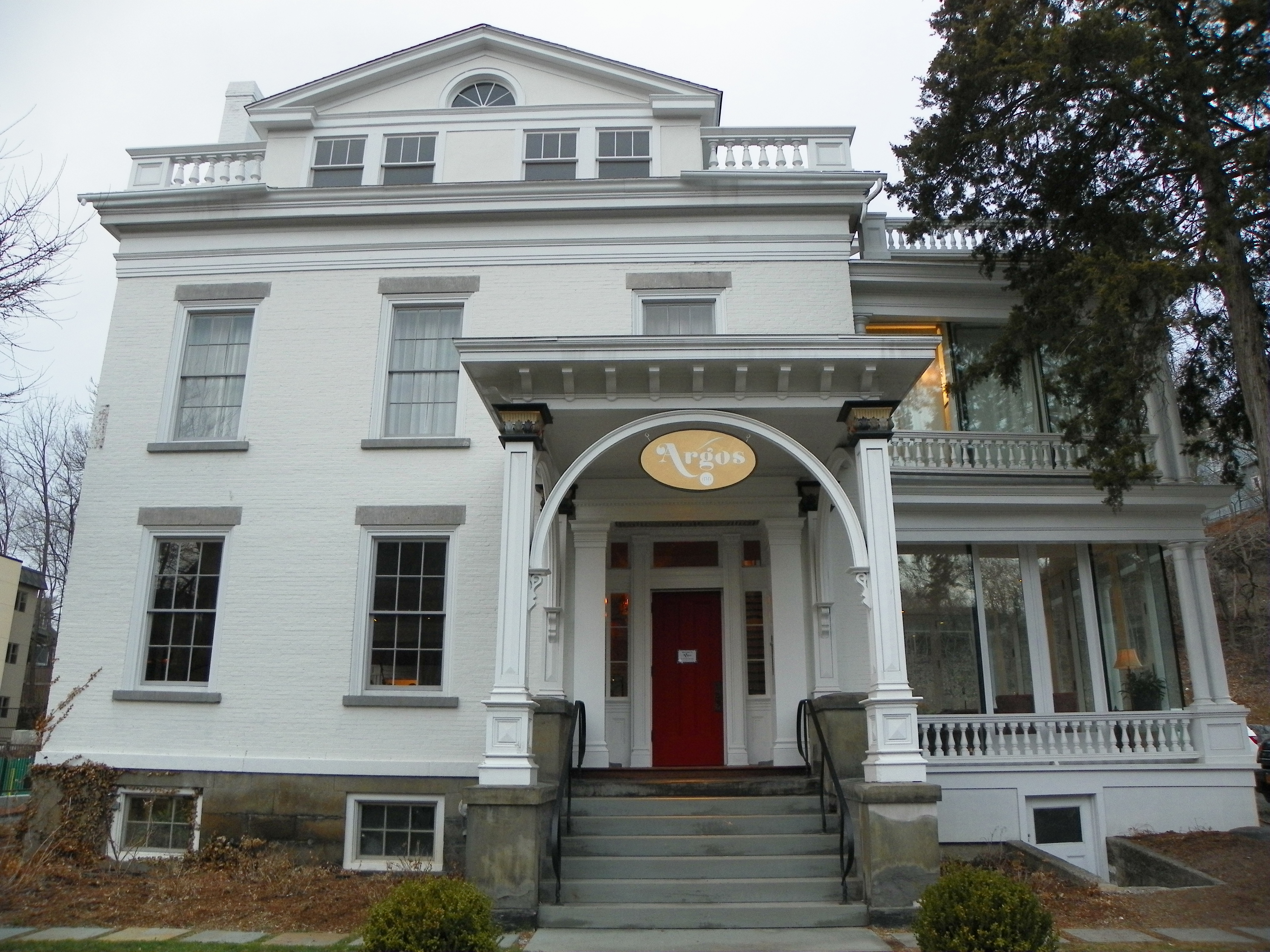
Meanwhile, on the more adult end of the spectrum, this past weekend was also my first time inside Bar Argos, the open-to-the-public bar of the Argos Inn. I had a Cuba Libre that was not overpowering, just the right amount of bite. Drinks here run on the high side of average, but the interior was fairly warm and inviting.
4-13-2014 069 4-13-2014 070 4-13-2014 071 4-13-2014 072


The Keyword Bar XXI

11 04 2014

4-13-2014 077

I figured I had two options at the moment – write about all the Chain Works District news, or do one of my tried-and-true keyword bar articles, where I examine and comment/answer on searches that led folks to this site. Well, I’m holding off on the Chain Works discussion, until some of the materials presented start floating around one of the local government websites (city of Ithaca, town of Ithaca, or county), and can be reused here. So in the meanwhile-

1. “what frat can ithaca college students join” 4-9-2014 and “ithaca college sorority options” 4-2-2014
Officially, IC offers a few professional music fraternities, but there are a couple of social Greek chapters that are based at IC but are not officially affiliated with the college. Rarely, IC students join Cornell University Greek organizations, though it’s normally no more than 10 IC students per year. Many of these are in the MGLC, fraternities and sororities that focus on minority groups, but a couple do join chapters affiliated with Cornell’s IFC (I don’t know if Pan-Hellenic allows sororities to recruit IC students; maybe in the informal fall rush). These students aren’t allowed to serve in leadership positions in most chapters, and I imagine the trek between campuses gets old after a while.
2. “cornell snow graduation” 4-8-2014

Thankfully, there’s nothing to worry about. According to the NRCC, the latest snow of any amount (trace or higher) in Ithaca occurred on May 18th (1973). With graduation traditionally at the end of May, the possibility of snow is very remote. Winter graduation is a different story.

3. “proposed south hill development town of ithaca” 4-7-2014.

That would be the Troy Road development. Which from a planning/land use perspective, I become less and less a fan of every time I see it. But then, I prefer New Urbanist planning, not suburban cut-and-paste development. I just keep reminding myself that the current zoning is worse, and the town has a poor track record in raining in sprawl.

4. “is there any problem of construction in collegetown terrace” 4-4-2014

Jason over at Ithaca Builds would know this better than I, but as far as I’m aware, there’s been no indication of construction issues. Perhaps the parking isn’t being utilized as much as they thought it would, but that has more to do with planning than construction.

5. “the cradit-moore house” 4-1-2014

Actually, this one has a pretty cool story attached. The Cradit-Moore house dates from 1817, with an addition built in 1860-61. The older north wing was built by Issac Cradit, and the south wing by Peter Kline (the Kline family were locally prominent farmers who held a lot of land, and its where Kline and Klinewoods Roads take their name from). The house was bought in 1938 by Dr. and Mrs. Norman Moore. Dr. Moore was the director of the Cornell U. infirmary, and in 1948, the Moores sold the house to Cornell but with the condition that they could live out the rest of their days in the home. When Cornell began plans to expand North Campus with CKB and Appel back in the late 1990s, the original intent was to demolish the house. This caused substantial protest, and working with the non-profit preservation group Historic Ithaca, Cornell donated the house away in 2000 and Historic Ithaca loaded the house, all in one piece, onto a flatbed truck and hauled it .3 miles to a new foundation on a lot donated by Cornell further up Pleasant Grove Road. The house was then sold to a private owner to recuperate the moving costs, the new foundation and landscaping.

Image property of Historic Ithaca

Image property of Historic Ithaca

6. “tunnel barton teagle” 3-25-2014

It exists, though like many of Cornell’s tunnels, it doesn’t appear to be open for public use.


College Towns As Retirement Communities

5 04 2014

100_2009

Growing up in upstate New York, retiring and moving to south Florida was considered a rite of passage. You worked for forty years, you retired with your company or government pension, you moved to a gated condo community in Florida, and then you complained about how much worse everything is these days and how terrible drivers are in Florida for the rest of your days.

I imagine that still tends to be a big draw (considering the New York to Florida population pipeline is the largest in interstate migration), but an increasingly-popular alternative in recent years has been to retire to college towns, enough that mainstream publications like USA Today and the New York Times have devoted articles to the topic.  it’s usually ascribed to some combination of a modest cost of living with expansive cultural and recreational amenities. Without having any numbers directly in front of me, I imagine Ithaca in a sort of second-tier in this category, if only because of the climate, which is a little cooler and snowier than the most popular college town retirement destinations. Still, I’ve been thinking about this topic a little bit because a number of the projects in the Ithaca area are targeted towards the retirement crowd. The individual trigger for this article was a Lansing Star article discussing review of a ~$17 million, 110-unit senior apartment building proposed for the forever-discussed Lansing Town Center development. The more I think about it, the more I realized a number of local projects, both recently built and proposed, are explicitly geared towards the 55+ age group:
Hawk’s Nest at Springwood (50 units)

Cayuga Meadows (62 units)

Longview Patio Homes (22 units)

Conifer Village at Ithaca (72 units)

The Kendal at Ithaca expansion (24 apartments and 13 “skilled care” units)

-The Old Tompkins County library site (likely)

Some of the news stories focus on collegiate affinity (i.e. living near the old alma mater) and offerings at the universities as a draw for retirees. To that end, Cornell offers summer courses for seniors and the local community college allows residents over 60 to audit courses (I don’t see anything described for IC). Those offerings along with the open lectures and Ithaca’s fairly active community engagement seem to provide some draw for those in their later years. I find college students and retirees an odd mix (even if they live in different neighborhoods for the most part), but if it works, I have nothing against it.


Ithaca is Cold

3 04 2014

100_2688

It probably doesn’t take a meteorologist to realize that this year was a long, cold and harsh winter. But let’s give it some perspective. All data comes courtesy of the Northeast Regional Climate Center (NRCC).

Records go back to 1893 for the Ithaca area. If we look at just snowfall, this was a fairly average year. The typical Ithaca winter averaged 64 to 67 inches, depending on your source, with accumulations on 19 days. Barring any freak spring snowstorms (God forbid), this year will finish up at 63.3 inches tallied from 20 days of accumulating snow, virtually par for the course.

Then we take a look at the cold. That was the news maker this year – the cold, not the snow. Let’s put this into perspective and look at the period from November 1 to March 31st – what most folks would describe as the cold season, rather than just calendar or meteorological winter (we’ll hit met winter in a minute).

This was tied for the second coldest cold season since 1893. The average temperature was 24.8 F. Tied with the winter of 1969/1970, and 0.3 F short of the record holder, 24.5 F set in the winter of 1903/04. Even the detestable cold of the winter of 1993/1994 wasn’t as bad as this year (though it holds fourth at 25.0 F). The average coldest temperature in a year is about January 18th, with a high of 30 F and a low of 17 F.  23.5 F. In other words, the temperatures seen on what is usually the coldest day in a year could very nearly be applied to a five month period. It was that bad.

Now let’s look at meteorological winter, December 1 – February 28th/29th. 21.4 F. This is, surprisingly, not awful. It’s the 15th coldest meteorological winter on record. Below average, but not awful. 2002-2003 was worse (21.2 F). The winter of 1917-18 is worst, with an average of 19.0 F. So winter was cold, and seems to be shifting the blame to November and March.

In that respect, we have to hand it to March for being an epic piece of frigid dung. Fourth coldest March on record, at 24.5 F. Only March 1900 (24.4 F), 1984 (23.8 F) and 1960 (21.5 F) were worse. November 2013 averaged 35.7 F, which is once again below average, as the 16th coldest November on record. To sum up this season, it wasn’t just the cold, it was duration that truly made it a memorable year.

To touch upon the cold a little more thoroughly, the number of subzero temperatures in the cold season was 23. 23 subzero days ties second place for the most subzero days in a cool season. Tied with 1947/48, and one short of the record holder, 1960/61 (change it to met winter and it moves to third, behind 1960/61 and 1962/63). In terms of maxima, it still has yet to hit 60 this year, the last time Ithaca was above the “jacket line” was December 23rd. You know, because everyone wants a green Christmas, followed by three months of polar conditions.

So there you have it. Persistent troughing in the east gave us one of the coldest cool seasons in decades. If you want to blame someone, look at California and their persistent ridge out west, giving them their warmest winter ever recorded. But then, given the drought, and given that the fringe suburbs of SoCal may go through this again in six months, maybe blame’s not the right word.