News Tidbits 9/19/15: It’s A Numbers Game

19 09 2015

tc_housing_permits_1984_2014

tc_housing_permits_pies_19904_20104

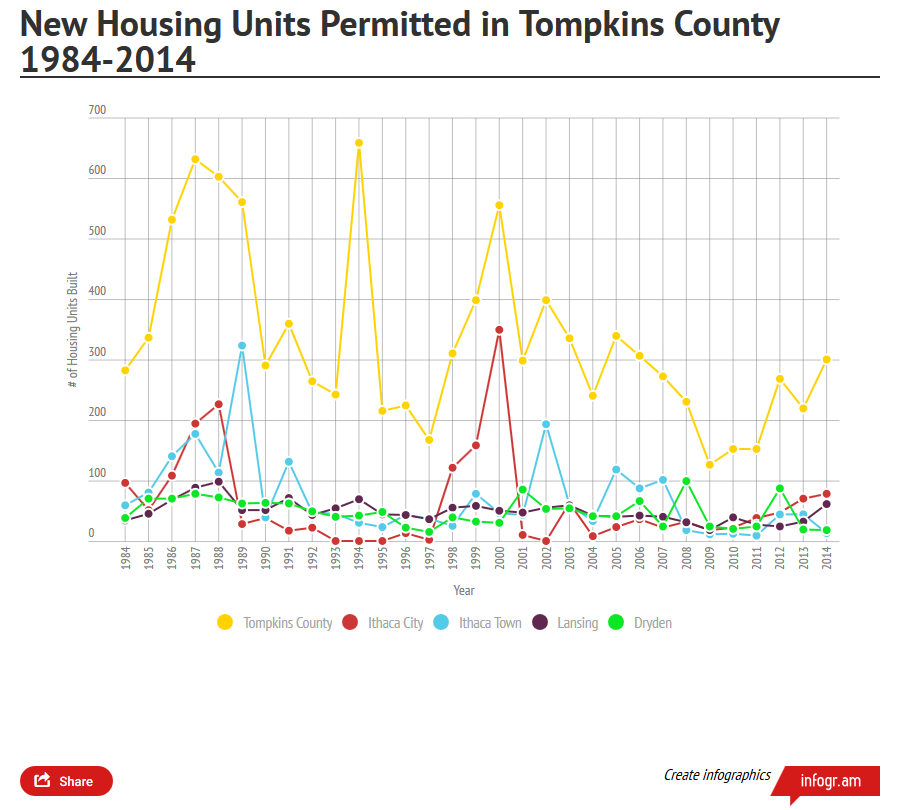
1. Readers might have noticed that there was no Monday night (Tuesday) piece this week. The piece that was originally scheduled evolved into the building permits analysis that was a featured article on the Voice (link here). The initial intent was to run a mirror of the piece on the same day, but things got a little delayed, and eventually I just scrapped running it as the topic-of-the-week.

The reaction was generally favorable (if maybe less traffic than hoped; math-y pieces typically aren’t big traffic generators), but there’s a couple of quick criticisms that came in that I want to address. Namely that I didn’t include proposed projects, and that I left out non-residential construction.

Truthfully, there is no reliable long-term record of non-residential construction. HUD doesn’t break it down in their SOCDS database, and the county doesn’t have complete data on non-residential construction (for their reports, they also rely on the HUD SOCDS database). Related to that, HUD data for 2015 is very preliminary, relying on imputed values. Finalized and corrected 2015 data won’t be available for use until March 2016.

That being said, residential permits are an effective gauge for a few reasons – one, residential is the largest individual construction sector nationwide; two most recent local construction is residential or institutional, and three, many of the projects built in Ithaca are “mixed-use” meaning they have commercial and residential components. although the commercial components aren’t kept in track, the residential construction permits are available, and are showing up in the city’s SOCDS data.

For proposed projects, it’s not prudent to “count your chickens before they’ve hatched”. This passage was originally in the piece, but was pulled before the final version was published:

“As mentioned earlier, news sources like us here the Voice are guilty are promoting the misconceptions. We try and keep tabs on all the big projects – when they get proposed, approved and underway. The thing is, not all projects go from proposed to built. Some never receive approvals. Some get approved, but wait years to get construction financing, if ever. So it seems like there’s more than there is.”

Without having hard evidence in front of me, I’d argue that if one were to somehow include office and retail, the area still isn’t booming if we’re looking in a historical timeframe – you’d have large spikes in retail during the mid 1970s when the mall was built, and from about 1997-2004 in Southwest Ithaca and Lansing for big box retail. For office space, there would be a peak in the late 1980s/early 1990s for the Cornell business park by the airport; there’s circumstantial evidence that the office market today is pretty weak, TFC’s HQ being the odd project out. Industrial space would have peaked with Borgwarner’s construction in the early 1980s, but in recent years it’s been minimal or even negative growth (due to the Emerson shutdown). Hotels might be the only category that shows a “boom” at present.

The point of the article remains that

1. If we look at available building permit data, Tompkins has seen an uptick in construction, but not a construction “boom”, and
2. It feels like a boom because the region’s coming off of a very low period of activity, and there’s more construction in the highly visible urban areas of Ithaca city, vs. the suburban and rural development that has been more prevalent in previous years.
20150829_121852 20150829_121855

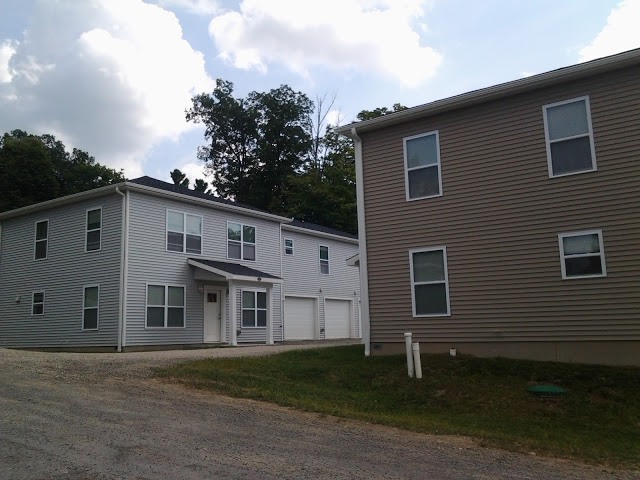
2. It’s time for a semi-regular house-of-the-week feature. I’ve been meaning to update on this for a while, but I keep missing the turn off Route 79. Local developer Chris Petrillose of Petrillose Properties (possibly related to Bob Petrillose, the founder of the Hot Truck) recently finished his second and third duplex  off of Wiedmeier Court in the town of Ithaca. Like the first duplex that was finished last year, each building consists of a 4-bedroom unit and 2-bedroom unit.

According to county records, the Wiedmeiers began to develop the land in the mid-2000s, building 2 duplexes of their own before deciding to sell the other lots (Petrillose bought the lots for the duplexes in 2012). The rest of the land, 12.34 acres, is currently for sale, so perhaps this won’t be the last visit.

3. Previously reported here and on the Voice, the city is studying whether or not to sell fire station No. 9, located in the heart of Collegetown at 309 College Avenue, to an interested private developer. We now know the consultant the city hired to perform the study.

Kingsbury Architecture, a small local firm, is investigating whether it would be worth the city’s investment to build a new station elsewhere on East Hill and sell the aging station, or invest in repairs and long-term maintenance for the current 1968 structure. Kingsbury has little presence online, but in an example of how small of a world this is, they were the initial firm used to plan St. Catherine of Siena’s new parish center, the project discussed in last week’s news update. However, according to church newsletter, the congregation amicably ended the partnership because of cost issues. The church staff went architect shopping, and that’s how Richard McElhiney Architects came into the project. Some of Kingsbury’s work can be found on the church’s webpage here. Kingsbury also appears to have done some interior renovation work at Cornell, and roof replacement at the Cascadilla Boathouse.
state_st_triangle_v5_1

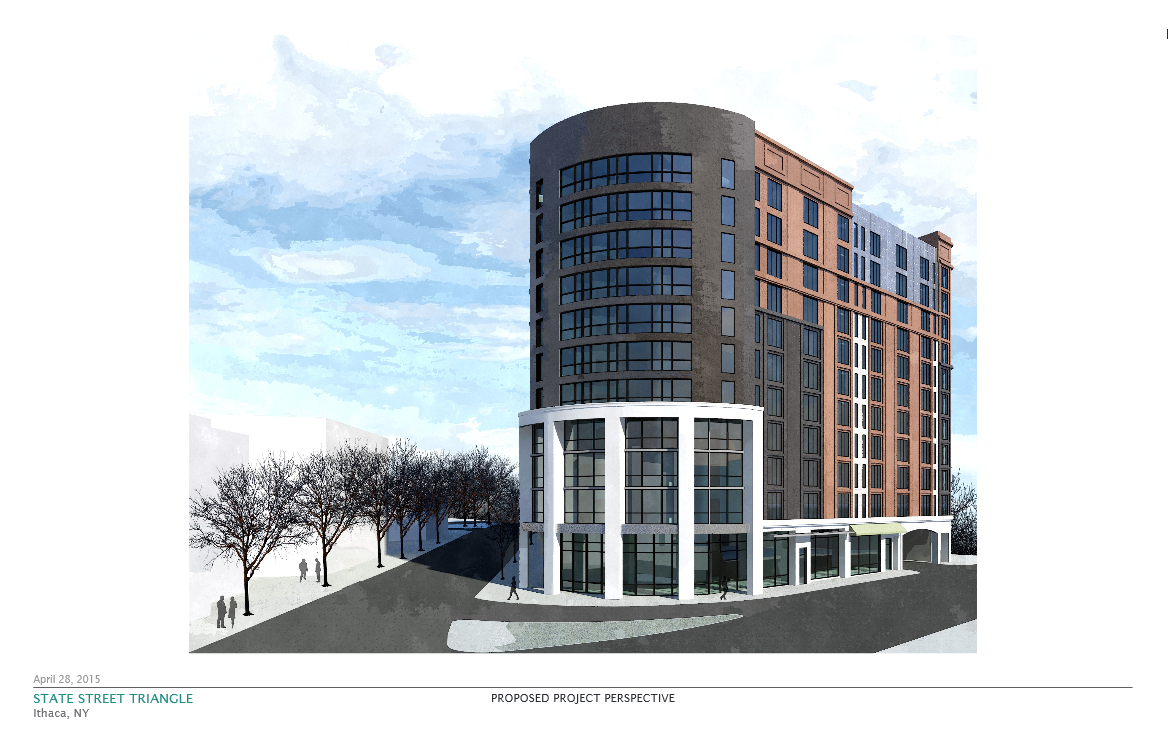
4. New documents from Campus Advantage give insights on the tenant mix and parking situation in downtown Ithaca.

First, my personal disclaimer – Even though part of their market research cites work I’ve written for the Voice about the housing crisis, my work was done impartially.

The new information comes as part of Campus Advantage’s official response to the city planning board’s request for more specific values on resident population, parking utilization and bus capacity, among other details. The documents are provided as part of the planning board’s materials here.

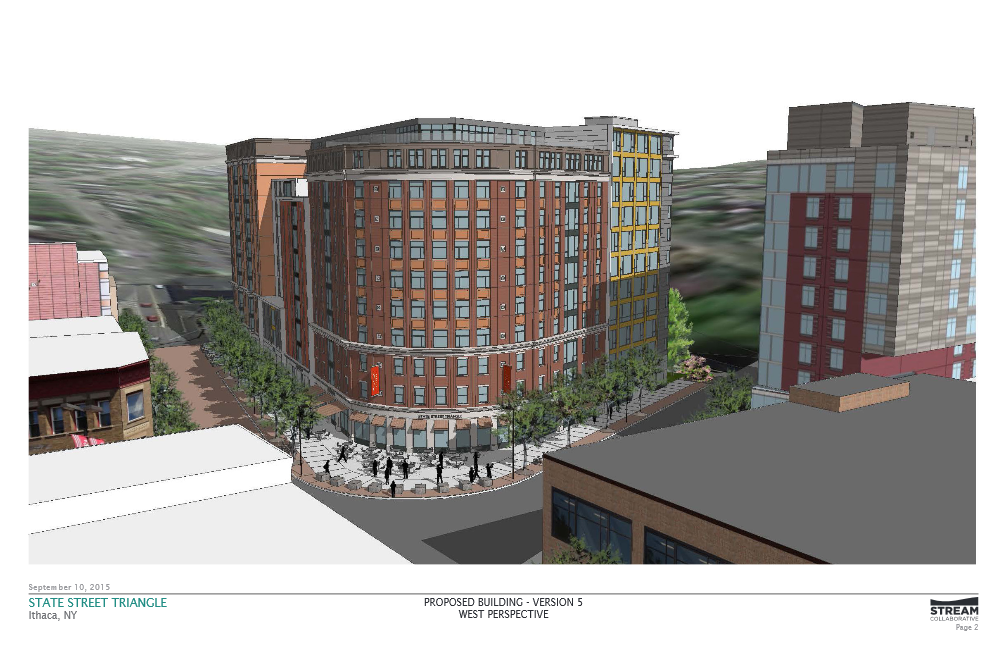
Updated figures indicate the proposed building has gone on a diet – the number of bedrooms has dropped from 620 to 582, the number of units from 240 to 232, and the square footage from 288,845 SF to 216,434 SF, a 25% reduction in mass. The maximum height remains the same at 11 stories at 116 feet. The slimming down comes in response to unfavorable review of the previous design as “too massive”, especially on the side facing East State Street.

sst_stats_1

According to an internal study by Campus Advantage, the Texas developer forecasts that, of the 582 tenants when at full capacity, 77.8% (431) will be students, and 22.2% (123) non-students. Of those students, 78.4% (338) will be undergraduates. Cornell students would comprise 64% (276) of the student population, Ithaca College 32% (138), and TC3 4% (17). A quick glance at the details behind these projections shows that CA assumes 95% occupancy, studios and other smaller units will be half or majority non-student, and that undergrads will be more inclined towards shared 4-bedrooms and 5-bedroom units. CA conducted online surveys with student groups to gather information for their study.
sst_stats_2

The parking demand from residents is predicted to be 191-219 spaces, taken from a study conducted by third-party traffic engineering firm SRF Associates. A further 64 parking spaces will be required for commercial retail tenants on the first floor (57 customer spaces, 7 employee spaces), for a grand total of 283 parking spaces. The 2012 Randall/West Collegetown parking study used as reference looked at student and non-student vehicle ownership in the Collegetown neighborhood, and the higher end (or “more conservative”, as SRF calls it) 219-space figure comes from a calculation the Urban Land Institute, a non-profit urban planning think-tank. Given that Randall/west focused on Collegetown, the more conservative figure is the safer bet.

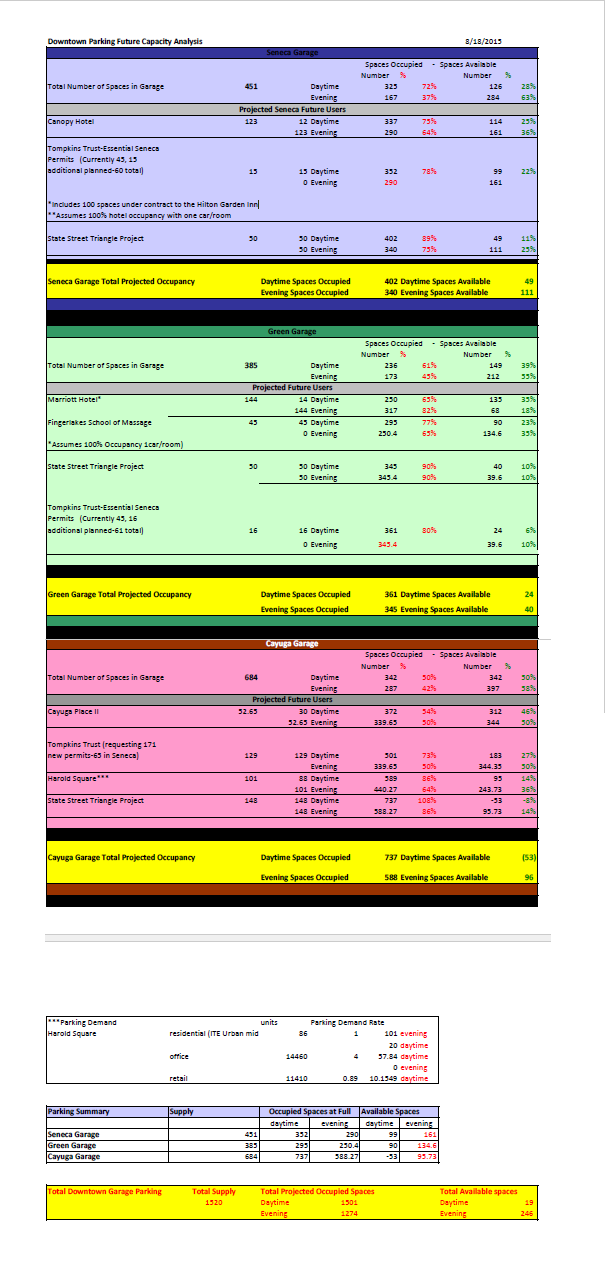
It’s not clear whether the parking garage study above is CA’s or the city’s, but the application itself states that the city’s Parking Director, Frank Nagy, has confirmed that enough parking is available, and a letter from TCAT’s Doug Swarts states that TCAT has the capacity for State Street Triangle’s potential tenants. Looking at the above study, though, it appears that if built, and if all the other approved and likely projects (i.e. don’t include 130 East Clinton) are built, the parking garages will be nearly full.

Since the new drawings were presented at the public open house on September 10th, there do not appear to have been revisions – what was shown then will be shown at the planning board meeting next Tuesday (links to those drawings here). However, the planning board will be looking to schedule a design review committee meeting, where board members provide suggestions and guidance on design features for the new building. In other words, this probably isn’t the building’s final design.

Also included in the attachment are two opposition letters – one from Historic Ithaca saying the building’s still too tall and massive, the other from former planning board and councilwoman Jane Marcham, who takes the unusual if debatable tact by saying that students living downtown deprives the colleges of campus life. Students comprise 40% of the market-rate downtown rental market, so there’s a few to interview for opinions should anyone be interested.

As always, the project is likely to inspire some debate at the planning board meeting. We’ll see if the changes are to the board’s liking.
815_s_aurora_1

5. Wrapping up this short but informative week, here’s a look at the Planning Board agenda for next week:

A. State Street Triangle – Public Hearing, City Environmental Quality Review (CEQR) discussion, and scheduling a Design Review Committee meeting. CEQR is they city’s more in-depth take on SEQR, where a project’s environmental impacts are considered, and a negative declaration (acceptance) is given only when adverse factors have been mitigated in a way the board sees fit. Design Review Committee pretty much is as it sounds – the board makes suggestions on the building design as a quality control / quality assurance measure.

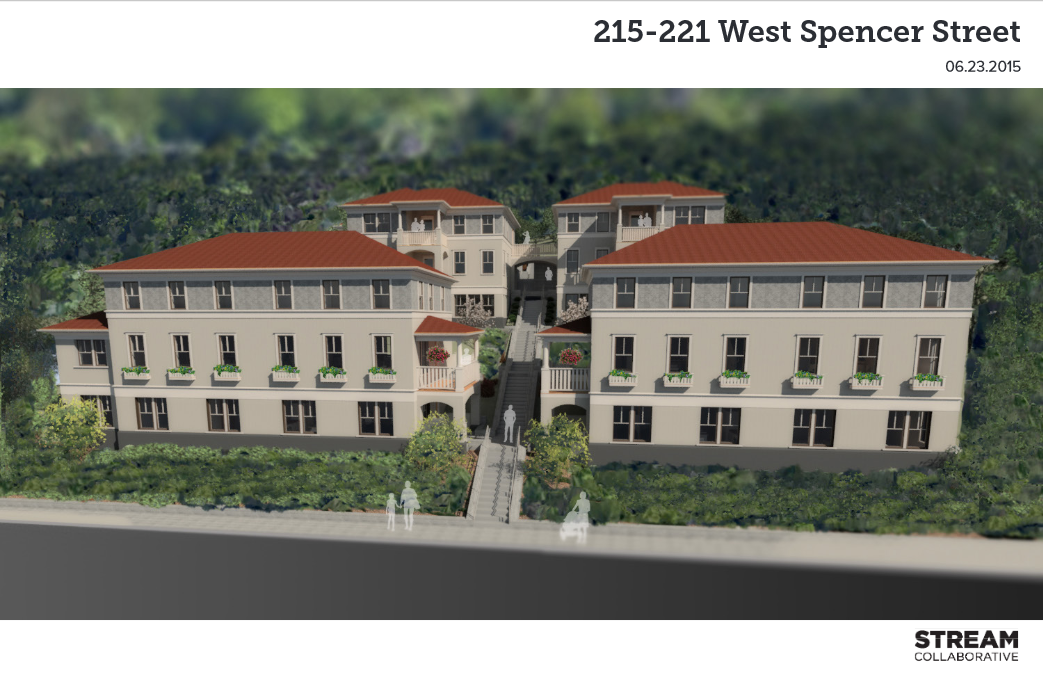
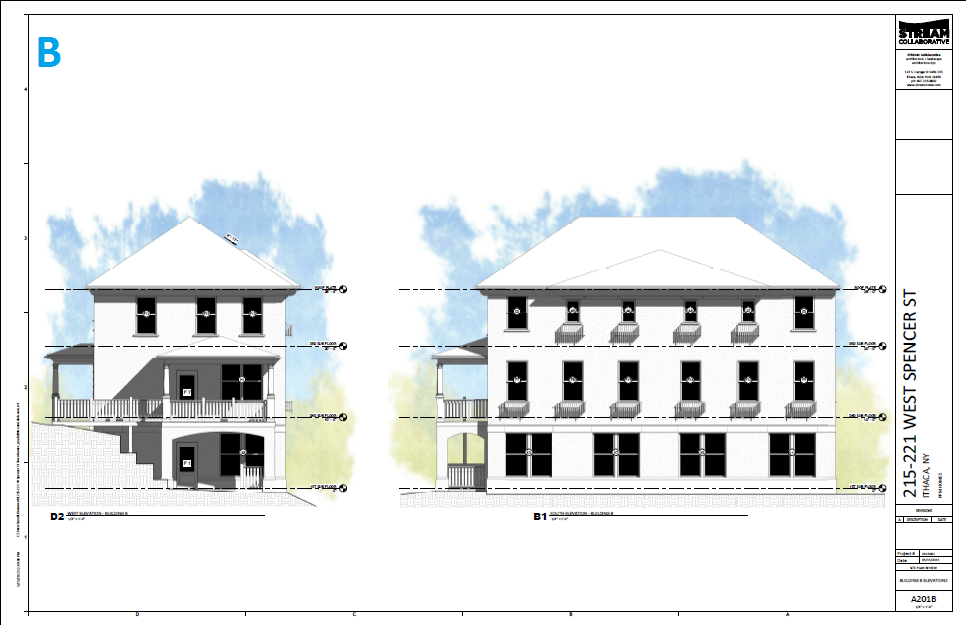
B. 215-221 Spencer Street, Determination of Environmental Significance and Recommendation to the BZA – the board has decided to recommend approval of the parking variance (parking within the rear yard setback), given the site’s steep topography.

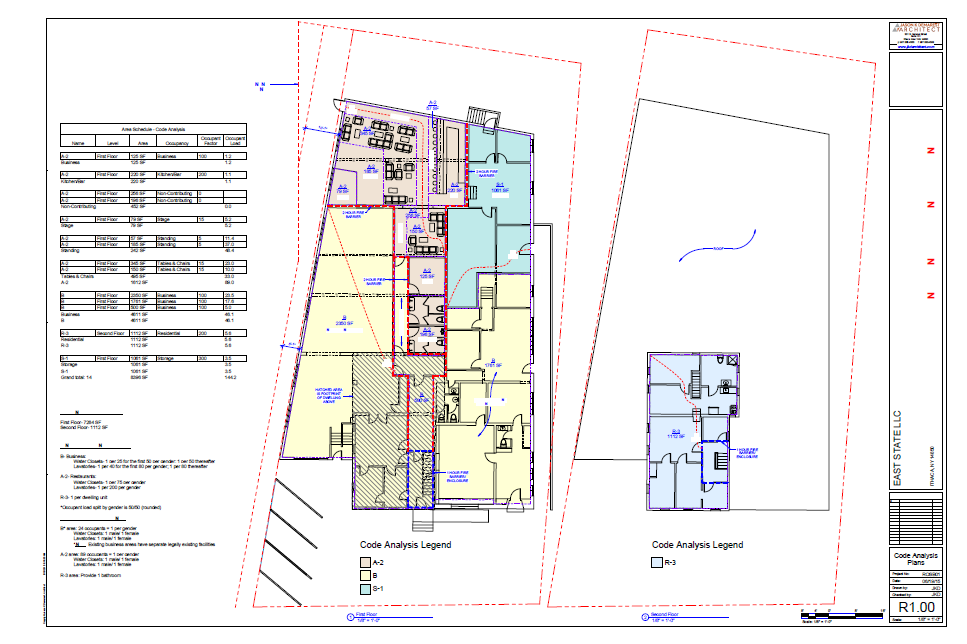
C. Site improvements, 416-418 East State Street416-418 East State Street is currently home to an underused 7,600 SF office and a connected manufacturing/storage building. The house dates from the 19th century, with various additions as recent as the 1970s. According to plans filed with the city, an LLC linked to Argos Inn architect Ben Rosenblum has plans to convert the old manufacturing space into a bar and storage space, with renovated offices and a 2 bedroom apartment in the original house. The project will include an accessory parking lot, revised landscaping and handicap access. Area and setback deficiencies have resulted in the need for a zoning variance, but a parking variance won’t be required because the bar will have after hours parking across the street at Gateway Plaza. The building itself won’t change dimensions, but the change in use triggers the city zoning laws.

There have been substantial concerns expressed about this project – neighbors are vociferously opposed to a bar, citing noise problems and concerns about smokers, and the county planning department is not a fan of the traffic and parking arrangement. The city will need to examine this project carefully.

Scott Whitham is serving as a consultant, and local architect Jason Demarest is designing the renovation.

D. Hotel Ithaca – Amended declaration of environmental significance. Backstory and plans here.

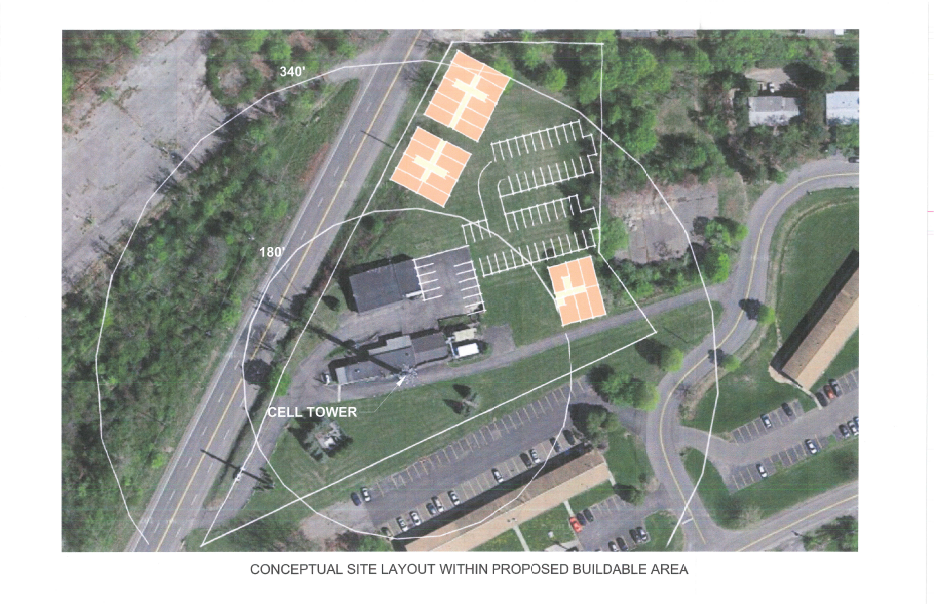
E. “Sketch Plan – 815 South Aurora Street, 87 unit housing project” – See conceptual design above, full backstory here. To recapitulate the salient details, local developer Todd Fox of Modern Living Rentals would like to build apartments on vacant land at 815 South Aurora Street, but can’t because the vast majority of the property is within the “fall zone” of a cell tower, which the city defines as twice the height of the tower. The 170′ tower creates a 340′ radius of no-man’s land (outer circle above), making the parcel virtually undevelopable. Fox had two private engineering companies (TAITEM Engineering and Spec Consulting) analyze the case, and they determined that an appropriate fall zone is the height of the tower plus 10 feet for a little wind/bounce – so 180′ total. With this info in hand, Fox tried to get the city to refine the zoning to allow the decrease in fall zone and therefore permit the land to be open for development. But when Fox and project architect Noah Demarest approached the BZA, they said they wouldn’t consider the 815 South Aurora Street application unless the law was amended, or Fox and Demarest go through the sketch plan and review process, and submit a formal application for a zoning variance.  So now we’re at the point of having a sketch plan to present. Regardless of design, the project will need an area variance issued by the BZA for the cell phone tower issue. At 87 units, this will be a pretty sizable project, and given Fox’s previous work (he’s been rather busy lately), it will likely be rentals, perhaps with Ithaca College students as the target market.

3 of the 5 projects above (SST, 215-221 West Spencer, and 815 South Aurora) have Noah Demarest/STREAM Collaborative as a lead or consulting architect. None of them have the same developer. Talk about having your fingers in many pots.


News Tidbits 6/6/15: I Give This Week A Frowny Face

6 06 2015

215-221_spencer_v2_2

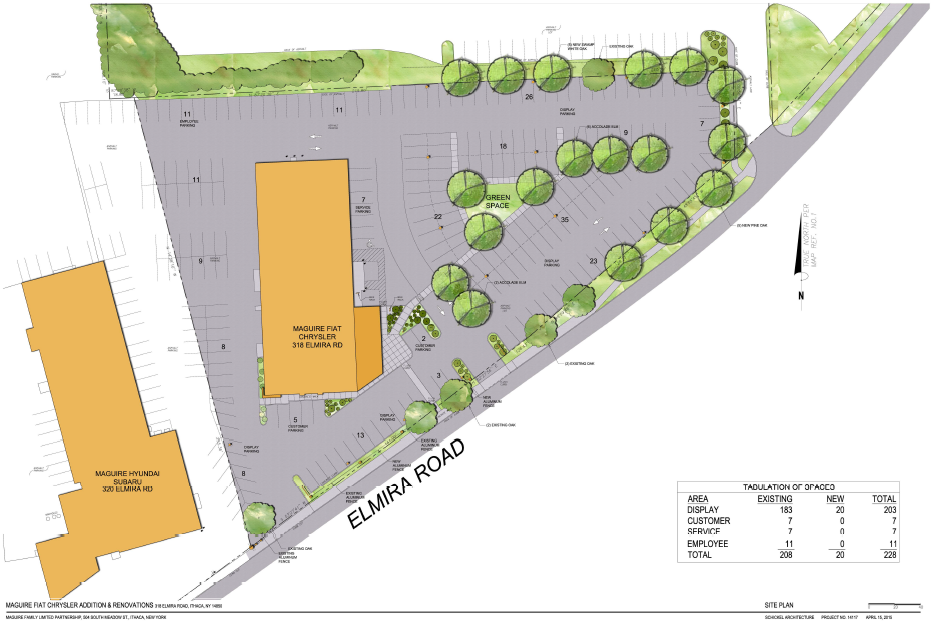
1. I’m thinking there is a genuine lull in the pipeline at the moment. The city’s projects memo, which is the document that city departments receive and comment on before the actual Planning Board meeting, doesn’t have much for consideration for this upcoming month. The one projects that is being “newly” considered is the 12-unit, 26-bedroom PPM Homes proposal at 215-221 W. Spencer Street. That project is expected to receive declaration of lead agency (in other words, the planning board formally agrees to review it) at the June meeting. Being carried over from the previous months are the two duplexes for 804 E. State Street, the Tompkins Financial HQ, INHS’s 210 Hancock project and the Maguire Fiat/Chrysler expansion. None of those are up for final approval.

Smaller projects and subdivisions will often first show up in the memo ahead of the meeting, but not this month. What will be, will be.

tfc_v2_1

2. On the other end of the scale, this looks to be a busy month for the Ithaca Landmarks Preservation Council. Most of their agenda focuses on window repairs and other minor details, but they will be reviewing the Tompkins Financial HQ and the new drive-thru across the street. Although neither is within a historic district, I suppose it’s being reviewed for the sake of feedback and the possibility of a visual impact on the skyline as seen from historic districts.

Cayuga-Meadows-Shot

3. In Old Library news, a decision was expected last Tuesday…but, the decision was postponed. After committee members started sharing their differences in opinion. Pardon my cynicism, but that’s a perfect microcosm of those whole process. Frequently delayed and bound to infuriate someone come decision time.

In a perfect world, all three of those would be built in the city, because they all address different housing needs in Ithaca, and they would all likely be successful. But of course, there can only be one. We’ll find out next Tuesday morning.

4. The Ithaca town Planning Committee is verifying two things already noted in previous news round-ups. One, the 68-unit Cayuga Meadows project hopes to begin construction in the very near future, and two, the Troy Road housing project is dead.

The committee also brought up the possibility of a moratorium for certain parts of town – two areas described as having significant student populations. One is almost certainly the area of South Hill next to IC, the other is not stated (but likely has to do with Cornell). This is part of a larger conversation to keep IC students from living off-campus in student rentals. Students aren’t a protected class, so whatever extra bureaucracy or laws the town wants to adopt are technically fair game. I would imagine, however, it would much easier to do that to IC’s undergrads than the professional and doctoral students attending Cornell. Looking at the numbers, one has been increasing much more than the other, and it’s not the undergrads. This, I suspect, is where potential laws become problematic.

Anyway, the moratorium is seen as a last-ditch effort. But the possibility of it should be enough to raise eyebrows.

815_s_aurora_1

5. Time for some more unhappy – the city Board of Zoning Appeals isn’t touching the 815 South Aurora Street application.  To recapitulate the salient details, local developer Todd Fox would like to build apartments on the land but can’t because the vast majority of the property is within the “fall zone” of a cell tower, which the city defines as twice the height of the tower. At 815 South Aurora, a 170′ tower creates a 340′ radius of no-man’s land (outer circle above), making the parcel virtually undevelopable. Fox had two private engineering companies (TAITEM Engineering and Spec Consulting) analysis the case and they determined that an appropriate fall zone is the height of the tower plus 10 feet for a little wind/bounce – so 180′ total. With this info in hand, Fox is trying to get the city to refine the zoning to allow the decrease in fall zone and therefore permit the land to be open for development.

The BZA said it was acting on the city attorney’s advice that the committee can’t override a council-approved law. Which means that Noah Demarest, the architect appearing on behalf of Todd Fox, will either have to go to the Council to have the law amended, or he and Fox will have to go through a full sketch plan and review process, and apply for an area variance for whatever firm plans they have proposed. Meeting with the BZA was seen as way to avoid having to shell out all that time and money and risk still being rejected because of the cell tower issue. There’s a risk with moving forward at this point, and it’ll depend on just how much risk the developer is willing to take on this potential project.

6. We’ll wrap up with something positive – FormIthaca, the citizen group advocating for form-based zoning, is doing their design charettes this week. I’m writing this on Thursday night since I will be doing 5-year Cornell reunion stuff on Friday, but I do plan on being in attendance Friday afternoon meeting and am looking forward to seeing/hearing what ideas the presenters have to share.

I can assure a certain town of Ithaca board member that I have a personal preference to small street setbacks, and it sure as hell isn’t because they’re “hipper”.


News Tidbits 5/16: Smart Developments, or Sprawl?

16 05 2015

Looks like this is going to be one of those longer roundups. I’m excited and intimidated at the same time.

tfc_v2_1 tfc_v2_2 tfc_v2_3

1. First off, I’m going to lead off with renders of the new Tompkins Financial Corporation. Write-up on the Voice here, more drawings here, traffic study here, cover letter here, Full Environmental Assessment Form (FEAF) here.

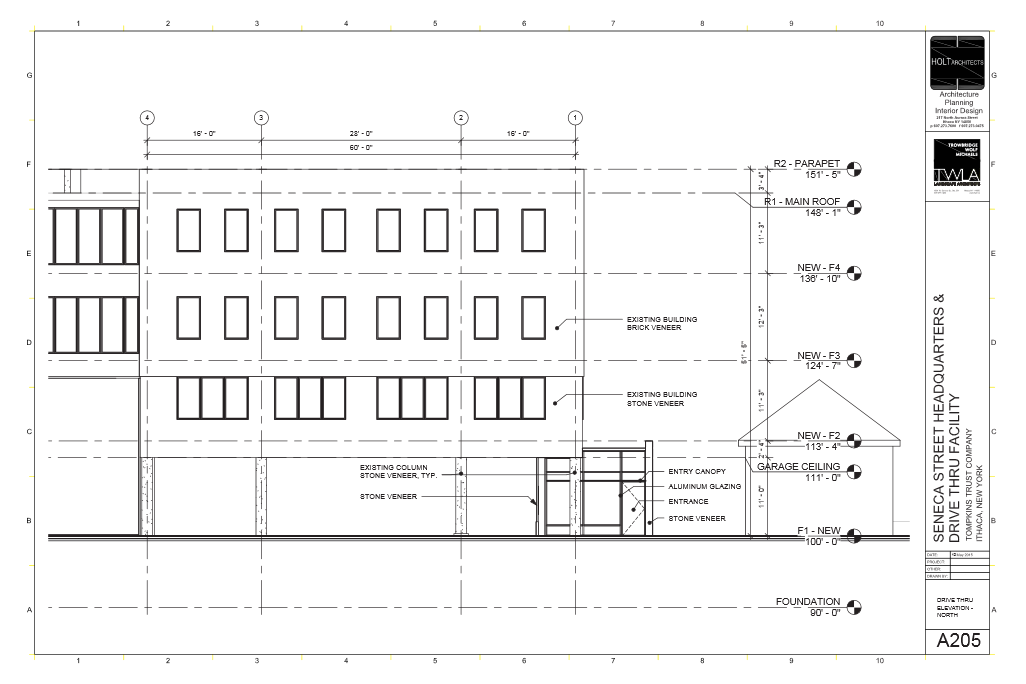
Rather than describe it in neutral generalities as I did with the Voice article, I’m going to afford the right to be a little subjective. The design is respectful of its neighbors through the use of brick and stone veneer. There’s no real surprises in the design, and corporate buildings tend to be pretty conservative anyway. At 104 feet (100 to the rooftop, and then 4 feet for the roof parapet), this will make a dent in the Ithaca skyline, but once again, it respects and balances out it neighbors by being a little taller than the DeWitt Mall, and a little shorter than 121′ Seneca Place. On a spectrum, the street front is on the nice side though not fantastic; a bank branch and some offices will engage with the street only modestly, but it’s much, much better than the drive-thru there now. The new building is built to the sidewalk, has an urban form, it’s a multi-million dollar private investment and a lot of other things that most upstate mayors would sell their mothers to get. The project is still shooting for a summer approval and construction starting not long thereafter.

One concern I have is that this will offload tens of thousands of square feet of office space onto the Ithaca market. Office space is one of the weaker sectors of the local market, and this may exacerbate the situation. It could cause some problems come 2017, and maybe with projects still in the pipeline such as Harold’s Square, which is shooting for a fall start after two years of trying to secure financing. I think that in the longer term, a few of the spaces such as the Seneca Building (121 East Seneca) might be ripe for a residential conversion.

With that concern noted, I think the parking situation will be okay. Since most of the jobs are shuffling around downtown, there’s not going to be a huge influx of workers. Offhand, I think the numbers are low double-digits (20 or 30) for transfers from Lansing into the city, and then the 77 brand new jobs created over the next several years.

belle_sherman_townhouses_1

2. And then there were none. With the sale of the last of their townhomes (lots 20-24), the Belle Sherman Cottages have technically sold out. I say technically because Lot 9, the new cottage design on the southwest corner of the parcel, has yet to be marketed let alone sold. I followed up with an email to developer Toby Millman of Agora Home LLC, and he replied that “[w]e are still working on the plans for that home and expect to release if for sale in the next month or so.” So keep an eye out for that.

3. Here’s an interesting piece of news from the Ithaca Urban Renewal Agency – the city recently showed off the 6-acre parcel it owns on Cherry Street to an employer looking to relocate 250 employees to the property, buying the lot and building a one-story “campus setting” over the whole six acres. This may or may not be the same one previous mentioned in the March minutes, regarding an inquiry from a business located outside the city. Since the parcel may have been shown in January or February, it seems that the two are likely the same entity.

This isn’t the first piece of news regarding some potentially major work in this isolated section of Ithaca’s West End – scrap steel mogul Ben Weitsman has also been rumored to have plans, and improved access from the Brindley Street Bridge would aid in redevelopment of this part of the city.

state_st_triangle_3

4. The planning board is cautiously enthusiastic about the State Street Triangle development. Per the minutes from the April meeting, they want the building to be as iconic as possible; board member John Schroeder went as fall as to suggest inspiration from the Carson Pirie Scott Building in Chicago:

Another member suggested a decorative crown. If my notes are right, a crown could exceed zoning as long as it’s not habitable space. Some other suggestions include a setback on the upper floors, and looking into incorporating other forms of housing.

5. A quick follow-up on the proposed removal of some lot setbacks at the Nate’s Floral Estates trailer park – according to a tweet from Ithaca Times writer Josh Brokaw, the removal would allow an extra 18 lots for manufactured housing. The trailer park currently has 112 lots, and it’s been noted to have a substantial waiting list. Nate’s Floral Estates serves as senior housing, so this is one way to make a dent in the affordable housing problem.

815_s_aurora_1

6. It’s not too often you see someone request a zoning interpretation. At 815 South Aurora Street on South Hill, that’s exactly what local architect Noah Demarest of STREAM Collaborative is doing on behalf of developer Todd Fox. Fox would like to develop the land with apartments (and he’s no stranger to South Hill, having built a couple duplexes on Hudson Street a couple years ago), but can’t. The city won’t allow construction in the “fall zone” of cell towers, which they define as twice the height of the tower. At 815 South Aurora, a 170′ tower creates a 340′ radius of no-man’s land (outer circle above), making the parcel undevelopable. The developer got a hold of two private engineering companies (TAITEM Engineering and Spec Consulting), both of whom determined that an appropriate fall zone is the height of the tower plus 10 feet for a little wind/bounce – so 180′ total. With this info in hand, Fox is trying to get the city to refine the zoning to allow the decrease in fall zone and therefore permit the land to be open for development. It’s an interesting case, and the result could be a sizable apartment complex down the pipeline. Stay tuned for the BZA review in June.

228_w_spencer_1

A couple other minor projects are up for zoning variances on parking – a small 2-bedroom house planned for 228 West Spencer is seeking a variance because the builder (Ed Cope of PPM Homes) says there’s no room on the hilly lot, and Todd Fox is requesting a parking variance for a 2-bedroom basement apartment to be built at 108 Ferris Place, saying that its central location and easy bus access should make having a car unnecessary. Coincidentally, architect Noah Demarest is handling both appeal applications.

troy_rd_rev1_1

7. To wrap things up, here’s the latest agenda from Ithaca town. There doesn’t appear to be anything too exciting going on next Tuesday. Cornell is renovating its softball field on East Hill with improved site access, a new restroom and ticket office, and replacing the existing bleaches, dugouts and press box. The 32-unit Clare Bridge assisted senior living project that was discussed last week will be reviewed. There are also sketch plans to be presented for a propane refueling station and sales office to be built on a vacant lot on Elmira Road/Rte. 13.

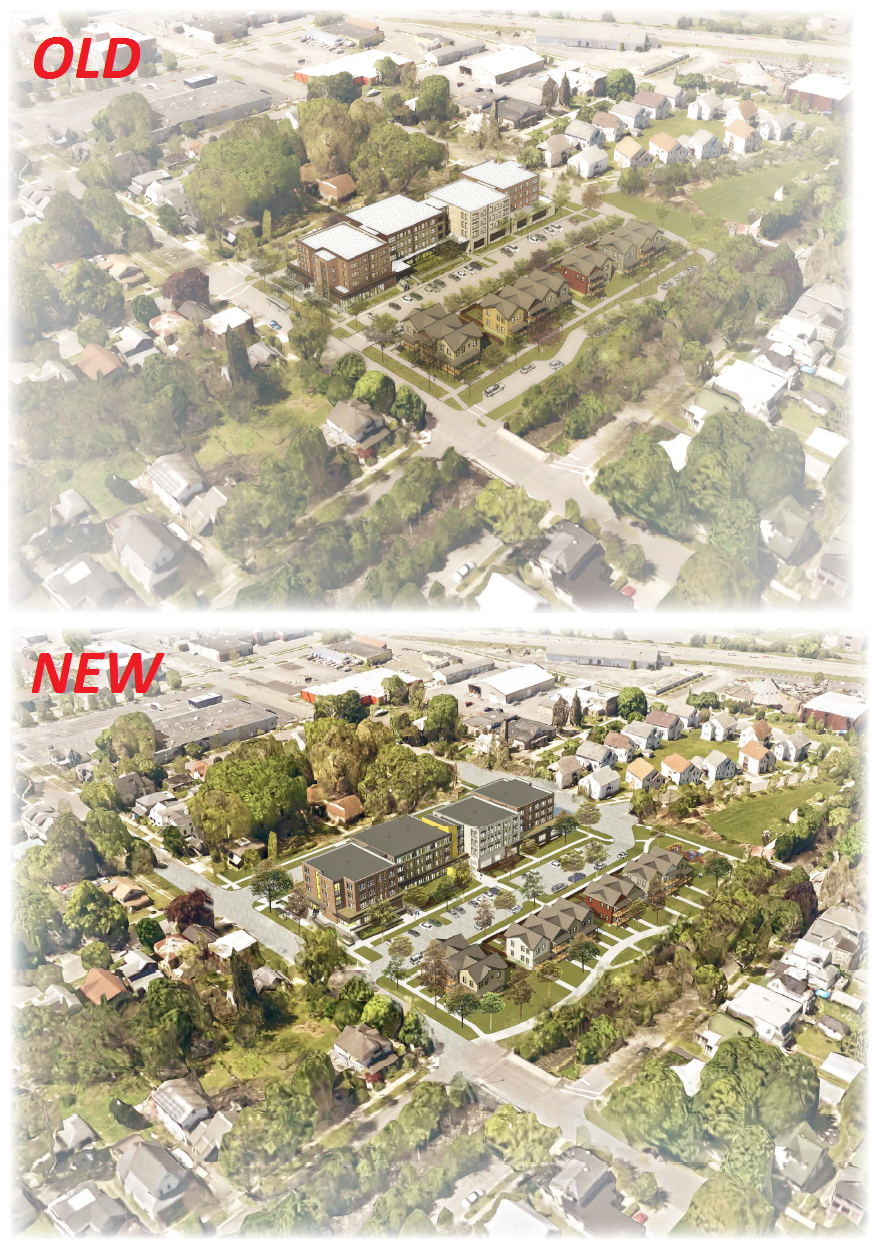
The planning board will also be reviewing plans to subdivide the Troy Road parcel that was once slated for a major residential project. The seller (Paul Rubin of Florida) apparently has a buyer for the triangular chunk of land south of the power lines (which can be seen in the old render above). With no explicit plans for either plot of land, there’s little reason to deny the subdivision at this time.

Personal opinion, I don’t like the direction this is going. It’s a real shame that the revised 130-road Troy Road project didn’t continue pursuit of approvals, it had really started to coalesce into a decent proposal. But now there’s a possibility where the land gets divvied into multiple chunks with homes scattered on it like bird crumbs. Single-family and duplex homes don’t have to go through board review, so there’s a lot less oversight when the land gets divided among multiple owners and built out in a piecemeal fashion. The last thing the town needs is expensive, sprawling, ecologically insensitive development.