Olympic Cornellians

24 02 2014

100_2102

If I was a little better at timing things, I might have managed to get this entry out before the closing ceremonies in Sochi. But, better to get this out now than to wait for Rio in 2016.

In keeping with current events and the Cornell mouthpieces providing updates on Cornellians participating in the winter games, I decided to compile a few pieces of information regarding Big Red staff, alumni or current students participating in any Olympic games since their modern inception in 1896.

Originally, I was going to use a combo of a pdf that Cornell Athletics put out during the Vancouver games, a London 2012 update, and a current piece regarding CU representation in Sochi. But, whether it’s something new or something I missed the first time through, Cornell put out an updated sheet with a little bit of HTML.

Starting with 3 Cornellians in the 1904 St. Louis Olympics, Cornell has had a combined 98 Cornellians participate in the Olympic games (81 summer, 17 winter— the first winter game representative was Richard “Dick” Parke 1916, at the 1928 games in St. Moritz). Another 9 were alternates, 2 more were injured and could not participate, and 1 lost out due to the 1980 boycott. One of the injured ones, Helen Mund White ’57, had another chance four years later (Melbourne 1956), but gave up her spot on the Chilean diving team to her sister. Almost all of these Olympians were Cornell undergrads, but at least two were J.D.s, and one just has “graduate studies” for his year of graduation.

Of the 98 Cornell Olympians, 80 represented the United States; the others have represented 9 other countries (Canada, Chile, Greece, Guyana, Hungary, Mexico, Sweden, Trinidad & Tobago, and the U.S. Virgin Islands, which is permitted to have its own team). The 1964 games in Tokyo had 9 Cornellians representing, making it the deepest field the Big Red has ever served up to the Olympics, while Sochi has the strongest winter Olympics showing with 5. Given that most Olympians are on the young side, it probably comes as no surprise that many of these 98 were students while participating in the Olympics; I imagine that balancing the course-load was a challenge, to say the least.

If we count all the medals won by Cornellians, then the Big Red has earned 7 bronze, 16 silver, and 20 gold medals in the summer Olympics, and 1 bronze, 3 silver and 8 gold in the winter Olympics (included the 4 gold and the bronze earned this year at Sochi). In numbers of medals overall (55), that would put us between North Korea (49) and Kazakhstan (59), while 28 golds puts Cornell between Kenya (25) and Greece (30). In theory, Cornell is better stacked than about three-quarters of the participating nations.

The next time someone pokes fun at Ivy League sports teams due to their lack of strength in traditional “American” sports, feel free to cite this post as ammunition.



Making Room(s) at Collegetown Terrace

21 02 2014

7-26-2013 018

Here’s an interesting concept coming out of Collegetown Terrace: A proposal to exchange some of the interior parking for more housing. This info comes courtesy of the city of Ithaca, which will have to grant a zoning variance in order to let such a change proceed.

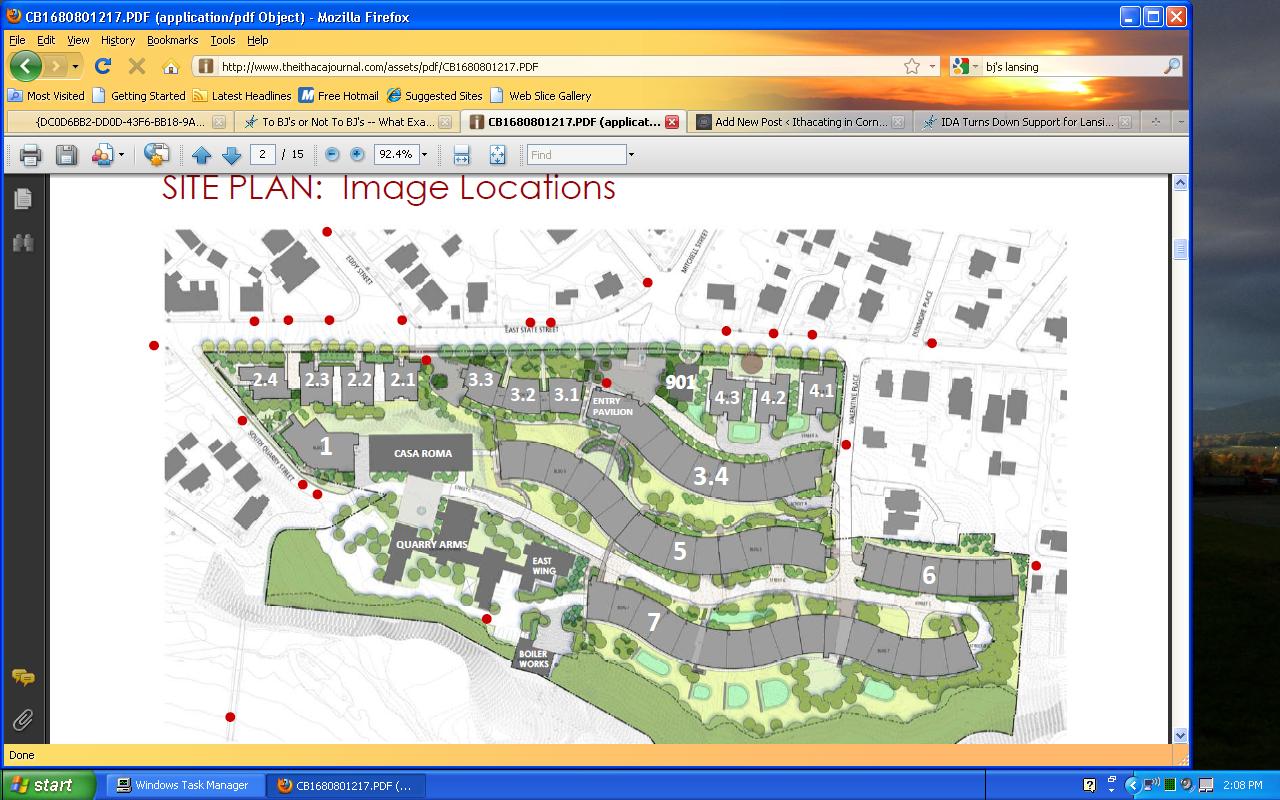
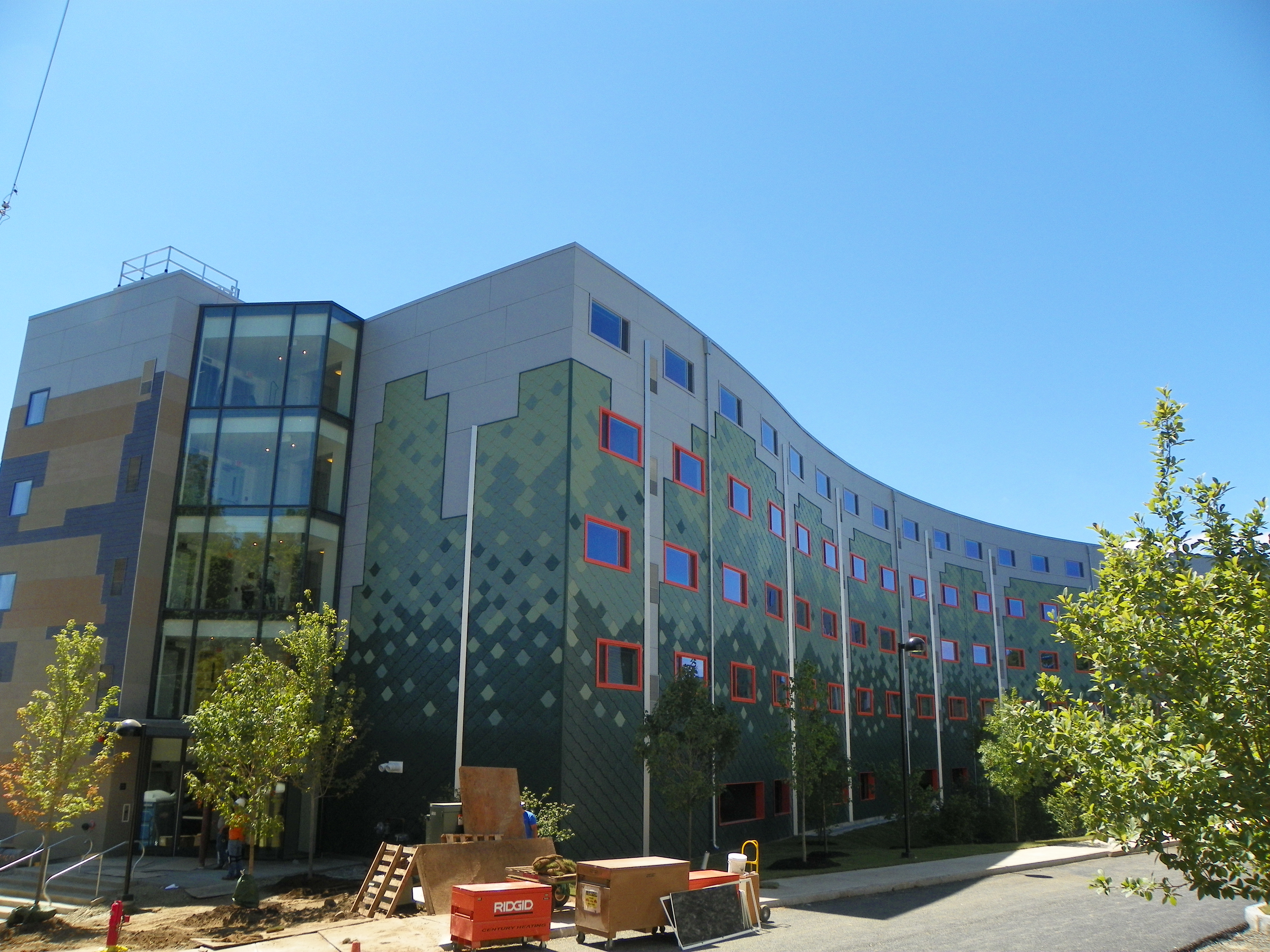
The last phase of Collegetown Terrace (phase III)  is slated to begin later this year, with construction complete by summer 2015. Phase III is supposed to focus on the construction on the last building, #7 (formally known as 120 Valentine Place), a long, curving building very similar to  the currently underway #5. The whole complex as-is provides 1177 bedrooms and 699 parking spaces (5 more than legally required). However, the developer (Novarr-Mackesey) has noted that only about 50% of tenants utilize parking, which means about 100 will go unused (guest parking tends to only make up a very small % of lot use). They have put forth a rather unusual proposal where the second floor of parking for building 7 would instead be 80 units of dorm-style housing: all tenants get their own bed and bath, but share kitchens and community spaces. After reconfiguring some two-bedrooms to three-bedrooms, the net gain of units is 69 (from 178 to 247 in Bldg. 7).  The current buildings, #5 (112 Valentine, 167 units) and #6 (113 Valentine, 71 units) would be unchanged. Zoning calls for 703 parking spaces in the new setup, the develop wants to put in only 652, which they claim it would still result in 50 underused spaces. So here we are. I know even the regulated 9 additional spaces for 80 more units seems a little unbalanced, but the unit reconfiguration and the small square footage of those “dorms” allow it to be so. Changes to the exterior are expected to be minimal.

At a glance, this is a nifty idea – the dorm units are expected to rent for about 50-67% the cost of a typical studio or one-bedroom in the complex (which looks to be around $1000, so $500-$670 for these). Since Collegetown Terrace mostly appeals to wealthier echelons, this sort-of mixed-income aspect is appealing, and it gives a different group of landlords increased competition for tenants; also, it makes for a denser parcel, and does a favor to those seeking to buoy business in Collegetown, and avoid more home-to-rental conversions. However, I doubt the neighbors will be amused (some are not fans of having so many college students gathered in one complex), and the parking discussion (which so far is based only off “experience”) will be reviewed with a figurative magnifying glass. I feel like this project could be a major test-bed of the city’s evolving views on parking requirements.


It Pays To Read: The INHS Pipeline

15 02 2014

11-24-2012 174

I think the biggest thing I learned from Ithaca Builds is the importance of searching for and reading city documents. Since they’re rapidly digitized and made available for public knowledge, it’s not a necessity to stop in city hall anymore. Even better, it has an option to check out the most recent docs, so it’s like one-stop shopping for news. All the extra knowledge is a curse and a blessing. For instance, the latest Common Council agenda, which proposes additional restrictions on an intended rezoning of Cornell Heights, all of which is geared towards keeping the 1 Ridgewood apartment project from happening (I wonder what legal grounds the developer would have in such an event). This isn’t the first time something like this has happened – the vacant lot at 121 Oak Avenue in Collegetown was slated for a 3-story, 6 unit (20 bedroom) building in the late 2000s, but Josh Lower put the kibosh on that project once the city started the endless discussion with the Collegetown rezoning, and the planning board wouldn’t support his project because of the debate. On another note, Josh Lower might have the worst luck of any developer in Tompkins County.

On the other hand, readers get an idea of projects in the pipeline. It’s what allowed me to beat the Daily Sun to the punch on the Gannett Health Center plans. Then there’s all sorts of little projects, like a lot subdivision on Auburn Street that shows the design of the new house, or the proposal for three more houses on West Falls Street. On a larger scale, it also shares big outlines, like what INHS plans to do over the next couple of years, which I’ll discuss here.

The INHS pipeline comes courtesy of this Ithaca Urban Renewal Agency agenda. Most of the stuff is, for the purpose of this blog, “babble”; filings needed to designate INHS with some special privileges. But among this babble is a recently completed and underway projects list, on page 47. In the past year, the 72-unit Poets Landing project in Dryden (a Conifer LLC project they assisted with), Breckenridge Place, and a house purchase/remodel on Hawthorne Place were completed. Go back a little further and you see Holly Creek Phase I and a few small developments, like the duplex on East Falls Street in the lead image. In the future list, for 2014 there are only 14 units – two houses (one a duplex), and Phase II of Holly Creek. A few months ago, I googled the architect of Holly Creek to see her other work, and instead found out her back-story is traumatizing. Congrats to her for surviving it and being able to move on with her life. Anyway, in 2015, INHS has 148 units planned for completion – four townhomes and a house, the Stone Quarry apartments and its 35 units, 62 units in Cayuga Meadows (I guess it dropped from the 68 Jason first reported on IB), and the irksome Greenways project, which has dropped from 67 to 46 units. I have no idea what to make of it anymore. The big projects should all be completed by October 2015, but make of that what you will; Breckenridge came in behind schedule, and non-profit/government building projects are well known for building delays.


A Revised, Resized Plan For Ridgewood

13 02 2014

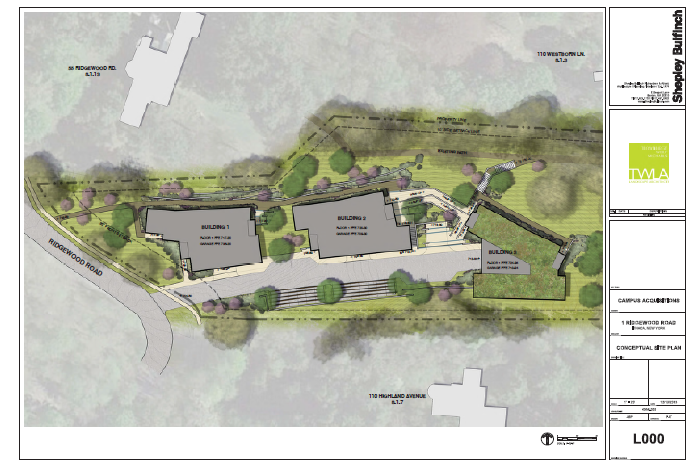
Things are getting a little complex with the development planned at 1 Ridgewood, a Cornell Heights parcel squished between Ridgewood and Highland Avenues. First, the revised plans for the smaller project. While the original plan had 64 units in one large building, this proposal has shrunk it down to 45 in three buildings. Notably, even with the size change, the overall design is not all too different, materials and massing look to be the same as before. One floor has been removed, giving three floors over an underground parking garage (a small surface lot would also be built on the property).

ridgewoodapts_v2_1

The focus is now more on the western side of the property facing Ridgewood, with less attention given to the Highland Avenue side of the property in this updated plan. Since the tendency with student-focused projects is to count the bedrooms, the 45 units contain 114 bedrooms for occupancy.

ridgewoodapts_v2_2

One of the complicating factors in this project is the zoning change proposed for the property. Currently, it’s R-U, which is less restrictive than the R-3aa they are proposing to rezone the parcel to. At its best, it’s an attempt to mitigate increasing developer interest in the historic district; at its worst, its a heavy-handed attempt to stunt development. For the record, this and the Thurston Avenue Apartments project seem to be (have been?) the only two underutilized parcels in the affected area. The revised 1 Ridgewood project PDF goes out of its way to note that this project just barely meets the R-3aa requirements, so even with the zoning change, no variance would be required. This is important, because some neighbors are fiercely opposed to any development of the parcel whatsoever. They would be able to shut the project down much easier if it were seeking a variance, but since it doesn’t, it gets a lot harder. We’ll see what happens as this makes it through the bureaucratic rounds.

EDIT: Ha ha, silly me to think they might let this one go. The Common Council is voting on additional restrictions to the R-3aa zone that would effectively kill this project. The proposed language adds a special amendment for historic districts such as Cornell Heights that says that any new building can’t have a footprint more than 120% of the average footprint of the historic structures on a block. Cornell Heights historic structures are mostly mansions in the 1,500-2,000 sq ft footprint range, which these exceed. This amendment seems to be explicitly targeted to keep this project from happening.


News Tidbits 2/10/14: A Big Project Scouts Out South Hill

10 02 2014

troyrd1

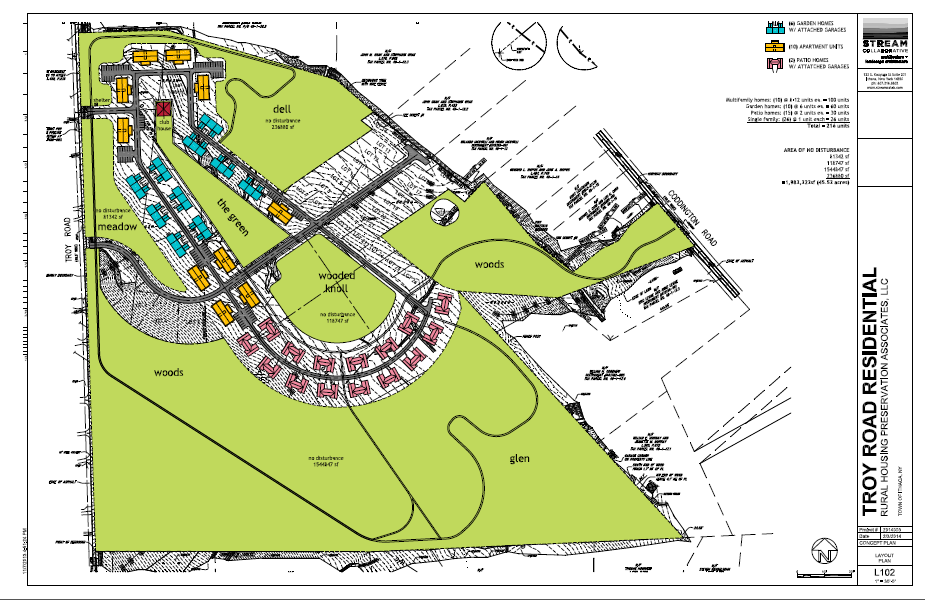
Well, I suppose if there’s demand, and a lack of easily developable to the north, west and east, suburban developers would have targeted South Hill for big projects sooner or later. Fresh from the press comes news of a proposed 216-unit development for the town of Ithaca, on two lots  just east of Troy Road, a little north from its intersection with King Road. The PDF of the plan is here, in the town agenda.

troyrd2

The proposed project is virtually all residential, divided up into 26 single-family lots, 80-120 apartments, 60 garden homes, 30 patio homes, and a 5,000 sq ft clubhouse with your lease office and a few office spaces for rent. To me, it has the airs of a cut-and-paste suburban development. For the record, a garden home is a cute way of saying townhome,  and patio homes are (in this case) one-story duplexes. The architecture theme is “rural agricultural” style: the apartment buildings will look similar to barns, and the patio homes will resemble small farmhouses. The target markets are empty nesters, and twenty-and thirty somethings (grad students and young professionals).

As easy as it to poo-poo this, there is a worse alternative – that which is currently okay under the zoning, which is 70 to 90 lots of low-density residential sprawl. This project, if it gets to proceed as a Planned Development Zone (PDZ) a la Ecovillage, would only disturb about 22 of the 67 acres the two lots comprise.  The project is being developed by Rural Housing Preservation Associates, which looks to be an awkward corporate offspring of a few development companies in the Northeast and Mid-Atlantic, and has enlisted the help of local companies STREAM Collaborative, Whitham Planning & Design, and Hunt EAS. Honestly, the armchair architecture critic in me is okay with those choices.

Something like this will have a multi-year buildout, and there’s been considerable development on South Hill in the past several years. But not anything on this scale. It’ll be interesting to watch this project evolve as it moves through the bureaucratic process.


News Tidbits 2/6/14: A Sorority Totally New To Cornell

7 02 2014

Image Property of Phi Mu sorority.

Courtesy of the Cornell Sun and Cornell Chronicle comes news of the latest addition to Cornell’s Greek Life – social sorority Phi Mu.  According to the news articles, sorority interest has increased in the previous few years, from 670 registrants in 2010 to 873 in the latest rush (Chronicle claims 871…don’t know which is correct). This moved the Cornell Pan-Hel system to add a 13th sorority. If one views Phi Sigma Sigma as a replacement for the departed Alpha Omicron Pi, then Phi Mu would mark the first time there have been 13 Pan-Hel sororities on campus since 2003, when Delta Phi Epsilon and Chi Omega closed, and were replaced by Alpha Xi Delta the following year. If you go a little further back, there were 14 as recently as 1996, before Alpha Gamma Delta closed (comparing the old photo in that link to my 2008 shot, their physical house went downhill fast).

Given that there are a number of sororities that used to have a presence at Cornell, it’s rather unusual to see a colonization rather than a re-colonization; Phi Mu has never previously been installed on Cornell’s campus. Lookins at their wikipedia page, it would seem that most of their 117 chapters are based out of the South and Mid-Atlantic; so being in the northeast is unfamiliar territory for this sorority.

A new sorority is all and well and good, but my primary interest lies in this sentence from the Sun article:

According to [Katherine-Rae Cianciotto, dean of students], Phi Mu is currently researching housing options and will likely have a house beginning in Fall 2015.”

There are options ladies. It will be interesting to see where the sorority ends up making its physical home, and hopefully build upon a house’s history.


The New Gannett Student Health Center

31 01 2014

gannett2

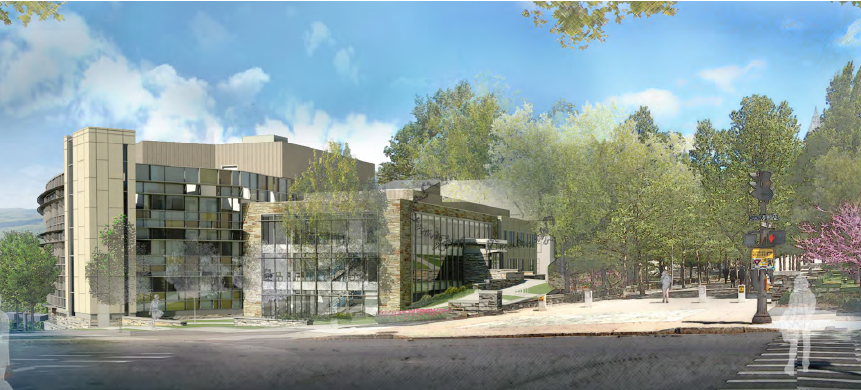
Copy of the proposal, including description, renderings, and all the other bells and whistles here. Note that this isn’t a total teardown and replacement, but an addition onto the previous building. Perhaps the biggest change is the addition of a large, curved structure on what is current Gannett’s parking lot. The feeder road to Willard Straight will stay in place, going under the new addition, and the ambulance bays will also be located here.

gannett3

Note how it says Levels 1 and 2. The elevation changes allow for a partial below-grade section under the main level that connects with Ho Plaza’s walkway. Above the road will be three levels of offices and exam rooms, with a mechanical penthouse on top of the new structure. So 4/5 floors, depending on your viewpoint.

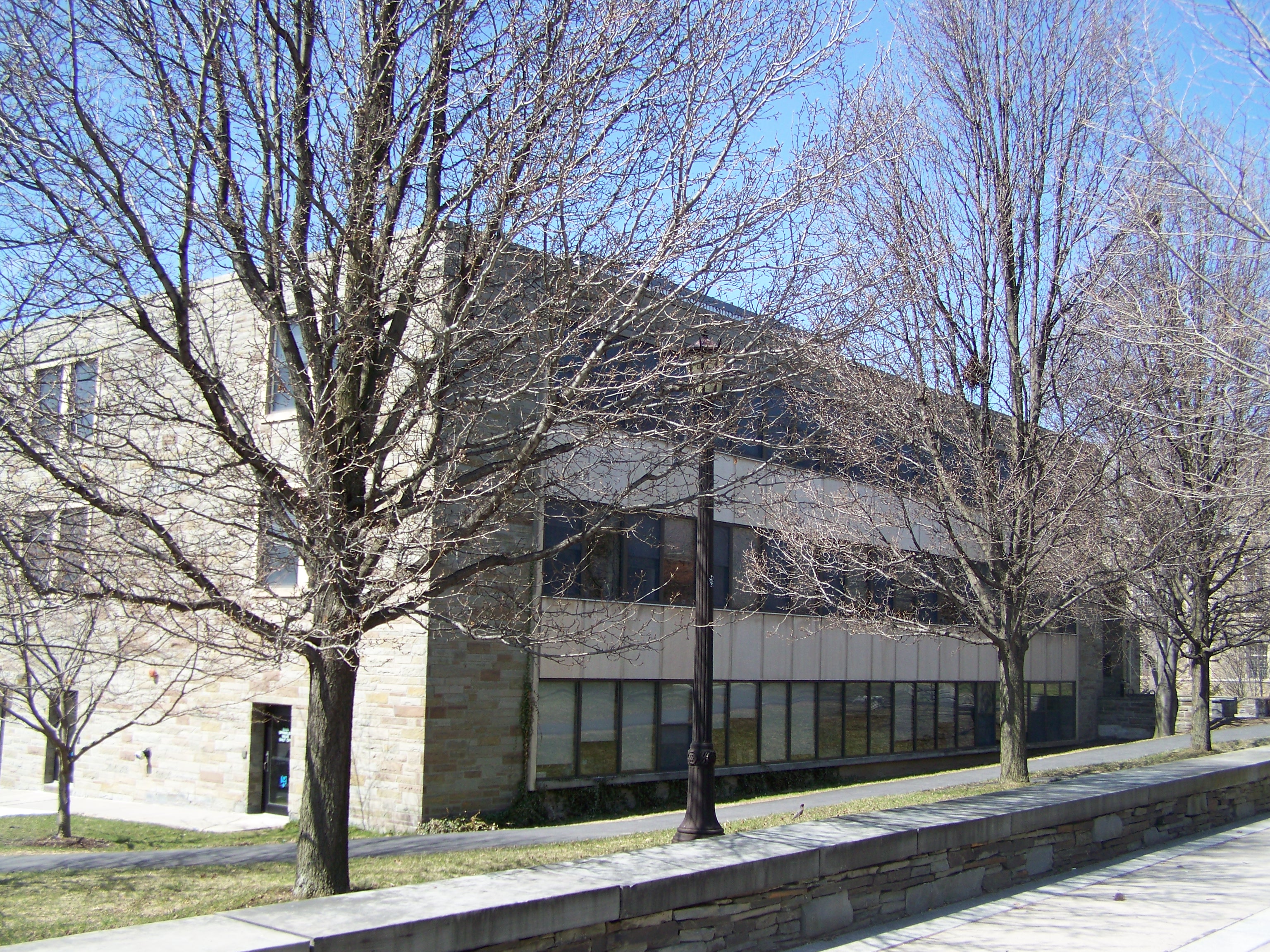
Although it looks like some of the original structure will be preserved, it gets a major facadectomy. Larger windows and and a more “contemporary” entrance will be built on the Ho Plaza side. About the only similarity to the current structure is the use of Llenroc stone for the outline.

gannett4

The current entrance gets replaced with a two-story addition (shown on the right), and the 70s addition also gets a revised facade (but remains mostly intact).

gannett5

Probably my biggest complaint is the subtle multi-hued glass panels. It looks cheesy. My armchair critic says to stick with one panel color, ideally the a neutral grey/smoke tone. Other than that, it’s standard Cornell fare for the 2010s – a hypermodern glassy box, with the use of stone to try and harmonize it with the surrounding plaza and structures. The architect of record is local architecture/alumni-filled firm Chiang O’Brien.

As previously noted, the addition will add about 38,000 sq ft to Gannett, for a total of 96,000 sq ft. The projected cost is $55 million, and the target completion date is October 2017.

100_6620


The Cornell Safety Car

28 01 2014

Except when traveling in and out of Ithaca, Cornell generally plays no role in my travels. Recently, I paid a trip to the vacation destination that is Detroit, Michigan. While on this trip, my hosts suggested a visit to the Henry Ford Museum in Dearborn, where we came across this.

1-27-2014 429

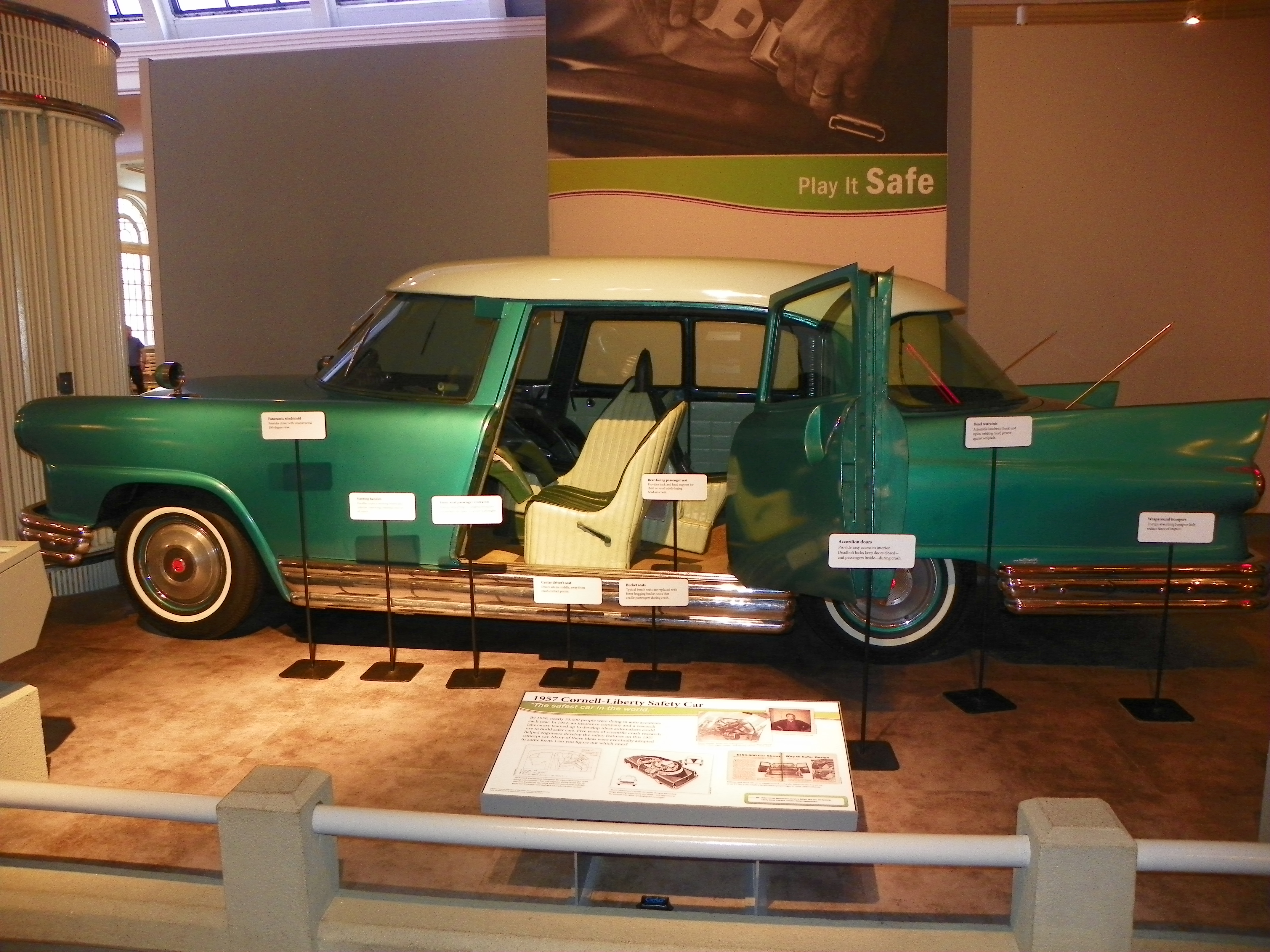
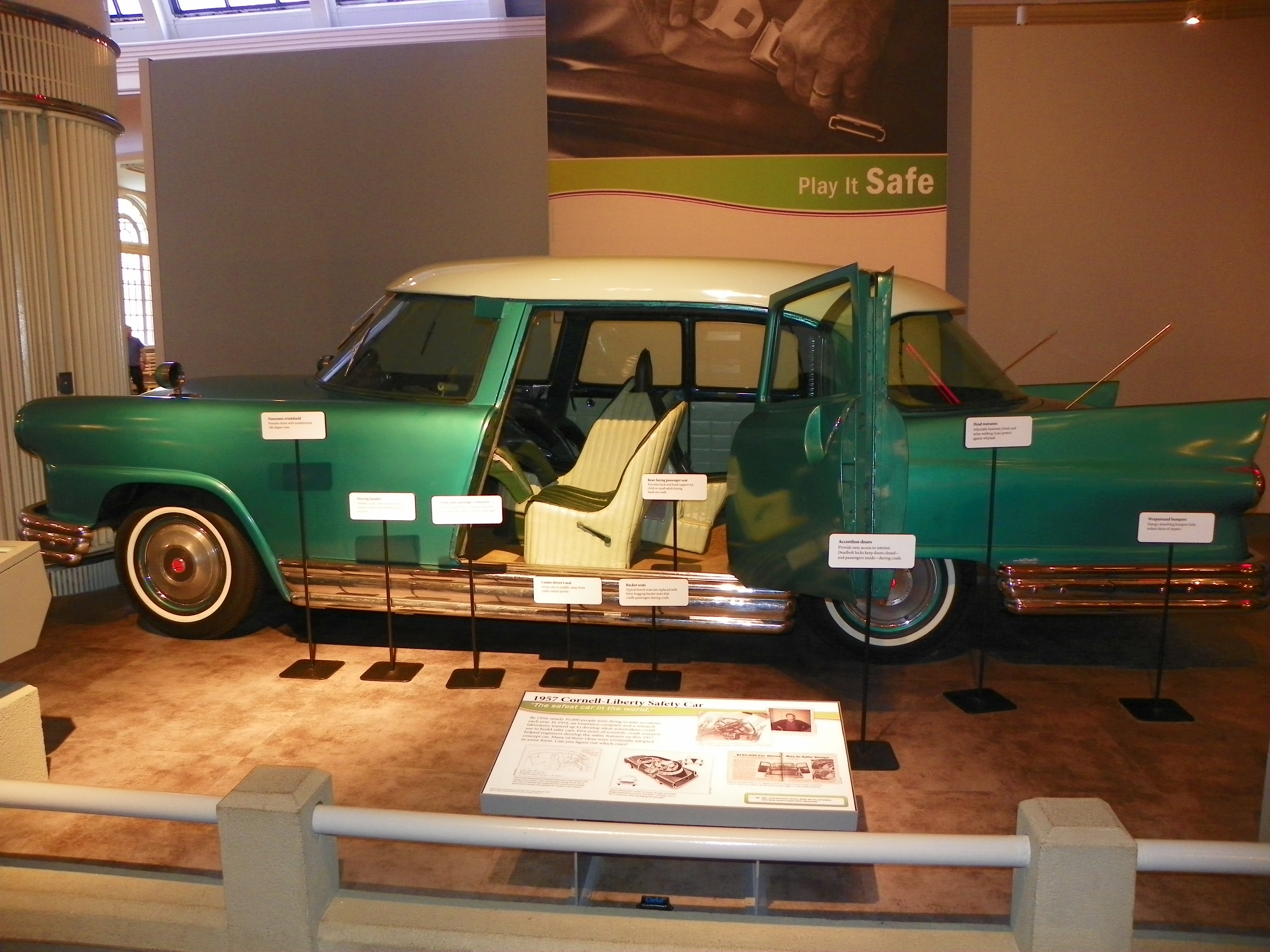
This homely piece of 1950s Americana is the Cornell Safety Car. It was produced by the Automotive Crash Injury Research Center, run by John O. Moore at the Cornell Aeronautical Laboratory in Buffalo (previously briefed here), and built in 1956 with funding from Liberty Mutual Insurance. We take for granted the safety features of today’s vehicles, but in the 1950s, those glimmering bullets of metal and chrome were essentially high-speed death traps, with the number of fatalities increasing every year. Hence, a need was seen to try and improve safety for America’s road warriors.

1-27-2014 433

The lab was one of the first to do crash testing; first with airplanes in WWII, then with cars. Early on, before the use of realistic test dummies, Moore and his cohorts got in touch with their inner Frankensteins and used corpses, along with an array of high speed cameras and instruments to measure and analyze impact forces.

1-27-2014 431

Among some of the features that would later become vehicular staples – front seat headrests, wrap-around bumpers, bucket seats, and seat belts a-plenty. Among those that didn’t, or have faded out – rear-facing back seats, steering handles (because steering wheels collapsed and steering columns would break your heart in case of accident), panoramic windshields (a big selling point in the later ’50s and ’60s), accordion doors, a center position for the driver’s seat, and nylon webbing for rear seat head restraints. All of this encased in a perfect 1950s shade of teal, rocket fins included.

1-27-2014 429

My, how concept vehicles have improved with time to become more attracti-…nope, scratch that.

1-27-2014 377


News Tidbits 1/23/2014: Cashing in One’s Chips

23 01 2014
Property of O'Connor Apartments

Property of O’Connor Apartments

About six weeks ago, I made a quick little news tidbit entry regarding 115 The Knoll, which had turned to Craigslist to try and fill its quarters starting this June. Now, we can also mention that the house is not only looking for renters, it’s also looking for buyers. From Warren Real Estate:

Gorgeous arts & crafts mansion steps from Cornell. Built circa 1915 with up-to-date sprinkler & fire alarm. Living room, chapter room, dining room, commercial kitchen. 13 rooms for up to 25 occupants. There is also [a] 1 bedroom cottage with a separate driveway. Approximately 18 parking spaces.

The real estate listing uses the same photo from the rentals website, so this is indeed the same house (the listing agent is Edelman Real Estate’s John O’Connor, who by my guess is likely associated with the family-run O’Connor Apartments). If interested, this house could also be yours for a cool $1.35 million (Ex-Ithacan take note). Taking a stab in the dark, my assumption is that the current owners have finally given up the ghost, and no longer want to be responsible for the property and its taxes.

Notably, this isn’t the first time the house has been on the market, but in summer 2009, it was only asking for $795,000. The house waited until January 2010 for a sale to be finalized. Whether it ends up a private home, home to another GLO, or yet another parcel owned by Cornell, remains to be seen. If 210 Thurston was any indicator, this one could be on the market for a while.

Around and around and around she goes, where she ends up, nobody knows.


The Cornell Sesquicentennial Commemorative Grove

18 01 2014

grove2

When Cornell celebrated its centennial in 1965, there was a week-long series of lectures, many congratulatory letters, and in proof that some things never change, plenty of solicitations to alumni to donate to the $73.2 million donation campaign (the commemorative Sun issue shows a different angle of the same 1960s era campus plan on page 20 that I featured on the blog a few years ago). Offhand, I’m not aware of anything was built in the name of the anniversary, but I guess for its 150th, Cornell has decided to give itself something for the occasion.

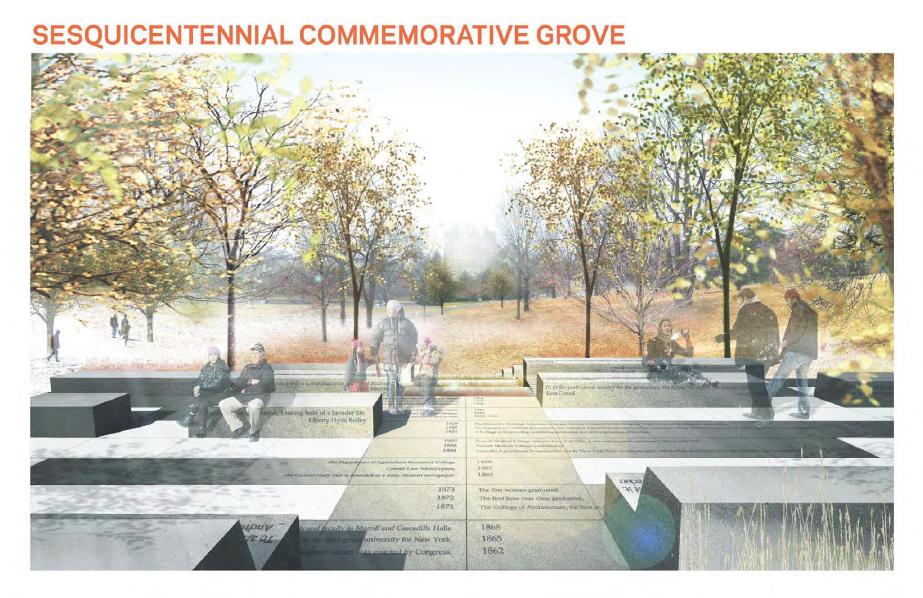
The project is a landscaped area, with the working name being the overly long “Cornell Sesquicentennial Commemorative Grove”. Taking full advantage of symbolism, the grove is strategically cited directly west and downslope of the statues of Ezra Cornell and A.D. White on the Arts Quad.

grove1

The project itself, which as been briefed previously over at Ithaca Builds,  consists of stone benches inscribed with quotes by famous Cornellians, pavers will with a timeline of significant events in Cornell history, and a sort of mood lighting by rigging fixtures into the trees. The overall size of the installation is about 1,700 sq ft. The architects of this plan are campus favorites Weiss/Manfredi, the same people doing the Co-Location building at the Tech Campus, and the renovations and additions to the vet school. I imagine Cornell would like this project done in time for Alumni Weekend 2015, which would also mark my first true Cornell reunion (5-year).

grove3

A full rundown is available here, but it reads like one long advertisement for the university. On the bright side, at least the university’s landscaped spaces then to look more visually pleasing than its constructions.  I have hogh hopes for this one, it could be a nice place to spend a June evening.