Number Judging

13 11 2008

I should really make it a point not to go to IFC elections. To maintain impartiality, I will not use the names of any candidates or any fraternities directly in this blog. That won’t stop the curious from going and looking them up, but that’s no concern of mine.

One of the positions I thought could be easier to determine if ones’ vote was the more appropriate choice is for the IFC’s recruitment position. The logic here is that looking at a fraternity’s membership intake over the past four semesters is a strong indicator of their abilities to recruit, what brought these individuals in and what they’ve been doing since then (in this case, one candidate is a junior, and although I can’t find anything on the other candidate’s fraternity website or on facebook, I would at least hope that he’s a junior. Otherwise, we all just made a terrible mistake, because a sophomore is in no way qualified for such a position).

So of course, the new OFSA report has been released [1] (yay!). As for the candidates, well say the first is from fraternity X, and the second from fraternity Y. Here’s their membership numbers:

Fall ’06, Spr ’07, Fall ’07, Spr ’08

X: 18, 37, 32, 45

Y: 40, 63, 44, 59

I’m inclined to think that fraternity X must have tried something new that was successful. I’m inclined to think Fraternity Y did roughly the same program both years, and it didn’t pay off as well last year. (Please don’t bother posting the “smaller number, better quality pledge” argument. We’ve all been around the block enough times to know that with the number of bids fraternities “bestow”, it becomes a game of chance with other houses and therefore that argument is a load of bullshit). We elected Y. Granted, you can’t exactly pull this information up in the middle of the meeting, and you don’t find out the candidates until the meeting in many cases. I s’pose what helped me make my choice is that Y wants to retry the failed “Meet for Greeks” program that I criticized in a previous entry. In a sense, this is looking back on the decision to see if it was a good one. For the system, it’s increasingly apparent that it wasn’t.

But hey, what do I know? I’m just letting statistics play a role in my judgment.

[1]http://www.lgbtrc.cornell.edu/dos/cms/greek/upload/OFSA-AR08-final.pdf


A Little More Cornell History

10 11 2008

Photos obtained from the book “Cornell in Pictures: 1868-1954”, compiled by Charles V. P. Young 1899.

000_2313

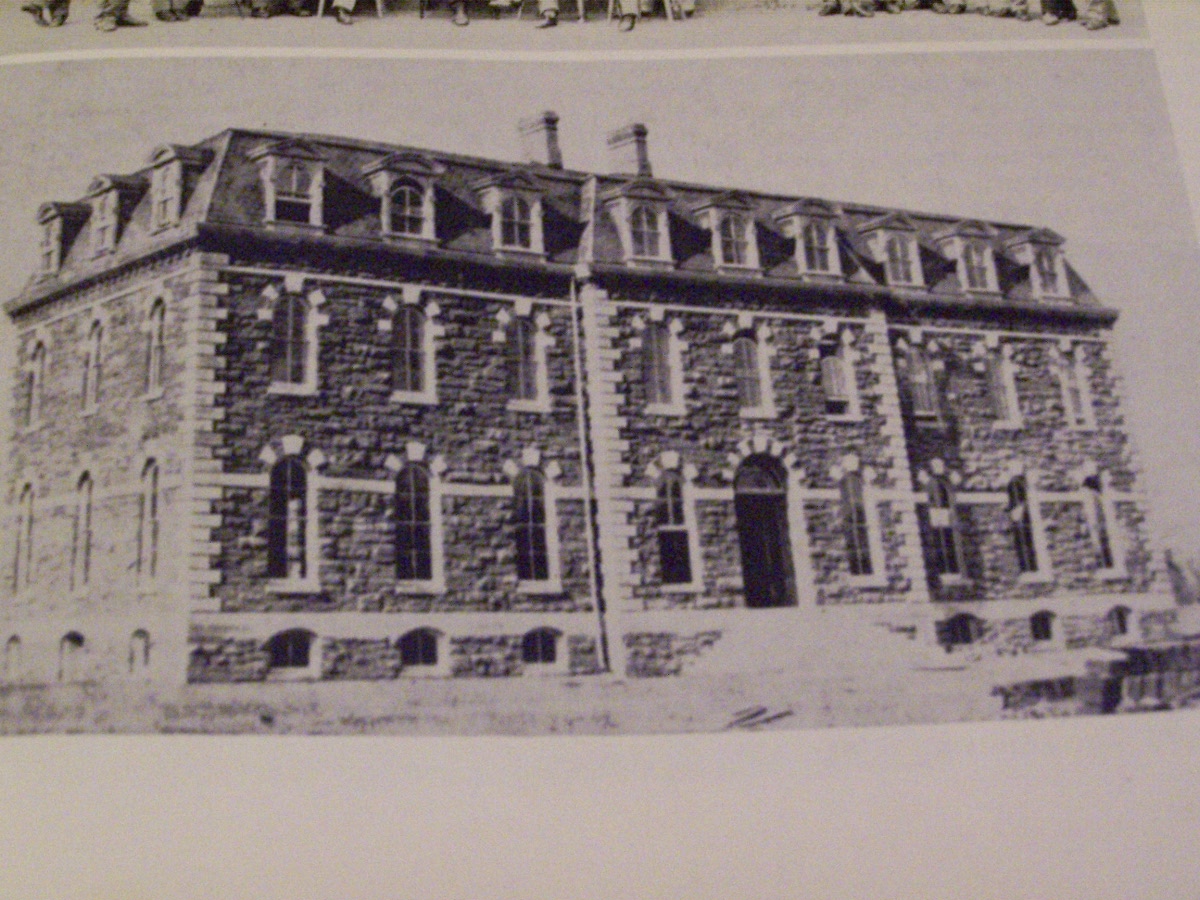
As mentioned previously, Sibley was constructed in three parts; the first, which is the West Wing of the current building, was built in 1870 and named for one of the original trustees of Cornell, Hiram Sibley. The East wind would be built in 1894,and the dome was constructed in 1902 [1]. Apart from stone Row, this was the first building that the University built that still stands today (the university did not build Cascadilla Hall).
000_2314

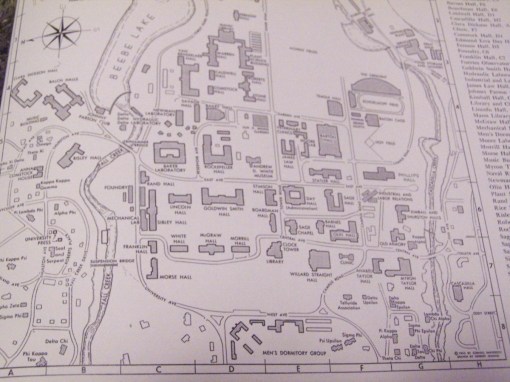
A map of campus, circa 1954. Some of the notable differences

I. Kappa Alpha Society’s house was where Snee Hall stands today. The house was torn down to facilitate construction of Hollister Hall in 1957-58, so KA moved to South Avenue. The Old Armory, built in 1892, was also torn down.

II. The road that was Central Avenue up until the 1990s cut between Franklin (Tjaden) and Sibley. Morse Hall would be torn down within a year of this map’s publication to make room for a parking lot, which would then be replaced by the Johnson Museum of Art that began nearly two decades later.

III. Boardman Hall is still there…in terms of aesthetics, I wish it was still there today too.

IV. ILR was located in temporary buildings (quonsets) on the Engineering Quad (which still had yet to fully develop). Law Hall, Moore Lab and the other smaller buildings where the ILR school stands today were the vet school buildings. Schurman Hall would come on line five years later, which facilitated the demolition of Law Hall in 1959, and for the construction of Ives Hall and Catherwood Library, which would be completed in 1962.

V. The Johnny Parson Club. More on that later.

VI. Alpha Xi Delta’s House is where the Prospects of Whitby co-op is located today. AXiD closed in 1964 and would be off campus for 40 years. Even the house they live in today is still own by Delta Phi Epsilon sorority (which closed the year before Alpha Xi Delta was brought back to campus). Chi Omega lived in the light purple house with the red tile roof on Wait Avenue, and would move to Phillips House (Sigma Alpha Mu’s current house) when that building was built on Sisson Place in 1956.

000_2315

A poor photo (my shaky hands, I regret) of the Statler Inn. Prior to the 150-room hotel built in 1986-87, the Statler Inn was the premier facility, with “modern classroom” and 36 rooms. Another hotel was located in the upper floors of Willard Straight Hall where the lofts are today, and those would play a prominent role in the takeover of Willard Straight in 1969.

000_2316

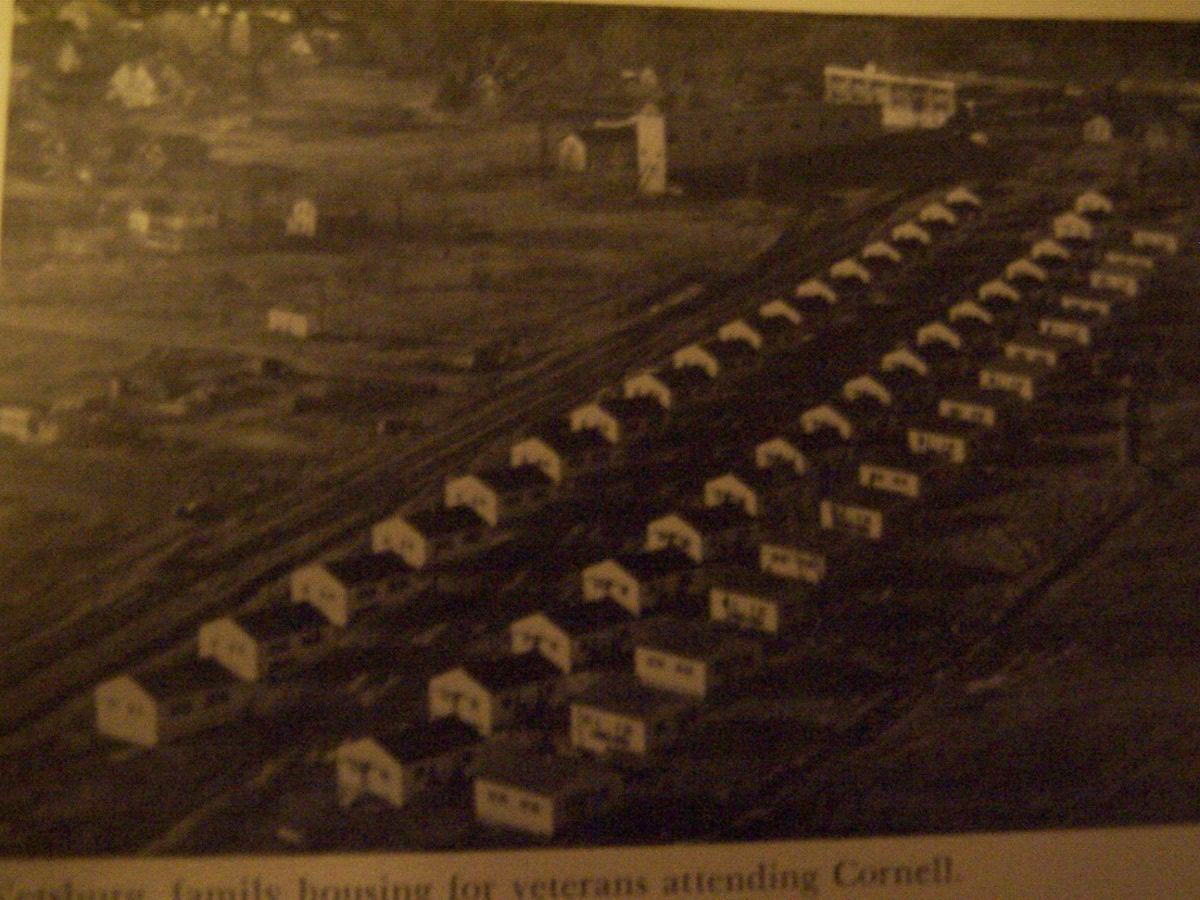
Prior to the Maplewood Apartments, veterans attending Cornell post-WWII had the option of living with their families in “Vetsburg”, on Maple Avenue.
000_2317

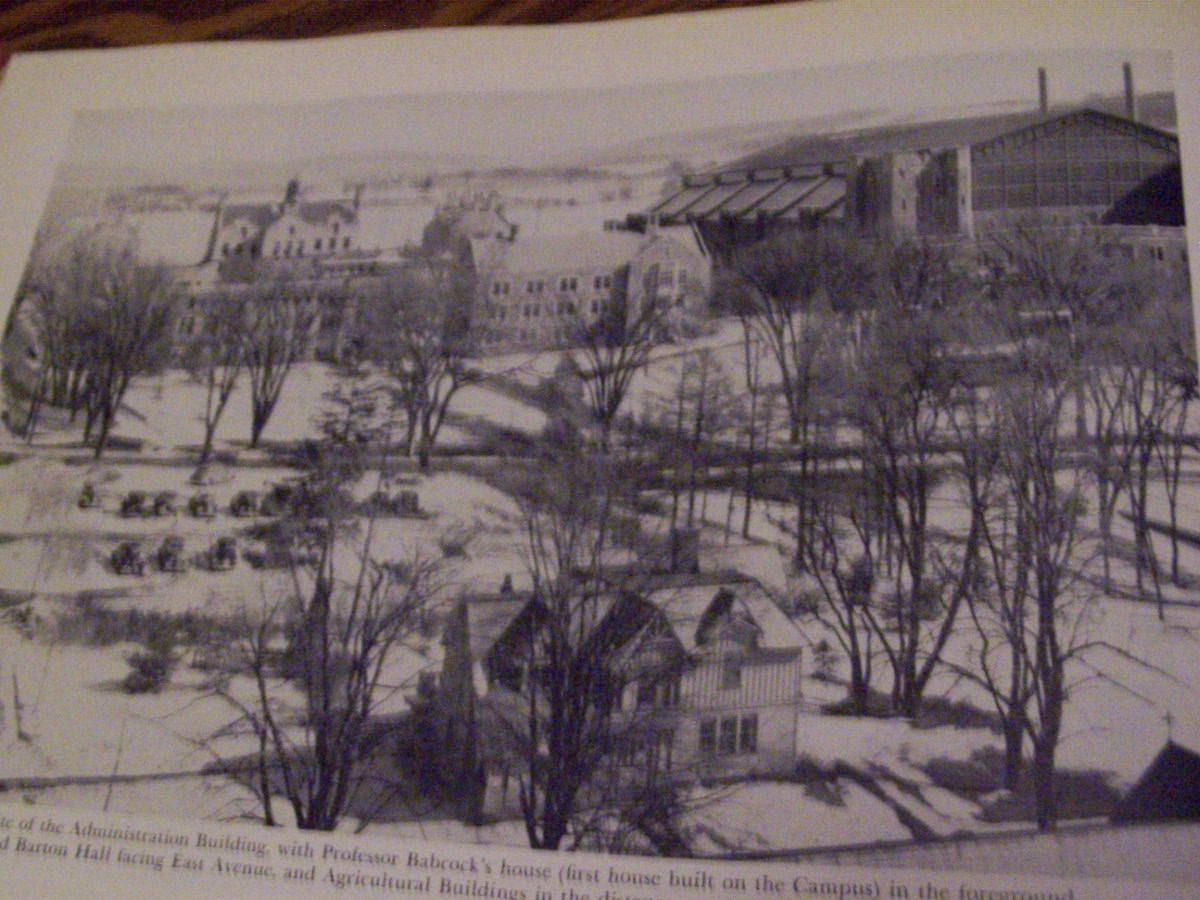
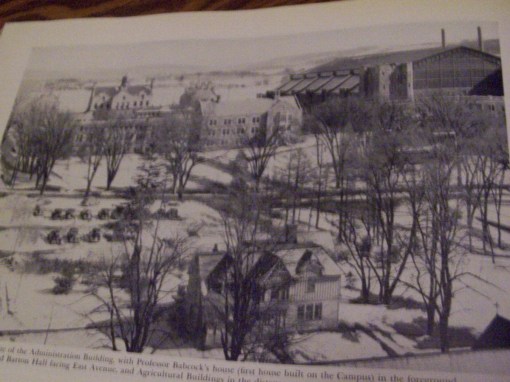
Back in the days before Day Hall, the lot was the site of a parking lot and the house of Professor Babcock, which was the first faculty house built on campus. Back in the day, it was common for houses to be on campus, where the Human Ecology school is today, where the Engineering Quad is today, and even on Central Campus. This was the last central campus house, and it was torn down to facilitate Day Hall’s construction (completed 1947) [2].

000_2318

To save my breath, I’m going to quote a DUE from August 23, 2007:

“The Johnny Parson Club was named after a mechanical drawing professor in the Engineering college from 1895 to 1938. It’s said that he was the one who established ice skating on Beebe Lake.  In addition, it was he who began the Cornell hockey tradition, by encouraging students to form a team.  In 1922, the University built a two-story facility where skaters could spend time, eat, drink, and warm up, naming it after Professor Parson.  However, in 1958, when skating events were moved to Lynah Rink, the University chose to take down the top two floors of the Club.  The remaining basement area was covered and is now used by Cornell Outdoor Education. [3]”

Rather nice place, from the looks of it. Tudoresque.
000_2319

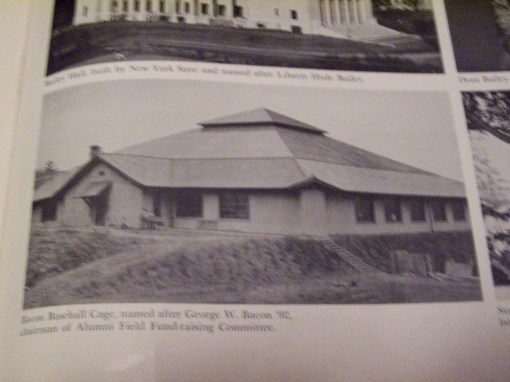
Bacon Baseball Cage. The first Cornell mascot bear, Touchdown I, was housed here in 1915. [4] The building would be taken down for the addition of the press-box and more seats at Schoellkopf.

000_2320

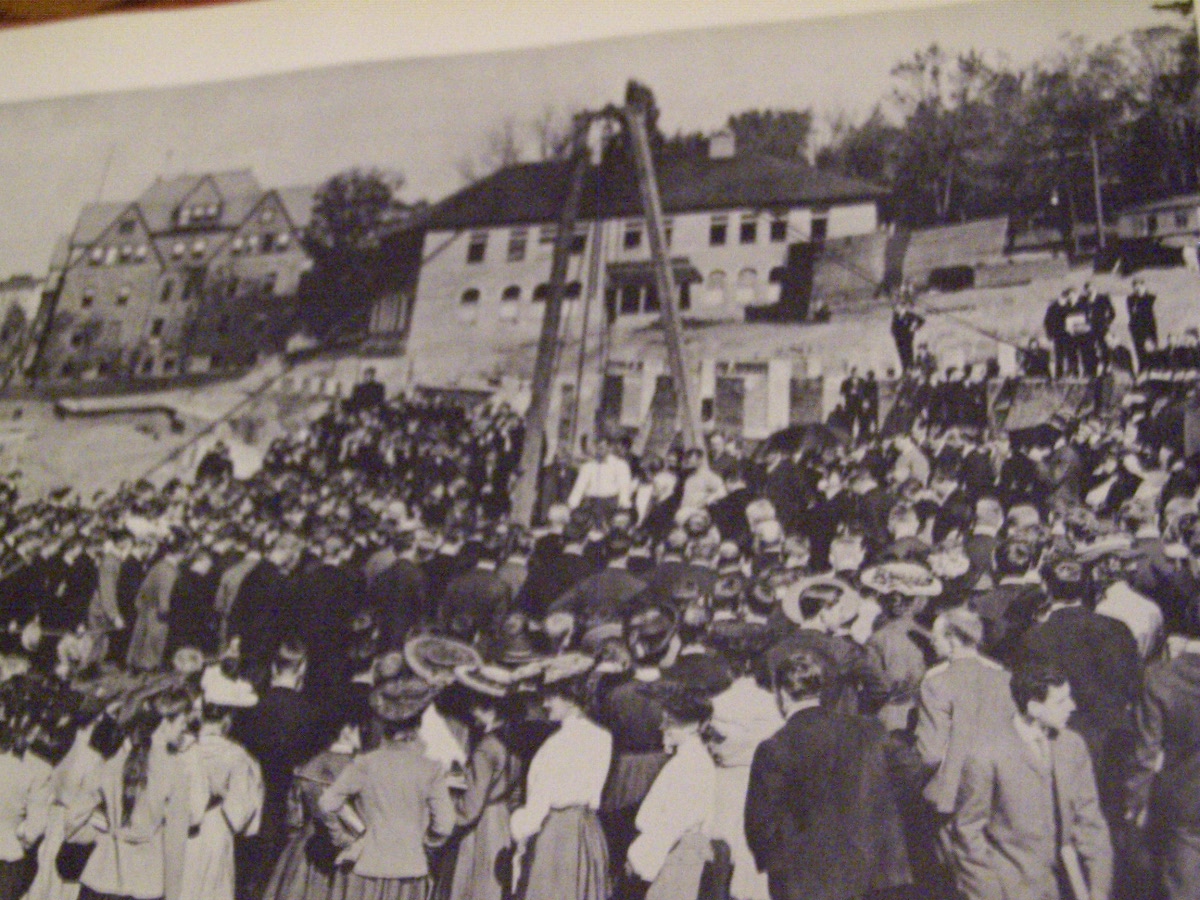
Laying the cornerstone for Goldwin Smith Hall in 1902. The building that is currently the north wing was constructed earlier on as the Dairy Science building.

000_2321

Law Hall, a couple small ag buildings, and the third observatory. It would be torn down for Barton Hall in 1915, and replaced with the observatory on north campus in 1924.
000_2322

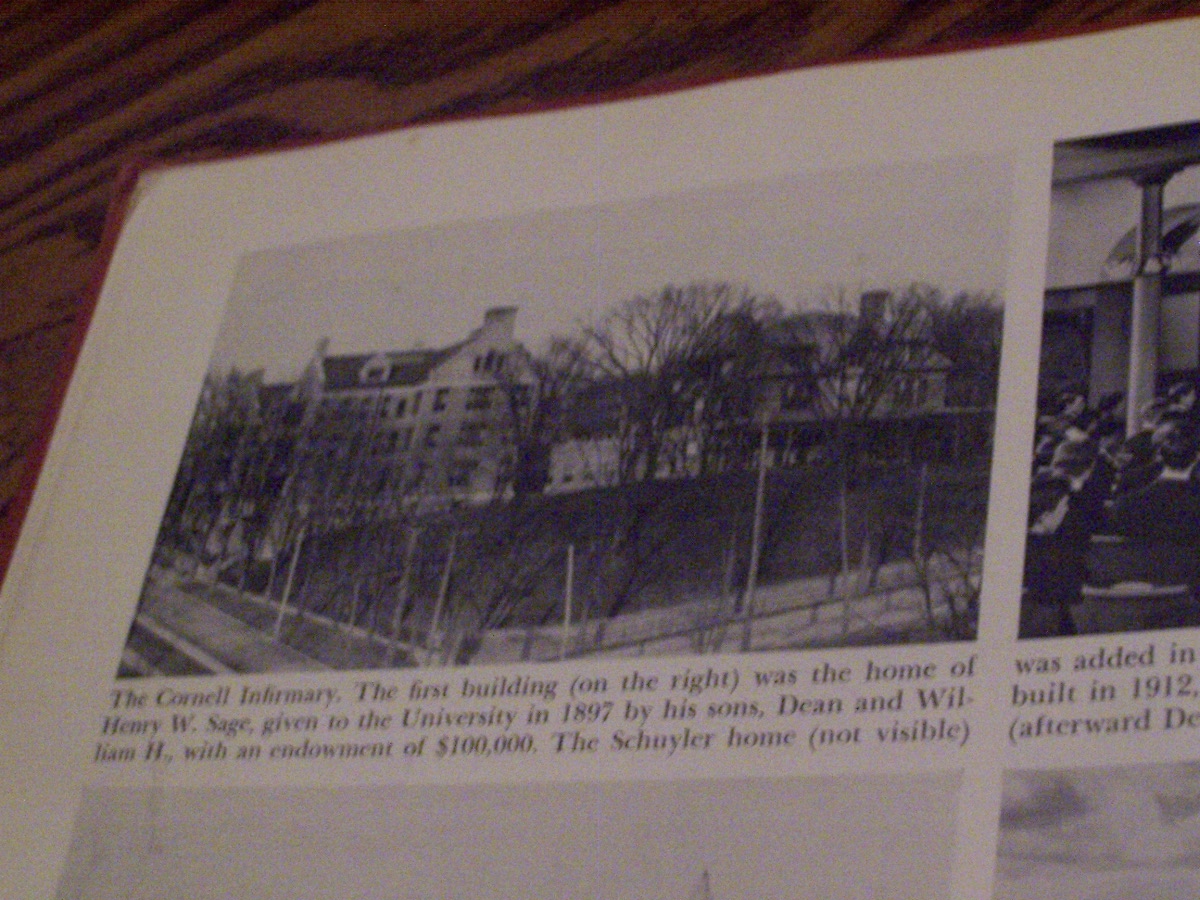
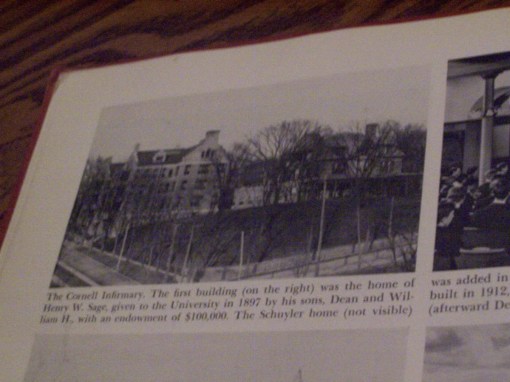
Schuyler House, the grad dormitory, used to be Cornell Infirmary. Next door is the Sage House. This was a time when students lived down the hill in fraternities or boarding houses, so it made sense to have the infirmary between the city and the college.
000_2327

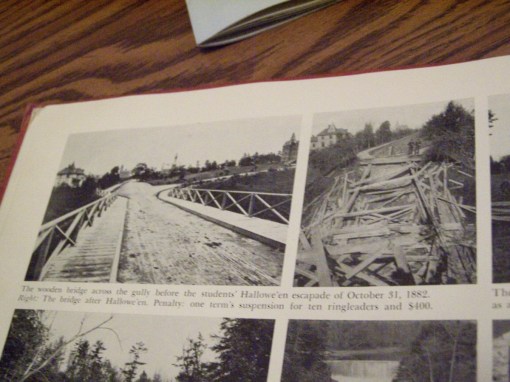
Speaks for itself. Screw pumpkins on the clock tower, I’m going to go tear down the bridge into Collegetown.

000_2326

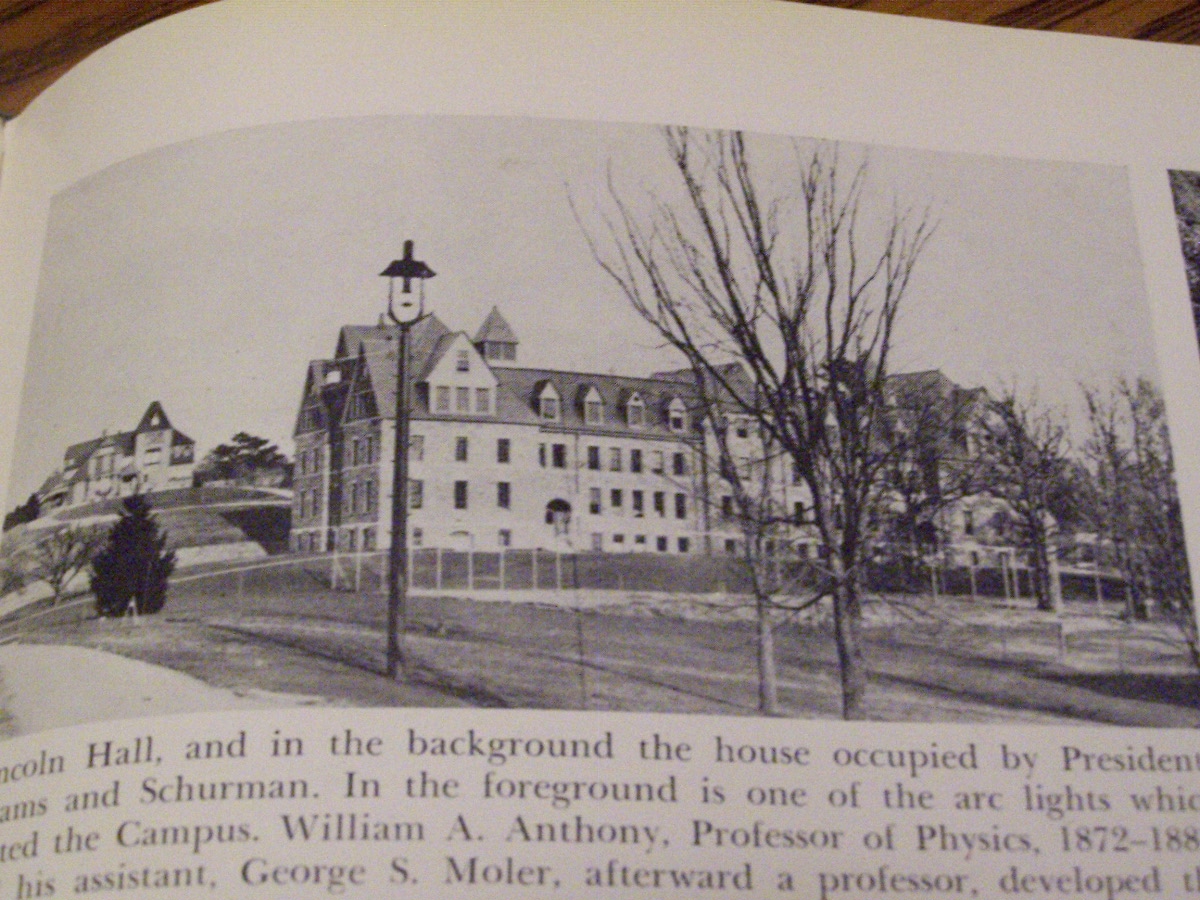
Fancy arc lighting. The house in the back was the stately home of Presidents Adams (1885-1892) and Schurman (1892-1920). It was torn down for Baker Lab shortly thereafter.

000_2325

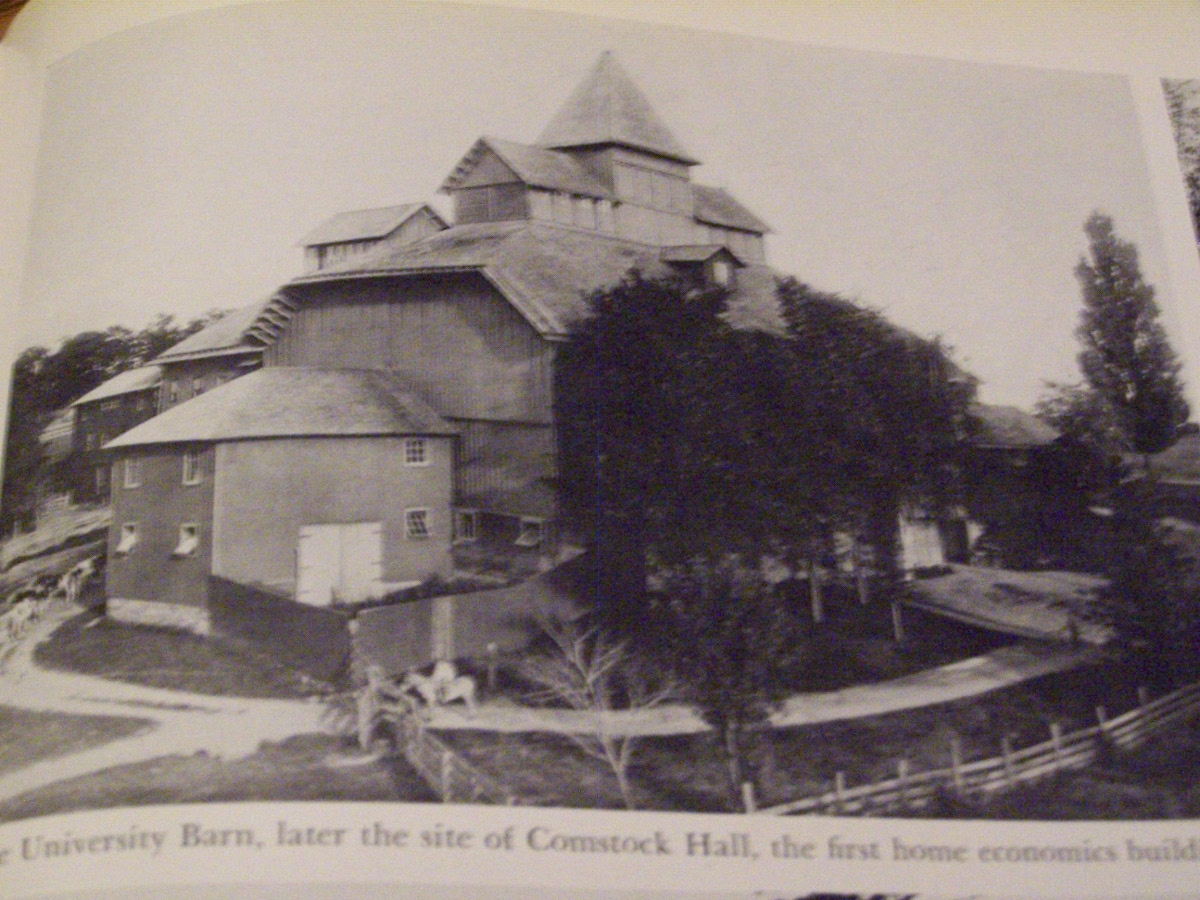
All the functions of a 1900s barn (where the CCC is today), all the appearance of a redneck’s idea of Count Dracula’s castle.

000_2323

Can we reconstruct this building as a dorm? Please? Hey, I know Morse Hall was burnt down by a fire and all in February 1916, but the design can be retrofitted with today’s safety standards. Really.

[1]http://www.cornell.edu/search/index.cfm?tab=facts&q=&id=651

[2]http://www.cornell.edu/search/index.cfm?tab=facts&q=day%20hall&id=239

[3]http://ezra.cornell.edu/posting.php?timestamp=1187848800

[4]http://cornellsun.com/node/17613


(Bad) Sign of the Times

30 10 2008

This is going to take away a fairly large amount of my writing material…

http://www.theithacajournal.com/article/20081030/NEWS01/81030012

Cornell announces hiring pause, construction moratorium
Moves in response to state budget news
October 30, 2008

 Cornell University is taking steps to prepare for blows to the budget, including a pause in hiring, a 90-day construction moratorium, and a university-wide review of all operations, Vice President for Communications Tommy Bruce said today.

The “pause” in hiring means no external applicants will be appointed to any open positions, according to a statement released by the university.

This is intended to provide slots for any employees who may be “dislocated in the near term” by funding cuts, and to find, through attrition, any positions that can be eliminated to minimize the need to lay off staff in the future.

Though a private university, Cornell operates four schools on the Ithaca campus established by the state and that receive public operating and construction funding. It is also New York’s land-grant institution and operates agricultural experiment stations in Ithaca and Geneva. Gov. David Paterson announced earlier in the week that the state faces a $1.5 billion budget gap for the current fiscal year and $12.5 billion for the fiscal year that starts April 1. About a fifth of state revenues are tied to the New York City financial industry.

Bruce emphasized that there will be no across-the-board cuts or layoffs, saying, “We have been having to deal with very real cuts coming from the state, and what we’re dealing with is loss of revenue in the wake of the Wall Street situation. What this means going forward is that we may be facing a situation in terms of reduced personnel. What we have to do at this point, not knowing the full impact of the current economic situation, is taking the precautionary step of pulling back on posting open positions and hiring externally.”

The hiring pause will be in effect until March 31 and applies only to non-professorial positions.

The 90-day construction pause will halt progress on any development project on which construction has not already started or which does not have a contract commitment on it.

Physical infrastructure, information technology capital investment, and local transportation and housing projects are included in the moratorium. Bruce said there will be a review of all projects to determine how to proceed most efficiently.

The university-wide review of operations will help the administration pinpoint areas that can be streamlined and where costs can be contained.

Bruce offered an example from his office, which produces more than 1,000 publications a year. These publications can be produced electronically, he said, saving the cost of paper and publication.

An electronic suggestion box has been set up at www.cuinfo.cornell.edu for members of the Cornell community to offer ideas.

~~~

City of Ithaca’s doing the same thing. The state’s severe defecits as a result of the crisis on Wall Street are finally hitting home…and it’s hitting hard.

http://www.theithacajournal.com/article/20081030/NEWS01/810300321

My question is which projects that are not underway have a contract commitment. I suspect Milstein is largely safe, but the addition to the Johnson Museum is likely shelved.


A few weather stats

29 10 2008

Courtesy of the Northeast Regional Climate Center [1]. Because the weather on Tuesday was just THAT sh*tty.

Highest recorded wind speed in Ithaca proper today: 36.2 MPH, around 4 PM. [2]

Highest wind gust, annually: about 60 MPH.

Highest recorded in area, ever: 84 MPH, from 1972.

Last time measurable snow occured in October: October 31, 1993. 3.7 inches. Prior to that, there were measurable snows in October 1988 (which had the most October snow recorded, at 6.5 inches) and October 1982; it was more common back in the day.

Most snow ever recorded from a single storm: 21 inches, in 1961. An unofficial record of 25.5 inches is claimed for January 1925 [3]. (for the record, most snow ever recorded in my hometown: 43.1 inches, in 1966).

Average amount of snow in a year: 67 inches.

Most snow ever recorded in Ithaca in a single season: 122.2, in the winter of 1977-78.

High on this day last year (2007): 63. Low was 40. Sunny.

Tuesday’s high: 38. Low 32. Not sunny.

Warmest October on record: October 2007: 7.8 degrees above normal.

Average temperature on a given October day in Ithaca: About 48 degrees (high 59, low 37).

Warmest October day ever recorded in Ithaca: 91, in 1953.

Coldest October day ever recorded in Ithaca: 15, in 1928.

Highest high ever recorded: 103, in July 1936.

Lowest low: -35, in February 1961.


[1]http://www.nrcc.cornell.edu/

[2]http://www.nrcc.cornell.edu/climate/ithaca/gfr_logger.html

[3]http://books.google.com/books?id=jUu9pDRhWjkC&pg=PA452&lpg=PA452&dq=lowest+snowfall+ever+ithaca+winter&source=web&ots=Mp__5eVss3&sig=j8j3mD5FbCx1OR2ussPMRm_zAyY&hl=en&sa=X&oi=book_result&resnum=3&ct=result


Course GPAs

26 10 2008

So, in my own personal experience at Cornell, I’ve had a number of classes that I’ve done well in, and a number of courses that proverbially bent me over and made me beg for sweet, sweet mercy. My own coursework bridges CALS and the College of Engineering, so personally I’ve often wondered about the average GPAs with regards to my own in a course, or major, or college. I’m not the best at differential equation by a long shot (A little part of me dies every time I see the C- on my transcript), but I’m rather addicted to stats.

Luckily for my stats cravings, course GPAs are readily accessible online. A resolution passed in the mid 1990s allowed for the readily accessible publications of grade reports in order to get an idea of the average GPA in a given class :

http://registrar.sas.cornell.edu/Student/mediangradesA.html

http://registrar.sas.cornell.edu/Grades/MedianGradeFA07.pdf

http://registrar.sas.cornell.edu/Grades/MedianGradeSP07.pdf

Sadly, the website has no information for the past school year- rather surprising and unfortunate for the curious souls who want to know the average grades for their course in the past year. However, this doesn’t mean that there isn’t any worthwhile informmation to be gleaned from these reports.

On a whim, I decided to search out the course with the lowest average in the two above pdfs (grades back to 1997 can be accessed from the main website). The spring 2007 reveals two C+’s that tie fro the lowest course average:  MATH 191, the Calc I for engineers, had 41 students and an average of a C+, which is low even for our friends in the engineering school, and the second is HD 260, “Intro to Personality”, which had 57 registered students. It was cross-listed with the 141-student PSYCH 275, which averaged a B.

The fall list doesn’t even have any C+’s. Instead, the lowest grade is a B-, which was the average in the Bio G 101 (intro bio intended for weeding out some of the wanna-be pre-med’s), and M&AE 325, a course in “Analysis of Mechanics and Aerospace”, which sounds as difficult as it probably is. Physics 213, the second of the engineering physics courses, also pulled a B- average for its 401 students. Ironically, the sequence in my major is 207-208-214, not that it matters much anyway because my physics grade averages to a B-. I have a hair above a 3.0 as my cumulative GPA, and I’m not too proud to admit that. But then, my advisor has said the average GPA for the major is 3.1 at the end of sophomore year, so that adds a meager consolation to my efforts as a student.

Now, finding averages for the schools…not as easy. U.S. News and World Report says that the University average is about 3.4….too bad I can’t copy that here because I would have to buy access. I’ve heard in passing that grades for ILR and Hotel are the highest on average, at 3.8 and 3.7 respectively. Engineering is often reported as the lowest, ranging between 2.8 and 3.1 (the 3.1 stems from a 1996 report on university academics, and the 2.8 is a more recent figure). The rest are virtually shots in the dark between that range.

I think the best part about trying to find this information was a college confidential thread about aem transfer gpas, where they then proceed to whine about the CALS general biology requirement [1]. I s’pose I’m a little jaded from science and math, but really now, suck it up.  Bio G 109 and 110 aren’t [weren’t] even that hard, just tedious.

In conclusion, this entry has done nothing for my esteem but hopefully sheds a little light onto some of the grades at Cornell. I can look at the averages and realize I’m a below average student in almost all regards, which may doom my chances of grad school in my field. On the bright side, I’m having by far my most successful semester ever at Cornell right now, thanks to all my core reqs being done and out of the way, so I can focus on courses I want to take, like an advanced stats class.

Yes, I’m an information whore.

[1]http://talk.collegeconfidential.com/transfer-students/498716-cornell-transfer-aem-average-gpa-acceptance-rate.html


Greeks Freak…and it’s not the MGLC’s step show.

13 10 2008

So, I’m churning out two updates in one day. Yay.

For those who follow the trials and issues of the Greek system (which are probably very few in number, but nonetheless fascinating in its own twisted way), the big news in the system has been related to the Greek conference (Call To Action Summit) held in Appel last month. Quite simply put, Cornell and a coalition of alumni are threatening to remove Greek self-governance unless some changes are made. Now.

The first concern are academics. The fraternity system as a whole stands at 3.26. In the fall of 2007, it stood at 3.246 (sororities are at about 3.4, and higher than their non-Greek counterparts, so they don’t have the same issue).

I only have a paper copy of this past semester’s average, which is why the elctronic one is only the prior two semesters. Anyways, that upsets the alumni. The campus average is somewhere around 3.4. That is very upsetting. As one fraternity alum exclaimed, “Cornell Greeks could and should be smarter than non-Greeks”.

So, obviously, they launch into this whole sphiel about promoting academics and all that goes with it. Here’s my concern, as an attendee; we all know that certain schools are more rigorous grade-wise than others. ILR averages about a 3.8, while engineering is nearly a full point lower. For a generic house, where the have two rushees who are relatively the same in every characteristic except that one’s an ILRie and the other is an engineer, which one are they going to choose, as their independence in the system is under threat?

That’s my issue. The intended goal is smarter Greeks. GPAs don’t necessarily mean someone is smarter, but based off of statistics, one might think it is. I’m concerned those from more rigorous majors (my dept. averages a 3.2, which is why I feel every right to be concerned) are going to have a slimmer chance of getting into a house because the house will focus more on their course of study, thinking it more potentially attractive to give bids to those in majors with generally high GPAs (and I’ll be damned if someone steps up to say that would never happen, and can prove it).

The second topic was getting rid of the Greeks “party-and-kegger” image. This I can agree with more. I feel embarrassed if I wear my letters around campus because I get this awkward feeling that unfamiliar faculty and staff are looking down on me, as if they heard I’m drunk four nights a week. I think I’ve drank maybe four times this semester, and only one of those times was it even with anyone from my fraternity. So, I personally would love to do away with the party image.

Unfortunately, I’m also aware that parties are a primary source of “fresh blood”. The general view is that people aren’t as interested in a sense of camraderie and connections and cheaper housing; they’re visiting in the fall for the free booze. Fraternities who have used alternative method are generally looked down upon. To that extent, I’m aware of the two ag frats [AZ and AGR] doing events on the Ag Quad to attract attention to themselves and to get people interested, and Seal and Serpent posting flyers in high-traffic areas, but the aggies are considered off the wall anyway and Seal’s desperate for members.

So, the system is attempting an “informational” on the 26th. It seems like it will be a guided tour of the houses and a career fair style setup in the multipurpose room of RPU. I’ll be downright shocked if they have a significant turnout.

The third is the spectre of hazing. As someone who has been directly involved in overhauling parts of their own fraternity’s pledging to address the concerns, I can say that most of the ideas they were proposing were one’s we put into effect after hazing allegation went public in almost ten years ago. It took five years to put into place though, because some alumni vehemently opposed what they referred to as “taking the fun and character out of the pledge process”. They disaffiliated with us over the restructuring, but we did what we had to, and we’ve been the better for doing it (I won’t give exact numbers and details because I’m concerned they would give some others the information necessary to determine my afiiliation).

Meanwhile, Greek and non-Greeks alike are flipping out over the police distrubing dozens of $500 fines in a given weekend. Here’s the bad news folks—the locals are strongly supportive of the measures. And unless you plan on commuting from Lansing or Dryden, you’d better learn to deal with it, because as much as we’re upset, the support from the rest of Ithaca (excluding South Hill and IC) is staggering. Students are a captive market, and unless it can be proven otherwise, expect things to only get more stringent in the future.

EDIT: Speaking of MGLC, I take it this [1B] means Alpha Phi Alpha is active at Cornell once again? Congratulations gentlemen. Best of luck to you.

[1B]http://www.facebook.com/group.php?gid=29891094604&ref=nf


More Random Cornelliana

13 10 2008

Because you’ve probably never been in most of these buildings anyway.

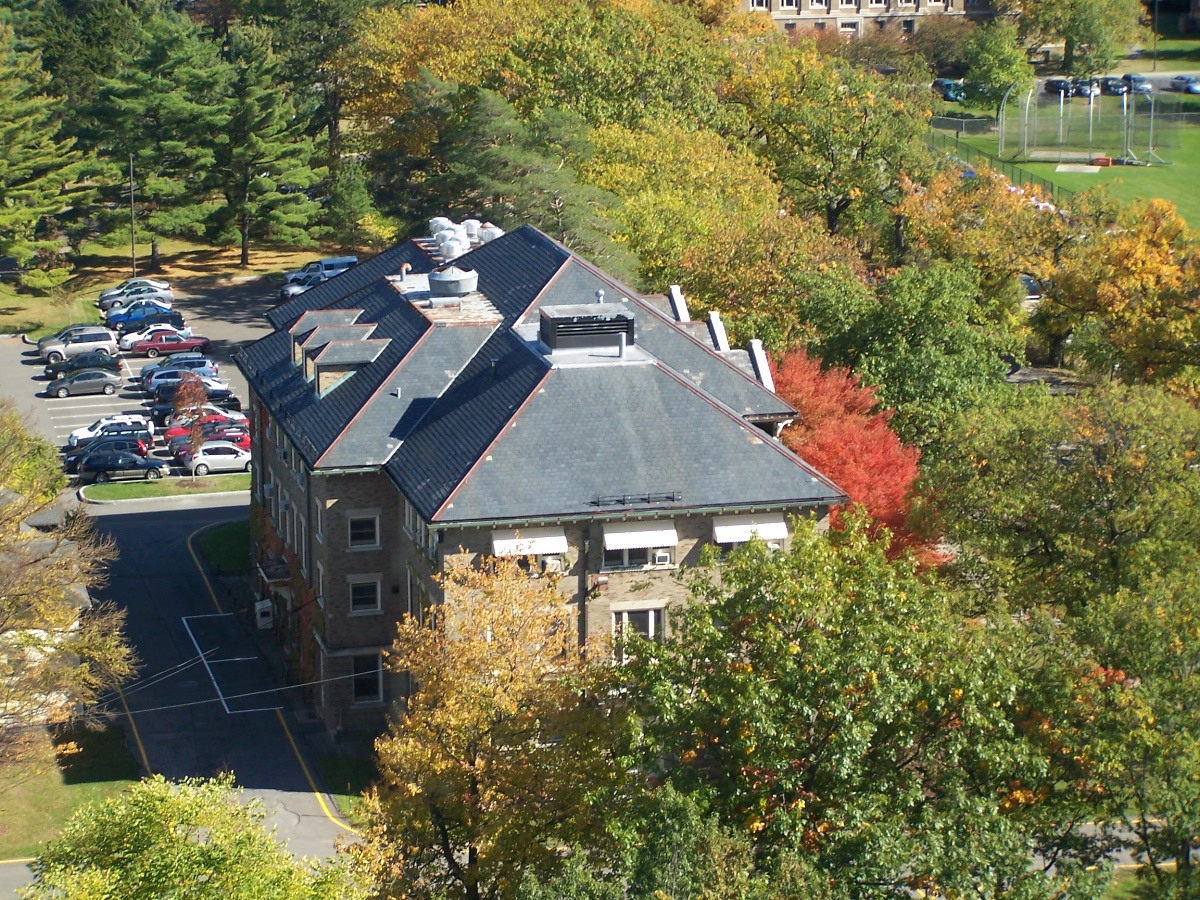
Rice Hall. The building on the left, obscured by the trees, is colloquially known as “Little Rice Hall”. Located on the National Register of Historic Places [1], Rice Hall was built in 1912 and designed by the architectural firm Green and Wicks [2]. Rice Hall was intended as a peripheral building to Stone, Roberts, East Roberts, Caldwell and Comstock Halls. The building is home to Cornell’s “Center for the Environment” (yet another academic think tank) and is a hodgepodge of SNES and Crop and Soil Sciences. The building is named for James E. Rice 1890 [5], who taught the first course in the country on Poultry Husbandry (the building was originally for poultry husbandry, which is likely why it’s such a clusterf*ck now).

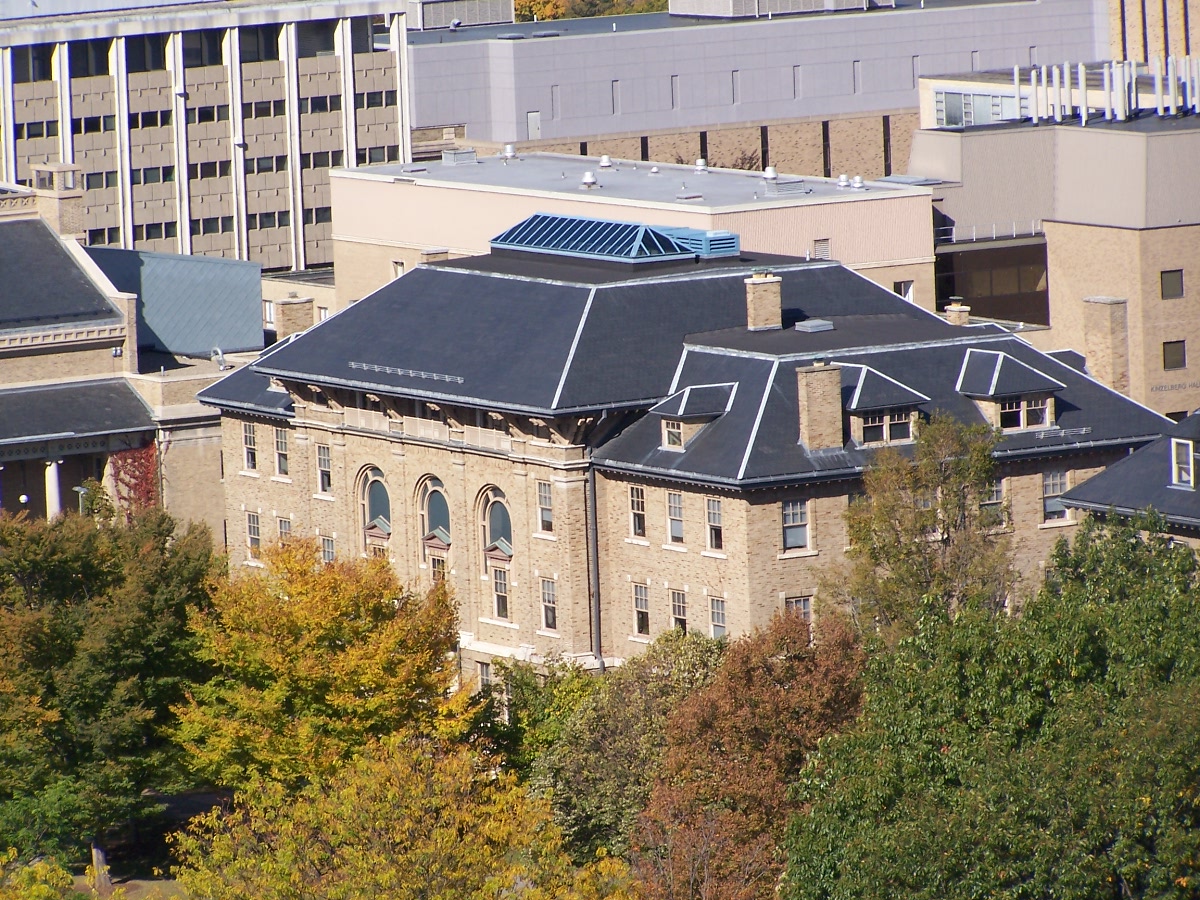
Fernow Hall is another of Green and Wicks’ works, being constructed three years later in 1915 [3], and also sits on the National Register of Historic Places. For the record, all that means that it’s old and likable. It must not mean much for architectural merit, otherwise we’d still have Roberts, Stone and East Roberts. The building is primarily used by the Dept. of Natural Resources. The building was known as the Forestry Building from 1915 to 1922 [4], and was dedicated to Bernhard Fernow, Dean of the College of Forestry (a sort of predecessor to the natty rys dept., which failed only five years after its inception in 1898, because the state received threats that if Cornell would be spoiling summer cottage retreats in the ‘Dacks for commercial purposes, wealthy state residents would reside elsewhere).

The original Comstock Hall, now the Computing and Communications Center. The hall was built in 1912 and named for renowned entomologist John Henry Comstock 1874 [6], and originally housed entomology. In some twisted sense, the same firm that designed this building would design the later Comstock in 1985. After Cornell granted moving the name to the new building, the old Comstock was renovated into (C3), CIT’s Operations Unit, in the late 1980s. Prior to that, CIT was out in Langmuir Labs in the Office Park in Lansing, and before it left for Lansing in 1967, CIT’s main computer lab jumped between Rand and Phillips Halls [7].

A lot can change in 70 years. The original Comstock (formerly Academic II) was a corroboration between Green & Wicks, and the firm Hoffman, O’Brian, Levatich & Taub. The new Comstock was by the shorter “Levatich and Hoffman”. I think our tastes have gone downhill, ladies and gentlemen. Anyways, the new Comstock houses entomology and the little-used Entomology library (I just want to say that, as a CALS student, I’ve only ever met two entomology majors in my time at Cornell).

Corson-Mudd Hall (Corson is the east wing). Named for former university president Dale R. Corson and philanthropist Seeley G. Mudd (who has a crapload of buildings named for him on college campuses across the country [9], the building was completed in 1981 [8].

Technically, it’s possibly to get to nine seperate buildings through the tunnels and walkways of the AG Quad. Bradfield is connected to Emerson Hall (the lowrise portion), which is connected to Fernow Hall at one corner and to Plant Sciences from the second floor hallway. Through Plant Sciences, there are two ways to get into Mann Libe (ground, which involves being outside for ten seconds in the tunnel towards Manndible Cafe, and a less-used second-floor stairway). Mann is connected to Warren Hall. Plant Sci also has a connection to Weill Hall through its basement, and the tunnel runs underneath the street to the basement of Weill. The public use of this tunnel is not clearly stated, so try it at your own risk. Weill also connects to Corson-Mudd and Biotech through tunnels.

So, I’ve already told the story of the Roberts-Kennedy complex once before, but I’ll do a partial rehash. The building is named for Issac Roberts, an early professor, and 1970s CALS dean W. Keith Kennedy. Originally, Stone, Roberts and East Roberts stood on the site.

Roberts, Stone, East Roberts

L to R: Roberts, Stone, East Roberts

The three were built around 1906. While they were national registered historic buildings, Cornell rather covertly had the designation removed, in a move that angered many traditionalists. The buildings were imploded in 1988-89. The original proposal for Roberts-Kennedy Hall was a 10-story building where Kennedy stands. Well, that didn’t go over too well, so they essentially pushed it onto the side and made a “breezeway”. The two were completed in 1990. Trillium is technically a part of Kennedy Hall.


[1] http://en.wikipedia.org/wiki/Rice_Hall

[2]http://www.fs.cornell.edu/fs/facinfo/fs_facilInfo.cfm?facil_cd=1040

[3]http://www.fs.cornell.edu/fs/facinfo/fs_facilInfo.cfm?facil_cd=1029

[4]http://www.dnr.cornell.edu/mission/history/

[5]http://books.google.com/books?id=jUu9pDRhWjkC&pg=PA295&lpg=PA295&dq=%22rice+hall%22+cornell&source=web&ots=Mp_YbfQomX&sig=dQmUQ68KhXUqtys6MW5lwXXPF_s&hl=en&sa=X&oi=book_result&resnum=10&ct=result#PPA401,M1

[6http://www.agriculture.purdue.edu/agcomm/newscolumns/archives/OSL/2005/October/051027OSL.htm

[7]http://www.cit.cornell.edu/computer/history/timelines_locations.html

[8]http://www.fs.cornell.edu/fs/facinfo/fs_facilInfo.cfm?facil_cd=1019E

[9]http://en.wikipedia.org/wiki/Seeley_G._Mudd


News Tidbits 10/08: An Addition to Cornell’s Morbid History

9 10 2008

Okay, I’ll bite, because thirty-six views in the past hour on this blog have been under the search line “death gorge cascadilla october 8”. I don’t tend to be a big supporter of current morbid news, because it’s sort of like slowing down to look at a horrific car accident. That being said, here’s the information being released at this time.

~~~

ITHACA — Emergency officials are investigating the death of man who was found in the Cascadilla Creek gorge beneath the College Avenue Bridge Wednesday.

Ithaca Police, Cornell University Police, Ithaca firefighters and Bangs Ambulance personnel responded to the report of a body lying in the gorge at about 2 p.m., the Ithaca Police said. A caller to the Tompkins County 911 Center had said a man had jumped from the bridge, they added.

Officers interviewed witnesses and gathered preliminary details, police said. Ithaca firefighters and Bangs Ambulance personnel removed the body from the gorge and transported it the Cayuga Medical Center morgue, police said. The bridge was closed for about an hour.

Though the investigation is continuing, there are no signs of foul play at this time, police officials said. The man’s name is being withheld pending notification of his family, they added.

http://www.theithacajournal.com/article/20081008/NEWS01/81008009

For the record, this is not one of the more popular jumping bridges. The bridges on north, particularly Stewart Avenue and Thurston Avenue, are much more popular. I don’t mean that in a good way.

From the Sun:

http://cornellsun.com/section/news/content/2008/10/08/body-recovered-cascadilla-gorge-after-alleged-suicide

At about 2:00 p.m., a male body was found at the bottom of Cascadilla Gorge, under the bridge connecting Collegetown to Central Campus. A Cornell Police officer stated that a person allegedly dove head-first into the gorge. Around 2:30, the body of the deceased man was removed on a stretcher and transported to the Cayuga Medical Center Morgue by Bangs Ambulance. The victim has been identified, but his name is being withheld pending notification of the family.

In response to the suicide, the Ithaca Police Department, Cornell Police, Bangs Ambulance and Ithaca Fire Department reported to the scene. They closed the College Avenue Bridge to pedestrians and vehicular traffic for about an hour.

The IPD is still investigating the case and whether or not the victim was a Cornell student. Dean of Students Kent Hubbell ’67 said, “I wouldn’t conclude it was a [Cornell] student. From what I can tell, it doesn’t seem like it was … I wouldn’t jump to any conclusions.”

While this suicide is an isolated incident, incidence of suicide at Cornell is consistent with the national average in higher education, which is 7/100,000 per year, according to Sharon Dittman, associate director of community relations for Gannett. The last time an enrolled student died by suicide at Cornell was in 2006, and since 2002, there have been five student deaths due to suicide.

For those upset by the situation and looking to seek counseling, Gannett’s counseling services are available 24 hours a day, seven days a week. “At Cornell, every member of the community has a role to play in expressing concern and providing support for one another, particularly to a student who is hurting,” Dittman stated. She urged students to go to Gannett’s website to obtain information about how to get support, give support to a friend, and connect a student to services.

In addition to counseling, the University has a crisis management team overseeing the situation. “Crisis managers are prepared to meet with students who may have been upset and concerned,” Hubbell said. To get in touch with a crisis manager, students should contact the Cornell Police at 255-1111. With any additional information regarding this case, please contact the IPD at 272-9973.

UPDATE (from WVBR): The body found yesterday in the Cascadilla Creek Gorge under the College Avenue Bridge has been identified as a 1998 Cornell alum. 33 year old Jakub Janecka allegedly dove head first into the gorge sometime before 2:00 pm yesterday. His body was removed from the gorge around 2:30 and brought to the morgue at Cayuga Medical Center. It is not clear why Janecka, a native of Lake Ariel Pennsylvania, was in Ithaca yesterday. The Ithaca Police Department is still investigating the case.

***

For the record, the last student suicide recorded was that of Ash Thotambilu ’06, a student from the Human Ecology School. That was in May 2006 [1]. Since 1996, there have been 22 recorded student suicides (notably, 15 were those who identified themselves as being of Asian descent) [2].  Since 1990, at least ten suicides have been attributed to the gorges in the Ithaca area.

[1]http://cornellsun.com/ash.thotambilu.death
[2]http://www.news.cornell.edu/stories/April06/Chung.ksr.html


From Bradfield’s Roof

5 10 2008

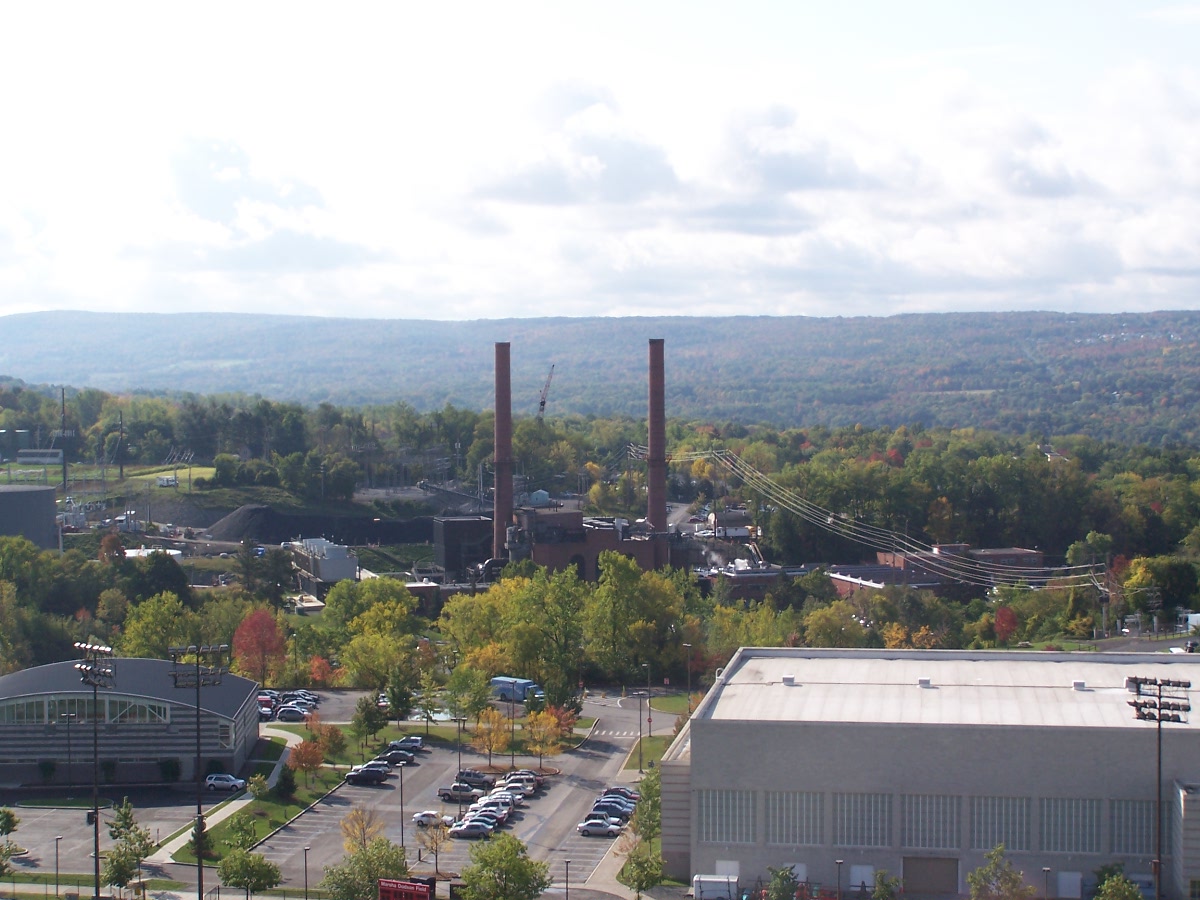
Looking southwest. Weill Hall dominates the view since its completion. The far hills in this photo are about eight miles away.

In this image, the crane for the physical sciences building is prominent, as is the Spencer T. Olin Research Tower (1967). The odd smokestacks on either end of Olin Tower’s roof are a fairly recent addition, from the late 1990s [1].

Bradfield’s roof is surprisingly spacious. Up until a few years ago, it had red flashers on the roof because it was originally in the flight path of planes heading into the airport. (Note: this area is only accessible by special request. There are alarms, and they will go off if you go up here without the key).

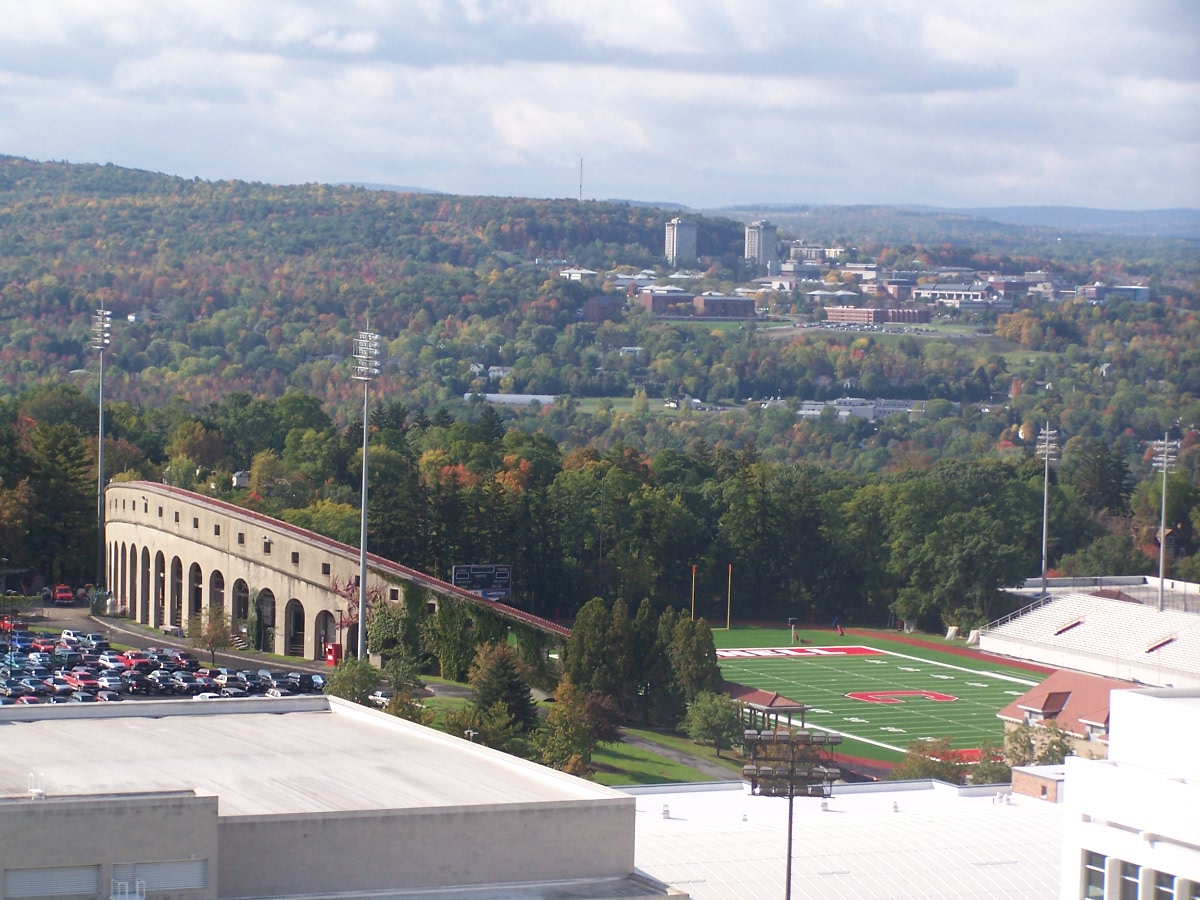
Looking SSE. These were the smockstacks I was referencing in the incinerator entry. The heating plant is currently being expanded about 16,000 sq. ft. Friedman Wrestling Center (2002) and Bartels Hall (1990, formerly Alberding Field House) are in the foreground.

Schoellkopf in the foreground, with the towers of IC in the back.

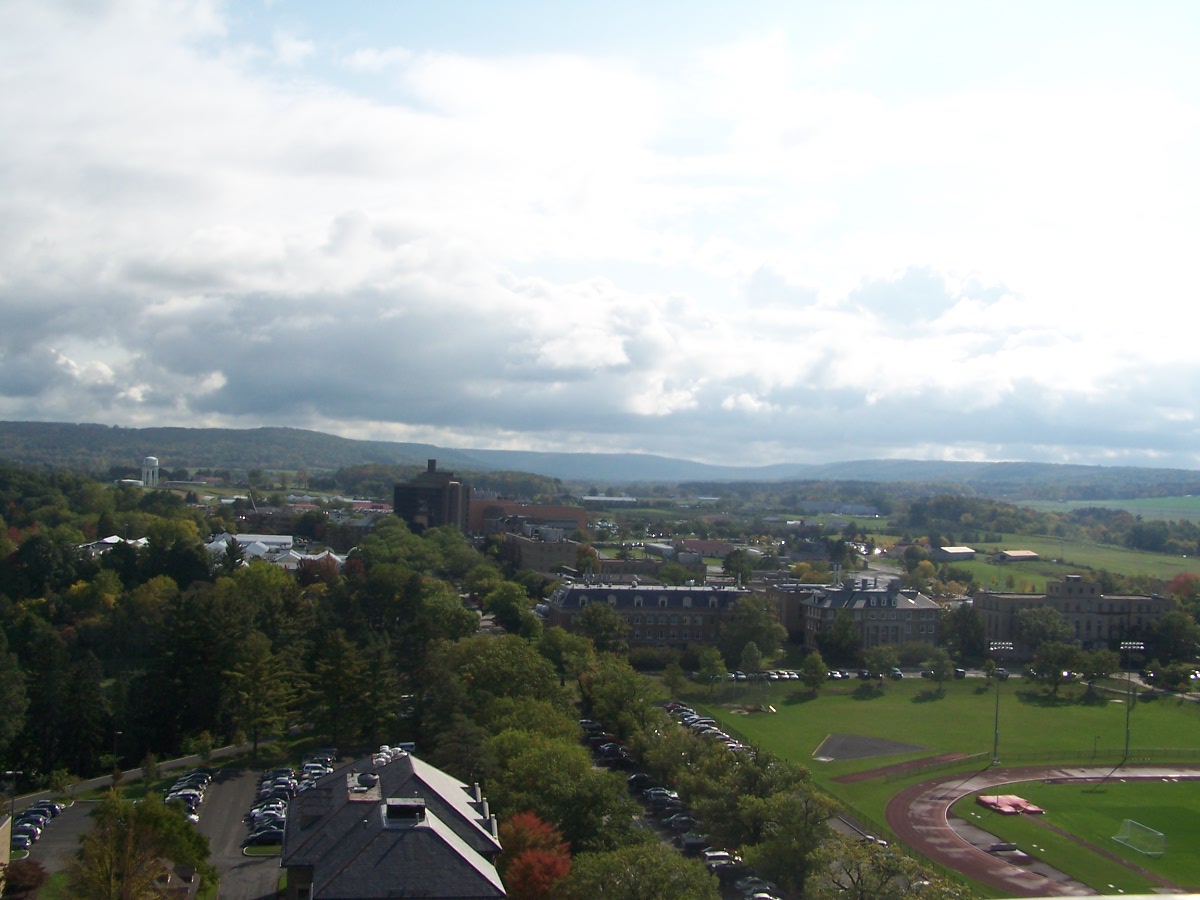
Looking East towards the vet school. The far hill is Hungerford Hill, about nine miles away  They’re Turkey [left] and Baker Hills, and they’re 3.5 to 4 miles. This might be the worst entry I’ve ever done when it comes to factual correctness. Hungerford Hill, 2.5 miles away, would be farther to the right if it had made it into the photo.

  To see what the view looks like from Hungerford Hill looking at Cornell (winter), click on the link (screw it, the link isn’t working too well, if you want to see just google “hungerford hill ithaca”, it the first thing in ‘images’): http://farm1.static.flickr.com/184/472688985_3a80886d64.jpg?v=0

Rice hall is in the immediate foreground, with Stocking, Wing and Riley-Robb Halls sitting on Judd Falls road halfway between Rice and the Vet School.

View directly north, over Beebe Lake. Fall is a comin’.

NNW is north campus.

Far up on the lake (about twelve miles) is the Bolton Point Milliken Station power plant (EDIT: okay, my bad, I mix up the names of the water station and power plant A LOT). If you’ve been hung up on 79  between Inlet Island and downtown by the train, this is where it is going (delivering coal from Somerset, PA).


[1]http://www.chem.cornell.edu/history/laboratories/STOlin.htm


Everyone Loves Historical Throwbacks

2 10 2008

So, if you haven’t been living under a rock in the past year, there are plans for a 9-story, 102-room hotel just off the commons, to be designed by Scott Whitham of Thomas Group Architects in conjunction with Ithaca Properties LLC / Rimland Associates. Well, it looks like they have a hotel operator in Gemstone Hotels & Resorts, a boutique hotel operator based out of Utah [1]:

Hotel Ithaca

Hotel Ithaca, currently in final planning and approval, is expected to open in 2011. The property will be a nine-story, full-service boutique hotel at the intersection of State and Aurora Streets. The hotel will feature 125 luxury rooms and suites and 2,000 square feet of flexible meeting space. The hotel will be built on the same site as the original Hotel Ithaca. In addition, the hotel will be the home of the original Zinck’s Bar, a cherished icon of the city’s past.

“We welcome the opportunity to be involved with the first luxury boutique hotel in the Ithaca area,” said Thomas Prins. “Because the city is also home to the world renowned Cornell Hotel School, we are very excited to set a new standard in concept and operations and set an example for students and the many hotelier alumni who visit the school.”

I have no clue where they had the idea it was a 125-room hotel. Everything I’ve read has stated 102 rooms.

That being said, since the last Zinck’s closed over forty years ago, the only things most of us modern Cornellians know about it is from “Give My Regards to Davy” [/We’ll all have drinks at Theodore Zinck’s/]. Cornell’s alumni associations make use of the Zinck’s nostalgia in its alumni events:

“Theodore Zinck was a saloonkeeper in Ithaca, and his pub, the Hotel Brunswick, was a popular gathering place for Cornellians in the 1890s. After his death in 1903, several bars using his name continued to provide a haven for students. When the last Zinck’s closed in the mid-1960s, celebrating the spirit of Zinck’s became a favorite Thursday night Collegetown tradition for undergraduates. It wasn’t long afterward that Cornellians began to continue the tradition in their hometowns. This year, alumni will celebrate this uniquely Cornell event in more than 90 cities around the world. So wherever you are, remember your days at Cornell on October 16. [2]”

Currently, the University uses “the Spirit of Zinck’s night” as a way to promote alumni involvement (e.g. solicit donations). With the historical name being reused at a drinking establishment once again, it looks like they might be able to celebrate at Zinck’s a couple of years from now.

[1]http://www.wishtv.com/Global/story.asp?S=9097563&nav=menu35_8

[2] http://www.alumni.cornell.edu/zincks/index.cfm