Better Late Than Never: 2009 OFSA Report Released

7 01 2010

It only took them until New Year’s to get it up on their website. What’s that, like six months since the numbers and data were finalized?

The PDF:

http://dos.cornell.edu/cms/greek/upload/OFSA_AnnualReport_0809.pdf

The cover is vaguely charming. I can see my fraternity’s pin on the cover. I also remember that our alumni board president didn’t know that the pins were for reunion, so we ended up putting them in storage for a while before giving them out to interested members.

Basic stats: Not a whole lot of change. Same number of chapters (AOPi closed and Alpha Phi Alpha reestablished itself). Roughly the same percentage of greek undergrads (more on that in a moment). Less community service hours, but about $6K more raised in philanthropies, but honestly no one really cares about that except when it comes time to say good (or bad, comparatively) things about the greek community.

Digging a little deeper into the IFC numbers, it looks like the percentage of Cornell male undergrads in fraternities has increased to 33.15% from 31.68%. Gross numbers, that’s about 143 more members (the total male undergrad population, Greek and non-Greek, increased by 126). Yet, the number of undergrad freshman males stayed nearly constant (up by 9), so the vast majority of the gains seem to be from upperclassmen who chose to pledge later in their college careers, and transfer students. Which is great, in my opinion; one of my best friends in my house chose to pledge as a sophomore, but I wouldn’t think of him any differently than someone that I pledged with as a freshman.

Sorority membership increased to 23.60% from 23.17%. Sororities had 78 more members in 2008-09 over the past year, but the total undergraduate female population increased by 190 students (including 120 more freshman women vs. the previous year). Average members per chapter from 73 to 81, but that’s because Panhel lost AOPi, so there were more ladies to go around.

As a guy, I think I lack the ability to understanding the dealings of Panhel. The idea of being in a chapter of 130 members isn’t too appealing, and I’ve definitely seen cases of girls in the same house not even remembering each other’s names. Whatever floats their boat, I guess.

Just stating this for the record, I write about OFSA figures and Greek life out of my own interest. No figures or statements in this blog are made with the purpose of influencing anyone towards a certain house.  This blog is only good for photos of the houses and for little history tidbits about the chapters. The only way you can figure the character of a fraternity is by visiting them and using solid judgment.


This Isn’t Your Father’s Fraternity

29 12 2009

So, with Rush Week coming up, I figured it was about time that I did another Cornell Greek System related article.

So, a fair number of guys who come back for rush week do so on their parent’s urging. Which seems a bit funny, considering the stereotypes and all, but it’s likely that the parents who are pro-Greek were in a fraternity or sorority themselves. Sometimes, someone’s father might try to prod them towards the house that they were a member of back in the day.

Well, fraternities are rather preculiar in that the character of a house can change completely in about three years, as members graduate and new brothers are initiated.  So, your father’s fratenity, while it may have been a “small nerdy house in 1970-something” or “a big jock house back in the ’80s”, may be something completely different today.

For this entry, I decided to compare the membership numbers of houses. For one thing, numbers are solid; character is subjective. Secondly, I’m only doing fraternities; sororities tend to be somewhat less elastic with numbers, especially since they operate with a quota system that sets the number of pledges a sorority may have.

The first number is the active membership number from the Spring 2009 semester for Cornell fraternities. The second number is for Spring 2005, selected merely to illustrate the dynamics of change (or lack thereof).  The last number is from Spring 1983, selected because it is a legitimate date that token rushee X’s dad might’ve graduated from college, but also because  it was easy for me to get a hold of the figures (on paper, so no links unfortunately).

A few details: Membership percentages in Greek houses in 2009 was 33.15% of the total undergrad male population, with 47 members on average (50 chapters fell under the “fraternity” designation, but that includes MGLCs – accounting for their typically small number, the reduction is to 42 chapters, then the IFC average is about 54 members). No offense meant to the MGLC folks, but I have no 1983 data for those chapters, so they are excluded.

For 2005, there were 40 IFC chapters, and an average of about 47 members per house (fraternity membership was 28.75%).

For 1983, there were 50 IFC chapters, and an average in the low 50s.The chapters that existed in 1983 that don’t today are

Phi Alpha Omega, a small collegetown-based fraternity started around 1982 and gone by 1986.

Triangle, down to eleven members. Their national would shut them down by 1985.

Theta Delta Chi, which closed in 1999 (to their credit, they have one failed recolonization attempt, from 2003). They failed to submit information in time to be included in the 1983 publication I’m using.

Phi Kappa Sigma, which closed in 1990. They had 35 members in 1983.

Phi Sigma Epsilon, which merged on the national level with Phi Sigma Kappa in 1985, closing the Cornell chapter. It had 73 members in 1983.

Chapter /Spring 2009/Spring 2005/Spring 1983

Acacia 39/29/33

Acacia was on the brink of closing in the late 1990s, when membership dwindled. It seems to have recovered well enough.

Alpha Delta Phi 57/69/56

Alpha Epsilon Pi 35/NA/NA

So, here’s the problem. The first time AEPi closed was in 1984. The second time was in 2005. Way to screw up by stats guys. I looked up their 2004 data; its membership number recorded 29 brothers.

Alpha Gamma Rho 52/63/86

Alpha Sigma Phi 51/56/71

Alpha Tau Omega 75/61/63

Alpha Zeta 55/24/53

Alpha Zeta almost closed in the mid 2000s, so that makes it upward climb more impressive. The 1983 value may be off, since this co-ed fraternity only recognized women on an honorary level at the time, so they were left off the roster. The other two values are combined co-ed.

Beta Theta Pi 30/51/49

Beta is in the midst of reorganizing, hence the low 2009 figure.

Chi Phi 73/72/ 56

Chi Psi 53/47/84

Just…ouch.

Delta Chi 82/27/65

Delta Chi closed and reopened in 2004,  hence the low 2005 figure.

Delta Kappa Epsilon 46/45/68

Delta Phi (Llenroc) 64/41/57

Delta Tau Delta 40/27/56

Delta Upsilon 66/50/60

Kappa Alpha 17/NA/39

Kappa Alpha closed in 1990 and reopened in 2007.

Kappa Delta Rho 39/34/47

Kappa Sigma 71/42/87

Lambda Chi Alpha 67/58/69

Phi Delta Theta 47/54/70

Phi Delt reorganized in 2000, when it threw out the then-current membership and started fresh as a dry fraternity.

Phi Gamma Delta (FIJI) 84/53/93

Phi Kappa Psi 72/61/87

Phi Kappa Tau 56/51/34

Closed in 1994, reopened in 2000.

Phi Sigma Kappa 51/56/65

Pi Kappa Alpha 61/56/102.

Wow. I never knew Pika was once the largest house on campus.

Pi Kappa Phi 65/48/25

Closed in 1986, reopened 1990.

Psi Upsilon 37/57/NA

Psi Upsilon was closed from 1981 to 1985. They also reorganized in 2008.

Seal & Serpent 17/20/35

What happened here was a slaughter of their reputation. That was covered in a previous entry.

Sigma Alpha Epsilon 91/89/35

On the other end of the scale, the rise of SAE is impressive. Who would’ve guessed they were such a small house back in the day?

Sigma Alpha Mu 70/52/21

Sigma Alpha Mu was rechartered in 1983/84.

Sigma Chi 67/61/79

Sigma Chi Delta 12/8/14

An item worth noting- the vast majority (80%+) of Sigma Chi Delta’s membership in the 1980s was of east Asian ethnic groups.

Sigma Nu 55/61/72

Sigma Phi 58/47/45

Sigma Phi Epsilon 51/52/50

Not as stable as it looks. Reorganized in spring 2006, closed for the fall, reopened in 2007.

Sigma Pi 39/83/94

Reorganized in 2008.

Tau Epsilon Phi 59/11/30

TEP must be doing something right.

Tau Kappa Epsilon 31/34/44

Theta Delta Chi 63/40/69

Theta Xi 23/NA/NA

Theta Xi was closed in 1970 and didn’t recolonize until 2008.

Zeta Beta Tau 43/51/NA

They didn’t submit in time for their 1983 data to be published.

Zeta Psi 53/29/43

So in conclusion, although your dad may regal you with stories of his fraternity days, don’t expect to have the same experience if you pledge his old house.


What the Hippies Are Driving These Days

23 12 2009

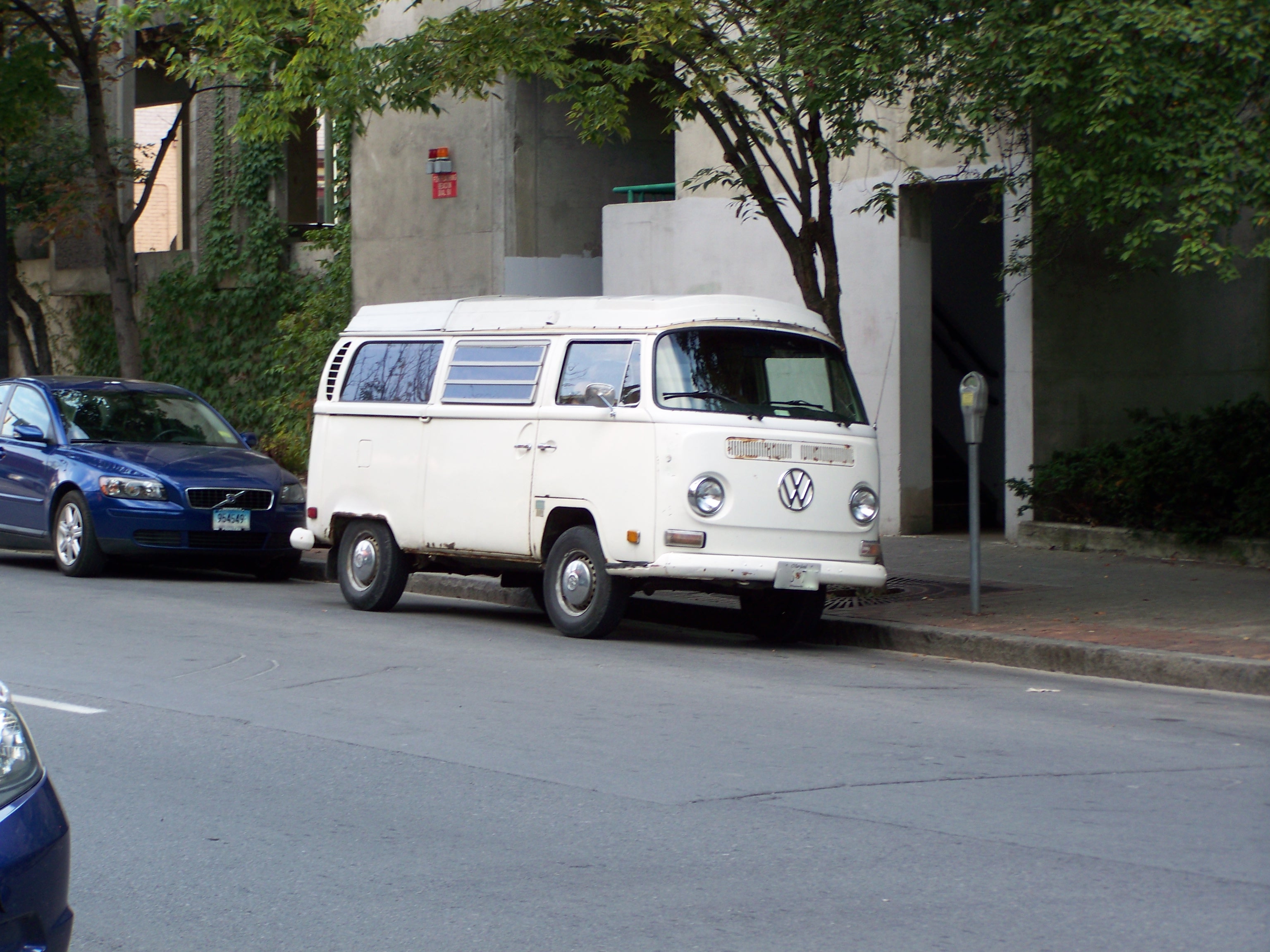
I figured that it would have been fun to do a little piece on the most common vehicle models in Tompkins County. Unfortunately, the statistics carried by the NYS Department of Transportation and the DMV only keep in track of the types of vehicle (basically, there are about 51,000 registered private vehicles in Tompkins County). Checking with the state department of finance didn’t reveal much, nor was there anything on the U.S. census data website (which is unusual, given that the census page usually has billions pf pieces of seemingly useless data). This is made even more frustrating when you consider that some states actually do bother to keep in track of this data, or that MSN had a “most popular vehicle by zip code” article that covered ten zip codes and then offered no means for anyone to check their own zipcodes. Lame.

It’s not like one can sit next to a window and keep track of the number of vehicles passing by. A green 2002 Honda Accord looks like any other green 2002 Honda Accord for the most part, so there’s little ability to distinguish whether two cars of the same make are genuinely unique or if it’s the same person driving by twice. Plus, most of the students driving around town aren’t registered through Ithaca zipcodes, they’re registered through their family’s permanent addresses (so, all those Audi A6s and BMW 3-series you see buzzing around campus are probably registered in Westchester, northern New Jersey or any token upscale suburb in the northeastern U.S.)

That being said, I’m willing to take a few somewhat educated guesses of the most commonly registered vehicles in Ithaca.  For one, the ubiquitous Volvos that can be found in the Ithaca area. If any particular models stand out, it’d probably be the 240 models from pre-1993, 800 series models from the mid 1990s and maybe some of the 900 series models of the later 1990s.  I’d be impressed if anyone travelling through the greater Ithaca area can go five minutes on the road without seeing the pride of Sweden in the next lane. Not to say that Volvos don’t have their attractions. They’re known for their safety and for great heating systems that prove useful for Ithaca’s long winters. Plus, in terms of cars defining people, Volvo tends to be one of those brands popular with the college faculty crowd, i.e. liberals with higher incomes.Volvos are so ingrained into the community culture that the Ithaca festival features a Volvo ballet, where they decorate the cars in “tutus” and perform on city streets.

Another brand of vehicles popular with the collegetown crowd would be Japanese automaker Subaru (fun fact of the day:  Subaru is the Japanese name for the Pleaides star cluster. This becomes readily apparent once you consider the Subaru emblem). The most popular model by my guess would be the Outback wagon of the mid 2000s or the post-2000 Subaru Forester.  What makes Subaru popular is that it tends to attract the same New Age crowd that Ithaca tends to attract. To quote a Denver paper that noted they were the most popular car in college town Boulder:

“More hip than a mini-van. Very useful. Great in snow. It’s a cool station wagon. Minivans aren’t cool. We know that. The Outback has all of the safety that an SUV doesn’t have and all the utility that the Camry does have. So I see it as a common middle ground kind of ride. It’s kind of like pilates mom instead of soccer mom…”

Lastly, if you consider things from a county level, then somewhere in the top five there have to be at least one of two truck models. Ithaca town and city make up about half the county’s populations, and probably less than half of the registered vehicles once you consider those that walk, bike or use public transit. The surrounding towns are more rural areas where agriculture is king, and many of these residents use Ford F-150s or Chevy Silverados to get around. Case in point, look in Alpha Gamma Rho’s parking lot, and you’ll see twenty trucks, five SUVs and an old Chevy Cavalier.

Seeing as their are no readily available figures, I’d love to hear other opinions on this one. Priuses, Accords, Saabs maybe? Write in and let me know.


Random Ithacana

18 12 2009

So, pardon the extraordinarily long break. Finals and research brought much of my outside life to a screeching halt, so this blog had to take a backseat for a couple of weeks. Oddly enough, site statistics didn’t really go down a significant amount, which probably says something about the consistent use of the historical info on this blog.

Anyways, during my holiday shopping, I happened upon a new little book that I felt the need to add to my collection. The book, Surrounded by Reality: 101 Things You Didn’t Know About Ithaca, NY (But Are About to Find Out) by Michael Turback, is a nice little book detailing some of the history and sights of the area. Some of the book entries share the same information that has previously been shared on this blog, but there was some new information to be garnered from its pages.

A lot of the book focuses on Cornell. Things that a lot of Cornellians already knew about the founder and A.D. White, but also some more obscure details. For example, a real description of Zinck’s. Theodore Zinck ran the “Lager Beer Saloon and Restaurant” out of the Hotel Brunswick at 108-110 N. Aurora (just off the current-day Commons) starting in 1880. Contrary to modern day bar-hopping, Zincl, while described as being a fatherly and caring figure who treated his customers with “Prussian high-handedness”. Customers could be thrown out of his bar, however, for drunkenness, bawdy songs, or derogatory references to the German Kaiser. The first Zinck’s operated until about 1903. That year, a typhoid epidemic rages through the city and claimed 85 lives, including Theodore Zinck’s daughter. Despondent, he drowned himself, effectively shutting down Zinck’s first incarnation. The bar reopened under his name in 1906 (which would be incredibly tasteless if he wasn’t regarded so affectionately), and continued in operation in some form in different names and places up to about 1967. Although, with the coming of the new Hotel Ithaca, it appears we may continue the local tradition of naming revered watering holes after a suicidal barkeep.

Another detail that the book referenced was the freezing over of Cayuga Lake. Cayuga Lake is about 435 feet deep, so usually the massive heat storage of the water keeps the lake from completely freezing over during the winter. However, that isn’t to say it can’t happen. Since 1796, the lake has frozen over about ten times (1796, 1816, 1856, 1875, 1884, 1904, 1912, 1934, 1961 and 1979). Wells College, a small and formerly all-female school located further up the lakeshore in Aurora, has a school tradition where if the lake is discovered to be frozen over, classes are cancelled for the day (there is no such tradition for IC or Cornell). According to the book, during the 1875 freeze one athletic young woman at Wells decided to celebrate the day off by skating down the lake and back. Not too shabby, once you consider that the lake is just under 40 miles long.

One last one for the road; most Cornellians are well aware of the legend that if a virgin crosses the Arts Quad at midnight, Ezra and A.D. White will step off their pedestals and shake hands in the center of the quad. Wll, as it turns out, Ithaca College has their won virginity legend. Outside of Ithaca College’s Textor Hall stands a 10-foot high ball sculpture mounted over a small pool of water. Their campus legend states that if a virgin ever graduates from IC, the “Textor Ball” will fall off its pedestal and roll down South Hill. According to Wikipedia, Ithaca College has 49,570 alumni, and I’m willing to bet most of them are from after the school’s 1960s expansion and relocation.


Off-Topic: Proper Behavior During Finals

9 12 2009

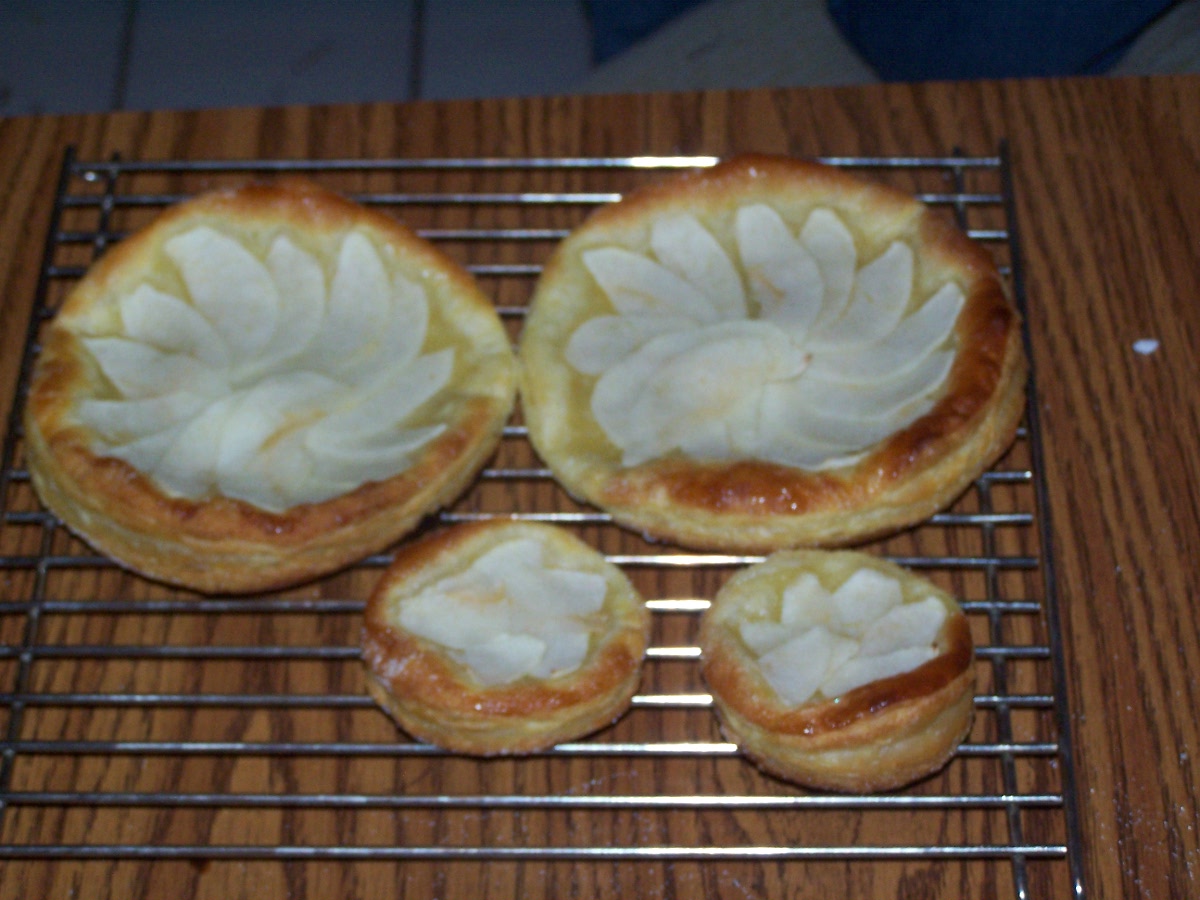
This is okay:

Baking Pies is an Acceptable Stress Reliever From Finals

This is not okay:

http://www.theithacajournal.com/article/20091208/NEWS01/912080330/1126/news/IC+student+charged+with+arson+on+campus

An Ithaca College freshman has been charged with arson following an investigation into a series of fires in trash and recycling bins near residence halls, the college announced Tuesday.

No one was hurt, but the fires destroyed the receptacles, according to the college.

Alexander Carfi, 18, of Roslyn Heights, was arrested by the college Office of Public Safety and charged with one count of fourth-degree arson, a class E felony, and one misdemeanor count each of criminal mischief and reckless endangerment. He was arraigned in Ithaca Town Court and released on his own recognizance.

The charge relates to a fire reported at 2:58 a.m. Nov. 9 that damaged the northern exterior of Emerson Hall. In consultation with the Tompkins County district attorney’s office, the college is considered misdemeanor-level fifth-degree arson in other fires: 4:14 a.m. Sept. 7 and 12:29 a.m. Sept. 9 at Emerson Hall, 2:36 a.m. Sept. 30 at Landon Hall, and 2:45 a.m. Oct. 21 at Clarke Hall. Suspicious fires were also reported in the early-morning hours of Oct. 5 in the fire lane between Landon and Bogart Halls, and on the east side of Eastman Hall.

Carfi, who lived in Emerson Hall, has been removed from campus, according to the college. The investigation, conducted with assistance from the Ithaca Fire Department, is continuing and additional criminal charges are possible, according to the college.

***

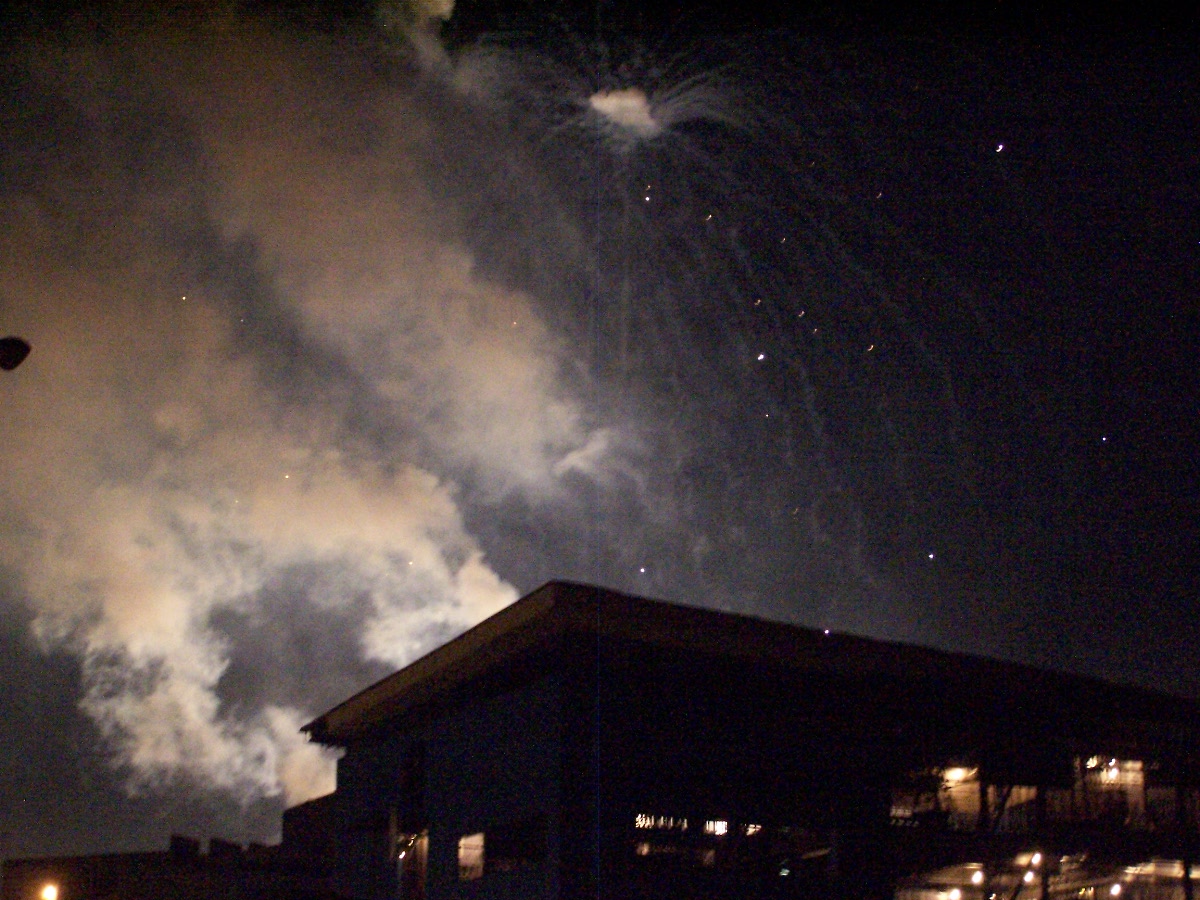
I.C. seems to just have really bad luck with anything fire-related. During the summer of 2008,  I had the luck (good or bad?) of being one of the hundreds if not thousands of spectators who watched the roof of the brand new I.C. business school catch fire when embers from fireworks lit up the grass roof during the 4th of July festivities.

In conclusion, make pies, not fires. Hopefully we’ll get a real entry up sometime soon.


Finals-Induced Hiatus

7 12 2009

Sorry folks, I’m currently caught in a flood of research and finals. New entries will be coming in after a few more days.


The Dealings of the AEM Program

22 11 2009

For almost every day of the past semester, there has been something in the news about proposed budget cuts or streamlining of the university in the name of efficiency. The AEM (Applied Economics and Management) Program is probably the biggest target of the streamlining arguments, and not without good reason. Someone could effectively obtain a business major through AEM in CALS, PAM in Human Ecology, or by concentrating on a particular field within the Hotel School. The engineering school has a program set up with CALS where engineering students can minor in business through AEM.  Some aspiring entrepreneurs take classes at the Johnson as undergraduates. Point is, anyone whose interested in business (if at least because of the big financial rewards) can do so.

AEM hasn’t always been the fast track to I-banking as it is often seen today. The AEM of competing business fraternities, Wall Street ambitions and pre-MBAs is largely a recent phenomenon.The history of AEM shows how much of a radical departure the program has made in recent years, and thankfully a professor emeritus of the department recorded it in a written book about the history of the department that is available online in its entirety.

AEM started in CALS for good reason — it was first known as agricultural economics. The program has its earliest roots from around 1903, when Ag school dean Liberty H. Bailey hired Prof. Thomas Hunt, who taught the first courses on farm management. By 1907, Hunt left to become a dean of the Penn State Ag school and George Warren took over most of his duties, becoming a full professor of the Farm Crops and Farm Management Department by 1910 (the sister department at the time was Rural Economy). George Warren by and large shaped much of the early development of the program, hence Warren Hall’s dedication to him when it was built in the early 1930s. In 1919, the two sister majors were merged into one department to be called Agricultural Economics, as ordered by the Board of Trustees.

For the next several decades, Ag Economics was a major usually taken by farm kids who planned on going back to the farm or engaging in some other form of agricultural operations. By the 1970s, the program had begun to diversify somewhat, and by the 1980s the program offered a substantial number of courses that didn’t focus as much on the agriculture portion of ag economics (mostly these new offerings were in environmental and managerial economics — the managerial portion could be seen as a predecessor to today’s AEM). To reflect this, the department changed its name to Agricultural, Resource, and Managerial Economics (ARME) in 1993.

Unfortunately, the book ends off in early 2000, and a lot has changed in the past nine years. The program changed its name from ARME to AEM in 2000.  The undergraduate business program was accredited in January 2002. Doing this required a significant financial infusion on CALS’s part, one example being the hiring five key staff members that were required for full accreditation (for ratio purposes and course requirements needed for accreditation). Depending on the year, AEM has offered anywhere from six to ten concentrations, some ag based and some not. This is where the blurring has resulted from.

So, we have the kids who come straight from the farm and want to pursue agricultural objectives. That’s right in line with CALS’s objectives. But then you have the kids who are completely set on Wall Street and Wharton. the ones who scowl when you mention that CALS is state funded or poo-poo most of their intraschool brethren (I know that they’re not all like that, but all it takes is a few to set a bad example and garner a poor image). The department has definitely become more diverse, but some argue that it comes at the cost of diluting the mission of the school (of course, who am I criticize when CALS also includes atmospheric science [meteorology, which grew from crop and soil science], landscape architecture and and communication)?

Should AEM be streamlined? It would seem appropriate when you consider the variety of business programs Cornell offers. But to be frank, CALS does not give a damn what Cornell as a whole thinks when it comes to AEM. CALS invested heavily in the program in the late 1990s and early 2000s to get it accredited and propel it into the top ten in recent years. Why would they let someone deprive them of lucrative business majors (who become lucrative alumni) after they worked some hard to lure them into the program? This is more of a problem than people seem to realize. Unfortunately for me, my adviser rants about AEM’s high-and-mighty attitude roughly twice a week, so I won’t be seeing an end of those complaints anytime soon.


A Blind Eye to Sports

8 11 2009

As anyone who doesn’t live under an Ithacan rock knows, Cornell had its much-publicized and anticipated match against Harvard on the ice of Lynah Rink last night. Much to Cornell’s delight, the Big Red skated to an impressive victory over the Crimson, with a final score of 6-3.

I feel like I’m one of a handful of undergrads on this campus who really doesn’t give a damn.

Not that I don’t have respect for athletes at Cornell. I give them by full respect. It’s just that I have never followed sports, with the slight exception of cross country and track back in junior high and high school because I was on the team (and let’s be honest, they’re just not the same when it comes to skill or competitive spirit). I’m content to sit back and watch everyone else get excited, because I’m just disinterested in Cornell sports. I’m never sat all the way through a Cornell game in any sport.

So, unsurprisingly I never mention sports on this blog, unless there’s historical worth to mentioning it. Which I can briefly do now.

Back in the day of the university founding years, the big sport for students to follow was crew, aka rowing. A.D. White was a member of a rowing club during his own collegiate years at Yale (Bishop 33). The first boating clubs formed in 1871, and a regatta was held the following spring (if you could call it that). The first big victory came at Saratoga in 1875, much to the joy of the school and the town (story goes that A.D. White broke into McGraw Hall Tower and rang the chimes himself). Baseball and football were vague diversions, not even intercollegiate until 1874 (Bishop 134). Cornell actually had its own rules of football that no one cared about, so the university didn’t take a substantial interest in football until about 1886. The Cornell Atheltic Association formed in 1889 (296). The first athletic area, built in the same year, was off campus on what is now the site of Ithaca High School, and was called Percy Field after the donor’s son, who was at the time a student athlete at Cornell. Hockey was recognized in 1900, basketball a year later. Lacrosse started up in 1885, but was  like clothing fashions among students, coming back into and going out of style every few years.

Hockey was originally played on Beebe Lake. The idea of bringing it to Cornell came from a professor of engineering named Johnny Parson. Hecne, the establishment of the Johnny Parson Club. When the lake began to melt, the team would use the Ithaca city ice rink. The team won what might be its first intercollegiate championship in 1911 (417).

So, Bishop’s history of Cornell only mentions hockey twice, and was published in 1962, suggesting the sport was still on the periphery of athletics at that time. That was also the same year that underdog Cornell outplayed perennial powerhouse Harvard. Things started to get more interesting when the Harvard/Cornell hockey rivalry started to heat up in 1973 with Harvard’s tossing off a chicken at Cornell goalie Dave Elenbaas, as a knock against the Ag School (of course, nowadays we can depend on our alumni to knock the ag school). So Cornell students responded later that month by throwing fish onto the rink. As the decade wore on and Harvard’s program weakened, the Big Red wasn’t content to let things slide, so the rivalry has been intensified since the incident.

So that’s why Cornell-Harvard tickets can be so expensive, and why this one game is as close as Cornell gets to the storied rivalries of Big Ten schools. Some of us are more into it than others though.  


Construction Photos of the New MVR North

1 11 2009

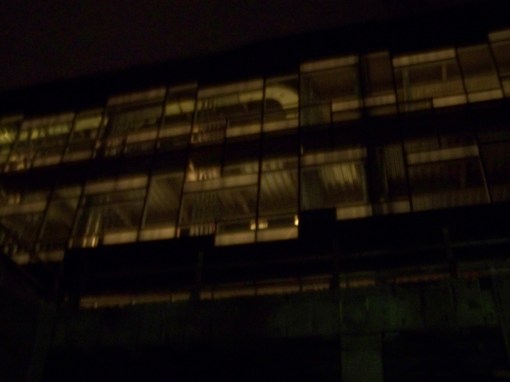
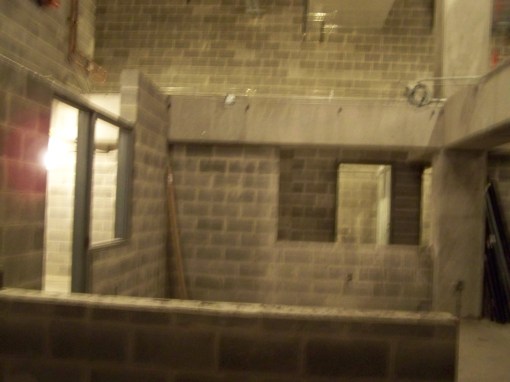
I do not condone sneaking into private property to take construction photos. That being said, if I receive them I’m more than happy to post them as the ones seen below. Most of the photos would appear to be of the parking structure in the lower floors of the building. Too bad some of the exterior photos are a little blurry.100_1848100_1849100_1865100_1850100_1854100_1862

 100_1853100_1855


The Cornell Daily Sun

21 10 2009

100_1899


So, I first thought about writing an entry on the Sun because of fortuitous circumstances. I happen to write in some small capacity for the Sun, but with the exception of one person (to my knowledge; most everyone else couldn’t care less), no one at the Sun knows that I write this blog. Occasionally, someone will ask “when was Mann Library built?” or “when is Milstein Hall supposed to finish construction”, and it’s really tempting to put in my two cents, but  for the most part I focus on my work and leave when I’m done.

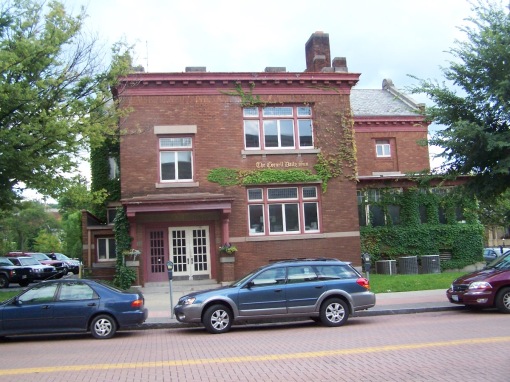
Regarding the Sun itself, the newspaper is based out of the former Elks Lodge building on the 100 block of West State Street, a block west of the Commons. The building itself dates from 1916, and the Sun renovated the building and moved into the 7,000 sq. ft. building during 2003 (prior to that, thsun rented space around the corner on Cayuga Street). The Sun is totally independent of the university, which is great because the school paper of the university I worked at this summer was nothing more than a mouthpiece for the administration and its cultish president, but I digress. The original Cornell newspaper was The Cornell Era, which was founded in 1868 and named as such because it marked the beginning of a great new era. Much to the Era’s chagrin, the Sun appeared on September 16, 1880, in the format of a four-page pamphlet-sized newspaper (Bishop 206).  The Era eventually became more of a literary magazine and shut down permanently in the late 1940s. The Sun has operated continuously since its founding.

The building itself is an interesting place ot visit. The main work area on the first floor has private offices, and a general work areas for contributors and writers filled with newspapers and article drafts from previous days. The upstairs has a spacious and stately wood-trimmed great room, which I suspect was probably used as a cermeonial/banquet room back when it was the Elks Lodge. I’ve never felt compelled to take photos inside the building, mostly because of the stares I would probably get.

Bishop, Morris. A History of Cornell. New York, New York: Cornell University Press, 1962. ISBN 0-8014-0036-8