The Roof is On Fire (Literally)

24 02 2010

I can’t say anything in particular inspired this post, except my slight, ever-present fear of the interior of Bradfield catching fire. Technically, there was a small fire in Bradfield on the fourth floor a couple of years ago, but thankfully it was quickly brought under control. Which, compared to some of Cornell’s history, is very, very tame as fire events here go.

The most notable fire on University property is fittingly the most well known, the Cornell Heights Residential Club fire in April 1967. Cornell Heights, now known as Ecohouse (Hurlburt House), was bought by the university in 1963 (its former use being a motel) and was being used to house students in an experimental program that would allow them to complete a PhD in any department in six years (which, for anyone who knows  plans on or knows people pursuing doctorate study, six years from college freshman to PhD is a pretty sweet gig if one could keep up with the work). The program began to be housed in the building in 1966, so they hadn’t even been there one full year when the fire occurred. The PhD program had 43 students, three faculty-in-residence and a faculty-adviser-in-residence, and the second floor held twenty-four senior and graduate women, for a grand total of 71 occupants. The fire started at 4 AM, when most residents were sleeping or busy pulling all-nighters.

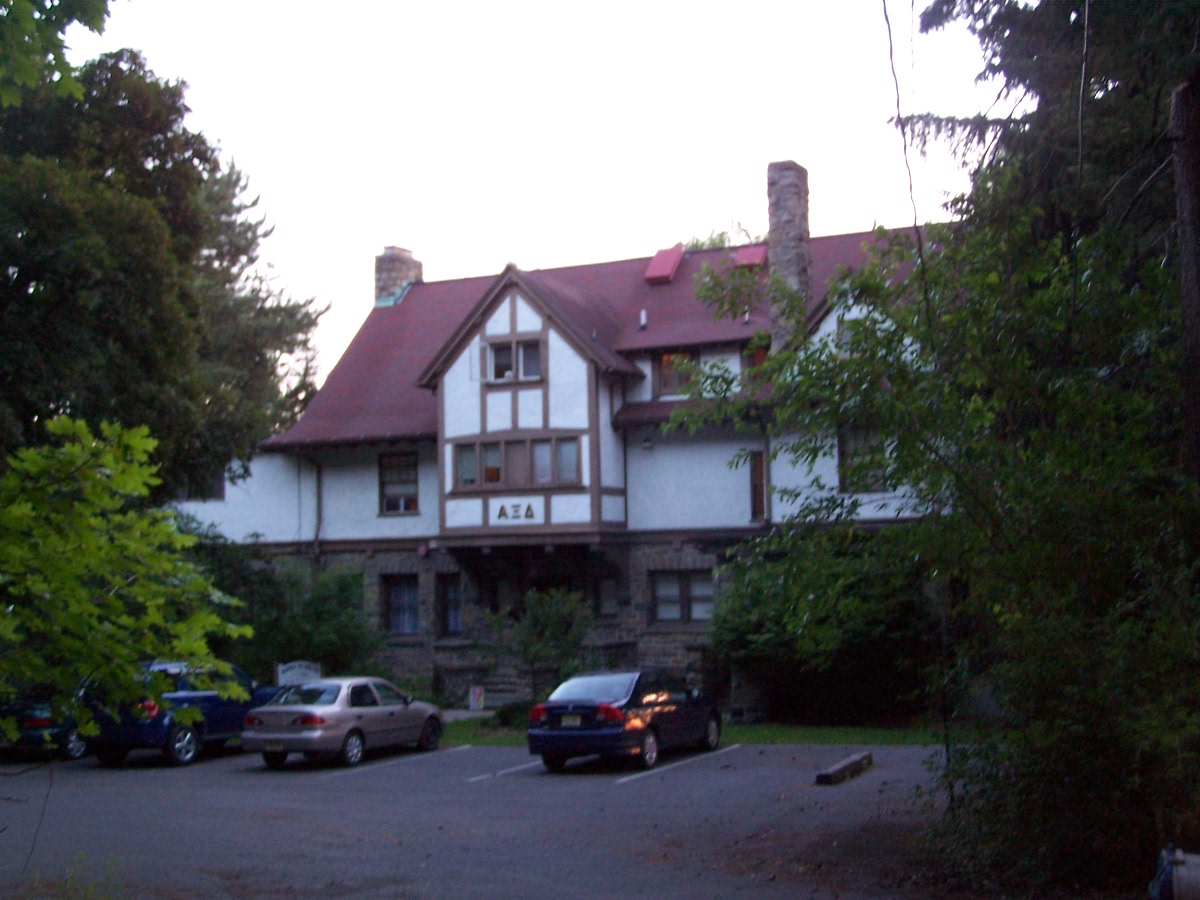
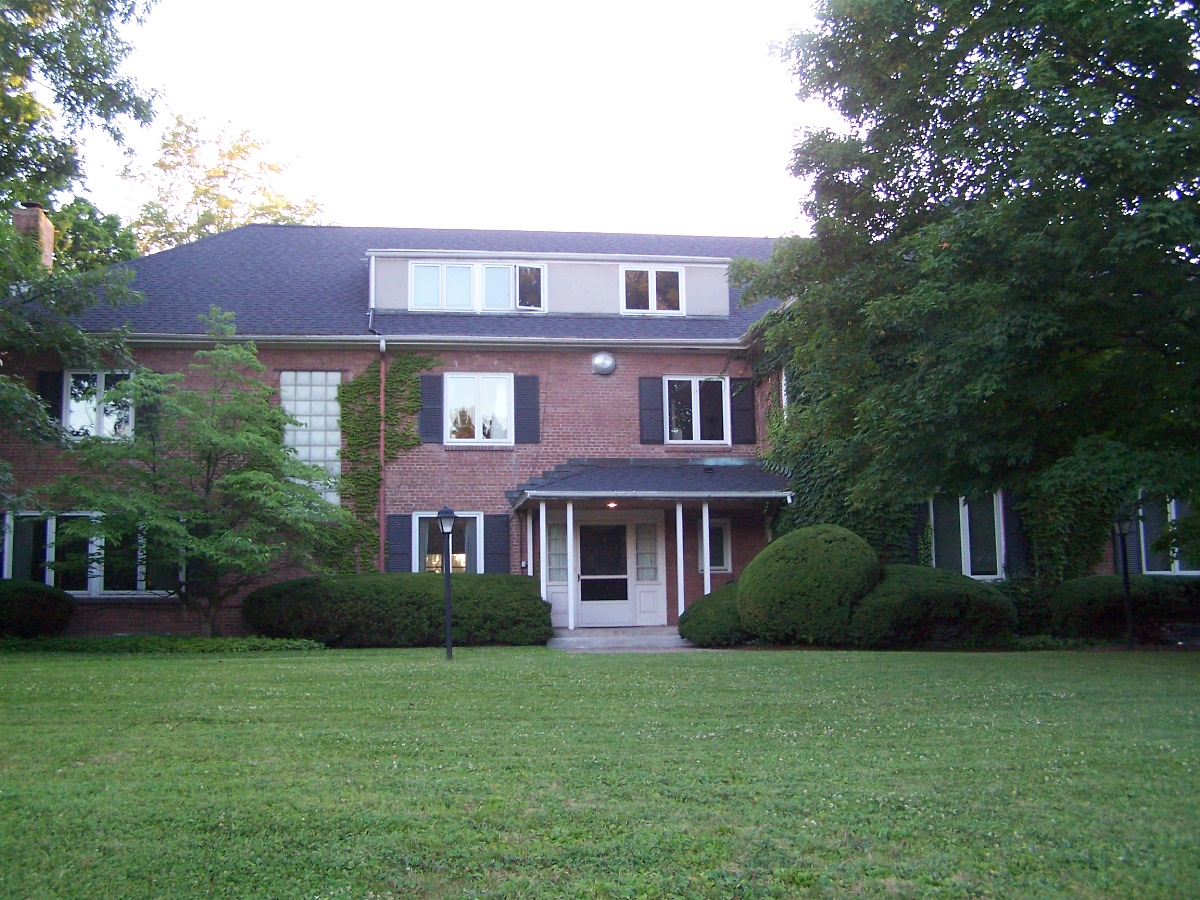
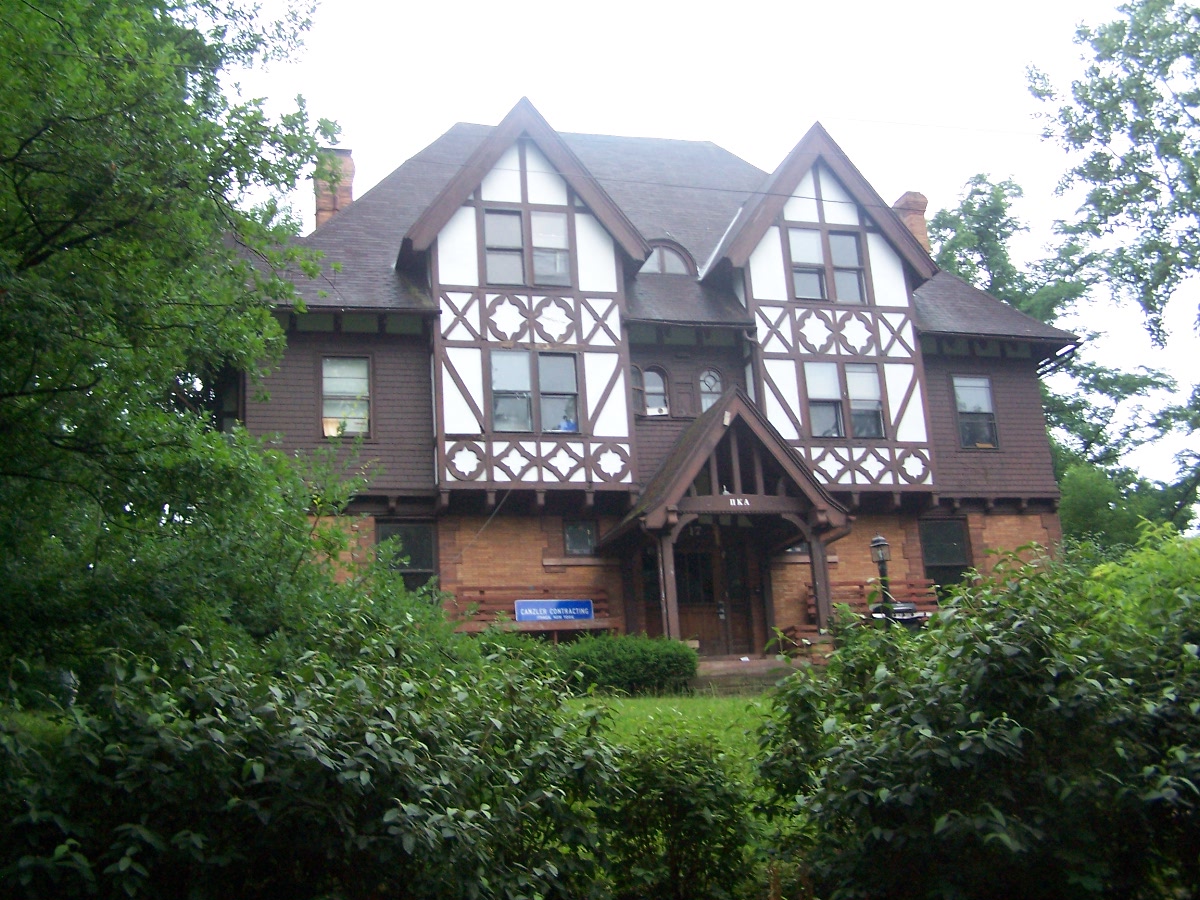
looks better from the outside, doesn't it?

Images property of Gendisasters.com

Well, the building was thoroughly modern by 1960s standards, which means that just about every piece of nondescript furniture inside was made of some toxic material that could be hazardous if ingested, inhaled, seen or most importantly in this case, burned. The fire caused a toxic smoke to be emitted from the plastic upholstery, suffocating the victims, and sending ten others to the hospital for smoke inhalation (52 others escaped unharmed). The lack of adequate fire exits, alarms and sprinklers, especially on the second floor, only exacerbated the situation. As a result of the tragedy, the university undertook a major overhaul of its fire safety standards.

The second deadliest fire wasn’t technically university property, but was associated with one of the fraternities. Chi Psi lived in a glorious mansion built for the insanely rich Jennie McGraw, and completed in 1881. Too bad the tuberculosis she had killed her just as she arrived back home to witness its completion. Well, the house was auctioned as part of the “Great Will Case”, bought by McGraw relatives who then sold off most of the furniture, and then sold the unoccupied house to Chi Psi in 1896.

The primary suspect in the fire of December 7, 1906 were oily rags in a broom closet and flammable varnish on the wood floors. Although the building was finished with stone, the wood-frame construction made the place into a hellish inferno. Most of the 26 brothers were trapped in the burning building, with some only escaping when the collapsing walls gave them opportunities (at least one man escaped by falling with the collapsing wall onto the snow below; others jumped three stories). Of the seven people who died, two fraternity brothers were killed when they failed to jump from the collapsing southwest tower, two more died when they ran back in to rescue others, and three volunteer firemen were killed when the north wall collapsed on top of them, and “slowly roasted to death” as a New York Times article of the day puts it.

Turning to less fatal events, the Chemistry Department suffers the dubious distinction of being the most fire-plagued program in the history of the university. First of all, their first building, the old Morse Hall, partially burned down in 1916. When Olin Lab was under construction in 1967, the exterior tarp caught fire while it was under construction, causing a wall of flame along the partially-completed building (luckily damage was minor). The building had another minor fire in 1999.
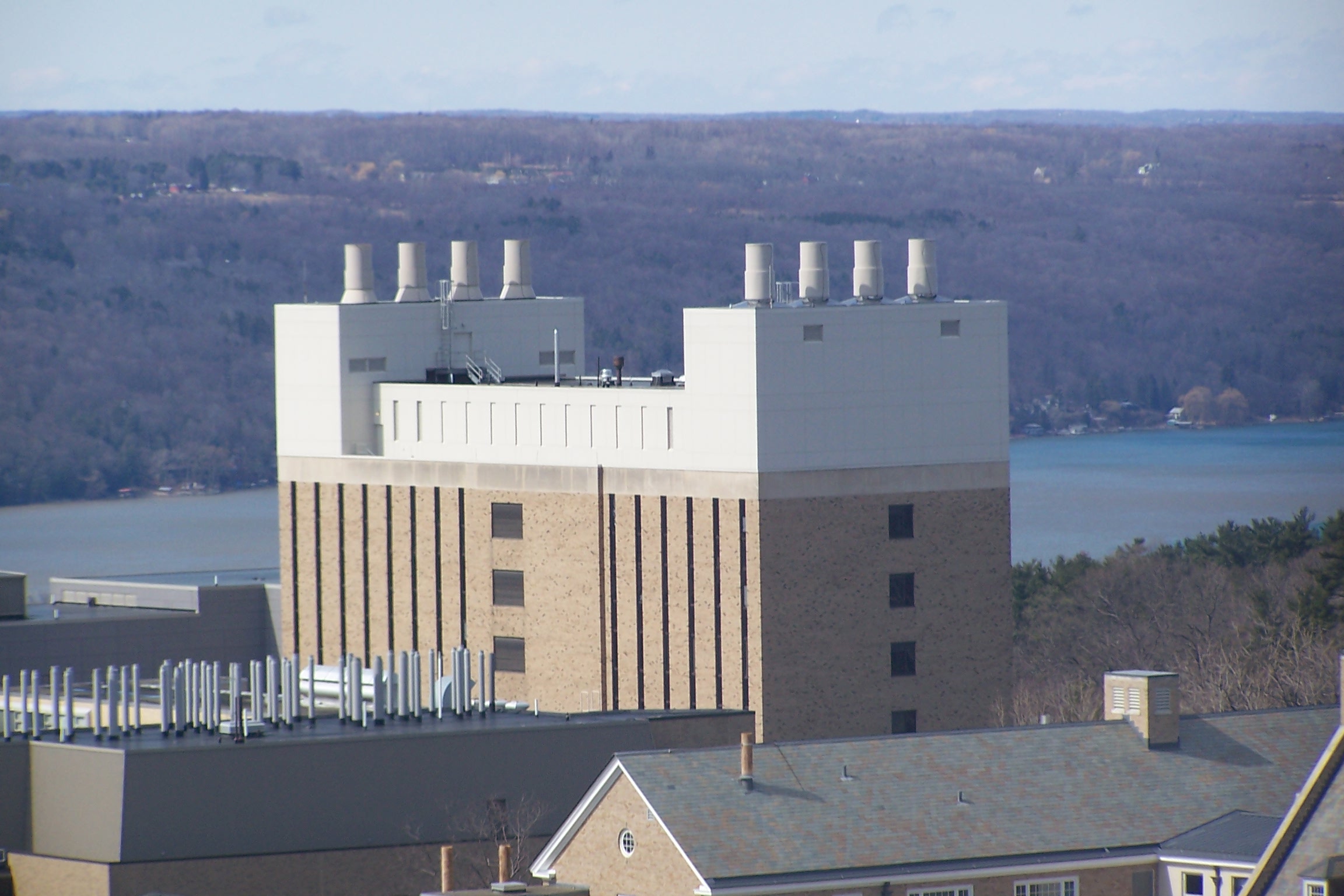
Now imagine a ten story wall of flames. You get the idea.

Tjaden Hall had a flat roof on its tower portion for about forty years because lightning set the original roof on fire in the 1950s and they had to remove it. Then you have minor fires in the dorms once every couple of years or so. Balch Hall had a minor fire in the fall of 2004, and one of the lowrises in the spring of 2006. I think Donlon Hall had a minor fire sometime in the past few years. Point is, they’re usually mild, little news-makers, enough to end up at the bottom of the front page of the Sun for a day, and life goes on.

Regarding the Greek end of things, things get a lot more interesting. A brief (non-exhaustive) list:

-A fire burnt down the lodge of Kappa Alpha in 1898.

-Delta Chi’s house burnt down in 1900.

-Delta Upsilon had fires in 1909, 1916, and 1919. The 1909 fire completely destroyed the house.

-Sigma Alpha Epsilon lost a house to fire in 1911.

-Alpha Delta Phi’s house burnt down in 1929.

-Alpha Epsilon Pi had a house burn to the ground in 1929.

-A wing of Zeta Beta Tau’s house was consumed by fire in 1939.

-Zeta Psi’s original house burnt down in the late 1940s.

-Kappa Sigma suffered significant fire damage in 1948.

-Tau Epsilon Phi lost the old wing of their house to a fire in 1961.

-Sigma Pi’s house was reduced to a burnt-out shell in 1994.

So historically speaking, fraternities are not the best places for fire safety. On the flip side, I’ve never heard of a Cornell sorority house burning down.


Cornell’s Unfortunate Year Continues

18 02 2010

Cornell sadly rings in the semester with the death of freshman economics major Bradley Ginsburg, whose body was found in the gorge yesterday morning. his untimely death marks the tenth such occurence among undergrads this year.


Downtown Ithaca Wants to Look More Like Sweden

10 02 2010

These days, and “progressive” urban development scheme starts with a much publicized and criticized plan. Ithaca, being that little bastion of liberal progressiveness, launched its own plan 18 months ago, and now the Downtown Ithaca Alliance has decided to share the fruits of its planning process for public input. The original plan can be obtained here.

The plan is a vision for downtown Ithaca in 2020. Ignoring the fact they spent a year and a half to discuss a vision ten years away, the plan has some merits and some lovely little conceptual drawings. Which I’m convinced were designed by someone who has a fascination for modern Scandinavian architecture.

The plan itself asks for an additional 200,000 square feet of office space, 500 residential units and more pedestrian traffic for retail outlets in the downtown area. Fitting these components in, along with staying within the city’s rather stringent zoning, is no easy task. Some of the other assets the Alliance would like to see downtown are a combined city-county building, a teen activities center and a fixed-rail trolley line.

First of all, good luck with the trolley line. The original line that went up East State Street and behind Cascadilla Hall closed in 1935. Putting a new one in within the next decade is a pipe dream because of the sheer financial costs associated with infrastructure implementation. Long story short, no one has the cash to put in a new fixed-rail line.

Some of the desired developments I am quite fond of. The conceptual drawing above is for a parking lot near the Cornell Daily Sun Building on West State Street. It’s a great redevelopment that looks to be a mid-size residential or commercial structure that stands out, but not ostentatiously, from the streetscape. The architecture seems to be modernist/International style with a couple historical throwbacks such as the cornice on the background building. To be honest, something like that would fit in well with Weill Hall as a future building at Cornell.

Inversely, this I despise wholeheartedly. This is a conceptual drawing for the city-county building. I never cared for the whole “ooh, let’s be edgy and not align the windows” theme, which was used on the West Campus Dorms. It’s like architecture by first graders. The space is a current parking lot next to Ithaca City Hall, which is actually the brown brick building in back.  The idea of developing this lot, I give a big thumbs up. Right now, I’m glad this is only a conceptual drawing.

I cannot stress how much I am a fan of the redevelopment of the Trebloc Building. First, let’s see if I actually bothered to take a photo of the current architectural turd:

It was in the shot unintentionally. For perspective, I took this photo on the corner of the intersection shown in the conceptual drawing. This brick POS is in the middle of Ithaca’s downtown. This building was built in 1974 as part of the urban renewal era, and was originally meant to be 2 floors, but the developers then decided to not add the second floor. It has also been the sight of multiple concepts, such as this proposal by Andrew Wetzler. The DIA suggests a 100,000+ square foot office building for the site; if it occupied the full site, this translates to about four of five floors. I keep my fingers crossed this may be redeveloped someday.

This redevelopment concept is for the parking area/ back of the Ithaca Journal Building. It’s a residential proposal that fits in somewhat to current zoning; the downtown plan does propose some minor height changes on some parcels, about a dozen going from 60 to 85 feet if certain incentives, such as affordable housing, are met. Love the idea, could care less for the design. This building looks like something out of my nightmares.

In the past year or so, a proposal was submitted to the RestoreNY program to redevelop the one-story Night and Day Building into a five-story building. Well, the proposal wasn’t accepted, but the vision is still there. This conceptual design makes use of the false second floor and adds affordable housing to the structure. Hell, I give it a thumbs up. If only a developer could make the project feasible.

For perspective, we’re looking east from the Holiday Inn, towards the new parking garage. This is one of the largest conceptual proposals, for a site currently used by a couple of small businesses and part of Pritchard Autos (where I once went as part of a project on EPA mileages; the owner, a 70-something man named Bill Pritchard, was super friendly). The project gets away with being so large because it is next to a massive parking garage and a ten-story hotel, so massing is appropriate for this area.

They may just be visions, but I would be just as excited as the DIA if these were to become real proposals in the years ahead. One can only hope.


Development Proposed for Eastern Collegetown

9 02 2010

http://www.theithacajournal.com/article/20100208/NEWS01/2080360/1126/news/Developer+seeks+town+re-zoning+in+Belle+Sherman

An underdeveloped piece of land between East Hill and Collegetown is the site of a proposed 26-unit single-family housing development to be called “Vine Street Cottages”. The land has been used by a trucking company since 1980, and was previously the site of an asphalt plant. The land has been marketed for the past year or so by several real estate agencies as a site for dense housing (suggested sale price: a cool $1.25 million for 3.4 acres. Mind you, this is Ithaca, so those prices are quite steep).

Photo Courtesy of Google Images

The housing is to be designed similar to the older homes in the nearby Fall Creek neighborhood, and sell for about $300k. However, the land is only zoned to hold ten lots, not 26, so a zoning appeal has to be filed and public discussion has to be undertaken. Which leads to comments like this one:

“…whose parents live on Vine Street, said the proposed development would be too dense, and the asking prices ‘are unrealistic for this area.'” A mature tree line currently buffers neighbors from the trucking operation, but all the trees would have to be removed to accommodate that many units, he said…”

I’ll give it one thing – the asking price is steep. A 1900 sq ft., 3-bedroom, 2.5 bath house that is LEED certified seems like it should only go for 200k-250k in the area. As for being too dense, apparently the joys of the frequent traffic of 18-wheelers up and down Mitchell Ave. outweigh 26 single-family houses. It’s also next to Maplewood Park, which is owned by Cornell and much denser (Maplewood Park is on the site where Vetsburg, Cornell’s housing for vets and their families, was originally placed after WWII). Cornell has its own plans to redevelop Maplewood Park within the next several years (assuming the budget kinks are worked out).

Speaking of which, the company that wants to develop the site, Agora LLC, is headed by Toby Millman, Cornell Class of 1992.

It would seem to be that this is a big win for Ithaca. The housing is intended for permanent residents and follows new urbanist principles, so it’s eco friendly and responds to concerns of students overrunning the area. But apparently, some folks think that a trucking company is better.


New Sorority May Be Coming to Cornell

6 02 2010

Students Push for New Sorority

February 4, 2010 – 1:51am
By Dan Robbins

A new sorority may be coming to the University if a group of roughly 30 women are successful in their efforts to recharter Delta Phi Epsilon, which closed its Cornell chapter in 2003. Composed mostly of transfer students and women who rushed sororities but were not matched with a house, the group has already begun planning social events, meeting with Greek Life and organizing philanthropic drives.

Molly McMahon ’12, who was a member of Delta Phi Epsilon at Monmouth University, before she transferred to Cornell this semester, is heading the movement and is the only woman in the group previously affiliated with Delta Phi Epsilon.

“At Monmouth, it was a really wonderful experience for me, and I just want to bring that here and extend that to other girls,” McMahon said.

She chose not to rush this semester because she felt joining a house right after transferring would be overwhelming, especially since many women participating in formal recruitment already knew each other. Since rush week, McMahon has talked with other students interested in founding a new sorority. The group has held social events, including mixers with fraternities, and participated in fundraising efforts like the benefit concert, Hands for Haiti.

However, founding a new sorority chapter –– formally known as “chapter extension” –– is a lengthy procedure over which McMahon and the group have little control.

“The Panhellenic Council must begin this process with an extension exploration committee to assess the needs of the female students at Cornell and the current health of the Panhellenic community,” Laura Sanders, assistant dean of fraternity and sorority affairs, explained in an email.

If the committee finds a need for another sorority, Cornell’s 11 current chapters would vote on its potential viability, after first consulting their respective national headquarters. The National Panhellenic Council requires at least a three-week period between the announcement of the vote and the actual balloting.

If the chapters vote in favor of extension, Cornell’s Panhel contacts sororities not represented on campus to assess their interest in installing a chapter, Sanders said. Of the 26 organizations that are part of the NPC, those interested in extension then come to Cornell for an interview.

McMahon said she recently talked to officials from Delta Phi Epsilon who were “very supportive” and offered guidance about the extension process. With only 45,000 members internationally, Delta Phi Epsilon is looking to grow, McMahon said. The sorority already owns a house on The Knoll, where it was initially chartered at Cornell in 1962.


Although an exploratory committee, formed by Panhel last spring to determine if there was room for a new sorority, supported the extension, the national organizations with local chapters at Cornell blocked attempts at chartering a new house.

“The overwhelming response was that they felt Cornell was not yet ready for another sorority,” Sanders said.

Many of the national organizations said that Cornell’s current chapters have not fully used informal recruitment, a period outside formal rush when houses with vacancies can extend bids to women who have attended Cornell for at least one semester. Sororities are usually eligible for this type of recruitment when members graduate early, or when they pledge as sophomores or juniors and consequently graduate before the rest of their pledge class. The houses can offer bids whenever they like during the process. In the last two semesters, four houses at Cornell qualified for informal recruitment each period, but not all participated or filled their vacancies, said outgoing Panhel President Alison Ewing ’10.

Panhel plans to form another extension committee this semester, Ewing said.

“Whether national organizations support extension this time depends on whether the concerns they had last time are resolved,” Ewing said. “It’s hard to say this early whether the use of informal recruitment has allayed their concerns.”

Last year, officers from the national organizations with sororities on campus also feared that a new chapter would use informal recruitment more heavily than existing chapters. This could create a stigma and hurt existing houses that do not participate in informal recruitment. But Ewing said this does not mean that an attempt to recharter Delta Phi Epsilon will automatically fail.

“There were women at the end of this past formal recruitment who didn’t get matched to a chapter and we still have very large pledge classes,” Ewing said. “So there might be potential, but we have to decide whether adding a new chapter would be viable and not hurt existing chapters.”

Although Panhel voted to recharter Alpha Xi Delta in 2004, McMahon feels there is definitely room for a new house.

“There are only 11 sororities and over 40 frats, so I don’t know why they wouldn’t see the need,” McMahon said. “We really have plans and goals and hopefully it’ll work out.”

***

So, this was no surprise. If they were here for 41 years, and they still own a house here, I’m sure their national would be most receptive to a recolonization at Cornell. Thing is, it’s not so easy because this isn’t following standard procedure. So these ladies are in for a lot of red tape and work on their parts.


Cornell’s Morbid History II: A (Sadly) Busy Year

30 01 2010

Glancing over at Elie Bilmes’s Fast Lane Blog, he made mention of the most recent student fatality from Cornell University, that of sophomore Mark von Bucher, who succumbed to injuries sustained in a skiing accident in Utah over winter break. He goes on to note that this is the eighth student fatality this year.

Offhand, let’s goes through that list. The Daily Sun makes it easy because it all gets placed on the “tragic” node. Respectfully, the Sun does not display ads in this node either due to the nature of its content.

1. David Yang ’11 was killed in a car accident in Missouri in late August.

2. Warren Schor ’11 succumbed to complications related to contracting the H1N1 “Swine Flu” Virus in mid September.

3. Boon Jim Lim ’13 was found dead in his dorm room in late October. The family has chosen to not disclose the cause of death.

4. Rion Wight ’09, who had been on academic leave for the past two years, died unexpectedly in late October, a week after the death of Boon Jim Lim. No cause of death was released.

5. Lucas Wooster, a 32-year-old Ph.D. student, died unexpectedly in early November. His death has been speculated by some to be a suicide.

6. Adam Frey ’11 lost a two-year-long battle to cancer the day after Christmas.

7. Clayton DeFisher ’11 died after suffering cardiac arrest at a New Year’s celebration.

8. Oliver Schaufelberger ’11 died at home around January 13th. The family has chosen to keep the cause of death private.

9. The aforementioned Mark von Bucher ’12.

If you count the Ph.D. student, that makes for nine fatalities. Comparably, the tragic node records three student fatalities for the entirety of the previous academic year.

This has been a truly unfortunate year for the student body of Cornell.


The Rush Week PR Disaster

24 01 2010

Pike being booted is bad enough. But it looks like sororities haven’t been able to avoid trouble either.

If anyone has read Ivygate or the Huffington Post lately, apparently Pi Beta Phi’s dress manual for sisters during rush week was leaked, substantiating just about every single embarrassing sorority stereotype known to man. Not that everyone didn’t know there was a dress code, but the shallowness of it all really echoes with the sister who wrote the six-page guide. It’s not something that Pi Phi will get in trouble for since they didn’t do anything wrong, but it’s an embarrassment and a public relations debacle.

Watch out for those dress checks, ladies.

Speaking of which, this puts Greek Life at Cornell in an unpleasant situation. We have Pike and Pi Phi caught committing activities that portray the darker side of Greek Life by exposing some of the excessive drinking and superficiality, the kind that anti-Greek zealots thrive off of.  I know I made the joke a couple of entries ago about how I hope my fraternity sends no one to the hospital during rush week, but this is ridiculous. The goal of recruitment is to invite those interested into Greek chapters, not embarrass ourselves in a stereotypical shit-show that will have repercussions through the system. The reputation of the greek system at Cornell has taken a major hit this week, and Panhel and the IFC need to something, now. Advertising the high points of Greek Life in Sun Articles and OFSA publications is only a small part of the answer. Open and extended discussion of these events will be required at the meetings of the respective councils, and ways to improve upon it. Even if they don’t (which I’m being honest here, and know that things won’t really change), it will offer some good PR.

I know that some of the comments I’ve seen on facebook and other sites question the harshness of immediately stopping Pi Kappa Alpha’s recruitment and kicking them off campus. Let’s be frank – they deserved it. Yes, they sought the freshmen medical attention. Congratulations, by not letting them die they just avoided persecution under NYS law. However, the brothers still let it happen in the first place. Did not monitor the situation, did not prevent the freshmen from drinking to the point of poisoning, did nothing until their lives were actually in danger. The freshmen were stupid, but regardless of that the brothers should have been smart and prevented the situation from occurring. But they didn’t. They deserve every punishment that Cornell, the IFC, their national org, their alumni and anyone else delivers upon them.


Stupid Frat Tricks II: How to Screw Up Recruitment

23 01 2010

So I checked my email today and received the following excerpt in an email from the IFC:

“I am writing to provide you all with an update of events that occurred last night that resulted in a fraternity having their university recognition temporarily suspended.  The suspension is in response to a recruitment event at the fraternity house that resulted in the hospitalization of three students due to alcohol poisoning.  These students were transported to the hospital by brothers of the fraternity late last night.  The Ithaca Police Department responded to the event as well and are currently investigating along with Cornell University Police.  This incident is being taken very seriously and will likely have repercussions that effect the entire system.  At this time the fraternity has been instructed to desist from all activities including recruitment.”

While the chapter at least got them medical attention, the act was stupid, dangerous and intolerable. To the point that the fraternity (rumor mill suggests Pi Kappa Alpha) has lost recognition and will not be allowed to have a pledge class. Well, considering the similar incident that happened with Sigma Pi a couple of years ago, I guess this is proof that history has a habit of repeating itself.


Money and Morons

13 01 2010

So, I’ll be on a little hiatus for the next several days as I will be attending a conference, but I figured I’d share two conversations I had recently.

The first was with a friend of mine whose job involves educating student athletes on how to conduct phone fundraising. I asked her how they were doing.

“Well, they only have like a couple days each to do it, but ladies hockey is only a thousand dollars from their goal so they’ll probably make it. The guys team wouldn’t have come close to their goal if some guy didn’t pledge $15,000.”

“Wait, someone pledged a $15,000 donation over the phone?”

“Yeah, I think it was one of the largest single donations the phoneathon has ever received.”

EDIT: The best part was when I found out this evening from that same person that the men’s hockey team raised over $55,000 in two days. Of course, half of them became ill, but still, that’s a lot of money.

Someone definitely has some money to give away this recession. It could be that he really likes Cornell men’s hockey, or in light of recent news, he could be trying to buy someone’s enrollment.

Conversation number two was with a friend who is a member of an IFC fraternity. I asked if he was looking forward to rush.

Eh, whatever happens happens. We have a few guys we know are coming back for us, but we’ll see how it goes. It doesn’t help that one of our sophomore guys got drunk and punched this one freshman in the face because he thought he was annoying.”

On that note, physcical assault of freshmen is not the best way to recruit. Like last year, I’m keeping my fingers crossed that I don’t come back to find out someone set my fraternity’s house on fire or sent rushees to the hospital.


An Employee’s Revenge?

12 01 2010

Truth or fiction?

http://www.theithacajournal.com/article/20100111/NEWS01/1110344/Former-employee-accuses-Cornell-University-of-unfair-admissions-practices

A former Cornell University employee threatened to reveal unfair admissions practices in an attempt to settle a personal lawsuit regarding overtime, Cornell officials allege.

Eldred Harris, a former reunion campaign officer in the Alumni Affairs and Development Office, is suing the university for $30,000 in overtime fees. Cornell officials allege in court documents that Harris said he had information about a supposed university admissions practice in which mediocre students were offered placement in return for large donations, and threatened in March 2008 to reveal it if a settlement was not reached.

Harris’ lawyer, Edward Kopko, said the matter of Cornell’s admissions practices is not related to the overtime issue and the university is using it to obfuscate the matter.

“We are only concerned with (the Fair Labor Standards Law) and labor law,” Kopko said. “The case has nothing to do with the distractions that were raised by Cornell pertaining to admissions. I assume Cornell is doing it to undermine Mr. Harris, but it actually has nothing to do with this case.”

Associate Vice President for Alumni Affairs and Development Richard Banks said in an affidavit in the case that Harris’ then-lawyer, Seth Peacock, wrote to Cornell Vice President for Human Resources Mary Opperman on March 12, 2008, outlining Harris’ grievances, which included being terminated for persistently pushing the AA&D office to address what he termed “neglect and under-investment (of) Cornell’s diverse constituents,” and giving a deadline for reaching a settlement regarding the overtime fees.

“To highlight one of many of Mr. Harris’s significant concerns, I have included three disturbing e-mails with this letter,” Banks quoted Peacock’s letter as saying. “They illustrate quite clearly that for majority donors, there is a threshold gift level that impacts admission decisions despite all of the lofty protestations to the contrary. The first sets forth the price of admission to Cornell; the second, if the price is paid even a mediocre student will be admitted. Both students were admitted to Cornell.

A third e-mail is from an African-American alumnus who was complaining of his daughter’s rejection from Cornell despite what he regarded as her “clear qualifications and his giving potential.” According to Banks’ affidavit, Harris asserted in Peacock’s letter to Opperman that this alumnus is still not tracked by the AA&D office. Harris’ complaint in Tompkins County Supreme Court includes several e-mails between him and his supervisors at Cornell, but does not include the e-mails mentioned in the quoted letter to Opperman.

Quantcast

Peacock’s letter, as quoted by Banks, goes on to say that the issue of equitable access to higher education is one to which Harris is “highly sensitive” as an African-American Cornell alumnus, and that Harris is “prepared to forward all one hundred plus messages to … the New York Attorney General’s Office, numerous media outlets and most importantly he is ready to share these messages with Cornell’s twenty-five thousand or so Asian, African-American, and Latino alumni of which I (Peacock) am one.”

University Counsel Wendy Tarlow responded to Peacock March 13, 2008: “Please be advised that the use of confidential University documents by your client violates the confidentiality agreement that he signed while employed at Cornell. Your threat to use these documents also appears to constitute extortion under New York law. Moreover, your own actions in writing the letter dated March 12, 2008 (to Mary Opperman) appear to violate the New York Code of Professional Responsibility.”

Tarlow gave a deadline for the documents to be returned to Cornell by the next day.

Banks and Harris did not return calls regarding the case. A spokesman for Cornell’s press relations office said she could not comment on the case since it is still in litigation, and that she was not aware of practices within Alumni Affairs and Development. Harris is a member of the Ithaca City School District Board of Education.

Kopko said the matter of Cornell’s admissions process and Harris’ exchange with the university regarding the e-mails have nothing to do with the case Harris has brought against Cornell and are an intentional distraction Cornell has “injected into the case.”

“The issue in the case is simply overtime,” Kopko said. “It is a (Fair Labor Standards Act) overtime and labor claim. … When you read the documentary evidence, they are trying to distract the court from the fact that this is a labor law issue by referring to the circumstances surrounding (Harris’) separation from Cornell.”

Cornell filed a motion to dismiss the case Dec. 18.

***

Well, if there’s any truth to the allegations, then I guess Sandy Weill’s grandkids will have no problem getting into Cornell.