The (All Too Late) Ithaca Projects Update

24 11 2010

Since I have no life as a grad student, following progress in the Ithaca has been a little difficult. But, I figured it was time to do an updated brief list. Ithaca has made it through the recession largely unscathed (thankfully), thanks to the stable college-based economy, and various projects are in various planning and development stages throughout the area. For the purposes of this entry, I’m ignoring the projects going on at Cornell and IC.

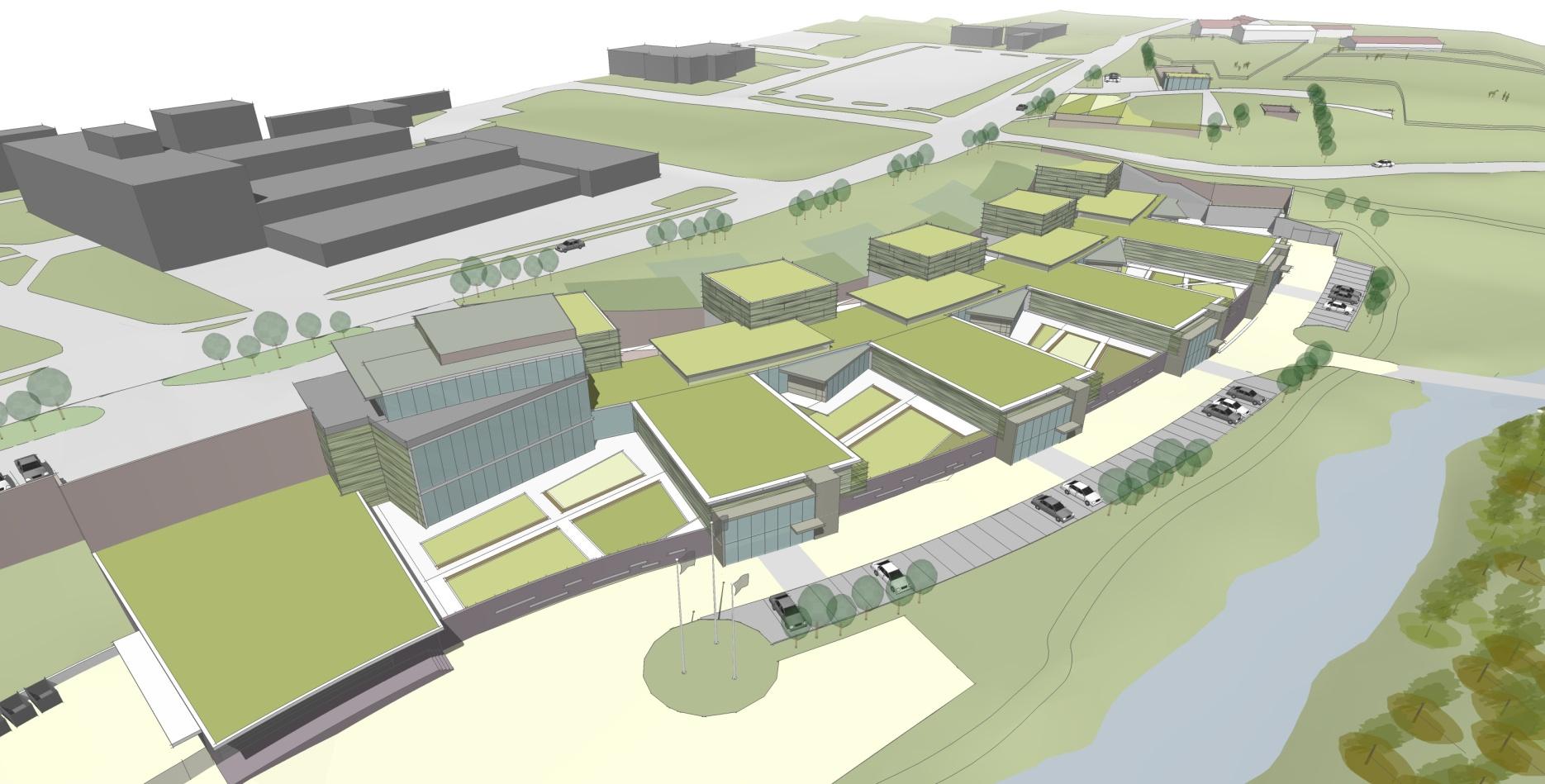
First off, most of the larger projects are delayed. The Hotel Ithaca is waiting for a bank loan, but given the market that could take a good year or two before a loan is secured for the 10-story hotel.  In a similar boat, the 7-story Cayuga Green condos are delayed until sales pick up and financing is secured.  The six-story, 52-unit apartment building planned for the site of the Women’s Community Building is also delayed, having failed to get a grant from the state. It will be at least one year before financing is secured and construction can begin for that project.About the only going on in the heart of the city right now are the redevelopment of the Petrune Building and the starting phases of a renovation of the Ithaca Commons.

Land remediation and site prep is still underway for the Ithaca Gun condos, which are slowly (barely) progressing towards construction of what may now be either 33 units, or increased to 45 units of “market-rate” housing. On the 600 block of West Seneca Street, a 24-unit, 3-story apartment building has been approved and site prep is to begin in the near future.The Kitchen Theatre finished construction and moved into their new digs on West State Street.

Over in Collegetown, works continues on the 589-unit Collegetown Terrace proposal, which is still making its rounds after agreeing to preserve the Williams House on State Street in exchange for getting permission to demolish the old nurse’s dormitory (Delano House). Even if the project starts this summer, full build-out will take 22 months, so expect no earlier than a mid-2013 completion.  Over on Eddy Street, plans have been approved for a24-unit, 41-bedroom 5-story apartment building next to the Souvlaki House, and construction will begin next summer. A 5-story building on the 300 block of College Avenue remains in the proposal stages. Closer to East Hill, the 4-story Coal Yard Apartments expansion is in site prep, and the now-approved Vine Street Cottages project removed three homes from its plan, leaving 19 houses and 10 townhouse units for the parcel near Mitchell Street.

Down in big-box land, Walmart has finished their expansion into a Supercenter, and Tim Horton’s is seeking approval for a store on what is now a parking lot near Buttermilk Falls.The parcel where Olive Garden was proposed is once again up for grabs. Local rumor mill had it that the land was still contaminated (it was once the site of an auto repair shop, and gas and oil and other hazardous compounds might’ve seeped into the soil deeper than first thought).

Out in the West Hill area and the town, Ecovillage is in the home stretch for approval for their third 30-unit village (TREE), and 106 townhome units (Holochuck Homes site) are approved for Route 96 near the medical center. A couple of suburban subdivisions (the Goldenrod 30-unit division, and a 22-unit INHS project called Holly Creek) are planned/approved. 22 units of senior housing are to be built near Ithaca College, and it was confirmed that the 82-unit, rather terrifying and Soviet-looking Maple Hill Apartments on Maple Avenue will be demolished when the property is returned to Cornell in 2013. Cornell has long-term goals to redevelop the site into mixed use, according to its master plan.

Over in suburban Lansing, there’s some small housing developments and a new locally-owned supermarket planned, but the big thing out there is the proposal for an 82,000 sq ft BJ’s Wholesale Club next to the mall, with 12 units of senior housing and a bird sanctuary on adjacent property (basically because the project is seeking tax-exempt status and need to offer a community benefit to get the break). The 69-unit Woodland Park project doesn’t look like it will be approved anytime in the near future.

Hopefully I’ll have more and more substantial news to write about in the tidbits entries in the upcoming months. I need a distraction from my life. Especially when I grade exams and a student thinks it’s cute to bubble “C” 40 times (he received a 15%).


News Tidbits 9/25/10: Development Planned for 307 College Avenue

25 09 2010

This is slightly annoying. I was away from my computer yesterday and today as a result of my graduate work and then coming straight out to Ithaca, so I never bothered to read my Ithaca/Cornell newsfeed. So it’s bothersome that I found out about this relatively later than usual. Anyways, here’s the article from the Daily Sun:

http://cornellsun.com/section/news/content/2010/09/24/developer-seeks-approval-new-c-town-building

September 24, 2010
By Jeff Stein

A proposal to transform the middle of College Avenue hinges on developer Josh Lower’s ’05 controversial request for a Board of Zoning Appeals variance, which would exempt a building’s development from city parking laws.

Lower said his proposed development project at 307 College Avenue –– next to Jason’s Grocery & Deli –– would demolish the existing building and create more than 60 new apartment units. Lower also hopes to remake the area into a highly trafficked “pedestrian arcade,” filled with street-level storefronts that would connect College and Linden Avenues.

City officials are divided on whether the Board should grant Lower the variance. Under the city’s current parking ordinance, every two housing units built must be matched by the creation of one parking spot.

Lower said that building the parking spaces, which must be within 500 feet of the site, was “not practically or financially possible.”

“We’ve tried to meet the law but cannot,” Lower said.  “There’s just not enough space.”

Ithaca Councilmember Ellen McCollister (D-3rd Ward) expressed concern that there would be a lot of “spillover” for surrounding neighborhoods if the variance was given.

McCollister also said the variance would establish a dangerous precedent: “If you grant a variance to one property owner, how do you not grant [it] to any other property owner?”

If one developer is granted an exception, “all hell breaks loose,” as other developers would expect the same treatment. “We need to treat every developer consistently and equally,” McCollister said.

Lower said his plan would compensate for the lack of new parking spaces by providing his residents with a car-share membership and free bus passes as part of the lease.

“We’ll create a building that fosters … sustainable modes of transportation and encourages people to bike more, walk more,” Lower said. In reference to a proposed pedestrian walkway, Lower said, “We’re making privately-owned space accessible and usable for all.”

McCollister was not convinced. She called Lower’s replacement for parking spaces a “very ill-defined, nebulous proposal,” saying it was “not a real plan for how he is going to do it, in perpetuity, for every resident.”

Partly because there is “more supply in retail than there is demand” for Collegetown, McCollister is “not convinced the pedestrian arcade is as valuable an amenity as it’s being portrayed.”

Board of Zoning Appeals member James Marshall shared McCollister’s skepticism about Lower’s replacement plan in exchange for a variance, calling the lack of parking spaces in his proposal a “significant deficiency.”

“He’s proposed some measures that might encourage people to use public transportation or bicycles, but no one knows how successful he’ll be,” Marshall said.

Stephen Beer, chair of the Board of Zoning Appeals, said he worried that there was no provision for enforcing Lower’s suggested replacement for the parking spaces.

Lower responded that “it would be a requirement written in the lease.”

Eddie Rooker ’10 (D-4th Ward) said he and Svante Myrick ’09 (D-4th Ward) both supported the project.

Rooker said the development is “going to be beneficial to students and the city,” naming studies that “point to the fact that we need more housing in the city” given “pretty high pricing all over the city.”

Rooker said the project would fix the need for a “well-lit pedestrian walkway connecting College and Linden Avenue,” where “people now have to go between people’s yards when they’re not well-lit.”

Rooker said the proposal could make the area in front of 307 College Avenue a new hub for TCAT, shifting the center of Collegetown further south.  He said that TCAT wrote a letter to the city in support of the project.

Lower, who lives in the neighborhood, said that “we really looked at a lot of scenarios to try to do something else with the property,” but that nothing else was viable. He said that he is currently losing money on the property.

McCollister responded that one of the considerations for the Board of Zoning Appeals was that the variance request not be in response to a “self-imposed hardship.”

“I think he does have a financial hardship, but that’s because he paid too much for it … rather than some externality that created that financial hardship,” McCollister said.

McCollister added that the Board of Zoning Appeals should wait until a decision is made about an “in-lieu of parking fee” suggested in the 2009 Collegetown Urban Plan & Conceptual Design Guidelines. The proposal, which is currently being developed, would specify a fee below the cost of providing on-site parking that developers could pay the city in lieu of building parking spaces. The Collegetown plan says the fee could then be used to help the city fund alternative transportation modes.

“I can only base my plans on what is law today,” Lower responded.

Rooker agreed, saying, “We can’t constantly rely on what might be happening,” and that he “would rather see something like this than a one time donation to general fund” anyway.

Lower added that waiting for the law to pass could have a big impact on his finances, since “the building has to be done based on the academic year.”  “If the building is not ready to have [residents in it] before classes start, it sits empty for the rest of the year.”

If approved, his plan is to start construction in June 2011 and have the building ready for residents in the Fall of 2012.

***

So, the summary is this:The guy wants to build a medium-sized apartment building but doesn’t want to include parking. The issue lies with the possibility that residents would just park their vehicles on the streets and clog local roads, and finding viable options to keep that from happening. A zoning variance is required due to the lack of parking, and without it the project will not proceed.

A few extra details; the development would be a 60-unit building with a retail base. Guessing from the rendering and from the height limit there, it would be about five stories. The current building on the site used to be occupied by a drugstore, but the store closed in late 2006. With the exception of the space occupied by Ithaca Carshare, the retail portion has been empty since.

The argument on the parking issue is reasonable and legitimate. A lot of students maintain cars, and the overly entitled ones may still try and maintain a vehicle nearby, thus creating parking issues for the building’s neighbors. While the project would definitely add density and needed residential space to inner Collegetown (and definitely makes use of New Urbanist planning), the lack of parking is a major hurdle. Personally, I like the idea of the project, but unless he can make absolutely clear what he’s going to do to keep students from bringing vehicles to an area with no space for them, and be held to that “in perpetuity”, I would be leery of its approval.

The architect is a small local Ithaca firm founded about seven years ago, John Snyder Architects.  Looking at the website, it seems most of their work has been for educational facilities or interior spaces, and the style tends to be modernist with limited detailing, instead playing off of the geometric forms of the structure itself. I’m very curious to see the whole design of what would seem to be the firm’s first large residential building. At the very least, it least it won’t be another Sharma Architects proposal; a little variety does wonders.


News Tidbits 9/24/10: New Fraternity to Open on Campus

23 09 2010

Arguably, it may not be a good time for expansion, but that’s it’s own issue. The Cornell Daily Sun has published an article discussing how the IFC is inviting the fraternity Phi Kappa Sigma (known on many campuses as “Skulls” due to their insignia) to speak to the IFC general body before a proposed recolonization this upcoming spring.

Most apparent is that this illustrates how much easier it is for a new fraternity to open on campus vs a new sorority. Sororities have to have the Panhel’s benediction and have to compete against other sororities for the opening (like what’s currently going on for the new 12th sorority; five sororities are narrowed down to three, who must then give presentations before Panhel decides which sorority to offer the position to). For a fraternity, a national organization (i.e. you don’t necessarily need an interest group) has to express interest, and a good plan of execution on how to establish itself on campus.

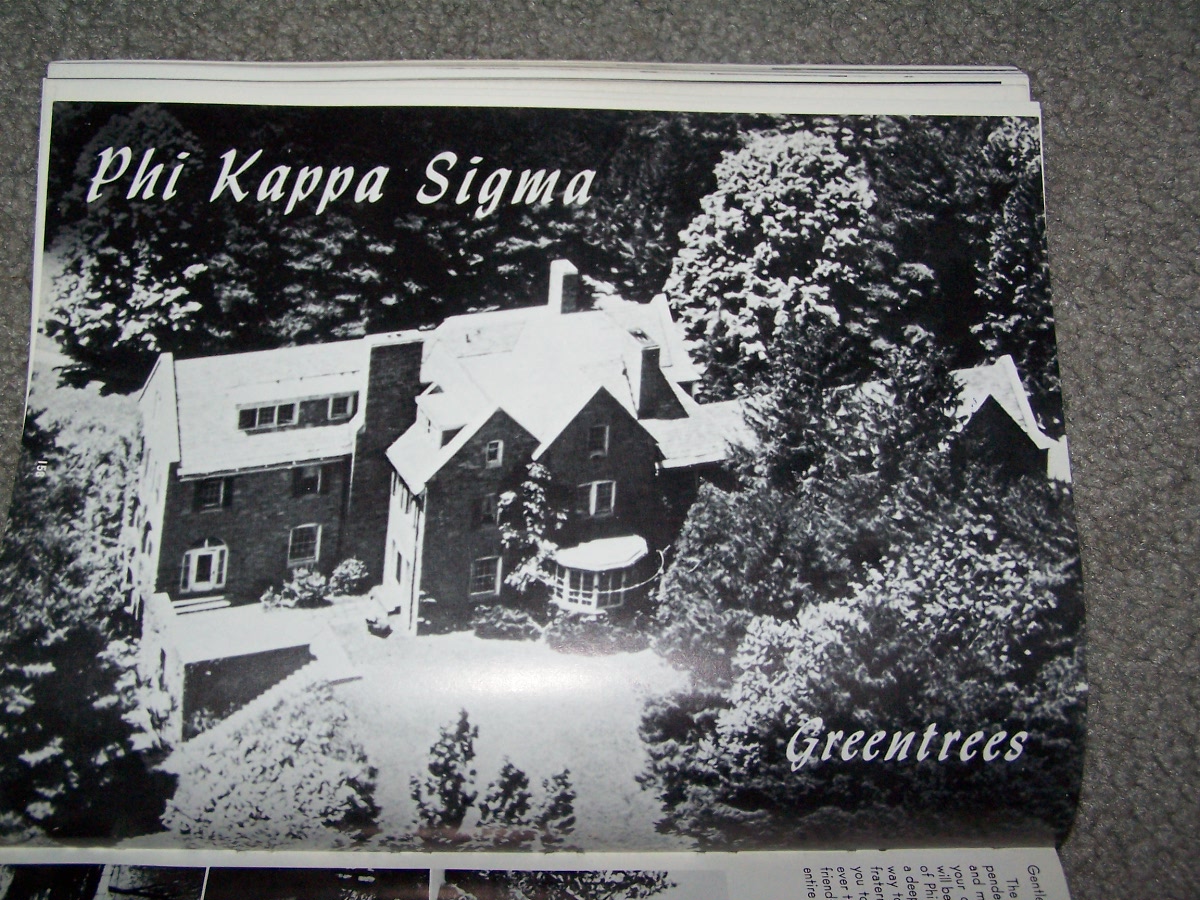
A little bit of background on Phi Kappa Sigma. They were a fraternity that previously existed at Cornell. The Cornell Chapter was founded in 1891, but closed in 1990. The current Pi Kappa Phi house at 55 Ridgewood Road (“Greentrees”) used to be occupied by Phi Kappa Sigma (Cornell owns the house; on the facilities website, the house is still identified as Phi Kappa Sigma). The house, built around 1900, was the property of George Morris of the Morris Chain Company (later Emerson Power Transmission) until 1935, when it was sold to Phi Kappa Sigma. Sometime between 1935 and 1990, the Skulls sold the house to the university (likely for tax and maintenance purposes correction: It would seem that Phi Kappa Sigma put the house up for sale in 1990 and it was purchased by Pi Kappa Phi). After the Skulls vacated the premises in 1990, Pi Kappa Phi, which was recolonizing at the time, moved in the following year. I’m not sure how a recolonization may affect Pi Kappa Phi’s living situation. The fraternity is similar to Phi Delta Theta in that their newly established or reestablished chapters are dry houses.

Hopefully, they’ll have a better go at things than other recently recolonized chapters. Theta Xi failed to make significant headway and from what I’ve heard, has gone dormant once again. Kappa Alpha still exists, but as a mere shadow of its former self. But, only time will tell if Phi Kappa Sigma can once again make its presence known on Cornell campus.


The Keyword Bar XI

20 09 2010

…because I don’t feel like researching (Cornell related or work-related).

1. “new collegiate gothic” (9/19/10)

Okay, so this probably has little to do with Cornell, as Cornell hasn’t built in collegiate Gothic in over fifty years. Regarding that, I’d like to share a brief quote from Morris Bishop’s A History of Cornell:

“The Buildings and Grounds Committee recommended (September 19, 1950) that we wait no longer for donors of Gothic magnificence, but that we build structures that would pay their way. Said the chairman, John S. Parke ’23: “Engineering rather than architectural construction is advisable”. (597)

Of course, then we ended up with such “lovely” works as Olin Library and Olin Lab and Bradfield Hall.  I suppose the only way one could force a new Collegiate Gothic structure onto campus today would be as a stipulation of a very large donation (as in, one that pays for an entire new building without major additional funding from Cornell).

2. “ivory tower drinking society” (9/18/10)

This is a little murky. First off, it wouldn’t formally be called a drinking society  (the more likely term would be social society). As for the existence of such a group, googling “Ivory Tower Honor Society Cornell” pulls up a bunch of linkedin profiles of sorority women in  who were part of Cornell’s “Ivory Tower Honor Society” during the 1990s. So, if I had to take a guess, it was probably a tenuous organization that served more of a social purpose than anything honorary. But, I can’t say for sure.

3. ‘tompkins county public library roof” (9/17/10)

It has solar panels (that generate about 145 kilowatt-hours). Kinda funny considering Ithaca is one of the cloudiest cities in the country (206 days/year).The library opened in 2000 after moving from a location several blocks away; the site used to be home to a Woolworth’s department store.

4. “ithaca 103 dryden ave video store” (9/15/10)

I was wondering if this would come up. As covered recently by the Sun, the Collegetown Video store shut down after nearly twenty years of service. The store open in February 1991. The unique metal facade was designed by Cornell architecture students while the store was renovating the building for its grand opening. No plans for new tenants have been announced at this time.

5. “college confidential cornell biology” (9/4/2010)

I’m going to use this as a bit of a conversational launching point, actually. Since a lot of my information has to be pulled from the internet,  stumbling through message boards is inevitable. College Confidential is somewhat trustworthy, but the discussion focuses on more practical questions – “how easy is ASIAN 2571” and “chance me for admission plz!!!11”. There’s a couple of sites where people rate their experiences at Cornell, which lack details but are often good reads if you’re just looking to kill time. then of course, there’s the gossip site College ACB, which focuses on which frat is best, which freshman girl puts out the most and which sorority has the hottest pledge class. A whole lot of douchebaggery, but on rare occasion there’s a really interesting topic that offers frank insight — but finding those is like finding a diamond in a pile of crap. Use at your own discretion.


News Tidbits 9/8/10: The Kappa Sig Dorm

9 09 2010

Being interested in both the Greek System and in the university’s physical facilities, an article that details how Kappa Sigma’s house has been transformed into a small dorm is bound to catch my attention. Evwn better, it’s a very well-detailed article, and I found myself pleasantly surprised with the quality of work.

I guess being an alum just reminds me of how unaware of news I am now, as this was the first time I heard anything about this renovation and reopening. The reuse of the building as a dorm is actually the less surprising part. 112 Edgemoor and 14 South are former Greek houses that operate now as small dorms (Triangle, which closed in 1985, occupied 112 Edgemoor up to 1985 and Kappa Alpha lived in 14 South from 1957-1990). Cornell purchased the Kappa Sigma facility as part of the Cornell University Residential Plan of 1966. Reasonably, when Cornell owns a facility (as it does with at least 15 Greek houses, of which all but one (722 University Ave.) are fully occupied), it’s financially much more preferable to maintain the space as a working residential facility. This goes for private houses as well — the article mentions Pike is being rented out as a boarding house. This policy also has bearing on active chapters; boarding which is a popular option with residential fraternities with low membership numbers as a way to maintain the financial viability of a house. Interestingly enough, the university used Craigslist to advertise the spaces, and managed to fill all but one.

The article reports that the estimate for maintaining an empty fraternity house runs about $80,000 to $90,000 in a given year. The extremely general description for the expenditures is maitenence. More specifically, heating (pipes may burst in the winter if the facility isn’t adequately heated), insurance, security for a vacant facility, interior and exterior upkeep, and other utilities (which cost money to even have access to let alone use) come to mind.

I’m rather surprised at Cornell’s investment in renovating the facility. I dunno how much work had to be done, but if the Kappa Sigma alumni have already started the rechartering process, then it’s likely the university won’t be filling the facility for more than two years.  But, I don’t know much about the maitenence of university-owned Greek houses (my fraternal alma mater was privately owned by an alumni board). It just struck me as curious.


News Tidbits 9/1/10: Firm Selected to Design Bridge Barriers

2 09 2010

According to the latest updates from the Cornell Chronicle, architect Nader Tehrani of the firm “Office da” has been selected to design the bridge barriers for six of the gorge bridges, effectively trying to put a prettier face on suicide prevention. Two public forums will be held during the design and proposed implementation process, with the final proposal to be ready no later than May 2011.

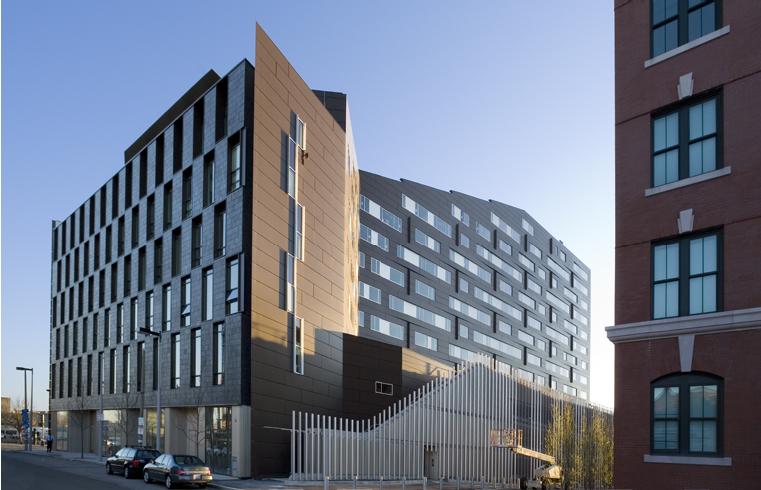
The firm, like many selected recently by the university for its projects, is known for edgy ultermodern architecture. Normally, as readers who tolerate me are aware by now, this would be the point where I go into a rant about how such architecture fails to fit in with the surrounding environment, often fails to live up to standards, etc etc. Well, for the record, here’s a sample of their previous work, the McAllen Building in Boston:

Photo Property of Office da (www.officeda.com)

But, I don’t have a reason to complain, for three reasons. For one, they’re designing bridge barriers, which tend to have less of an impact on their surroundings than buildings. For two, it has to be cleared by public forums in conjunction with the city of Ithaca and its residents, who won’t be so gung-ho for wild design features. To be honest, the train of thought in my mind is “can they really screw this up aesthetically? Not really. ” For three, nothing can be as bad the metal behemoths we were treated to last Spring, which gave the impression of being locked into a prison yard. When you’ve already hit the lowest lows in appearance, the only way to go is up.

I’m going to be  very interested to see what comes out of their studios in the coming months.


News Tidbits 8/5/10: Structural Coincidence?

5 08 2010

So, the Ithaca Journal is filled today with articles concerning Cornell’s South Hill neighbor, Ithaca College. Which is great, since they are a good school in their own right and they tend to be overshadowed by its ivy-cloaked neighbor. So, the one article was about how their enrollment is back on target this year after having too many incoming last year (by most regards, a fortunate problem to have). The other article, much more in line with the general themes of this blog, was a review of the $65.5 million, 130,000 sq ft Ithaca College Events Center that is under construction, and currently around halfway towards completion.

One of the big architectural features of the building is a a large, structually-incorporated cooling tower designed to be a focal point of the structure and to be visible from most of campus.

Image Property of Ithaca College

The height of the tower? 174 feet.

The height of McGraw Tower on Cornell’s campus? 173 feet.

So, McGraw Tower is no longer the tallest structure in the county (not including radio masts). After 119 years, it is losing its title to Ithaca College’s new activities center.

Although I never saw anything that indicated as much, I’m willing to wager that this was intentional, to draw more attention to the new “tallest building” in the county. Even though the tower is uninhabitable, the lower floor(s) of the building are, so it qualifies as a true building. McGraw doesn’t qualify since it’s only a clock tower. Bradfield, the tallest true building in the county, is only 167 feet.

In conclusion, I guess size does matter when it comes to bragging rights.


News Tidbits 7/22/10: Collegetown Terrace Goes Back to the Drawing Board (UPDATED)

22 07 2010

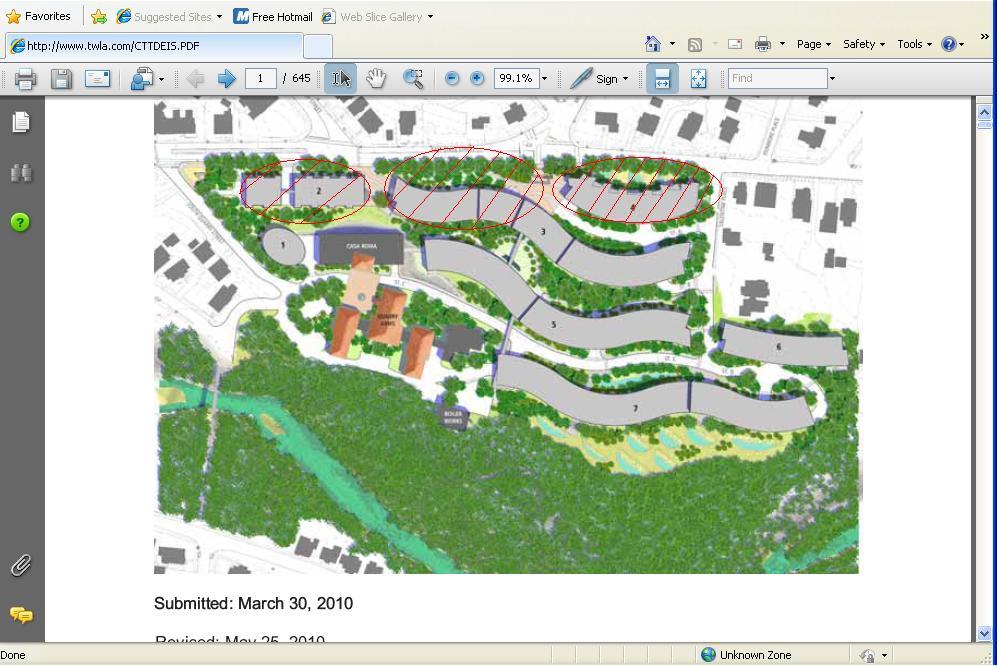
UPDATED: A sketch rendering of the new design has been released. Small, house-like apartments have designed along East State Street in place of buildings 2 and 4. Building 3 is still one continuous building, but the exterior breaks into subsections to minimize bulk and give the impression of multiple strcutures. The Delano House is still under consideration for preservation, but is more of a suggestion at this point (unless the preservation committee and the Common Council give it historic designation). I actually like it more than I did the original design. 

Also, Ithaca is getting a BJ’s Wholesale Club next to the Shops at Ithaca Mall, and a Tim Horton’s/Cold Stone Creamery is planned to be built near Buttermilk Falls. Which makes me wonder how mainstream Ithaca is going to become over the next few years. 

http://www.theithacajournal.com/article/20100721/NEWS01/7210425/City+reverses+on+Novarr+re-zoning  

So, for those who might’ve been following the news over the past few months, it’s been no big secret that Novarr-Mackesey Group’s Collegetown Terrace project has been rather contentious, drawing crowds of angry neighbors to planning board meetings who were upset with the sheer size and scale of the project. In response, the planning board voted to promote rezoning (which is done by the city council) the part of the property along East State Street, which would heavily alter the project. Plus, it was recommended that historic designation be sought for the Delano House, a former nurses’ dorm. Of course, if these actions were taken, then Novarr’s lawyers would be having a field day filing a lawsuit against the city.  

Well, it seems as if that potential issue has been averted. Talks between the board and John Novarr have resulted in something of a compromise. In exchange for not rezoning the area, Novarr will submit a redesign that will allow thirteen separate structures on East State Street. This has been one of the most contentious aspects on the original design, that the three structures that were originally proposed made State Street feel like “a wall”, “prison” or “fortress”.  The original design schematics and proposal can be found here, in a 645-page PDF.  


Delano House, photo property of Novarr-Mackesey Properties


Therefore, buildings 2 and 4 will be completely redesigned as designated by the agreement. Building 3 will also be redesigned, but only the north half is affected. To what extent the plans will change regarding the landscape of the development and the other buildings is uncertain. Also, some of the Ithaca preservationists might still be trying to push for special designation for Delano House, which is at 113-115 Valentine Place. That space would be occupied by buildings 6 and 7, so I don’t see the issue being completely settled just yet. But at least the two sides are willing to compromise. Personally, while I like some of the aspects of the project, I’ve kinda felt indifferent due to the sheer size, and the design hasn’t exactly won over my heart (for the record, I still don’t dislike it as much as I dislike anything by Thom Mayne, so I feel no urge to go on a rant like I did with Gates Hall). But trying to make it a smooth transition and trying to at least appease the neighbors while increasing density – I consider that a step in the right direction.  


Whatever Happened to the CU ERL Project? (UPDATED)

14 07 2010

Renderings have been released through the Ithaca Journal’s website:


For reference, Riley-Robb Hall is in the upper level. This rendering is looking to the northeast. The cryogenic facility is to the upper right. More renderings can be found in the document attached to the main article.

***

About two years ago, I wrote an entry discussing the proposal of the Cornell University Energy Recovery Linac (ERL) X-Ray machine and how it was sechduled to start operation in 2011. Well, things kinda stalled when the Great Recession reared its ugly head far above Cayuga. In between compiling at my work computer, I decided to look at the the town of Ithaca’s latest planning board agenda. Lo and behold, it appears the project is back on. From the agenda:

Consideration of a revised sketch plan for the proposed Cornell University Energy Recovery Linac (ERL) project located north of the Pine Tree Road and Dryden Road (NYS Route 366) intersection, Town of Ithaca Tax Parcel No.’s 63-1-8.2, 63-1-2.2, 63-1-12, 63-1-3.1 and 63-1-3.3, Low Density Residential Zone. The proposal involves construction of an underground accelerator tunnel (14-foot diameter and +/- 1 km long), a cryogenic facility, and an extension to the existing Wilson Laboratory (+/- 185,000 gross square feet of building space). The project will also involve new stormwater facilities, parking, outdoor lighting, and landscaping. The Planning Board may also discuss the draft scoping document for the Environmental Impact Statement.

Now, long story short, the project consists of a massive extension to the Wilson Synchrotron and a large addition to the Wilson Lab, illustrated in the diagram (which I am virtually certain sure was designed by Munier Salem, as it shares similarities to his previous works and it’s part of an article he wrote for the Daily Sun back in the fall of 2008):

The article also goes into much greater detail about how it’s supposed to work; much more detail than I am going to go into here. Economically speaking, the project has considerable potential for the region: the University and project affiliates estimate over 200 jobs would be created and the facility would bring nearly a billion dollars in economic contribution in the five years of construction and ten years of operation. It’s certainly much better than the alternative, which would be the Synchrotron unit shutting down and taking away 200 jobs.

So, it’s good to see things are moving forward once again. Let’s hope that things can stay on track from here on out.


News Tidbits 7/9/10: Thom Mayne to Design Gates Hall

9 07 2010

I consider this a very bad sign.

http://www.news.cornell.edu/stories/July10/GatesHallArchitect.html

According to the Chronicle, Gates Hall will be located on the parking lot north of Hoy Field. This may or may not include demolition of the Grumman Squash Courts, as the article doesn’t clarify that. It will also be about 100,000 square feet and have a construction cost around $60 million. So, among other things, this means I shouldn’t pay attention to Cornell’s budget statements as they relate to building size, since it suggested 70,000 sq ft. More importantly, the site has been moved from its original location behind Thurston Hall. Schematic designs are expected by December, with completion by early 2014.

Now, Thom Mayne is another “starchitect”; which is nice, but shouldn’t be the big idea that’s being touted. Mayne’s firm is a rather small but highly respected company named Morphosis Architects. Morphosis has made their name doing really edgy, deconstructivist designs.

Uh oh.

For those unfamiliar with architecture, here’s the proposal that Morphosis submitted for Milstein Hall:

 That’s Lincoln Hall on the left. This proposal called for the demolition of Rand Hall and this…monstrosity to be built in its place. This isn’t pretty. It won’t even grow on you. This is outright hideous. It reminds me of Lady Gaga’s outfits — screams for attention, but wholly lacking in taste and functionality. This building actually makes me like Uris Hall.

Some might argue that they were purposely edgy since it was an architecture school building they were designing. I would love to believe that, but unfortunately that’s untrue.


This is one of their tamest designs, the Cahill Center for Astrophysics at Caltech. It’s bearable maybe. It sure as hell isn’t attractive. I wouldn’t dare point this out to prospective students and visitors if I were a tour guide. At least Weill and Milstein are inoffensive. This is analogous to mooning a bus full of orphans.

The San Francisco Federal Building? Another statement-maker of the unattractive kind. Thom Mayne is a great architect, but his designs are more for making statements than for being attractive. I want to know why Cornell thinks edgy design is the way to go. Many people have a strong avoidance of deconstructivism, and if MIT’s Stata Center is any clue, these buildings are so much more prone to rapid deterioration. To each their own I suppose. But I have a sinking feeling that Gates Hall is going to be a architectural blight onto the campus.