News Tidbits 4/8/11: Shopaholics Rejoice

8 04 2011

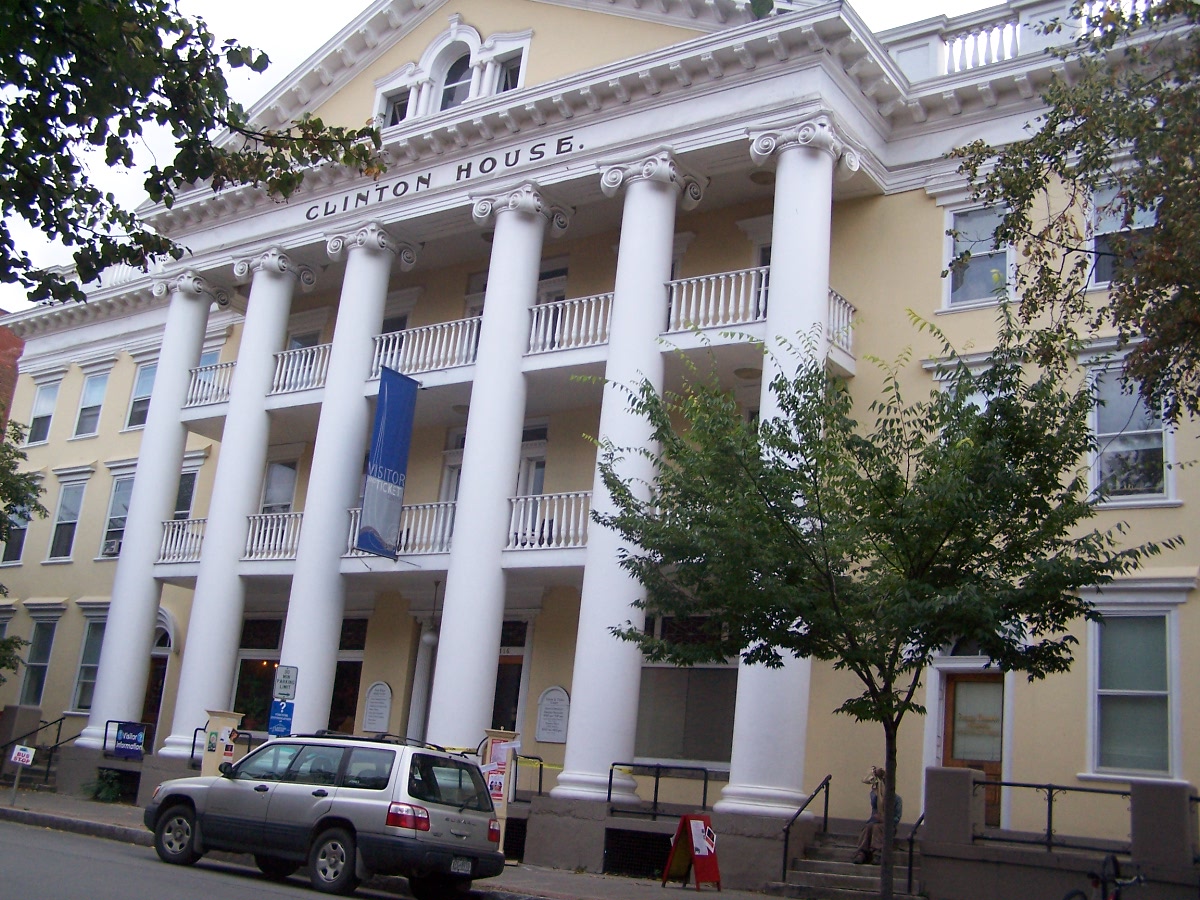
College Crossing Shopping Center - Image Property of Ithaca Estates Realty

I’ve been locked away in my office recently, so I haven’t had a whole lot of time to devote to anything but being an evil TA and doing research. But there have been a couple of Ithaca developments of note.

The Holochuck project (106 townhomes on West Hill) and the 82,000 sq ft. BJ’s Store next to the Ithaca Mall have both received approvals. Site work on the BJ’s could start as early next week. Neither project was without its drama, however – the BJ’s uses a tax abatement in order to finance the construction of 12 senior housing units, some wetland and a bird sanctuary on the west side of the lot, behind the future store. Since abatements are typically issued for industrial projects and not retail, there was some controversy about it setting a bad precedent. After playing with the construction materials to ask for a smaller abatement, the project finally received approval from the IDA, only to rejected by the school board initially, then accepted at a meeting a few days later. So, that was a mess. Regardless, the company plans on starting work on the approved project this Spring, with a fall opening.  As for the Holochuck project, the big issue there was traffic. By incorporating mandatory bus passes and some other traffic mitigation features, the project received preliminary approval, meaning it jumped the main hurdle. However, some residents have expressed anger and concern that the project and a 70-unit senior apartment building be allowed to move forward, even as the town is making steps towards a moratorium.

As for today’s Ithaca Journal – the College Crossings shopping center has been on the boards for at least five years. The only thing new about it is that it’s finally being marketed and that the developer hopes to start this spring, with a fall opening. For those on East Hill, the new shopping center will be of little use because it’s just south of Ithaca College, and well out of the way for most Cornellians.

So, it looks like there will be some work underway as Ithaca transitions into the warm half of the year. Nothing wrong with that.


The 2010 Census

25 03 2011

So, over the past few weeks, I’ve had an eye out for the new census figures for New York State. After hearing about Detroit’s massive 25% loss, I didn’t have high hopes for any part of upstate, what with the high taxes, poor weather and rampant government corruption.

I’m actually pleasantly surprised in some ways. Albany, Schenectady and Troy all grew, which is shocking because Schenectady and Troy haven’t seen population growth since WWII. Syracuse lost 1.5% to fall to about 145,000, but considering it was expected to have only 137,000 people, the smaller loss suggests that Syracuse may finally be “bottoming out”, barring unexpected circumstance. Syracuse’s county, Onondaga, was expected to lose 4,000 people this decade. It gained 10,000. Turning to the more pessimistic results, Rochester and Buffalo met expectations by dropping 4.2% and 10.7% respectively.

As for Tompkins County? Well, estimates initially suggested a population of about 101,779 (there were 96,501 residents in 2000). The official census tally says 101,564, slightly less than expected. Either way, the county added over 5,000 new residents over the past decade (which means more housing required, and new developments…and hopefully I’ll have plenty of things to write about in the future).

Ithaca city added 727 people and now stands at 30,014, an increase of 2.5%. Using the census’s words, the number of white people declined, while African-American/black was virtually flat. The gain was in Asian-Americans, and those who were of two or more races. Ithaca town stood at 19,930, a gain of 9.5%, or 1,732 people. According to census.gov the projection was for 20,200, so this explains most of the discrepancy between actual and projected county population figures. All towns in the county grew, ranging from 1.4% in Newfield to 12.8% in Caroline.

Based off of these figures, for the first time in over a century, Ithaca is bigger than Elmira (which dropped 5.6% to 29,200). The neighbors in Cortland grew 2.5% to 19,204. Actually, most of the growth in Cortland County occurred in communities on the Ithaca-Cortland Route 13 corridor. Looking south, Binghamton lost a grand total of 4 residents, to fall to 47,376 (Broome County’s growth was nearly flat).

Is it good news? Not necessarily. Natural rate of growth would suggest a population increase of 7% per decade. So people are still moving out, but it seems they are doing so in smaller numbers then they did in the 1970s-1990s. Which to a native upstater like myself, this gives some hope that there is a way to turn around the decline of parts of upstate, whether by decreasing taxes and government, new/expanded business ventures (hydrofracking, expanding tourism) or other options that may or may not be pursued. One can hope anyway.


News Tidbits 3/21/11: Gates Hall Design Released

21 03 2011

Just…ugh. This image comes from the Facilities Management website. The designs have been submitted to the university but are still being tweaked to fit the budget, or “value engineered” if you will.

I already described my intense dislike for Thom Mayne and his firm, Morphosis, in a previous post. As some folks may remember, Morphosis was selected about nine months ago to design the 100,000 sq ft Gates Hall (aka the new Computer and Information Science Building) on the site roughly where the Grumman Squash Courts are now. The angle of the rendering appears to be northeastward, with Barton Hall’s tower in the distance.

Some may like this kind of edgy, “organic” architecture. The only organic thing that pops into my mind is decay. Seriously, the bottom of the overhang on the west side reminds me of rotting deer carcasses my childhood neighbors would have laying around parts of their property (they were a bit odd, but they gave out stuffed animals on Halloween, which totally redeemed them in my ten-year old mind), with the ribs exposed and the flesh drying out and curling. If that imagery doesn’t prove my disdain, then nothing will.

This may float some people’s boat, but I’m willing to wager they’ll tend to be in the minority. For as edgy and advanced as it may seem, I can only imagine and feebly hope that the built product looks a little better than this, and that it ages well.


How the Mighty Have Fallen

19 03 2011

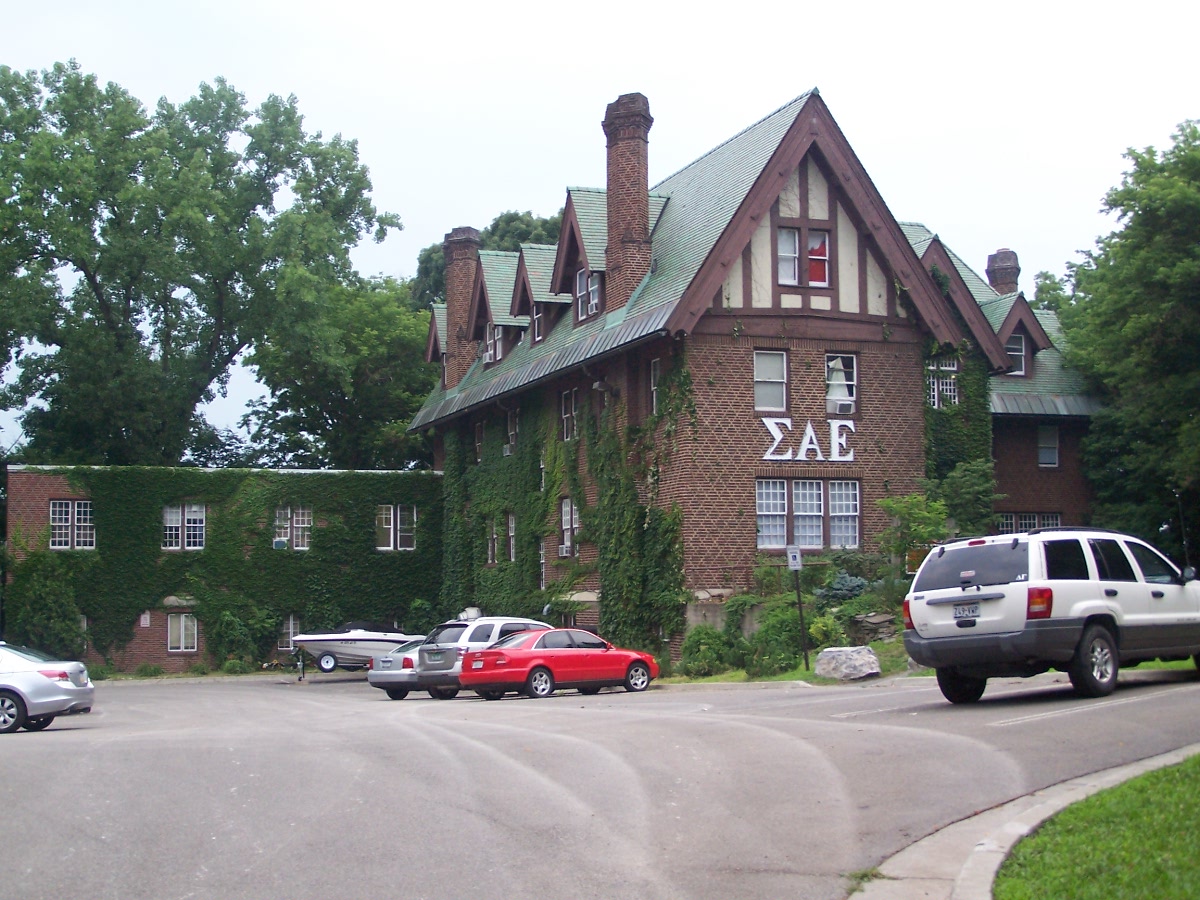
So it’s official. Sigma Alpha Epsilon, up until now the second largest chapter in the Greek system, is being booted from campus for a period of five years. All members must vacate the university-owned facility by the end of the month. I think the following passage is the most disturbing:

“At this time, the information provided to the university indicates that George Desdunes, 19, was provided alcohol while in the care of certain members and associate members of the Sigma Alpha Epsilon fraternity, and became incapacitated. Even though the members and associate members recognized the condition Desdunes was in, they failed to call for medical care. He subsequently died.”

Let’s be honest. Associate members = pledges in this case. Also, just about anyone who’s been in a fraternity can vouch they knew “that” guy who got really, really drunk one time at a frat party or a mixer, so they gave him some water, a bucket just in case, and laid him on a couch to sleep it off (or maybe that was just in my experience). But this time, either members failed to recognize the severity of the situation – tragic but not impossible – or they realized the extent of the situation and did nothing. Which I really, sincerely hope wasn’t the case, especially since a number of criminal charges are likely in the upcoming weeks.

It’s hard to imagine a system without SAE occupying its lofty Hillcrest estate. But, there is a habit in recent years of the largest, most visible houses being shut down for one reason or another. Pi Kappa Alpha was one of the largest chapters in the system back in the 1980s and 1990s, their recognition was suspended after an incident a couple years ago sent three rushees to the hospital. Before In the mid 2000s, the largest chapter was Sigma Pi, which was suspended and forced to reorganize in 2007 after they sent Thanksgiving attendees to the hopsital with alcohol poisoning. It seems that the largest houses are more apt at screwing up.

It’s difficult to picture Cornell’s Greek Life without one of its prominent members. But under the circumstances, I would’ve been even more surprised if they had been allowed to continue on campus.


Oh Great, I’m Becoming A Preservationist…

18 03 2011

So, looking at the planning board agenda for the city this month, most of the projects under review have already been covered in previous entries. But there appears to be a new entry, and it’s based on College Avenue. 140 College Avenue, to be exact. The owners, Po Family Realty, seek to add a 3800 sq ft, three-story apartment addition onto the south side of the building. Which, in most cases, wouldn’t be a tremendous deal.

Except 140 College Avenue is considered untouchable by the local preservationists, and I can’t blame them for that opinion either. As a matter of fact, I might even agree for once in a blue moon.

You see, 140 College Avenue is the John Snaith House. Although the name may not sound familiar, its appearance certainly will. It’s the red brick house on the corner of College and Cook Street with the wrought iron fence and mansard roof. It made an appearance on the recommended Collegetown structures for historical designation document released a couple years ago.According to the PDF, the house was built by and for John Snaith, a contractor, in 1874. He relocated to Albany in 1887, and the house was badly damaged and rebuilt following a structural fire in 1894.

The issue I have with this project isn’t so much the project itself, which I do think is a bit unnecessary consider the benefits of such a small project are small. It’s more to do with the fact that the Snaith House is a well-recognized historic building. I’m concerned that if it somehow got approved (which, considering one of the writers of the historic buildings document is also chairman of the Planning Board, I find unlikely), it would galvanize the local NIMBYs who would point to that project as an example of the dangers of development, and use it to try and dissuade later projects.

I’m still surprised the owners of 140 College Avenue would even propose this project. I don’t normally turn up my nose at development, especially in Collegetown, but this proposal stinks.


The Death Knell of Greek Life?

2 03 2011

In some sense, I’ve learned to dread days where I see the number of hits to this blog skyrocket, namely because days with extraordinarily high hits can be correlated unfortunately well with the untimely death of a student at the university. So it was with some hesitancy that I glanced at the Sun’s website this weekend.

The news is unnerving and tragic. A student is dead. Secondly, the Tompkins County sheriff has gone on the record to say that the death was likely alcohol-related. The student, George Desdunes, was a member of Sigma Alpha Epsilon fraternity, and was found unresponsive at the fraternity house on Friday morning. At this point, it was yet to be established to what extent the fraternity is responsible in his untimely death, but SAE has been suspended temporarily.

When I first heard the news, I kept hoping that the fraternity wouldn’t be responsible. SAE is considered to be one of the most visible Greek houses on Cornell’s campus. It has one of the largest memberships of any fraternity at Cornell and holds a fairly strong presence in Greek affairs, and to some extent campus affairs (a number of their members and recent alumni, such as Svante Myrick ’09 and Eddie Rooker ’10, hold prominent positions in and around the university and surrounding city). So if SAE was responsible for the death of one of its members, the effects would be profound and far-reaching through all parts of the system.

Given the problems of the system and the recent reforms forced onto it by the university, I am honestly wondering whether or not it is a sign of the end of the system. the first thing that comes to mind was Ithaca College’s ban of Greek life after the death of Joseph Parella in 1980, during a fraternity pledge event in which he was hazed. But, it’s not easy to compare the two systems. For one, Ithaca College’s fraternities were generally housed in dorms (in comparison, Cornell owns  about one-third the Greek houses), and for two, their system represented a much smaller proportion of their student body than Cornell’s does.

I suppose the usual arguments will come out – the biggest donors to the school are Greek, they can’t touch private houses, and so forth. The problem is, if SAE is found responsible, their role in the death of a student would be a very powerful and legitimate reason to favor de-recognition of Greek life. Addressing argument number two, while many chapters own their own property and would not be immediately affected, they lose the protection that the university gives — i.e. every party thrown is a target for local and campus police to bust underage drinkers. So the system wouldn’t be “shut down” per se, but it could easily be crippled.

Perhaps a better comparison would be a case from MIT that occurred about 15 years ago. On September 26, 1997, a pledge of FIJI at MIT died after a pledge event due to alcohol poisoning.  MIT is, like Cornell, a prestigious institution with substantial Greek Life – at MIT, it comprises about 42% the student body. There had been signs Greek Life had been getting out of control prior to the death of Scott Krueger. As a result of the event, RAs were put in fraternity houses, mandatory CPR training was established, all freshmen were required to live in dorms, MIT paid a $6 million settlement to the family due to negligence in preventing the event from occurring, the fraternity was shut down (and has never come back), and several of the former FIJI members were convicted of criminal offenses. It forever changed the way MIT dealt with its fraternities. But they still have a large, influential system.

But comparisons only offer ideas, not results. So what will happen with Cornell’s system? A good question.  But not one that can be answered just yet, while Cornell students mourn the loss of one of their own.


News Tidbits 2/7/11: Sorority Selected for Recolonization on CU Campus

7 02 2011

According to the Cornell Daily Sun, Phi Sigma Sigma sorority has been selected to recolonize at Cornell University, from a field of five candidates. From the article:

“Phi Sigma Sigma will begin recruiting a core group of members in the fall, drawing in part from the new sorority interest group on campus. The sorority will participate in formal recruitment in Jan. 2012….

Phi Sigma Sigma had a chapter at Cornell that left the University in 1969, a departure Sanders speculated may have been due to a generally negative view of Greek life at the time. She said supportive Cornell alumnae from the chapter’s earlier years would be an asset to its reestablishment. “

That much is correct. Phi Sigma Sigma established a chapter (Beta Xi) at Cornell University around 1954. The chapter was located in the house at 313 Wait Avenue.The chapter was closed around 1969, and for that I offer two, non-mutually exclusive explanation. The first is as Ms. Sanders suggested – the late 1960s were a time of strong social activism and Greek life was seen as archaic and out of touch with the times, so membership declined rapidly. Phi Sigma Sigma was one of four or five chapters to shut down in a three year span from 1969-1971. Secondly, Phi Sigma Sigma, although officially non-sectarian, was regarded as a house for women of Jewish faith. As other sorority houses adopted non-sectarian policies in the 1960s, the competition became much fiercer, and with the general declines in sorority interest, this likely compounded and caused the chapter to close its doors.

The Sun article states that 14 South Ave. is expected to be used as the new house for the sorority at Cornell. This house has been used for so many Greek houses it’s like a token minority character in a movie – no one can remember their name, but everyone remembers their race or skin color. In this case, no one can remember the house’s letters, they just know it’s a Greek house. For the record, the house was built in 1957, and home to Kappa Alpha Society up to their closing in 1990, and then it was home to AOPi and Delta Chi. This is discussed more in another entry on this blog.

Among the nifty things that turned up in a google search is a word document from the ladies of Phi Sigma Sigma national that seems to be an overview of their presentation to the Cornell Panhel on why they would make for a good addition to the campus Greek scene. It doesn’t really offer much in the way of interesting information, but I was rather surprised it was so easy to find on the Internet.

So yeah, congratulations ladies. Good luck to your rechartering in the upcoming year.


News Tidbits 1/16/2011: The Project Planned for Seneca Way

17 01 2011

(UPDATED) So, this is a project that has been under the radar but merits a closer look. The site plan review (first step in the approvals process) is due to go in front of the city of Ithaca’s planning board later this month. This project is set for initial review along with Josh Lower ’05’s controversial parking lot-lacking five six story mixed-use building planned for the current Ithaca Carshare building site in Collegetown (the former Kinney Drugs), and the continued review of Ithaca College’s new boathouse, which I don’t consider particularly newsworthy. Sorry IC.

What is interesting about this project isn’t so much who’s designing it (the popular local firm Trowbridge and Wolf, who also designed the West Campus House dorms and the Gateway Commons apartment building on East State Street), but its location. Most people haven’t heard of Seneca Way. That’s because the street barely exists. It’s a tiny stretch of road off of East State that flows into East Seneca Street (shown below). The project address is 140 Seneca Way, the north/east side of the street.

The lots facing Seneca Way are few. True Insurance, a parking lot and the former Challenge Industries Building on one side, and a parking lot on the other side. This area has been a designated target for desired future development for the past few years, so much so that several of the properties on the even-numbered side of the street were up for rezoning. That zoning was to change the site from four stories max to six stories, but was controversial because it might impact the redevelopment of the Argos Inn (right next door to the east side of Challenge Industries) and as one city councilman put it, “I’m not sure this proposal provides as graceful a transition between the core and the residential areas as one would wish”. The zoning failed to pass the Ithaca Common Council, so the maximum height allowed on the property is still 40 feet or four stories, whichever is shorter (which for residential structures, 9-10 feet is standard floor height anyway).

So, what might be there? Well, if the project wants to pass, it’ll likely have to incorporate base parking or compensate somewhere nearby (which would be expensive). There isn’t room for a larger parking lot, let alone spaces lost to new construction. Perhaps part of the project will involve demolition of the vacant Challenge Industries building. Since that’s an uncertainty, it’s difficult to speculate on the number of units (it also depends on what their intended square footage for a unit is). I would expect that being a “transitioning” set of parcels, the size would be three to four stories. Trowbridge and Wolf specialize in contemporary and rather angular designs, so if it’s anything like their previous work it’ll probably bear similarities be glassy and have a fair amount of exterior steelwork.

At this time, it’s just about waiting to see what they come up with for that area.

UPDATE 1/25/11: Okay, so here is the proposal: 63,400 sq ft mixed use building with 14 below-ground parking spaces, as well as 41 surface spaces. First floor commercial (one-third of which will be occupied by a branch of Warren Real Estate), 32 apartments, a fitness center and enclosed roof terrace. Will require demolition of former Challenge Industries building. At five stories, this project will require a zoning variance, as well as variances for setbacks and parking. So, excluding the height variance, my guess wasn’t too far off.

Also, 307 College Avenue will be six stories, not five. My mistake.


Cornell’s History, All Drugged Up

11 01 2011

So, the latest news tidbit about a Cornell student being caught with $150,000 of heroin has made the news cycles and attracted some undesriable attention toward the university. Which kinda inspired me to look at it in a historical context. It’s what I do.

It’s college. Drugs exist. Some are easier to get a hold of than others. Some are gateway drugs, others are only used by a hardcore group of students. Once in a while, the drug debate comes up in a campus context. The Cornell Daily Sun ran an article about Cornell’s drug culture about two years ago. In the article, it was noted in a 2005 anonymous Gannett survey of students, that of 1,969 respondents, 41% admitted some form of drug or alcohol use in the past 30 days, with 19.8% reporting marijuana use and 4% reporting other drug use.

(with that in mind, considering the university’s undergad pop of about 13, 800, that would suggest 550 users of other drugs, which could include cocaine, LSD and the aforementioned heroin. If [an overly-generous] 50 percent were heroin users, that gives us about 275 students. Which if the street value is correctly reported, than the student was carrying $545 worth of heroin for each user. In conclusion, with that much heroin, I wouldn’t be surprised if she was supplying the entire county).

A similar set of data from 2003 suggests 8 percent of respondents admitted Ritalin/Adderall use without a prescription, and less than 3 percent partook in white lines. Another link on Gannett’s site looks at drug use in 2000, and the rates were largely the same as in following studies (except for hard drugs – those fell a little bit). The article notes that affluent students and students in Greek Life show slightly higher usage rates. Looking at Gannett’s site, if we throw in the more prevalent drugs, tobacco use as defined as at least once in the past 30 days has gone from 21 to 16 percent from fall 2000 to fall 2005. Alcohol use defined as once in the past 30 days has hovered around 75 percent and remained fairly steady through the three studies.

So that’s handy and all, but it’s a smallish sample size compared to the entire student population, and it depends on people answering truthfully. So the numbers could be seen as dubious. Regardless, it’s obvious that students partake in drug use.

***

Now to look at things in a historical context. Drug use was around well before the university. But in 1865 in little Ithaca, the drugs of choice were generally the alcoholic or tobacco variety. The big drugs in the 19th century were alcohol, tobacco, and to a lesser extent opiates and (in later years,) cocaine. Marijuana was seen as a medicinal drug, not a recreational one (that changed after around 1910). Marijuana use at Cornell was minor prior to the 1960s, which is when it caught on with middle-class whites – i.e. most of Cornell’s student population. It is stayed relatively popular since, even after drug laws became tougher in the mid-1980s. As for the opiates, they would see occasional use throughout the next 100+ years, as opium in the late 1800s, morphine and heroin in later years. Heroin received its first notoriety among students when it caught on with the Beatnik culture of the 1950s.  With the increase of purity (strength) of heroin in the 1980s and 1990s, demand, and addiction, grew. Although, going by Gannett’s survey, usage dropped off somewhat at Cornell after 2000. Tobacco saw steady and common use by all branches of the university’s stakeholders since Cornell’s founding, and became so prevalent that in the early 1960s a person could smoke anywhere but inside Sage Chapel. But, needless to say, that’s not the case anymore.

If Cornell follows national trends, it would be safe to say that cocaine use peaked in the early 1980s, with maybe some sporadic crack use after its introduction around 1985. I would be willing to suspect that the “glamor” of powdered coke was preferable to perceived “ghetto” qualities of its freebase equivalent.

Regarding LSD, Cornellians probably first experienced the drug in the early 1960s. Well, willingly anyway. Two Cornell Medical School professors were part of a government project in the 1950s and 1960s to administer LSD and other hallucinogenic drugs on unwilling participants. It was initially hoped by the military that it could be used like a truth serum, and later studies checked it out for therapeutic qualities on mentally-deficient patients. The drug peaked in the late 1960s and saw another slight rise in the late 1990s, but otherwise has seen a general decline.

Now back to our preferred chemical companion – alcohol. The first students of Cornell would’ve usually consumed beer (liquor was as it is now – expensive) down at one of the saloons in town, and there was no standard policy against drinking (Bishop 210). “Give My Regards to Davy” celebrates this aspect of student life (although I should note that highballs are mixed drinks – scotch and soda water). A Cornell Era report from around 1890 suggests that a couple saloons was enough to serve all students, and drunkenness was uncommon. In the 1910s, drinking was common, but seen as a way to celebrate athletic victories, but drunkenness on campus was seen as grounds for dismissal (Bishop 407-408). Prohibition was a major thorn in the side of students and bar owners, but they found ways around the law – Theta Delta Chi had a speakeasy built into their house when it was built in 1926.  A Cornell Sun article from March 4, 1937 reports that drinking at colleges was on the rise after Prohibition, but that public drunkenness was abhorred. The report was “Students…admire the man who can drink like a gentleman” (pg. 3). It seems that a celebrated culture of binge drinking took off around 1980 – the “Animal House” influence, perhaps. Although underage drinking was supposed to be curtailed by the increase of the drinking age from 18 to 21 in December 1985, that has largely proven untrue.

People age, drug preferences change, but students are timeless.


Construction News Tidbits, 12/18/10

18 12 2010

A few articles have popped up lately that merit a brief writeup.

The BJ’s Wholesale Club and 12 senior apartments planned for the grass lot next to the Shops at Ithaca Mall (behind the YMCA) hit a snag when the county industrial authority voted down a tax break for the residential portion of the project in a 4-3 vote. While this makes the project less likely, it is not entirely dead, and the town of Lansing still supports the project. However, it’s the  village of Lansing that demanded the residential component as a buffer between houses and shopping areas. Some involved with the project contend that the votes against were by Ithaca-centric legislators who’d rather see the potential sales tax dollars go to the city (i.e. build the store on a site in Ithaca City). BJ’s has no interest in any local site except the one currently proposed, so in conclusion everyone’s getting their panties up in a bunch, and the project is at the very least on hold in its current form.

Out in Dryden, a 144-unit apartment complex is being proposed. Called “Poet’s Landing” (perhaps as a nod to John Dryden, the British poet for whom the village/town is named), the project consists of a 72-unit senior living apartment building, 7 other buildings containing a total of 72 units, and a community center. 48 of the 72 non-senior units are proposed low-income housing, which has managed to rile up the locals with fears of higher crime rates and drugs (the project is across the street from Dryden High School). the project is by Conifer Realty, who also own the Linderman Creek complex over on West Hill.

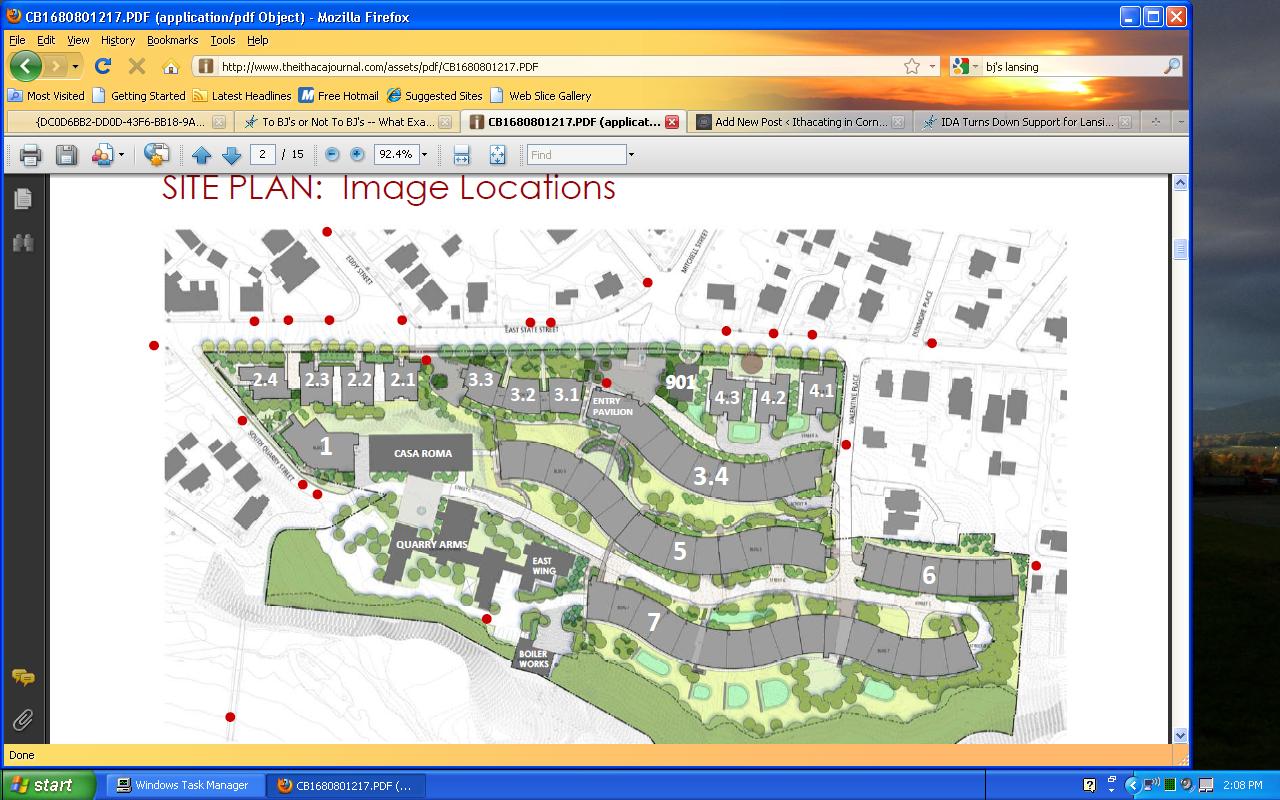
Lastly, a little closer to Cornell, the Collegetown Terrace Project is waiting on three things – site plan approvals, approval of a zoning variance, and a “certificate of appropriateness” from the Landmarks committee, who are not doubt still seething after the city okayed demolition of Delano House in exchange for the restoration of another house on the property and some public signage displays of the site’s history. If the project can clear those final hurdles, a late spring or summer start for site prep is likely.