Lock Up Your Damn House

4 08 2013

100_5655

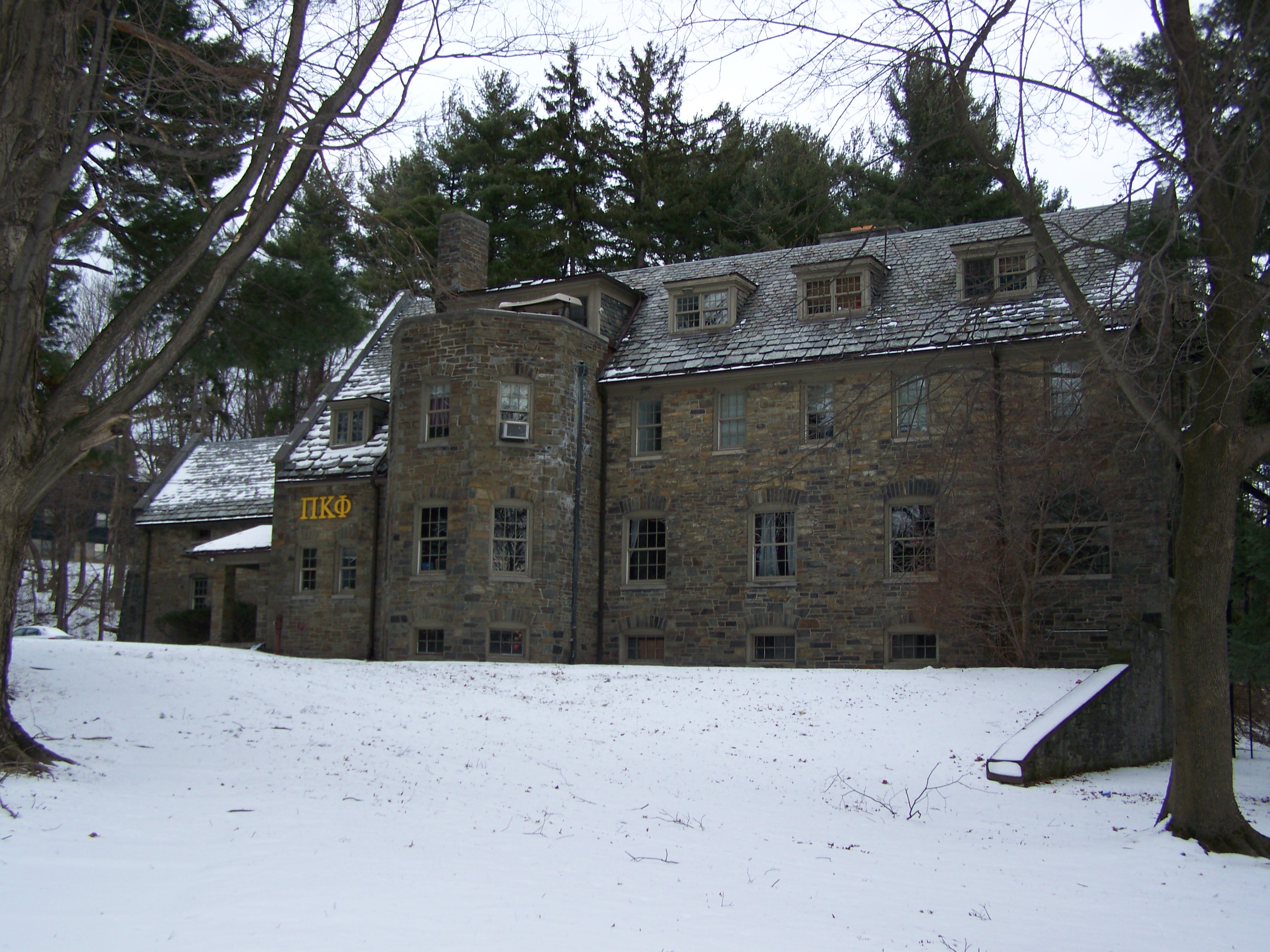
Back during my own Cornell days, I can remember an incident where over Spring Break my freshman year, my fraternity (I was pledging at the time) had one of its code-key locks substantially damaged, which given that it looked like it was attacked with a blunt object, we assumed was an attempted burglary. It is no big surprise that wealthy Cornell students have a habit of leaving expensive things in their rooms, and that with a cunning and conniving mind, those things can easily end up in the hands of a thief. Luckily in our case, the thief gave up and went elsewhere (although we had a $300 grill stolen right off the property not long after I graduated).
That is why stories like this don’t surprise me. From the Ithaca Independent:

Two suspects have been arrested in the Sunday burglary of 55 Ridgewood Road, home of the Pi Kappa Phi fraternity house.  Ithaca police were called to the address after a resident returning home caught a burglary in progress.

Using a description of the two suspected burglars and the vehicle they used to leave the scene with a list of stolen items, a 28-year-old Lansing woman and a 35-year-old Elmira man were arrested Monday…(cont.)

***

The cops only found the burglars because the two were reported to the police for a domestic incident, and left in their truck.  They essentially gave themselves away, since they and the vehicle matched the description provided by the witness.

In sum, although Ithaca is generally safe city, Greek houses would do well to limit access over breaks, and for its members to discreetly make use of a strongbox for valuables.


Ecovillage Has More Competition Coming

24 05 2013

newearth_1

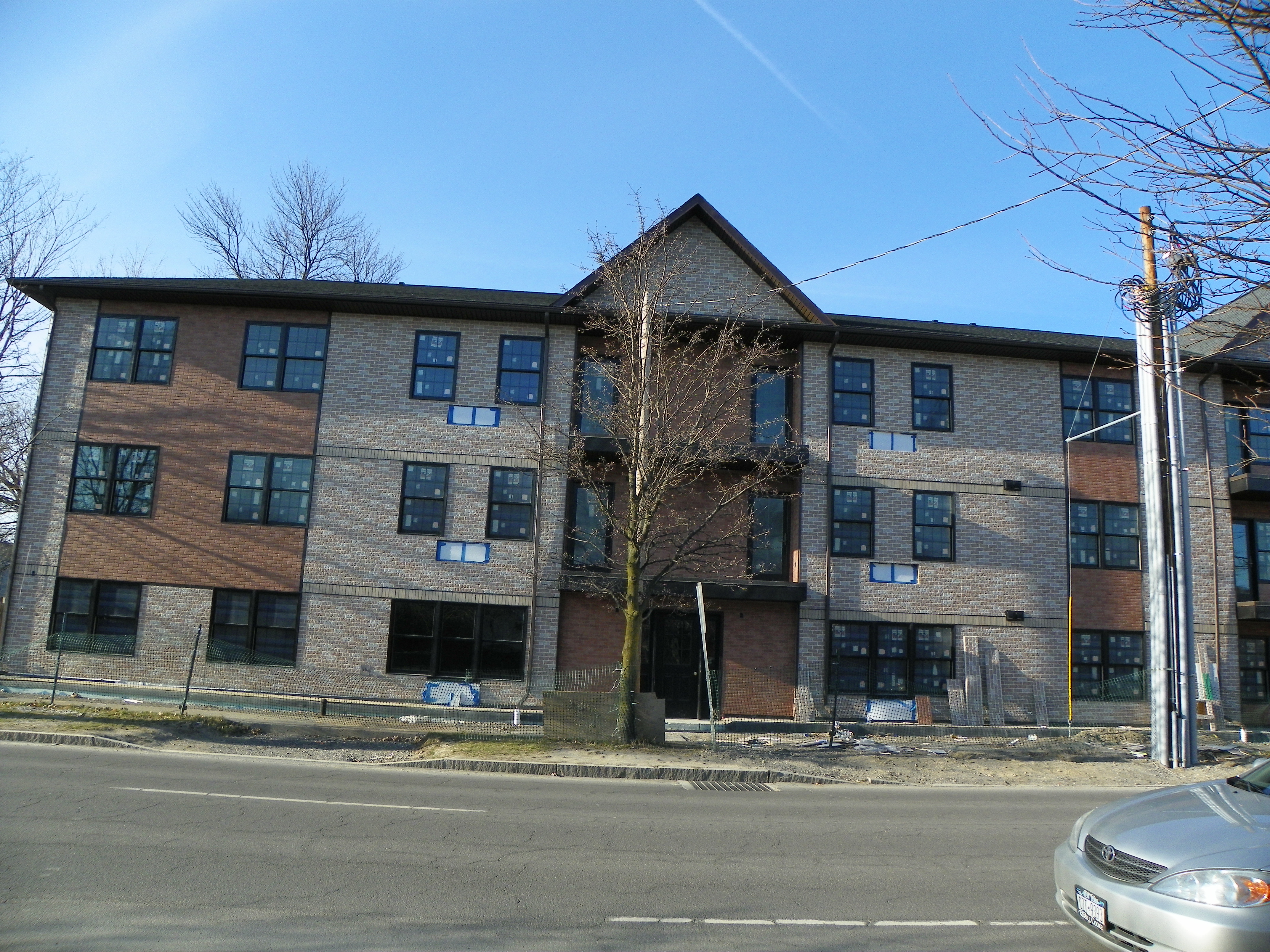
As noted in the Ithaca Times, the eco-conscious folks who developed the Aurora Street Pocket Neighbrohood have a new proposal in the works. The location for this one, however, isn’t as urban – the site is located off of Five Mile Drive, just west of Elmira Road and the southwest area’s suburban big-box land (fun fact – the road starts at an intersection with Elmira Road five miles from the shores of Cayuga Lake, hence the name).  This general area has seen a sizable number of single-family homes built in the past decade, though nothing multi-unit like the proposal.

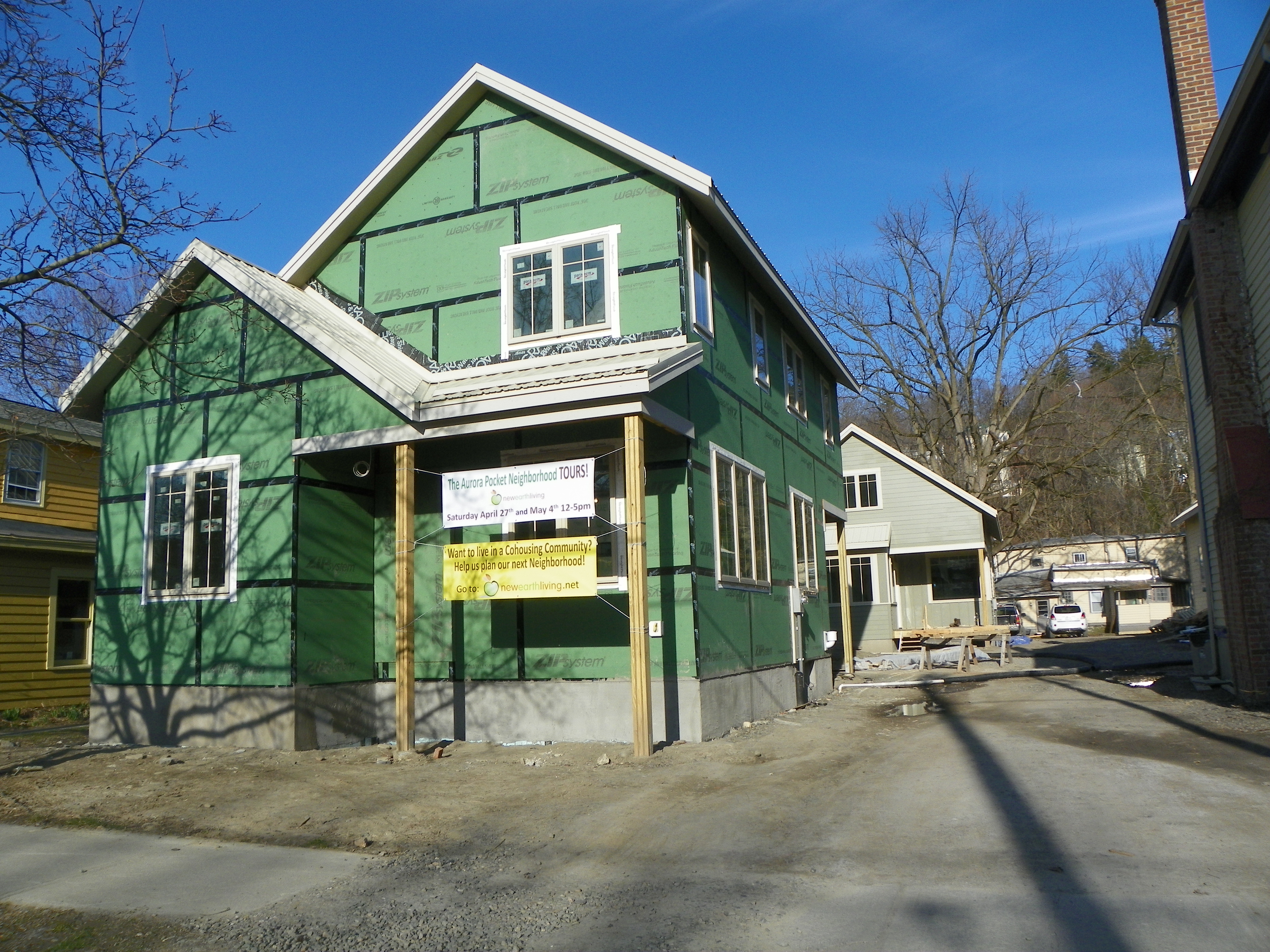
Speaking of which, the basic stats – ~36 units, “craftsman” style homes 1-2 floors, single or 3-unit properties depending on preference, and a common house/community center. Enough of seems to be up in the air style-wise that New Earth Living is asking interested parties to fill out surveys or email them, so they can flesh out their proposal. Style-wise, we already have a good idea what this might look like by looking at the Aurora Street Pocket Neighborhood, which consists of one renovated home and 4 units in three newly-built properties tucked in from the corner Aurora and Marshall. Green construction, solar panels, LED lighting, food grown on property, but no true farm on the property, and units are clustered but still separate – in some ways, this project seems like a toned-down version of Ecovillage.

Ithaca has a lot of folks that lean far left, and a lot of development going on as of late. This seems like a pretty natural outcome of those two forces. Hopefully, this will be a project the community can get excited about as it moves forward.


Cayuga Heights Wants A Real Community Center

16 05 2013


5-1-2012 184

So the folks in Cayuga Heights are getting in on the development game. In this case, local developers are interesting in taking one of the few mixed-use areas of the wealthy bedroom community, and densifying it.

chmap

The focus of this proposal is the Community Corners area, the small, mostly commercial parcel next to the awkward intersections of Triphammer, Hanshaw and East Upland Roads. According to the Ithaca Journal, Most of the new construction would be focused on the grassy parcel at lower left, while some of the buildings already exist would be expanded upon with additional floors, such as the Island Fitness in the lower left of the commercial patch. The two parcels, although owned by separate groups (The Ciaschi Family, the same ones for whom the corner of College and Dryden is named, own Community Corners; the grassy parcel by Mark Mecenas). Notably, this building only finished renovation last year; the bank in the lead image and the two-story office building at Triphammer and Upland are only about three years old.

chproposal1

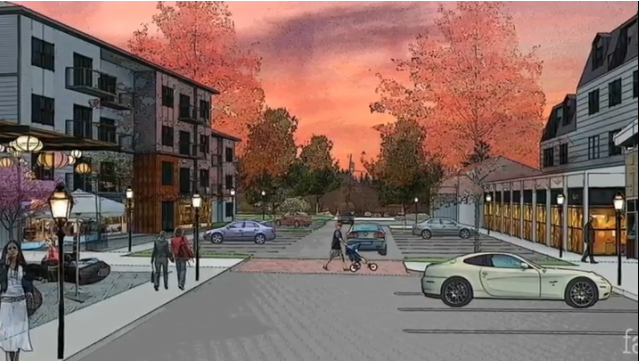
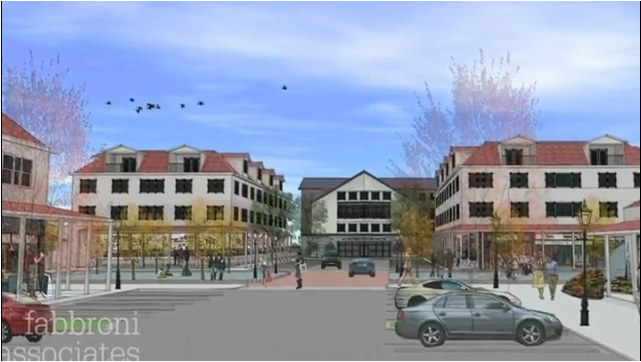
Incorporated into the proposal – more lower-level retail and office space, and about 100 units of housing, up to four floors in height. this would require a zoning variance, as the maximum height for Cayuga Heights is about 30 feet. The design thrown out there is from (Larry) Fabbroni Associates, who tend to be called on much more to discuss the civil engineering aspects of development projects rather than actual designs. I prefer to think of the above designs as more of a scheme than anything concrete.

chproposal3

Oh look, they even threw the vaguely hipster-like musician in there! How quaint!

chproposal2

Mecenas notes in the IJ article that build-out for this project would likely take a few years, and that’s after the village approves the zoning changes. But, a pedestrian-friendly mid-rise core to Cayuga Heights would definitely make it feel more like its own community rather than a wealthy branch of the Ithaca tree.


Ithaca Construction Photos, Spring 2013 (Non-Downtown)

11 04 2013

So, for the record – driving around town trying to get pictures of all the projects outside downtown was a royal pain in the arse. Not that I don’t like to have lots on my itinerary, but more than once, my aching feet and my gas tank were making me regret the jaunt about town. A couple sites I passed without taking photos; these were projects not yet underway, such as the Thurston Avenue project, the Stone Quarry Apartments, and CU Townhomes project on Harwick Drive. I will generally not take project photos when I’m catching up with old friends; it’s a respect thing, and I also like to pretend that I’m a normal human being.

4-8-2013 160

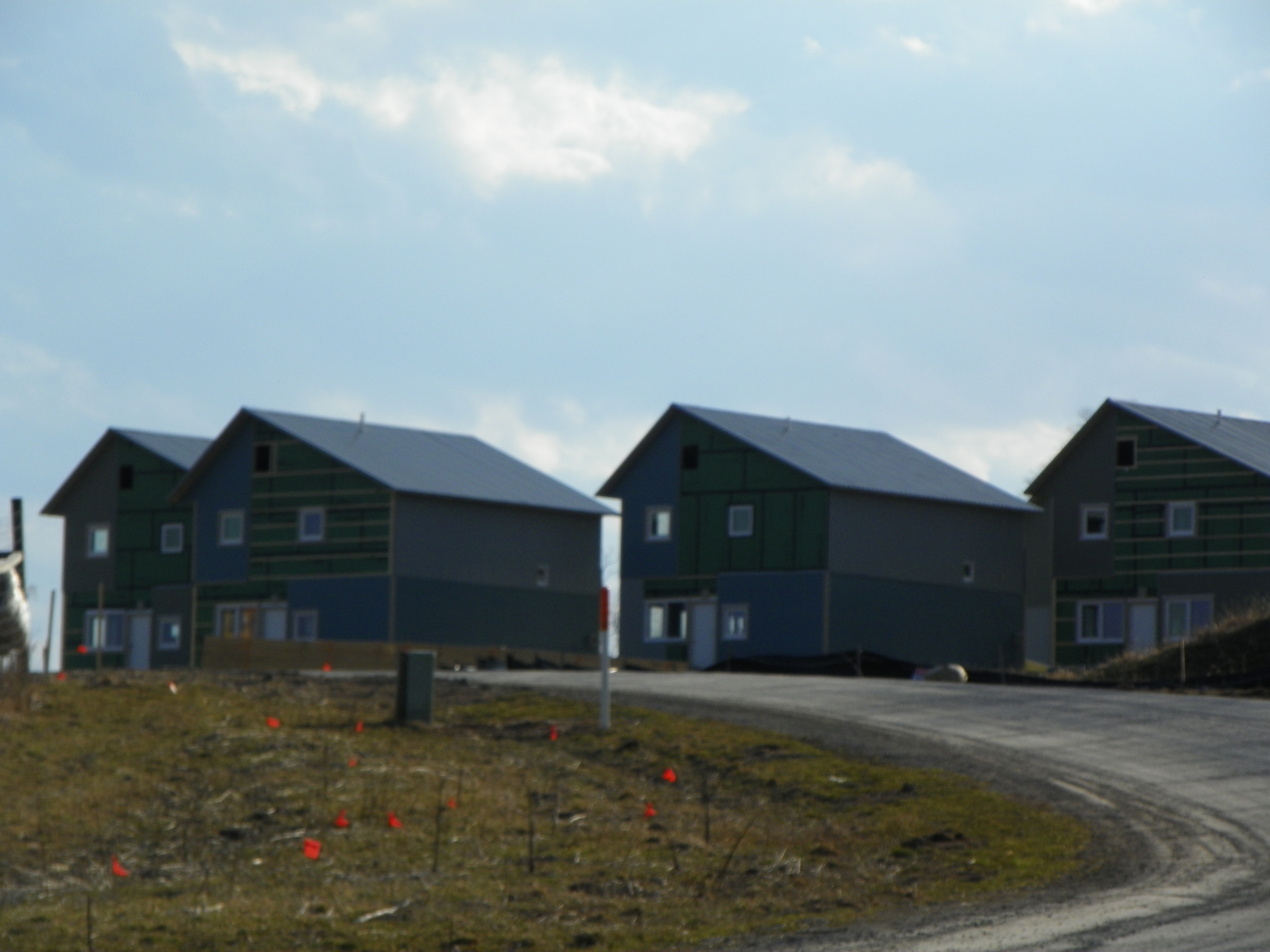
I’ll be doing a much longer post about this eventually, but the first new homes are underway for the Boiceville Cottages‘s 75-unit expansion out in Caroline. Currently, the site has about sixty units, 16 clusters of cottages and 4 3-unit buildings. The project will add 23 more clusters and two more 3-unit buildings. Also, I realize Caroline is a bit of a stretch, but it’s only a mile detour from 79, so carpe diem.

4-8-2013 352

Another place that will be getting a much larger write-up eventually. This is Ecovillage’s newest neighborhood under construction. The TREE project will add 40 units, in addition to the two previous neighborhoods of 30 apiece.

4-8-2013 206

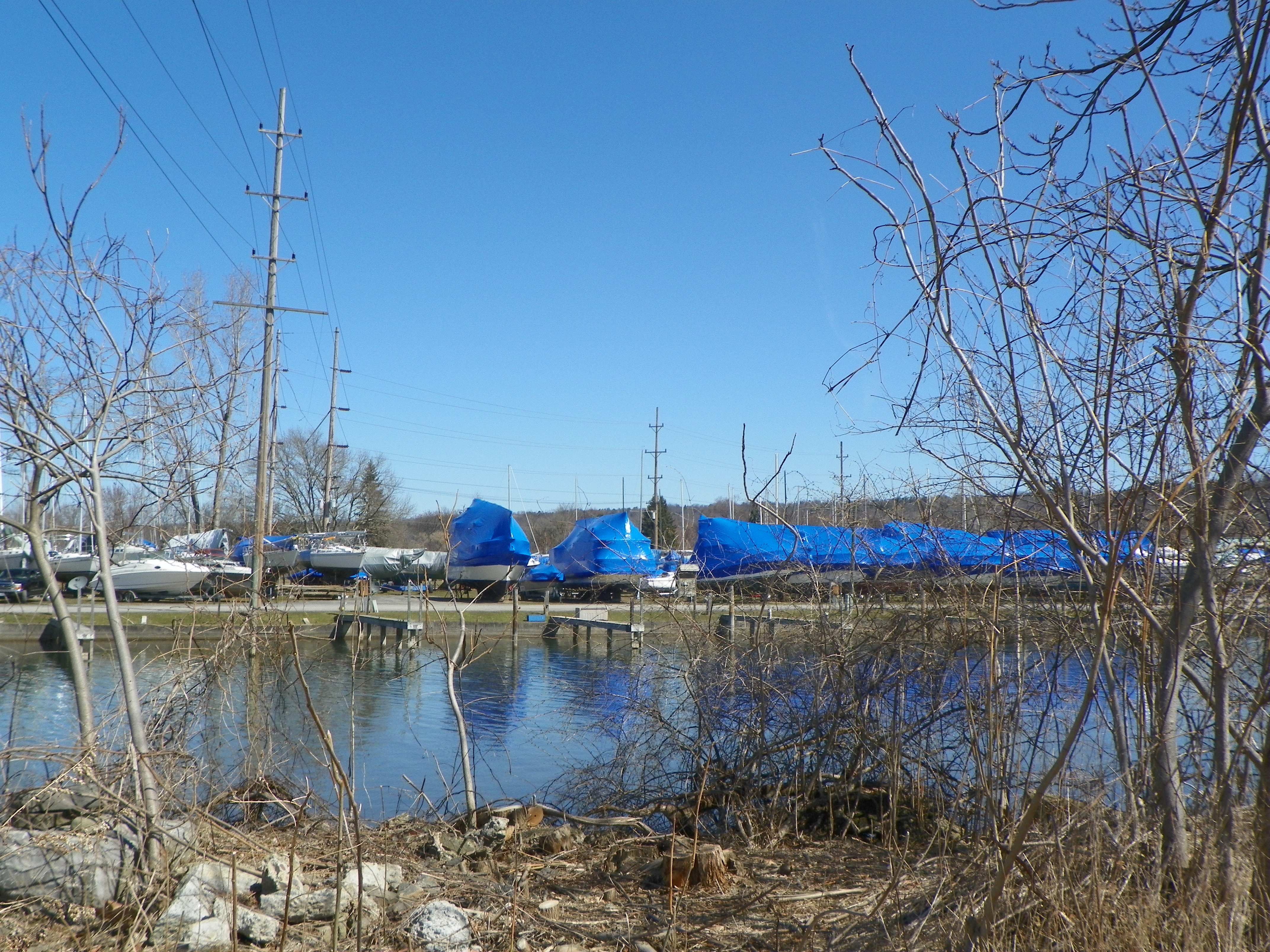
The site of Cascadilla Landing.  Site Prep is supposed to be begin shortly on the 150+ unit project.

4-8-2013 242

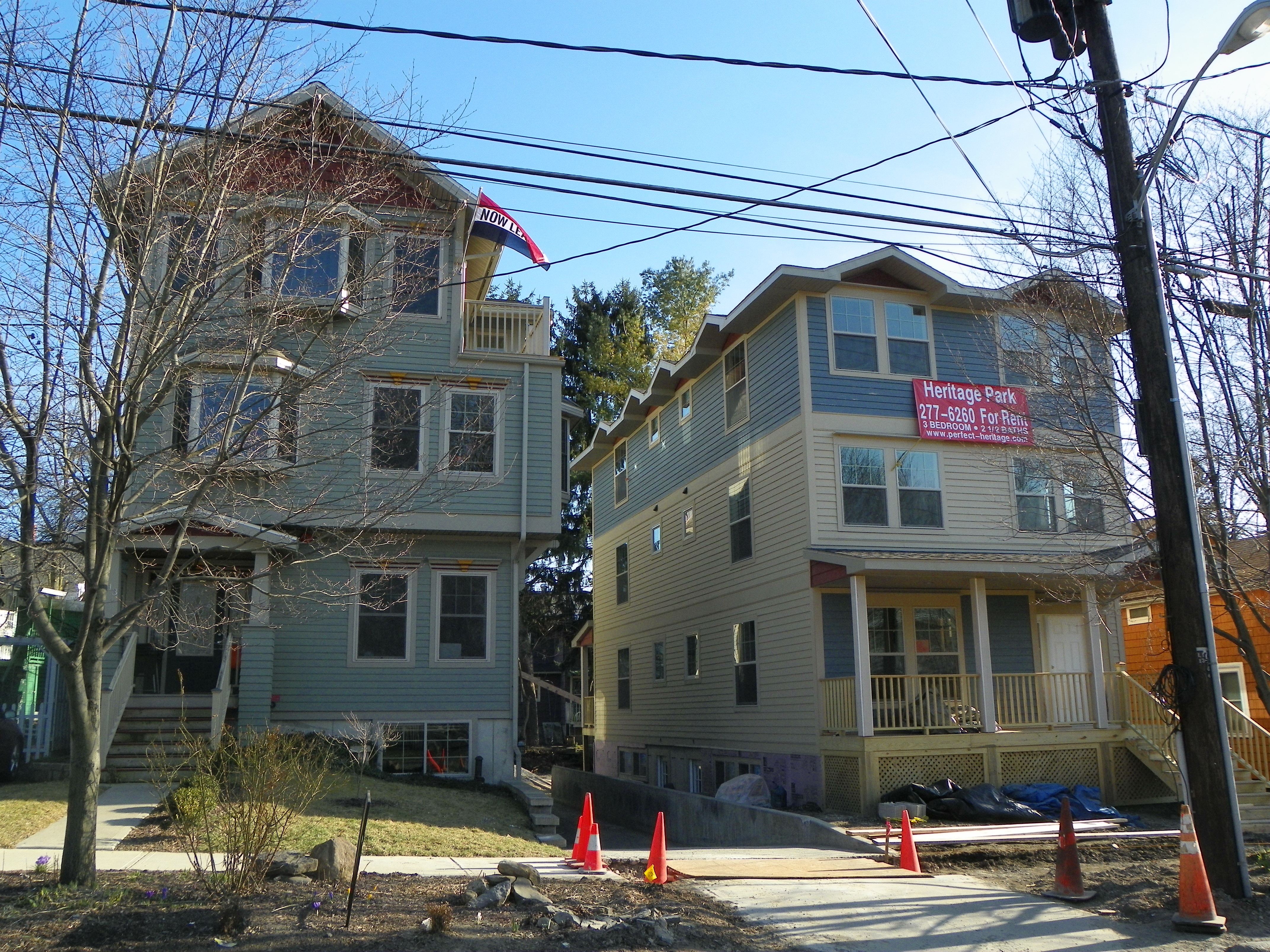
A rather unusual project, the Heritage Park Townhomes on Lincoln Street. I suppose these are supposed to be single family rentals, but I think it’s more like 3 units each. A bit ungainly and fussy, even though the detailing is appreciated.

4-8-2013 243 4-8-2013 244

The Aurora Street pocket neighborhood, by Cosentini Construction. 4 units, and a clever example of urban infill near the corner of Aurora and Marshall Street. The idea seems to have hit a market, as the builders are planning a second, similar development off of Lake Street.

4-8-2013 245 4-8-2013 251 4-8-2013 254 4-8-2013 255

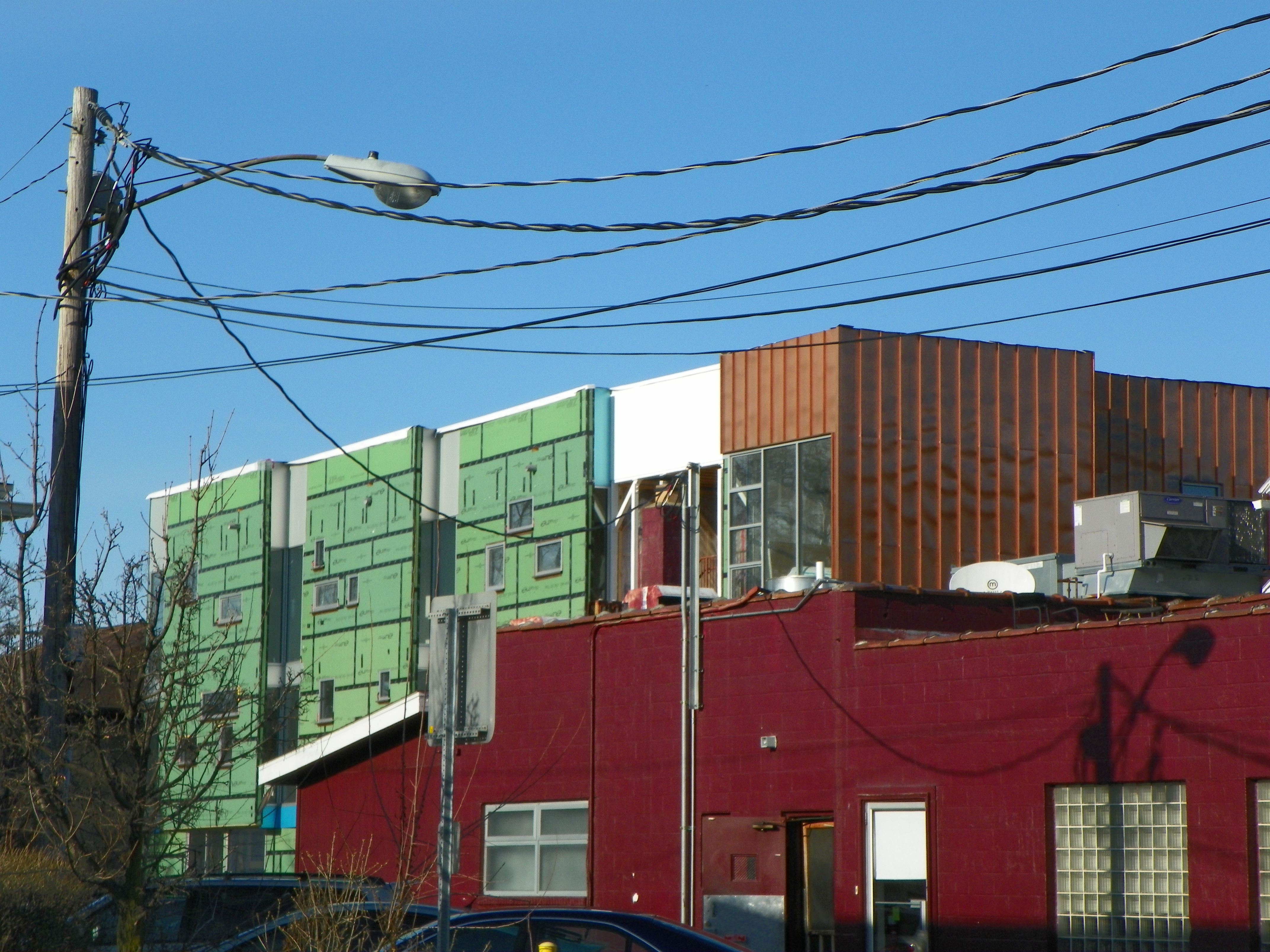
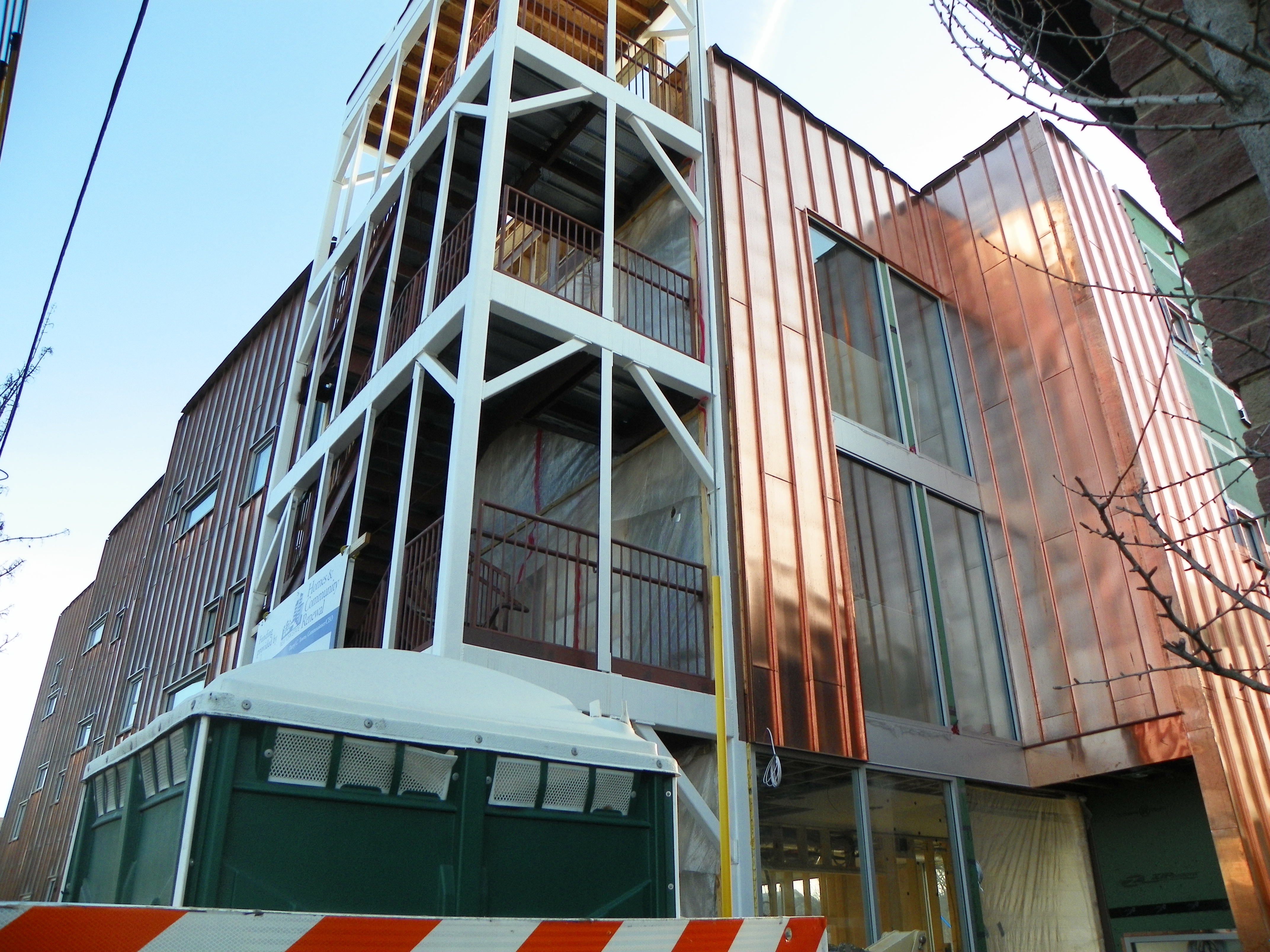
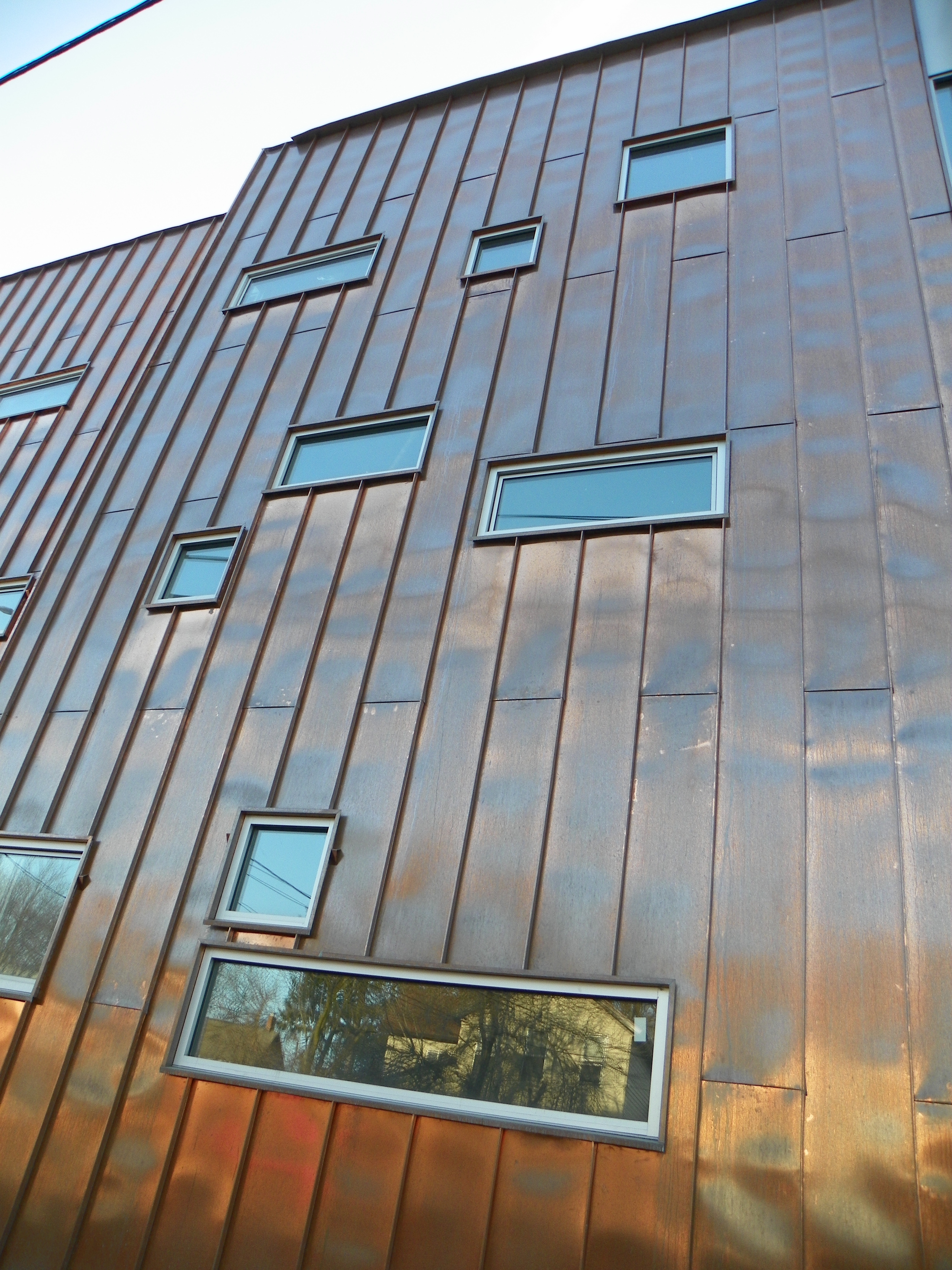
So, this threw me for a loop. The project is Magnolia House, a 14-unit shelter/home for homeless women, under the auspices of the non-profit Tompkins Community Action. At 3/4 stories, it is one of the most visible buildings in the immediate area, with the corten steel copper plating certainly doing its part. The copper is unusual, an interesting use of materials. The windows….hate. Hate, hate, hate hodgepodges.

4-8-2013 252

Although one day, the shelter may be overshadowed by a 5 or 6-story building with Purity on the ground floor. The project is still in the planning/approvals process, with about 20-24 units.

4-8-2013 250 4-8-2013 246 4-8-2013 247

The 24-unit Iacovelli project on Seneca is near completion, with facade installation and some interior work being all that is left.

…and wordpress has told me I’ve hit the limit on photos. Planned Parenthood and the Fairfield Inn will be included in the next entry.


Creeping in Collegetown

26 03 2013

12-29-2011 073

I have never understood, nor will ever try to understand, the fascination some have with invading the privacy of young college women in their apartments. A recent Cornell Sun article notes a case where a former Cornell student entered two apartments in the 312 College Ave. apartment building uninvited. These apartments were occupied by female students, who screamed and/or confronted the guy, causing him to flee. Apart from the obvious threat a guy like this poses, I couldn’t help but think that events like these have been going on for a while now.

My first thought was the “Collegetown Creeper”, a story that I already knew from when I was growing up north of Syracuse, because that’s how much of a media sensation it was. The creeper was tied into at least 18 cases, occurring in 2003 and 2004. Most of the earlier ones were cases of peering through windows into the apartments of young females. Then the creep factor was kicked up a notch in early 2004 when he would break in and watch them sleeping. By the end of his reign of terror, he had graduated to full-blown sexual abuse. At least one victim claimed her clothes were cut off and baby oil was poured onto her. As one might imagine, this created quite a stir, and by the fall of 2004, students were protesting outside Common Council meetings, demanding further action be taken on the issue.

The creeper was eventually arrested in late October 2004. The suspect was identified as Abraham Shorey, who at 23, a married father of six, and sporting Rastafarian-style dreads, seemed as unlikely a sexual criminal as any. Shorey was familiar with the Collegetown area and its crowds, as he worked as a cook over at The Nines. Before his arraignment on charges of burglary and sexual abuse, Shorey posted baiand fled the area. He managed to avoid arrest on two occasions  by producing fake IDs throughout his time as a fugitive. He was finally arrested a year later in San Diego, where he plead guilty to assault with intent to rape a San Diego County woman in May 2005. DNA evidence collected at the scene of the San Diego incident linked him as the perpetrator of the events in Ithaca from the previous two years. His sentence in California is seven years and four months, but the charges against him in New York were dropped for a number of reasons (time elapsed, difficulty locating witnesses, etc.)

Unfortunately, much worse has also occurred. Although technically not Collegetown, a 25-year old graduate student was raped and murdered near North Campus in May 1981, her body then dumped into the gorge. Her killer would graduate and go on to commit seven more murders in downstate NY and CT before being arrested.

Ignoring all the insensitive jokes students make about “forcible touching” here, female students at Cornell have every reason to be concerned for their safety, in the past, now, and for the foreseeable future.


Motivation for New Construction: 2012 Census Estimates

15 03 2013

11-24-2012 194

With over 2,500 housing units planned within the  county, and only so many increasingly spendthrift college students to exploit, local developers kinda need further justification to launch into such a building boom. The census is certainly supportive of their plans.

Following the new April 2012 census estimates (file here), from April 2010 to July 2012, Tompkins County has likely added another 990 residents, bringing the local population to 102,554. Interestingly enough, Tompkins and the bordering counties serve as a little growth pocket in otherwise declining upstate New York – Broome County, home to Binghamton, lost the most residents of any county, with about 2,540 shipping out, a drop of 1.3%. The largest increases upstate came in from Jefferson County (home to the growing Fort Drum), and Saratoga County (home to the very large and very new computer chip plant), with Tompkins in third with 1.0% growth. Given the 5.2% growth of the last decade, Tompkins is on par with its growth rate in the 2000s.

I should issue the token disclaimer that there are estimates, and the actual numbers can be a surprise when they come out in 2020. For instance, it was thought in the 2000s that Onondaga County/Syracuse lost 4,000 people over the decade – they gained 9,000. And I’m not sure how much I believe the rapidly suburbanizing Dutchess County, which hasn’t lost population since the 1890s, is believed to have lost people over the two year span. For Tompkins County in 2010, the original estimates were too high by a little over 200 (an error of about 4%).  Also, perhaps this comes as no surprise, the New York portion of the New York metro added about 160,000 people, cementing their belief that they are the center of the world and the rest of us just live in it.

Two of the numbers I like to throw around for a housing unit is that Tompkins averages 2.4 occupants for non-college housing, 2.0 for college housing. If we use that 990 figure, it can be broken down to 413 traditional units or 495 college student units – and that’s additional units required in two years, in a county already experiencing a housing shortage.  I’d say builders have all the justification they need for development in the near-term.


News Tidbits 3/6/13: Another Project, Another Closed Door

6 03 2013

A superstitious part of me can’t help but feel like I jinxed something when I wrote about cancelled projects in the Ithaca metro not long back. The latest victim is particularly unfortunate – Collegetown Crossing, the six-story mixed-use project proposed for the 300 block of College Avenue, in an area sorely in need of redevelopment.

In this case, the fault was not the developer’s. The Zoning Board of Appeals (ZBA) thought the project was asking for too much with its parking variance (there were lot size variances as well, but those are not the issue here). As much as I hate to admit it, I’m not surprised, as the variance was for 95% less parking than required, which is a steep order to ask for, even with the community benefits and the proposed mitigation. Granted, I tend to be a bit cynical when I think about details such as the head of the zoning board being a stakeholder in a competing developer, but the primary drivers of the rejected variance were permanent residents who felt that students would try and smuggle their cars and park on their streets several blocks away (and this I can’t argue with – I personally feel that there are many Cornell students that walk around with a sense of entitlement, and would think that they’re being “clever” and “beating the system” by bringing their cars and trying to be discreet about it). The phrase “dead in the water” is fairly appropriate, because the project cannot move forward unless the parking is added (unlikely) or the city amends its parking requirements (slightly more likely, but this would take a support of the Common Council, and a stretch of time to be approved and implemented).

***

On a slightly more optimistic note, the IJ notes that $250 million in private development is underway in 71 large projects and a number of smaller works through FY 2015. Notably, following the breakdown, the vast majority of these are apartment and hotel projects, with another chunk under the vague title of “mixed-use” – proof that tourism and education are big drivers locally. Of these, 30 are in Ithaca City and 18 are in the town; I can guarantee at least half are discussed on this blog, most with renderings. Lansing reports another 18 projects, most of which could be broken down into three categories: apartments and retail near 13, housing developments (of which I’m aware of about 5 off the top of my head), and projects tied into Lansing Town Center. The article never defines what constitutes a major project, and this could be responsible for some of the discrepancy in the number of projects.

Off the cuff, I don’t write about single-family housing developments for three reasons – suburbia tends to look fairly homogenous, I’m not a fan of sprawl, and they take years to build out anyway. The article notes 516 residential lots in some phase of execution.  Give me a Kentlandsstyle proposal and I’ll get the keyboard a-tapping.

Of further interest, 27 are purely apartment projects, with about 2,100 units. This doubles the number I estimated a couple months back. Some of this is because I only counted Ithaca proper, which was Ithaca city and town, Cayuga Heights, and Lansing village. Adding the 72 units in Dryden’s Poet’s Landing, the 75 units proposed with the Boiceville Cottage expansion in Caroline, and the few hundred units in Lansing town’s Town Center definitely bring the two figures two closer. The project in Danby I think is a factory consolidation.

Of the 4 hotels and 450 rooms – offhand, there’s the 106-room Fairfield Inn, the Holiday Inn addition (13 new rooms in gross or 195 newly built rooms, depending on your perspective), the Hotel Ithaca and its 160 rooms, and maybe the Hampton Inn proposal for 92 rooms, but the combined room total is off, so I dunno what’s being counted.

It’s a boom by most standards, and certainly welcome from the perspective of this blog. I just hope to avoid seeing more projects end up “dead in the water”.


Can a Polluted Past Have A Future?

21 02 2013
Image Property of Welch Construction Inc.

Image Property of Welch Construction Inc.

Real estate in Ithaca is fairly warm as markets go (I refuse to call it hot). But there are still some gaping issues in the metro market.  One of the biggest examples is one that can be seen from just about any southward vantage point above the lake lowlands – Emerson Power Transmission.

The property started as Morse Chain, which dates back to 1880 and began the manufacture of automobile chains in 1906.  Morse Chain was acquired by locally prominent BorgWarner in 1929, and the facility continued industrial production until BorgWarner built a new facility near the airport in 1983, selling the factory to Emerson Power Transmission. Throughout the 1960s and 1970s, several chemicals were used for “cutting oils”, removing oils from the manufactured automotive gears, shafts and chains at the tail end of the process. One of those was trichloroethylene, or TCE. TCE is a known carcinogen, and I’ll come back to this in a moment.

Unfortunately, the era of traditional manufacturing was fading in the Ithaca area. Emerson Power Transmission moved about 55 of its corporate senior staff to a suburban Cincinnati facility in 2007 (and I remember reading about it while a student at Cornell). The death knell came in August 2009, when Emerson announced it was closing up shop in Ithaca, putting 228 people out of work (the factory had over 500 people on site as recently as the mid-2000s, and had received tax incentives not long before closure). The closure was recent enough that this blog was already going, and the original entry is here.

At first glance, the property would appear to be potentially salable. It’s a large property in a well-populated and growing area with a substantial uptick in the real estate market. However, there’s one very, very big issue – the TCE contamination.

Although TCE use stopped by the late 1970s, the damage was done, and unknown quanities of it leaked into the groundwater and sewers. The site was declared contaminated by the state in 1988.

Since then, it’s been a series of long and contentious debates about who to hold responsible for what degree of clean-up. The city, the state DEC, and BorgWarner and Emerson had volleyed back and forth on who pays for what. 35 years after the chemical usage is stopped, yet nearby sewers have had to be replaced, soil tested constantly and excavated if contaminated, and groundwater / vapor testing in nearby properties. Essentially, a major environmental headache.

Although the brunt of the burden has fallen on government and Emerson to clean up (BorgWarner gets blame but seems to carry little if any of the cleanup cost), the site has been marketed for sale – $3.9 million for 94 acres plus structures (note that just the groundwater is contaminated, not the structures themselves – this isn’t Ithaca Gun). It was no surprise that with the remediation and continual testing, the site has been a tough sell.

All the more interesting, then, that the local chamber of commerce announced at a recent luncheon that someone is agreeing to purchase the property. Emerson’s in the final steps of reviewing the offer.  The property could be host to a variety of activities – the IJ article mentions a possible small business incubator like the one at the South Hill Business Campus (itself a former factory). Given the location, any number of industrial or commercial applications are possible, maybe even partial/total tear-down and redevelopment. The biggest obstacle apart from the lingering environmental concerns might be the fact that the property is split along the city and town of Ithaca, so both would have to accept any proposed redevelopment.  But still, any progress on the looming, decaying facility would be one of the surest signs of a “reinvention” of the area.


Klarman Hall

16 02 2013
Image Property of Cornell University

Image Property of Cornell University

The Humanities Building has a name – Klarman Hall. The building is named for Seth Klarman ’79, a prominent hedge fund manager and large-scale investor in pro-Israel organizations. Considering the construction cost  is at least $61 million, Klarman probably put up at least half of that amount.

A part of me wonders if there’s any cruel humor to be had in an investment banker with strongly pro-Israel views funding a humanities building where most of the students who will walk through those doors will hold an adopted dislike of him (due to his strongly capitalist tendencies, and Israel being an easy target for disdain given the conflict with Palestine). For what it’s worth, Mr. Klarman does keep a very low profile, and is considered fairly conservative as investors go.

Klarman Hall, which I have previously shrugged off as a token glass box, is set for a construction launch this summer, with completion in 2015. The building is planned to be LEED Platinum with low-energy everything and living roofs, and is designed by Koetter, Kim and Associates, a Boston firm founded by Cornell alumni.

In a twist any cynic would enjoy, it was discovered a few years ago that Goldwin Smith, the professor and namesake of the hall Klarman will be contiguous with, was a virulent anti-Semite.


Holochuck Homes Does A Belly Flop

14 02 2013

holo2

Well, as I said not too long ago, not all projects can be expected to succeed. Here’s this little gem from Edelman RE:

“Location, Location, Location! 106 LOTS APPROVED SUBDIVISION!Project is situated in heart of the Fingerlakes, minutes to the city of Ithaca and home to CORNELL UNIVERSITY and ITHACA COLLEGE. Dynamic LAKE views, abutting forever wild Black Diamond Trail compliments this rare opportunity. Adjacent to hospital and other professional services. Buyer has option to use designated plans or to use their own. This is your great investment!”

I thought about this for a moment. What project do I know that was approved for 106 units and abuts the Black Diamond Trail, and is close to the medical center? It’s not like there were many choices.

The project was finally approved last April after jumping through a larger number of bureaucratic loops, mostly because it’s in one of the most rapidly developing parts of the county. Among the requirements for approval including an unrestricted bus pass for each unit, and that 10% of the clustered one-and-two story townhome units be made affordable. So now, no units, no extra traffic…and no affordable housing, no extra tax income, and rising real estate prices and property taxes for an area that does not have enough supply for demand. At the very least, a waste of time for a lot of stakeholders in the project.

For the record, the land, project, and all its approvals, could be yours for a cool $7.75 million.