A Little More Cornell History

10 11 2008

Photos obtained from the book “Cornell in Pictures: 1868-1954”, compiled by Charles V. P. Young 1899.
000_2313

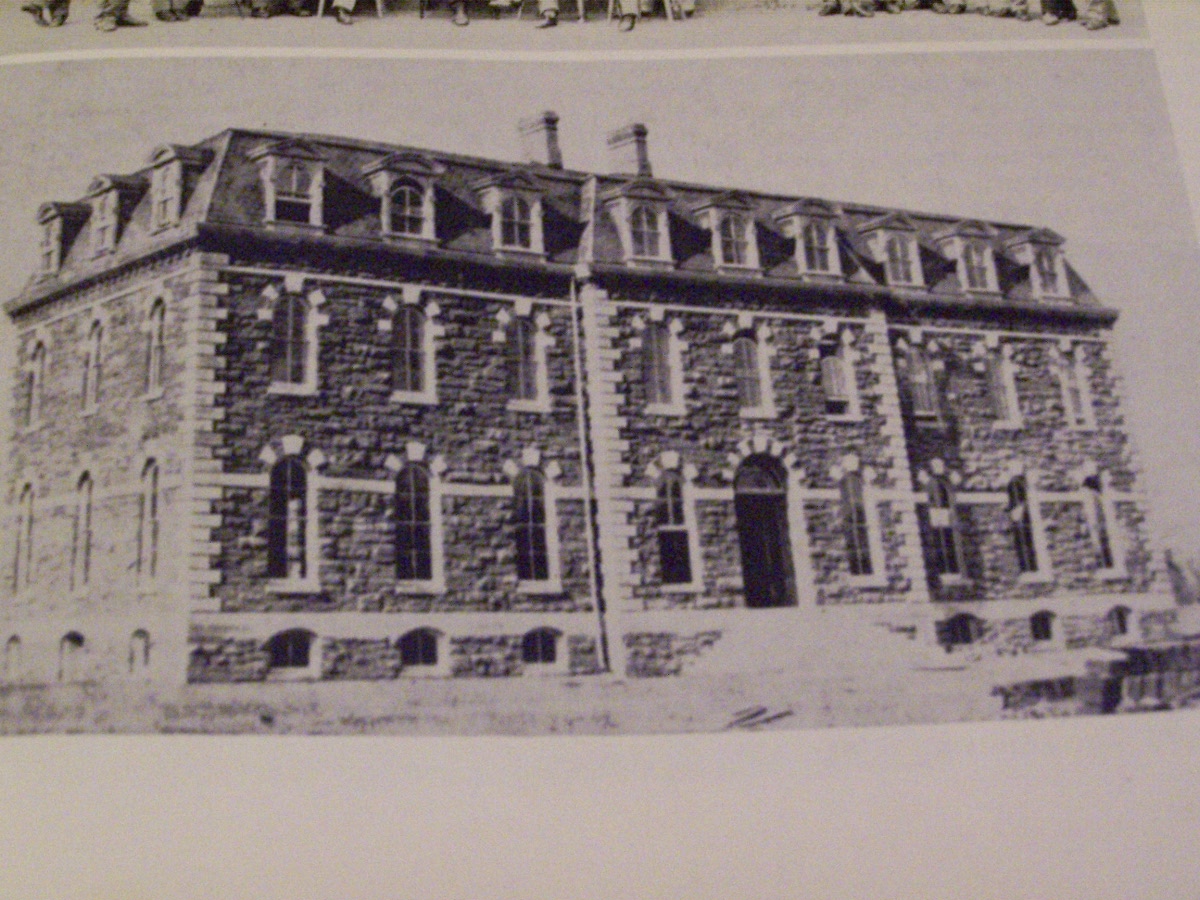
As mentioned previously, Sibley was constructed in three parts; the first, which is the West Wing of the current building, was built in 1870 and named for one of the original trustees of Cornell, Hiram Sibley. The East wind would be built in 1894,and the dome was constructed in 1902 [1]. Apart from stone Row, this was the first building that the University built that still stands today (the university did not build Cascadilla Hall).

000_2314

A map of campus, circa 1954. Some of the notable differences

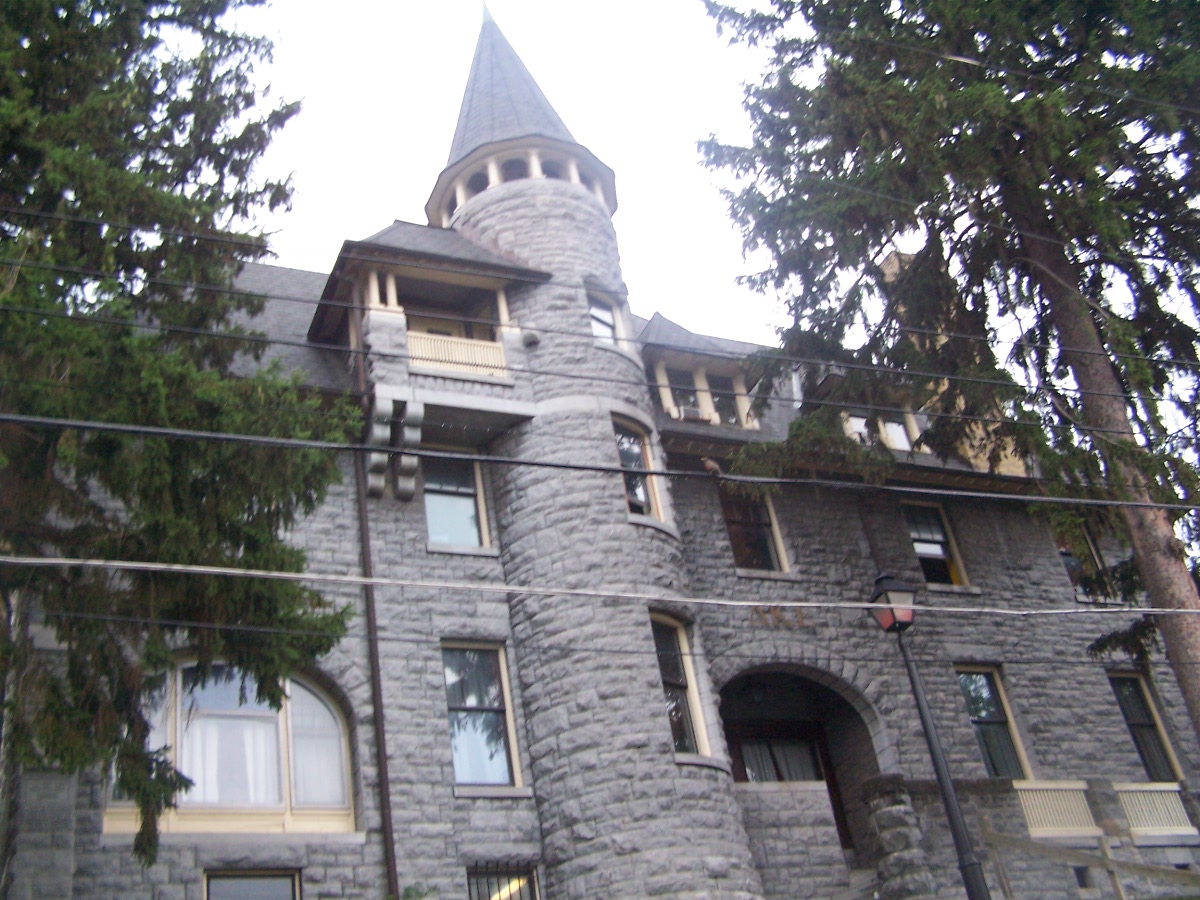
I. Kappa Alpha Society’s house was where Snee Hall stands today. The house was torn down to facilitate construction of Hollister Hall in 1957-58, so KA moved to South Avenue. The Old Armory, built in 1892, was also torn down.

II. The road that was Central Avenue up until the 1990s cut between Franklin (Tjaden) and Sibley. Morse Hall would be torn down within a year of this map’s publication to make room for a parking lot, which would then be replaced by the Johnson Museum of Art that began nearly two decades later.

III. Boardman Hall is still there…in terms of aesthetics, I wish it was still there today too.

IV. ILR was located in temporary buildings (quonsets) on the Engineering Quad (which still had yet to fully develop). Law Hall, Moore Lab and the other smaller buildings where the ILR school stands today were the vet school buildings. Schurman Hall would come on line five years later, which facilitated the demolition of Law Hall in 1959, and for the construction of Ives Hall and Catherwood Library, which would be completed in 1962.

V. The Johnny Parson Club. More on that later.

VI. Alpha Xi Delta’s House is where the Prospects of Whitby co-op is located today. AXiD closed in 1964 and would be off campus for 40 years. Even the house they live in today is still own by Delta Phi Epsilon sorority (which closed the year before Alpha Xi Delta was brought back to campus). Chi Omega lived in the light purple house with the red tile roof on Wait Avenue, and would move to Phillips House (Sigma Alpha Mu’s current house) when that building was built on Sisson Place in 1956.

000_2315

A poor photo (my shaky hands, I regret) of the Statler Inn. Prior to the 150-room hotel built in 1986-87, the Statler Inn was the premier facility, with “modern classroom” and 36 rooms. Another hotel was located in the upper floors of Willard Straight Hall where the lofts are today, and those would play a prominent role in the takeover of Willard Straight in 1969.
000_2316

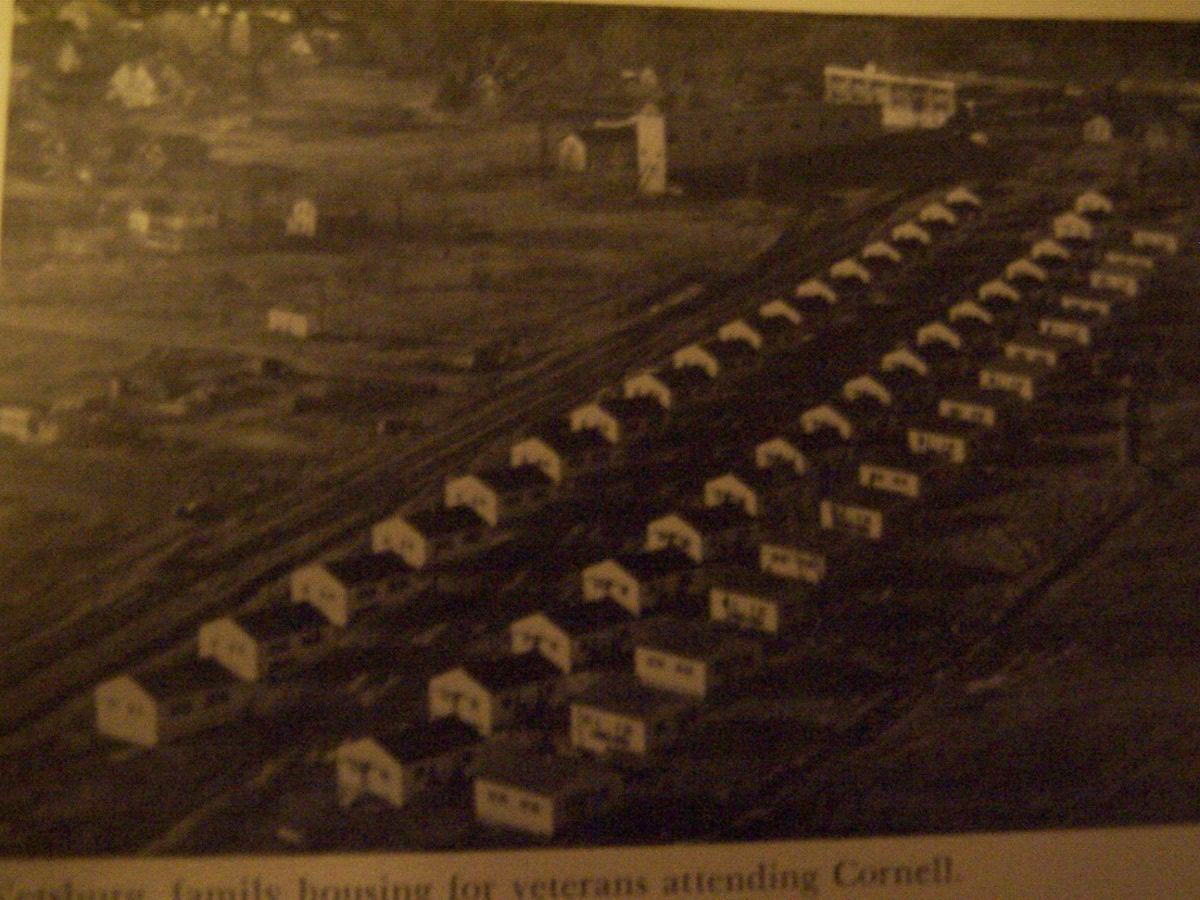
Prior to the Maplewood Apartments, veterans attending Cornell post-WWII had the option of living with their families in “Vetsburg”, on Maple Avenue.
000_2317

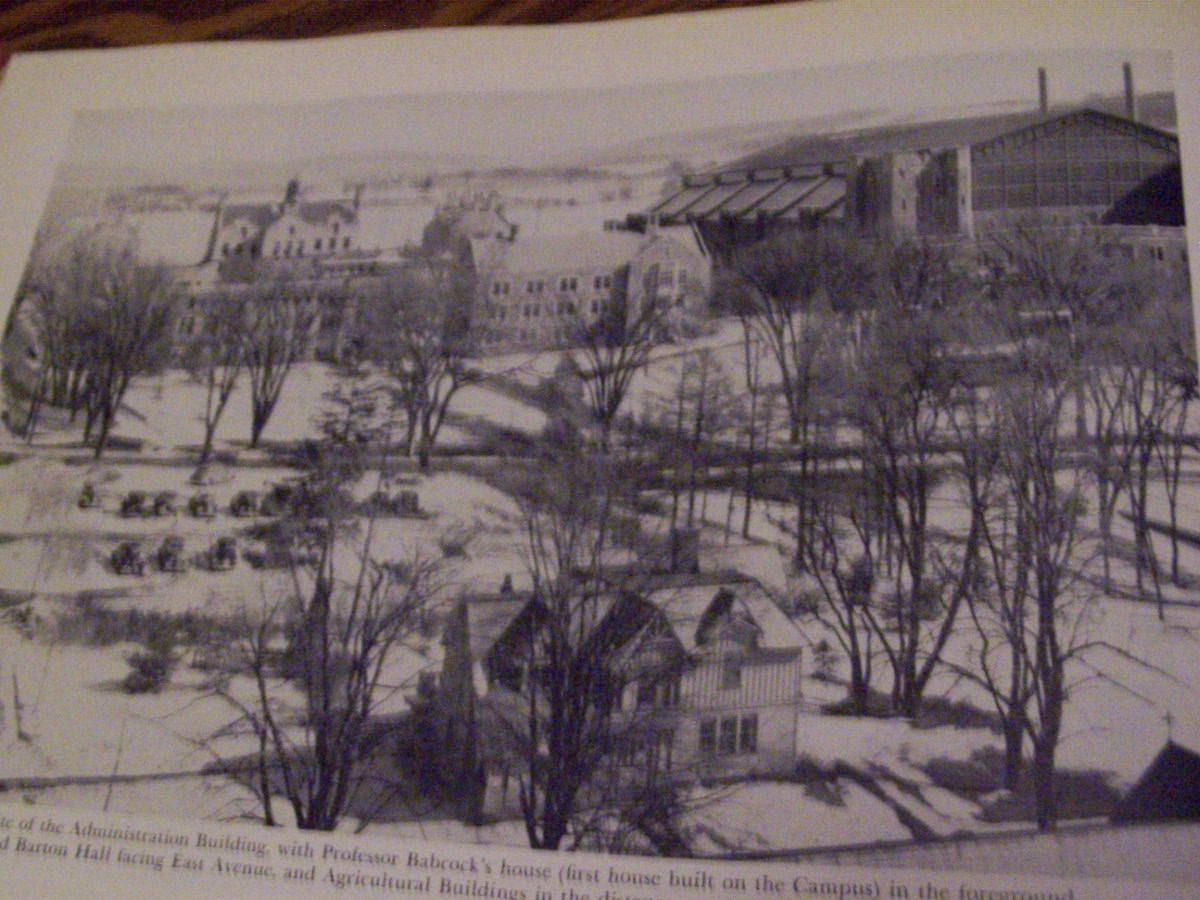
Back in the days before Day Hall, the lot was the site of a parking lot and the house of Professor Babcock, which was the first faculty house built on campus. Back in the day, it was common for houses to be on campus, where the Human Ecology school is today, where the Engineering Quad is today, and even on Central Campus. This was the last central campus house, and it was torn down to facilitate Day Hall’s construction (completed 1947) [2].

000_2318

To save my breath, I’m going to quote a DUE from August 23, 2007:

“The Johnny Parson Club was named after a mechanical drawing professor in the Engineering college from 1895 to 1938. It’s said that he was the one who established ice skating on Beebe Lake.  In addition, it was he who began the Cornell hockey tradition, by encouraging students to form a team.  In 1922, the University built a two-story facility where skaters could spend time, eat, drink, and warm up, naming it after Professor Parson.  However, in 1958, when skating events were moved to Lynah Rink, the University chose to take down the top two floors of the Club.  The remaining basement area was covered and is now used by Cornell Outdoor Education. [3]”

Rather nice place, from the looks of it. Tudoresque.

000_2319

Bacon Baseball Cage. The first Cornell mascot bear, Touchdown I, was housed here in 1915. [4] The building would be taken down for the addition of the press-box and more seats at Schoellkopf.
000_2320

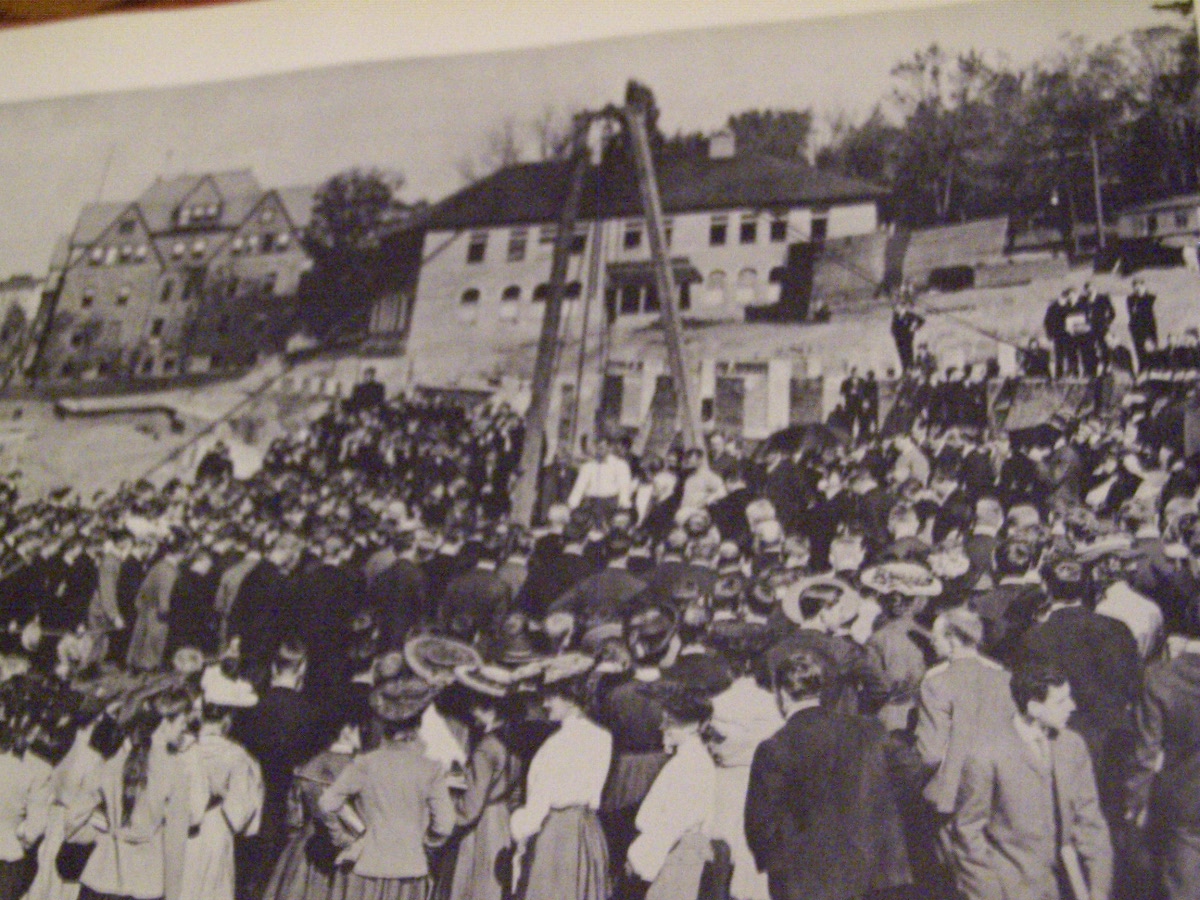
Laying the cornerstone for Goldwin Smith Hall in 1902. The building that is currently the north wing was constructed earlier on as the Dairy Science building.

000_2321

Law Hall, a couple small ag buildings, and the third observatory. It would be torn down for Barton Hall in 1915, and replaced with the observatory on north campus in 1924.
000_2322

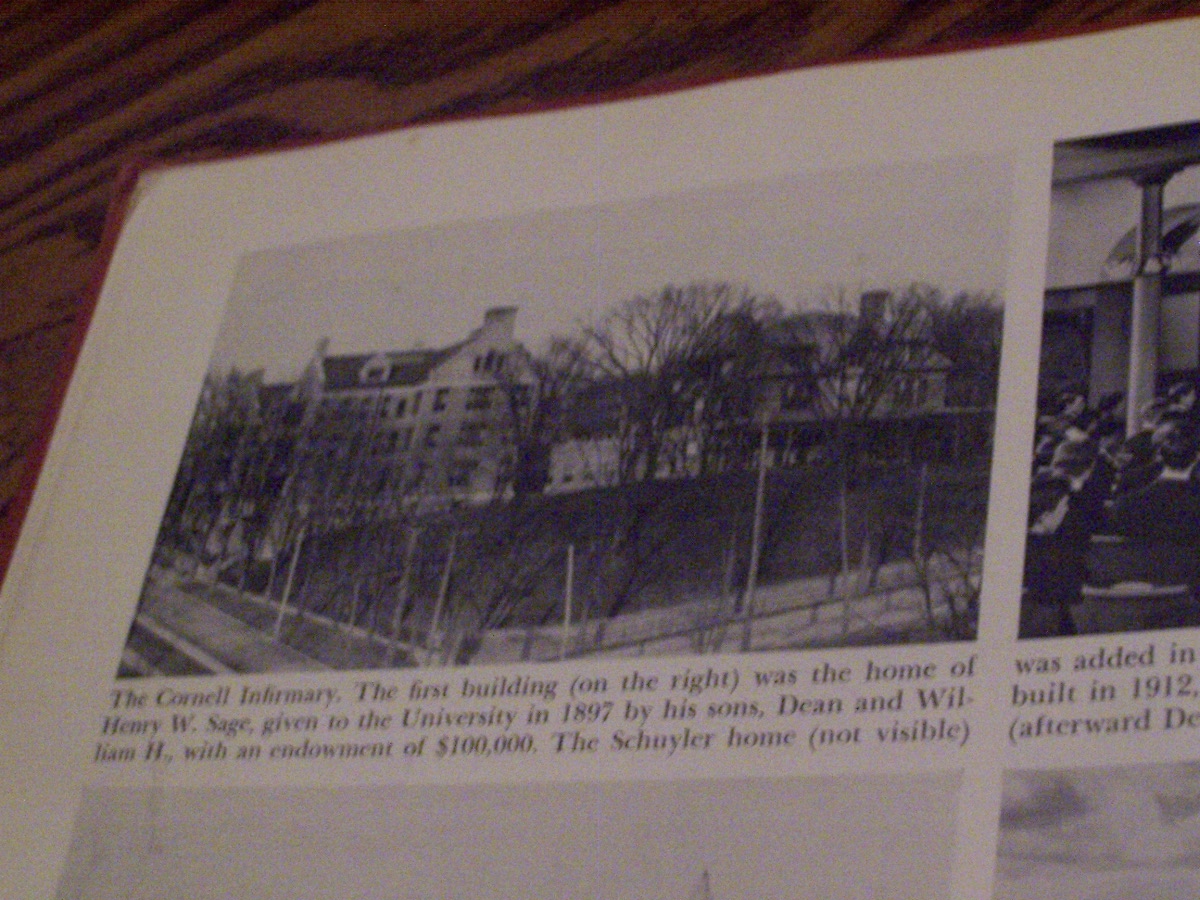
Schuyler House, the grad dormitory, used to be Cornell Infirmary. Next door is the Sage House. This was a time when students lived down the hill in fraternities or boarding houses, so it made sense to have the infirmary between the city and the college.

000_2327

Speaks for itself. Screw pumpkins on the clock tower, I’m going to go tear down the bridge into Collegetown.
000_2326

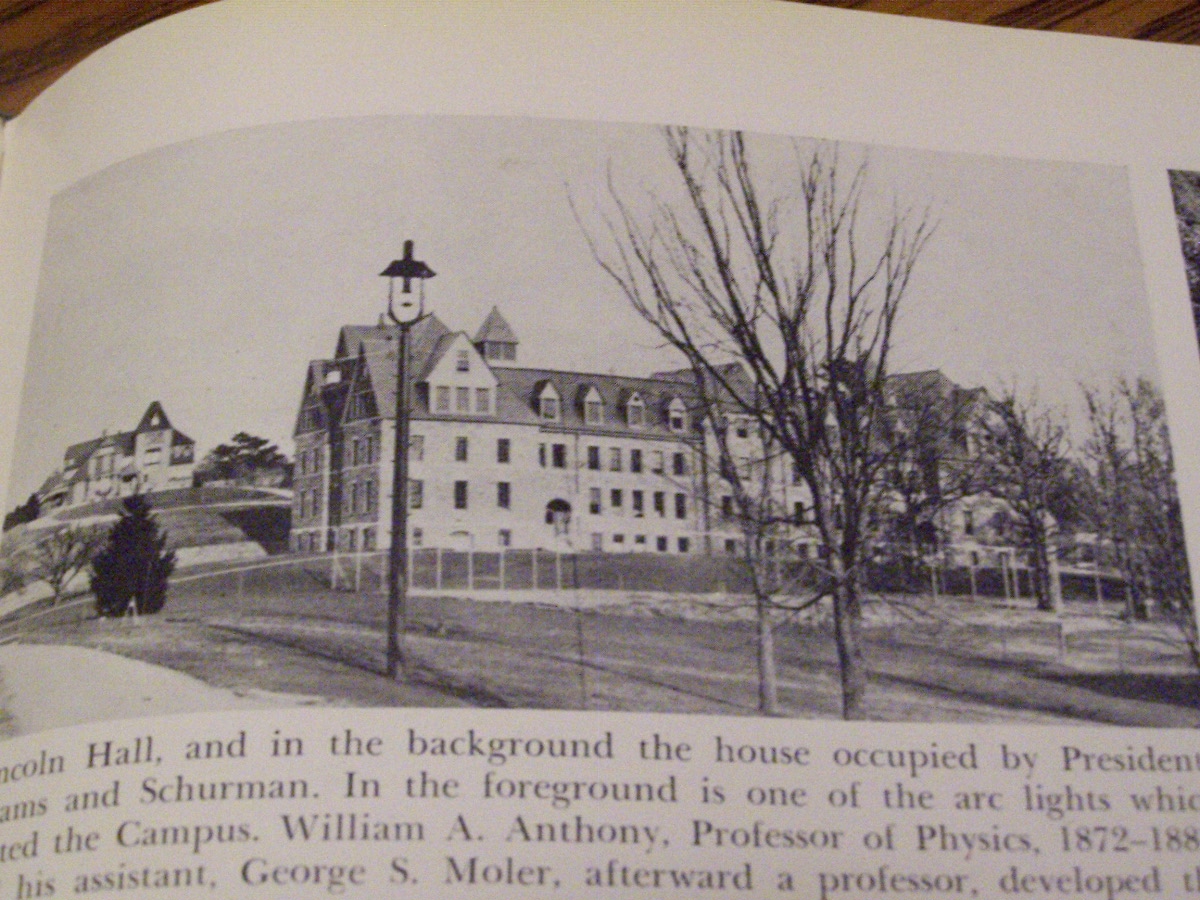
Fancy arc lighting. The house in the back was the stately home of Presidents Adams (1885-1892) and Schurman (1892-1920). It was torn down for Baker Lab shortly thereafter.
000_2325

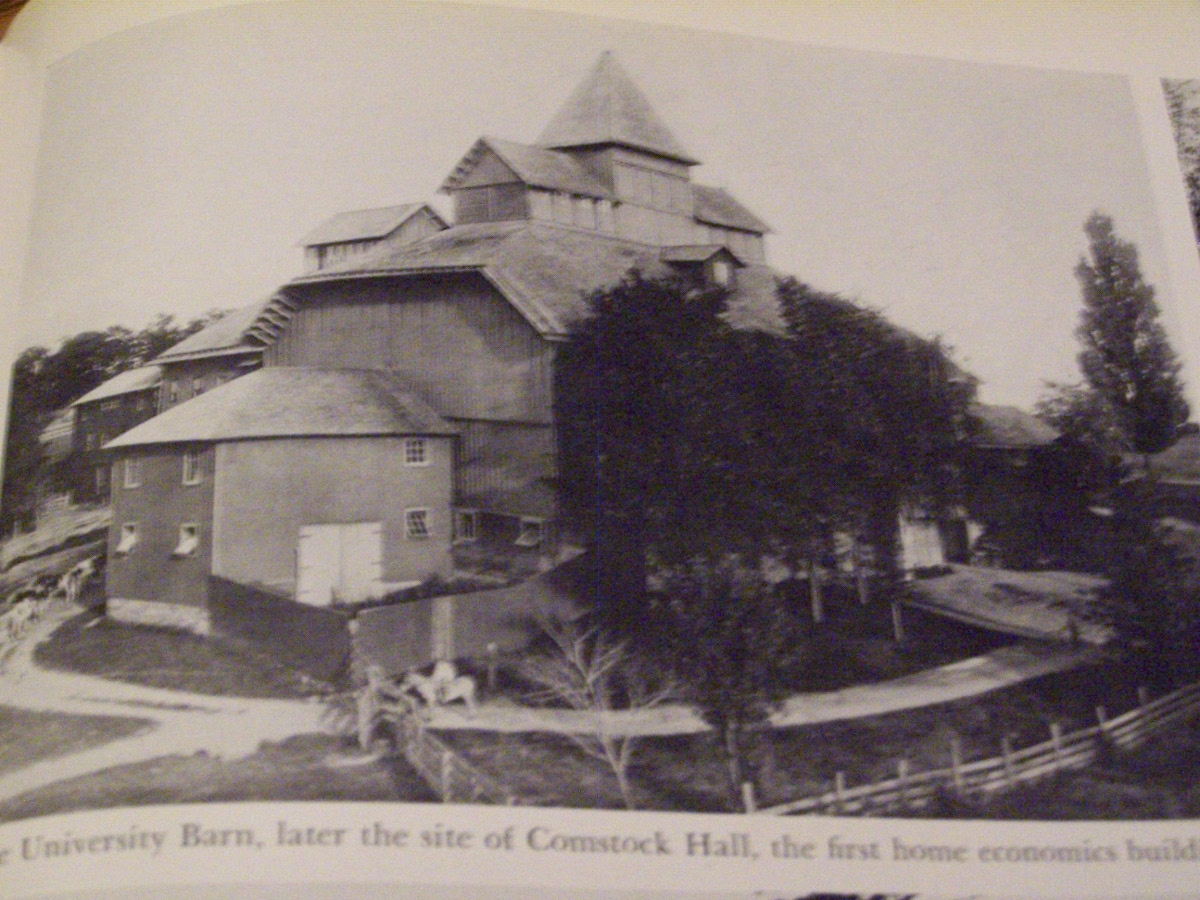
All the functions of a 1900s barn (where the CCC is today), all the appearance of a redneck’s idea of Count Dracula’s castle.

000_2323

Can we reconstruct this building as a dorm? Please? Hey, I know Morse Hall was burnt down by a fire and all in February 1916, but the design can be retrofitted with today’s safety standards. Really.

[1]http://www.cornell.edu/search/index.cfm?tab=facts&q=&id=651

[2]http://www.cornell.edu/search/index.cfm?tab=facts&q=day%20hall&id=239

[3]http://ezra.cornell.edu/posting.php?timestamp=1187848800

[4]http://cornellsun.com/node/17613


More Random Cornelliana

13 10 2008
Because you’ve probably never been in most of these buildings anyway.

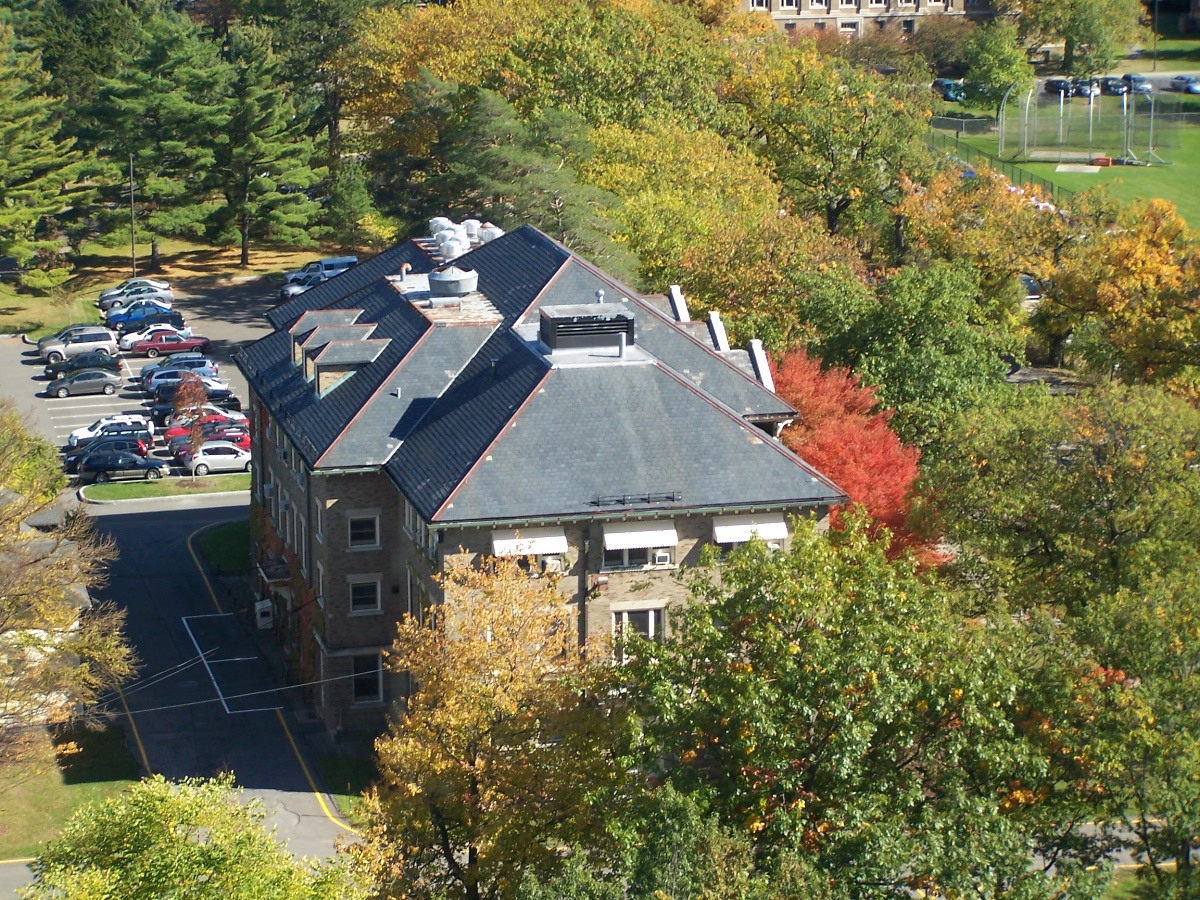
Rice Hall. The building on the left, obscured by the trees, is colloquially known as “Little Rice Hall”. Located on the National Register of Historic Places [1], Rice Hall was built in 1912 and designed by the architectural firm Green and Wicks [2]. Rice Hall was intended as a peripheral building to Stone, Roberts, East Roberts, Caldwell and Comstock Halls. The building is home to Cornell’s “Center for the Environment” (yet another academic think tank) and is a hodgepodge of SNES and Crop and Soil Sciences. The building is named for James E. Rice 1890 [5], who taught the first course in the country on Poultry Husbandry (the building was originally for poultry husbandry, which is likely why it’s such a clusterf*ck now).

Fernow Hall is another of Green and Wicks’ works, being constructed three years later in 1915 [3], and also sits on the National Register of Historic Places. For the record, all that means that it’s old and likable. It must not mean much for architectural merit, otherwise we’d still have Roberts, Stone and East Roberts. The building is primarily used by the Dept. of Natural Resources. The building was known as the Forestry Building from 1915 to 1922 [4], and was dedicated to Bernhard Fernow, Dean of the College of Forestry (a sort of predecessor to the natty rys dept., which failed only five years after its inception in 1898, because the state received threats that if Cornell would be spoiling summer cottage retreats in the ‘Dacks for commercial purposes, wealthy state residents would reside elsewhere).

The original Comstock Hall, now the Computing and Communications Center. The hall was built in 1912 and named for renowned entomologist John Henry Comstock 1874 [6], and originally housed entomology. In some twisted sense, the same firm that designed this building would design the later Comstock in 1985. After Cornell granted moving the name to the new building, the old Comstock was renovated into (C3), CIT’s Operations Unit, in the late 1980s. Prior to that, CIT was out in Langmuir Labs in the Office Park in Lansing, and before it left for Lansing in 1967, CIT’s main computer lab jumped between Rand and Phillips Halls [7].

A lot can change in 70 years. The original Comstock (formerly Academic II) was a corroboration between Green & Wicks, and the firm Hoffman, O’Brian, Levatich & Taub. The new Comstock was by the shorter “Levatich and Hoffman”. I think our tastes have gone downhill, ladies and gentlemen. Anyways, the new Comstock houses entomology and the little-used Entomology library (I just want to say that, as a CALS student, I’ve only ever met two entomology majors in my time at Cornell).

Corson-Mudd Hall (Corson is the east wing). Named for former university president Dale R. Corson and philanthropist Seeley G. Mudd (who has a crapload of buildings named for him on college campuses across the country [9], the building was completed in 1981 [8].

Technically, it’s possibly to get to nine seperate buildings through the tunnels and walkways of the AG Quad. Bradfield is connected to Emerson Hall (the lowrise portion), which is connected to Fernow Hall at one corner and to Plant Sciences from the second floor hallway. Through Plant Sciences, there are two ways to get into Mann Libe (ground, which involves being outside for ten seconds in the tunnel towards Manndible Cafe, and a less-used second-floor stairway). Mann is connected to Warren Hall. Plant Sci also has a connection to Weill Hall through its basement, and the tunnel runs underneath the street to the basement of Weill. The public use of this tunnel is not clearly stated, so try it at your own risk. Weill also connects to Corson-Mudd and Biotech through tunnels.

So, I’ve already told the story of the Roberts-Kennedy complex once before, but I’ll do a partial rehash. The building is named for Issac Roberts, an early professor, and 1970s CALS dean W. Keith Kennedy. Originally, Stone, Roberts and East Roberts stood on the site.

Roberts, Stone, East Roberts

L to R: Roberts, Stone, East Roberts

The three were built around 1906. While they were national registered historic buildings, Cornell rather covertly had the designation removed, in a move that angered many traditionalists. The buildings were imploded in 1988-89. The original proposal for Roberts-Kennedy Hall was a 10-story building where Kennedy stands. Well, that didn’t go over too well, so they essentially pushed it onto the side and made a “breezeway”. The two were completed in 1990. Trillium is technically a part of Kennedy Hall.


[1] http://en.wikipedia.org/wiki/Rice_Hall

[2]http://www.fs.cornell.edu/fs/facinfo/fs_facilInfo.cfm?facil_cd=1040

[3]http://www.fs.cornell.edu/fs/facinfo/fs_facilInfo.cfm?facil_cd=1029

[4]http://www.dnr.cornell.edu/mission/history/

[5]http://books.google.com/books?id=jUu9pDRhWjkC&pg=PA295&lpg=PA295&dq=%22rice+hall%22+cornell&source=web&ots=Mp_YbfQomX&sig=dQmUQ68KhXUqtys6MW5lwXXPF_s&hl=en&sa=X&oi=book_result&resnum=10&ct=result#PPA401,M1

[6http://www.agriculture.purdue.edu/agcomm/newscolumns/archives/OSL/2005/October/051027OSL.htm

[7]http://www.cit.cornell.edu/computer/history/timelines_locations.html

[8]http://www.fs.cornell.edu/fs/facinfo/fs_facilInfo.cfm?facil_cd=1019E

[9]http://en.wikipedia.org/wiki/Seeley_G._Mudd


Arts Quad Photos

30 08 2008

Some people suggested that I might consider sharing a little history of a few of the campus buildings for those that are interesting. Well, it’s Friday evening, and I’ve already enjoyed a private 21st birthday celebration for a friend. So, why not?

Rand Hall, built in 1912, was built in the industrial style typical for the time period. The building was donated by Mrs. Henry Lang in honor of her father Jasper Rand [1], and her ubcle and brother of the same surname. The building housed machines shops as part of the Sibley School of Engineering, and eventually was reworked to be the studio for many of the architect student as part of the AAP school.

For those of us who aren’t architects, we rarely see the interior. We do, however, see the designs and phrases bored architects create on the compound windows.  The building has been proposed for demolition in recent years to make room for proposed addition to the AAP school (see the Milstein Hall entry), but the current design proposal for Milstein Hall spares the structure for the current time. The building doesn’t tend to make much news, with the slight exception of a time a peacockfrom a Cayuga Heights home broke into their computer lab a couple of years ago [2].

Lincoln Hall, across the path, has seen a much more varied history than its workhorse neighbor. Lincoln Hall was built in 1888 at the then-cost of $72,603, and housed the Civil Engineering until 1960 (it moved to Hollister Hall). The building was renovated for the music department, and they moved in the following year [3].

Lincoln Hall saw an 18,640 sq. ft., $19 million dollar expansion from 1999-2000 (the addition is on the left side of the photo). The firm that designed the addition also designed Kroch Libe in 1992 and the Law School addition in 1988.

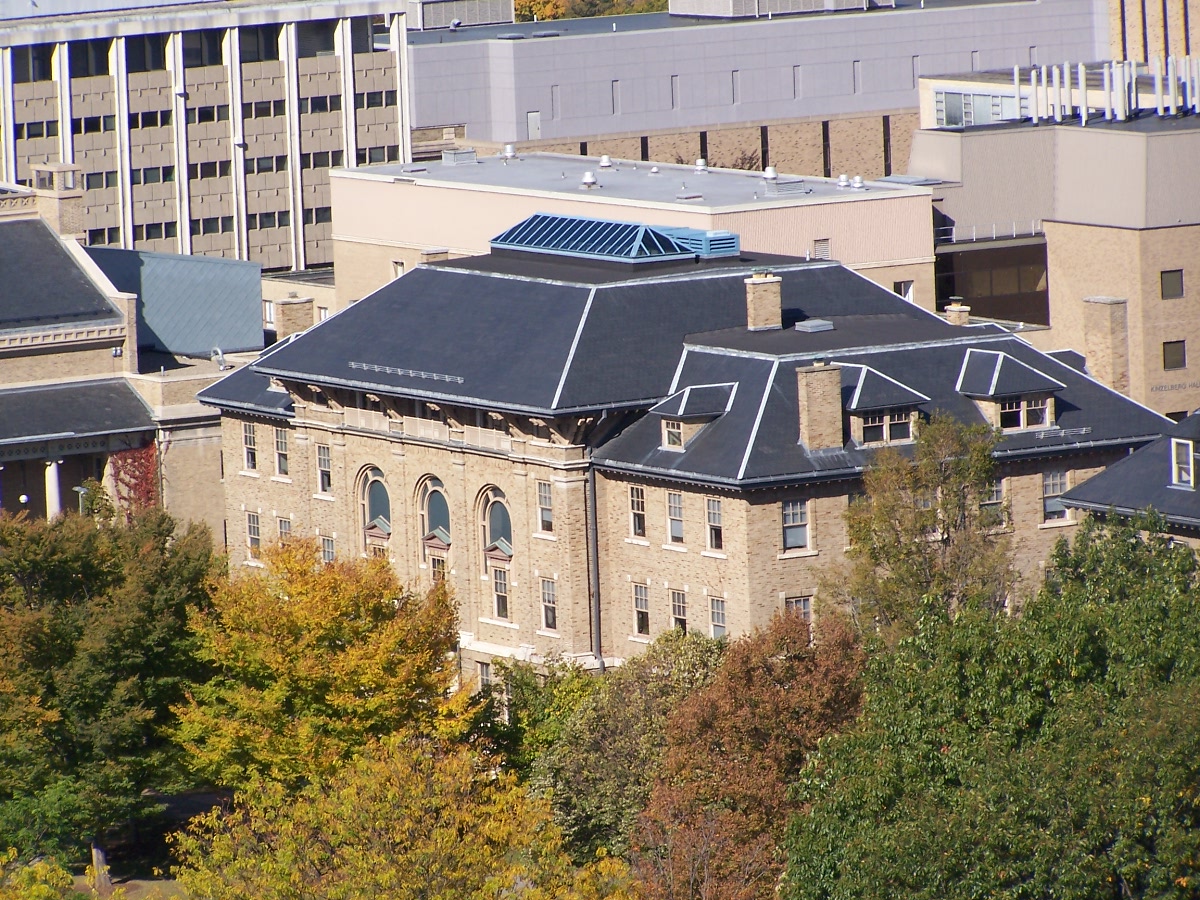
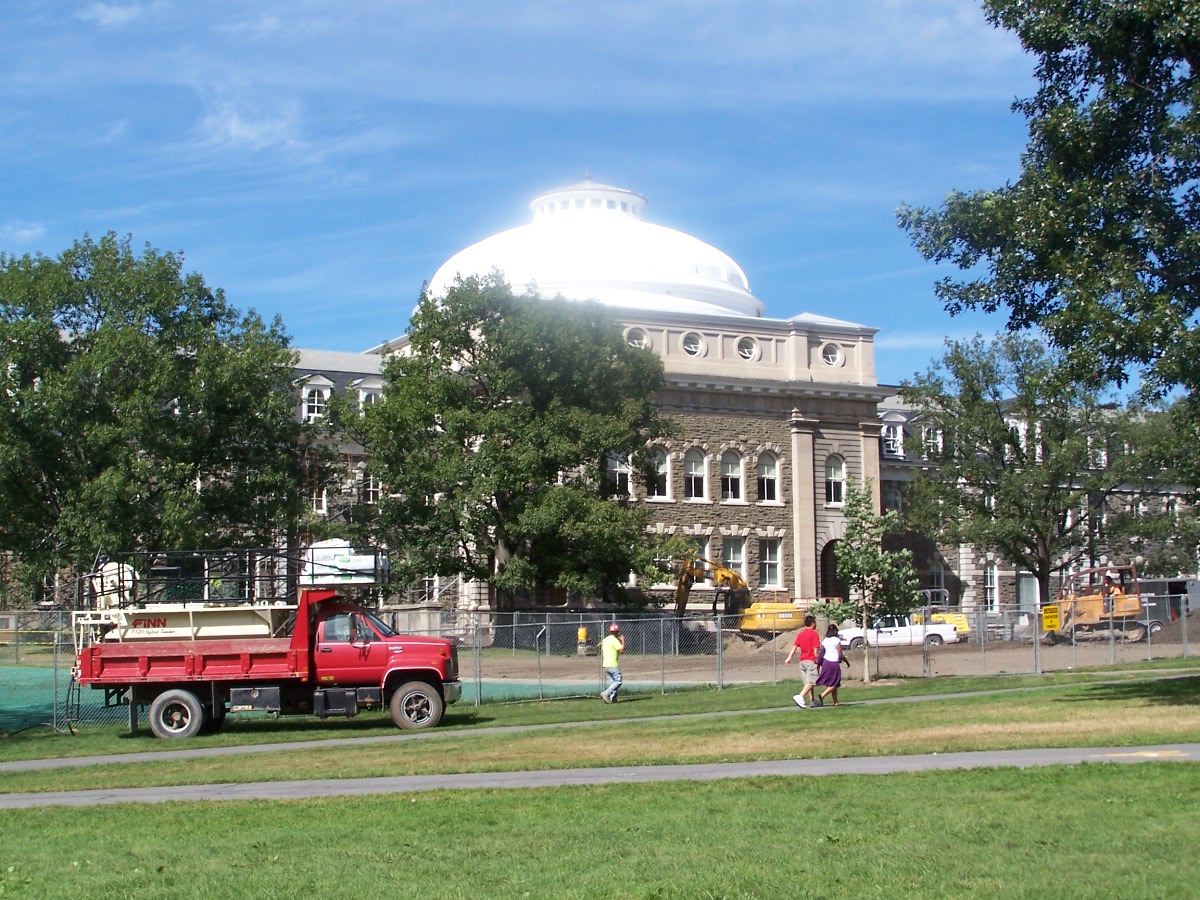
Sibley Hall, namesake of Hiram Sibley, has three seperate wings built at three seperate times. The West Wing began construction in August 1870. The building was dedicated to the “mechanical arts”, as so deemed by Hiram Sibley, an original trustee of the university. Sibley donated the money hinging on A.D. White building himself a president’s house on the campus [4]. The east wing was built in 1894, and the center area, including the photogenic dome, was built in 1902. Although the three portions were designed by three different architects, they form a relatively cohesive single structure that serves as the nucleus of the AAP school. The center area houses the Fine Arts Library.

The construction in the photo is some pipe work, and Sibley underwent minor renovations during the summer to make the building handicap-accessible, and to add more bathrooms to the structure.

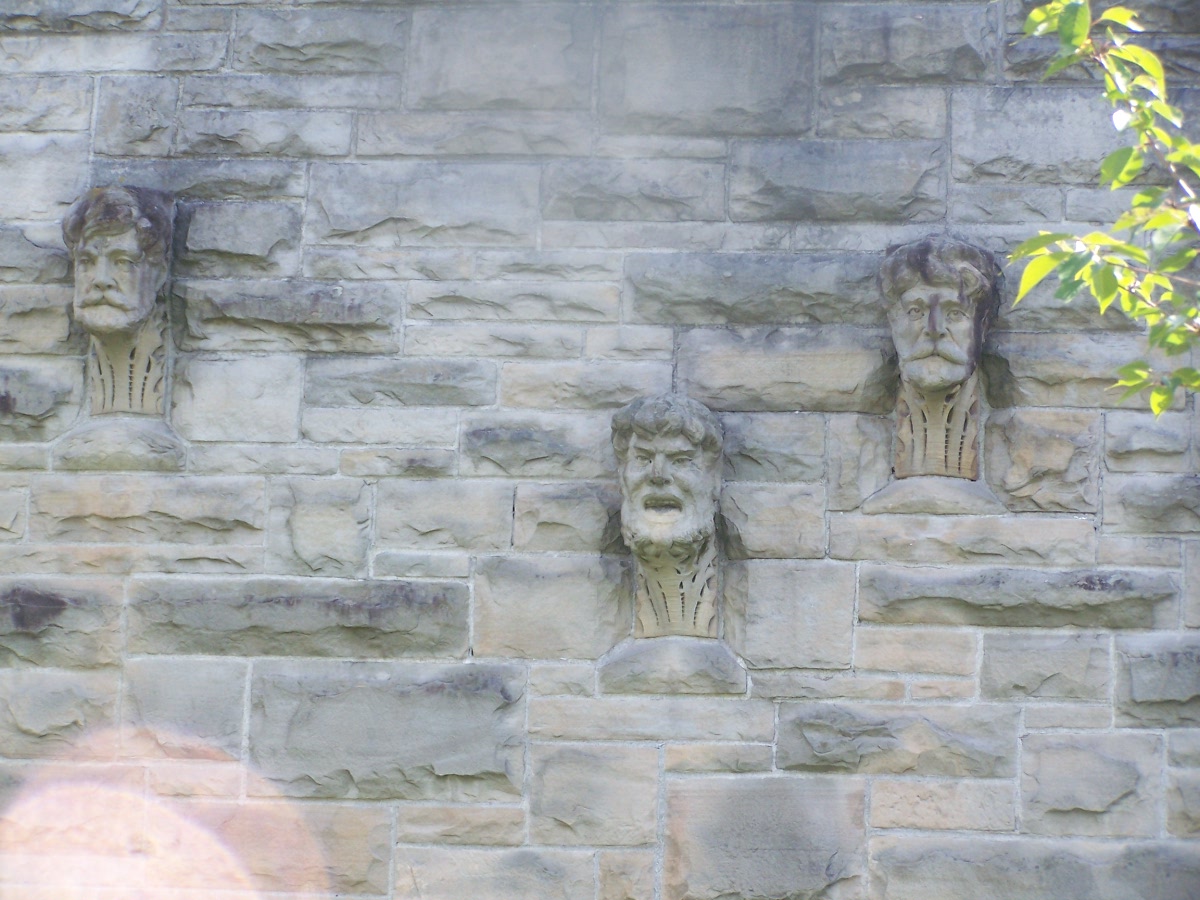
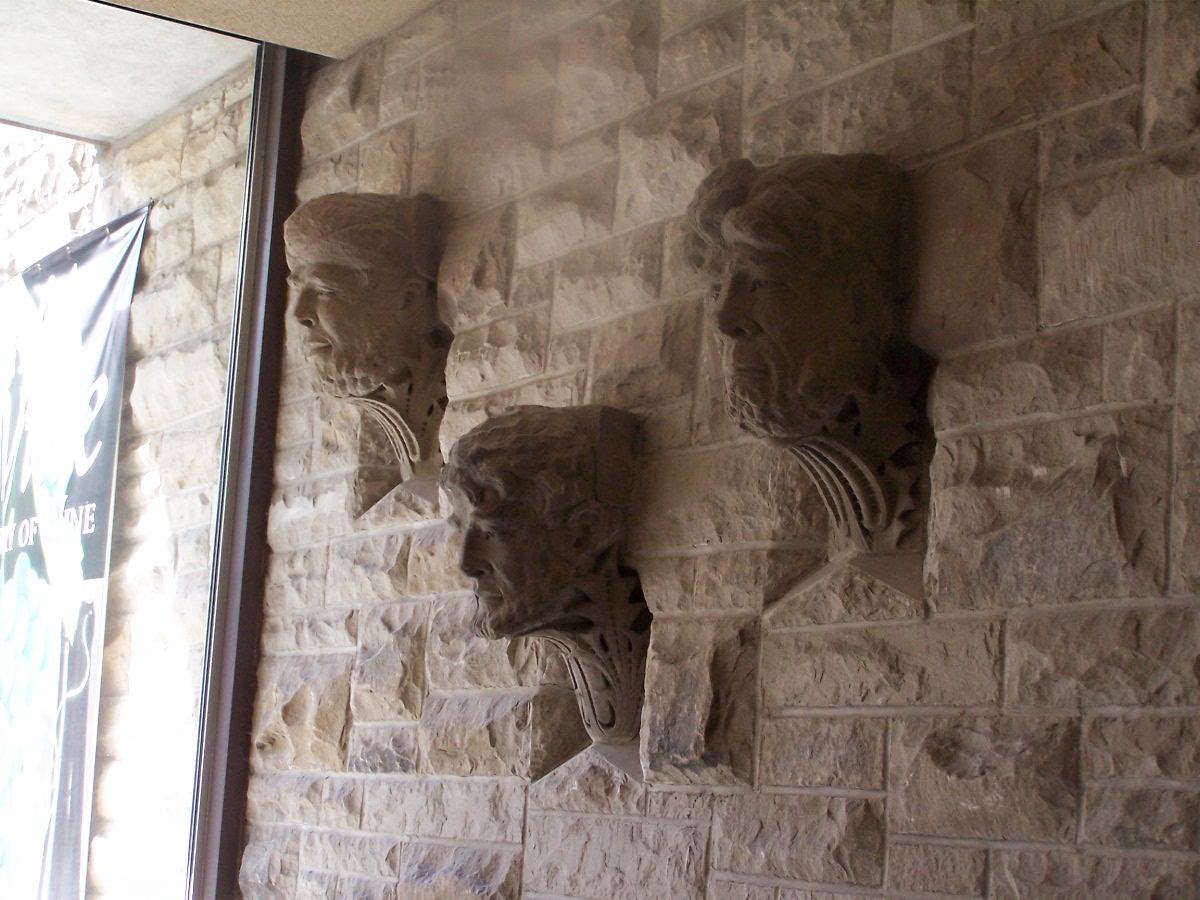
The John M. Olin Library shares the title of being the main library for the Cornell campus. The building was opened in 1961 [5]. To facilitate its 5.66 million dollar construction, the university demolished Boardman Hall (1892), which was the original home of the law school. Boardman was a former dean of the law school. The three stone faces on the outside and the three stone faces next to the interior staircase are artifacts from the exterior of Boardman Hall that were incorporated into Olin’s facade.

The Kroch Libary, largely underground except for four skylights next to Stimson Hall, was constructed in the fall of 1992 at a cost of $25 million dollars (namesake Carl Kroch ’35). For those who are curious, Olin has a utility tunnel to Uris, and Kroch has a utility stairway-tunnel that connects to Stimson, both of which are largely prohibited for non-staff use.

Olin’s entry way and cafe were renovated in 2002. The rest of the building is currently being prepped for a major renovation that will clean the exterior facade and renovate the interior to being it up to safety codes and to make it more conducive for current trends in upper education (think “pollinization spaces” not too unlike those in Duffield and Weill, without the atrium).

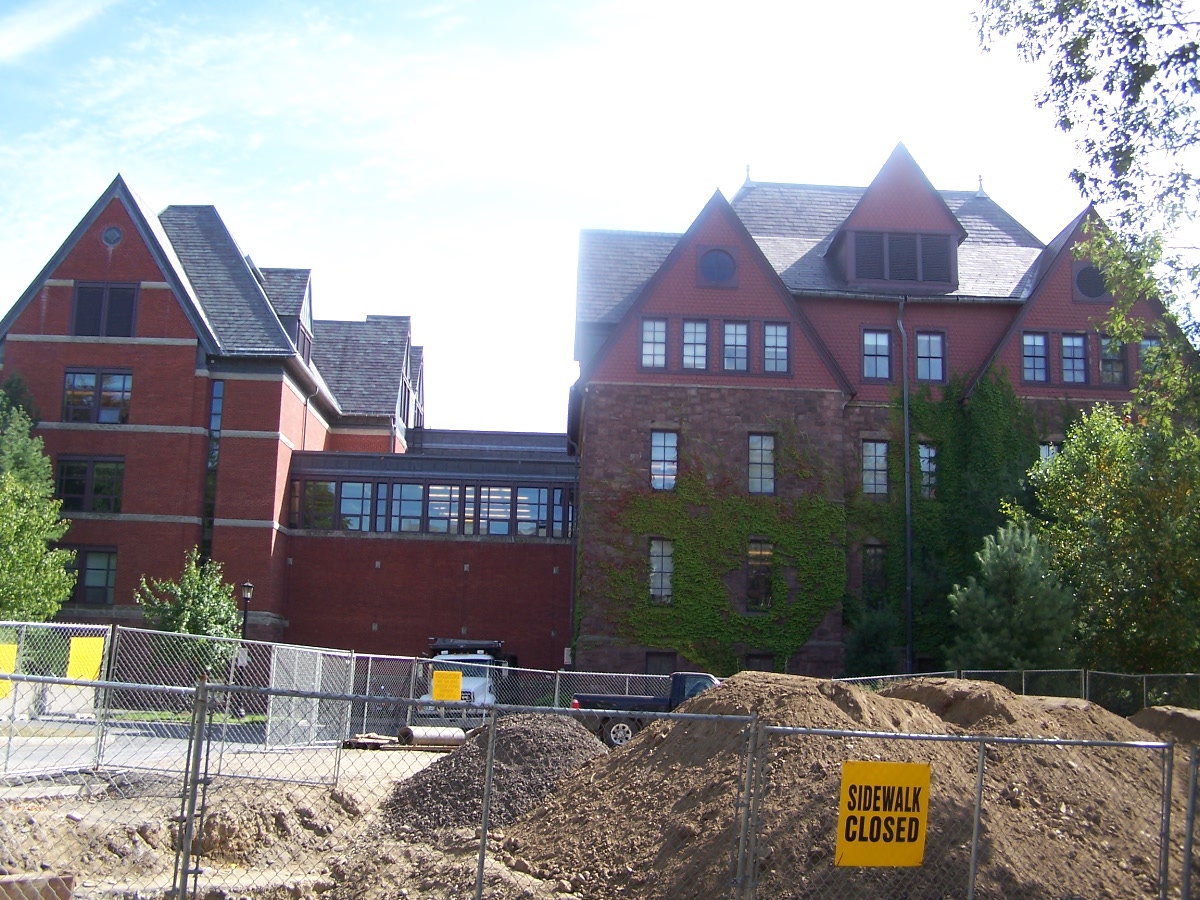
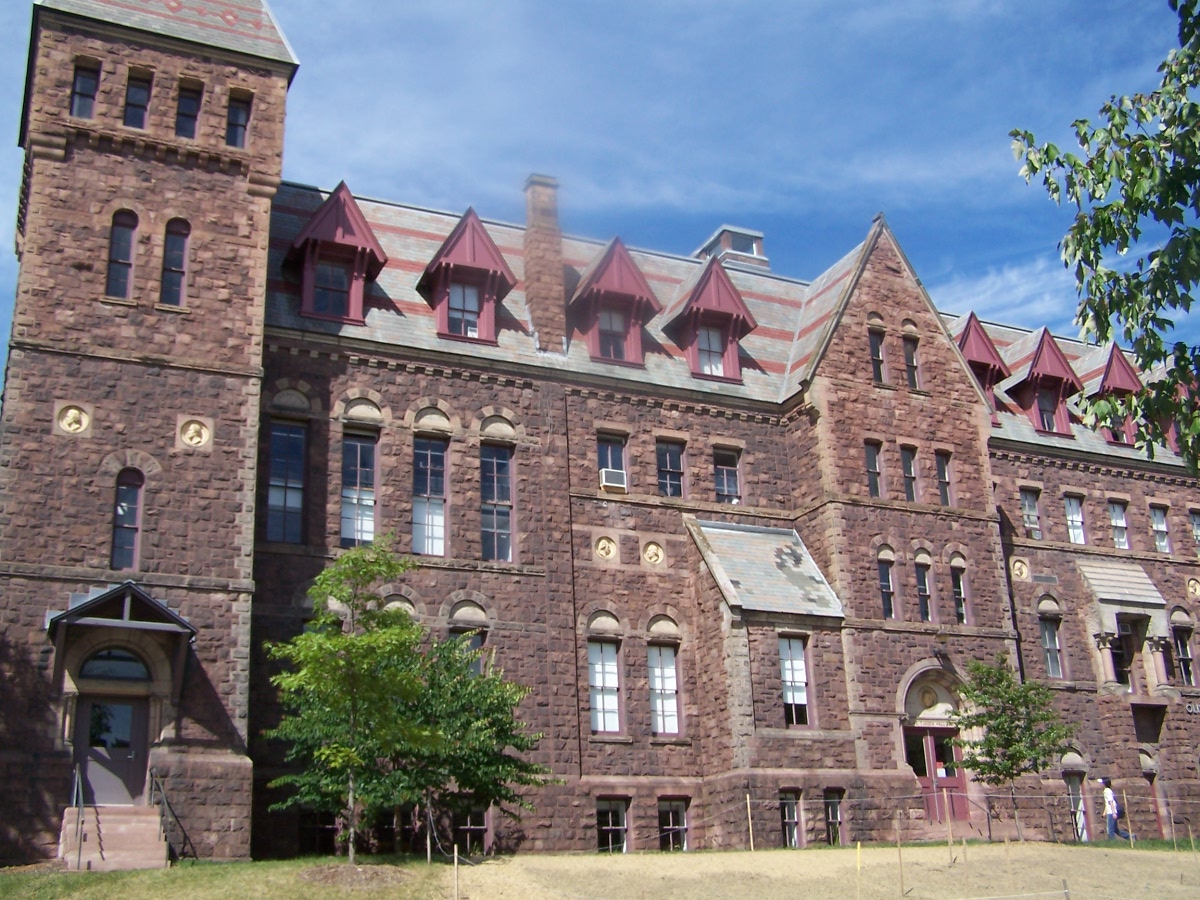
Tjaden was built as a “physical laboratory” in conjunction with West Sibley in 1883. Although $50,000 was budgeted, delays and material shortages drove the costs up to a final tally of $100,923, more than twice than was originally budgeted [6]. This is partially because of A.D, White insistance on the use of stone, and the medallions that decorate the building with the profile of prominent men in the mechanical arts. If you look closely enough, you can see that the window arches still have the names of great discoverers and inventors inscribed into the stone. The building was originally named Franklin Hall, in honor of the great innovator Benjamin Franklin.

The Department of Chemistry originally called the building home until it left for Morse Hall in 1890. The physics department left in 1906, and afterwards the building was incorporated into AAP as the Fine Arts building and workshops. The building was rededicated in 1981 to Olive Tjaden van Sickle ’25, a pioneering woman architect [6]. The building was renovated in 1998, at which time it regianed the hipped roof that I so inconveniently cropped off because I was too lazy to take a few steps back (the original hipped roof was deemed structurally unstable in the 1950s after a lightning strike set it on fire).

[1]http://www.aap.cornell.edu/aap/explore/rand.cfm

[2]http://www.news.cornell.edu/stories/June06/peacock.nabbed.dea.html

[3]http://www.arts.cornell.edu/music/LincolnRen-Exp.html

[4]http://www.aap.cornell.edu/aap/explore/sibley.cfm

[5]http://www.cornell.edu/search/index.cfm?tab=facts&q=&id=541

[6]http://www.aap.cornell.edu/aap/explore/tjaden.cfm


Finish Line of Photo Tours: Eastern Cornell Heights

17 08 2008

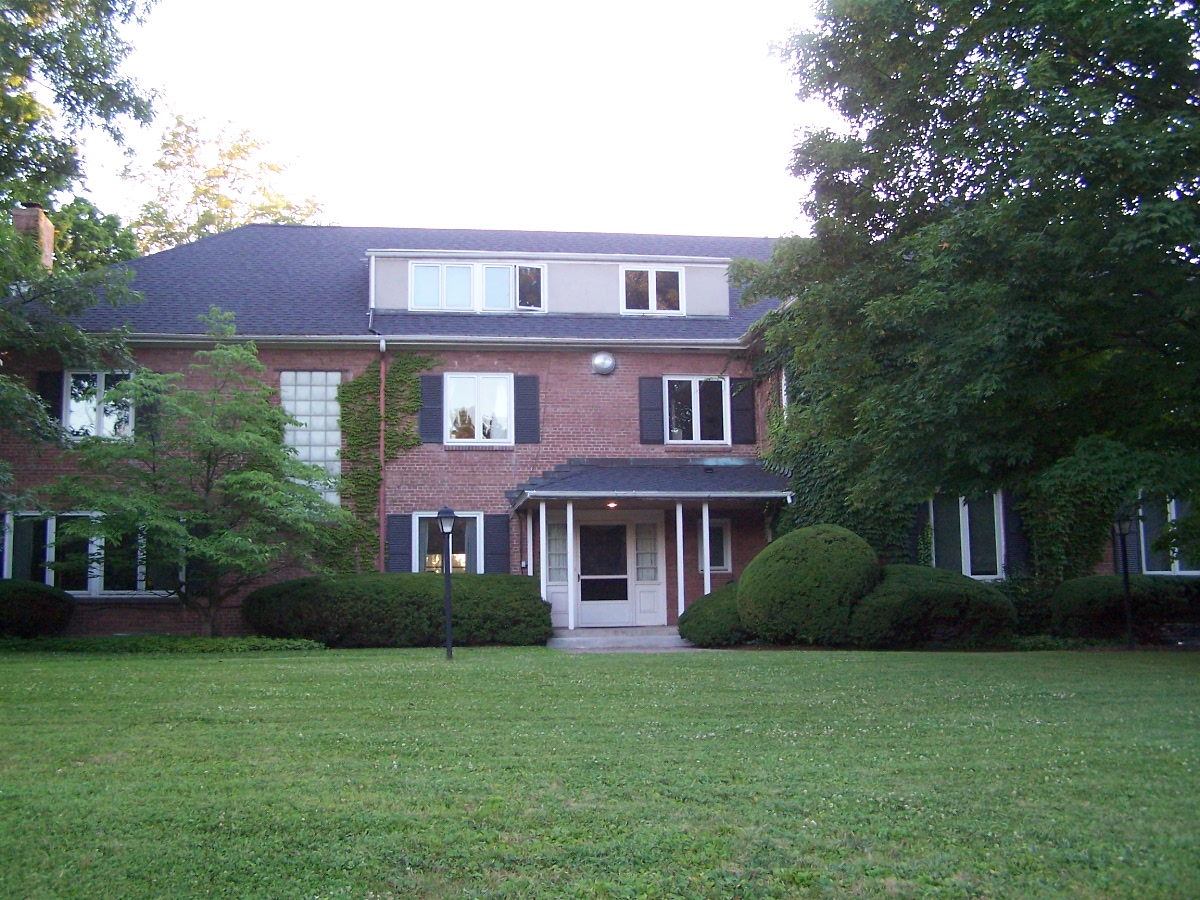
This is the house of the sorority Pi Beta Phi, which is kinda far out on Triphammer Road. Pi Beta Phi started out as a local chapter called Beta Phi. By 1919, they had become the NY Delta chapter of Pi Beta Phi sorority, and they first met in Risley Hall, which was at the time an all-women’s dormitory. After moving around from Eddy Street and Wait Avenue, they settled at 425 Wyckoff Avenue in 1937. By 1955, they has sold this house to Alpha Chi Sigma, and they built the current house in 1955-56 [1]. At least one sorority has made it easy for me to dig up some historical information about them.

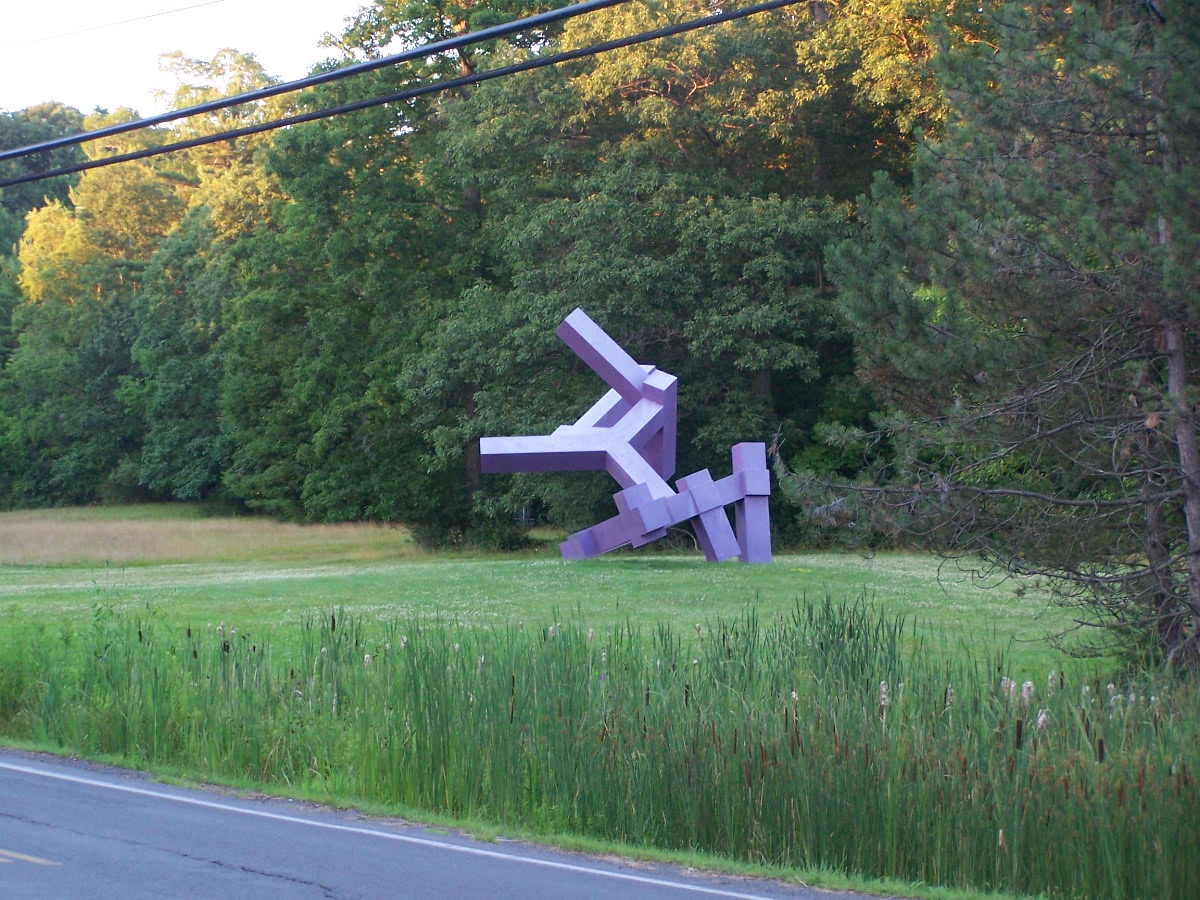
Token sculpture? Perhaps, but I’ll provide a little detail about it anyway. The sculpture is called “Richard Evans, 2nd, III”, and was created by Daniel Ben-Shmuel Barrett. It used to be located next to the art museum as part of an abstract art exhibit, but because they needed the space, it was moved to north campus in 2004 [2]. There are also sculptures next to Appel and near Akwewon.

Hurlburt House, or as it is more commonly known, EcoHouse. The building was originally constructed as a motel/travel lodge in 1953. Shortly afterwards (~1963) it was purchased by Cornell and renamed the Cornell Heights Residential Club. The building was used for graduate housing and for housing for students of an experimental accelerated PhD program [3]. On April 5, 1967, a devastating fire tore through one of the wings of the residence, killing eight students and a live-in faculty member [4]. Firemen said three bodies were found in the entrance lobby, one on the stairs between the first and second floors, one in a first floor room, and four in rooms on the second floor [5]. An investigation afterwards stated that inadequate fire safety (lack of fire escapes and alarms) combined with deadly toxic fumes released by the burning rubber-plastic furniture were the primarily factors in the devastating tragedy. In case you’re wondering, the PhD program was discontinued. As for the building, the wing where the fire took place was torn down, but several residents and visitors claim that the basement of the wing (which still exists) is haunted [6]. Haunted in this case means screaming, an oppressive heat, strange lights and the barking of a dog that dies in the fire. I’m going to stay skeptical on this one, and say it’s probably just some overactive imaginations. I’ve been inside only a couple of times, but I found the accomondations seemed luxurious compared to other dorms, and they were tightly-knit group.

This building is home to the Triphammer Co-Op. Built in 1912, the house originally housed a sorority known as Sigma Kappa. Around 1955, the sorority admitted an African-American woman, which was against their national’s rules and regulations (remember, this was at the beginning of the Civil Rights Era). The national ordered the women to get rid of her or risk being booted out of Sigma Kappa. Well, the Cornell chapter flipped their national the proverbial bird and became a ladies co-op. The co-op went co-ed in the early 1990s, and today houses 19 men and women in eleven singles and four doubles [7].

The co-op’s southern neighbor is the MGLC fraternity Pi Delta Psi (is this the only MGLC organization that maintains an official house right now?). The house itself dates from about 1915, but the house only came into the poession of the fraternity a few years ago, in 2003. Pi Delta Psi is an Asian-interest fraternity [8].

The house of Delta Delta Delta sorority, more commonly known as Tri-Delt. The Alpha Beta chapter here at Cornell began as the woman’s club “Sennightly” in 1895, taking their name from the fact that they held a meeting every seven days (heck, my fraternity barely manages to hold a meeting every two weeks without someone b*tching). The women petitioned a national sorority so they could stay in touch in later years as well as perpetuate their organization. By 1912 (yeah, missed the boat on that one), Tri-Delt national took interest, watched them as they threw a party, liked what they saw, and offered them a seat with their sorority. From 1912-1965, the house was on the 600 block of Thurston, in what is now the Alumni House; afterwards, they moved to this house on Triphammer with its Moorish influence [9]. The moorish house was home to Kappa Alpha Theta prior to their national disaffiliating them in 1965.

Right across the street from Tri-Delt is the sorority Delta Gamma. The sorority was established at Cornell in 1885 [10], but the current house dates from about the 1930s. My personal guess is that they were in the ladies’ dorms for a number of years and then lived in boarding houses until moving to their present location. The chapter was inactive from 1969 to 1975 (the Vietnam War era, when public interest in Greek life and other establishment groups waned significantly)

The house of Kappa Delta sorority. The Cornell Chapter was founded in 1916 by a transfer student who was a KD at her former institution. First based out of Sage and then out of a now-demolished house on Wait Avenue, the sorority purchased the land for their current house in 1923 and built on that property shortly thereafter, expanding several times over the years. [11]

[1]http://pibetaphi-cornell.org/public1.asp

[2]http://ezra.cornell.edu/searched.php Q5 2/7/08

[3]http://en.wikipedia.org/wiki/Cornell_North_Campus

[4]http://www.news.cornell.edu/stories/April07/1967Fire.kr.html

[5]http://www3.gendisasters.com/new-york/6971/ithaca-ny-dormitory-fire-cornell-university-april-1967

[6]http://ezra.cornell.edu/searched.php?search=haunted&question=&answer=&starttimestamp=&endtimestamp=&category_id=&offset=20&view=expanded

Q2 11/12/1992

[7]http://www.triphammercoop.org/place.php

[8]http://www.cornellpdpsi.com/version6/about.php

[9]http://www.rso.cornell.edu/tridelt/

[10]http://www.dos.cornell.edu/dos/greek/chapter_details.cfm?id=3277

[11]http://www.kappadeltaomegachi.org/kap2_about.taf


Far West Campus, Second Photo Tour

4 08 2008

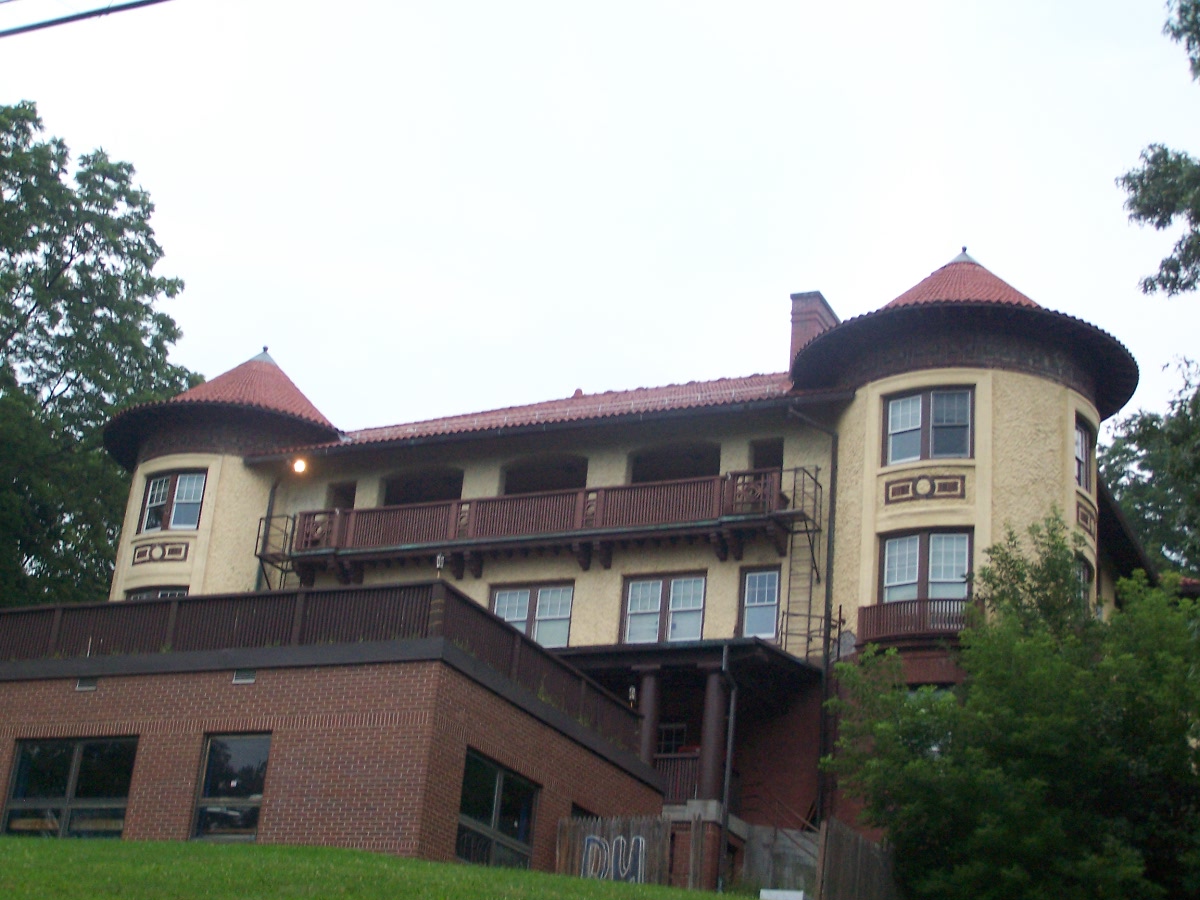
The house of the Cornell Chapter of Delta Upsilon fraternity. The house was built in 1890 in  the Queen Anne Style [1], and burned at least three times over the next thirty years [2]. The fraternity was founded to counter secret societies. Which, considering some members have most certainly been members of the Sphinx Head and the Quill and Dagger, is vaguely ironic.

Cornell’s Telluride House, located on South Avenue. The house was built in 1910 and originally housed electrical engineers working for Lucien L. Nunn, and who also attended Cornell [3]. The Cornell chapter was the first Telluride house. Telluride takes it name from the town of Telluride, Colorado, where Nunn lived most of his adult life [4]. The house’s website describes as an intense academic experience, and that members “enjoy tremendous autonomy”. So, I’m getting the impression of a fraternity, only much more academic and not nearly as social.

Photo Courtesy of "Greetings from Ithaca"

Photo Courtesy of "Greetings from Ithaca"

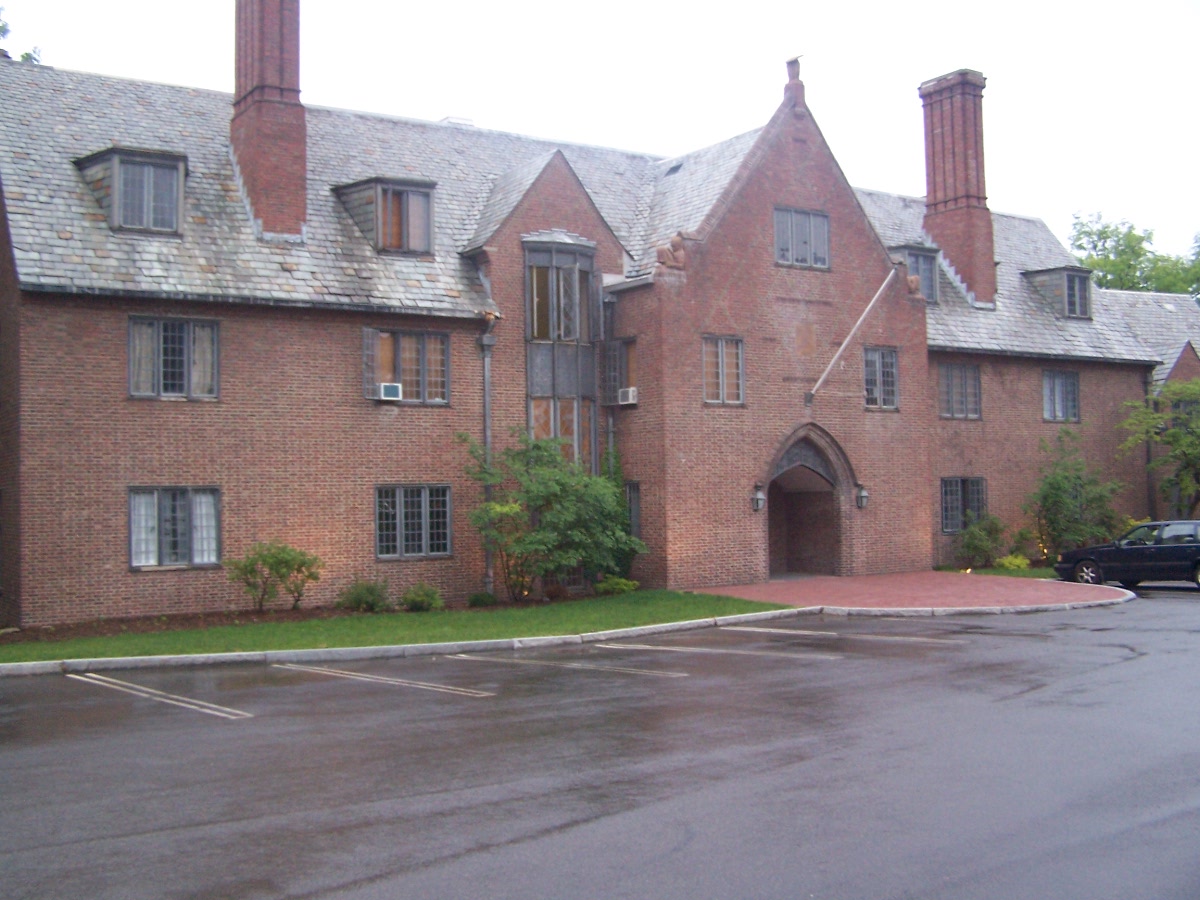
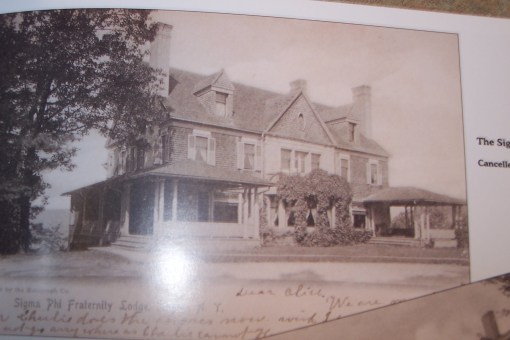
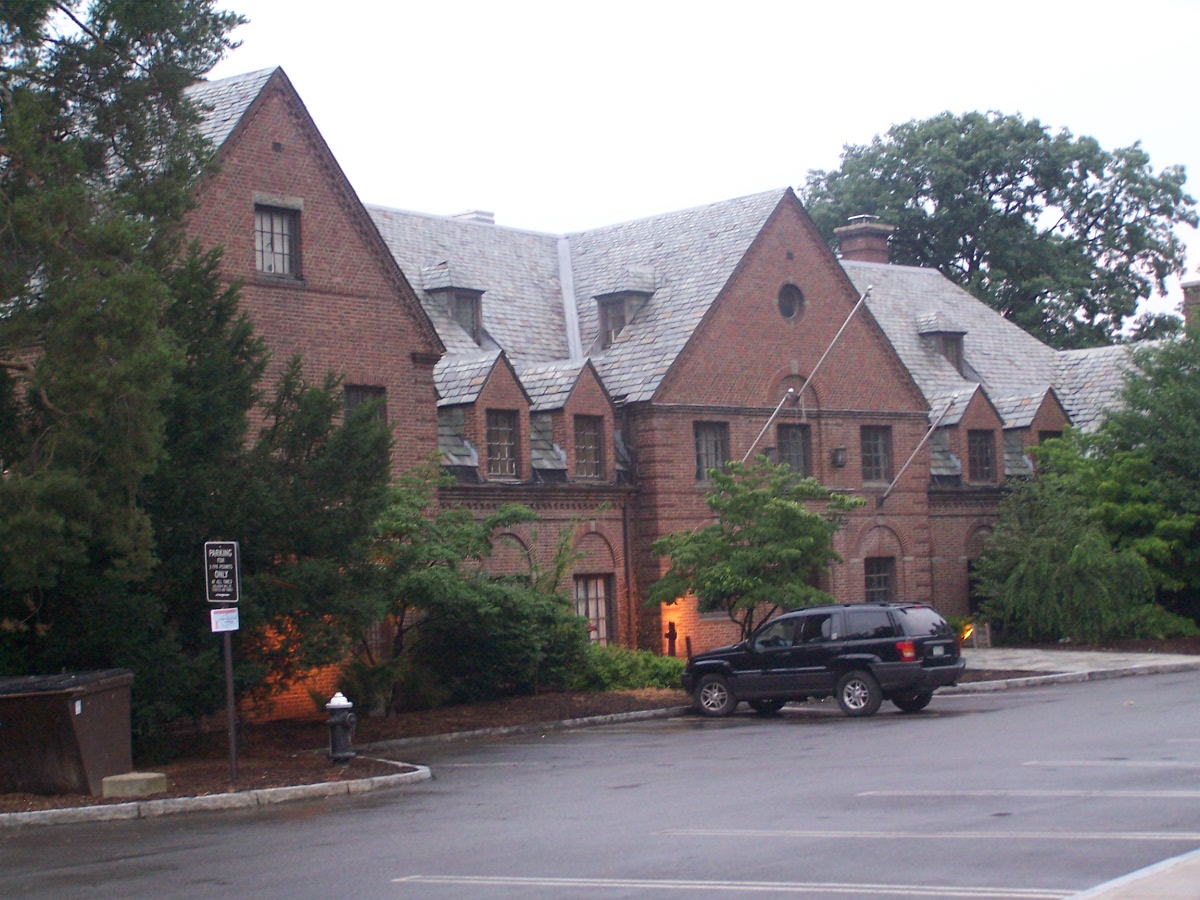
The house of the Sigma Phi Society. The first house was torn down to make way for the law school. The second and current house was built in 1932 and designed by Frederick L. Ackermann in the English Country House style. Ackermann also designed Psi Upsilon, the neighboring fraternity, and the relation between the two is obvious. If you can’t tell them apart though, you’ve probably had too many drinks at Sigma Phi and it’s time to go home. Detail-wise, the two differ considerably.


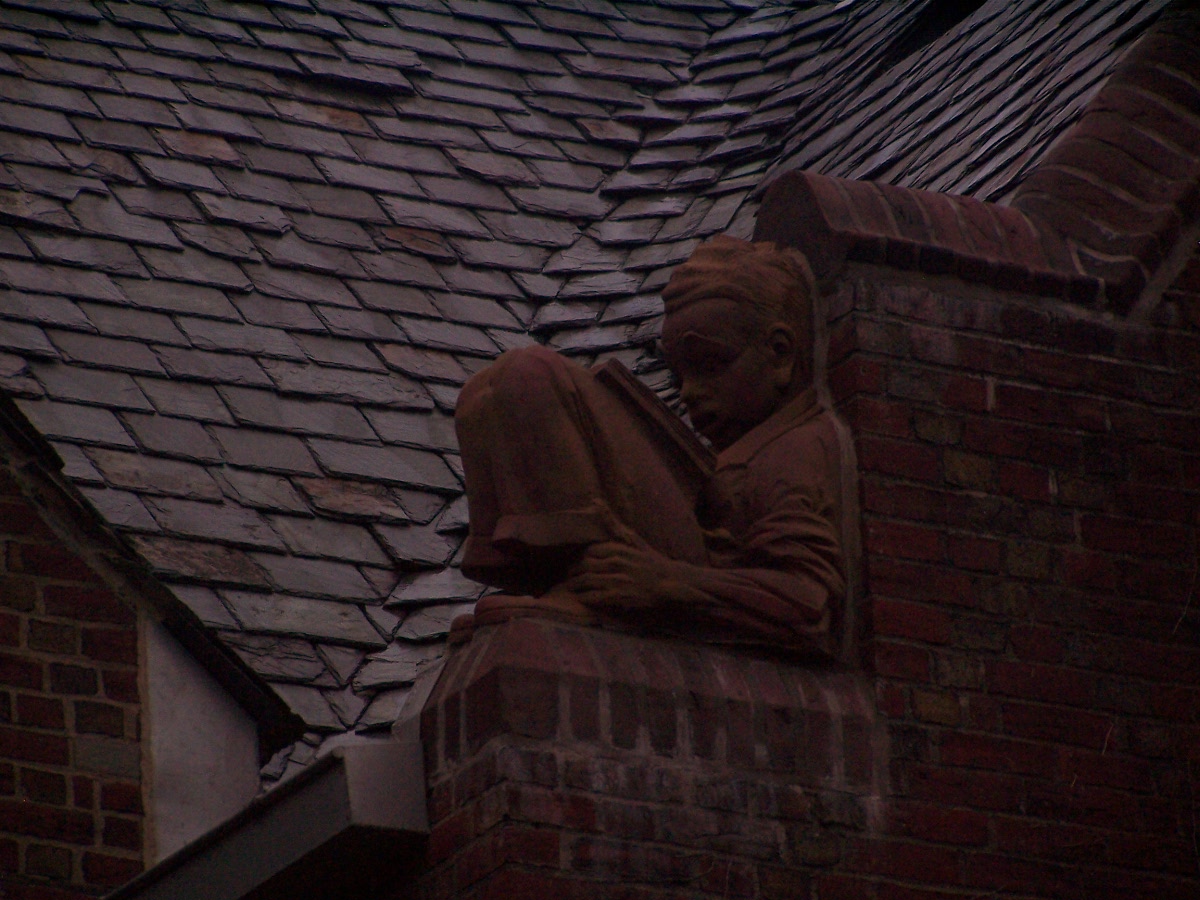
Although, one can never go wrong with the right ornamentation. I honestly thought that someone was sitting up there when I first glanced at it. No, I wasn’t drunk.

Psi Upsilon’s House was built in the same year. I believe this is also the fraternity that was known for having an indoor squash court, so Psi U. has a bit of a reputation of being wealthy. The chapter has also been booted off campus twice, the latest last month (the other case was in 1979). 

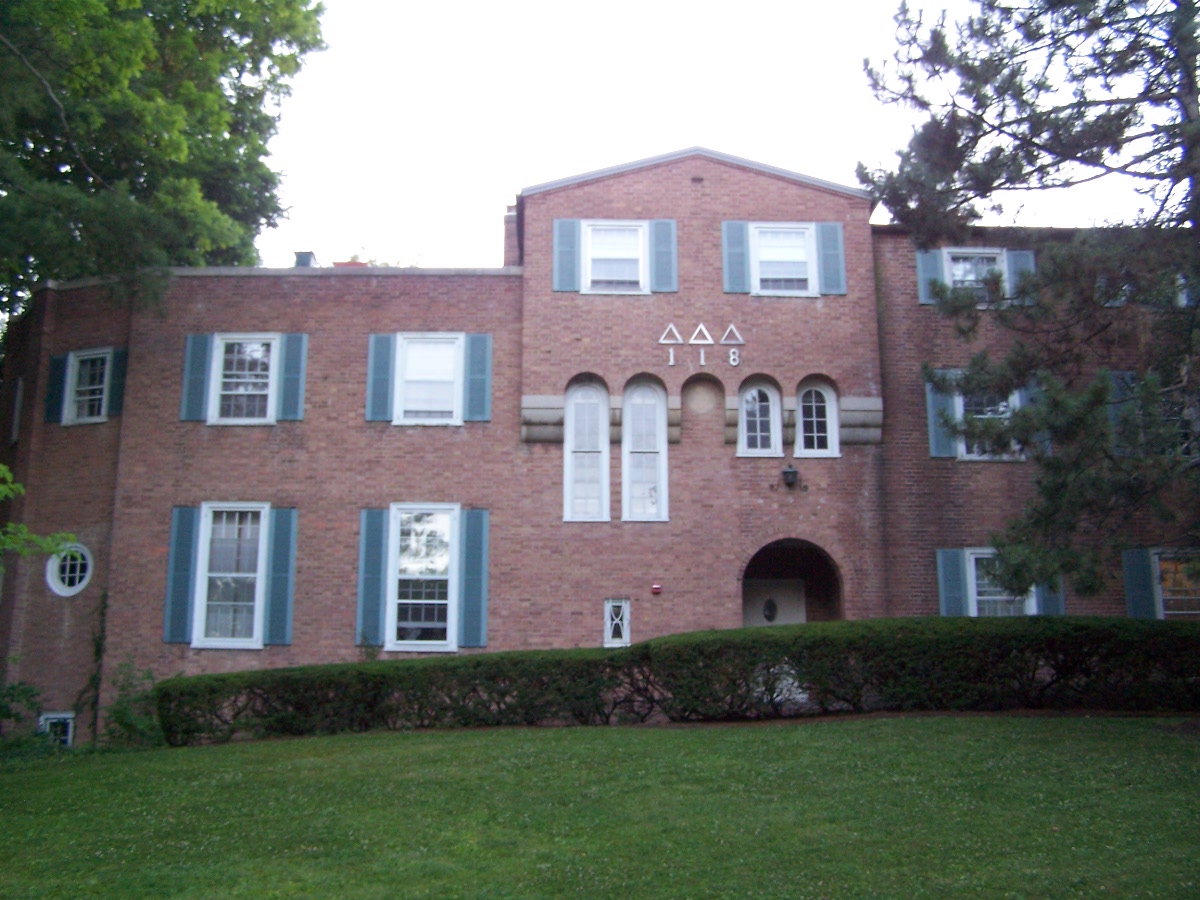
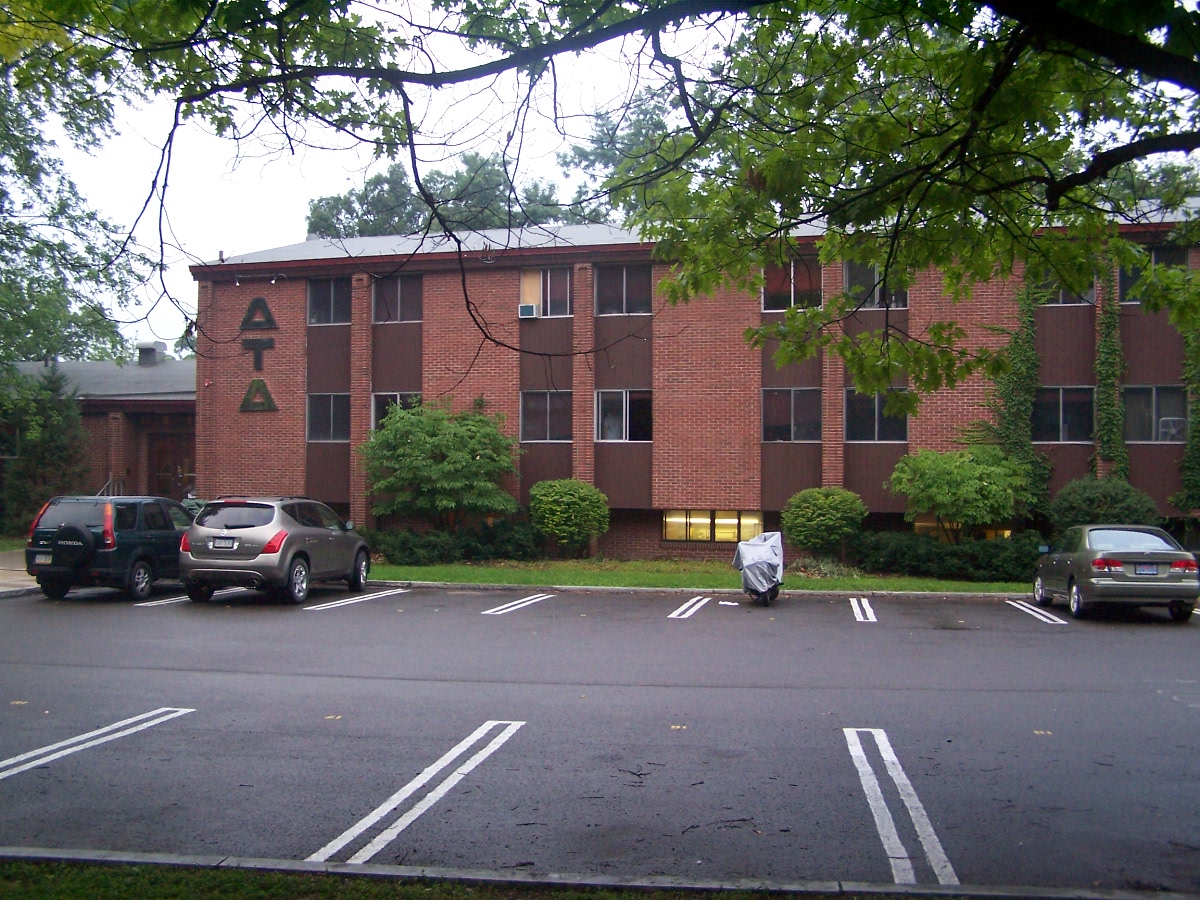
The house of Delta Tau Delta. The house was built in November 1965 [5], but they previously lived in a now-demolished house on Edgemoor Lane (the parking lot next to Theta is the site of their old house). The only reason I knew this house existed freshman year was that one of my roommates had a free magnet from DTD. Yeah, can’t say I care too much for that 60s archi-torture.

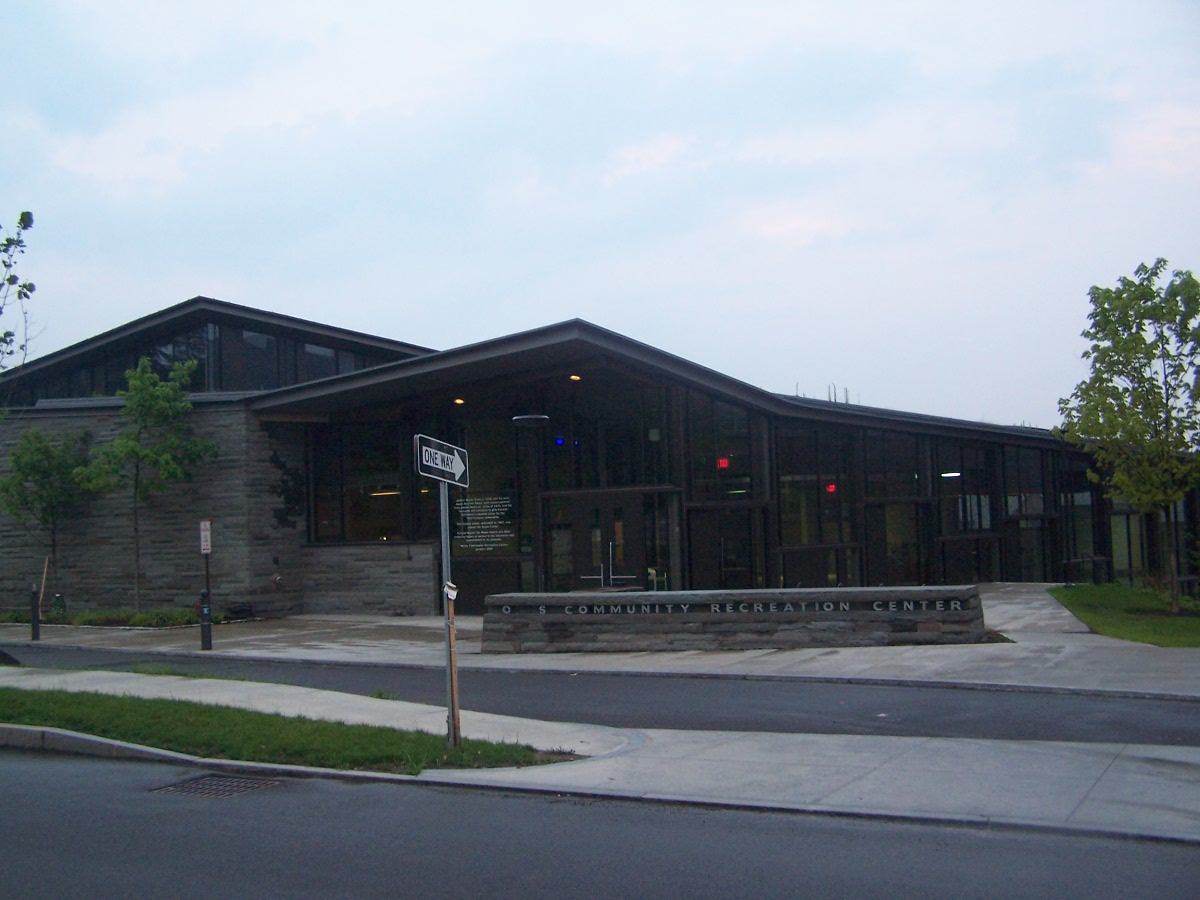
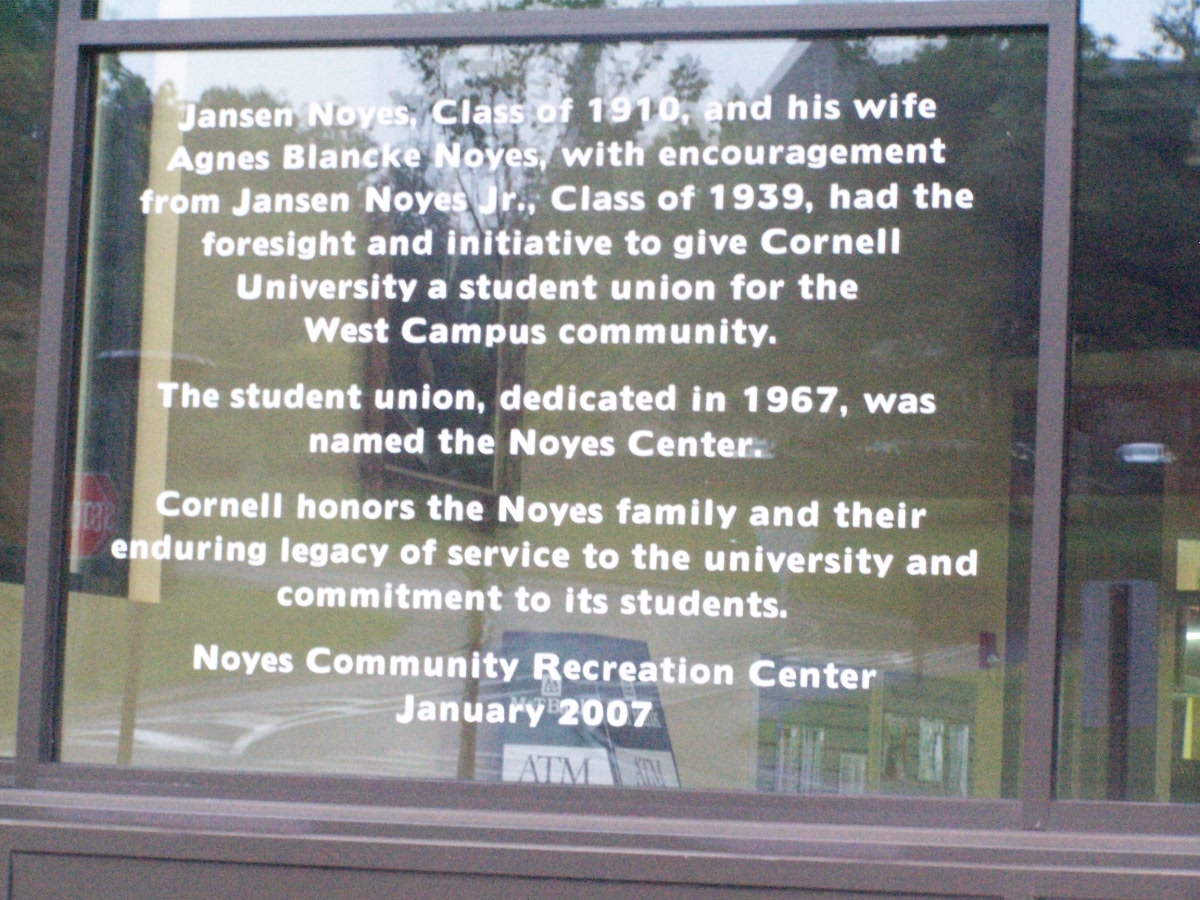
The new Noyes Center is about the only thing I like on the newly reconstructed West Campus. Completed in Janurary 2007, the building serves for community functions for West Campus (weight room, convenience store, etc.).

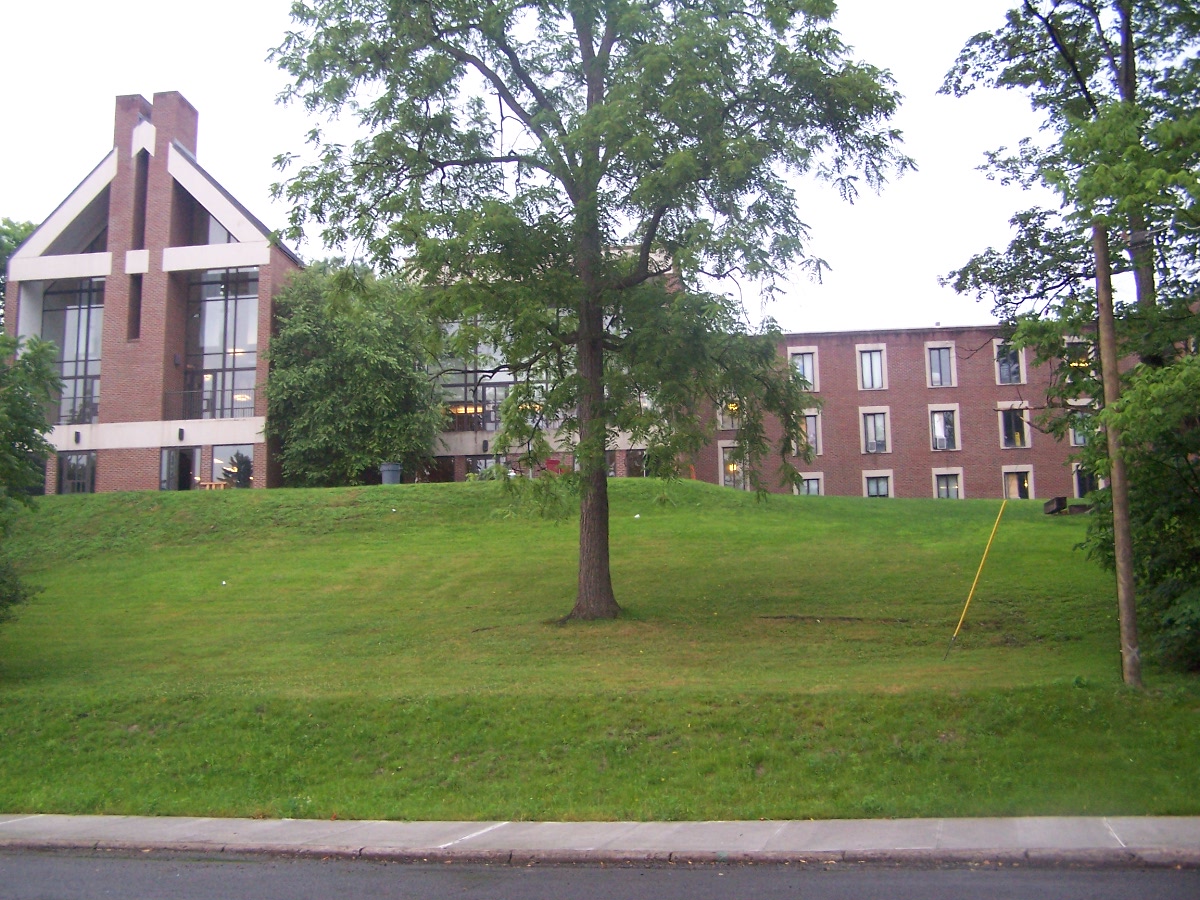
The original student union, a penal-style brutalist structure, was dedicated in 1967 to Jansen Noyes 1910. Before the legal drinking age was raised in 1986, it had a “pub” to serve students.

 (photo courtesy of http://andrew.loewer.name/musings/)


[1]http://www.fs.cornell.edu/fs/facinfo/fs_facilInfo.cfm?facil_cd=4722

[2]http://ecommons.library.cornell.edu/bitstream/1813/3536/23/021_18.pdf

[3]http://www.tellurideassociation.org/programs/university_students/cornell_branch/cb_general_information.html

[4]http://en.wikipedia.org/wiki/Telluride_Association

[5]http://www.fs.cornell.edu/fs/facinfo/fs_facilInfo.cfm?facil_cd=4776


Far West Campus, the First Photo Tour

31 07 2008

The house of Phi Kappa Psi fraternity. As previously covered, the house was this dreadful brutalist monstrosity constructed in 1964 when the fraternity moved from 312 Thurston Avenue [1]. The house was extensively renovated in the second half of the 1990s, gaining a more postmodern appearance that has earned it the nickname “The Gables”. Prior to 312 Thurston (now demolished), Phi Kappa Psi lived in the Watermargin house. It was among the first fraternities chaptered at Cornell, established in 1868.

This house belongs to Kappa Alpha Theta sorority, currently the only sorority on West Campus. The house was built by Sigma Chi in the 19th century, who left it for Greystone Manor in 1923, and Theta Chi fraternity moved in. Bay the 1980s, Theta Chi had moved out of the house for a mansion on Ridgewood Road, and “Theta” moved in. Theta was dispelled from its national in 1965, but returned to campus in 1980 [1], and moved into this house during the 1980s.

Speaking of fraternities founded early in Cornell’s history, Chi Phi and north campus fraternity Zeta Psi were both founded on opening day 10/7/1868. The two flipped a coin to see who would be declared the first fraternity at Cornell. Well, Chi Phi still uses its early start in rush promos, but Zeta Psi is officially the first fraternity (Zeta Psi and Chi Phi have a rivalry to this day). Craigielea, their tudor-esque house, is well over a century old (1890, partiall rebuilt after a 1903 fire), and has continuously been in their posession. The house was designed by W. H. Miller of Uris Libe fame [2].

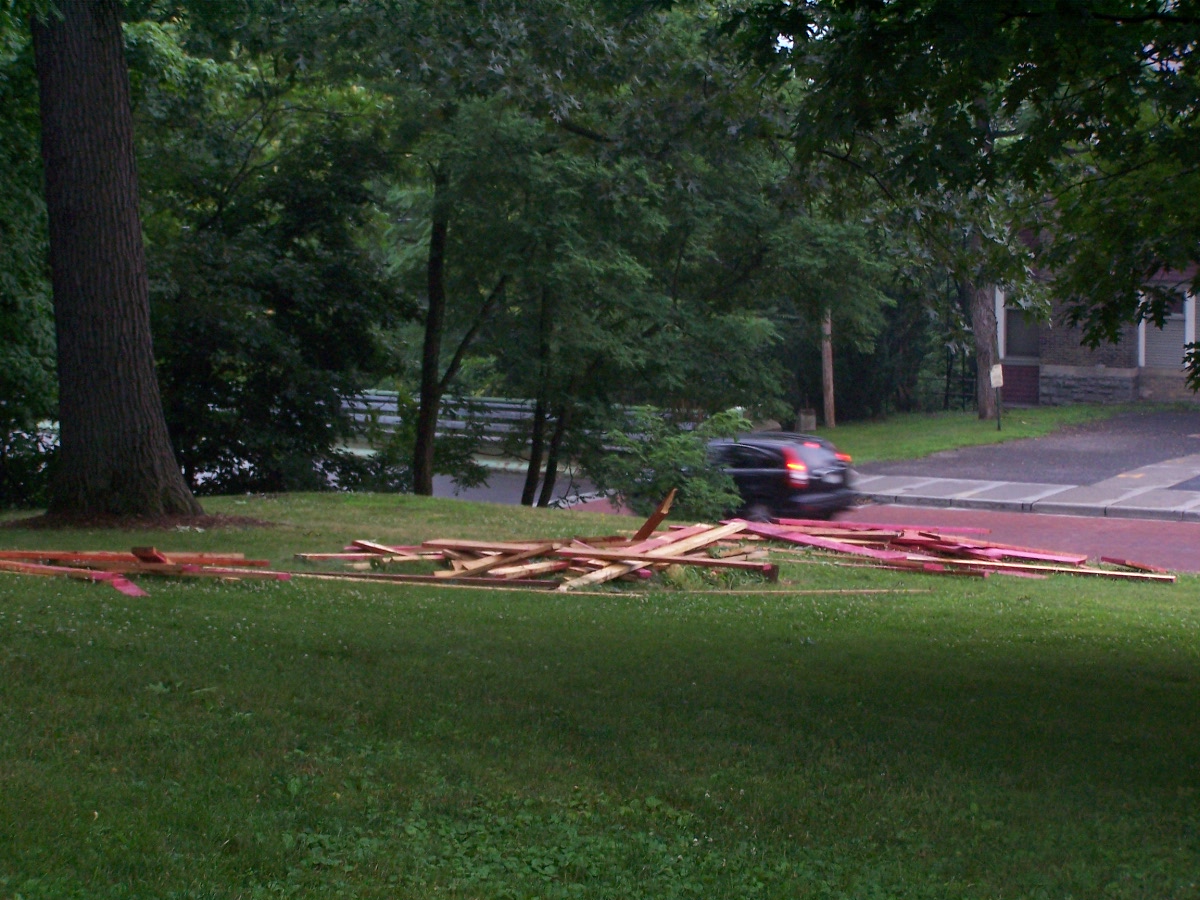
And this is what’s left of their (pledge?) project, bleachers that they built last April. Shame, really. I wonder if they did it or someone who hates Chi Phi did it.

Delta Kappa Epsilon (DEKE) fraternity house is a Romaneqaue Revival House built in 1893 by W.H. Miller [3]. The house is known as Gray Stone Castle, and sits on the National Register of Historic Places [4]. As amazing as the house is, the chapter hasn’t been doing all too recently; rumor mill says numbers were so low in recent years that actives had two rooms each.

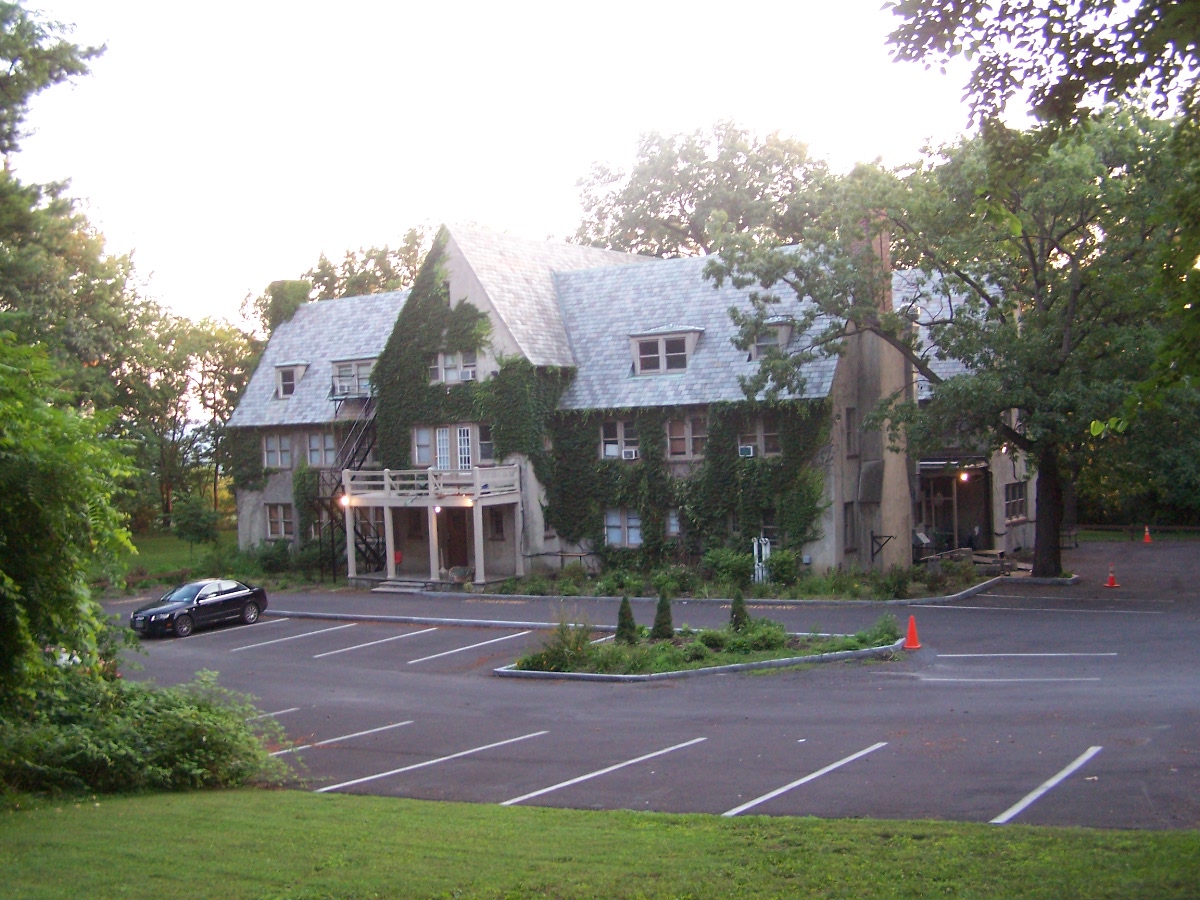
112 Edgemoor Lane, a small campus dorm designed for about 20-25 occupants. As I explained in a previous entry, this house has a lot of significance to me personally. So, the house, built in the Colonial Revival style, was built in 1881. The house was home to Sigma Phi Epsilon up into the 1960s, when Sig Ep moved out and Triangle fraternity moved in. Previously, Triangle called a house at the junction of Campus Road and Stewart Avenue home, but the ca. 1839 farm house was torn down to make room for DTD’s new house [5]. After Triangle was deactivated by its national in 1985, the house was made into part of Cornell’s campus dorms.

Lambda Chi Alpha’s house also sits on Edgemoor Lane. Originally known as ISWZA [5], Lambda Chi was chaptered in 1913, and the house was purchased around 1918 (it was built in 1899). Lambda Chi is known for having a feud with its neighbor Chi Phi. The house also maintains a gazebo on the edge of the gorge, which was built in recent years.

The house of Pi Kappa Alpha fraternity. The house was occupied by Beta Theta Pi, who occupied the house until they moved in 1906. About a decade later when Pi Kappa Alpha colonized on campus, the chapter moved into this house. My slight personal issue was that they had a steep driveway in the back, and some jackass in a Jetta would try to do 0-60 every time he went down the hill. The whining engine gets quite annoying after a while.

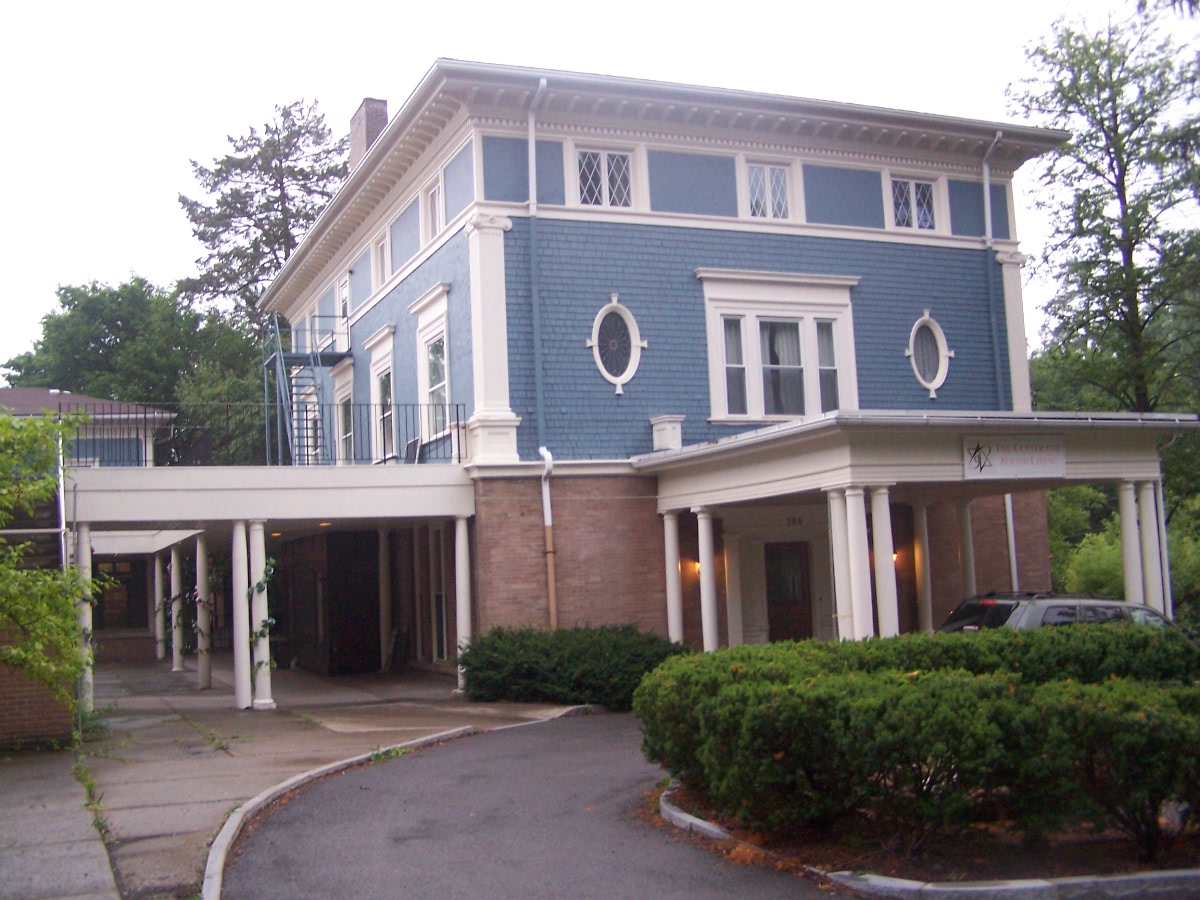
The Jewish Living Center. The house dates from the 1890s[6], with the kosher dining center to its south (not pictured) dating from the late 1980s. The center was known as Young Israel until the late 1990s. Judging from their website, the independent organization has had a contentious past with its relations to the University. The old fraternity house for Seal & Serpent (pre-1926) used to be next door, but it was demolished to make room for their parking lot.

[1]http://www.dos.cornell.edu/dos/greek/chapter_details.cfm?id=3278

[2]http://www.fs.cornell.edu/fs/facinfo/fs_facilInfo.cfm?facil_cd=4716

[3]http://www.fs.cornell.edu/fs/facinfo/fs_facilInfo.cfm?facil_cd=4719

[4]http://www.dke-cornell.org/public1.asp

[5]http://cdsun.library.cornell.edu/cgi-bin/cornell?a=d&d=CDS19650427.2.101.1#

[6]http://www.iswza.org/heritage

[7]http://www.cornellcjl.com/about/history.aspx


News Tidbits- The Disappearing Suspension Bridge, and its Conflicting History

30 07 2008
It was during a snowstorm...in MARCH...

It was taken during a snowstorm...in MARCH...

Glancing at the Sun today, I was pleasantly surprised to see an article about the master plan written by columnist Munier Salem. The article diescusses a discrepency in the presence of the suspension bridge north of the Johnson Museum, that spans the Fall Creek Gorge from the base of the wooden staircase off University Avenue to Fall Creek Drive. In some massing renderings, the bridge doesn’t exist [1]. One of the focuses of Salem’s article was whether or not this was intentional.

My personal thought is that it was not intentional. A rough guess of foot traffic during the academic year is probably among a few thousand unique trips across the span per day, plus there’s a strong sense of establishment associated with that bridge- although the current one was built in 1960, there has been a bridge at the present site since 1913 [2].

The bridge is marked with its share of legends and lore. Most have heard the one where if someone refusing a kiss while crossing the bridge at midnight, that it will collapse into the gorge. Another, somewhat less popular legend, is that the 1913 bridge was designed by an engineering student as part of a final project in his senior year. However, when he turned it in and the professor reviewed it, the professor said that the design wasn’t structurally feasible, and failed the student. Dejected, the student jumped into the gorge for where the south end of the bridge connects to campus. His grieving family, being of considerable wealth, decided to take his design and make it a reality. Thus it was built to the young man’s decision, and it was stable. Thus, the student was vindicated.

However, these are only just legends; the original 1913 suspension bridge is mostly an embellishment of the real story (there was a low-slung one in the 1880s behind Risley, so take the concept of “original bridge” with a grain of salt). Edward Wyckoff 1889, a student at Cornell, is said to have designed the bridge as part of a project, but the professor failed him and Wyckoff withdrew from Cornell. Twenty-plus years later, he financed the construction of the bridge [4]; the bridge was built by a private company for the Cornell Heights Improvement Company, of which Wyckoff was a major financier of the company, so this seems plausible.

The 1960 bridge was designed by two professors. S.C. Hollister and William McGuire (yes, the same Hollister for whom Hollister Hall is named [3]). However, to conflict with this, article [4] suggests it was built in 1977. I’m pretty firm in that it was 1960, as an earlier DUE, from 1987, contradicts it and gives the 1960 date [5]. The current bridge sits about 138 ft. above the water level [2].

Anyways, Salem also noted the propsed bridge behind Eddy Gate; while I think it’s awesome (I lived in Casca for a year), I’ll save discussion for when I cover that in another Master Plan entry.


[1]http://cornellsun.com/node/30894

[2]http://www.alumni.cornell.edu/cu_facts/read_more.cfm?id=33

[3]http://www.cornell.edu/search/index.cfm?tab=facts&q=&id=382

[4]http://ezra.cornell.edu/posting.php?timestamp=1087880400 from June 2004

[5]http://ezra.cornell.edu/posting.php?timestamp=545716800 from April 1987


Yet Another North Campus Photo Tour

27 07 2008

The house of Zeta Beta Tau. This fraternity wins my commendation for having the most difficult house to find.   Like seriously, it’s tucked away at the end of Edgecliff Road, which is hard enough to find at the end of Thurston near the Stewart Ave. bridge. The letters Z.B.T. hail from a ritual phrase of the fraternity (that was publicly revealed  on its one-hundreth anniversary): “Zion Bemishpat Tipadeh” [1], which translates means “Zion shall be redeemed with justice”. In case it hasn’t clicked in yet, the house was founded as a Jewish fraternity, and still has a strong Jewish presence in its membership. The house itself dates from the 1900s. (fun fact: ZBT absorbed four other fraternities over time: Phi Alpha, Kappa Nu, Phi Epsilon Pi, and Phi Sigma Delta. At some point (prior to 1959), all had houses at Cornell. Phi Alpha’s old house is now a rental house next door to my apartment).

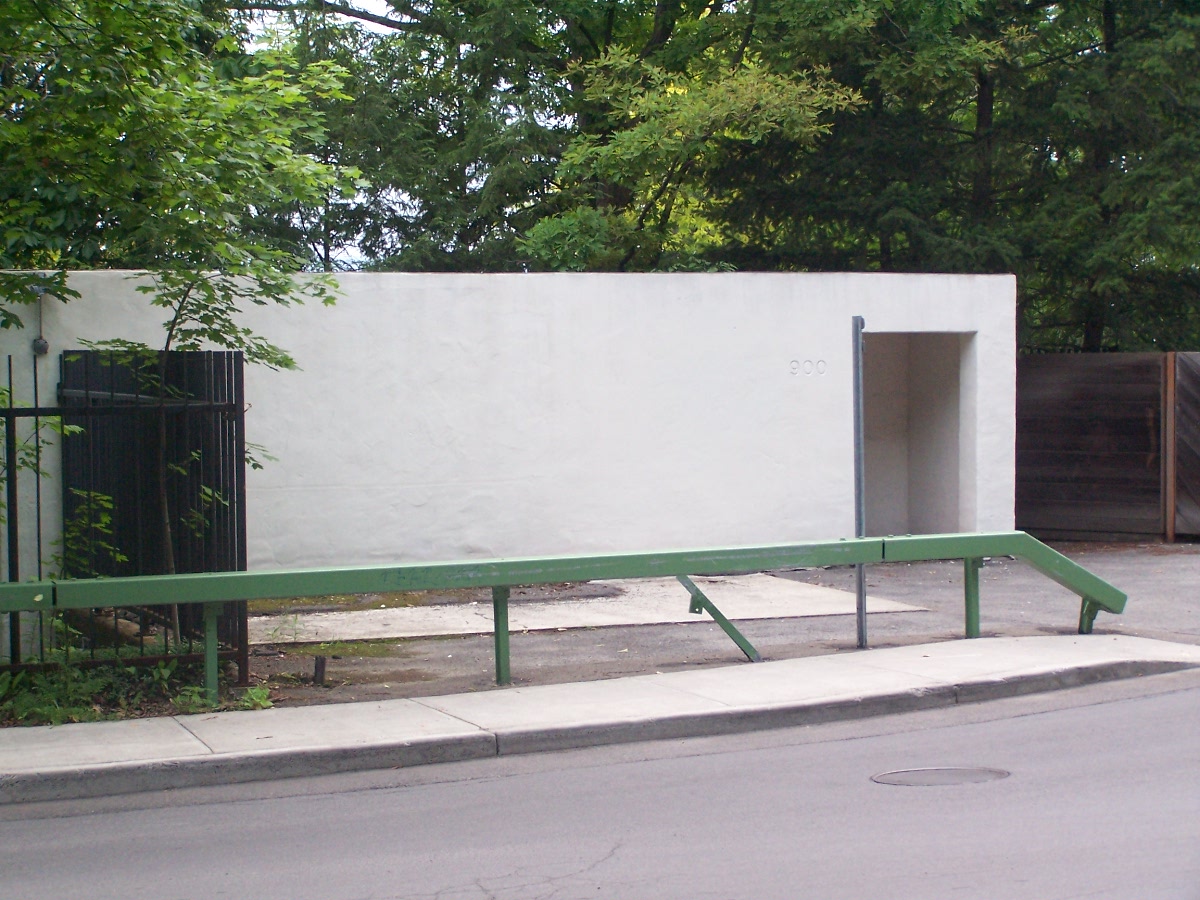
Carl Sagan’s House, prior to his death in 1996. The property sits at 900 Stewart Avenue- the first photo is the entrance area from the street, and the second is from the other side of the gorge. Originally, one of Cornell’s two major secret societies, Sphinx Head, built a windowless meeting chamber on the site in 1926 [2]. Well, upkeep proved to be a hassle by the 1960s, so they sold it to their neighbor Professor Robert Wilson in 1969, who in turn sold the tomb to Professor Steven Mensch in 1979. Mensch built a house on the site in the style of the tomb, which he sold to Carl Sagan. Currently, the house is considered to be the property of the Sagan estate and its heirs.

The house of Sigma Chi Delta, a local co-ed fraternity founded in 1981 [3]. It has no letters on the outside, so this is how I confirmed it as their house:

Yes, the composite is purposely blurred so I don’t receive nasty e-mails. I’m sure I’ll be in enough heat for taking photos through their street-facing windows.

The two 7-unit houses that represent the retirement facility “Bridges at Cornell Heights” [4]. My jaw drops when I look at how lovely these houses are. I believe they were renovated in the late 1990s. In case anyone’s wondering, the price is about $7500/month. That’s actually more than I make in a year…

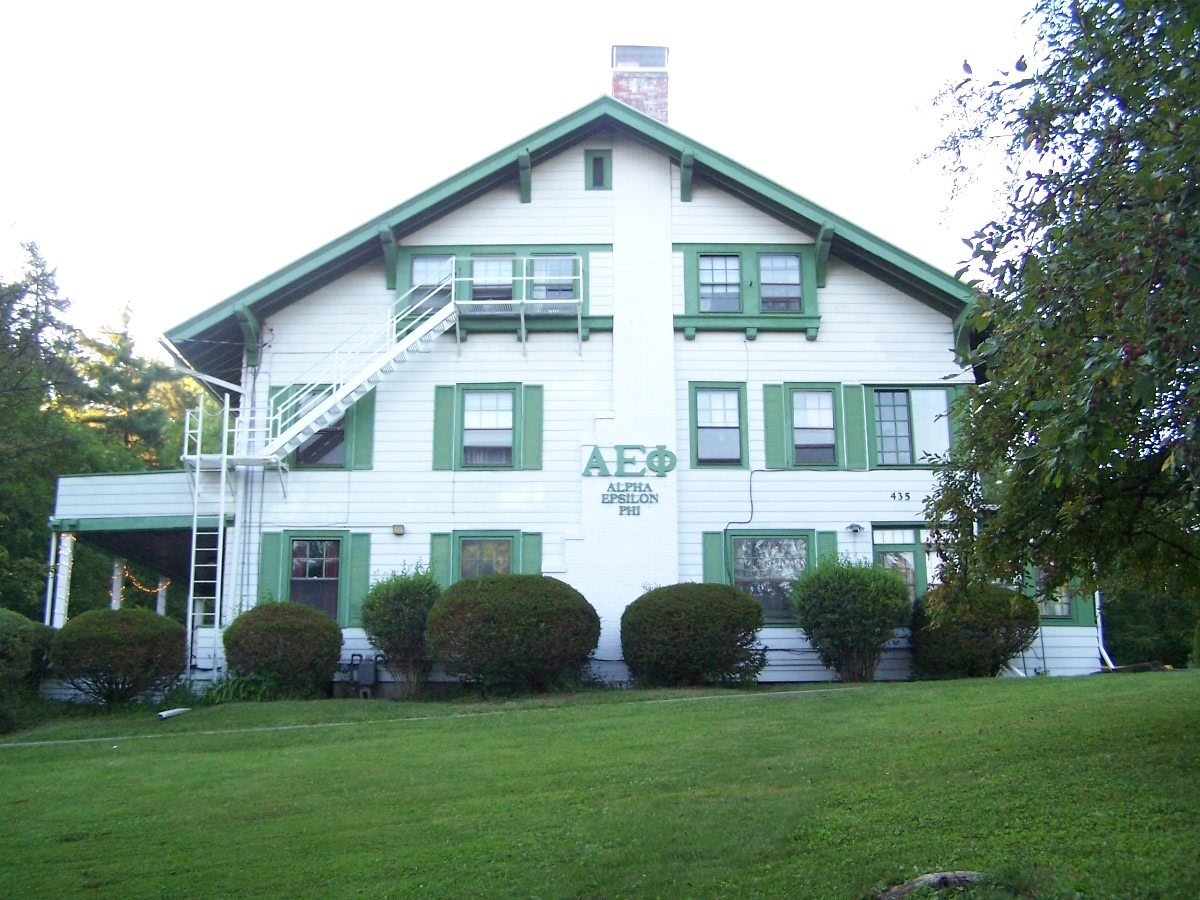
Similar in concept to Zeta Beta Tau is Alpha Epsilon Phi, a sorority with a strong Jewish background. The Cornell chapter was established in 1920. It amazes me how little information I can find about the chapter itself, apart from token facts like house color and flower. I’m not looking for that, I’m looking for the history. It is perfectly possible that the house, which dates from the 1900s, has always been their house. Looking through a copy of 1943 Cornellian suggests they have been in the house at least 65 years, so there’s some support to the idea. If an AEPhi could confirm that, it would be appreciated.

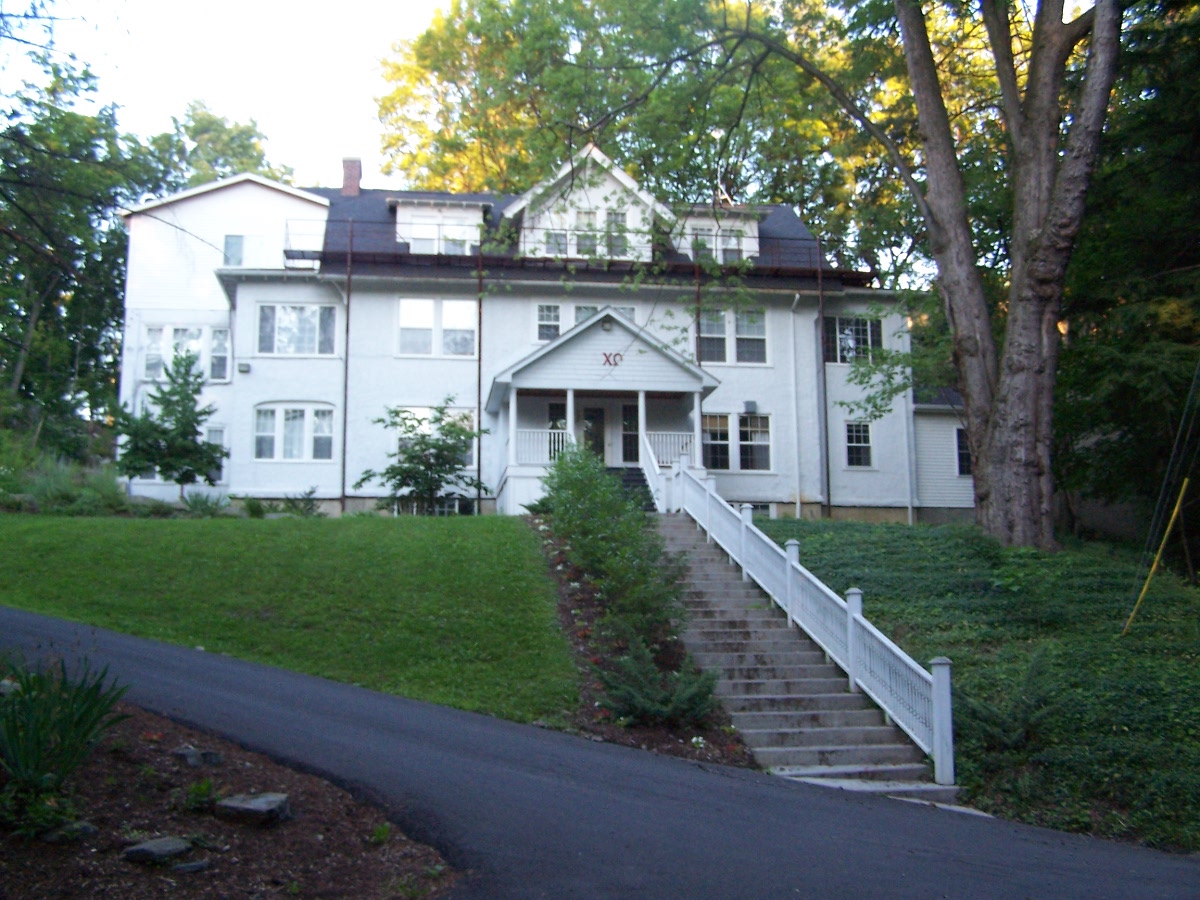
Formerly the house of merged fraternity Phi Sigma Epsilon, today this is the house of the sorority Alpha Chi Omega. This is not to be confused with Chi Omega, which closed in 2003 and once lived at 10 Sisson Place. Alpha Chi Omega reestablished itself at Cornell in 1984 (Chi Omega did the same thing in 1987, but it appeared only one has managed to survive up to today). In 1985, another sorority, Alpha Gamma Delta, tried to establish itself, but closed after 1990. They also lived at 722 University Avenue (what is that, the token Greek house?) [5]

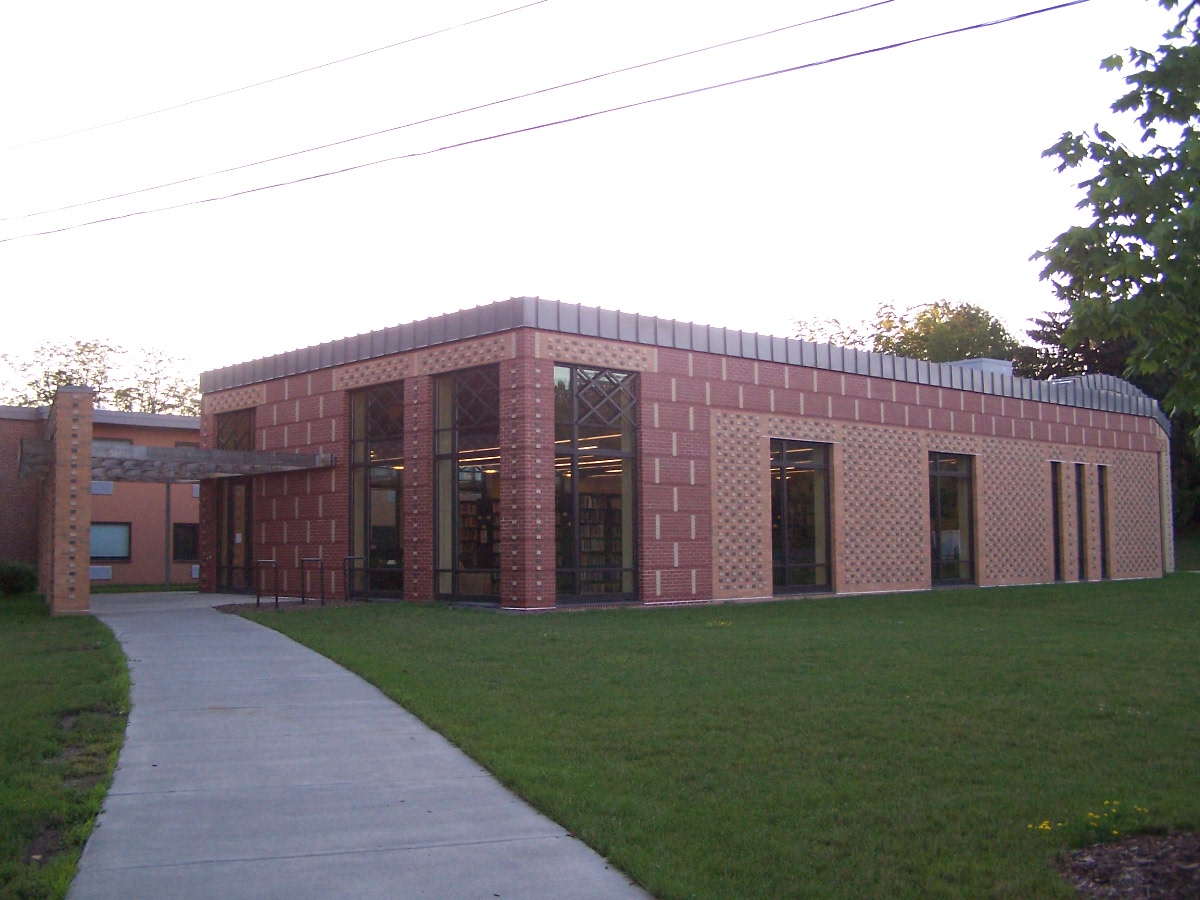
The Africana Library. built in 2005. The original library was part of the Africana Center that was burned in 1970 (in response, enraged students stormed the new Cornell Store, ransacking and heavily damaging the facility. They burned many of the stolen items in a large bonfire a week later). The center (in the background, you can make it out on the left) was then relocated to 310 Triphammer Road, just off North Campus. The building was dedicated to John Henrik Clarke in 1985, the same year that the Africana Libe became a part of the university library system. The building was previously renovated in 1990 [6].

[1]http://en.wikipedia.org/wiki/Zeta_Beta_Tau

[2]http://ezra.cornell.edu/posting.php?timestamp=1207807200

[3]http://www.sigmachidelta.org/Site/Home.html

[4]http://www.bridgescornellheights.com/

[5]http://alphagamhouses.blogspot.com/2007/10/cornell-university.html

[6]http://www.library.cornell.edu/africana/about/history.html


Another Random Cornell Heights Tour

23 07 2008

The house of Acacia fraternity. It was built in 1907 for a prominent professor, and designed by architect Arthur Gibb in the Prairie House style.  Gibb was also responsible for the design of Baker Lab on campus (which was technically designed around 1910, even if it wasn’t completed until 1921) [1]. The house, called “Northcote”, was first occupied by Acacia in 1934, with an additional dorm wing constructed around 1958. Today, in terms of distance from campus, Northcote is probably one of the farthest.

Greystone Manor, the house of Sigma Chi fraternity. It is been my observation that Sigma Chi is probably one of the most low-key fraternities of Cornell. There’s only a flag to announce their existence at their house, they have no house web site, etc. However, this doesn’t mean that the house doesn’t have a history worth sharing. The house was the home of silent-film star Irene Castle around 1919, when the silent-film industry was still thriving in the Ithaca area. It was bought by Sigma Chi in 1923, and has been in their possession ever since.

EDIT: So, a kind reader was generous to share this extra bit of information about the history of the house:

“The Greystone house was built by Alice G. McCloskey (of the Nature Studies department and editor of the Rural School Leaflet) and another woman. By the time Alice died 19 Oct 1915 she was the owner of the house. She left the house to her assistant, Edward Mowbray Tuttle (my husband’s maternal grandfather). Edward married in October 1919 and sold the Greystone to the silent film start in 1919. So there is more history than you think.”

On that note, Irene Castle was married to one of Treman family, but left Ithaca (and him) in 1923.

Not a frat house, but this is an amazing looking house regardless. Zillow.com indicates it was built in 1910. It’s across the street from Sigma Chi.

The house of Phi Delta Theta Fraternity on Ridgewood Road. The house dates from the 19th century, but Phi Delta Theta has made it home for the vast majority of its life. Phi Delta Theta is a dry fraternity, meaning that in its house, there is no alcohol consumption; for that, they can go to their annex at 210 Thurston. The house went dry in 2000, and all 40 current brothers at the time resigned in protest. If any of you are familiar with author Scott Conroe’s It Takes Just Pride, then you’ll recognize that this is one of the fraternities covered in the book. I also want to say that this is one of the two houses where someone chased me off the property for taking photos. Someone was in a foul mood, I guess.

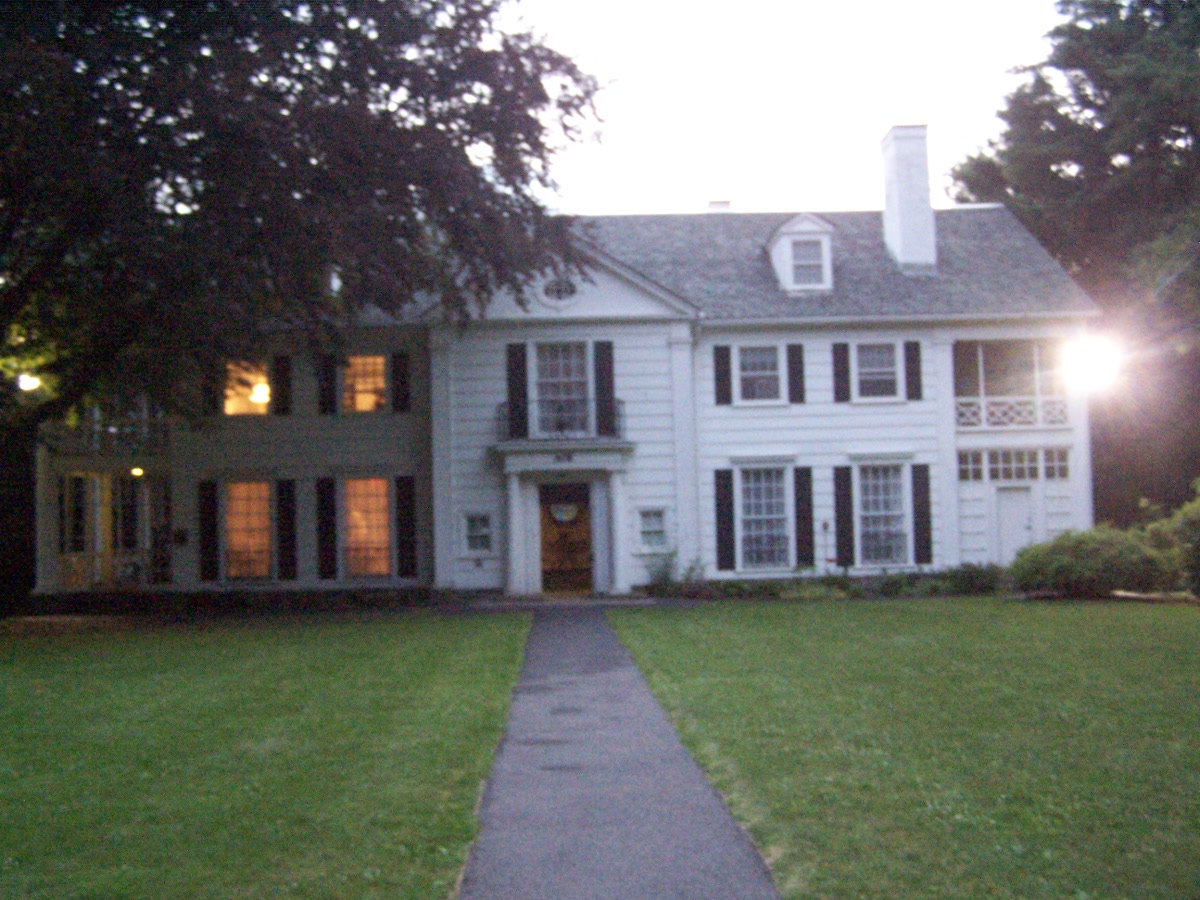
The house of Alpha Omicron Pi sorority. AOPi moved in in fall 2006. Prior to that, this house served as the home of Theta Chi for about 25 years. Theta Chi was expelled from campus in 1999, and then the house was briefly occupied by AEPi and former Theta Chi pledges, and finally AEPi moved back to their Thurston house in fall 2001. Theta Chi attempted a reorganization in 2003 but it did not last, and the house sat vacant until AOPi bought the facility. AOPi first came back to Cornell in 1989 after a 25-year hiatus; they lived briefly in AXiD’s house and 210 Thurston before moving into 14 South Avenue on West Campus in 1991 [2]. Prior to Theta Chi, this house was the home of a fraternity by the name Tau Delta Phi. While the house has been home to a number of GLOs, it was originally built in 1925-26 for Professor Ernest T. Paine[3].

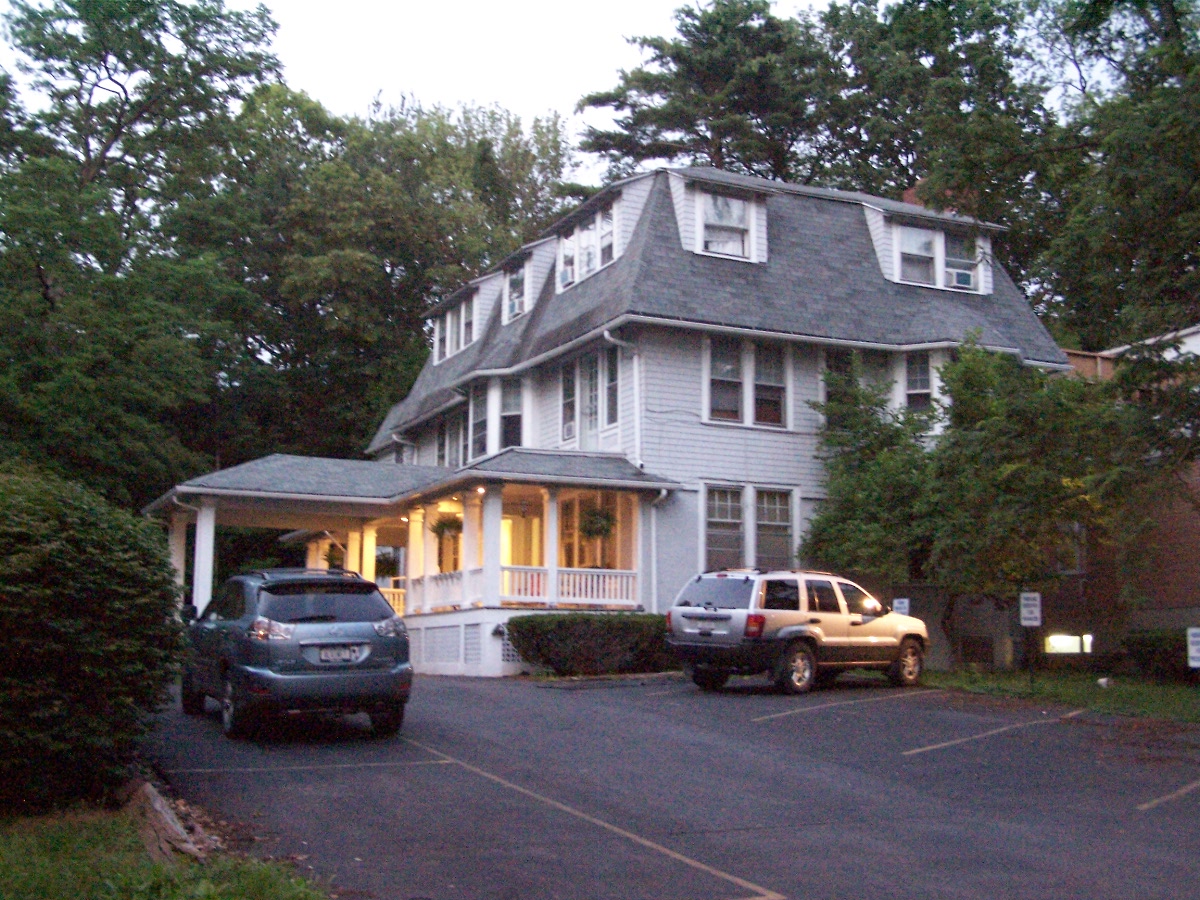
Continuing up Ridgewood is Pi Kappa Phi. The house is affectionately known as “Greentrees”, a name that hails from its days as the house of Phi Kappa Sigma before they folded in 1991. The name comes from the seven forested acres the house sits on. The property also at one point maintained an in-ground pool, a rarity for Ithaca. The house was originally home to George Morse of Morse Chain Company (now Emerson Power Transmission, a major private-sector employer in Ithaca). Phi Kappa Sigma, the Skulls, lived in the house from 1935 to 1991. In the meanwhile, Phi Kappa Phi lived at 722 University Avenue from 1949 to 1986, when the chapter closed; it was reorganized in 1990, and moved into this house the following year [4].

Across the street is Beta Theta Pi fraternity. Now, I must say that this house is spectacular from the outside; but I was appalled the few times I’ve been in there (a couple of my friends are brothers at Beta). Anyways, Beta (originally Alpha Sigma Chi), lived in Pi Kappa Alpha’s house until about 1906, when “Castle on the Rock” was constructed [5].

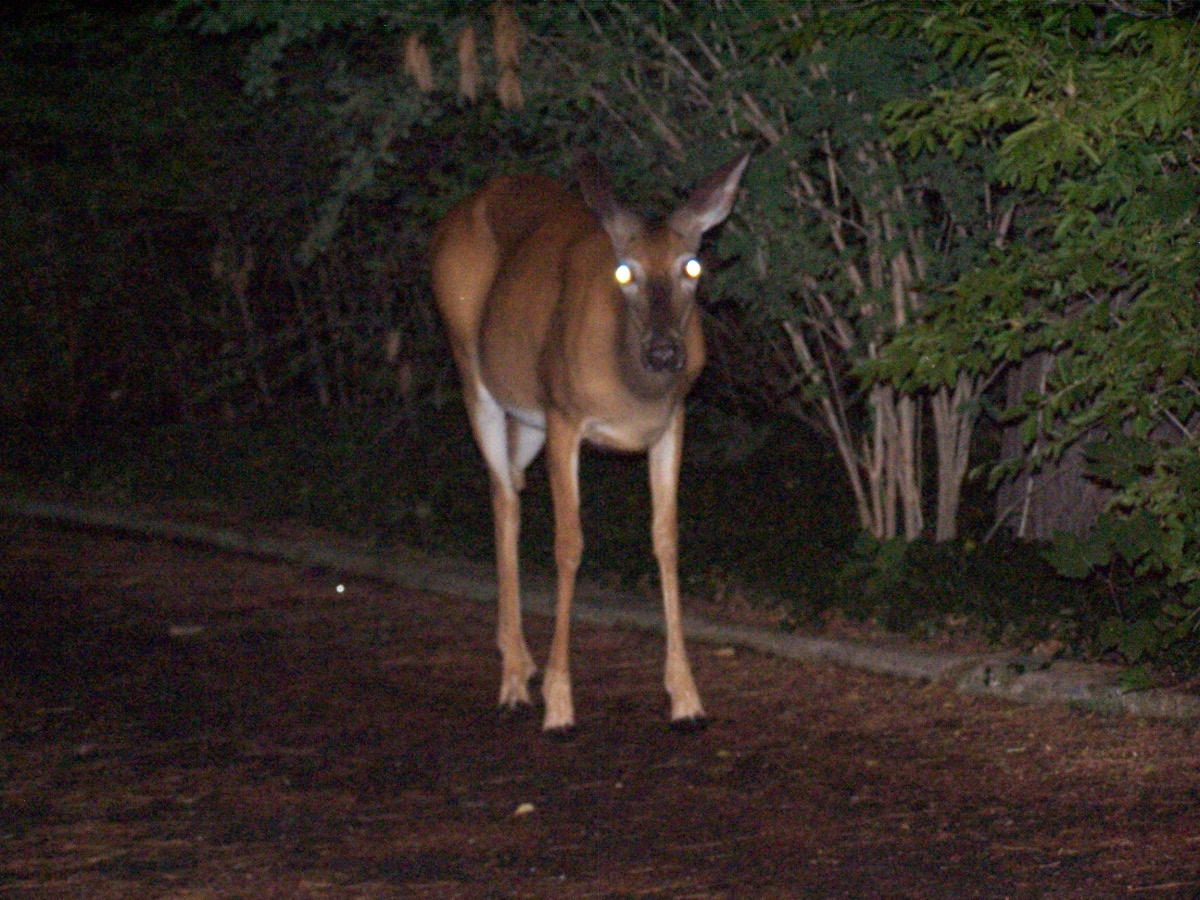
Venison Anyone?

Wrapping up Ridgewood is Sigma Delta Tau sorority. The Alpha chapter was founded in 1917 as Sigma Delta Phi, but changed when it was founded the letters conflicted with another organization (that seems to happen quite a bit) [6]. The house has a stunningly unattractive addition that probably dates from the 1960s, and I tried my best to not photograph it. The rest of the house looks very classy, dating from 1900-1910.

[1]http://www.cornellacacia.org/index.php?a=info

[2]http://www.aoiiepsilon.com/centennial.html

[3]http://www.news.cornell.edu/stories/Oct12/GreekTour.html

[4]http://www.cornellpikapp.com/history.php#Psi

[5]http://www.betadelta.org/about.html

[6]http://www.dos.cornell.edu/dos/greek/chapter_details.cfm?id=3282


The Cornell Master Plan: Part 1 of 5

22 07 2008

So, now that I’m done with the fraternity rush booklet, I’m going to do a new multi-part feature, this one focusing on the Cornell master plan. Look at it this way; I love reviewing the additions to Cornell’s physical plant, so this is the equivalent of giving a hit to a crack addict (okay, maybe not as detrimental to my health. But anyways…)

So, a little background. The plan was first initiated in late 2005 and took about two years to complete the final product [1], which was the culmination of the third and final phase of development. Up to that point, some open sessions were held at Willard Straight and at the Hilton Garden downtown (in Sept. 2007) for members of the community to comment on the findings, needs and projected developments of the university. The work was done by a Toronto-based planning firm, Urban Strategies Inc.

The plan tries to encompass the needs and concerns of the university and its physical plant. Among the primary issues, transportation and parking were major concerns, as well as maintaining a cohesive campus community and spatially harmonious design concepts in the planning of space throughout the campus. Also important was the development of additional facility to maintain Cornell’s capacity to be a top research institution.

So, the plan is set on the time scale of the next 10 to 25 years. The plan considers some of the following parameters; an increase of faculty from 1,600 to 1,700-1,800; an increase in graduate student population from 6,000 to 6,500-7,000; an increase of 700 staff from 8,400 to 9,100; and undergraduate to hold steady arond 13,500. The plan accomodates for 1-2 million more square feet of space, to be constructed in and around the Ithaca campus.

So, my goal is to pick this plan apart, piece by piece, and analyze the crap out of it. But if you want to see and read through the process that led them to create the parameters and design guidelines for the comprehensive master plan, here’s the link: http://www.masterplan.cornell.edu/ (click on part I).

Clicking on part II’s “Core Campus” link, and sitting through the time that it takes for 76.99 MB to download, it opens up to a picture of Olin Libe and McGraw Tower. How pretty. Anyways, it talks about the importance of Central Campus as the hub of university activity. Here, they first mention the new 24-hour hub on the east side; that’ll be discussed more thoroughly in a later entry. One last thing- unless otherwise noted, no building is a concrete plan; they are merely suggestions as to a good way to develop the site. If master plans were always carried out to a tee, we’d have completely gothic west campus [3].

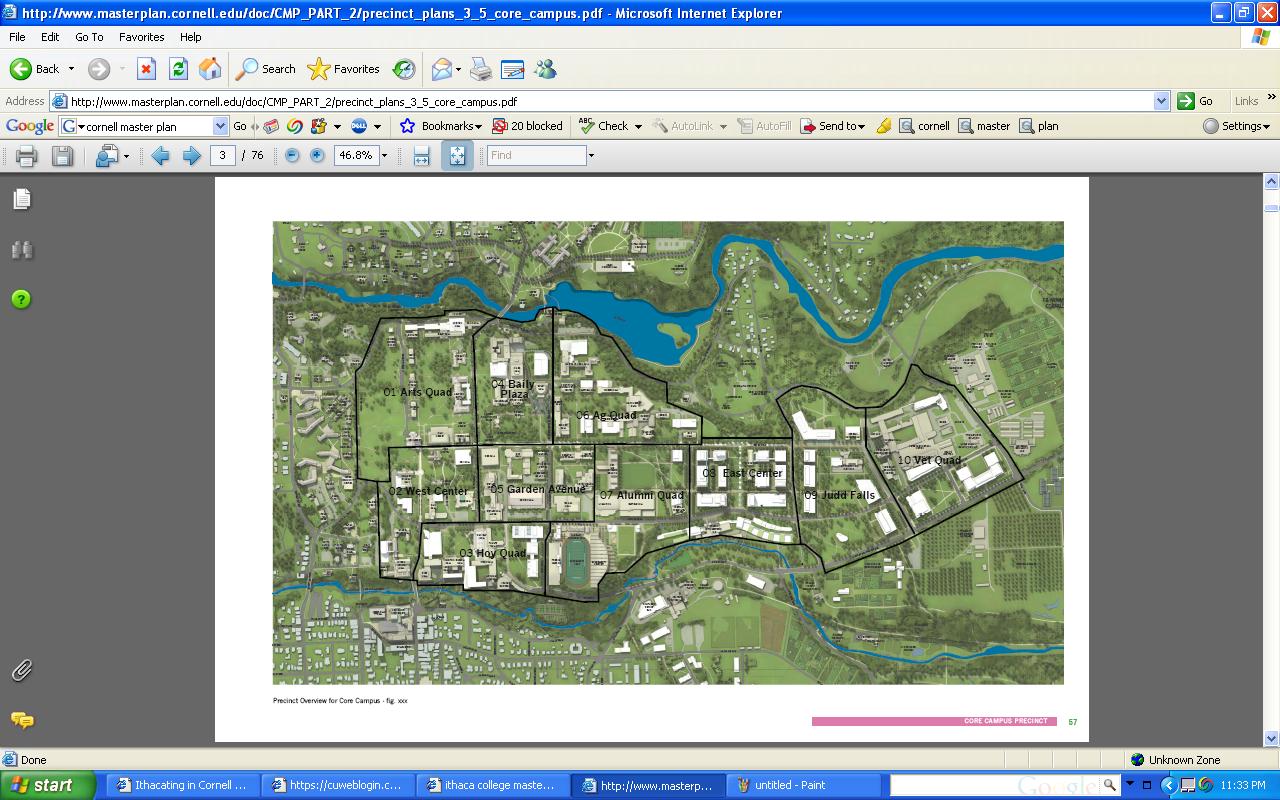
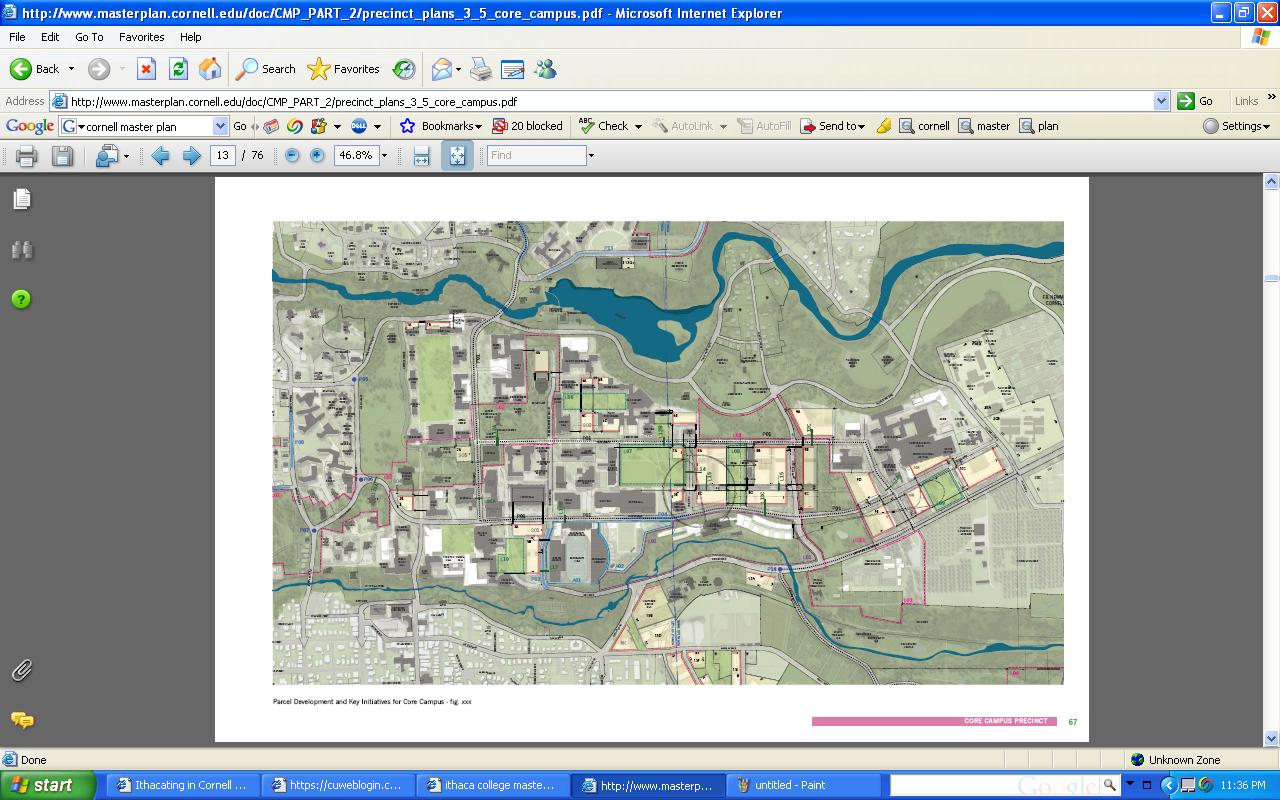
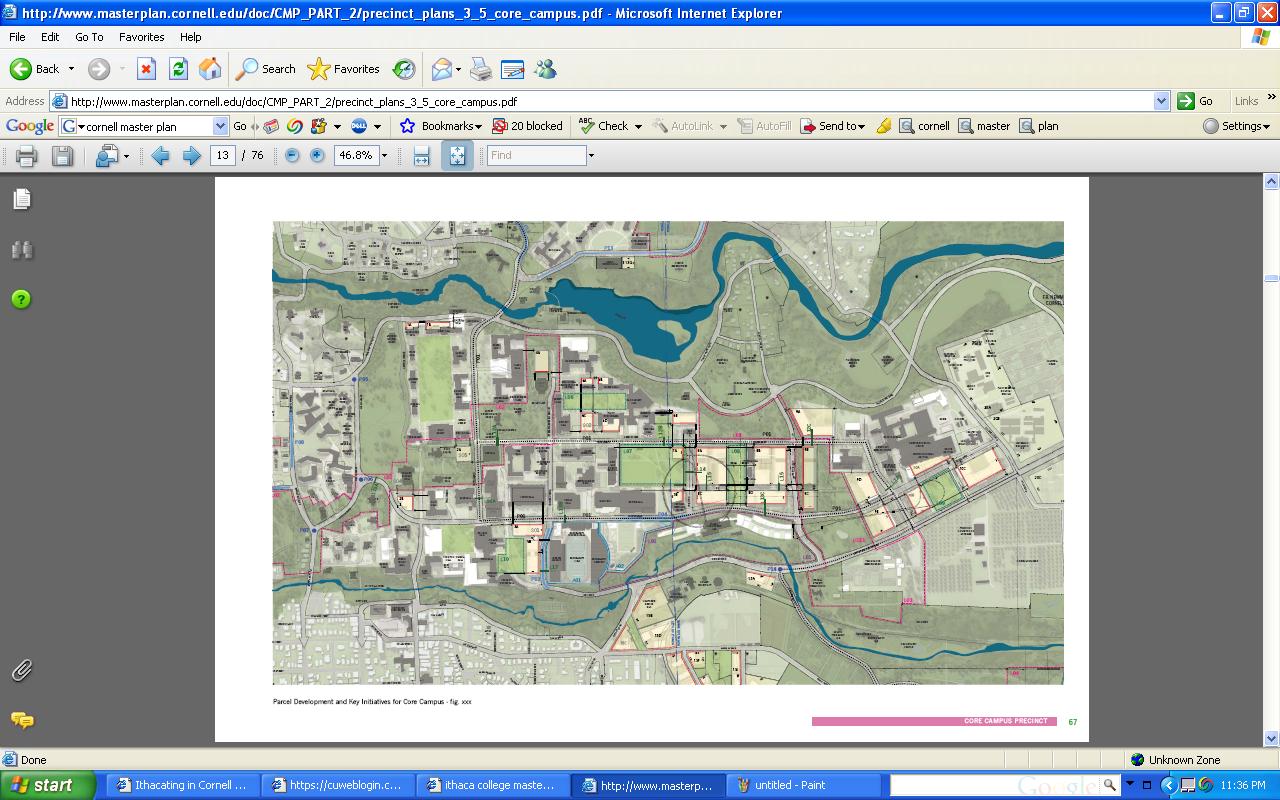
Yay for Prnt Scrn buttons! I’m not doing this with every page, just ones i’m going to focus on. Seriously, I suggest you go to the masterplan website, click on “part II”, “core campus”, and take a look. Or go to the listed source [2].

So, this is the overall plan. It worries me just a teeny bit when they mispell Bailey as “Baily”, since it is a whole area of discussion for them; but I can’t comment, my blog entries are filled with typos.

The page for demolished buildings and removed parking lots. the general goal of the master plan seems to be to hide the parking as much as possible, since it isn’t good for aesthetics, and isn’t pedestrian friendly. However, we still need it, so they shove it underground where possible. Milstein Hall would be a good example of that.

Development focus areas! Notice the massive changes on the east side of campus. Like I said, I’ll discuss those later, but they really stand out here.

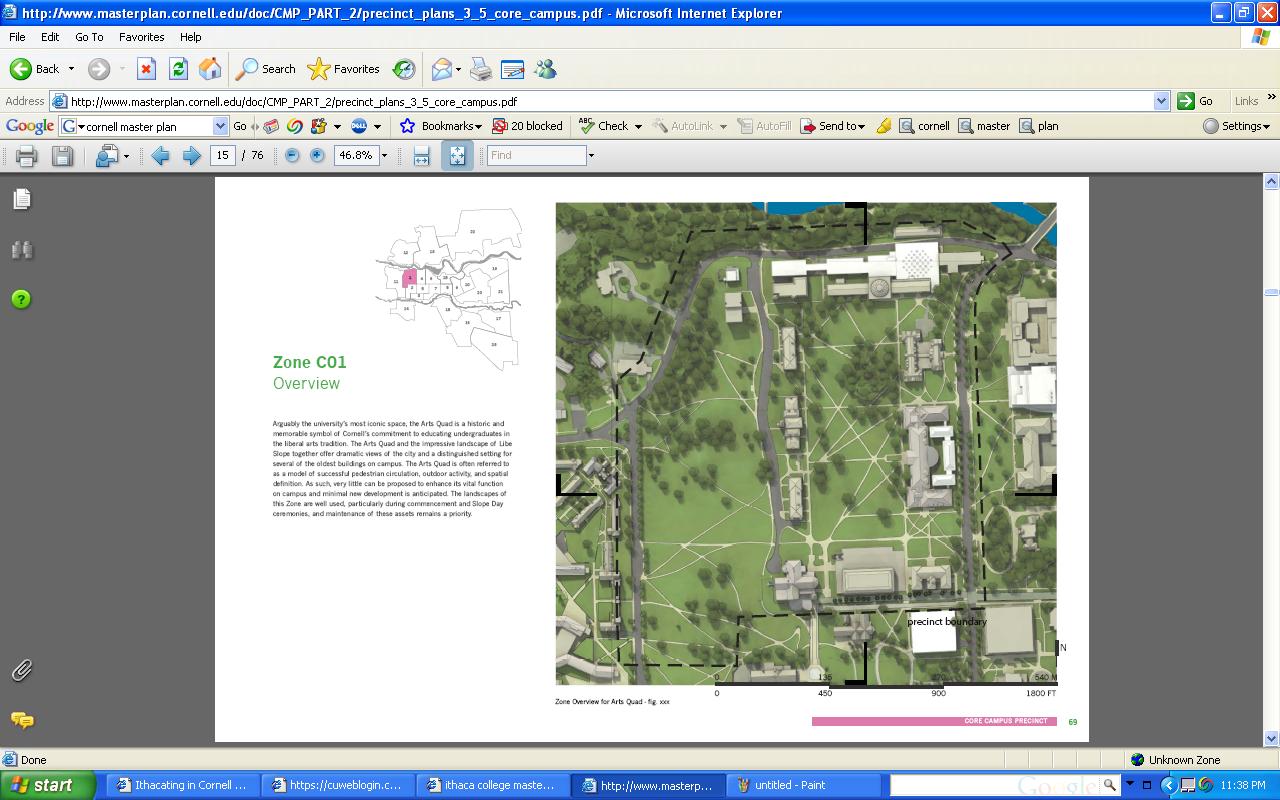
The 3-D image of the improved Arts Quad. Mistein sticks out like an ugly chick in a beauty contest, but there’s hope for the Goldwin Smith extension, for  which planning is currently underway. I’m holding out for something modern yet respectful to the older architecture, like the addition to Lincoln Hall in 1998. 

The overhead. As you’ll notice in the pdf, Milstein has these symmetrical roof features at the top; I feel as if that was an attempt to spice up the miracle box. I’m still not impressed, but you can notice an extension that goes behing Sibley and behind Tjaden. I really hope the arrow means you can still walk between them. An extension of Milstein’s design is perhaps nto the most ideal, but maybe Cornell can come up with something good for the back areas of Tjaden and Sibley. You can also just make out the Johnson Museum addition, which area-wise looks small and quaint compared to the rest of the buildings. At a mostly subterranean 16,000 sq. ft, I s’pose it is.

New stuctures with the thick gray border have been given the go-ahead for planning. The footprints in blacks are areas of potential development suggested by the plan. As we see, the area behind Sibley and Tjaden is seen as the only reasonable space left to develop without disrupting the harmony of the ag quad. The next page states that these buildings would have the same height and massing as their older counterparts, but considering they’re home to Arts and Architecture, I would not be surprised if Cornell were to push for cutting-edge designs if they ever developed those plots, being artistcially daring and all. However, it’s amazing how cutting-edge can be so offensive to the eyes sometimes.

Buildings in mauve-purple? They’re historic. As much as I have a personal vendetta against Rockefeller Hall, particularly Room 203, it would be a major hassle to structurally change it. No demo there anytime soon (I think the story goes that the money John Rockefeller gave to the building went mostly to the interior mechanics, and little on the exterior and finishings, hence the spartan design. He hated it so much when he saw it he vowed never to donate money to Cornell again). My personal wonder is how the hell could Uris Hall be architectually significant. Is that like the equivalent of a massacre monument, to mark that something terrible happened on the land and we should all know about it? Uris Hall could be taken as a massacre on the eyes.

Also on this page are the noted sightlines for the Arts Quad; sightlines will play a bigger role in some others buildings on campus, as to whether they remain or not.

to be continued…

[1]http://www.masterplan.cornell.edu/doc/CMP_Executive_Summary_FINAL-2.pdf

[2]http://www.masterplan.cornell.edu/doc/CMP_PART_2/precinct_plans_3_5_core_campus.pdf

[3]http://en.wikipedia.org/wiki/Cornell_West_Campus