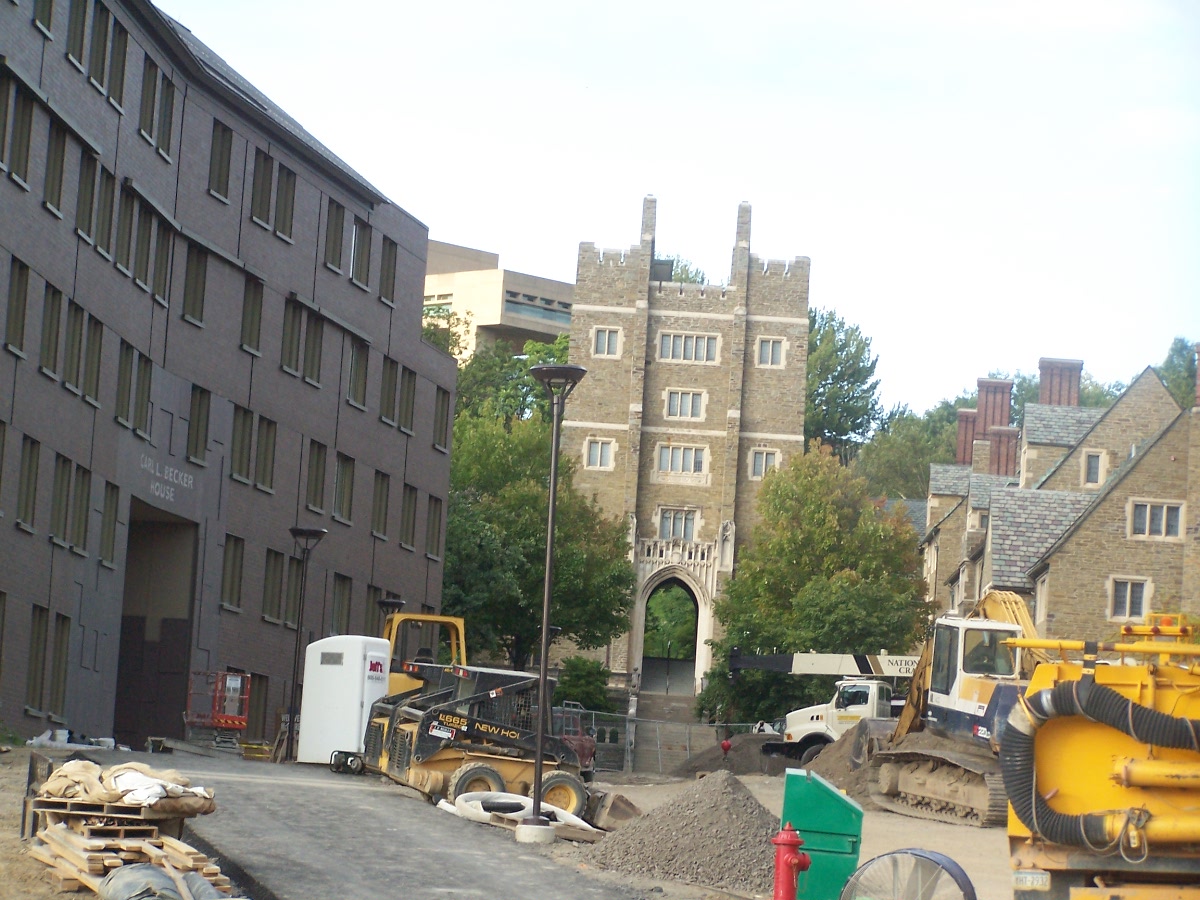
(Bad) Sign of the Times

30 10 2008

This is going to take away a fairly large amount of my writing material…

http://www.theithacajournal.com/article/20081030/NEWS01/81030012

Cornell announces hiring pause, construction moratorium
Moves in response to state budget news
October 30, 2008

 Cornell University is taking steps to prepare for blows to the budget, including a pause in hiring, a 90-day construction moratorium, and a university-wide review of all operations, Vice President for Communications Tommy Bruce said today.

The “pause” in hiring means no external applicants will be appointed to any open positions, according to a statement released by the university.

This is intended to provide slots for any employees who may be “dislocated in the near term” by funding cuts, and to find, through attrition, any positions that can be eliminated to minimize the need to lay off staff in the future.

Though a private university, Cornell operates four schools on the Ithaca campus established by the state and that receive public operating and construction funding. It is also New York’s land-grant institution and operates agricultural experiment stations in Ithaca and Geneva. Gov. David Paterson announced earlier in the week that the state faces a $1.5 billion budget gap for the current fiscal year and $12.5 billion for the fiscal year that starts April 1. About a fifth of state revenues are tied to the New York City financial industry.

Bruce emphasized that there will be no across-the-board cuts or layoffs, saying, “We have been having to deal with very real cuts coming from the state, and what we’re dealing with is loss of revenue in the wake of the Wall Street situation. What this means going forward is that we may be facing a situation in terms of reduced personnel. What we have to do at this point, not knowing the full impact of the current economic situation, is taking the precautionary step of pulling back on posting open positions and hiring externally.”

The hiring pause will be in effect until March 31 and applies only to non-professorial positions.

The 90-day construction pause will halt progress on any development project on which construction has not already started or which does not have a contract commitment on it.

Physical infrastructure, information technology capital investment, and local transportation and housing projects are included in the moratorium. Bruce said there will be a review of all projects to determine how to proceed most efficiently.

The university-wide review of operations will help the administration pinpoint areas that can be streamlined and where costs can be contained.

Bruce offered an example from his office, which produces more than 1,000 publications a year. These publications can be produced electronically, he said, saving the cost of paper and publication.

An electronic suggestion box has been set up at www.cuinfo.cornell.edu for members of the Cornell community to offer ideas.

~~~

City of Ithaca’s doing the same thing. The state’s severe defecits as a result of the crisis on Wall Street are finally hitting home…and it’s hitting hard.

http://www.theithacajournal.com/article/20081030/NEWS01/810300321

My question is which projects that are not underway have a contract commitment. I suspect Milstein is largely safe, but the addition to the Johnson Museum is likely shelved.



News Tidbits 8/15- CU ERL Project

15 08 2008

So, I’m writing this as I’m sitting at a desk within the hotel; granted, I’m on the job, but it would help if I had more than one customer every forty-five minutes. It’s a bit of a running joke among Cornell Store employees that the Statler requires a dress shirt, tie and a really long book. Luckily, one of the few benefits to working the Statler Hotel gift shop over the main store is that we actually are permitted to browse the internet (with discretion).

So, doing as I often love to, I was perusing the planning board notes for the August 19, 2008 meeting of the Town of Ithaca planning board. And lo and behold, look what pops up:

8:00 P.M.        

Consideration of a sketch plan for the proposed Cornell University Energy Recovery Linac (ERL) project located north of the Pine Tree Road and Dryden Road (NYS Route 366) intersection, Town of Ithaca Tax Parcel No.’s 63-1-8.2, 63-1-2.2, 63-1-12, 63-1-3.1 and 63-1-3.3, Low Density Residential Zone.  The proposal involves construction of an underground accelerator tunnel (14-foot diameter and 2 km long), a cryogenic facility and associated electric substation (+/- 15,000 square foot footprint), and an extension to the existing Wilson Laboratory (+/- 185,000 gross square feet of building space).  The project will also involve new stormwater facilities, parking, outdoor lighting, and landscaping.  Cornell University, Owner; Steve Beyers, P.E., Engineering Services Leader, Agent.

The other agenda items aren’t notable (a radio tower, continued discussion about the IC Athletic Complex, and the continued use of an equestrian facility).

So, the construction of 200,000 sq. ft of physical plant, a cryogenic facility and an accelerator tunnel require a bit of investigation.

The first thing I came across is this week-old Cornell Chronicle item. The particle accelerator has a planned timeframe of construction that would allow for the beginning of operations in 2011 [2].

Rather than try and explain the operations of the particle accelerator itself, I’m just going to quote the article (I’m excusing myself on the grounds that I study thermodynamics, not quantum physics).

The ERL would accelerate electrons to nearly the speed of light in a linear accelerator (linac) made of two straight tubes, each about 330 meters (0.2 miles) long, then feed them into the Cornell Electron Storage Ring, Hoffstaetter said. After a single rotation around the ring, the electrons would return to the linac, where their energy would be recovered and used to accelerate the next batch of electrons.

Meanwhile, at various points around the ring, the Cornell High Energy Synchrotron Source would use the electrons to produce ultra-bright, ultra-fast pulsing X-ray beams capable of imaging structures just a few atoms wide, and whose oscillations would be resolved with sub-picosecond resolution (less than a millionth of one millionth of a second). [2]”

On another note, the building is visible in the master plan diagrams, as the large expansion that exists to the east of the current Wilson Lab structure:

So, our physical plant will continue to expand for some time yet.

[1]http://www.town.ithaca.ny.us/

[2]http://www.news.cornell.edu/stories/Aug08/ovp.forum.erl.html


Exploring West Campus

15 08 2008

First off, let me say I do not support nor condone any illegal activity, especially for the purpose of information gathering. That being said, going into prohibited construction sites is a lot of fun if you’re careful where you step and you can avoid the workers leaving for the evening.

So, this started when a friend of mine who happened to figure out that I was the writer of this blog sent me a message asking if I could go through the new West Campus and take some photos. Knowing he wasn’t in Ithaca, I decided that I would be happy to oblige this time  (but I certainly won’t be making it a habit).

Token War Memorial shot.

First off, the War Memorial. These photos are actually from my fraternity photo tour last month. The War Memorial was constructed from 1926 to 1931. It honors the 264 Cornellians who were killed in action in World War I. However, it does not honor a 265th death, that of Hans Wagner 1912, who was killed in action while fighting for the Axis Powers [1].

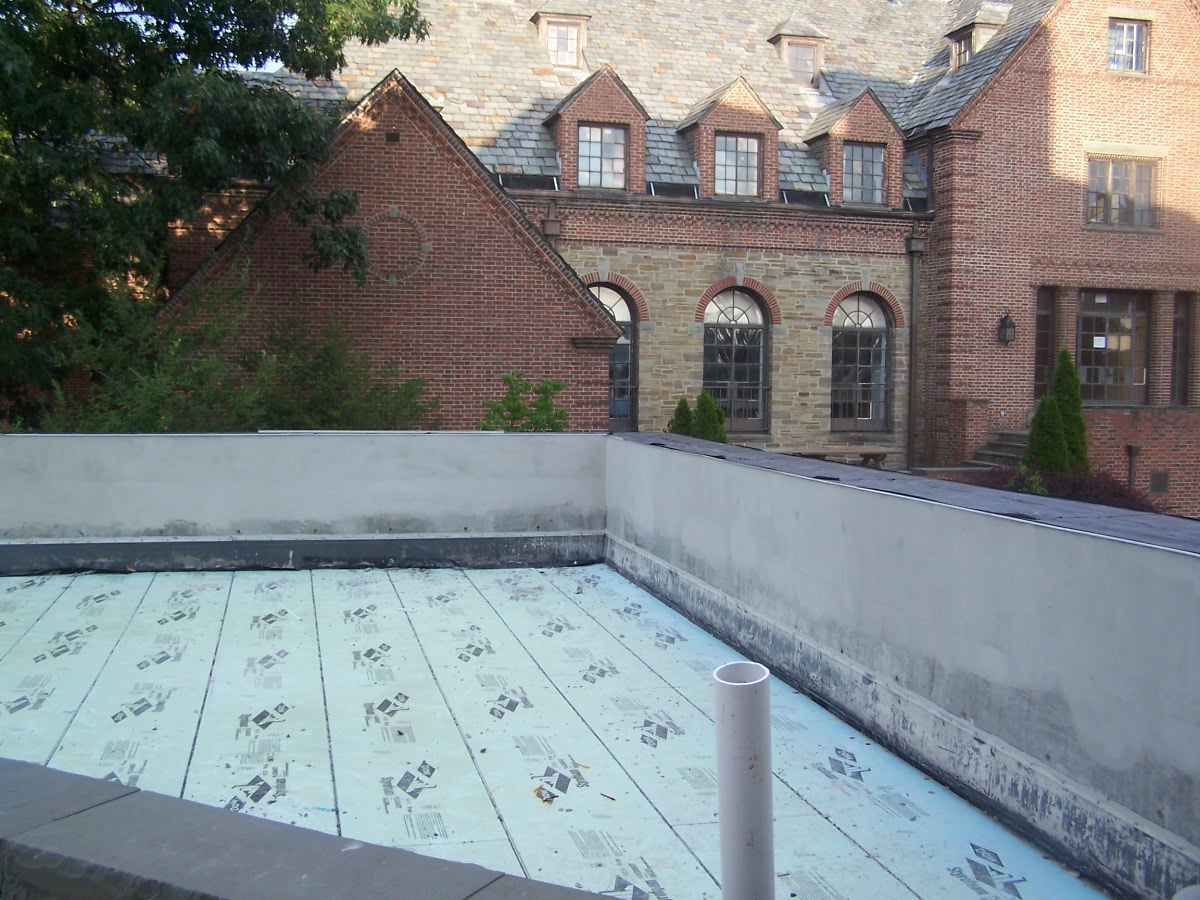
Noyes and Hans Bethe dining hall have grass roofs. Cornell, take note to not follow IC’s folly and set off fireworks right next to a building with a grass roof; it just might catch fire.

Any makeshift fence can be scaled. But why bother when there’s a narrow space between it and the wall?

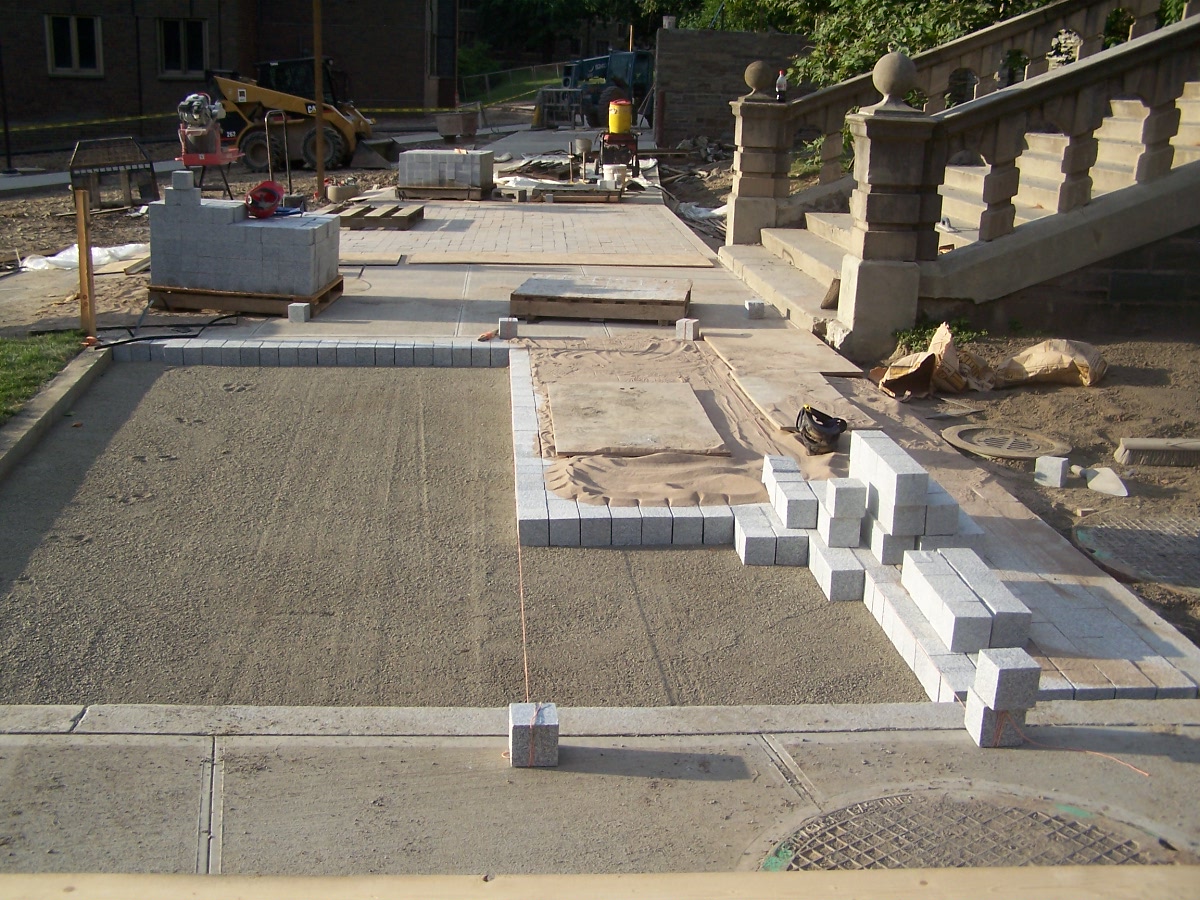
Base of the War Memorial steps, being renovated.

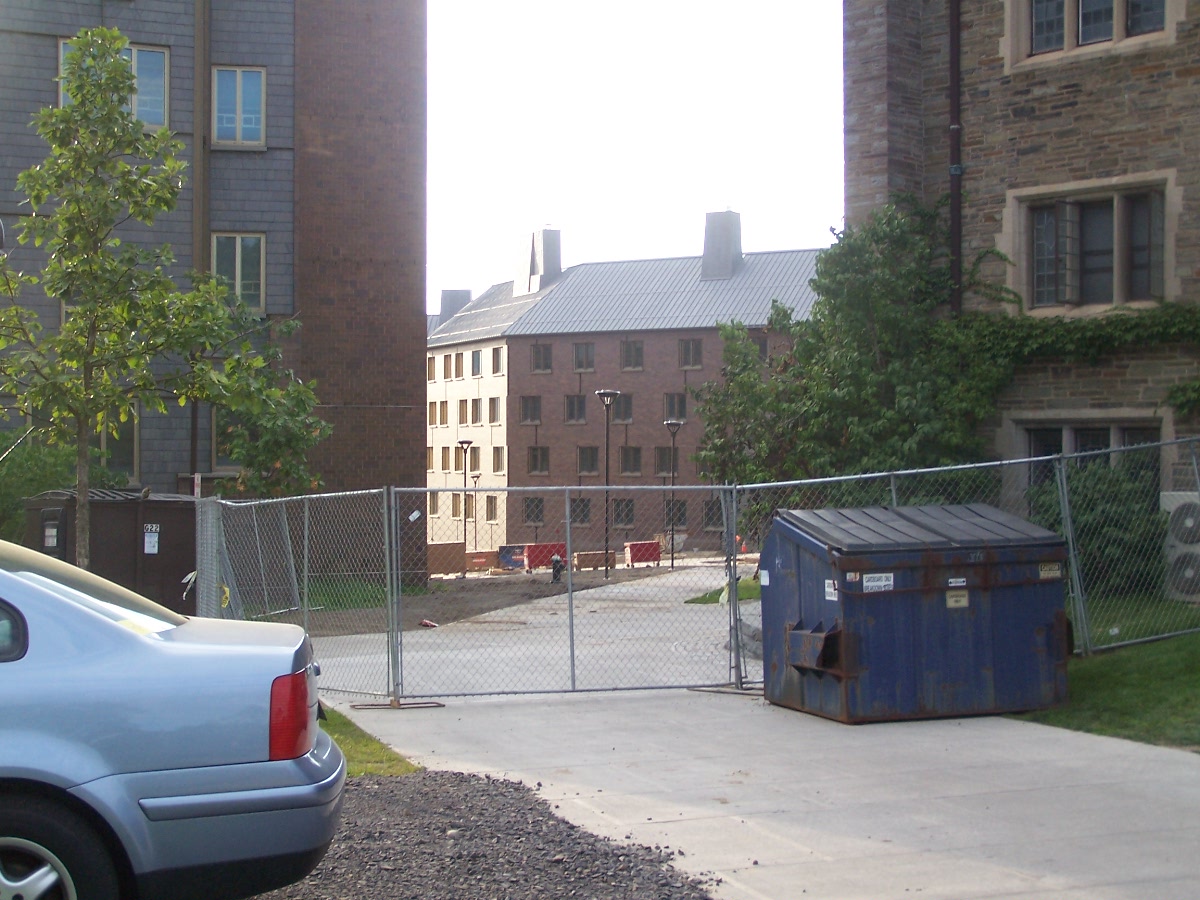
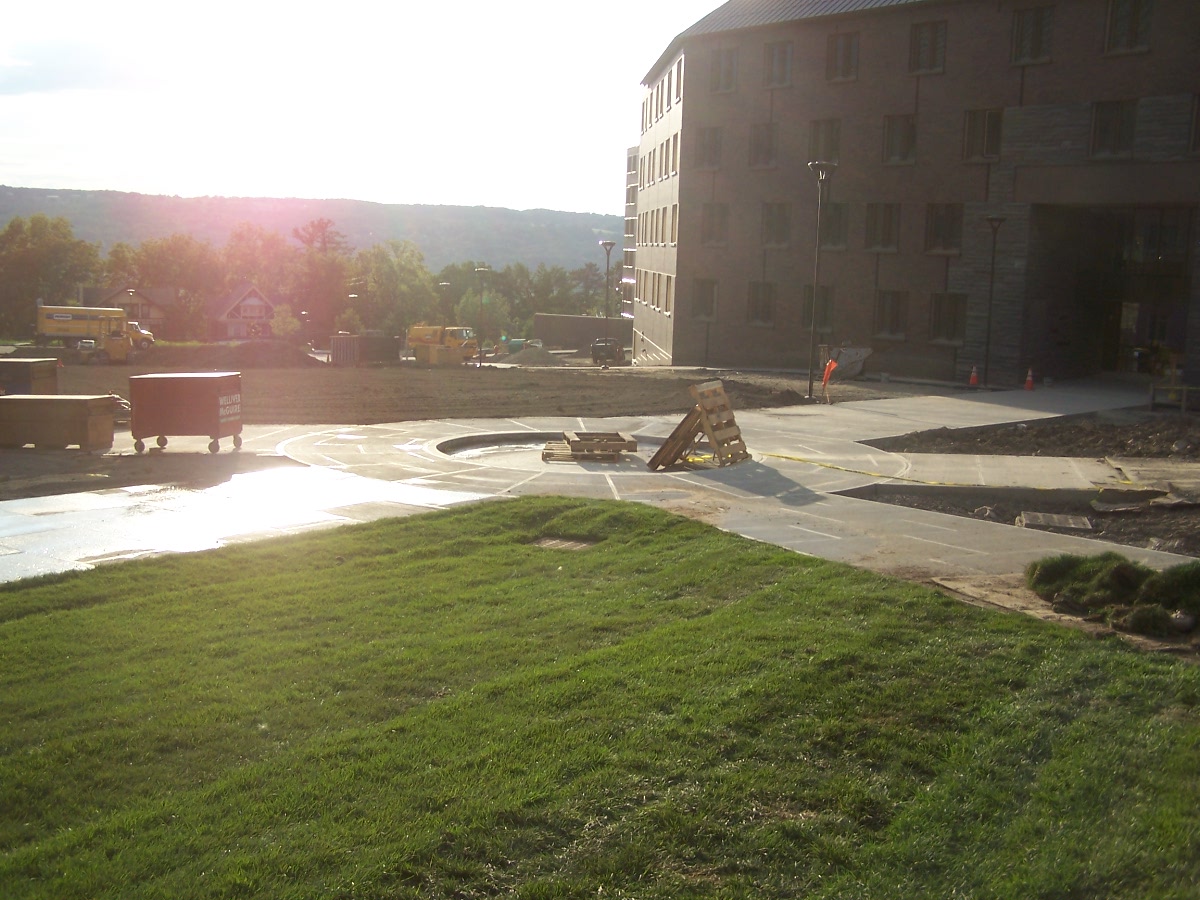
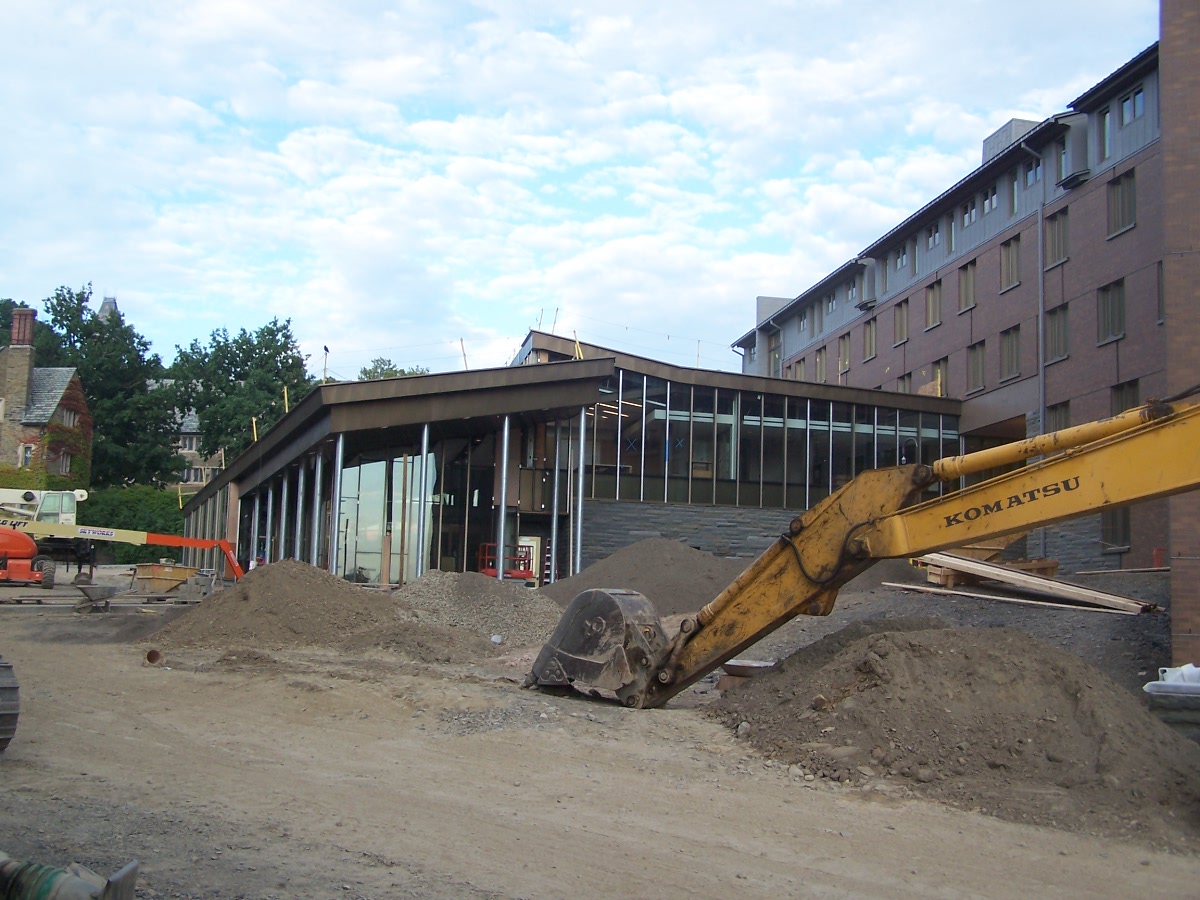
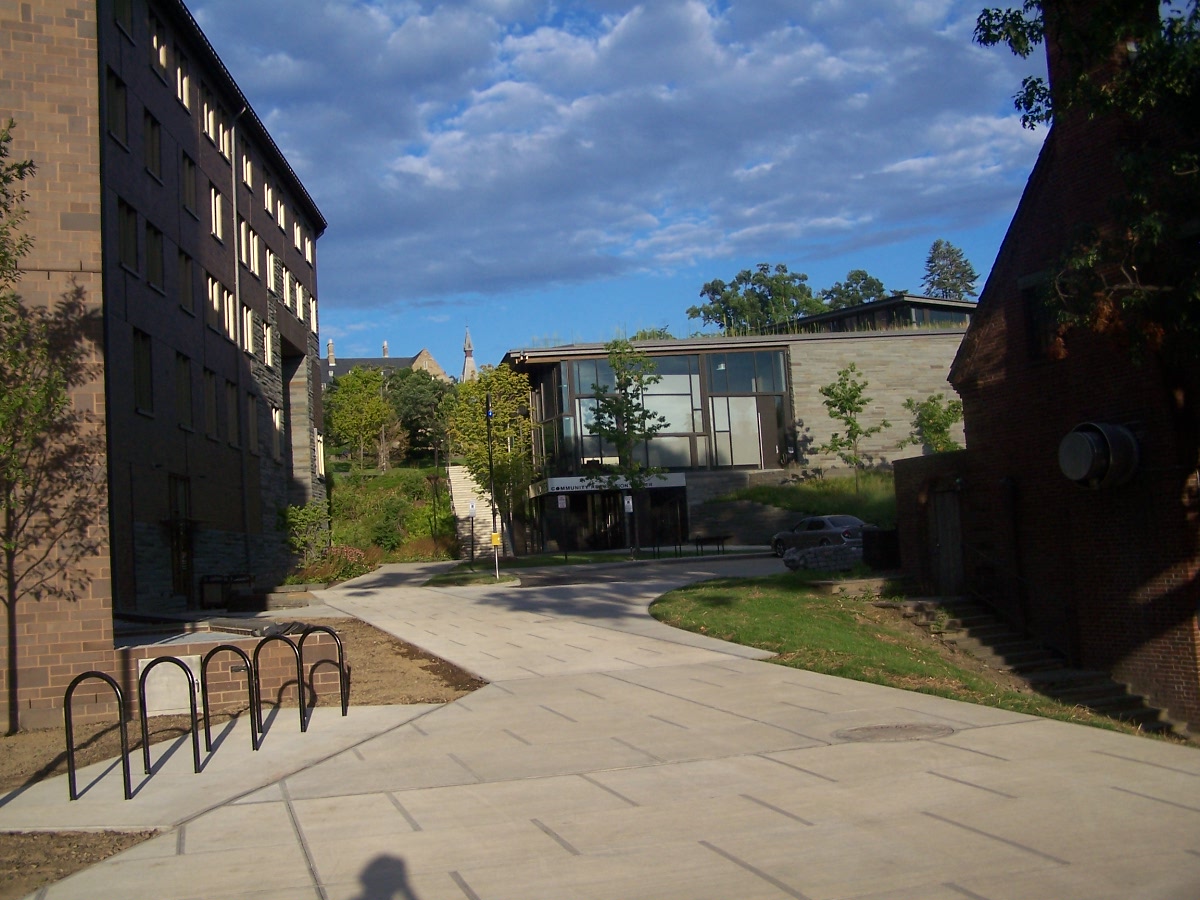
A new central plaza area between House 5 and Bethe.

House 5, south face

Don’t mind my shadow.

Curious horizontal window slits near the entrance of House 5.

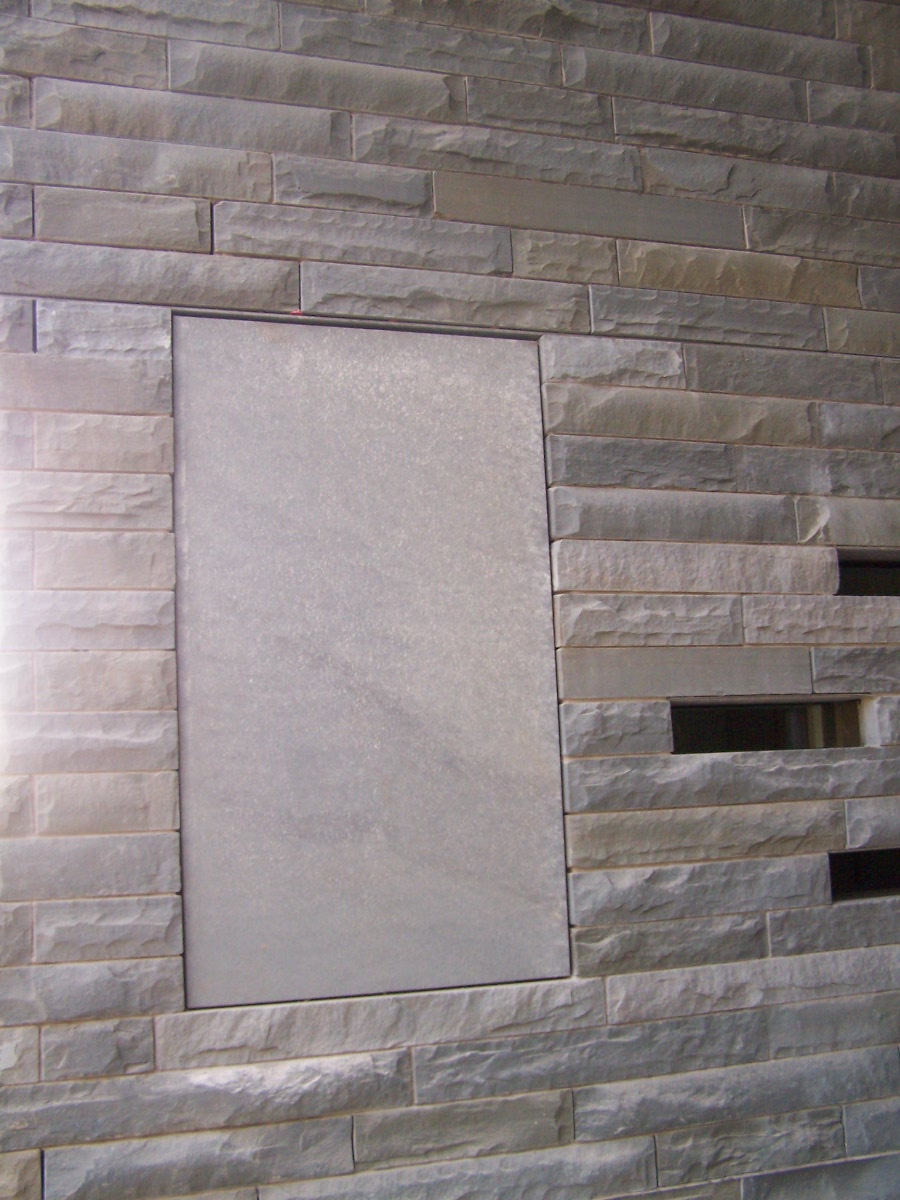
Nameplate, unfinished for now.

House 5 Dining area, NW corner

north face, house 5

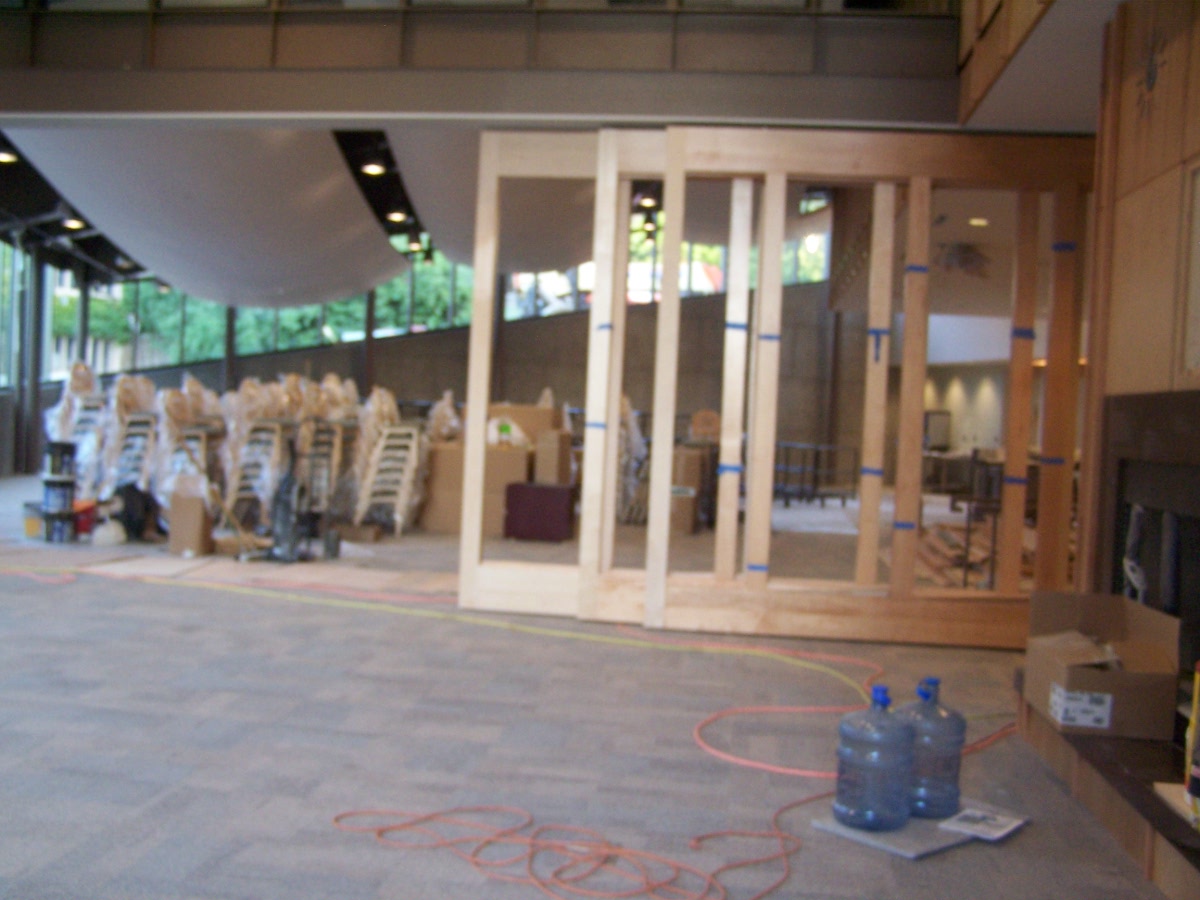
House 5 dining area interior, unfinished

Keeton House, north face

Noyes, from Keeton

A corner plaza next to Keeton. Psi Upsilon is in the back.

A plaza/planting area just outside of Keeton.

Keeton’s connective corridor.

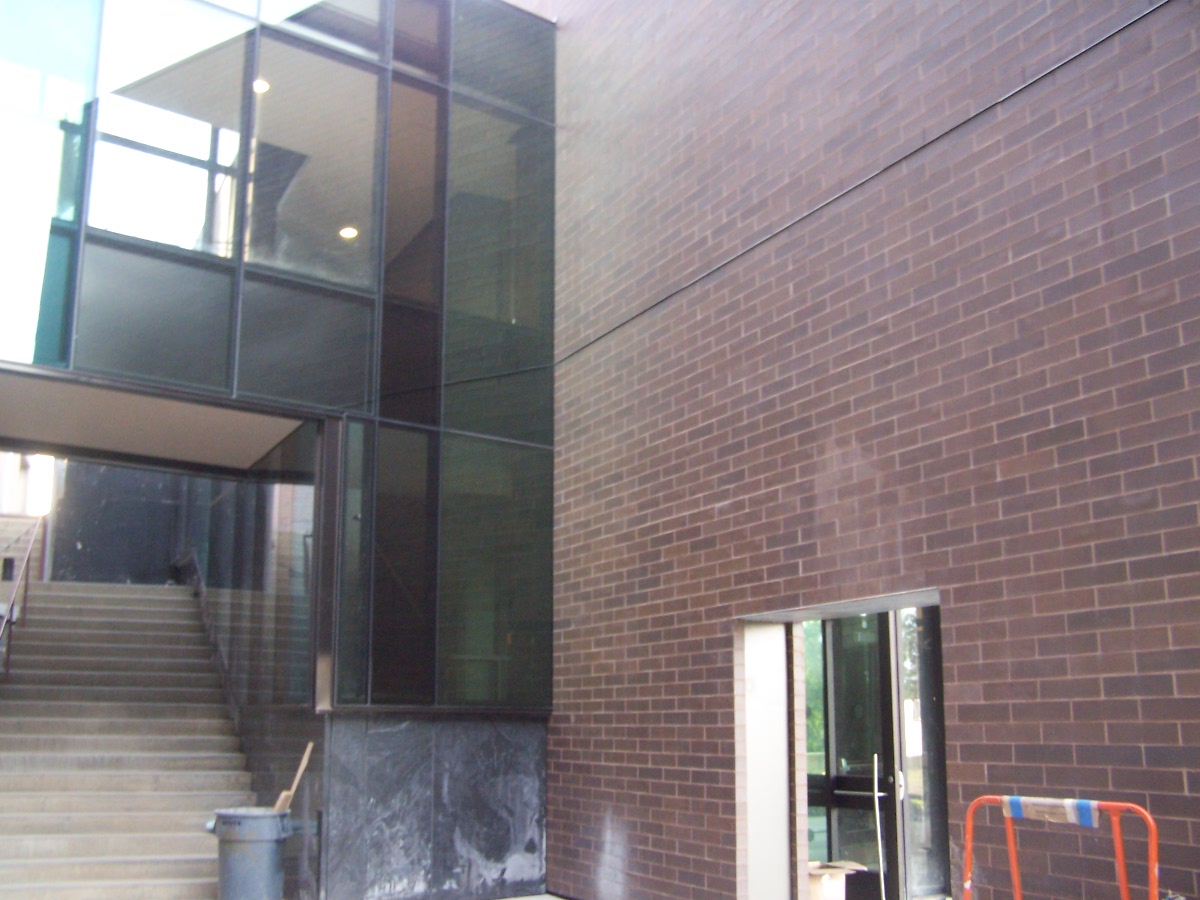
A staircase at Keeton that leads under the corridor.

A large blank wall next to the previously mentioned staircase.

Note the coloration of the glass in the connective corridor.

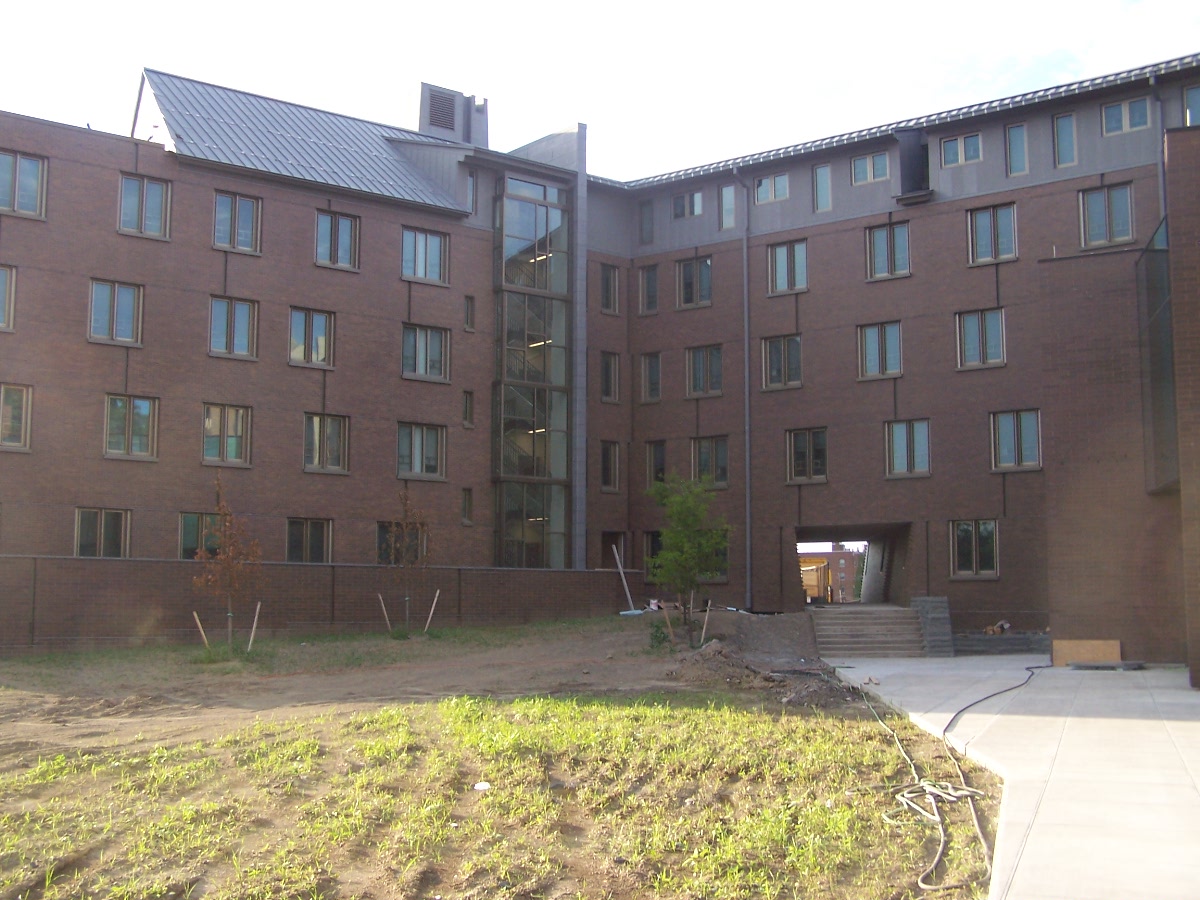
Keeton’s south wing. Notice how the top floor has a different window pattern and uses different materials.

An interesting if not aesthetically pleasing entrance area for Keeton’s north wing.

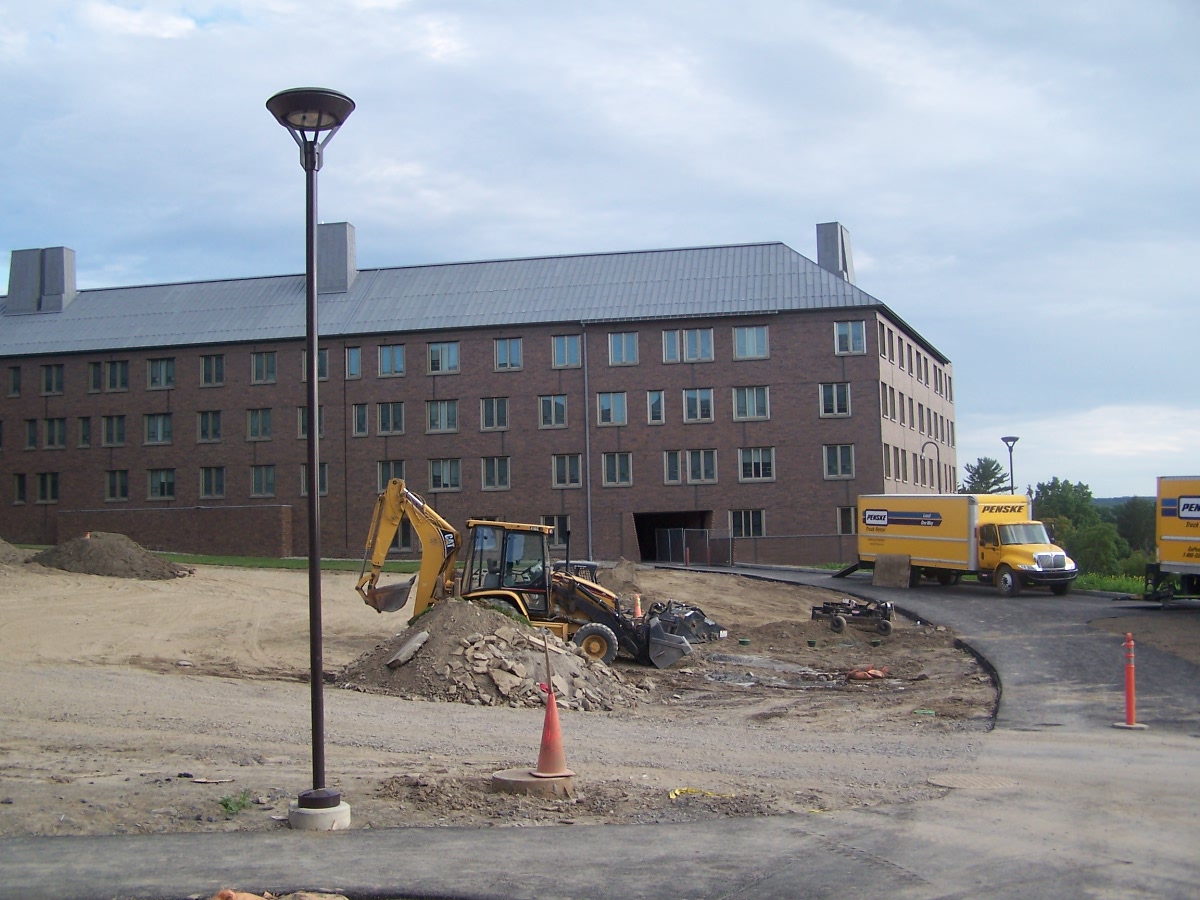
Had to hide from construction workers by hiding behind the board next to the Penske truck.

The unfinished nameplate for Keeton.

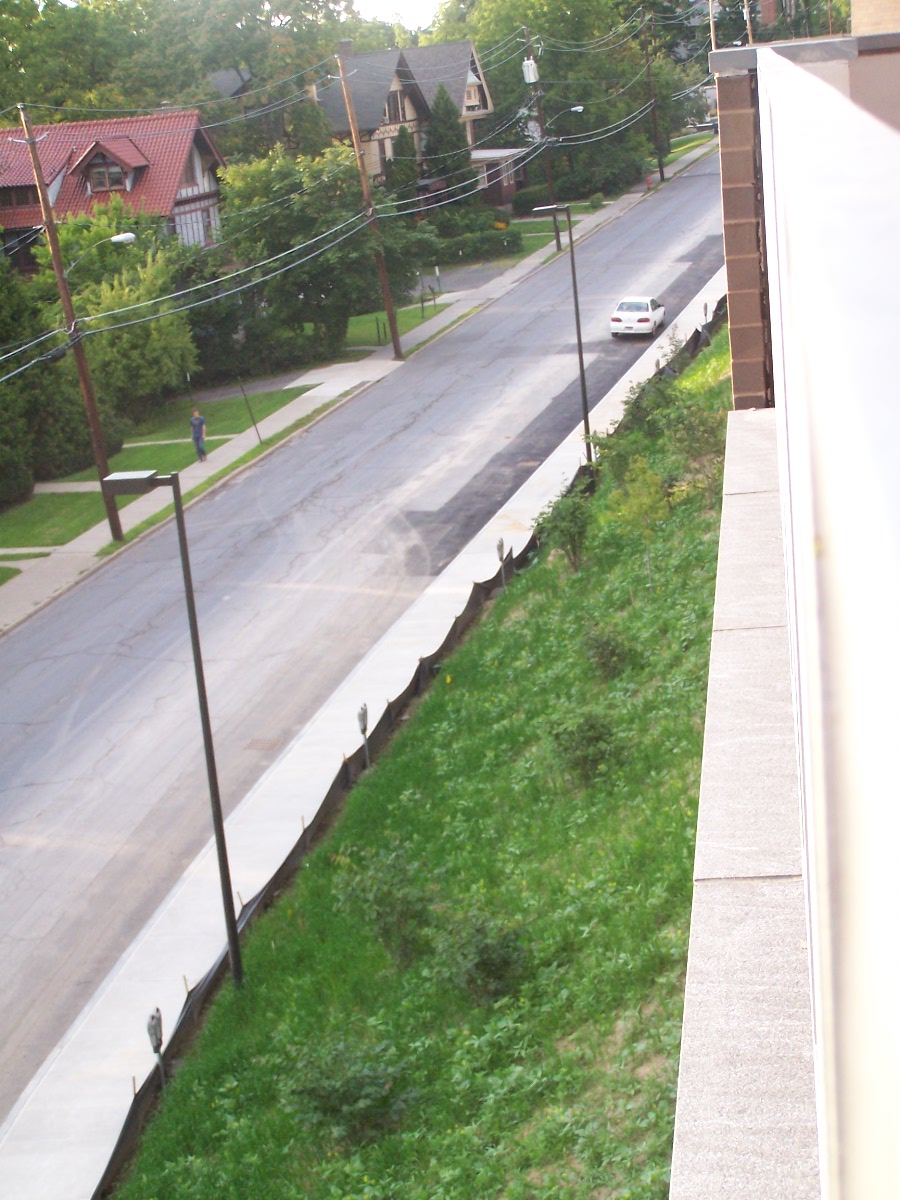
Keeton’s balcony.

An architecturally interesting juxtaposition of Baker Tower, Becker House and the Johnson Museum.

Keeton’s lobby area

The dining area and an adjacent lounge in Keeton House.

A random hall of dorm rooms in Keeton.

***

Boldt Hall and Tower

ATO painted their house, it seems.

As for the photo request…consider it fulfilled.

[1]http://cornellsun.com/node/19107


Gates Hall

10 07 2008

Okay, so in my observations of Cornell and local construction ,there is one thing that continues to be just a bit bothersome; two and a half years after it was announced [1],  there has not been one single rendering of Gates Hall. So, let’s review what we do know.

1)The building is meant to house the Dept. of Computer and Information Sciences (CIS). Gates is allowed to name it because he’s forking over half the expected construction cost (plus, the guy gets around around- UW and Stanford have Gates Halls as well).

From the article: “According to Kenneth Birman, professor of computer science and chair of the CIS building committee, the information campus project is still in the feasibility study stage. Gates Hall is estimated at 100,000 square feet and projected to cost about $50 million.”

2) So, now we know it’s supposed to be about 100,000 square feet. For comparison, Duffield’s gross area is about 150,000 sq. ft. [2]. Further investigation of the facilities website indicates that the architect will be Polshek Architects [3].

3) A review of Polshek’s firm shows some of their previous work:

Polshek Work 1 

Basically, it’s a firm that likes glassy, boxy designs.

4) Lastly, from the Master Plan, we see that CIS is behind Thurston, but there’s two buildings, and it’s a little confusing to tell which is Gates, since they are both listed as “in progress”.

My conclusion: Expect Gates to have a foot ptint between 25,000 and 50,000 square feet, 2-4 floors in height, with a boxy, glassy design not too unlike the Beck Center behind Statler Hall.


[1] http://www.news.cornell.edu/stories/Jan06/GatesCIS.ws.html

[2]http://www.fs.cornell.edu/fs/facinfo/fs_facilInfo.cfm?facil_cd=2000

[3]http://www.fs.cornell.edu/fs/projects/