Where Frat Houses Go To Die

29 11 2008

Okay, maybe not so much. Reasonably so, Cornell has seen many fraternities in its day, and while many still remain on campus, they often move during their tenure at the university. Other organizations have come and gone with the times. Well, the fraternity and its symbols may be gone to all but their alumni and the old yearbooks, but the houses…what happens to them?

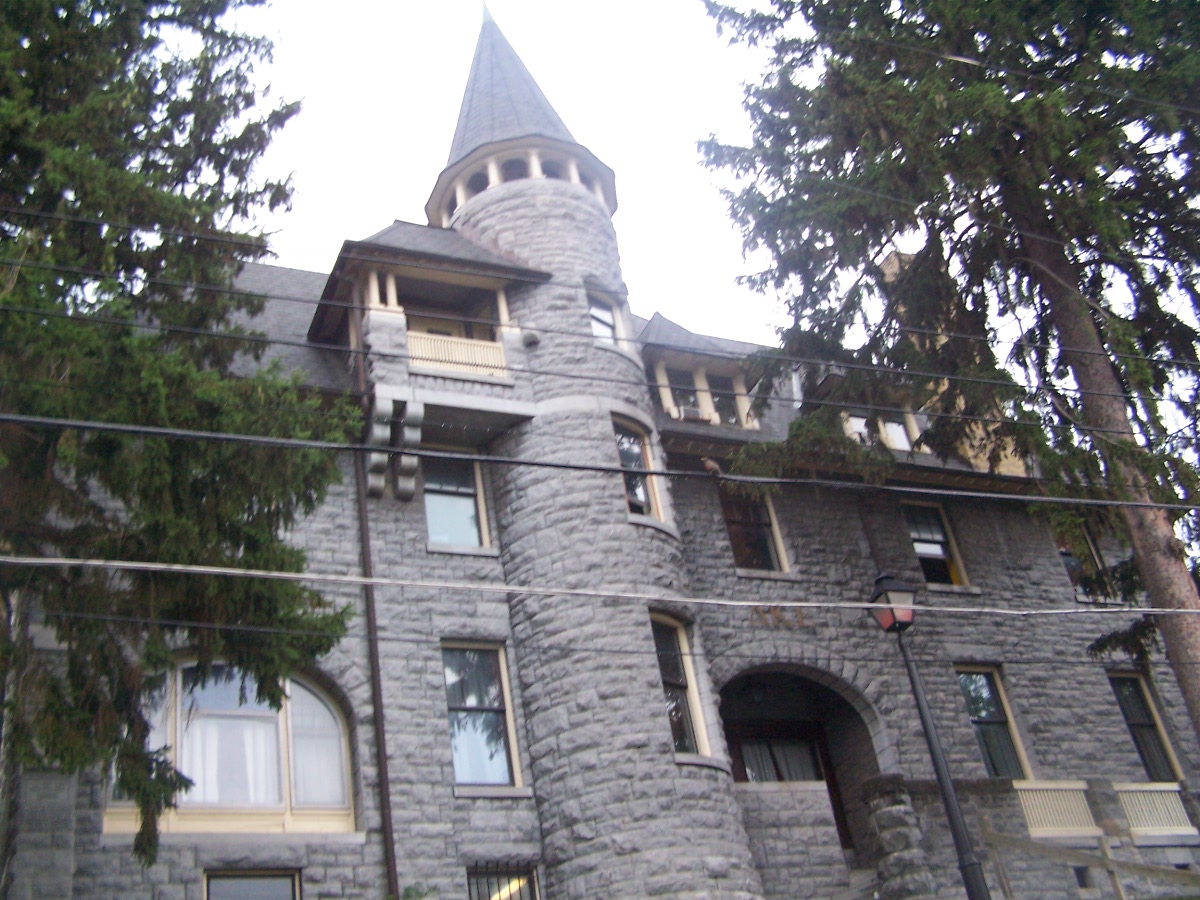
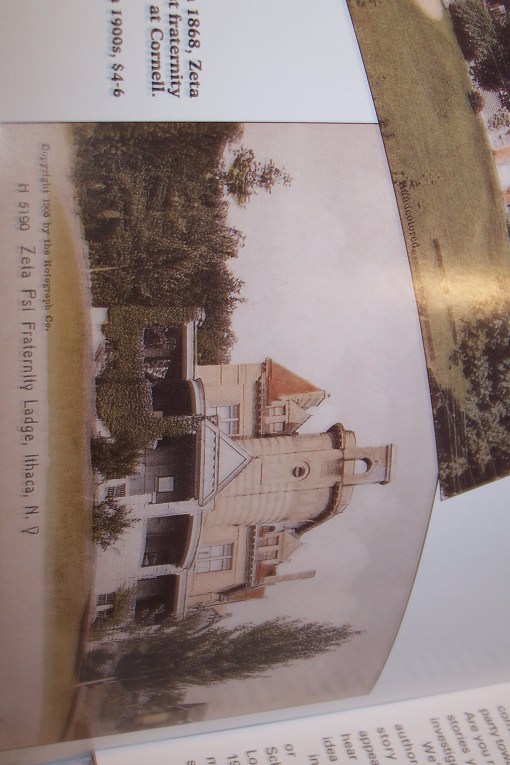
It really depends on luck and the general mood of the times. The most common fate for Cornell fraternity houses is demolition, whether it be for a parking lot, an apartment building, or for a physical expansion of the campus. The Rabco Apartments (the rather worn-down brick buildings on the 300 block of Thurston) sit on the site of what was Phi Kappa Psi’s house. DTD’s old house is now a parking lot, as is Zeta Psi’s first house at Cornell (granted, it burnt down in a fire in the late 1940s). Kappa Alpha Society’s Victorian masterpiece was torn down for Hollister Hall in 1957.

100_1718

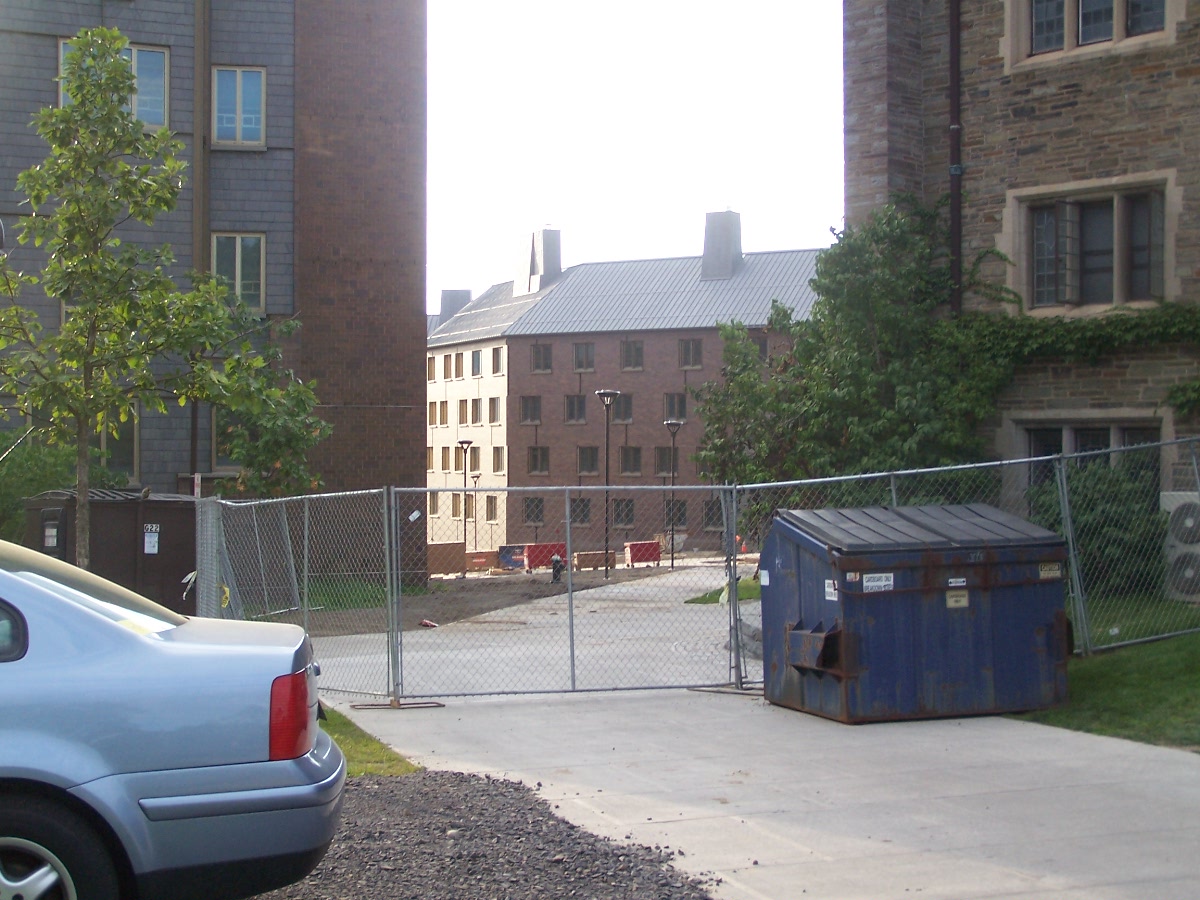
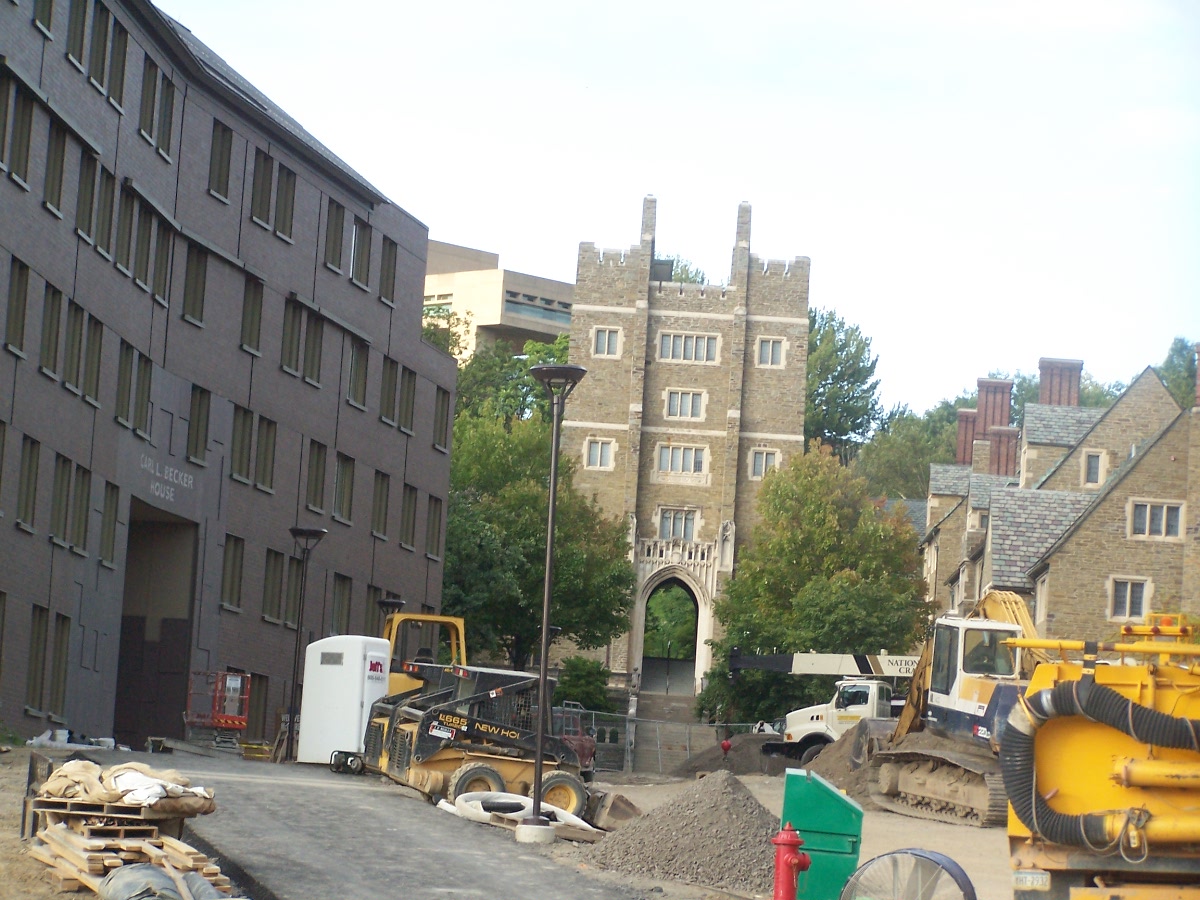
This view used to be blocked by DTD’s old house. But now it’s a very nice parking lot.

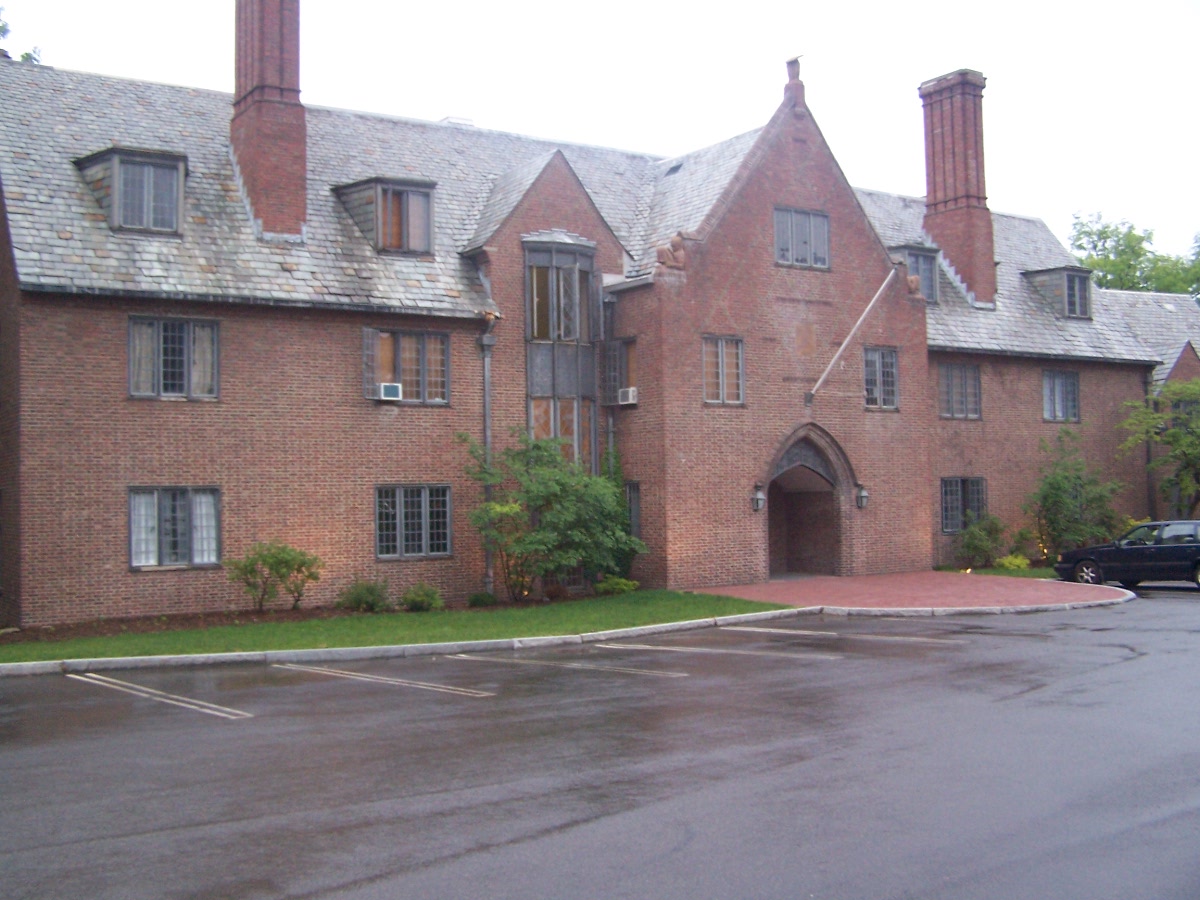
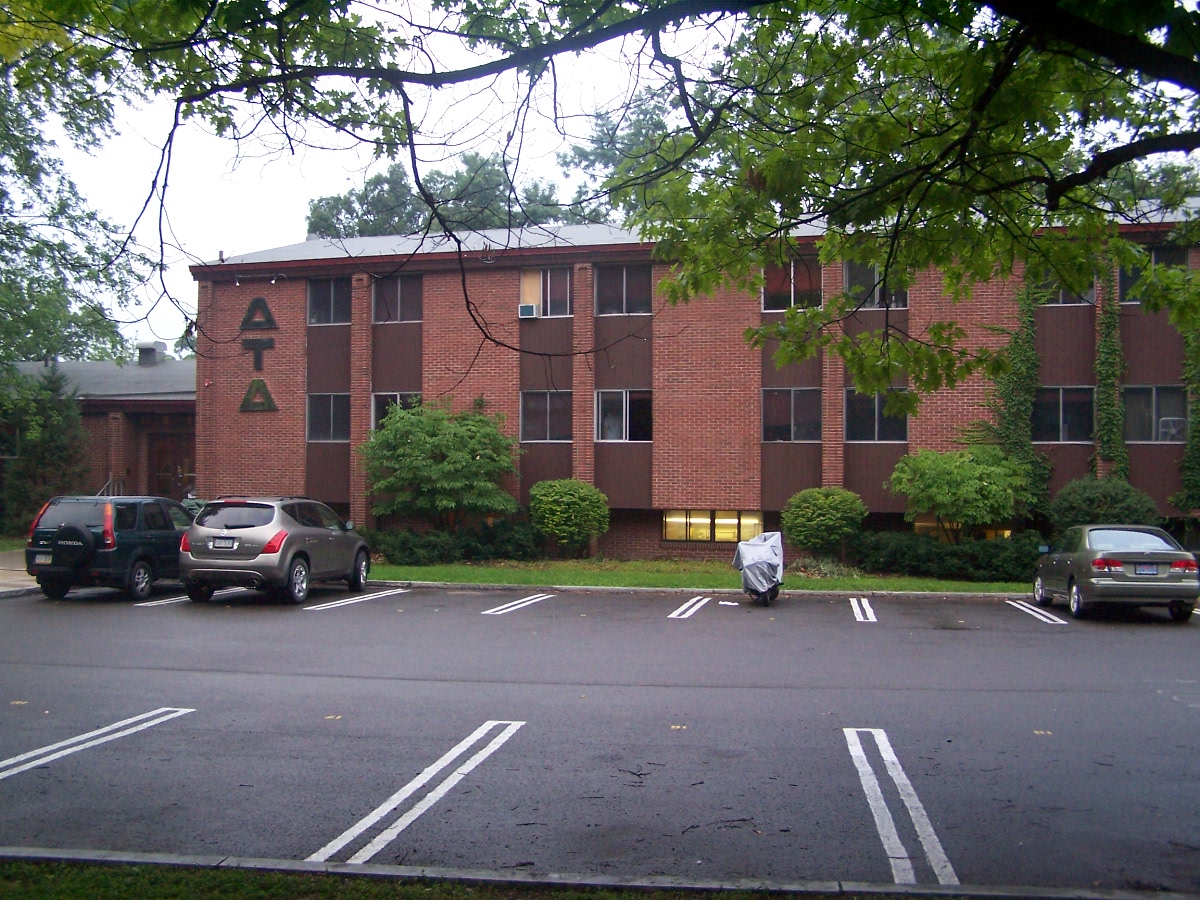
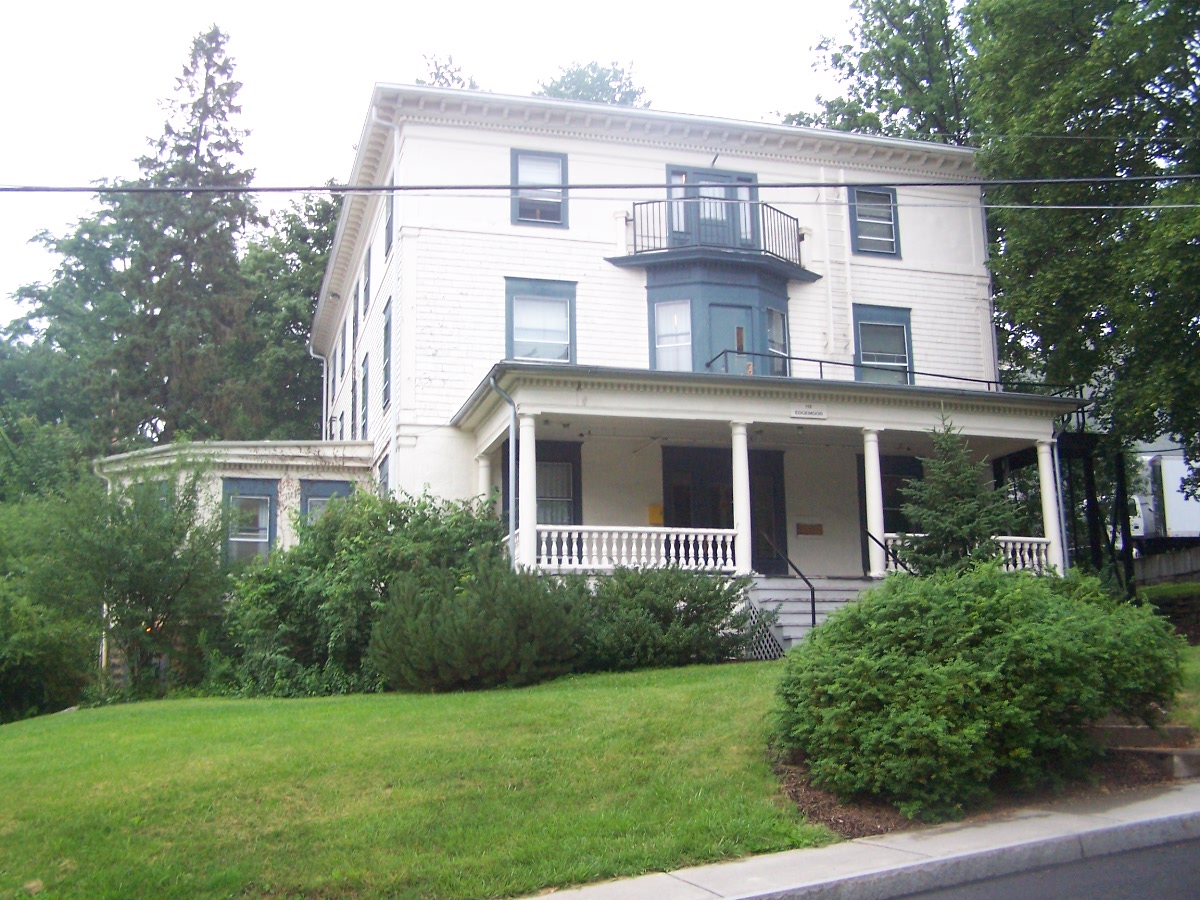
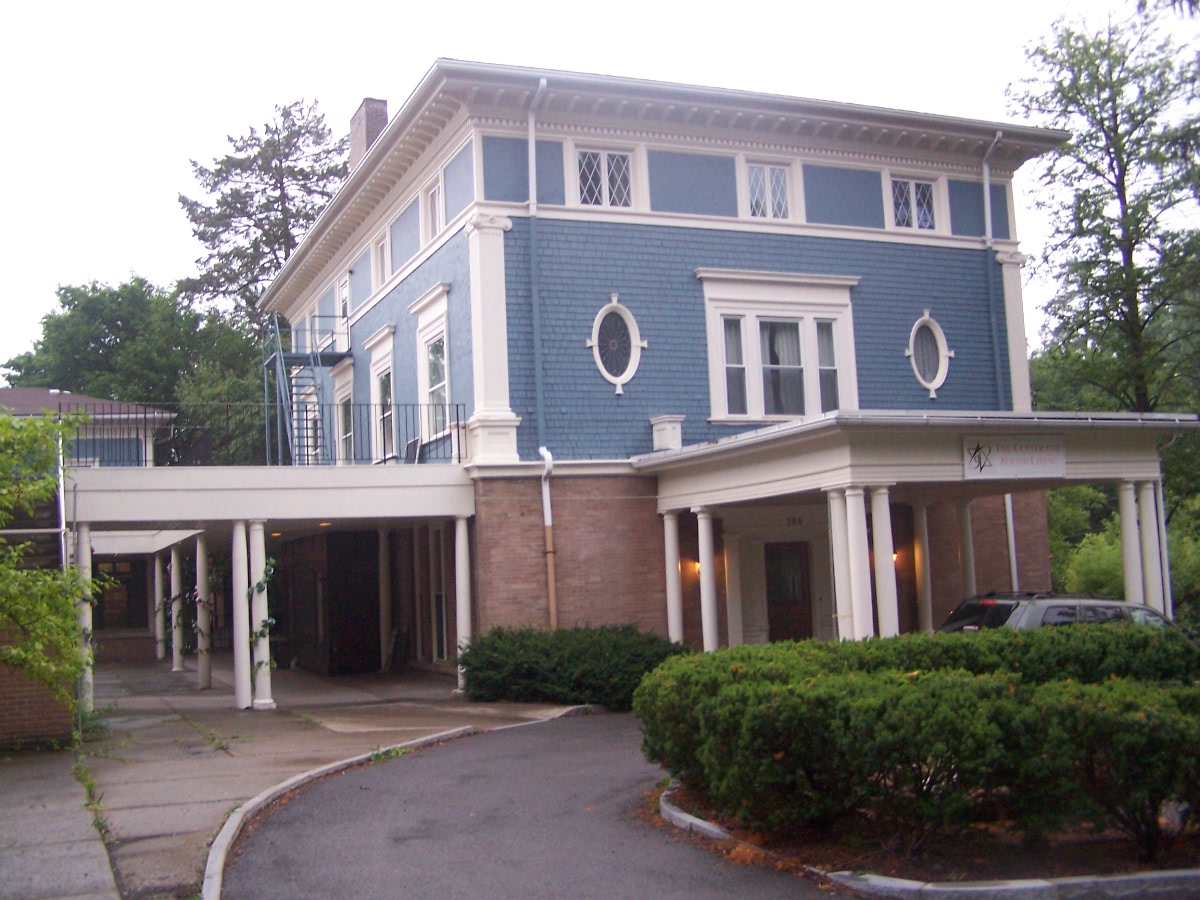
Rather than continue on that depressing tangent, some houses are fortunate enough to find a new life. Some are for university functions. Pi Lambda Phi, having closed in the 1970s, is now the Undergraduate Admissions office. Triangle’s house (pre-1985) is the dorm 112 Edgemoor, and 14 South was home to Kappa Alpha Society (they moved here right before the demo and remained until they closed in 1990). TriDelt’s house prior to 1965 is now the Alumni House on North Campus.Image courtesy of Cornell Facilities website (www.fs.cornell.edu).

14 South was AOPi's house from about 1992 to 2006. In 2012, it became the home of Phi Sigma Sigma.

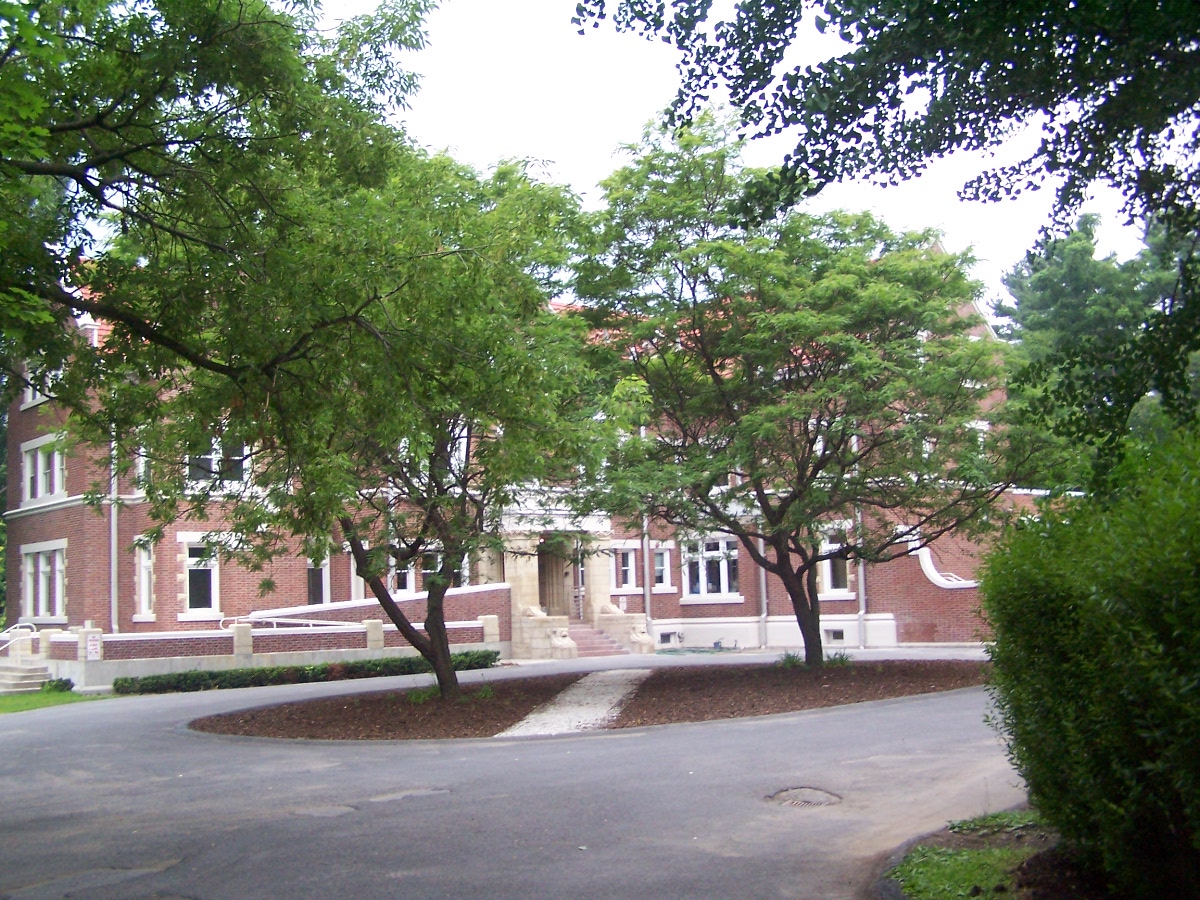
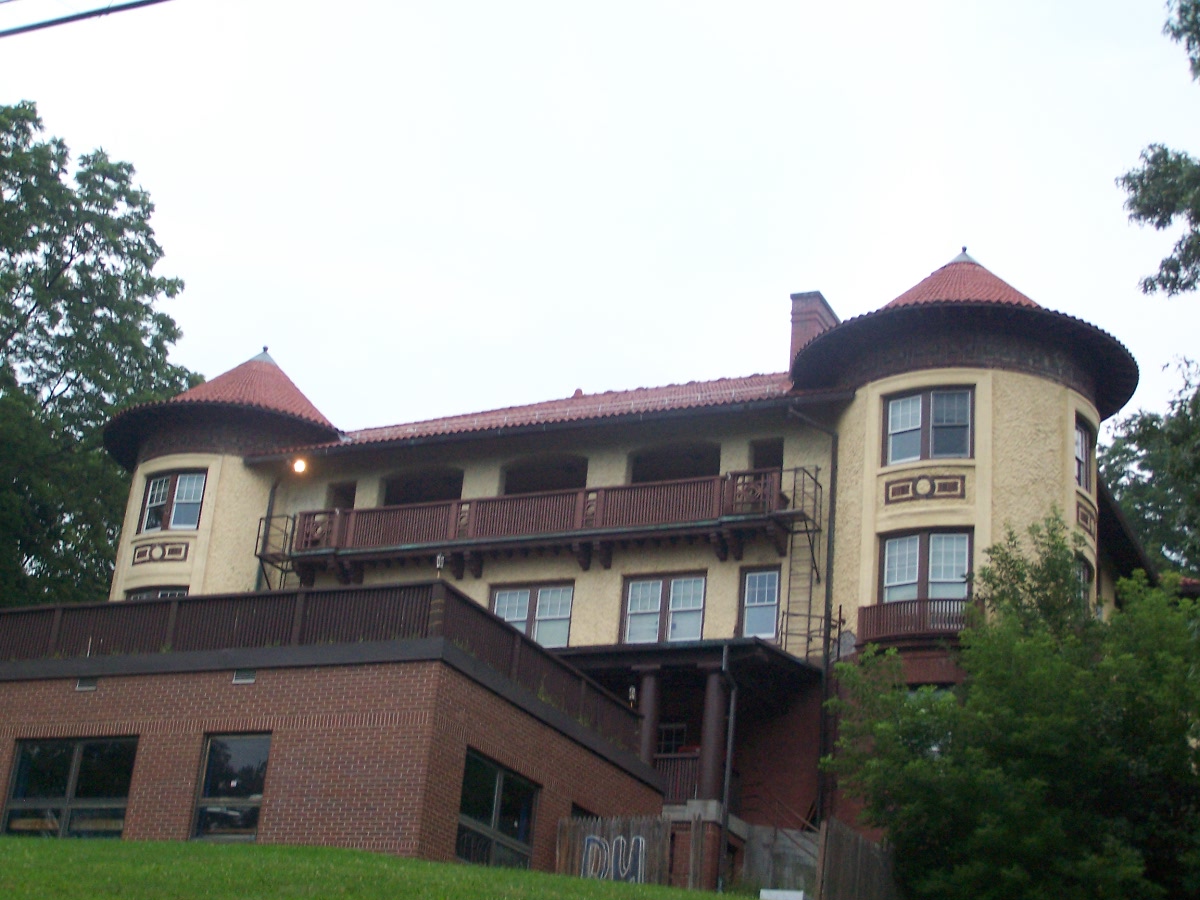
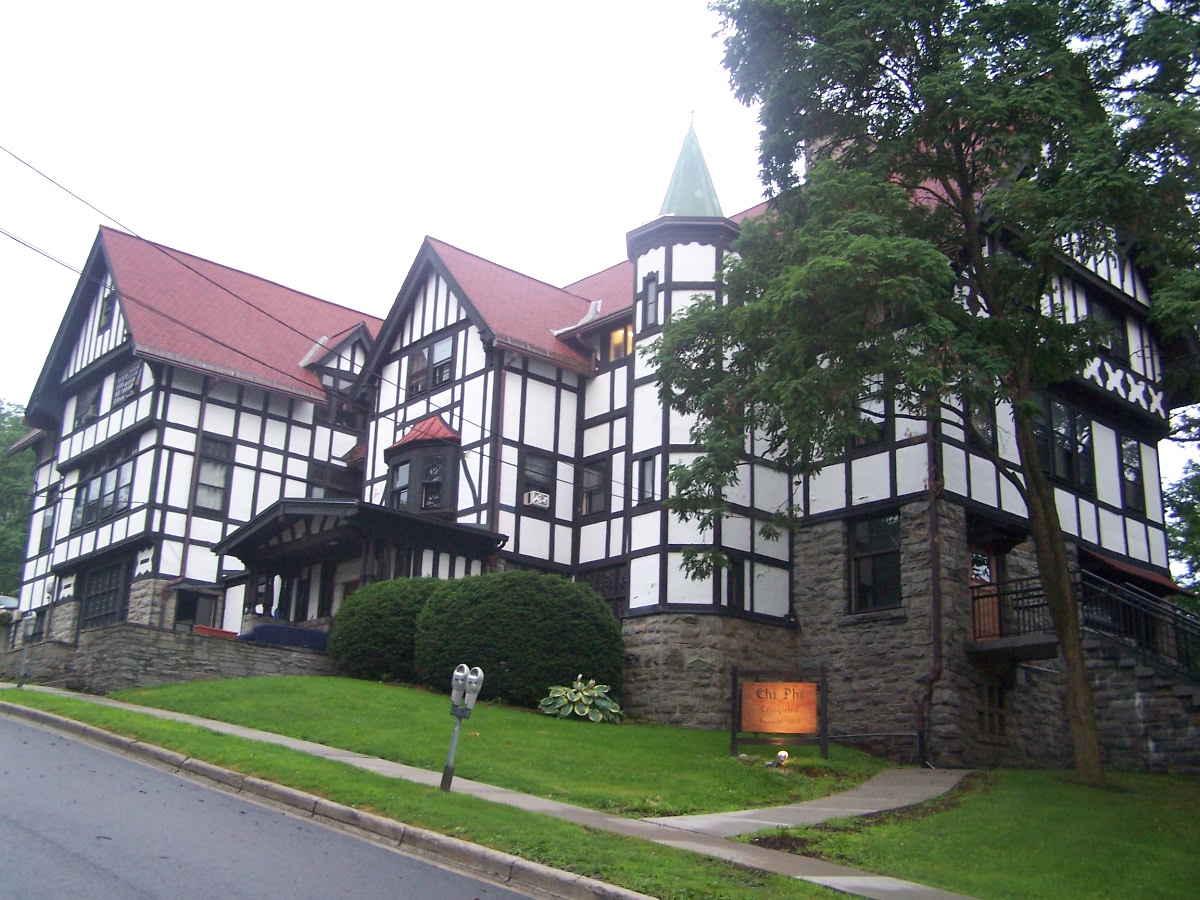
Some are converted into private residences. The Westbourne Apartments in Cornell Heights are the product of a conversion of Beta Sigma Rho’s fraternity house (they closed in 1972). 210 Thurston, now a private annex house, was the home to Sigma Alpha Mu for decades. On the 300 block of Wait Avenue, the light purple stucco house with the tile roof has been home to two sororities and one fraternity (Eleusis fraternity in the 1920s [1], Chi Omega prior to 1953, and Phi Sigma Sigma from 1954 to 1969).100_2440

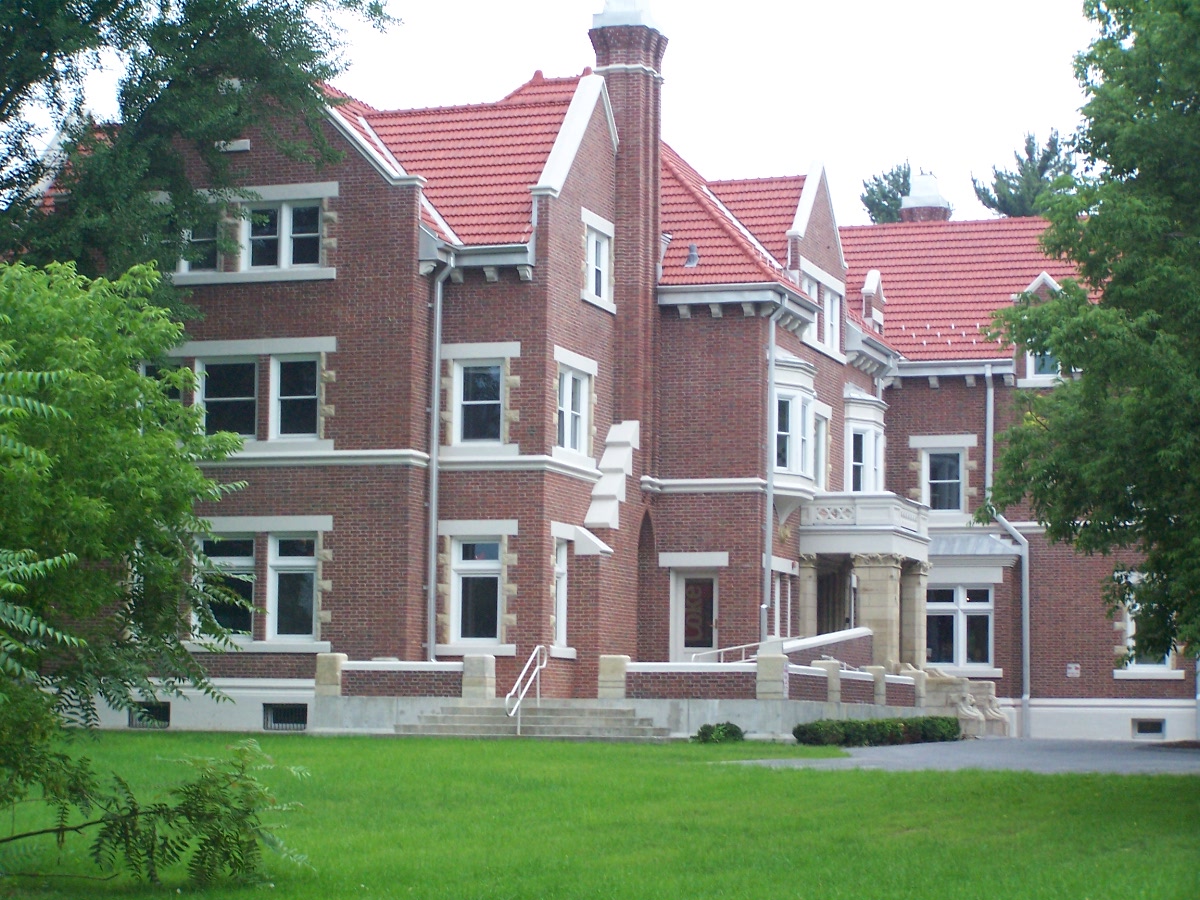
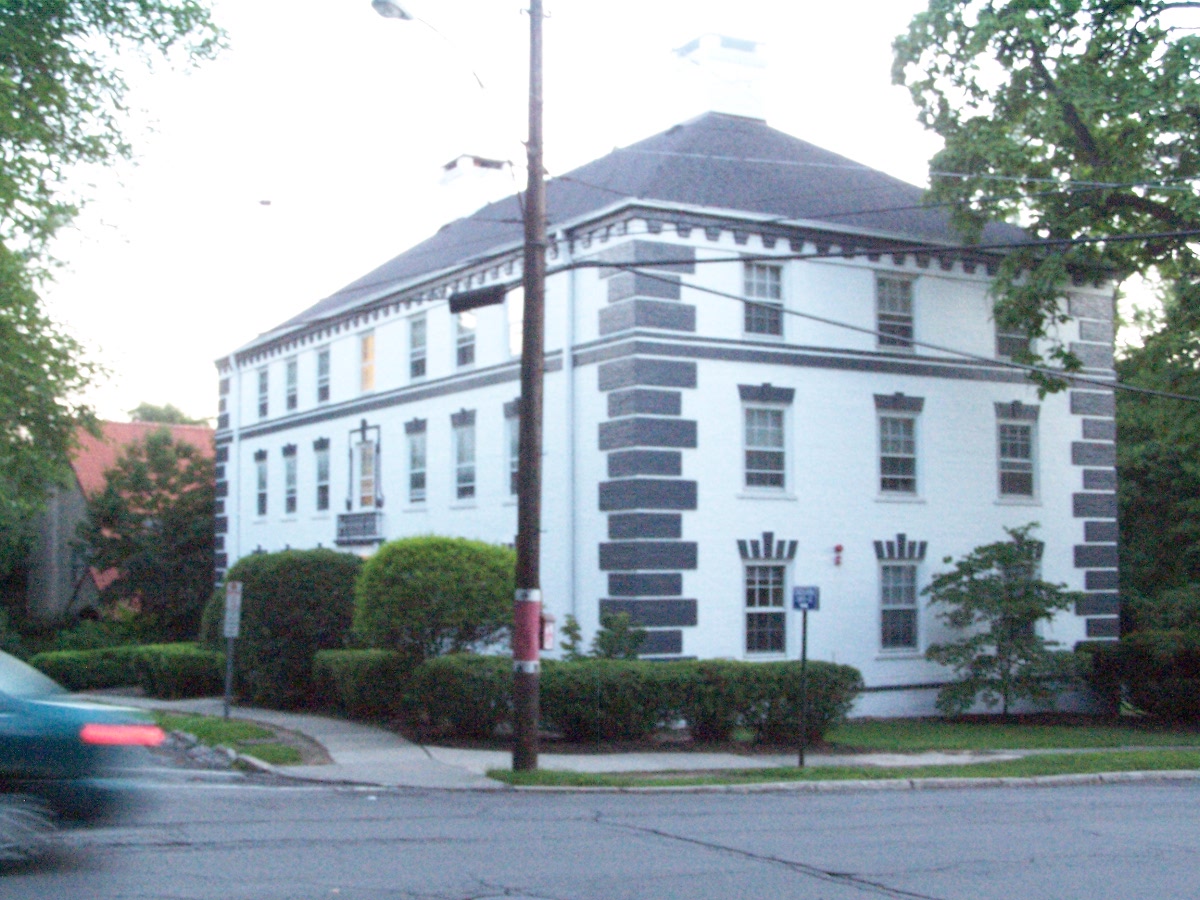
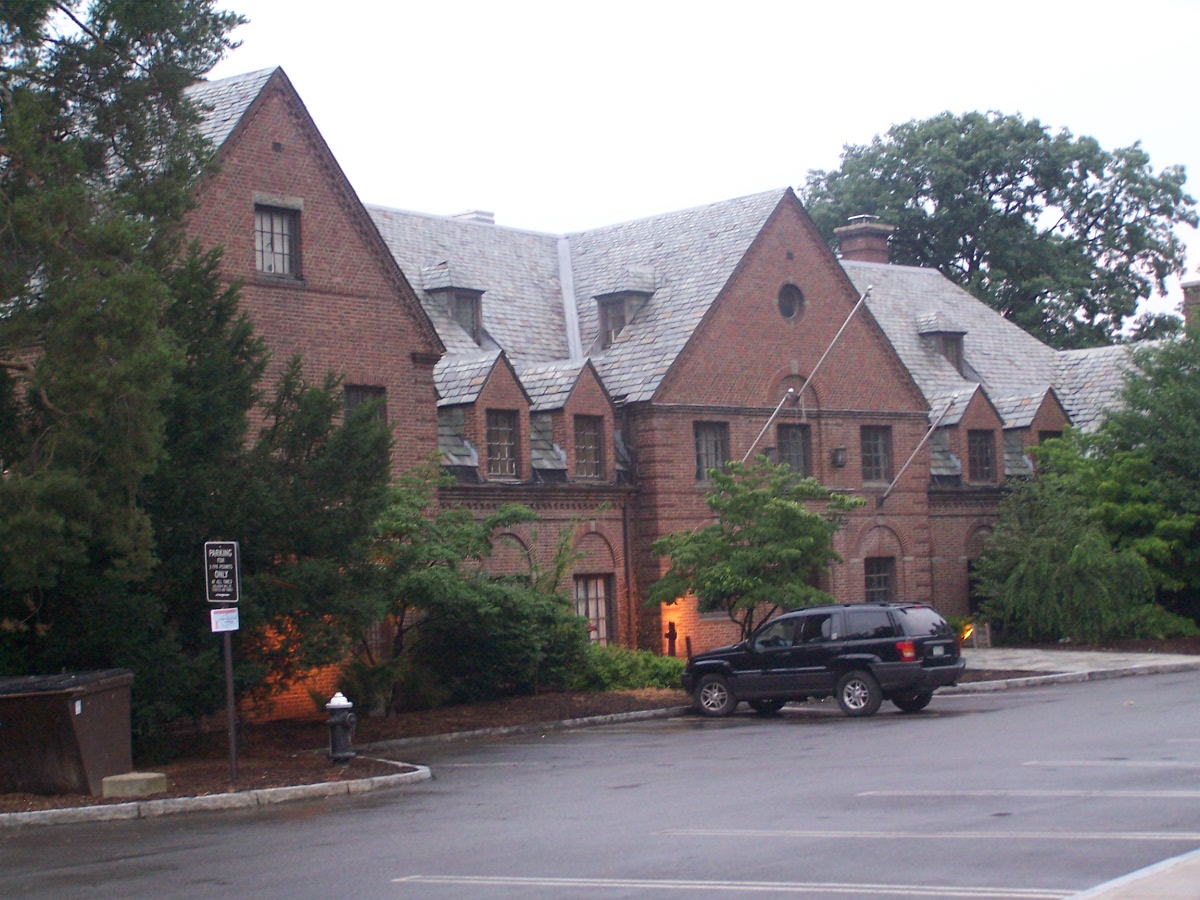
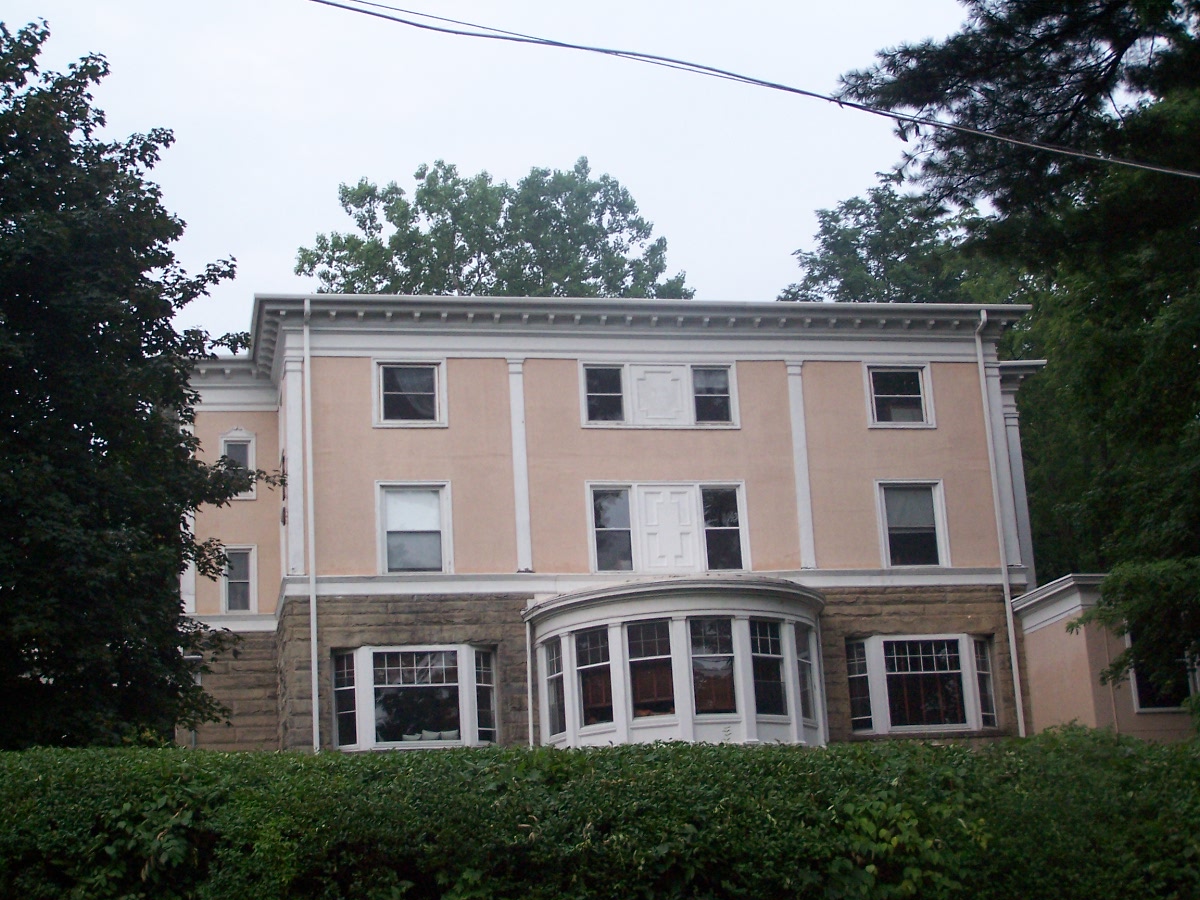
Having your house turned into a co-op is another popular option. Examples include-Watermargin: a former house of Phi Kappa Psi).Prospects of Whitby: former house of Alpha Xi DeltaTriphammer Co-Op: Former house of Sigma Kappa and Chi Gamma sororities.660 Wait Avenue co-op: former house of Zeta PsiHowever, The best reuses are the most awkward ones. Like when another fraternity or sorority resides in your old house. Here’s ten examples of that:Theta Xi: Zeta Psi alumni bought the property after Theta Xi closed in 1971. Then Zeta Psi sold themselves to Cornell for a $1 in the 1990s to avoid paying property taxes. Now Theta Xi wants their house back, and their pulling Cornell’s strings. I love real estate drama, especially when I get it first hand from the Zeta Psi brothers.Phi Sigma Epsilon: After they merged with Phi Sigma Kappa in 1985, the Cornell house was closed. Alpha Chi Omega sorority moved in some time afterwards.Beta Theta Pi: Their house prior to “Castle on the Rock” is now Pi Kappa Alpha’s house. Granted, this was prior to 1906, and Pika moved in around 1917, so this is a very old example.Phi Kappa Sigma: “Greentrees”, their house up until 1990, became the house of Pi Kappa Phi within a year of the Skulls’ closing. Delta Phi Epsilon: This sorority founded their Cornell chapter in 1962, and closed for a few years in the early 90s before closing completely in 2003 [2]. They still own 115 the Knoll, which is Alpha Xi Delta’s current house. I’d like to point out the irony that AXiD closed in 1964, right after DPhiE arrived, and they reopened in 2004, right after DphiE closed. Rumor mill likes to circulate that DPhiE is waiting for the right moment to reactivate Cornell chapter, which is a source of angst for AXiD sisters living in the house.Alpha Epsilon Pi: Their house was occupied by Sigma Alpha Mu as a “second house” during the 70s’.Pi Beta Phi: Prior to their current houses’ construction in 1956, they lived where Alpha Chi Sigma professional chemistry fraternity resides today.Theta Chi, or Tau Delta Phi: AOPi’s closing on Ridgewood is nothing new for that house. Theta Chi lived there when they closed in 1999, after living there for around twenty years. Also, the chapter was home ot the fraternity Tau Delta Phi until that chapter closed in 1969.Chi Omega: This sorority, which reopened in 1987 and closed again in 2003, lived in Phillips House on Sisson Place. Current students will be more familiar with this place as the location of Sigma Alpha Mu’s house.Kappa Alpha Theta: Tridelt moved from the Alumni House to Theta’s original house in 1965. It wasn’t even a year after Theta disaffiliated after having issues with their national.Last but not least: this house, former home of Alpha Chi Rho (defunct), Pi Kappa Phi and Lambda Upsilon Lambda, is still up in the air for renovation:100_1370

Anyone have any news on any plans for the building and possible redevelopment?[1]http://www.edgemoor.org/heritage/history/eleusis.html[2]http://www.rso.cornell.edu/DPhiE/DRhistory.html


A Little More Cornell History

10 11 2008

Photos obtained from the book “Cornell in Pictures: 1868-1954”, compiled by Charles V. P. Young 1899.

000_2313

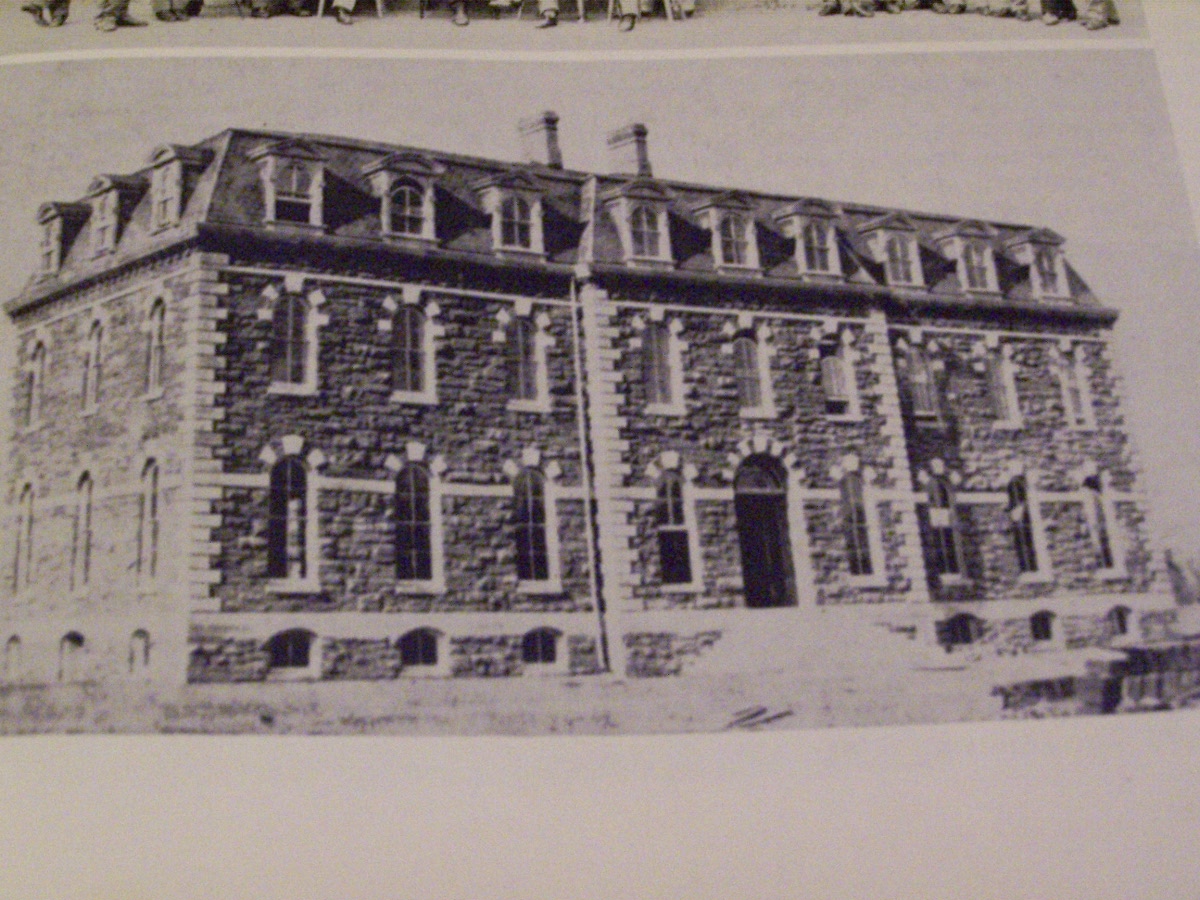
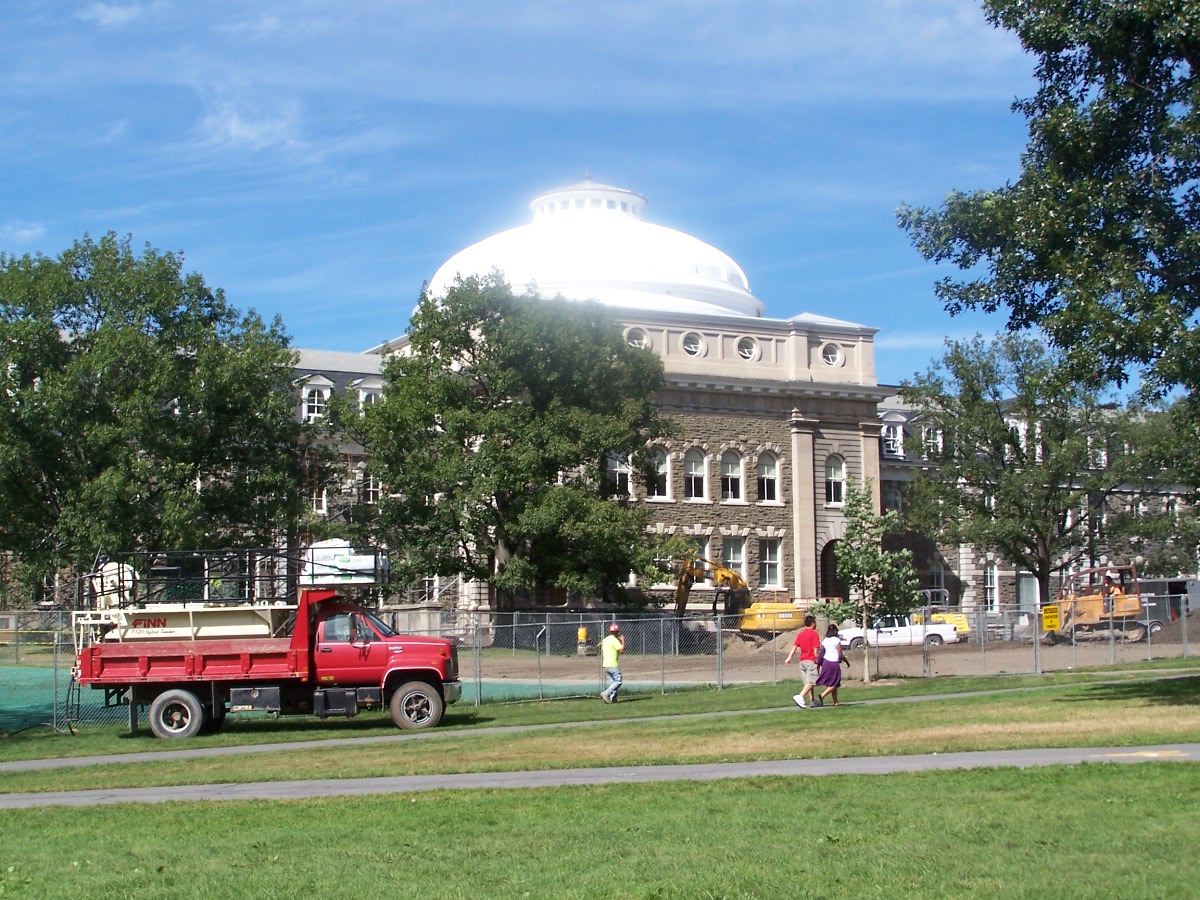
As mentioned previously, Sibley was constructed in three parts; the first, which is the West Wing of the current building, was built in 1870 and named for one of the original trustees of Cornell, Hiram Sibley. The East wind would be built in 1894,and the dome was constructed in 1902 [1]. Apart from stone Row, this was the first building that the University built that still stands today (the university did not build Cascadilla Hall).
000_2314

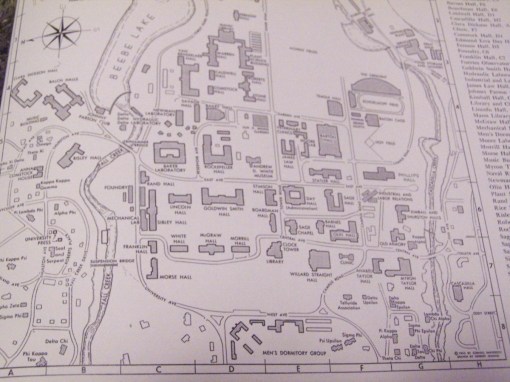
A map of campus, circa 1954. Some of the notable differences

I. Kappa Alpha Society’s house was where Snee Hall stands today. The house was torn down to facilitate construction of Hollister Hall in 1957-58, so KA moved to South Avenue. The Old Armory, built in 1892, was also torn down.

II. The road that was Central Avenue up until the 1990s cut between Franklin (Tjaden) and Sibley. Morse Hall would be torn down within a year of this map’s publication to make room for a parking lot, which would then be replaced by the Johnson Museum of Art that began nearly two decades later.

III. Boardman Hall is still there…in terms of aesthetics, I wish it was still there today too.

IV. ILR was located in temporary buildings (quonsets) on the Engineering Quad (which still had yet to fully develop). Law Hall, Moore Lab and the other smaller buildings where the ILR school stands today were the vet school buildings. Schurman Hall would come on line five years later, which facilitated the demolition of Law Hall in 1959, and for the construction of Ives Hall and Catherwood Library, which would be completed in 1962.

V. The Johnny Parson Club. More on that later.

VI. Alpha Xi Delta’s House is where the Prospects of Whitby co-op is located today. AXiD closed in 1964 and would be off campus for 40 years. Even the house they live in today is still own by Delta Phi Epsilon sorority (which closed the year before Alpha Xi Delta was brought back to campus). Chi Omega lived in the light purple house with the red tile roof on Wait Avenue, and would move to Phillips House (Sigma Alpha Mu’s current house) when that building was built on Sisson Place in 1956.

000_2315

A poor photo (my shaky hands, I regret) of the Statler Inn. Prior to the 150-room hotel built in 1986-87, the Statler Inn was the premier facility, with “modern classroom” and 36 rooms. Another hotel was located in the upper floors of Willard Straight Hall where the lofts are today, and those would play a prominent role in the takeover of Willard Straight in 1969.

000_2316

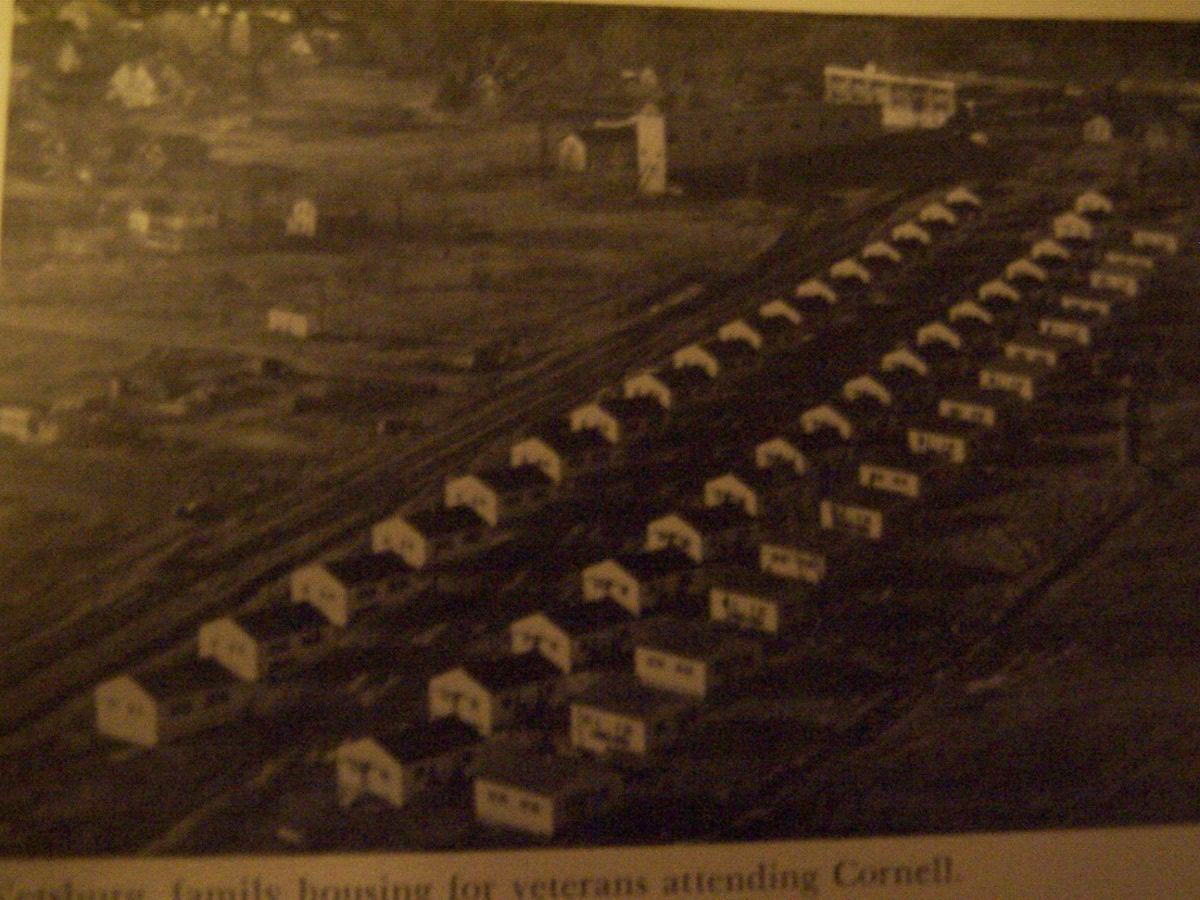
Prior to the Maplewood Apartments, veterans attending Cornell post-WWII had the option of living with their families in “Vetsburg”, on Maple Avenue.
000_2317

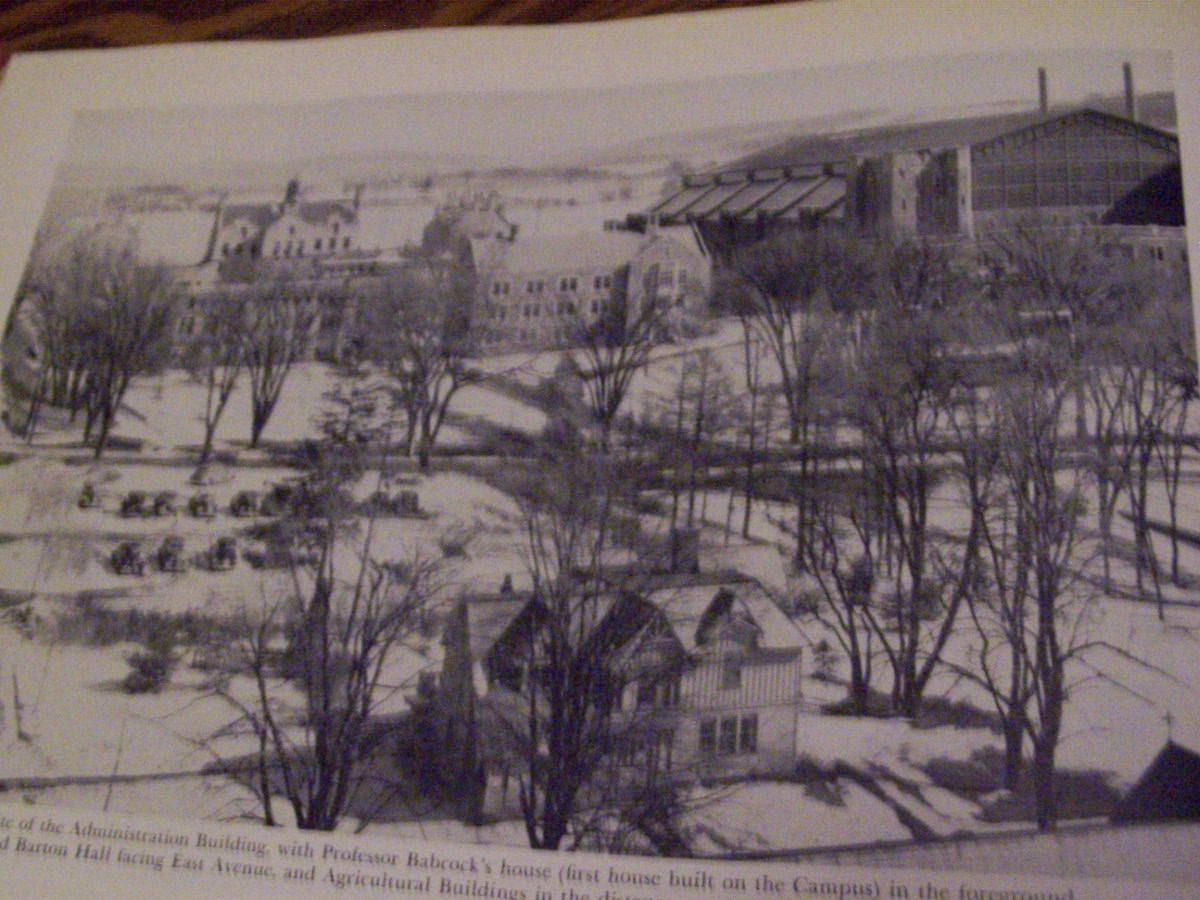
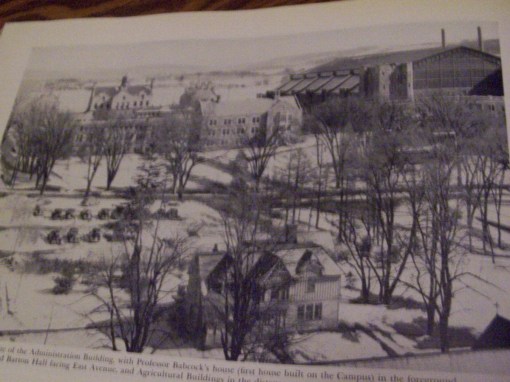
Back in the days before Day Hall, the lot was the site of a parking lot and the house of Professor Babcock, which was the first faculty house built on campus. Back in the day, it was common for houses to be on campus, where the Human Ecology school is today, where the Engineering Quad is today, and even on Central Campus. This was the last central campus house, and it was torn down to facilitate Day Hall’s construction (completed 1947) [2].

000_2318

To save my breath, I’m going to quote a DUE from August 23, 2007:

“The Johnny Parson Club was named after a mechanical drawing professor in the Engineering college from 1895 to 1938. It’s said that he was the one who established ice skating on Beebe Lake.  In addition, it was he who began the Cornell hockey tradition, by encouraging students to form a team.  In 1922, the University built a two-story facility where skaters could spend time, eat, drink, and warm up, naming it after Professor Parson.  However, in 1958, when skating events were moved to Lynah Rink, the University chose to take down the top two floors of the Club.  The remaining basement area was covered and is now used by Cornell Outdoor Education. [3]”

Rather nice place, from the looks of it. Tudoresque.
000_2319

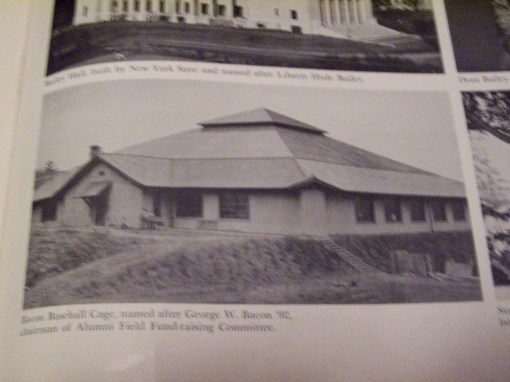
Bacon Baseball Cage. The first Cornell mascot bear, Touchdown I, was housed here in 1915. [4] The building would be taken down for the addition of the press-box and more seats at Schoellkopf.

000_2320

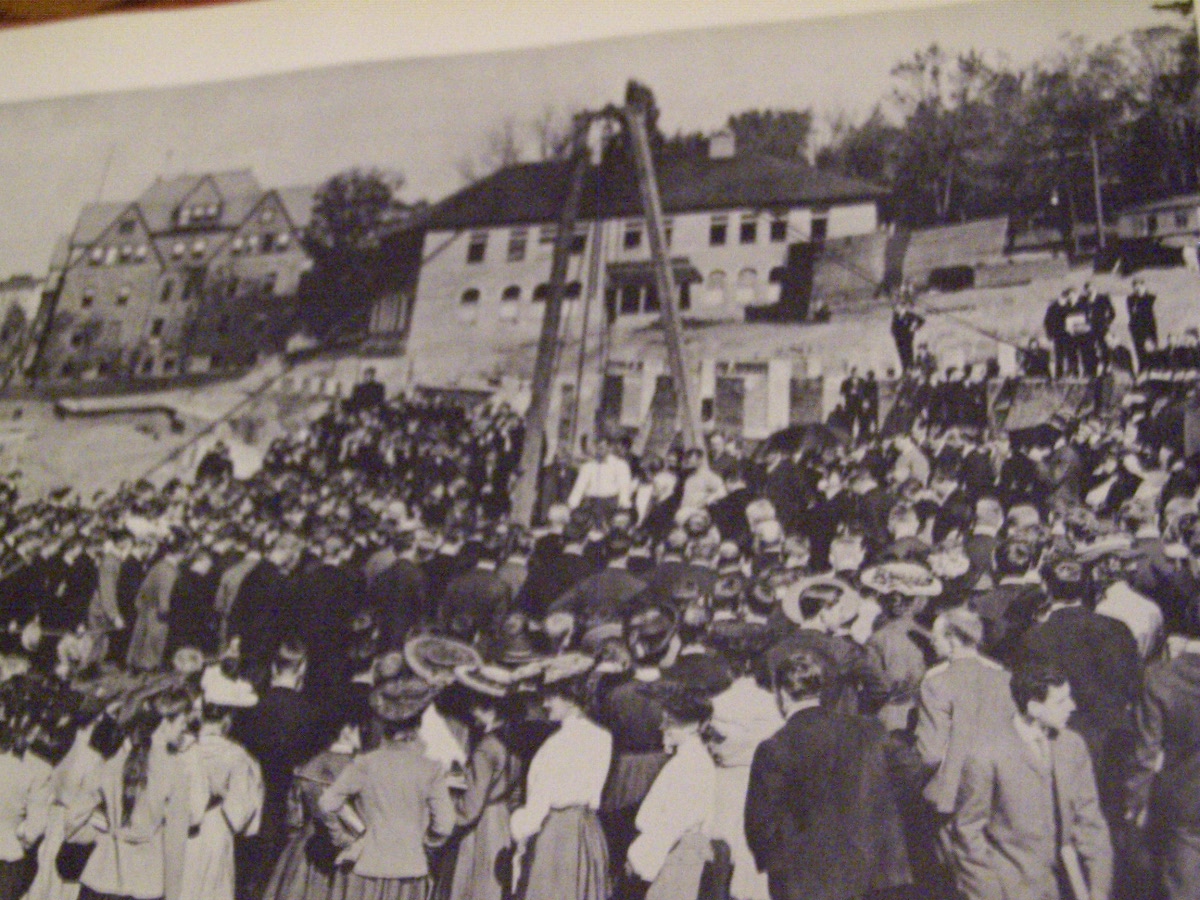
Laying the cornerstone for Goldwin Smith Hall in 1902. The building that is currently the north wing was constructed earlier on as the Dairy Science building.

000_2321

Law Hall, a couple small ag buildings, and the third observatory. It would be torn down for Barton Hall in 1915, and replaced with the observatory on north campus in 1924.
000_2322

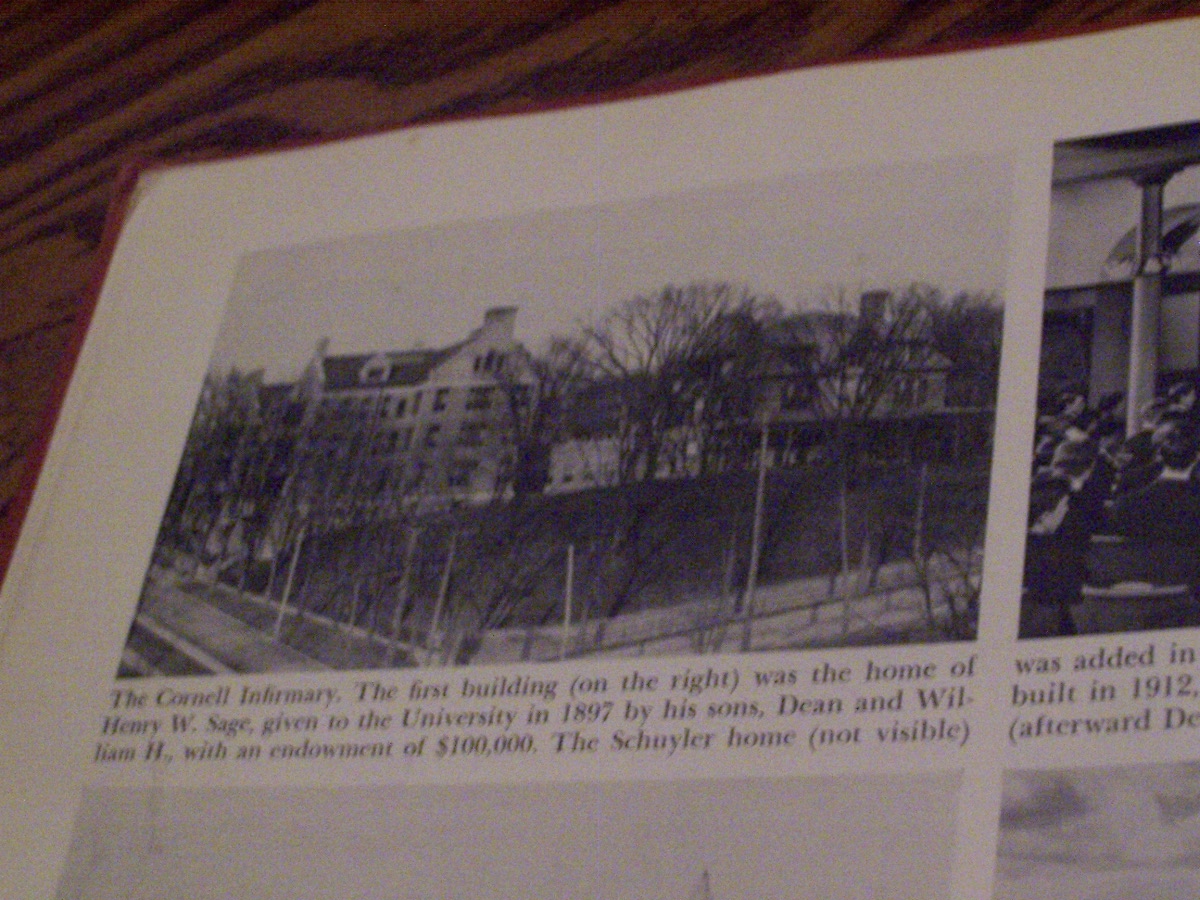
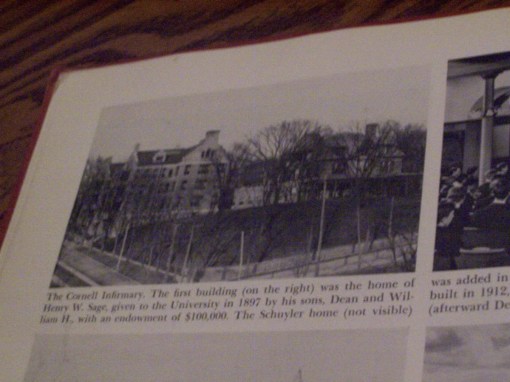
Schuyler House, the grad dormitory, used to be Cornell Infirmary. Next door is the Sage House. This was a time when students lived down the hill in fraternities or boarding houses, so it made sense to have the infirmary between the city and the college.
000_2327

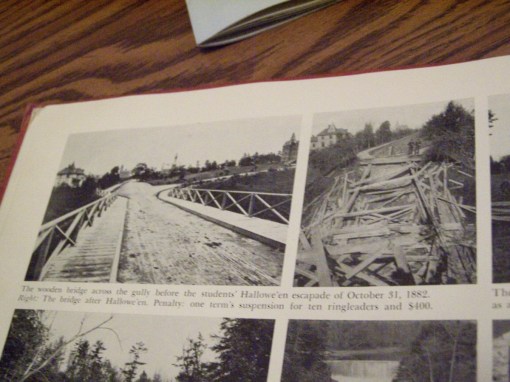
Speaks for itself. Screw pumpkins on the clock tower, I’m going to go tear down the bridge into Collegetown.

000_2326

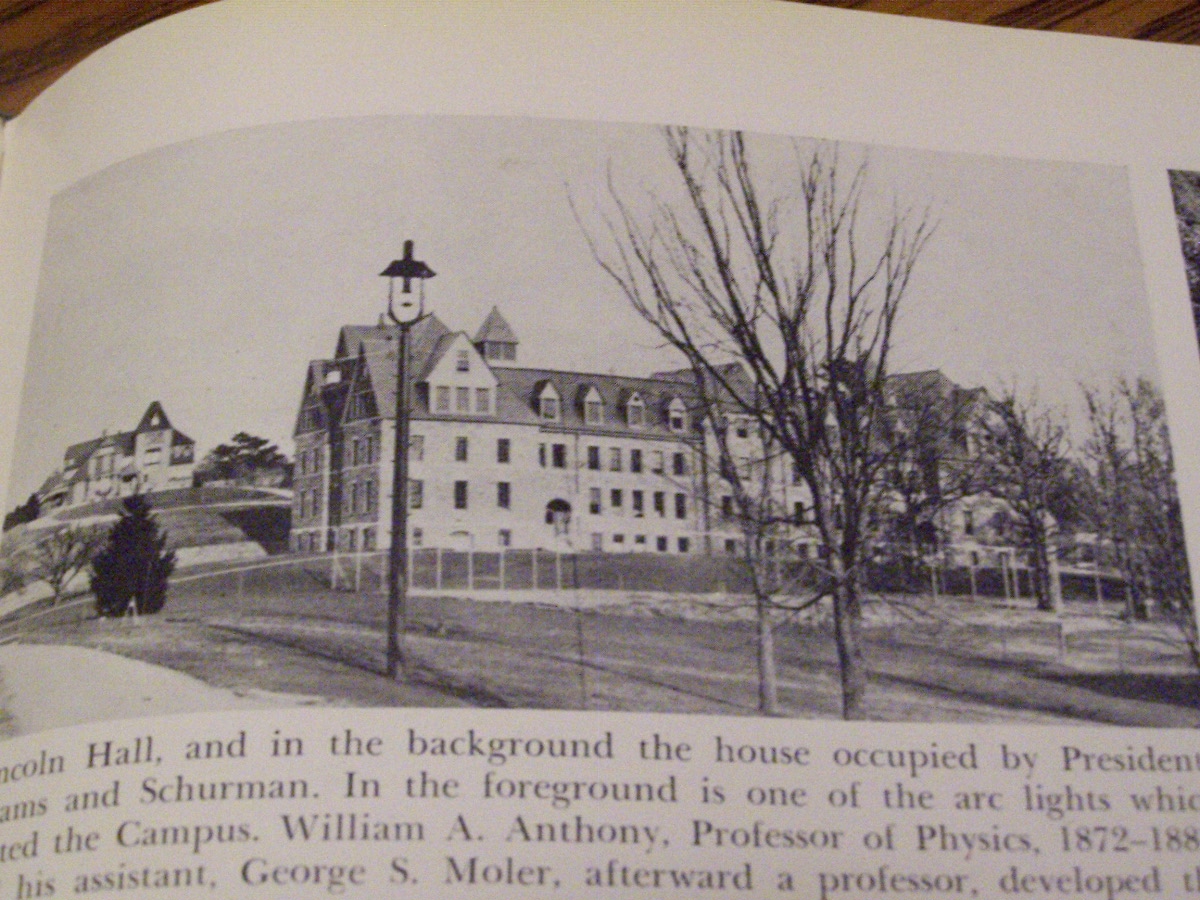
Fancy arc lighting. The house in the back was the stately home of Presidents Adams (1885-1892) and Schurman (1892-1920). It was torn down for Baker Lab shortly thereafter.

000_2325

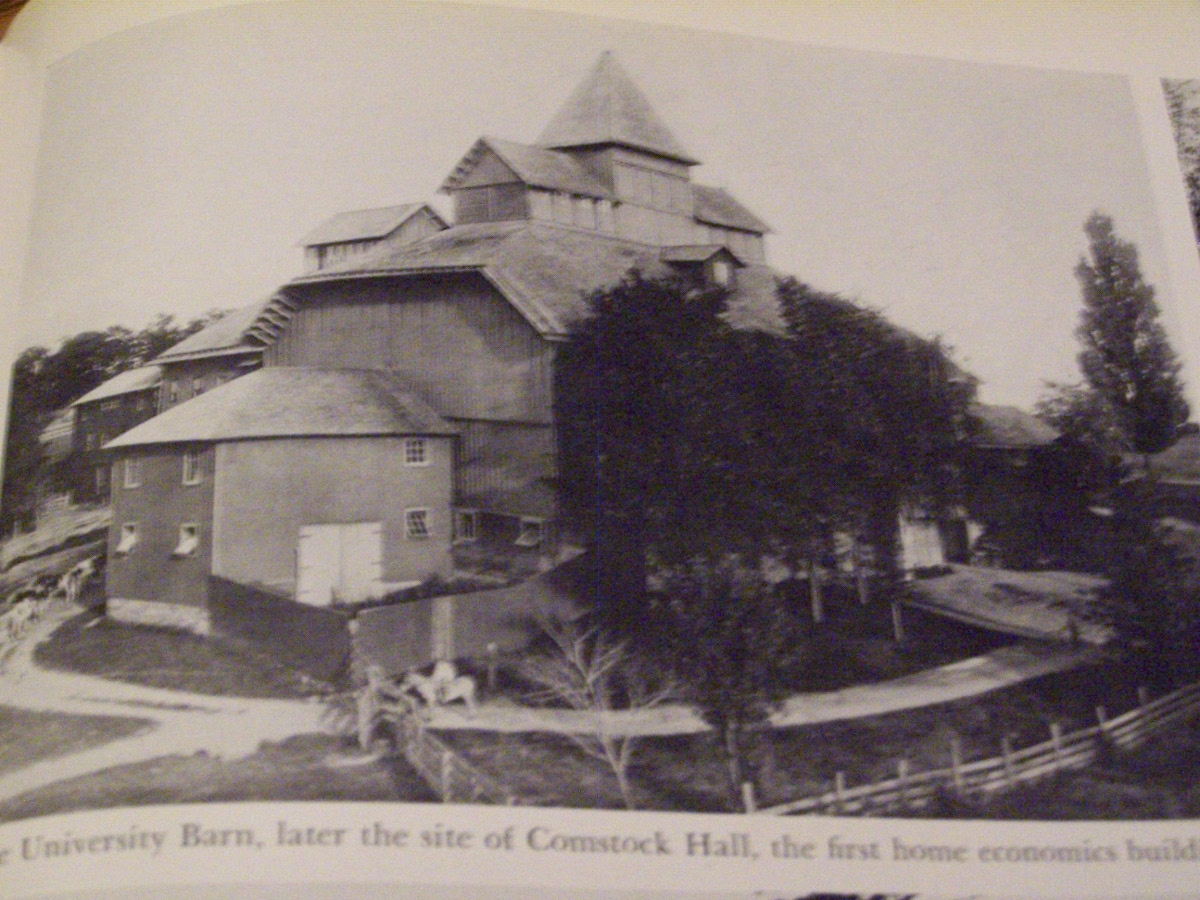
All the functions of a 1900s barn (where the CCC is today), all the appearance of a redneck’s idea of Count Dracula’s castle.

000_2323

Can we reconstruct this building as a dorm? Please? Hey, I know Morse Hall was burnt down by a fire and all in February 1916, but the design can be retrofitted with today’s safety standards. Really.

[1]http://www.cornell.edu/search/index.cfm?tab=facts&q=&id=651

[2]http://www.cornell.edu/search/index.cfm?tab=facts&q=day%20hall&id=239

[3]http://ezra.cornell.edu/posting.php?timestamp=1187848800

[4]http://cornellsun.com/node/17613


More Random Cornelliana

13 10 2008

Because you’ve probably never been in most of these buildings anyway.

Rice Hall. The building on the left, obscured by the trees, is colloquially known as “Little Rice Hall”. Located on the National Register of Historic Places [1], Rice Hall was built in 1912 and designed by the architectural firm Green and Wicks [2]. Rice Hall was intended as a peripheral building to Stone, Roberts, East Roberts, Caldwell and Comstock Halls. The building is home to Cornell’s “Center for the Environment” (yet another academic think tank) and is a hodgepodge of SNES and Crop and Soil Sciences. The building is named for James E. Rice 1890 [5], who taught the first course in the country on Poultry Husbandry (the building was originally for poultry husbandry, which is likely why it’s such a clusterf*ck now).

Fernow Hall is another of Green and Wicks’ works, being constructed three years later in 1915 [3], and also sits on the National Register of Historic Places. For the record, all that means that it’s old and likable. It must not mean much for architectural merit, otherwise we’d still have Roberts, Stone and East Roberts. The building is primarily used by the Dept. of Natural Resources. The building was known as the Forestry Building from 1915 to 1922 [4], and was dedicated to Bernhard Fernow, Dean of the College of Forestry (a sort of predecessor to the natty rys dept., which failed only five years after its inception in 1898, because the state received threats that if Cornell would be spoiling summer cottage retreats in the ‘Dacks for commercial purposes, wealthy state residents would reside elsewhere).

The original Comstock Hall, now the Computing and Communications Center. The hall was built in 1912 and named for renowned entomologist John Henry Comstock 1874 [6], and originally housed entomology. In some twisted sense, the same firm that designed this building would design the later Comstock in 1985. After Cornell granted moving the name to the new building, the old Comstock was renovated into (C3), CIT’s Operations Unit, in the late 1980s. Prior to that, CIT was out in Langmuir Labs in the Office Park in Lansing, and before it left for Lansing in 1967, CIT’s main computer lab jumped between Rand and Phillips Halls [7].

A lot can change in 70 years. The original Comstock (formerly Academic II) was a corroboration between Green & Wicks, and the firm Hoffman, O’Brian, Levatich & Taub. The new Comstock was by the shorter “Levatich and Hoffman”. I think our tastes have gone downhill, ladies and gentlemen. Anyways, the new Comstock houses entomology and the little-used Entomology library (I just want to say that, as a CALS student, I’ve only ever met two entomology majors in my time at Cornell).

Corson-Mudd Hall (Corson is the east wing). Named for former university president Dale R. Corson and philanthropist Seeley G. Mudd (who has a crapload of buildings named for him on college campuses across the country [9], the building was completed in 1981 [8].

Technically, it’s possibly to get to nine seperate buildings through the tunnels and walkways of the AG Quad. Bradfield is connected to Emerson Hall (the lowrise portion), which is connected to Fernow Hall at one corner and to Plant Sciences from the second floor hallway. Through Plant Sciences, there are two ways to get into Mann Libe (ground, which involves being outside for ten seconds in the tunnel towards Manndible Cafe, and a less-used second-floor stairway). Mann is connected to Warren Hall. Plant Sci also has a connection to Weill Hall through its basement, and the tunnel runs underneath the street to the basement of Weill. The public use of this tunnel is not clearly stated, so try it at your own risk. Weill also connects to Corson-Mudd and Biotech through tunnels.

So, I’ve already told the story of the Roberts-Kennedy complex once before, but I’ll do a partial rehash. The building is named for Issac Roberts, an early professor, and 1970s CALS dean W. Keith Kennedy. Originally, Stone, Roberts and East Roberts stood on the site.

Roberts, Stone, East Roberts

L to R: Roberts, Stone, East Roberts

The three were built around 1906. While they were national registered historic buildings, Cornell rather covertly had the designation removed, in a move that angered many traditionalists. The buildings were imploded in 1988-89. The original proposal for Roberts-Kennedy Hall was a 10-story building where Kennedy stands. Well, that didn’t go over too well, so they essentially pushed it onto the side and made a “breezeway”. The two were completed in 1990. Trillium is technically a part of Kennedy Hall.


[1] http://en.wikipedia.org/wiki/Rice_Hall

[2]http://www.fs.cornell.edu/fs/facinfo/fs_facilInfo.cfm?facil_cd=1040

[3]http://www.fs.cornell.edu/fs/facinfo/fs_facilInfo.cfm?facil_cd=1029

[4]http://www.dnr.cornell.edu/mission/history/

[5]http://books.google.com/books?id=jUu9pDRhWjkC&pg=PA295&lpg=PA295&dq=%22rice+hall%22+cornell&source=web&ots=Mp_YbfQomX&sig=dQmUQ68KhXUqtys6MW5lwXXPF_s&hl=en&sa=X&oi=book_result&resnum=10&ct=result#PPA401,M1

[6http://www.agriculture.purdue.edu/agcomm/newscolumns/archives/OSL/2005/October/051027OSL.htm

[7]http://www.cit.cornell.edu/computer/history/timelines_locations.html

[8]http://www.fs.cornell.edu/fs/facinfo/fs_facilInfo.cfm?facil_cd=1019E

[9]http://en.wikipedia.org/wiki/Seeley_G._Mudd


From Bradfield’s Roof

5 10 2008

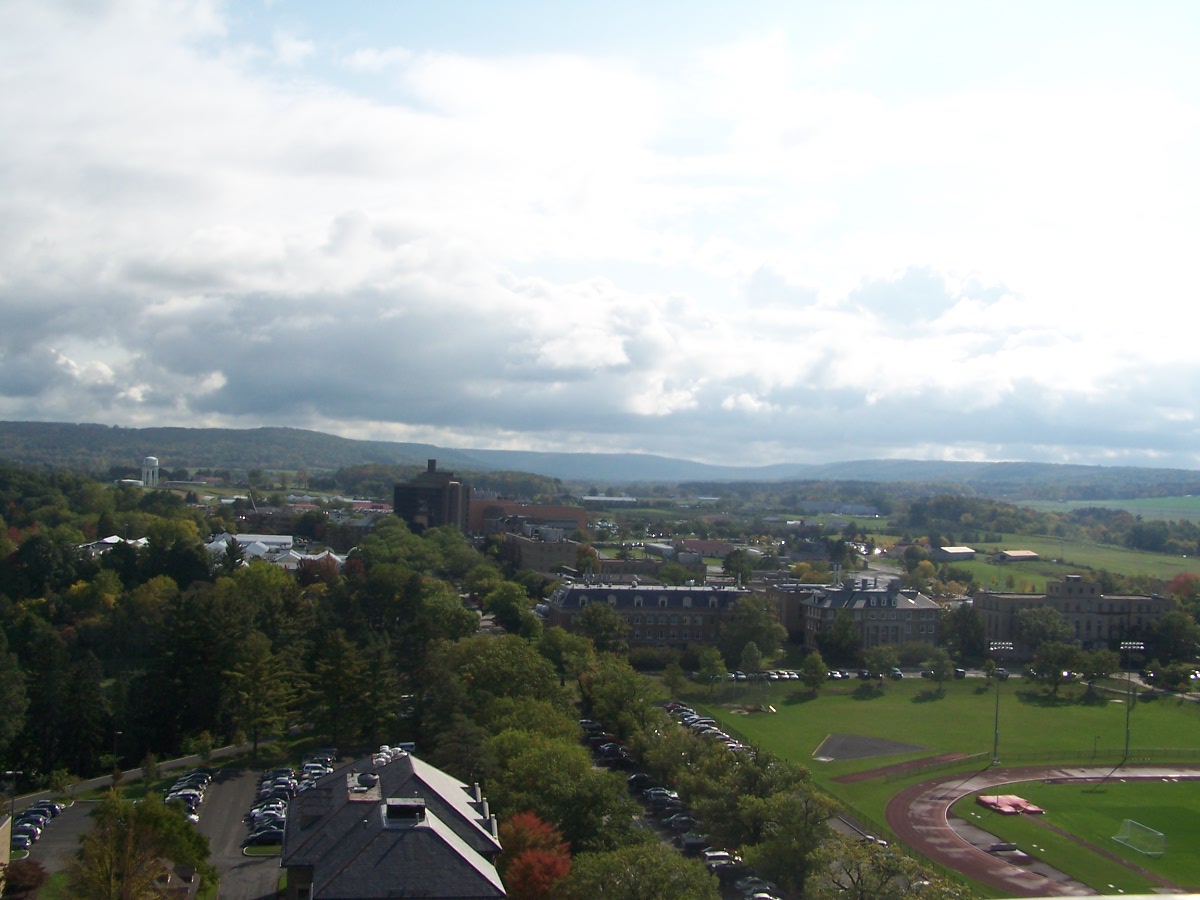
Looking southwest. Weill Hall dominates the view since its completion. The far hills in this photo are about eight miles away.

In this image, the crane for the physical sciences building is prominent, as is the Spencer T. Olin Research Tower (1967). The odd smokestacks on either end of Olin Tower’s roof are a fairly recent addition, from the late 1990s [1].

Bradfield’s roof is surprisingly spacious. Up until a few years ago, it had red flashers on the roof because it was originally in the flight path of planes heading into the airport. (Note: this area is only accessible by special request. There are alarms, and they will go off if you go up here without the key).

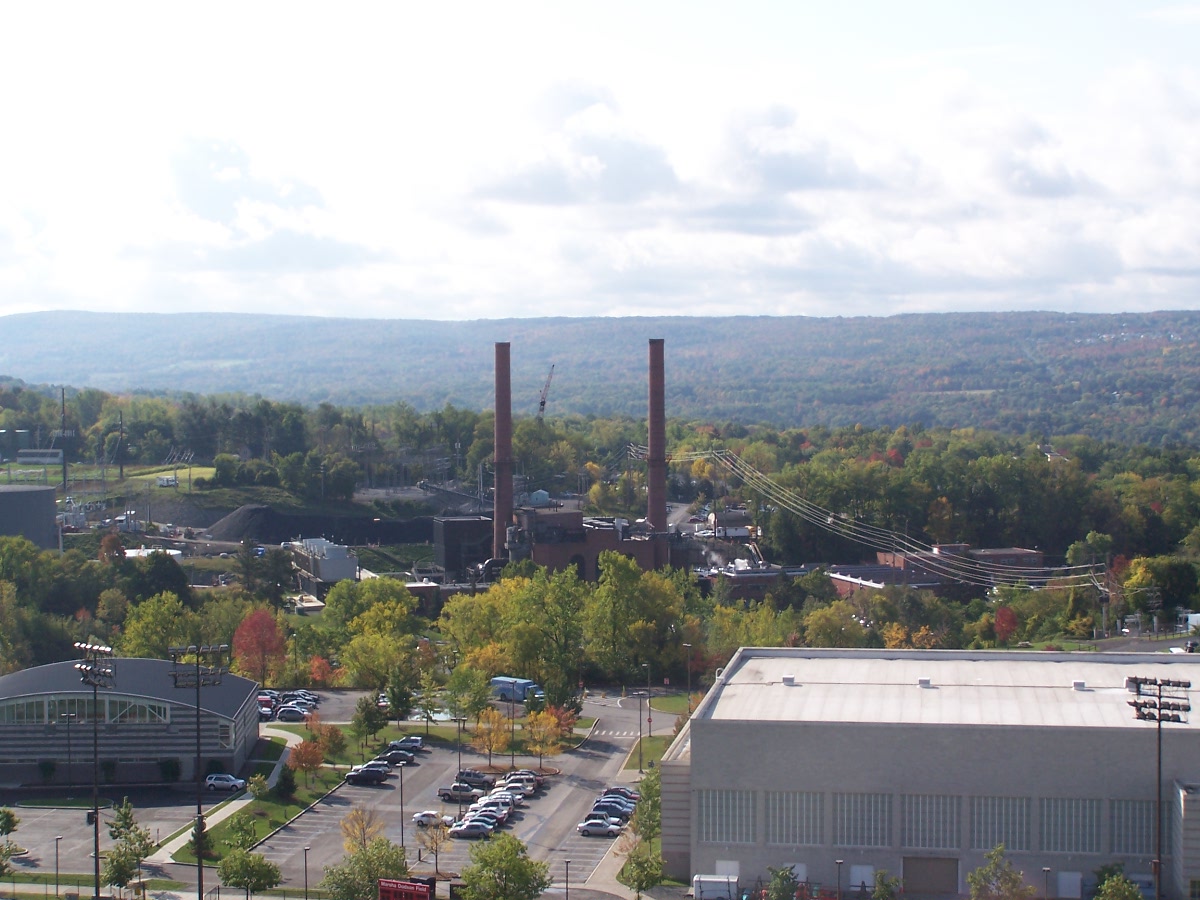
Looking SSE. These were the smockstacks I was referencing in the incinerator entry. The heating plant is currently being expanded about 16,000 sq. ft. Friedman Wrestling Center (2002) and Bartels Hall (1990, formerly Alberding Field House) are in the foreground.

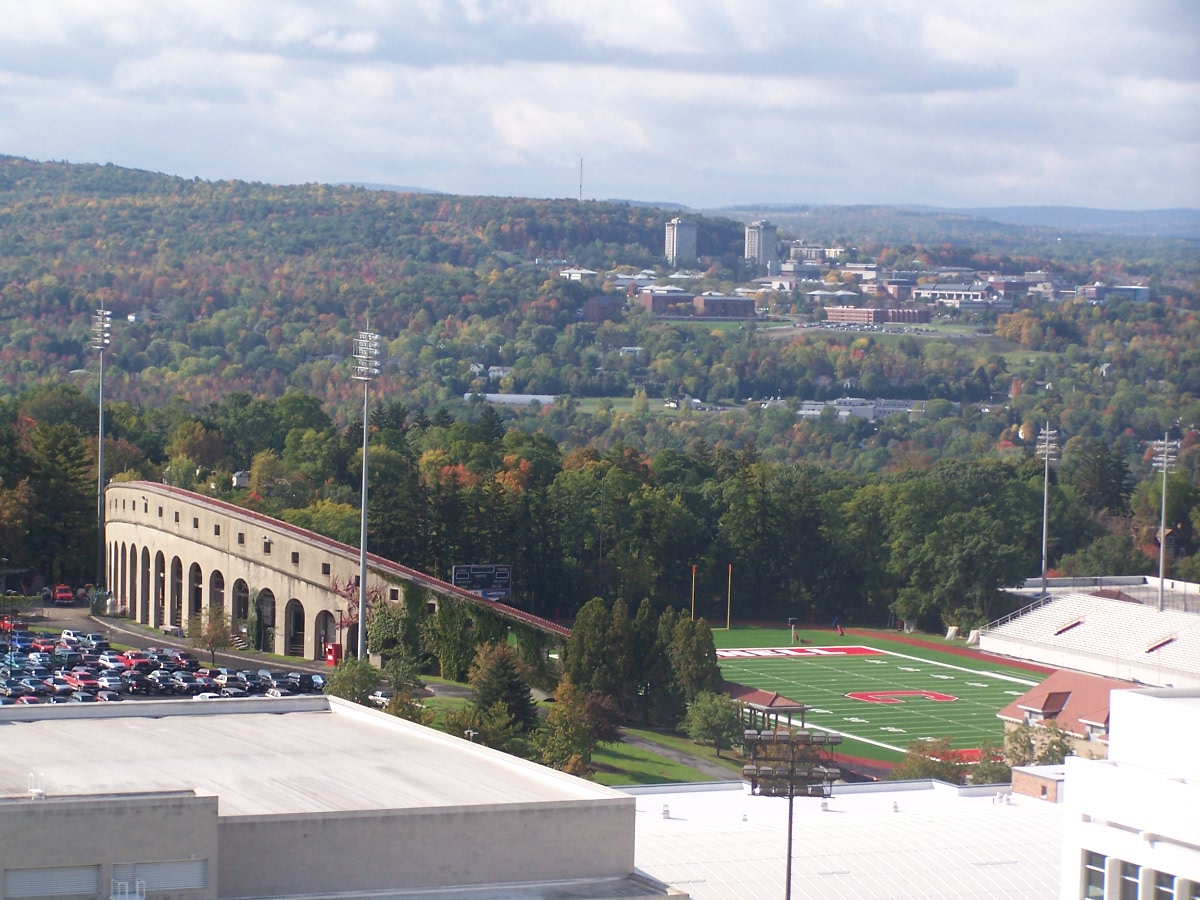
Schoellkopf in the foreground, with the towers of IC in the back.

Looking East towards the vet school. The far hill is Hungerford Hill, about nine miles away  They’re Turkey [left] and Baker Hills, and they’re 3.5 to 4 miles. This might be the worst entry I’ve ever done when it comes to factual correctness. Hungerford Hill, 2.5 miles away, would be farther to the right if it had made it into the photo.

  To see what the view looks like from Hungerford Hill looking at Cornell (winter), click on the link (screw it, the link isn’t working too well, if you want to see just google “hungerford hill ithaca”, it the first thing in ‘images’): http://farm1.static.flickr.com/184/472688985_3a80886d64.jpg?v=0

Rice hall is in the immediate foreground, with Stocking, Wing and Riley-Robb Halls sitting on Judd Falls road halfway between Rice and the Vet School.

View directly north, over Beebe Lake. Fall is a comin’.

NNW is north campus.

Far up on the lake (about twelve miles) is the Bolton Point Milliken Station power plant (EDIT: okay, my bad, I mix up the names of the water station and power plant A LOT). If you’ve been hung up on 79  between Inlet Island and downtown by the train, this is where it is going (delivering coal from Somerset, PA).


[1]http://www.chem.cornell.edu/history/laboratories/STOlin.htm


Let’s Go Downtown, Part II

14 09 2008

The Cornell Daily Sun Building on West State Street. Notably, the Daily Sun was not the first newspaper on campus, but rather took the title from the Cornell Era, which was founded shortly after the school opened, and then after twenty years or so began to take a different direction (literary journal) that would lead it into obscurity and termination. The Sun also holds the prestigious title of being the oldest continually-independent college daily in the U.S. [1]. I believe the printing press is on site, but if someone wants to provide a little more detail on that, please be my guest.

As for the building itself, it was built in 1916 and was the home of the Elks Lodge in Ithaca. The Daily Sun’s Alumni Association bought the structure in 2003 and completely renovated it over the next several months. The building also happens to be located next door to the Ithaca’s Journal’s offices (who don’t even print here—they print in Johnson City, near Binghamton [2]).
The Immaculate Conception Church is a Catholic Church in Ithaca that falls under the Archdiocese in Rochester. The building was constructed in 1898 and designed by architect A.B. Wood [3].

Across the street is St. Catherine’s Greek Orthodox Chruch. It was constructed in the 1900s.

Shortstop Deli is a popular sub/deli/convenience store near downtown Ithaca. The Deli was founded in 1978 by Albert Smith [4], although by my guess the buidling dates from the 1950s. Shortstop is also the company that owns The Hot Truck.

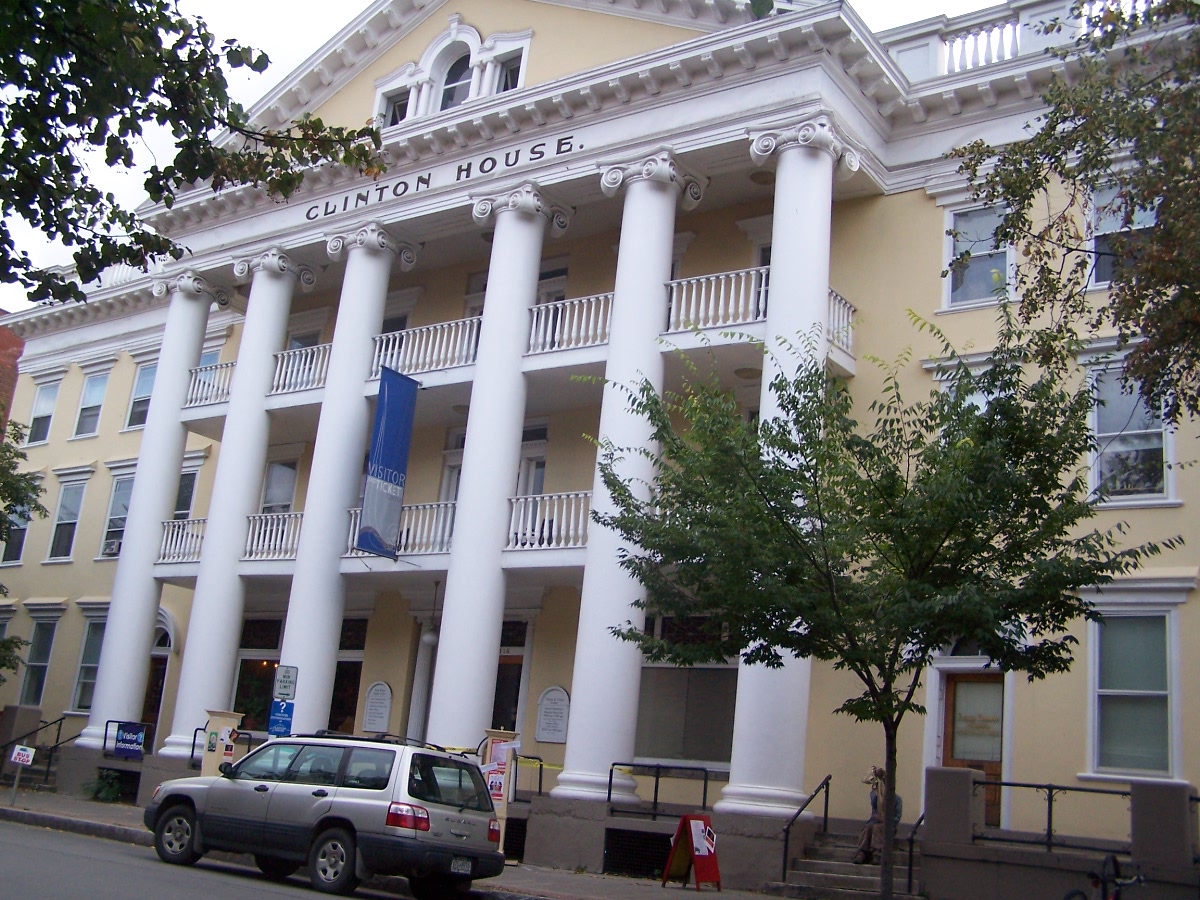
The Clinton House was built as an upscale office and hotel building in 1828-1829 [5]. Designed by Ira Tillotson, it is named for NY Governor DeWitt Clinton (DeWitt Park is up the street). The building has been renovated numerous times in its nearly 200-year history, which is clearly evident by the glass wall stairway addition in the rear of the structure and the colonial details that were added in a 1901 renovation of the building, after a fire destroyed the roof and upper floors. The building underwent renovations again in 1985-1987 and more recently in the mid 2000s, returning Clinton House to it’s “1852-1862 era appaearance”. The building is maintained by the NPO Historic Ithaca, but the last I heard they were seeking to sell it to a willing buyer.

Admit it, you’ve thought about going here if you haven’t already.

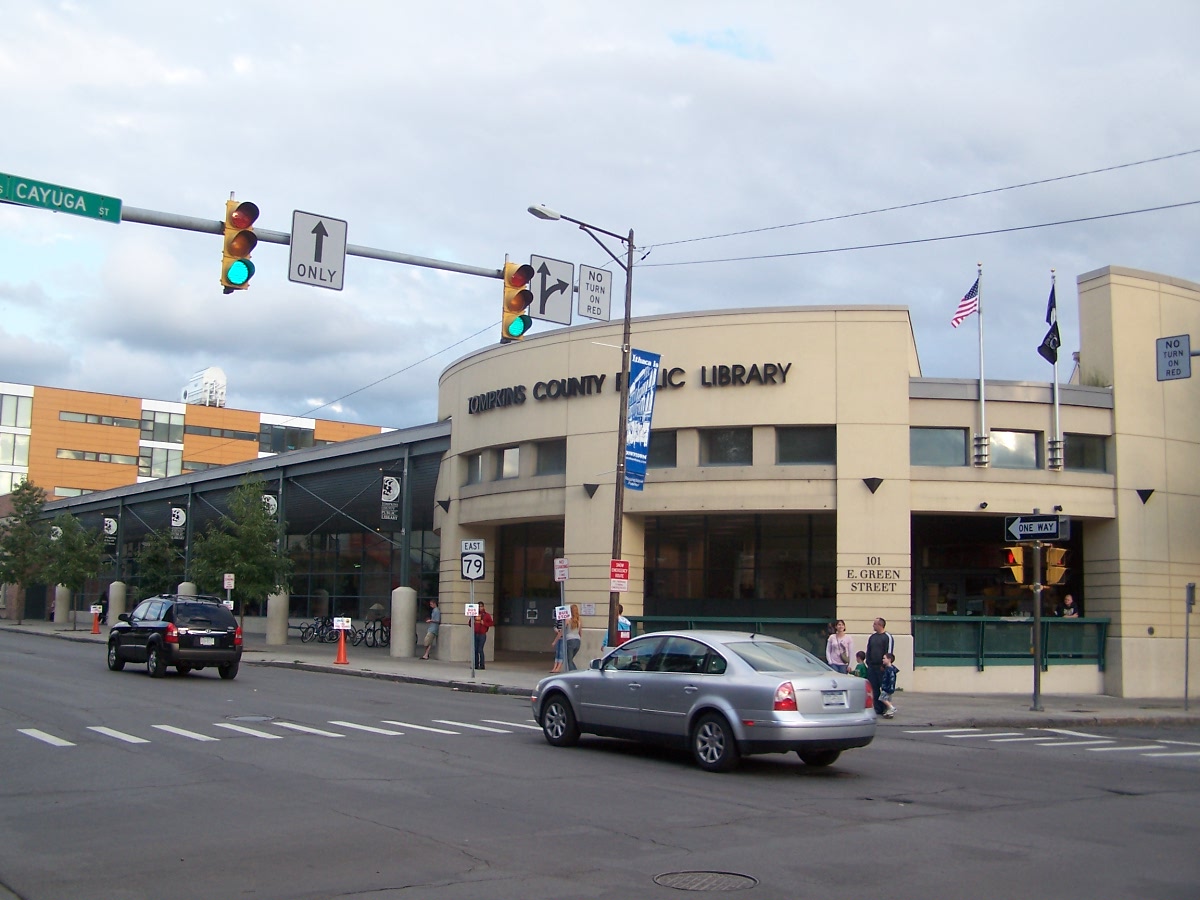
The Tompkins County Public Library (TCPL) on Green Street. The building was originally a Woolworth’s department store until it closed in 1998, and it was renovated into the library space in 2000. Prior to that time, the library was located about five block farther north in a ca. 1968 building. The first library was a gift from Ezra Cornell to the city, but later went into private use, and it was torn down in 1960 [6].

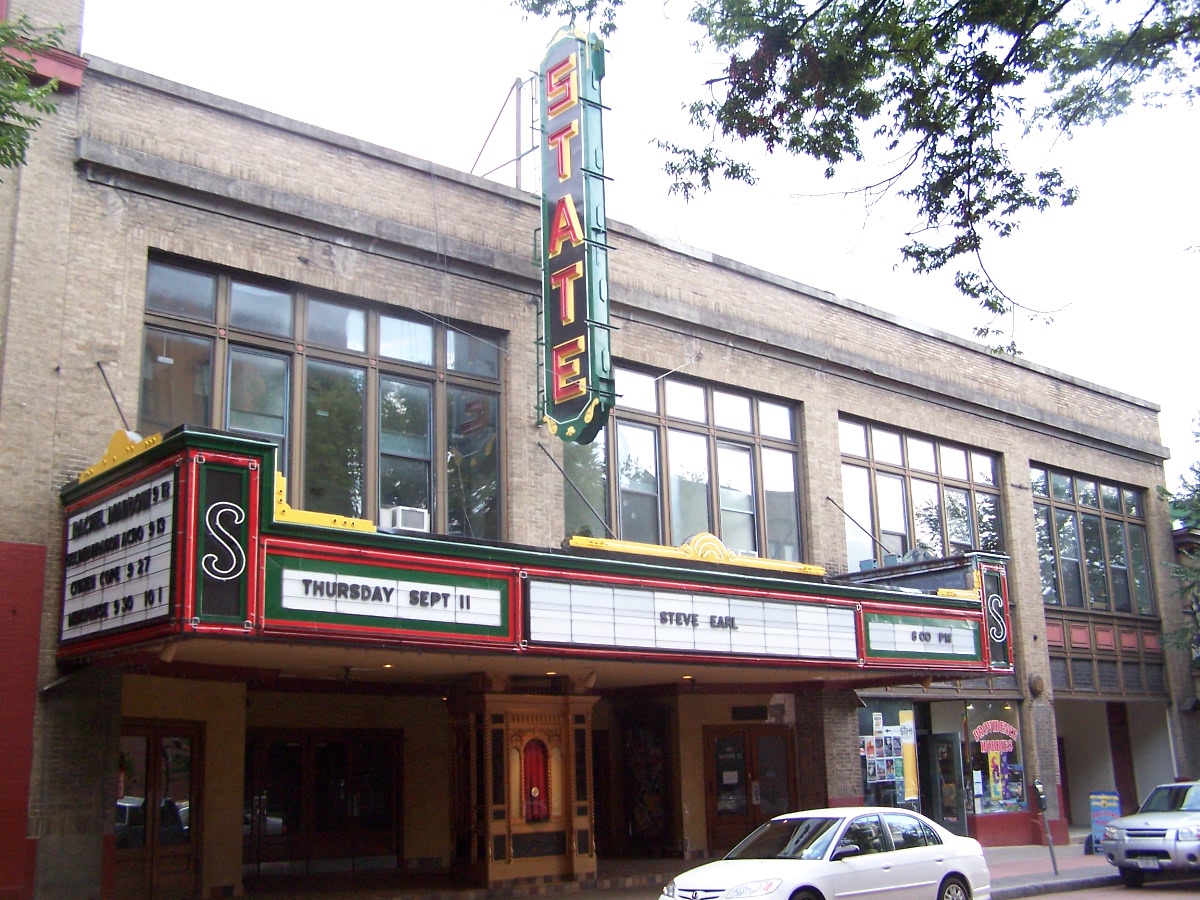
So I had a special request for this photo. The State Street Theater was originally built as the Ithaca Security Garage Auto Company and Dealership, built in 1915. The building was renovated into a theatre by the Berinstein family and opened as a theatre on December 6, 1928. Due to changing times, the theatre struggled to remain open past the mid-century and closed by the 1980s. Slated for demolition in the mid 1990s due to a number of structural and health concerns, a grassroots effort to resotre the theatre took hold, and enough funds and renovated were completed in the late 1990s that it was reopened on December 5, 2001 [7]. Today, the theatre continues a slow but steady renovation, and hosts a number of live acts from music groups to comedians.

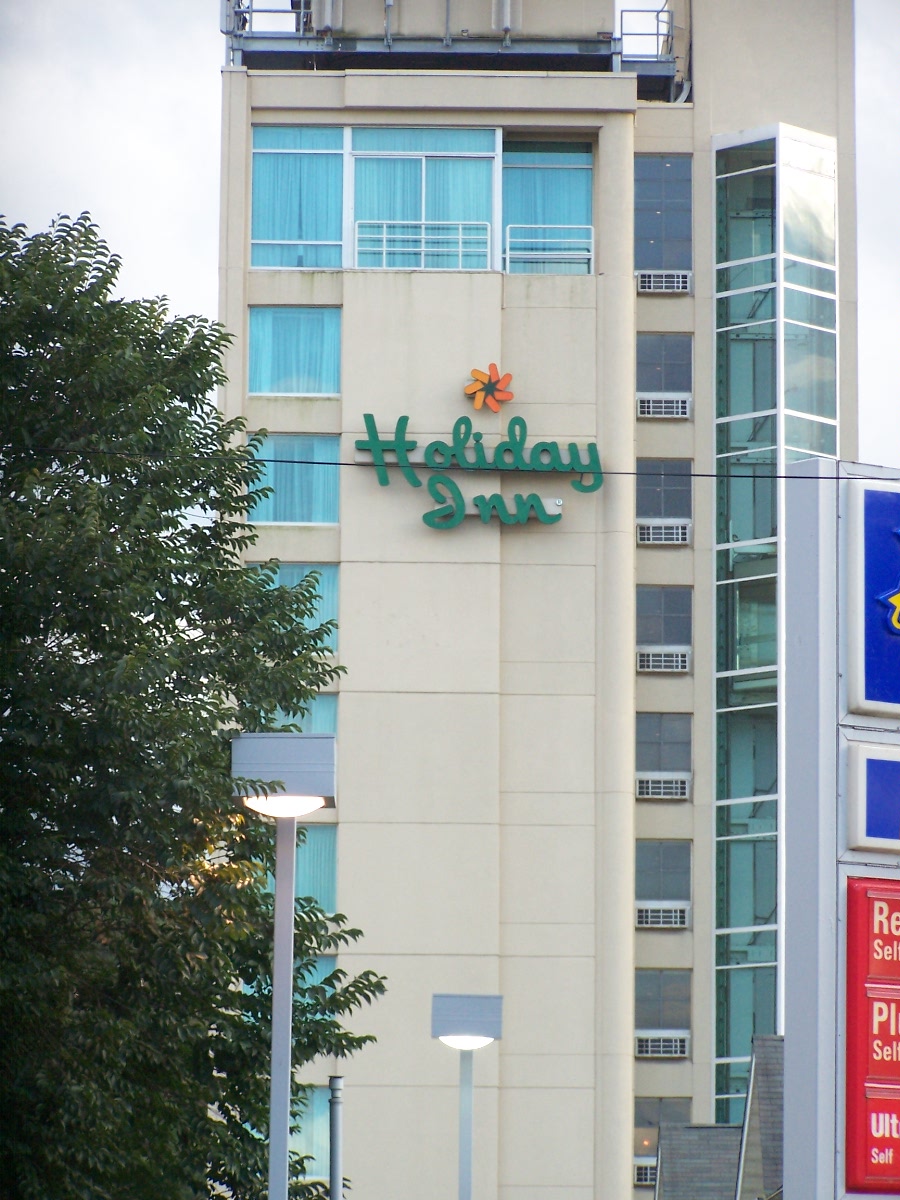
Yes, Ithaca has a Holiday Inn too. The low-rise portion of the building was built in 1972 as a Ramada Inn. The tower was built in 1984/85.

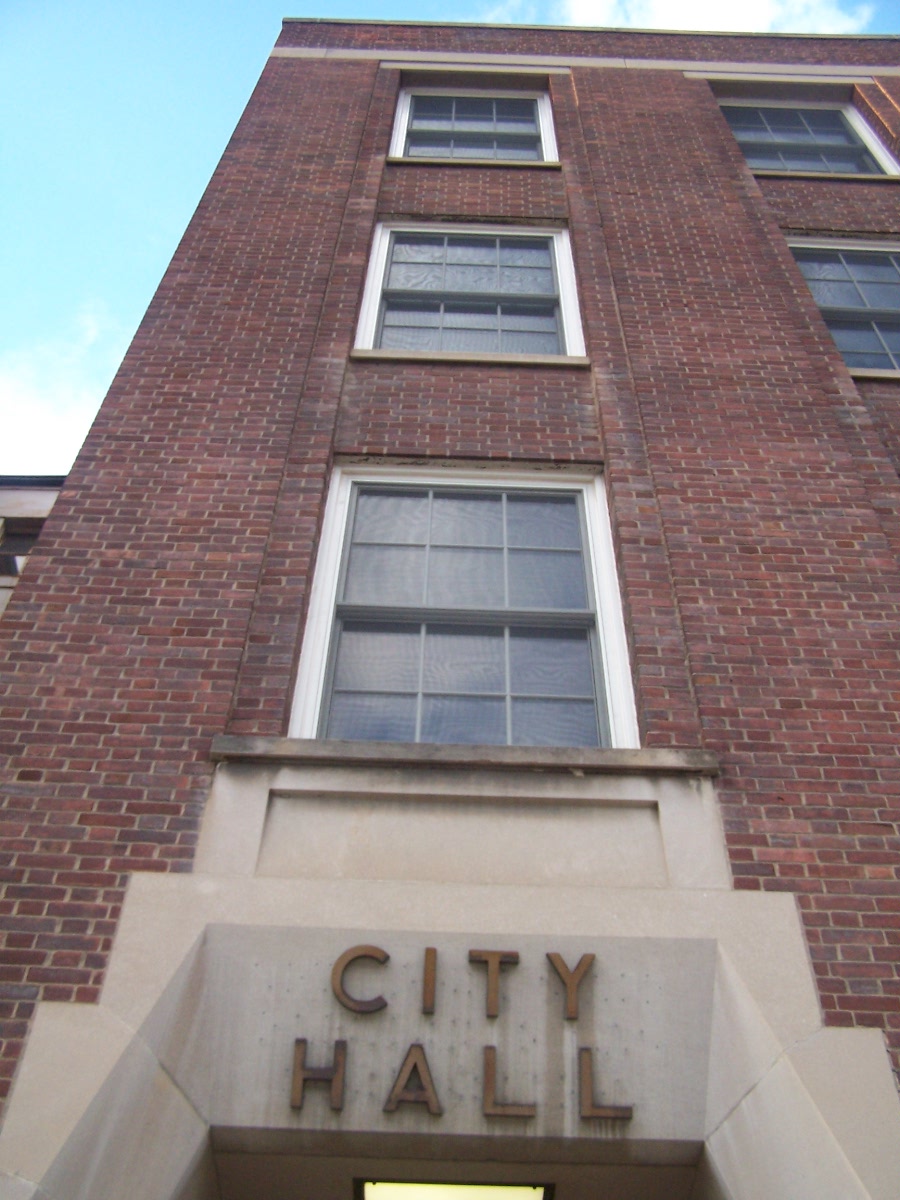
As I mentioned previously, the City Hall and Town Hall are two different structures for two different entities. City Hall dates from the 1930s. The original city hall, if you’re lucky enough to find an old photo of it, had the appearance of a country church.

[1]http://en.wikipedia.org/wiki/The_Cornell_Daily_Sun

[2]http://theithacajournal.com/apps/pbcs.dll/article?AID=/99999999/CUSTOMERSERVICE02/50411002

[3]http://www.immconch.org/history.html

[4]http://www.shortstopdeli.com/welcome.htm

[5]http://www.ci.ithaca.ny.us/index.asp?Type=B_BASIC&SEC=%7B0374E3DD-2B1E-49D3-AA16-ECA42FEF728F%7D&DE=%7B6C41E3A4-5DC1-4EA1-AD3F-32631AF0F4F4%7D

[6]http://www.tcpl.org/about/history.html

[7]http://www.stateofithaca.com/statetheatrehistory.html


Arts Quad Photos

30 08 2008

Some people suggested that I might consider sharing a little history of a few of the campus buildings for those that are interesting. Well, it’s Friday evening, and I’ve already enjoyed a private 21st birthday celebration for a friend. So, why not?

Rand Hall, built in 1912, was built in the industrial style typical for the time period. The building was donated by Mrs. Henry Lang in honor of her father Jasper Rand [1], and her ubcle and brother of the same surname. The building housed machines shops as part of the Sibley School of Engineering, and eventually was reworked to be the studio for many of the architect student as part of the AAP school.

For those of us who aren’t architects, we rarely see the interior. We do, however, see the designs and phrases bored architects create on the compound windows.  The building has been proposed for demolition in recent years to make room for proposed addition to the AAP school (see the Milstein Hall entry), but the current design proposal for Milstein Hall spares the structure for the current time. The building doesn’t tend to make much news, with the slight exception of a time a peacockfrom a Cayuga Heights home broke into their computer lab a couple of years ago [2].

Lincoln Hall, across the path, has seen a much more varied history than its workhorse neighbor. Lincoln Hall was built in 1888 at the then-cost of $72,603, and housed the Civil Engineering until 1960 (it moved to Hollister Hall). The building was renovated for the music department, and they moved in the following year [3].

Lincoln Hall saw an 18,640 sq. ft., $19 million dollar expansion from 1999-2000 (the addition is on the left side of the photo). The firm that designed the addition also designed Kroch Libe in 1992 and the Law School addition in 1988.

Sibley Hall, namesake of Hiram Sibley, has three seperate wings built at three seperate times. The West Wing began construction in August 1870. The building was dedicated to the “mechanical arts”, as so deemed by Hiram Sibley, an original trustee of the university. Sibley donated the money hinging on A.D. White building himself a president’s house on the campus [4]. The east wing was built in 1894, and the center area, including the photogenic dome, was built in 1902. Although the three portions were designed by three different architects, they form a relatively cohesive single structure that serves as the nucleus of the AAP school. The center area houses the Fine Arts Library.

The construction in the photo is some pipe work, and Sibley underwent minor renovations during the summer to make the building handicap-accessible, and to add more bathrooms to the structure.

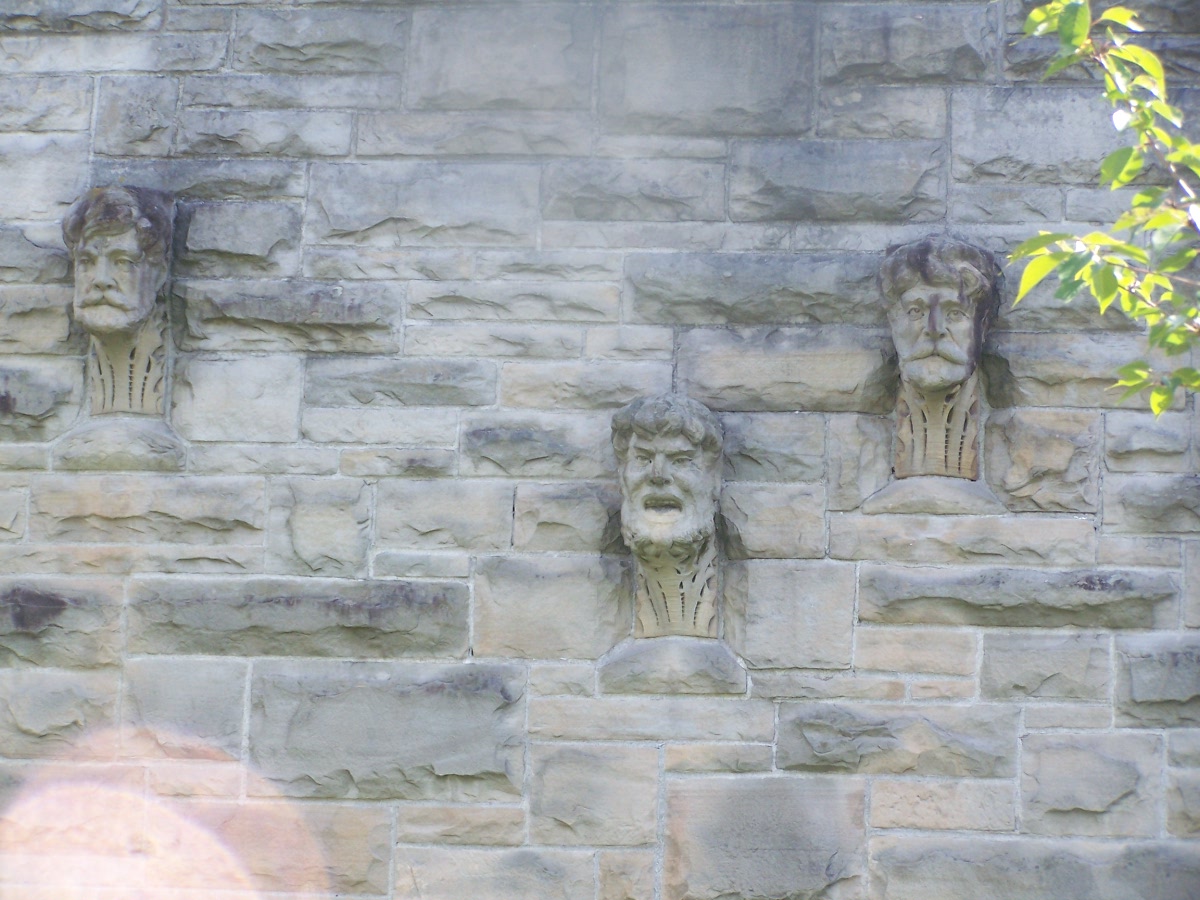
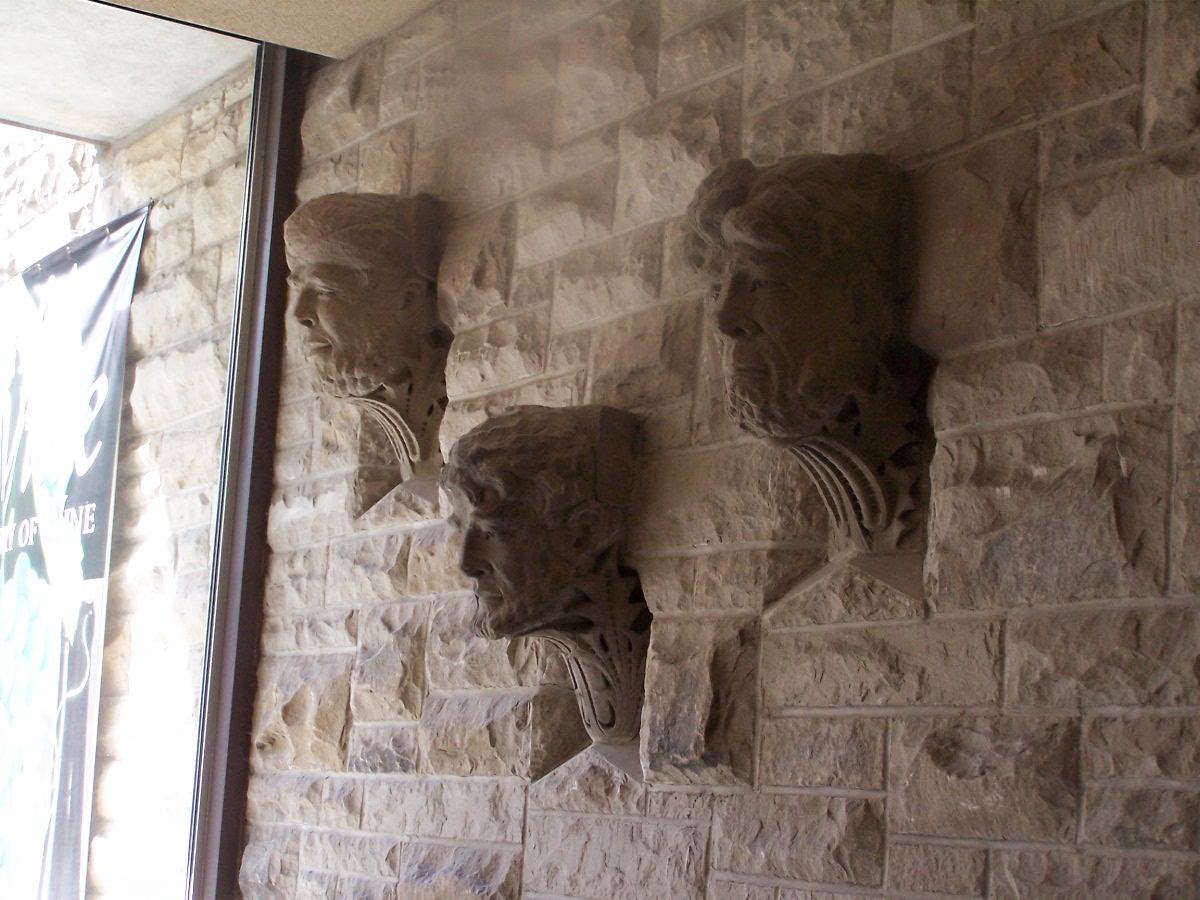
The John M. Olin Library shares the title of being the main library for the Cornell campus. The building was opened in 1961 [5]. To facilitate its 5.66 million dollar construction, the university demolished Boardman Hall (1892), which was the original home of the law school. Boardman was a former dean of the law school. The three stone faces on the outside and the three stone faces next to the interior staircase are artifacts from the exterior of Boardman Hall that were incorporated into Olin’s facade.

The Kroch Libary, largely underground except for four skylights next to Stimson Hall, was constructed in the fall of 1992 at a cost of $25 million dollars (namesake Carl Kroch ’35). For those who are curious, Olin has a utility tunnel to Uris, and Kroch has a utility stairway-tunnel that connects to Stimson, both of which are largely prohibited for non-staff use.

Olin’s entry way and cafe were renovated in 2002. The rest of the building is currently being prepped for a major renovation that will clean the exterior facade and renovate the interior to being it up to safety codes and to make it more conducive for current trends in upper education (think “pollinization spaces” not too unlike those in Duffield and Weill, without the atrium).

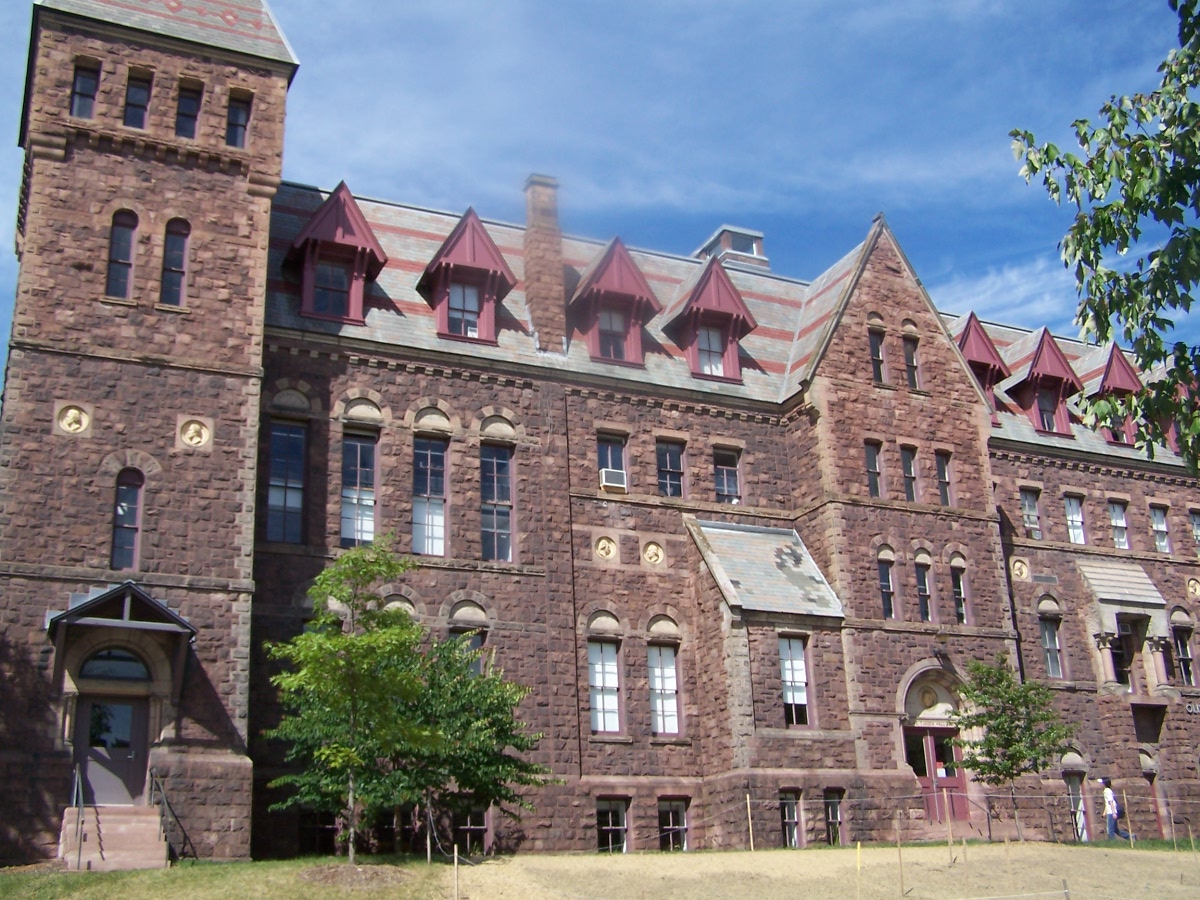
Tjaden was built as a “physical laboratory” in conjunction with West Sibley in 1883. Although $50,000 was budgeted, delays and material shortages drove the costs up to a final tally of $100,923, more than twice than was originally budgeted [6]. This is partially because of A.D, White insistance on the use of stone, and the medallions that decorate the building with the profile of prominent men in the mechanical arts. If you look closely enough, you can see that the window arches still have the names of great discoverers and inventors inscribed into the stone. The building was originally named Franklin Hall, in honor of the great innovator Benjamin Franklin.

The Department of Chemistry originally called the building home until it left for Morse Hall in 1890. The physics department left in 1906, and afterwards the building was incorporated into AAP as the Fine Arts building and workshops. The building was rededicated in 1981 to Olive Tjaden van Sickle ’25, a pioneering woman architect [6]. The building was renovated in 1998, at which time it regianed the hipped roof that I so inconveniently cropped off because I was too lazy to take a few steps back (the original hipped roof was deemed structurally unstable in the 1950s after a lightning strike set it on fire).

[1]http://www.aap.cornell.edu/aap/explore/rand.cfm

[2]http://www.news.cornell.edu/stories/June06/peacock.nabbed.dea.html

[3]http://www.arts.cornell.edu/music/LincolnRen-Exp.html

[4]http://www.aap.cornell.edu/aap/explore/sibley.cfm

[5]http://www.cornell.edu/search/index.cfm?tab=facts&q=&id=541

[6]http://www.aap.cornell.edu/aap/explore/tjaden.cfm


Exploring West Campus

15 08 2008

First off, let me say I do not support nor condone any illegal activity, especially for the purpose of information gathering. That being said, going into prohibited construction sites is a lot of fun if you’re careful where you step and you can avoid the workers leaving for the evening.

So, this started when a friend of mine who happened to figure out that I was the writer of this blog sent me a message asking if I could go through the new West Campus and take some photos. Knowing he wasn’t in Ithaca, I decided that I would be happy to oblige this time  (but I certainly won’t be making it a habit).

Token War Memorial shot.

First off, the War Memorial. These photos are actually from my fraternity photo tour last month. The War Memorial was constructed from 1926 to 1931. It honors the 264 Cornellians who were killed in action in World War I. However, it does not honor a 265th death, that of Hans Wagner 1912, who was killed in action while fighting for the Axis Powers [1].

Noyes and Hans Bethe dining hall have grass roofs. Cornell, take note to not follow IC’s folly and set off fireworks right next to a building with a grass roof; it just might catch fire.

Any makeshift fence can be scaled. But why bother when there’s a narrow space between it and the wall?

Base of the War Memorial steps, being renovated.

A new central plaza area between House 5 and Bethe.

House 5, south face

Don’t mind my shadow.

Curious horizontal window slits near the entrance of House 5.

Nameplate, unfinished for now.

House 5 Dining area, NW corner

north face, house 5

House 5 dining area interior, unfinished

Keeton House, north face

Noyes, from Keeton

A corner plaza next to Keeton. Psi Upsilon is in the back.

A plaza/planting area just outside of Keeton.

Keeton’s connective corridor.

A staircase at Keeton that leads under the corridor.

A large blank wall next to the previously mentioned staircase.

Note the coloration of the glass in the connective corridor.

Keeton’s south wing. Notice how the top floor has a different window pattern and uses different materials.

An interesting if not aesthetically pleasing entrance area for Keeton’s north wing.

Had to hide from construction workers by hiding behind the board next to the Penske truck.

The unfinished nameplate for Keeton.

Keeton’s balcony.

An architecturally interesting juxtaposition of Baker Tower, Becker House and the Johnson Museum.

Keeton’s lobby area

The dining area and an adjacent lounge in Keeton House.

A random hall of dorm rooms in Keeton.

***

Boldt Hall and Tower

ATO painted their house, it seems.

As for the photo request…consider it fulfilled.

[1]http://cornellsun.com/node/19107


North by Northwest of Campus

12 08 2008

The house of the Chi Psi fraternity of Cornell University. Chi Psi has had a colorful if traumatic history in its century-plus long history here at Cornell. The Chapter at Cornell was founded in 1869. While they lived elsewhere, Jennie McGraw, the daughter of John McGraw, who was a wealthy lumber merchant and one of the first trustees of Cornell (for whom McGraw Hall is named) [1], fell in love with the first university librarian, Daniel Willard Fiske. She was old for loving at the time, pushing forty. She was also suffering from terminal tuberculosis. Regardless, she and Willard eloped and engaged in a whirlwind tour of Europe, while an opulent mansion was built on the edge of the gorge. She lived just long enough to see it with her own eyes, passing as they arrived home in 1881 [2]. Willard moved in, but his behavior was considered a little too exuberant for someone whose wife just died. Plus, due to some legal issues with Jennie’s will (which might make for a good entry another day), he and Cornell ended up on really bad terms, and he spent most of the rest of his life in Italy (on the bright side, he somewhat reconciled with Cornell in later years and donated his library upon his death in 1904 [3]).

That story is tangent to Chi Psi. Willard sold the opulent McGraw-Fiske mansion to the fraternity around 1881[4]. It was during the cold night of December 6th 1906 that the second deadliest campus tragedy in Cornell’s history occurred.

Sources tend to indicate it was caused by flammable polish being used on the floors. Others have gone as far to suggest that the house was cursed due to Jenny and Willard’s indiscretions. Regardless, the house caught fire. And in the days before real fire engines, any water to be used on the house (that wasn’t frozen) was a mere trickle. Of the twenty-six fraternity brothers living in the house, four died. When one of the exterior stone walls collapsed, it landed on volunteer firemen from the city of Ithaca, killing three of them. By the end of the night, the house was destroyed, and seven people were dead [5].

Photo Courtesy of "Greetings from Ithaca"

Photo Courtesy of “Greetings from Ithaca”

Through the tragedy, the fraternity persevered. They built the current house the following year (known as “The Lodge”), and have lived there since.

So, I took two photos partially to get a good idea of the shape and ornamentation of the house, but more because a woman in a towel came up from the gorge as I was taking photos…and I didn’t want to give the wrong idea. I ran south after a large guy appeared by her side, and she probably thinks I’m a creeper and pervert. I prefer photos of ornamental busts to women’s busts.

***

The Thurston Court Apartments is a 22-person university-owned apartment building with one and two-bedroom student apartments [6]. Primarily used for grad housing, in recent years the building has been opened up to undergrads as well. The building was built in 1932 (fun fact: the entire building was once painted white, including the ornamentation).

The house of Seal and Serpent fraternity, Cornell’s independent fraternity. The fraternity was founded in 1905, and the current house was built in 1929 in the Tudor Style [7]. In the past several years, the fraternity has suffered from a chronic shortage of interest; rumor mill says they only had three pledges last spring.

Maybe this has something to do with it:

“…Fraternities have a reason to fear such stereotyping. The Seal and Serpent society, a house which was primarily gay in the 1980s but now has just two gay brothers out of 16, has had some difficulty overcoming “the gay” label during rush…”

I s’pose this doesn’t help – I still hear this from a lot of people both in and out of the Greek community  (the quote is from a Nov. 2000 Sun article).  Going through this blog’s search bar history, there are over 200 hits for “gay fraternity”.  I’m willing to bet it’s not with good intention.


The house of Alpha Phi sorority. Alpha Phi Cornell was founded in 1889 with assistance from the Alpha Chapter at Syracuse University [8]. Originally based out of Sage College, they lived with Alpha Zeta for a year  and on their own in a couple different houses until they bought their current house from an Alpha Phi alum in 1921. The side wings were added in 1937, and a back wing (not pictured) was added in 1961. The chapter went under a reorganization sometime in the early 1990s due to low membership intake, but I’ve found nothing that indicates it ever closed. Currently, Alpha Phi has one of the highest sorority membership numbers at Cornell.

Hardly 500 feet away is the house of Kappa Kappa Gamma sorority. I know Kappa has been in the news lately; and it really sucks to be them right now (unless you like embarrassment over attention). The sorority’s Cornell (Psi) chapter was founded in 1883, and moved into the current house in 1921 [9]. The chapter was inactive from 1969 to 1977, a time period well-known for its anti-Greek sentiment.

Louie’s Lunch was founded in around 1918 by Louie Zounakos, who emigrated to NYC from Greece, and later moved up to Ithaca. The original Louie operated the truck up until 1955 [10]. The original truck was replaced in the late 1940s. The truck was then owned by the Machen family until 1997, and is now currently operated by Ron Beck. I do have a preference to one truck over the other, but I won’t say which.

100_3462

Photo courtesy of “Greetings from Ithaca”

The house of Zeta Psi fraternity. The house, built in 1930, was originally that of Theta Xi. Zeta Psi, meanwhile, has the distinction of being the first fraternity founded by Cornell, even if it was decided by a coin flip (see the entry for Chi Phi). The chapter built a luxurious house in 1891 on the corner of Williams Street and Stewart Avenue, but moved out in the 1940s due to low numbers as brothers left to go fight in WWII. The original house burnt down in the late 1940s, and was replaced by a parking lot. In the meanwhile, Zeta Psi lived with Young Israel for a short while before moving into 660 Stewart Avenue in the late 1950s. A donation from a wealthy alumnus allowed them to buy the current house in 1972 [11].


[1]http://www.cornell.edu/search/index.cfm?tab=facts&q=&id=497

[2]http://en.wikipedia.org/wiki/Jennie_McGraw

[3]http://en.wikipedia.org/wiki/Daniel_Willard_Fiske

[4]http://www.adphicornell.org/adphicor/files/FraternityRow.pdf ***

***Page 10 has a picture of the McGraw estate in its heyday

[5]http://www.chipsi.org/news/6143/Cornell-Fire-Centenary.htm

[6]http://www.campuslife.cornell.edu/campuslife/housing/graduate/thurston-court-apartments.cfm

[7]http://www.sealandserpent.org/house.html#

[8]http://www.dos.cornell.edu/dos/greek/chapter_details.cfm?id=4679

[9]http://www.dos.cornell.edu/dos/greek/chapter_details.cfm?id=3280

[10]http://www.louieslunch.com/history.htm

[11]http://www.psiofzetapsi.org/History.html

[12]https://cornellsun.com/node/1720


Far West Campus, Second Photo Tour

4 08 2008

The house of the Cornell Chapter of Delta Upsilon fraternity. The house was built in 1890 in  the Queen Anne Style [1], and burned at least three times over the next thirty years [2]. The fraternity was founded to counter secret societies. Which, considering some members have most certainly been members of the Sphinx Head and the Quill and Dagger, is vaguely ironic.

Cornell’s Telluride House, located on South Avenue. The house was built in 1910 and originally housed electrical engineers working for Lucien L. Nunn, and who also attended Cornell [3]. The Cornell chapter was the first Telluride house. Telluride takes it name from the town of Telluride, Colorado, where Nunn lived most of his adult life [4]. The house’s website describes as an intense academic experience, and that members “enjoy tremendous autonomy”. So, I’m getting the impression of a fraternity, only much more academic and not nearly as social.

Photo Courtesy of "Greetings from Ithaca"

Photo Courtesy of "Greetings from Ithaca"

The house of the Sigma Phi Society. The first house was torn down to make way for the law school. The second and current house was built in 1932 and designed by Frederick L. Ackermann in the English Country House style. Ackermann also designed Psi Upsilon, the neighboring fraternity, and the relation between the two is obvious. If you can’t tell them apart though, you’ve probably had too many drinks at Sigma Phi and it’s time to go home. Detail-wise, the two differ considerably.


Although, one can never go wrong with the right ornamentation. I honestly thought that someone was sitting up there when I first glanced at it. No, I wasn’t drunk.

Psi Upsilon’s House was built in the same year. I believe this is also the fraternity that was known for having an indoor squash court, so Psi U. has a bit of a reputation of being wealthy. The chapter has also been booted off campus twice, the latest last month (the other case was in 1979). 

The house of Delta Tau Delta. The house was built in November 1965 [5], but they previously lived in a now-demolished house on Edgemoor Lane (the parking lot next to Theta is the site of their old house). The only reason I knew this house existed freshman year was that one of my roommates had a free magnet from DTD. Yeah, can’t say I care too much for that 60s archi-torture.

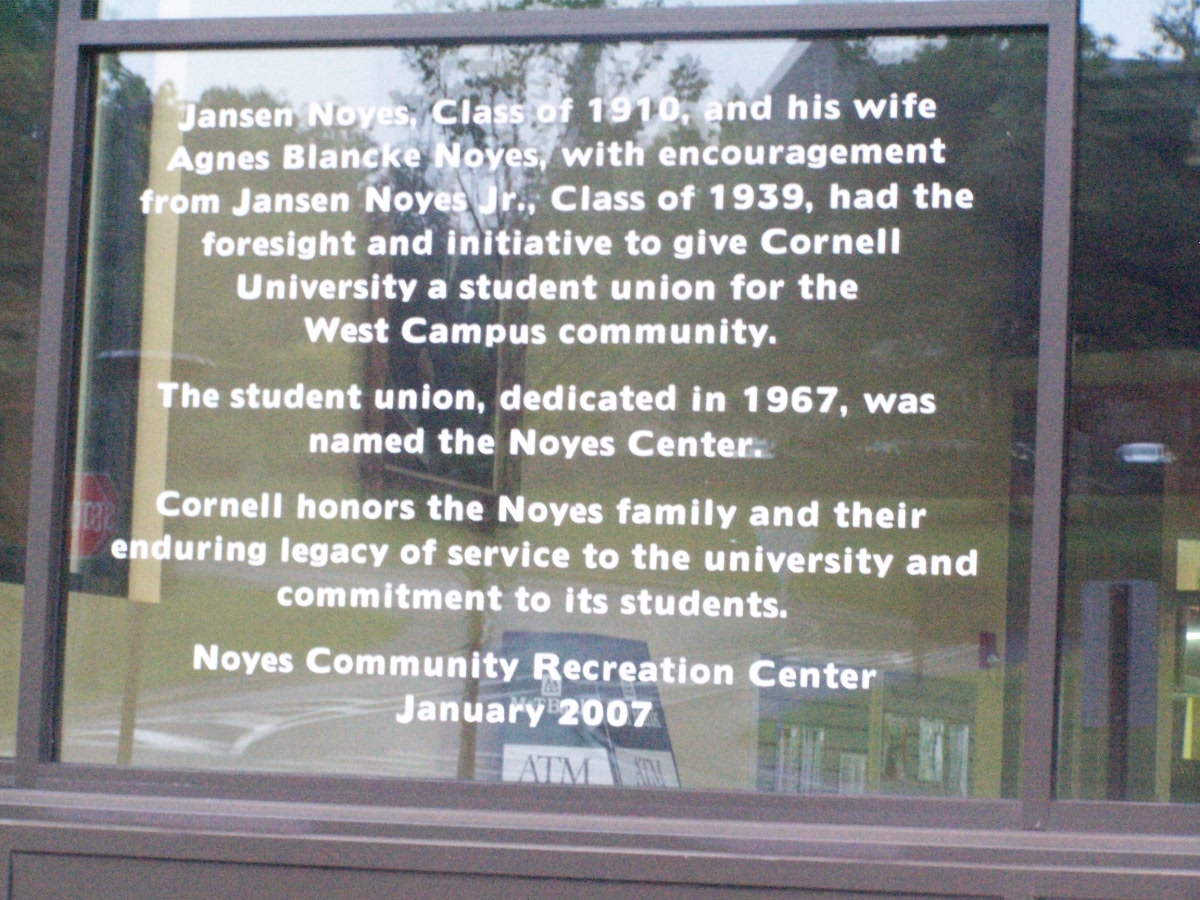
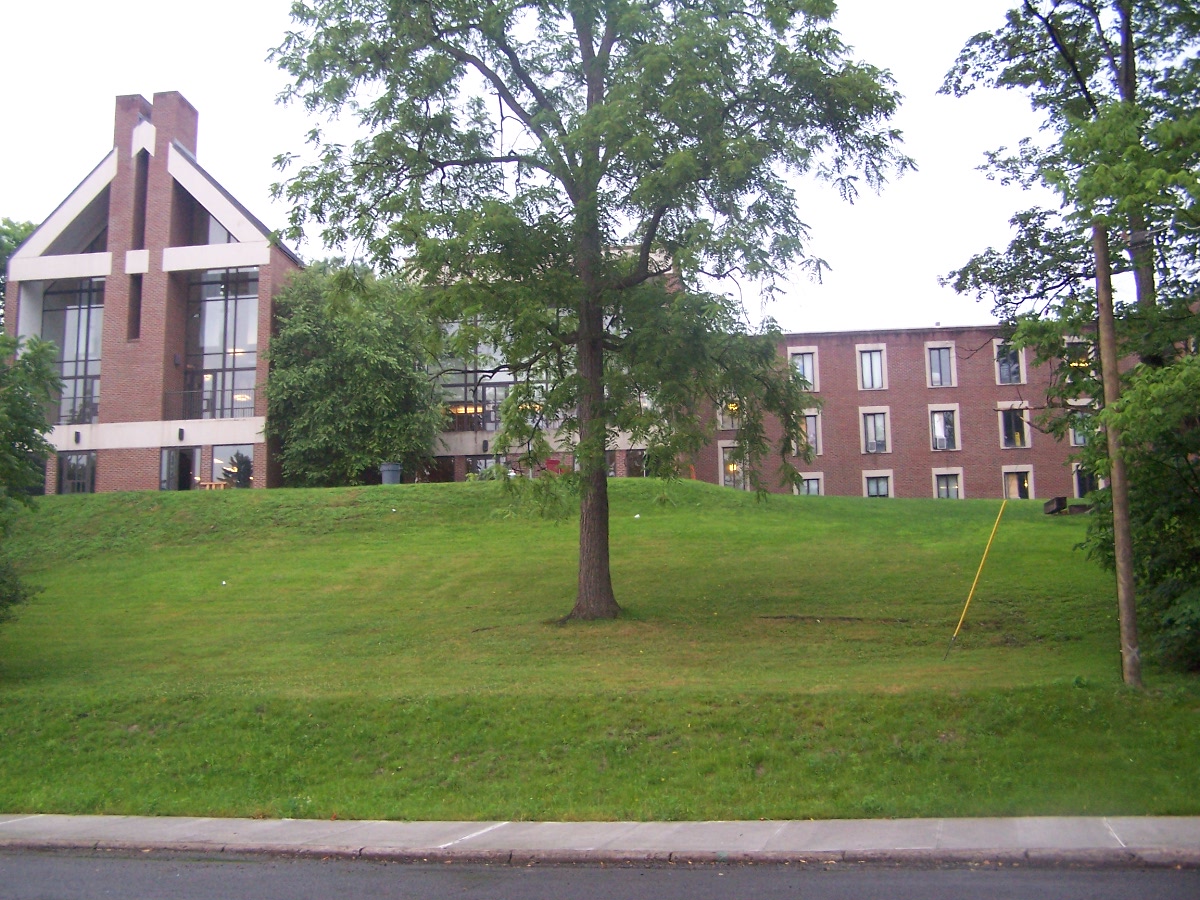
The new Noyes Center is about the only thing I like on the newly reconstructed West Campus. Completed in Janurary 2007, the building serves for community functions for West Campus (weight room, convenience store, etc.).

The original student union, a penal-style brutalist structure, was dedicated in 1967 to Jansen Noyes 1910. Before the legal drinking age was raised in 1986, it had a “pub” to serve students.

 (photo courtesy of http://andrew.loewer.name/musings/)


[1]http://www.fs.cornell.edu/fs/facinfo/fs_facilInfo.cfm?facil_cd=4722

[2]http://ecommons.library.cornell.edu/bitstream/1813/3536/23/021_18.pdf

[3]http://www.tellurideassociation.org/programs/university_students/cornell_branch/cb_general_information.html

[4]http://en.wikipedia.org/wiki/Telluride_Association

[5]http://www.fs.cornell.edu/fs/facinfo/fs_facilInfo.cfm?facil_cd=4776


Far West Campus, the First Photo Tour

31 07 2008

The house of Phi Kappa Psi fraternity. As previously covered, the house was this dreadful brutalist monstrosity constructed in 1964 when the fraternity moved from 312 Thurston Avenue [1]. The house was extensively renovated in the second half of the 1990s, gaining a more postmodern appearance that has earned it the nickname “The Gables”. Prior to 312 Thurston (now demolished), Phi Kappa Psi lived in the Watermargin house. It was among the first fraternities chaptered at Cornell, established in 1868.

This house belongs to Kappa Alpha Theta sorority, currently the only sorority on West Campus. The house was built by Sigma Chi in the 19th century, who left it for Greystone Manor in 1923, and Theta Chi fraternity moved in. Bay the 1980s, Theta Chi had moved out of the house for a mansion on Ridgewood Road, and “Theta” moved in. Theta was dispelled from its national in 1965, but returned to campus in 1980 [1], and moved into this house during the 1980s.

Speaking of fraternities founded early in Cornell’s history, Chi Phi and north campus fraternity Zeta Psi were both founded on opening day 10/7/1868. The two flipped a coin to see who would be declared the first fraternity at Cornell. Well, Chi Phi still uses its early start in rush promos, but Zeta Psi is officially the first fraternity (Zeta Psi and Chi Phi have a rivalry to this day). Craigielea, their tudor-esque house, is well over a century old (1890, partiall rebuilt after a 1903 fire), and has continuously been in their posession. The house was designed by W. H. Miller of Uris Libe fame [2].
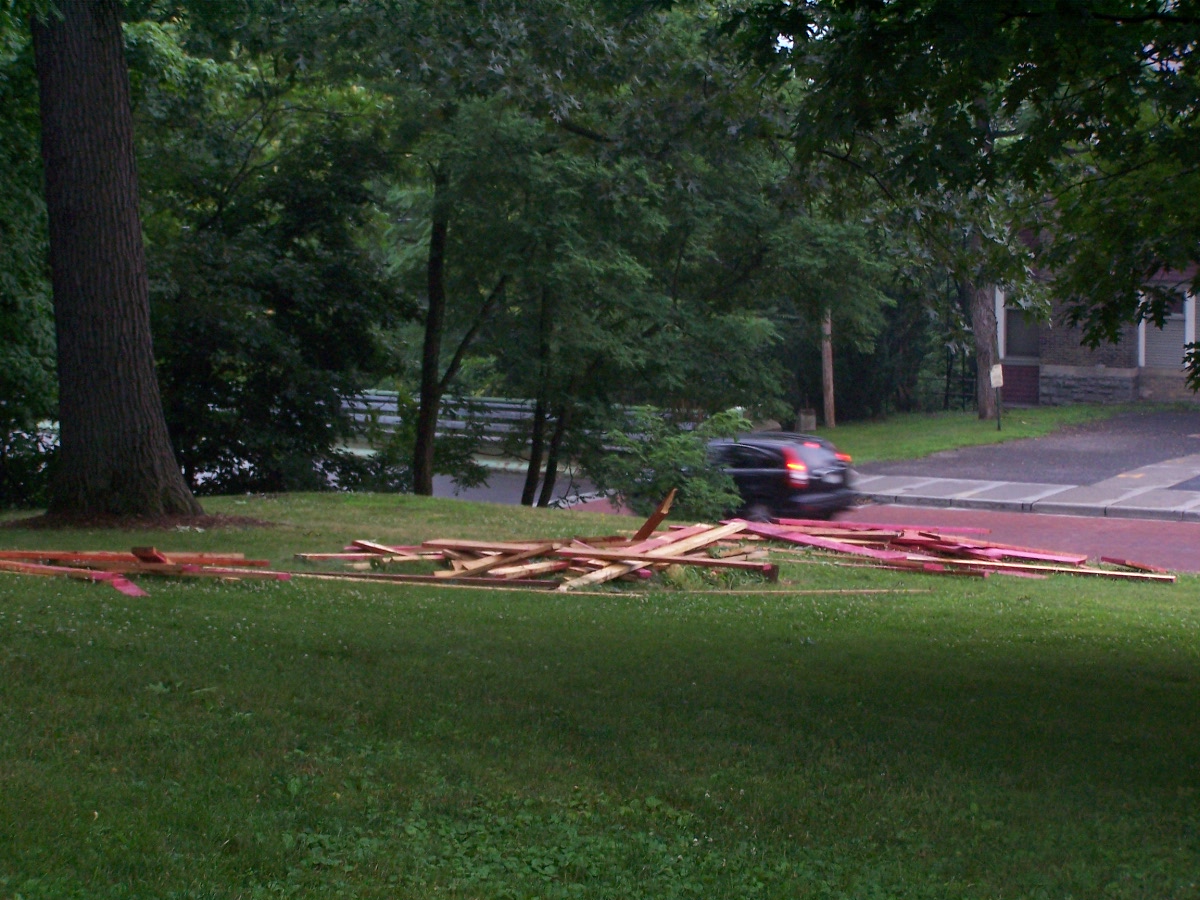
And this is what’s left of their (pledge?) project, bleachers that they built last April. Shame, really. I wonder if they did it or someone who hates Chi Phi did it.

Delta Kappa Epsilon (DEKE) fraternity house is a Romaneqaue Revival House built in 1893 by W.H. Miller [3]. The house is known as Gray Stone Castle, and sits on the National Register of Historic Places [4]. As amazing as the house is, the chapter hasn’t been doing all too recently; rumor mill says numbers were so low in recent years that actives had two rooms each.

112 Edgemoor Lane, a small campus dorm designed for about 20-25 occupants. As I explained in a previous entry, this house has a lot of significance to me personally. So, the house, built in the Colonial Revival style, was built in 1881. The house was home to Sigma Phi Epsilon up into the 1960s, when Sig Ep moved out and Triangle fraternity moved in. Previously, Triangle called a house at the junction of Campus Road and Stewart Avenue home, but the ca. 1839 farm house was torn down to make room for DTD’s new house [5]. After Triangle was deactivated by its national in 1985, the house was made into part of Cornell’s campus dorms.

Lambda Chi Alpha’s house also sits on Edgemoor Lane. Originally known as ISWZA [5], Lambda Chi was chaptered in 1913, and the house was purchased around 1918 (it was built in 1899). Lambda Chi is known for having a feud with its neighbor Chi Phi. The house also maintains a gazebo on the edge of the gorge, which was built in recent years.

The house of Pi Kappa Alpha fraternity. The house was occupied by Beta Theta Pi, who occupied the house until they moved in 1906. About a decade later when Pi Kappa Alpha colonized on campus, the chapter moved into this house. My slight personal issue was that they had a steep driveway in the back, and some jackass in a Jetta would try to do 0-60 every time he went down the hill. The whining engine gets quite annoying after a while.

The Jewish Living Center. The house dates from the 1890s[6], with the kosher dining center to its south (not pictured) dating from the late 1980s. The center was known as Young Israel until the late 1990s. Judging from their website, the independent organization has had a contentious past with its relations to the University. The old fraternity house for Seal & Serpent (pre-1926) used to be next door, but it was demolished to make room for their parking lot.

[1]http://www.dos.cornell.edu/dos/greek/chapter_details.cfm?id=3278

[2]http://www.fs.cornell.edu/fs/facinfo/fs_facilInfo.cfm?facil_cd=4716

[3]http://www.fs.cornell.edu/fs/facinfo/fs_facilInfo.cfm?facil_cd=4719

[4]http://www.dke-cornell.org/public1.asp

[5]http://cdsun.library.cornell.edu/cgi-bin/cornell?a=d&d=CDS19650427.2.101.1#

[6]http://www.iswza.org/heritage

[7]http://www.cornellcjl.com/about/history.aspx