Fencing in a Problem?

30 03 2010

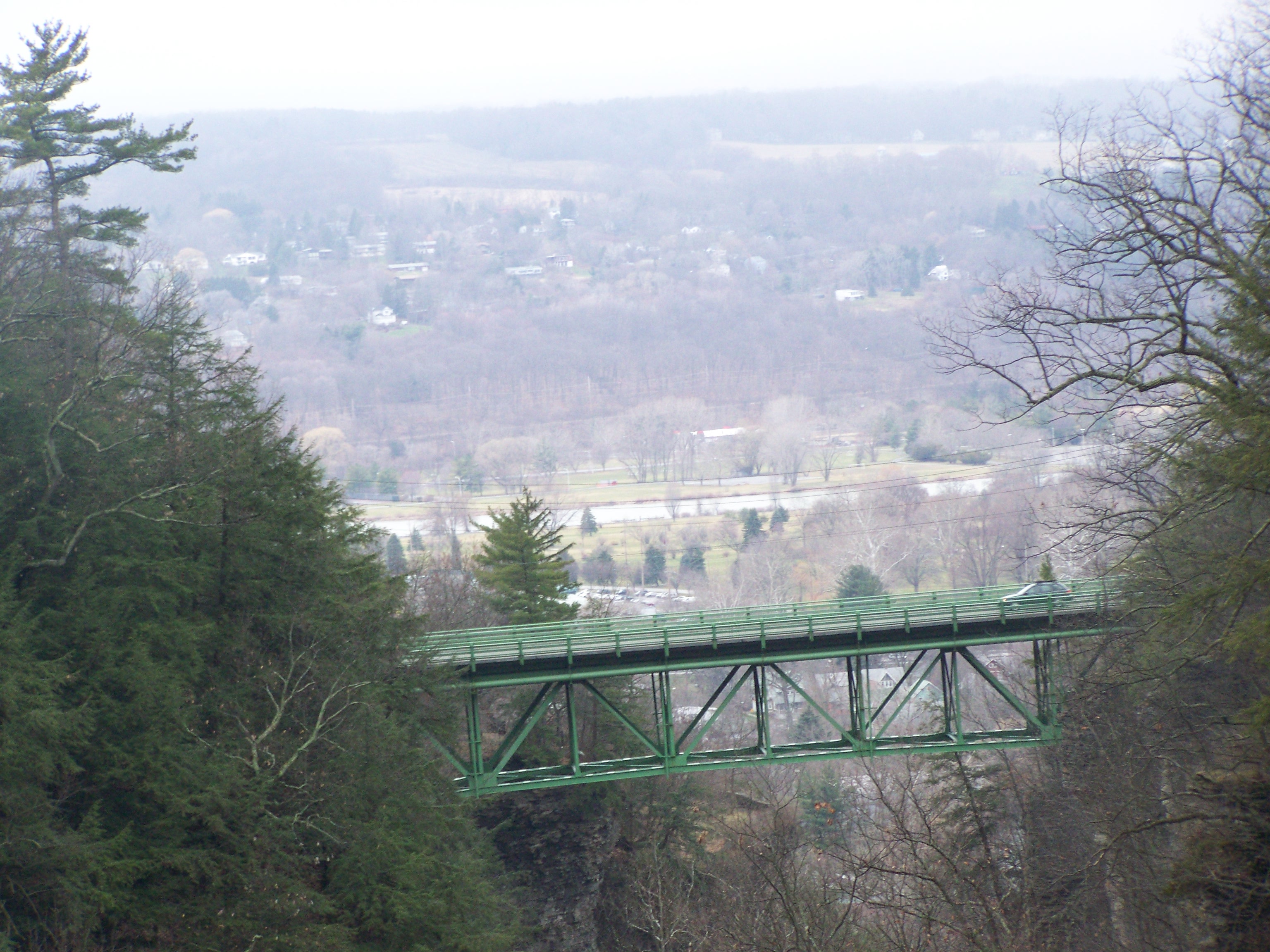
For anyone (like myself) who was away for break, returning to campus brought with it an unpleasant surprise; the installment of large “temporary” fences along several of the campus bridges over the gorge. The Triphammer Foot Bridge is closed until May 26th. Stewart Avenue has no fences yet, but Cornell and the city of Ithaca are in talks on how and when to install them.

The logic to support such a move isn’t hard to figure out. It’s a very visual gesture that makes it look like Cornell is attempting the address the recent series of gorge deaths. In other places, fence installment has significantly curtailed bridge jumping, such as the Prince Edward Viaduct in Toronto. But still, it’s really unfortunate that this is what things have become, due to the recent tragedies.

I don’t like it. But apart from installing nets or filling in the gorges, there’s not much else that can be done. This is going to look really bad during Cornell Days, and for Alumni Reunion if they’re still up in June.


Cornell in the Limelight for Recent Spate of Deaths

18 03 2010

A short list:

Fox News, CNN, BBC News, MSNBC, Slate (who tied it into an older article from 2006), The New York Times, The London Times,

Fox News, ABC and CBS and the L.A. Times are all running the same written article regarding Cornell’s recent losses. According to CNN, six of our student fatalities since August have been suicides.

Of course, most news outlets give registered users an uncensored chance to express their opinion on articles such as the Cornell events. Some of these are so offensive that they should never be reproduced. But to sum it up, apparently, some combination of allowing women on campus/not being a good Christian school/too much emphasis on grades/natural selection/recreational drug use/Greek life/no social life/the weather/it’s in upstate New York/ caused it to happen. This reminds me why I usually avoid the comments section on these websites. The most embarrassing part is watching posters claim they’re Cornell alumni and then argue about how great or terrible the school is/was during their time of attendance.

Cornell loves to be in the news, but I’m sure they’d rather be in the headlines for almost anything but the recent series of tragic deaths.


Article Regarding Gorge Suicides at Cornell

16 03 2010

A Cornell alumni, Rob Fishman ’08, recently wrote a journalism master’s thesis during his graduate studies at Columbia University, which explored the history and reactions to the prevalence of gorge suicides here at the university. The thesis was updated and partially reprinted in an article for the Huffington Post. The work is arguably one of the most well-written articles I’ve ever read about this particularly sensitive topic.

This blog has recently received a number of strong criticisms regarding a previous article that “treats the death of students as a statistic”. The intention of that article was anything but. It served to attach a name and a circumstance to each of the cases that the university’s student body has had to deal with since the academic year began. It has been a sad year for the university and all those affected by these tragic losses.


Please Just Let It Stop

13 03 2010

http://www.theithacajournal.com/article/20100312/NEWS01/3120386/1126/news/Nightfall+delays+Ithaca+search+for+body

***

ITHACA — Emergency personnel temporarily suspended the search for a body in Fall Creek on Friday evening.

A driver on Stewart Avenue saw a person drop from Suspension Bridge into Fall Creek gorge about 3:45 p.m. Friday, Ithaca police said. Ithaca police, Cornell Police officers and Ithaca firefighters tracked the body as it traveled downstream toward Stewart Park, and a helicopter joined the search, they added.

Firefighters launched an inflatable boat and searched Fall Creek from its mouth at Cayuga Lake to where the Route 13 bridge crosses it, Ithaca fire officials said. Their part of the search operation was suspended because of darkness, they added.

Efforts to recover the body were unsuccessful because it “frequently disappeared from view,” police officials said. Though they may have identified the person, information was being withheld until they recover the body, confirm the identity and notify the next of kin, they added.

The search may resume today, fire officials said.

Meanwhile, a body recovered in Fall Creek gorge under the Thurston Avenue Bridge on Thursday was identified as Cornell University student William Anthony Sinclair, 19, of Chevy Chase, Md., Cornell officials said. A utility crew working on the underside of the bridge saw Sinclair’s body sometime after 11 a.m., Ithaca police officials said.

Ithaca police, Cornell University Police, Ithaca firefighters and Bangs Ambulance personnel responded to the scene, police said. Using a rope system, four Ithaca firefighters descended to the north embankment and recovered Sinclair’s body. Cornell Transportation Services and Cornell Environmental Health Services assisted at the scene.

Sinclair was a sophomore in the College of Engineering, and Ithaca police and Cornell Police were investigating his death, Cornell officials said.

“On behalf of the entire Cornell community, I wish to convey my heartfelt condolences to the family of our student, William Sinclair, and to his many friends who will always carry the memory of happier times in their hearts,” said Cornell President David Skorton. “Please join me in keeping them foremost in your thoughts in the days ahead, as we mourn this tragic loss of life.”

They wouldn’t be able to comment until the investigation is complete, Skorton said.

Further information on Sinclair, along with information on counseling and psychological services can be found at http://www.cornell.edu/statements/2010/20100311-william-sinclair.cfm

***

David J. Skorton

show details 12:11 am (1 day ago)

Dear fellow Cornellian,

It is with deep sorrow that I write to you regarding another death that has occurred in our campus community. Matthew Charles Zika, a junior in the College of Engineering, died this afternoon. While the cause of this tragedy is still under investigation by the Ithaca Police Department, I join all of you in grieving deeply this and the other losses we have experienced together so very recently.

I have asked Susan Murphy, Vice President for Student and Academic Services, to take charge in reaching out to the entire Cornell community, and to do a welfare check throughout the university’s residential community this weekend. She has already arranged for Counseling and Psychological Services (CAPS) to be open for students, faculty and staff, Saturday from 10 a.m. to 4 p.m. Vice President Murphy and her colleagues will be communicating in the days ahead to all of us. Please feel free to respond to her with your concerns or ideas.

As a doctor, teacher and father, I, too want to reach out personally to each one of you – especially our students. I want you to know that it is normal to feel sad or anxious at times, particularly when such tragedies occur. Roommate conflicts, relationship problems, financial challenges and especially academic stress are just some of the pressures that can make us think that things are too difficult.  Your well being is the foundation on which your success is built.  You are not alone. Your friends, your family, your teachers, your colleagues, and an array of counselors and advisors are ready to listen and help you through whatever you are facing. If you learn anything at Cornell, please learn to ask for help. It is a sign of wisdom and strength.

Cornell is a caring community where the struggles of one of us is a concern for all of us.  You can help by checking in with your classmates, roommates, colleagues and friends to make sure they are well. It is important to take the time, regularly, to reflect on the many things for which we are grateful and on how best to overcome, together, the daily challenges we must face.  This is the time to be with and for one another.

Sincerely,

David J. Skorton

***

Eleventh undergraduate student fatality for the year, twelfth total. Third fatality in a month that involved the gorges. Police and security are currently being stationed on all the bridges to prevent further incidents.

Sincerely, please just let it stop. If these are suicides, nothing is worth doing this over.


A Bad Year Keeps Getting Worse

11 03 2010

*****************************

This message has been delivered to all users of the Cornell University
electronic mail system.  Do NOT forward this message to individuals or
mailing lists within Cornell.  You cannot be removed from the
distribution. (Sent to postoffice #10.)

**********************************************************************

———————————————————————-
University announcement on body found in Fall Creek Gorge
———————————————————————-

Fellow Cornellians,

I am sorry to have to inform you that another tragedy has occurred on our campus.  A body has been recovered from the Fall Creek gorge near the Thurston Avenue bridge.  The Ithaca police department is investigating the matter.  As soon as we have additional information we will share it with the community.

Counseling and support services are available to all members of the Cornell community.  If you have concerns about your health or the well being of a fellow Cornellian, please contact Gannett Health Services by phone 24/7 (607-255-5155).  Students can reach Counseling and Psychological Services (CAPS) on campus by calling that same number.  The Faculty and Staff Assistance Program (FSAP) is available 24/7 by calling 800-327-2255 and selecting option 1.  For Cornell United Religious Work (CURW), call 255-4214.

Tommy Bruce
Vice President for University Communications

This information posted: 2010-03-11 13:22:39 -0500

******************************

David J. Skorton

show details 8:42 PM

Dear fellow Cornellians,

This morning we learned with deep sadness that we have lost a member of our community whose body was found in the Fall Creek gorge. I am saddened, as I know you are, that another life with unfulfilled promise has been lost.

On behalf of the entire Cornell community, I wish to convey my heartfelt condolences to the family of our student, William Sinclair, a sophomore in the College of Engineering, and to his many friends who will always carry the memory of happier times in their hearts.  Please join me in keeping them foremost in your thoughts in the days ahead as we mourn this tragic loss of life. For understandable reasons, and out of deference to the family, you will understand that we will not be able to comment on the circumstances of this tragedy until the investigation has been completed by the Ithaca Police Department.

I do want to acknowledge the toll we all may be experiencing from repeated losses already this year.  I sincerely hope that you will join me in reaching out to your classmates, roommates, colleagues and friends to cherish the memories you have of those who have departed us, and to renew your commitment to each other. It is important to take the time, regularly, to reflect on the many things for which we should be grateful and on how best to overcome, together, the daily challenges we must face.

[…]

***

The Cornell Sun continues to provide updates about the body recovered from the bottom of the Fall Creek gorge here. It would seem this body was retrieved not too far from where Bradley Ginsburg ’13’s body was found last month.


News Tidbits 3/9/09: It’s Just An Olive Garden

9 03 2010

Let’s be honest – Ithaca is maybe, ever so slightly, insulated from much of the world around it. The joke of “Ten square miles surrounded by reality” has just a little truth supporting it.

Well, down by Wal-Mart (the benignly named “South Meadow Square”) two outparcels are currently being developed. One is slated to be a Panera Bread. The other is going to be an Olive Garden.

That’s fine and all, but people are just getting too damned excited over this. By people, I mean locals who have lived an worked in the area for much of their lives. My boss and her full-time staffers just about did a tap dance on the counter when the Journal confirmed an Olive Garden was coming (in an exclusive story no less). I was shopping at Tops and the topic du jour was “when’s the Olive Garden gonna open up?”

Really? Endless salad and breadsticks are nice, but you can get the same at Joe’s further up the road near Inlet Island. I’ve been to Olive Gardens before, the last one being in Virginia back in July of last year. The food was decent, certainly nothing I’d write home about. Not exactly the most bang for the buck either (for that, there’s a mildly sketchy Chinese buffet next to the Ithaca Mall in Lansing). Getting all worked up over an Olive Garden planning to open in late summer/early fall is about as worthy an event to get excited for as a buy one get one sale on yogurt at Wegman’s.

Yeah it’s nice. You can sit down now.


The Great “Snowicane” of 2010

27 02 2010


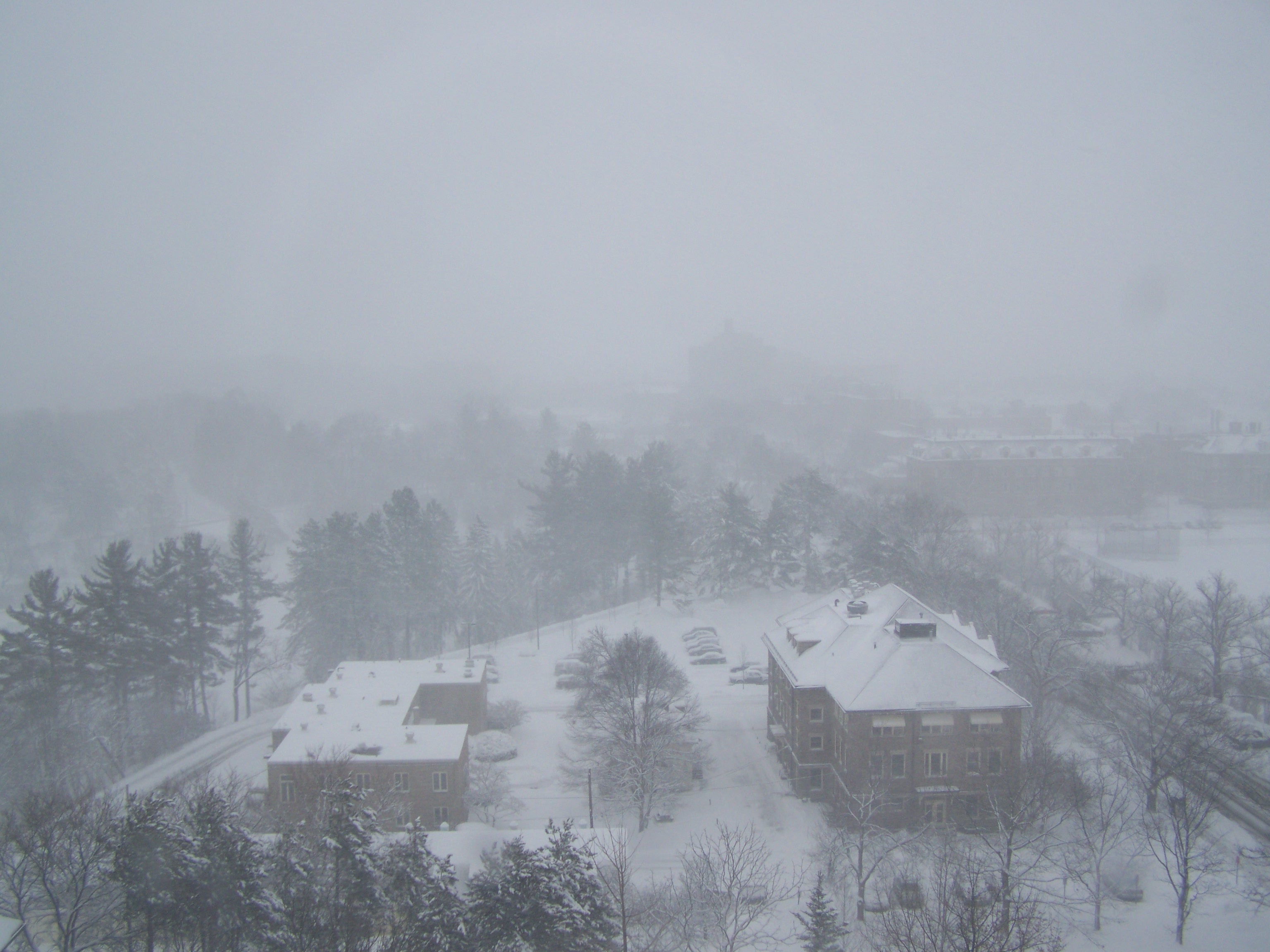
So this is storm is notable for two reasons; the snowfall amounts here and some high wind gusts reported in New England (the storm had dumped 18 inches onto Ithaca’s Game Farm Road weather station by 8 AM Friday morning, probably about 20-24 inches when all is said and done by the end of Saturday), and for letting professional sensationalism rear its ugly head.

From the meteorological perspective, this thing wasn’t even a blizzard for us, as winds were never above 35 mph. In some parts of the northeast it qualified for blizzard status, but only in a few locations. Most of the windy places were rainy. Most of the snowy places didn’t have strong winds. Only a few spots (excluding mountain tops) had both.

The storm bottomed out around 972 mb. That’s a pretty intense Nor’Easter. A strong storm is typically below 984 mb. The great Superstorm of 1993 had a central pressure of 960 mb. This was a powerful storm by any means, but certainly not the mother of all winter storms as depicted by some media outlets.

By that, I mean calling this a “snowicane”. First of all, let me start by saying that calling this a “snowicane” is completely inaccurate and irresponsible. The term was being used by the Ithaca Journal and a few commercial weather websites like Accuweather.com to describe (what was at the time the impending storm) the snowstorm that that passed through our area. The term is misleading and sensationalist. Hurricanes and snowstorms are like apples to oranges; combining the two into a catchy portmonteau because of high winds is complete bullshit. So, first came all the news headlines about the coming snowicane; then came the panic and confusion as people didn’t know what the hell was going on. Over in Bradfield, people were calling or emailing, asking what they should do about the snow hurricane. At first it was funny in a pathetic sort of way, and the NWS and a lot of broadcasting stations chastised a certain private company for trying to incite a panic. The first follow-up article on the Ithaca Journal read like this:

This is not a “snowicane.”

“That is garbage,” New York State climatologist Mark Wysocki said of the word AccuWeather.com and several news outlets are using to describe the storm. “This is really a typical storm. It’s nothing unusual. We’ve had them before, we’ll have them again.”

Of course, then I find lovely little comments like this one on the Ithaca Journal:

From TheZuneLune:

Garbage…Wysocoki’s [sic] misrepresentative critique is what’s garbage….Accuweather clearly explained that their rationale for comparing it to a hurricane was the strength of the low, and guess what? They were right as the storm is currently 978mb and strengthening.

Wyscoki [sic again] and the NBC owned Weather Channel (weather.com) are bitter because Accuweather’s meteorologists have fought the tide of meteorologists forecasting based on politics rather than science. Accuweather’s Joe Bastardi, in particular, has been assailed for refuting the notion that the recent stormy weather in the Mid-Atlantic was based on other factors than “man-made” climate change.

Ithaca Journal, please do a better job researching both sides of a story before perpetuating the far left agenda.”

Part of me is willing to wager that the poster has an affiliation of some sort to Accuweather. They’re only based two hours away in State College, PA (home of Penn State, and where its previous and current CEOs earned their meteorology degrees).

But really, what the hell does the weather have to do with politics? Like the two couldn’t be any less related. I’m a moderate Republican, but maybe because I study meteorology I don’t just write off sensationalism as an attempt of slander by the liberal media. I swear, it sounds like something right out of wingnut playbooks (if you don’t understand something, don’t worry about being uneducated, just blame it on people you hate). This is an issue of a company trying to capitalize on the fad of snow neologisms like “Snowmageddon” and “Snowpocalypse”, and being called out by other outlets for being irresponsible. No one expects Armageddon or the apocalypse with a snowstorm. But get a few people who don’t know better to hear “snowicane”, and suddenly they have thoughts of Katrina and blizzards meshed into some horrible monster of a weather system (speaking of which, Accuweather was also chastised for calling this storm “a monster”).

Interacting with people in meteorology has shown me that there is an expected level of professionalism and objectivity in forecasting, and that many in the field saw Accuweather’s descriptions as crossing the line. Yet people are twisting this argument from an issue of professionalism in a scientific field to an argument based on political bickering.

This is going to make me so bitter in a few years.

On a final note, Cornell last closed in 1993 for the aforementioned Superstorm (also known as the Storm of the Century — and these were posthumous titles). Cornell will only close if the Tompkins County sheriff shuts down the main roads like Route 13 due to extreme inclement weather conditions. Seriously, I was astounded that Cornell even gave a two-hour delay. I haven’t had those since high school.


Downtown Ithaca Wants to Look More Like Sweden

10 02 2010

These days, and “progressive” urban development scheme starts with a much publicized and criticized plan. Ithaca, being that little bastion of liberal progressiveness, launched its own plan 18 months ago, and now the Downtown Ithaca Alliance has decided to share the fruits of its planning process for public input. The original plan can be obtained here.

The plan is a vision for downtown Ithaca in 2020. Ignoring the fact they spent a year and a half to discuss a vision ten years away, the plan has some merits and some lovely little conceptual drawings. Which I’m convinced were designed by someone who has a fascination for modern Scandinavian architecture.

The plan itself asks for an additional 200,000 square feet of office space, 500 residential units and more pedestrian traffic for retail outlets in the downtown area. Fitting these components in, along with staying within the city’s rather stringent zoning, is no easy task. Some of the other assets the Alliance would like to see downtown are a combined city-county building, a teen activities center and a fixed-rail trolley line.

First of all, good luck with the trolley line. The original line that went up East State Street and behind Cascadilla Hall closed in 1935. Putting a new one in within the next decade is a pipe dream because of the sheer financial costs associated with infrastructure implementation. Long story short, no one has the cash to put in a new fixed-rail line.

Some of the desired developments I am quite fond of. The conceptual drawing above is for a parking lot near the Cornell Daily Sun Building on West State Street. It’s a great redevelopment that looks to be a mid-size residential or commercial structure that stands out, but not ostentatiously, from the streetscape. The architecture seems to be modernist/International style with a couple historical throwbacks such as the cornice on the background building. To be honest, something like that would fit in well with Weill Hall as a future building at Cornell.

Inversely, this I despise wholeheartedly. This is a conceptual drawing for the city-county building. I never cared for the whole “ooh, let’s be edgy and not align the windows” theme, which was used on the West Campus Dorms. It’s like architecture by first graders. The space is a current parking lot next to Ithaca City Hall, which is actually the brown brick building in back.  The idea of developing this lot, I give a big thumbs up. Right now, I’m glad this is only a conceptual drawing.

I cannot stress how much I am a fan of the redevelopment of the Trebloc Building. First, let’s see if I actually bothered to take a photo of the current architectural turd:

It was in the shot unintentionally. For perspective, I took this photo on the corner of the intersection shown in the conceptual drawing. This brick POS is in the middle of Ithaca’s downtown. This building was built in 1974 as part of the urban renewal era, and was originally meant to be 2 floors, but the developers then decided to not add the second floor. It has also been the sight of multiple concepts, such as this proposal by Andrew Wetzler. The DIA suggests a 100,000+ square foot office building for the site; if it occupied the full site, this translates to about four of five floors. I keep my fingers crossed this may be redeveloped someday.

This redevelopment concept is for the parking area/ back of the Ithaca Journal Building. It’s a residential proposal that fits in somewhat to current zoning; the downtown plan does propose some minor height changes on some parcels, about a dozen going from 60 to 85 feet if certain incentives, such as affordable housing, are met. Love the idea, could care less for the design. This building looks like something out of my nightmares.

In the past year or so, a proposal was submitted to the RestoreNY program to redevelop the one-story Night and Day Building into a five-story building. Well, the proposal wasn’t accepted, but the vision is still there. This conceptual design makes use of the false second floor and adds affordable housing to the structure. Hell, I give it a thumbs up. If only a developer could make the project feasible.

For perspective, we’re looking east from the Holiday Inn, towards the new parking garage. This is one of the largest conceptual proposals, for a site currently used by a couple of small businesses and part of Pritchard Autos (where I once went as part of a project on EPA mileages; the owner, a 70-something man named Bill Pritchard, was super friendly). The project gets away with being so large because it is next to a massive parking garage and a ten-story hotel, so massing is appropriate for this area.

They may just be visions, but I would be just as excited as the DIA if these were to become real proposals in the years ahead. One can only hope.


Development Proposed for Eastern Collegetown

9 02 2010

http://www.theithacajournal.com/article/20100208/NEWS01/2080360/1126/news/Developer+seeks+town+re-zoning+in+Belle+Sherman

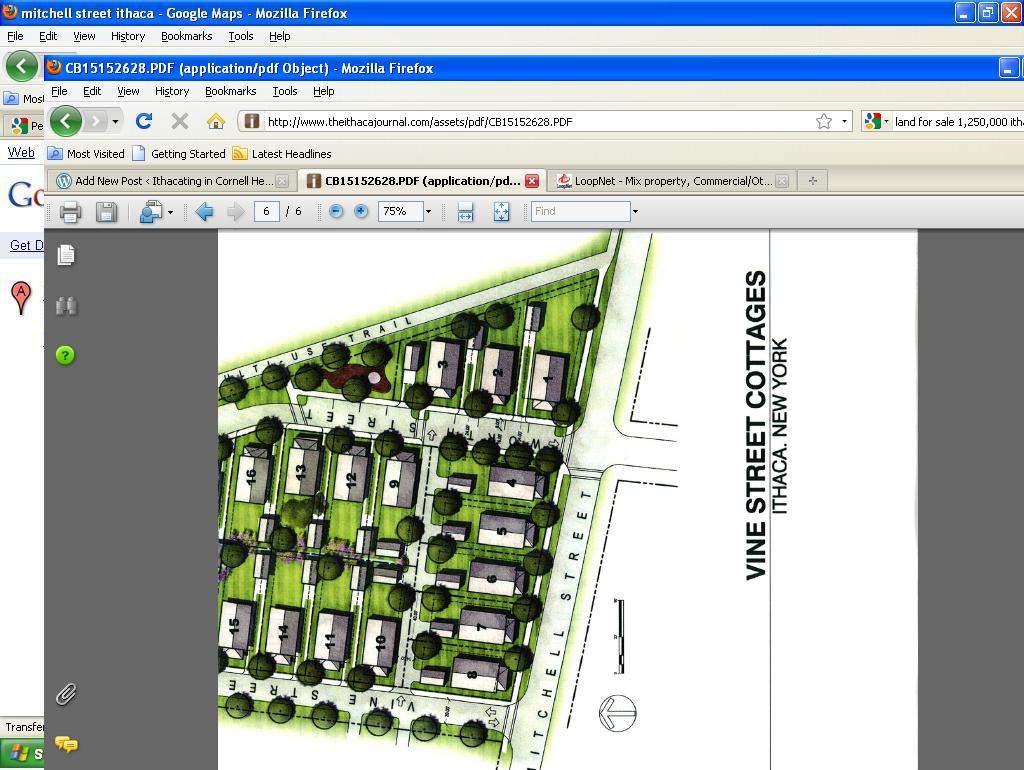
An underdeveloped piece of land between East Hill and Collegetown is the site of a proposed 26-unit single-family housing development to be called “Vine Street Cottages”. The land has been used by a trucking company since 1980, and was previously the site of an asphalt plant. The land has been marketed for the past year or so by several real estate agencies as a site for dense housing (suggested sale price: a cool $1.25 million for 3.4 acres. Mind you, this is Ithaca, so those prices are quite steep).

Photo Courtesy of Google Images

The housing is to be designed similar to the older homes in the nearby Fall Creek neighborhood, and sell for about $300k. However, the land is only zoned to hold ten lots, not 26, so a zoning appeal has to be filed and public discussion has to be undertaken. Which leads to comments like this one:

“…whose parents live on Vine Street, said the proposed development would be too dense, and the asking prices ‘are unrealistic for this area.'” A mature tree line currently buffers neighbors from the trucking operation, but all the trees would have to be removed to accommodate that many units, he said…”

I’ll give it one thing – the asking price is steep. A 1900 sq ft., 3-bedroom, 2.5 bath house that is LEED certified seems like it should only go for 200k-250k in the area. As for being too dense, apparently the joys of the frequent traffic of 18-wheelers up and down Mitchell Ave. outweigh 26 single-family houses. It’s also next to Maplewood Park, which is owned by Cornell and much denser (Maplewood Park is on the site where Vetsburg, Cornell’s housing for vets and their families, was originally placed after WWII). Cornell has its own plans to redevelop Maplewood Park within the next several years (assuming the budget kinks are worked out).

Speaking of which, the company that wants to develop the site, Agora LLC, is headed by Toby Millman, Cornell Class of 1992.

It would seem to be that this is a big win for Ithaca. The housing is intended for permanent residents and follows new urbanist principles, so it’s eco friendly and responds to concerns of students overrunning the area. But apparently, some folks think that a trucking company is better.


New Sorority May Be Coming to Cornell

6 02 2010

Students Push for New Sorority

February 4, 2010 – 1:51am
By Dan Robbins

A new sorority may be coming to the University if a group of roughly 30 women are successful in their efforts to recharter Delta Phi Epsilon, which closed its Cornell chapter in 2003. Composed mostly of transfer students and women who rushed sororities but were not matched with a house, the group has already begun planning social events, meeting with Greek Life and organizing philanthropic drives.

Molly McMahon ’12, who was a member of Delta Phi Epsilon at Monmouth University, before she transferred to Cornell this semester, is heading the movement and is the only woman in the group previously affiliated with Delta Phi Epsilon.

“At Monmouth, it was a really wonderful experience for me, and I just want to bring that here and extend that to other girls,” McMahon said.

She chose not to rush this semester because she felt joining a house right after transferring would be overwhelming, especially since many women participating in formal recruitment already knew each other. Since rush week, McMahon has talked with other students interested in founding a new sorority. The group has held social events, including mixers with fraternities, and participated in fundraising efforts like the benefit concert, Hands for Haiti.

However, founding a new sorority chapter –– formally known as “chapter extension” –– is a lengthy procedure over which McMahon and the group have little control.

“The Panhellenic Council must begin this process with an extension exploration committee to assess the needs of the female students at Cornell and the current health of the Panhellenic community,” Laura Sanders, assistant dean of fraternity and sorority affairs, explained in an email.

If the committee finds a need for another sorority, Cornell’s 11 current chapters would vote on its potential viability, after first consulting their respective national headquarters. The National Panhellenic Council requires at least a three-week period between the announcement of the vote and the actual balloting.

If the chapters vote in favor of extension, Cornell’s Panhel contacts sororities not represented on campus to assess their interest in installing a chapter, Sanders said. Of the 26 organizations that are part of the NPC, those interested in extension then come to Cornell for an interview.

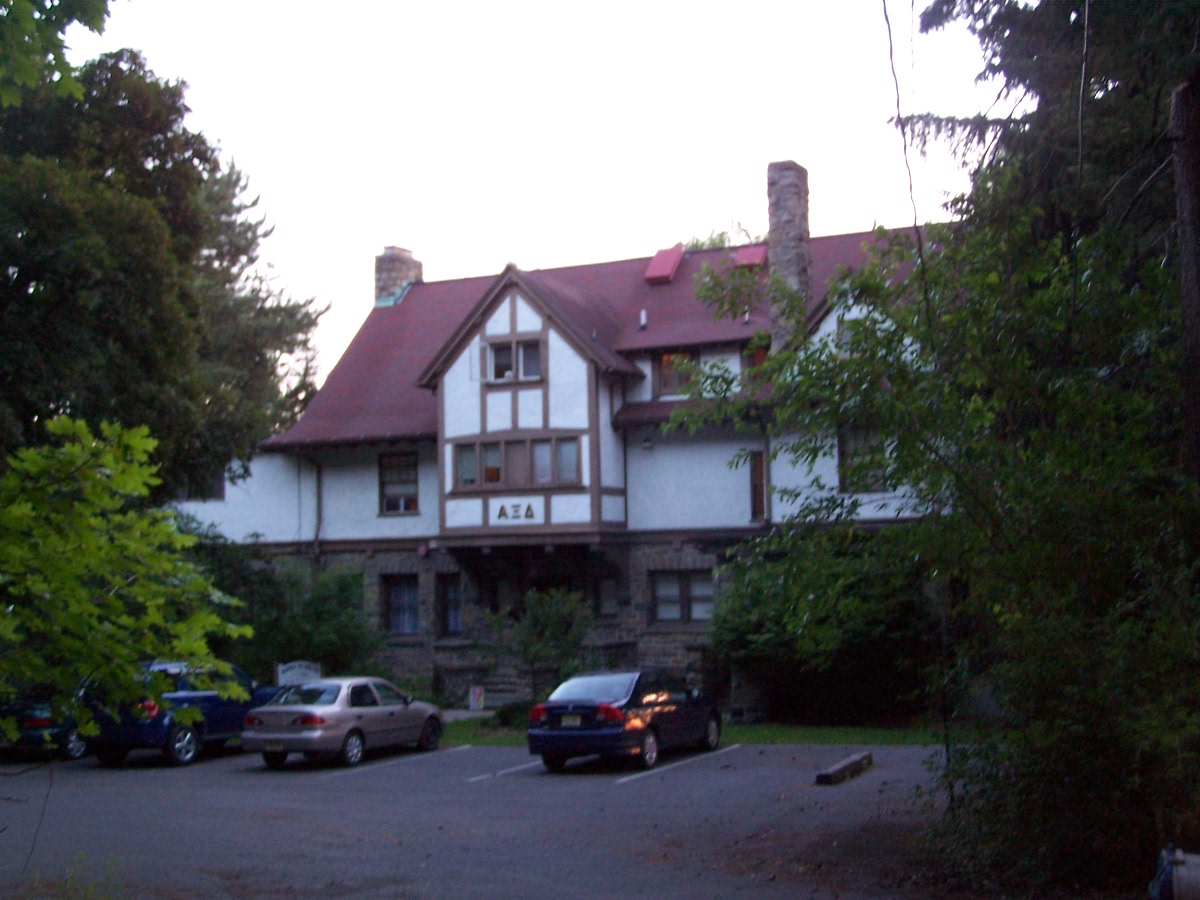
McMahon said she recently talked to officials from Delta Phi Epsilon who were “very supportive” and offered guidance about the extension process. With only 45,000 members internationally, Delta Phi Epsilon is looking to grow, McMahon said. The sorority already owns a house on The Knoll, where it was initially chartered at Cornell in 1962.
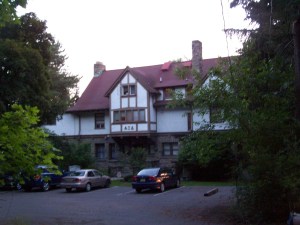

Although an exploratory committee, formed by Panhel last spring to determine if there was room for a new sorority, supported the extension, the national organizations with local chapters at Cornell blocked attempts at chartering a new house.

“The overwhelming response was that they felt Cornell was not yet ready for another sorority,” Sanders said.

Many of the national organizations said that Cornell’s current chapters have not fully used informal recruitment, a period outside formal rush when houses with vacancies can extend bids to women who have attended Cornell for at least one semester. Sororities are usually eligible for this type of recruitment when members graduate early, or when they pledge as sophomores or juniors and consequently graduate before the rest of their pledge class. The houses can offer bids whenever they like during the process. In the last two semesters, four houses at Cornell qualified for informal recruitment each period, but not all participated or filled their vacancies, said outgoing Panhel President Alison Ewing ’10.

Panhel plans to form another extension committee this semester, Ewing said.

“Whether national organizations support extension this time depends on whether the concerns they had last time are resolved,” Ewing said. “It’s hard to say this early whether the use of informal recruitment has allayed their concerns.”

Last year, officers from the national organizations with sororities on campus also feared that a new chapter would use informal recruitment more heavily than existing chapters. This could create a stigma and hurt existing houses that do not participate in informal recruitment. But Ewing said this does not mean that an attempt to recharter Delta Phi Epsilon will automatically fail.

“There were women at the end of this past formal recruitment who didn’t get matched to a chapter and we still have very large pledge classes,” Ewing said. “So there might be potential, but we have to decide whether adding a new chapter would be viable and not hurt existing chapters.”

Although Panhel voted to recharter Alpha Xi Delta in 2004, McMahon feels there is definitely room for a new house.

“There are only 11 sororities and over 40 frats, so I don’t know why they wouldn’t see the need,” McMahon said. “We really have plans and goals and hopefully it’ll work out.”

***

So, this was no surprise. If they were here for 41 years, and they still own a house here, I’m sure their national would be most receptive to a recolonization at Cornell. Thing is, it’s not so easy because this isn’t following standard procedure. So these ladies are in for a lot of red tape and work on their parts.