
I generally try to stay on the sidelines when it comes to promoting or opposing for Ithaca projects. I’m not about to get involved in favor of the West Falls Street proposal, the Stone Quarry proposal, or Cayuga Meadows, or any other local project that neighboring residents want shot down. NIMBYism (NIMBY is short for “not in my backyard” , a reference to when people accept a community has a need for a project but they oppose it in their neighborhood) is ever-present, just about every project in the city and town has had some degree of opposition (the only exception I can think of offhand is the convention center/hotel planned for downtown). My own opposition arises when I feel a proposal threatens something of historic value. Regardless, the planning board is good at staying neutral. I may not always agree with the planning board, but I generally respect their judgement.
I’m going to make an exception to my non-partisan stance for 1 Ridgewood, thanks to Walter Hang.
As much as it bothers me to do it, to explain my issues, it is best if I provide a link to the petition and its partially-labelled map of square footages. A large chunk of those appear to be people who have little or no connection to Ithaca. Token disclaimer: I’m not for or against his fracking work, my concern is focused squarely on this project. In an attempt to keep this project from being railroaded, I decided to examine the petition’s arguments.
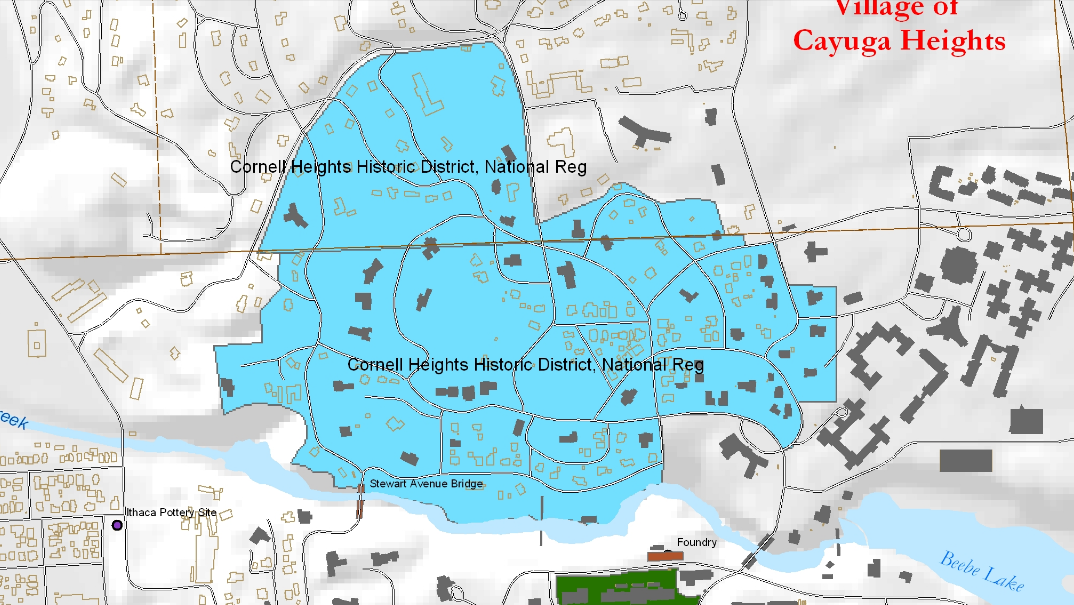
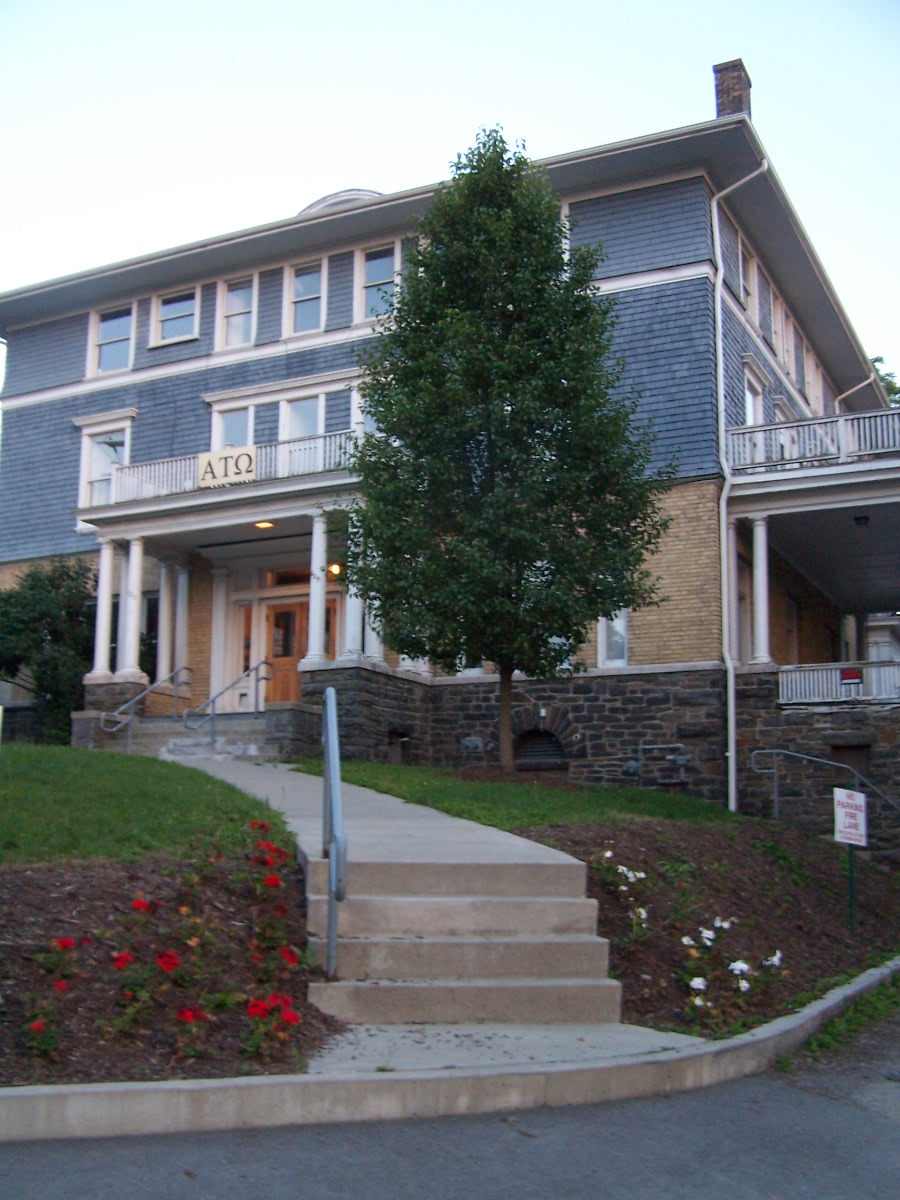
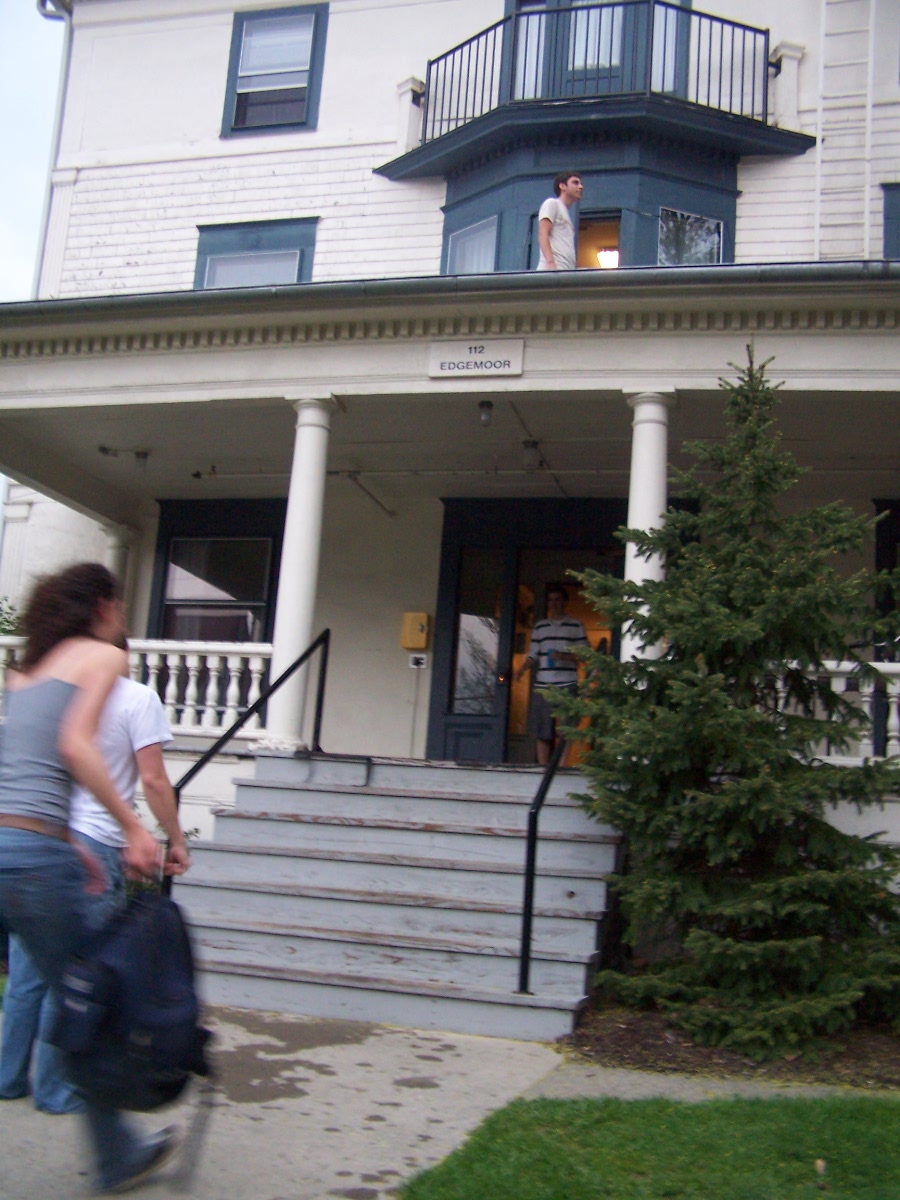
Here’s the area Mr. Hang wants his moratorium, Cornell Heights, split between the city and Cayuga Heights. For the record, the dark grey represents Cornell-affiliated properties, mostly GLOs and a few Co-Ops in the CHHD. Looking at the city section specifically:

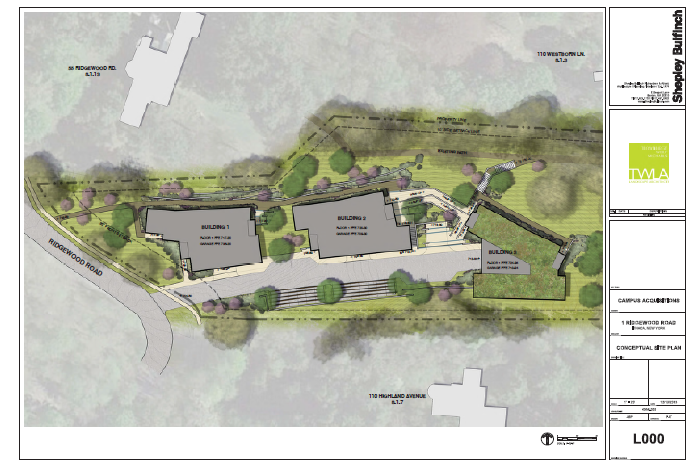
The red X is the Ridgewood apartment parcel, for three buildings between 5578, 5710 and 6662 square feet, with mostly below-grade parking. One of my issues is that some of Mr. Hang’s assertions are misleading. For example:
“Due to recent development, the Historic District is clearly transitioning from its original turn-of-the-20th century “residential park” to a densely developed area that bears little resemblance to the community that warranted special historic district protection approximately 25 years ago.”
It’s hardly changed. There have been two three projects built since 1989. A single-family home at 116 Dearborn Place that was built in 2005, the Tudor house of the Bridges Cornell nursing home was built in 2005, and the new apartments currently going up on Thurston. If you want to push the envelope, Alpha Zeta (214 Thurston) replaced half of its original structure in 1992-1993 when it was renovated. A couple buildings (Kappa Delta, and 111 Heights Court) have received renovations, which were approved by the Ithaca Landmarks Preservation Council (ILPC).
Approval is being sought for an apartment complex proposed for 1 Ridgewood Road. Three buildings would be built on the largest undeveloped property in Cornell Heights, a spectacular forested setting enjoyed by hundreds of local residents who walk along and through it each day.
The proposed buildings would dwarf nearby structures. Figure One illustrates that the buildings would be 300% larger than the adjoining structure on Highland Avenue and at least 200% larger than all the immediately surrounding structures.
Out of a total of more than 200 structures in the Cornell Heights Historic District, only six are bigger than all three proposed buildings. Those six were built before the Historic District designation.
What’s not being told about that “spectacular forested property” is the abandoned swimming pool or dilapidated poolhouse. Also, as seen in at Mr. Hang’s map, the project is shifted to the west (left side) of the parcel, where many its nearby neighbors tend to be larger, ranging from 3000-8600 square feet (Westbourne to the north is a contiguous complex with 10,800 sq ft of space). To call this “dwarfing” is to take it out of its full context.
It concerns me that a petition with emotionally-charged language, gathering signatures from people that are not stakeholders in the Ithaca community, is being pushed by someone who has a history of aggressive tactics. It bothers me that an underutilized parcel with great public transit access in a highly populated area is going to have its zoning changed after the developer has been sensitive to planning board concerns and returned with a proposal within current regulations, which sets a terrible precedent for the community and opens up the possibility of legal action against the city. Lastly, in a period where Cornell continues its enrollment growth, I’m worried that if projects like this will be prohibited, it will only encourage more rental conversations of existing housing, more subpar housing situations, higher rents and increased sprawl.








 Ithacating in Cornell Heights