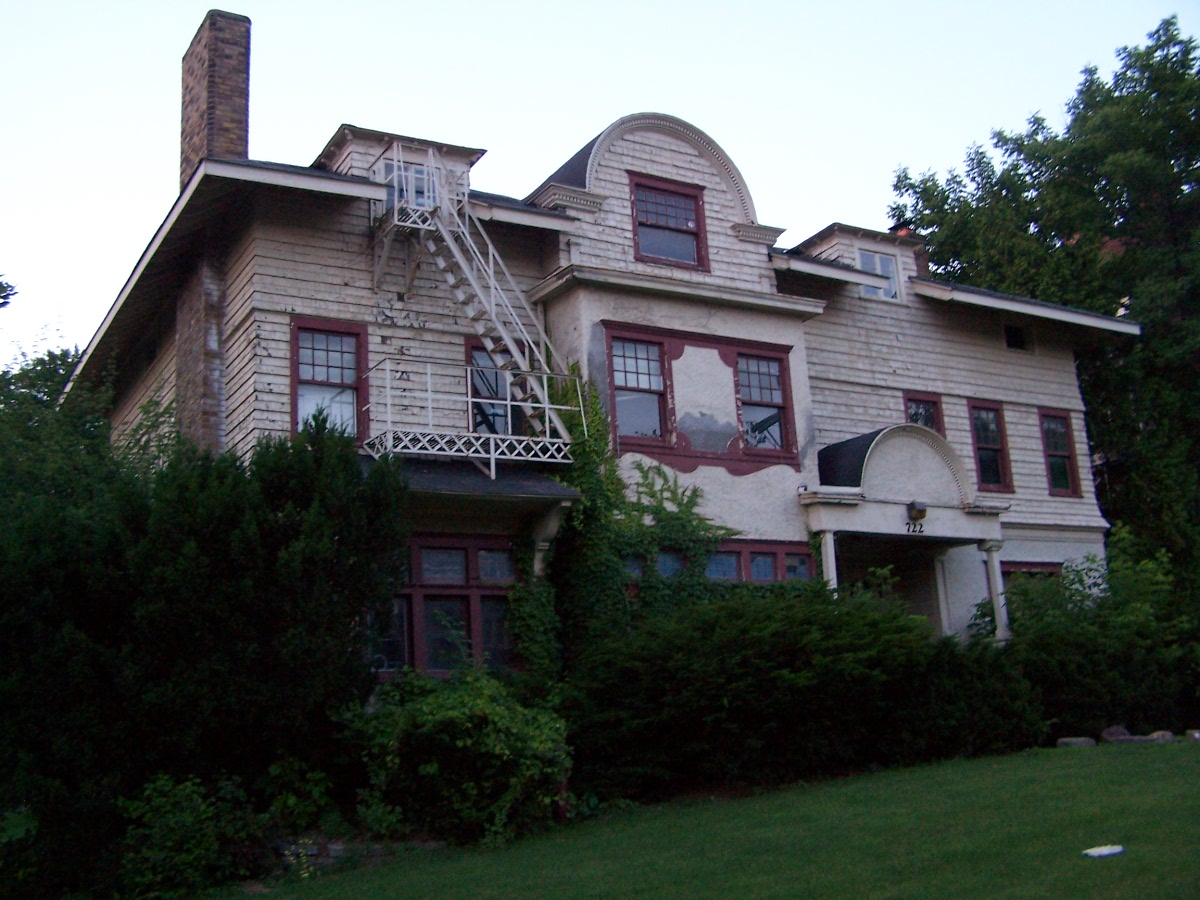
News Tidbits 4/18/11: Fraternity Seeks Recolonization in Turbulent Times

18 04 2011

Image property of Alpha Phi Delta

Seems a second fraternity is seeking to reestablish itself on Cornell’s campus this year.  According to the Daily Sun, an interest group has been preliminarily approved for recognition of the recolonization of the Alpha Phi Delta fraternity (in other words, the first step to recognition has been taken). Unlike Phi Kappa Sigma, this interest group has taken the route of forming a group first and then seeking the recognition of a national (which is the way it’s traditionally done with fraternities), rather than the national coming in and seeking to revive or start a chapter (more common for sororities, but an increasingly appealing option for large fraternal orgs).

Alpha Phi Delta has existed previously at Cornell’s campus. It was a historically Italian-American fraternity founded at Syracuse in 1911, and still draws most of its chapter membership from colleges in the Northeast. The Cornell chapter (Mu) was founded in 1922 and closed in 1968, three years after the fraternity opened itself up to membership for all men(and not just ones of Italian heritage). From old Cornellian yearbooks, it can be determined that they stayed with one house during their time at Cornell, but I’m having one hell of a time trying to determine its location – I can’t find it anywhere nearby on the 1928 and 1954 Cornell maps, which suggests to me it might have been far from campus.

Anyways, given the closure of Theta Xi and the recent fallout due to the SAE tragedy, I’m unsure as to how successful they will be. But, I wish them the best of luck. Oh, and if they’re still looking for a house, it would make my heart jump if they could move into an unused property that could use some revitalizing, like 722 University Avenue.


News Tidbits 8/5/10: Structural Coincidence?

5 08 2010

So, the Ithaca Journal is filled today with articles concerning Cornell’s South Hill neighbor, Ithaca College. Which is great, since they are a good school in their own right and they tend to be overshadowed by its ivy-cloaked neighbor. So, the one article was about how their enrollment is back on target this year after having too many incoming last year (by most regards, a fortunate problem to have). The other article, much more in line with the general themes of this blog, was a review of the $65.5 million, 130,000 sq ft Ithaca College Events Center that is under construction, and currently around halfway towards completion.

One of the big architectural features of the building is a a large, structually-incorporated cooling tower designed to be a focal point of the structure and to be visible from most of campus.

Image Property of Ithaca College

The height of the tower? 174 feet.

The height of McGraw Tower on Cornell’s campus? 173 feet.

So, McGraw Tower is no longer the tallest structure in the county (not including radio masts). After 119 years, it is losing its title to Ithaca College’s new activities center.

Although I never saw anything that indicated as much, I’m willing to wager that this was intentional, to draw more attention to the new “tallest building” in the county. Even though the tower is uninhabitable, the lower floor(s) of the building are, so it qualifies as a true building. McGraw doesn’t qualify since it’s only a clock tower. Bradfield, the tallest true building in the county, is only 167 feet.

In conclusion, I guess size does matter when it comes to bragging rights.


News Tidbits 4/14/10: South Hill Expands

15 04 2010

Two things, one dealing with IC and the other with the neighboring South Hill business campus. IC is looking to expand student housing (partially due to the record number of students they enrolled) by adding 280 units of apartment housing to its South Hill campus. Meanwhile, the South Hill Business Campus is seeking approval to construct three buildings totalling 190,000 square feet, which would be built as needed. The business campus was once the regional headquarters of the National Cash Register company (NCR) and was completed in 1957 with an addition in 1975. While it once housed over 1,000 employees, the building was sold to a French company (Axiohm) in 1991, and in a fine showing that they never really cared for local interests, outsourced most of the manufacturing work. By 2004, the factory was only 25% occupied, so a group of investors made an offer to buy the place and operate it as a sort of business incubator for company needing a varying amount of office and maufacturing space. Today, the facility is 84% occupied, so it looks like they did a good job marketing and updating the building. One building would be up by 96B, the second attached to the west end of the current building, and the last just south of the current building.

***

From the Ithaca Town Planning Board agenda:

Consideration of a sketch plan for the proposed South Hill Business Campus Master Plan located at 950 Danby Road (NYS Route 96B), Town of Ithaca Tax Parcel No.’s 39-1-1.2 and 39-1-1.1, Planned Development Zone No. 12 and Office Park Commercial Zone. The Master Plan includes the development of three new buildings (totaling +/- 197,000 GSF), a new loop road, additional storm water facilities, and new landscaping. The new buildings would contain a mix of office, manufacturing, and research and development uses, and would be phased in one at a time as needed. South Hill Business Campus LLC, Owner/Applicant; Miles G. Cigolle, A.I.A., HOLT Architects, P.C., Agent.

Consideration of a sketch plan for the proposed Circle Apartments Expansion located at 1033 Danby Road (NYS Route 96B), Town of Ithaca Tax Parcel No.’s 43-1-2.2, 43-1-2.3 and 41-1-30.2, Multiple Residence and Medium Density Residential Zones. The project includes the demolition of four existing apartment buildings (32 bedrooms) along with the removal of multiple existing parking spaces on the property to allow for the construction of 78 four bedroom apartment units in nine new buildings (net increase of 280 bedrooms), construction of an approximately 2,500 square foot expansion to the Community Building, and a net addition of 106 parking spaces on the property. The project will also include new storm water facilities, walkways, drives and landscaping. College Circle Associates, LLC and Ithaca College. Owners/Applicants; Herman Sieverding, Integrated Acquisition & Development Corp., Agent.


Random Ithacana

18 12 2009

So, pardon the extraordinarily long break. Finals and research brought much of my outside life to a screeching halt, so this blog had to take a backseat for a couple of weeks. Oddly enough, site statistics didn’t really go down a significant amount, which probably says something about the consistent use of the historical info on this blog.

Anyways, during my holiday shopping, I happened upon a new little book that I felt the need to add to my collection. The book, Surrounded by Reality: 101 Things You Didn’t Know About Ithaca, NY (But Are About to Find Out) by Michael Turback, is a nice little book detailing some of the history and sights of the area. Some of the book entries share the same information that has previously been shared on this blog, but there was some new information to be garnered from its pages.

A lot of the book focuses on Cornell. Things that a lot of Cornellians already knew about the founder and A.D. White, but also some more obscure details. For example, a real description of Zinck’s. Theodore Zinck ran the “Lager Beer Saloon and Restaurant” out of the Hotel Brunswick at 108-110 N. Aurora (just off the current-day Commons) starting in 1880. Contrary to modern day bar-hopping, Zincl, while described as being a fatherly and caring figure who treated his customers with “Prussian high-handedness”. Customers could be thrown out of his bar, however, for drunkenness, bawdy songs, or derogatory references to the German Kaiser. The first Zinck’s operated until about 1903. That year, a typhoid epidemic rages through the city and claimed 85 lives, including Theodore Zinck’s daughter. Despondent, he drowned himself, effectively shutting down Zinck’s first incarnation. The bar reopened under his name in 1906 (which would be incredibly tasteless if he wasn’t regarded so affectionately), and continued in operation in some form in different names and places up to about 1967. Although, with the coming of the new Hotel Ithaca, it appears we may continue the local tradition of naming revered watering holes after a suicidal barkeep.

Another detail that the book referenced was the freezing over of Cayuga Lake. Cayuga Lake is about 435 feet deep, so usually the massive heat storage of the water keeps the lake from completely freezing over during the winter. However, that isn’t to say it can’t happen. Since 1796, the lake has frozen over about ten times (1796, 1816, 1856, 1875, 1884, 1904, 1912, 1934, 1961 and 1979). Wells College, a small and formerly all-female school located further up the lakeshore in Aurora, has a school tradition where if the lake is discovered to be frozen over, classes are cancelled for the day (there is no such tradition for IC or Cornell). According to the book, during the 1875 freeze one athletic young woman at Wells decided to celebrate the day off by skating down the lake and back. Not too shabby, once you consider that the lake is just under 40 miles long.

One last one for the road; most Cornellians are well aware of the legend that if a virgin crosses the Arts Quad at midnight, Ezra and A.D. White will step off their pedestals and shake hands in the center of the quad. Wll, as it turns out, Ithaca College has their won virginity legend. Outside of Ithaca College’s Textor Hall stands a 10-foot high ball sculpture mounted over a small pool of water. Their campus legend states that if a virgin ever graduates from IC, the “Textor Ball” will fall off its pedestal and roll down South Hill. According to Wikipedia, Ithaca College has 49,570 alumni, and I’m willing to bet most of them are from after the school’s 1960s expansion and relocation.


Off-Topic: Proper Behavior During Finals

9 12 2009

This is okay:

Baking Pies is an Acceptable Stress Reliever From Finals

This is not okay:

http://www.theithacajournal.com/article/20091208/NEWS01/912080330/1126/news/IC+student+charged+with+arson+on+campus

An Ithaca College freshman has been charged with arson following an investigation into a series of fires in trash and recycling bins near residence halls, the college announced Tuesday.

No one was hurt, but the fires destroyed the receptacles, according to the college.

Alexander Carfi, 18, of Roslyn Heights, was arrested by the college Office of Public Safety and charged with one count of fourth-degree arson, a class E felony, and one misdemeanor count each of criminal mischief and reckless endangerment. He was arraigned in Ithaca Town Court and released on his own recognizance.

The charge relates to a fire reported at 2:58 a.m. Nov. 9 that damaged the northern exterior of Emerson Hall. In consultation with the Tompkins County district attorney’s office, the college is considered misdemeanor-level fifth-degree arson in other fires: 4:14 a.m. Sept. 7 and 12:29 a.m. Sept. 9 at Emerson Hall, 2:36 a.m. Sept. 30 at Landon Hall, and 2:45 a.m. Oct. 21 at Clarke Hall. Suspicious fires were also reported in the early-morning hours of Oct. 5 in the fire lane between Landon and Bogart Halls, and on the east side of Eastman Hall.

Carfi, who lived in Emerson Hall, has been removed from campus, according to the college. The investigation, conducted with assistance from the Ithaca Fire Department, is continuing and additional criminal charges are possible, according to the college.

***

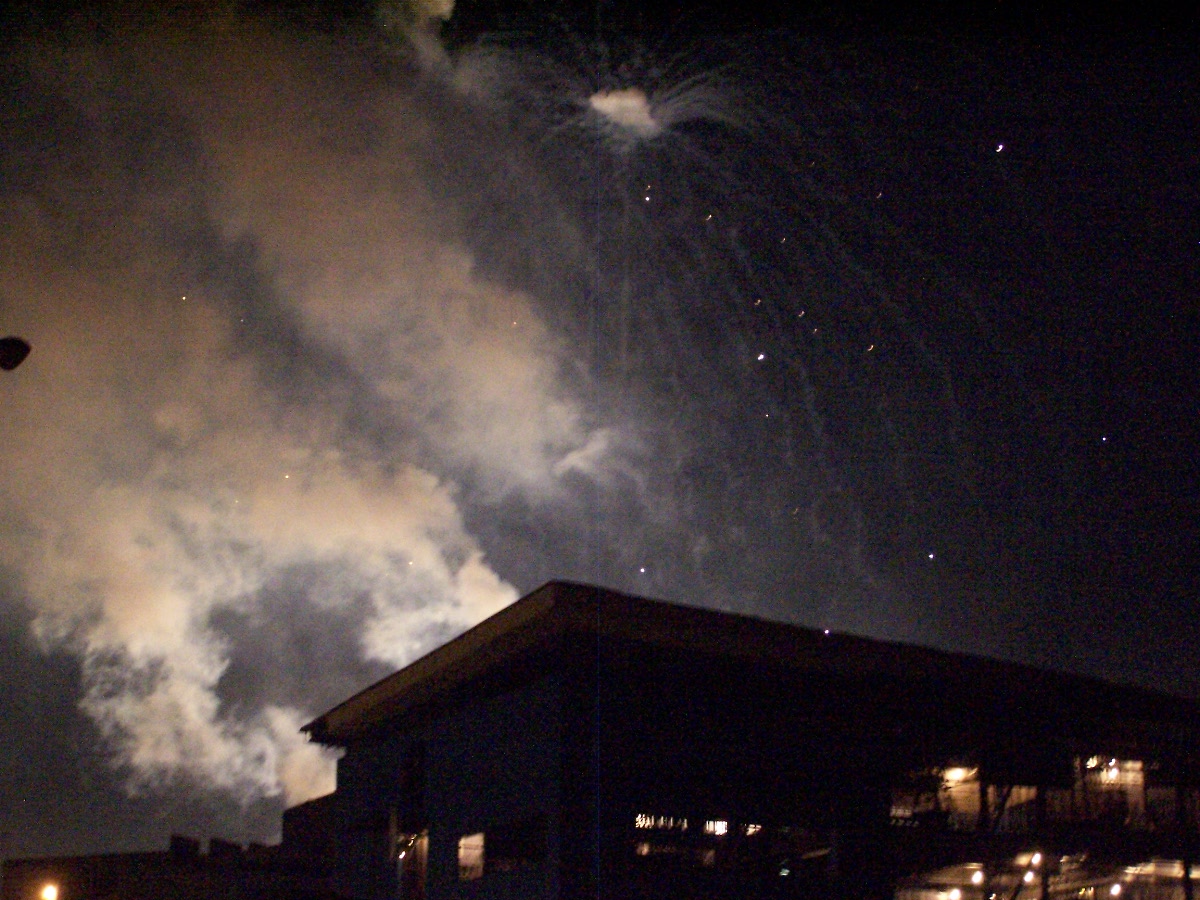
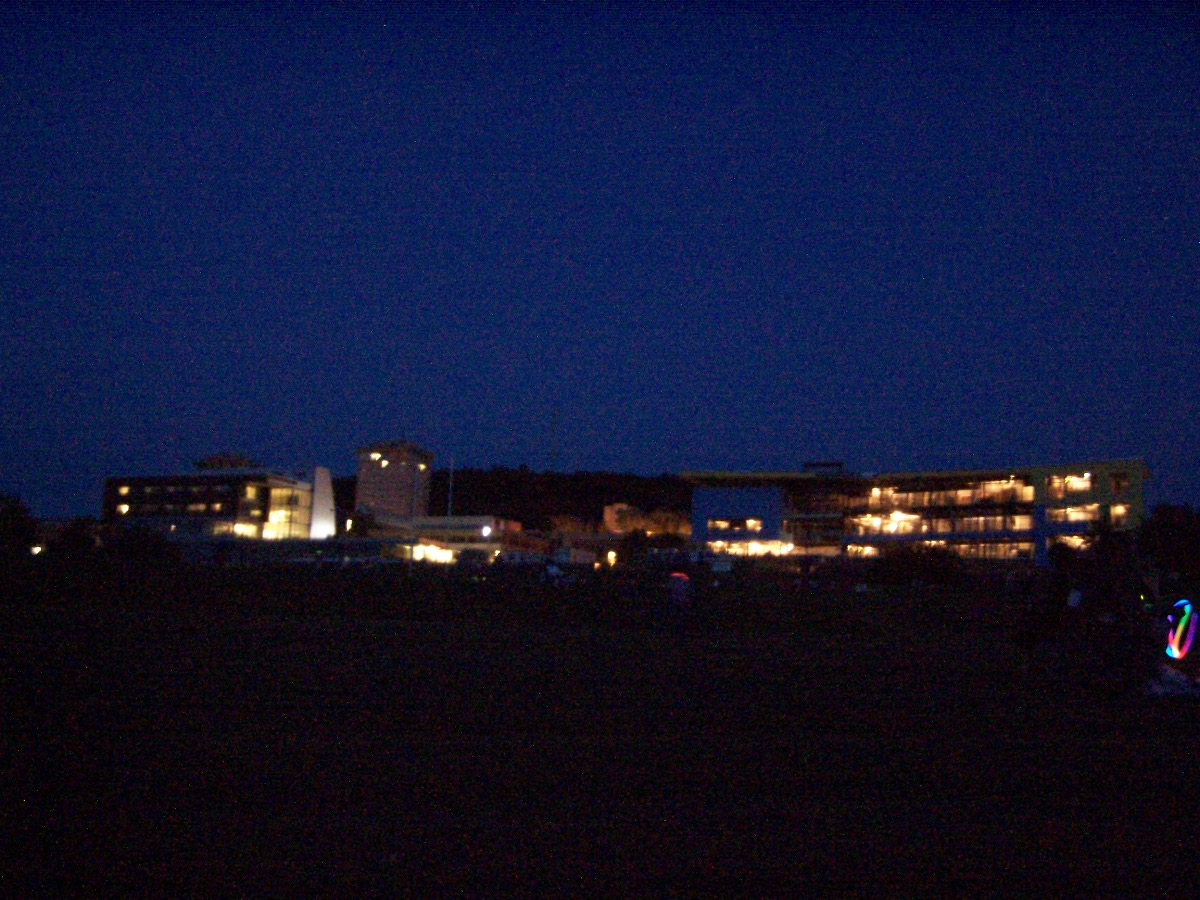
I.C. seems to just have really bad luck with anything fire-related. During the summer of 2008,  I had the luck (good or bad?) of being one of the hundreds if not thousands of spectators who watched the roof of the brand new I.C. business school catch fire when embers from fireworks lit up the grass roof during the 4th of July festivities.

In conclusion, make pies, not fires. Hopefully we’ll get a real entry up sometime soon.


Miracles Do NOT Happen…

12 02 2009

http://www.theithacajournal.com/article/20090211/NEWS01/902110328/1002#pluckcomments

So, let’s start with the article:

http://www.theithacajournal.com/article/20090211/NEWS01/902110328/1002#pluckcomments

“A group of Cornell professors is urging the university to hold off on construction of Milstein Hall, citing concern about the economic recession and the building’s environmental footprint.

In response, a group of Cornell architecture faculty is urging the university to move forward, saying the new building is needed to keep its top-ranked department accredited.

The ultimate decision on whether to go forward with Milstein Hall lies with University President David Skorton, and he has not yet made that decision, Cornell spokesman Simeon Moss said Tuesday.

Skorton announced a university-wide construction “pause” in October. The pause extends through the end of the fiscal year in June.

“Basically all projects that don’t have a shovel in the ground are subject to the pause, and the president and the executive vice president are reviewing those projects,” Moss said. On whether Cornell will move forward with Milstein Hall, Moss said, “That decision by the president hasn’t been made yet.”

Throughout its city approval process, Cornell officials repeatedly said that Milstein Hall is not subject to the construction pause.

On Monday Mark Cruvellier, chair of the Department of Architecture, sent The Journal a joint statement in favor of Milstein.

“This is a building that is urgently needed by the Department in order to maintain our accreditations as a professional school of architecture,” reads the statement signed by 13 architecture professors. “The building permit is in hand, bids have been reconciled, and it is, in today’s parlance, shovel-ready. Given the current low cost of materials and competitive bidding situation, to delay construction of Milstein Hall yet again will only add to its cost.”

Cruvellier could not be reached for comment Tuesday.

Milstein Hall has spent 10 years in the design and approval process, including two years gaining approvals from a variety of city boards. The city’s planning board and landmarks preservation commission have both signed off on the project.

Milstein Hall is proposed as a modern, glass structure that will physically connect with Rand and Sibley halls and stretch across University Avenue toward the Foundry. Another cantilevered extension would extend out into the arts quad.

A group of at least 25 Cornell faculty and alumni have petitioned the university to halt construction of Milstein, using The Cornell Daily Sun, other media and, today, the university’s faculty senate, government professor Elizabeth Sanders said.

Those opposed include an architecture professor, Jonathan Ochshorn, and music professor Martin Hatch, who has spoken against Milstein before a variety of city boards over the last two years.

Sanders contrasted the process and design for Milstein with Ithaca College’s new Park Center.

The Park Center received the highest rating possible from the U.S. Green Building Council, a LEED Platinum, and cost $19 million, according to the Ithaca College Web site.

“And we’re going to spend $60 (million) and get less space and much lower sustainability and a lot of offensive aspects?” Sanders said. “If Ithaca College can do this, why can’t Cornell do this?”

Andrew Magre, project manager for Milstein Hall and the Central Avenue Parking Garage, said last month the total project cost would be approximately $54 million.

Milstein Hall would be roughly 50,000 square feet, according to information presented to Ithaca’s planning board, and will include studio, gallery, meeting and exhibition space, and a 275-seat auditorium. The parking garage will include two underground levels and one surface level for a total of 199 parking spaces.”

***

Let’s consider the Park Center for a moment.

Photo by Granger Macy

Photo by Granger Macy

The Park Center was a $19 million dollar project to build a 38,800 sq ft building [1] on the Ithaca College campus that was completed in early 2008 (it’s also the building that caught fire during the fourth of July celebrations).

So, let’s consider some key differences between the Park Center and Milstein Hall.

-Milstein is cantilvered and is connected to two structures that are a century old (Rand Hall) and ~110 years old (East Sibley). Park Center isn’t. The area was home to a green space that bordered a parking lot (and oddly enough, was not a suggested building site on the Ithaca College master plan [2], and to the contrary seems to throw off the master plan by cutting off the proposed green avenue through the main campus).

-Milstein had to go through red tape hell after Paul Milstein’s original $10 million donation in 2000. Park Center was launched with a major donation from Dorothy Park in 2002 [1]. The cost has gone from somewhere in the 20 million dollar range when first proposed to $40 million from a couple of years ago to about $54 million today. I wonder if that total includes the $2 million Cornell paid for University Avenue so they could actually build the damn building.

-Milstein incorporates a parking garage, auditorium, and bus stop. Park Center has a large atrium, but otherwise it’s mostly offices and smaller lacture spaces [1]. Park Center is LEED platinum (highest ranking), and Milstein is gold (second highest ranking).

My issue is that the comparison does an unfair presentation of facts. If we were to plop Milstein out on the alumni fields or near the vet school, I bet it would be a lot of cheaper too. Park Center didn’t have the red tape issues or ambient environment issues that Milstein Hall has to deal with.

My other issue is that some people are finding fault with the modern design. Let’s not start that crap again. In my own opinion. this is probably the least offensive design of the three that have been planned, if but just because it spares Rand from the wrecking ball. I’ll admit I’m no fan of it, but it’s less jarring than the previous two proposals. For one thing, architecture schools have a habit of wanting to be on the cutting edge of design (makes sense, considering building design is much of their field). Plus, the design is going to be different, because if people want to preserve Rand and Sibley the building has to build up or out. Being on the Arts Quad, I’m willing to wager some passionate people would rather burn the construction site down than let it build up.

As much as this site is a Cornell construction monitor, and as I much as I actually like seeing new projects go forward, I’m really torn opinion-wise. Yes, I’d like to see the the architecture build-out so it can have more (badly-needed) space. However, with operations cuts across the board, I don’t see a good reason this should be spared. My concern, however, is that prices will continue to skyrocket, costs will be prohibitive and the project will have to go back to the drawing board again, and AAP will have a crisis due to its trip through red tape hell.

[1] http://www.ithaca.edu/news/release.php?id=2501
[2]http://www.ithaca.edu/masterplan/reports/sept_2002_content_pages.pdf


The Ithaca College Greek System

24 11 2008

So, I’ve always found it vaguely amusing that although officially Ithaca College doesn’t recognize Greek fraternities and sororities, their letters still manage to appear at events like Relay for Life over at Barton Hall.

Officially, IC recognizes three professional music fraternities and a performing arts professional fraternity (which has since closed). In terms of the student population, these are a drop in the bucket when it comes to size and importance/recognition. [1, 2]

Not that it was always this way. Ithaca College once had a thriving if smallish Greek system. Thing is, Delta Kappa fraternity (which had only a few chapters anyway) brought the system down in 1980 with the death of a pledge. According to the book Wrongs of Passage:

A long-standing tradition of forcing pledges to perform calisthenics in a steamroom with the heat turned up high finally claimed a victim, Joseph Parella, 18.”

Which just goes to show you what can happen when people in charge of safety and planning exercise incredibly poor judgement.

Still, the system does exist in some weird underground sort of way. I don’t think they even had houses back when they were recognized, since Ithaca College is an all-residential college (meaning most students live on campus, with the exception of seniors in an apartment perhaps), and they certainly wouldn’t have them. A relatively thorough google search brings up some of the underground fraternities and sororities of IC:

Delta Kappa- Apparently it still exists, though merely as a shadow of its former self. [3]

Pi Lambda Chi

Phi Kappa Sigma

Alpha Epsilon Pi

Phi Iota Alpha (Latino interest fraternity)

Phi Mu Zeta (sorority)

Gamma Delta Pi (sorority) [7]

In conclusion, they’re underground; most of the IC students think they’re stupid or haven’t heard of them; and they barely manage to exist. If anything, this should be a lesson on what can go horribly wrong if due safety and precaution aren’t exercised.

[1]http://collegeprowler.com/colleges/ithaca-college/greek-life/

[2]http://fuse.ithaca.edu/1455/

[3]http://members.tripod.com/deltakappa/

[4]http://www.ithaca.edu/ithacan/articles/0412/02/opinion/3greek_l.htm

[5]http://www.ithaca.edu/ithacan/articles/0009/28/news/fraternities.htm

[6]http://en.wikipedia.org/wiki/Ithaca_College

[7]http://www.freewebs.com/gammadeltapisisters/currentsisters.htm


Ithaca College Master Plan

21 08 2008

So, I know recently I devoted five entries and several hours of my life to coverage of the Cornell Master Plan. But, while I back the Big Red in the spotlight, it wouldn’t be fair if I didn’t give a little attention to the neighbors on South Hill.

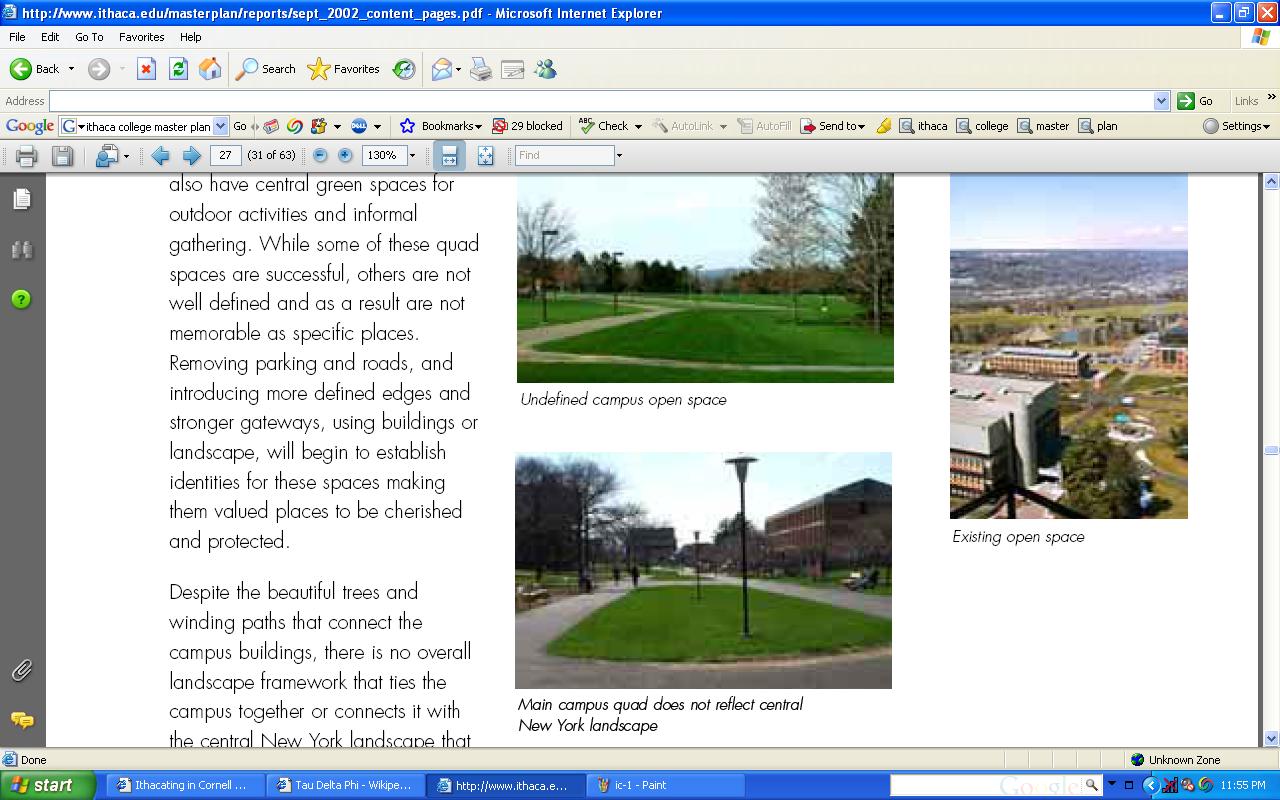
Ithaca College has also completed a master plan, created by Sasaki Associates and finalized in September 2002 [1]. The plan is available for perusing online, but it comes in a rather crappy resolution pdf that makes it almost impossible to pick out some of the finer features. But, let’s give it a try anyway.

Note one thing as we glance through this: The Park Business School (architect Rober A.M. Stern) , the Gateway Center (HOLT architects), and the new Athletic Center have been recently built or are currently underway in some stage of approval or construction.

Park Business School (L) Gateway Center (R)

So, a brief history on the physical plant of Ithaca College; the first five dorms and the student union were built in 1961 (previously, the college occupied rented spaces in downtown Ithaca; classes were taught in the dorms and union from 1961-63). The first academic building, Friends Hall (it was paid for by the organization Friends of Ithaca College), was built in 1963. Five more residence halls and a health center were completed by the end of the year.

A little side note; for those unaware of the living arrangements of Ithaca College, it is an all-residential college, meaning that with the exception of seniors who choose to do so, all housing is on-campus. So they have more dorms than we at Cornell would be likely to suspect.

The campus expanded rapidly in the late 1960s, but saw very little construction in the 1970s, with the exception of a few smaller projects at the beginning of the decade and the end of the decade. The next wave of construction began with Smiddy Hall, which was completed in 1981. Ithaca College tends to play favorites with architects; Tallman & Tallman designed their first twenty or so buildings up to 1971, and then with a few exceptions, HOLT architects has designed most of the rest since the mid-1980s.

Go on and tell me the sixties weren't a bad decade for architectural design. I'm all ears for any justification.

Go on and tell me the sixties weren’t a bad decade for architectural design. I’m all ears for any justification.

The master plan identifies the need for about 170,000 sq. ft of office space immediately, and another 200 parking spaces. It also says that despite the stunning local topography, that the campus’s open spaces fail to utilize the area properly and are unmemorable as a result.

In the Ithaca College master plan, new development is identified in a darker shade of orange, as compared to the lighter shade used to denote existing buildings in 2002.

One of the goals of the plan is to have everything on central campus within a 10-minte walk from any given location. As a result of this pursued ideal, the central campus is much denser.

The total academic/office space to be built is around 500,000 square feet, with an additional 380,000 sqaure feet of additional dorm space.

The central campus also features a “main street” connecting many of the important area of the campus.

In case anyone’s wondering, here’s a massing of the new athletic center in its location next to the rest of the campus:

So, it’s towards the Cornell-far-side, but I still think that due to its massive size, Collegetown residents will still be able to pick it out on the southern skyline.

So while we have our plans going to work, IC’s already implemented theirs and has been trying to meet their goals for a little while now. Here’s hoping that the plan is as successful as they hope it will be.

P.S. I wanted to write about the IJ article extending the Collegetown moratorium and limiting building heights even further in Collegetown (on the five or six parcels that would’ve actually been raised), but I’ve just decided that councilwoman Mary Tomlan isn’t worth the time and effort of deriding her as a backwards-thinking malcontent.


[1]http://www.ithaca.edu/masterplan/reports/sept_2002_content_pages.pdf