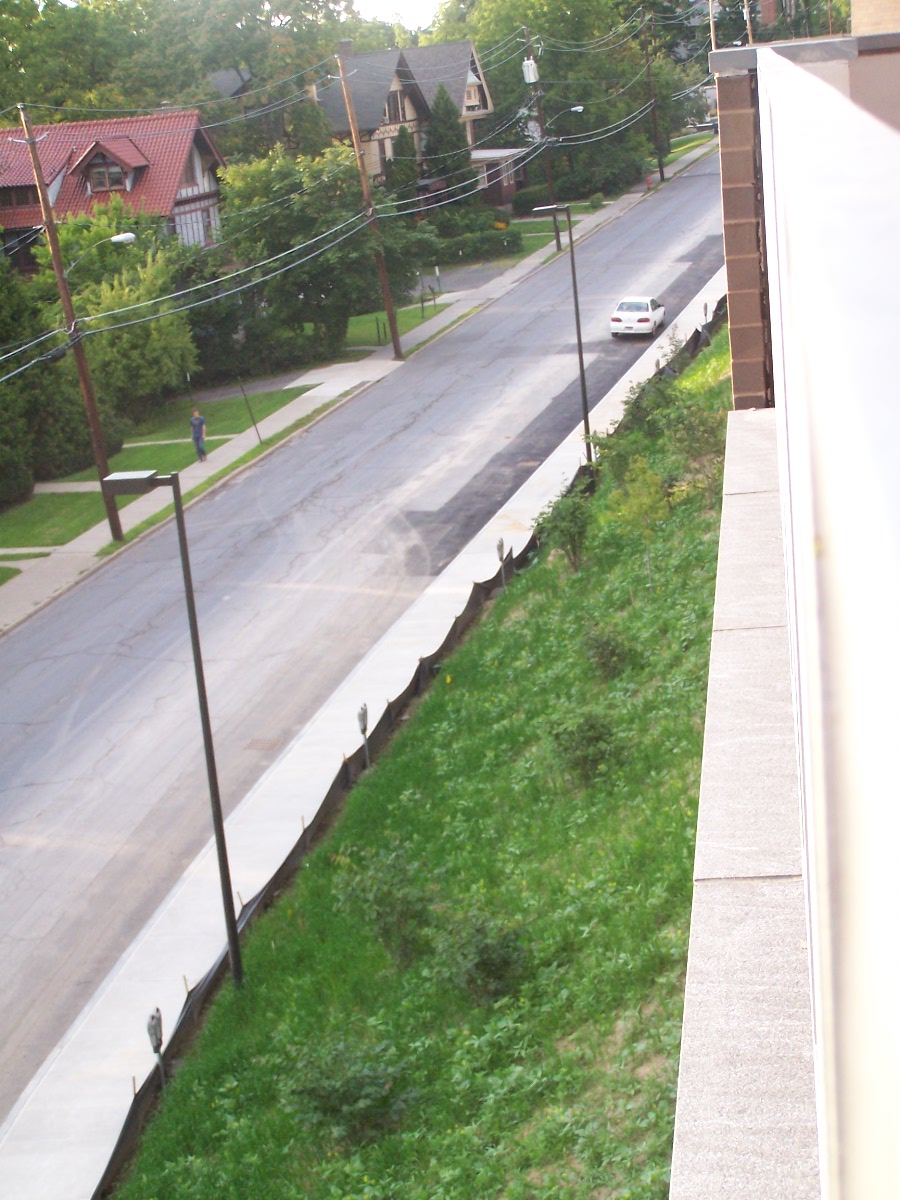
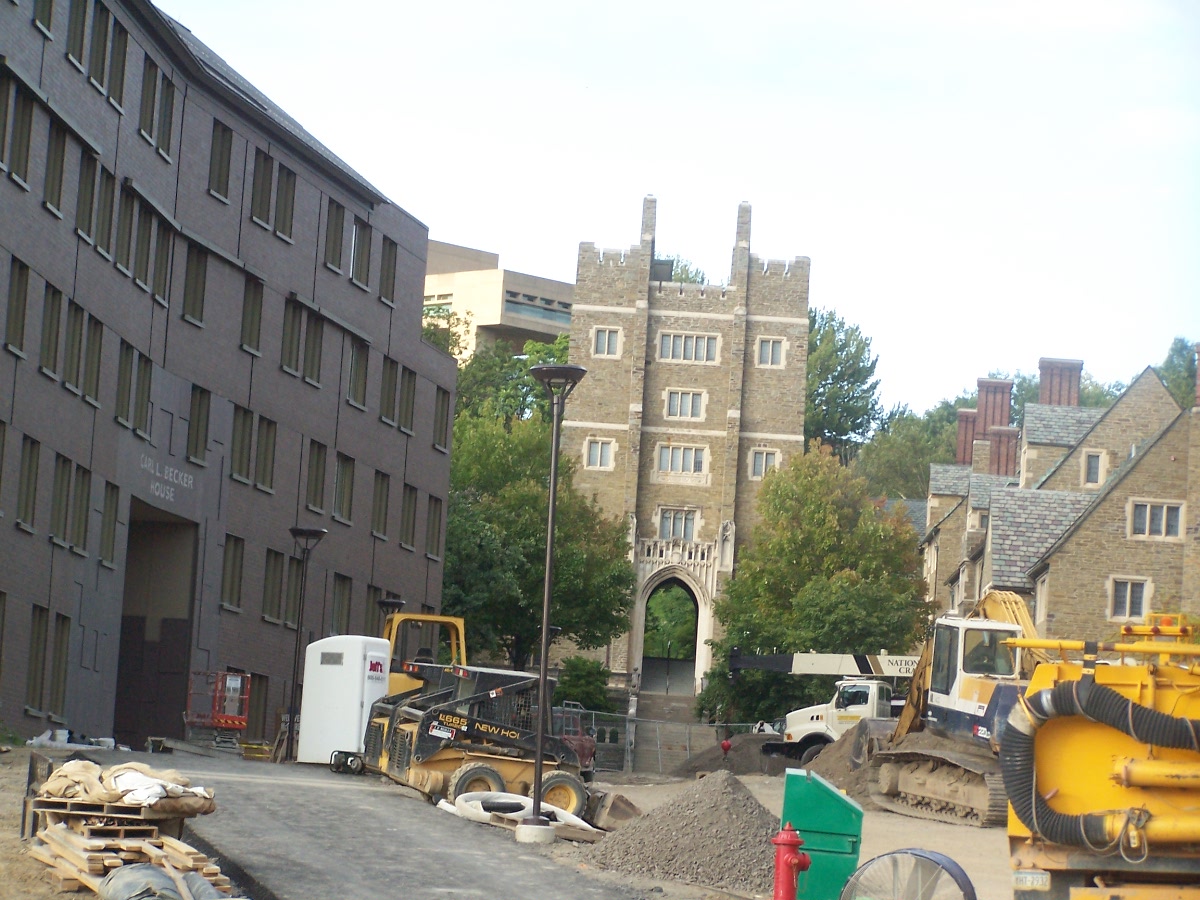
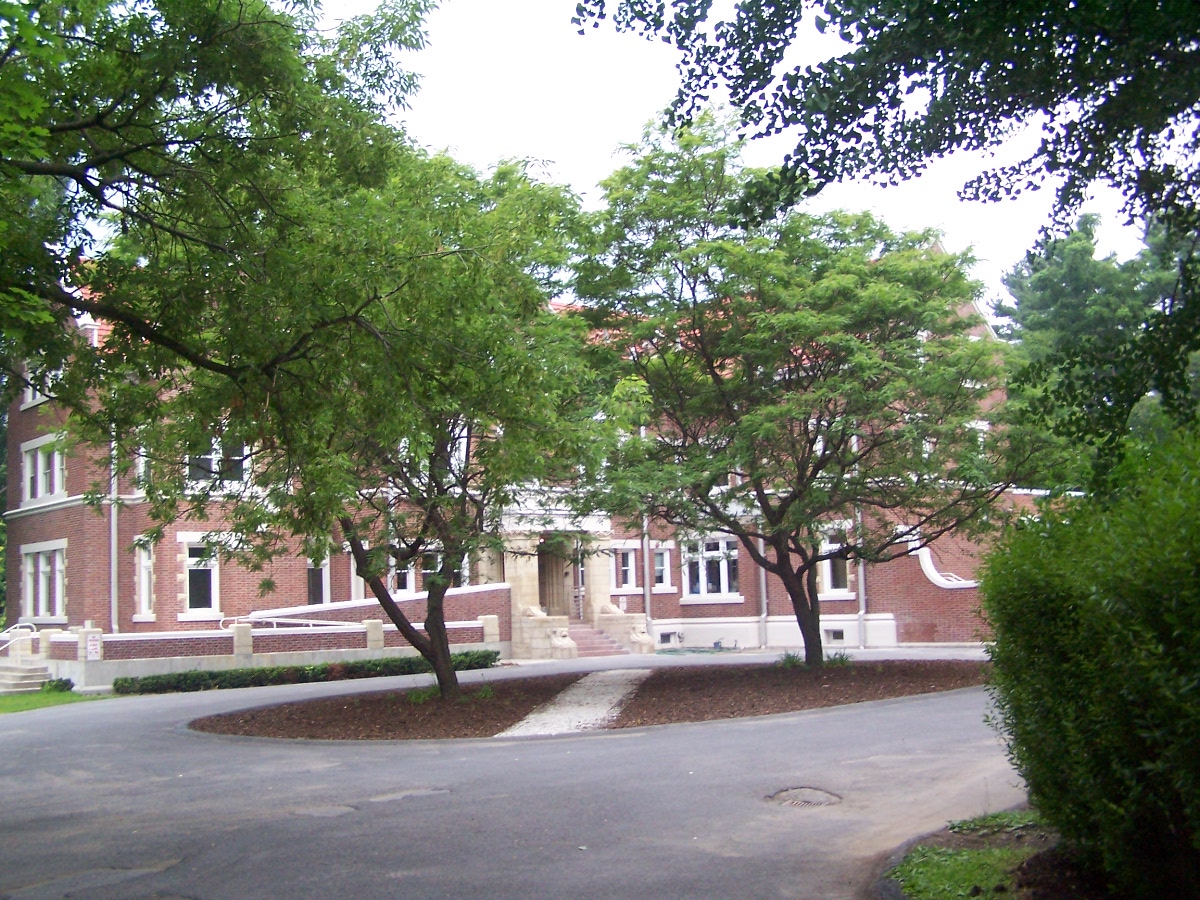
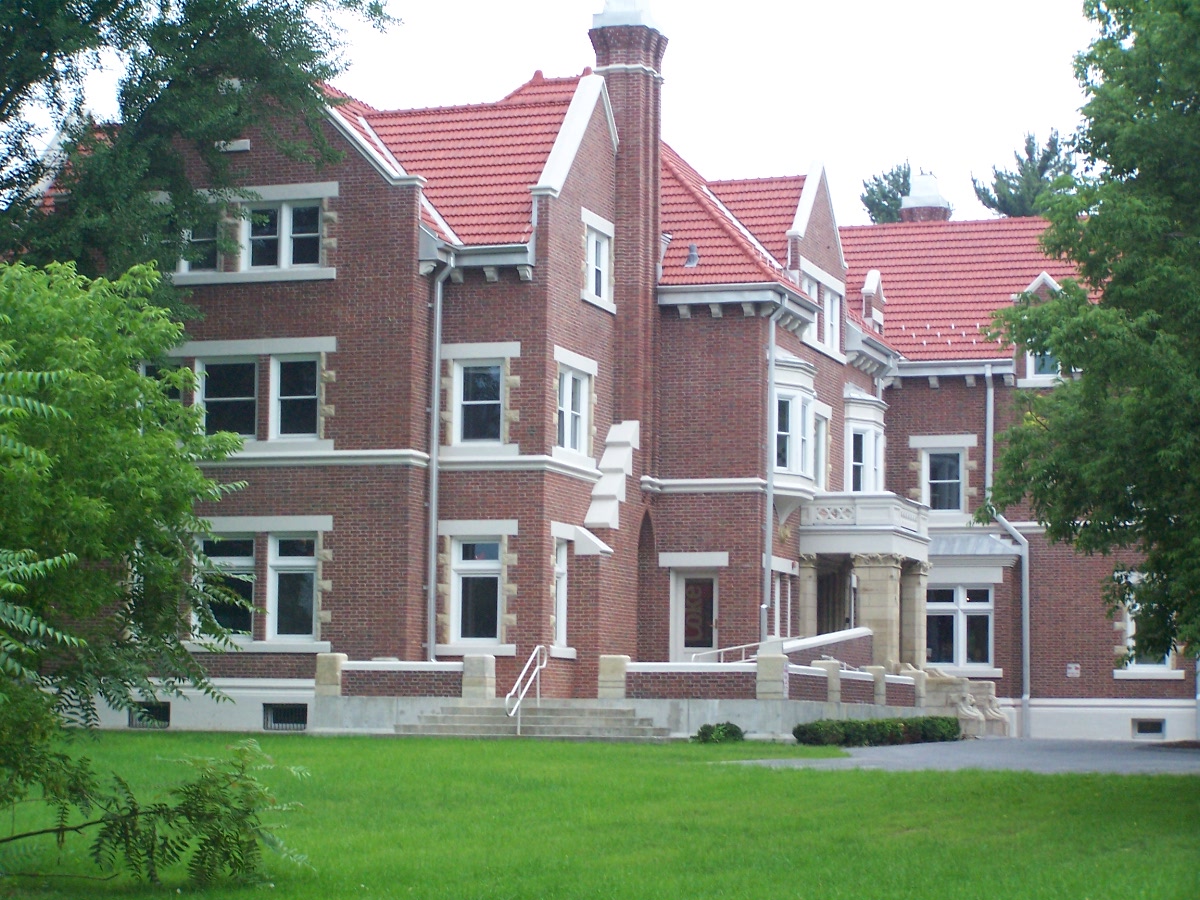
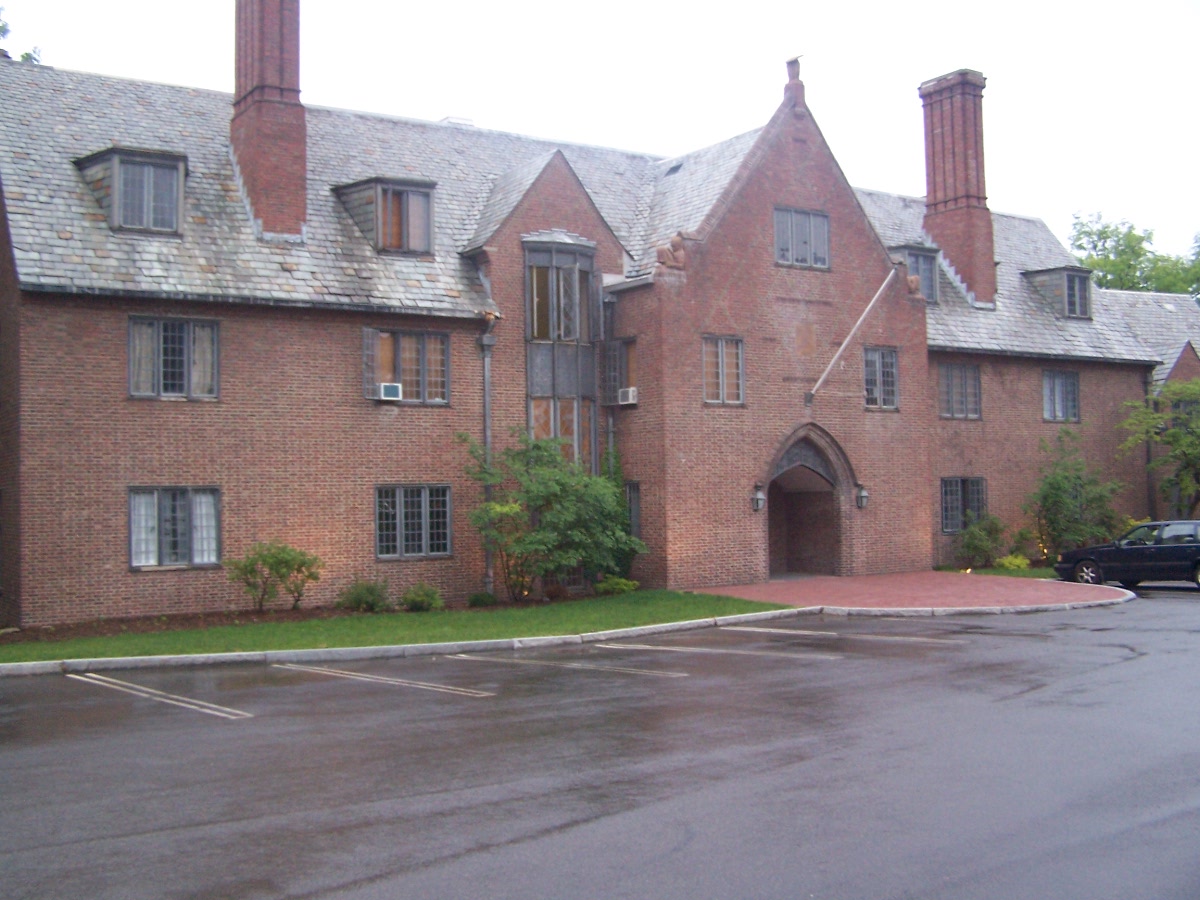
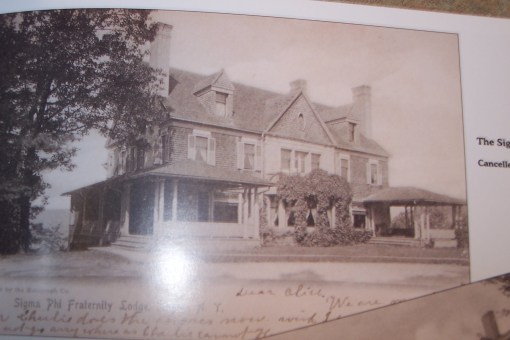
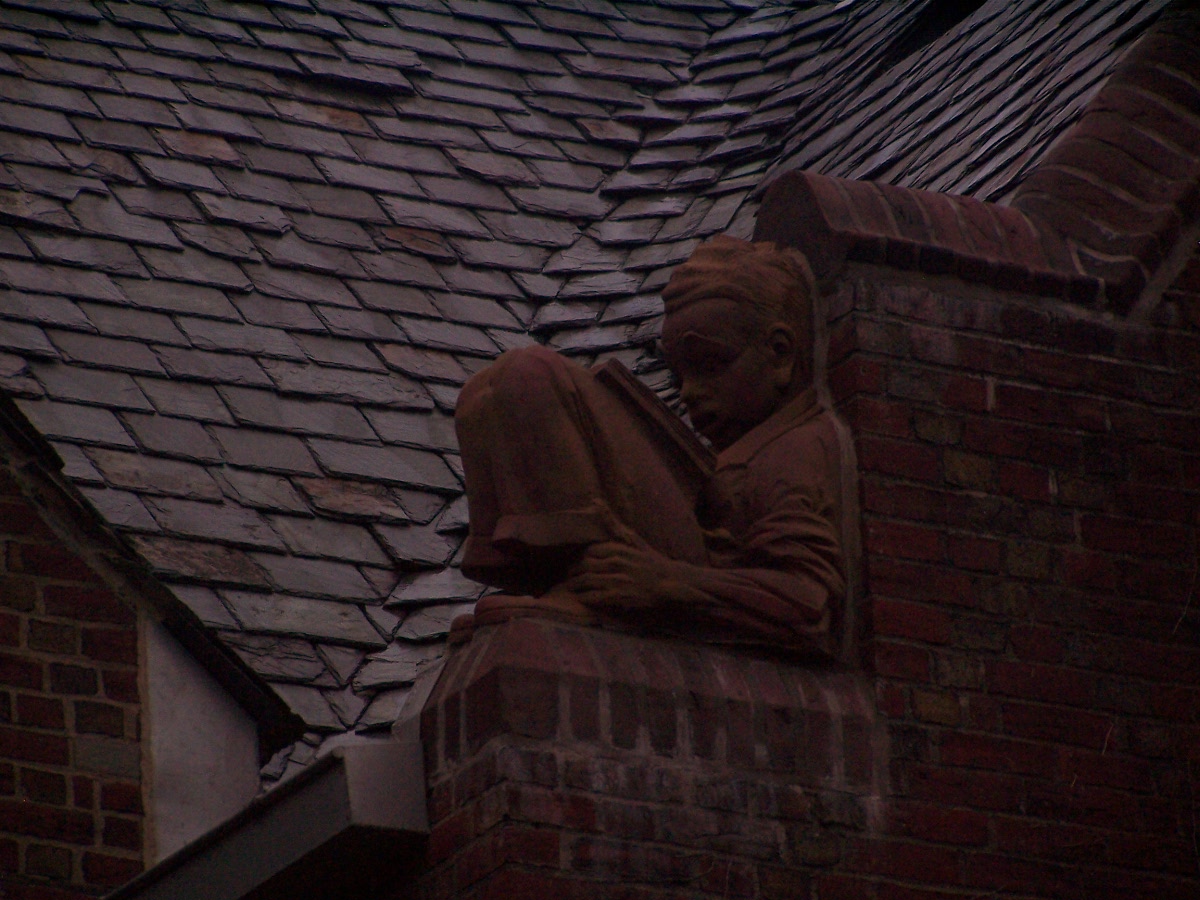
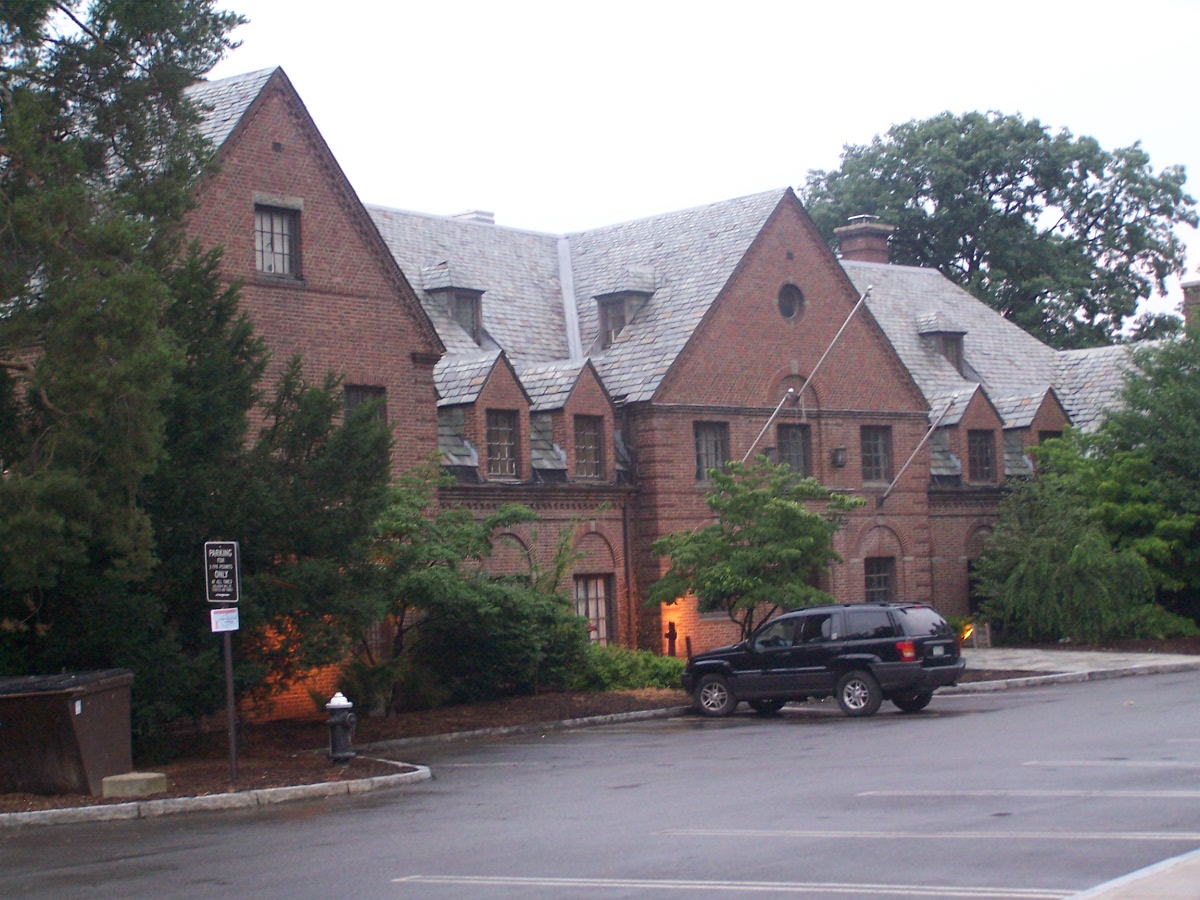
Arts Quad Photos

30 08 2008

Some people suggested that I might consider sharing a little history of a few of the campus buildings for those that are interesting. Well, it’s Friday evening, and I’ve already enjoyed a private 21st birthday celebration for a friend. So, why not?

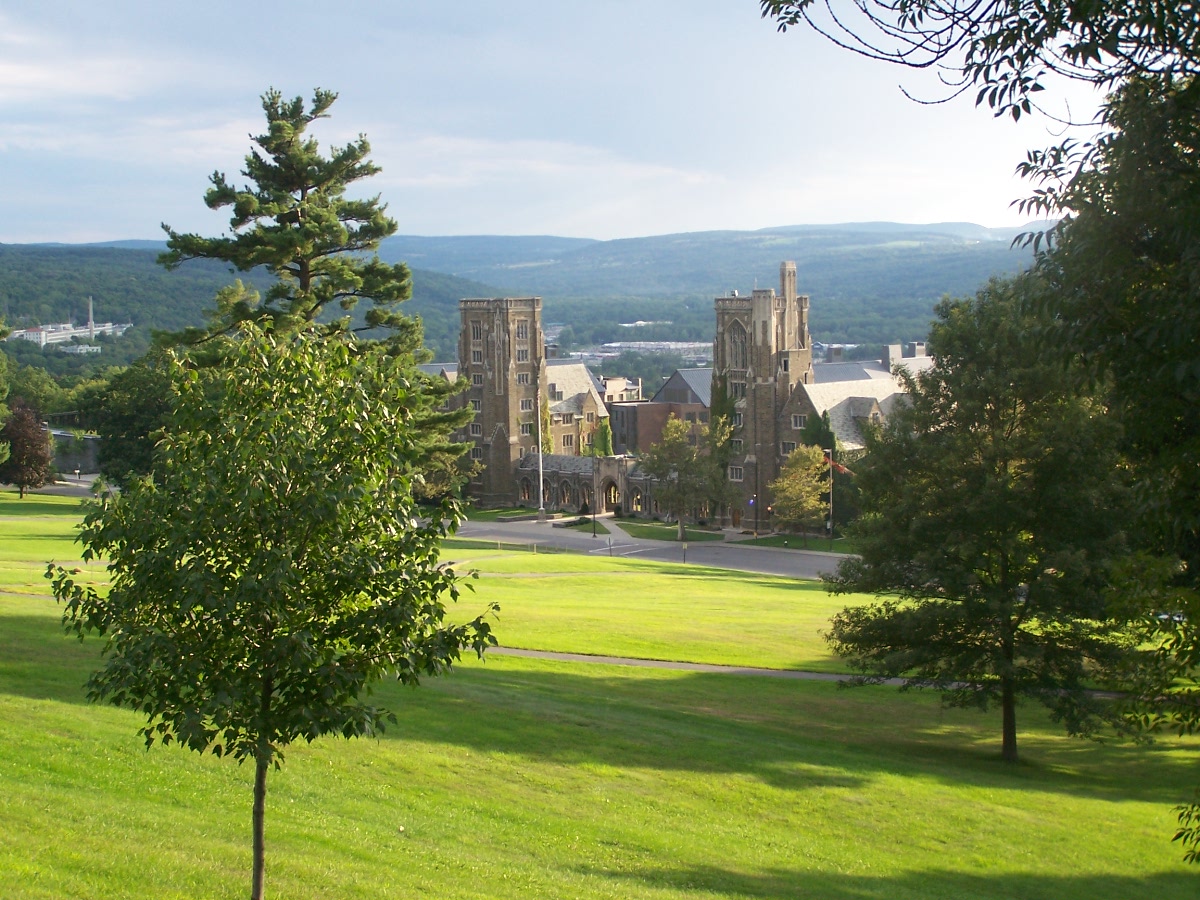
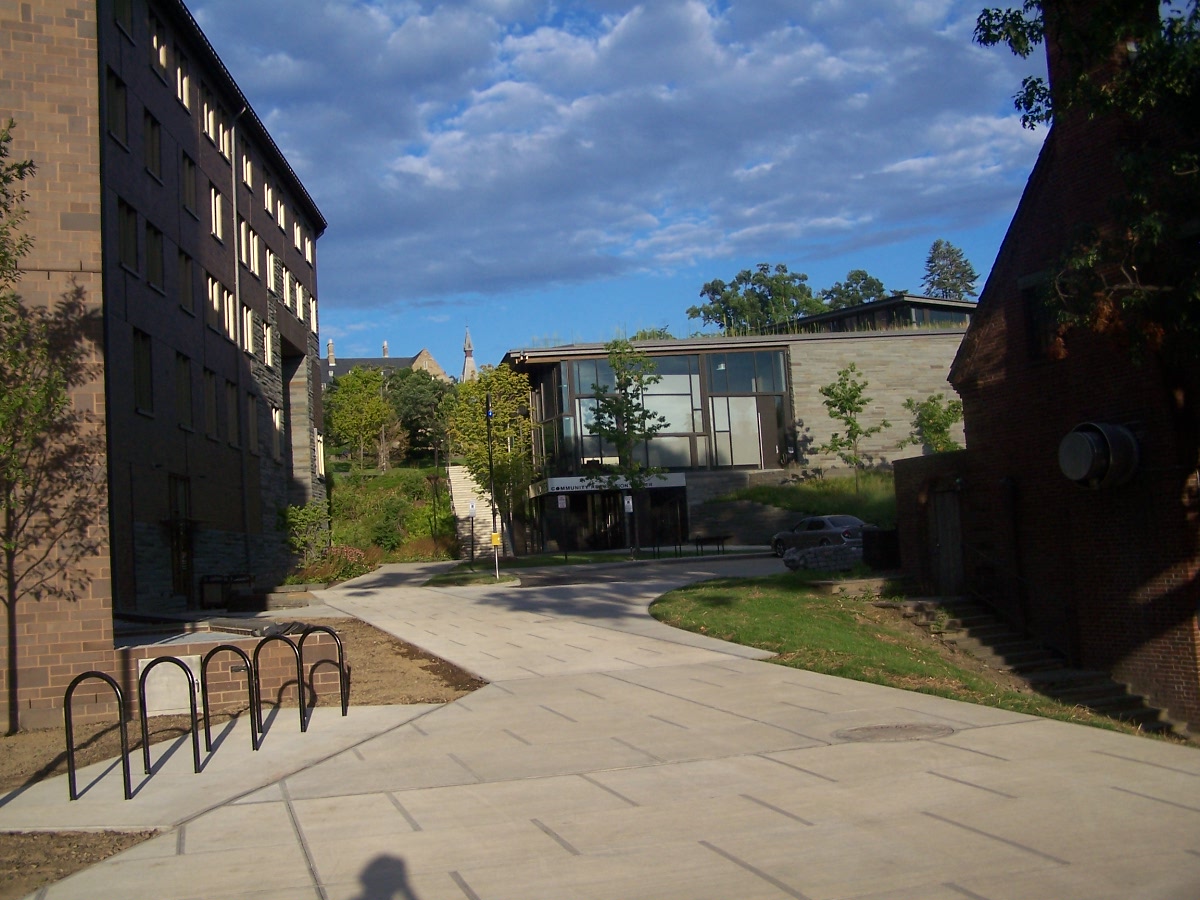
Rand Hall, built in 1912, was built in the industrial style typical for the time period. The building was donated by Mrs. Henry Lang in honor of her father Jasper Rand [1], and her ubcle and brother of the same surname. The building housed machines shops as part of the Sibley School of Engineering, and eventually was reworked to be the studio for many of the architect student as part of the AAP school.

For those of us who aren’t architects, we rarely see the interior. We do, however, see the designs and phrases bored architects create on the compound windows.  The building has been proposed for demolition in recent years to make room for proposed addition to the AAP school (see the Milstein Hall entry), but the current design proposal for Milstein Hall spares the structure for the current time. The building doesn’t tend to make much news, with the slight exception of a time a peacockfrom a Cayuga Heights home broke into their computer lab a couple of years ago [2].
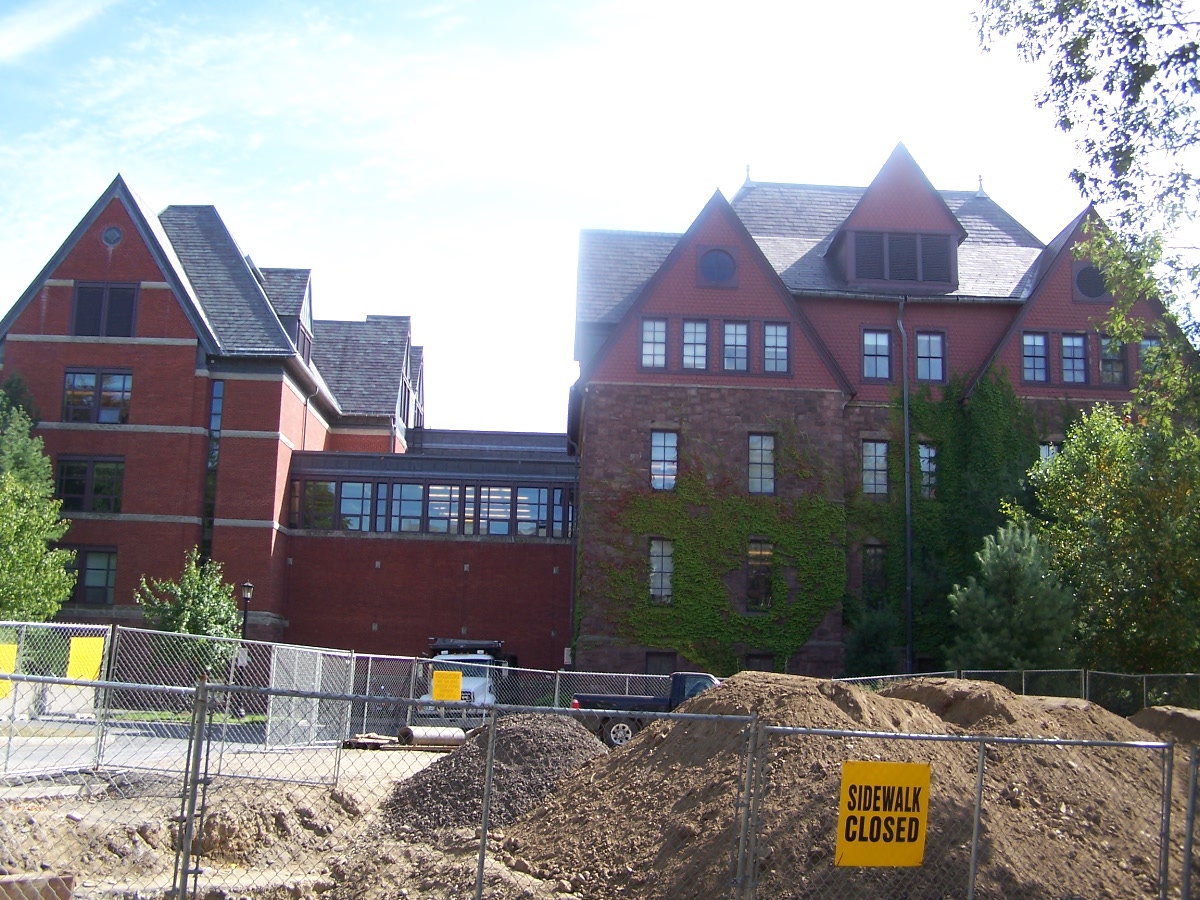
Lincoln Hall, across the path, has seen a much more varied history than its workhorse neighbor. Lincoln Hall was built in 1888 at the then-cost of $72,603, and housed the Civil Engineering until 1960 (it moved to Hollister Hall). The building was renovated for the music department, and they moved in the following year [3].

Lincoln Hall saw an 18,640 sq. ft., $19 million dollar expansion from 1999-2000 (the addition is on the left side of the photo). The firm that designed the addition also designed Kroch Libe in 1992 and the Law School addition in 1988.
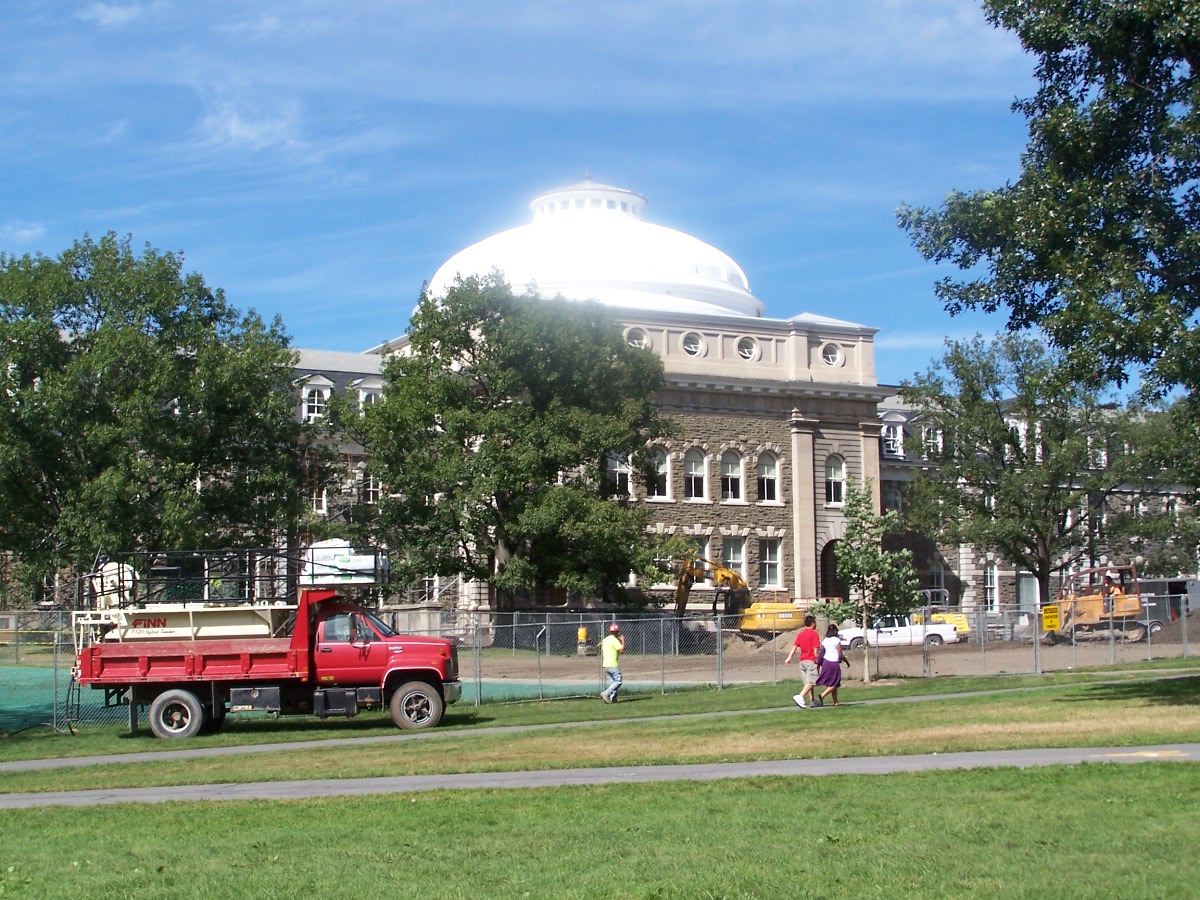
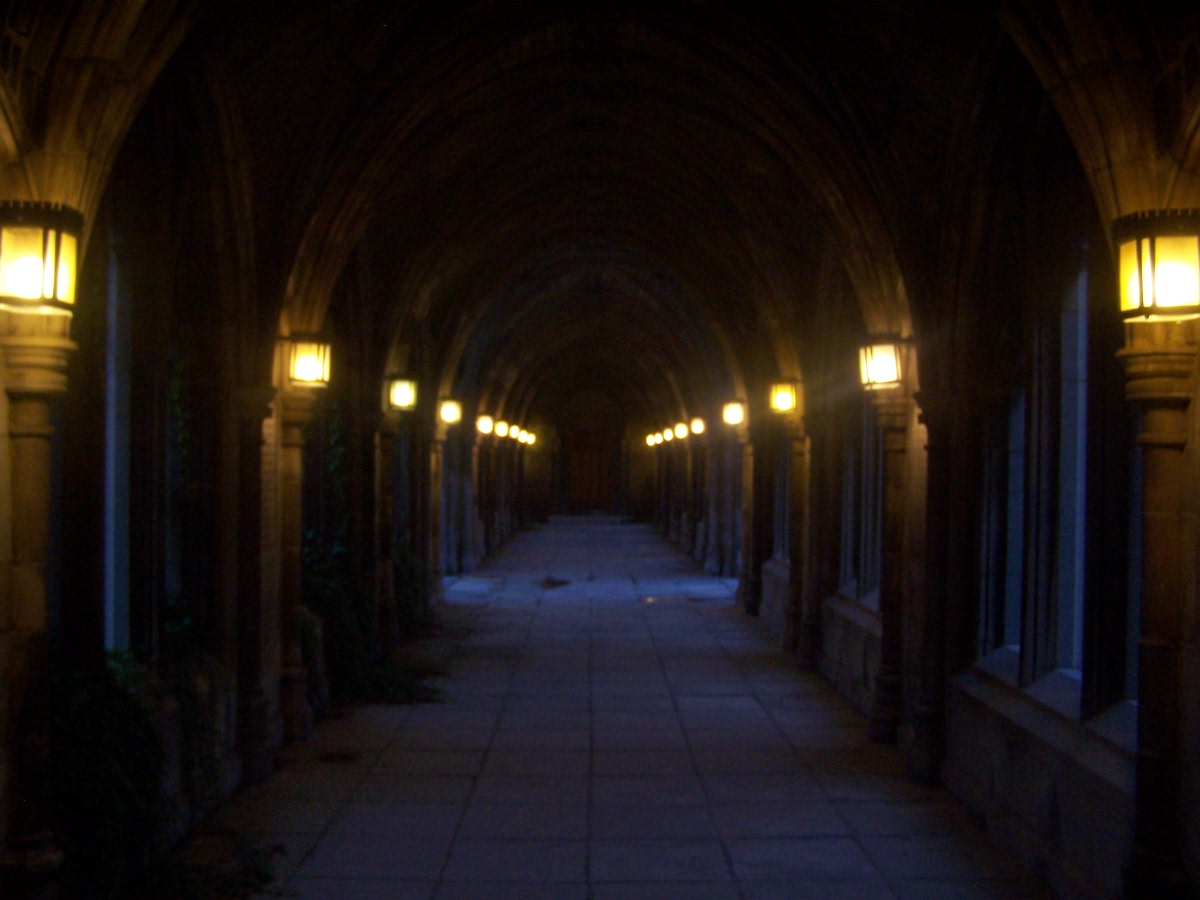
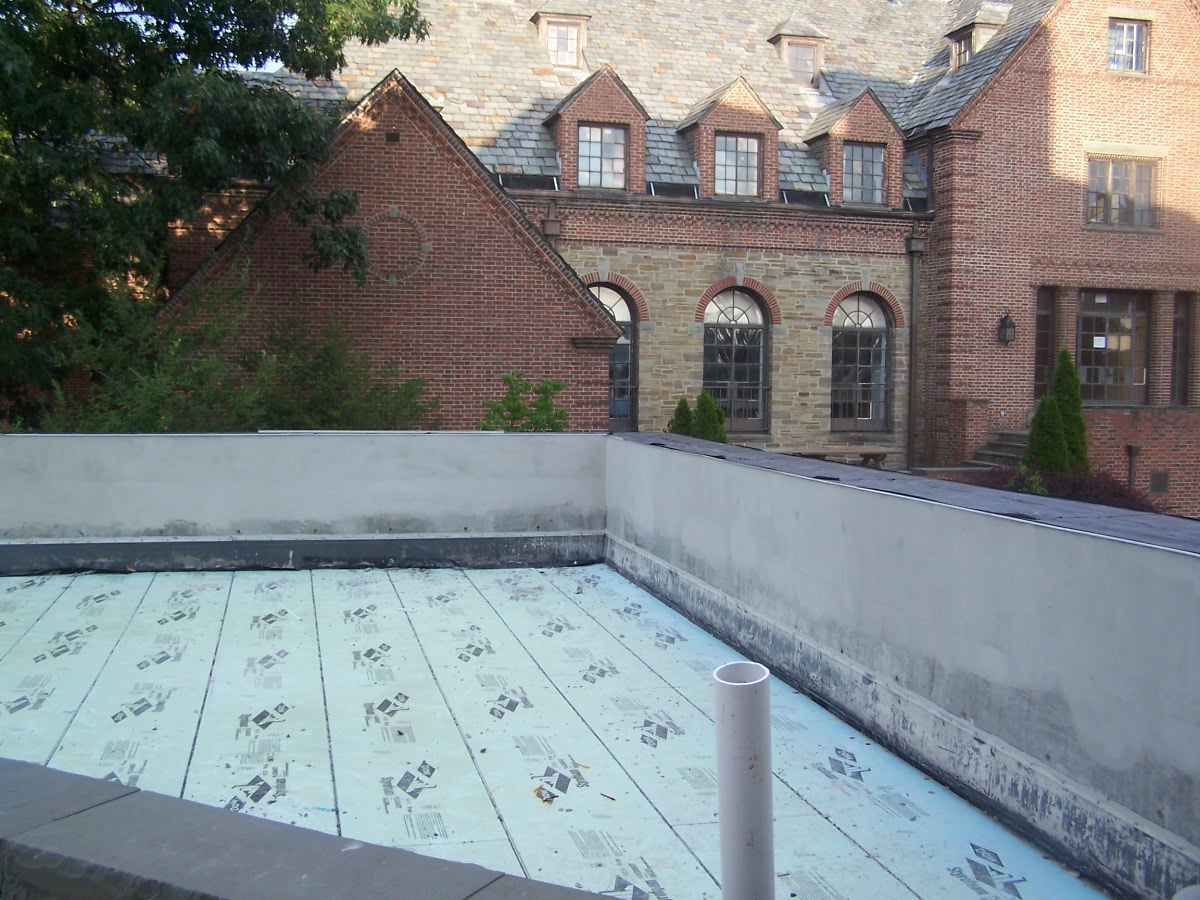
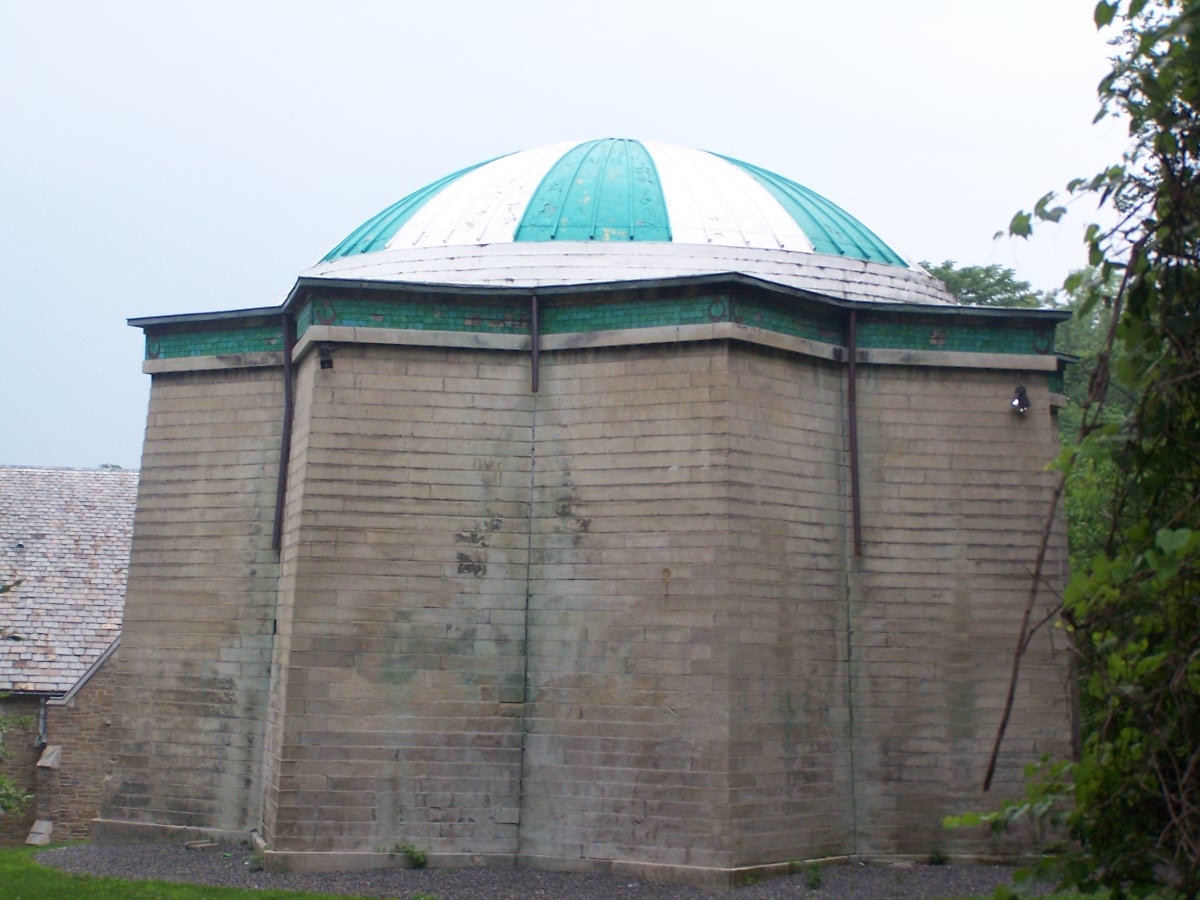
Sibley Hall, namesake of Hiram Sibley, has three seperate wings built at three seperate times. The West Wing began construction in August 1870. The building was dedicated to the “mechanical arts”, as so deemed by Hiram Sibley, an original trustee of the university. Sibley donated the money hinging on A.D. White building himself a president’s house on the campus [4]. The east wing was built in 1894, and the center area, including the photogenic dome, was built in 1902. Although the three portions were designed by three different architects, they form a relatively cohesive single structure that serves as the nucleus of the AAP school. The center area houses the Fine Arts Library.

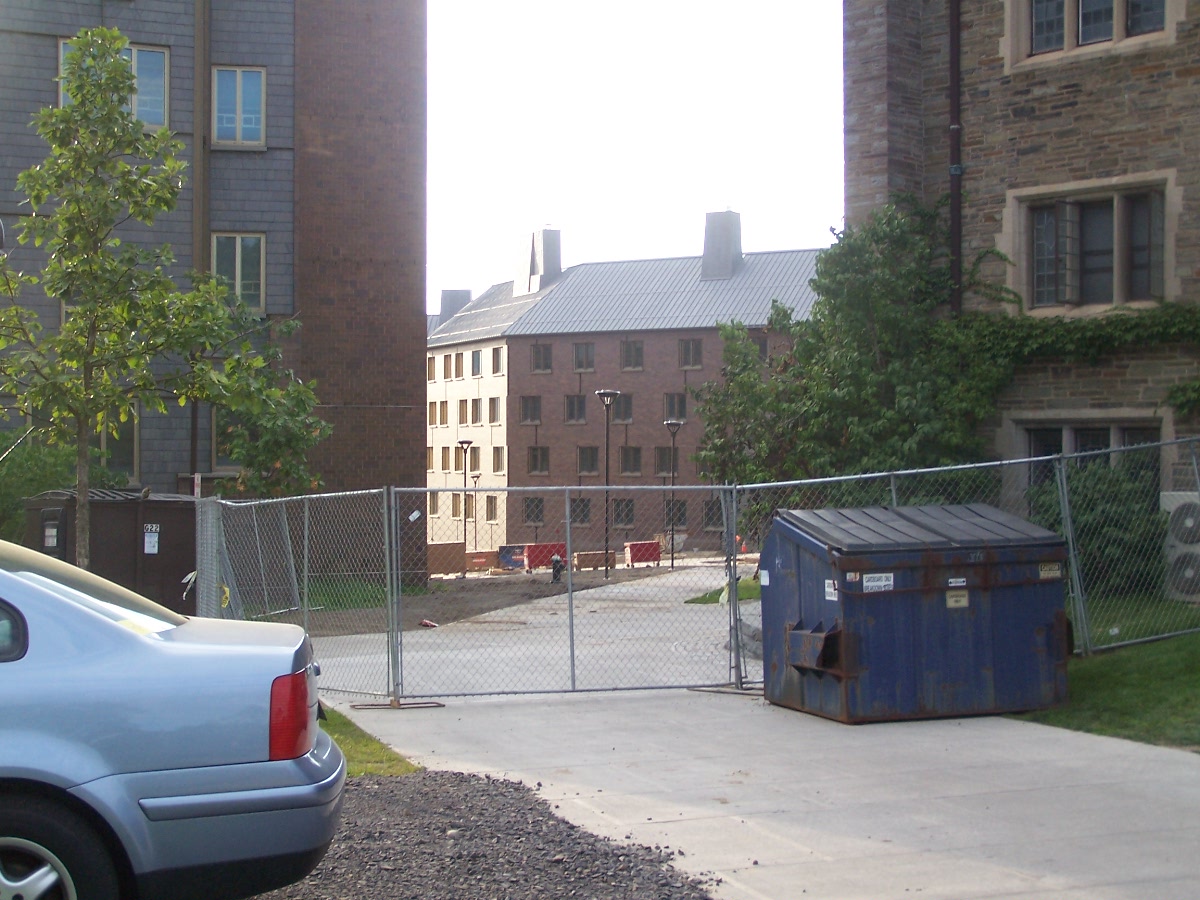
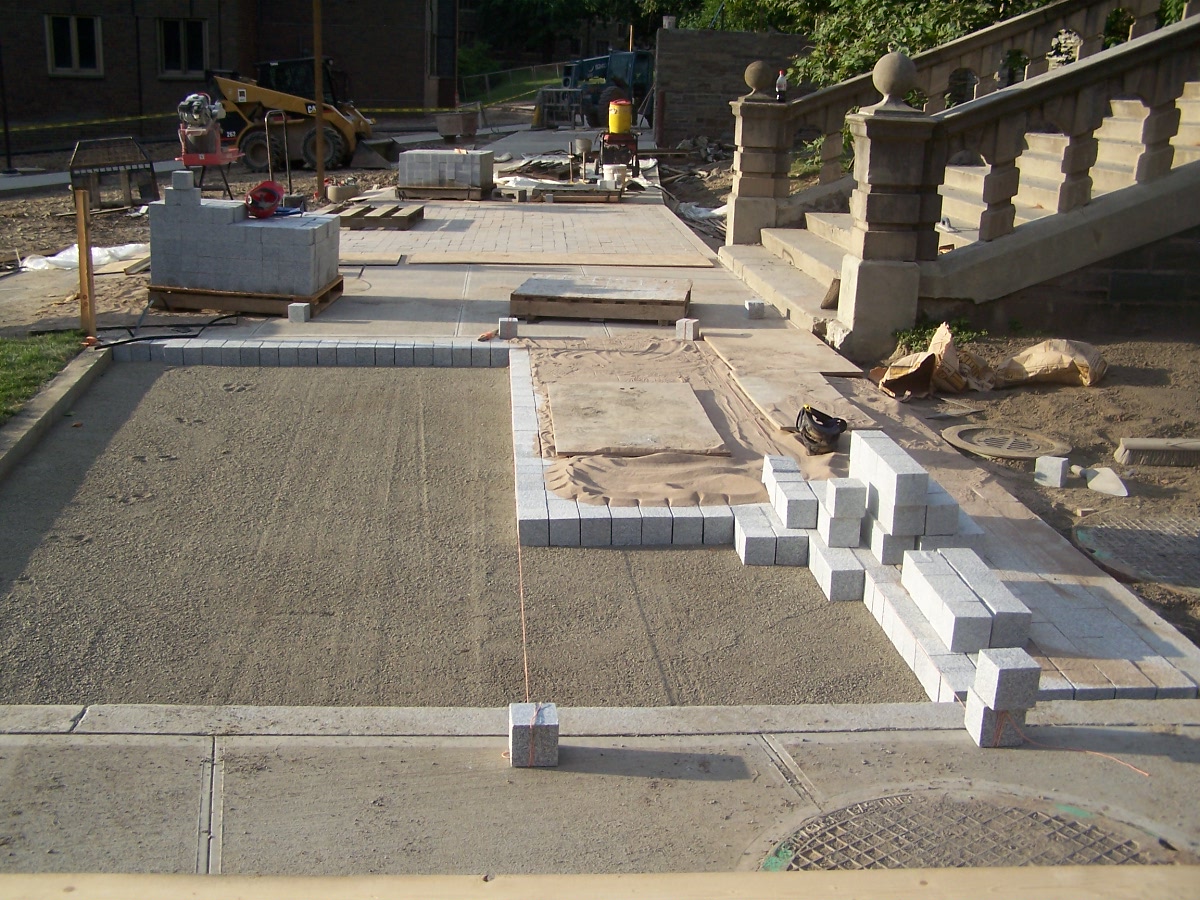
The construction in the photo is some pipe work, and Sibley underwent minor renovations during the summer to make the building handicap-accessible, and to add more bathrooms to the structure.

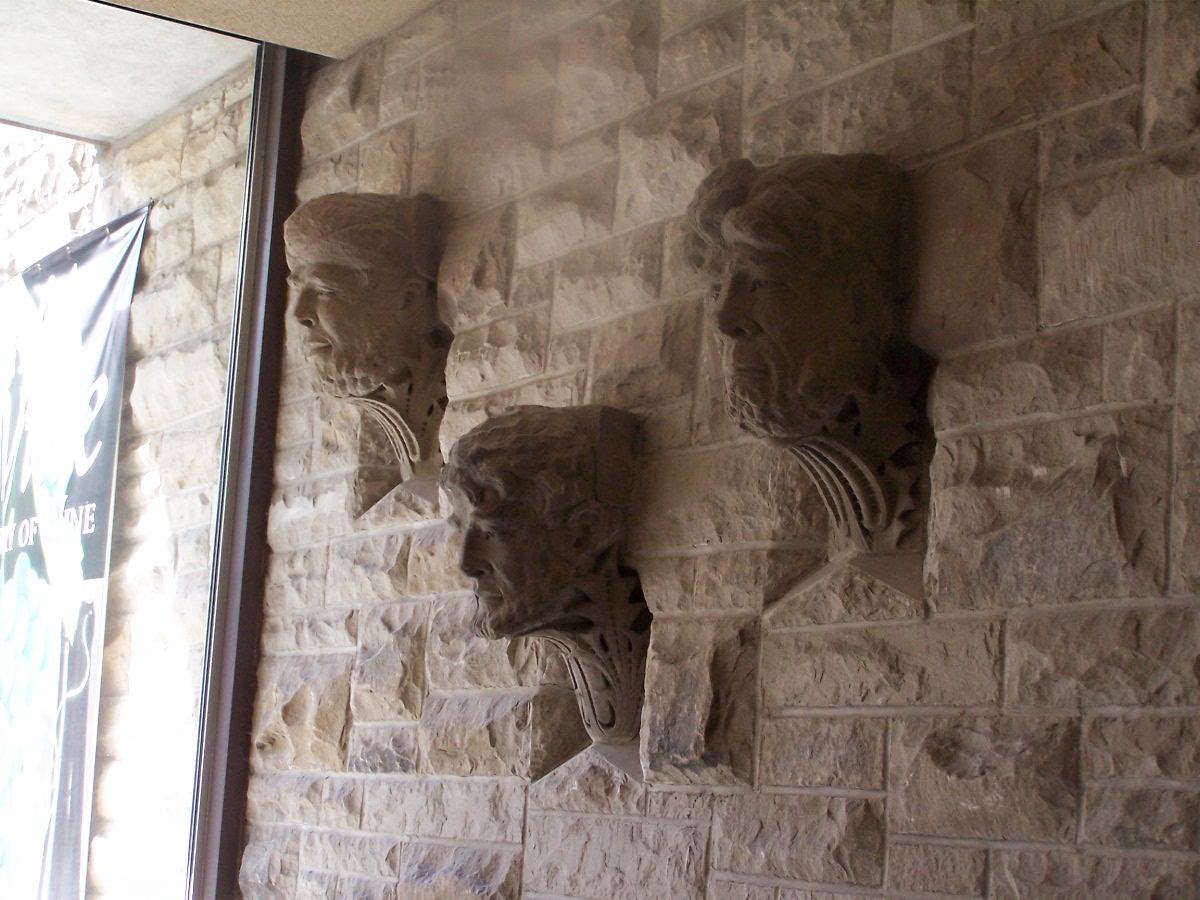
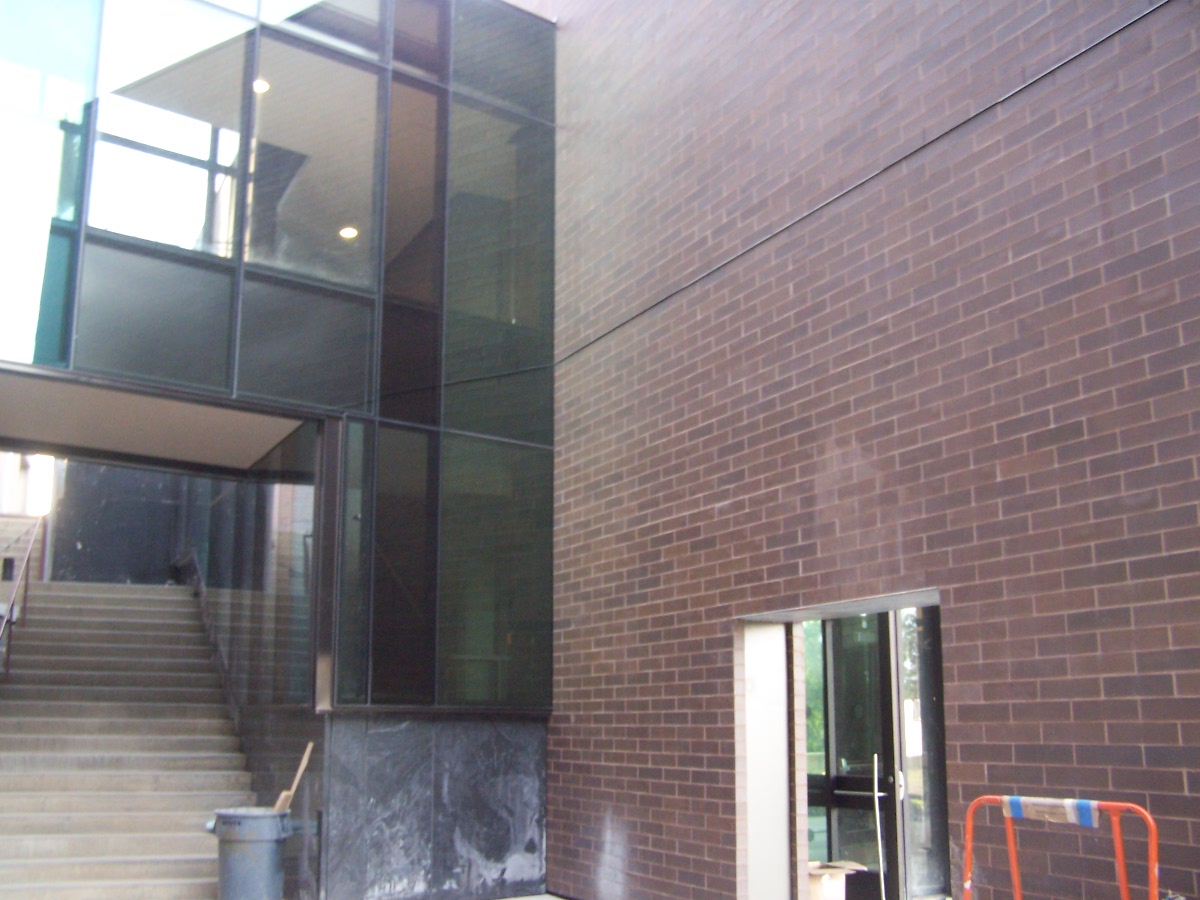
The John M. Olin Library shares the title of being the main library for the Cornell campus. The building was opened in 1961 [5]. To facilitate its 5.66 million dollar construction, the university demolished Boardman Hall (1892), which was the original home of the law school. Boardman was a former dean of the law school. The three stone faces on the outside and the three stone faces next to the interior staircase are artifacts from the exterior of Boardman Hall that were incorporated into Olin’s facade.

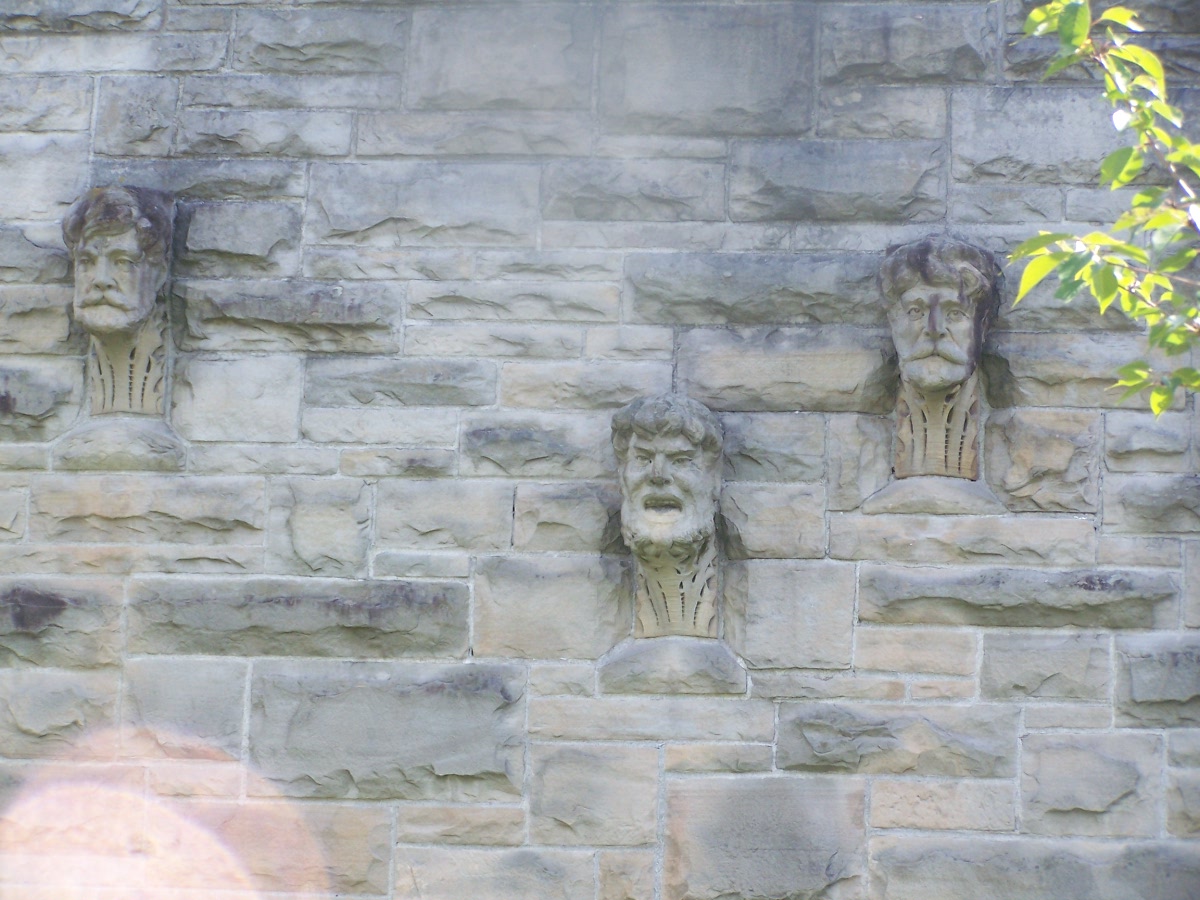
The Kroch Libary, largely underground except for four skylights next to Stimson Hall, was constructed in the fall of 1992 at a cost of $25 million dollars (namesake Carl Kroch ’35). For those who are curious, Olin has a utility tunnel to Uris, and Kroch has a utility stairway-tunnel that connects to Stimson, both of which are largely prohibited for non-staff use.

Olin’s entry way and cafe were renovated in 2002. The rest of the building is currently being prepped for a major renovation that will clean the exterior facade and renovate the interior to being it up to safety codes and to make it more conducive for current trends in upper education (think “pollinization spaces” not too unlike those in Duffield and Weill, without the atrium).
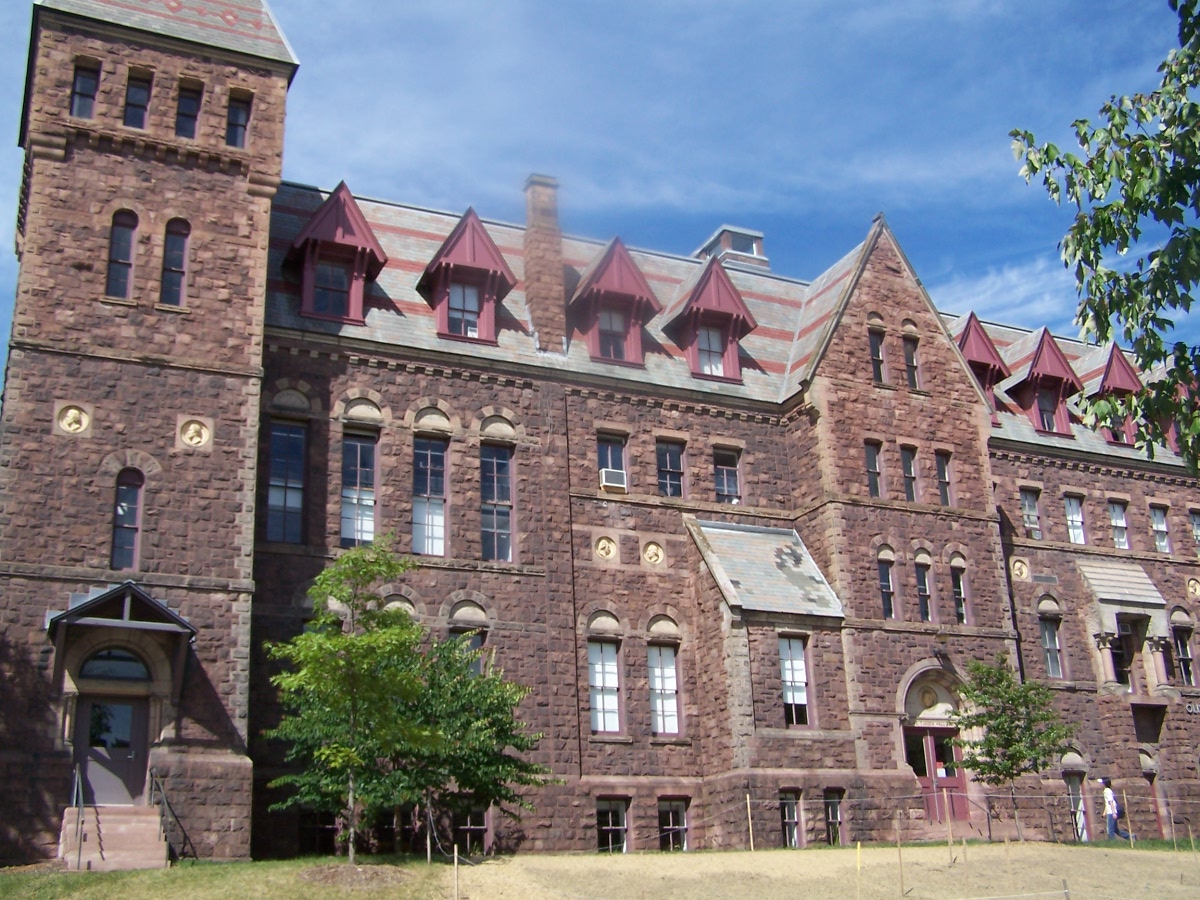
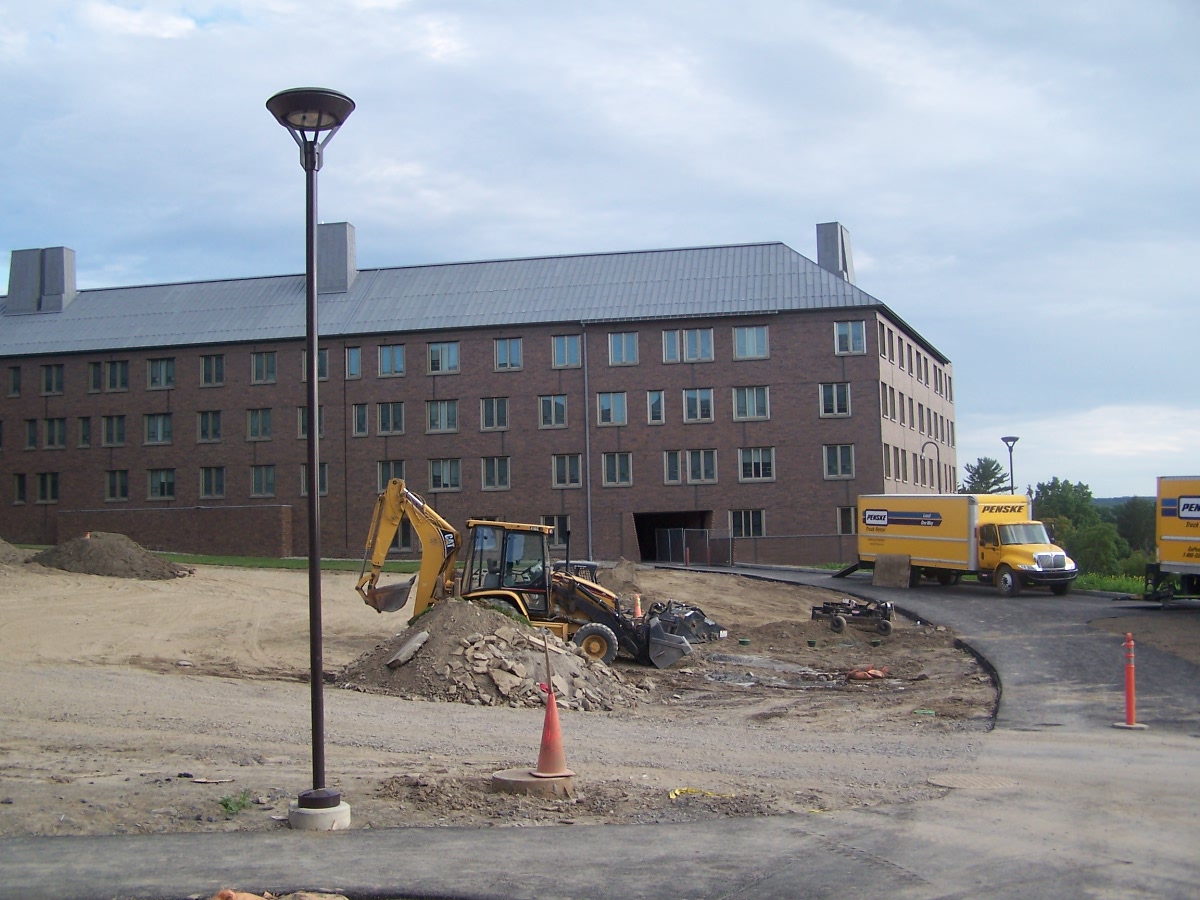
Tjaden was built as a “physical laboratory” in conjunction with West Sibley in 1883. Although $50,000 was budgeted, delays and material shortages drove the costs up to a final tally of $100,923, more than twice than was originally budgeted [6]. This is partially because of A.D, White insistance on the use of stone, and the medallions that decorate the building with the profile of prominent men in the mechanical arts. If you look closely enough, you can see that the window arches still have the names of great discoverers and inventors inscribed into the stone. The building was originally named Franklin Hall, in honor of the great innovator Benjamin Franklin.

The Department of Chemistry originally called the building home until it left for Morse Hall in 1890. The physics department left in 1906, and afterwards the building was incorporated into AAP as the Fine Arts building and workshops. The building was rededicated in 1981 to Olive Tjaden van Sickle ’25, a pioneering woman architect [6]. The building was renovated in 1998, at which time it regianed the hipped roof that I so inconveniently cropped off because I was too lazy to take a few steps back (the original hipped roof was deemed structurally unstable in the 1950s after a lightning strike set it on fire).

[1]http://www.aap.cornell.edu/aap/explore/rand.cfm

[2]http://www.news.cornell.edu/stories/June06/peacock.nabbed.dea.html

[3]http://www.arts.cornell.edu/music/LincolnRen-Exp.html

[4]http://www.aap.cornell.edu/aap/explore/sibley.cfm

[5]http://www.cornell.edu/search/index.cfm?tab=facts&q=&id=541

[6]http://www.aap.cornell.edu/aap/explore/tjaden.cfm


Add/Drop

27 08 2008

Wait, we moved add/drop from 6:30 AM to 10 AM this year? Well, that takes the fun out of it. What’s more exciting than staying up all night (or in my case last year, trudging to Uris Libe at 6 AM) to try and get in the mad stampede to fix and fill schedules for the upcoming semester. The freshman need the shock and frustration of getting up early and still not being able to get a certain class, it would help them adjust better.

I certainly don’t miss the wait and confusion of JTF; however, I can’t exactly say StudentCenter does a better job, because it takes forever to load a page, but at least tells you how many slots are still available in a class. The convenience of this development is that some professors, normally those teaching smaller classes, never set a limit (technical limit is 9999), so you can plan your order of enrollment accordingly, trying to get into the classes with limited spaces first and the null limit classes at one’s own leisure. These details can be checked regardless of whether or not add/drop is underway, so my personal recommendation is to check and plan the “method of attack” before it opens at 10 AM tomorrow.

All I have to do is switch out one class for another anyway.


Off-Topic: Q & A

23 08 2008

I’m taking it easy with this post, since I was directing cars on the Balch Lawn for a large portion of the day (welcome freshmen, to what could be the best four years of your life!). Occasionally in the search bar, someone types in a question. Let’s take a look at what people want to know.

1. “llenroc kicked off campus”

Ans: To my knowledge, this has not happened in recent history.

2. “dke secrets fraternity initiation 60’s”

Ans: If they were secrets, chances are that information isn’t going to be readily accessible, so how it would even be on the internet or in libe documents is beyond me. Many fraternities operate with some clandestine functions, but in my experience, it’s less in terms of cloak-and-dagger and more because it makes pledging and private functions all the more interesting. Case in point, the fraternity of Phi Kappa Psi advertises secrets concerning spatial geometry on its website [1].

3. “new restaurants ithaca”

Ans: Well, Bistro Fry in Collegetwon has been replaced with Jack’s Collegetown Grill. And a couple buildings down from the State Street Diner is a new restaurant called “Fine Line Bistro”. TBP opens up a new location on the Commons next month, and a second restaurant will be moving into what used to be the used bookstore on the Commons. Olivia’s has also permanently closed. Fair enough?

4. “sigma nu kicked off campus cornell”

Also, not in any recent history. What is up with people thinking so many fraternities have been kicked off campus?

5. “why people love cornell university”

Yes, this was an actual question. However, I don’t feel I can provide an adequate answer. This isn’t because I haven’t enjoyed my time here; I’ve found Cornell to be a rewarding and stimulating experience, if a little academically frustrating at times. But everyone has their own reasons for loving Cornell. And unless I could somehow compile all the answer together in one long list, than I really can’t provide a full answer to that question. We all have our own reasons for loving the institution that is Cornell.

6. ” cornell fraternity fall rush 2008″

Haven’t heard anything about it. Registration is linked from the OFSA (Office of Fraternity and Sorority Affairs) website. Traditionally, fewer fraternities participate in the fall rush, which is primarily transfer students along with a few curious upperclassmen. However, the fall rush has been decsribed as more intimate by some of its proponents, in the sense that you get to know rushees better. I’m sure if you send an e-mail to the OFSA or IFC folks, they’ll be able to fill you in on which houses are doing rush and any other details you should know. Oh, and there might be a promotional pamphlet going out for fall rush at some time soon.

7.””anna comstock hall” latino”

Well, yes, yes it is. Originally built in 1924 as a combination of faculty and graduate housing, Anna Comstock Hall was programmed as the Latino Living Center in the fall of 1994. This was after a peaceful occupation of Day Hall from November 19-22, 1993, where several events that strongly concerned members of the school’s Hispanic population caused them to stage a demonstration and a sit-in on the building to voice their concerns [2]. Day Hall is a frequent target for occupation anyway (do a google search on Redbud Woods for another example).

8. “ithaca college cornell tension”

Really? There must not be a whole lot of it. If anything, it’s because Cornell’s larger and in the Ivy League, so they tend to steal attention away from IC. But as for tension, there’s not much from what I’ve heard. But we also don’t mingle too often, with the exception for some muscial and theater groups, and Cornell staffers with ICTV.

9. “cascadilla dorm + asylum”

For the last time, NO. Casca was built for the original purpose of a water sanitarium, but never even functioned as such. Old Ezra was a major investor who took the building for his own uses when it appeared the sanitarium project would never get off the ground. That was back in 1866.

10.  “cornell living above ctb”

Dunno what that must be like. A little loud at times, I would guess. Anyone care to give a more accurate description from their own experience?

[1]http://www.phikappapsi-cornell.org/141-tour-mystery.asp

[2]http://cornellsun.com/node/26269


Finish Line of Photo Tours: Eastern Cornell Heights

17 08 2008

This is the house of the sorority Pi Beta Phi, which is kinda far out on Triphammer Road. Pi Beta Phi started out as a local chapter called Beta Phi. By 1919, they had become the NY Delta chapter of Pi Beta Phi sorority, and they first met in Risley Hall, which was at the time an all-women’s dormitory. After moving around from Eddy Street and Wait Avenue, they settled at 425 Wyckoff Avenue in 1937. By 1955, they has sold this house to Alpha Chi Sigma, and they built the current house in 1955-56 [1]. At least one sorority has made it easy for me to dig up some historical information about them.

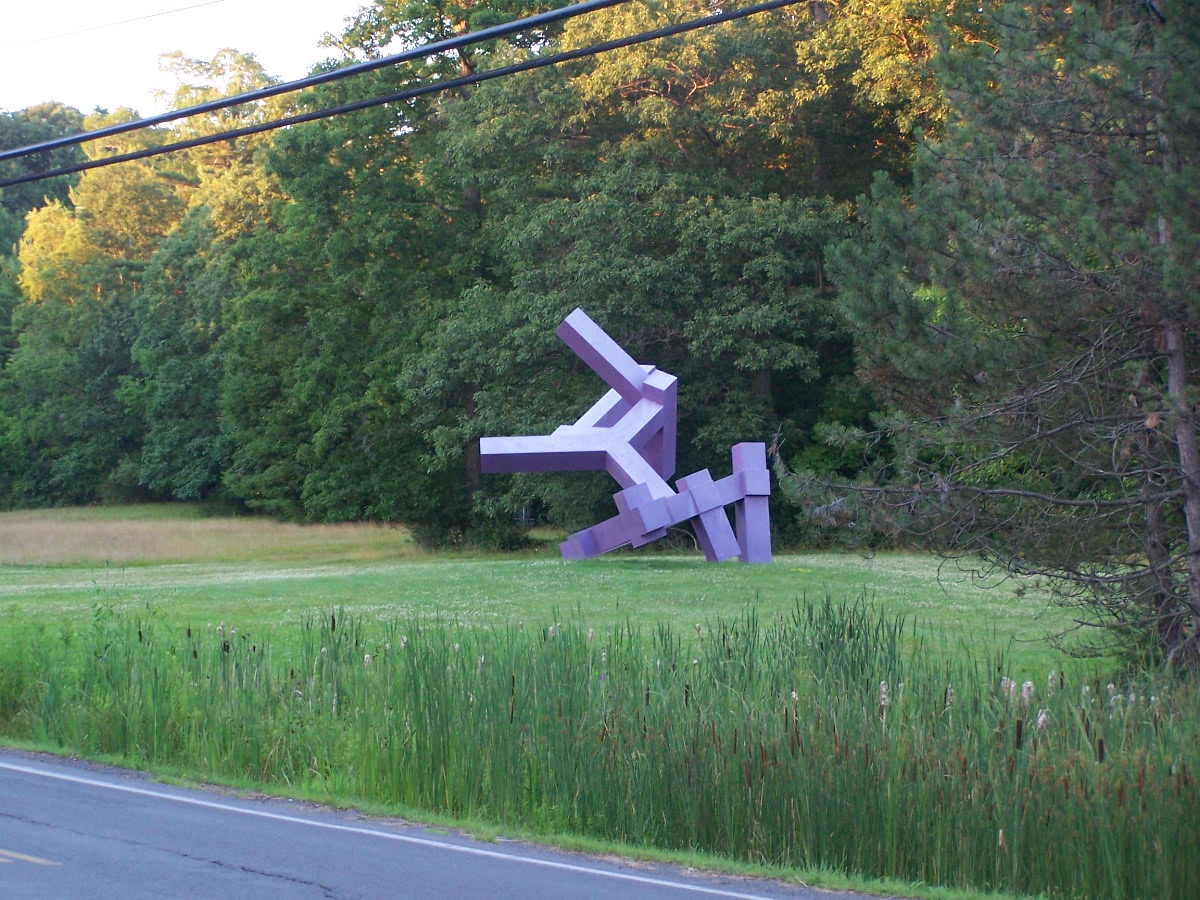
Token sculpture? Perhaps, but I’ll provide a little detail about it anyway. The sculpture is called “Richard Evans, 2nd, III”, and was created by Daniel Ben-Shmuel Barrett. It used to be located next to the art museum as part of an abstract art exhibit, but because they needed the space, it was moved to north campus in 2004 [2]. There are also sculptures next to Appel and near Akwewon.

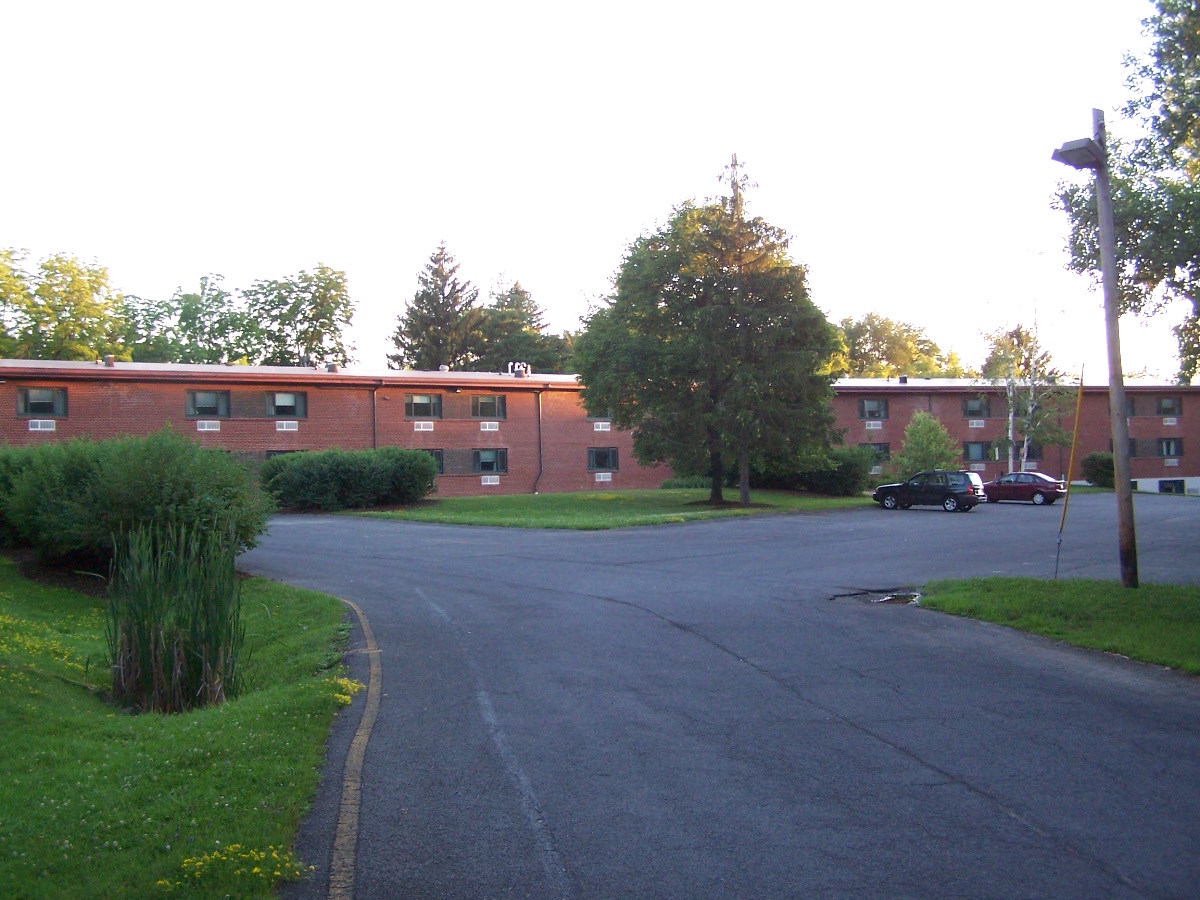
Hurlburt House, or as it is more commonly known, EcoHouse. The building was originally constructed as a motel/travel lodge in 1953. Shortly afterwards (~1963) it was purchased by Cornell and renamed the Cornell Heights Residential Club. The building was used for graduate housing and for housing for students of an experimental accelerated PhD program [3]. On April 5, 1967, a devastating fire tore through one of the wings of the residence, killing eight students and a live-in faculty member [4]. Firemen said three bodies were found in the entrance lobby, one on the stairs between the first and second floors, one in a first floor room, and four in rooms on the second floor [5]. An investigation afterwards stated that inadequate fire safety (lack of fire escapes and alarms) combined with deadly toxic fumes released by the burning rubber-plastic furniture were the primarily factors in the devastating tragedy. In case you’re wondering, the PhD program was discontinued. As for the building, the wing where the fire took place was torn down, but several residents and visitors claim that the basement of the wing (which still exists) is haunted [6]. Haunted in this case means screaming, an oppressive heat, strange lights and the barking of a dog that dies in the fire. I’m going to stay skeptical on this one, and say it’s probably just some overactive imaginations. I’ve been inside only a couple of times, but I found the accomondations seemed luxurious compared to other dorms, and they were tightly-knit group.

This building is home to the Triphammer Co-Op. Built in 1912, the house originally housed a sorority known as Sigma Kappa. Around 1955, the sorority admitted an African-American woman, which was against their national’s rules and regulations (remember, this was at the beginning of the Civil Rights Era). The national ordered the women to get rid of her or risk being booted out of Sigma Kappa. Well, the Cornell chapter flipped their national the proverbial bird and became a ladies co-op. The co-op went co-ed in the early 1990s, and today houses 19 men and women in eleven singles and four doubles [7].

The co-op’s southern neighbor is the MGLC fraternity Pi Delta Psi (is this the only MGLC organization that maintains an official house right now?). The house itself dates from about 1915, but the house only came into the poession of the fraternity a few years ago, in 2003. Pi Delta Psi is an Asian-interest fraternity [8].

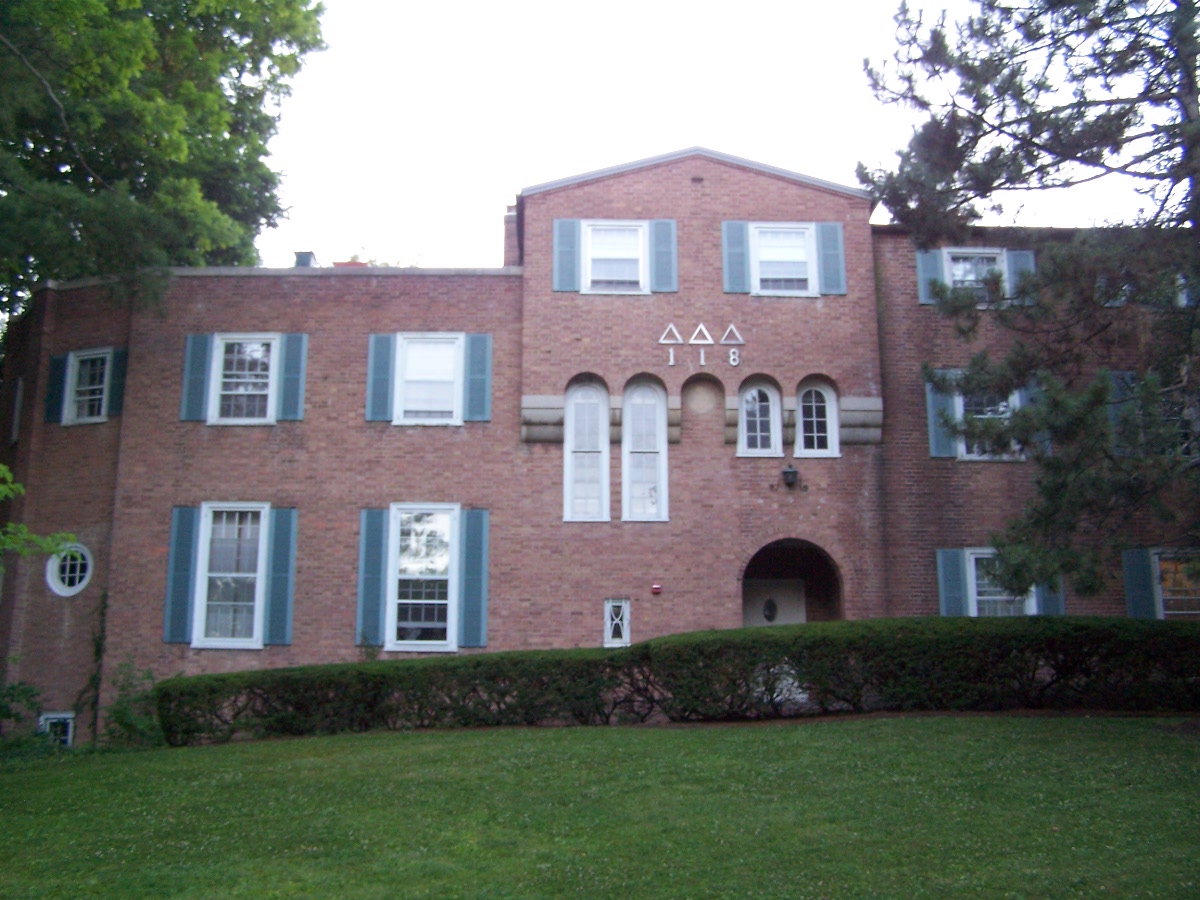
The house of Delta Delta Delta sorority, more commonly known as Tri-Delt. The Alpha Beta chapter here at Cornell began as the woman’s club “Sennightly” in 1895, taking their name from the fact that they held a meeting every seven days (heck, my fraternity barely manages to hold a meeting every two weeks without someone b*tching). The women petitioned a national sorority so they could stay in touch in later years as well as perpetuate their organization. By 1912 (yeah, missed the boat on that one), Tri-Delt national took interest, watched them as they threw a party, liked what they saw, and offered them a seat with their sorority. From 1912-1965, the house was on the 600 block of Thurston, in what is now the Alumni House; afterwards, they moved to this house on Triphammer with its Moorish influence [9]. The moorish house was home to Kappa Alpha Theta prior to their national disaffiliating them in 1965.

Right across the street from Tri-Delt is the sorority Delta Gamma. The sorority was established at Cornell in 1885 [10], but the current house dates from about the 1930s. My personal guess is that they were in the ladies’ dorms for a number of years and then lived in boarding houses until moving to their present location. The chapter was inactive from 1969 to 1975 (the Vietnam War era, when public interest in Greek life and other establishment groups waned significantly)

The house of Kappa Delta sorority. The Cornell Chapter was founded in 1916 by a transfer student who was a KD at her former institution. First based out of Sage and then out of a now-demolished house on Wait Avenue, the sorority purchased the land for their current house in 1923 and built on that property shortly thereafter, expanding several times over the years. [11]

[1]http://pibetaphi-cornell.org/public1.asp

[2]http://ezra.cornell.edu/searched.php Q5 2/7/08

[3]http://en.wikipedia.org/wiki/Cornell_North_Campus

[4]http://www.news.cornell.edu/stories/April07/1967Fire.kr.html

[5]http://www3.gendisasters.com/new-york/6971/ithaca-ny-dormitory-fire-cornell-university-april-1967

[6]http://ezra.cornell.edu/searched.php?search=haunted&question=&answer=&starttimestamp=&endtimestamp=&category_id=&offset=20&view=expanded

Q2 11/12/1992

[7]http://www.triphammercoop.org/place.php

[8]http://www.cornellpdpsi.com/version6/about.php

[9]http://www.rso.cornell.edu/tridelt/

[10]http://www.dos.cornell.edu/dos/greek/chapter_details.cfm?id=3277

[11]http://www.kappadeltaomegachi.org/kap2_about.taf


News Tidbits 8/15- CU ERL Project

15 08 2008

So, I’m writing this as I’m sitting at a desk within the hotel; granted, I’m on the job, but it would help if I had more than one customer every forty-five minutes. It’s a bit of a running joke among Cornell Store employees that the Statler requires a dress shirt, tie and a really long book. Luckily, one of the few benefits to working the Statler Hotel gift shop over the main store is that we actually are permitted to browse the internet (with discretion).

So, doing as I often love to, I was perusing the planning board notes for the August 19, 2008 meeting of the Town of Ithaca planning board. And lo and behold, look what pops up:

8:00 P.M.        

Consideration of a sketch plan for the proposed Cornell University Energy Recovery Linac (ERL) project located north of the Pine Tree Road and Dryden Road (NYS Route 366) intersection, Town of Ithaca Tax Parcel No.’s 63-1-8.2, 63-1-2.2, 63-1-12, 63-1-3.1 and 63-1-3.3, Low Density Residential Zone.  The proposal involves construction of an underground accelerator tunnel (14-foot diameter and 2 km long), a cryogenic facility and associated electric substation (+/- 15,000 square foot footprint), and an extension to the existing Wilson Laboratory (+/- 185,000 gross square feet of building space).  The project will also involve new stormwater facilities, parking, outdoor lighting, and landscaping.  Cornell University, Owner; Steve Beyers, P.E., Engineering Services Leader, Agent.

The other agenda items aren’t notable (a radio tower, continued discussion about the IC Athletic Complex, and the continued use of an equestrian facility).

So, the construction of 200,000 sq. ft of physical plant, a cryogenic facility and an accelerator tunnel require a bit of investigation.

The first thing I came across is this week-old Cornell Chronicle item. The particle accelerator has a planned timeframe of construction that would allow for the beginning of operations in 2011 [2].

Rather than try and explain the operations of the particle accelerator itself, I’m just going to quote the article (I’m excusing myself on the grounds that I study thermodynamics, not quantum physics).

The ERL would accelerate electrons to nearly the speed of light in a linear accelerator (linac) made of two straight tubes, each about 330 meters (0.2 miles) long, then feed them into the Cornell Electron Storage Ring, Hoffstaetter said. After a single rotation around the ring, the electrons would return to the linac, where their energy would be recovered and used to accelerate the next batch of electrons.

Meanwhile, at various points around the ring, the Cornell High Energy Synchrotron Source would use the electrons to produce ultra-bright, ultra-fast pulsing X-ray beams capable of imaging structures just a few atoms wide, and whose oscillations would be resolved with sub-picosecond resolution (less than a millionth of one millionth of a second). [2]”

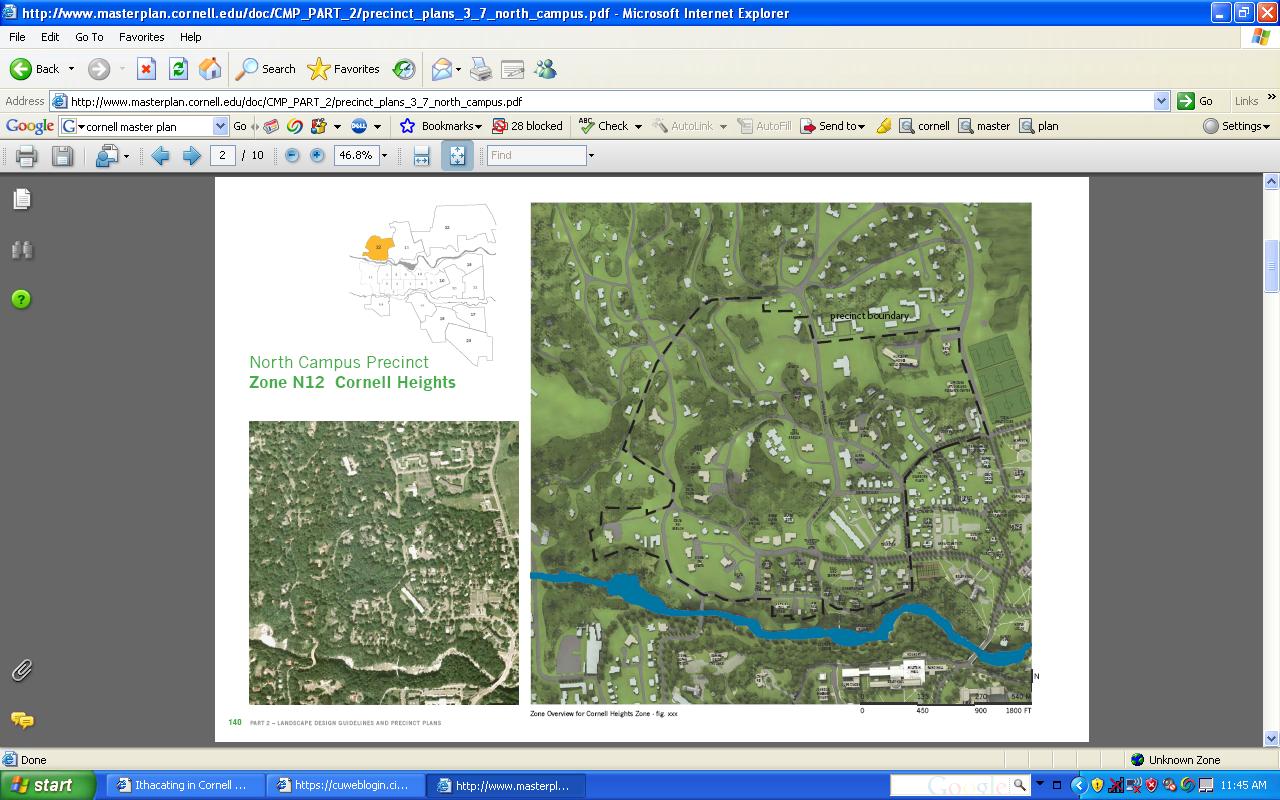
On another note, the building is visible in the master plan diagrams, as the large expansion that exists to the east of the current Wilson Lab structure:

So, our physical plant will continue to expand for some time yet.

[1]http://www.town.ithaca.ny.us/

[2]http://www.news.cornell.edu/stories/Aug08/ovp.forum.erl.html


Exploring West Campus

15 08 2008

First off, let me say I do not support nor condone any illegal activity, especially for the purpose of information gathering. That being said, going into prohibited construction sites is a lot of fun if you’re careful where you step and you can avoid the workers leaving for the evening.

So, this started when a friend of mine who happened to figure out that I was the writer of this blog sent me a message asking if I could go through the new West Campus and take some photos. Knowing he wasn’t in Ithaca, I decided that I would be happy to oblige this time  (but I certainly won’t be making it a habit).

Token War Memorial shot.

First off, the War Memorial. These photos are actually from my fraternity photo tour last month. The War Memorial was constructed from 1926 to 1931. It honors the 264 Cornellians who were killed in action in World War I. However, it does not honor a 265th death, that of Hans Wagner 1912, who was killed in action while fighting for the Axis Powers [1].

Noyes and Hans Bethe dining hall have grass roofs. Cornell, take note to not follow IC’s folly and set off fireworks right next to a building with a grass roof; it just might catch fire.

Any makeshift fence can be scaled. But why bother when there’s a narrow space between it and the wall?

Base of the War Memorial steps, being renovated.

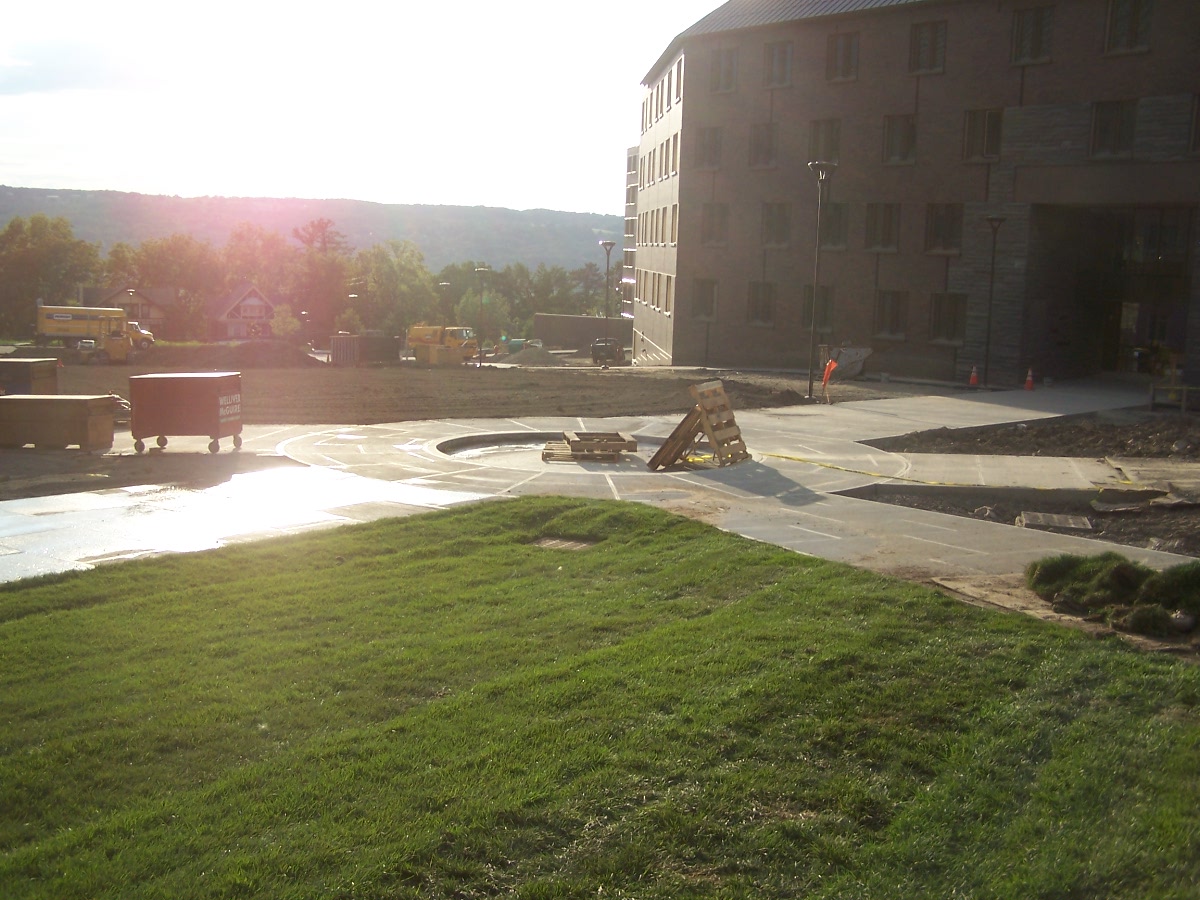
A new central plaza area between House 5 and Bethe.

House 5, south face

Don’t mind my shadow.

Curious horizontal window slits near the entrance of House 5.

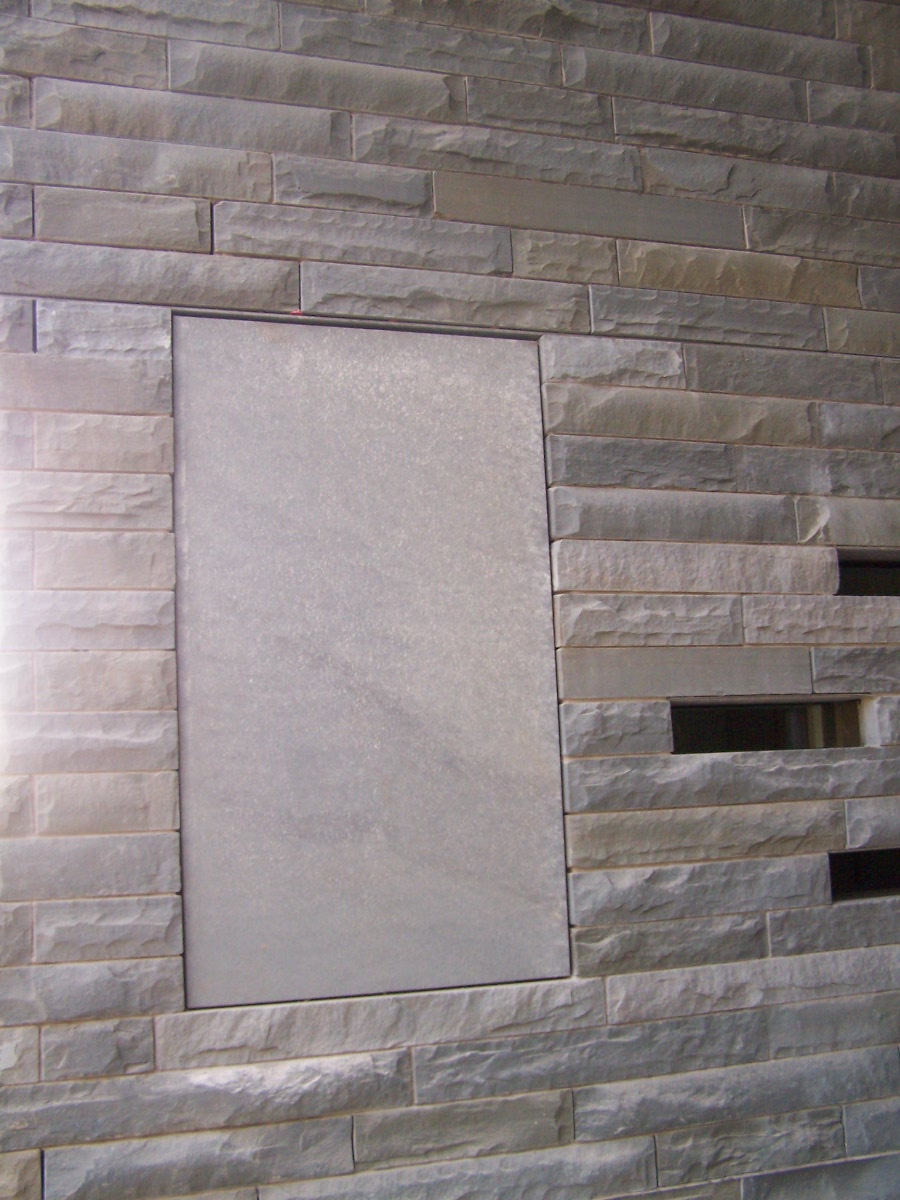
Nameplate, unfinished for now.

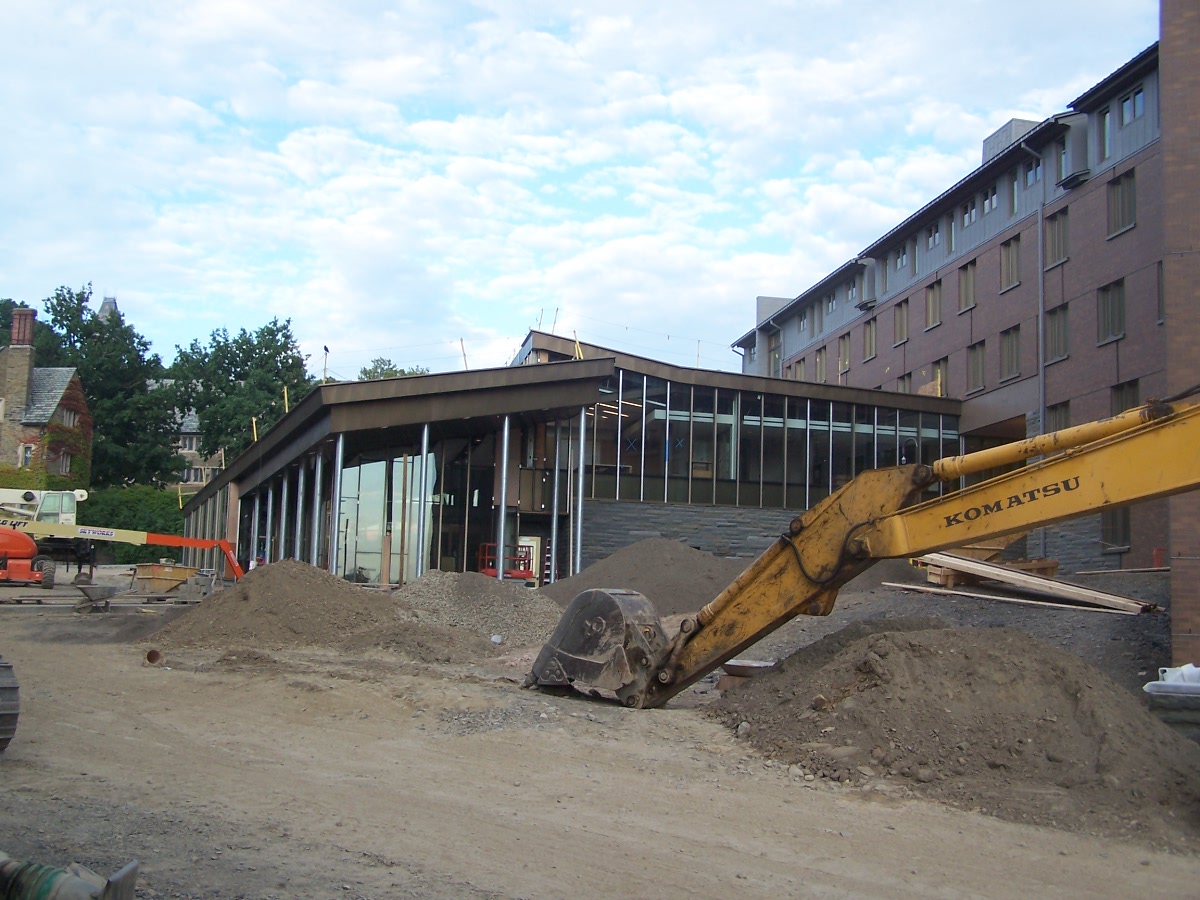
House 5 Dining area, NW corner

north face, house 5

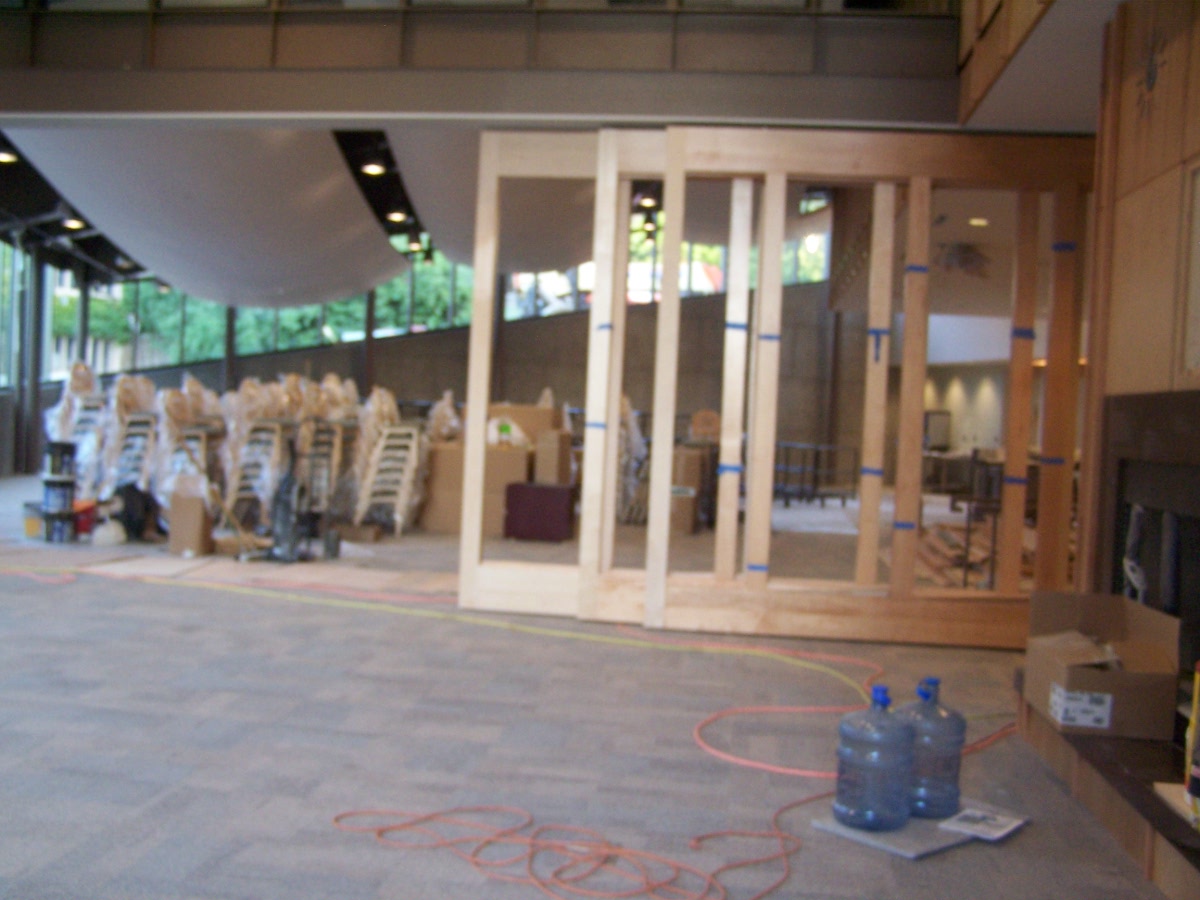
House 5 dining area interior, unfinished

Keeton House, north face

Noyes, from Keeton

A corner plaza next to Keeton. Psi Upsilon is in the back.

A plaza/planting area just outside of Keeton.

Keeton’s connective corridor.

A staircase at Keeton that leads under the corridor.

A large blank wall next to the previously mentioned staircase.

Note the coloration of the glass in the connective corridor.

Keeton’s south wing. Notice how the top floor has a different window pattern and uses different materials.

An interesting if not aesthetically pleasing entrance area for Keeton’s north wing.

Had to hide from construction workers by hiding behind the board next to the Penske truck.

The unfinished nameplate for Keeton.

Keeton’s balcony.

An architecturally interesting juxtaposition of Baker Tower, Becker House and the Johnson Museum.

Keeton’s lobby area

The dining area and an adjacent lounge in Keeton House.

A random hall of dorm rooms in Keeton.

***

Boldt Hall and Tower

ATO painted their house, it seems.

As for the photo request…consider it fulfilled.

[1]http://cornellsun.com/node/19107


North by Northwest of Campus

12 08 2008

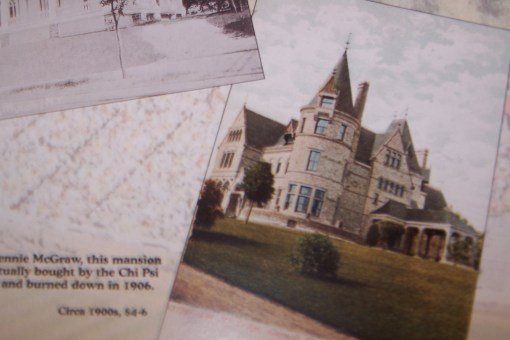
The house of the Chi Psi fraternity of Cornell University. Chi Psi has had a colorful if traumatic history in its century-plus long history here at Cornell. The Chapter at Cornell was founded in 1869. While they lived elsewhere, Jennie McGraw, the daughter of John McGraw, who was a wealthy lumber merchant and one of the first trustees of Cornell (for whom McGraw Hall is named) [1], fell in love with the first university librarian, Daniel Willard Fiske. She was old for loving at the time, pushing forty. She was also suffering from terminal tuberculosis. Regardless, she and Willard eloped and engaged in a whirlwind tour of Europe, while an opulent mansion was built on the edge of the gorge. She lived just long enough to see it with her own eyes, passing as they arrived home in 1881 [2]. Willard moved in, but his behavior was considered a little too exuberant for someone whose wife just died. Plus, due to some legal issues with Jennie’s will (which might make for a good entry another day), he and Cornell ended up on really bad terms, and he spent most of the rest of his life in Italy (on the bright side, he somewhat reconciled with Cornell in later years and donated his library upon his death in 1904 [3]).

That story is tangent to Chi Psi. Willard sold the opulent McGraw-Fiske mansion to the fraternity around 1881[4]. It was during the cold night of December 6th 1906 that the second deadliest campus tragedy in Cornell’s history occurred.

Sources tend to indicate it was caused by flammable polish being used on the floors. Others have gone as far to suggest that the house was cursed due to Jenny and Willard’s indiscretions. Regardless, the house caught fire. And in the days before real fire engines, any water to be used on the house (that wasn’t frozen) was a mere trickle. Of the twenty-six fraternity brothers living in the house, four died. When one of the exterior stone walls collapsed, it landed on volunteer firemen from the city of Ithaca, killing three of them. By the end of the night, the house was destroyed, and seven people were dead [5].

Photo Courtesy of "Greetings from Ithaca"

Photo Courtesy of “Greetings from Ithaca”

Through the tragedy, the fraternity persevered. They built the current house the following year (known as “The Lodge”), and have lived there since.

So, I took two photos partially to get a good idea of the shape and ornamentation of the house, but more because a woman in a towel came up from the gorge as I was taking photos…and I didn’t want to give the wrong idea. I ran south after a large guy appeared by her side, and she probably thinks I’m a creeper and pervert. I prefer photos of ornamental busts to women’s busts.

***

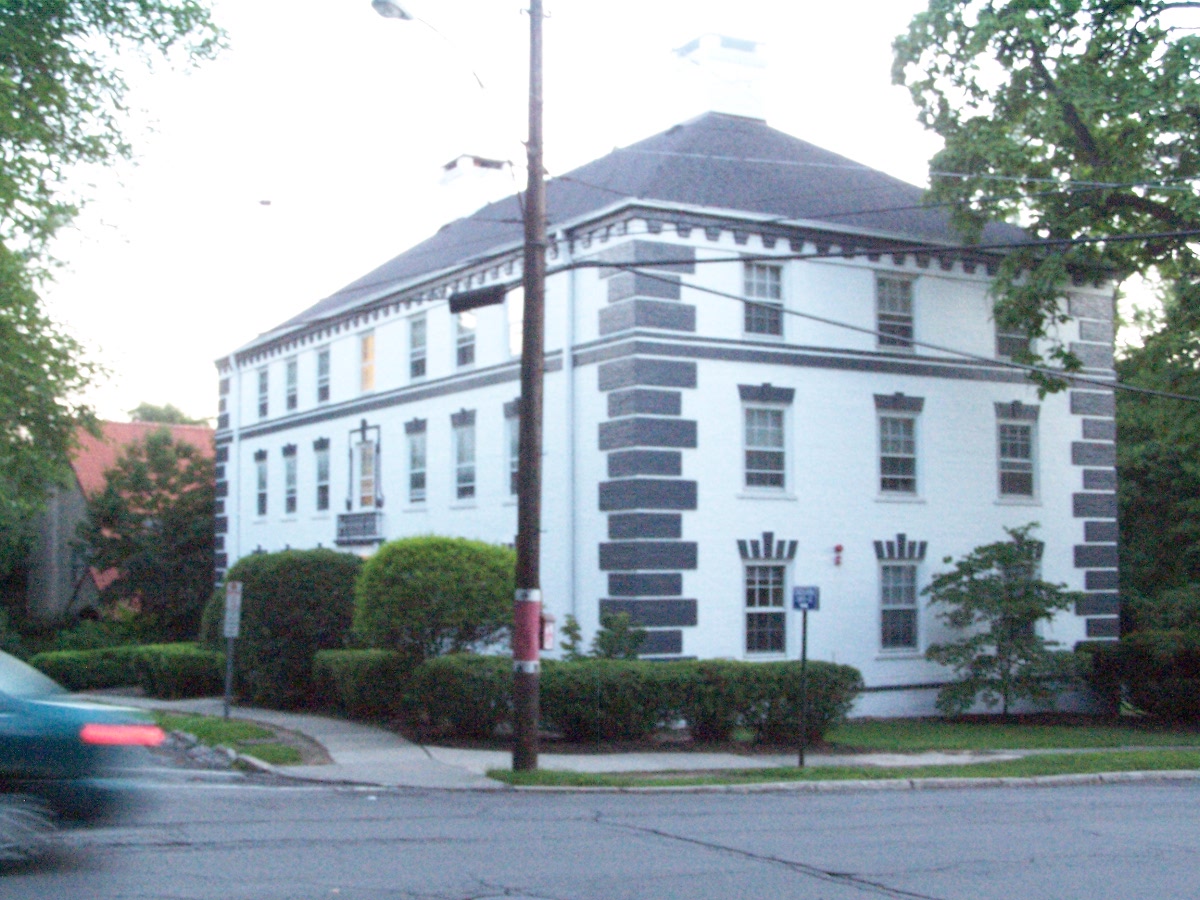
The Thurston Court Apartments is a 22-person university-owned apartment building with one and two-bedroom student apartments [6]. Primarily used for grad housing, in recent years the building has been opened up to undergrads as well. The building was built in 1932 (fun fact: the entire building was once painted white, including the ornamentation).

The house of Seal and Serpent fraternity, Cornell’s independent fraternity. The fraternity was founded in 1905, and the current house was built in 1929 in the Tudor Style [7]. In the past several years, the fraternity has suffered from a chronic shortage of interest; rumor mill says they only had three pledges last spring.

Maybe this has something to do with it:

“…Fraternities have a reason to fear such stereotyping. The Seal and Serpent society, a house which was primarily gay in the 1980s but now has just two gay brothers out of 16, has had some difficulty overcoming “the gay” label during rush…”

I s’pose this doesn’t help – I still hear this from a lot of people both in and out of the Greek community  (the quote is from a Nov. 2000 Sun article).  Going through this blog’s search bar history, there are over 200 hits for “gay fraternity”.  I’m willing to bet it’s not with good intention.


The house of Alpha Phi sorority. Alpha Phi Cornell was founded in 1889 with assistance from the Alpha Chapter at Syracuse University [8]. Originally based out of Sage College, they lived with Alpha Zeta for a year  and on their own in a couple different houses until they bought their current house from an Alpha Phi alum in 1921. The side wings were added in 1937, and a back wing (not pictured) was added in 1961. The chapter went under a reorganization sometime in the early 1990s due to low membership intake, but I’ve found nothing that indicates it ever closed. Currently, Alpha Phi has one of the highest sorority membership numbers at Cornell.

Hardly 500 feet away is the house of Kappa Kappa Gamma sorority. I know Kappa has been in the news lately; and it really sucks to be them right now (unless you like embarrassment over attention). The sorority’s Cornell (Psi) chapter was founded in 1883, and moved into the current house in 1921 [9]. The chapter was inactive from 1969 to 1977, a time period well-known for its anti-Greek sentiment.

Louie’s Lunch was founded in around 1918 by Louie Zounakos, who emigrated to NYC from Greece, and later moved up to Ithaca. The original Louie operated the truck up until 1955 [10]. The original truck was replaced in the late 1940s. The truck was then owned by the Machen family until 1997, and is now currently operated by Ron Beck. I do have a preference to one truck over the other, but I won’t say which.

100_3462

Photo courtesy of “Greetings from Ithaca”

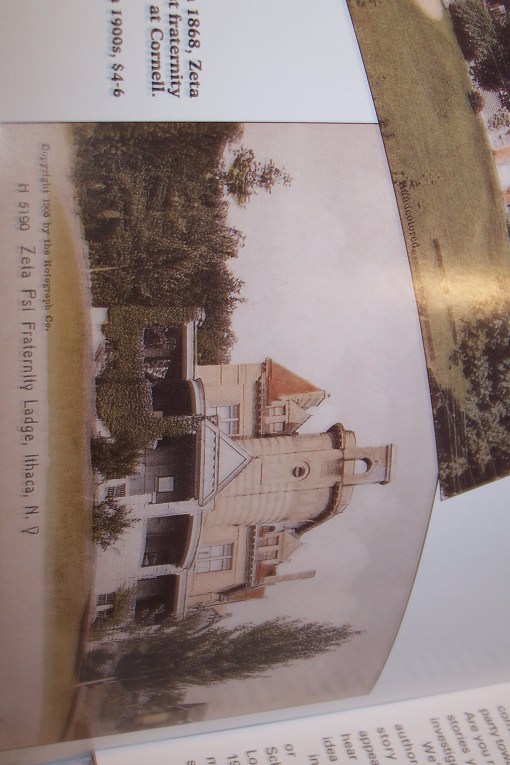
The house of Zeta Psi fraternity. The house, built in 1930, was originally that of Theta Xi. Zeta Psi, meanwhile, has the distinction of being the first fraternity founded by Cornell, even if it was decided by a coin flip (see the entry for Chi Phi). The chapter built a luxurious house in 1891 on the corner of Williams Street and Stewart Avenue, but moved out in the 1940s due to low numbers as brothers left to go fight in WWII. The original house burnt down in the late 1940s, and was replaced by a parking lot. In the meanwhile, Zeta Psi lived with Young Israel for a short while before moving into 660 Stewart Avenue in the late 1950s. A donation from a wealthy alumnus allowed them to buy the current house in 1972 [11].


[1]http://www.cornell.edu/search/index.cfm?tab=facts&q=&id=497

[2]http://en.wikipedia.org/wiki/Jennie_McGraw

[3]http://en.wikipedia.org/wiki/Daniel_Willard_Fiske

[4]http://www.adphicornell.org/adphicor/files/FraternityRow.pdf ***

***Page 10 has a picture of the McGraw estate in its heyday

[5]http://www.chipsi.org/news/6143/Cornell-Fire-Centenary.htm

[6]http://www.campuslife.cornell.edu/campuslife/housing/graduate/thurston-court-apartments.cfm

[7]http://www.sealandserpent.org/house.html#

[8]http://www.dos.cornell.edu/dos/greek/chapter_details.cfm?id=4679

[9]http://www.dos.cornell.edu/dos/greek/chapter_details.cfm?id=3280

[10]http://www.louieslunch.com/history.htm

[11]http://www.psiofzetapsi.org/History.html

[12]https://cornellsun.com/node/1720


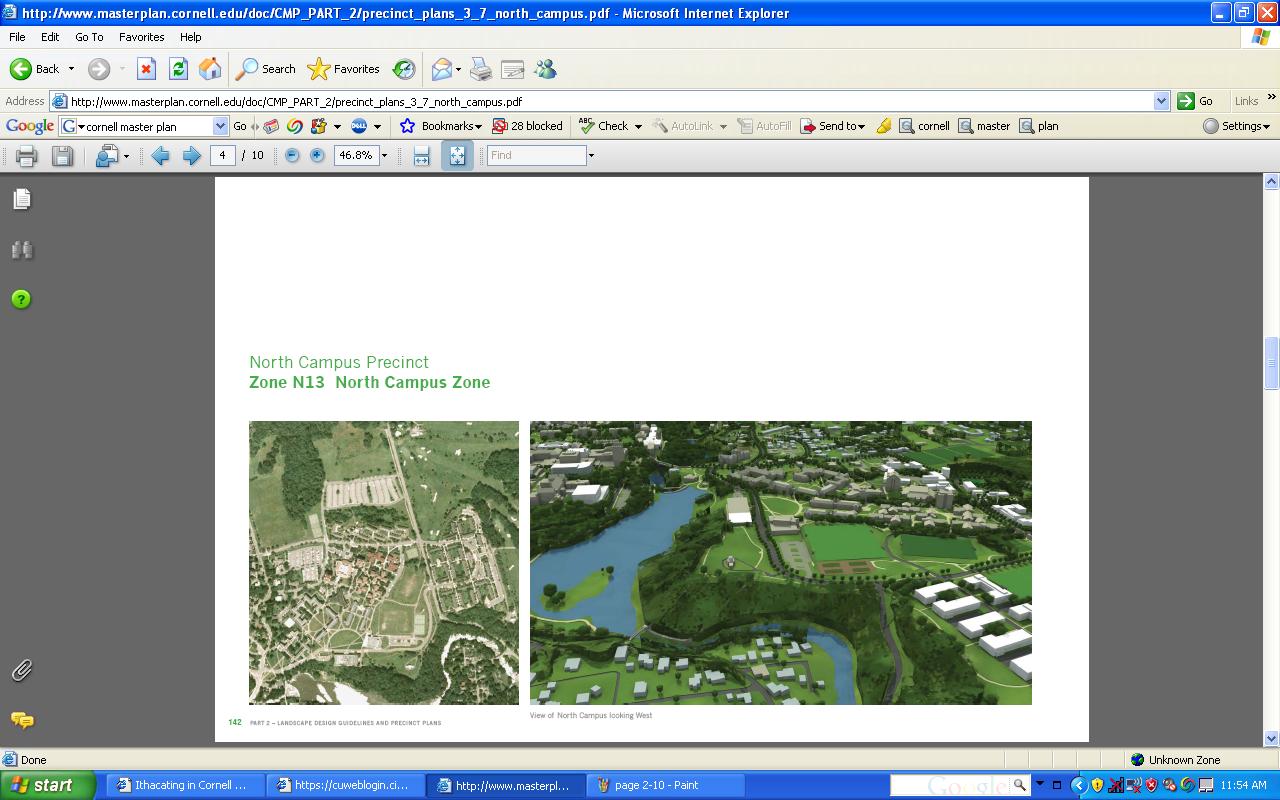
The Cornell Master Plan, Part 5 of 5

10 08 2008

Well, it’s about time I wrap this up. I meant to do this a little earlier, but I became a little sick towards the end of last week, so feeling better was more important than maintaining the IiCH blog.

The Cornell Heights precinct sees change listed under the “although no specific development sites have been identified, additional development may be considered on and(sic) case-by-case basis.” Since this is a nationally-recognized histroic district, I wouldn’t expect anything out of character with the current sttuctures in the neighborhood.

Also, to tie this in with the disppearing suspension bridge incident, the image above has also apparently washed out the Stewart Avenue bridge, making it more likely it was just some half-fast work on the image.

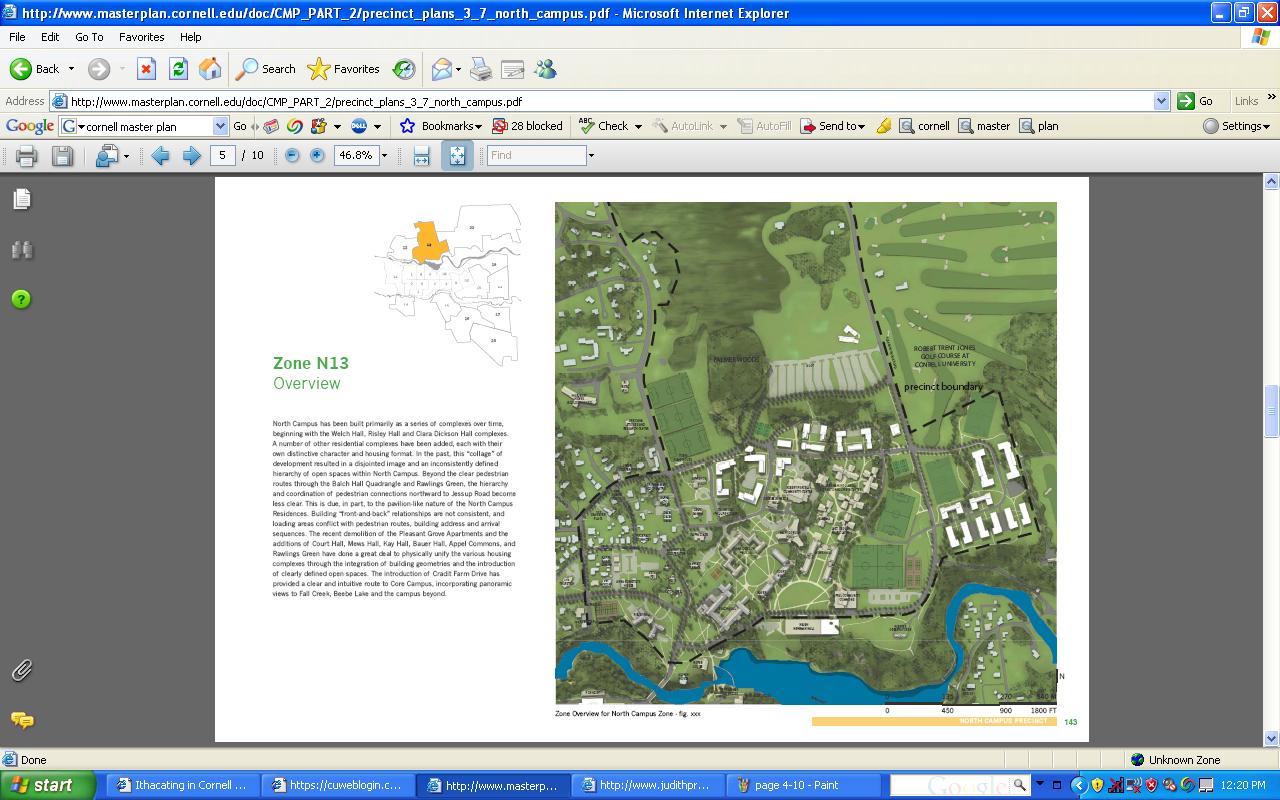
For North Campus proper, there are some notable, but not really controversial changes in the physical plant. The only thing currently underway is the $15 million renovation expansion of Helen Newman designed by architectural firm Dagit-Saylor (they also designed Appel Commons[1]). If the site ever goes back online, you can view the exterior plans for the expansion at this website:

http://residential.alumni.cornell.edu/n_helennewman.cfm

Some of the propsed changes include developing the CC parking lot into dorms, replacing the townhouses with a different set of dorms, and replacing Hasbrouck with some other form of housing. A new dorm would also be built across from the north-facing corner of RPU. I don’t hold much weight for plans for North Campus, probably because the plan developed by Richard Meier in the ’80s was eventually dropped[2], and Cornell just seems to decide spur-of-the-moment what will be built.

The plan suggests that dorm plans be two to four floors in height, but higher heights may be considered depending on the location. The hodge-podge necessitates that new constructions manage to make the North Campus more cohesive without interrupting intuitive pedestrian traffic flow. Which is big and fancy language just to say that it shouldn’t make getting around North more difficult than it already is.

I look at the designs for the more cluster-style developed to reaplce the townhouses and Hasbrouck, and I see a lot of opprotunities to name buildings. I’m sure Cornell could tote that to wealthy alumni that for only $3 million or $5 million, you could get a ten-unit dorm on North named after you. But, they didn’t really do it with the low-rise/high-rises, so they might just leave them nameless. Regardless, it seems rather poor planning that the townhouses, which were built as upperclassmen housing in 1989, would be torn down so soon. More athletic fields would be developed on the sapce freed up by the demolition of Hasbrouck, and some intersections would be realigned to better define the area and improve traffic flow. The idea is thrown out there that further development on Jessup Road have a “main street” character to it.

As for Collegetown, relatively little is mentioned. The plan hinges more on the recommendations of the Collegetown Vision Statement and finalized plan to be released in October of this year. The two primary itmes that are suggested are preserving the housing stock on Linden Avenue, and creating a pedestrian bridge from Eddygate and across the gorge to South Avenue. As someone who frequently commuted between Edgemoor Lane and Cascadilla last year, it wouls have been wonderful if this bridge has existed already. It was a little annoying that to walk a thousand feet as the crow flies, I had to walk up to College Avenue, cross that bridge, and then go down the steep and often icy hill next to the law school. A bridge from Eddygate to South Ave. would have been really nice, and it would definitely serve to make the neighborhood more cohesive with the far southwest portion of campus.

***

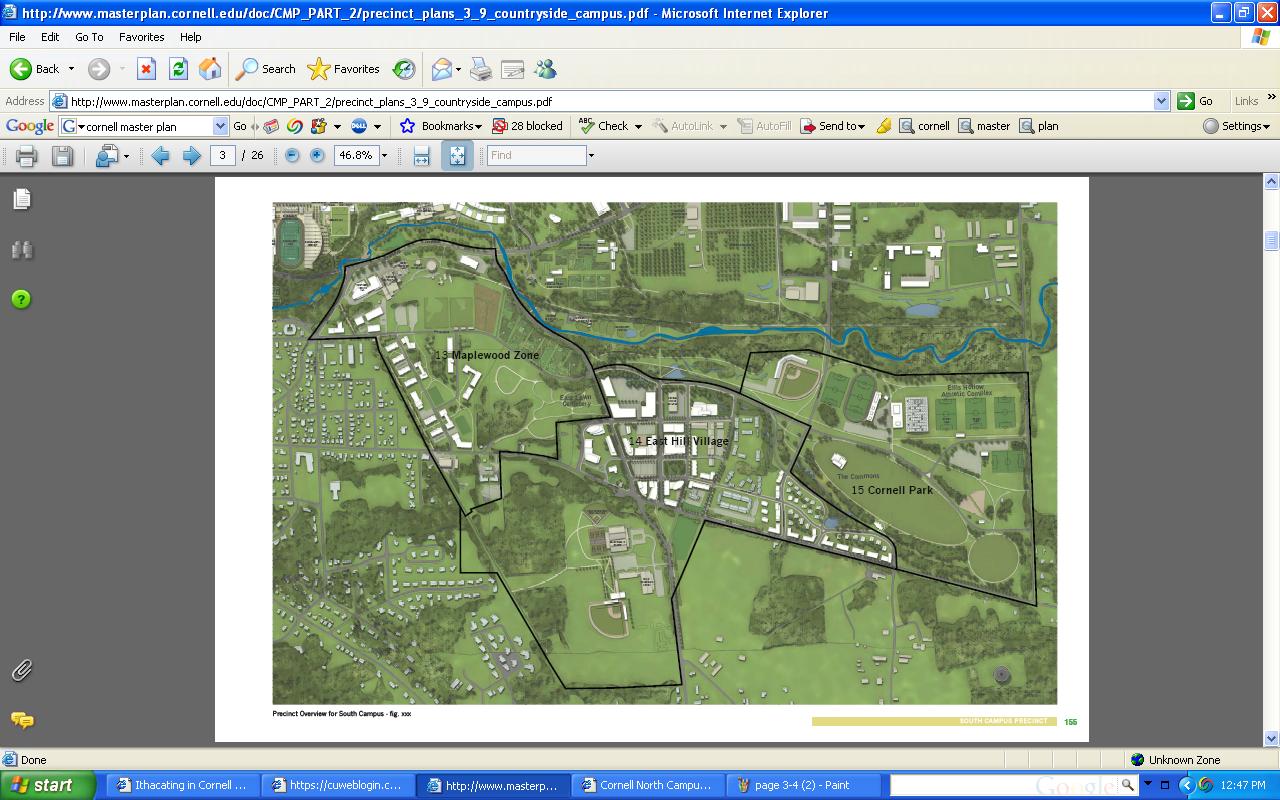
However, plans for a “South Campus” between Maplewood Park and East Hill are extensive. The area is devided into three zones- Maplewood, East Hill Village, and Cornell Park.

In the Maplewood Zone, the Maplewood Park Apartments are entirely replaced with “higher-quality”, more cohesive development. A site for townhouses also exists to the east of Maplewood Park. These areas are expected to be developed in the short-term (perhaps some of the $20 million Cornell is giving to Ithaca for affordable housing should go here?).

The total developed square footage will be between 450,000 and 1,000,000 sq. ft. With 240-480 residential units in the zone.

East Hill Village is an entirely different animal than its predecessor. The East Hill Plaza we currently know is essentially a strip mall, some apartments and a few outlying retail and office buildings (and Oxley Equestrian Center, if you count that). The plan wants to change that.

The area typifies a New Urbanism style development. Mixed-use buildings with an internal grid define most of East Hill Village. Active-use structures, like a grocery store, restaurants and retail stores are encouraged on the street level, with residential and/or office uses on the upper floors.

***

Meanwhile, the little-used fields to the east of East Hill become the site for Cornell’s new athletic fields and facilities (Ellis Hollow Athletic Complex). The park itself might be a large lawn or meadow that is used for general recreation or as a concert venue.

Cornell has big plans and big dreams. However, like any plan, conditions and preferences might change, so it would be unwise to consider everything to be set in stone. Still, it’s interesting that our insitution has such grand aspirations.


[1]http://www.judithpratt.com/Helen%20Newman%20Hall%20Proposal.pdf

[2]http://en.wikipedia.org/wiki/Cornell_North_Campus


Northwest of Campus

7 08 2008

The house of Sigma Alpha Epsilon fraternity. Sigma Alpha Epsilon is one of those fraternities that tends to come to mind when people want to typecast the Greek system at Cornell. It’s large (~80 men), and prestigious, and is the subject of so many dirty rumors (true or not) that it would make Lindsay Lohan blush. The house goes by the formal name “Hillcrest”, and was built in 1915 [1]. An addition was built in the early 1960s (on the left side of the photo). This is the fourth house of SAE and the second “Hillcrest”, the first having burnt down in a spectacular fire around 1911. SAE and Chi Psi have a standing rivalry.

Next door to SAE is Alpha Delta Phi, colloquially known as Alpha Delt. The fraternity was established in 1868, and was among the first to build a chapter house, which was constructed in 1878 [2]. As students moved to different areas of campus, Alpha Delt launched plans to construct a new building in the prairie house style (which you can see on their homepage). This house was built around 1903, but due to electrical malfunctions, burnt down in a spectacular fire in February 1929. A new house, built in the collegiate gothic style (the current house) was built in 1931.

Alpha Delt has always struck me as a more upscale version of SAE. But, they’re not above visual humor; like their parking lot for instance.

I wouldn’t be a good photographer if I didn’t get a photo of their super-sketchy windowless ritual building in front of the house.  Rumor mill says someone received third-degree burns in a ritual gone wrong two years ago at their initiation. Ah, so this is why fraternities like Delta Upsilon and Phi Kappa Tau were founded; to go against the cloak-and-dagger behaviors of other organizations.

***

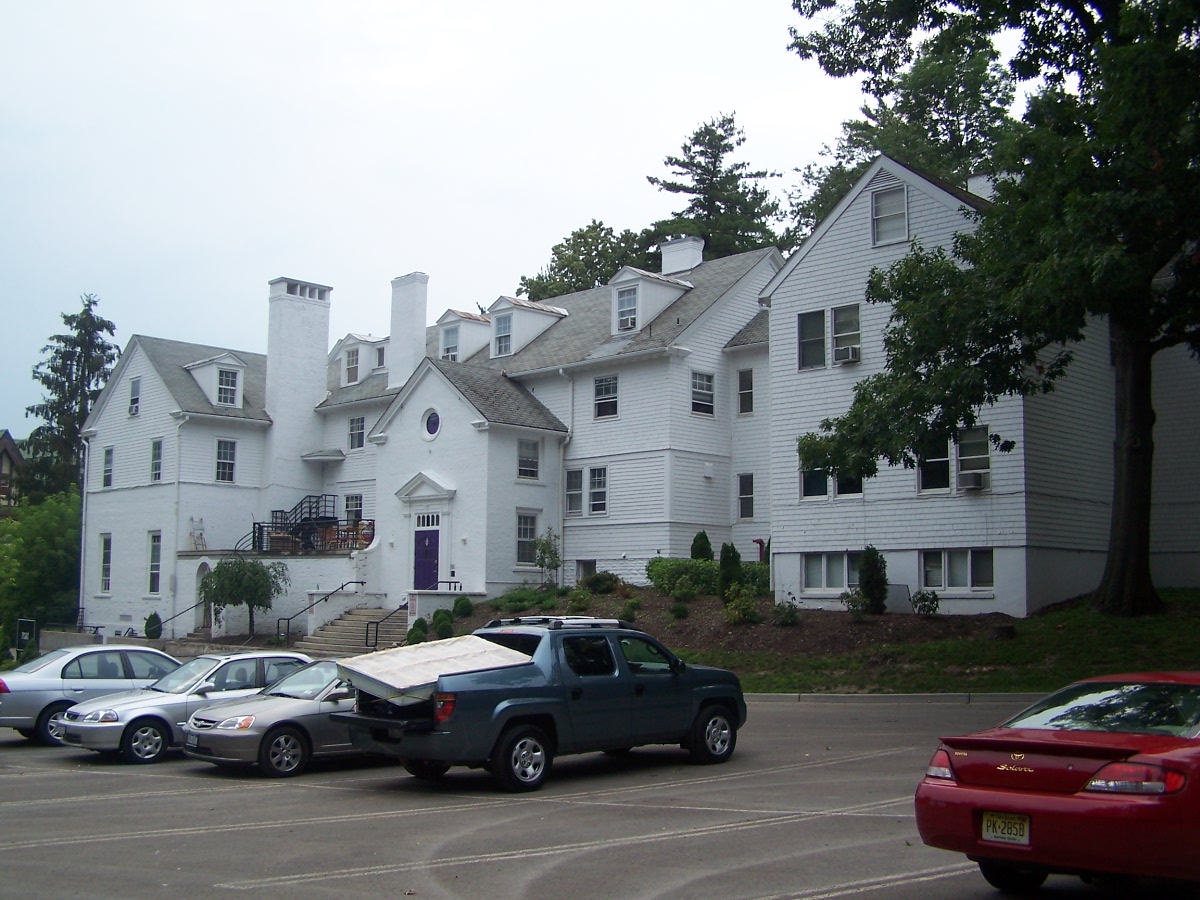
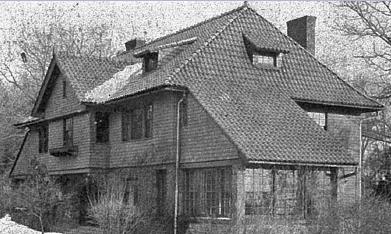
Although in a tightly packed area of high-profile houses, Phi Gamma Delta, or FIJI as it more commonly known, retains a distinct character. The house, known as “The Oaks”, is fairly nice-looking from the outside, especially since it was built around the 1900s. The original house, a private residence the fraternity bought,  looked like this before the extensive additions and modifications:

Throwing this disclaimer out there, I’m not a huge FIJI fan. The inside kinda scared me. That, and the Halloween party I went to there freshman year where some guy scantily-clad in leather was randomly hitting people in the crowd with a whip as he stood on a table. After the marks I received from that, I haven’t been inside since. Opinions aside, it’s a large house with a large membership.

One last thing…it rained shortly after I had taken the house photo. The mattress in the pickup was still there when I passed by a second time…and it was thoroughly soaked.

***

Mixed into the hodgepodge of frats is Watermargin, a co-op established in 1947 (co-ed since 1961/1968, the latter being the year it was formally approved[3]) by WWII verterans to promote undertanding and diversity in religion and race [94]. The name Watermargin comes from a Chinese Classical literary work, translated by Pearl Buck (All Men Are Brothers), in which fugitives fight the injustice of the Ming Dynasty at the water’s margin. Prior to 1947, the house served as a home for Phi Kappa Psi. The house was built in 1890 in the Colonial Revival style [5]. I’m still trying to determine what the house served as between 1912 and 1947.

Next door and contuinuing up University Avenue is Theta Delta Chi. They are colloquially known as “Thumpty”, or the much-maligned “Theta Drug”, supposedly because of the relative ease of obtaining drugs at the house. The house dates from the 1920s, making it one of the later constructions in the area. The running joke that I’m aware of suggests that its members are stoned all the time. Still, although they are the put of many jokes, they’ve managed to stay continuously active at Cornell since 1870, so they might as well take it in stride.

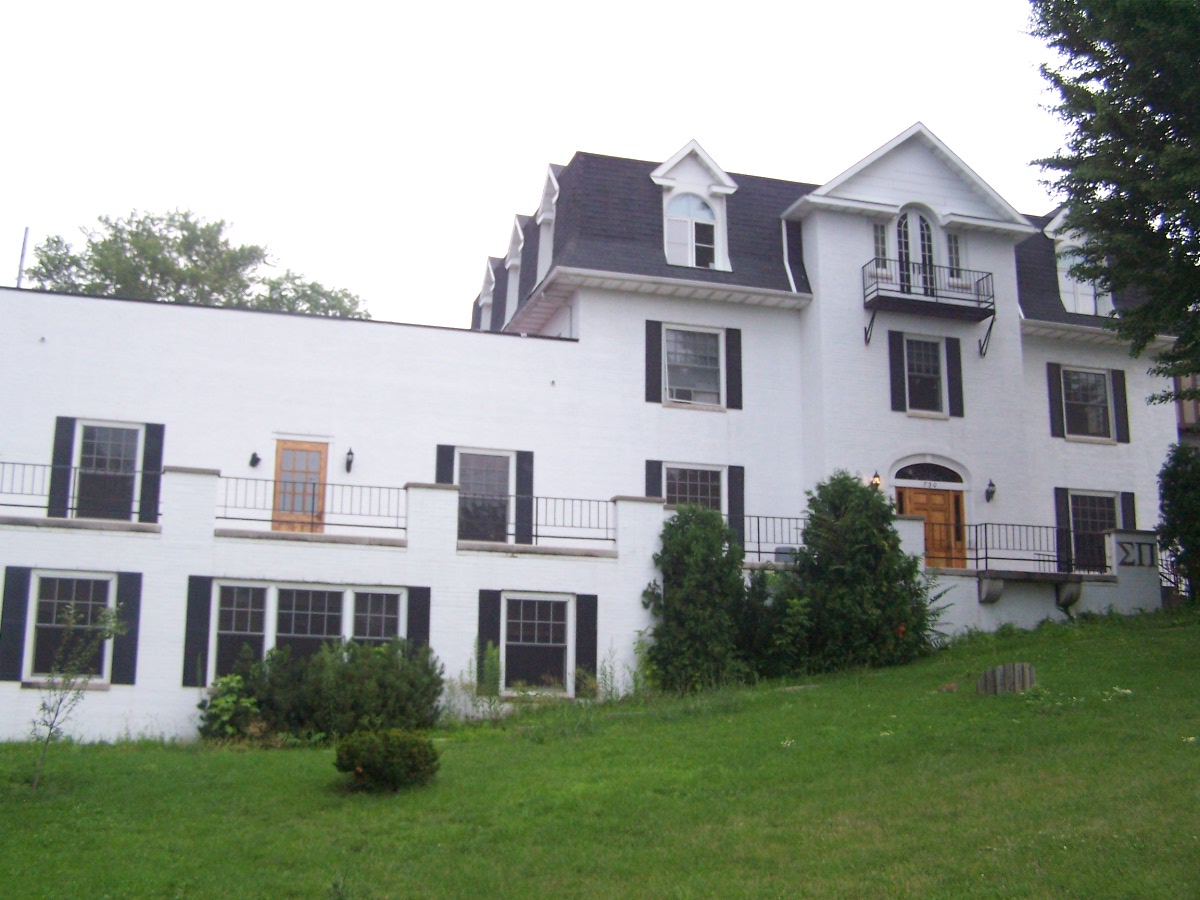
Sigma Pi is further up University Avenue. The original house on the property was built in 1870, burnt down in 1994, and a new, roughly-similar looking house, was designed by local architect Jagat Sharma and built in 1995 [6]. The fraternity was one of the largest at Cornell, until a nasty incident involving a Thanksgiving dinner gone wrong caused four freshmen to have to get their stomachs pumped[7], and Sig Pi losing recognition from the university (i.e. no pledge class). So, how about that fall rush…?

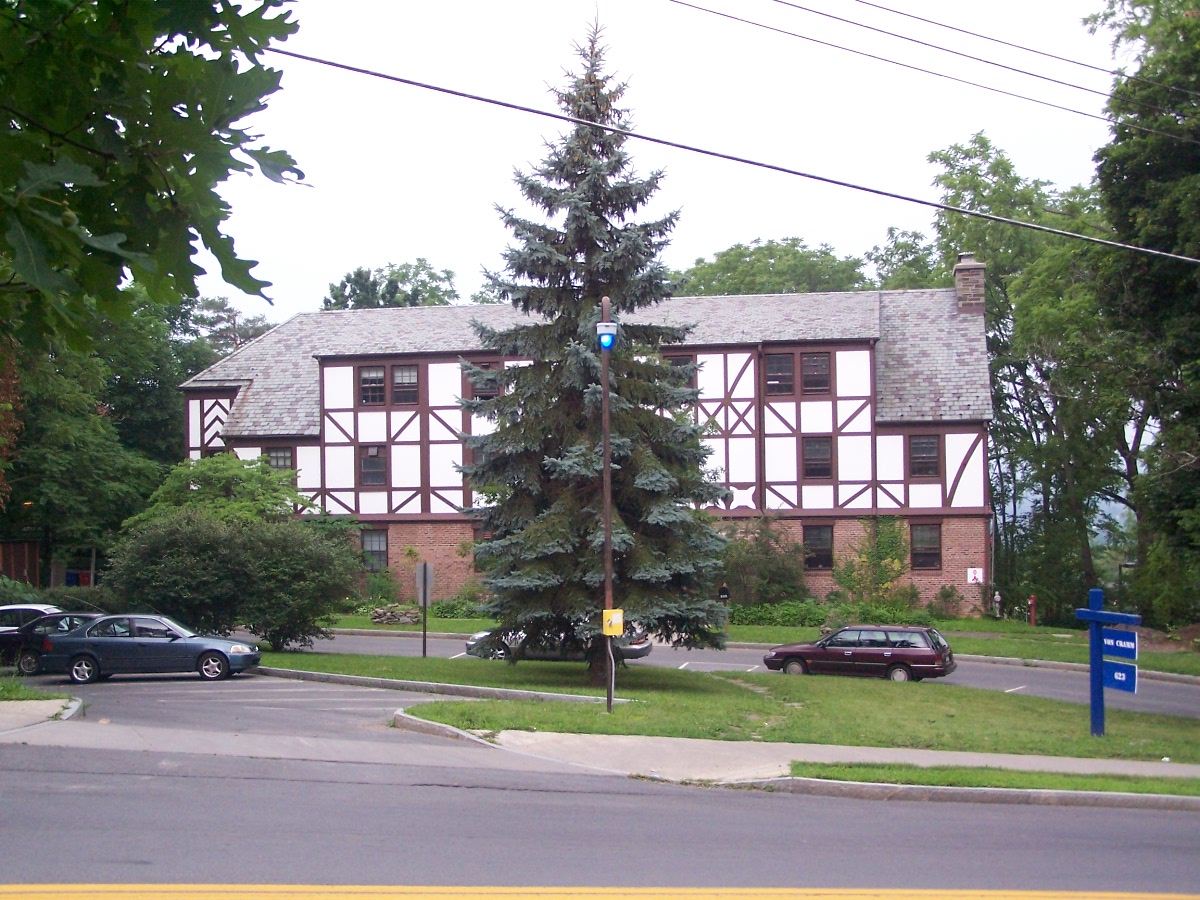
Going back the other way on University, we have Von Cramm Hall (I’ll hit Chi Psi at a later date). The co-op was founded in 1956 by an endowment from Thomas Gilchrist, in memory of his friend Baron Von Cramm. a Nazi German military officer who died trying to stop the Soviet retreat in 1941[8]. It is also the largest co-op, at 32 members. The house became open to women in the 1970s, and has a very strong leftist bent (Redbud Woods…). The house itself was built in 1955, standing on the property of one of the trio of homes owned by Robert Treman. The house, more of the textbook-style tudor, burned in 1944 [9].

Sigma Nu’s house is tucked way at the end of Willard Way. The house dates from about 1910. The house is one of the more obscure ones to try and locate, but it has fantastic views of the West Hill in the town of Ithaca. Sigma Nu Cornell, founded in 1901, is a fraternity with a strong athletic presence.

Missed it the first time, not the second time. Sigma Phi Epsilon’s house on McGraw Place. The house was built in 1965 [10], replacing their former house at 112 Edgemoor Lane. After Sig Ep was gone in 2004 (google it, rumor mill had a field day with that one), ATO occupied the house, and Delta Chi shared it with them when they were rechaptered in 2006-07.

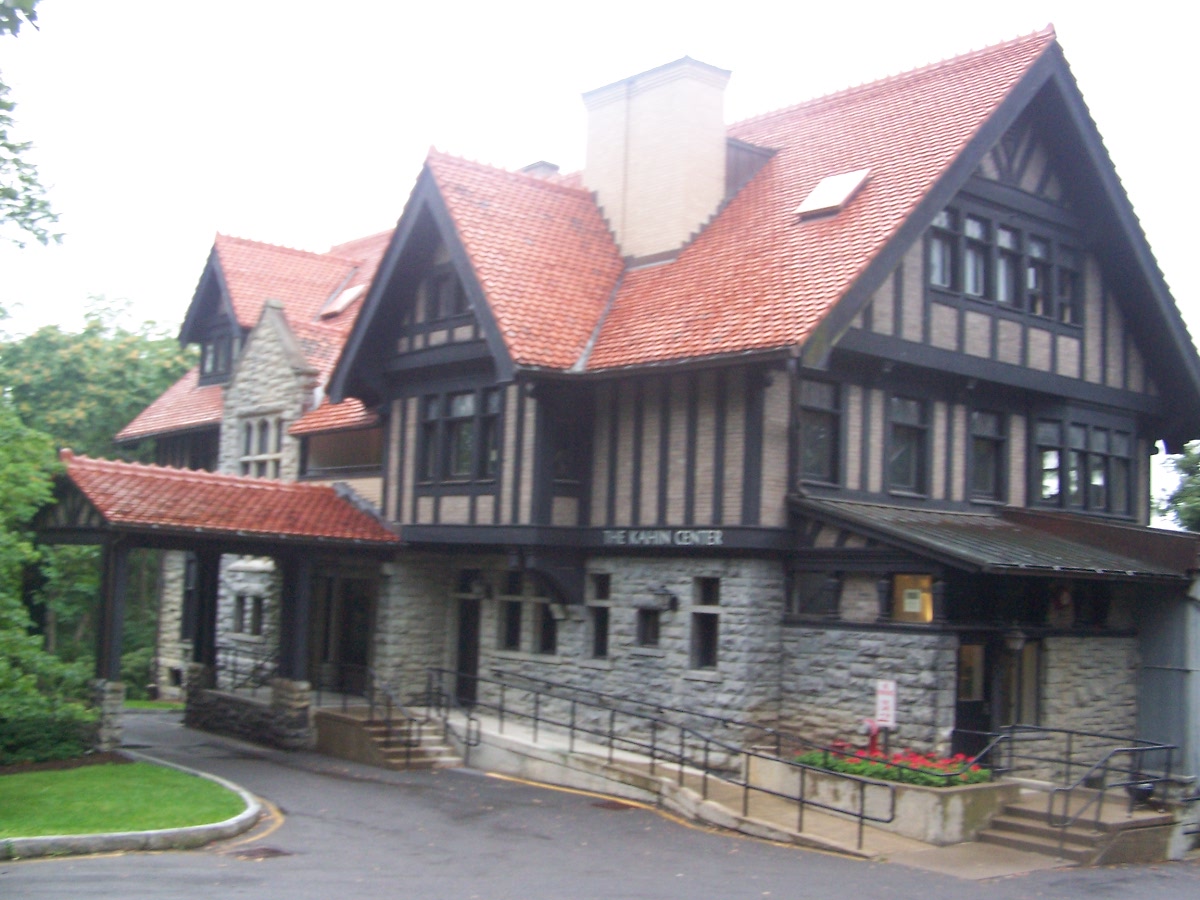
The Kahin Center is the second of the Treman trio. It was remodeled in 1945 as a lodge and as a communication arts center in 1970 [11]. It also mirrored the first house that burned in 1944.

The last of the trio is 660 Stewart Avenue, built about 1902 as the home of Elizabeth Treman and her husband Mynderse Van Cleef [11b]. The house of Zeta Psi for a few decades ending in 1969, the house is currently a 27-person co-op. Unlike most co-ops, this one does not have a meal plan [12].

This was really cool, since it has polished wood and it provided shelter from a sudden rainstorm. “The Chapel for Prayer and Meditation”. And what a nice little chapel it is. On the outside was the posting for a service to Mahatma Gandhi on 9/11/07. And the other events that have happened on 9/11.

And it had a great view. And this is where I’ll leave off for now.

[1]http://www.sae-cornell.org/public6.asp

[2]http://www.adphicornell.org/public6.asp

[3]http://cornellsun.com/node/21924

[4]http://www.campuslife.cornell.edu/campuslife/housing/undergraduate/watermargin.cfm
[5]http://www.fs.cornell.edu/fs/facinfo/fs_facilInfo.cfm?facil_cd=4758

[6]http://sharma-arch.com/restoration.htm

[7]http://cornellsun.com/node/26714

[8]http://en.wikipedia.org/wiki/Von_Cramm_Coop

[9]http://www.fs.cornell.edu/fs/facinfo/fs_facilInfo.cfm?facil_cd=3121

[10] http://www.rso.cornell.edu/sigep/History.html

[11]http://www.fs.cornell.edu/fs/facinfo/fs_facilInfo.cfm?facil_cd=4736

[11b]http://cornellsun.com/node/24153

[12]http://www.campuslife.cornell.edu/campuslife/housing/undergraduate/660-stewart.cfm


Far West Campus, Second Photo Tour

4 08 2008

The house of the Cornell Chapter of Delta Upsilon fraternity. The house was built in 1890 in  the Queen Anne Style [1], and burned at least three times over the next thirty years [2]. The fraternity was founded to counter secret societies. Which, considering some members have most certainly been members of the Sphinx Head and the Quill and Dagger, is vaguely ironic.

Cornell’s Telluride House, located on South Avenue. The house was built in 1910 and originally housed electrical engineers working for Lucien L. Nunn, and who also attended Cornell [3]. The Cornell chapter was the first Telluride house. Telluride takes it name from the town of Telluride, Colorado, where Nunn lived most of his adult life [4]. The house’s website describes as an intense academic experience, and that members “enjoy tremendous autonomy”. So, I’m getting the impression of a fraternity, only much more academic and not nearly as social.

Photo Courtesy of "Greetings from Ithaca"

Photo Courtesy of "Greetings from Ithaca"

The house of the Sigma Phi Society. The first house was torn down to make way for the law school. The second and current house was built in 1932 and designed by Frederick L. Ackermann in the English Country House style. Ackermann also designed Psi Upsilon, the neighboring fraternity, and the relation between the two is obvious. If you can’t tell them apart though, you’ve probably had too many drinks at Sigma Phi and it’s time to go home. Detail-wise, the two differ considerably.


Although, one can never go wrong with the right ornamentation. I honestly thought that someone was sitting up there when I first glanced at it. No, I wasn’t drunk.

Psi Upsilon’s House was built in the same year. I believe this is also the fraternity that was known for having an indoor squash court, so Psi U. has a bit of a reputation of being wealthy. The chapter has also been booted off campus twice, the latest last month (the other case was in 1979). 

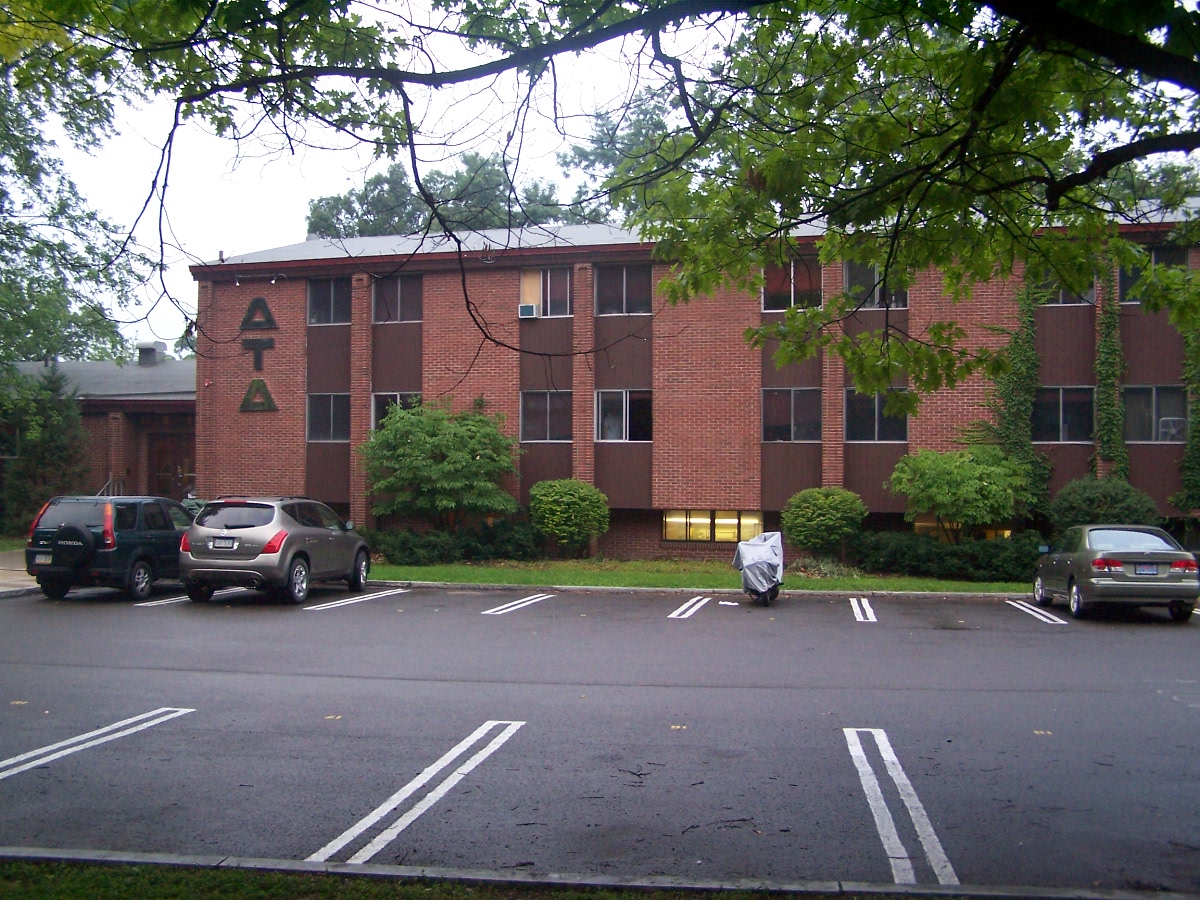
The house of Delta Tau Delta. The house was built in November 1965 [5], but they previously lived in a now-demolished house on Edgemoor Lane (the parking lot next to Theta is the site of their old house). The only reason I knew this house existed freshman year was that one of my roommates had a free magnet from DTD. Yeah, can’t say I care too much for that 60s archi-torture.

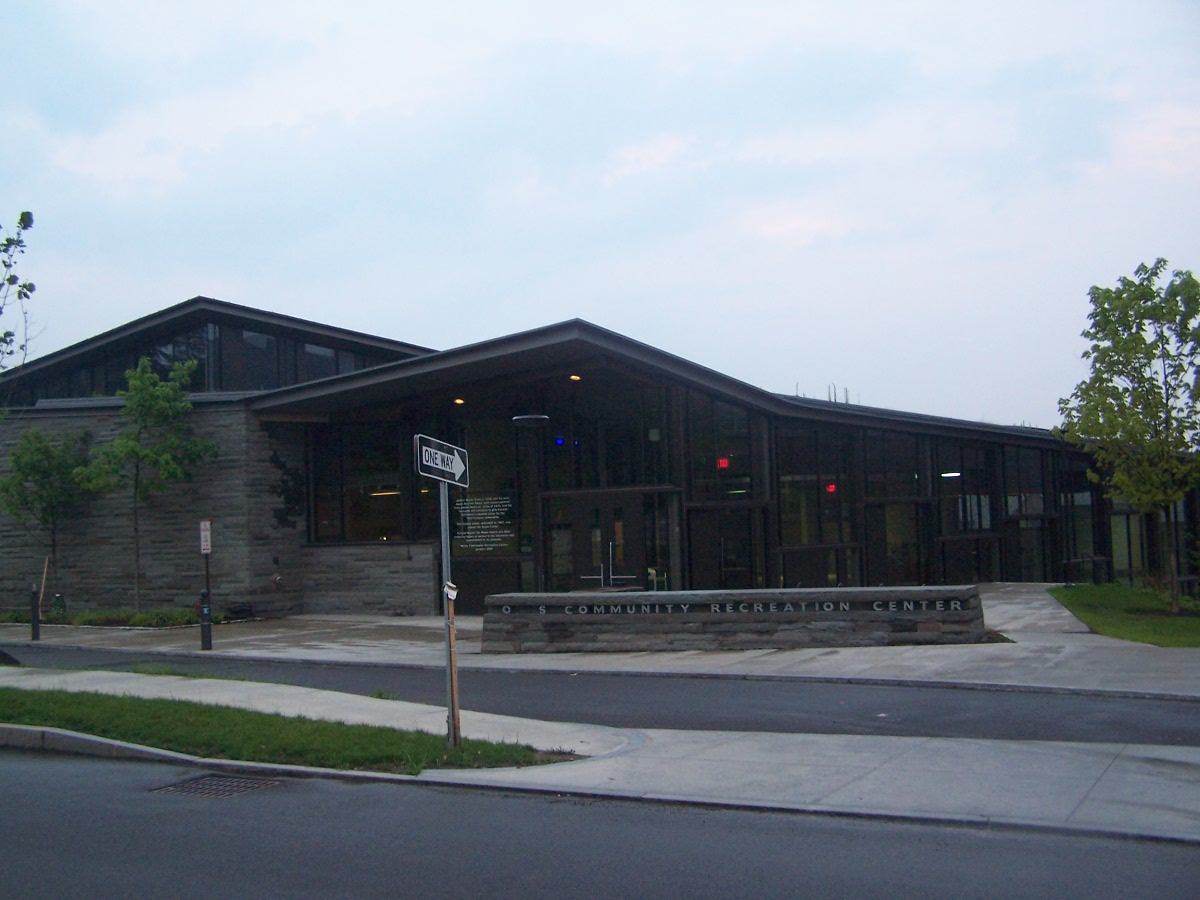
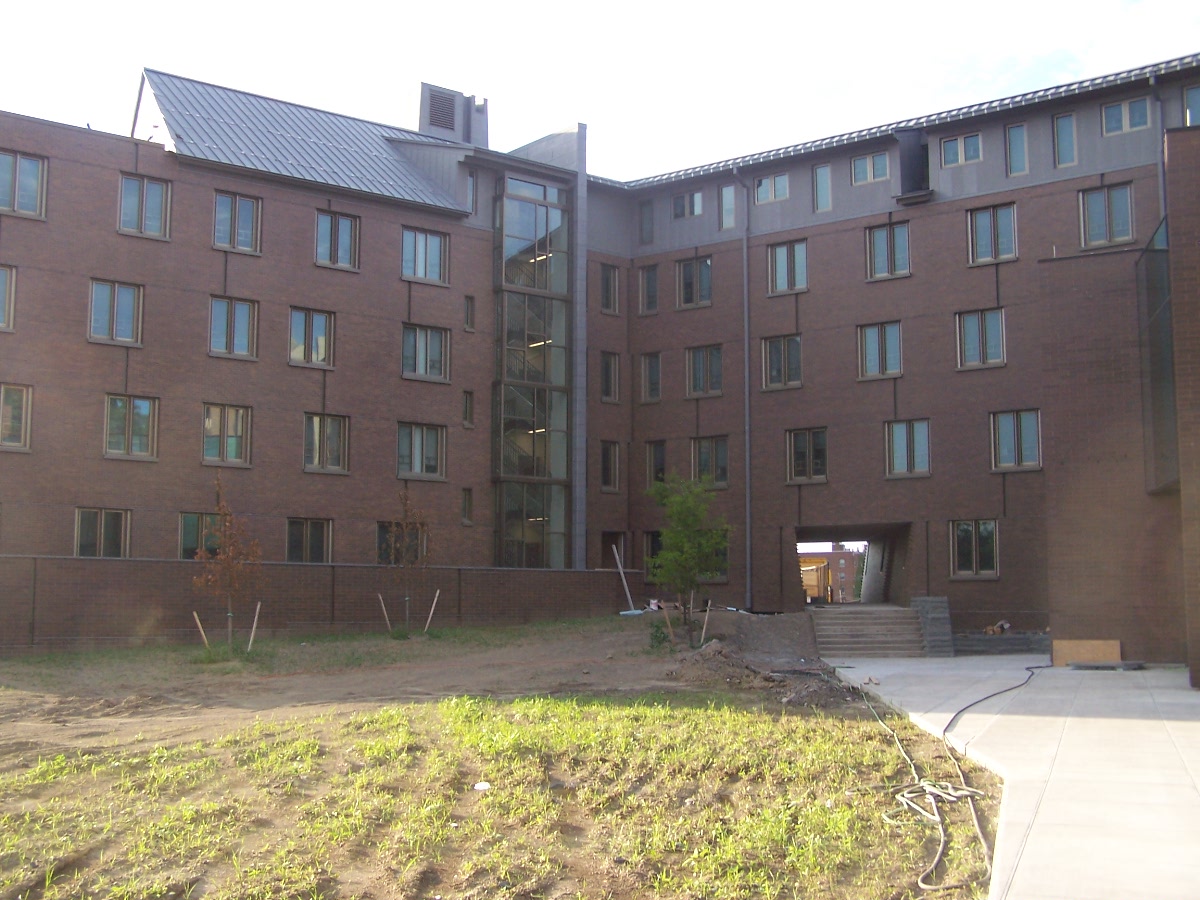
The new Noyes Center is about the only thing I like on the newly reconstructed West Campus. Completed in Janurary 2007, the building serves for community functions for West Campus (weight room, convenience store, etc.).

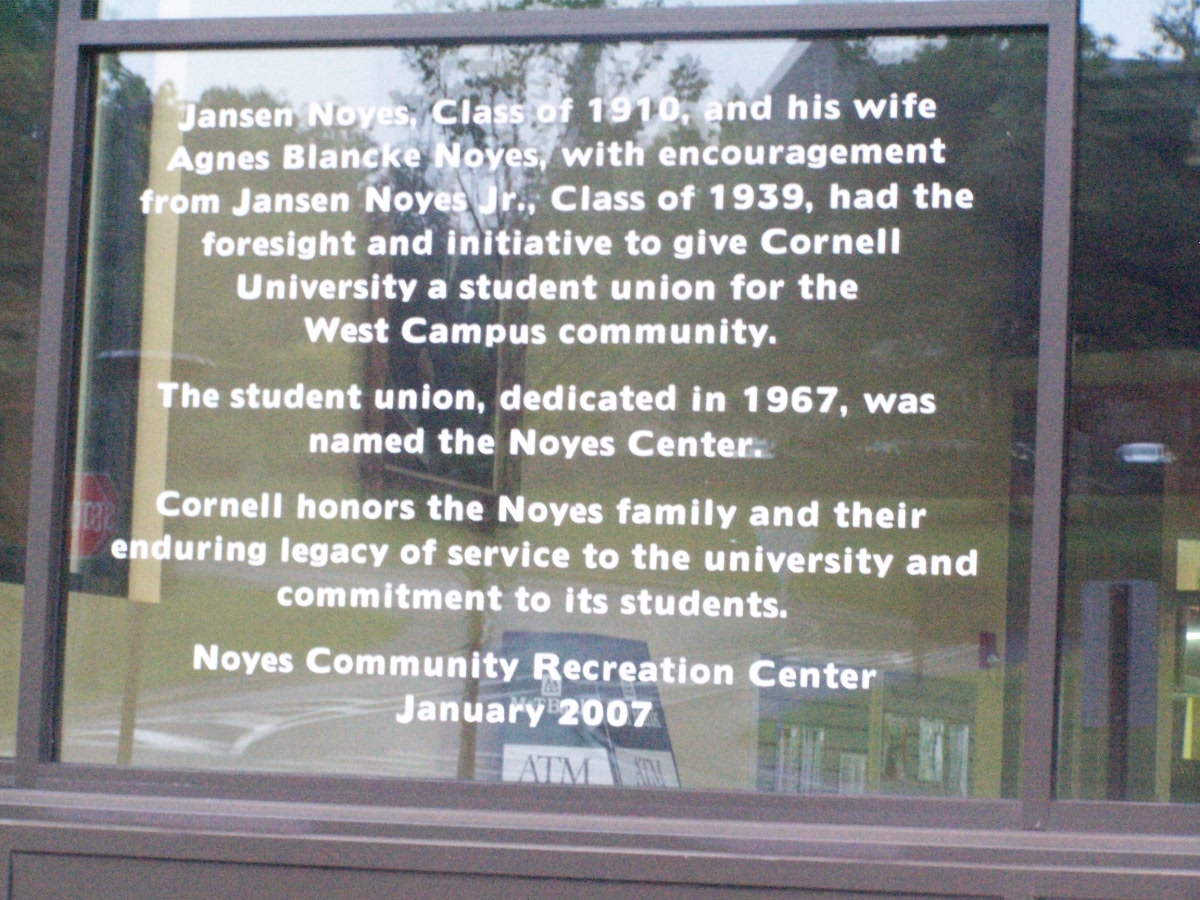
The original student union, a penal-style brutalist structure, was dedicated in 1967 to Jansen Noyes 1910. Before the legal drinking age was raised in 1986, it had a “pub” to serve students.

 (photo courtesy of http://andrew.loewer.name/musings/)


[1]http://www.fs.cornell.edu/fs/facinfo/fs_facilInfo.cfm?facil_cd=4722

[2]http://ecommons.library.cornell.edu/bitstream/1813/3536/23/021_18.pdf

[3]http://www.tellurideassociation.org/programs/university_students/cornell_branch/cb_general_information.html

[4]http://en.wikipedia.org/wiki/Telluride_Association

[5]http://www.fs.cornell.edu/fs/facinfo/fs_facilInfo.cfm?facil_cd=4776