News Tidbits 8/27/13: Gannett Expansion Gets Greenlighted

27 08 2013

100_6620

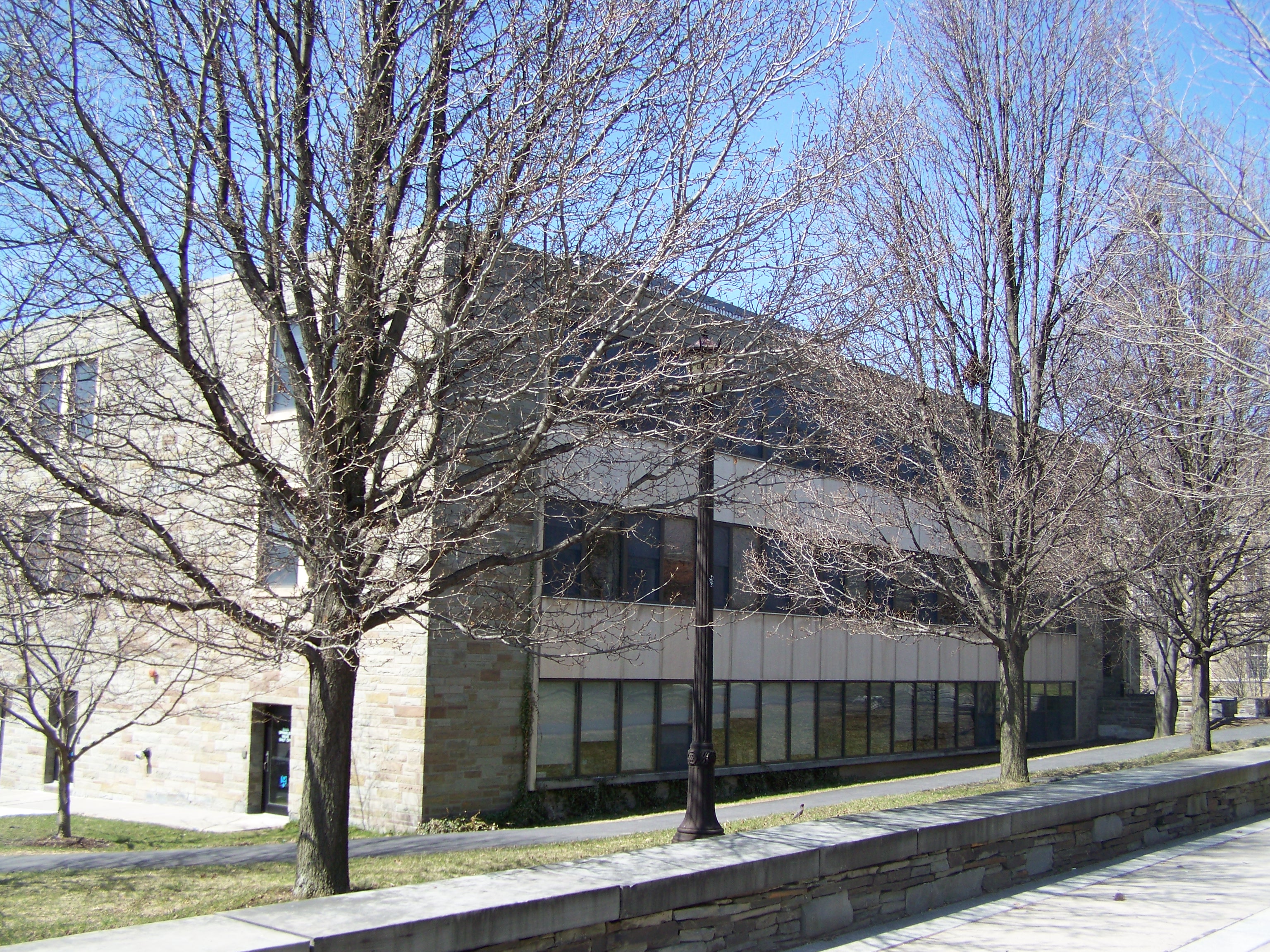
With the donation of $5 million from the chair of trustees Robert Harrison ’76 to launch the fund raising aspect of the project, the Gannett expansion has now solidified into a concrete project in the planning stages. Initial plans call for an increase in the size of the building from 38,000 sq ft to 96,000 sq ft, and a targeted completion date for October 2017 (which means the vast majority of kids that just started at Cornell this week will never see the building completed while students at Ezra’s university). I imagine that, giving a year or so for construction, and an expected price tag of $55 million (one-third of which will be funded via donations), that a couple of years of fund raising is more than enough time for some deep-pocketed alumni to throw their cash into the kitty, and end up with a waiting room or doctor’s office named for them in return.  Gannett Health Center opened its doors in 1955 (named for Frank Gannett 1898, the mid-century media titan), and expanded in 1979.

Proposals to expand Gannett have been floating around since at least 2005, and shows up in Cornell’s 2008 master plan. At the time, the plan called for a 90,000-130,000 sq ft building, which means that the above firm proposal falls within those nascent specifications. HOLT architects did a 2007 design study proposing a 119,000 sq ft building. It’s nice to see this one come out of the hazy ether of vague proposals and become a formal proposal. The next question, of course, will be what the design of the structure will be. Given the university’s trend, my inclination is to expect another hypermodern box.

Update 8/28: Ithaca Builds’ Jason Henderson has kindly passed on a link from Chiang O’Brien, a local firm started in 2012 by some former employees of also Ithaca-based HOLT Architects. The two follow similar themes, simple forms but big on geometric detailing, and most of their designs could be described as revamped modern or hypermodern. Looking at their website, I see some massing diagrams of the current facility, but nothing yet for what’s planned.
gannett1


The Rejuvenation of Gannett Health Center

28 02 2012

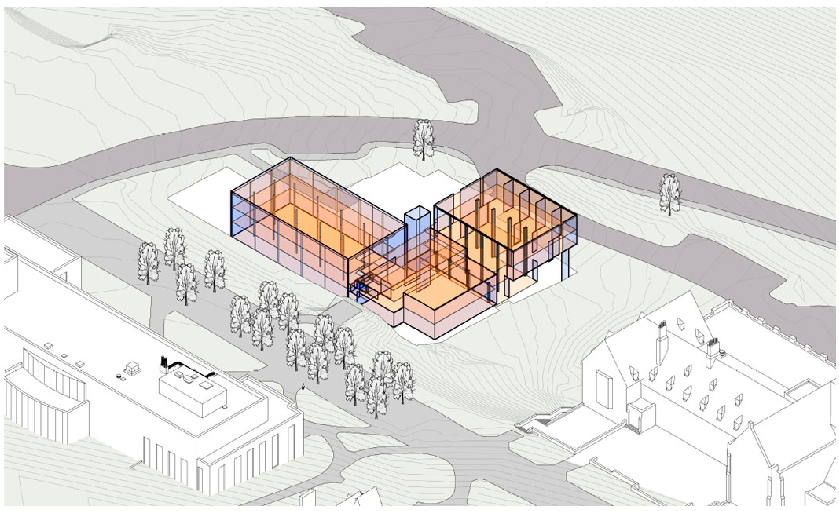
A while back, I mentioned that the plan for Gannett Health Center was to tear down the current structure and replace it on the same parcel of land with a new 90,000-130,000 sq ft building. While the project is still in the pipeline, a massing proposal suggests one rough idea of the future Gannett:

From HOLT Architects’ portofolio section comes this little nugget of information:

“…the 2007 HOLT Master Plan developed a comprehensive building space program for a 119,000 gsf replacement facility. Concept designs tested the full program fit on the existing central campus site and including substantial new parking requirements. Massing models, single and multi-phase construction sequencing, project costs, and schedules were outlined to assist the university with strategic planning.”

In other words, its a proposal for a new building, but it’s just one possible solution that may or may not be pursued by the university for the new Gannett. The proposal offers up a 119,000 sq ft 5-story (+1 more floor for mechanicals) structure whose massing suggests a curved face to maintain context with Campus Road to its southwest.

A couple of things stand out in the massing concepts. One, the ground textures were not updated to reflect the massing proposal. Two, the revised Hollister Hall can be seen at right (southeast). I’d be inclined to say that that would be based off of the master plan, but the master plan also calls for a demolition of the Cornell Store and Day Hall, which are not included in the imagery. It could be a saved time and effort on behalf of the company, or it could mean that the plans for Hollister are a little more solid than the other master plan suggestions. Either idea is plausible.

Since Gannett is currently only 39,000 sq ft, a building three times larger would leave an indelible impression on the intersection of Campus and College, arguably one of the most prominent on campus. Whether Cornell goes with this massing model, the tiered building in the master plan, or another design (not a hypermodern box, I can hope) remains to be seen in the university’s long-term plans.