The Cornell Master Plan: Part 1 of 5

22 07 2008

So, now that I’m done with the fraternity rush booklet, I’m going to do a new multi-part feature, this one focusing on the Cornell master plan. Look at it this way; I love reviewing the additions to Cornell’s physical plant, so this is the equivalent of giving a hit to a crack addict (okay, maybe not as detrimental to my health. But anyways…)

So, a little background. The plan was first initiated in late 2005 and took about two years to complete the final product [1], which was the culmination of the third and final phase of development. Up to that point, some open sessions were held at Willard Straight and at the Hilton Garden downtown (in Sept. 2007) for members of the community to comment on the findings, needs and projected developments of the university. The work was done by a Toronto-based planning firm, Urban Strategies Inc.

The plan tries to encompass the needs and concerns of the university and its physical plant. Among the primary issues, transportation and parking were major concerns, as well as maintaining a cohesive campus community and spatially harmonious design concepts in the planning of space throughout the campus. Also important was the development of additional facility to maintain Cornell’s capacity to be a top research institution.

So, the plan is set on the time scale of the next 10 to 25 years. The plan considers some of the following parameters; an increase of faculty from 1,600 to 1,700-1,800; an increase in graduate student population from 6,000 to 6,500-7,000; an increase of 700 staff from 8,400 to 9,100; and undergraduate to hold steady arond 13,500. The plan accomodates for 1-2 million more square feet of space, to be constructed in and around the Ithaca campus.

So, my goal is to pick this plan apart, piece by piece, and analyze the crap out of it. But if you want to see and read through the process that led them to create the parameters and design guidelines for the comprehensive master plan, here’s the link: http://www.masterplan.cornell.edu/ (click on part I).

Clicking on part II’s “Core Campus” link, and sitting through the time that it takes for 76.99 MB to download, it opens up to a picture of Olin Libe and McGraw Tower. How pretty. Anyways, it talks about the importance of Central Campus as the hub of university activity. Here, they first mention the new 24-hour hub on the east side; that’ll be discussed more thoroughly in a later entry. One last thing- unless otherwise noted, no building is a concrete plan; they are merely suggestions as to a good way to develop the site. If master plans were always carried out to a tee, we’d have completely gothic west campus [3].

Yay for Prnt Scrn buttons! I’m not doing this with every page, just ones i’m going to focus on. Seriously, I suggest you go to the masterplan website, click on “part II”, “core campus”, and take a look. Or go to the listed source [2].
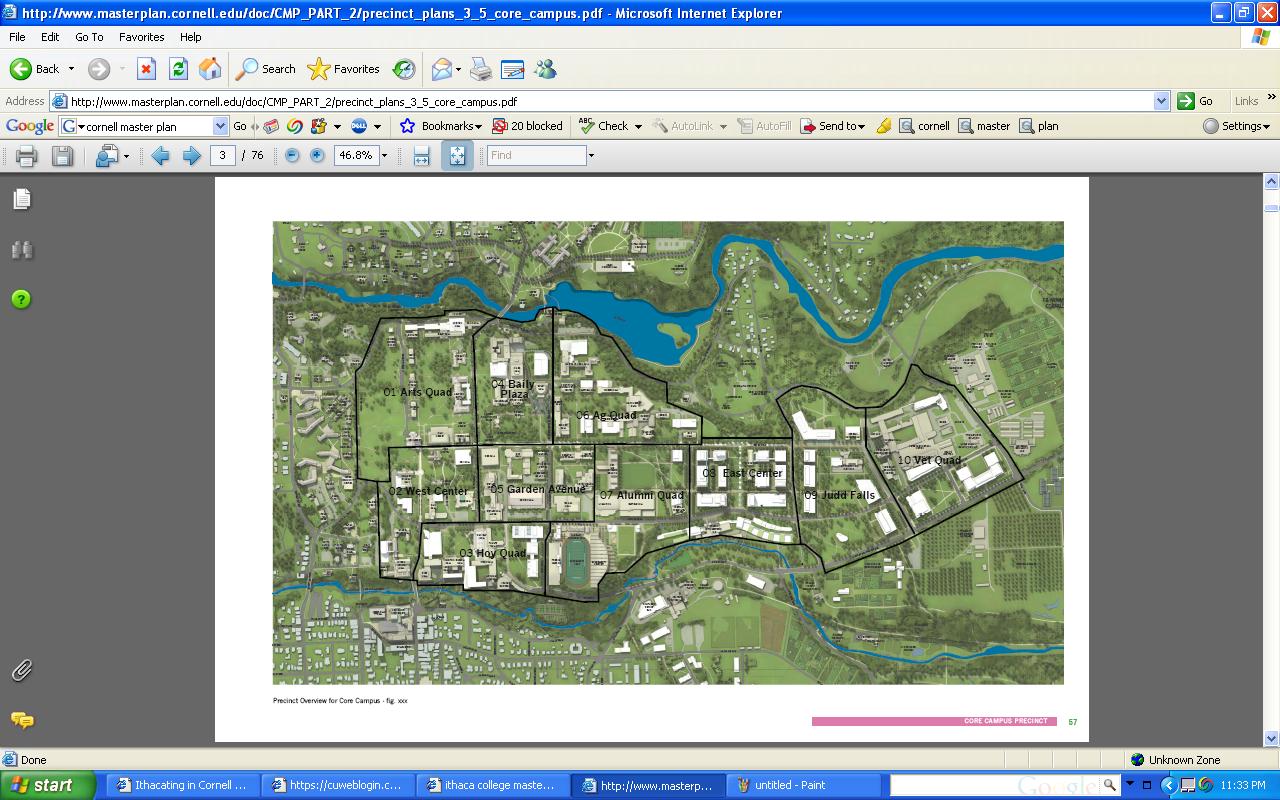
So, this is the overall plan. It worries me just a teeny bit when they mispell Bailey as “Baily”, since it is a whole area of discussion for them; but I can’t comment, my blog entries are filled with typos.

The page for demolished buildings and removed parking lots. the general goal of the master plan seems to be to hide the parking as much as possible, since it isn’t good for aesthetics, and isn’t pedestrian friendly. However, we still need it, so they shove it underground where possible. Milstein Hall would be a good example of that.
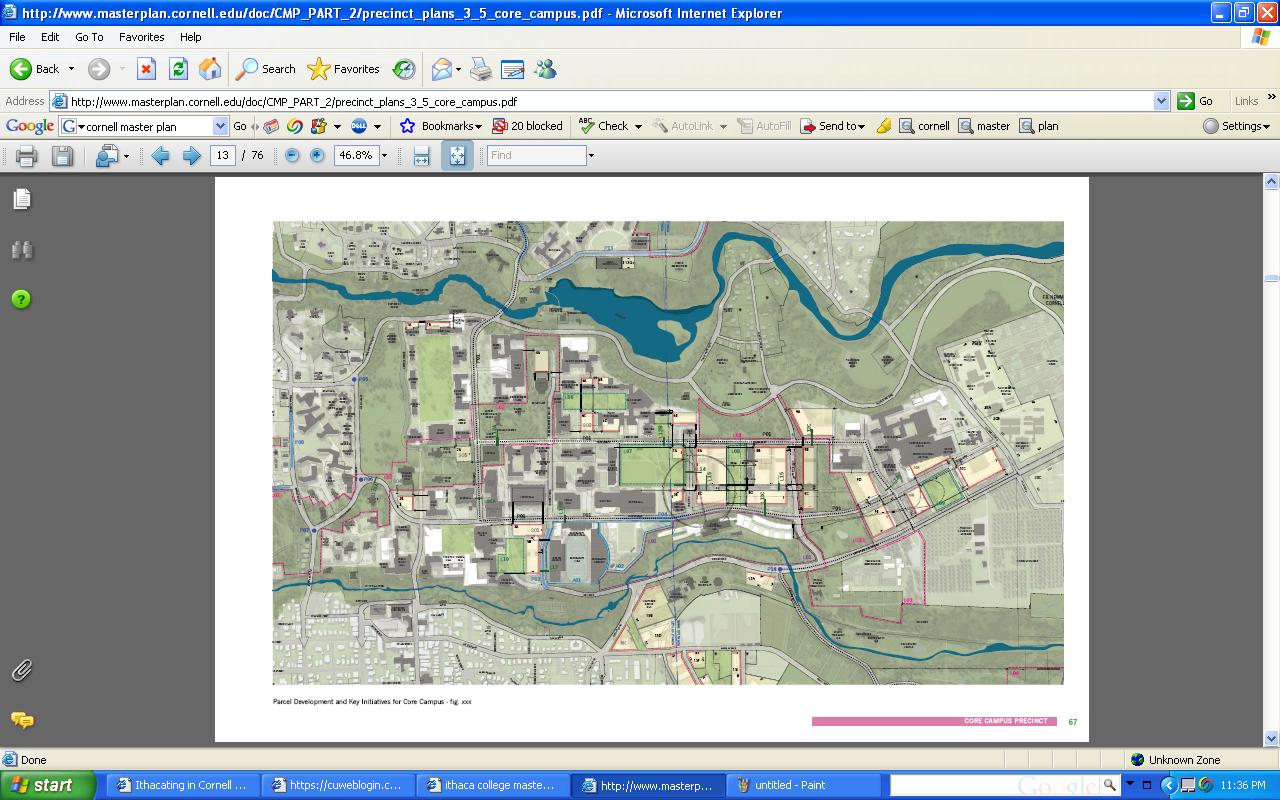
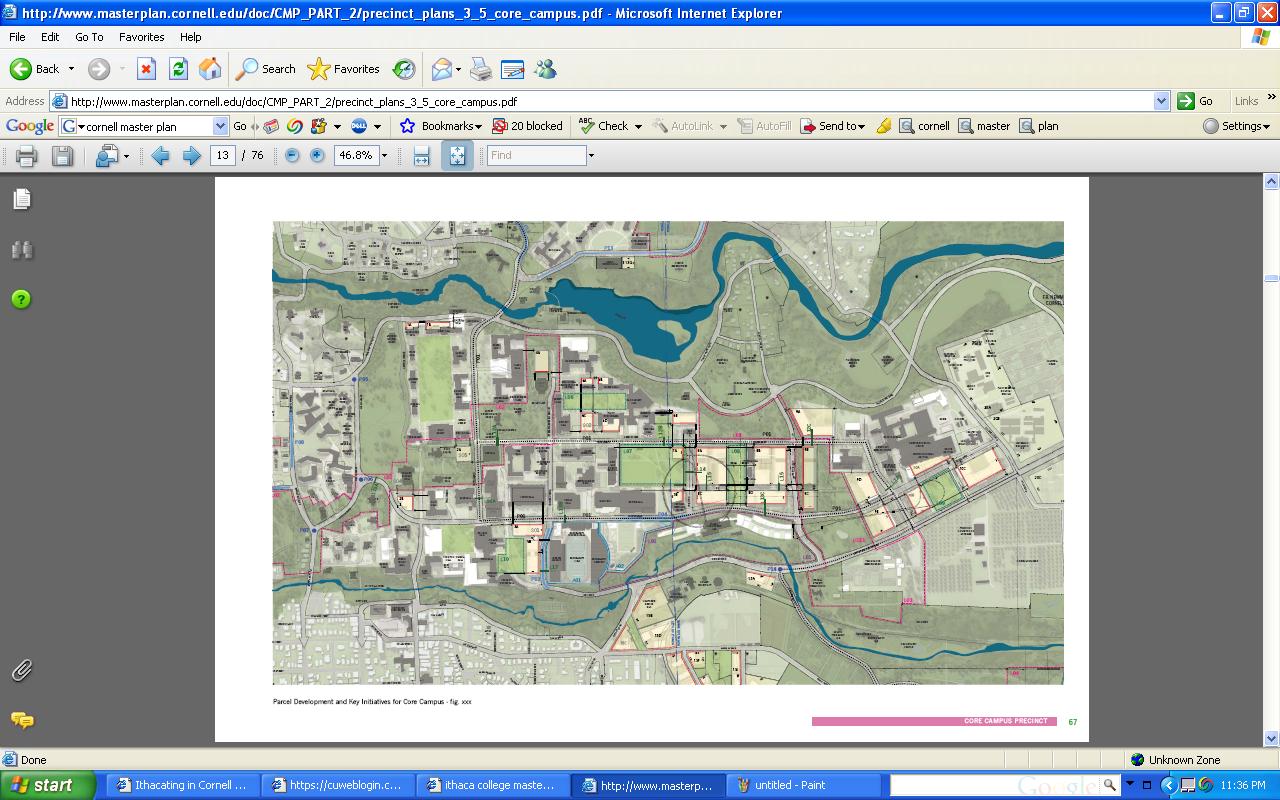
Development focus areas! Notice the massive changes on the east side of campus. Like I said, I’ll discuss those later, but they really stand out here.

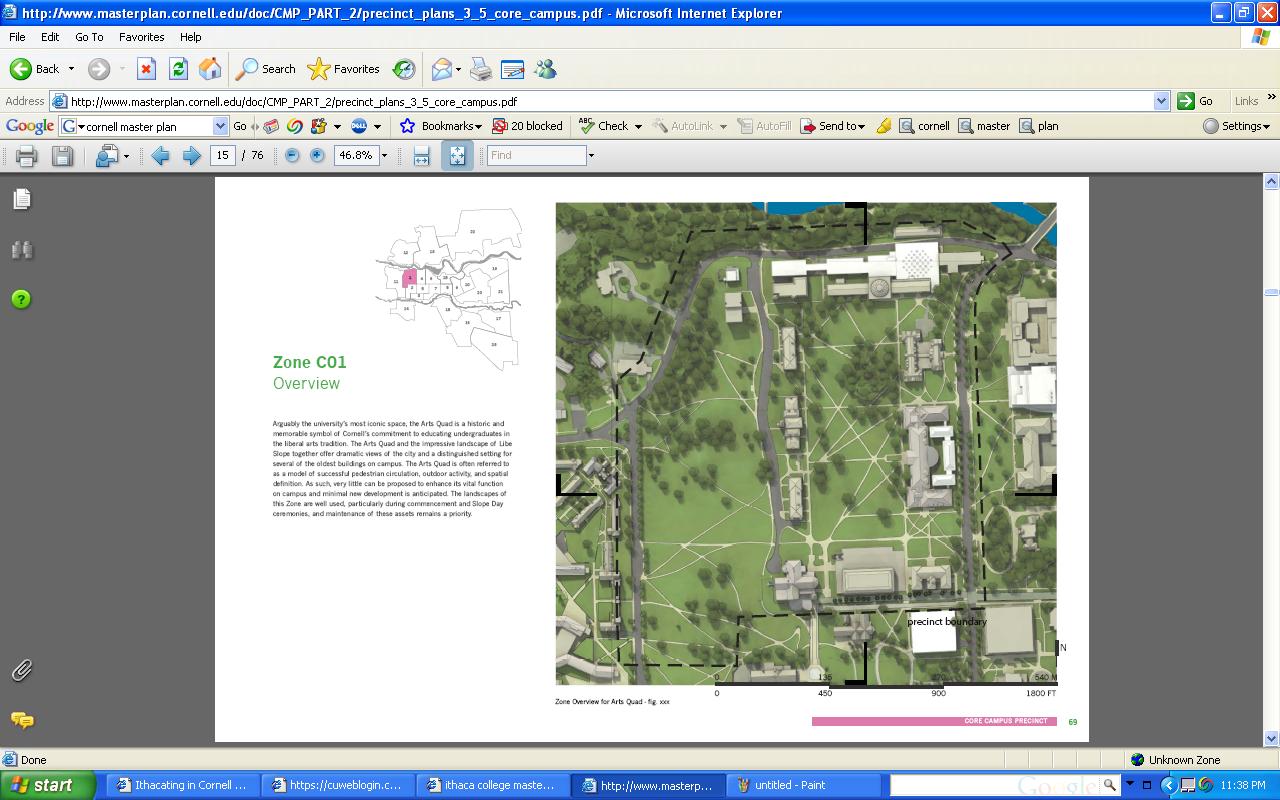
The 3-D image of the improved Arts Quad. Mistein sticks out like an ugly chick in a beauty contest, but there’s hope for the Goldwin Smith extension, for  which planning is currently underway. I’m holding out for something modern yet respectful to the older architecture, like the addition to Lincoln Hall in 1998. 
The overhead. As you’ll notice in the pdf, Milstein has these symmetrical roof features at the top; I feel as if that was an attempt to spice up the miracle box. I’m still not impressed, but you can notice an extension that goes behing Sibley and behind Tjaden. I really hope the arrow means you can still walk between them. An extension of Milstein’s design is perhaps nto the most ideal, but maybe Cornell can come up with something good for the back areas of Tjaden and Sibley. You can also just make out the Johnson Museum addition, which area-wise looks small and quaint compared to the rest of the buildings. At a mostly subterranean 16,000 sq. ft, I s’pose it is.

New stuctures with the thick gray border have been given the go-ahead for planning. The footprints in blacks are areas of potential development suggested by the plan. As we see, the area behind Sibley and Tjaden is seen as the only reasonable space left to develop without disrupting the harmony of the ag quad. The next page states that these buildings would have the same height and massing as their older counterparts, but considering they’re home to Arts and Architecture, I would not be surprised if Cornell were to push for cutting-edge designs if they ever developed those plots, being artistcially daring and all. However, it’s amazing how cutting-edge can be so offensive to the eyes sometimes.

Buildings in mauve-purple? They’re historic. As much as I have a personal vendetta against Rockefeller Hall, particularly Room 203, it would be a major hassle to structurally change it. No demo there anytime soon (I think the story goes that the money John Rockefeller gave to the building went mostly to the interior mechanics, and little on the exterior and finishings, hence the spartan design. He hated it so much when he saw it he vowed never to donate money to Cornell again). My personal wonder is how the hell could Uris Hall be architectually significant. Is that like the equivalent of a massacre monument, to mark that something terrible happened on the land and we should all know about it? Uris Hall could be taken as a massacre on the eyes.

Also on this page are the noted sightlines for the Arts Quad; sightlines will play a bigger role in some others buildings on campus, as to whether they remain or not.

to be continued…

[1]http://www.masterplan.cornell.edu/doc/CMP_Executive_Summary_FINAL-2.pdf

[2]http://www.masterplan.cornell.edu/doc/CMP_PART_2/precinct_plans_3_5_core_campus.pdf

[3]http://en.wikipedia.org/wiki/Cornell_West_Campus


Gates Hall

10 07 2008

Okay, so in my observations of Cornell and local construction ,there is one thing that continues to be just a bit bothersome; two and a half years after it was announced [1],  there has not been one single rendering of Gates Hall. So, let’s review what we do know.

1)The building is meant to house the Dept. of Computer and Information Sciences (CIS). Gates is allowed to name it because he’s forking over half the expected construction cost (plus, the guy gets around around- UW and Stanford have Gates Halls as well).

From the article: “According to Kenneth Birman, professor of computer science and chair of the CIS building committee, the information campus project is still in the feasibility study stage. Gates Hall is estimated at 100,000 square feet and projected to cost about $50 million.”

2) So, now we know it’s supposed to be about 100,000 square feet. For comparison, Duffield’s gross area is about 150,000 sq. ft. [2]. Further investigation of the facilities website indicates that the architect will be Polshek Architects [3].

3) A review of Polshek’s firm shows some of their previous work:

Polshek Work 1 

Basically, it’s a firm that likes glassy, boxy designs.

4) Lastly, from the Master Plan, we see that CIS is behind Thurston, but there’s two buildings, and it’s a little confusing to tell which is Gates, since they are both listed as “in progress”.

My conclusion: Expect Gates to have a foot ptint between 25,000 and 50,000 square feet, 2-4 floors in height, with a boxy, glassy design not too unlike the Beck Center behind Statler Hall.


[1] http://www.news.cornell.edu/stories/Jan06/GatesCIS.ws.html

[2]http://www.fs.cornell.edu/fs/facinfo/fs_facilInfo.cfm?facil_cd=2000

[3]http://www.fs.cornell.edu/fs/projects/


West Campus Photos

9 07 2008

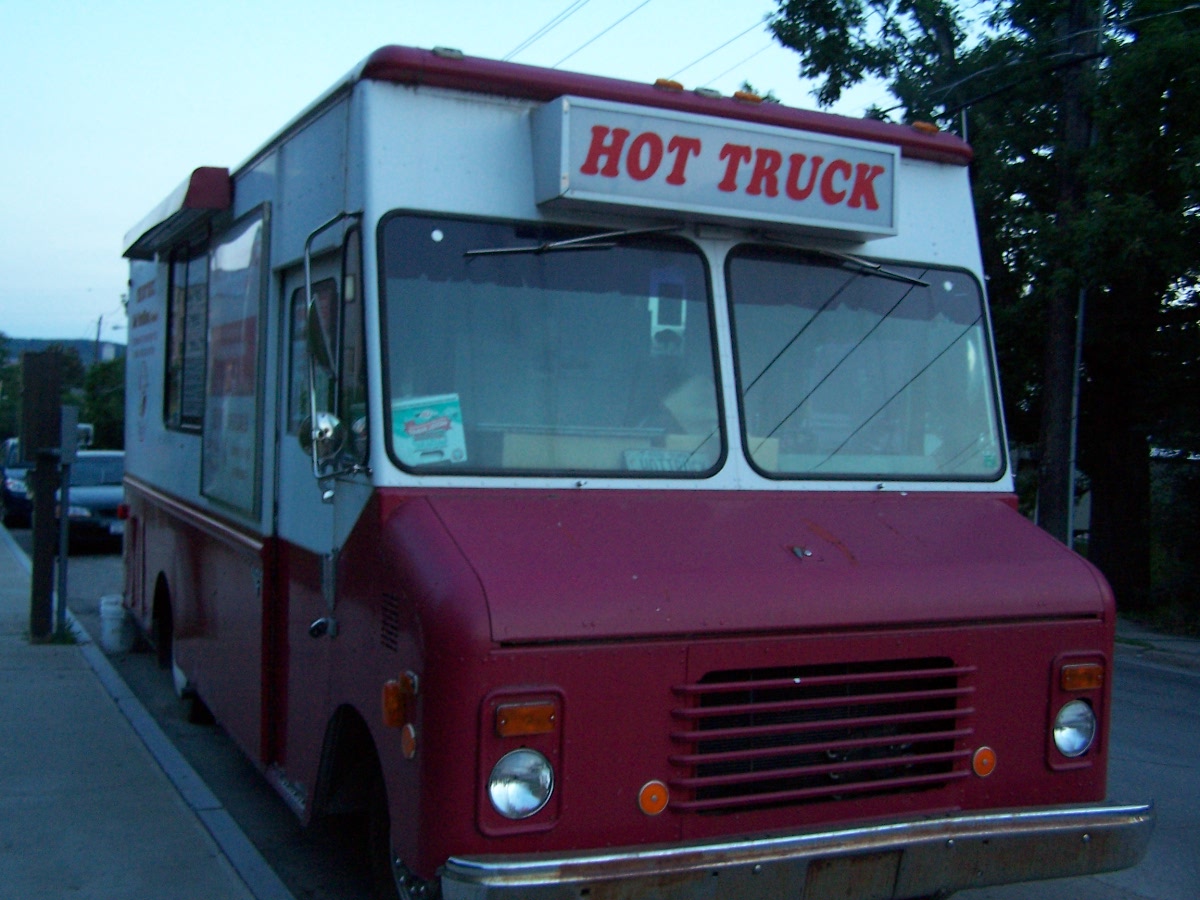
The Hot Truck is a West Campus icon. Located on Stewart Avenue just south of its intersection with University Ave, The Hot Truck[1]. The Hot Truck was founded in 1960 by Bob Petrillose, who called it “The Hot Truck” to differentiate it from “The Cold Truck”, a name that Louie’s Lunch used for its West Campus location from 1962-1981. Today, the truck is operated by Shortstop Deli, and sells subs along with PMPs, a pizza sub sold on french bread.

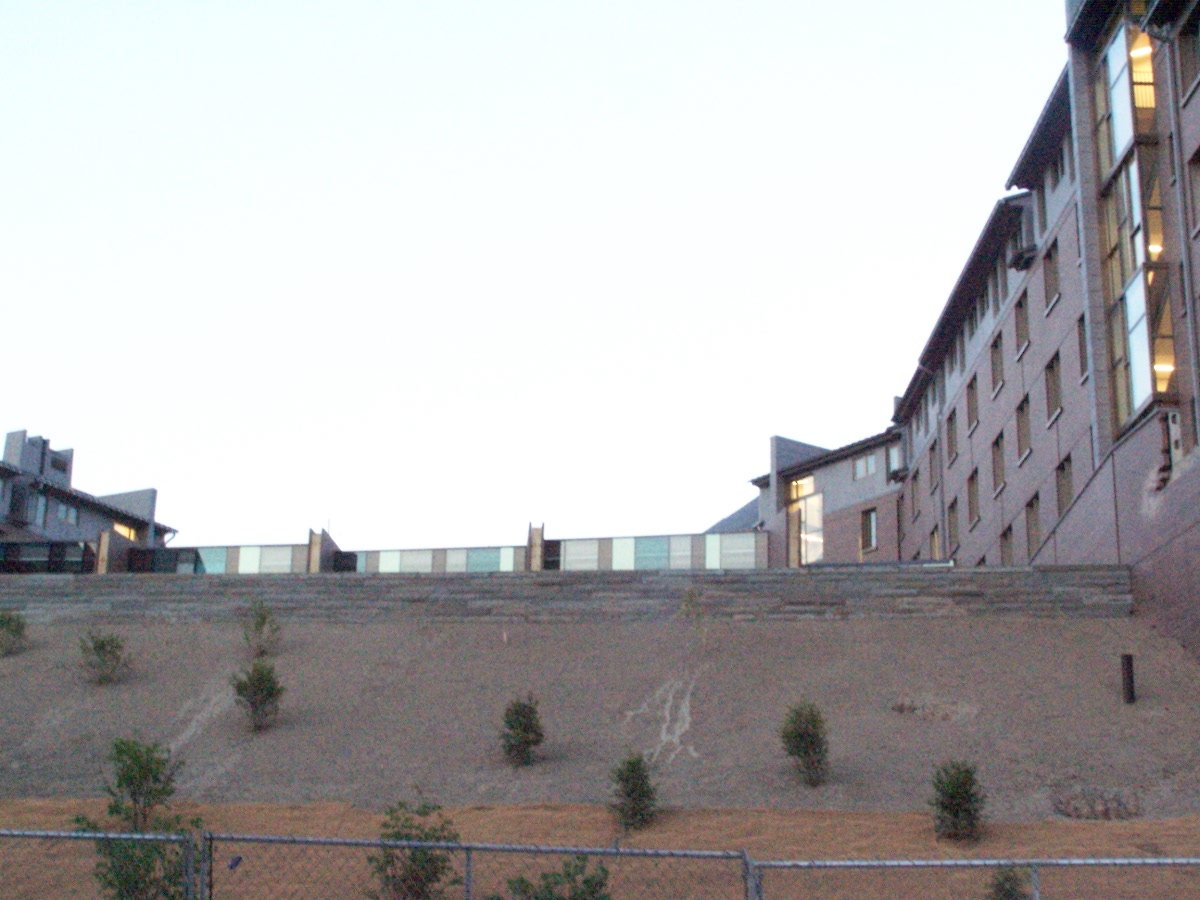
The West Campus houses, under construction. The house in the middle is House 5 until named otherwise. The house on the left is William Keeton House (House 4), slated to open in August 2008. The other three houses have already been opened; Alice Cook House in 2004, Carl Becker House in 2005, and Hans Bethe House in 2007. The houses are part of Cornell West Campus housing initiative. They are open to upperclassmen and transfers. In my experience, the house were astounding quiet whevered I visited, and although the dining was a pleaant experience, the houses were just a little too quiet for my preference. But then, I lived in the crypt that is Cascadilla, so who am I to comment?

Here, we can see the dining facility for Keeton. Notice that it has a variety of multi-colored glass.

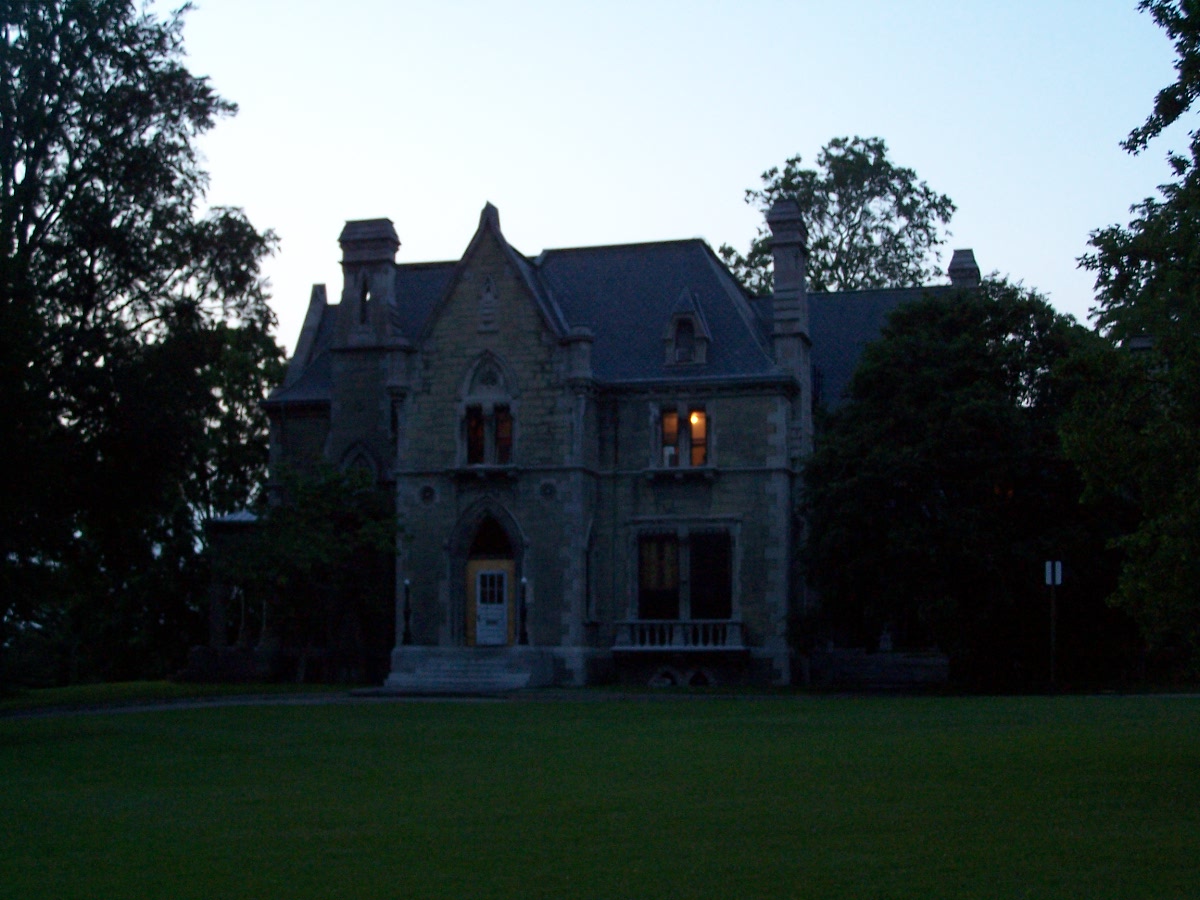
The House of the Cornell chapter of Delta Phi has a truly special history. First of all, the house is colloquially known as “Llenroc”. The house began construction in 1867, as the private residence of Ezra Cornell. However, Cornell passed away in December 1874, and never lived in the house. It was finally completed in 1875, and used as a private residence. The house became the residence of Delta Phi in 1911 [2].

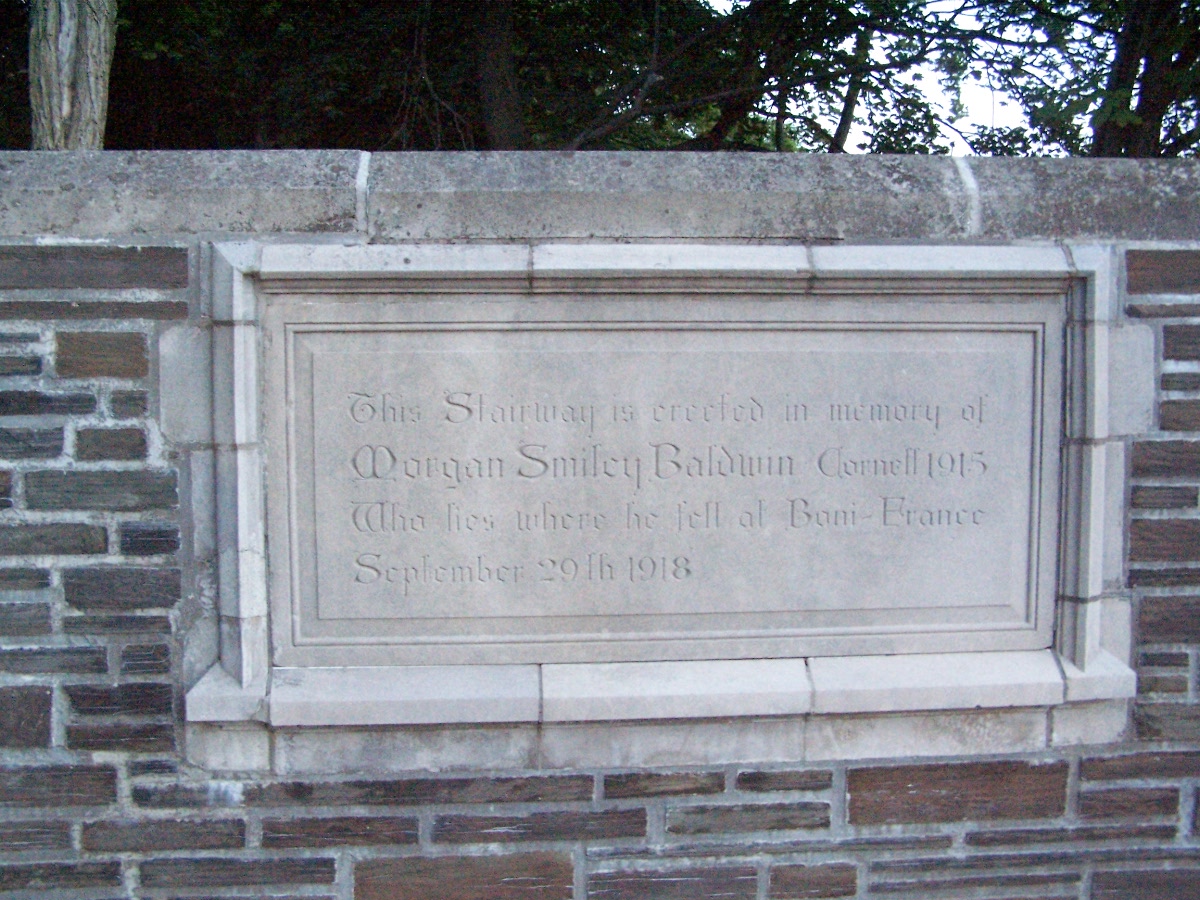
This staircase, also property of Llenroc, was dedicated in 1925 in memoriam to Morgan S. Baldwin 1915 by his father. Baldwin was a member of the Cornell Delta Phi chapter (Pi).

[1]http://en.wikipedia.org/wiki/Cornelliana#Hot_Truck_and_Louie.27s_Lunch

[2]http://en.wikipedia.org/wiki/Llenroc


Random Photo Tour 7/6/08, continued

7 07 2008

The house of Alpha Sigma Phi Fraternity, known locally as Rockledge (which is the name of the house). The name fits because the house is built on the cliff overlooking Ithaca Falls. The house was built around 1900, with the fraternity moving in during 1913, four years after the chapter was founded. Cornell’s first president, A.D. White (1832-1918 ) was a member of the Yale Chapter during his college days [1].

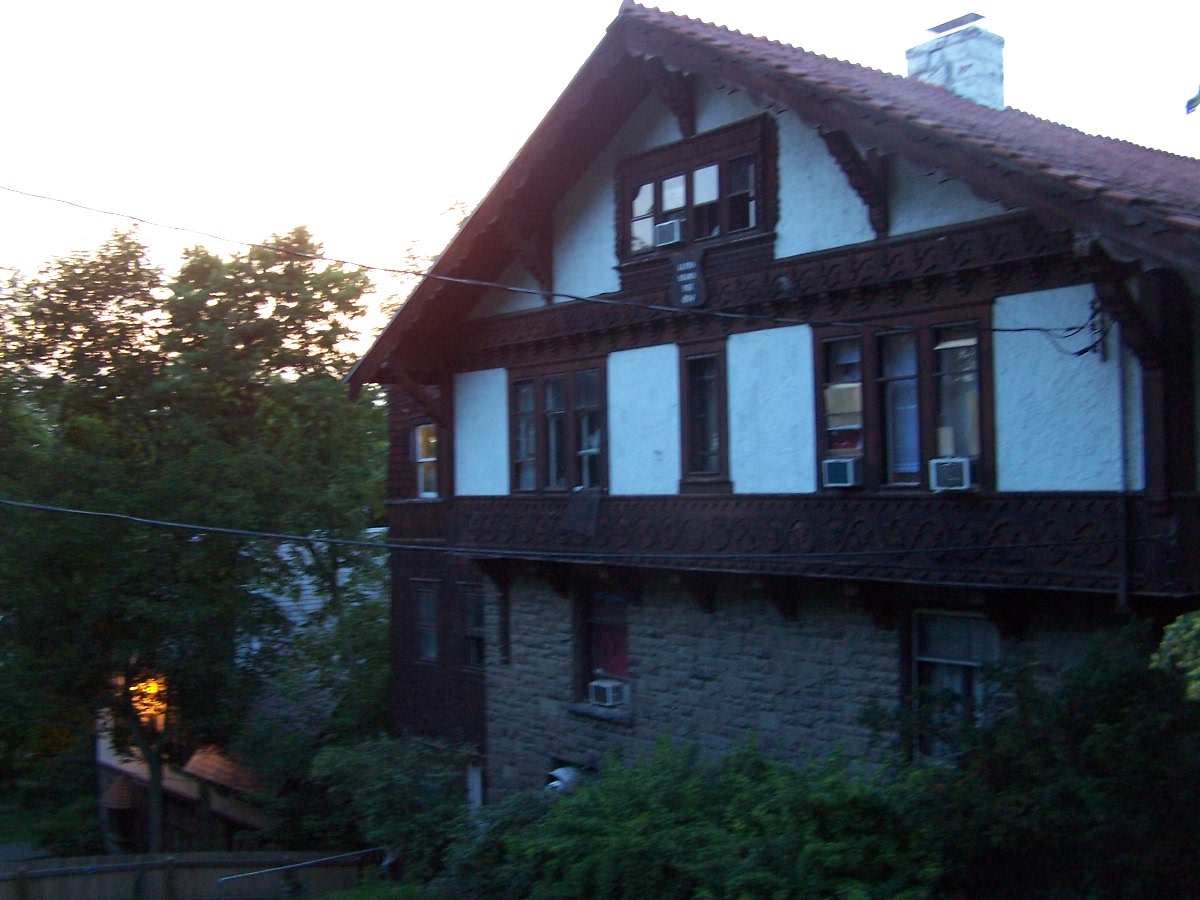
The house of Omega Tau Sigma, a professional fraternity for veterinarians. I didn’t realize professional fraternities did this sort of thing. The house has been in their name since the 1920s. And in my opinion, for a small house, I really like the uncluttered appearance from the outside. It vaguely reminded me of Scandinavian houses. Until I looked it up just now, I honestly thought the house was a regular house that kept the letters as a throwback to history.

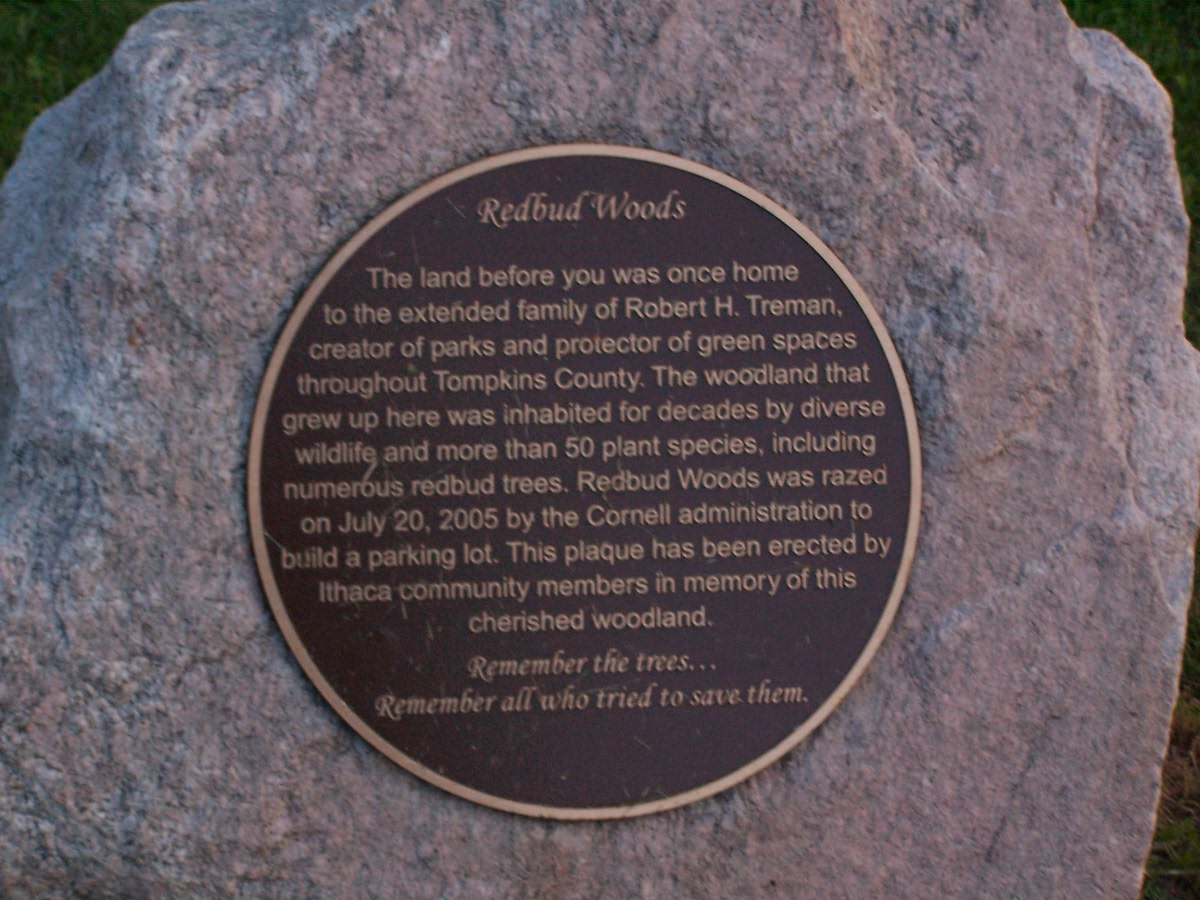
The former Redbud Woods site. I really don’t want to try and explain this, but a former patch of forest that was part of the old Treman Estate was bulldozed for a parking lot in 2005. The whole idea did not go over well. Student occupations of Day Hall, protestors from the college and city (including former mayor Ben Nichols), and a little backstabbing along the way. I’m not one for drama, I prefer my history untainted; and as you can see from the plaque that the city okayed but Cornell protested, the history is still a little too emotional for the local powers-that-be. for those who want to read the full story, here’s a wikilink: http://en.wikipedia.org/wiki/Redbud_Woods_controversy

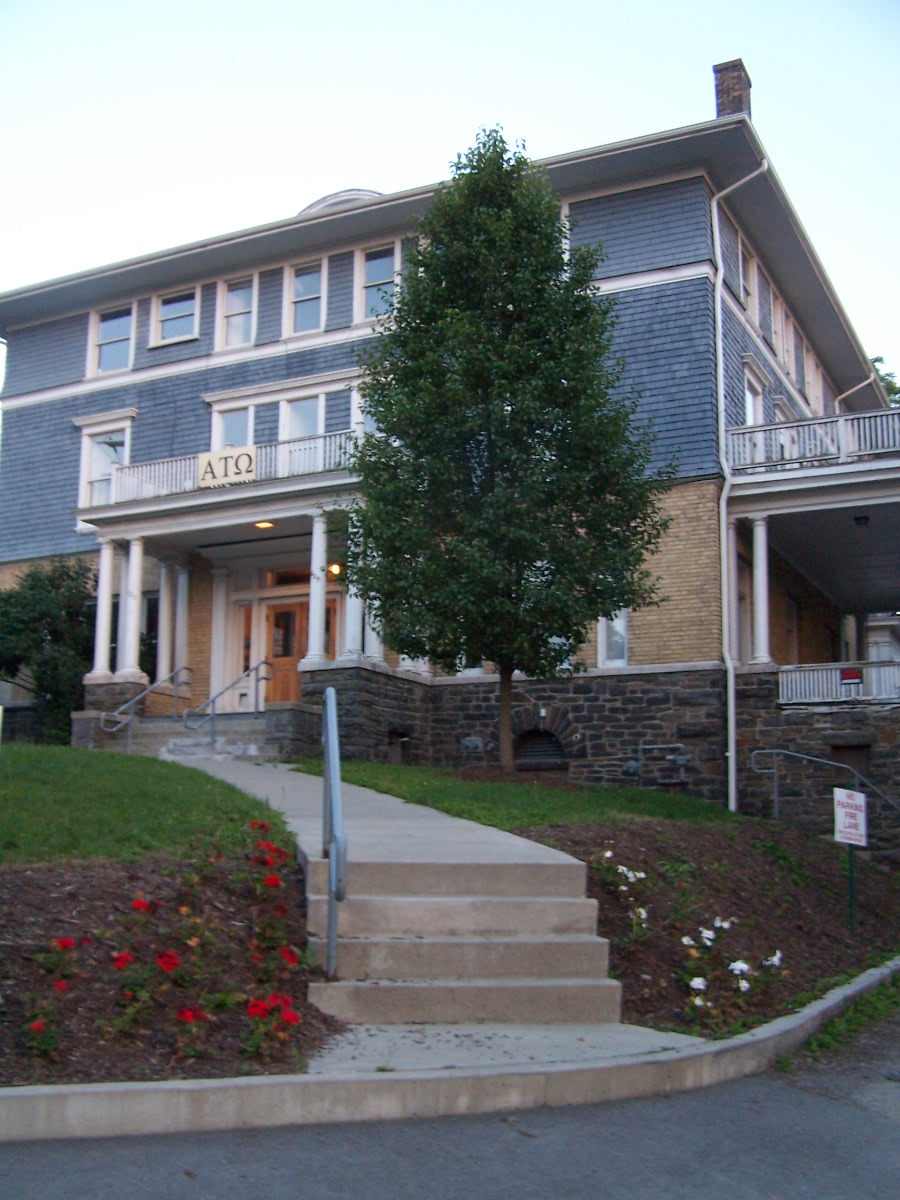
Alpha Tau Omega fraternity house. The house was built in 1900 and has been continually in ATO’s posession. Major renovations were completed in 1989, and once again in the past year [2]. The house was originally designed by an alum of the house, although it used to have a mansard roof, judging from old photos. Due to renovation and structural issues, the chapter has not had a house in the past two years. Judging from this photo and the state of the grounds as I walked by, it looks like it will be reoccupied fairly soon.

The house of Phi Sigma Kappa. So, thankk you Phi Sig for making it such a pain in my arse to find information about your house. I can say this house was built ca. 1900, and has always been in the posession of Phi Sig. I only know that because I had to ask someone who’s in the house. It is in need of some repair, but at least the front side, with its columns, is still imposing.

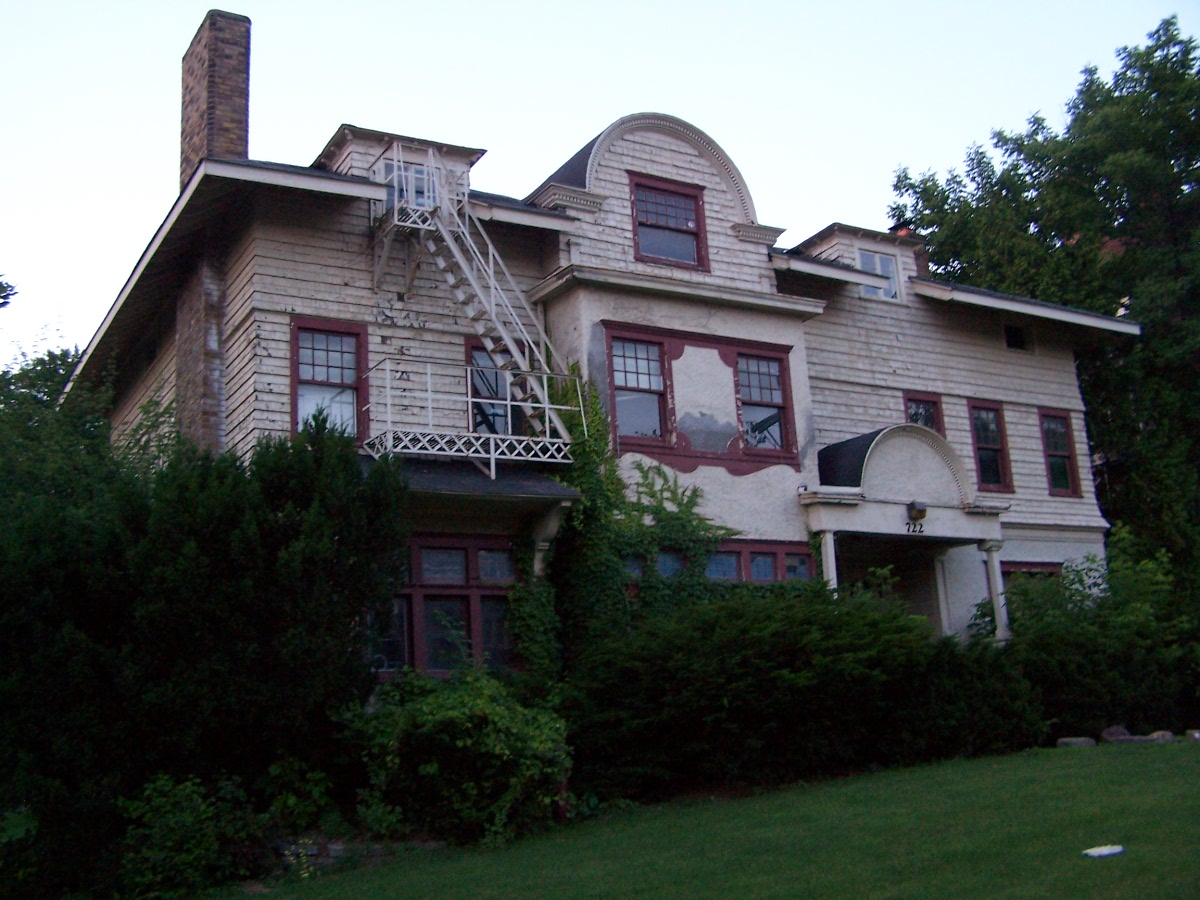
722 University Avenue, built in the Colonial Revival Style around 1900. This house most recently served as a home to Alpha Chi Rho fraternity. Alpha Chi Rho was on campus from 1908-1978 (it was next door at 736 for some of that time), and when they tried to recharter in 1991-92, they lived here. I believe the chapter closed once again in 1997-98.

EDIT: Thanks to a tip from JB, I was able to find that the house was occupied by Lambda Upsilon Lambda, the Latino fraternity, as recently as 2004. The house is currently unoccupied.


[1]http://www.alphasig-rockledge.com/history.php

[2]https://www.atocornell.org/public1.asp

[3]http://www.bookrags.com/wiki/Cornell_West_Campus


Greek System, pt. 1

1 07 2008


Traditionally, the Greek system at Cornell has seen several periods of growth and contraction (1). In the previous half century, primary periods of growth occurred in the 1950s, 1980s, and at the current time. Inversely, periods of contraction occurred in the 1960s and 1970s, and in the mid and late 1990s heading into the early 2000s.

From Gumprecht’s essay concerning Greek life:

Changing attitudes toward fraternities are having an impact. Nationwide, fraternity membership declined 30 percent between 1990 and 2000. At thedawn of the twenty-first century, “Greek life is . . . a tough sell,” according toRichard McKaig, director of the Center for the Study of the College Fraternityat Indiana University.


40 At Cornell, membership fell 11.2 percent between1996 and 2001. Three chapter houses closed. Cornell fraternity members refer to the time before the new social rules were implemented as “the good old days.”41 Nevertheless, Greek life remains an integral part of student life at Cornell,which had forty-four fraternities and twenty-one sororities in 2001. Roughly one-quarter of undergraduates were members. The continued importanceof fraternities and sororities, and the prominence of their chapter housesin the built environment (see Figure 8), suggest that the fraternity district willremain a distinctive attribute of college towns well into the future.

Numbers at Cornell fraternities have increased considerably since the publishing of Gumprecht’s paper in 2002. Documents obtained from the Office of Fraternity and Sorority Affairs at Cornell University (2) indicate that numbers have increased about 16.9% in the past five years. Sorority numbers, however, have reamined stable over the past several years, with a small peak in 2004-2005.


http://www.adphicornell.org/adphicor/files/FraternityRow.pdf – Dr. Blake Gumprecht, UNH 2002


Welcome to College

27 06 2008

Without meaning to come across as a complete jackass, I’ll admit that Cornell is a very well-regarded school. Well, for the most part. The school adminstration seems to suffer from the “red-headed stepchild” syndrome, where it constantly feels like it is being neglected and under-appreciated, and is constantly self-conscious of its activities. I blame this on being looked at as the worst of the Ivy League, which is in itself a ridiculous notion driven up by other school to make themselves feel better about their own college. That might be a little idealistic, but I believe Cornell gets bashed for the sole hope that it makes someone else’s school look better. And of course, this leads to Cornell’s inferiority complex.

The result of this inferiority complex is prominent throughout campus. Cornell is driven to succeed and outdo rival colleges that much more. with the exception of the Arts and Sciences school, which is known for having lots of high GPA liberal arts majors, many of the school have majors where they work the student to the bone, and work to make the class as challenging as possible. One of the ways this is done is through Cornell interpretation of exams, referred to as “prelims”. Most classes seem to have two or three in a semester, and they usually make up about 40-60% of a class grade. And in many of the classes, they design them to be as “challenging”, i.e. mind-blowingly difficult, as possible. Professors like to have low averages on an exam. I had a math exam where the mean was a 51 out of 100. Lo and behold to my surprise when I received a 46 on the exam, I thought I was  dead until I heard the mean. If one were to take the average means in my physics and math courses, it would likely be somewhere around 62. And I don’t often tend to be on higher side of the mean.

Academically, Cornell can be extremely frustrating. I’ve seen people try and drink their troubles away, shut themselves off from the world, and become generally miserable. A number of people I know have transferred from harder majors like engineering and pre-med to communications and AEM (being an AEM minor, I can understand why; the averages in the classes are much higher). Cornell will be the place that sends you and your academic confidence (perhaps arrogance for some) crashing back down to earth. 

In my situation, it was a rough landing. It’s something that has to be accepted and dealt with as best as possible though. Ithaca is really an amazing place, and Cornell has a lot to offer outside of academics. If it wasn’t for those things, then student life here would probably me much more unpleasant.

Sometimes it’s awkward to look back at high school and realize how things have changed with regards to academics and extracirriculars, but at least at Cornell, it was a necessary adaptation.