Four Years Later

18 06 2012

My oh my. This blog turns four years ago today. I wanted to celebrate this port by comparing this blog to the average age of blogs, or the average number of posts for an active blog. Turns out neither piece of data is readily available. I’m going to go out on a limb and assume this blog has reached maturity, though I won’t go as far to say “old age”.  In keeping in tune with three previous three “birthday” updates, here’s some fun facts.

Since launching on the evening of June 18, 2008, this blog has received a grand total of 241,966 hits, as of 2:29 PM today. Breaking down the math, that’s about 166 hits/day. While the previous years averaged 82, 166 and 199 hits/day respectively, I’m happy to say that the blog came a little closer to the saturation point with an average total of just under 216 hits/day in the past year, and yes, I did remember it’s a leap year. Taking a cursory glance at the monthly statistics:

The highest month was once again March, with 8,247 hits, although the peak isn’t as pronounced as it was in previous years. Going year-to-year, the only month that was lower in 2011/12 versus 2010/11 was August, although June and July came fairly close. This is due to the Cornell-centric nature of the blog – once classes are out for the summer break, my hit tally plummets like a stone. Although, that’s been somewhat avoided this year, which I’ll guess is the result of the more Ithaca-area focus taken on in the past year, and is a bit more stable in terms of visitors to this site.

Looking at the past year in review:

~In planning and development,the biggest news is the construction of Collegetown Terrace the massive 1200-bed project south of Collegetown. Approvals were granted and phase one is underway, with an August opening for the first buildings. The Vine Street Cottages also began construction, replacement apartments were planned for 107 Cook, and 309 Eddy marched merrily towards completion, which should be in just a few short months.The Coal Yard apartments phase II was built, and Collegetown Crossing was proposed with the radical premise of no parking for residents, in a move that could make or break Collegetown. in suburbia, everyone got BJ’s in Lansing, and the holiest of holy casual dining restaurants came to big box land, a Chipotle.

Closer downtown, the Seneca Way project was approved and is now in site prep, and the new Fairfield Inn is under construction down in chain store country. The Argos Inn renovation moved towards completion and the Breckinridge Place project began construction, currently in the demo phase of the old Women’s Community building. Several smaller projects also began construction, such as the Iacovelli apartments on West Seneca and the Magnolia House women’s shelter. In the longer-term, the massive Cascadilla Landing project was proposed, and could potentially  redefine the city waterfront, and the new Holiday Inn tower/renovation will add a small conference center to the Gorge City.

Over at the colleges, Ithaca College built a boathouse and started its Circle Apartments expansion. Over on East Hill, Milstein Hall, MVR north, and the Johnson addition were completed, the food science building is well underway, Gates Hall is in foundation work, and the law school just launched their underground addition. The Big Red bandhouse is set to start shortly, and Kappa Delta renovated their home-away-from-home in what was probably the most significant Greek house renovation in more than a decade. Fundraising began for the new token glass box, also known as the Goldwin Smith Hall addition. More importantly, some bridge nets and barriers were approved, and their construction will hopefully bring to an end a dark chapter of Cornell’s history.

In the meanwhile, some projects still have yet to get off the ground. The Hotel Ithaca is still in some financing conundrum, as are the Cayuga Green Condos, which were given an extension on their cost-saving agreement with the city, given the poor lending climate. Ithaca Gun is undergoing yet more land remediation with no construction date in sight (honestly, it seems like the only way the land could have been more contaminated is if someone nuked it).

~Turning an eye towards Cornell matters, the least surprising lawsuit was launched when the mother of George Desdunes filed a wrongful death suit against SAE to the tune of $25 million. The bench trial wrapped up about a month ago, though I’ve yet to hear about a verdict. The number of bars near Cornell continued to shrink, but students can now drown their sorrows in frozen yogurt instead. When the Palms said they were closing up, a couple dozen of my fraternity’s young alumni offered to buy a table of some sentimental value to us if they were willing part with it. They asked for $1500 for a rotting wooden bench table. We laughed (we were thinking $500 max). They said they were serious and it was a starting bid. Needless to say, I have many happy memories of a table that hopefully no longer exists. Rumor has it a new apartment tower will rise where the Palms once drunkified multitudes of Cornellians.

~From a meteorological standpoint, the ITH toyed with 100-degree temps and had a collective anxiety attack about the impending arrival of Hurricane Irene, but was spared the brunt of the destructive tropical cyclone. However, this relief was short lived when the extratropical remnants of Tropical Storm Lee dumped 8.7″ in 24 hours at Binghamton, and flooded many local towns to the tune of $1 billion in damage, a number not seen since the horrific aftermath of Hurricane Agnes in 1972. It also resulted in one of the wettest years on record. Ithaca, while soaked and unnerved, was relatively unscathed.

Many things, many topics. In comparison to the past years, I now write this while firmly ensconced in alumnidom, my trips back further and further apart. At this point, I’m finishing grad school, and interviewing for positions in California and Texas. It was not exactly in my wishes to move as far out, as my northeastern blood may not be able to tolerate nice winters. But, that’s where the jobs are in my field at the moment. Ideally, I can make a triumphant return to the northeast someday.

I write not out of obligation, but out of genuine interest, which I think has been one of the attributes that has made this blog a reasonable success. I see the emails of those who follow comments and posts – they include other alumni and current students of course, but also prominent companies in Ithaca and some local government officials. Flattering, if a little disquieting for fear of botching up my facts. More importantly, I think it serves as an indicator of the usefulness of this blog, that people honestly come here searching out information, and many of them leave feeling a bit knowledgeable about Ithaca projects and stories, or Cornell history and construction projects. Or at least, I hope as much. It makes for great motivation in the months and years ahead.


The Keyword Bar XVI

24 05 2012

1. “chi omega” “cornell university” closed -“alpha chi omega” (5-23-2012)

Yes, and no. Chi Omega was active at Cornell from 1917 – 1963, and then again from 1987-2003, when low membership caused it national to shut its doors. The house at 10 Sisson Place is now occupied by Sigma Alpha Mu. In contrast, Alpha Chi Omega, which was established at Cornell in 1984, it still active on campus.

2. “cornell store summer employment” (5-16-2012)

If four years ‘experience is any indicator, they’ve already filled up. A bare-bones student staff of five or six stays on during the summer along with the full time staff, and most of those are current student employees (the year I worked through the summer, we all were). In sum, you can check, but don’t hold your breath.

3. “johnson boatyard ithaca” (5-16-2012)

If this is in any reference to the big mixed-use project underway for the boatyard site, then I have good news – they are making progress and gave an update to the city planning board just last night. As soon as those minutes areuploaded, I hope to include them in my next “news tidbits” entry. These entries will be pulled directly from the minutes,  since the Ithaca Journal, in a responsible but unfortunate move, now charges for article access beyond a nominal number of articles (renewed each month). Also on the docket – a redevelopment project for apartments on Thurston Avenue.

4. “location of former ithaca hotel, hotel leonardo aurora st, ithaca”

Going back in time, the Hotel Leonardo was located at 105 N. Aurora Street – at least, back in 1965. The address today pops up a location in front of Sushi O Sake (which is 107 N. Aurora). A search indicates that section of Aurora was known as the “Casey Block“, which was built around 1904 (the Wanzer (corner) Block was built the following year), but the stretch was renovated and substantially rebuilt in the 1990s. The Casey Block could be the building that Viva Cantina is now in, or it could have been in the 1990s renovation (the architects refer the original building as “burned out“) that now sits at 107 N. Aurora.

5. “vine street cottages ithaca ny how much are townhouses”

I’ll just link to this previous entry, in an effort to limit unnecessary visits to the Ithaca Journal pages.  Mid-200,000s expected. Definitely not a place to buy for your child- student. 10 to choose from, four styles.

6. “new townhome proposal for route 96 ithaca”

That would be the Holochuck Homes project. The plan is for 106 townhomes, one or two-stories, clustered together near the road. Final approvals were granted last month. This is about the only image I could find of them, from a now-inaccessable article in the Elmira Star-Gazette:

7. “new apartments 600 W. Seneca street ithaca” (5-11-2012)

Okay, I maybe dropped the ball on this one. Back in the summer 2010, a 24-unit, 3-story apartment building was proposed for the northwest corner of Seneca and Meadow Streets by Iacovelli Properties. It only recently started construction, and I know there’s a billboard standing on the property, and it shows the design of the new building(s).  I know this because I saw it the last time I was in Ithaca I passed the property, but I was driving and did not have my camera in hand (a blessing to all other drivers on the road), I was unable to get a photo. If someone does gets a photo of the project and wants to email that in, I would be delighted.


The Keyword Bar XV

11 02 2012

The news has been slow lately (I’m not about to devote an entire entry to another new senior housing complex in Ithaca, and Cornell hasn’t done anything lately that I would write about on the blog) and life as a grad student in another city leaves me unprepared to write Cornell history articles. So now comes that special time to cherry pick search queries that brought people to this blog, and write blurbs about those.

“who is responsible for tep frat house maintenance at cornell” (2-11-2012)

If I was being a wiseass I’d say no one, considering its appearance. The house is private-owned, so it’s not the university. Many houses have contracts with local cleaning and maintenance companies; some have their members do minor routine cleaning (usually led by a brother elected or appointed as house manager), and may even have live-in “staff” for managing the more involved maintenance of the facility. However, it varies from chapter to chapter, and something as banal as maintenance usually isn’t publicized, so I don’t think you’ll find your answer online.

“johnson boatyard ithaca, condos” (2-10-2012)

This has actually been a rather hot topic, as I’ve had an abnormally high number of incoming queries regarding this project. The project still calls for 22 townhomes (11 to start construction initally, along with some commercial space), about 130-150 units in 5 5-story buildings to be built later phases, as well as more retail space. The grand total for gross square footage is about 292,000 sq ft. The planning board minutes don’t provide a whole lot more detail; the parking will be facing the road, so effectively it’s road -> parking lot -> buildings -> waterfront. Sidewalks, plazas, waterfront promenades, a proposed roundabout on the end of Pier Road, and a new pier. Definitely a large development as Ithaca projects go.

“cornell widow magazine” (2-10-2012)

The Cornell Widow was a humor magazine published by students at Cornell from October 1894 until 1962, when financial issues forced its shutdown. Apparently, the term widow meant “the girl who bowled over class after class of freshmen without really landing one”, so fairly similar to the “cougar” of today. The magazine routinely made fun of the Sun (The “Cornell Daily Sin“), and although its humor is consider fairly dated and/or offensive, its cover illustrations are highly regarded. The Cornell Lunatic sort-of took over the role of campus humor magazine starting in the late 1970s. An anthology titled “Cornell Widow: Hundredth Anniversary Anthology 1894-1994) was published in 1981.

“cornell campus” construction news nyc

This is a bit of a tough decision for me, but I am making the conscious decision to limit my discussion of the construction new grad campus in NYC. I may mention it in passing, and maybe way, way down the line, there will be an entry about the physical plant. But the focus of this blog has been the physical plant in Ithaca, not New York City, and I plan on keeping it that way for the foreseeable future.

“google i want the ithaca journal and stop been stupid” (2-8-2012)

Am I being trolled?

“cornell balch hall homicide” (2-5-2012)

No homicide has occurred in Balch Hall. You might be looking for lowrise 7’s double murder back in 1983.

“ithaca construction state street quarry” (2-6-2012)

That would be the Collegetown Terrace project.

“cornell plantations welcome center cost” (1-31-2012)

About $5.8 million, for about 18,000 sq ft.


Beauty in the Eye of the Beholder

10 11 2011

So, this is a question that I often wonder about when I play the role of armchair architecture critic. Cornell has pontificated that “each new building should reflect the spirit of Cornell as a pioneering institution and should represent an awareness of its time and place”. Back in the day, that was symbolized by A. D. White’s passionate desire to develop the campus into a New Yorker’s version of Oxford, hence his well-documented derision of red-brick buildings such as Morse Hall and Lincoln Hall, as these were very un-Oxford-esque. Lincoln Hall was built while White was overseas as the U.S. ambassador to Germany (effectively, they sneaked it in when he wasn’t looking), and it’s been said that White smiled when he first heard Morse Hall was destroyed by fire back in 1916. I’m guessing he never counted his own house, but maybe he considered that to be tucked away from the main campus, which it was back in the early days.

Cornell’s architectural preference has evolved with the times. By the 1920s, the fashion was Collegiate Gothic, as seen in buildings like Willard Straight. By the 1950s and 1960s, function was deemed more important than form, and we eneded up with buildings like Clark Hall, and Hollister et al. on the Engineering Quad. Today’s buzz is about “Starchitects” like Rem Koolhaas (Milstein Hall), Richard Meier (Weill Hall) and Thom Mayne (Gates Hall), who designed ultramodern structures that are meant to represent Cornell’s forward-thinking.

My question lies in what is interpreted as forward-thinking. It seems college campuses these days follow two rather discordant trains of thought – one of the modern or ultramodern designs as we have seen lately at Cornell (I was tempted to call them avant-garde, but I don’t think they’re radical enough to merit the term), and then a second line of thinking that delves into the Neoclassical and Gothic themes that conjure images of the romantic colleges of our grandparents’ youth.

Take for instance Princeton and their new Whitman Residential College, or Notre Dame’s new Eck law school building:

Image Property of Notre Dame University

Granted, comparing the new STEM buildings to Dorms and Social Science buildings is a bit like apples to oranges. But what are the pros and cons for the new Houses on West Campus? Were we better off with new and contemporary, or should we have revived the original 1920s era plan and constructed new Gothics?

The original West Campus Plan. Image Courtesy of Wikipedia

Any casual reader of this blog probably recognizes that I fall more into the traditionalist point of view. I guess my concern lies with the aesthetically pleasing value of a campus. Cornell has some tremendously wonderful natural spaces both in the confines of the main campus and surrounding it (the many gorges and waterfalls throughout the area assure that much). The built environment can either enhance that or detract from it, and I’d venture at Cornell it’s been hit-or-miss over the years.  I wonder though, if the increasing traditionalism of some of our peer institutions gives them a recruiting advantage for top students. I think the West Campus structures are quality constructions, but they don’t quite garner the same level of fondness as the arches and turrets Collegiate Gothic.

So I’m going to go out on a limb and throw the question out there for debate. What role does architectural style play in prospective students’ decision-making? Is Cornell being bold and progressive in its current architectural plans, or are we foregoing traditional architectural styles at a detriment to the physical appeal of the university? I’m really curious to hear others’ take on this, so please leave a comment if you’d like to contribute your opinion.

P.S. I don’t want to downplay the importance of interior design, which is important from a livability angle. But I am more interested to hear about opinions about building exteriors, since they often set the first impression.


A Llenroc of His Own

28 09 2011

Image property of luxist.com

So, I suppose this entry is “off-topic” in that it’s outside of my usual body of work, but I could group this with my “Crazy Alumni Profiles” entries.

A few minutes’ northwest of Albany is a little hamlet called Rexford. Located in the suburban town of Clifton Park, Rexford has a fire station, a yacht club, and not a whole lot else. If you’re approaching from the southeast, you’ll notice something else facing the Mohawk River – a wrought-iron gate to a huge-ass mansion. A mansion called Llenroc.

According to the Albany Times Union, it has a helipad, fifteen fireplaces, an indoor swimming pool shaped like a sailboat, and gilded 24-karat gold ceilings. It sits on 12 acres on the Mohawk River, and was built for a price “rumored to be around $32.5 million.” The house was built in 1992 by insurance magnate Albert Lawrence. Lawrence was a “devoted Cornell alum” who modeled his house after Willard Straight Hall, and had the exterior laid with Llenroc stone. Of course, to top it all off, he had the estate christened “Llenroc”, just like the name we’ve given to Ezra’s old estate/current Delta Phi frternity house.

The story of the house is not a happy one, however. Lawrence filed for bankruptcy protection in 1997, after his Schenectady-based company collapsed. He lost his mansion to foreclosure, but he and his wife were still allowed to live in the house until it was sold off, and they ran it as a (massive) bed and breakfast inn.  However, his dirty dealings from his insurance days earned him a 20-year prison sentence in 2000, and he passed away in jail two years later. The house was bought in 2003 by a commodities trader for a mere $1.4 million, who then tried to sell it again four years later for $12.9 million. Unfortunately, the demand for mega-houses in the Albany area is rather slim, especially with the Knolls Atomic Power Lab just across the river in plain view. A hotelier named Mathai Kolath George offered to buy the estate, but he and his son were killed in a plane crash before any deal was finalized. Kolath supposedly planned to try and sell the house for $30 million. A limited liability company (with the dubious name of Power Angels LLC) bought the mansion for $1.9 million in late 2009. The house has remained out of the news since.

I think that funding scholarships would have been better, but to each their own.


The Keyword Bar XIII

13 09 2011

I feel a little guilty when I write “Keyword Bar” entries. I feel like they’re a melange of two separate thoughts – “Cornell and Ithaca aren’t doing anything I’m interested enough in to write about” and “I’m too lazy/busy with other things to research Cornell-related topics today”. So I depend on people prowling the internet and coming across the page in order to find topics worthy of writing brief snippets.

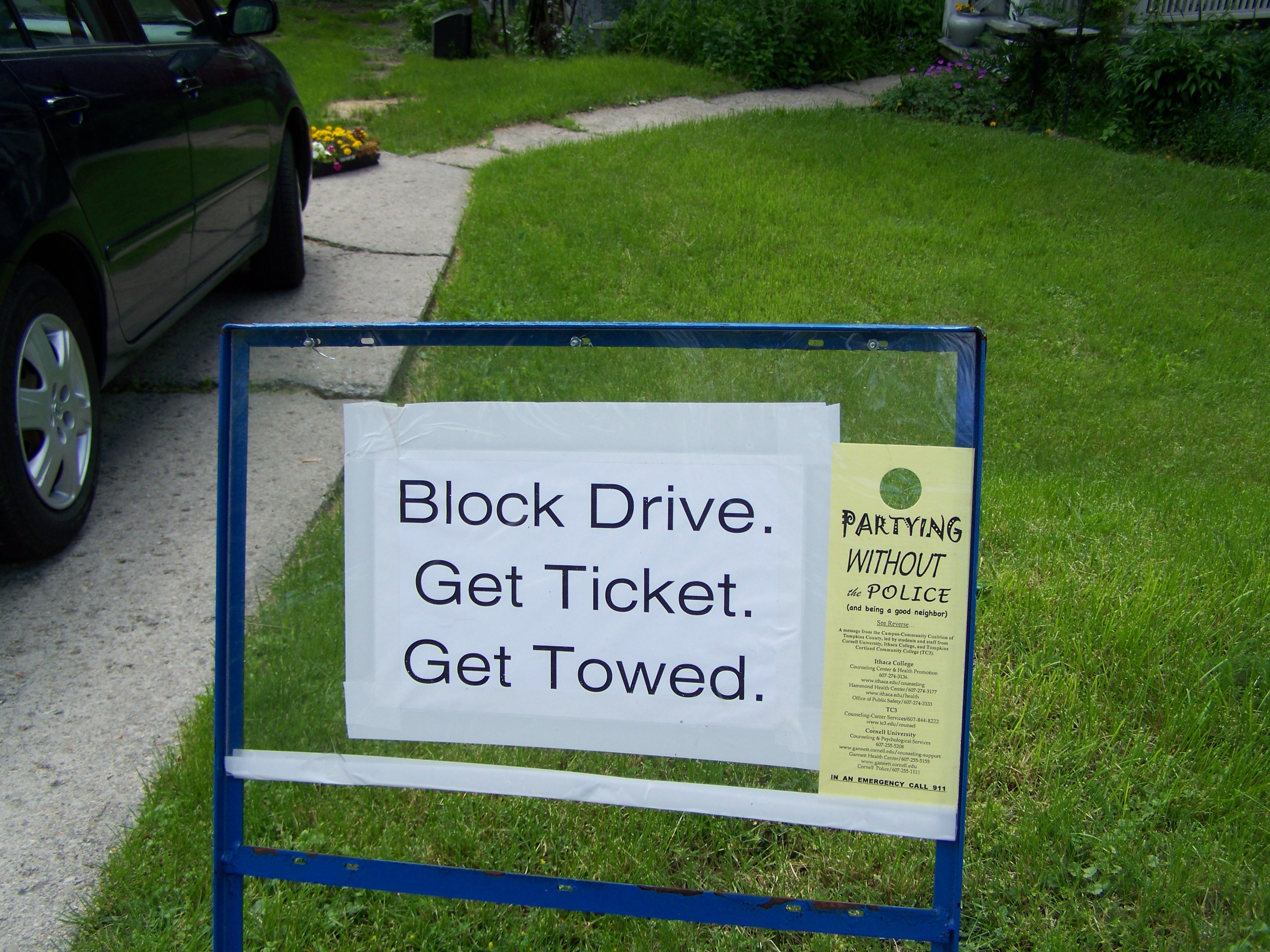
Regarding the opening photo; that photo comes from this past graduation weekend. I’m not sure if it’s the same person who put up the angry sign a couple years ago about how someone stole the peaches off their tree and as a result she couldn’t make peach pies to give to her sad elderly friends, but there’s a good chance it’s the same person (the sign did a good job of making me feel like a d—–bag and I didn’t even know there was a peach tree on the property). Anyway…

1. “new apartment building 309 eddy street ithaca cornell” 9-13-2011

I’m going to assume this is under construction? I’m going to go down there and take photos, come hell or high water.

2. “rothschilds building ithaca history” 9-12-2011

So, the Rothschild Building is also recognizable as the old Tetra Tech building on the east end of Ithaca Commons. Surprisingly, I have virtually no photos of it except for this one, where I’ve circled it in red:

The building was finished in 1975 (i.e. finished right after the Commons opened) and underwent a renovation in 1993, when Tetra Tech bought the previous occupant out (The Thomas Group) in a corporate takeover. It was built on the site of the old Hotel Ithaca, which had been torn down nine years earlier in the name of urban renewal.  The main occupant (Tetra Tech) moved out to the tech park last year because according to them, the space was too old and inefficient. The 76,000 sq ft. is slated for conversion into residential units.

3. “first snowfall in ithaca usually” 9-8-2011

Depends on your definition of “first snowfall”. Only twice in the past 20 years has there been an inch of snow before November 1st in Ithaca – 1993 and 2009 (October 31st and October 16th respectively). The 2009 snow is the earliest 1″ snowfall on the 120-year  record (however, November 2009 was 3 degrees above average and failed to record even a trace of snow). November usually averages 5.9″ of snow, but in the past decade there have only been four years with 1″ snows (November 18 & 21, 2008, November 9 2004, November 16, 27, 28 2002, November 23 and 30 2000)., and only 2 (2008 and 2002) that received above-average November snowfalls. But, in all except two years, there was at least a trace of snow in November. A quick anecdote, I think in the meteorology major, we said that the first 1″ day on average was November 18th, but if this blurb proves anything, it’s that it varies widely from year to year.

4. “edgemoor lane murder ithaca” 9-6-2011

None that I’ve ever heard of. Edgemoor Lane has almost exclusively been the home of professors, then fraternities and small dorms, since it was built in the 19th century, so a murder likely would’ve attracted Cornell’s attention, but nothing turns up online.

5. “why is cornell considered the heathens on the hill” 9-9-2011

Cornell was founded as a non-sectarian school, a radical departure from the norm in the mid 1800s. Many preachers and men of the cloth attacked the schools for its seemingly amoral standards, for instance not mandating church attendance. Heathens on the hill arose as a pejorative term that took on a more endearing, self-deprecating tone as non-sectarian schools became more common in the following decades.


The Keyword Bar XII

8 07 2011

One of those entries where I respond to questions or queries in the search bar that brought people to this blog. Plus it’s summer and I don’t feel like delving into history today.

For the curious – the sculpture in front of Uris is called “Song of the Vowels”. The sculptor, Jacques Lipchitz, created seven copies back in 1931. Cornell’s was the fifth production, and the sculpture was acquired in 1962 by the Uris brothers on behalf of Cornell, and installed in June of that year. Princeton, UCLA, Stanford, the Kykuit Gardens and two European art museums own the other copies. “Song of the Vowels” was renovated and re-sited in 2007.

1. “why does cornell cals accept so many transfer students” (7-6-2011)

That’s actually a good question. This one kinda creates some tension in the CALS community, and certainly that animosity is not unfounded. In the past, I’ve heard people criticize transfers as not being “true Cornellians”, whatever they define that to be.

As a general rule, the contract colleges accept more transfer students than the endowed colleges. It’s actually part of the mission of the contract colleges to include transfer students into their programs, if the applicants meet standards. However, this does not hold true for endowed schools, and that is reflected in the fewer students that they accept as transfers.

Specifically regarding the ag school, CALS accepts more because of “transfer agreements” that serve as feeders into CALS programs. A number of SUNY-affiliated two-year schools fall into this category. Basically, a student studying full time with a 3.0 or higher in their coursework (including required classes that match up with their desired major at Cornell) are guaranteed admission. This tends to be most common in the agricultural programs – for example, a majority of students in the dairy science concentration of animal science are transfers from two-year schools such as SUNY Cobleskill and Alfred State. A few others, like Morrisville and Delhi, also send in a fair number of students. As the list in the link indicates, there’s 43 schools, mostly community colleges in New York, that have these agreements. Some of it is coordinated through programs such as “Pathways to Success”, a set of guidelines and counseling in place at some schools for students who want to transfer to Cornell. For the name-conscious AEM majors, it should be noted that biology, landscape architecture, and non-agribusiness AEM are exempt from this and fall under “competitive transfer” admissions. Also, if you don’t attend a partnered institution, then the transfer isn’t guaranteed either.

In my own major within CALS, I know that we had two transfers in the years from 2007-2011 (~3% of total). But in lean years where the yield from freshman admissions wasn’t so great, they were supplanted the following year with transfers. I think there’s at least eight in the 2012 and 2013 classes (~50% of total).

2. “cornell freshman population” (7-4-2011)

Varies a little bit from year to year due to yield. The goal number in the late 2000s was 3,050. The university usually over-enrolls (my guess is twofold –  it’s to make up for students who may not show up in the fall, and a few more accepting students makes the yield increase), so class size usually ends up somewhere in the 3100s. The trend over the years has been to increase freshman class size, which was about 2700 in the late 1980s.

3. “cornell safety school” (7-4-2011)

Meh. Do your graduate work at a large state school and you’ll realize how little weight that statement carries. The New York Times has a nice little piece about image-conscious students at Cornell from a few years back.

4. “how far is it from wegmans to maplewood apartments at cornell in ithaca” (7-1-2011)

I think Mapquest would’ve been more useful than a search bar for this question. But for the record, between 2.5 and 2.7 miles, depending on what part of the Maplewood Park Apt. complex you’re going to.

5. “construction project; bj’s ithaca; owner” (7-1-2011)

The project is being developed by Arrowhead Ventures of Syracuse, which is a division of Triax Development Coroporation. Triax is the company that owns the Ithaca Mall, and the BJ’s site is (rather conveniently) the property just northwest of the mall.


Three Years Later

18 06 2011

Wow. I can hardly believe that this blog has been going for three years now. Not bad for a Cornell/Ithaca history and construction blog. In keeping step with the previous two annual updates, here’s a brief rundown of the site statistics:

The total number of hits since this blog launched, and as of 3:45 PM today, is 163,019.  Altogether, that’s roughly 149 visits/day. Since the first year averaged 82 visits/day, and the second year 166 visits/day, the third year breaks down to about 199 visits/day. Not too shabby.  As or the monthly statistics:

The highest monthly total for the past year was March, with 8,001 visits. In all of the past three years, March has been the month with the highest total. Considering the aberration in site traffic in March 2010 due to the bridge tragedies,  the relatively slower increase from 2010 to 2011 (versus 2009 to 2010) is actually more substantial than it seems, since no single event this year contributed to as large of a proportion of visitors to this blog.

Looking at the past year in review:

~In planning and development, Thom Mayne was selected to design Gates Hall, and when the initial design came out this past spring, I gave it a less-than-warm reception (and probably the only time I’ll ever refer to deer carcasses on this blog). THE CU ERL project (or as I like to think of it, Ezra’s giant tube) was approved, but won’t even start construction for two of three more years (I’ll be going back for my five-year reunion before the project is done). Milstein and the Johnson Museum addition made significant progress, as did the new food science building, and the Plantations welcome center, Physical Science Building and MVR’s north wing were completed. Bridge barrier designs from embattled architecture firm Office DA were proposed, but Cornell has opted to go with nets instead.

Looking towards the city and suburbs, the Collegetown Terrace went through a substantial redesign of its State Street buildings before finally getting phase I approval this past Spring. Since then, demolition and site prep are underway, and phase II finalization is just getting the planning board’s okay. 307 College Avenue was proposed and the Vine Street Cottages and 309 Eddy Street were approved. Development began on the third neighborhood of EcoVillage, and the BJ’s in Lansing barely earned approval due to a controversial tax abatement for a senior-housing project on the rear end of the lot. Lansing began construction on a new locally-owned supermarket, and the Poet’s Landing apartment complex was proposed in Dryden. IC finished its Athletic Center and began prep work to expand its Circle Apartments complex.

Too bad not all news was about progress. Ithaca Gun is a cleared site awaiting further development, which has been slow, if any at all. The Ithaca Hotel, Cayuga Green Condos, and INHS proposal are stalled due to lack of funding. The only substantial work completed downtown were the renovations of the Petrune and Plantations buildings on the Commons. At the very least, the Seneca Way project came forward to offer some hope for downtown redevelopment in the near-future.

~Greek Life went into a tailspin with the proposed, and then approved, plan to eliminate underage drinking from parties by banning freshman from attending fraternity events with alcohol, and making rush dry by 2013. Unfortunately for the system, all it takes is a couple of idiots to cause an alochol-induced fatality, and to make questionable choices while drunk at a public event, and the damage is done. While SAE earned itself a heave-ho from campus for the next 5 years, three other Greek orgs, the fraternities Phi Kappa Sigma and Alpha Phi Delta, and the sorority Phi Sigma Sigma, expressed intent to reestablish themselves on campus after a decades-long hiatus. Oh, and we got to watch Bob Saget be “initiated” into Seal & Serpent, much to the chagrin of image-conscious Greeks. Personally, I’d be more image-conscious of SAE’s pledges mass-migrating over to TKE even as four of their pledgebrothers were indicted. Real classy guys.

~The 2010 census showed that the city and county grew. Ithaca proper is busy mulling over its future with proposed Commons renovations, renovations of Stewart Park on the lakeshore, and a one-year moratorium on development for West Hill (excluding pre-approved projects). On the short-term, the county had to deal with tornado damage in Danby and arresting Cornell students with massive stashes of heroin.

Time passes, thing change. In comparison to last year, when I wrote this entry from a crappy sublet and with an uncertain grasp in grad school, I moved into a new place, changed advisers, worked my arse off, but feel much happier now than I did at this time last year. As I write this right now, I keep an eye on the clock, since I only just came back from visiting a friend I graduated with out in Amsterdam, and plan for a hiking trip in the Adirondacks tomorrow. The birds chirp outside my window and the sun plays off the leaves rustling in a light summer breeze.

Three years is a relatively large chunk of time for a blog to be active. But I enjoy writing because I think, or at least hope, that’s it useful to folks who are curious about the history of something at Cornell, or what’s under construction on campus or nearby. If I’ve been able to make someone a little more knowledgeable, than I see no issue with all the time I’ve poured into this blog over the years. As long as I have history and news to write about, I plan to keep this blog going for the foreseeable future. It gives me something to share with others, and it’s what makes me happy.


Being An Alumni Ambassador

8 06 2011

Since joining the ranks of sketchy alumni, I decided a while back that it wouldn’t hurt to do some volunteering through the Alumni Ambassadors program. One of the first things I discovered was that  meeting with prospective students poses an interesting juxtaposition. On my end (as well as any other alum), it’s a “been there, done that” frame of mind. For the prospective student, everything is new, and sometimes they have questions that we alumni assume everyone else knows the answer already, but it actually might not be so obvious.

I met with several students during the late winter in four different school districts near where I live. I was assigned students who were interested in majors similar to mine, and set up the meetings for either their local high school or a coffee shop nearby (and I don’t even like coffee, I just wanted a quiet and suitable location). Some took a more laid back approach, while others were dressed up as if they were a possible hire and I was the interviewer for a Fortune 500 company. For those over-prepared kids, it seemed that there was no way they were going to believe that I wasn’t there to reject them from Cornell. Even if I said I wasn’t there to judge their application. Repeatedly.

On one of my meetings, the student was running about twenty minutes late. Giving the benefit of the doubt, I decided to look around outside before I left. He had driven into another car while trying to pull into a diagonal parking space.

On another occasion, I was meeting with a student and I asked what interested her about CALS. Without missing a beat, she replied, “it’s easier to get into”. I think my jaw might’ve dropped a little bit before I stumbled out an “I’m sorry, what?” I think at that point, she must’ve realized she hit a sour note, and she gave a very measured reply of “it’s easier to get into the various research opportunities they have to offer.” Still soaking in the previous comment, I took a deep breath, and said that “there are indeed plenty of research opportunities. But for the record, the difference between acceptance rates is slight, and the average SAT scores only differ by a few points”. Which I learned from Metaezra. In retrospect, she probably didn’t know that that wasn’t the best response, and maybe I hold some resentment about those kinds of comments, so there was a real disconnect in that exchange.

One of the other awkward discussions that happened in over half of the meetings was about the party scene and Greek Life. I would ask if they had any questions about student life, and some chose to ask what the parties are like. One even asked about the availability of drugs. When I did the contact meetings, I always tried to answer in ways that I wouldn’t mind being quoted on. The last thing I wanted to do was make an ass of myself. So I gave the overly P.C. response of “Cornell’s size gives a wide variety of options for establishing a social environment. Greek Life is there for those who are interested.” The drug question was a bit uncomfortable; I gave an awkward, formal reply along the lines of “Cornell is large university, and you can make your own assumptions. But I’m disinclined to discuss it.” It was uncomfortable because it definitely straddles the perceived line of what is appropriate for discussion, but I still wanted to give a halfway-decent answer their question.

When I received the email notifying me of the final status of the students I met with, I was…uh, underwhelmed. All but one were rejected. That one was a guaranteed transfer. My office-mates started jokingly calling me the “Kiss of Death”. It was actually a little disheartening because some of those high schoolers were really quite accomplished and left me with a very good impression. But, after checking with a few other friends of mine who did the Alumni Ambassadors volunteering, I guess I was running par for the course. I never realized the kinds of students Cornell rejected, which was something that I think I had taken for granted and just written off while I was in Ithaca.

It had its ups and downs. I liked talking about Cornell (as if this blog wasn’t a clue). I got some satisfaction out of it, and I was able to do a little volunteering outside my grad school bubble. I think I’ll keep doing it, with some hope that maybe one of the future students I meet with will be accepted outright next spring.


The Keyword Bar XI

27 05 2011

It’s been really slow news-wise, I’m been pouring my efforts into my work, and while I’m scratching my head for ideas, I might as well fall back on the tried-and-true method of answering or writing about peoples queries that bring them to this blog.

1. “can i join tke if i pledge sae” (5-13-2011)

I wonder if this was a Cornell student or someone from another school. Anyways, at Cornell, the answer was yes, under…extraordinary circumstances. Which I’ve already ranted about here.

2. “hotel brunswick” ithaca ny (5-14-2011)

A fun fact of the day – Theodore Zinck didn’t call his pub Zinck’s, as most of us might believe. Rather, he called his pub the “Lager Beer Saloon and Restaurant”, which was located in the Hotel Brunswick, which he also owned. The hotel and bar were discontinued after Zinck committed suicide in 1903. It was the pubs that came along after the Hotel Brunswick closed that were named Zinck’s, in honor of his service (and to try and conjure up good memories for visiting deep-pocketed alums).

3. “ithaca college a and e center tower” (5-15-2011)

I’m assuming this is the Ithaca athletics center that was being searched? At 174 feet (tallest tower in the county), it makes quite an impression. The below photo is from Cass Park (tower is in the upper left):

4. “cornell “university library” ‘arthur gibb” 1890 drawing” (5-17-2010)

It’s a fantastic monograph, but I’m not aware of any copies of it being online. However, while searching for it, I found this wonderful writeup about Uris Library by Matthew Stukus ’09. It gives a couple details I was previously unaware of, such as Cornell was going to have to pay Henry William Sage back for the library construction if it won the Great Will Case, and that contrary to previous haphazard planning, it took fifteen months for the site of Uris Library to be chosen. The writeup is only several pages, so it’s a brief but enjoyable read.

5. “ithaca coldest ever day” (5-19-2010)

People seem to have an odd fascination with this one; I’ve never seen a query for the warmest day in Ithaca, but I’ve answered the coldest day question previously. For those too lazy to click the link, the lowest low is -25 F, set once in January 1957, and once again in February 1961. This past winter’s coldest day, for comparison, was -15 F, on January 25th.

6. “did the ramones ever play at a cornell university party?” (5-20-2011)

Define “party”. They played at Barton Hall in February 1981. The Ramones came back to East Hill to play for Slope Day 1984 (where they ended up playing in Barton Hall once again because of bad weather). But as for private parties or fraternity parties, I’m not aware of any occasion offhand.

7. “experimental fantastic gothic death” (5-21-2011)

Um…nope. Not even going to think about answering this. But extra points for being really creepy.

8. “neighbors have rotting deer heads along property line” (5-22-2011)

Your neighbors are a lot worse than mine. I’m really sorry.

9. “is it difficult to grt into hughes hall cornell capacity” (5-24-2011)

That’s a really good question. To be honest, I thought Hughes Hall as a dorm was being closed and converted into academic use, but apparently its 48 rooms are still open for the upcoming academic year. Typically, about 25% of first-year law students live in Hughes. Your best bet is to call the Housing office and ask.

Hughes Hall is the product a million-dollar donation in 1956 from Myron Taylor LL. B. 1894, who was chair of the trustees for U.S. Steel Corp. The building, which was completed in 1963, was named for law professor Charles Evans Hughes, who was Myron Taylor’s favorite professor while he attended the law school. Prof. Hughes would go on to become governor of New York (1907-1910), U.S. Secretary of State (1921-1925) and Chief Justice of the Supreme Court (1930-1941).