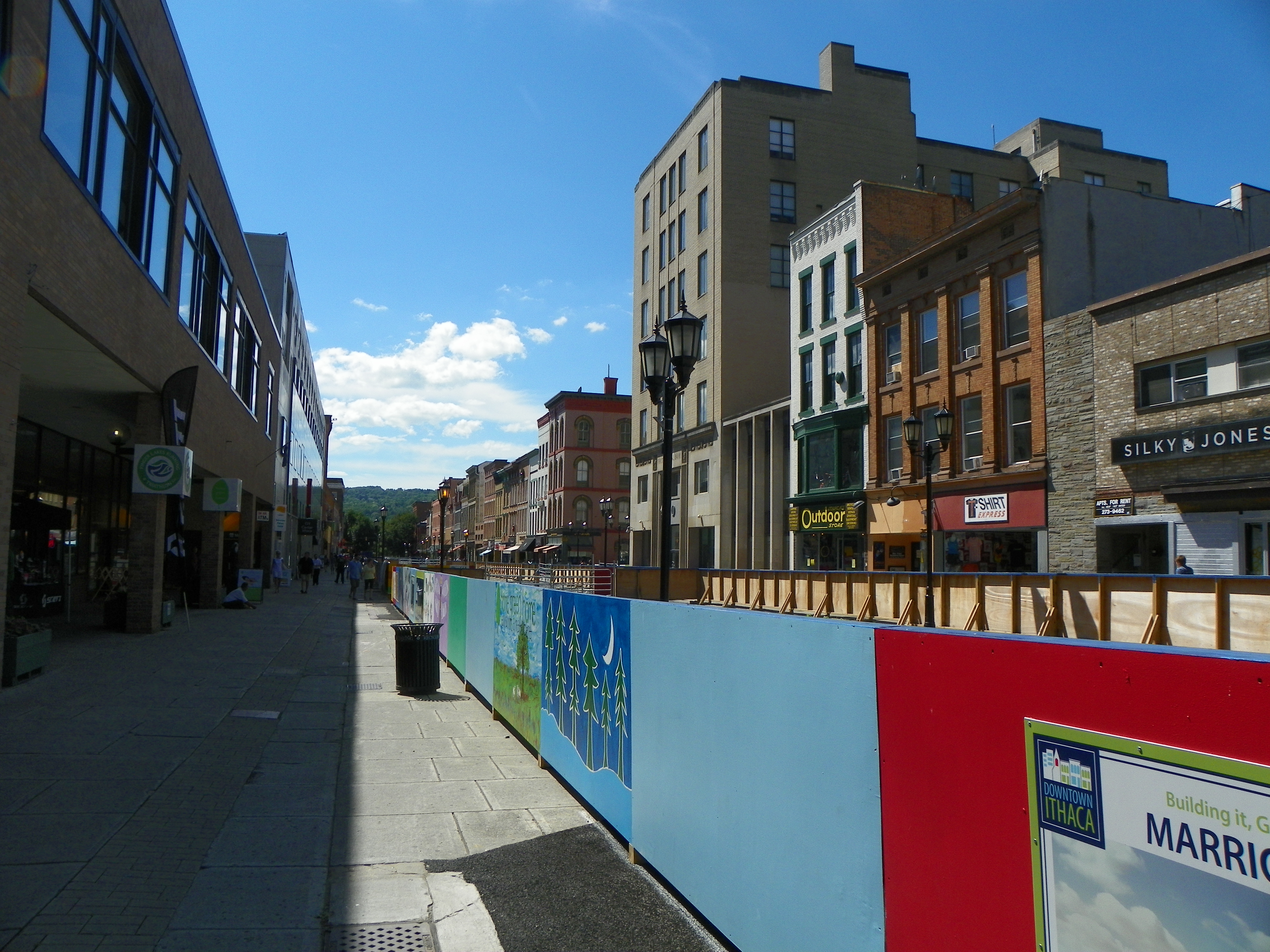
The Carey Building Reaches Upward

5 06 2014

4-13-2014 079

Another development piece to get everyone through the work week, although this is an update to a known project, rather than a totally new work. That doesn’t make it any less interesting though, because it’s quite a stretch, literally and technically.

The focus of this post is on the Carey Building, which was previously covered on this blog here, and in exhaustive, soup-to-nuts renovation details over at IB. For this port, drawings are here, FEAF (environmental assessment form) here,

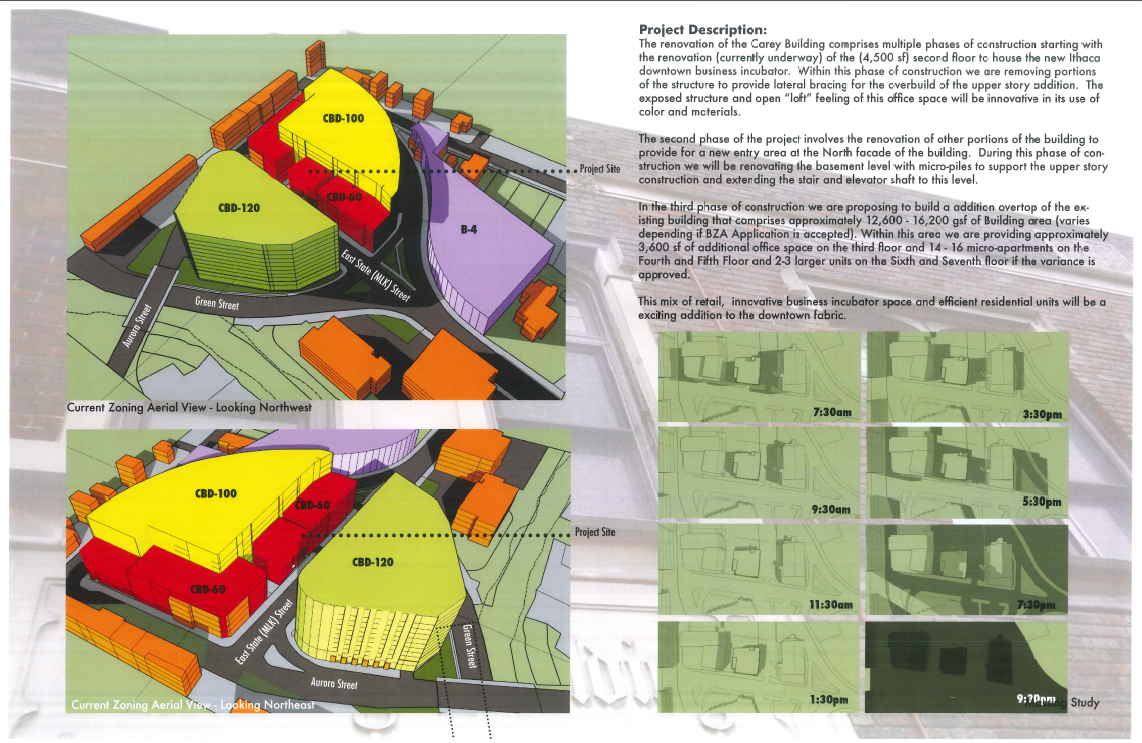
Now we have some real meat to work with, it appears the details of the project are malleable, pending zoning. The Carey Building is in a zoning that allows a max 60′ – no doubt something that their neighbors in the parcel surrounding them, the proposed Hampton Inn downtown, are happy about (the Hampton’s max height in zoning is 100′) – note the boxes below are for illustrative purposes only.

carey_rev_1

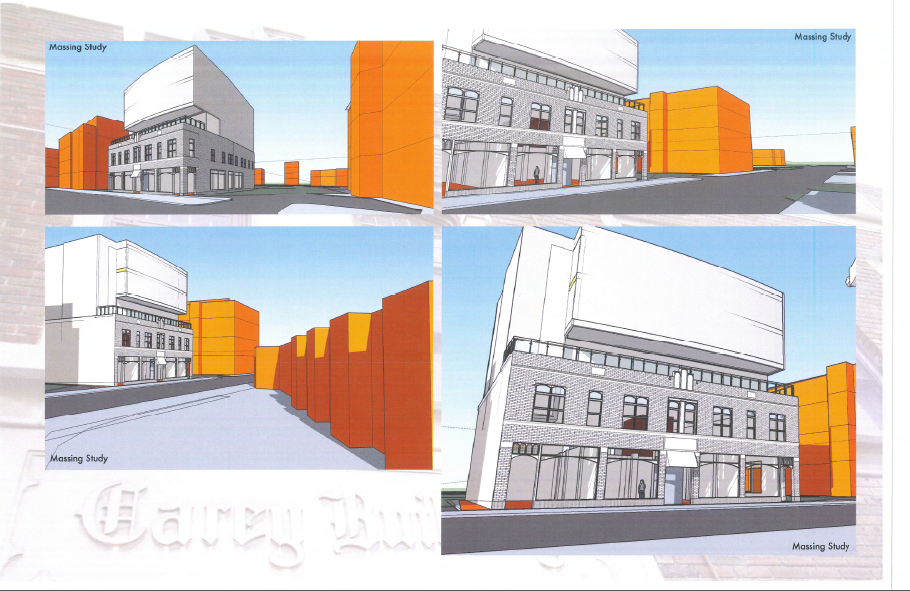
Well, the developer of the Carey Building, local firm Travis Hyde Properties, would like to appeal to the zoning board regarding that whole 60′ height limit. they would like to add on another two floors, to make for a 7-story, 85′ structure (78′ if not counting the stair tower). The render below is billed as a massing study, which I can only hope given the incredible dullness of those windowless flanks. To build floors 3-5 (12,600 sq ft total), the developer does not need a variance, and originally (as seen in the previous post), there was no plan to exceed the height limit and approach the city for a variance. Floor 3 will hold 3,600 sq ft of office space, and 4-5 will hold 14-16 micro-apartments. The extra 3,600 sq ft that would be built if the variance is approved for floors 6 and 7 would house 2 or 3 larger apartments.

carey_rev_2

This kinda makes for an unusual situation given the large hotel proposed right next door. The logistics will almost certainly be a complicated affair if both of these proceed in overlapping time-frames. My inner realist expects that Lighthouse Hotels will not be amused by this vertical air-grab. We’ll see what happens as the current $1.6 million renovation of the second floor is completed this July.

carey_rev_3


Infill on Inlet Island: 323 Taughannock Boulevard

4 06 2014

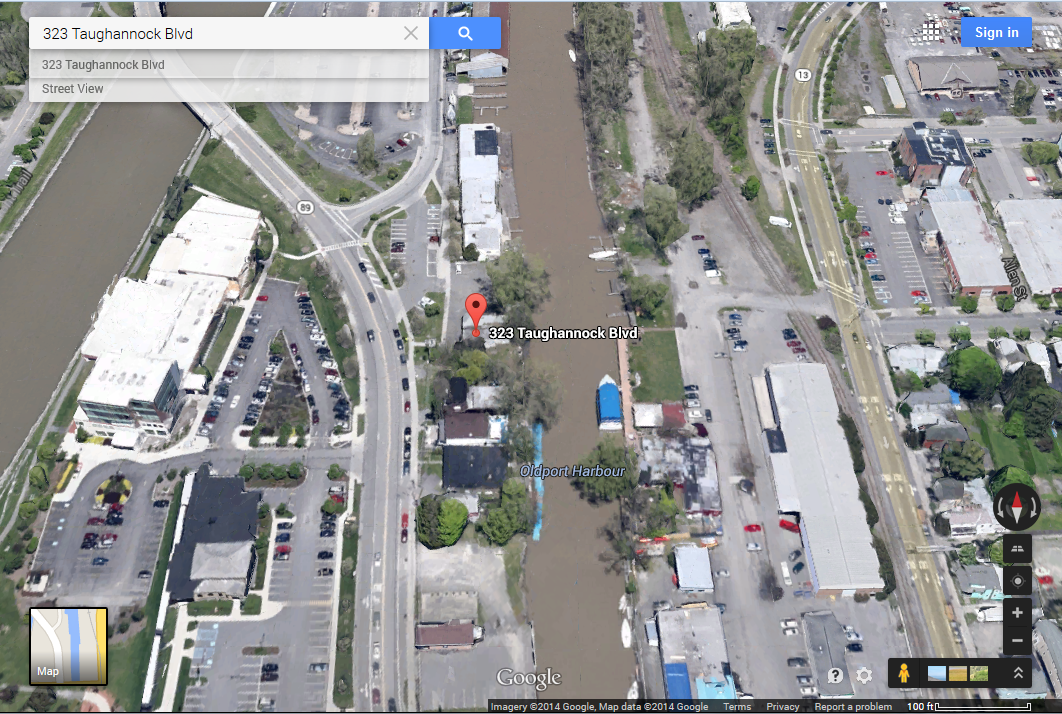
I will keep this short and sweet, because I’m serving on a trial jury this week, so that and staying on top of my normal work obligations is keeping me very tight with my time. The project is called 323 Taughannock Boulevard, application details here. The current 323 Taughannock is a nondescript one story dive bar, across the street from Island Fitness on Inlet Island.

323taughannock_1

The project owner is “Rampart Real LLC”, and the architect of record is local firm STREAM Collaborative (Noah Demarest). Rampart Real LLC appears to have bought the property in May 2011. The man behind the LLC is local developer Steve Flash, who in 2007 sought to build a five-story condo/hotel on Inlet Island, and was shot down. Given that the purchase happened well after the hotel was mothballed, I assume this parcel is not the site of the proposed condo/hotel from seven years ago. There have been concerns in the past several years with preserving the waterfront while encouraging development, which led to a substantial debate on waterfront zoning. Revised zoning for a denser waterfront was passed in fall 2011, much to the chagrin of some local councilmembers. I believe this is the first substantial proposal on Inlet Island since that zoning revision.

323taughannock_3

The project in question is a 4-story (50′ height), 23,000 sq ft, $3.5 million project that proposes ground floor office space and 20 units of housing (not sure if apt or condo) on the upper levels. There would be 18 covered parking spaces, and the developer proposed modifications to neighboring city-owned property to improve vehicle circulation and the waterfront promenade. From the looks of it, it’s hardly fair to call it mixed use, I see only a couple hundred sq ft of office space on the first floor, next to the ground-level parking lot underneath the residential units.

323taughannock_2

The project will be going up for site plan review in the July/August time-frame, with construction anticipated to start in January 2015, and to be completed by August 2015.

323taughannock_4


Suddenly There’s A Lot of News At Once

22 05 2014

Latest planning board agenda is online and there’s a lot — and I mean a lot — that will be discussed. I’m going to be updating this post as more information comes online, so this first draft is a sort of “here’s what we know” going into the meeting.

A. No surprise, the Ridgewood student housing project (the address has been updated from 1 Ridgewood to 7 Ridgewood) is up for discussion once again. The project needs a “certificate of appropriateness” from the Ithaca Landmarks Preservation Council (ILPC) since it’s in the Cornell Heights historic neighborhood, and things are not looking all that auspicious, given the recent report from the Ithaca Journal. The planning board would likely give approval with stipulations if the ILPC approves the plan, but that’s a very big “if” at this point.

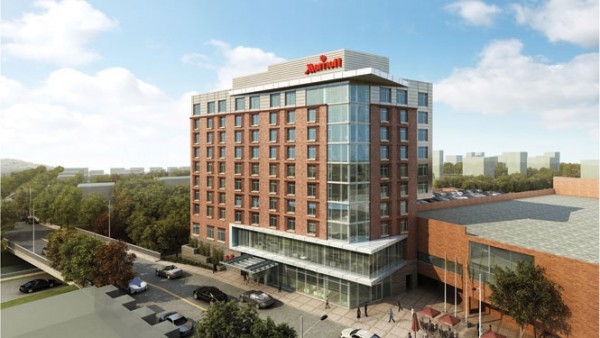
B. The downtown Ithaca Marriott. This site is the triangular parking lot next to the Commons at Aurora Street, and has been covered in detail both here and at IB. The history here goes back five years, back when it was going to be called the “Hotel Ithaca” (now the name for the former Holiday Inn). This one has been stalled since the fall due to financing issues, but that has been taken care of in the past couple of weeks and they want to start construction ASAP. They have several changes that need to be reviewed since they have completed “value engineering” (a phrase I fear, since it’s the pretty way to see they cut back on material costs and design features), so we’ll see what this will look like. The current proposal’s rendering, at 10 floors and about 160 rooms, is below.
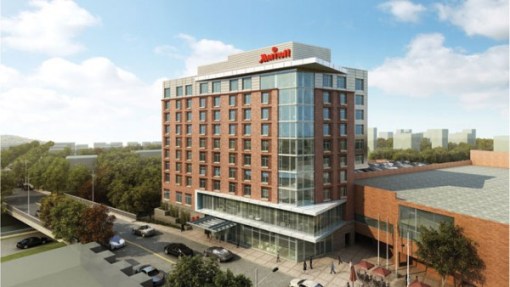
Ith_Marriott


4-8-2013 335

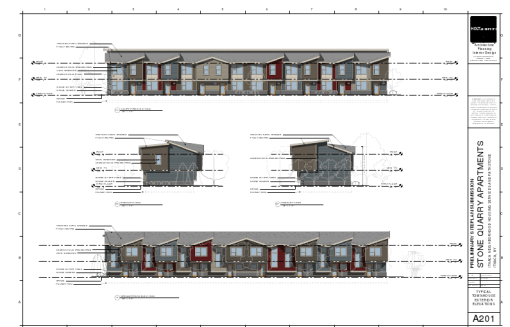
C. Likewise, the Stone Quarry project was also approved a while back in the fall of 2012, but only now managed to secure funding. Here’s the previous discussion here, and here’s details from IB. The project, slated for a parcel on Spencer Road where Ithaca Taxi Dispatch keeps a parking lot, will bring 35 units of INHS-run affordable housing. This one is also up for re-approval for value engineering reasons, and looks to start construction early this fall.
stonequarry2

stonequarry1

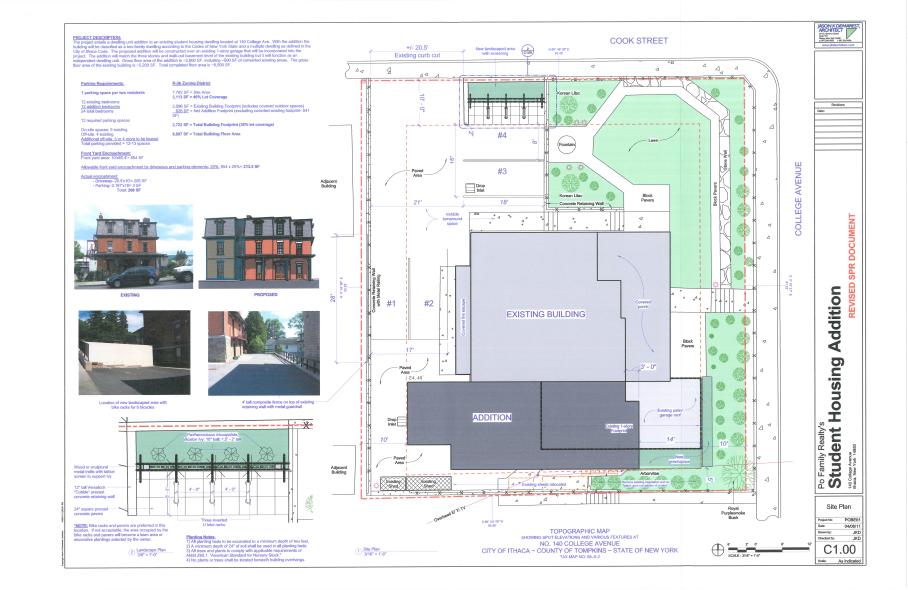
D. 140 College aka the John Snaith House addition, discussed earlier this week here.

E. “205 Dryden Road, Student Housing, Jagat Sharma – Sketch Plan” — Now here’s something new. 205 Dryden is the Kraftee’s Building. Jagat Sharma is a prolific local architecture firm, responsible for many of the larger apartment buildings in Collegetown. I can’t seem to find the owner from the tax records, which indicate the current owner has been the owner since 2004. Jagat Sharma tends to be a favorite architect for Ithaca Renting/Jason Fane, and Lambrou Real Estate, but neither of them seem to own the parcel from what I can tell (it’s possible one of them does, but the upstairs units are not rented).  Novarr-Mackesey owns three parcels next door, but I don’t see anything on their website either. Regardless, this falls in a Collegetown MU-2 zone, 4-6 stories, and 45-80′ in height. Whatever is proposed here is going to be pretty big, comparable to Josh Lower’s Collegetown Crossing project.

Edit: Jason at IB tells me it’s owned by Pat Kraft, the guy that runs Kraftee’s.

8-21-2012 113

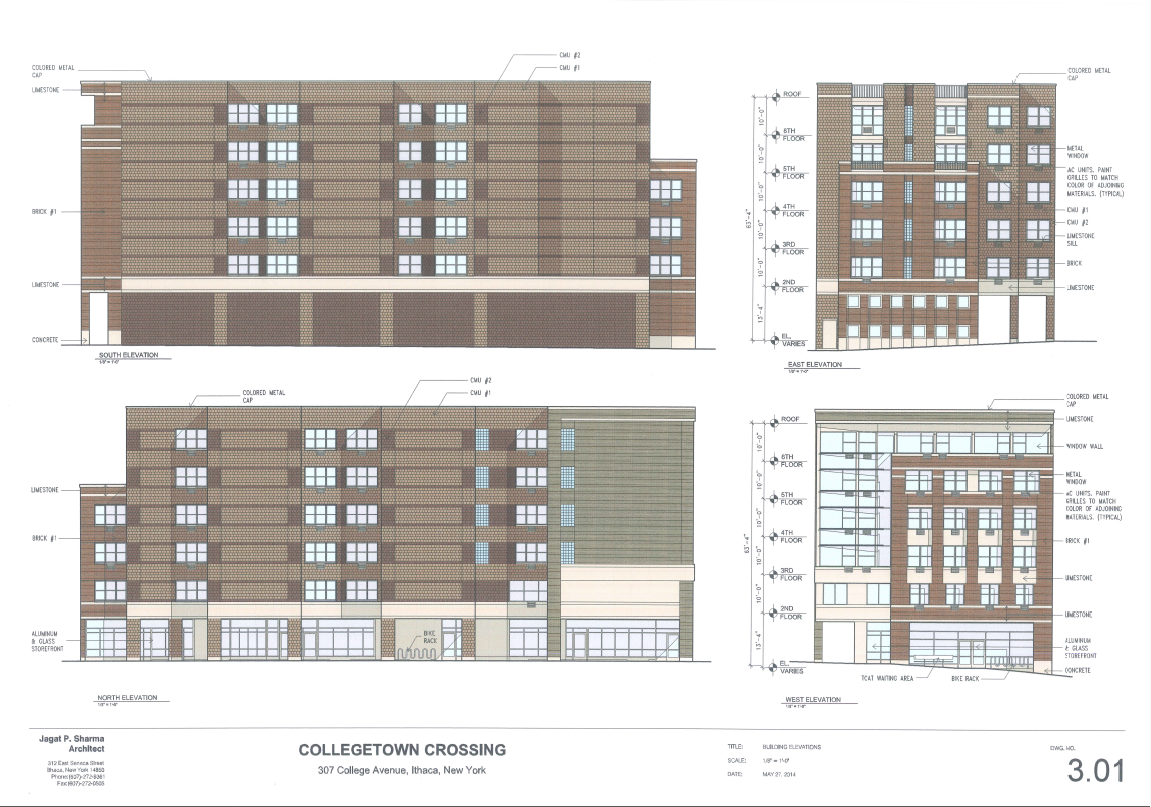
F. Speaking of which, 307 College, aka Collegetown Crossing, has a new sketch up for review as well. With the new zoning guidelines, the current version isn’t doable because it impedes on the lot to its east. So this version will have a 9% smaller footprint at least, but parking will no longer be an issue. For the record, here’s the site, and the old design.
11-24-2012 161


G. “Downtown Hampton Inn Hotel, Scott Whitham – Sketch Plan” – Another re-do of sorts. This one appeared in its original form in December 2012. The original proposal, proposed by Neil Patel (his family members are the ones developing the hotels off 13) was for a 6 story, 92-room, $16 million hotel that would have demolished the Carey Building, and the original design was by Jagat Sharma. Scott Whitham is another local architect, so given the revised space constraints and the new architect-of-record, the design of this will be something completely different.  Although hopefully it doesn’t involve tearing down buildings the developer doesn’t own.

H. 314-320 E. State Street, the Carey Building addition – discussed earlier this week here.

***

In sum, there’s a lot of stuff going on all at once. I’ll update as it all plays out, and documents and renders become available.

UPDATE 1: The new design of the Stone Quarry apartments:
inhs_stone_quarry_rev_1 inhs_stone_quarry_rev_2

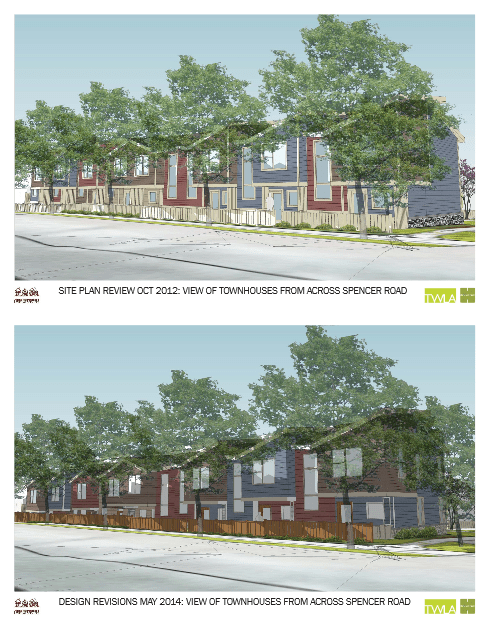
Due to concerns with how the soil will settle on site, the walkways and elevations of the buildings have been altered. Each townhouse now steps 8 inches going north to south, which makes the middle ones look a little misshapen. The soil issue also forced a re-do of the ends of the apartment building, since it couldn’t be graded as originally planned. On the cost-cutting end, balconies have been replaced with windows, the south facade of the apartment building was tweaked, some of the trim has been removed or down-valued on the Spencer Road side of the townhomes, and a few more windows punched in on the sides of the townhome end units. there’s a few tweaks to the site plan as well, which can be found at the link above.

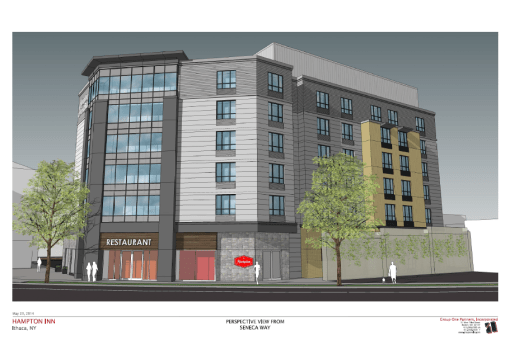
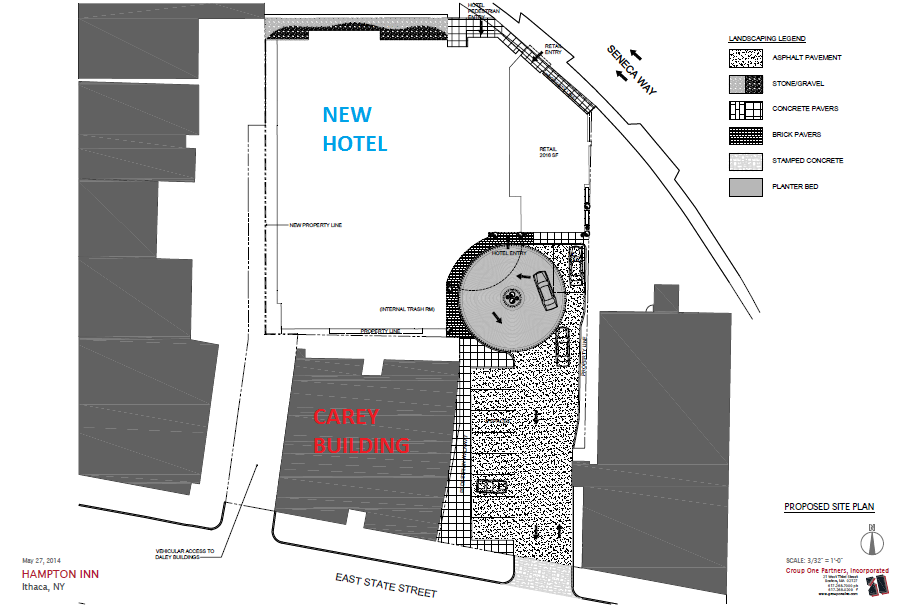
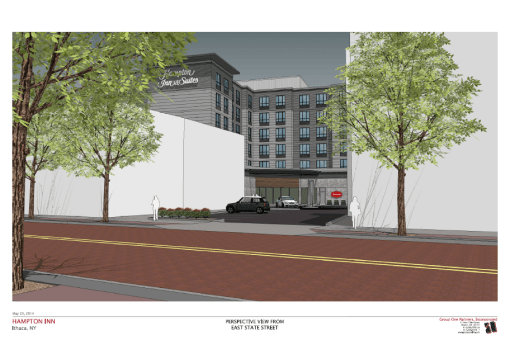
UPDATE 2: Here’s the proposed Hampton Inn, details here. The new hotel would be built on the parking lot behind the Carey Building.  The proposal calls for six floors, 120 rooms, and 2,000 sq ft of retail/restaurant space, with only about 9 parking spaces on site. The entranceway would be via a driveway between the Carey Building and the Eagles Buildling, which I imagine being a bit of a logisitical nightmare at the moment, given that the Carey Building has its own renovations underway and additions planned.
hampton_new_3
hampton_new_1

hampton_new_2


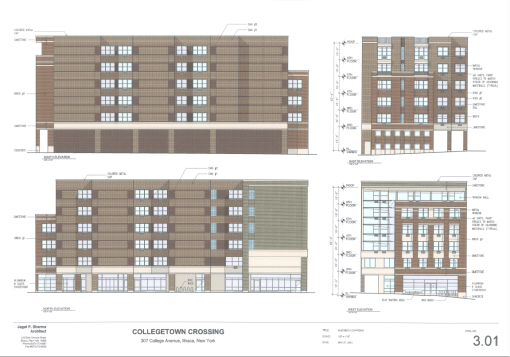
 UPDATE 3: Up next, revisions to 307 College Avenue, Josh Lower’s Collegetown Crossing project. Nothing fundamentally different here, but the design has definitely been tweaked. Full details here. The revision reduced the number of apartments to 43, with 98 bedrooms (previous was 103). There would be five retail spaces on the ground level of the six-story, 63’4″ structure. The size and scale of this revision fit comfortably within the rules of the new Collegetown MU-2 zoning of the parcel.
ctown_crossing_rev_1

UPDATE 4 (6/5/14): The updated design of the Marriott has been released, and will have its own special planning board meeting on June 10th. Apart from updated Marriott signage and some materials tweaks, this one has virtually the same design as the original, which has me breathing a sigh of relief. Perhaps this one will start construction in July after all.


Mixing Old With New

20 05 2014

4-13-2014 079

After something of a dry spell, a couple of projects are due to come forward in the next few weeks, both involving similar concepts – additions to existing structures.

First, 140 College Avenue. Site plan here, details of the revision here and here. This actually isn’t the first time this one has come up to bat, having made its rounds in the news a little over three years ago (token disclaimer: I wasn’t a fan of it then, and my mind hasn’t changed). 140 College, better known in historic circles as the John Snaith House, has been targeted for a one-unit, 12 bedroom, 3,800 sq ft addition by its owners, the Po Family Realty. The addition, by local architect Jason Demarest, would be built on the south side of the building, separated by a glass partition. The Po family has already run the gauntlet with the planning board, since the Snaith House is a local landmark. Their plan was approved, but given the zoning, it required 6 spaces, for a total of 12 parking spaces for the whole building. Apparently, this made the project less workable, and it’s been on hold since. The developer is using the recent changes to Collegetown zoning as an impetus to change the terms of the project’s approval, reducing the number of parking spaces for the building to a total of 4. The project as proposed eliminates 2 of the 6 parking spaces on site, so only 4 would be left. Originally, 8 spaces had been secured off-site (4 on site + 8 off site = 12), but the lease on those will expire before this project is complete, as construction is tentatively slated to start late next month, and they are unable to renew those leases. Rather than renting new off-site spaces, the developer just wants to keep the total at 4. In exchange, they will provide bike racks, and all tenants membership in Ithaca Carshare. Before the zoning change, this would have been a tough sell, but it stands a good chance of approval going forward.

snaith_1

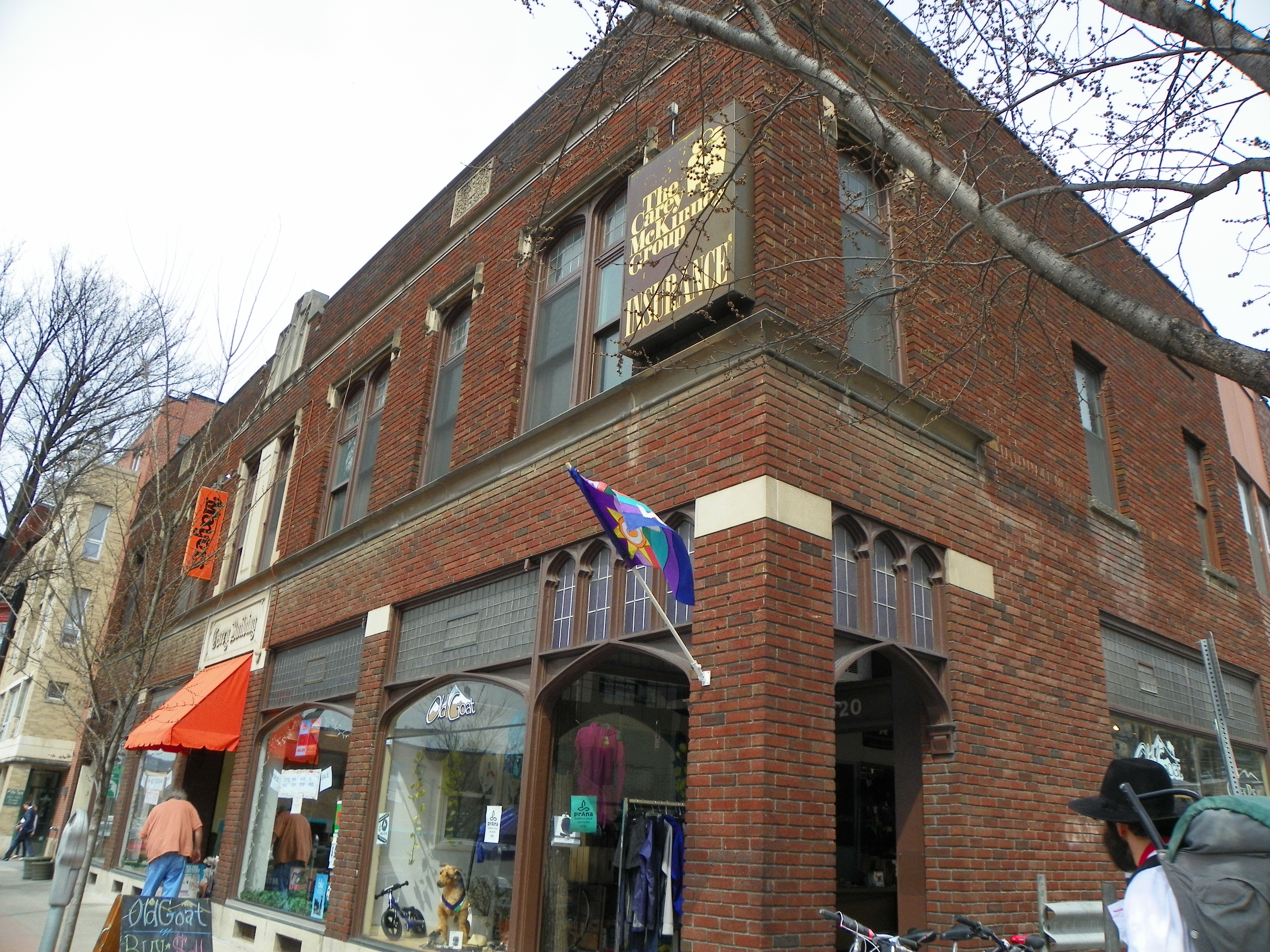
Project number two, on the other hand, is new to the boards. This one targets the Carey Building, which has been in the news quite a bit as of late as the new Ithaca/Cornell/IC/TC3 business incubator is being built on the second floor, set to open this summer (more details on the renovation process can be found over at Ithaca Builds). A third floor addition has been in the works, projected for a 2015 completion. Well, there has also been discussion of a little more expansion beyond that, and that became clear with this document sent to the city this week. Local developer Travis-Hyde Properties proposes an additional 3,600 sq ft of office space on the third floor, and two more floors above that with 14 micro-apartments. This is within current zoning and no variance will be needed. Micro-apartments are a rather new phenomenon, but have significant potential in urbanized areas, especially cities like Ithaca where their lower square footage (think 400-500 sq ft) permits a lower monthly rent, which can hopefully make a small dent in the affordable housing issue the region is struggling with.

There’s no official render, but we have a massing study that gives a pretty good idea of the proportions of the vertical addition:

carey_1

Given that Travis-Hyde looks to be partnering with local firm John Snyder Architects on this one, expect something modern, with generous amounts of glass. I generally am not a fan of building additions, but I’ll reserve judgement until actual renders come out for this one. At the very least, this will be better than that hotel proposal from the Patel family a couple years ago that proposed tearing the Carey Building down. the only take-away from that stale proposal is that if you want to make enemies in the business community, go ahead and propose projects for land you don’t own, and the owners have no intention of selling.

12-29-2011 076


News Tidbits 5/6/14: INHS Wants “Woonerfs”

6 05 2014

greenways2

I have to be honest, up to last night, I had no freaking clue what a woonerf was. It sounds like a children’s made-up word (ex. thingamigjig or doohickey; my brother used “pedewa”). But apparently, it’s a legit urban planning concept. Woonerf is Dutch for “living yard”, and is a type of “living street” where equal priority is given to cars, bicyclists, and pedestrians (the speed limit is no more than about 10-12 mph). They’ve seen substantial implementation in Western Europe since their introduction in the 1970s. The more I read about them, the more I get the impression that it’s a curious blend of a thoroughfare and a courtyard, or Ithaca Commons with vehicle traffic.

Image Courtesy of localmile.org

Image Courtesy of localmile.org

I’m not inclined to look up new words without a purpose, and the reason this time around comes courtesy of the planning board of the town of Ithaca, with the following project up for review at the meeting on May 20th:

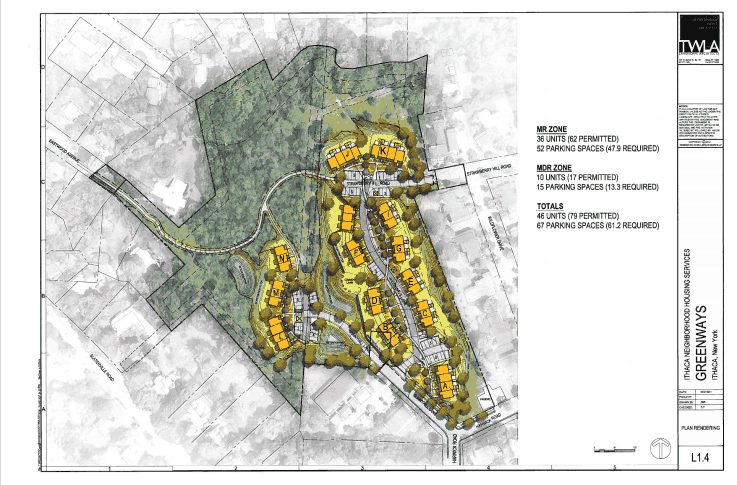
Consideration of a sketch plan for the proposed Greenways project located off Sunnyhill Lane and Strawberry Hill Road, Town of Ithaca, Tax Parcel No.’s 60-1-34.2 and 60.1-1-46.22, Medium Density Residential (MDR) and Multiple Residence Zones (MR). The proposal involves the development of 46 townhouse units west of Eastwood Commons, fronting woonerf-style roads that will connect Sunnyhill Lane and Strawberry Hill Road.The project will also include new parking areas, open space, recreation areas, trails, walkways, landscaping, outdoor lighting, and stormwater facilities. Cornell University, Owner; Ithaca Neighborhood Housing Services, Applicant; Peter Trowbridge, Trowbridge Wolf Michaels Landscape Architects, Agent.

Regular readers will recognize the name Greenways because I’ve latched onto this project and followed it with interest since first proposed about 18 months ago (one could argue I’ve beaten a dead horse here). The project was originally proposed with 67 units, but then dropped to 46 by the time updated specs were submitted in February. The site is still the same, seeking to use woonerfs to connect Sunnyhill Drive and Strawberry Hill Circle. Note that google is not correct here, the street labels are all botched up. An accurate map with the parcels outlined (copied from the county tax map) is included in the lede for this post. Given a preferred completion in October 2015, and that this project consists of 46 units of townhouse-style housing, it makes sense that it would be seeking planning board approvals now.

Image property of Greenways at Eastwood Commons

Image property of Greenways at Eastwood Commons

So make way for the woonerfs, I suppose.

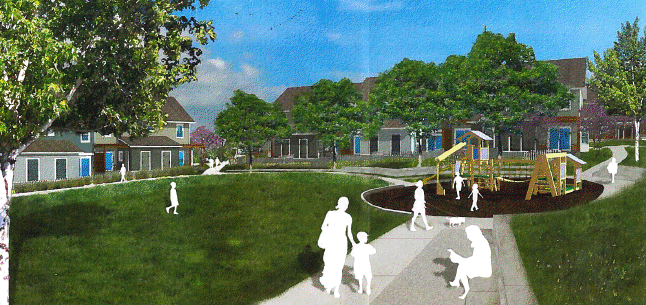
EDIT 5/15: Now we have renders and site plans. It looks like the project will be built in three phases, and access to “Greenways Lane” will be primarily through Strawberry Hill Toad and Sunnyhill Lane. The “woonerfs” seem rather gimmicky in this context.

gways_rev_1

gways_rev_2

gways_rev_3


Ithaca’s Big Plan

29 04 2014

1-2-2014 313

I realize that the city’s comprehensive plan might seem a bit abstract. So let’s break it down into Q and A.

1. What is a comprehensive plan? Is this just more government bureaucracy?

Kinda? A comprehensive plan is the overarching theme for a city and its neighborhoods.  It’s not as specific as zoning is, but it helps determine what zoning should be, given the city’s concerns, desires and goals. So yeah, it’s more documentation, but it’s also allowing the community to determine the “forest” to be created by its “trees”. The plan helps to decide whether a project is appropriate for an area, because the planning board and zoning board will understand the desires for a given location. Used effectively, it may actually save time and mental energy in the long run by establishing a basic framework (i.e. developers will know that the chances of building a massive apartment building in Fall Creek are pretty low).
2. Why does the city need a new comprehensive plan?

The old one dates from 1971. A time when computers were the size of rooms, green was just a color and not a cute term for ecologically sensitive, and the Brady Bunch epitomized the way many wanted to live, in a posh contemporary in the suburbs with a Plymouth Satellite wagon in the garage. Times, and Ithaca itself, have changed. The plan has been amended in bits and pieces, but given its age, it needs a big overhaul, such that a new plan would be the easier option at this point.

3. Just how do they plan on making this plan?

In two parts: Phase I involves the preparation of a city-wide plan that identifies a vision and future goals for the community, and Phase II will include the creation of individual neighborhood or thematic plans, based on Phase I’s results. Committees, focus groups, surveys, meetings with community members, the whole years-long shebang. The current state of affairs can be found located here, and the current planning issues (using community input) is here. A 277-page PDF discussing environmental issues and goals for the plan is here. A draft of the plan, a mere 16 pages, can be viewed here.

4. Sum up the issues for me. I didn’t come here for long PDFs.

Parking’s a b*tch, and people want more walkable neighborhoods. Ithaca is expensive and only getting worse. The Jungle. Development pressures are threatening Ithaca’s historic structures, but the development process is too onerous for most folks to even bother with trying, vacant lot or otherwise. More jobs that aren’t colleges or retail. Protect the gorges and other local, natural amenities.

5. Okay, so what does the community want? What are the big changes?

Under consideration, we have a bunch of overarching themes. Here’s a map:

ith_big_plan_map

Ithaca loves itself some compact, mixed-use developments. If it fits that criterion and it also fits the area, the city wants it. Surface parking lots (231 acres) and vacant parcels (194) comprise just under 10% of the land in the city, and a number of these are what the city hopes to be appealing to developers (if the RFEI for the county library is any clue, the interest is there). Many of the currently developed parcels should be protected – homes in Cornell Heights, Belle Sherman and Fall Creek, for examples. The red spans above are what the city sees as areas for new, dense development – underutilized parcels downtown and on West State, the large swath of big-box land in the southwest, and the frequently-flooding land to the west of big-box land (the city hopes to fix that with dredged soils to raise the land).  Some accommodation for local commercial spaces is created with the “Neighborhood Mixed-Use” land use option. The final plan linked above notes the challenges with each neighborhood, and the desired changes moving forward.

The asterisks denote focus areas, areas the city wants sees significant and unique development opprotunities. There are four – Emerson (which is now in the earliest stages of redevelopment),  the flood-prone/retail-heavy southwest part of the city, the large undeveloped swaths of West Hill, and the Waterfront/Inlet Island. All are seen as very underutilized – all present unique opportunities to significantly expand housing and commercial options, if a developer is willing to fight the adverse factors and work with the city.

6. So are we going to see anything develop out of this?

Explicitly, no. This doesn’t dictate massing of new structures, or curb cuts and sidewalk widths. But it says where Ithaca wants growth to be focused, and where it would be more amenable to playing nice with anyone who comes forward with a plan in those areas.

7. Can I have a say?

Well, the public workshops are this evening, as I write this. But if you can’t/couldn’t attend, feel free to answer the online survey, or email the city planner with your thoughts and concerns.


The Six Contenders for the Old Library

22 04 2014

libe_0414

Most people are aware that the old Tompkins County library is about to be left completely vacant. As covered by Ithaca Builds last fall, the county issued a Request For Expressions of Interest (RFEI), inviting developers to cast their lures and offer proposals, and the plan perceived as best would garner its developer the ability to buy the old library and build on the parcel. The county expressed preference for proposals that were eco-friendly and would create senior housing, so the proposals play to that preference. In a long if thorough process, the County Planning Advisory Board will make a preliminary review, recommend its choices to the legislature, and the legislature will select the finalists, who will be asked to submit more thorough proposals of their initial entries, detailing info such as project financing. The county makes it final selection in November, with sale of the parcel to the winning developer in March 2015.

This is exciting, it’s like watching competitors at an Olympic event.  All proposals can be found at the county website here, individual links are included with each shot below. Feel free to voice your opinion on your favorite proposal in the comments.

1. DPI Consultants

DPI Is a private developer operating out of Rochester. Their group has some previous local involvement, converting the old county jail to offices in the early 1990s, and they were involved with the Johnson Museum addition a few years back.  Their plan calls for 76 condos and 8 apartments in 2 5-story buildings (max buildable height for the parcel is 50 feet, for the record). The condos would be mid-to-upper tier for pricing, and the project would have underground “automated parking”.  This proposal is the only one that does not have a focus on seniors.

dpi_libe_0414

2. Franklin Properties

Franklin Properties of Syracuse has teamed with a group of local firms (STREAM Collaborative and Taitem Engineering, among others) to propose a 68,000 sq ft “wellness center” for the library site, which they call the “Cayuga Community Education Center”. The first two floors would have a cafe and medical offices for doctors and non-profits, with three floors (32 units) of senior housing on top. The building would incorporate solar panels and is aiming for a 2017 opening if selected. The proposal seems to be the only one that reuses the original library, and already has some letters of support from local businesses.
franklin_libe_0414

3. Integrated Acquisition and Development

IAD proposes a LEED-certified, 115,500 sq ft, four-story structure they call “Library Square”, with 90 apartments, conference rooms, a library and fitness center space. The project suggests a late 2016 completion. Parking is behind the L-shaped primary structure. IAD has been involved in the Ithaca area previously, being the owner of several properties in Lansing (Warrenwood, the medical offices of Trimhammer), and the lead developer of several of the office buildings in Cornell’s office park near the airport.

iad_libe_0414

4. INHS (Ithaca Neighborhood Housing Services)

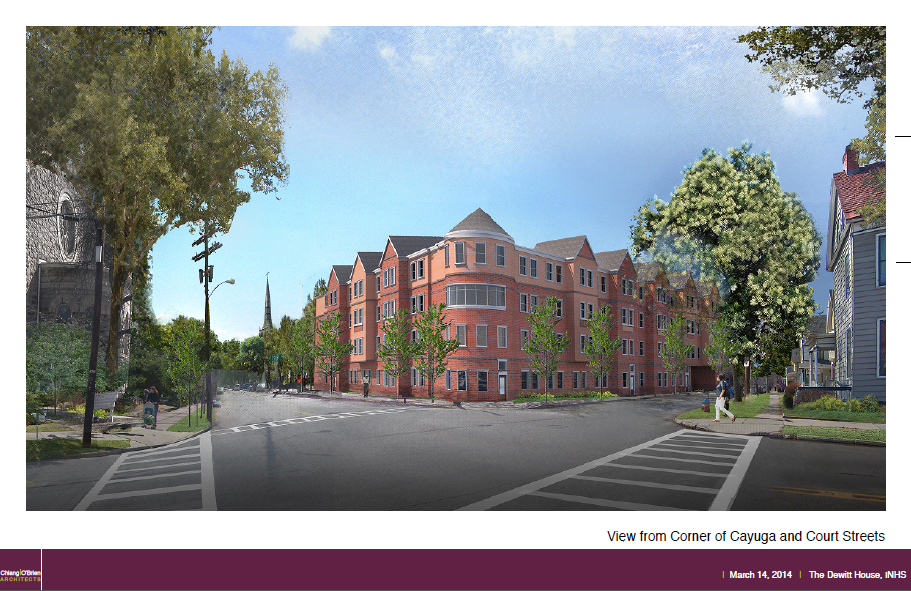
Locally prolific non-profit INHS comes up to bat again, this time proposing a project for the library site. Their proposal, called “DeWitt House”, calls for a 4-story, 60,000-80,000 sq ft building with 60 to 70 units of affordable housing, not specifically geared to seniors. The selling feature is an internal courtyard, along with community space and 6,000-8,000 feet of commercial space for rent. This one also has underground parking. The time frame for this one seems to be the latest, with completion in the 1st quarter of 2018.

inhs_libe_0414

5. Rochester Cornerstone Group / Cayuga Housing Development

Cornerstone is a Rochester based non-profit housing developer. CHD is directed by the same people as the Ithaca Housing Authority, who operate Titus Towers. The proposal consists of 70-80 units of affordable senior housing, in a 4-story 54′ structure (i.e. it would need a zoning variance). The building would have covered ground-level parking and some surface parking. Full occupancy would be in late 2016. Token snark here, but next time, ask the architects not to use the glare tool in your renderings. Building roofs are not shiny.

roccorner_libe_0414

6. Travis Hyde

Ithaca based private developer Travis Hyde submitted the last proposal on this list. Travis Hyde is involved with the renovations of the Carey Building, the construction of Gateway Commons, and further back, Eddygate in Collegetown. Travis Hyde teamed up (once again) with Ithaca-based HOLT Arechitects for their proposal, which is probably the one that discusses architectural context the most out of the six. The 4-story 90,000 sq ft building would have 48 apartments with office and community space at street level. While it discusses providing senior housing, it doesn’t appear to be explicitly senior housing. Parking would be minimal, on the western edge of the site, with mass transit/municipal parking garage incentives being explored. Spring 2017 is the suggested completion date.
travhyde_libe_0414

May the best project win.


Ithaca’s Economic Mystery (Again)

18 04 2014

4-13-2014 078

I don’t consider myself an optimist. Maybe that’s the result of growing up in upstate New York, or working in a field that suffered its share of setbacks due to the recession. I don’t like the term pessimist either, preferring to go with the more socially acceptable term “realist”.

But this IJ article citing the state Labor numbers doesn’t make one damned bit of sense. I’m not even talking about the fact that they threw Ithaca into two separate employment regions (Ithaca and Binghamton, and Ithaca and Syracuse). to quote a section of the article:

“In the Ithaca region, financial activities, trade, transportation and utilities, and leisure and hospitality each added 100 jobs.

The education-and-health-services sector lost 1,300 jobs from March 2013 to March 2014. That sector’s employment was 38,300 this March.”

Doesn’t it seem just a little unusual that the area lost 1,000 jobs? Recalling the headcount numbers for Cornell that were shared last month, the difference in employee headcounts on East Hill over the period of November 2012-November 2013 is a loss of about 50. Ithaca College’s headcount reports 1,822 employees,  about 12 less than the previous year. So those are both from the fall, and the state counts health and education are grouped together, but if we’re talking about 1,000 jobs, and it’s not Cornell or IC that caused it, then who did? I don’t recall any news of a huge layoff in Tompkins County.

The state regional breakdown PDF says the number of jobs went from 70,900 to 69,900 in the region (IJ says 60,900 to 59,900…someone in their office needs to double-check their numbers, because the 2011 average jobs number was 66,194).  The state description of their methodology says they use a time-series regression model and a sampling of 18,000 establishments statewide to determine jobs data. I’m wondering if this is all a quirk in the sampling, given that Ithaca is a small market (and small sample size in turn).

Maybe Ithaca’s economy really is in the crapper. But honestly, it’s not the first time the state has given overly-negative assessments, and the county agencies have to do damage control. But do we really have to go through this every other year?


College Towns As Retirement Communities

5 04 2014

100_2009

Growing up in upstate New York, retiring and moving to south Florida was considered a rite of passage. You worked for forty years, you retired with your company or government pension, you moved to a gated condo community in Florida, and then you complained about how much worse everything is these days and how terrible drivers are in Florida for the rest of your days.

I imagine that still tends to be a big draw (considering the New York to Florida population pipeline is the largest in interstate migration), but an increasingly-popular alternative in recent years has been to retire to college towns, enough that mainstream publications like USA Today and the New York Times have devoted articles to the topic.  it’s usually ascribed to some combination of a modest cost of living with expansive cultural and recreational amenities. Without having any numbers directly in front of me, I imagine Ithaca in a sort of second-tier in this category, if only because of the climate, which is a little cooler and snowier than the most popular college town retirement destinations. Still, I’ve been thinking about this topic a little bit because a number of the projects in the Ithaca area are targeted towards the retirement crowd. The individual trigger for this article was a Lansing Star article discussing review of a ~$17 million, 110-unit senior apartment building proposed for the forever-discussed Lansing Town Center development. The more I think about it, the more I realized a number of local projects, both recently built and proposed, are explicitly geared towards the 55+ age group:
Hawk’s Nest at Springwood (50 units)

Cayuga Meadows (62 units)

Longview Patio Homes (22 units)

Conifer Village at Ithaca (72 units)

The Kendal at Ithaca expansion (24 apartments and 13 “skilled care” units)

-The Old Tompkins County library site (likely)

Some of the news stories focus on collegiate affinity (i.e. living near the old alma mater) and offerings at the universities as a draw for retirees. To that end, Cornell offers summer courses for seniors and the local community college allows residents over 60 to audit courses (I don’t see anything described for IC). Those offerings along with the open lectures and Ithaca’s fairly active community engagement seem to provide some draw for those in their later years. I find college students and retirees an odd mix (even if they live in different neighborhoods for the most part), but if it works, I have nothing against it.


2013 Census Estimates: Say Hi to the New Neighbors

30 03 2014

7-26-2013 067

Every late March, the U.S. census releases their new population estimates for counties. So, I causally checked in to see how the Tompkins County numbers were doing. The county typically shows a modest addition of a few hundred each year – from 2010 to 2012, the estimated addition was 990 residents, from 101,564 to 102,554, which if carried out evenly, it would be an expected 4.9% increase for the decade (and roughly on par with the 5.2% in the 2000s).

I was a little taken aback when I saw the numbers for this year. For one thing, somewhere along the way, they revised 2012’s number up to 102,713. For another thing, this year’s number is a relative spike in the trajectory – 103,617.  In addition of 904 from the revised 2012 figure, and 1,063 from the original 2012 estimate. So, the change from 2012 to 2013 is about as much or more than the gain of the previous two years. Using the 2013 figure and extrapolating the three years’ estimates out to the end of the decade, the county would be projected to grow 6.74% to about 108,400 residents in the year 2020.

In many states, this would not seem an overly impressive figure. But it is worth noting that this is economically-depressed upstate New York. Last year, the only counties that were growing faster than Tompkins (as a percentage) were Jefferson County (Watertown, with the economic engine of Fort Drum) and Saratoga County (Saratoga Springs, with the massive Global Foundries computer chip plant in suburban Malta).  With the 2013 figures, Tompkins County moves into the second-place slot, behind Jefferson County (I note that the population estimates gave Jefferson a population decrease this year; the army base up there is expected to see a loss of 1500 to 2000 soldiers as it loses a brigade over the next few years, as part of army cutbacks). I’m also leaving out downstate counties/boroughs – Kings County/Brooklyn Borough is projected to have added 88,000 people for 3.5% growth since 2010. Almost all of Tompkins’s population, in three years. New York City gains ever-more reason to view it and its boroughs as the center of the world. On the other end of the scale, Schoharie (sko-hair-ee) County has the biggest estimated percent loss, at -2.8%. Schoharie is a rural county just west of Albany; it suffered a major hit from Hurricane Irene.

Echoing my comments from last year, estimates should be used with caution, as they don’t always reflect the true population. From the housing units perspective, using the number of 2.29 residents per unit estimated for 2008-2012, one gets justification for about 395 more units of housing for the past year, or about 897 units since 2010. I’m cautious about using these number as much more than curiosities, but they’re intriguing, and seem to bode well for the health of this county. Even when the jobs numbers aren’t.