One Stormy Day on Campus, Part II

19 12 2008

I’m snowed in in little Ithaca right now, so I might just as well kill some time.100_2080

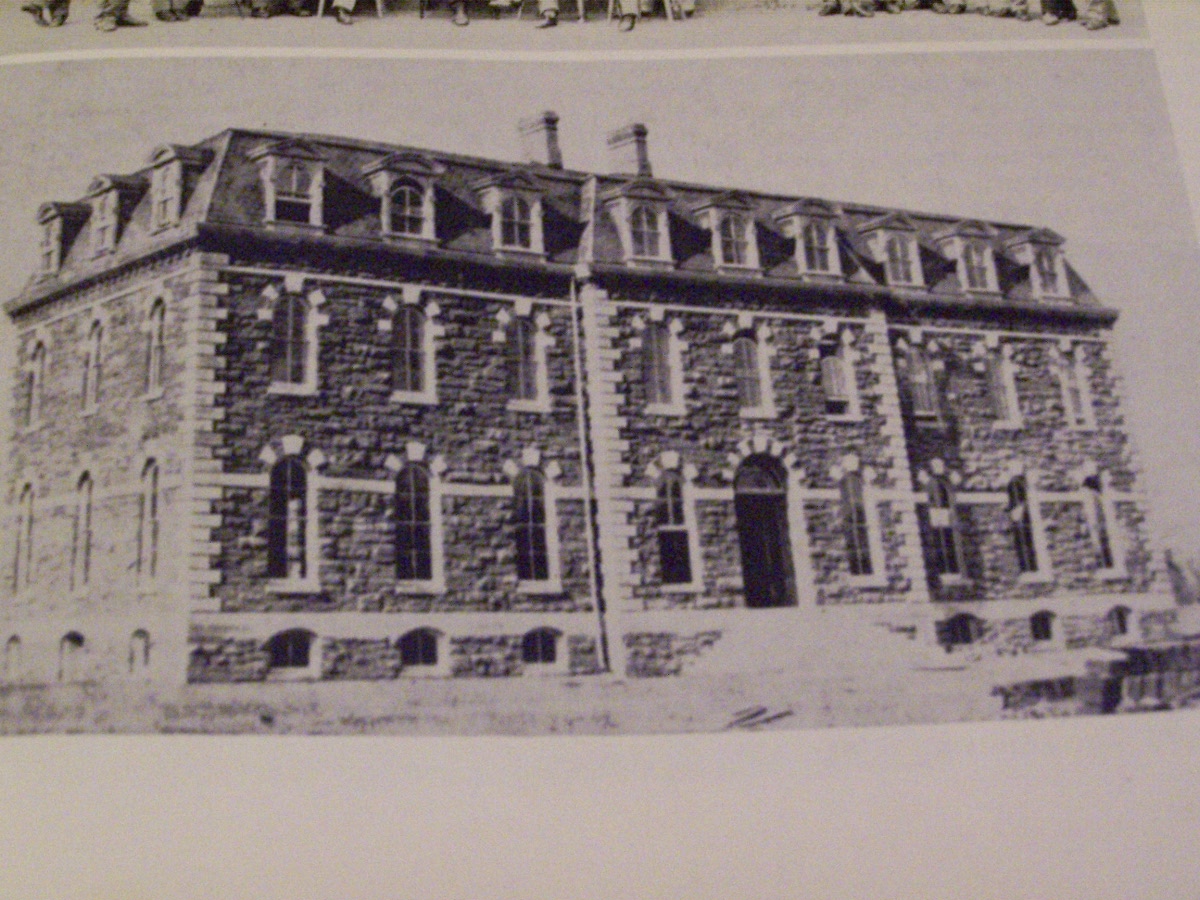
The story of Barnes Hsll is a rather interesting one.  The architect, William Henry Miller (of Uris Libe Fame) produced two designs- a gothic design, and a Romanesque Revival design [1]. Although the Gothic design fits in better with Sage Hall and Chapel, the Romaneque design was considered more up-to-date, and was completed in 1888. The building is named for Alfred Smith Barnes, a publisher and (at the time) a Cornell trustee [2]

One goal of the building’s construction was to do away with Cornell’s image as a heathen school, being the first building in the nation specifically built for a college Christian association (in this case, the CUCA, Cornell U. Christian Association). The building also functioned as the first student union on campus, and he Cornell Store, then a co-op, was based out of its basement.

When it was first constructed, many believed that Barnes Hall was cursed. This was due to a series of unfortunate coincidences. Alfred Barnes passed in 1888, as the building was nearing completion. So did his daughter…and the superintending architect (not Miller)…and the contractor…the gas contractor…and the gentleman who did the stone carving died of consumption before it was completed (Bishop, “History of Cornell”, pg. 269). The “evil omens” ceased as the building was completed.

100_2072

McGraw Hall, the most prominent of the Old Stone Row. McGraw relatively utilitarian design comes from the tastes of old Ezra Cornell himself; he believed in function over form, so he wasn’t one to worry about ornamentation. The building was designed by Archimedes N. Russell, a prominent architect out of Syracuse (Russell designed one of Syracuse University’s most prominent buildings, Crouse College, which I happen to have a picture of).
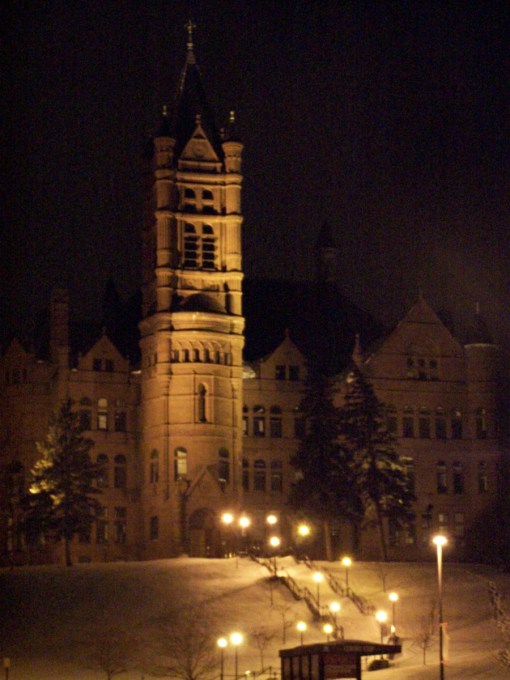
12-21-07-014

McGraw Hall faces the wrong direction due to Cornell’s ever changing master plans. Frederick Law Olmsted (who also designed Central Park), designed the first master plan, with the general theme to be a “grand terrace” ovelooking Cayuga Lake. As plans changed over the years, the grand terrace was dropped, but the nod to Olmsted’s master plan is obvious with McGraw Hall [3]. 

McGraw Hall was the first new building to completed, with construction completed in 1872 [4]. The tower at the top originally housed the chimes until they were moved to the clock tower in 1891. The building is named for John McGraw, a wealthy lumber merchant and original trustee.

To quote the university’s website, “It is said that John McGraw and Henry Sage were so appalled at the exhausted look of A.D. White and Ezra Cornell at the opening ceremonies that they committed themselves to the University’s cause on the spot. [4]” The stone used in the original stone row was quarried from the base of Libe Slope.

Today, the building is home to the Anthropology, Archaeology and History Department, as well as the Knight writing institute. It was in this building that I had my “History of Cornell” class.
100_2082

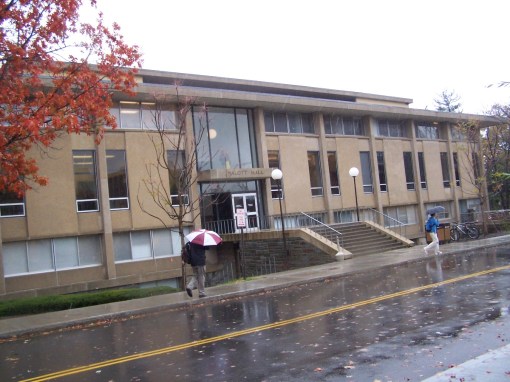
Carpenter Library is the primary library for the Engineering school. The building was named for William Carpenter 1910, who made a $1 million donation towards its construction (which cost $946,662, meaning Cornell had money left over in some sense) [5]. Carpenter Library was completed in 1957, partially renovated in 2002, and is slated to be demolished under the current Cornell master plan.

Personally, if I donated money for two buildings on campus, and both of them were set to be demolished, my spirit would be pretty pissed.

100_2083

Anabel Taylor Hall is the second half of the Taylor complex. Completed in 1953 (shortly after the death of Anabel Stuart Taylor herself), the building was the long intended partner to the main structure, hence its relatively dated Collegiate Gothic design for the time. The tower on the right side is a memorial to those Cornellians who lost their lived fighting in World War II. Today, the building serves as the primary religious facility for campus (CURW the successor of CUCA, is besed out of Anabel Taylor Hall).
100_2085

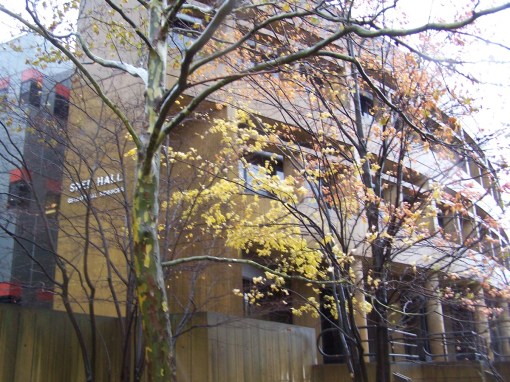
Snee Hall is home to the geological sciences department. The building was completed in 1984 and is named for William Snee ’24, an entrepeneur in the oil and gas industry [7]. At a glance, the lare atrium and overly 80s design reminds me of  chain hotels in northern New Jersey, but the building does have some nice assets. A seismic vault for recorded earthquake data is stored below ground level.  Also, if you ever happen to find yourself in Snee, be sure to check out the very large hydrologic sedimentation and erosion display (essentially, a stream-and-silt machine). The building also houses the Heasley Mineralogy Museum [8].


[1]http://www.fs.cornell.edu/fs/facinfo/fs_facilInfo.cfm?facil_cd=2009

[2]http://www.cornell.edu/search/index.cfm?tab=facts&q=&id=53

[3]http://en.wikipedia.org/wiki/Cornell_West_Campus

[4]http://www.cornell.edu/search/index.cfm?tab=facts&q=&id=497

[5]http://www.cornell.edu/search/index.cfm?tab=facts&q=&id=109

[6]http://www.fs.cornell.edu/fs/facinfo/fs_facilinfo.cfm?facil_cd=2038

[7]http://www.cornell.edu/search/index.cfm?tab=facts&q=&id=665

[8]https://cornellsun.com/node/9051


One Stormy Day on Campus

15 12 2008

I’m not a holiday person. But I am halfway done with finals, which is reason enough to celebrate.

100_2109

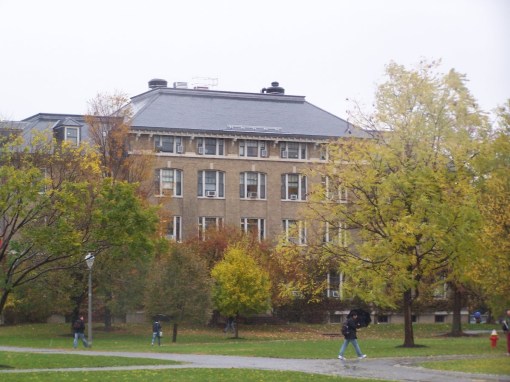
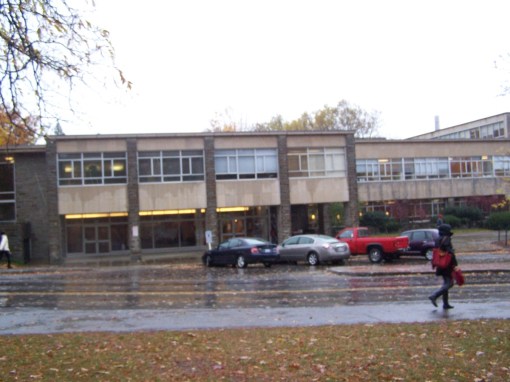
Malott Hall, built in 1963, is named for Cornell’s sixth president, Deane Waldo Malott (1951-1963) [1]. The primary donor was William Carpenter ’10, but Carpenter Hall was built six years earlier, so apparently we went with the next best thing. The north building, pictured here, is classic 60’s architecture- notice the giant fishbowl lamps. Malott Hall originally housed the Johnson school until that moved to Sage in 1998; afterwards, the math department moved from White Hall to Malott. The rather Soviet looking north wing was part of a 1977 addition to the original structure. Malott is slated to be torn down under the Cornell Master Plan.

Old Deane Malott, who passed in 1996 at the ripe age of 98, was a conservative, even by 1950s standards. However, he is credited with significantly modernizing Cornell’s liberal arts programs, as well as overseeing a major construction period of the university’s history [2]. Prior to serving at Cornell, Malott was the president of the University of Kansas from 1939 to1951; as a result, they also have a Malott Hall (which houses their pharmacy school).

100_2107

It was a really blustery day.

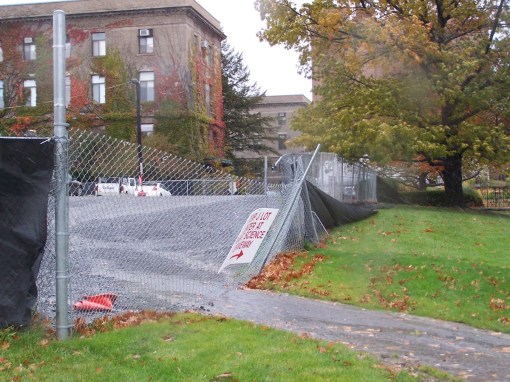
For the record, this temp parking lot has only been here since the early 2000s, and the site is on the short list for development—after the economic crisis ends, of course. Originally suggested for a Bradfield-mass development (from Carol Kammen, author of Cornell Then and Now), the current master plan proposes a building of only one or two floors that offers general functions, like a visitor’s center.

 100_2106

 I never actually discussed Caldwell Hall in the previous Ag Quad entry. Caldwell was built with state money in 1913 [3]. Named for George Chapman Caldwell, an early professor of Agricultural Chemistry, the building housed soil sciences until it moved to Bradfield in 1969, and residual duties were picked up the entomology department in then-Comstock Hall. Today, Caldwell houses Cornell Abroad, the Cornell Institute of Public Affairs, and an LGBT resource center.

100_2104

Surprise! This went under the radar. In September, Cornell renamed this wing of the ILR Extension building in honor of Jonathan Dolgen ’66 [4]. So, we now have Dolgen Hall. Anyone want to take a guess at the price tag for this?

The building itself was built in 1911 [5], then part of the Vet School. ILR moved in during the late 1940s. The buildings underwent a significant renovation from 2002-2004, but because they were designated landmarks, the exteriors were relatively unaltered.

100_2102

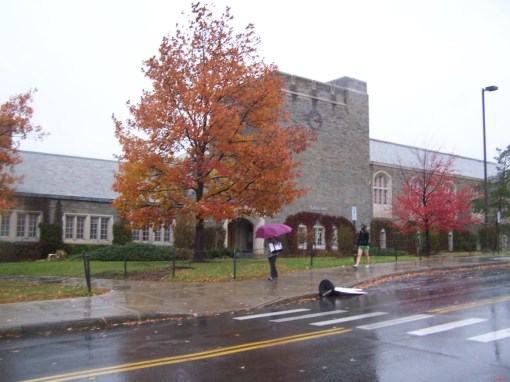
Teagle Hall looks older than it is, in my opinion. The building opened as the men’s sports facility in 1954, and is named for Walter C. Teagle 1899. Apart from going co-ed, the building maintains much of its original use [6,7]. The building is faced with Llenroc and is designed to harmonize architecturally with neighboring Barton Hall. For those bold explorers out there, there is an underground tunnel connecting Barton and Teagle below Garden Avenue.

That’s a clock on the stone wall, by the way.


100_2094

100_20982

hotel-1

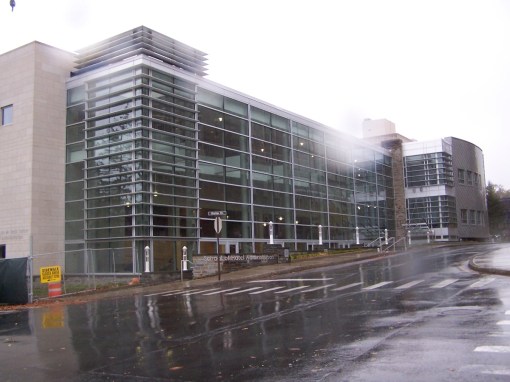
The Robert A. and Jan M. Beck Center  is a 35,000 sq. ft addition to the Hotel School that was completed in late 2004, at the cost of 16.2 million dollars [8]. The modern design is similar to the one currently being applied to the  south facade of the school (which is undergoing a 14,ooo sq. ft currently) [9]. Which make sense since both were designed by KSS Architects.

100_2097

Rhodes Hall was completed in 1990 as the Engineering and Theory Center building, and then rededicated to former president Frank Rhodes in 1995 [10]. The building is home to the Computing Theory Center, which housed at one time one of the most powerful supercomputers in the world. Today, I think it just barely cracks the top 500, but then again, pursuit of the most powerful supercomputer is a costly expenditure we probably shouldn’t be dabbling much with at the moment.

Rhodes Hall caused quite the complaint back in the day because of its size. Locals and some faculty/students complained that it overwhelmed the neighboring gorge and was too massive for the site. Not that the overbearing blank wall on the southwest side helps (but it is functional- that’s mechanical space ,and the supercomputer is on the other side of the wall, so they climate-controlled it a-la Bradfield, behind a windowless wall.


[1]http://www.cornell.edu/search/index.cfm?tab=facts&q=&id=487

[2]http://query.nytimes.com/gst/fullpage.html?res=9C05E3D6163AF930A2575AC0A960958260

[3]http://www.cornell.edu/search/index.cfm?tab=facts&q=&id=92

[4]http://www.ilr.cornell.edu/news/DolgenGift_2008.html

[5]http://www.news.cornell.edu/Chronicle/04/10.14.04/ILR_complex.html

[6]http://www.cornellbigred.com/sports/2007/7/30/TeagleHall.aspx

[7]http://www.fs.cornell.edu/fs/facinfo/fs_facilinfo.cfm?facil_cd=2611

[8]http://www.hotelschool.cornell.edu/about/facilities/beck/

[9]http://www.kssarchitects.com/content/project.php?type_id=33&project_id=238

[10]http://www.cornell.edu/search/index.cfm?tab=facts&q=&id=624

[11]http://ezra.cornell.edu/searched.php?search=theory%20center&question=&answer=&starttimestamp=&endtimestamp=&category_id=&offset=30&view=expanded

see:August 4, 1987


A Little More Cornell History

10 11 2008

Photos obtained from the book “Cornell in Pictures: 1868-1954”, compiled by Charles V. P. Young 1899.

000_2313

As mentioned previously, Sibley was constructed in three parts; the first, which is the West Wing of the current building, was built in 1870 and named for one of the original trustees of Cornell, Hiram Sibley. The East wind would be built in 1894,and the dome was constructed in 1902 [1]. Apart from stone Row, this was the first building that the University built that still stands today (the university did not build Cascadilla Hall).

000_2314

A map of campus, circa 1954. Some of the notable differences

I. Kappa Alpha Society’s house was where Snee Hall stands today. The house was torn down to facilitate construction of Hollister Hall in 1957-58, so KA moved to South Avenue. The Old Armory, built in 1892, was also torn down.

II. The road that was Central Avenue up until the 1990s cut between Franklin (Tjaden) and Sibley. Morse Hall would be torn down within a year of this map’s publication to make room for a parking lot, which would then be replaced by the Johnson Museum of Art that began nearly two decades later.

III. Boardman Hall is still there…in terms of aesthetics, I wish it was still there today too.

IV. ILR was located in temporary buildings (quonsets) on the Engineering Quad (which still had yet to fully develop). Law Hall, Moore Lab and the other smaller buildings where the ILR school stands today were the vet school buildings. Schurman Hall would come on line five years later, which facilitated the demolition of Law Hall in 1959, and for the construction of Ives Hall and Catherwood Library, which would be completed in 1962.

V. The Johnny Parson Club. More on that later.

VI. Alpha Xi Delta’s House is where the Prospects of Whitby co-op is located today. AXiD closed in 1964 and would be off campus for 40 years. Even the house they live in today is still own by Delta Phi Epsilon sorority (which closed the year before Alpha Xi Delta was brought back to campus). Chi Omega lived in the light purple house with the red tile roof on Wait Avenue, and would move to Phillips House (Sigma Alpha Mu’s current house) when that building was built on Sisson Place in 1956.

000_2315

A poor photo (my shaky hands, I regret) of the Statler Inn. Prior to the 150-room hotel built in 1986-87, the Statler Inn was the premier facility, with “modern classroom” and 36 rooms. Another hotel was located in the upper floors of Willard Straight Hall where the lofts are today, and those would play a prominent role in the takeover of Willard Straight in 1969.

000_2316

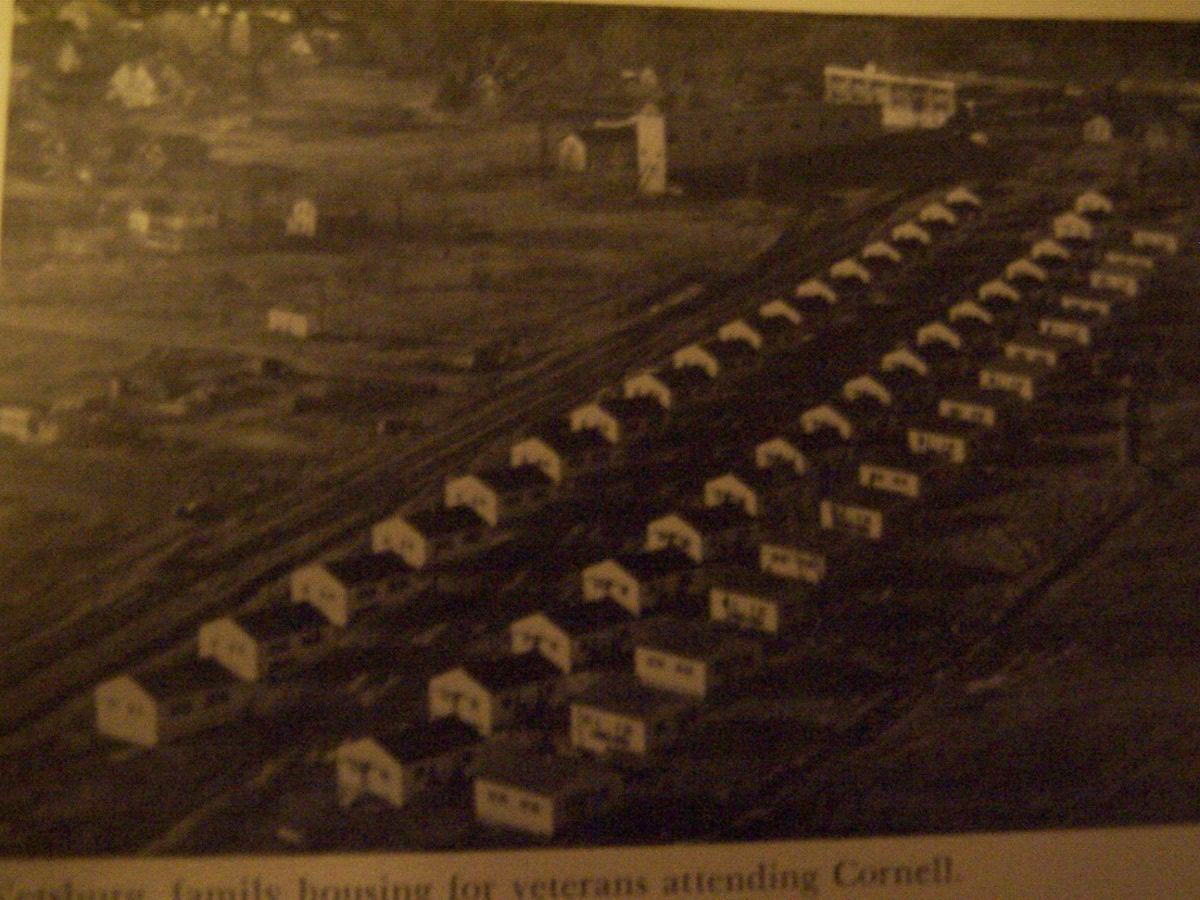
Prior to the Maplewood Apartments, veterans attending Cornell post-WWII had the option of living with their families in “Vetsburg”, on Maple Avenue.

000_2317

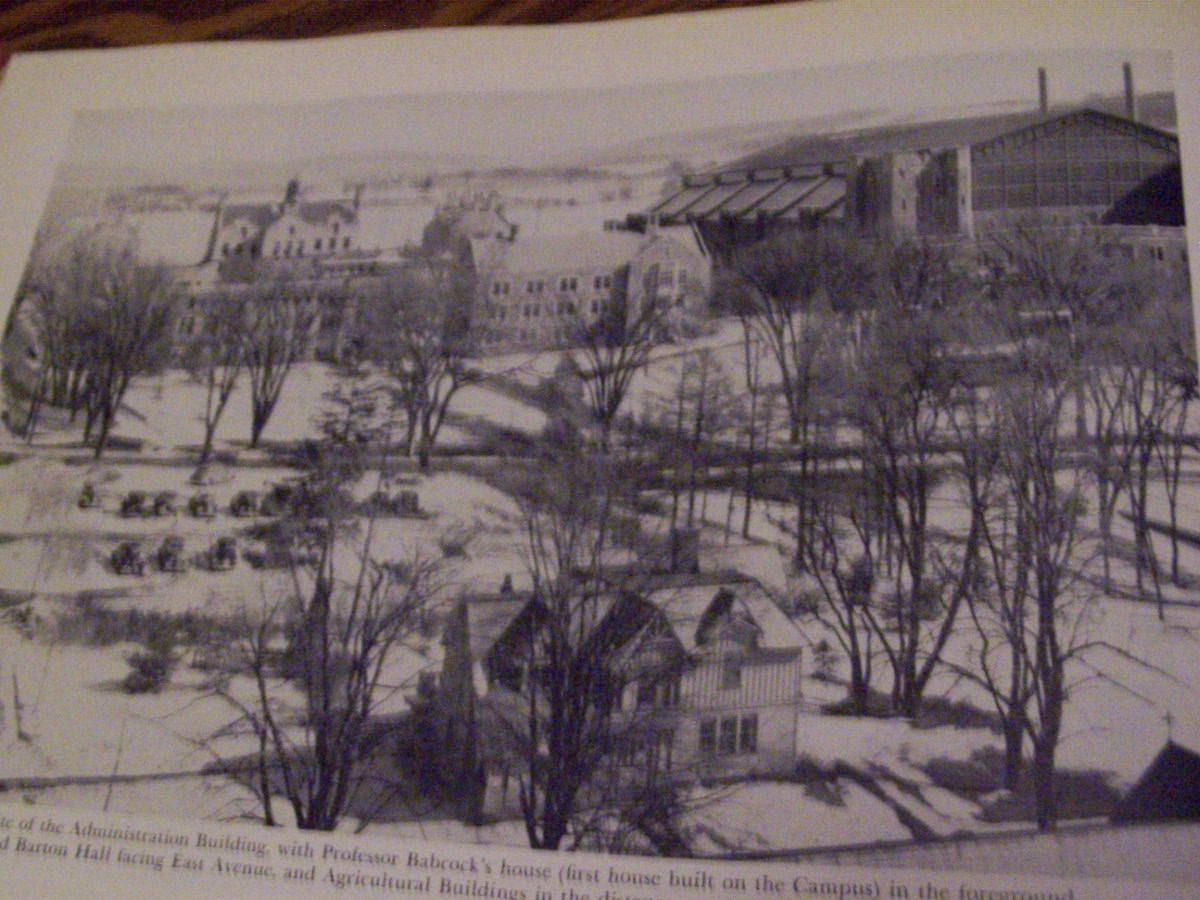
Back in the days before Day Hall, the lot was the site of a parking lot and the house of Professor Babcock, which was the first faculty house built on campus. Back in the day, it was common for houses to be on campus, where the Human Ecology school is today, where the Engineering Quad is today, and even on Central Campus. This was the last central campus house, and it was torn down to facilitate Day Hall’s construction (completed 1947) [2].

000_2318

To save my breath, I’m going to quote a DUE from August 23, 2007:

“The Johnny Parson Club was named after a mechanical drawing professor in the Engineering college from 1895 to 1938. It’s said that he was the one who established ice skating on Beebe Lake.  In addition, it was he who began the Cornell hockey tradition, by encouraging students to form a team.  In 1922, the University built a two-story facility where skaters could spend time, eat, drink, and warm up, naming it after Professor Parson.  However, in 1958, when skating events were moved to Lynah Rink, the University chose to take down the top two floors of the Club.  The remaining basement area was covered and is now used by Cornell Outdoor Education. [3]”

Rather nice place, from the looks of it. Tudoresque.

000_2319

Bacon Baseball Cage. The first Cornell mascot bear, Touchdown I, was housed here in 1915. [4] The building would be taken down for the addition of the press-box and more seats at Schoellkopf.

000_2320

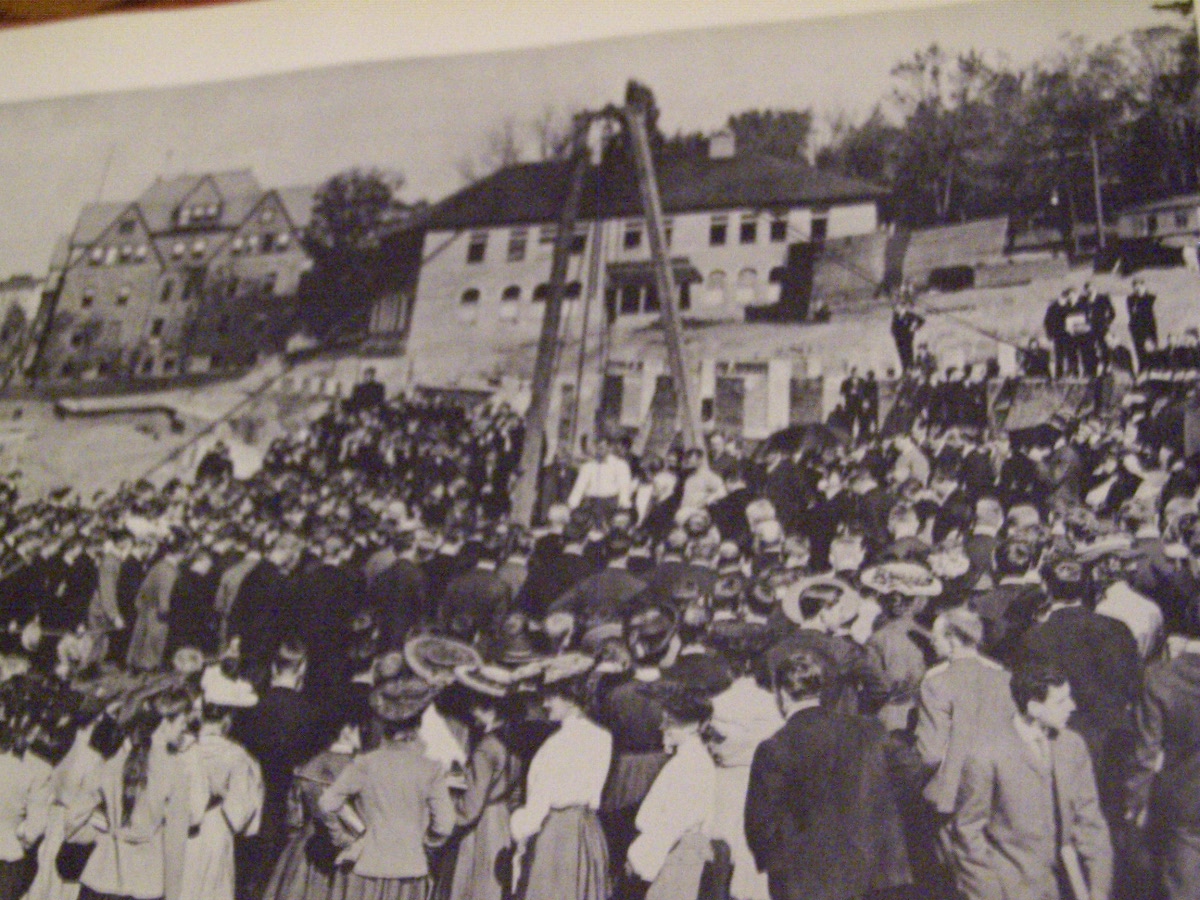
Laying the cornerstone for Goldwin Smith Hall in 1902. The building that is currently the north wing was constructed earlier on as the Dairy Science building.

000_2321

Law Hall, a couple small ag buildings, and the third observatory. It would be torn down for Barton Hall in 1915, and replaced with the observatory on north campus in 1924.

000_2322

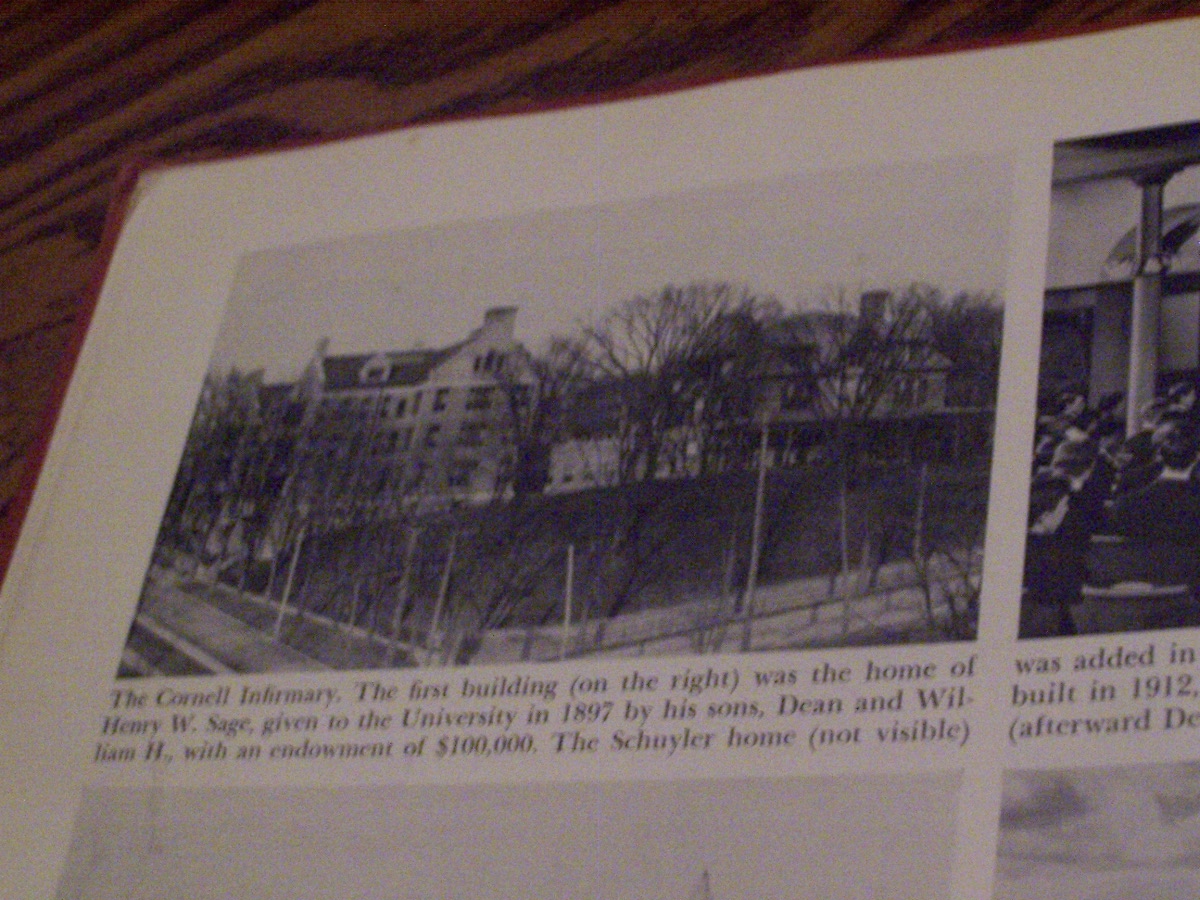
Schuyler House, the grad dormitory, used to be Cornell Infirmary. Next door is the Sage House. This was a time when students lived down the hill in fraternities or boarding houses, so it made sense to have the infirmary between the city and the college.

000_2327

Speaks for itself. Screw pumpkins on the clock tower, I’m going to go tear down the bridge into Collegetown.

000_2326

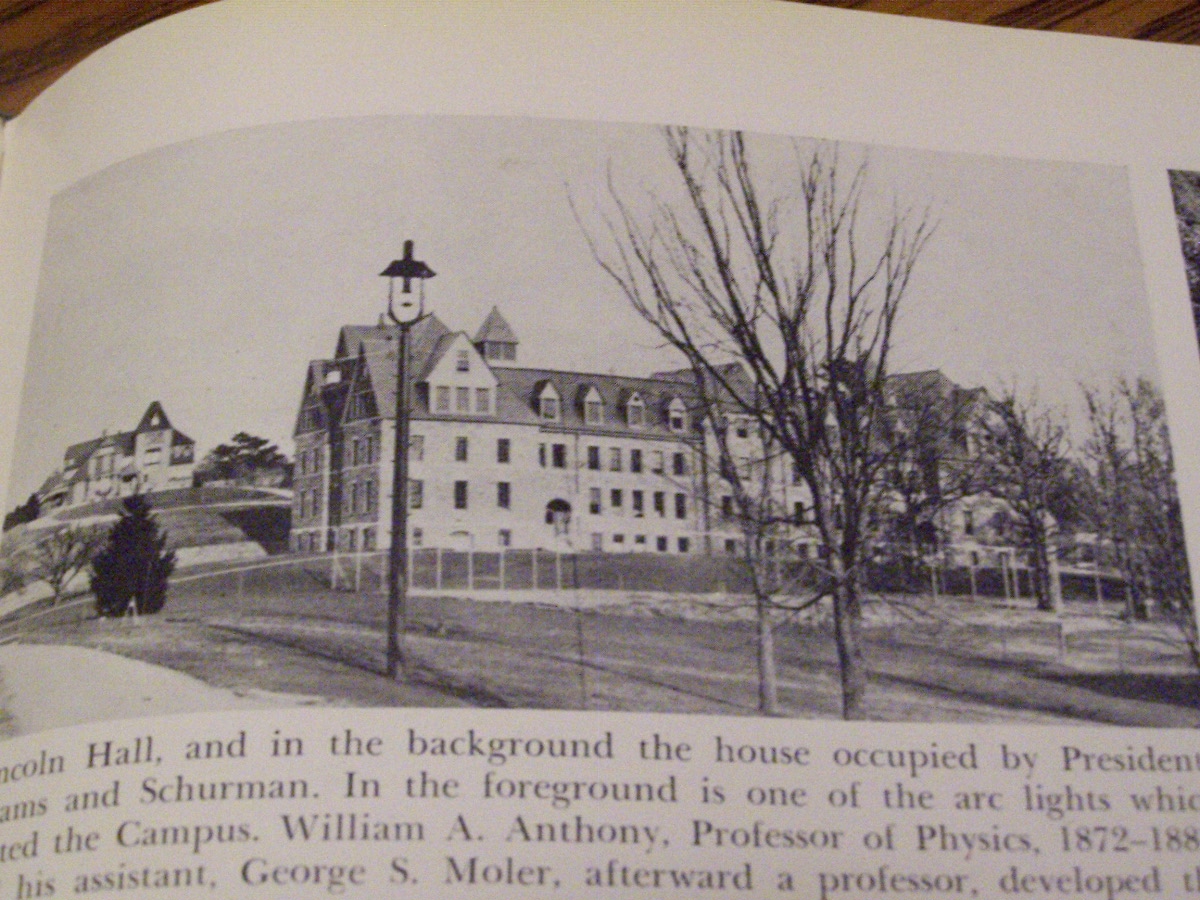
Fancy arc lighting. The house in the back was the stately home of Presidents Adams (1885-1892) and Schurman (1892-1920). It was torn down for Baker Lab shortly thereafter.

000_2325

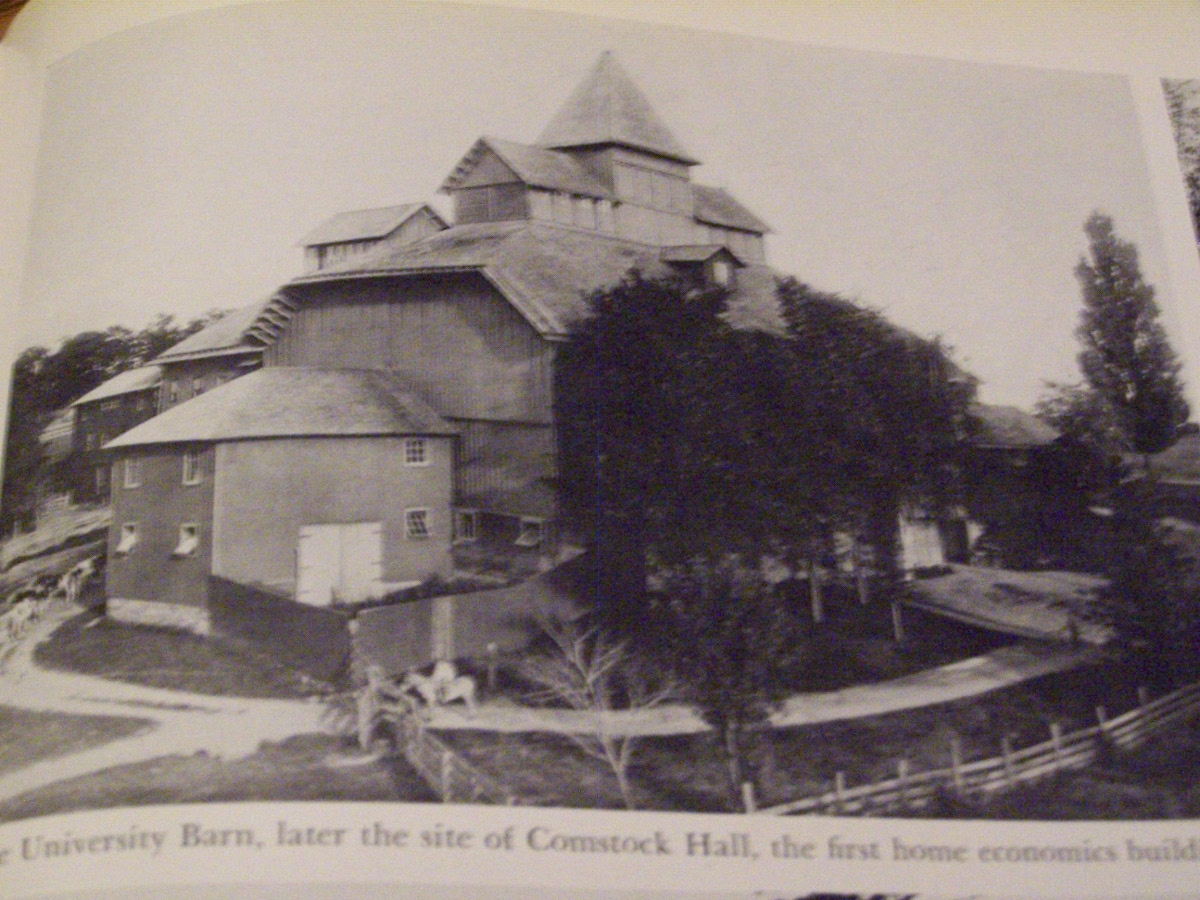
All the functions of a 1900s barn (where the CCC is today), all the appearance of a redneck’s idea of Count Dracula’s castle.

000_2323

Can we reconstruct this building as a dorm? Please? Hey, I know Morse Hall was burnt down by a fire and all in February 1916, but the design can be retrofitted with today’s safety standards. Really.

[1]http://www.cornell.edu/search/index.cfm?tab=facts&q=&id=651

[2]http://www.cornell.edu/search/index.cfm?tab=facts&q=day%20hall&id=239

[3]http://ezra.cornell.edu/posting.php?timestamp=1187848800

[4]http://cornellsun.com/node/17613


The Story of the Vet School Incinerator

18 09 2008

So, I enjoy telling a good story as much as the next guy, and this one was actually the subject presented by my professor in an air pollution course I’m enrolled in. I might have been the only one taking notes on this, because it was meant to merely illustrate an argument, it’s historical, and an interesting piece of history worth sharing.

So, in the early 1990s, The Vet School over on the East Campus had a problem. A large number of carcasses were being generated daily. Dissections, disease studies, putting some of the farm animals to sleep, etc. So on any given day, thousands of pounds of carcasses were being produced, and they had to be disposed of.

Well, Cornell, for all the things it does have, does not have an incinerator for cremation on any of its properties. So they would have to ship the carcasses out in container trucks with hazard labels and send them to an incinerator elsewhere in the county, where they could be properly disposed. As you might imagine, this built up quite a hefty amount of fees over time. So Cornell began to explore their options to alleviate the problem.

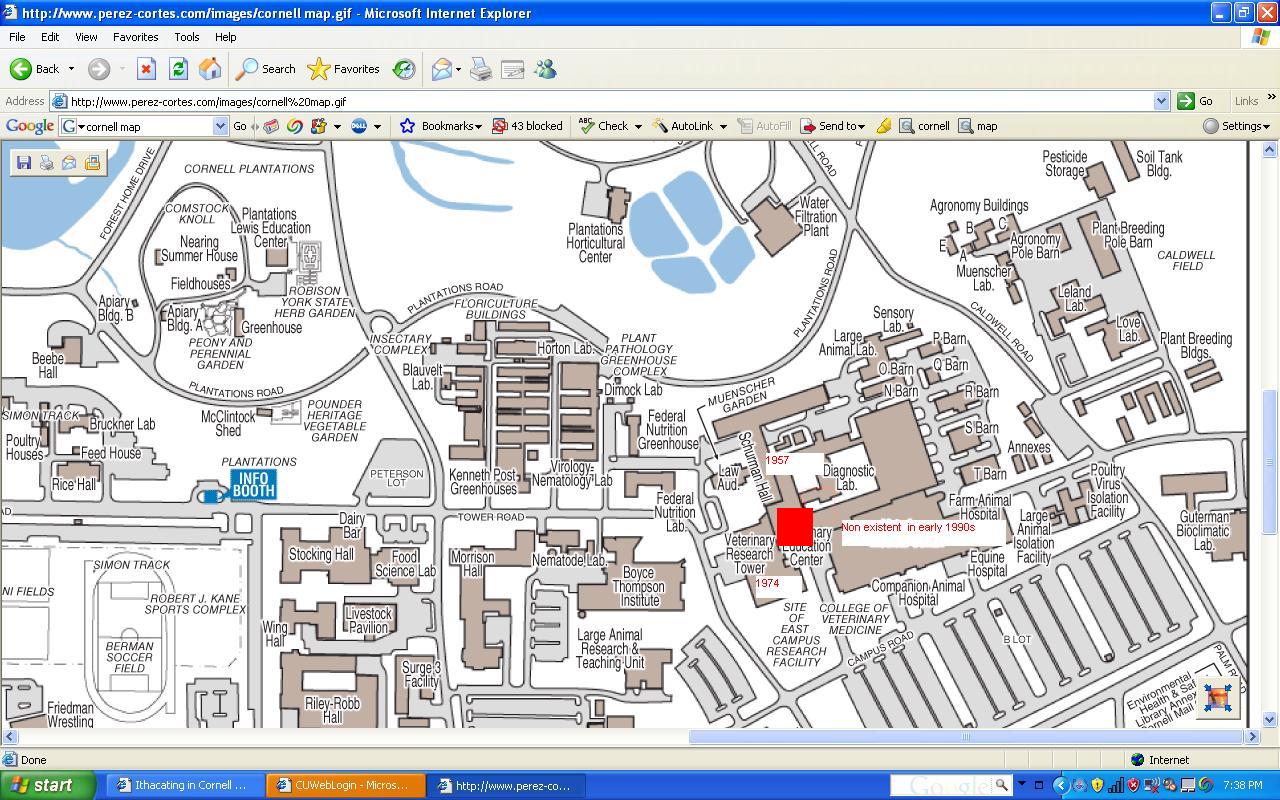
Well, the proposal that seems to work best was to build a waste disposal facility for the animal carcasses directly on the property. The site that was determined to be the best fit was just to the east of the Vet Research Tower. At this time, the Vet Hospital’s main building and the East Addition didn’t exist, so the complex was mostly barns, the tower, Schurman Hall and the scattered add-ons that comprised the property. The red square below was the approximate location for the project.

 The Vet Tower is a fairly large building, as it stands about 140 feet tall. So, in order to build the smokestack, the design had the smokestack stand about 180 feet tall, more than enough to clear the building.

Well, it went ahead in front of the town of Ithaca, and the residents of the neighboring hamlet of Forest Home had a fit. They’d be damned if they had to look at a giant smokestack from Cornell. So Cornell paid an engineering firm to survey the land from notable viewing radii to see if the structure would impose on the residents of Forest Home. Sure enough, if did, but only just barely. It was determined that if the design was shorter, it’d be okay.

So, Cornell proposed changing it to 160 feet. But, there was another issue with that. Bradfield Hall, just up the road, stands 167 feet tall. And the top floor has windows (ironically enough, the atmospheric science department is housed at the top).  So, that wasn’t going to fly unless Cornell did an air pollution study to prove it wouldn’t affect the occupants of Bradfield.

Well, here’s where we get into an issue. The company they hired, a New York-based engineering firm, decided that the air circulation patterns in Ithaca were the same as Syracuse. Syracuse built a power plant only a couple years earlier, so they decided to reuse the same data and apply it Ithaca. Essentially, they tried to swindle Cornell by selling them false data from another location.

Winds generally blow out of the west in Ithaca. However, in the situation where they would blow out of the east, as during some stormy days caused by east-coast lows, the pollution cloud was going to push over to Bradfield Hall and towards central campus. This pollution would have particulate matter that would drift down onto Tower Road and the Ag Quad. Well, no ones wants to be snowed on by cremated animal ash. Even worse, if it blew out of the northwest at a particularly strong clip, it was going to drift right over Forest Home. The increased height would have allowed it to carry farther away, but the new shorter height would cause particulates to fall a shorter diestance away, and they would be more concentrated, to unhealthy levels.

Well, the university didn’t know that at the time, so they bought the data. And it wasn’t until the final stages of the project that the mistake was realized (through an interdepartmental study independent of the project). The Town of Ithaca wouldn’t give final approval in light of the news. Well, Cornell was just a little upset, so they decided to bring a lawsuit onto the company for their actions, and Cornell had to scrap the 160-foot plan.

Well, due to the air ciruclation patterns and sight lines, a large smockstack just wouldn’t be suitable for their desired location. And Cornell was already set for a major expansion of the Vet School, so they scrapped the plan entirely. The Vet Education building, built in 1993, was the final incarnation of the incinerator project, in which there was no incinerator at all. And the large Vet Hospital would be built four years later, dooming any future proposal nearby.

So, some of you might be wondering about the heating plant, which is to the south. The smokestacks there are outfitted heavily with scrubbers, so the vast majority of the smoke is water vapor, and not nearly as toxic as the smoke from the vet school smokestack would have been.

~~~~

And in other news, House 5 has been deemed “Flora Rose House”, after a professor who was among the first to staff the school of Home Economics (Human Ecology).


News Tidbits- The Disappearing Suspension Bridge, and its Conflicting History

30 07 2008
It was during a snowstorm...in MARCH...

It was taken during a snowstorm...in MARCH...

Glancing at the Sun today, I was pleasantly surprised to see an article about the master plan written by columnist Munier Salem. The article diescusses a discrepency in the presence of the suspension bridge north of the Johnson Museum, that spans the Fall Creek Gorge from the base of the wooden staircase off University Avenue to Fall Creek Drive. In some massing renderings, the bridge doesn’t exist [1]. One of the focuses of Salem’s article was whether or not this was intentional.

My personal thought is that it was not intentional. A rough guess of foot traffic during the academic year is probably among a few thousand unique trips across the span per day, plus there’s a strong sense of establishment associated with that bridge- although the current one was built in 1960, there has been a bridge at the present site since 1913 [2].

The bridge is marked with its share of legends and lore. Most have heard the one where if someone refusing a kiss while crossing the bridge at midnight, that it will collapse into the gorge. Another, somewhat less popular legend, is that the 1913 bridge was designed by an engineering student as part of a final project in his senior year. However, when he turned it in and the professor reviewed it, the professor said that the design wasn’t structurally feasible, and failed the student. Dejected, the student jumped into the gorge for where the south end of the bridge connects to campus. His grieving family, being of considerable wealth, decided to take his design and make it a reality. Thus it was built to the young man’s decision, and it was stable. Thus, the student was vindicated.

However, these are only just legends; the original 1913 suspension bridge is mostly an embellishment of the real story (there was a low-slung one in the 1880s behind Risley, so take the concept of “original bridge” with a grain of salt). Edward Wyckoff 1889, a student at Cornell, is said to have designed the bridge as part of a project, but the professor failed him and Wyckoff withdrew from Cornell. Twenty-plus years later, he financed the construction of the bridge [4]; the bridge was built by a private company for the Cornell Heights Improvement Company, of which Wyckoff was a major financier of the company, so this seems plausible.

The 1960 bridge was designed by two professors. S.C. Hollister and William McGuire (yes, the same Hollister for whom Hollister Hall is named [3]). However, to conflict with this, article [4] suggests it was built in 1977. I’m pretty firm in that it was 1960, as an earlier DUE, from 1987, contradicts it and gives the 1960 date [5]. The current bridge sits about 138 ft. above the water level [2].

Anyways, Salem also noted the propsed bridge behind Eddy Gate; while I think it’s awesome (I lived in Casca for a year), I’ll save discussion for when I cover that in another Master Plan entry.


[1]http://cornellsun.com/node/30894

[2]http://www.alumni.cornell.edu/cu_facts/read_more.cfm?id=33

[3]http://www.cornell.edu/search/index.cfm?tab=facts&q=&id=382

[4]http://ezra.cornell.edu/posting.php?timestamp=1087880400 from June 2004

[5]http://ezra.cornell.edu/posting.php?timestamp=545716800 from April 1987