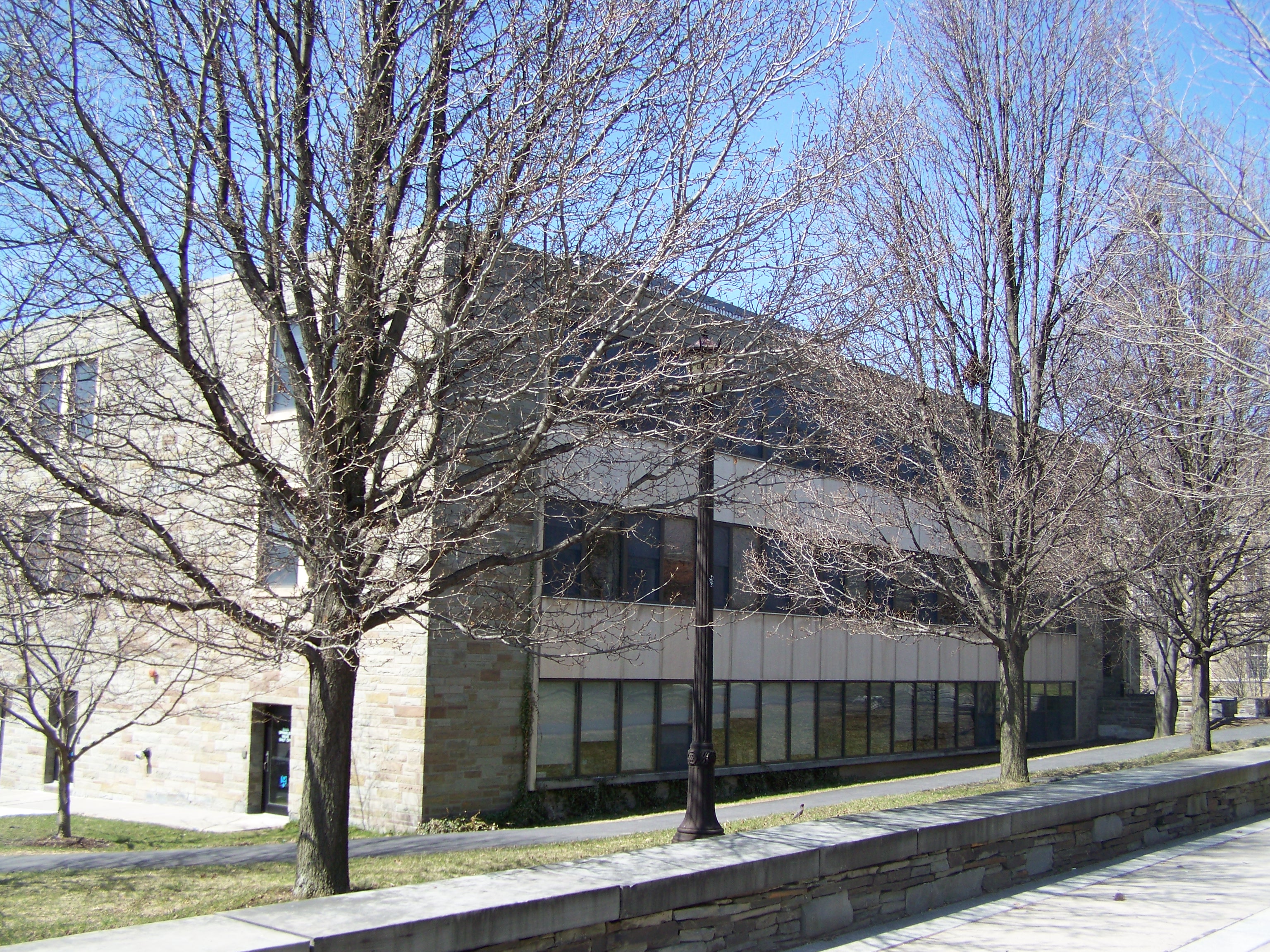
Cornell and Crime II: Here There Be Guns

15 05 2012

If you want to have a spirited debate on campus, open the floor for a discussion for the provision of guns on university grounds. Stating the obvious here, but student-owned guns are prohibited on campus, and have been for over a century (CUPD officers are issued Glock semi-automatics, an effect of the Willard Straight Hall takeover back in 1969). Few things seem to do a better job of getting someone’s blood to boil, and not without due reason. I thought of looking at this because of this recent little piece from the Sun about a student being robbed at gunpoint in North Campus, and the ensuing “we should be allowed to have guns/are you crazy no we shouldn’t have guns” comment queue.

I mulled this over in my head a little while, thinking that this usually gets tied into some “good old days” argument about back when everyone could have guns and everyone was safer (and there was much less crime, everyone was good-looking, all the kids were above-average, and whatever else those rose-tinted glasses show). I decided to look at the Sun archives for some historical perspective.

One of the first things returned in the search was an article from 1930 – before the vast majority of us were even alive – detailing a series of armed robberies and the murder of a gas station attendant leading to a possible rise in gun permit applications (the only requirement be that you are a law-abiding citizen of “good character”). So much for those good old days. For what it’s worth, the CUPD was formed the following year, with a whopping two patrolmen on horseback, and no guns during day shifts (today, Cornell has six times as many students, and about 45 officers).

As for the case of responsible students, it’s not always easy determining which are and which aren’t – as these cases demonstrate. You have (in order) the hard-partying student, the student claiming self-defense, and the self-inflicted fatal gunshot wound (thought to be accidental, but could have been otherwise). In imagining a world where guns were okay on campus, I can see a clear case for pulling the gun rights of the first, a lawsuit waiting to happen with the second (the gun owner claimed he shot at someone who was leaving racist notes under his door), and another lawsuit waiting to happen with the third, if the family gets on the “my child’s university didn’t do enough to prevent this” train. There would be time, money, and a bevy of other issues involved.

On the other hand, as this Sun editorial from 1981 illustrates, there are some valuable reasons one can have for owning a gun, such as women protecting themselves against rapists, and it’s important to note that most gun owners are responsible, law-abiding citizens. From here we can get into a range of arguments, all of which are easily blown out of proportion. The passion people put into the guns argument is second perhaps only to abortion, especially with regards to the intransigence of its debaters.

So I didn’t write this entry to start up a gun control debate; that’s what news websites are for. The purpose of this entry is to show that there was no “golden era” for either party – no period where guns, or the lack thereof, made us so much safer. There will always be crime, there will always be grey cases in the argument of who is and isn’t irresponsible, and for the foreseeable future, there will be a gun control argument.



When The Mayor of Ithaca Stood Up To Cornell

23 04 2012

So, this entry is a little delayed because I was at a conference doing what scientists do best, which is trying to explain their research and justify the grants that pay for it. Since my research (and by extension, my paycheck) takes priority, things got a little pushed back with the blog updates.

Anyway, I made a reference in the previous entry to how Cornell is both a blessing and curse for Ithaca; the blessing being the attention, the jobs and the steady economy, the curse is that Cornell pays a pittance towards the real value of their property in the city (as in, 4.5% of the assessed value). This is covered by the PILOT (Payment In Lieu Of Taxes) agreement. But how that agreement originally came to be is much more interesting as the situation it stems from.

Turn the clocks back about eighteen years to 1994. At the time, the mayor of Ithaca was avowed socialist Ben Nichols, who was a retired professor of electrical engineering from Cornell (he had also completed most of his education at Cornell).  Perhaps that makes this story all the more interesting; a David vs. Goliath, if Goliath had been supporting David’s career for forty years. Ben Nichols was first elected in 1989, and then again in 1991 and 1993 (two-year terms; these were increased to four-year terms shortly before he lost his fourth run for mayor in 1995).

In late fall of 1994, Ben Nichols, recognizing the dire situation of Ithaca’s budget, demanded for Cornell to pay a higher share for its use of city fire services and police patrols. Specifically, he wanted Cornell to pay an annual fee of $2.5 million, which he thought was adequate to cover dorms, fraternity houses, and the campus store, as they were not purely academic buildings. At the time, Cornell paid about $143,000 (this started around 1967, as a way to cover fire services and a PILOT for the ICSD), and perhaps in politer terms, Cornell told him to take a hike. What followed was a battle with jobs and laws as weapons.

After the rebuff, Mayor Nichols decided to fight back by denying Cornell construction permits, using a normally-unenforced zoning rule regarding the amount of parking spaces needed for a facility – Cornell had about 1/10th what was required for an enterprise of its size, a gross deficit of just under 9,000 spaces. So, no construction could be undertaken, nor renovations, unless those parking spaces were built. Mayor Nichols said that he had many meetings and pleasant conversations with the university, but no results.

To quote:

“Most universities say that they legally are not required to do this, and so the position that we took is, `OK, if you stick to every legal right that you have, we’ll do the same,” Nichols said. “And things like building permits and zoning law, we will adhere to every fine line of the law.’ ”

Cornell, of course, fought back using the hundreds of construction workers and tradesmen who suddenly found themselves without work; that May, they protested in front of city hall, demanding a lift of the ban. Furthermore, Cornell said they would consider paying only after the permits were granted. After the protest, Mayor Nichols relented, saying that the lifting of the ban had nothing to do with the protests, and everything to do with the belief that a discussion on an appropriate payment plan would take place at a “much more accelerated pace“.

In the interest of epilogues, eventually a revised and compromised PILOT agreement was hammered out later that year, which increased Cornell’s commitment (albeit still meager compared to assessed value). this was revised to be tied to inflation (Consumer Price Index) in 2003, and increased outright to a minimum contribution of least $1 million annually.

A Cornell supporter might look down on the mayor of the city for being petulant, but I am personally impressed that a Cornellian/faculty member stood up against the metaphorical 800-pound gorilla. Even if there is hardly a snowball’s chance in Hades I’d ever support a socialist candidate.


The ILR School Almost Invaded Hoy Field

10 12 2011

As would be expected for any major university, Not every plan for a new buildng at Cornell came to fruition. Sometimes, it was because the plan didn’t have funds, or the demand for space had ebbed. With the original plans for Cornell’s Industrial and Labor Relations (ILR) school, it was all about the location.

The ILR school is quite young, having opened its doors on November 1, 1945. The original facilities were in temporary wooden lodging on Sage Green (the western and southern grounds next to Sage Hall, in the days before the loading dock/drive for the Cornell Store and the parking lot south of Sage Hall).  The school had originally been conceived a decade or so prior, and by 1944 the state gave Cornell its monetary blessing, foregoing counter-offers for a labor college at Syracuse University or Union College in Albany (Bishop, 568). On the other end, the president of Cornell at the time, Edmund Ezra Day, had to contend with unamused industrialists and farmers among its alumni who felt that such a school was unnecessary.

The state was proud of its newest educational creation (in the days prior to the massive proliferation of modernist/brutalist SUNY campuses), and drew up plans for permanent housing for the ILR school. The original plans were produced at a cost of $80,000 at the time, but never came close to construction due to some very angry Cornell alumni and students.

The issue wasn’t about the architecture (being the late 1940s, early modernism or stripped Collegiate Gothic were likely), but the location. The site for the new school was on Campus Road. To give you an idea of how the area looked at the time, here’s a map from a years later in 1954 (click the link for a larger version):

Phillips Hall and Teagle Hall were not yet built (both were completed in the early 1950s), so the area was really only Barton Hall and the athletic facilities. The Buildings and Grounds Committee at Cornell picked a site on Campus Road, where Phillips Hall was built a couple years later, but with a larger footprint that would’ve required the removal of Hoy Field (which is aligned directly south in this map – it was redone to face southwest about five years ago).

A tempest of outcries ensued. It was firmly believed that Hoy Field had been donated by the alumni to be used in perpetuity for athletic purposes. Suddenly, different alumni groups were protesting “The invasion of Hoy Field”, and the Association of Class Secretaries filed complaints and letters of concern with Cornell, along with written protests from 53 undergraduate student groups. President Day and the committee gave up on the plan.

The state was not pleased by the reception, and so the ILR school was kept in the dreary wooden temp buildings until the Vet School’s new Schurman Hall was built in the late 1950s, and ILR could move into what used to be the Vet School buildings at the corner of Tower and Garden Road. The rather pretty if utilitarian ca. 1896 James Law Hall was demolished to make way for Ives Hall. But, In the long run, the administration was rather glad it hadn’t built the ILR school on that plot of land, as it allowed the full build-out of the Engineering Quad.

Now, fast-forward to today, and consider the positioning of the soon-to-be Gates Hall, and the master plan’s removal of Hoy Field. I wonder if such an outcry would arise today, as it seems once again that the end of Hoy Field as we know it is drawing near.


The Keyword Bar XIII

13 09 2011

I feel a little guilty when I write “Keyword Bar” entries. I feel like they’re a melange of two separate thoughts – “Cornell and Ithaca aren’t doing anything I’m interested enough in to write about” and “I’m too lazy/busy with other things to research Cornell-related topics today”. So I depend on people prowling the internet and coming across the page in order to find topics worthy of writing brief snippets.

Regarding the opening photo; that photo comes from this past graduation weekend. I’m not sure if it’s the same person who put up the angry sign a couple years ago about how someone stole the peaches off their tree and as a result she couldn’t make peach pies to give to her sad elderly friends, but there’s a good chance it’s the same person (the sign did a good job of making me feel like a d—–bag and I didn’t even know there was a peach tree on the property). Anyway…

1. “new apartment building 309 eddy street ithaca cornell” 9-13-2011

I’m going to assume this is under construction? I’m going to go down there and take photos, come hell or high water.

2. “rothschilds building ithaca history” 9-12-2011

So, the Rothschild Building is also recognizable as the old Tetra Tech building on the east end of Ithaca Commons. Surprisingly, I have virtually no photos of it except for this one, where I’ve circled it in red:

The building was finished in 1975 (i.e. finished right after the Commons opened) and underwent a renovation in 1993, when Tetra Tech bought the previous occupant out (The Thomas Group) in a corporate takeover. It was built on the site of the old Hotel Ithaca, which had been torn down nine years earlier in the name of urban renewal.  The main occupant (Tetra Tech) moved out to the tech park last year because according to them, the space was too old and inefficient. The 76,000 sq ft. is slated for conversion into residential units.

3. “first snowfall in ithaca usually” 9-8-2011

Depends on your definition of “first snowfall”. Only twice in the past 20 years has there been an inch of snow before November 1st in Ithaca – 1993 and 2009 (October 31st and October 16th respectively). The 2009 snow is the earliest 1″ snowfall on the 120-year  record (however, November 2009 was 3 degrees above average and failed to record even a trace of snow). November usually averages 5.9″ of snow, but in the past decade there have only been four years with 1″ snows (November 18 & 21, 2008, November 9 2004, November 16, 27, 28 2002, November 23 and 30 2000)., and only 2 (2008 and 2002) that received above-average November snowfalls. But, in all except two years, there was at least a trace of snow in November. A quick anecdote, I think in the meteorology major, we said that the first 1″ day on average was November 18th, but if this blurb proves anything, it’s that it varies widely from year to year.

4. “edgemoor lane murder ithaca” 9-6-2011

None that I’ve ever heard of. Edgemoor Lane has almost exclusively been the home of professors, then fraternities and small dorms, since it was built in the 19th century, so a murder likely would’ve attracted Cornell’s attention, but nothing turns up online.

5. “why is cornell considered the heathens on the hill” 9-9-2011

Cornell was founded as a non-sectarian school, a radical departure from the norm in the mid 1800s. Many preachers and men of the cloth attacked the schools for its seemingly amoral standards, for instance not mandating church attendance. Heathens on the hill arose as a pejorative term that took on a more endearing, self-deprecating tone as non-sectarian schools became more common in the following decades.


Flooding in Ithaca: Because Blizzards Aren’t Bad Enough

4 09 2011

This kinda ties into the last entry, which discussed the historical context of hurricanes (a.k.a. tropical cyclones if you follow the research literature) in the Ithaca area. Irene, while it had devastating impacts in some towns in the Capital Region and the Catskills, left Tompkins County with 1-2 inches or rain, hardly more notable than a particularly rainy summer day. I went down to southern Connecticut to enjoy being exfoliated by high winds on a beach, and a decent though not amazing storm surge. Then I came back to my Albany home to find roof damage, and a 60-foot ash tree that crashed down in front of the duplex across the street and on top of a Honda Civic. I’ve had better weeks, meteorologically speaking.

As I mentioned previously, the two worst floods in Ithaca occurred quite a long time ago – in 1857 and 1935. However, this is not to say that Ithaca hasn’t been flooded in modern times. The flood control channel down by Cass Park is there for a reason. Also, here’s a youtube video that starts with the flooded intersection of Mitchell and Pine Tree next to East Hill Plaza from way back in December 2010.

But comparatively, that’s small potatoes to some of the floods Ithaca has seen. The 1857 flood was massive. It also hails from a much different time in Ithaca’s history, before the colleges, and when the town itself had a few thousand people. Although sources are severely lacking, the downtown area was underwater for several weeks. This was before the era of effective flood control, and since downtown Ithaca is basically surrounded by steep hills on three sides and a lake on the fourth, the drainage system is about as far from optimal as you can get. Add to that some relatively impervious soil, and it becomes a big soggy problem.

Flooding is not unlikely with the spring thaw, or rapidly evolving early winter storm systems that start off with a warm moist tongue of air, dumping heavy rains before the area freezes over (certifiable proof that Mother Nature hates us all). But the two worst floods are summer events – June 1857 and July 1935, respectively.

The flood of June 17, 1857 seems to be the result of a highly localized warm-season precip event directly on the Six Mile Creek watershed (the creek just south of the Commons), which gives me the impression of a wet microburst or a cloudburst type of event. Both tend to be local and related to intense thunderstorm activity (and here’s a fun thought for when you go to sleep – they are notoriously difficult to forecast, and microbursts are one of the biggest reasons planes won’t land near thunderstorms). Anyway, the raging torrent washed out two dams, whose debris then slammed into the Aurora St. bridge, collapsing its stone arches and sending the whole shebang surging through the town. Hell, you can quote Dear Old Ezra on that one.

Some measures were taken to improve flood control, including more or bigger dams (like the one on Beebe Lake in 1898), and these were damaged by further floods, including events in 1901 and 1905. But nothing quite prepared the ares for the disaster that was the July 1935 flood.

The July 8, 1935 flood, from the descriptions I can find, seem to indicate an intense and prolonged mesoscale convective system (big effin thunderstorm complex), or something of similar intensity, with tropical moisture but nothing TC-based.  At the very least, it was definitely associated with thunderstorms on the evening of July 7th, in an area spanning from Hornell to Binghamton.

The 24-hr. rainfall total of 7.9 inches in Ithaca (the weather station was on the Ag Quad) is impressive. The local creeks almost immediately began to flood, and as drainage brought more water through the streams, they began to tear away at their banks, and flood Cayuga Lake downstream. The damage went throughout the county, from homes washed away in Enfield to cottages being washed from the lakeshore up by Trumansburg. A passenger train was stranded, and all the train tracks in the county were washed out or impassable due to debris. Most state parks in the area were badly damaged and downtown was once again flooded. Eleven people lost their lives in Tompkins County as a result of the flood (with 52 being lost in total, and $26 million in damage [1936 dollars, equivalent to $409 million today]). The damage to Ithaca was about $1.8 million in 1936 dollars, or $28 million in 2009 dollars.

As for the university, being on higher ground protected it from the wrath of the waters. Barton Hall was used as an emergency shelter for almost seven hundred people. The damage to campus was estimated at $10,000-$12,000 (1936 dollars, about $250,000 today), mostly due to the hydroelectric plant being flooded and some trail and bridge damage.

So, maybe it’s not on a Biblical scale, but there’s something to be said about living on higher ground and away from creek banks in the Ithaca area. Or you can just look at the Beebe Lake Dam after a good rainstorm to get a faint idea of how much worse it could be.


Cornell’s Geneva Campus

6 08 2011

So, when we think of Cornell’s campus, most people think of Ithaca. Occasionally, someone also might mention the medical school down in New York City. But in the ag school, asking the right person, might result in an unexpected response – Geneva, New York. Geneva is a small city of about 13,000 located about 50 NNW of Ithaca, on the northern end of Seneca Lake, and although most folks could not care less about the community, it does have some importance for the university thanks to the presence of the Geneva Lab.

The formal name of the Geneva campus is the “New York State Agricultural Experiment Station“, often referred to as the Geneva Lab for short. It also started off as a rival to Cornell, at least when it came to research grants. The Geneva Lab was started in June 1880 thanks to state funding, although Cornell had sought the funding from the state (Bishop 223). The lab started off with a staff of seven scientists. After the Hatch Act provided further funding for agricultural experiment stations in 1887, the competition created between the two created tense relations throughout the turn of the century. To is credit, Cornell had their own experiment station since 1879, but it sorely lacked funding (keep in mind this was during a time when the ag school had an almighty 50 students, give or take a few each year). Thanks to increased state and federal funding with the second Morrill Act, state appropriations, and the Smith-Hughes Bill, money became easier to obtain, and relations had improved enough by WWI that Cornell professors routinely exchanged with researchers at Geneva for various ag-related projects (Bishop 440).
By 1923, the state authorized the Geneva research station to be placed under Cornell’s control. At this point, the two were basically working together on most everything and trying to avoid redundancies in administration, so by 1920 they were already informally affiliated. The Geneva station had a staff of 55 and hundreds of acres would benefit the ag school’s research, while taking advantage of Cornell connection, including the Cooperative Extension program.

More funding started coming Cornell and Geneva’s way with the Purnell Act in 1925, which led to Cornell-owned ag research facilities in the Hudson Valley and on Long Island, near Riverhead (Bishop 477).  The Geneva facility’s research shifted from helping farmers produce good crops, to making better products, such as making pears disease-resistant, new apple varieties, and working with Birdseye Foods on better quick-freezing techniques for vegetables. By 1940, the researchers at Geneva were made faculty in the ag college.lastly, animal-related research was shifted over to the Ithaca campus at the end of WWII, leaving the Geneva lab to strictly plant-based work.

Today, the Geneva campus comprises 20 buildings (623,000 sq ft), 870 acres, and about 300 faculty, staff and grad students. Most of the work done these days is the development of improved food safety and storage techniques and genetic enhancement of crops to create more productive or tolerant varieties. The four programs shared between the two campuses (which were merged as a post-recession cost-cutting measure last year) are Entomology, Food Science, Horticulture and Plant Pathology.

In summary, Cornell has a large presence in upstate New York, and it’s not just in Ithaca. So, maybe the proposal for the new school on Roosevelt Island in NYC isn’t all that unusual for Ezra’s research university.


Taking Care of Cornell’s Students’ Bodies

10 05 2011

After I wrote about the medical college, I felt inspired to write up a brief piece regarding the history of student health at Cornell. Understandably, the value of this entry to the practical person looking up health information is nil, but then, I would hope that if someone has health issues, they would be looking through health websites like Gannett’s instead of blogs.

Anyways, most Cornell students know that if they feel sick, or think they might be pregnant, or some combo thereof, that a trip to Gannett Health Center is in order. Back in Cornell nascent days, if you were sick, well…you were pretty much screwed. A student at Cornell a few years after its founding, if they were to become ill, could hope to be taken care of by their friends, roommates or professors, if they were lucky and had strong connections. Otherwise, you were S.O.L. If it was any consolation, so were all residents of the city of Ithaca, which wouldn’t get it’s first hospital for a few more years (the first hospital opened on Aurora Street sometime during the 1870s, and the second hospital was built off of Quarry Street in Lower Collegetown in 1910; that complex still stands today as the Quarry Arms apartments, which Collegetown Terrace will be built around). In 1870, the faculty senate voted to set aside rooms on campus for sick students (Bishop 176), and the first medical examiner, a sort of campus physician, was appointed in June 1877 (he held two job titles, the other being an assistant professor of mathematics). Jennie McGraw of Cornell Chimes fame put a bequest in her will of $15,000 for the construction of a student hospital on the grounds of Cornell, and this was increased to $40,000 before her death in 1891. However, thanks to the Great Will Case, Cornell never saw any of her money used towards a health facility.

The first building dedicated solely to student health was the Cornell Infirmary, which still stands as the Schuyler House dorm to the far southwest of main campus. The Sage Complex  initially consisted of only the east building, which was essentially a converted mansion built in 1880 as Henry Sage’s retirement home after he moved from Brooklyn to Ithaca (Bishop 211).  Upon his death in 1897, he asked that the building and land be donated to Cornell, which his sons Dean and William did with an additional $100,000 donation for maintenance (Bishop 333). They might not have done that if Sage had outlived his nemesis and fellow generous benefactor Willard Fiske. Both sons were furious that Fiske was interred in Sage Chapel in 1904 and abruptly stopped all involvement and donations to the university. William Sage actually had donated a building to Yale some years later. But, I digress. The original Cornell Infirmary had room for twenty patients, and the large addition on the west side was completed in 1912. What you received was bed, board, and modest nursing care and lab services. While a student of yesteryear might receive advice on hygiene or bad habits, actual diagnosis by physicians was a role the university refused to take on until around 1940. It was felt that the university should not be responsible for the clinical care of its students, only lend a hand in their treatment. Medical advising by Cornell staff was generally discouraged.

By the 1950s, it was felt that the Infirmary was inadequate, poorly located and outdated, so a new building was constructed on land that used to hold two faculty residences. This building was named for media mogul Frank Gannett 1898, who generously funded its construction. The Gannett Health Clinic opened its doors in 1955 and received an expansion to its west side in 1979, bringing it to 39,000 sq ft. The masterplan suggests a 90,000-130,000 sq ft structure to replace the current building on the current site sometime during the next several years.

I’m marginally jealous that Cornell’s health center is on campus. The one at my grad school is located a half mile away across a four-lane highway. What a nice way some colleges provide for their students.


The Cornell University Airport

15 02 2011

It generally goes without saying that Cornell has had a dramatic impact on the way Ithaca and Tompkins County have developed over the past 150 years. In some respects, Cornell’s influence has been indirect – for example, the development of the Collegetown neighborhood to meet the desires of Cornell students, or the development of Cornell Heights and Cayuga Heights to provide faculty a leafy respite from their academic duties. In some ways, Cornell’s influence has been more direct, such as the Seneca Place building downtown or…owning the airport.

The first airport in the county was actually down where Cass Park is today. For those who live under an ivy-covered rock, Cass Park is just up Route 89 from the city, across the inlet from the Farmer’s Market:

The first airport (which the airport website claims was the second airport to be created within the state), which was called the Ithaca Municipal Airport, was built in 1912. It wasn’t much; a simple hangar and a rundown dirt strip were built initially, and the facilities were expanded somewhat by the Thomas “Aeroplane Factory” which was built next to the airport in 1914 (Turback 29). Three years later, the company merged with Morse Chain to become one of the largest employers in the county. Apart from the testing of military planes, and some leisure flights (the airport was the home base of aerial photographer and future airline pioneer Cecil Robinson), there wasn’t much in the way of air traffic.

By the 1940s, passenger planes began to catch on with (wealthy echelons of) the public, and it became clear that the municipal airport wasn’t going to cut it. For one, it was prone to fog banks from the lake and flooding – a major flood back in 1935 wiped out much of the airport. Space was inadequate, and as planes were growing in size and speed, expanding the facility was neigh near impossible because it abutted the city, the lake, and the slopes of West Hill. The farmland to the north of Cornell was recognized as the prime site for a future airport (Bishop 553), and the city of Ithaca was very interested in building a new airport on that land, but there was one very big and still relevant issue – getting taxpayers to cough over their hard-earned tax dollars to buy the land and build another airport outside of the city was nothing short of political suicide.

Enter Cornell.

Cornell, in trying to meet the needs of its elite faculty, alumni and connections, knew the importance of having a larger, modern airport. Although a bit financially strapped at the time, Cornell noticed the large number of lots being sold off to make the first suburban homesteads and sought to act before the land values could increase any further in that area. On September 9, 1944, the trustees authorized the university to seek options on the land, and within three months had obtained 1,146 acres of land at the price of about $202,000 (about $2.5 million today – a relative bargain). The purchase was strongly debated and led to some sharp criticisms of the Day administration during the 1940s (Bishop 560). The construction of the facility itself was wedged in with many of Cornell’s other post-war projects, but the need of a new airport was not nearly as acute as the need for veteran’s housing or new academic space. The airport was not completed until 1948,  and ownership was transferred to the county in 1956. In the meanwhile, there were two airports in Ithaca – the old rundown one downtown, and the new one on East Hill. The transfer of ownership may have been influenced by a shift in focus from Cornell’s aeronautical program in Ithaca to the Cornell Aeronautical Laboratory, which operated as a division of the university from the late 1940s to the early 1970s next to the Buffalo Airport (it was later spun off as a private enterprise called Calspan Labs that at last check operates as part of Veridian Corporation). CAL’s heyday was from about 1955-1965 — when Cornell decided that having its own airport 200 miles from its recently donated aeronautical lab wasn’t such a hot idea. But mostly, it was a matter of finance – their were issues with the local passenger airline’s use of the airport, severe enough that if one of their planes landed on Cornell’s property, the pilot would be arrested (Bishop 561). The first six months the Cornell airport was open it incurred a $103,000 loss. The University invested $300,000 to build up the property and was hardly getting any return out of it – the trustees voted to prohibit further funding to the airport in June 1949. Although relations with Robinson Airlines were patched up by 1952, the airport limped along in financial hell until Cornell finally had a decent opportunity to unload it onto Tompkins County.

The county airport has operated since, and was renovated and expanded in 1994. Robinson Airlines was renamed Mohawk Airlines in late 1952, moved to Utica six years later, and was absorbed by another company in the 1970s, which after several mergers and acquisitions, is now an ancestor of USAir. As for the old airport, it closed in the 1950s, but the main hangar was renovated in 1975 to house the  Hangar Theatre, which has seen several renovations and expansions since then.The rest of the property was absorbed into Cass Park in the 1960s.

I doubt Harvard ever owned its own airport.


Cornell’s History, All Drugged Up

11 01 2011

So, the latest news tidbit about a Cornell student being caught with $150,000 of heroin has made the news cycles and attracted some undesriable attention toward the university. Which kinda inspired me to look at it in a historical context. It’s what I do.

It’s college. Drugs exist. Some are easier to get a hold of than others. Some are gateway drugs, others are only used by a hardcore group of students. Once in a while, the drug debate comes up in a campus context. The Cornell Daily Sun ran an article about Cornell’s drug culture about two years ago. In the article, it was noted in a 2005 anonymous Gannett survey of students, that of 1,969 respondents, 41% admitted some form of drug or alcohol use in the past 30 days, with 19.8% reporting marijuana use and 4% reporting other drug use.

(with that in mind, considering the university’s undergad pop of about 13, 800, that would suggest 550 users of other drugs, which could include cocaine, LSD and the aforementioned heroin. If [an overly-generous] 50 percent were heroin users, that gives us about 275 students. Which if the street value is correctly reported, than the student was carrying $545 worth of heroin for each user. In conclusion, with that much heroin, I wouldn’t be surprised if she was supplying the entire county).

A similar set of data from 2003 suggests 8 percent of respondents admitted Ritalin/Adderall use without a prescription, and less than 3 percent partook in white lines. Another link on Gannett’s site looks at drug use in 2000, and the rates were largely the same as in following studies (except for hard drugs – those fell a little bit). The article notes that affluent students and students in Greek Life show slightly higher usage rates. Looking at Gannett’s site, if we throw in the more prevalent drugs, tobacco use as defined as at least once in the past 30 days has gone from 21 to 16 percent from fall 2000 to fall 2005. Alcohol use defined as once in the past 30 days has hovered around 75 percent and remained fairly steady through the three studies.

So that’s handy and all, but it’s a smallish sample size compared to the entire student population, and it depends on people answering truthfully. So the numbers could be seen as dubious. Regardless, it’s obvious that students partake in drug use.

***

Now to look at things in a historical context. Drug use was around well before the university. But in 1865 in little Ithaca, the drugs of choice were generally the alcoholic or tobacco variety. The big drugs in the 19th century were alcohol, tobacco, and to a lesser extent opiates and (in later years,) cocaine. Marijuana was seen as a medicinal drug, not a recreational one (that changed after around 1910). Marijuana use at Cornell was minor prior to the 1960s, which is when it caught on with middle-class whites – i.e. most of Cornell’s student population. It is stayed relatively popular since, even after drug laws became tougher in the mid-1980s. As for the opiates, they would see occasional use throughout the next 100+ years, as opium in the late 1800s, morphine and heroin in later years. Heroin received its first notoriety among students when it caught on with the Beatnik culture of the 1950s.  With the increase of purity (strength) of heroin in the 1980s and 1990s, demand, and addiction, grew. Although, going by Gannett’s survey, usage dropped off somewhat at Cornell after 2000. Tobacco saw steady and common use by all branches of the university’s stakeholders since Cornell’s founding, and became so prevalent that in the early 1960s a person could smoke anywhere but inside Sage Chapel. But, needless to say, that’s not the case anymore.

If Cornell follows national trends, it would be safe to say that cocaine use peaked in the early 1980s, with maybe some sporadic crack use after its introduction around 1985. I would be willing to suspect that the “glamor” of powdered coke was preferable to perceived “ghetto” qualities of its freebase equivalent.

Regarding LSD, Cornellians probably first experienced the drug in the early 1960s. Well, willingly anyway. Two Cornell Medical School professors were part of a government project in the 1950s and 1960s to administer LSD and other hallucinogenic drugs on unwilling participants. It was initially hoped by the military that it could be used like a truth serum, and later studies checked it out for therapeutic qualities on mentally-deficient patients. The drug peaked in the late 1960s and saw another slight rise in the late 1990s, but otherwise has seen a general decline.

Now back to our preferred chemical companion – alcohol. The first students of Cornell would’ve usually consumed beer (liquor was as it is now – expensive) down at one of the saloons in town, and there was no standard policy against drinking (Bishop 210). “Give My Regards to Davy” celebrates this aspect of student life (although I should note that highballs are mixed drinks – scotch and soda water). A Cornell Era report from around 1890 suggests that a couple saloons was enough to serve all students, and drunkenness was uncommon. In the 1910s, drinking was common, but seen as a way to celebrate athletic victories, but drunkenness on campus was seen as grounds for dismissal (Bishop 407-408). Prohibition was a major thorn in the side of students and bar owners, but they found ways around the law – Theta Delta Chi had a speakeasy built into their house when it was built in 1926.  A Cornell Sun article from March 4, 1937 reports that drinking at colleges was on the rise after Prohibition, but that public drunkenness was abhorred. The report was “Students…admire the man who can drink like a gentleman” (pg. 3). It seems that a celebrated culture of binge drinking took off around 1980 – the “Animal House” influence, perhaps. Although underage drinking was supposed to be curtailed by the increase of the drinking age from 18 to 21 in December 1985, that has largely proven untrue.

People age, drug preferences change, but students are timeless.


The Medical School

10 10 2010

The position of Cornell’s Medical School within the greater institution is a bit awkward. For the most part, unless one is associated with something in the medical field, or lives in the New York City area, we’re liable to forget it exists; it is, after all, located in Manhattan, on the Upper East Side. However, this isn’t to say the school isn’t a valuable asset of the university; it’s just really disconnected from many of Cornell’s affairs. With 400+ doctors-to-be and over 1,000 academic staff, the medical branch of our university manages to exert a significant influence.

Historically, the med school operated out of both Ithaca and New York City. The New York City portion was established in 1898 as Cornell University Medical College, and included women as well as men. The Ithaca branch operated out of Stimson Hall and paralled the first two years of the NYC branch, but was closed in 1938 due to declining enrollment. Ithaca was always seen as too small of an environment to allow for adequate medical training. Until its closing, the Department of Surgery was based out of Cornell proper and was originally led by Dr. Lewis Stimson, for whom Stimson Hall is named. Back in the days of its opening, one did not have to have previous college education to begin medical school; Johns Hopkins and Harvard first mandated prior education in 1907, and Cornell followed suit the following year. The results were disastrous at first, with the standard class size of 70 dropping to 3 for the entering class in 1908, and from 35 to 11 in Ithaca. Total enrollment went from 320 in 1907/08 to 118 in 1911/12, and finally back up to the low 300s by the early 1920s (Bishop 385).

Through some negotiating with George Baker, a governor and wealthy benefactor of New York Hospital, an affiliation agreement was arranged between the medical school and the hospital in 1913, and in June 1927 the two became formally intertwined as New York Hospital Cornell Medical Center (this included a nursing school run by the hospital that then came under Cornell’s academic umbrella starting in 1942). George Baker is also the same guy who’s name adorns Baker Tower and Baker Lab on the Ithaca campus. Although the hospital and college were part of the same complex, they were largely autonomous and ran under their own supervisory groups. Realizing the financial power of a large medical institution, “The Society of the Lying-In Hospital of the City of New York”, essentially an ob/gyn clinic, joined the complex in 1928, and the Manhattan Maternity and Dispensary joined the complex in 1929 and became the pediatric unit. A children’s hospital would join the mix in 1934, and the three institutions formally merged into the New York Hospital in 1947. The iconic art deco tower (Baker Tower) of the medical school opened in September 1932 (patients were first received at the hospital at 10 AM on the 1st, and medical students began classes there on September 26th).

Image property of WCMC archives.

The Graduate School of Medical Sciences was established in 1952, and the NY-Cornell nursing school closed its doors in 1979. In 1997, the large building that defines the eastern portion of the complex, the Greenberg Pavilion, was opened, and New York Hospital merged with Presbyterian Hospital the same year (which has an affiliation with Columbia University; the two still maintain separate facilities, so it’s basically one giant unholy mass of conglomeration). The medical school was renamed for major donor and Citigroup billionaire Sanford Weill and his wife in 1998, becoming the Joan and Sanford I. Weill Medical College of Cornell University, or Weill Cornell Medical School (WCMC) for short. The college has been home to the first eye bank in the United States (1944), the first kidney transplant (1963) and MRI Machine (1983) in the New York area. In the meanwhile, a new 15-story $650 million 330,000 sq ft building is underway. You can tell how much I care about New York City by the number of times I’ve referenced it on this blog. Which I think is once…if ever.

WCMC Qatar was established in 2002 by Cornell and the Qatar Foundation, and began instruction in 2004. For those who are unsure, Qatar is a small, wealthy Middle Eastern country slightly more conservative than Dubai in the UAE, and just as rich. The Qatari royal family has invested through the Qatar Foundation a vast sum of money into its “Education City” complex, with one of those facilities being Cornell’s Qatari medical school (WCMC-Q). Other schools invested in Education City include Carnegie Mellon, Georgetown and Northwestern. Cornell was its second affiliation, after Virginia Commonwealth University four years earlier. WCMC also has an affiliation with the Bugando Medical College in Tanzania that began in 2007.

WCMC-Q in Doha. Image from Wikipedia.