Cornell and Crime II: Here There Be Guns

15 05 2012

If you want to have a spirited debate on campus, open the floor for a discussion for the provision of guns on university grounds. Stating the obvious here, but student-owned guns are prohibited on campus, and have been for over a century (CUPD officers are issued Glock semi-automatics, an effect of the Willard Straight Hall takeover back in 1969). Few things seem to do a better job of getting someone’s blood to boil, and not without due reason. I thought of looking at this because of this recent little piece from the Sun about a student being robbed at gunpoint in North Campus, and the ensuing “we should be allowed to have guns/are you crazy no we shouldn’t have guns” comment queue.

I mulled this over in my head a little while, thinking that this usually gets tied into some “good old days” argument about back when everyone could have guns and everyone was safer (and there was much less crime, everyone was good-looking, all the kids were above-average, and whatever else those rose-tinted glasses show). I decided to look at the Sun archives for some historical perspective.

One of the first things returned in the search was an article from 1930 – before the vast majority of us were even alive – detailing a series of armed robberies and the murder of a gas station attendant leading to a possible rise in gun permit applications (the only requirement be that you are a law-abiding citizen of “good character”). So much for those good old days. For what it’s worth, the CUPD was formed the following year, with a whopping two patrolmen on horseback, and no guns during day shifts (today, Cornell has six times as many students, and about 45 officers).

As for the case of responsible students, it’s not always easy determining which are and which aren’t – as these cases demonstrate. You have (in order) the hard-partying student, the student claiming self-defense, and the self-inflicted fatal gunshot wound (thought to be accidental, but could have been otherwise). In imagining a world where guns were okay on campus, I can see a clear case for pulling the gun rights of the first, a lawsuit waiting to happen with the second (the gun owner claimed he shot at someone who was leaving racist notes under his door), and another lawsuit waiting to happen with the third, if the family gets on the “my child’s university didn’t do enough to prevent this” train. There would be time, money, and a bevy of other issues involved.

On the other hand, as this Sun editorial from 1981 illustrates, there are some valuable reasons one can have for owning a gun, such as women protecting themselves against rapists, and it’s important to note that most gun owners are responsible, law-abiding citizens. From here we can get into a range of arguments, all of which are easily blown out of proportion. The passion people put into the guns argument is second perhaps only to abortion, especially with regards to the intransigence of its debaters.

So I didn’t write this entry to start up a gun control debate; that’s what news websites are for. The purpose of this entry is to show that there was no “golden era” for either party – no period where guns, or the lack thereof, made us so much safer. There will always be crime, there will always be grey cases in the argument of who is and isn’t irresponsible, and for the foreseeable future, there will be a gun control argument.


News tidbits 1/6/2012: If You Screwed Up Once, You Can Screw Up Again

6 01 2012

As time has gone on and I become more removed from my days at Cornell, this blog focuses less and less on student-specific events, such as Greek Life. But then, news articles like this pop up:

http://cornellsun.com/section/news/content/2012/01/06/after-hospitalization-tke-may-lose-recognition

After Hospitalization, TKE May Lose Recognition

January 6, 2012
By Jeff Stein

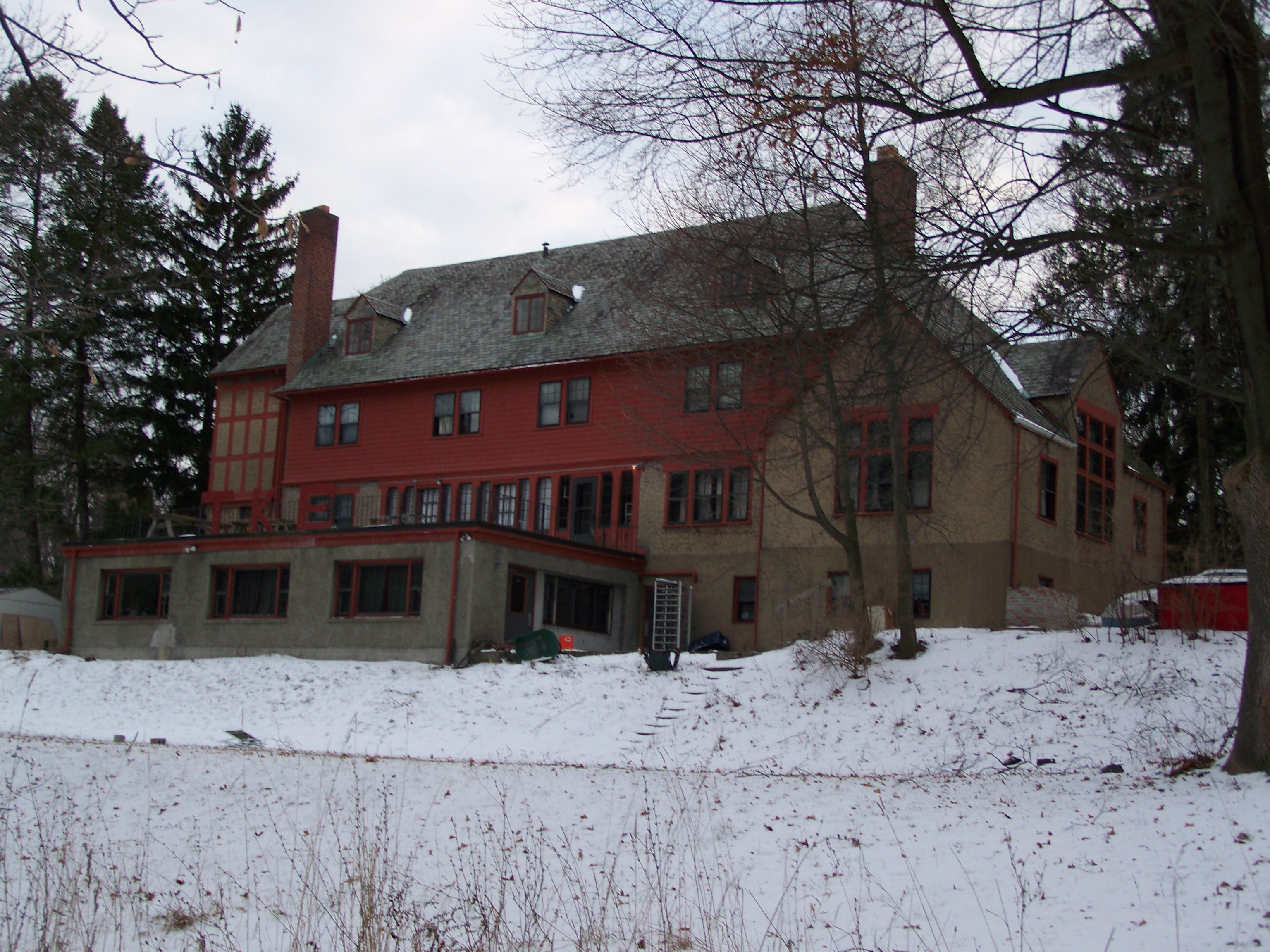
Cornell will revoke its recognition of Tau Kappa Epsilon following reports of an alcohol-related hospitalization of a freshman unless the fraternity succeeds in its appeal of the decision, according to multiple sources.

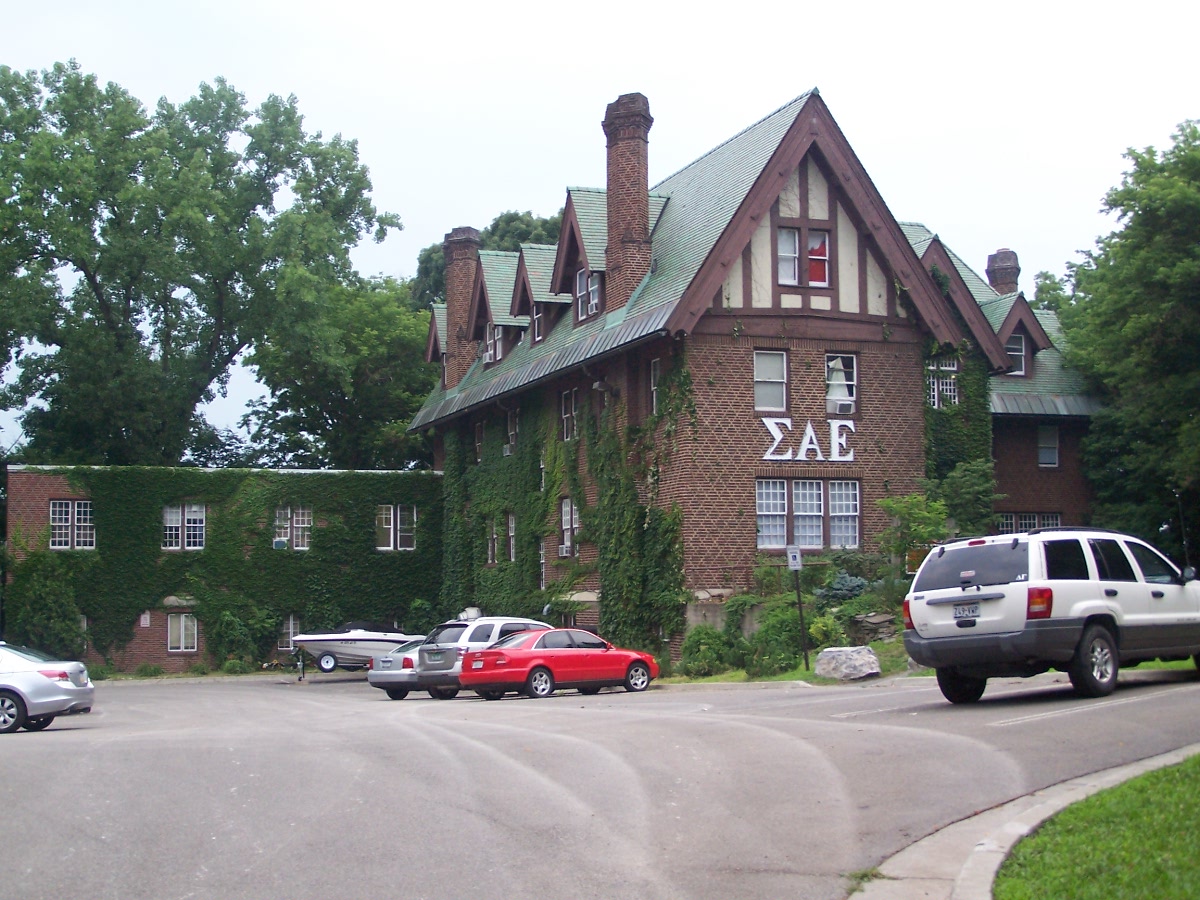
In a memo obtained by The Sun on Thursday, University administrators faulted TKE for reportedly failing to ensure the safety of a highly intoxicated individual — the same oversight that officials say led to the death of George Desdunes ’13 last spring. Sixteen former pledges of Sigma Alpha Epsilon, the fraternity in which Desdunes died, joined TKE a few months later.

The freshman, who had been consuming alcohol before attending TKE’s event, arrived at a recruitment dinner hosted by TKE at the China Buffet on Nov. 11. While it “remains unclear if he continued to consume alcohol at the dinner,” TKE did provide both beer and hard alcohol at the event, the report states.

But as early as September, the University had reason to believe “rumors that SAE has been operating through TKE,” according to the report, when administrators learned of plans for the “White Party” — an event “historically hosted by SAE [as a] social activity attracting hundreds of community members.”

“Out of great concern for the safety of attendees, considering that TKE would not be prepared to host a large event such as this, due to their inexperience, we placed the chapter on interim suspension,” the report states.

The memo then notes that, in a meeting with administrators, fraternity leadership agreed to cancel the event, terminate plans they had to “induct ‘little sisters’” and work with the TKE national organization toward building TKE “traditions that the community could support, as opposed to adopting SAE traditions.”

Despite these promises, “it became clear in that meeting that SAE’s former members, those who were fully initiated and have no affiliation with TKE, have significant influence on TKE as an organization,” the report states.

***

I read stories like this and I cringe. I’m a fairly avid supporter of Greek Life at Cornell. But stories like this make me rethink my stance. I understand that the person may or may not have consumed beverages at their recruitment dinner. Okay, innocent until proven guilty. But you’d think for a group of pledges that watched some of their pledgebrothers be indicted for killing someone, they’d use a little more precaution than “we’ll just drop him back off at his room and hope he’ll be fine”.

But that seems to merely be the straw that broke the camel’s back. The administration was bothered by how the chapter became SAE with a different set of letters. I couldn’t agree more. I am strongly bothered by the open flaunting of the SAE connection, and figuratively (maybe literally?) pissing on TKE’s original brotherhood and traditions (not that it wasn’t expected). I don’t know how much of the comments on the article to believe, but I don’t think they’re far from the mark. Calling yourself “Epsilon” because you feel the fraternity that took you in is so inferior you still have to tie it in to SAE (stating the obvious here, but it’s a nod to the fact that both Tau Kappa Epsilon and Sigma Alpha Epsilon share that letter). It just disgusts me. You’re not SAE. SAE of Cornell was doomed the moment George Desdunes died due to alcohol poisoning administered during a pledge kidnapping.

It’s sad. Sad that TKE was so desperate for social status and growth that they sold out everything their brotherhood was. Sad that SAE let someone die. Sad that one organization is gone completely and the other one is about to be kicked off campus. Sad that this reflects on the whole system, which is in a percarious enough position as it is.

What an ignominious way to go. I hope as a Greek alumnus that if my fraternity was ever in TKE’s position that they would just close instead of selling out.


The Loyal Opposition to the Tech Campus

19 12 2011
Image Property of Cornell University

Image Property of Cornell University

Congratulations to Cornell on winning the bid for the NYC Tech Campus.

However, to be honest, sometimes I feel like the only alum who doesn’t support the project.

By no means do I not want Cornell to succeed as an institution and give a strong education to those that earn entrance into the university. Plus, it seems unusual given my predilection for the development of physical facilities related to Cornell. It’s just…well, it has to do with Cornell’s identity.

Take Weill for example. Most Cornellians in Ithaca are vaguely aware of Weill’s existence. Certainly, the folks are aware of Cornell being based in Ithaca. But they both function independently. They’re separate institutions that just happen to be under the same Big Red umbrella. From a bureaucratic standpoint, that’s probably for the best. I expect something similar to shape up in the operation of the new Engineering Graduate Campus in New York City.

But some disparities between the two have been troubling. For instance, fund-raising in the “Far Above” campaign. As described in this Metaezra post from June 2010, the campaign was immensely successful for the medical school…but not for the main campus in Ithaca. One line has always stuck out in my mind:

“…so apparently wealthy New Yorkers care more about life-saving research and services than basic research and education a five hour drive from Manhattan.”

This has, in some sense, been my concern with the new campus in New York City. Yes, it will inspire entrepreneurship and innovation and all those other cute buzzwords they like to toss out in brochures. People are also free to donate their money as they choose (as it should be). But to what degree does this development of a new campus affect to the main campus in Ithaca? I’m concerned that so much attention will be paid to this new program that many of our alumni (of which 23% live in the NYC area) will donate to the school in their backyard rather than the one five hours away. By establishing another campus, I also worry that there will be less of a sense of a Cornellian – in my wildest imagination, I fear some future New York City campus alumni will self-segregate themselves – the “I’m a Cornell-New York Campus alum, I don’t associate with Cornell-Ithaca alumni and want nothing to do with THAT Cornell”. At least you can take classes in different undergraduate colleges. I see the mixing of Ithaca and New York activities as fairly rare events. Maybe Stanford was afraid of something similar happening, since the campuses would be 1000s of miles apart.

Maybe I’m being overprotective of the Ithaca campus, or this post will be written off as whining because I don’t like New York City or I don’t support Cornell’s global mission or whatever other reason that floats their boat. But I get nervous when the emphasis seems to be displaced from the campus that Ezra demanded be on his farm on the hills overlooking Cayuga. At the very least, I’m adding my voice to a silent minority that have concerns regarding the proposal.


Beauty in the Eye of the Beholder

10 11 2011

So, this is a question that I often wonder about when I play the role of armchair architecture critic. Cornell has pontificated that “each new building should reflect the spirit of Cornell as a pioneering institution and should represent an awareness of its time and place”. Back in the day, that was symbolized by A. D. White’s passionate desire to develop the campus into a New Yorker’s version of Oxford, hence his well-documented derision of red-brick buildings such as Morse Hall and Lincoln Hall, as these were very un-Oxford-esque. Lincoln Hall was built while White was overseas as the U.S. ambassador to Germany (effectively, they sneaked it in when he wasn’t looking), and it’s been said that White smiled when he first heard Morse Hall was destroyed by fire back in 1916. I’m guessing he never counted his own house, but maybe he considered that to be tucked away from the main campus, which it was back in the early days.

Cornell’s architectural preference has evolved with the times. By the 1920s, the fashion was Collegiate Gothic, as seen in buildings like Willard Straight. By the 1950s and 1960s, function was deemed more important than form, and we eneded up with buildings like Clark Hall, and Hollister et al. on the Engineering Quad. Today’s buzz is about “Starchitects” like Rem Koolhaas (Milstein Hall), Richard Meier (Weill Hall) and Thom Mayne (Gates Hall), who designed ultramodern structures that are meant to represent Cornell’s forward-thinking.

My question lies in what is interpreted as forward-thinking. It seems college campuses these days follow two rather discordant trains of thought – one of the modern or ultramodern designs as we have seen lately at Cornell (I was tempted to call them avant-garde, but I don’t think they’re radical enough to merit the term), and then a second line of thinking that delves into the Neoclassical and Gothic themes that conjure images of the romantic colleges of our grandparents’ youth.

Take for instance Princeton and their new Whitman Residential College, or Notre Dame’s new Eck law school building:

Image Property of Notre Dame University

Granted, comparing the new STEM buildings to Dorms and Social Science buildings is a bit like apples to oranges. But what are the pros and cons for the new Houses on West Campus? Were we better off with new and contemporary, or should we have revived the original 1920s era plan and constructed new Gothics?

The original West Campus Plan. Image Courtesy of Wikipedia

Any casual reader of this blog probably recognizes that I fall more into the traditionalist point of view. I guess my concern lies with the aesthetically pleasing value of a campus. Cornell has some tremendously wonderful natural spaces both in the confines of the main campus and surrounding it (the many gorges and waterfalls throughout the area assure that much). The built environment can either enhance that or detract from it, and I’d venture at Cornell it’s been hit-or-miss over the years.  I wonder though, if the increasing traditionalism of some of our peer institutions gives them a recruiting advantage for top students. I think the West Campus structures are quality constructions, but they don’t quite garner the same level of fondness as the arches and turrets Collegiate Gothic.

So I’m going to go out on a limb and throw the question out there for debate. What role does architectural style play in prospective students’ decision-making? Is Cornell being bold and progressive in its current architectural plans, or are we foregoing traditional architectural styles at a detriment to the physical appeal of the university? I’m really curious to hear others’ take on this, so please leave a comment if you’d like to contribute your opinion.

P.S. I don’t want to downplay the importance of interior design, which is important from a livability angle. But I am more interested to hear about opinions about building exteriors, since they often set the first impression.


Cornell’s Rapidly Evolving Late-Night Scene

8 08 2011

This entry was inspired by the latest set of news, that Johnny O’s is closed. This follows the news that Dino’s closed earlier this summer, reducing the number of bars and primary drinking establishments to four. While it seems there’s enough interest in the property that a desolate Ctown won’t be an issue, the article raised a very good point about late-night activities that I think bears a little bit of thought:

For many Cornell students and alumni, the closure of another bar in Collegetown prompted concerns about late-night life at Cornell.

“What is happening to the bar scene in Collegetown?” said Cara Sprunk ’10, a former Sun writer.

Lee Moskowitz ‘13 said that Dino’s and Johnny O’s “probably held about 300 people each, so now you’ve got 600 people going to about four bars, instead of six, and those bars were already crowded to begin with.”

***

Lee Moskowitz has a very valid argument. Fewer bars would seem like a good thing on the surface (less noise and rowdiness), except that that isn’t going to deter the large percentage of older students who want to party it up in the evening. I can vouch from my own experience that even when there were six bars, it was not uncommon to wait in line outside to get in, because the bars were absolutely packed. Less bars means longer lines, and eventually people are going to give up and just do more house parties to compensate (especially considering the tighter restriction on the Greek system’s parties). I firmly believe that it’s a naive notion that student drinking would somehow decrease.

While there’s no problem with house parties per se, the issue lies with the fact that while bars and Greek houses have formal regulations that they’re expected to follow, house parties don’t. If the hosts and servers aren’t careful, that can go a couple of unfortunate ways – an IPD free-for-all for citations and fines, and/or a greater risk to partygoers.

With any hope, Cornell’s new pub in the Ivy Room will open as scheduled in the fall. But elsewise, late-night life at Cornell seems to be heading in a less regulated direction, and is going to be a much bigger issue.


News Tidbits 6/28/11: The Lawsuit Everybody Expected

28 06 2011

So, the Cornell Sun (on its bare bones summer staff) has noted that the mother of George Desdunes ’13, the SAE brother who died in a hazing event this past February, is suing the national fraternity for $25 million. I’m no expert on legal matters, but I do know this has significant precedent with cases from other universities, and SAE has been slapped with three wrongful death lawsuits  in just the past five years. Most of the wrongful death cases were settled out of court for undisclosed amounts, although at least one, a case against a University of Texas chapter of SAE, was awarded $16.2 million (I’m not positive, but I believe it’s the fraternity’s insurance company that pays out, but the fraternity then finds it that much more difficult and expensive to have adequate coverage for their liabilities, which is necessary for recognition on many campuses. So although the fraternity doesn’t pay out directly, their finances still detrimentally impacted).

Now, here’s my question: is she bring a lawful death lawsuit against Cornell?

In a previous entry, I described how a similar incident had occurred at M.I.T. back in the late 1990s with the death of a pledge at their FIJI chapter. In that case, the Kreuger family held M.I.T. responsible for a lack of supervision of the fraternity that allowed the death to occur. Although a formal lawsuit against the school was never filed, MIT did pay out $6 million to the family, of which $1.25 million went to a memorial scholarship. In hazing-wrongful death lawsuits, it seems, at a casual glance, that while it’s common for the fraternities local chapters and national organizations to be sued, it unusual for the school to be sued, perhaps because its much more difficult to build a case. But, I would not hold out against the possibility that if the lawyers are zealous enough, they can use the lack of supervision against Cornell and receive a similar settlement.  For one thing, SAE lived in a university-owned property and the incident allegedly took place in the Townhouses on North Campus.

So, the obvious take-away from this news is that SAE is screwed and totally responsible for their members’ actions. But in the bigger picture, one does wonder if the plaintiffs are going to try and go after Cornell as well.


News Tidbits 5/6/2011: Some of Us Can’t Be At Slope Day

6 05 2011

Oh graduate finals. You take way the afternoon of one of the biggest social days of my year. Well, I’ve studied a fair amount, and since final #1 is at 3 PM, I figured I would take a brief break to tackle a few of the many news pieces to have been released lately, before they become really old news.

1. SAE’s pledge class joining TKE. Do I think this is wrong? On many levels, yes. Playing Devil’s Advocate here, I can see why they might’ve pursued this idea. It’s no great secret that TKE’s numbers have been declining recently, and the fresh blood of a sizable class adopted from a fraternity with a strong social reputation could definitely help in some respects. In a historical sense, there’s nothing particularly like it.  When Phi Sigma Kappa and Phi Sigma Epsilon merged in the mid-1980s, even though both had houses at Cornell, there’s no indication the bortherhoods merged; it seems Phi Sigma Epsilon simply closed. There are some cases of entire fraternities merging, such as Zodiac and ATO in the 1930s. In all my fact-checking, I found only one case; pledges of Theta Chi, which was booted off Cornell’s campus in 1999, asked if they could join Alpha Epsilon Pi, and the offer was accepted. AEPi partially operated out of the Theta Chi house until 2001 (first they operated both their house at 140 Thurston and the house at 40 Ridgewood, then just Ridgewood), when it became too expensive and they reverted back to just their Thurston property.

On a related note, four of the former SAE pledges (not affiliated with the TKE group) were indicted on charges related to the death of George Desdunes ’13.

If I were an alum of TKE (which I’m not, thankfully) I’d be livid. It sets a horrible example, that even though the members of your pledge class had an indirect role in someone’s death, that you’re high enough on the social ladder that another house will come to your “rescue”. For all practical purposes, the size of this group, and their former association, will likely cause Tau Kappa Epsilon to become a hybridized version of Sigma Alpha Epsilon. Arguably, that might help the house’s perceived social standing, and it provides some measure of stability, but at great expense to the house’s integrity, and it speaks volumes on how much the SAE group actually cared about their own fraternal association. It just seems ethically wrong to me.

2. Then again, being ethically wrong seems to be a running theme of the semester. I have to say, having an IFC officer mock MGLC’s step show will sexual gestures towards a large audience that included Ithaca high and middle school students, and then voting to not remove him until the associate dean “strongly advises” it and he tenders his own resignation…like really? Is the system trying to get dismantled, because honestly I can’t tell at this point.

3. last on the pieces of news to tackle, the fatal fire at 107 Cook Street. We all talk about how some of the houses in Collegetown are unsafe, but never would anyone want a tragic event such as this to happen. Argue about zoning and landlords and proper maintenance all you want, but that doesn’t change the fact that someone has lost their life just as the semester was wrapping up. As an aside, I actually knew two guys from my major who lived in this exact apartment last year, and by their accounts it wasn’t in terrible shape. But right now, what matters is that someone is gone all too soon. As a final aside, the last fatal apartment fire was on Heights Court near North Campus back in May 2006. That house was renovated, and at last check, was up for sale.

P.S. I have a backlog of entries to write; once my schedule clears up, activity on this blog should pick up.


How the Mighty Have Fallen

19 03 2011

So it’s official. Sigma Alpha Epsilon, up until now the second largest chapter in the Greek system, is being booted from campus for a period of five years. All members must vacate the university-owned facility by the end of the month. I think the following passage is the most disturbing:

“At this time, the information provided to the university indicates that George Desdunes, 19, was provided alcohol while in the care of certain members and associate members of the Sigma Alpha Epsilon fraternity, and became incapacitated. Even though the members and associate members recognized the condition Desdunes was in, they failed to call for medical care. He subsequently died.”

Let’s be honest. Associate members = pledges in this case. Also, just about anyone who’s been in a fraternity can vouch they knew “that” guy who got really, really drunk one time at a frat party or a mixer, so they gave him some water, a bucket just in case, and laid him on a couch to sleep it off (or maybe that was just in my experience). But this time, either members failed to recognize the severity of the situation – tragic but not impossible – or they realized the extent of the situation and did nothing. Which I really, sincerely hope wasn’t the case, especially since a number of criminal charges are likely in the upcoming weeks.

It’s hard to imagine a system without SAE occupying its lofty Hillcrest estate. But, there is a habit in recent years of the largest, most visible houses being shut down for one reason or another. Pi Kappa Alpha was one of the largest chapters in the system back in the 1980s and 1990s, their recognition was suspended after an incident a couple years ago sent three rushees to the hospital. Before In the mid 2000s, the largest chapter was Sigma Pi, which was suspended and forced to reorganize in 2007 after they sent Thanksgiving attendees to the hopsital with alcohol poisoning. It seems that the largest houses are more apt at screwing up.

It’s difficult to picture Cornell’s Greek Life without one of its prominent members. But under the circumstances, I would’ve been even more surprised if they had been allowed to continue on campus.


The Death Knell of Greek Life?

2 03 2011

In some sense, I’ve learned to dread days where I see the number of hits to this blog skyrocket, namely because days with extraordinarily high hits can be correlated unfortunately well with the untimely death of a student at the university. So it was with some hesitancy that I glanced at the Sun’s website this weekend.

The news is unnerving and tragic. A student is dead. Secondly, the Tompkins County sheriff has gone on the record to say that the death was likely alcohol-related. The student, George Desdunes, was a member of Sigma Alpha Epsilon fraternity, and was found unresponsive at the fraternity house on Friday morning. At this point, it was yet to be established to what extent the fraternity is responsible in his untimely death, but SAE has been suspended temporarily.

When I first heard the news, I kept hoping that the fraternity wouldn’t be responsible. SAE is considered to be one of the most visible Greek houses on Cornell’s campus. It has one of the largest memberships of any fraternity at Cornell and holds a fairly strong presence in Greek affairs, and to some extent campus affairs (a number of their members and recent alumni, such as Svante Myrick ’09 and Eddie Rooker ’10, hold prominent positions in and around the university and surrounding city). So if SAE was responsible for the death of one of its members, the effects would be profound and far-reaching through all parts of the system.

Given the problems of the system and the recent reforms forced onto it by the university, I am honestly wondering whether or not it is a sign of the end of the system. the first thing that comes to mind was Ithaca College’s ban of Greek life after the death of Joseph Parella in 1980, during a fraternity pledge event in which he was hazed. But, it’s not easy to compare the two systems. For one, Ithaca College’s fraternities were generally housed in dorms (in comparison, Cornell owns  about one-third the Greek houses), and for two, their system represented a much smaller proportion of their student body than Cornell’s does.

I suppose the usual arguments will come out – the biggest donors to the school are Greek, they can’t touch private houses, and so forth. The problem is, if SAE is found responsible, their role in the death of a student would be a very powerful and legitimate reason to favor de-recognition of Greek life. Addressing argument number two, while many chapters own their own property and would not be immediately affected, they lose the protection that the university gives — i.e. every party thrown is a target for local and campus police to bust underage drinkers. So the system wouldn’t be “shut down” per se, but it could easily be crippled.

Perhaps a better comparison would be a case from MIT that occurred about 15 years ago. On September 26, 1997, a pledge of FIJI at MIT died after a pledge event due to alcohol poisoning.  MIT is, like Cornell, a prestigious institution with substantial Greek Life – at MIT, it comprises about 42% the student body. There had been signs Greek Life had been getting out of control prior to the death of Scott Krueger. As a result of the event, RAs were put in fraternity houses, mandatory CPR training was established, all freshmen were required to live in dorms, MIT paid a $6 million settlement to the family due to negligence in preventing the event from occurring, the fraternity was shut down (and has never come back), and several of the former FIJI members were convicted of criminal offenses. It forever changed the way MIT dealt with its fraternities. But they still have a large, influential system.

But comparisons only offer ideas, not results. So what will happen with Cornell’s system? A good question.  But not one that can be answered just yet, while Cornell students mourn the loss of one of their own.


Cornell’s History, All Drugged Up

11 01 2011

So, the latest news tidbit about a Cornell student being caught with $150,000 of heroin has made the news cycles and attracted some undesriable attention toward the university. Which kinda inspired me to look at it in a historical context. It’s what I do.

It’s college. Drugs exist. Some are easier to get a hold of than others. Some are gateway drugs, others are only used by a hardcore group of students. Once in a while, the drug debate comes up in a campus context. The Cornell Daily Sun ran an article about Cornell’s drug culture about two years ago. In the article, it was noted in a 2005 anonymous Gannett survey of students, that of 1,969 respondents, 41% admitted some form of drug or alcohol use in the past 30 days, with 19.8% reporting marijuana use and 4% reporting other drug use.

(with that in mind, considering the university’s undergad pop of about 13, 800, that would suggest 550 users of other drugs, which could include cocaine, LSD and the aforementioned heroin. If [an overly-generous] 50 percent were heroin users, that gives us about 275 students. Which if the street value is correctly reported, than the student was carrying $545 worth of heroin for each user. In conclusion, with that much heroin, I wouldn’t be surprised if she was supplying the entire county).

A similar set of data from 2003 suggests 8 percent of respondents admitted Ritalin/Adderall use without a prescription, and less than 3 percent partook in white lines. Another link on Gannett’s site looks at drug use in 2000, and the rates were largely the same as in following studies (except for hard drugs – those fell a little bit). The article notes that affluent students and students in Greek Life show slightly higher usage rates. Looking at Gannett’s site, if we throw in the more prevalent drugs, tobacco use as defined as at least once in the past 30 days has gone from 21 to 16 percent from fall 2000 to fall 2005. Alcohol use defined as once in the past 30 days has hovered around 75 percent and remained fairly steady through the three studies.

So that’s handy and all, but it’s a smallish sample size compared to the entire student population, and it depends on people answering truthfully. So the numbers could be seen as dubious. Regardless, it’s obvious that students partake in drug use.

***

Now to look at things in a historical context. Drug use was around well before the university. But in 1865 in little Ithaca, the drugs of choice were generally the alcoholic or tobacco variety. The big drugs in the 19th century were alcohol, tobacco, and to a lesser extent opiates and (in later years,) cocaine. Marijuana was seen as a medicinal drug, not a recreational one (that changed after around 1910). Marijuana use at Cornell was minor prior to the 1960s, which is when it caught on with middle-class whites – i.e. most of Cornell’s student population. It is stayed relatively popular since, even after drug laws became tougher in the mid-1980s. As for the opiates, they would see occasional use throughout the next 100+ years, as opium in the late 1800s, morphine and heroin in later years. Heroin received its first notoriety among students when it caught on with the Beatnik culture of the 1950s.  With the increase of purity (strength) of heroin in the 1980s and 1990s, demand, and addiction, grew. Although, going by Gannett’s survey, usage dropped off somewhat at Cornell after 2000. Tobacco saw steady and common use by all branches of the university’s stakeholders since Cornell’s founding, and became so prevalent that in the early 1960s a person could smoke anywhere but inside Sage Chapel. But, needless to say, that’s not the case anymore.

If Cornell follows national trends, it would be safe to say that cocaine use peaked in the early 1980s, with maybe some sporadic crack use after its introduction around 1985. I would be willing to suspect that the “glamor” of powdered coke was preferable to perceived “ghetto” qualities of its freebase equivalent.

Regarding LSD, Cornellians probably first experienced the drug in the early 1960s. Well, willingly anyway. Two Cornell Medical School professors were part of a government project in the 1950s and 1960s to administer LSD and other hallucinogenic drugs on unwilling participants. It was initially hoped by the military that it could be used like a truth serum, and later studies checked it out for therapeutic qualities on mentally-deficient patients. The drug peaked in the late 1960s and saw another slight rise in the late 1990s, but otherwise has seen a general decline.

Now back to our preferred chemical companion – alcohol. The first students of Cornell would’ve usually consumed beer (liquor was as it is now – expensive) down at one of the saloons in town, and there was no standard policy against drinking (Bishop 210). “Give My Regards to Davy” celebrates this aspect of student life (although I should note that highballs are mixed drinks – scotch and soda water). A Cornell Era report from around 1890 suggests that a couple saloons was enough to serve all students, and drunkenness was uncommon. In the 1910s, drinking was common, but seen as a way to celebrate athletic victories, but drunkenness on campus was seen as grounds for dismissal (Bishop 407-408). Prohibition was a major thorn in the side of students and bar owners, but they found ways around the law – Theta Delta Chi had a speakeasy built into their house when it was built in 1926.  A Cornell Sun article from March 4, 1937 reports that drinking at colleges was on the rise after Prohibition, but that public drunkenness was abhorred. The report was “Students…admire the man who can drink like a gentleman” (pg. 3). It seems that a celebrated culture of binge drinking took off around 1980 – the “Animal House” influence, perhaps. Although underage drinking was supposed to be curtailed by the increase of the drinking age from 18 to 21 in December 1985, that has largely proven untrue.

People age, drug preferences change, but students are timeless.