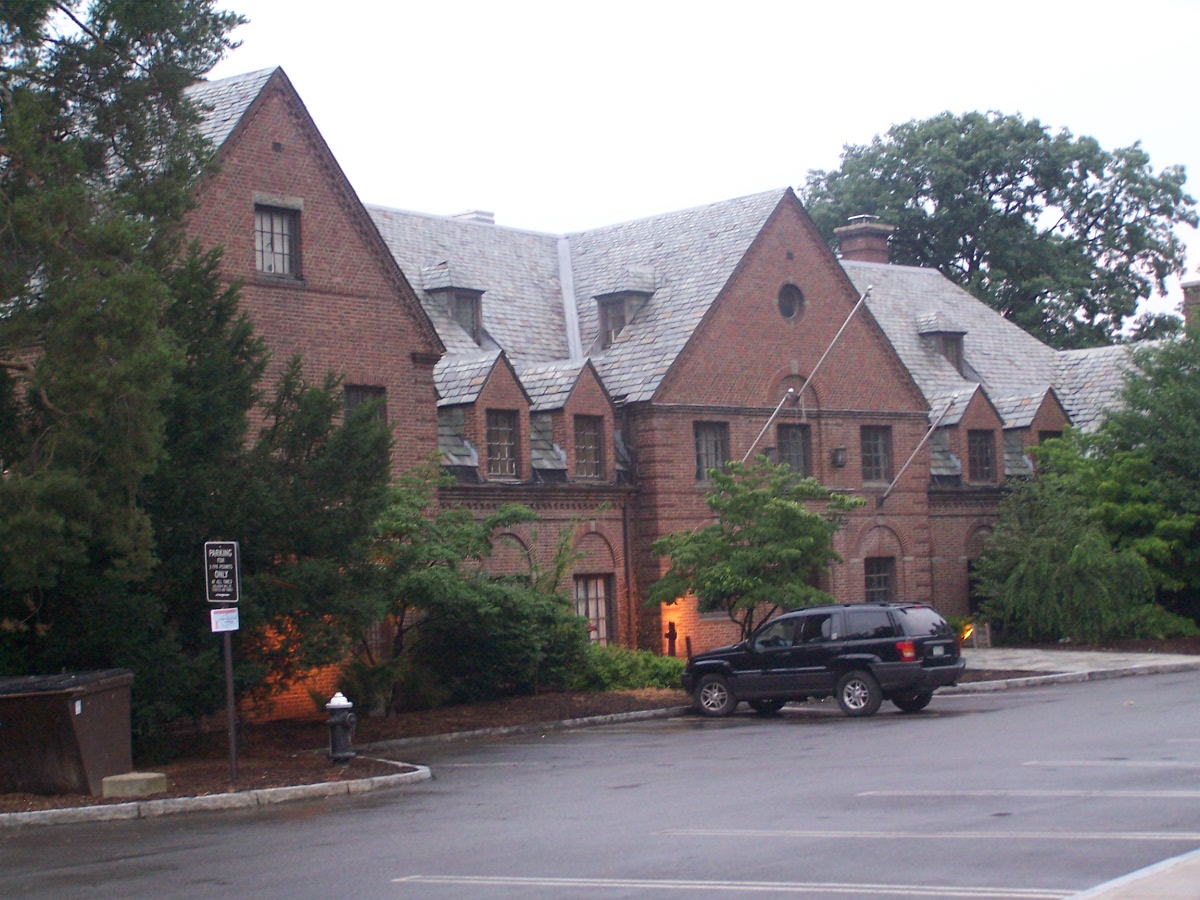
Northwest of Campus

7 08 2008

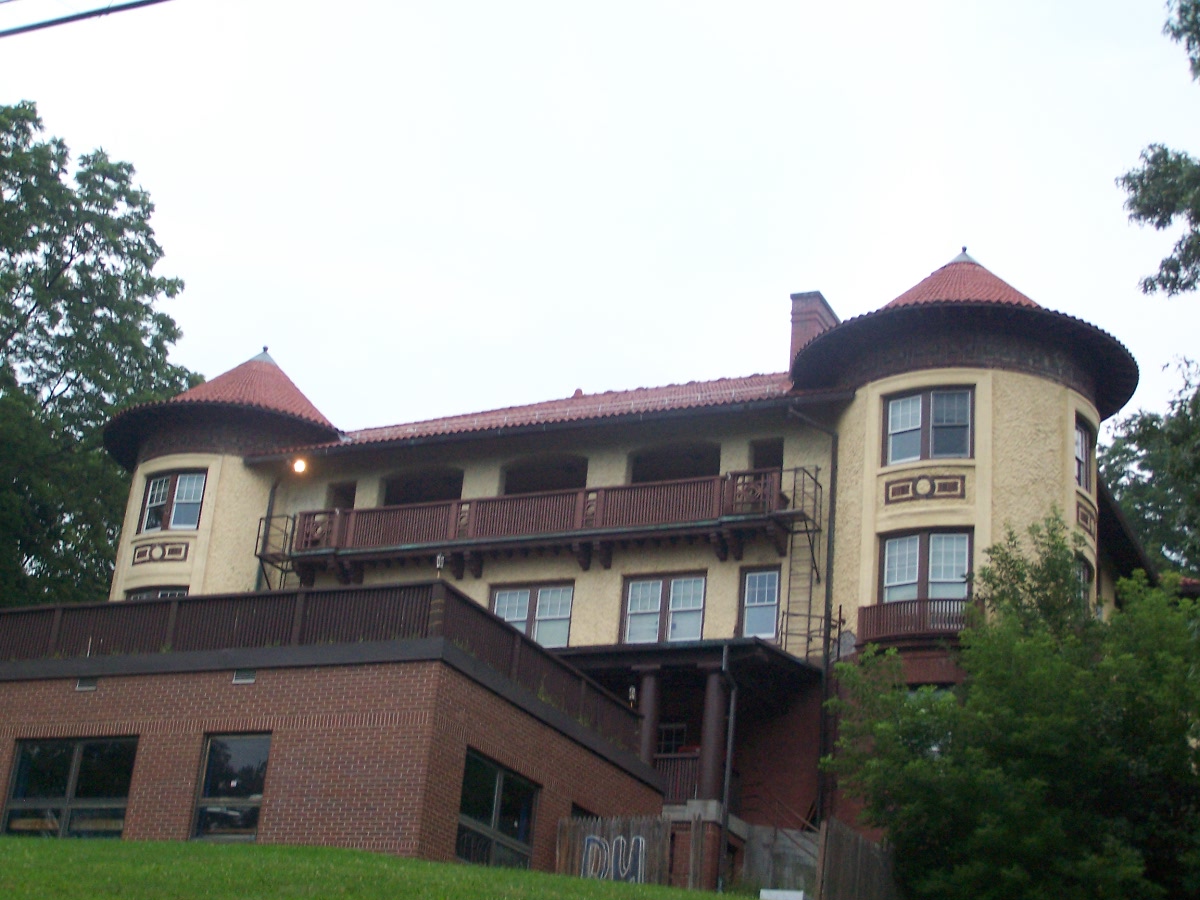
The house of Sigma Alpha Epsilon fraternity. Sigma Alpha Epsilon is one of those fraternities that tends to come to mind when people want to typecast the Greek system at Cornell. It’s large (~80 men), and prestigious, and is the subject of so many dirty rumors (true or not) that it would make Lindsay Lohan blush. The house goes by the formal name “Hillcrest”, and was built in 1915 [1]. An addition was built in the early 1960s (on the left side of the photo). This is the fourth house of SAE and the second “Hillcrest”, the first having burnt down in a spectacular fire around 1911. SAE and Chi Psi have a standing rivalry.

Next door to SAE is Alpha Delta Phi, colloquially known as Alpha Delt. The fraternity was established in 1868, and was among the first to build a chapter house, which was constructed in 1878 [2]. As students moved to different areas of campus, Alpha Delt launched plans to construct a new building in the prairie house style (which you can see on their homepage). This house was built around 1903, but due to electrical malfunctions, burnt down in a spectacular fire in February 1929. A new house, built in the collegiate gothic style (the current house) was built in 1931.

Alpha Delt has always struck me as a more upscale version of SAE. But, they’re not above visual humor; like their parking lot for instance.

I wouldn’t be a good photographer if I didn’t get a photo of their super-sketchy windowless ritual building in front of the house.  Rumor mill says someone received third-degree burns in a ritual gone wrong two years ago at their initiation. Ah, so this is why fraternities like Delta Upsilon and Phi Kappa Tau were founded; to go against the cloak-and-dagger behaviors of other organizations.
***
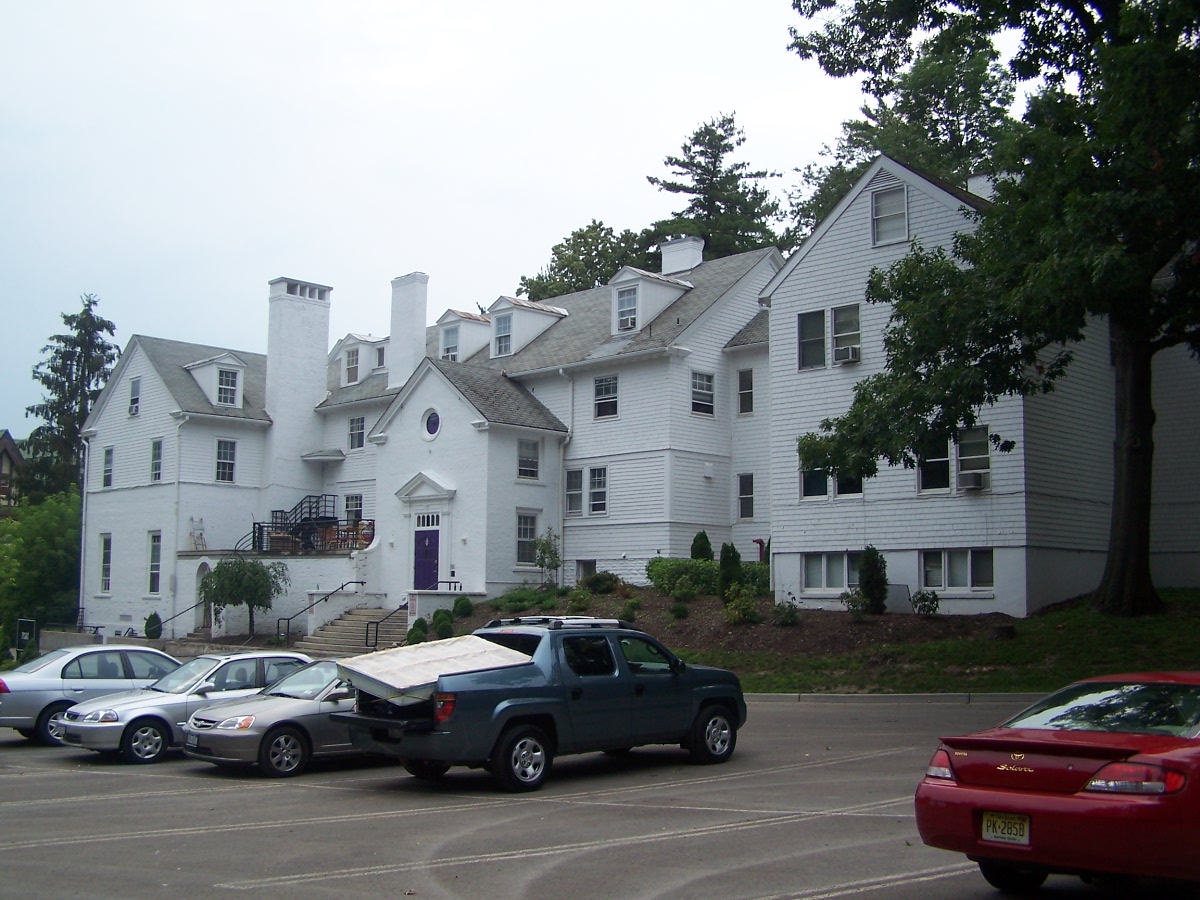
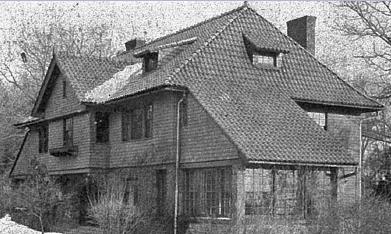
Although in a tightly packed area of high-profile houses, Phi Gamma Delta, or FIJI as it more commonly known, retains a distinct character. The house, known as “The Oaks”, is fairly nice-looking from the outside, especially since it was built around the 1900s. The original house, a private residence the fraternity bought,  looked like this before the extensive additions and modifications:
Throwing this disclaimer out there, I’m not a huge FIJI fan. The inside kinda scared me. That, and the Halloween party I went to there freshman year where some guy scantily-clad in leather was randomly hitting people in the crowd with a whip as he stood on a table. After the marks I received from that, I haven’t been inside since. Opinions aside, it’s a large house with a large membership.

One last thing…it rained shortly after I had taken the house photo. The mattress in the pickup was still there when I passed by a second time…and it was thoroughly soaked.

***

Mixed into the hodgepodge of frats is Watermargin, a co-op established in 1947 (co-ed since 1961/1968, the latter being the year it was formally approved[3]) by WWII verterans to promote undertanding and diversity in religion and race [94]. The name Watermargin comes from a Chinese Classical literary work, translated by Pearl Buck (All Men Are Brothers), in which fugitives fight the injustice of the Ming Dynasty at the water’s margin. Prior to 1947, the house served as a home for Phi Kappa Psi. The house was built in 1890 in the Colonial Revival style [5]. I’m still trying to determine what the house served as between 1912 and 1947.

Next door and contuinuing up University Avenue is Theta Delta Chi. They are colloquially known as “Thumpty”, or the much-maligned “Theta Drug”, supposedly because of the relative ease of obtaining drugs at the house. The house dates from the 1920s, making it one of the later constructions in the area. The running joke that I’m aware of suggests that its members are stoned all the time. Still, although they are the put of many jokes, they’ve managed to stay continuously active at Cornell since 1870, so they might as well take it in stride.
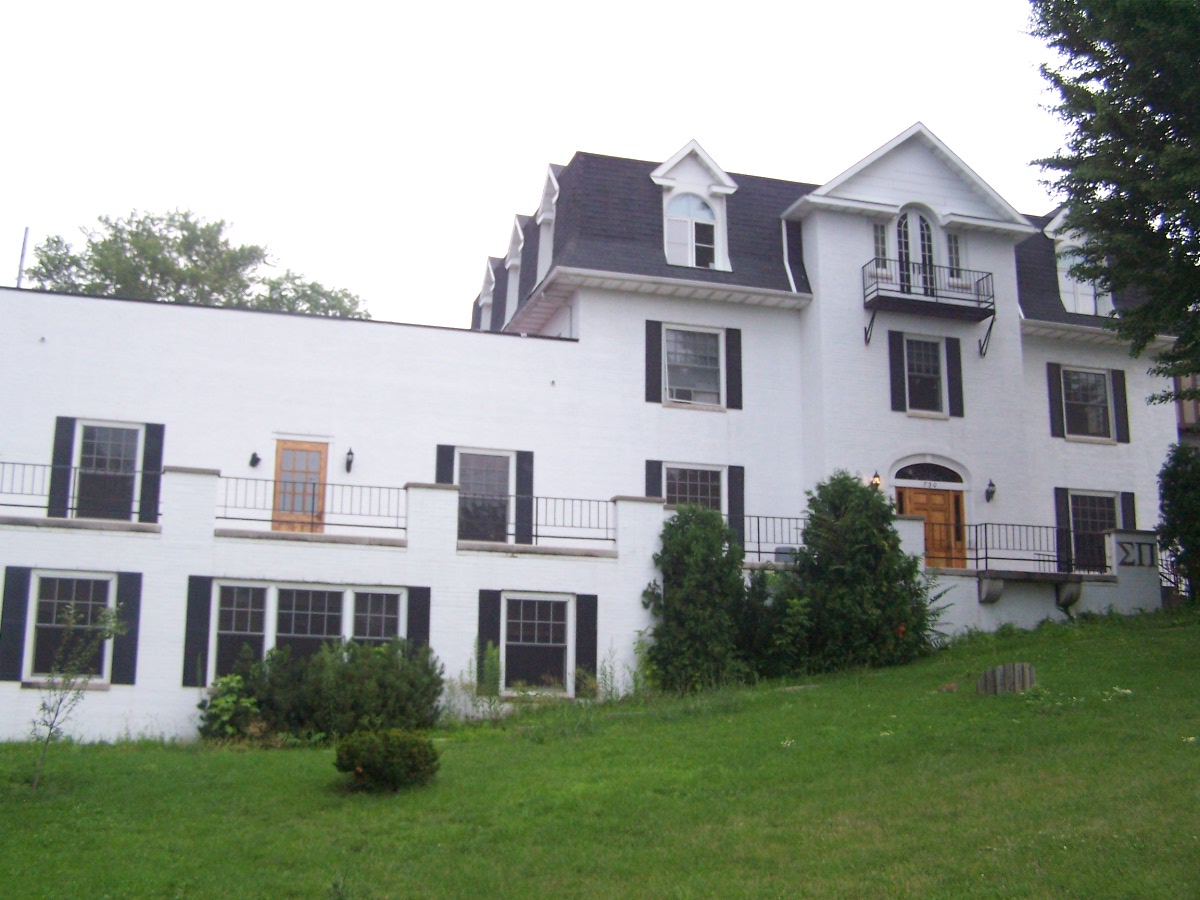
Sigma Pi is further up University Avenue. The original house on the property was built in 1870, burnt down in 1994, and a new, roughly-similar looking house, was designed by local architect Jagat Sharma and built in 1995 [6]. The fraternity was one of the largest at Cornell, until a nasty incident involving a Thanksgiving dinner gone wrong caused four freshmen to have to get their stomachs pumped[7], and Sig Pi losing recognition from the university (i.e. no pledge class). So, how about that fall rush…?
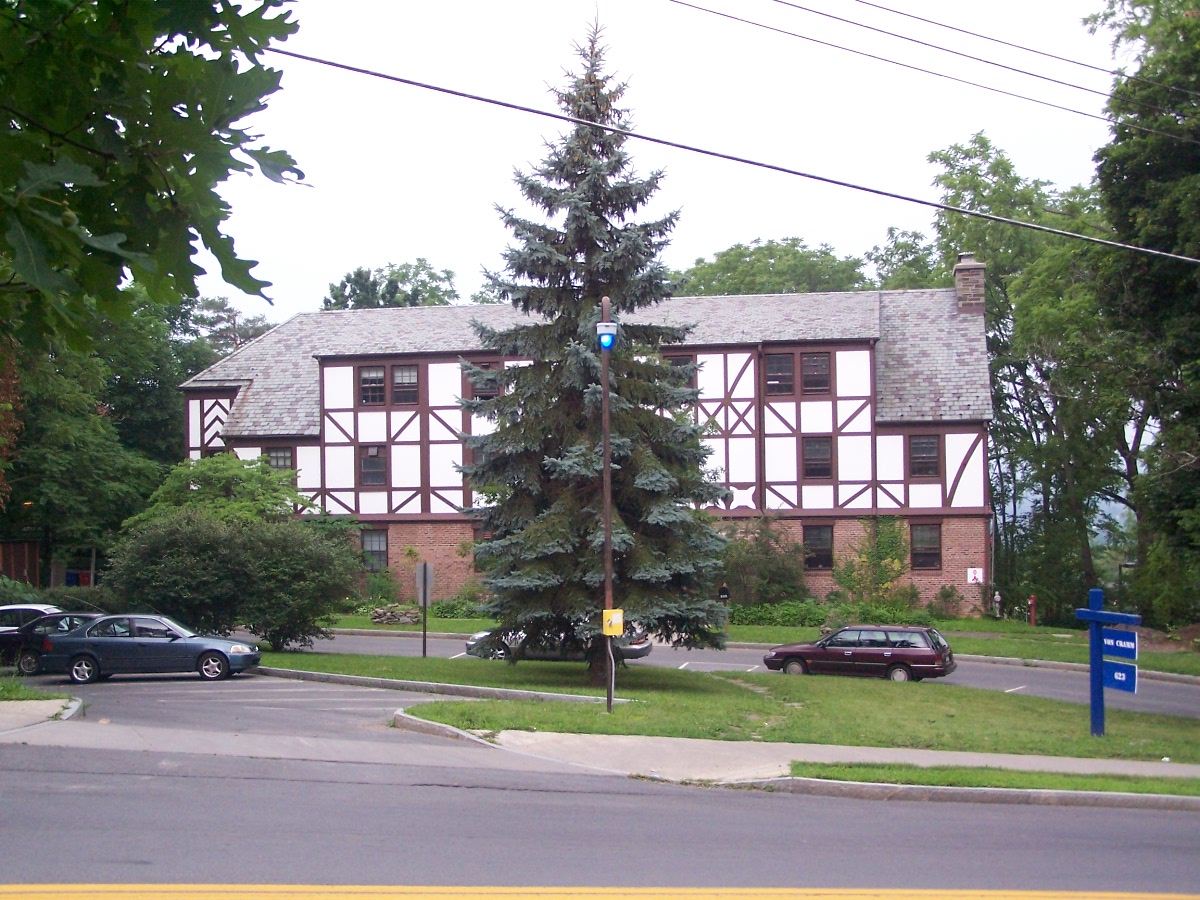
Going back the other way on University, we have Von Cramm Hall (I’ll hit Chi Psi at a later date). The co-op was founded in 1956 by an endowment from Thomas Gilchrist, in memory of his friend Baron Von Cramm. a Nazi German military officer who died trying to stop the Soviet retreat in 1941[8]. It is also the largest co-op, at 32 members. The house became open to women in the 1970s, and has a very strong leftist bent (Redbud Woods…). The house itself was built in 1955, standing on the property of one of the trio of homes owned by Robert Treman. The house, more of the textbook-style tudor, burned in 1944 [9].

Sigma Nu’s house is tucked way at the end of Willard Way. The house dates from about 1910. The house is one of the more obscure ones to try and locate, but it has fantastic views of the West Hill in the town of Ithaca. Sigma Nu Cornell, founded in 1901, is a fraternity with a strong athletic presence.

Missed it the first time, not the second time. Sigma Phi Epsilon’s house on McGraw Place. The house was built in 1965 [10], replacing their former house at 112 Edgemoor Lane. After Sig Ep was gone in 2004 (google it, rumor mill had a field day with that one), ATO occupied the house, and Delta Chi shared it with them when they were rechaptered in 2006-07.
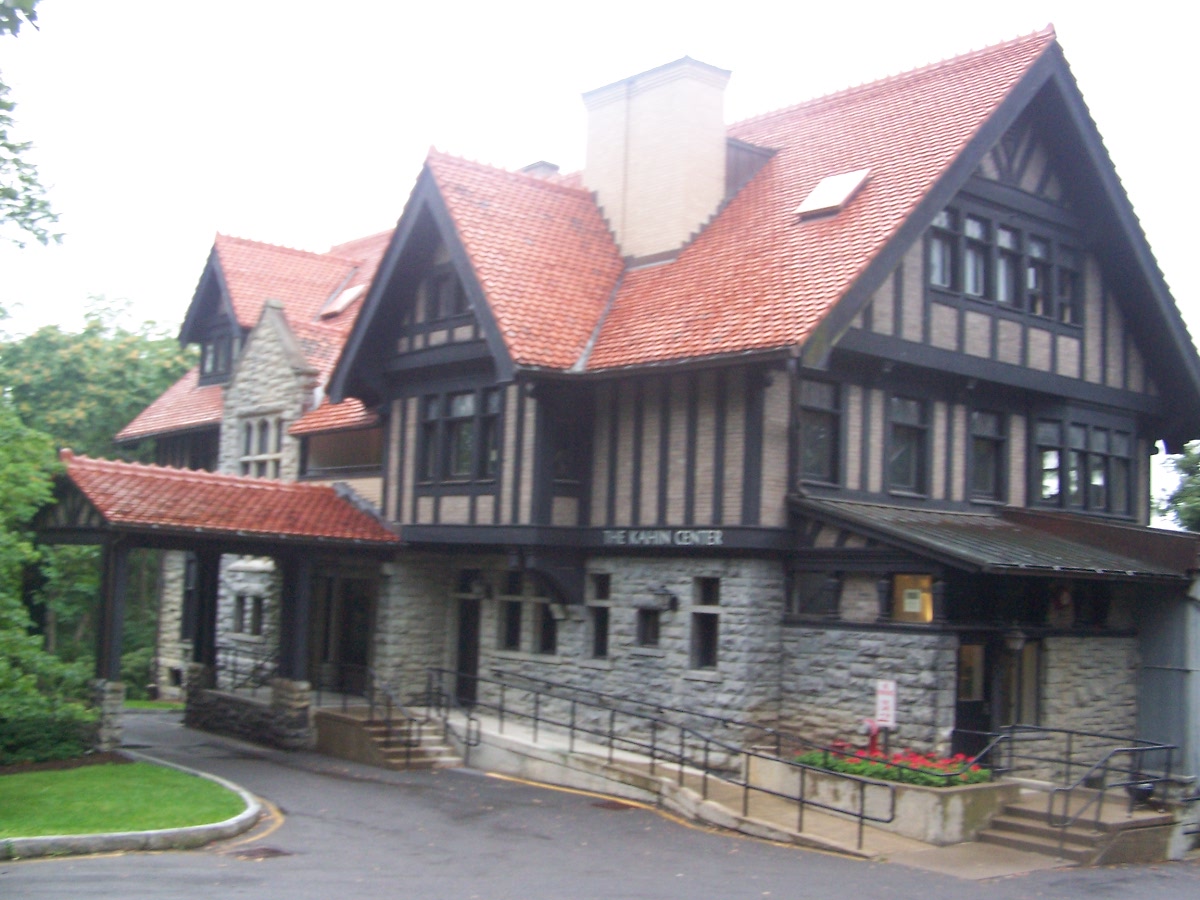
The Kahin Center is the second of the Treman trio. It was remodeled in 1945 as a lodge and as a communication arts center in 1970 [11]. It also mirrored the first house that burned in 1944.
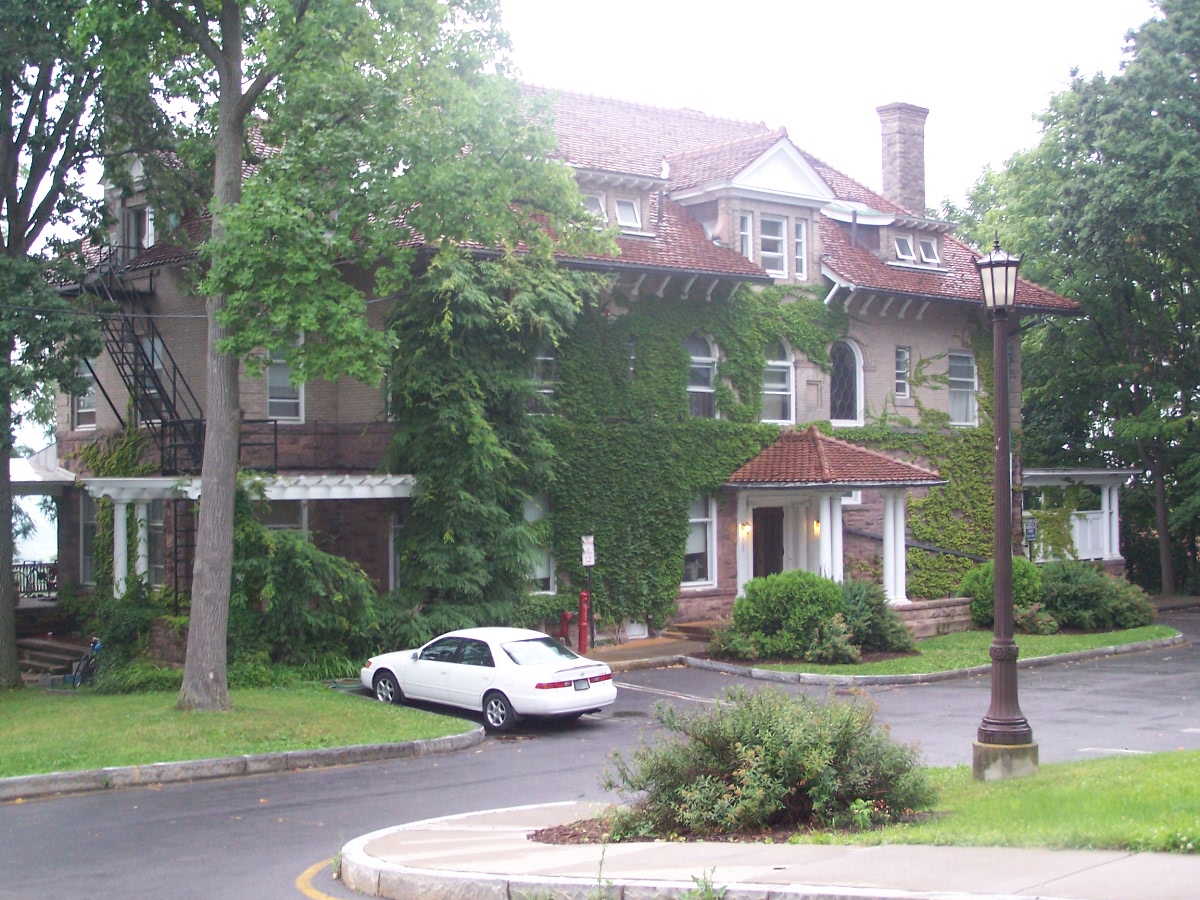
The last of the trio is 660 Stewart Avenue, built about 1902 as the home of Elizabeth Treman and her husband Mynderse Van Cleef [11b]. The house of Zeta Psi for a few decades ending in 1969, the house is currently a 27-person co-op. Unlike most co-ops, this one does not have a meal plan [12].

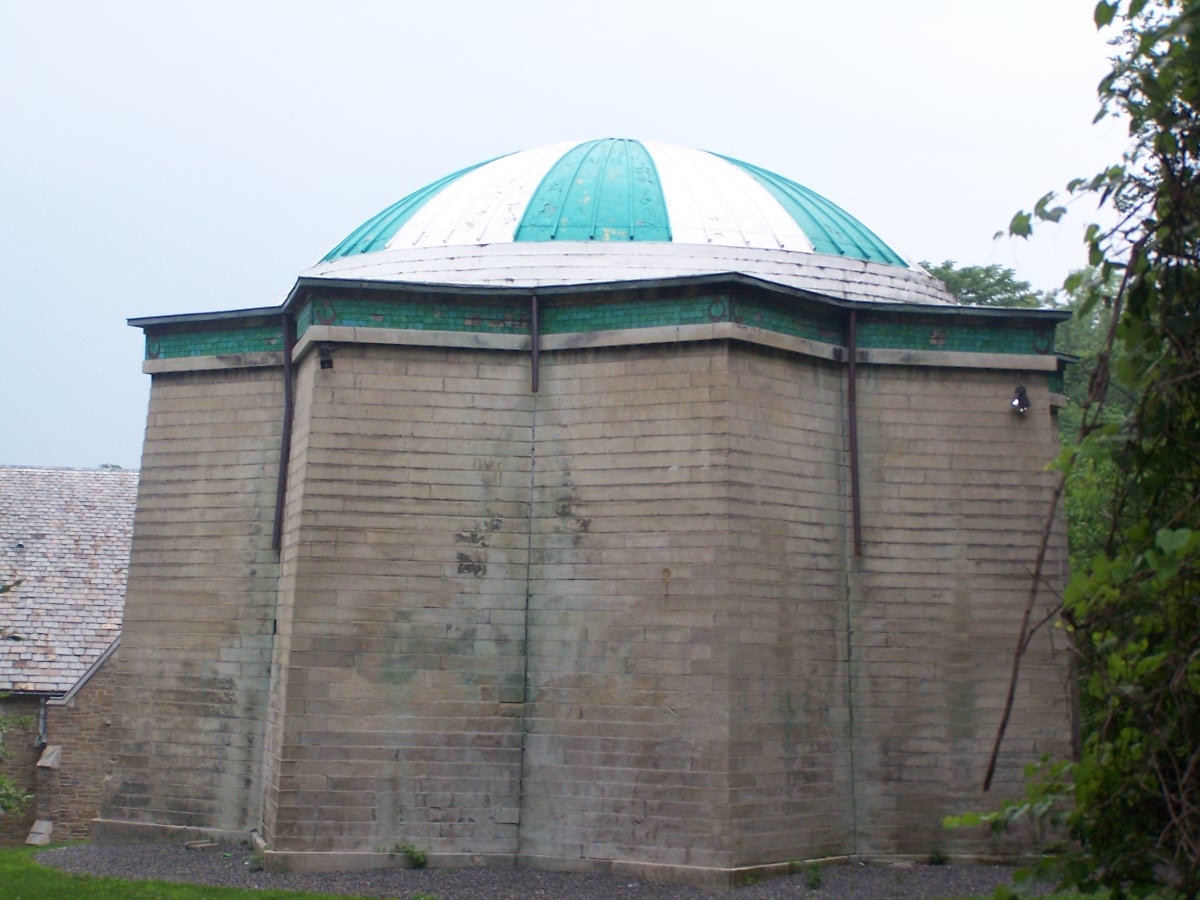
This was really cool, since it has polished wood and it provided shelter from a sudden rainstorm. “The Chapel for Prayer and Meditation”. And what a nice little chapel it is. On the outside was the posting for a service to Mahatma Gandhi on 9/11/07. And the other events that have happened on 9/11.
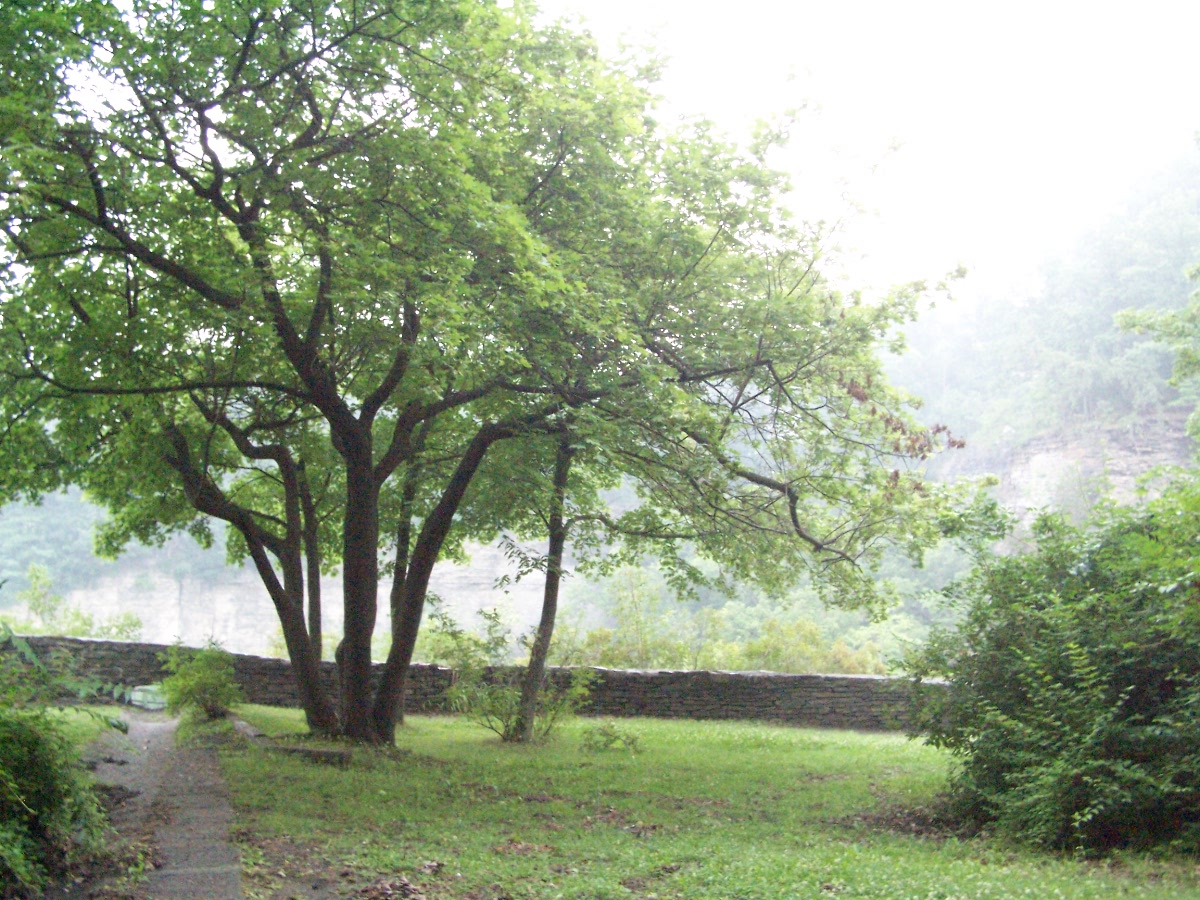
And it had a great view. And this is where I’ll leave off for now.

[1]http://www.sae-cornell.org/public6.asp

[2]http://www.adphicornell.org/public6.asp

[3]http://cornellsun.com/node/21924

[4]http://www.campuslife.cornell.edu/campuslife/housing/undergraduate/watermargin.cfm

[5]http://www.fs.cornell.edu/fs/facinfo/fs_facilInfo.cfm?facil_cd=4758

[6]http://sharma-arch.com/restoration.htm

[7]http://cornellsun.com/node/26714

[8]http://en.wikipedia.org/wiki/Von_Cramm_Coop

[9]http://www.fs.cornell.edu/fs/facinfo/fs_facilInfo.cfm?facil_cd=3121

[10] http://www.rso.cornell.edu/sigep/History.html

[11]http://www.fs.cornell.edu/fs/facinfo/fs_facilInfo.cfm?facil_cd=4736

[11b]http://cornellsun.com/node/24153

[12]http://www.campuslife.cornell.edu/campuslife/housing/undergraduate/660-stewart.cfm


News Tidbits 8/5/08: The Development of Ithaca Gun

6 08 2008

http://cornellsun.com/section/news/content/2008/07/30/city-ithaca-pledges-overhaul-contaminated-gun-factory-site


City of Ithaca Pledges to Overhaul Contaminated Gun Factory Site

July 30, 2008 – 12:35am
By Molly OToole

On May 30, the New York State Department of Environmental Conservation announced a final resolution for the Ithaca Gun Factory Site, closing a long and precarious chapter in the City of Ithaca’s history. However, many Ithacans feel the future of the site may still be up in the air.

The DEC — in cooperation with Mayor Carolyn Peterson, the City of Ithaca, developers Frost Travis, owner Wally Diehl and a previous pledge by the state — has authored a plan to dissolve the old Ithaca Gun Factory, which has been left stagnating above the rushing waters of Ithaca Falls for the past 125 years.

The $3.02 million public-private partnership — which includes the state’s Restore N.Y. grant contribution — aims to not only fully remediate the site, but to also return it to the public eye by putting in a new public park. A pledge of over $11 million from a voluntary cleanup program and private donations will fund 33 luxury condominiums to be built over this hazardous history with the hope of giving the site a healthier future.

The DEC intends to cover 90 percent of the investigation and remediation of Ithaca Falls Overlook Park with its pledged $700,200 from the 1996 Clean Water/Clean Air Bond Act, which is part of the Environmental Restoration Program. Dianne Carleton of the DEC described the program as a “funding mechanism to protect or improve water issues.” These funds join the $2.3 million Restore N.Y. Grant presented to the City in January by former governor Eliot Spitzer for demolition of the factory buildings.

According to a project file of the Ithaca Gun site provided by the New York State Department of Health, demolition is slated to begin in early August.

Optimistically, the new condos could be available for purchase sometime in late 2009 or mid-2010, according to Travis, but he added, “I can tell you the start and complete dates are somewhat of a moving target with respect to development and construction. We won’t know until we’re in the process.” (cont.)

***

So, I’m always curious about what a new construction will look like. Unfortunately, nothing’s been released for the time being, and probably won’t for the next several months. However, that doesn’t stop speculation.

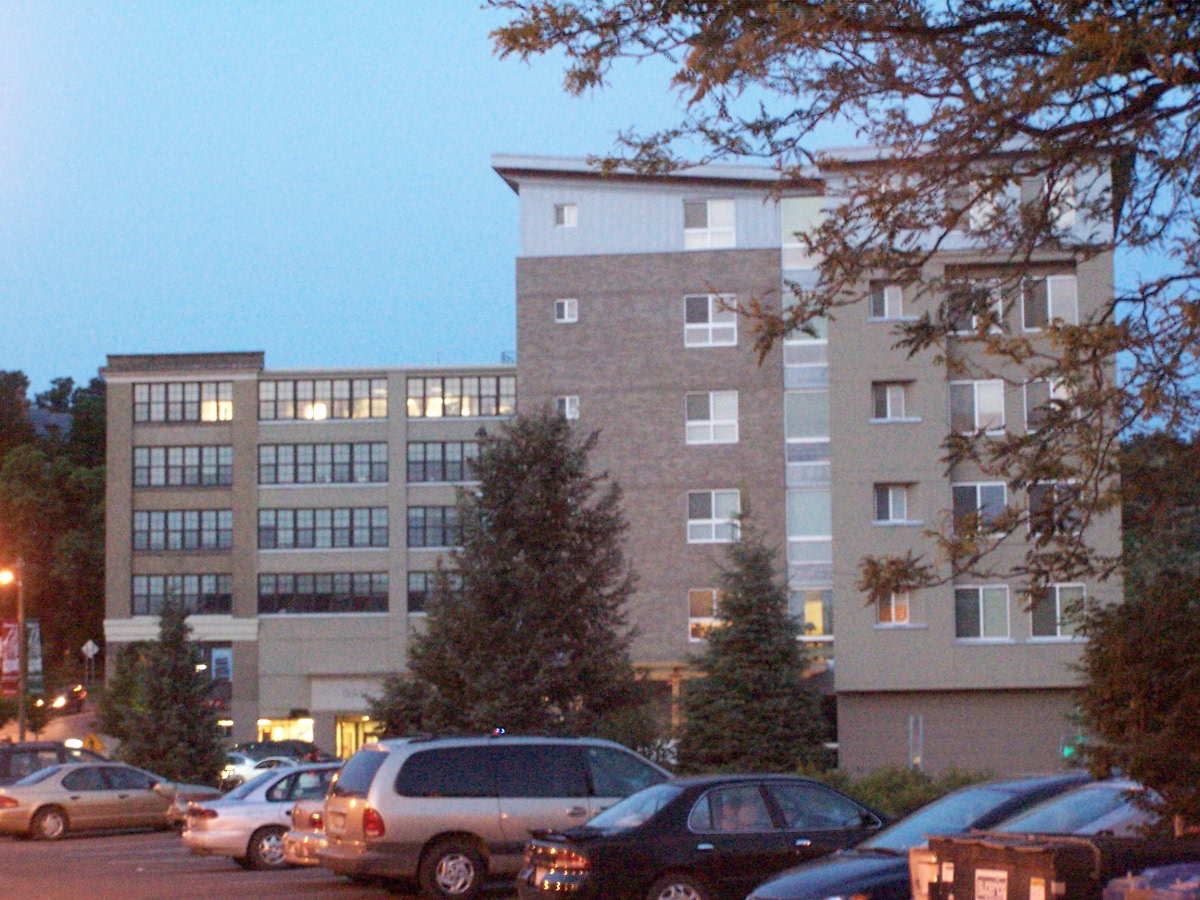
Consider the developer, Travis and Travis Inc. The firm is responsible for one other major new construction in the Ithaca area; Gateway Commons, a six-story apartment building on East State Street that was completed in early 2007.

The building on the right.


The building was designed by HOLT architects. Now, some developers end up forming a preference for a certain architectural firm. If this were the case with Travis and Travis, then they might seek a continued professional relationship with HOLT architects.

 In this case, the design is for 33 condominiums, limited in height to no more than about 50 feet. This was the end deal of an arduous and exasperating phase in its planning. Developer Wally Diehl wanted to develop the property in 2003, and turn it into a seven-story, 160-unit building with a two-story parking garage [1]. Needless to say, neighbors raised out, citing lost views and a loss of neighborhood character (apparently, the factory that was there 100 years was perfectly acceptable). Diehl tried an 80-unit, 50 ft. tall proposal (no higher than the old factory), but he complained that it was not privately feasible anymore, so the property sat, and a fire in August 2006 served as a wake-up call that the property had to be demolished ASAP (hobos and vandals go in all the time, so sit back and imagine the lawsuit on Ithaca city if someone went in and died inside, even though the factory is considered a hazardous site).

By hazardous site, a couple of things worth noting. The factory made guns for 126 years, closing in 1986. They used a lot of lead. This directly lead to the high lead levels in Fall Creek, where it flows next to the site, and where it was (is?) 500 times beyond the EPA safety level. An effort in 2004 to clean it was attempted by the EPA for 4.8 million dollars in Superfund money. But, lo and behold, they failed to adequately clean it, as lead levels were 460 times higher than the EPA’s goal. Ouch. Oh, and the IJ revealed in 2000 that the site was used to test uranium tubes, so there was uranium contamination as well [2]. So, the site was about as environmentally screwed up as it can get (with the exception of the Love Canal and Chernobyl).

 So the third proposal, backed by a $2.3 million dollar state grant and a $700,200 grant to reclean the site (and $10 million in private funding, through a partnership of Frost Travis and Wally Diehl), offers 33 high-end condos,a public promenade and a small public overlook that includes the smokestack of the factory. Finally, the majority of the opposed now appeased, it looks like everything is ready to go. One hopes.

So back to my curiosity about the design. Picking around the HOLT website [3], one finds their healthcare and higher ed portions of their portfolio. But, they designed student dorms for a couple of schools. So let’s profile those, since they were small-scale living units.

Townhouses, Colgate
Apartments, U. of Vermont

Apartments, U. of Vermont

 So, a rough idea of their design guidelines seems to be postmodern, with rustic influences. It helps that this company seems to have a strong attachment to Cornell; Carpenter Hall renovations, Tatkon Center, Sigma Chi renovations, Goldwin Smith reno, Donlon reno, among others. And they did several designs for IC buildings, so they just love it here (and considering they’re HQ’ed on N. Aurora Street, makes plenty of sense).

So, what might a high-end condo look like? I venture pitched roofs, dormers, and pillared entryways, with a height around 3 of 4 floors. The design will definitely not be a classic, but will have traditional elements, not too unlike the neighboring Gun Hill Apartments.

 [1]http://cornellsun.com/node/26431

[2]http://cornellsun.com/node/26384

[3]http://www.holt.com/S.html


Far West Campus, Second Photo Tour

4 08 2008

The house of the Cornell Chapter of Delta Upsilon fraternity. The house was built in 1890 in  the Queen Anne Style [1], and burned at least three times over the next thirty years [2]. The fraternity was founded to counter secret societies. Which, considering some members have most certainly been members of the Sphinx Head and the Quill and Dagger, is vaguely ironic.

Cornell’s Telluride House, located on South Avenue. The house was built in 1910 and originally housed electrical engineers working for Lucien L. Nunn, and who also attended Cornell [3]. The Cornell chapter was the first Telluride house. Telluride takes it name from the town of Telluride, Colorado, where Nunn lived most of his adult life [4]. The house’s website describes as an intense academic experience, and that members “enjoy tremendous autonomy”. So, I’m getting the impression of a fraternity, only much more academic and not nearly as social.

Photo Courtesy of "Greetings from Ithaca"

Photo Courtesy of "Greetings from Ithaca"

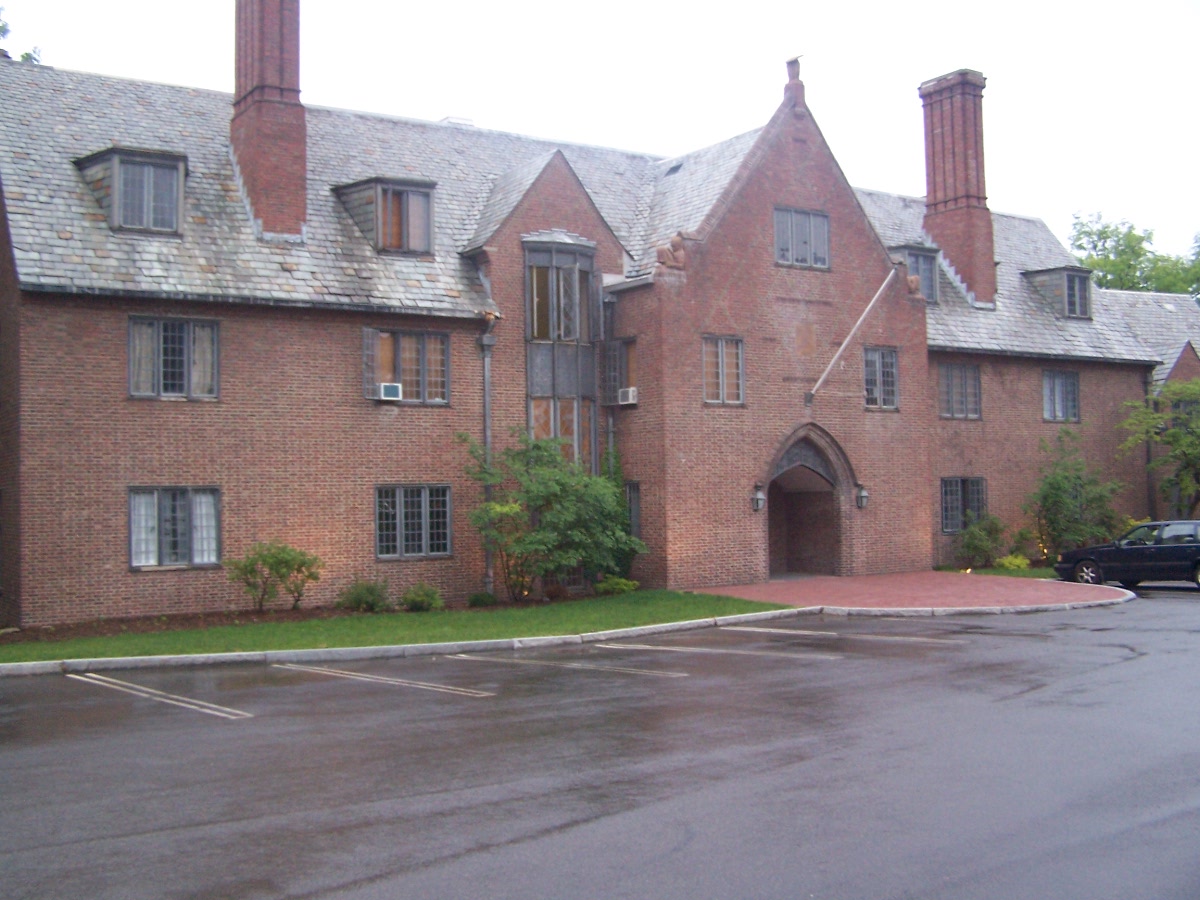
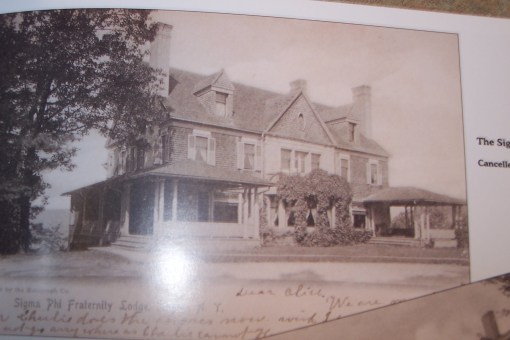
The house of the Sigma Phi Society. The first house was torn down to make way for the law school. The second and current house was built in 1932 and designed by Frederick L. Ackermann in the English Country House style. Ackermann also designed Psi Upsilon, the neighboring fraternity, and the relation between the two is obvious. If you can’t tell them apart though, you’ve probably had too many drinks at Sigma Phi and it’s time to go home. Detail-wise, the two differ considerably.


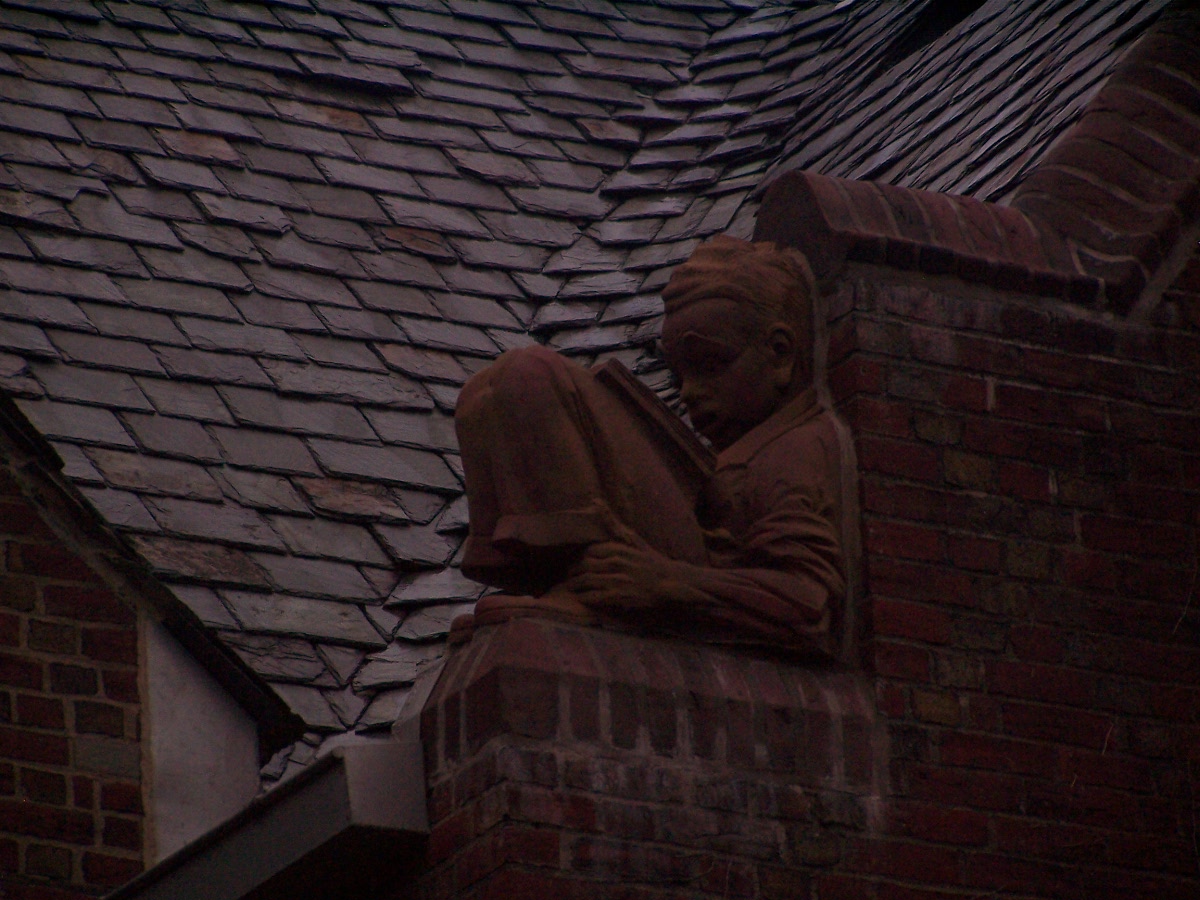
Although, one can never go wrong with the right ornamentation. I honestly thought that someone was sitting up there when I first glanced at it. No, I wasn’t drunk.

Psi Upsilon’s House was built in the same year. I believe this is also the fraternity that was known for having an indoor squash court, so Psi U. has a bit of a reputation of being wealthy. The chapter has also been booted off campus twice, the latest last month (the other case was in 1979). 

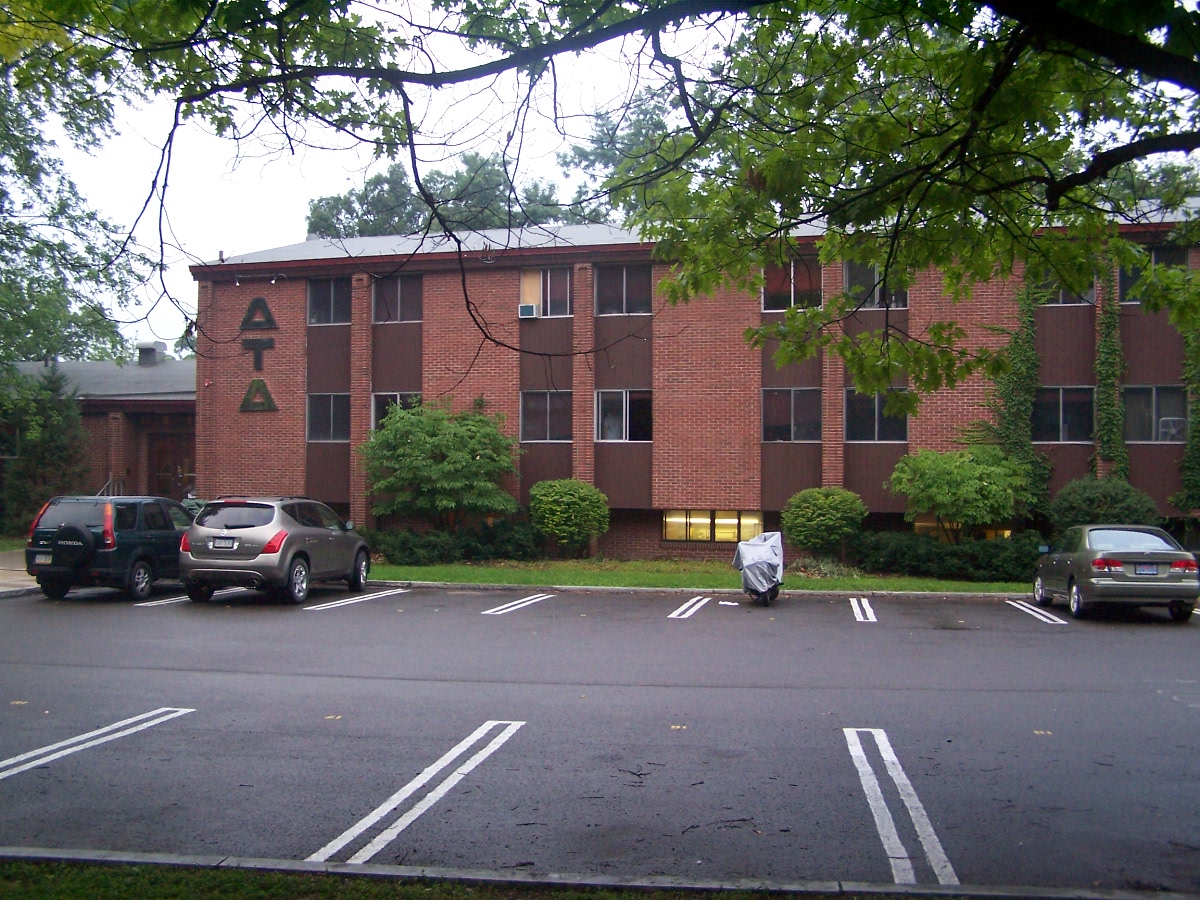
The house of Delta Tau Delta. The house was built in November 1965 [5], but they previously lived in a now-demolished house on Edgemoor Lane (the parking lot next to Theta is the site of their old house). The only reason I knew this house existed freshman year was that one of my roommates had a free magnet from DTD. Yeah, can’t say I care too much for that 60s archi-torture.

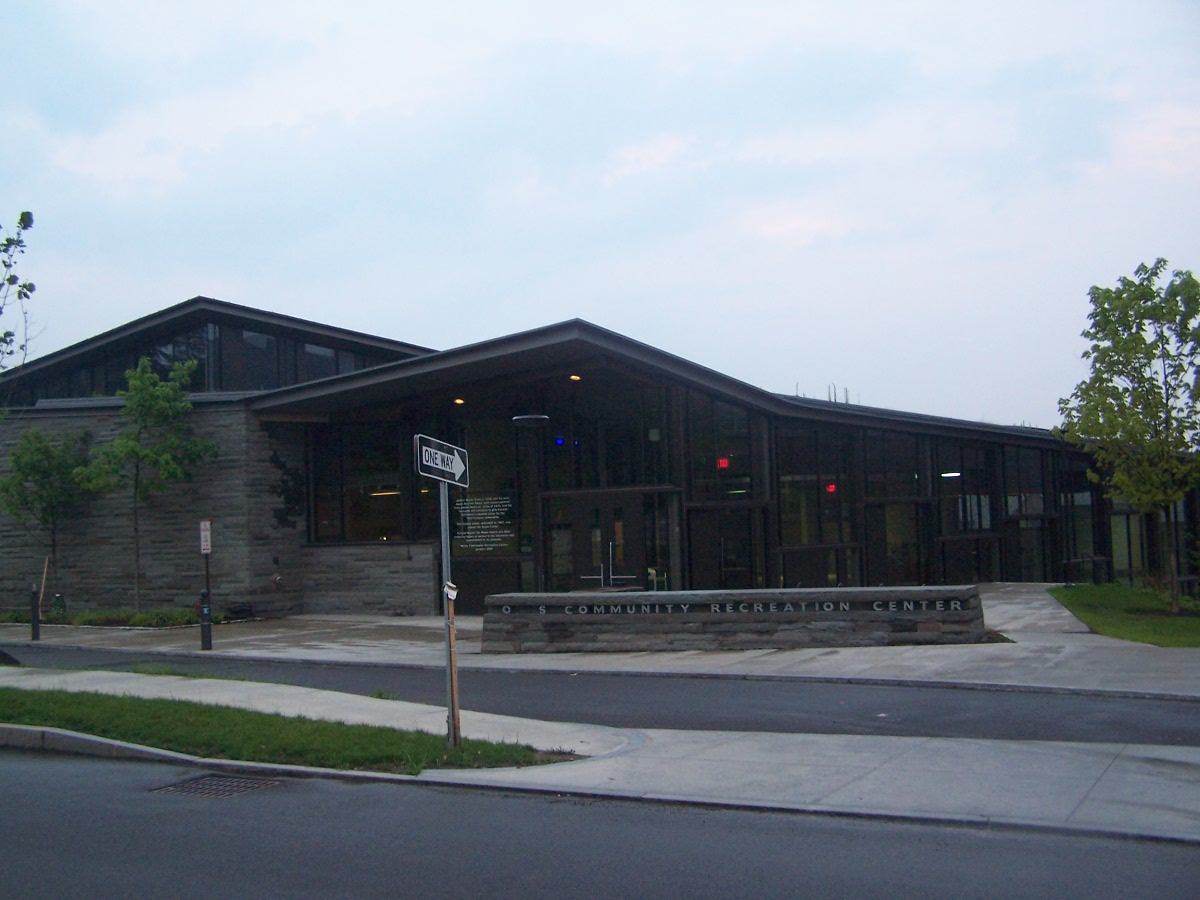
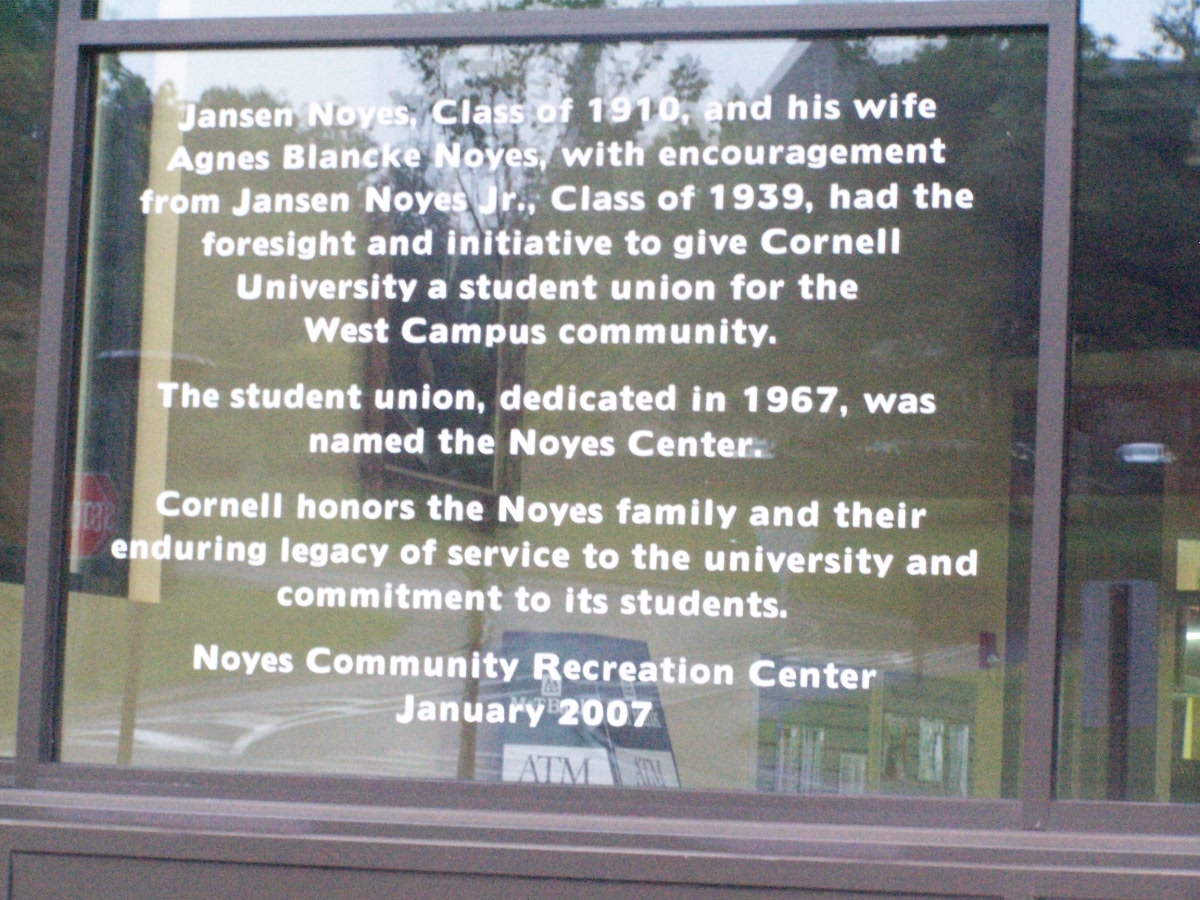
The new Noyes Center is about the only thing I like on the newly reconstructed West Campus. Completed in Janurary 2007, the building serves for community functions for West Campus (weight room, convenience store, etc.).

The original student union, a penal-style brutalist structure, was dedicated in 1967 to Jansen Noyes 1910. Before the legal drinking age was raised in 1986, it had a “pub” to serve students.

 (photo courtesy of http://andrew.loewer.name/musings/)


[1]http://www.fs.cornell.edu/fs/facinfo/fs_facilInfo.cfm?facil_cd=4722

[2]http://ecommons.library.cornell.edu/bitstream/1813/3536/23/021_18.pdf

[3]http://www.tellurideassociation.org/programs/university_students/cornell_branch/cb_general_information.html

[4]http://en.wikipedia.org/wiki/Telluride_Association

[5]http://www.fs.cornell.edu/fs/facinfo/fs_facilInfo.cfm?facil_cd=4776


Off Topic: The Keyword Bar

3 08 2008

So, one of the nice little extras included with WordPress is that they offer you a glance at what searches, googled or otherwise, brought up an entry from a blog. So, I find it a source of some amusement to see the search items people uses to find Ithacating in Cornell Heights.  

~Some of the entries are questions; for some unknown, and ultimately fruitless, reason, these are usually questions from pre-frosh concerning rooms:

“pictures doubles donlon”, “floor plan of clara dickson hall cornell”, “balch hall holes in walls”, etc.

I’m not sneaking into freshman dorms just to take photos, mind you. I’m a little sketchy, but not enough to do that.

~Also popular searches seem to be “cornell” and construction is some form. for example:

“cornell milstein hall”, “milstein hall cornell to be completed”, “gates hall cornell”, “corten architecture”, “cornell construction projects university”, “cornell does keeton have a dining hall”, etc.

To answer the last one, that is in fact a yes.

~Since I like to delve into the Greek System and it’s history, many of the searches are named of fraternities and sororities. But then there’s some eyebrow-raising ones:

“powerful, historical fraternities”, “dos and don’t of the alpha sigma phi”, “psi upsilon cornell kicked off campus” “homosexual ___ ___ ___”, etc…

The homosexual one seemed to be an attempt to find where there were gay men at certain Cornell fraternities. An interesting idea, but one that violates the privacy of others, and therefore not subject to this blog. I edited out the names out of respect.

~Lastly, and maybe the one that makes me squirm a little: “ithacating in cornell heights” seems to be coming up a fair amount. It’s odd to see people actually seeking this blog out.


Cornell Master Plan, Part 4 of 5

2 08 2008

Now that I’ve said my piece on the East Campus redevelopment, I’m going to move into the far east campus towards the vet school.

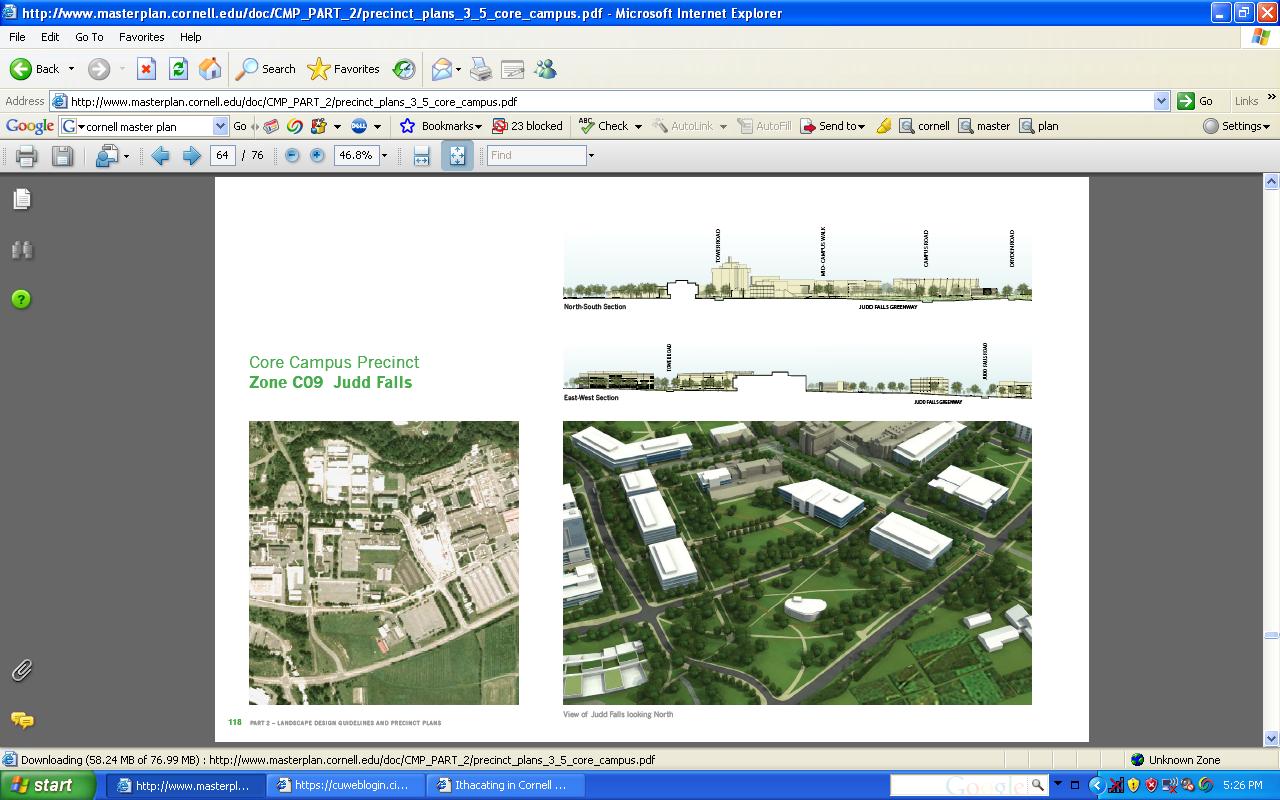
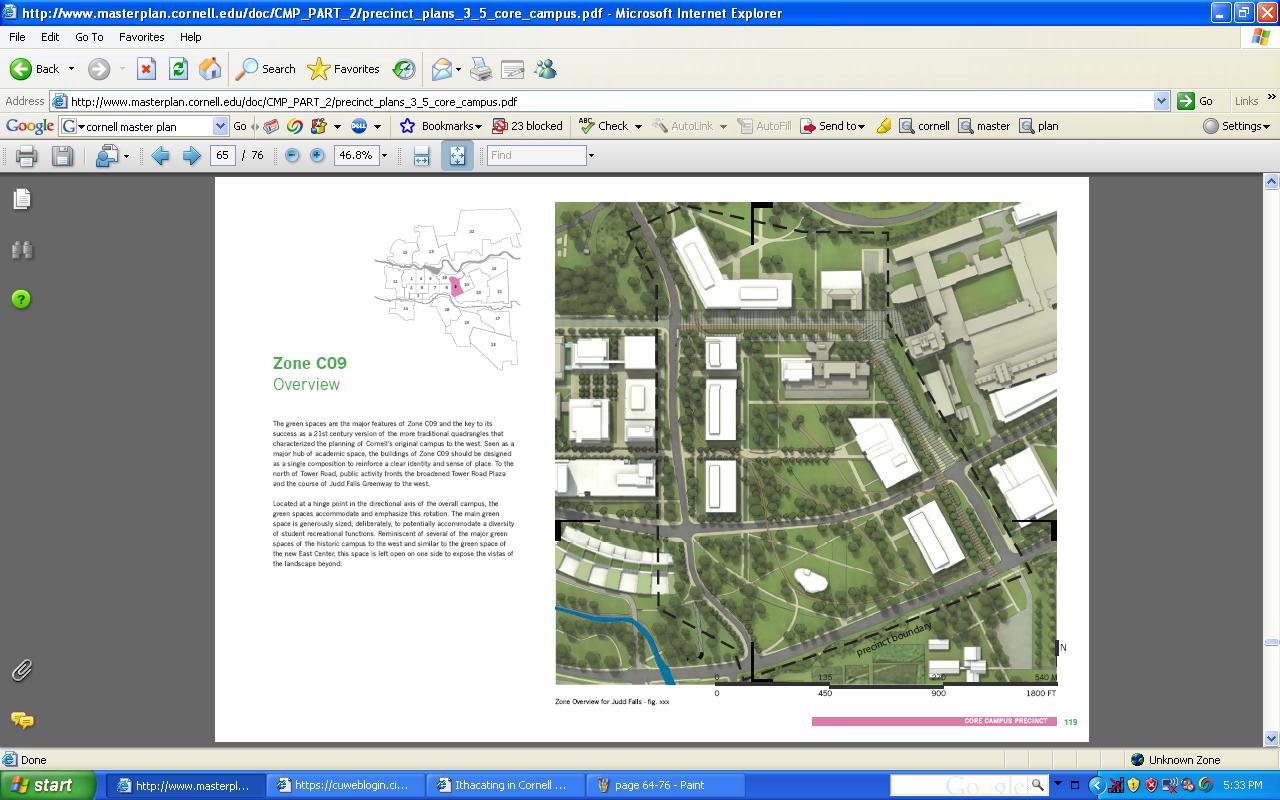
Precinct 9 is referred to in the master plan as the Judd Falls Precinct. For those of you who have never gone out towards the vet school for anything other than a prelim, Judd Falls is the name of the north-south road that passes through here, hence the name. The areas is home to some greenhouses, the U.S. Soils Lab (and its $51 million planned addition, to be completed in 2013 [1]), and Morrison Hall. The hideous piece of architecture known as the Boyce Thompson Institute (1978 ) also stands in this area.

Now, this area is almost wholly used for CALS and vet school activities. For the rest of us, it’s a relative dead zone; you’ll go to the Dairy Bar once in your time at Cornell just for the hell of it, decide its too far out from everything and not come back except for the rare event your exam was shoved in here because this was the only space available (you wanted the Statler Aud for your exam room, but you’ll be sweating it out in Morrison).

The plan to redevelop it is a praiseworthy one. Several buildings would be developed, and the area seems to be much more integrated into the rest of campus.

Because of the relative lack of use of this area, and its underdevelopment, the architects/design teams will have carte blanche to do as they wish with any future properties in this precinct. As a result, Morrison would see the wrecking ball; for some demonic reason, they decided to leave the wound on campus that is BTI. Seriously, it makes even Uris look attractive.

Photo obtained from facilities website

Photo obtained from facilities website

And this is the attractive side.

The buildings designed in the Judd Falls area should all maintain the same architectural style to enhance uniformity in the area. Considering its just a mish-mash of styles now, it would be interesting to see how this turns out. Lobby areas would be glassy and transparent. Total development space would be between 730,000 nd 1.33 million sq ft, and the buildings would average four floors (56 ft.) in height, give or take a floor. If they were to develop here, my personal hope would be that other academic uses are considered; moving some of the other departments out a little farther to fill up these buildings, perhaps. Or secondary space for the East Campus.

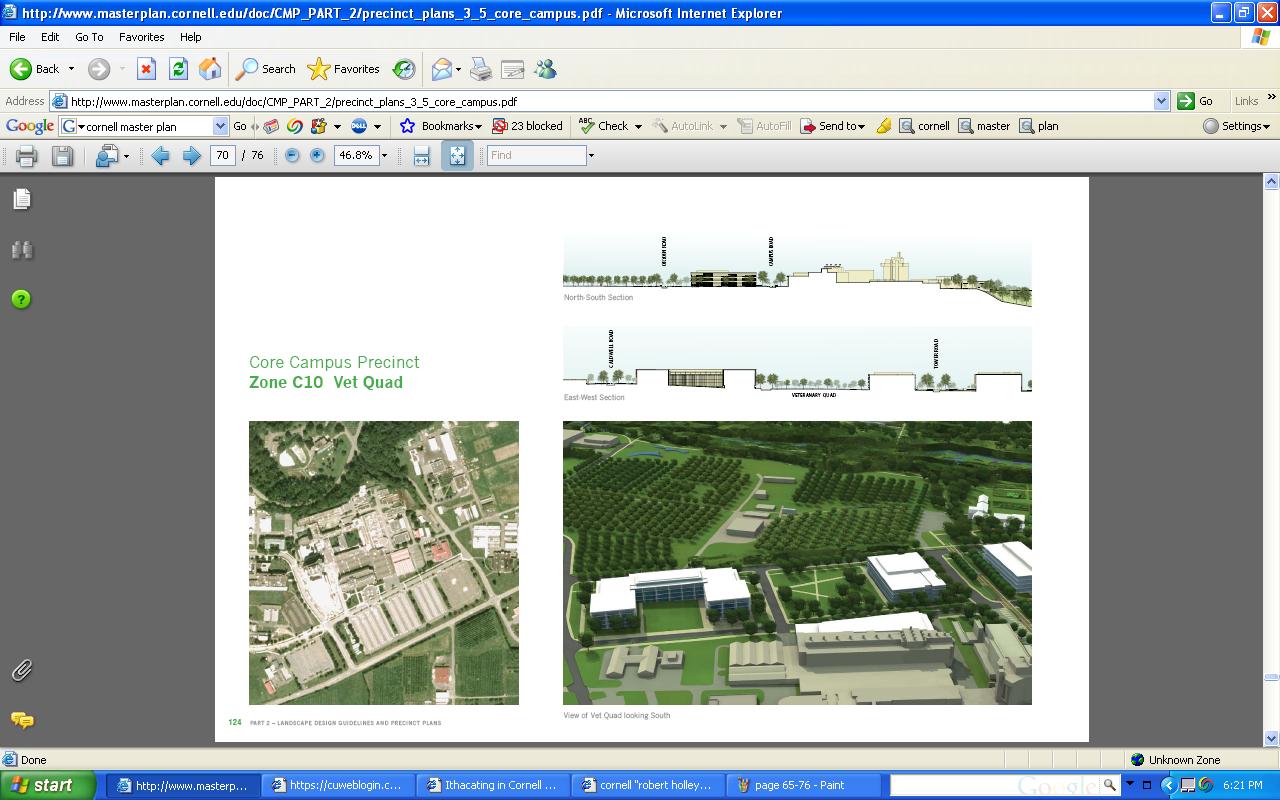
Precinct 10 is referred to as the Vet Quad. The new Vet Quad occupies an area dominated at the current time by parking lots; as the general rule seems to be in the Master Plan, parking lots should be hidden underground whenever possible, so this would never fit in if they didn’t do something with it.

A large building occupies the eastern end, possibly a centerpiece building to serve as an administrative building with some academic use mixed in. The building to the northeast is already under construction, an $80.5 million, 126,000 sq. ft Animal Diagnostic Hospital [2].

I like the plan here, for the most part. I feel it provides a dingified entryway for those coming into the university from the east, along Rt. 366. I’m not as fond of the random building they shoved in front of the animal hospital, because it strikes me as not being the best place to place another building and make the vet complex even more difficult to navigate than it already is. Things started to get confusing with Schurman Hall, and with the Vet Tower, Hospital and new wing, it’s just difficult to navigate within the Vet School (I for one became lost while trying to cut through to make it to a charity XC race on the other side of the vet school property). The total amount of space developed here would be between 400,000 and 700,000 sq. ft.

No surprise, but West Campus has no identified development parcels and the plan suggests treating developments here on a case-by-case basis. It also suggests restoring the cemetery, which I find humorous in a punny sort of way (restore the cemetery eh? Well, go to the morgue and pick up some shovels on the way over…). Yes, I’m aware that it actually means plantings and headstones.

Part 5 will cover Cornell’s New Urbanist development and North Campus. To be continued…

[1]http://forum.skyscraperpage.com/showthread.php?t=81652&page=47

[2]http://www.news.cornell.edu/stories/May08/AHDCGroundbreaking.kr.html