News Tidbits 3/6/12: From Orthodox Greek to Christian

7 03 2012

…and by Orthodox Greek, I mean your normal Cornell Greek house. But I enjoy a little bit of word play.

I had come across a piece in my Cornell feed about a Christian house at Cornell on The Knoll called “Chesterton House”. I thought it was unusual that I had never heard of it, but I wrote it off as being some low key residential organization, like many at Cornell are (for example, Telluride, the Co-Ops and a few of the professional fraternities). I noticed its location was 115 The Knoll, which failed to ring a bell – I thought it was a rowers’ house or home to some of the Big Red Band. I’ve been vaguely aware that there were five houses on the Knoll, so there was bound to be some non-Greek component.

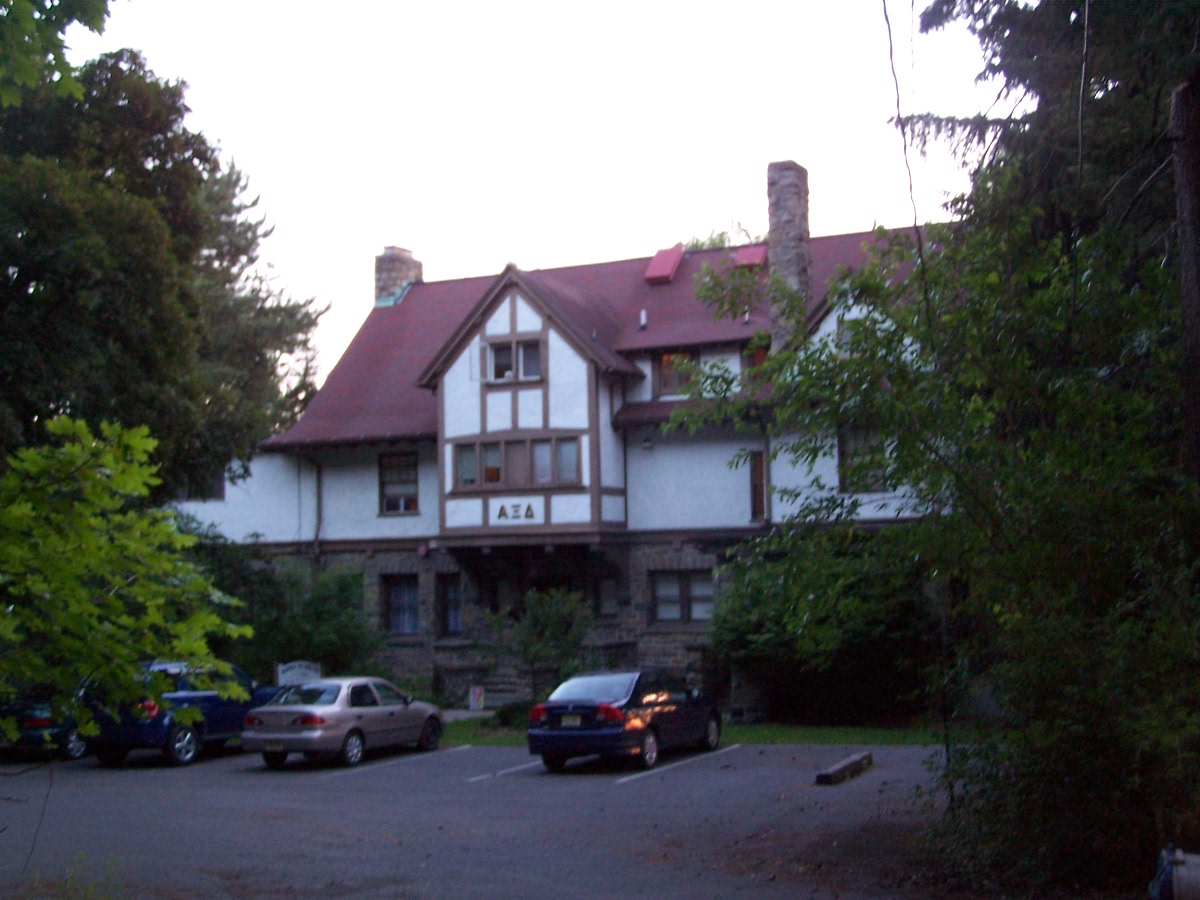
Then I glanced at their website – it’s Alpha Xi Delta’s old house. The one I profiled a couple years ago.

According to their website, the house is named for Gilbert Keith Chesterton, an early 20th century writer and “defender of the Christian faith”. The house holds 15 and is all-male, with the female equivalent being Sophia House at 315 Thurston, the house with a stucco finish and the extremely high-pitched tile roof. Apparently that house is being rented, so it is not under the organization’s possession. Now, the house on the Knoll is owned by Delta Phi Epsilon sorority, the last I checked (for the record, they’ve owned it since 1962). So I’m going to venture that this is a fairly recent endeavor, and a big step for an organization that was established only 12 years ago. Although a relatively young organization, it’s certainly garnering its share of alumni support.

I for one welcome them to establish themselves as one of the many opportunities afforded to students at Cornell. In my mind, I see it as something similar to the Jewish Living Center on West Campus. My one encouragement is that they adopt a policy similar to the Jewish Living Center and encourage freshmen to live with the other freshmen. I’ll willingly admit that as the brother of a fire-and-brimstone evangelist, I’ve been wary of religious groups in general (one tends to be that way when your sibling tells you you’re going to hell at every Thanksgiving dinner, for being a secular  Christian). But it’s also addressing a niche group at Cornell and offering more for some individual’s Cornell experience.


News Tidbits 9/8/10: The Kappa Sig Dorm

9 09 2010

Being interested in both the Greek System and in the university’s physical facilities, an article that details how Kappa Sigma’s house has been transformed into a small dorm is bound to catch my attention. Evwn better, it’s a very well-detailed article, and I found myself pleasantly surprised with the quality of work.

I guess being an alum just reminds me of how unaware of news I am now, as this was the first time I heard anything about this renovation and reopening. The reuse of the building as a dorm is actually the less surprising part. 112 Edgemoor and 14 South are former Greek houses that operate now as small dorms (Triangle, which closed in 1985, occupied 112 Edgemoor up to 1985 and Kappa Alpha lived in 14 South from 1957-1990). Cornell purchased the Kappa Sigma facility as part of the Cornell University Residential Plan of 1966. Reasonably, when Cornell owns a facility (as it does with at least 15 Greek houses, of which all but one (722 University Ave.) are fully occupied), it’s financially much more preferable to maintain the space as a working residential facility. This goes for private houses as well — the article mentions Pike is being rented out as a boarding house. This policy also has bearing on active chapters; boarding which is a popular option with residential fraternities with low membership numbers as a way to maintain the financial viability of a house. Interestingly enough, the university used Craigslist to advertise the spaces, and managed to fill all but one.

The article reports that the estimate for maintaining an empty fraternity house runs about $80,000 to $90,000 in a given year. The extremely general description for the expenditures is maitenence. More specifically, heating (pipes may burst in the winter if the facility isn’t adequately heated), insurance, security for a vacant facility, interior and exterior upkeep, and other utilities (which cost money to even have access to let alone use) come to mind.

I’m rather surprised at Cornell’s investment in renovating the facility. I dunno how much work had to be done, but if the Kappa Sigma alumni have already started the rechartering process, then it’s likely the university won’t be filling the facility for more than two years.  But, I don’t know much about the maitenence of university-owned Greek houses (my fraternal alma mater was privately owned by an alumni board). It just struck me as curious.


Far West Campus, the First Photo Tour

31 07 2008

The house of Phi Kappa Psi fraternity. As previously covered, the house was this dreadful brutalist monstrosity constructed in 1964 when the fraternity moved from 312 Thurston Avenue [1]. The house was extensively renovated in the second half of the 1990s, gaining a more postmodern appearance that has earned it the nickname “The Gables”. Prior to 312 Thurston (now demolished), Phi Kappa Psi lived in the Watermargin house. It was among the first fraternities chaptered at Cornell, established in 1868.

This house belongs to Kappa Alpha Theta sorority, currently the only sorority on West Campus. The house was built by Sigma Chi in the 19th century, who left it for Greystone Manor in 1923, and Theta Chi fraternity moved in. Bay the 1980s, Theta Chi had moved out of the house for a mansion on Ridgewood Road, and “Theta” moved in. Theta was dispelled from its national in 1965, but returned to campus in 1980 [1], and moved into this house during the 1980s.

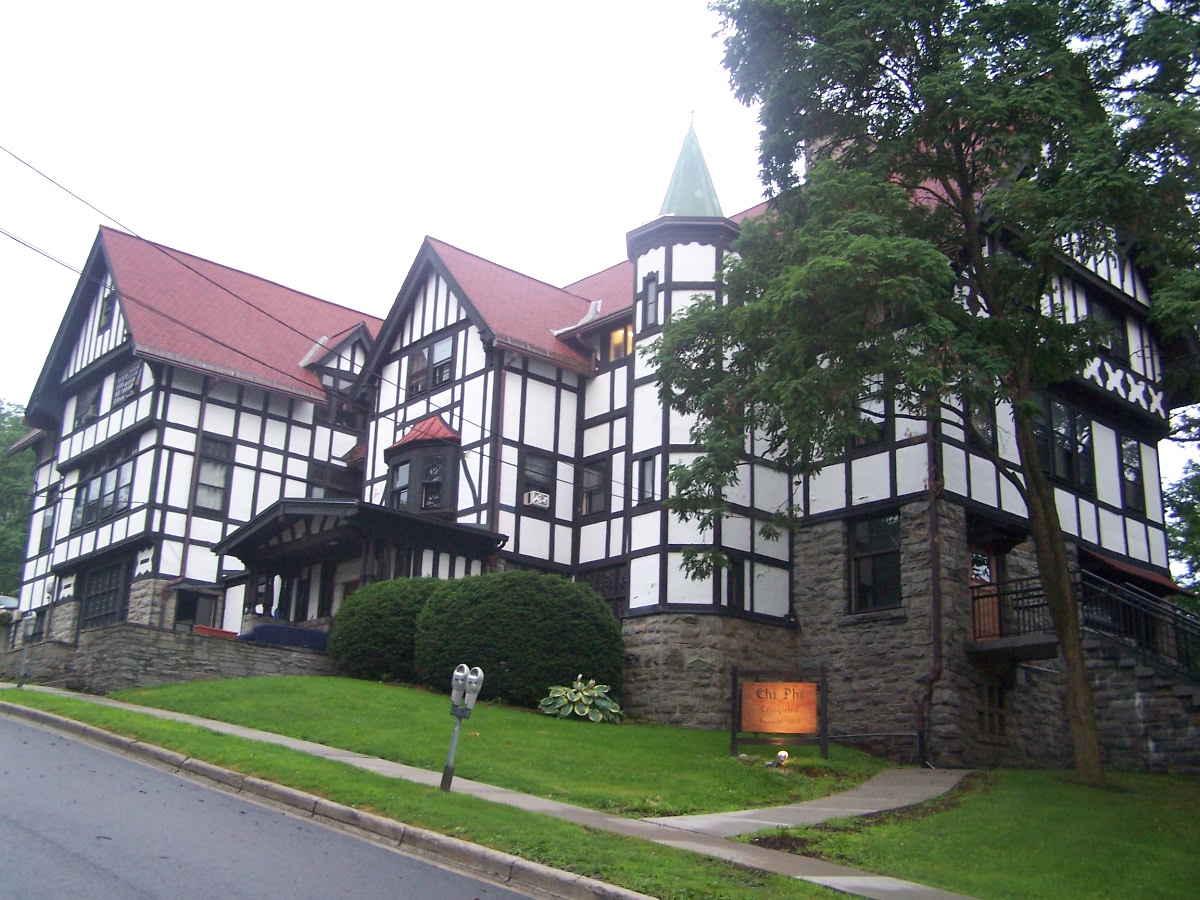
Speaking of fraternities founded early in Cornell’s history, Chi Phi and north campus fraternity Zeta Psi were both founded on opening day 10/7/1868. The two flipped a coin to see who would be declared the first fraternity at Cornell. Well, Chi Phi still uses its early start in rush promos, but Zeta Psi is officially the first fraternity (Zeta Psi and Chi Phi have a rivalry to this day). Craigielea, their tudor-esque house, is well over a century old (1890, partiall rebuilt after a 1903 fire), and has continuously been in their posession. The house was designed by W. H. Miller of Uris Libe fame [2].

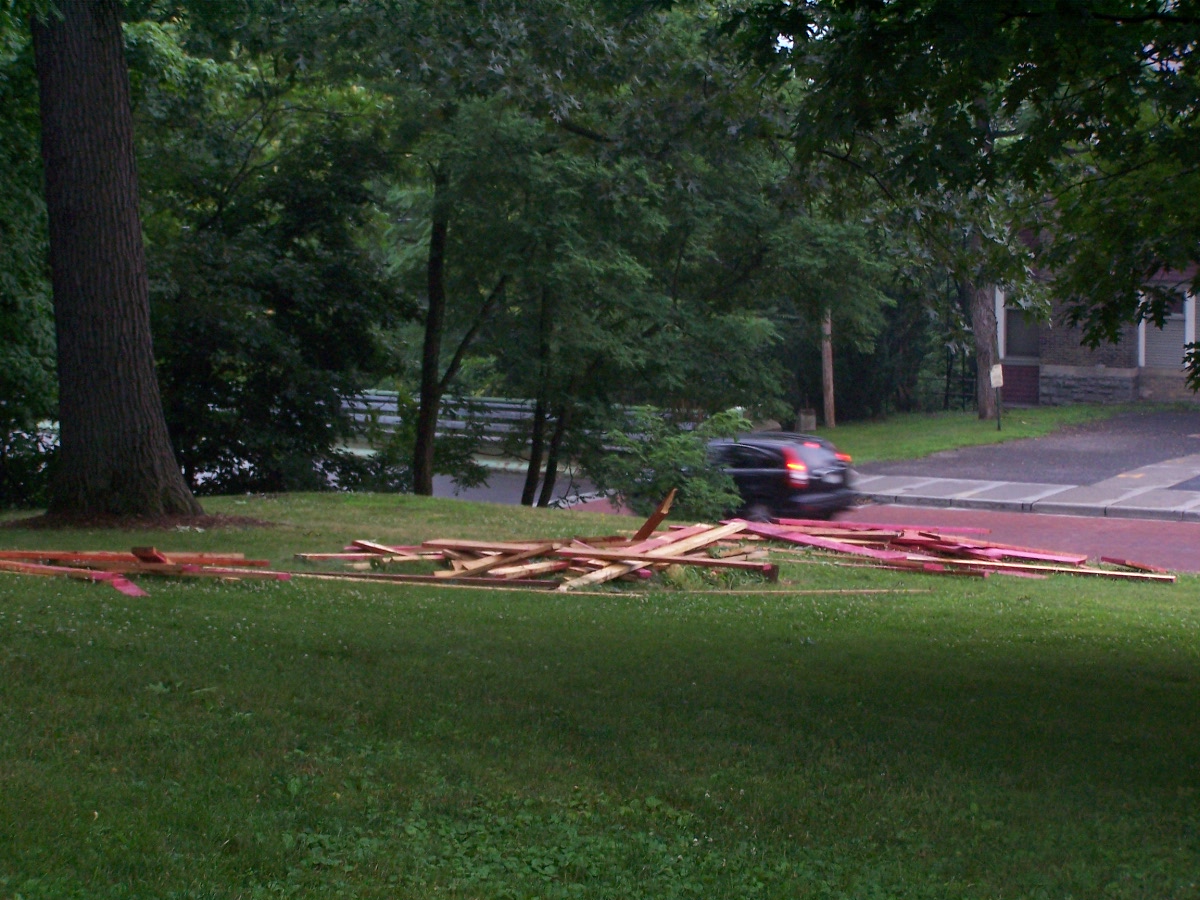
And this is what’s left of their (pledge?) project, bleachers that they built last April. Shame, really. I wonder if they did it or someone who hates Chi Phi did it.

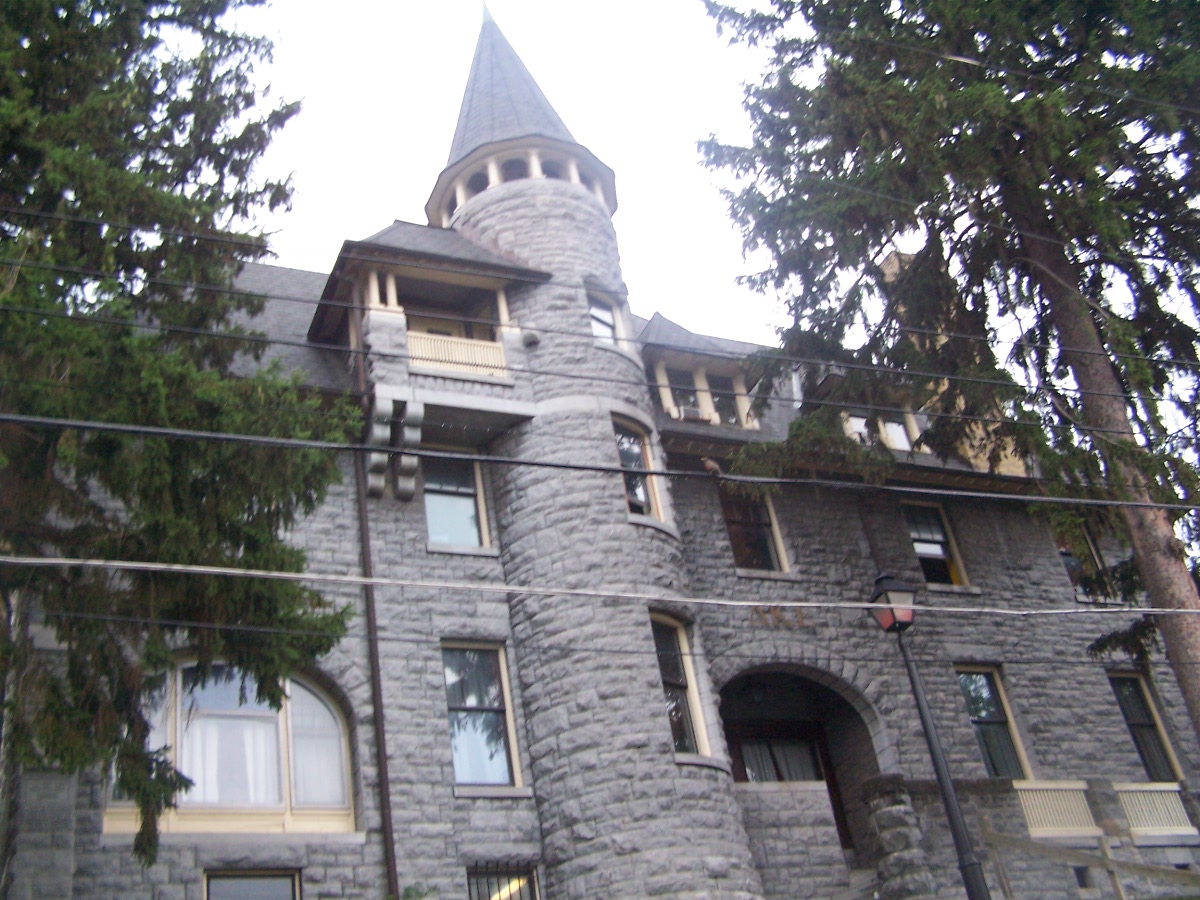
Delta Kappa Epsilon (DEKE) fraternity house is a Romaneqaue Revival House built in 1893 by W.H. Miller [3]. The house is known as Gray Stone Castle, and sits on the National Register of Historic Places [4]. As amazing as the house is, the chapter hasn’t been doing all too recently; rumor mill says numbers were so low in recent years that actives had two rooms each.

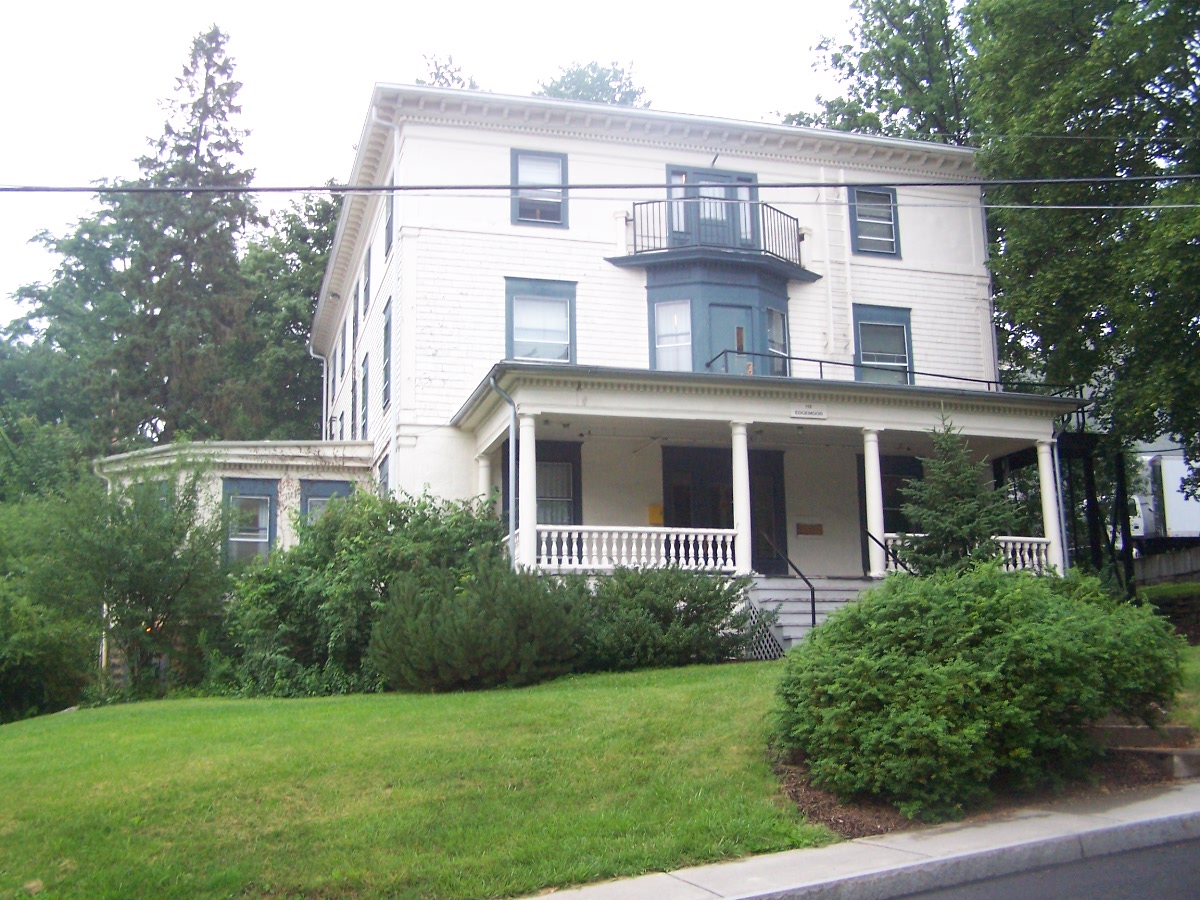
112 Edgemoor Lane, a small campus dorm designed for about 20-25 occupants. As I explained in a previous entry, this house has a lot of significance to me personally. So, the house, built in the Colonial Revival style, was built in 1881. The house was home to Sigma Phi Epsilon up into the 1960s, when Sig Ep moved out and Triangle fraternity moved in. Previously, Triangle called a house at the junction of Campus Road and Stewart Avenue home, but the ca. 1839 farm house was torn down to make room for DTD’s new house [5]. After Triangle was deactivated by its national in 1985, the house was made into part of Cornell’s campus dorms.

Lambda Chi Alpha’s house also sits on Edgemoor Lane. Originally known as ISWZA [5], Lambda Chi was chaptered in 1913, and the house was purchased around 1918 (it was built in 1899). Lambda Chi is known for having a feud with its neighbor Chi Phi. The house also maintains a gazebo on the edge of the gorge, which was built in recent years.

The house of Pi Kappa Alpha fraternity. The house was occupied by Beta Theta Pi, who occupied the house until they moved in 1906. About a decade later when Pi Kappa Alpha colonized on campus, the chapter moved into this house. My slight personal issue was that they had a steep driveway in the back, and some jackass in a Jetta would try to do 0-60 every time he went down the hill. The whining engine gets quite annoying after a while.

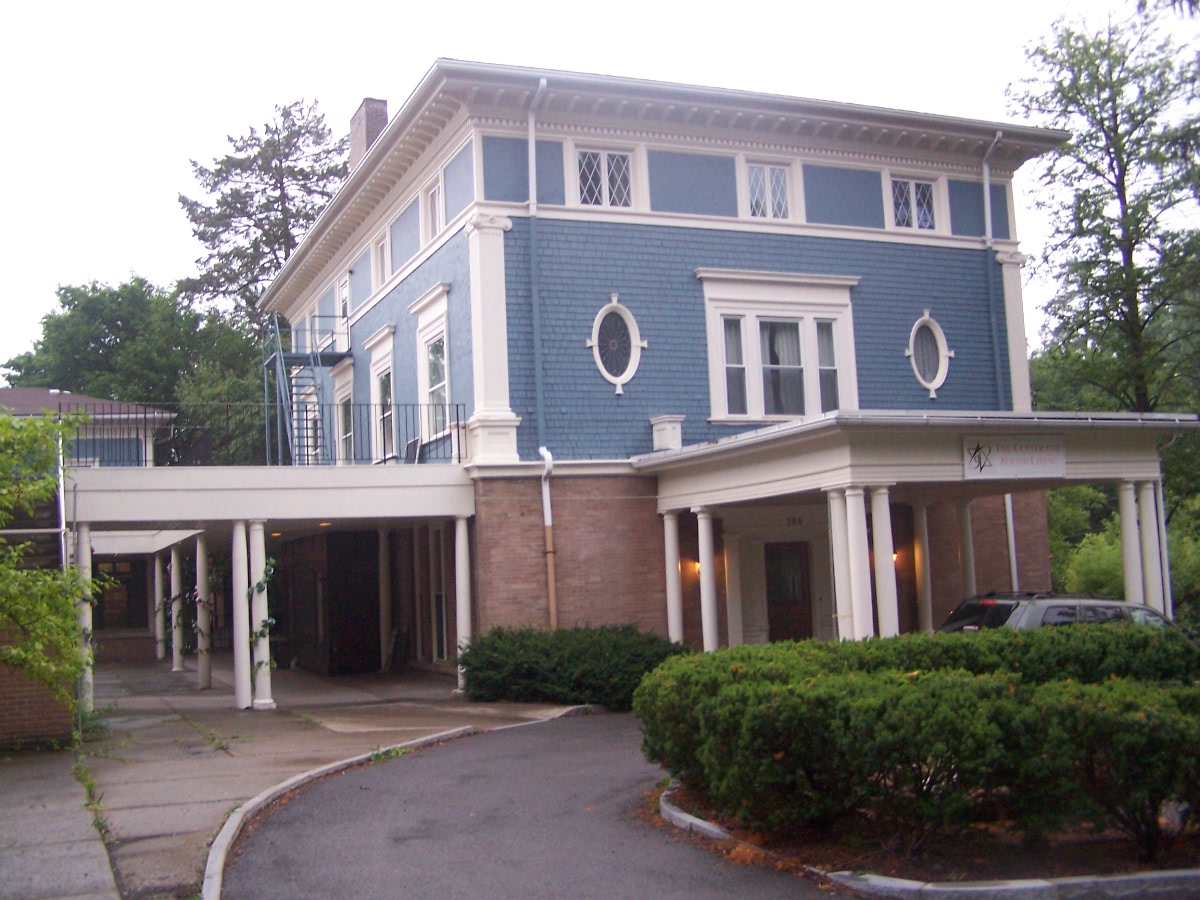
The Jewish Living Center. The house dates from the 1890s[6], with the kosher dining center to its south (not pictured) dating from the late 1980s. The center was known as Young Israel until the late 1990s. Judging from their website, the independent organization has had a contentious past with its relations to the University. The old fraternity house for Seal & Serpent (pre-1926) used to be next door, but it was demolished to make room for their parking lot.

[1]http://www.dos.cornell.edu/dos/greek/chapter_details.cfm?id=3278

[2]http://www.fs.cornell.edu/fs/facinfo/fs_facilInfo.cfm?facil_cd=4716

[3]http://www.fs.cornell.edu/fs/facinfo/fs_facilInfo.cfm?facil_cd=4719

[4]http://www.dke-cornell.org/public1.asp

[5]http://cdsun.library.cornell.edu/cgi-bin/cornell?a=d&d=CDS19650427.2.101.1#

[6]http://www.iswza.org/heritage

[7]http://www.cornellcjl.com/about/history.aspx