Stupid Frat Tricks II: How to Screw Up Recruitment

23 01 2010

So I checked my email today and received the following excerpt in an email from the IFC:

“I am writing to provide you all with an update of events that occurred last night that resulted in a fraternity having their university recognition temporarily suspended.  The suspension is in response to a recruitment event at the fraternity house that resulted in the hospitalization of three students due to alcohol poisoning.  These students were transported to the hospital by brothers of the fraternity late last night.  The Ithaca Police Department responded to the event as well and are currently investigating along with Cornell University Police.  This incident is being taken very seriously and will likely have repercussions that effect the entire system.  At this time the fraternity has been instructed to desist from all activities including recruitment.”

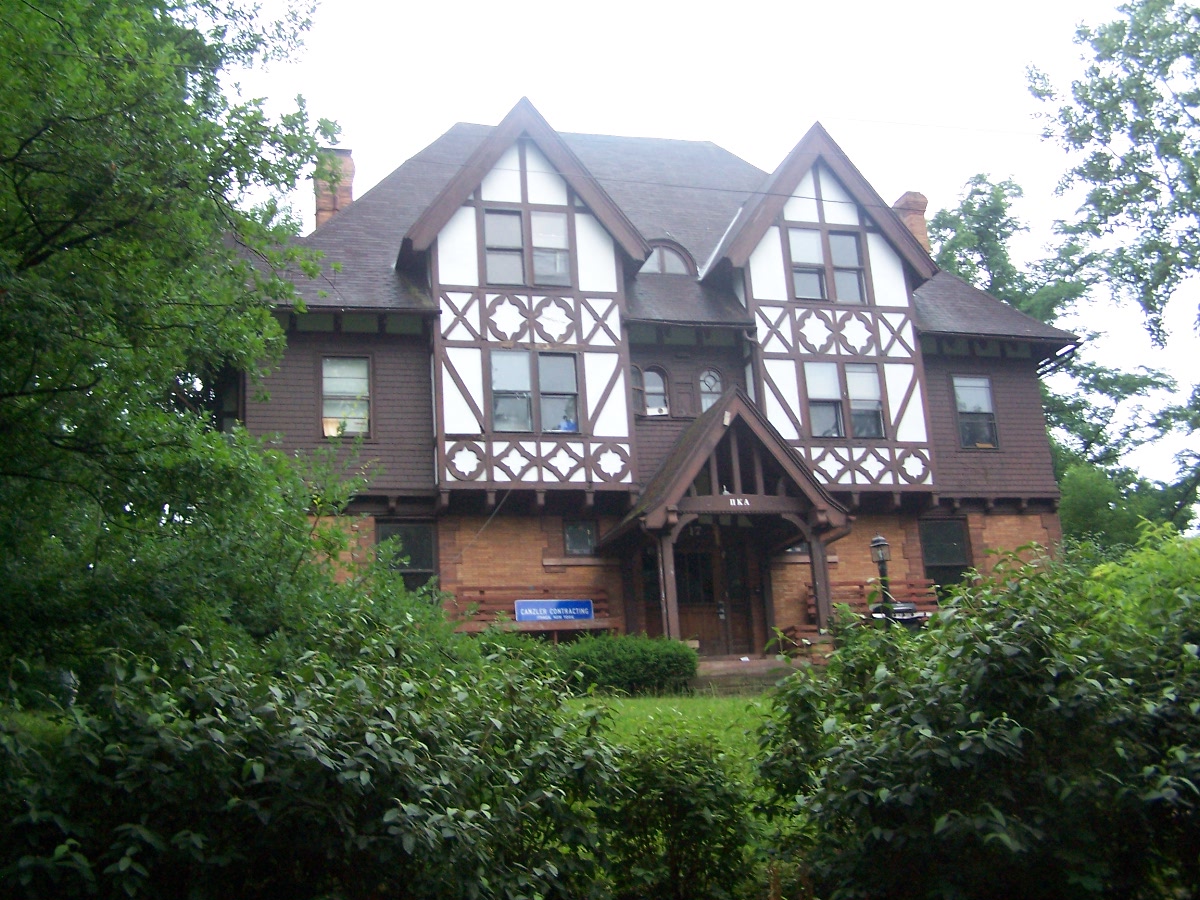
While the chapter at least got them medical attention, the act was stupid, dangerous and intolerable. To the point that the fraternity (rumor mill suggests Pi Kappa Alpha) has lost recognition and will not be allowed to have a pledge class. Well, considering the similar incident that happened with Sigma Pi a couple of years ago, I guess this is proof that history has a habit of repeating itself.


An Employee’s Revenge?

12 01 2010

Truth or fiction?

http://www.theithacajournal.com/article/20100111/NEWS01/1110344/Former-employee-accuses-Cornell-University-of-unfair-admissions-practices

A former Cornell University employee threatened to reveal unfair admissions practices in an attempt to settle a personal lawsuit regarding overtime, Cornell officials allege.

Eldred Harris, a former reunion campaign officer in the Alumni Affairs and Development Office, is suing the university for $30,000 in overtime fees. Cornell officials allege in court documents that Harris said he had information about a supposed university admissions practice in which mediocre students were offered placement in return for large donations, and threatened in March 2008 to reveal it if a settlement was not reached.

Harris’ lawyer, Edward Kopko, said the matter of Cornell’s admissions practices is not related to the overtime issue and the university is using it to obfuscate the matter.

“We are only concerned with (the Fair Labor Standards Law) and labor law,” Kopko said. “The case has nothing to do with the distractions that were raised by Cornell pertaining to admissions. I assume Cornell is doing it to undermine Mr. Harris, but it actually has nothing to do with this case.”

Associate Vice President for Alumni Affairs and Development Richard Banks said in an affidavit in the case that Harris’ then-lawyer, Seth Peacock, wrote to Cornell Vice President for Human Resources Mary Opperman on March 12, 2008, outlining Harris’ grievances, which included being terminated for persistently pushing the AA&D office to address what he termed “neglect and under-investment (of) Cornell’s diverse constituents,” and giving a deadline for reaching a settlement regarding the overtime fees.

“To highlight one of many of Mr. Harris’s significant concerns, I have included three disturbing e-mails with this letter,” Banks quoted Peacock’s letter as saying. “They illustrate quite clearly that for majority donors, there is a threshold gift level that impacts admission decisions despite all of the lofty protestations to the contrary. The first sets forth the price of admission to Cornell; the second, if the price is paid even a mediocre student will be admitted. Both students were admitted to Cornell.

A third e-mail is from an African-American alumnus who was complaining of his daughter’s rejection from Cornell despite what he regarded as her “clear qualifications and his giving potential.” According to Banks’ affidavit, Harris asserted in Peacock’s letter to Opperman that this alumnus is still not tracked by the AA&D office. Harris’ complaint in Tompkins County Supreme Court includes several e-mails between him and his supervisors at Cornell, but does not include the e-mails mentioned in the quoted letter to Opperman.

Quantcast

Peacock’s letter, as quoted by Banks, goes on to say that the issue of equitable access to higher education is one to which Harris is “highly sensitive” as an African-American Cornell alumnus, and that Harris is “prepared to forward all one hundred plus messages to … the New York Attorney General’s Office, numerous media outlets and most importantly he is ready to share these messages with Cornell’s twenty-five thousand or so Asian, African-American, and Latino alumni of which I (Peacock) am one.”

University Counsel Wendy Tarlow responded to Peacock March 13, 2008: “Please be advised that the use of confidential University documents by your client violates the confidentiality agreement that he signed while employed at Cornell. Your threat to use these documents also appears to constitute extortion under New York law. Moreover, your own actions in writing the letter dated March 12, 2008 (to Mary Opperman) appear to violate the New York Code of Professional Responsibility.”

Tarlow gave a deadline for the documents to be returned to Cornell by the next day.

Banks and Harris did not return calls regarding the case. A spokesman for Cornell’s press relations office said she could not comment on the case since it is still in litigation, and that she was not aware of practices within Alumni Affairs and Development. Harris is a member of the Ithaca City School District Board of Education.

Kopko said the matter of Cornell’s admissions process and Harris’ exchange with the university regarding the e-mails have nothing to do with the case Harris has brought against Cornell and are an intentional distraction Cornell has “injected into the case.”

“The issue in the case is simply overtime,” Kopko said. “It is a (Fair Labor Standards Act) overtime and labor claim. … When you read the documentary evidence, they are trying to distract the court from the fact that this is a labor law issue by referring to the circumstances surrounding (Harris’) separation from Cornell.”

Cornell filed a motion to dismiss the case Dec. 18.

***

Well, if there’s any truth to the allegations, then I guess Sandy Weill’s grandkids will have no problem getting into Cornell.


However, No One Said Anything About October

14 10 2009

100_1699

So, yeah, it’s been cold. Unpleasantly cold. Coldest October in years cold. But what makes me really uncomfortable is the thought of snow is October. While snow in October usually has no impact on the upcoming winter, it still serves as a psychological bitchslap to most of the students, and to many of the local who are accustomed to waiting until November to see the first notable snowfalls.

Then we have this message from the Ithaca Journal:

Storm coming to Twin Tiers could bring snow

There’s a couple of very scary things associated with that message. For one, we still have leaves on the trees. Trees don’t stand up very well if they have both a fair amount of snow and foliage on them at the same time. There was a very nasty snowstorm that hit Buffalo a couple of years back that brought the city to its knees in October because it dumped  two feet of snow, and all the trees basically snapped under the weight. As I recall, some places were without power for two weeks, and the storm damages were estimated between $150 and $200 million.

Fear factor aside, the possibility of snow in Ithaca in October is a lot more uncommon than it used to be. Climatologically speaking, Ithaca averages about .4 inches of snow in October. In reality, we’ve only received measurable snow once this decade, and that was .3 inches on October 30, 2008. Prior to that, we have to go back to October 31, 1993, which received 3.7 inches, and .1 inches on October 29, 1990. That’s it for the past twenty years (to be fair, October 22-23, 1988 received 6.5 inches of snow). I took the time to check the following winter after 1993 and 1988; 1989 was about 3 degrees above normal; 1994 was one of the coldest winters reported in several decades. Yeah, I still have fingers crossed for El Niño.

Point is, we’ve rarely seen October snows. Especially before the 20th. You have to go back to 1974 to find a pre October 20th snowfall day on file.

So, Ithaca is in a valley, which makes it a kinda crappy place for snowfall because they tend to be slightly warmer, and it doesn’t experience an upslope effect like Cornell’s campus does. Unfortunately, the Ithaca weather station used by the NRCC is on Game Farm Road, which is off of Route 366 as you’re heading out towards Dryden.It’s about 1000 ft. in elevation, and the snow line so far is predicted to be about 2000 ft, and that is subject to change.

I’m really not interested in seeing snow this month. But it’s not like any of us have a say in what the weather does.

EDIT: So Ithaca recorded 1.6 inches, setting a record for the earliest snow over 1” in over 120 years of data. Other parts of the county received as much as 3”. Northern PA recorded as much as 8”, and widespread power outages and minor damages were reported.


News Tidbits 9/19/09: Stocking Hall’s Long Awaited Reconstruction is Approved — Dairy Plant to Shut Down

19 09 2009

The Dairy Bar as we know it will soon be no more. According to Cornell, the new Stocking Hall will start construction next September. The $105 million project will last approximately four years (meaning that no current student will see it through to its full fruition while an undergrad…probably not even the kids in the class of 2014). The project calls for tearing down the east portion of the building and building a new glass-fronted modernist four-story structure. The older portion of the building (the part that actually looks attractive) will be refurbished. In the meanwhile, the Dairy Bar will temporarily be moved to Trillium while construction is in progress.

The project was originally slated to begin this year, but was pushed back amid concerns with state budget cuts (i.e. lass money allocated to CALS programs) and adequate funding for the project.

MINOR UPDATE: I think this is the first time I ever heard the project come up in a fraternity meeting, but it was announced at the end of the meeting with the same tone one would expect to hear that Christmas has been cancelled until 2014. I have underestimated people’s love of the Dairy Bar. I also did not account for the fact that Cornell is laying off all Cornell Dairy employees.

***

http://www.news.cornell.edu/stories/Sept09/StockingHall.html

CALS plans major renovation of Stocking Hall

With $105 million from the State University Construction Fund, Cornell’s College of Agriculture and Life Sciences (CALS) will build a new four-story building to replace Stocking Hall’s “runway” and refurbish Stocking Hall, starting September 2010, to give the Department of Food Science and the landmark Cornell Dairy Bar state-of-the art homes.

The innovative design — including a glass-fronted Dairy Bar and dairy plant and ground-floor laboratories for wine production and sensory studies of food — will invite the public to learn more about food and dairy processing. From an observational balcony above the Dairy Plant, visitors will have a bird’s-eye view as Cornell ice cream, milk, pudding and yogurt move from processing to pasteurization to packaging.

The four-year project calls for demolishing and rebuilding the middle “runway” portion of Stocking Hall, the Dairy Bar and dairy plant along Tower Road with the new four-story building; the Stocking Hall “tower” on Wing Drive will be refurbished. The more modern Food Science Lab, at Tower and Judd Falls roads, will operate as a food processing research facility while reconstruction occurs.

Stocking Hall, which dates to 1923, will be outfitted with new laboratories for the study of connections between foods and human health, food safety, and food and biomaterial processing. Other highlights include a campus teaching winery and crush pad for viticulture and enology students, and modern classrooms and networked meeting spaces.

“The Stocking Hall renovation project presents a timely opportunity for Cornell’s nationally top-ranked food science program to provide the campus and Ithaca communities with a better understanding of how food moves from the field to the marketplace,” said Kathryn Boor, food science chair. “Citizens around the globe are increasingly interested in where their food comes from and how it is handled, processed and marketed.”

Boor said the overhaul would improve research and extension directed at dairy and food processors, and expand training for inspectors from the New York Department of Agriculture and Markets, as well as state-authorized certified milk inspectors. A modernized facility will also allow CALS to compete for more food safety, quality and processing research funds from federal and state agencies and private companies.

“Because our program conducts research and outreach aimed at improving dairy product quality and safety and wine quality, this renovation project will directly contribute to improving the viability of the New York dairy and wine industries, which are typified by family-owned and -operated businesses,” Boor said.

The Dairy Plant’s ice cream freezer, outdated tanks and pasteurization equipment will be replaced with computer-controlled machinery capable of transmitting data directly from the floor of the plant to the Web for access by employees, researchers and students.

“The redesign of Stocking Hall will make our day-to-day operations more efficient, allowing us more time and resources to focus on our core mission of supporting teaching, research and extension,” said Jason Huck, general manager of the Dairy Plant.

Next summer, the Cornell Dairy Bar will move to a temporary scooping station in Kennedy Hall’s Trillium Express to make way for construction. Once the first phase of construction is complete in 2013, the iconic Dairy Bar will reopen in Stocking Hall with a revived look and an expanded menu and seating.

Each year, the dairy processes 1.5 million pounds of raw milk from cows at the Cornell Dairy Teaching and Research Center in Harford, N.Y. It produces 140,000 gallons of milk, 20,000 gallons of ice cream, and 4,000 gallons of yogurt and pudding annually. About 80 percent of these products are featured at Cornell Dining locations, while the remainder is distributed to Cornell group houses and departments.

***

Dear Food Science Faculty, Staff and Students,

With the Stocking Hall renovation project entering the last third of the design phase, and with project time lines becoming firm, we are beginning to prepare for ground-breaking for our new building, now less than 12 months away.

The fact is that the current Dairy Bar and Dairy Plant stand in the direct path of a wrecking ball.  In September 2010, the building in which these operations reside will be razed to make room for a new, state-of-the-art Food Science building. The finished renovation project will reveal a new dairy research and manufacturing facility as well as a new food service facility that will serve Cornell Dairy ice cream and more.
Together with CALS senior leadership, the Food Science Department has developed plans for continuing our core teaching, research and outreach programs during the renovation period.  As you know, the Dairy Operations is an integral component of our Food Science program, contributing to undergraduate and graduate instruction in food science; to basic and applied dairy foods research; to public service through extension programs; and as a designated training facility for New York State Certified Milk Inspectors, the New York State Department of Agriculture and Market Inspectors, and the dairy industry.  In addition, the Cornell Dairy supports many other academic programs (including many College of Engineering courses) and serves as an icon to much of the Cornell community, old and new, in Ithaca and beyond.

Due to budgetary constraints, it is not feasible nor practical to construct an interim dairy manufacturing plant or Dairy Bar during the renovation period. Therefore, we are facing at least 3-4 years from the time when demolition starts until we have a new dairy plant and food service operation up and running.  Specifically, as of June 18th, 2010, the Dairy Bar in Stocking Hall will close its doors and the Dairy Plant in Stocking Hall will eliminate its manufacturing operations.  The staff positions associated with these operations will also end, and those holding these positions will be laid off.

Although it is more than 9 months until the Dairy Bar and Dairy Plant activities will be directly affected by the renovation project, it is our intent to openly communicate the future direction of the Dairy Operations to our entire team and to the community. Our goal is to provide our staff with appropriate resources and support. The Department and CALS Human Resources will assist our staff through this difficult transition.

As our department embarks on a challenging period of change and uncertainty in the face of hope for a better future, our vision is to provide long-term sustainability to our dairy foods research and outreach program within CALS.  We believe that we’re moving in that direction, but it will come at considerable cost to our team.  We appreciate your assistance in helping us to support our staff and our program through this challenging and emotionally difficult period.
Please do not hesitate to let me, Matt Stratton or Jason Huck know if you have any questions about our situation.

Sincerely,

~~~


News Tibits 9/18/09: New Six-Story Apt. Building Proposed

18 09 2009
  Proposed Building on Left, DeWitt Mall on Right
 

ecproject ithaca

100_1607

The site is on the corner of Seneca and Cayuga Streets, currently the 1960s era Women’s Community Building. The six-story building is to hold 50 units of affordable apartment housing. As proposed, the building would require a zoning appeal, but local officials seem receptive to the project.

http://www.theithacajournal.com/article/20090917/NEWS01/909170385&referrer=FRONTPAGECAROUSEL

ITHACA — Ithaca Neighborhood Housing Services has proposed a plan to demolish the Women’s Community Building and replace it with a six-story, affordable housing apartment complex, with community meeting space on the bottom floor.

Plans were first presented to Common Council’s planning committee Wednesday night.

The move would require the city to change zoning on the lot. Current zoning allows four stories and requires one off-street parking space per unit.

INHS is asking that the lot be changed to match the zoning on the other three corners — the Clinton House, the Masonic Temple and the DeWitt Mall — which allows six stories and requires no off-street parking.

Planning committee members were supportive of the change, saying it would help the city meet goals for downtown density and affordable housing. They also urged INHS to maintain the community meeting space currently provided in the Women’s Community Building.

INHS Executive Director Paul Mazzarella said it’s certainly the organization’s intention to keep the space, but that financing and other issues may make it difficult.

One of the reasons the property’s current owner, the City Federation of Women’s Organizations of Ithaca, has agreed to sell is because they make so little money renting the meeting space, he said.

“They’re empty probably 90 percent of the time,” he said. “Quite honestly, it costs money to build and maintain that space.”

If built as proposed, the property would come back onto the tax rolls, based on a state formula for affordable housing complexes, Mazzarella said. The entire property is currently tax exempt.

As proposed, INHS would build 25 one-bedroom and 25 two-bedroom units, with rents ranging from $300 to $1,000 per month.

City Planning Director JoAnn Cornish said the zoning change “makes sense” and Alderman Dan Cogan, D-5th, said the proposed project is “ideal.”

Though parking wouldn’t be required under the proposed zoning, Mazzarella said INHS plans to build 15 spaces on site.

Planning Committee Chairwoman Jennifer Dotson, I-1st, supported the zoning change and encouraged INHS to create green space rather than on-site parking.

To meet state funding deadlines, Common Council would have to approve the zoning change, and the city Planning Board would have to grant site plan approval, before next February, Mazzarella said.

The planning committee agreed to circulate a memo with more information on the project, and address the issue again next month.


News Tidbits 9/14: Old People and Hippies Like Ithaca

15 09 2009
100_2009

Conifer Village

Two little planning tidbits of note. One is that a company that specializes in senior citizen housing complexs is scouting sites in the town of Ithaca near the Cayuga Medical Center [1]. The company is currently beginning work on a $10 million, 120-unit complex in Horseheads, which is effectively suburban Elmira (yes, people actually live in Elmira, and it’s a lot like Ithaca, just without the prosperity and colleges). The parcels the company is checking out aren’t too far from one senior citizens’ facility already located on West Hill, a 36-bed facility known as Alterra [2]. None of the company’s facilities are subsidized, so it’s unlikely to be different if an Ithaca location was constructed. This comes on the heels of the Conifer Village senior housing, which was also built on West Hill (72 units, completed last year). In the same vein, McGraw House in downtown Ithaca is planning a 25-50 unit expansion, and is currently in the development stages [3].

So yeah. Old people like Ithaca. I think it’s part of a trend of retirees moving to college towns to enjoy a “higher quality of life” and increased educational and cultural venues that are often associated with such communities. The New York Times did a story on it not too long ago [4].

In other news, Ecovillage is planning its third community, TREE. This goes with the previous two facilities in that area, SONG and FROG. The 30-unit addition, with a new “education facility”, has a tentative construction start in 2010, and for completion in early 2011 [5]. Ecovillage currently has 60 units at its West Hill location; White Hawk, another ecovillage, has plans for 30 total units over the next few years at its Danby location (for the record, Danby is a town just south of Ithaca). Hippies like Ithaca too. But, I s’pose that’s not really news.

[1] http://www.theithacajournal.com/article/20090914/NEWS01/909140356/New+senior-housing+center+may+be+coming+to+Ithaca

[2] http://www.health.state.ny.us/facilities/adult_care/county/tompkins.htm

[3] http://www.mcgrawhouse.org/expansion-project/

[4] http://www.nytimes.com/ref/realestate/greathomes/GH-Retire.html

[5]http://tree.ecovillageithaca.org/


News Tidbits 8/13/09: Ithaca’s Economy Gets a Dose of Reality

14 08 2009

Image property of Welch Construction Inc.

Well, the simplest way to put it is that the sh*t has hit the proverbial fan. Emerson Power Transmission, the company that owns the factory on South Hill, will be shutting its doors next year, putting 228 people out of work [1]. Not to mention the 200+ people they have laid off in the past year.

Name your reason. Energy costs. Cheaper alternatives from overseas factories. Losing a major customer as Magna Int’l shuts down its massive factory in Syracuse. An anti-business local political climate. Oppressive taxes due to an incompetent state government (which I agree with, but I digress). In the end, the jobs are still gone.

Yet, Ithaca continues to survive. A major setback for sure. But Ithaca has been through economic horror stories before.  Consider Smith-Corona.

Smith-Corona was once a large company based out of Cortland, which is 25 miles northeast of Ithaca. Founded in Syracuse in the 1880s, the once employed as many as 10,000 people [2].  Groton, a town just north of Ithaca, was home to a large Smith-Corona factory. They manufactured calculators and appliances, but their speciality was typewriters.

If you’re reading this blog entry right now, I think you can guess where this is going.

Well, with the rise of computers and pocket calculators, their business went belly up. They started to shut down their lines in the early 1980s, with the factory in Groton shutting down in 1983, with the loss of 400 jobs. At the time, 2,800 people were still employed in the factories in Cortland [3]. In 1992, they decided to eliminate 900 jobs from the area, moving them to Mexico [4]. That ended up being a waste too, as the company shut down the Mexican factories five years later. The company originally shifted the Groton jobs to Signapore, to a factory they owned there that had 1500 employees. That shut down a few years later. Today, there’s little left of Smith Corona. Maybe 100-150 employees at a “headquarters” in Cortland, working in consumer electronics services.

Well, life didn’t end in 1983 or 1992. The local communities have continued to survive, perhaps even reinvent themselves to some extent. The loss of jobs always hurts the community. But people get by. Some might move, embittered by the economic loss; others might find other gainful pursuits. Companies such as Advion and Incodema have grown and picked up some of the slack. The wine industry here has grown by leaps and bounds in the past twenty-five years. The area continues to evolve, although it may not always to everyone’s liking.

I’m not trying to diminish the importance of the loss of a major manufacturer. However, I’m trying to make a point that as long as there’s local business talent and people who are willing to take a risk and start new business ventures, then this area will continue to survive, perhaps even thrive in the long run.

[1]http://www.theithacajournal.com/apps/pbcs.dll/article?AID=/20090812/NEWS01/90812029

[2]http://findarticles.com/p/articles/mi_qa3718/is_199901/ai_n8834821/

[3]http://www.nytimes.com/1982/07/01/business/scm-will-close-plant-in-groton.html?scp=2&sq=groton%20smith%20corona&st=cse

[4]http://www.highbeam.com/doc/1G1-13286094.html


Cornell Criticism

12 08 2009

100_3851


What inspired this post were the none-too-charming rankings released recently by Forbes on their “Best Colleges” list [1]. The article itself wasn’t the trigger, but the comments, however…

Where’s Cornell? Where it belongs, behind a lot of small LAC’s where teaching undergrads is actually a priority.”

“…another thing I considered: Cornell has one of the highest suicide rates of all colleges/universities in the U.S. actually, at one point, it was the highest…”

(not true according to the New York Times, but that’s beating a dead horse…)

Now, I could really care less about overall school rankings. Cornell is one of top-rated schools in my field of study, so that’s about the only ranking I ever cared to know. But, there’s a little bit of dark humor to be found in the lengths that people will go to criticize other institutions.

Cornell, of course, is not new to criticism.  The school was maligned in its early years for being co-ed, for not having a religious affiliation, and for some faculty that ran dangerously awry from the norms of the time (one of which included a professor that was an atheist, which in the religiously driven nineteenth century was truly shocking and tabloid worthy). Even today, remarks of “SUNY Ithaca” and “the safety school of the Ivies” still manage to bother some of our thinner-skinned students and alumni. Read Ivygate’s comment section for examples [2].

In the early 1940s, there was “The Dilling Affair”. A student by the name of Kirkpatrick Dilling was brought before the Student Conduct committee and put on parole for engaging in stunts such as blowing dormitory fuses and filling ceiling lights with water. Well, his parents were extreme right-wingers who were convinced that their son was put on parole due to the committee’s underlying communism. Mrs. Dilling came to Ithaca, launched her own investigation, and published a scathering magazine report detailing how the reds has infiltrated the institution from President E. E. Day down. (Bishop, 568)

Sometimes, Cornellians are their own worst enemies. Consider the little feud between Ann Coulter and Keith Olbermann earlier this year. For anyone who wasn’t living under a rock, Metaezra has the full story [3], so I’ll take the liberty of abridging the drama. Coulter, a bastion of invective conservatism, made the remark that liberal mouthpiece Keith Olbermann didn’t go to the same Cornell, but rather state school Cornell (CALS). Most of us who went to Cornell, while aware of the difference (and that the only significant differences between them are source of funding and in-state tuition), but also know that criticism is about as bad an idea as sticking a knife in an electrical socket. But, Olbermann responded back by showing off his diploma on air and bragging about his Cornell degree, Coulter just had to respond back, and the catfight resulting in nothing more than embarassing just about everyone else who ever went to school far above Cayuga’s waters. 

Here’s some of my favorites – building criticisms, as recorded from respondents in the Cornell Alumni News:

Sibley Dome – “the breast of campus”

Rockefeller Hall – “public grammar school No .16”

Baker Lab – “A U.S. Post Office Conferred by a Republican administration”

Olin Hall – “might suit a department of alchemy better than chemical engineering”

…and that was before the sixties and seventies rolled around. The aesthetic critics must be rolling in their graves.

I s’pose Cornellians are their own worst enemies. To quote one more commenter from Forbes:

Wow! A lot of references to Cornell in these comments! As a Cornell graduate, I see that “complex” is still there for many Cornellians.

[1]http://www.forbes.com/lists/2009/94/colleges-09_Americas-Best-Colleges_Rank.html

[2]http://www.ivygateblog.com/2009/03/cornell-fan-admits-cornell-does-not-belong-in-the-ivy-league/#comments

[3]http://www.metaezra.com/archive/2009/03/ann_coulter_is_an_idiot.shtml


News Tidbits 8/5: Ithaca Gun Redevelopment in Financial Hell

6 08 2009

This is really funny, because I passed by the site when I arrived back into Ithaca last week, and thought it was curious that no work appeared to be underway even though it was weekday afternoon. However, I didn’t have the camera with me, so I didn’t bother taking photos of the site before I left for places further north.

On the bright side, the blight that was the main building has been torn down; all that remains on the site currently are the debris/soil piles that need to be moved off-site, and of course the Ithaca Gun smokestack that is to be incorporated into a small pocket park when the property is fully redeveloped. So it could be worse.

One thing should be made clear; although there are cost overrruns with the cleanups of the site, the project to rebuild on the site isn’t cancelled. However, results may be late in coming, and may end up different from the initial plans.

http://www.theithacajournal.com/article/20090805/NEWS01/908050328&referrer=FRONTPAGECAROUSEL

The removal of demolition debris at Ithaca Gun has stopped because the development team apparently doesn’t have the money to pay its contractors.

A series of surprises, increased state oversight and community involvement has resulted in cost overruns totaling almost $1 million, according to a letter from property owner Wally Diehl, project engineer Pete Grevelding and developer Frost Travis sent to Mayor Carolyn Peterson on June 30.

The development team initially estimated demolition and cleanup would cost $1.46 million. They now estimate it will cost $2.3 million, according to the letter, which Peterson provided to the Journal on Tuesday.

The cash-flow situation apparently is so tight, the development team can’t afford to dispose of the remaining debris.

“I think there’s basically an issue of having the money in hand to pay people to do the work,” Peterson said. “My focus right now is not to have those piles sitting there.”

She submitted a resolution, which Common Council will consider tonight, asking that the $840,000 in state money intended for redevelopment go instead toward cleanup.

The city earned a $2.3 million state Restore NY grant to subsidize the developers’ project to clean up the site and redevelop it into 33 high-end condos and a public walkway to the Ithaca Falls overlook.

Appointment of a Community Advisory Group, a lengthy asbestos-removal process and “unanticipated environmental procedures, review and approvals” all led to cost overruns, according to the developers’ letter.

Peterson said it cost more than expected to preserve the smokestack and its foundation, deal with some potentially contaminated bricks, and more strictly monitor of the air at and near the site.

Before Travis’ 2007 proposal, Diehl twice proposed condo projects that would have covered cleanup costs without state help, but they were rejected by neighbors as too large. With no subsidy on the redevelopment side, the project “will require some creativity on the part of Travis & Travis and their architects,” the letter stated.

Peterson said she hadn’t heard any discussion about a bigger project or more condo units.

“Certainly, with working with the neighborhood, the preference was the proposed project. So I don’t know if there’s a proposal in mind, but I wouldn’t be entirely surprised if there needs to be some re-thinking,” she said.


News Tidbits 8/1/09: Edelman Realty Puts Sorority House on the Market

2 08 2009

http://aedelman.com/search.php?mls=129820&startat=20&price1=&price2=&area=&elemsch=&school_district=&new=1&luxury=

Realtor Description:
Own a piece of Cornell History. Delta Phi Epsilon Sorority is an arts & crafts style stone & stucco building on The Knoll. Built circa 1915 with up-to-date sprinkler, fire alarm & other safety systems. Compliant w/all inspection by the City and Fire Department. Living room, chapter room, paneled dining rm, commercial kitchen. 15 rooms for up to 25 occupants.There is an also a one bedroom two-story caretaker’s cottage with a separate driveway. Approximately 18 parking spaces+driveway to cottage.

The house’s list price is $795,000. Technically, the property has two units, the second being the small building in the second photo (both of these photos are from the listing).

100_1359

Personally, I think my photo is more flattering.