News Tidbits 5/6/14: INHS Wants “Woonerfs”

6 05 2014

greenways2

I have to be honest, up to last night, I had no freaking clue what a woonerf was. It sounds like a children’s made-up word (ex. thingamigjig or doohickey; my brother used “pedewa”). But apparently, it’s a legit urban planning concept. Woonerf is Dutch for “living yard”, and is a type of “living street” where equal priority is given to cars, bicyclists, and pedestrians (the speed limit is no more than about 10-12 mph). They’ve seen substantial implementation in Western Europe since their introduction in the 1970s. The more I read about them, the more I get the impression that it’s a curious blend of a thoroughfare and a courtyard, or Ithaca Commons with vehicle traffic.

Image Courtesy of localmile.org

Image Courtesy of localmile.org

I’m not inclined to look up new words without a purpose, and the reason this time around comes courtesy of the planning board of the town of Ithaca, with the following project up for review at the meeting on May 20th:

Consideration of a sketch plan for the proposed Greenways project located off Sunnyhill Lane and Strawberry Hill Road, Town of Ithaca, Tax Parcel No.’s 60-1-34.2 and 60.1-1-46.22, Medium Density Residential (MDR) and Multiple Residence Zones (MR). The proposal involves the development of 46 townhouse units west of Eastwood Commons, fronting woonerf-style roads that will connect Sunnyhill Lane and Strawberry Hill Road.The project will also include new parking areas, open space, recreation areas, trails, walkways, landscaping, outdoor lighting, and stormwater facilities. Cornell University, Owner; Ithaca Neighborhood Housing Services, Applicant; Peter Trowbridge, Trowbridge Wolf Michaels Landscape Architects, Agent.

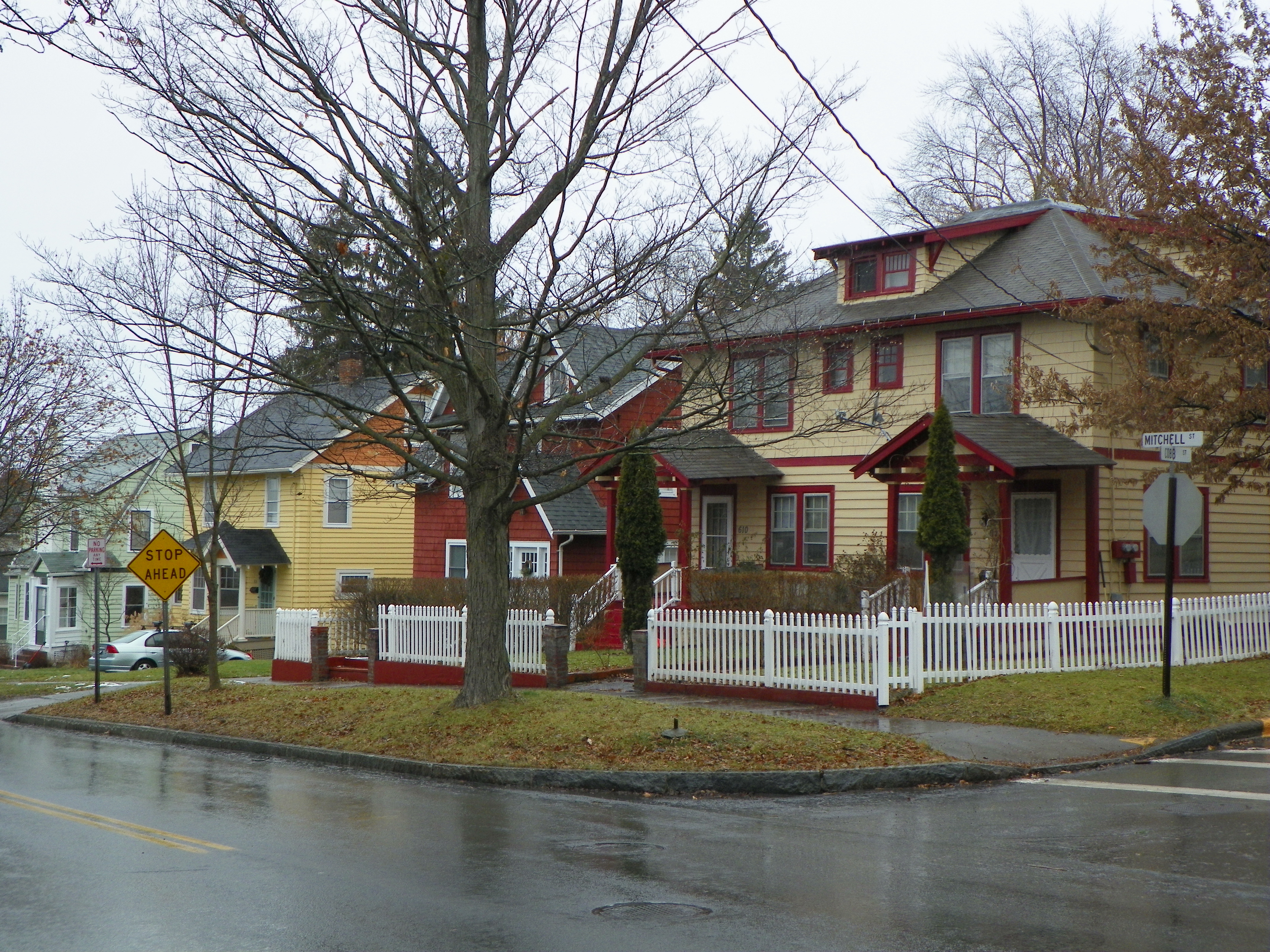
Regular readers will recognize the name Greenways because I’ve latched onto this project and followed it with interest since first proposed about 18 months ago (one could argue I’ve beaten a dead horse here). The project was originally proposed with 67 units, but then dropped to 46 by the time updated specs were submitted in February. The site is still the same, seeking to use woonerfs to connect Sunnyhill Drive and Strawberry Hill Circle. Note that google is not correct here, the street labels are all botched up. An accurate map with the parcels outlined (copied from the county tax map) is included in the lede for this post. Given a preferred completion in October 2015, and that this project consists of 46 units of townhouse-style housing, it makes sense that it would be seeking planning board approvals now.
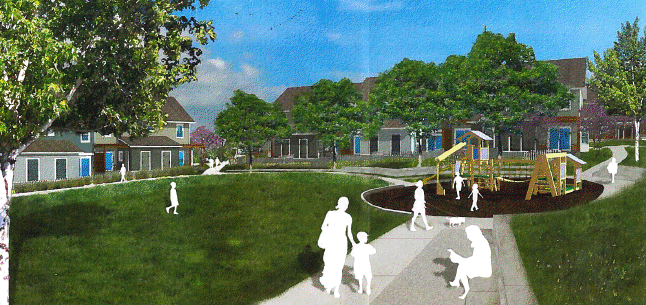
Image property of Greenways at Eastwood Commons

Image property of Greenways at Eastwood Commons

So make way for the woonerfs, I suppose.

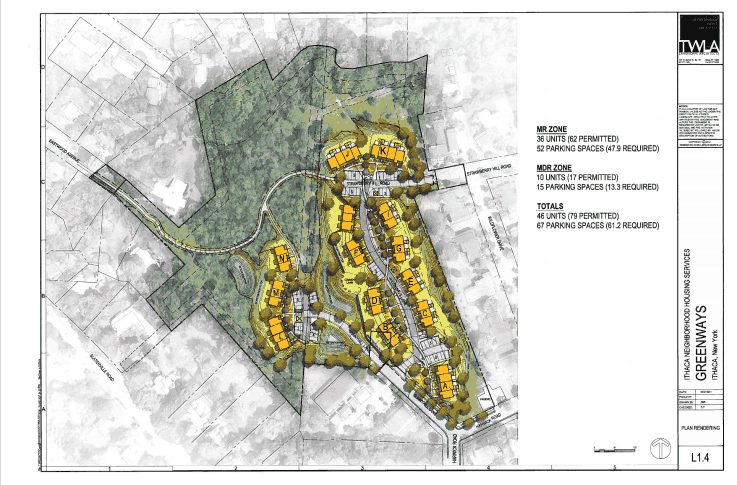
EDIT 5/15: Now we have renders and site plans. It looks like the project will be built in three phases, and access to “Greenways Lane” will be primarily through Strawberry Hill Toad and Sunnyhill Lane. The “woonerfs” seem rather gimmicky in this context.
gways_rev_1

gways_rev_2

gways_rev_3


Ithaca’s Big Plan

29 04 2014

1-2-2014 313

I realize that the city’s comprehensive plan might seem a bit abstract. So let’s break it down into Q and A.

1. What is a comprehensive plan? Is this just more government bureaucracy?

Kinda? A comprehensive plan is the overarching theme for a city and its neighborhoods.  It’s not as specific as zoning is, but it helps determine what zoning should be, given the city’s concerns, desires and goals. So yeah, it’s more documentation, but it’s also allowing the community to determine the “forest” to be created by its “trees”. The plan helps to decide whether a project is appropriate for an area, because the planning board and zoning board will understand the desires for a given location. Used effectively, it may actually save time and mental energy in the long run by establishing a basic framework (i.e. developers will know that the chances of building a massive apartment building in Fall Creek are pretty low).
2. Why does the city need a new comprehensive plan?

The old one dates from 1971. A time when computers were the size of rooms, green was just a color and not a cute term for ecologically sensitive, and the Brady Bunch epitomized the way many wanted to live, in a posh contemporary in the suburbs with a Plymouth Satellite wagon in the garage. Times, and Ithaca itself, have changed. The plan has been amended in bits and pieces, but given its age, it needs a big overhaul, such that a new plan would be the easier option at this point.

3. Just how do they plan on making this plan?

In two parts: Phase I involves the preparation of a city-wide plan that identifies a vision and future goals for the community, and Phase II will include the creation of individual neighborhood or thematic plans, based on Phase I’s results. Committees, focus groups, surveys, meetings with community members, the whole years-long shebang. The current state of affairs can be found located here, and the current planning issues (using community input) is here. A 277-page PDF discussing environmental issues and goals for the plan is here. A draft of the plan, a mere 16 pages, can be viewed here.

4. Sum up the issues for me. I didn’t come here for long PDFs.

Parking’s a b*tch, and people want more walkable neighborhoods. Ithaca is expensive and only getting worse. The Jungle. Development pressures are threatening Ithaca’s historic structures, but the development process is too onerous for most folks to even bother with trying, vacant lot or otherwise. More jobs that aren’t colleges or retail. Protect the gorges and other local, natural amenities.

5. Okay, so what does the community want? What are the big changes?

Under consideration, we have a bunch of overarching themes. Here’s a map:

ith_big_plan_map

Ithaca loves itself some compact, mixed-use developments. If it fits that criterion and it also fits the area, the city wants it. Surface parking lots (231 acres) and vacant parcels (194) comprise just under 10% of the land in the city, and a number of these are what the city hopes to be appealing to developers (if the RFEI for the county library is any clue, the interest is there). Many of the currently developed parcels should be protected – homes in Cornell Heights, Belle Sherman and Fall Creek, for examples. The red spans above are what the city sees as areas for new, dense development – underutilized parcels downtown and on West State, the large swath of big-box land in the southwest, and the frequently-flooding land to the west of big-box land (the city hopes to fix that with dredged soils to raise the land).  Some accommodation for local commercial spaces is created with the “Neighborhood Mixed-Use” land use option. The final plan linked above notes the challenges with each neighborhood, and the desired changes moving forward.

The asterisks denote focus areas, areas the city wants sees significant and unique development opprotunities. There are four – Emerson (which is now in the earliest stages of redevelopment),  the flood-prone/retail-heavy southwest part of the city, the large undeveloped swaths of West Hill, and the Waterfront/Inlet Island. All are seen as very underutilized – all present unique opportunities to significantly expand housing and commercial options, if a developer is willing to fight the adverse factors and work with the city.

6. So are we going to see anything develop out of this?

Explicitly, no. This doesn’t dictate massing of new structures, or curb cuts and sidewalk widths. But it says where Ithaca wants growth to be focused, and where it would be more amenable to playing nice with anyone who comes forward with a plan in those areas.

7. Can I have a say?

Well, the public workshops are this evening, as I write this. But if you can’t/couldn’t attend, feel free to answer the online survey, or email the city planner with your thoughts and concerns.