Yet Another North Campus Photo Tour

27 07 2008

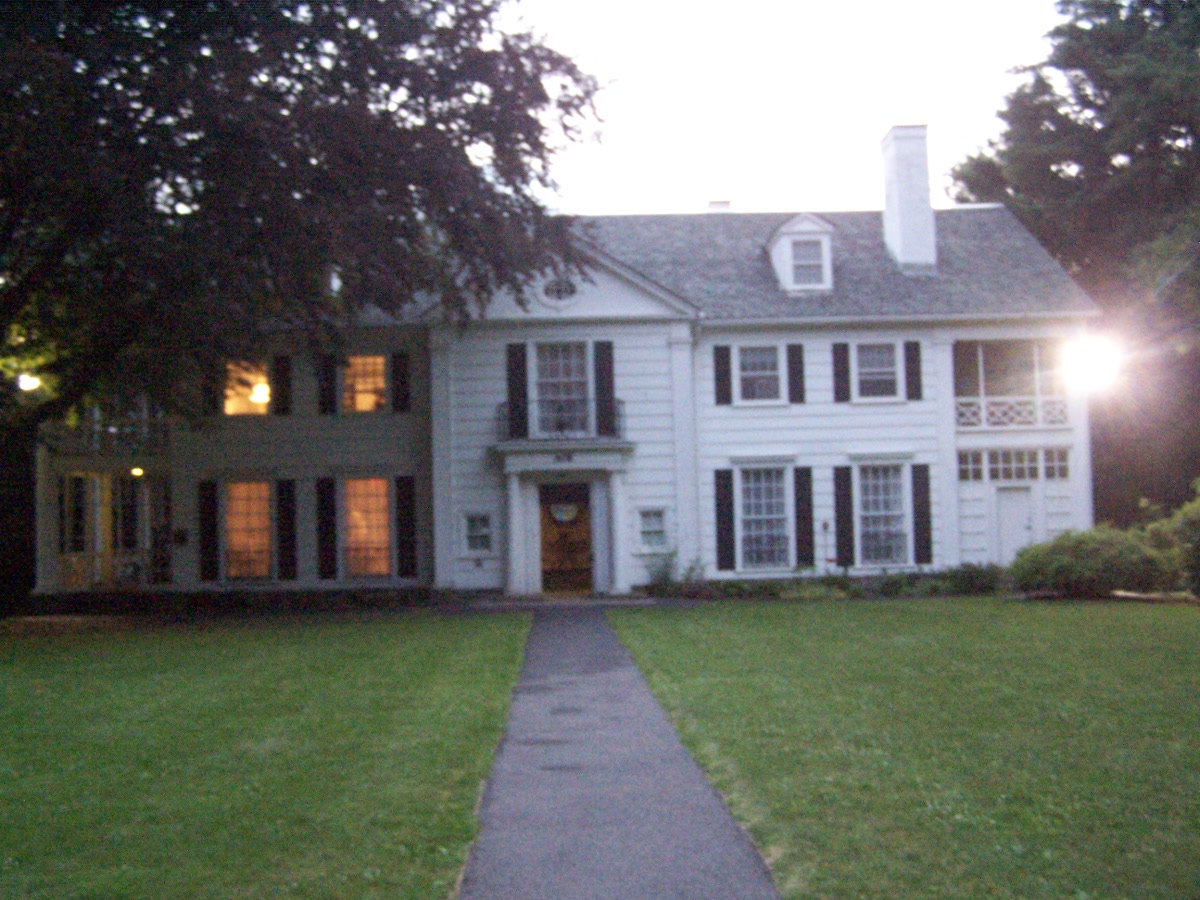
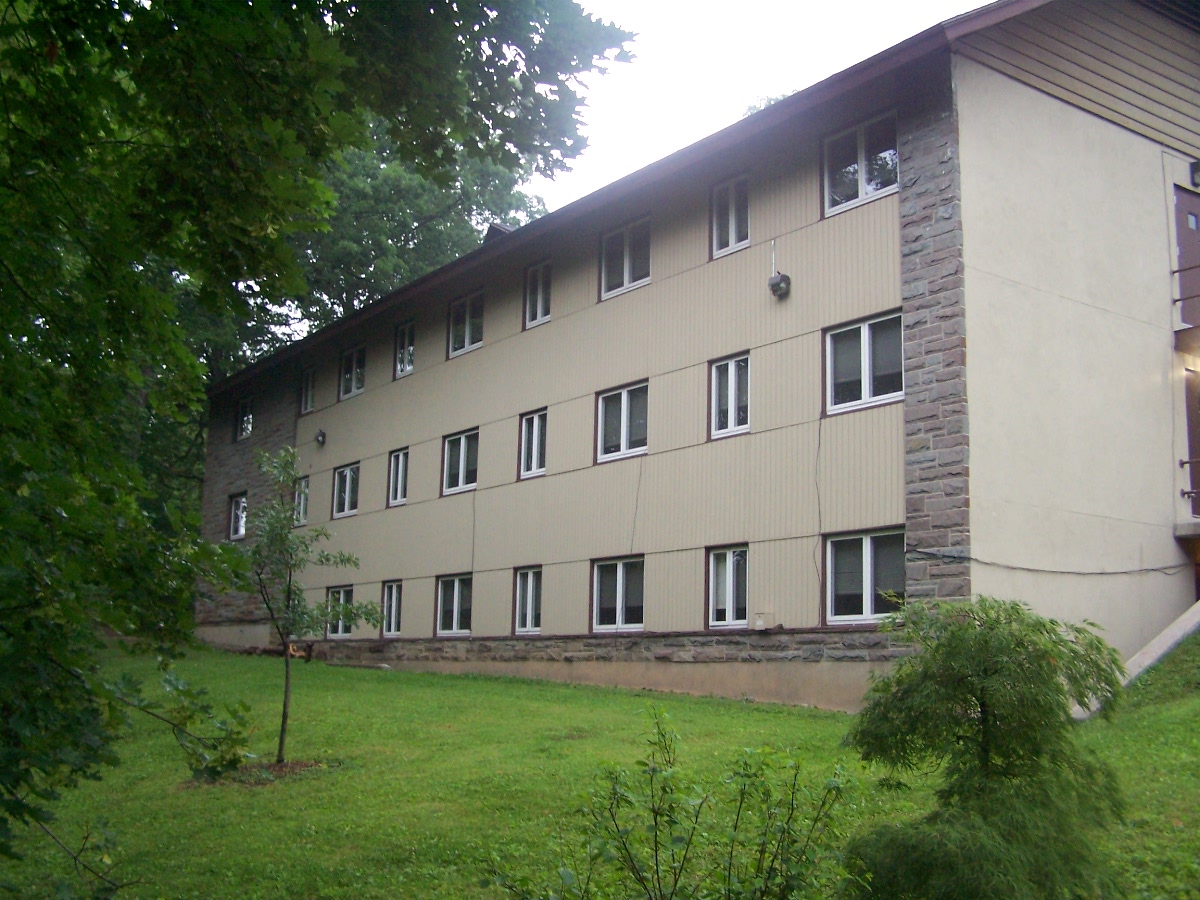
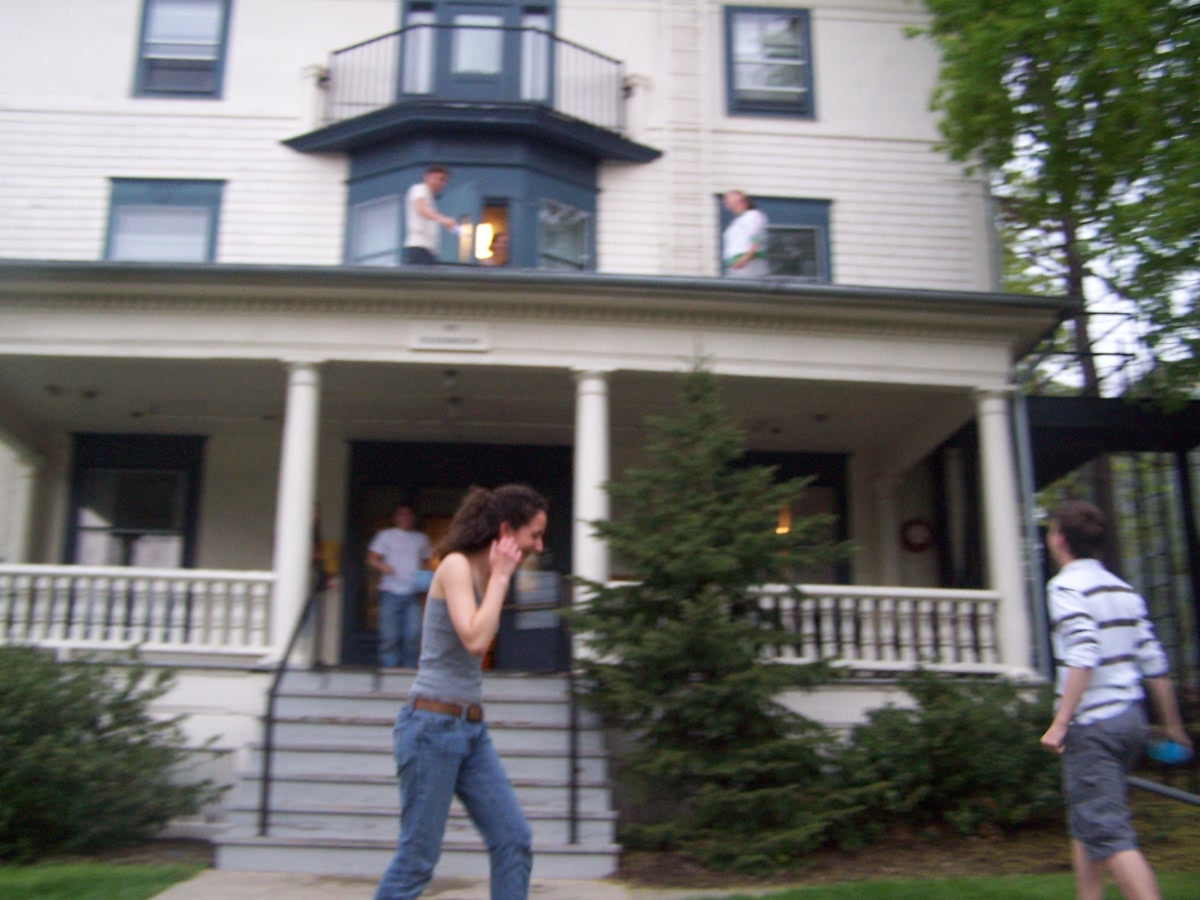
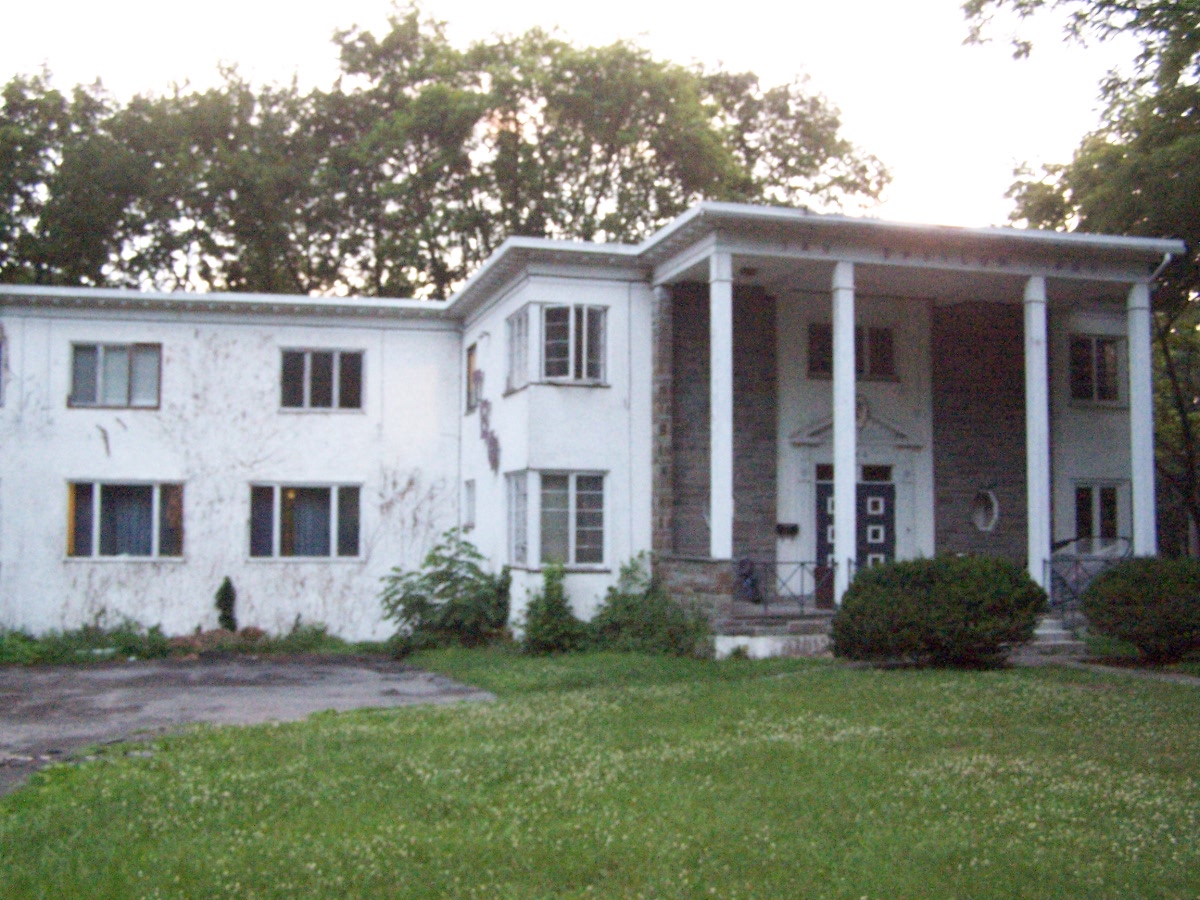
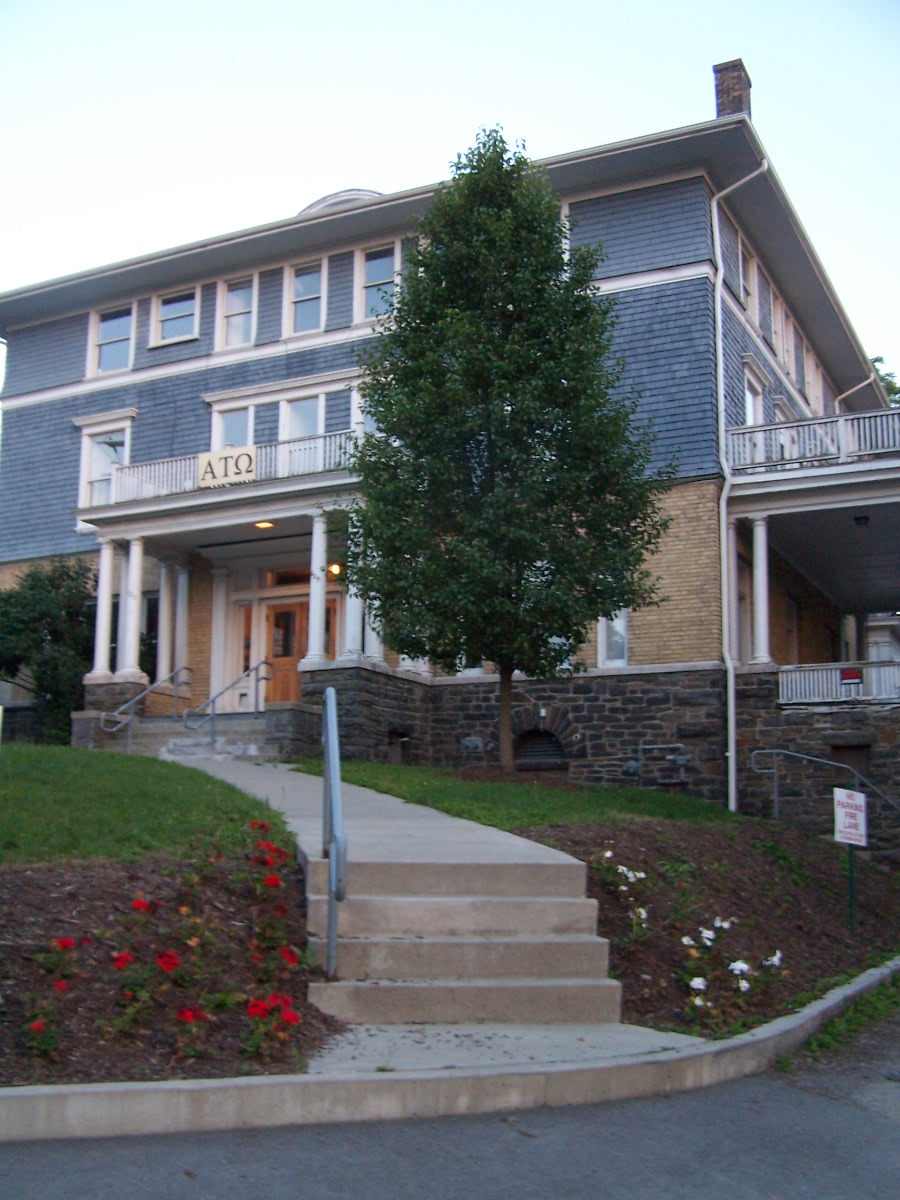
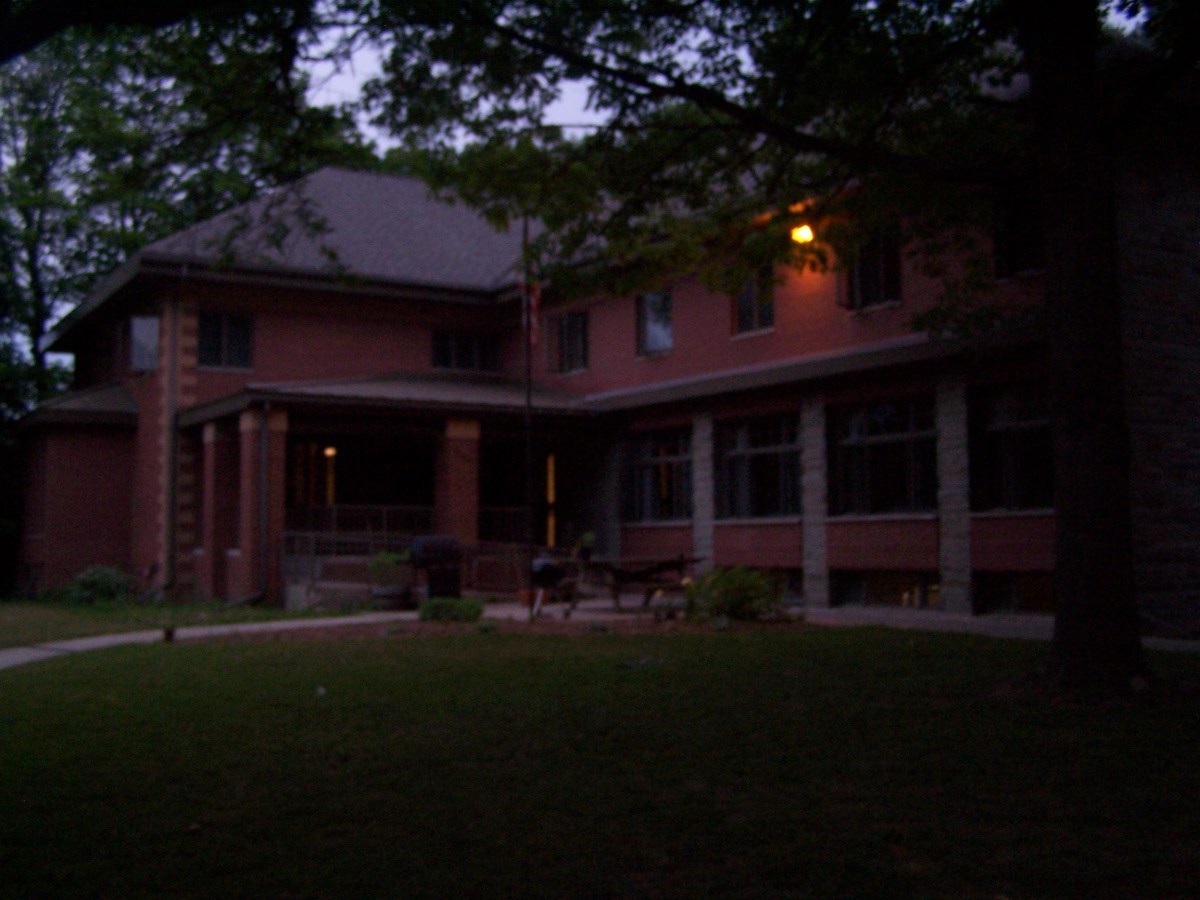
The house of Zeta Beta Tau. This fraternity wins my commendation for having the most difficult house to find.   Like seriously, it’s tucked away at the end of Edgecliff Road, which is hard enough to find at the end of Thurston near the Stewart Ave. bridge. The letters Z.B.T. hail from a ritual phrase of the fraternity (that was publicly revealed  on its one-hundreth anniversary): “Zion Bemishpat Tipadeh” [1], which translates means “Zion shall be redeemed with justice”. In case it hasn’t clicked in yet, the house was founded as a Jewish fraternity, and still has a strong Jewish presence in its membership. The house itself dates from the 1900s. (fun fact: ZBT absorbed four other fraternities over time: Phi Alpha, Kappa Nu, Phi Epsilon Pi, and Phi Sigma Delta. At some point (prior to 1959), all had houses at Cornell. Phi Alpha’s old house is now a rental house next door to my apartment).
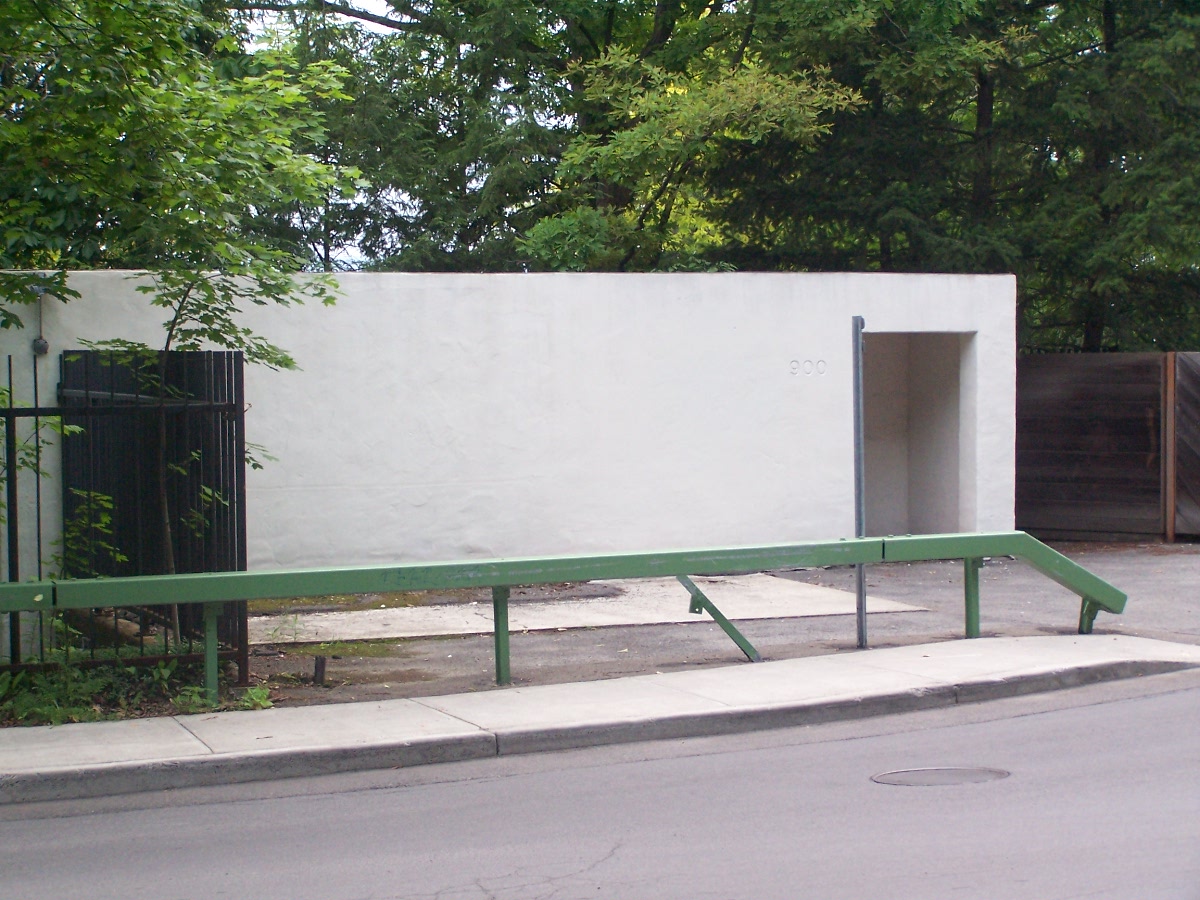
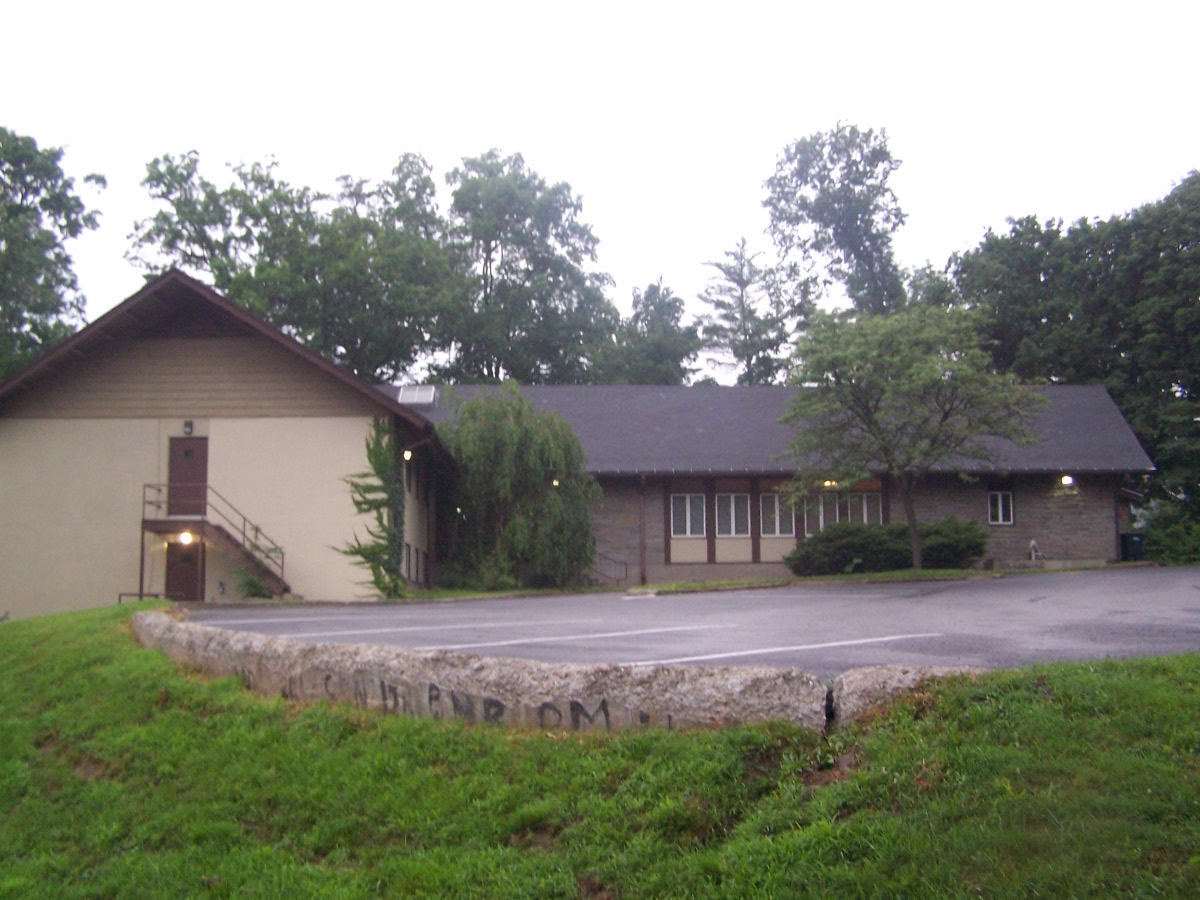
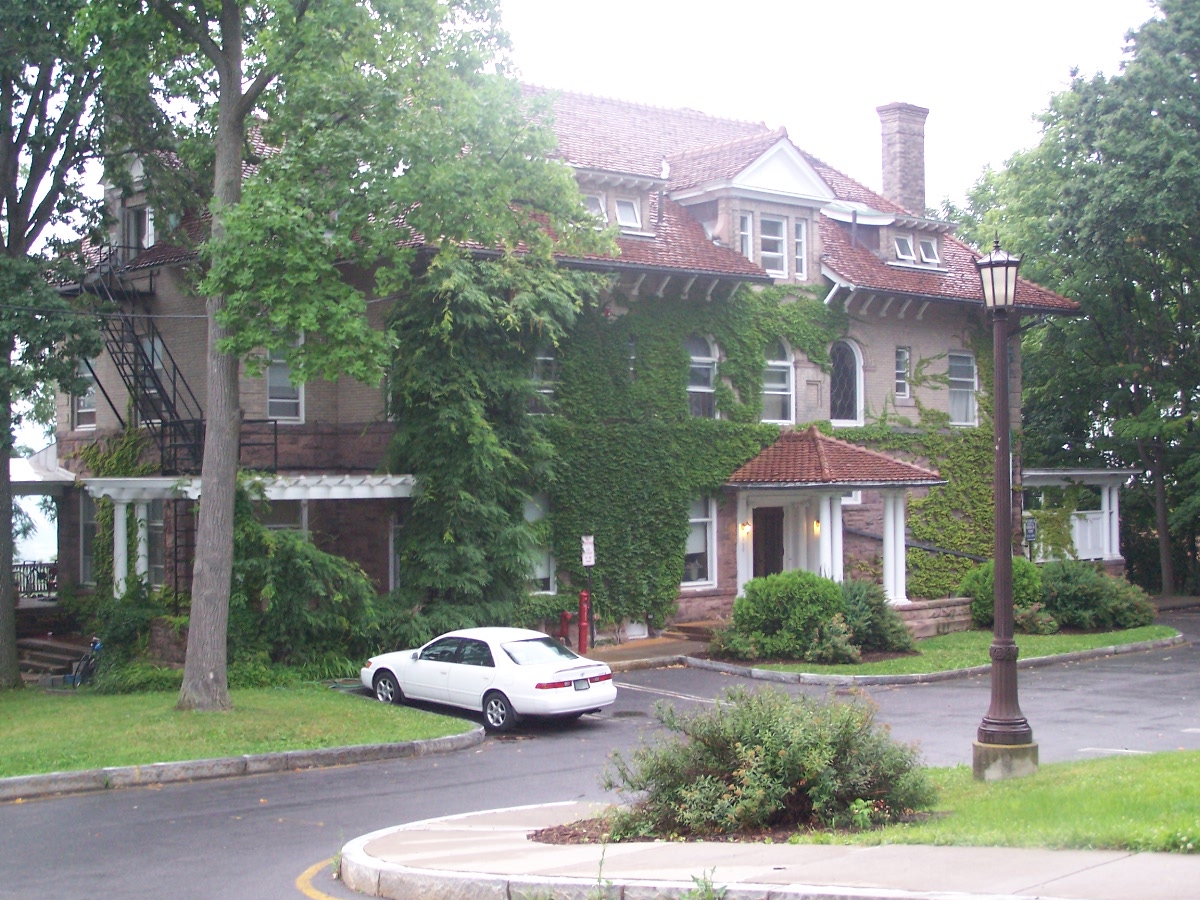
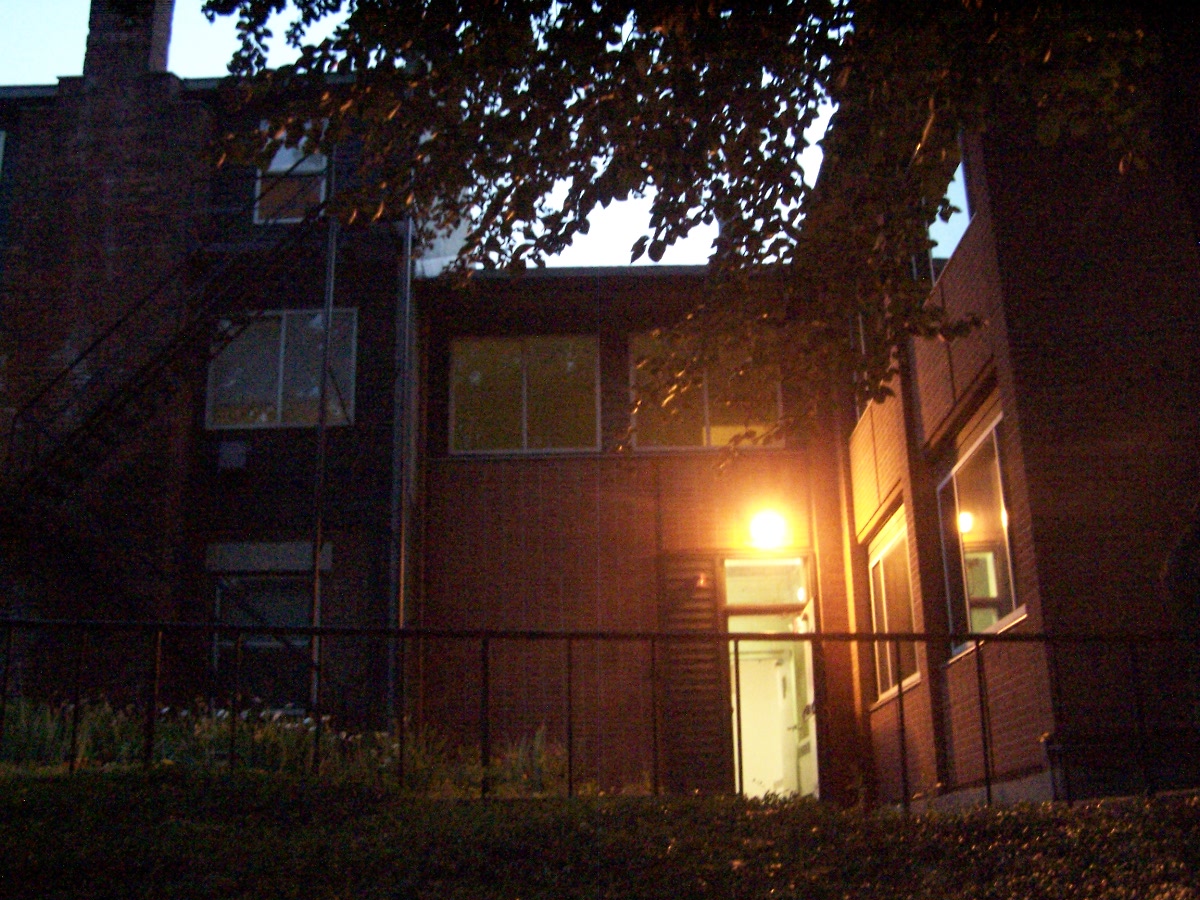
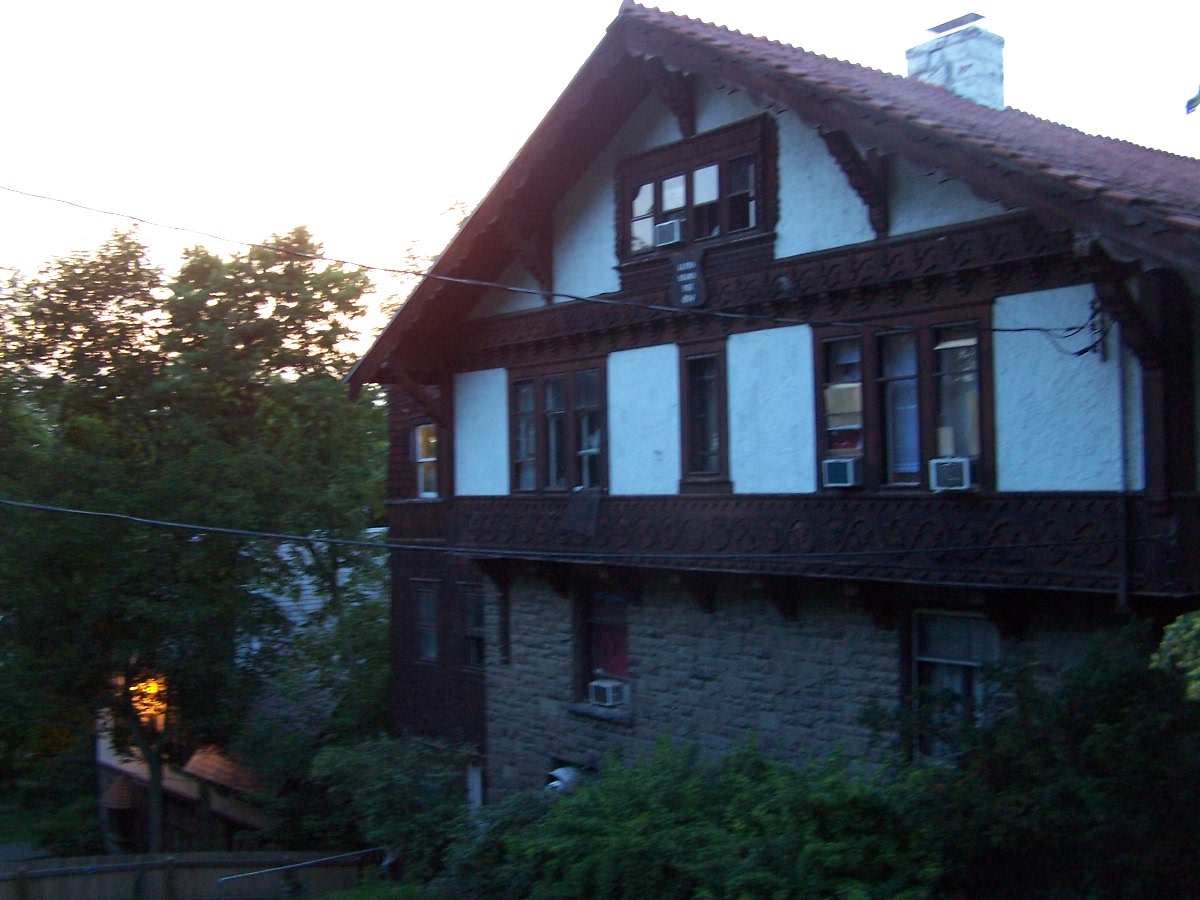
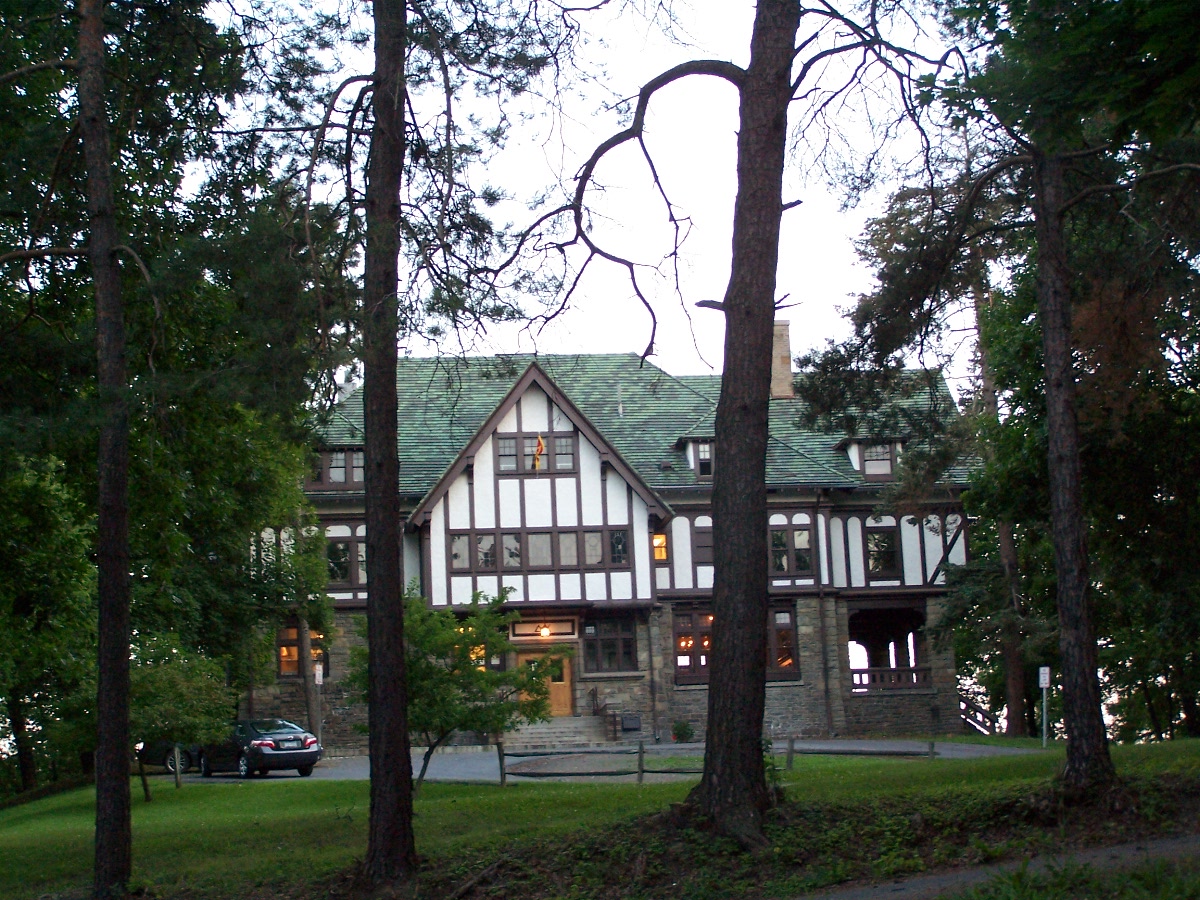
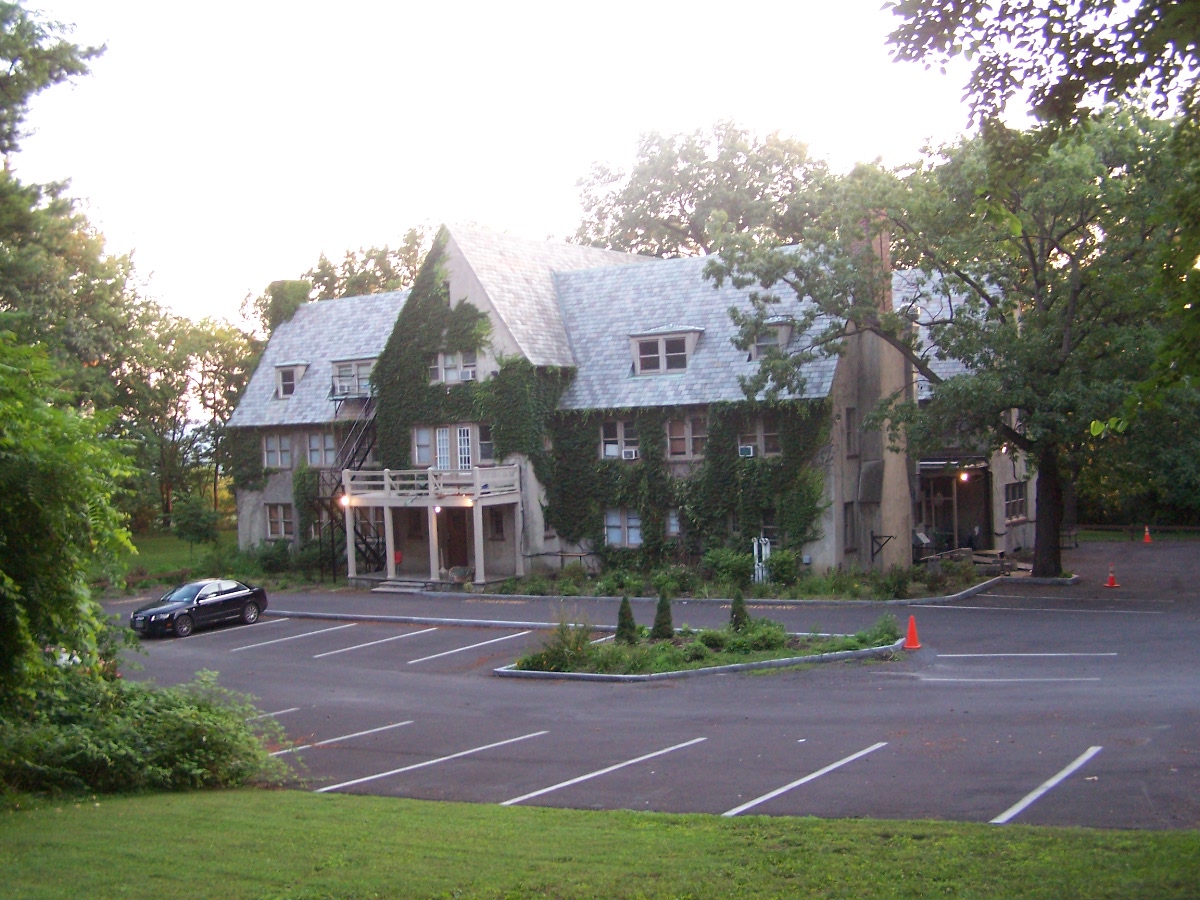
Carl Sagan’s House, prior to his death in 1996. The property sits at 900 Stewart Avenue- the first photo is the entrance area from the street, and the second is from the other side of the gorge. Originally, one of Cornell’s two major secret societies, Sphinx Head, built a windowless meeting chamber on the site in 1926 [2]. Well, upkeep proved to be a hassle by the 1960s, so they sold it to their neighbor Professor Robert Wilson in 1969, who in turn sold the tomb to Professor Steven Mensch in 1979. Mensch built a house on the site in the style of the tomb, which he sold to Carl Sagan. Currently, the house is considered to be the property of the Sagan estate and its heirs.

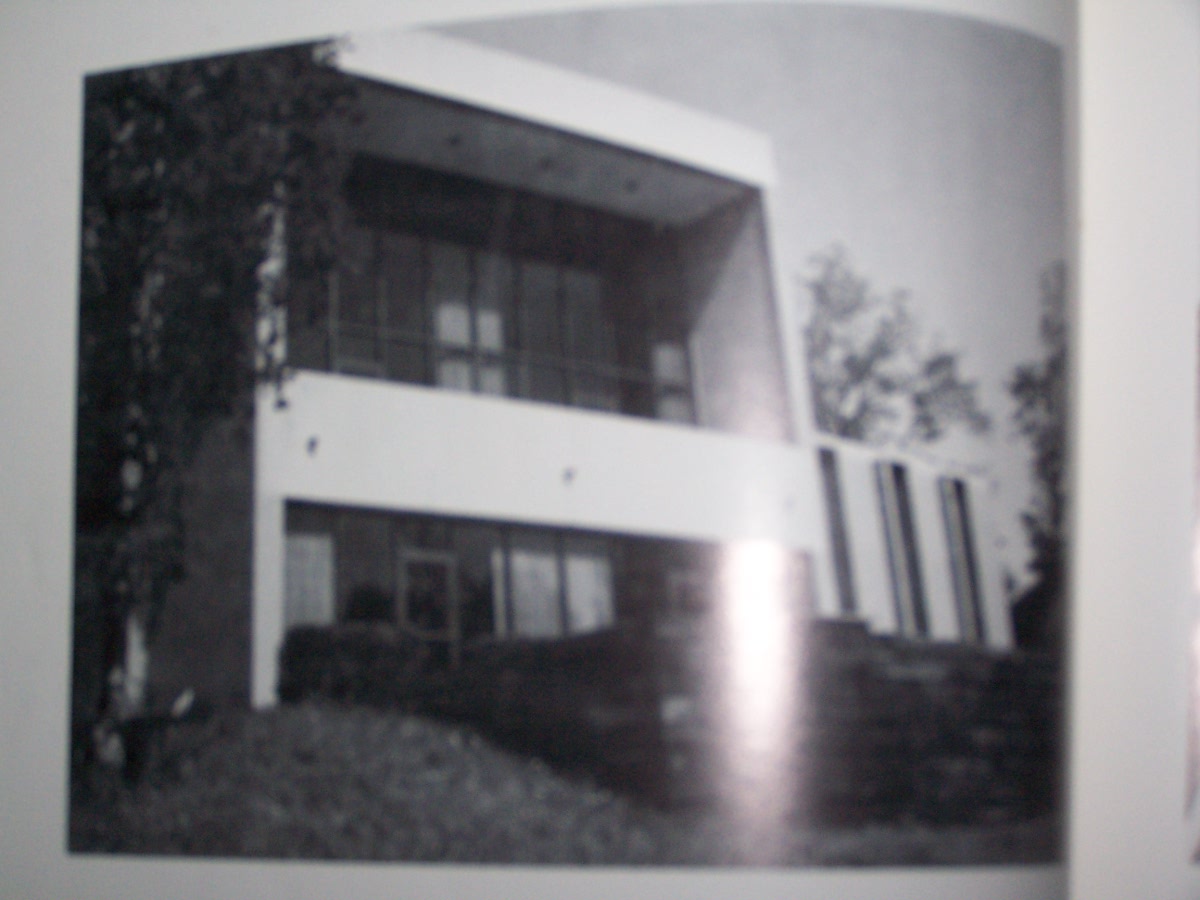
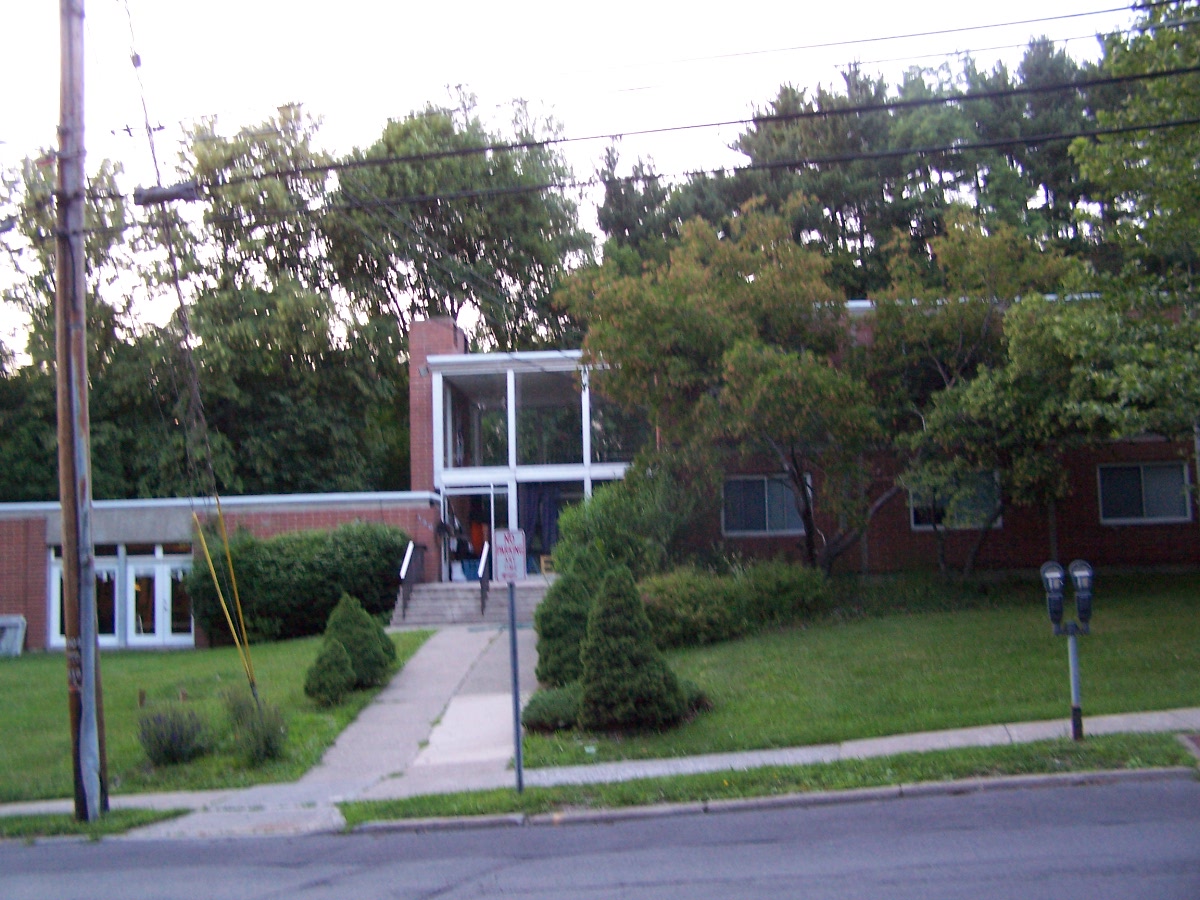
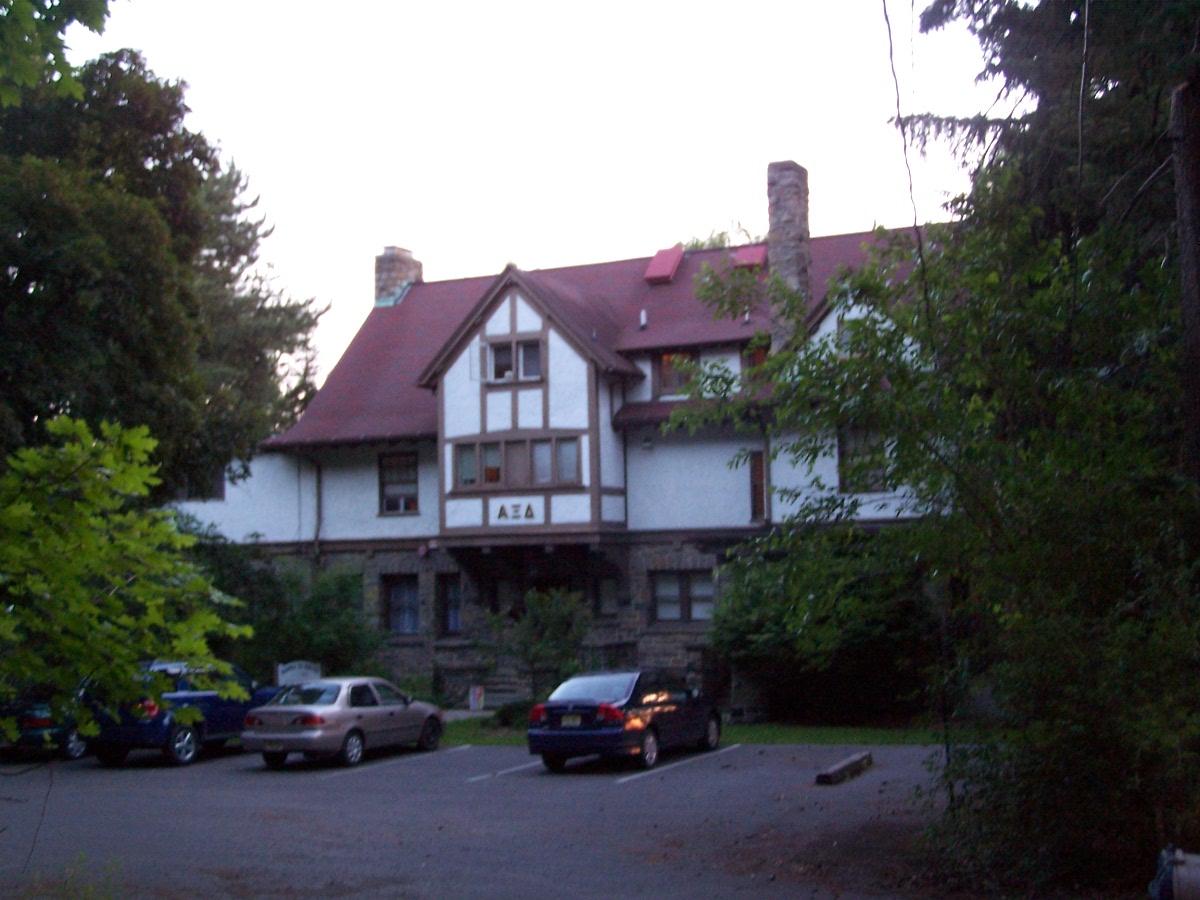
The house of Sigma Chi Delta, a local co-ed fraternity founded in 1981 [3]. It has no letters on the outside, so this is how I confirmed it as their house:

Yes, the composite is purposely blurred so I don’t receive nasty e-mails. I’m sure I’ll be in enough heat for taking photos through their street-facing windows.

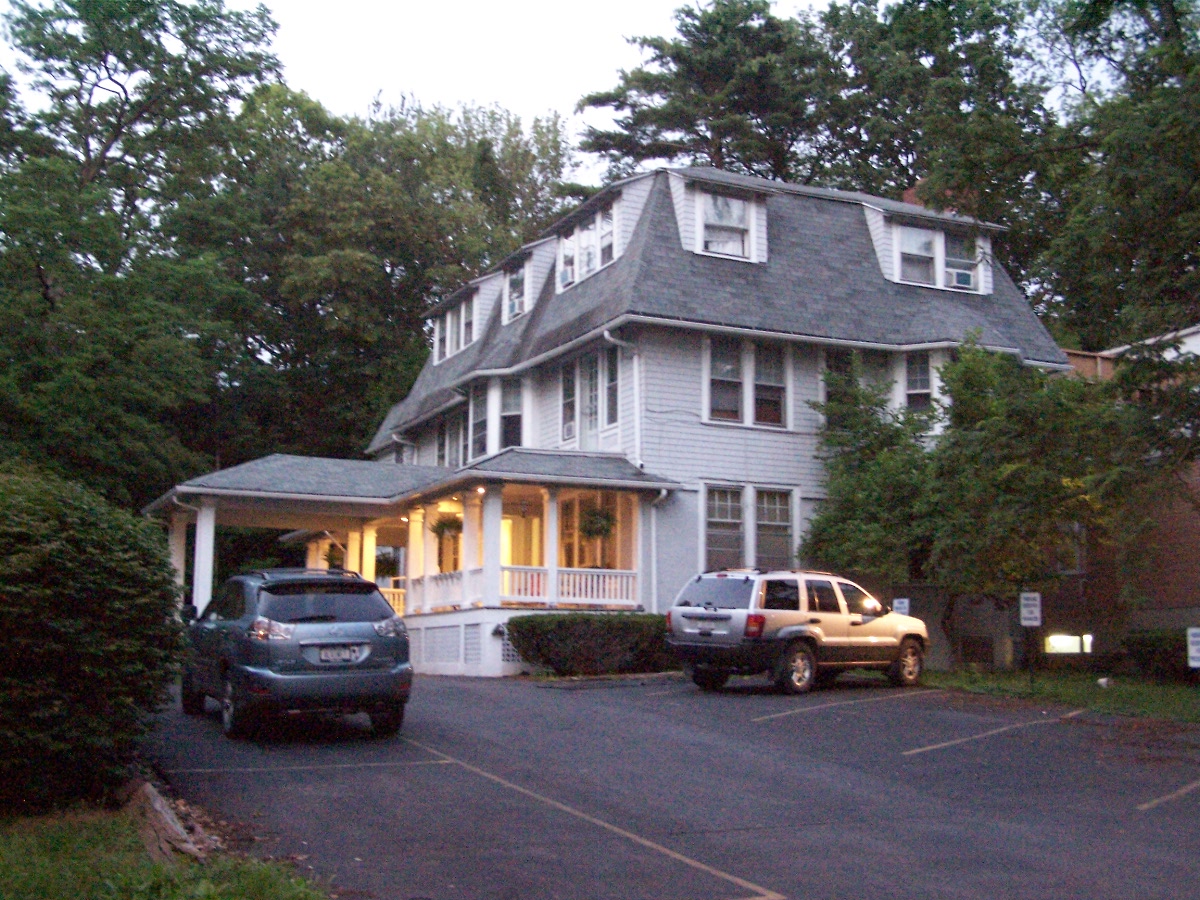
The two 7-unit houses that represent the retirement facility “Bridges at Cornell Heights” [4]. My jaw drops when I look at how lovely these houses are. I believe they were renovated in the late 1990s. In case anyone’s wondering, the price is about $7500/month. That’s actually more than I make in a year…
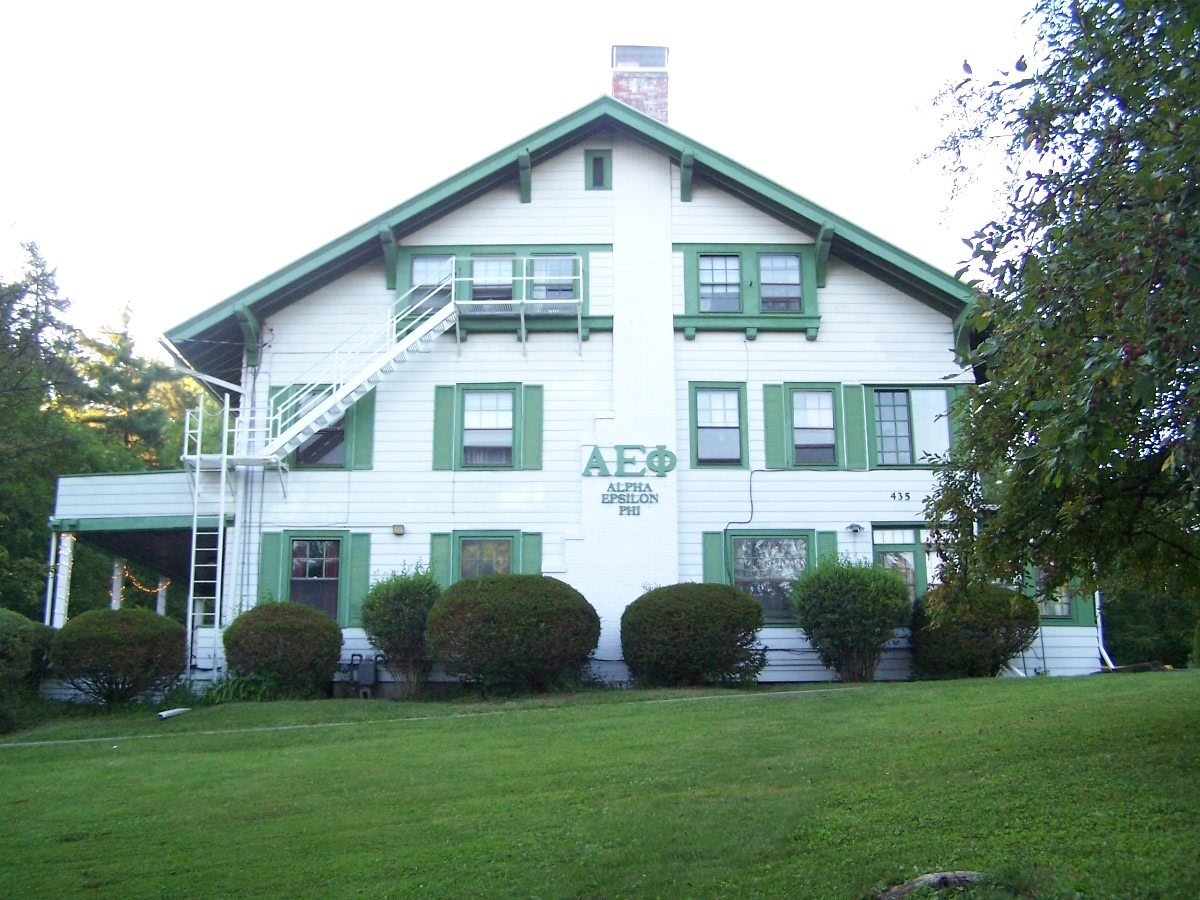
Similar in concept to Zeta Beta Tau is Alpha Epsilon Phi, a sorority with a strong Jewish background. The Cornell chapter was established in 1920. It amazes me how little information I can find about the chapter itself, apart from token facts like house color and flower. I’m not looking for that, I’m looking for the history. It is perfectly possible that the house, which dates from the 1900s, has always been their house. Looking through a copy of 1943 Cornellian suggests they have been in the house at least 65 years, so there’s some support to the idea. If an AEPhi could confirm that, it would be appreciated.
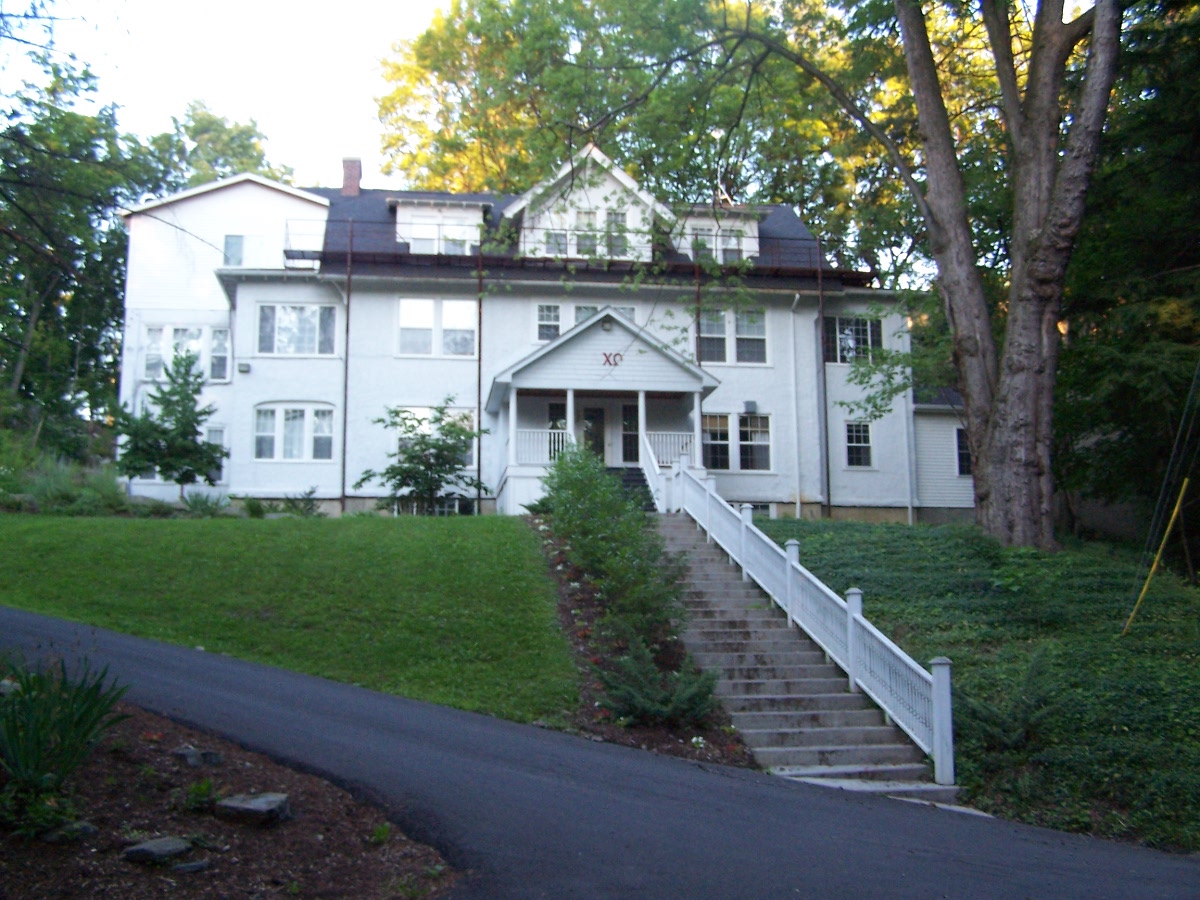
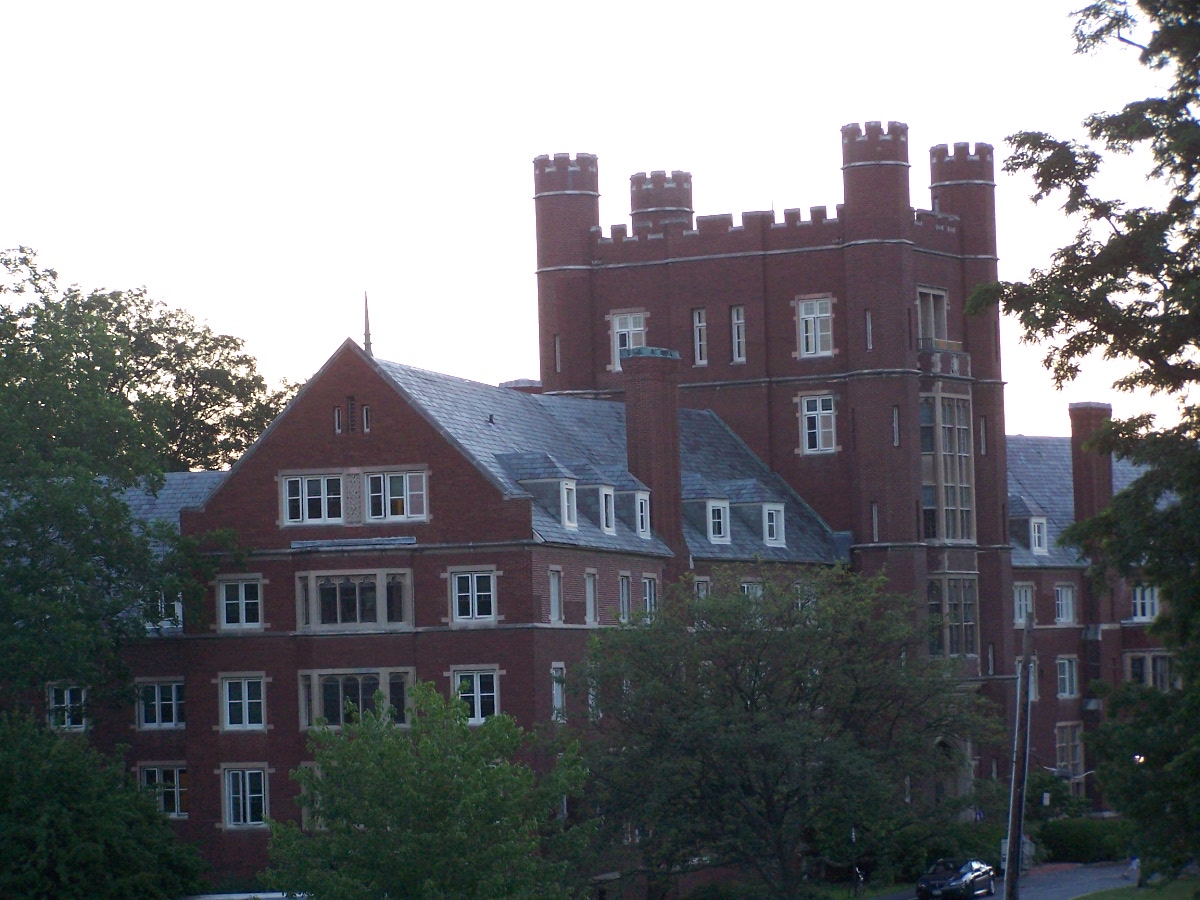
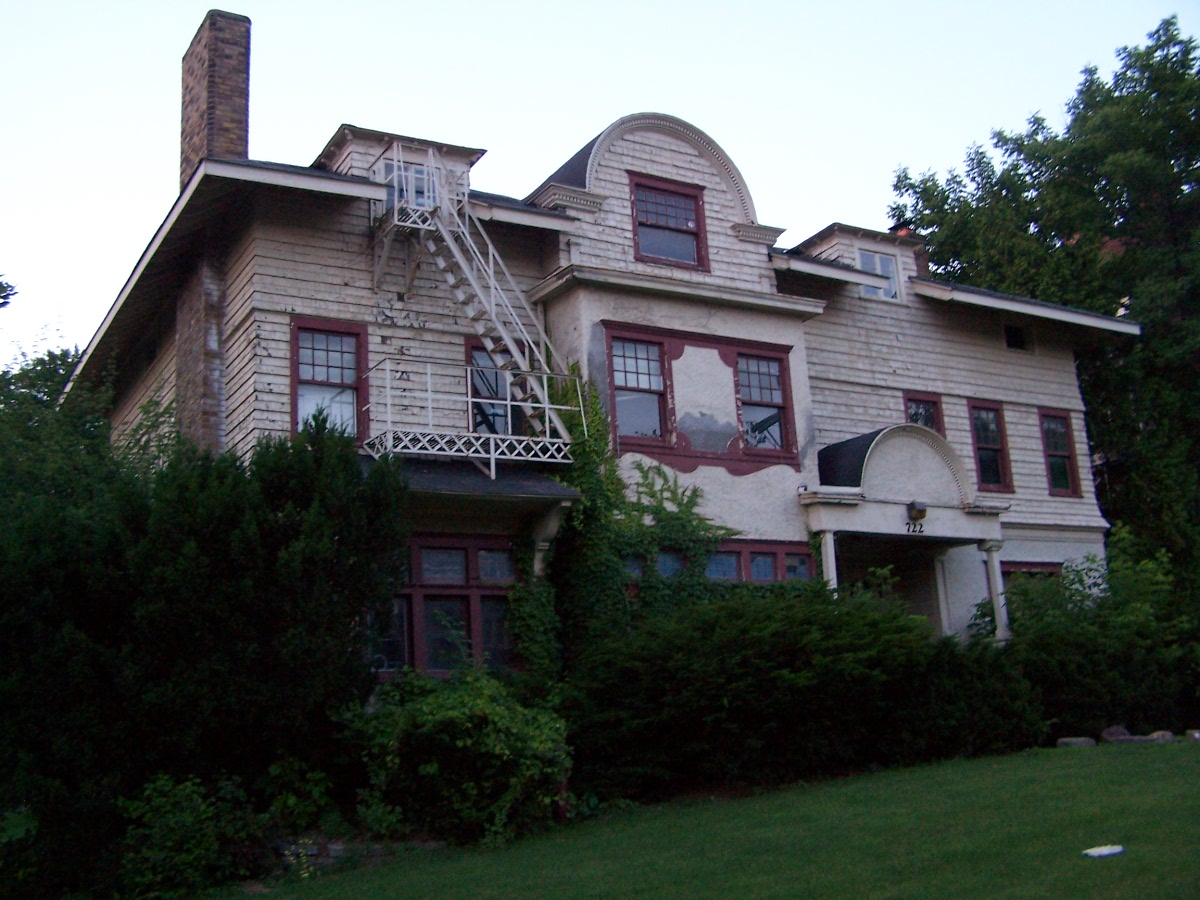
Formerly the house of merged fraternity Phi Sigma Epsilon, today this is the house of the sorority Alpha Chi Omega. This is not to be confused with Chi Omega, which closed in 2003 and once lived at 10 Sisson Place. Alpha Chi Omega reestablished itself at Cornell in 1984 (Chi Omega did the same thing in 1987, but it appeared only one has managed to survive up to today). In 1985, another sorority, Alpha Gamma Delta, tried to establish itself, but closed after 1990. They also lived at 722 University Avenue (what is that, the token Greek house?) [5]
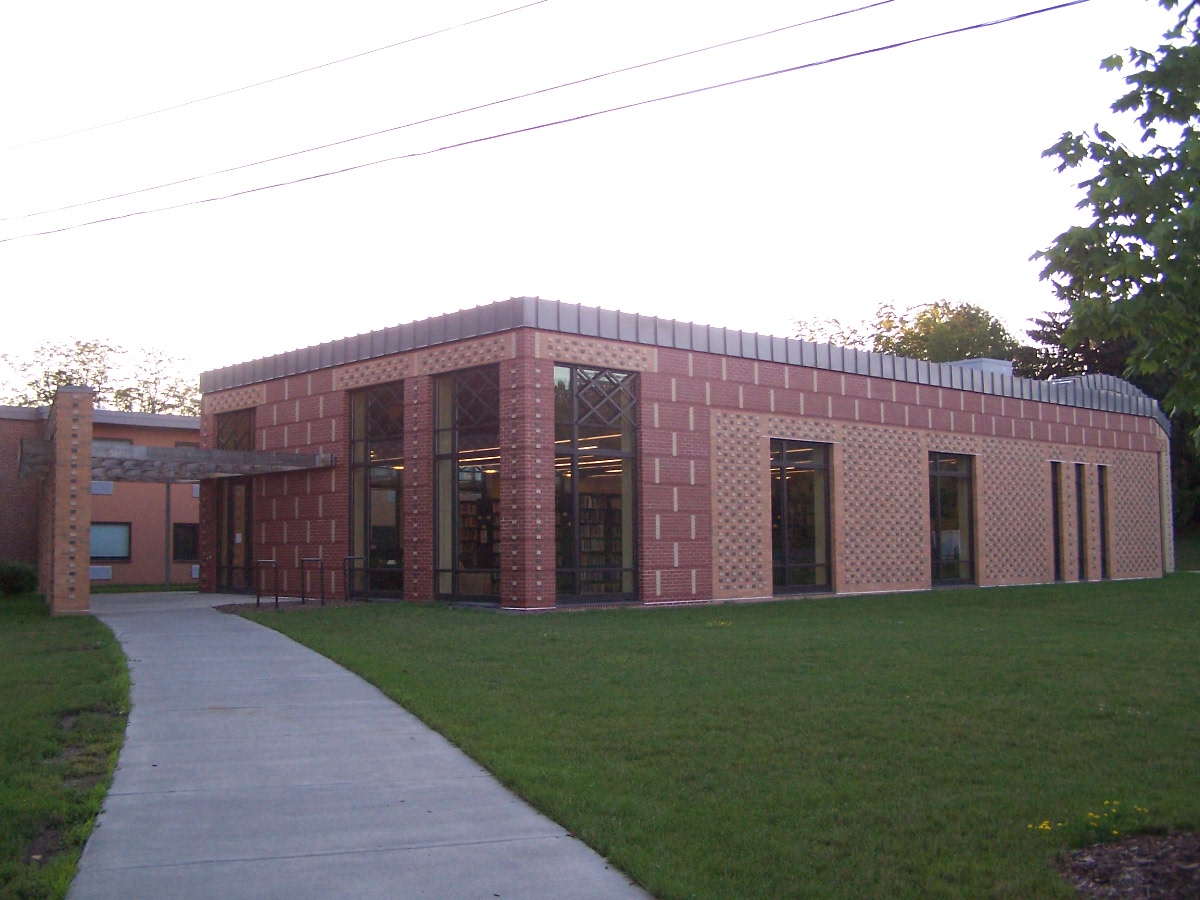
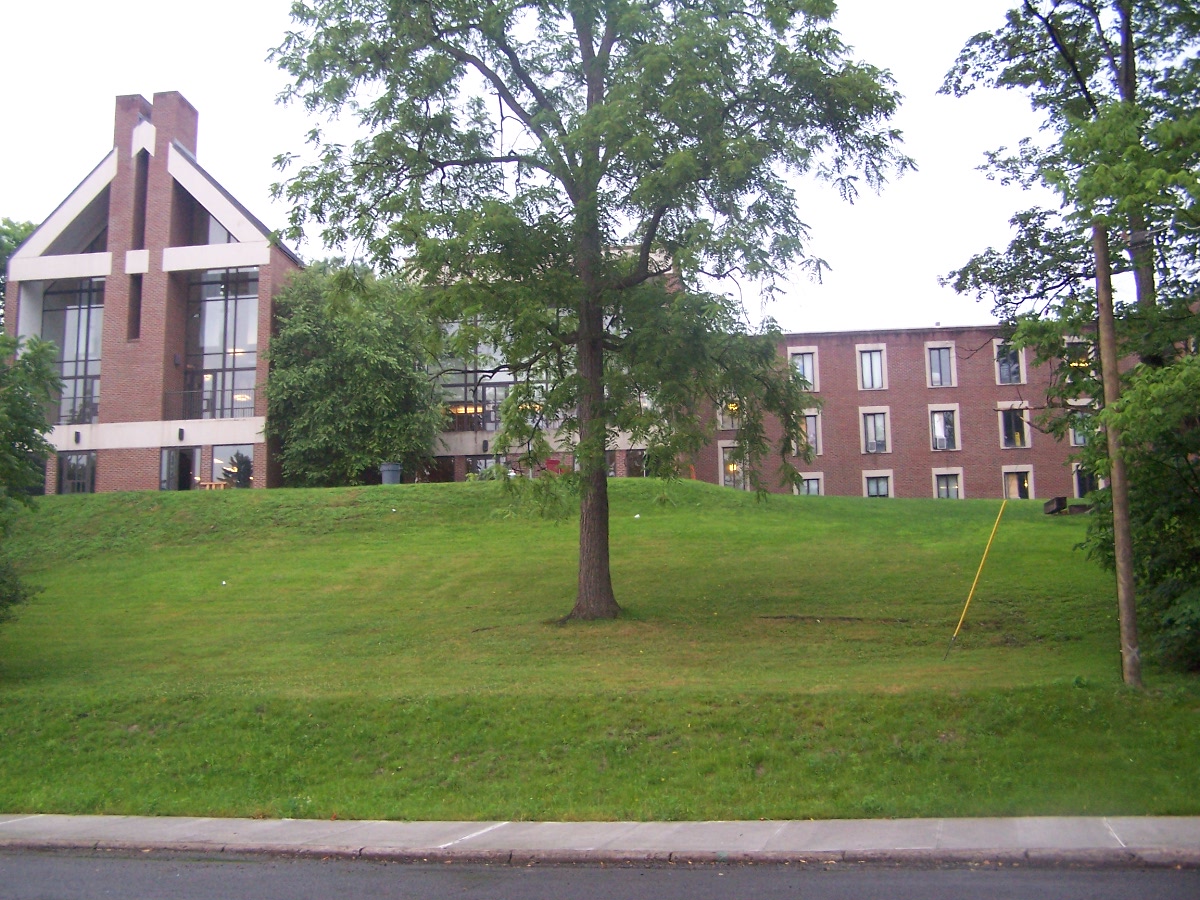
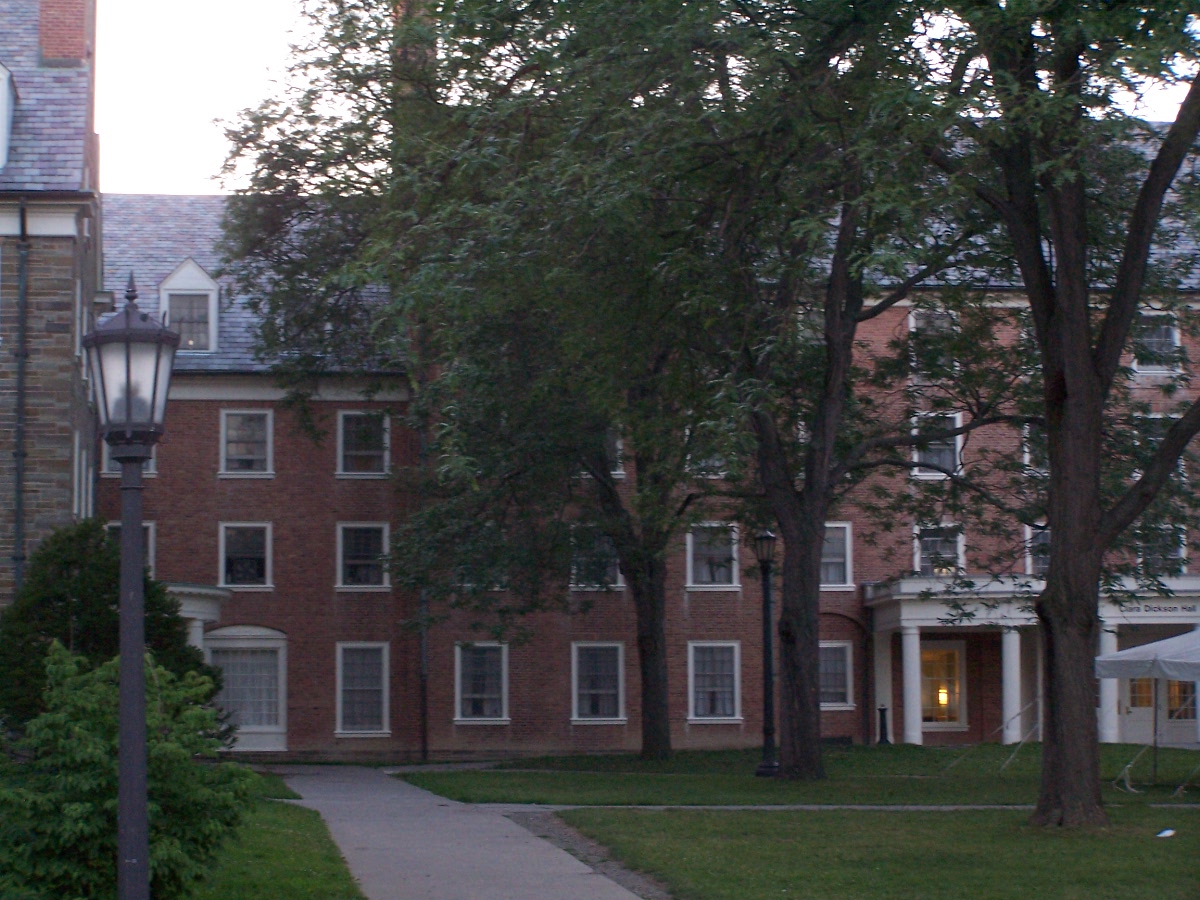
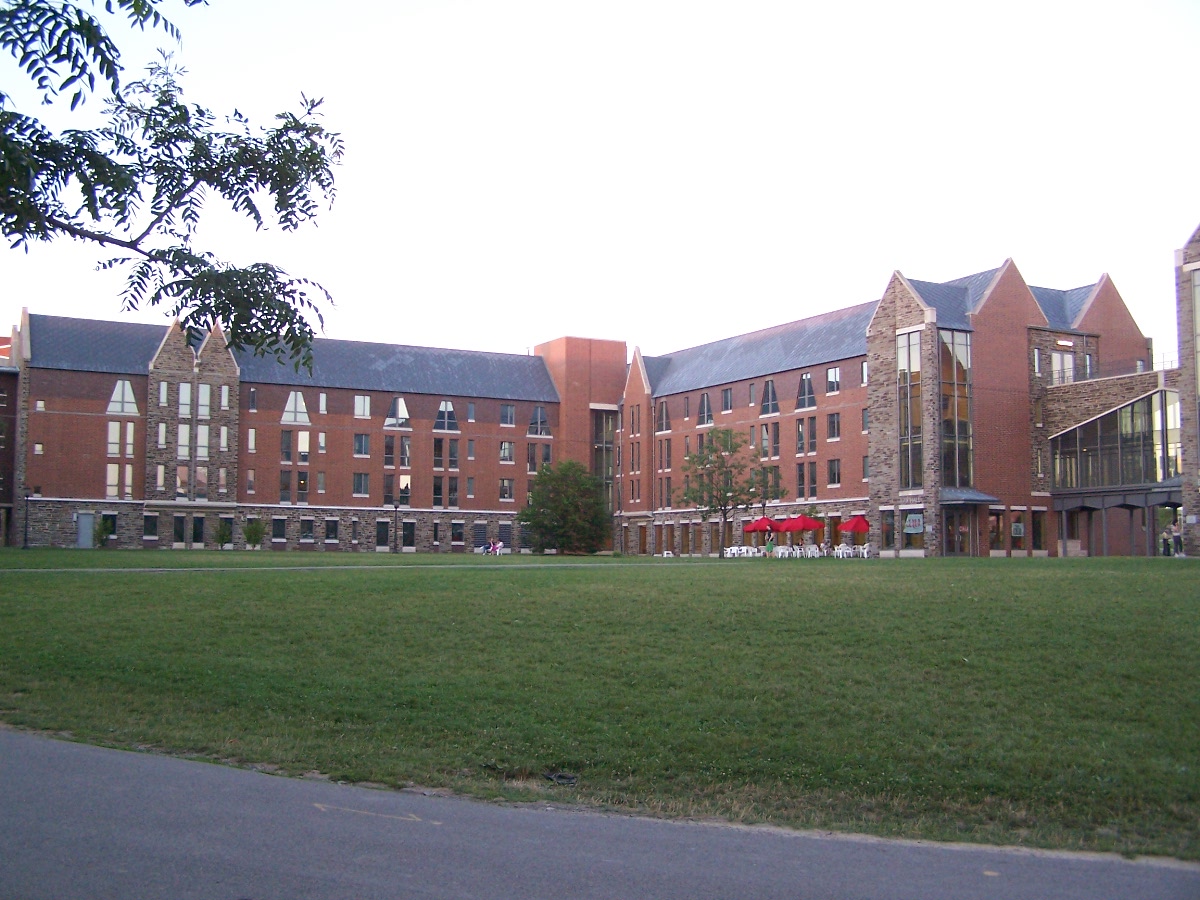
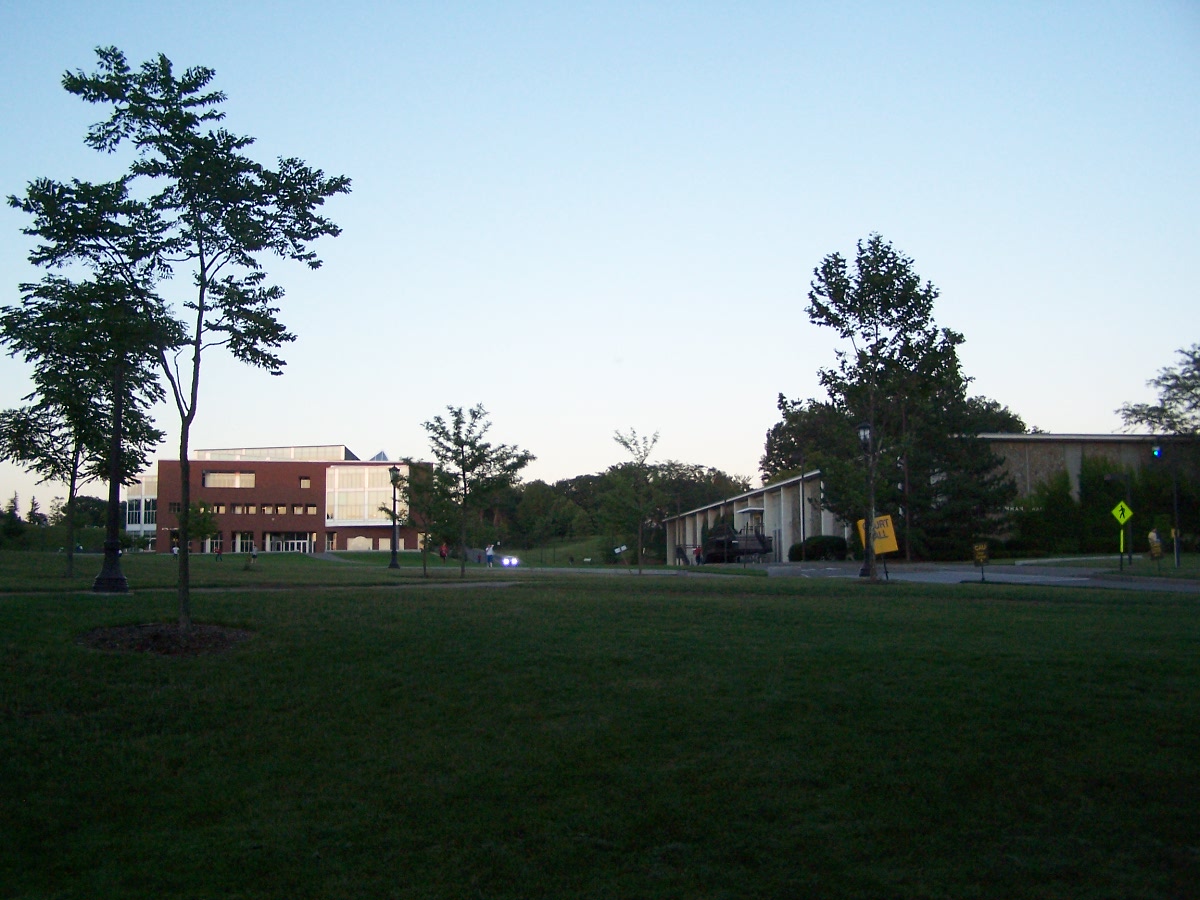
The Africana Library. built in 2005. The original library was part of the Africana Center that was burned in 1970 (in response, enraged students stormed the new Cornell Store, ransacking and heavily damaging the facility. They burned many of the stolen items in a large bonfire a week later). The center (in the background, you can make it out on the left) was then relocated to 310 Triphammer Road, just off North Campus. The building was dedicated to John Henrik Clarke in 1985, the same year that the Africana Libe became a part of the university library system. The building was previously renovated in 1990 [6].

[1]http://en.wikipedia.org/wiki/Zeta_Beta_Tau

[2]http://ezra.cornell.edu/posting.php?timestamp=1207807200

[3]http://www.sigmachidelta.org/Site/Home.html

[4]http://www.bridgescornellheights.com/

[5]http://alphagamhouses.blogspot.com/2007/10/cornell-university.html

[6]http://www.library.cornell.edu/africana/about/history.html


Another Random Cornell Heights Tour

23 07 2008

The house of Acacia fraternity. It was built in 1907 for a prominent professor, and designed by architect Arthur Gibb in the Prairie House style.  Gibb was also responsible for the design of Baker Lab on campus (which was technically designed around 1910, even if it wasn’t completed until 1921) [1]. The house, called “Northcote”, was first occupied by Acacia in 1934, with an additional dorm wing constructed around 1958. Today, in terms of distance from campus, Northcote is probably one of the farthest.

Greystone Manor, the house of Sigma Chi fraternity. It is been my observation that Sigma Chi is probably one of the most low-key fraternities of Cornell. There’s only a flag to announce their existence at their house, they have no house web site, etc. However, this doesn’t mean that the house doesn’t have a history worth sharing. The house was the home of silent-film star Irene Castle around 1919, when the silent-film industry was still thriving in the Ithaca area. It was bought by Sigma Chi in 1923, and has been in their possession ever since.

EDIT: So, a kind reader was generous to share this extra bit of information about the history of the house:

“The Greystone house was built by Alice G. McCloskey (of the Nature Studies department and editor of the Rural School Leaflet) and another woman. By the time Alice died 19 Oct 1915 she was the owner of the house. She left the house to her assistant, Edward Mowbray Tuttle (my husband’s maternal grandfather). Edward married in October 1919 and sold the Greystone to the silent film start in 1919. So there is more history than you think.”

On that note, Irene Castle was married to one of Treman family, but left Ithaca (and him) in 1923.

Not a frat house, but this is an amazing looking house regardless. Zillow.com indicates it was built in 1910. It’s across the street from Sigma Chi.

The house of Phi Delta Theta Fraternity on Ridgewood Road. The house dates from the 19th century, but Phi Delta Theta has made it home for the vast majority of its life. Phi Delta Theta is a dry fraternity, meaning that in its house, there is no alcohol consumption; for that, they can go to their annex at 210 Thurston. The house went dry in 2000, and all 40 current brothers at the time resigned in protest. If any of you are familiar with author Scott Conroe’s It Takes Just Pride, then you’ll recognize that this is one of the fraternities covered in the book. I also want to say that this is one of the two houses where someone chased me off the property for taking photos. Someone was in a foul mood, I guess.

The house of Alpha Omicron Pi sorority. AOPi moved in in fall 2006. Prior to that, this house served as the home of Theta Chi for about 25 years. Theta Chi was expelled from campus in 1999, and then the house was briefly occupied by AEPi and former Theta Chi pledges, and finally AEPi moved back to their Thurston house in fall 2001. Theta Chi attempted a reorganization in 2003 but it did not last, and the house sat vacant until AOPi bought the facility. AOPi first came back to Cornell in 1989 after a 25-year hiatus; they lived briefly in AXiD’s house and 210 Thurston before moving into 14 South Avenue on West Campus in 1991 [2]. Prior to Theta Chi, this house was the home of a fraternity by the name Tau Delta Phi. While the house has been home to a number of GLOs, it was originally built in 1925-26 for Professor Ernest T. Paine[3].

Continuing up Ridgewood is Pi Kappa Phi. The house is affectionately known as “Greentrees”, a name that hails from its days as the house of Phi Kappa Sigma before they folded in 1991. The name comes from the seven forested acres the house sits on. The property also at one point maintained an in-ground pool, a rarity for Ithaca. The house was originally home to George Morse of Morse Chain Company (now Emerson Power Transmission, a major private-sector employer in Ithaca). Phi Kappa Sigma, the Skulls, lived in the house from 1935 to 1991. In the meanwhile, Phi Kappa Phi lived at 722 University Avenue from 1949 to 1986, when the chapter closed; it was reorganized in 1990, and moved into this house the following year [4].

Across the street is Beta Theta Pi fraternity. Now, I must say that this house is spectacular from the outside; but I was appalled the few times I’ve been in there (a couple of my friends are brothers at Beta). Anyways, Beta (originally Alpha Sigma Chi), lived in Pi Kappa Alpha’s house until about 1906, when “Castle on the Rock” was constructed [5].

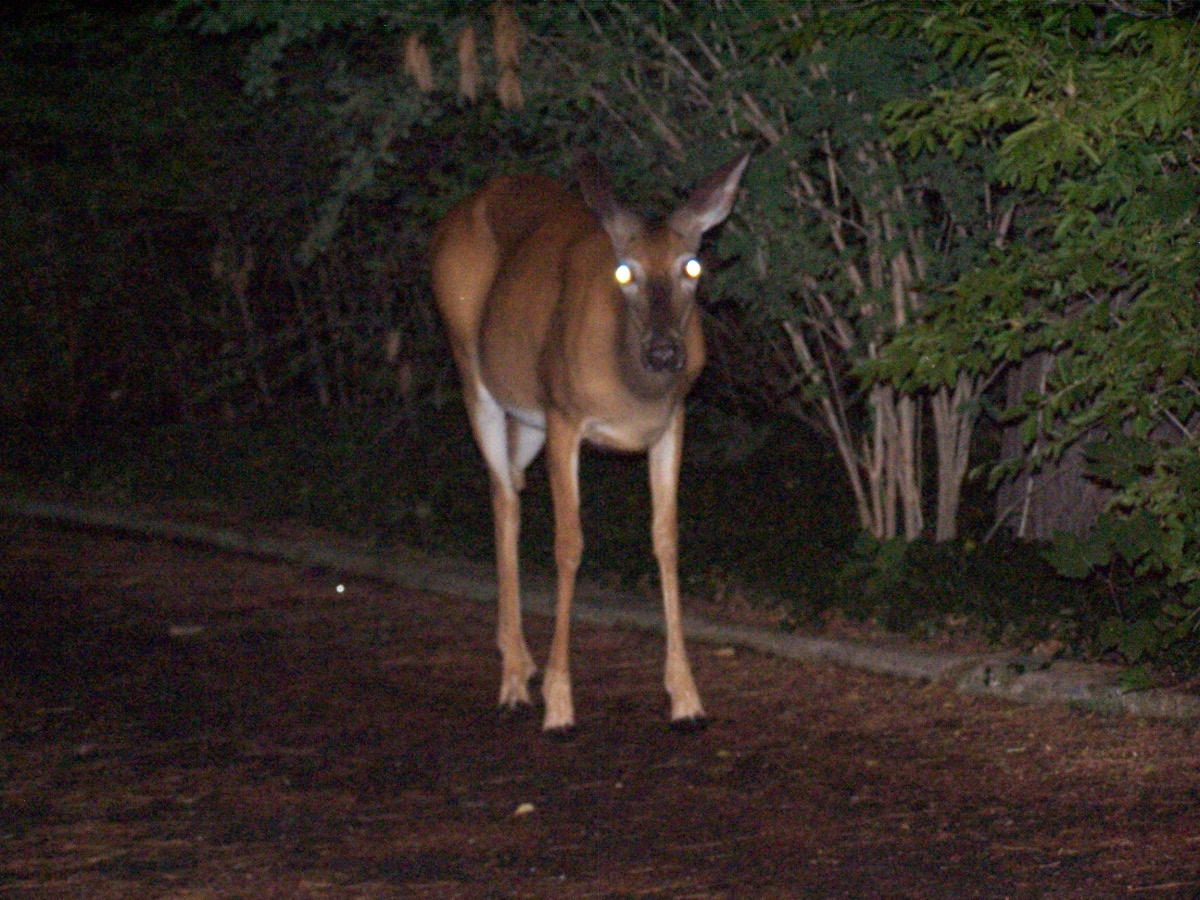
Venison Anyone?

Wrapping up Ridgewood is Sigma Delta Tau sorority. The Alpha chapter was founded in 1917 as Sigma Delta Phi, but changed when it was founded the letters conflicted with another organization (that seems to happen quite a bit) [6]. The house has a stunningly unattractive addition that probably dates from the 1960s, and I tried my best to not photograph it. The rest of the house looks very classy, dating from 1900-1910.

[1]http://www.cornellacacia.org/index.php?a=info

[2]http://www.aoiiepsilon.com/centennial.html

[3]http://www.news.cornell.edu/stories/Oct12/GreekTour.html

[4]http://www.cornellpikapp.com/history.php#Psi

[5]http://www.betadelta.org/about.html

[6]http://www.dos.cornell.edu/dos/greek/chapter_details.cfm?id=3282


Historical Rush Booklet, Part 3 of 3

21 07 2008

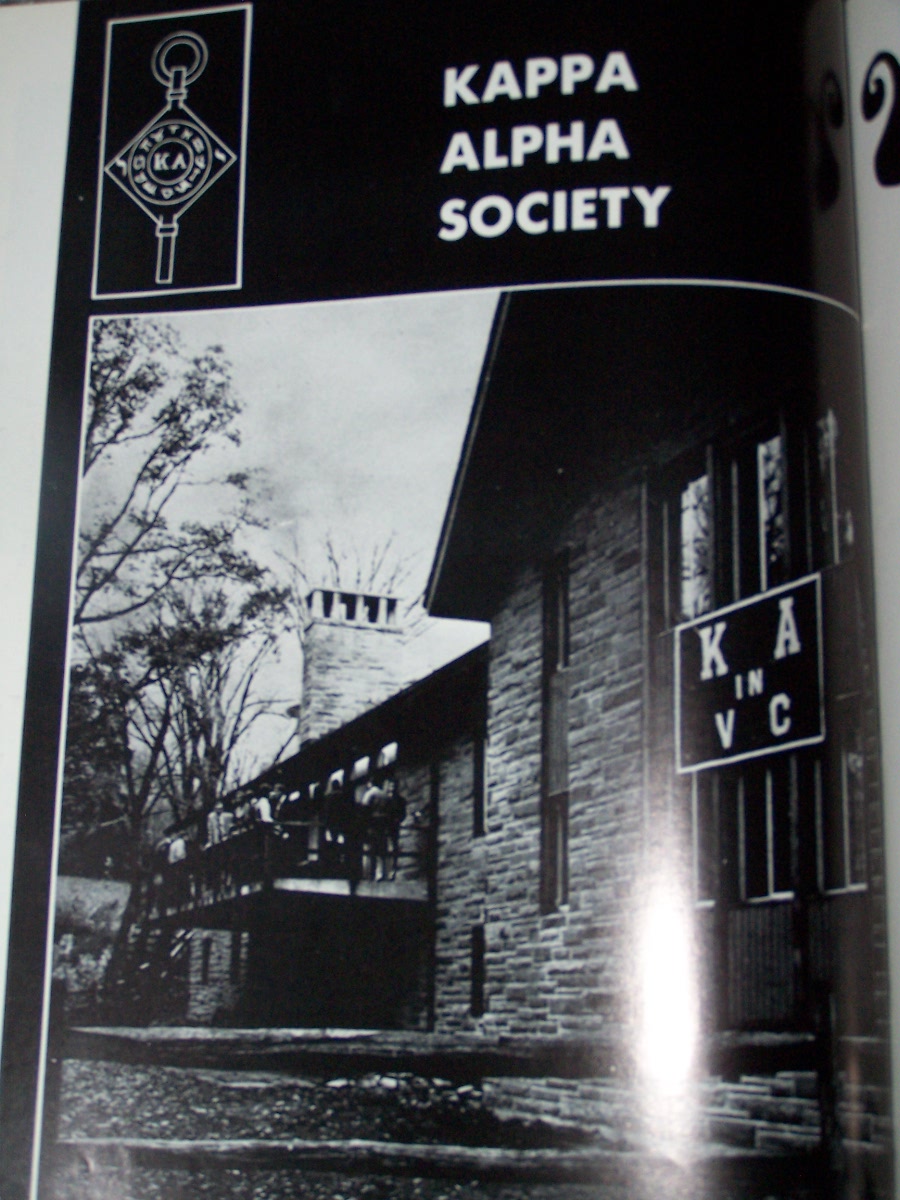
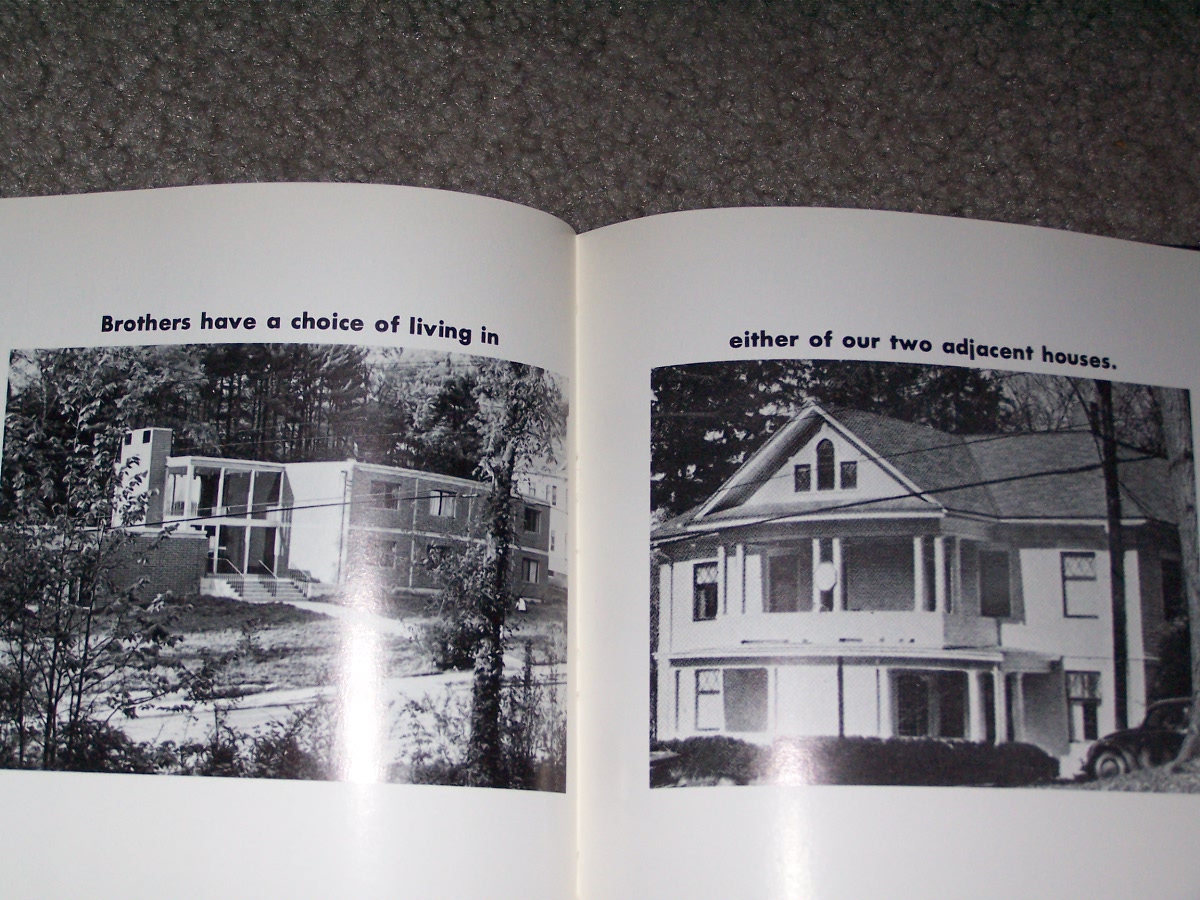
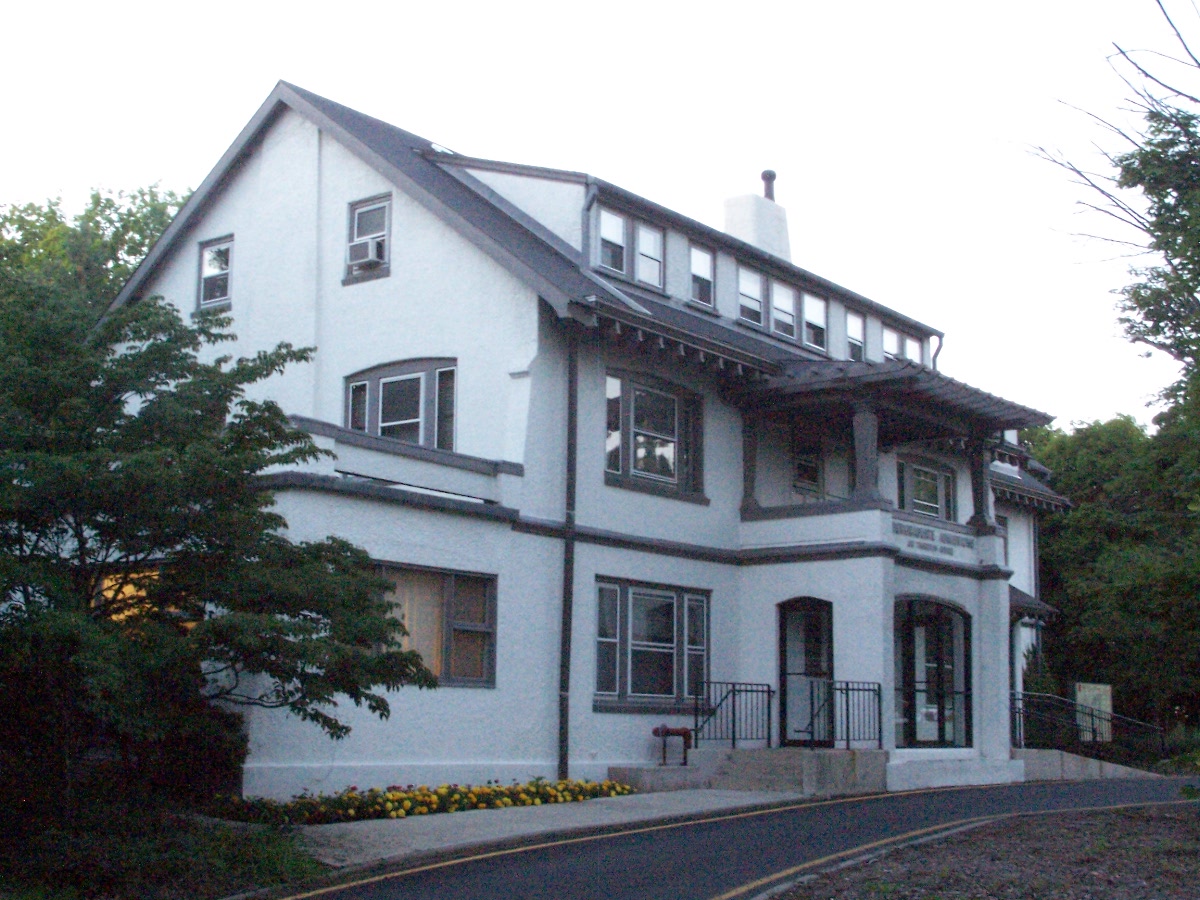
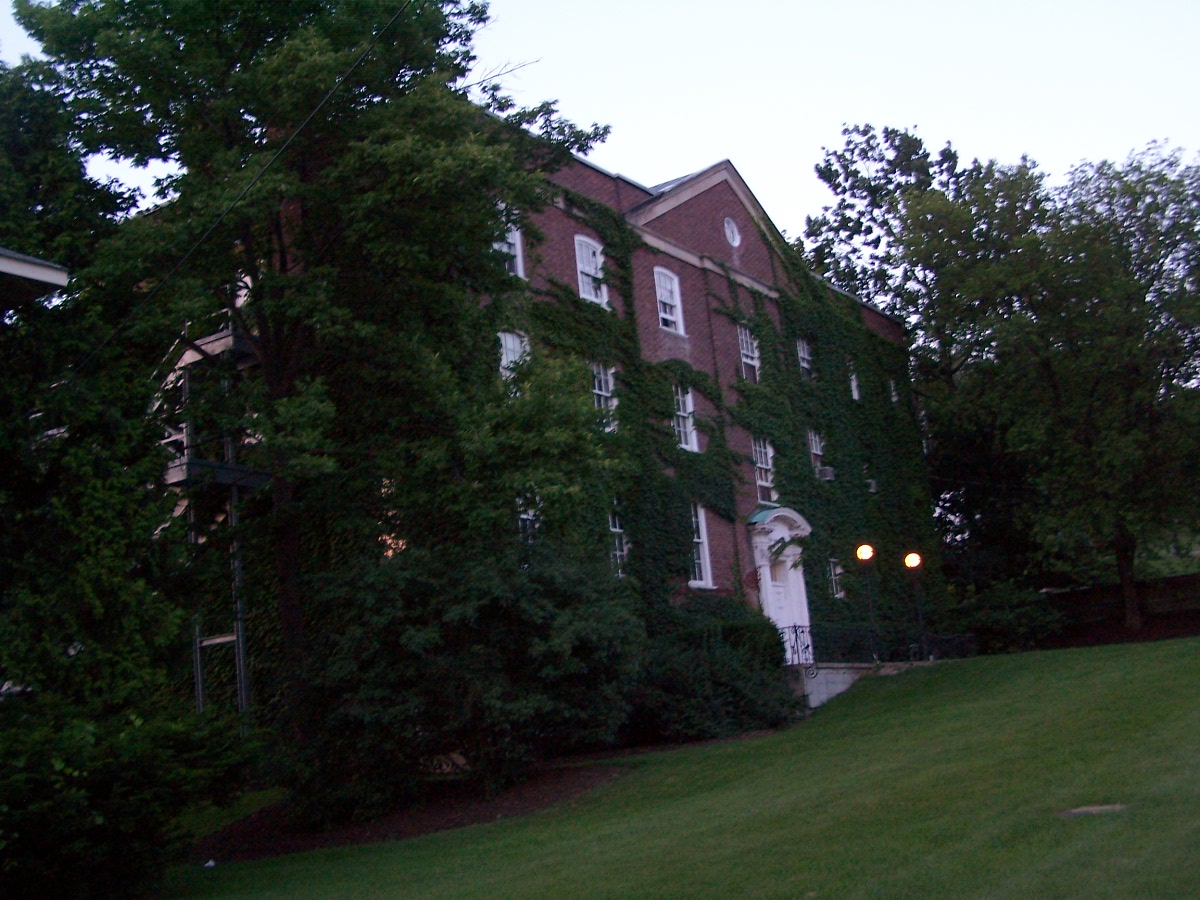
Kappa Alpha in 1970. At the time of this book’s publication, they were located at 14 South Avenue, which was designed by Vincent Cerasi and built in 1957 [1]. After they left in 1990, Alpha Omicron Pi sorority moved into the facility in 1991 and lived there for 15 years before moving to North Campus. Presently, the building is operated as a small dormitory by the university.

These are photos I have taken of the house. I took both photos to give an idea of the massing on the site. The building was designed to emulate the architectural style of a Swiss chalet.

~~~

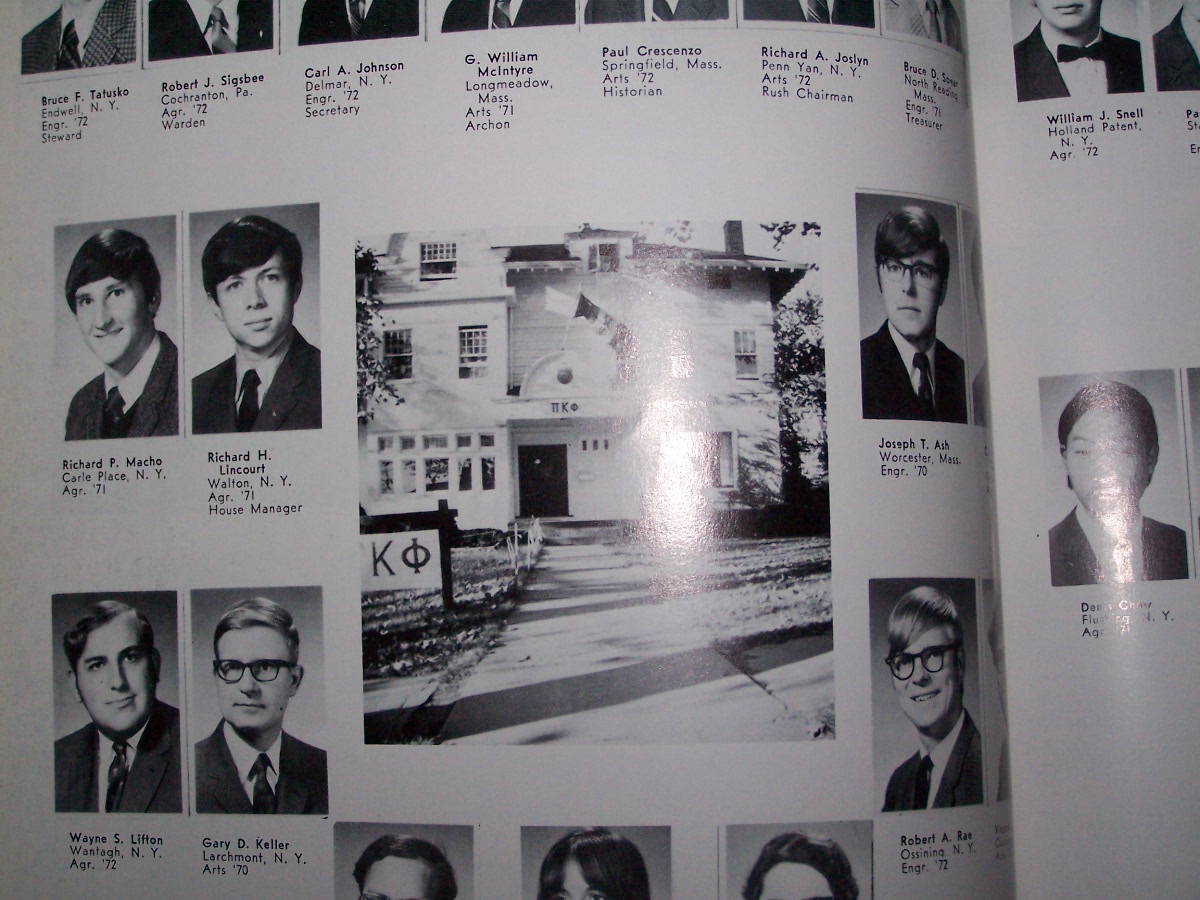
A photo of Phi Kappa Psi Fraternity house in 1970. Yes, some truly god-awful structures were designed in the 1960s (1964, in this case [2]). Thankfully, the house was renovated substantially in the past several years.

I dare say that looks a bit better. They affectionately call the building “The Gables”.

~~~

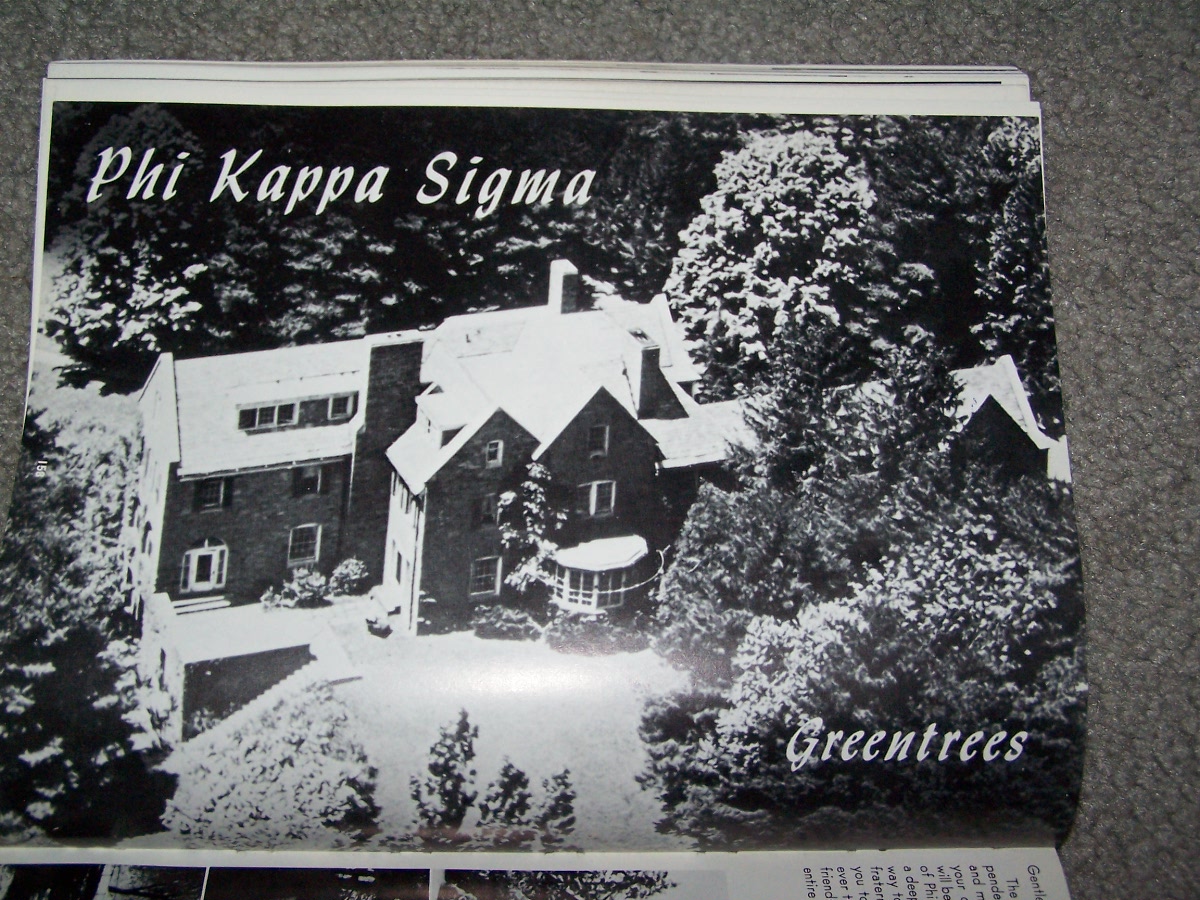
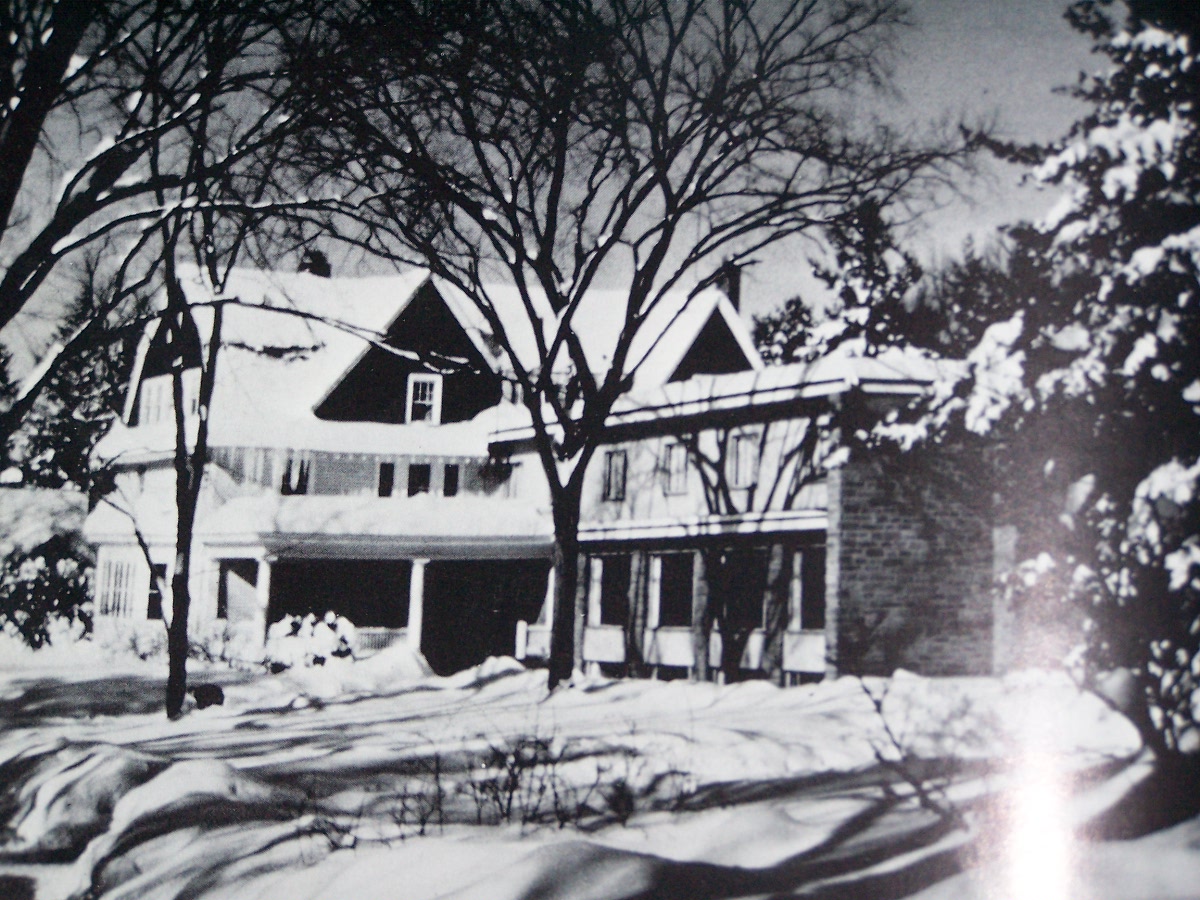
The house of Phi Kappa Sigma in 1970, which they called “Greentrees”. This has to do with the house sitting on seven heavily forested acres (a nifty youtube video by a former Skull is where I draw that from [3]). The house also apparently had a pool. Today, the house is the property of Pi Kappa Phi, who purchased the 12,000 sq. ft property for $300,000 in 1991 (apparently though, renovations set them back another half million dollars [4]).

~~~

The house of Theta Chi Fraternity in 1970. The chapter had been here since 1924 [5]. Sometime afterward (between 1972 and 1993, from what I can find), they moved to their Ridgewood Road location. Kappa Alpha Theta moved into this house sometime after 1980 when they came back to campus. (My personal guess is 1980, but I was the idiot who thought he could just pull out a Cornellian and double-check at Olin Libe this evening. Ironically, Olin doesn’t have them right now).

EDIT: Apparently, I was also dumb enough to think I would find it through the Cornellian. Theta Chi never had a picture taken for the 1970s or early 80s, and Theta’s are all interior photos. It looks like a trip to Kroch’s Rare Manuscripts might be in order. If they weren’t open the same hours I worked…

~~~

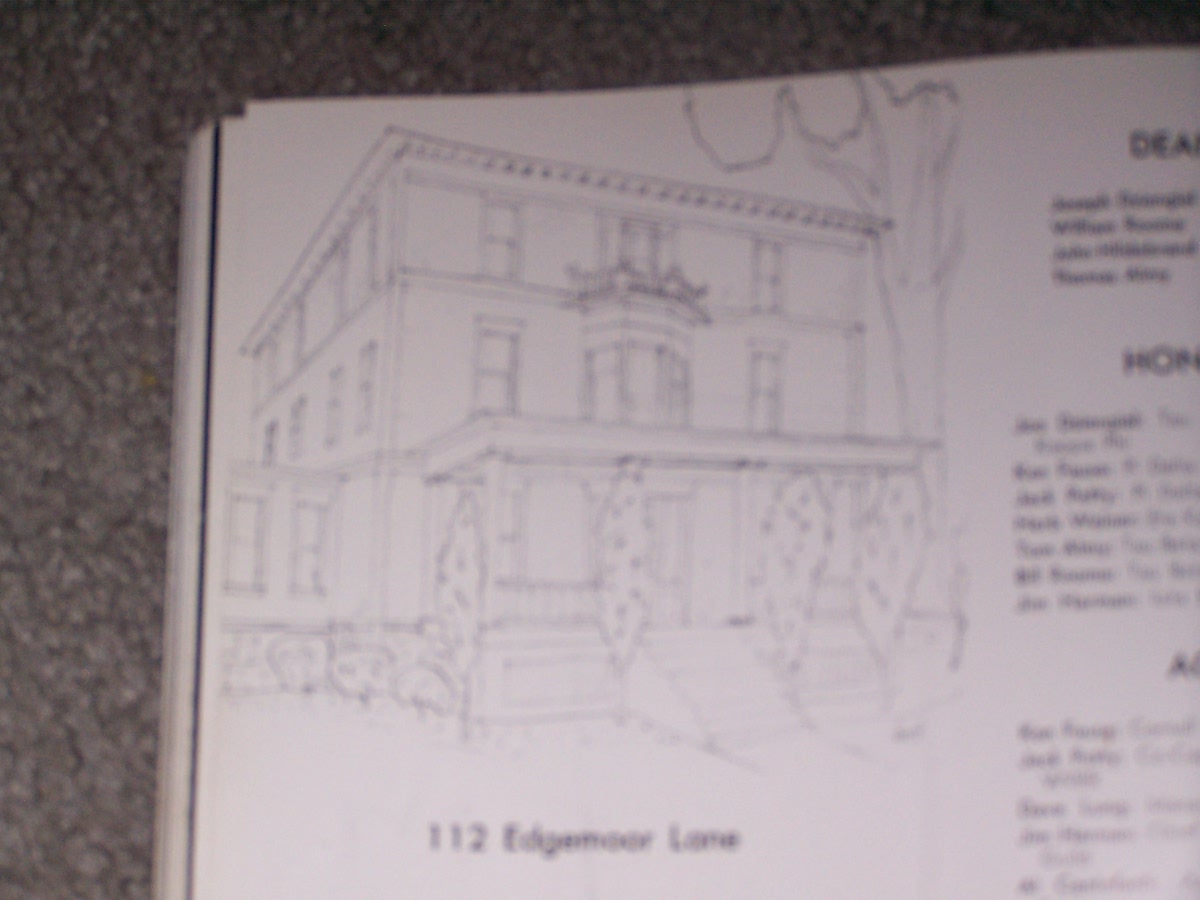
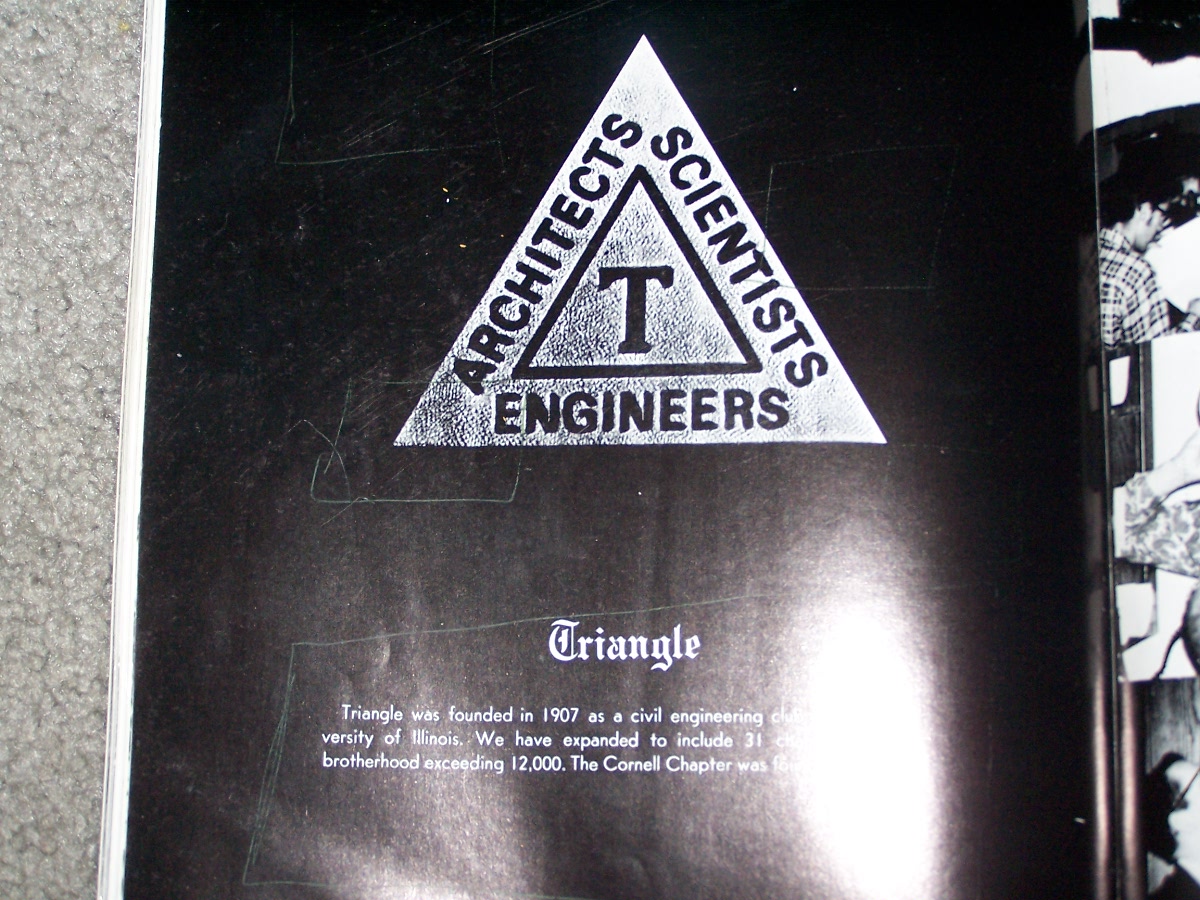
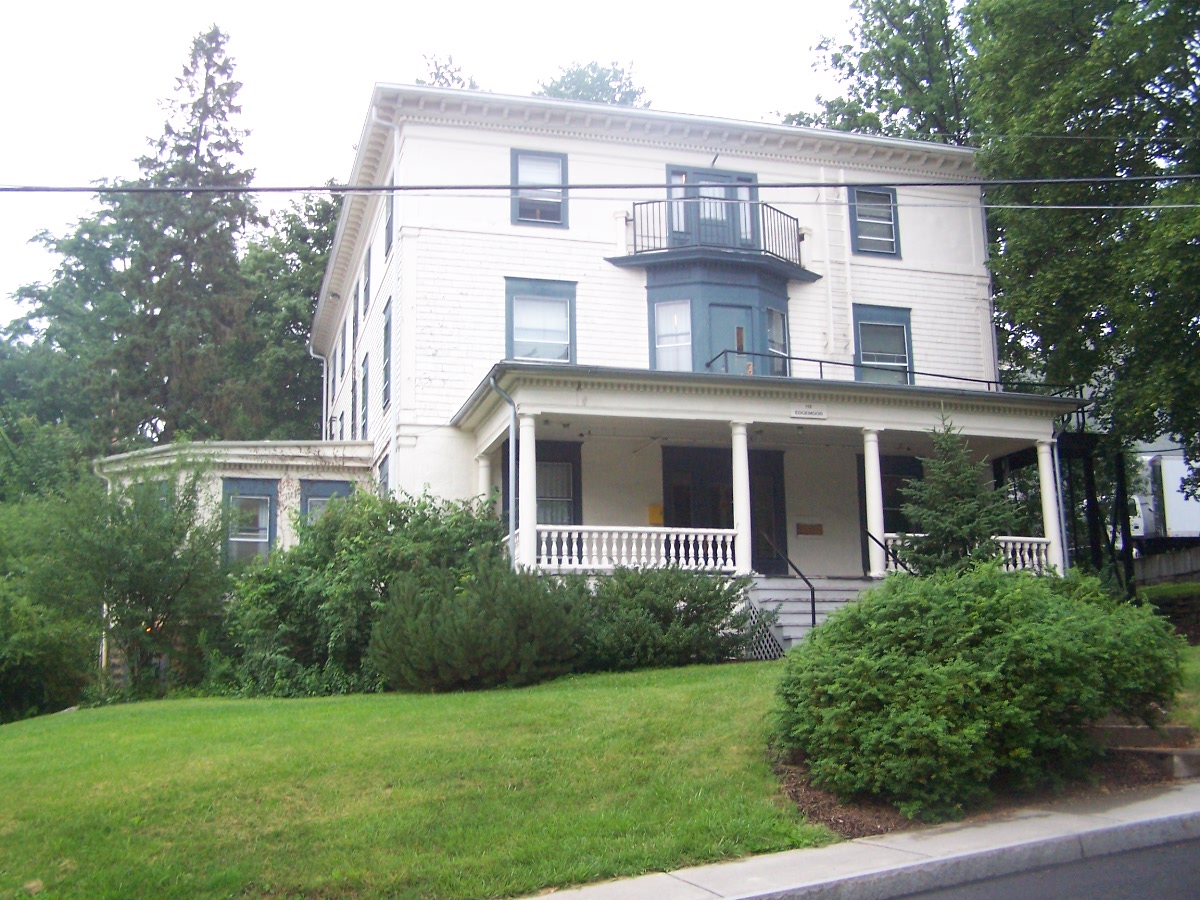
Triangle Fraternity was developed under an interesting premise. The fraternity was open to architects, “scientists”, and engineers. For example, an atmospheric science major could join, but a hotelie could not. Nor could biology students, for that matter. I’m sure it made for interesting arrangements in deciding if certain individuals were eligible. Regardless of the complexities of their membership, the fraternity resided at 112 Edgemoor until they folded in 1985 under order of their National, because their numbers were so low at Cornell (we’re talking single digits here). Today, 112 Edgemoor is a 21-person dorm owned by the university (and I spent a lot of time there; the ‘wife’ lived on the third floor, and I was in her room more than my own sophomore year. It helped that five people in my major called Edgemoor home during their sophomore year.

~~~

Lastly is Zeta Psi.  Zeta Psi was in the process of moving from 660 Stewart to Theta Xi’s old house in 71-72, so this was published just before the move [6].

Here is the same house today. It is currently used as co-op.

[1] http://www.fs.cornell.edu/fs/facinfo/fs_facilInfo.cfm?facil_cd=4724

[2]http://www.phikappapsi-cornell.org/public2.asp

[3]http://www.youtube.com/watch?v=jpC6vx7LTI4

[4]http://www.cornellpikapp.com/history.php

[5]http://www.thetachi.org/REPOSITORY/UNMANAGED_CONTENT/History/pdf/p147-p149%20Lambda_Cornell.pdf

[6]http://www.psiofzetapsi.org/History.html


Random North Campus Photos

20 07 2008

For the prefrosh—

Clara Dickson Hall (left interior corner)

Bauer Hall

Court Hall (left) Kay Hall (right)

Mews Hall

Balch Hall (NE corner)

Risley Hall (with a berry tree in the front, and new brick entry ways)

Akwewon (prononuced Ah-GWAY-go, I think). 

Jameson (High-Rise 5 looks exactly the same).

Hurlbert House (EcoHouse)

The Low-Rises; since they all look the same, one photo is all that is necessary.

Appel Commons (left) and Helen Newman Gym (right).

For more info on these buildings, please see the north campus blog entry.


Historical Fraternity Rush Booklet, Part 2 of 3

18 07 2008

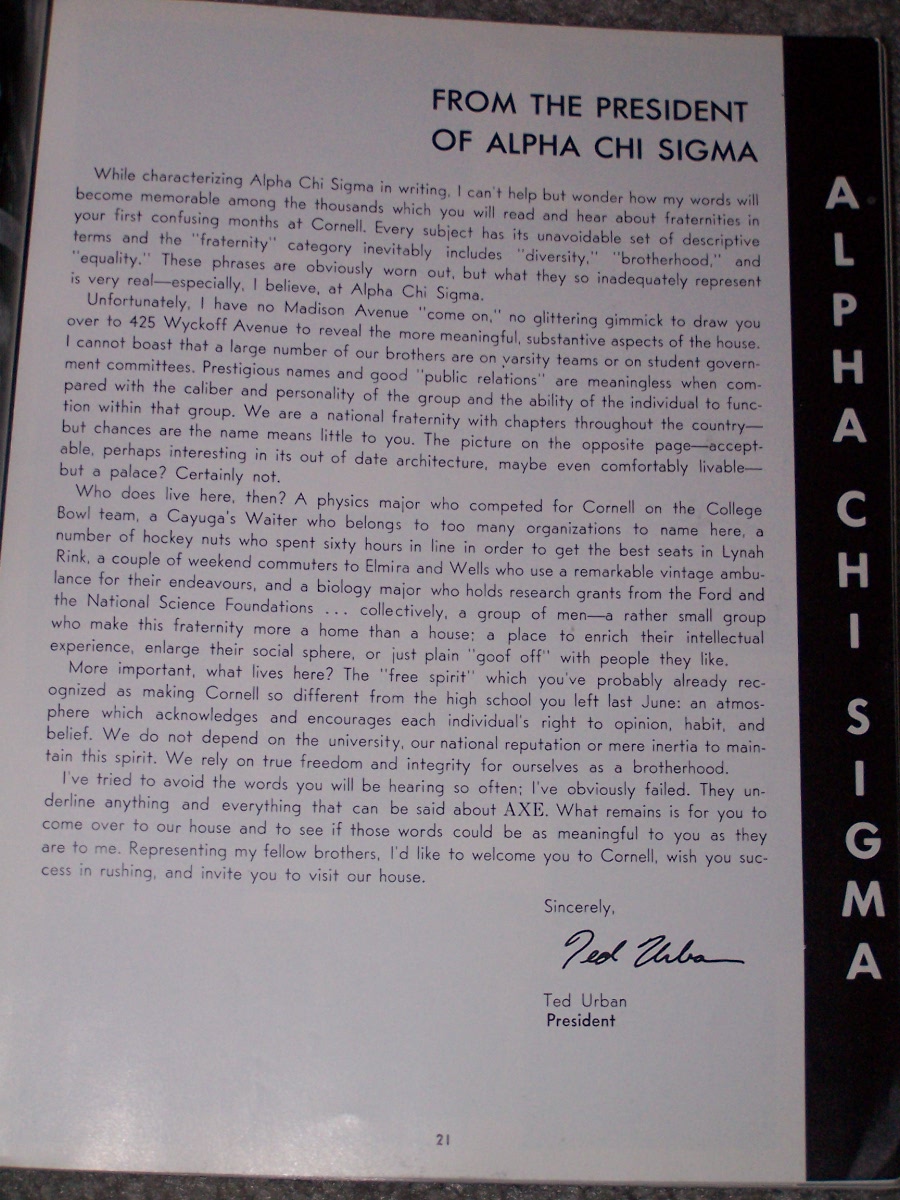
Going back to our fantastic fraternity guide from 1970, here’s the entry for Alpha Chi Sigma, the chemistry fraternity, located at 425 Wyckoff Avenue on North Campus (since 1955). According to the Tau chapter website, the house previously belonged to a sorority, and was built in the “silent-film era” [1]. The third floor rooms were added after the initial construction. The house became co-ed the year after this was published, in 1971.

The “demise” of Alpha Chi Sigma as an IFC Chapter is a bit unique. By the 1980s, the brotherhood consisted mostly of graduate students, and they lost interest in being a part in the IFC. From their website,

Tau lore suggests that the brothers nominated a dog to be their IFC representative at one point during this era.”

By the end of the 1980s, membership was virtually nothing, and the chapter withdrew from the IFC. By 1994, it was revived, but as a professional organization alone. Today, members still live in the house, but members of other frats can join, and it is not a member of the IFC.

***

The above photo is that of the Phi Sigma Epsilon house in 1970. The fraternity and all of its chapters merged with Phi Kappa Sigma in 1985, one of the largest mergers of fraternal organizations ever recorded. In the case of Cornell, where both existed, the result was that ΦΣΕ closed its house.

The house belongs to Alpha Chi Omega Sorority today.

***

Between 1967 and 1984, when AEPi was inactive, Sigma Alpha Mu utilized their property. Here we can see that both of these houses on the 200 block of Thurston Avenue are technically “Sammy” houses; as history would have it, AEPi would regenerate in 1984, and SAM would move to the Phillips House by 2004.

The current house is known in some documents as Phillips House, but I am unable to locate the source of the name. Possibly, it has something to do with the former landowners of where the house, at 10 Sisson Place, sits now. It was built in 1956 for Chi Omega sorority [2], and functioned as their house (save for a period when Chi Omega didn’t exist) until they folded in 2003. Sigma Alpha Mu bought the property shortly afterwards. The hipped roof is a later addition to the house (the original roof was flat).

***

The house of Phi Lambda Phi Fraternity, in 1970. As mentioned previously, this historically Jewish fraternity merged with Beta Sigma Rho within a couple years of this publication (by 1972-1973). Well, the house was eventually used by Cornell for its undergraduate admissions office (imho, the happiness inside died with each rejected application—the place is rumored to be haunted [3]).

[1]http://rso.cornell.edu/alphachisigma/history.htm

[2]http://www.fs.cornell.edu/fs/facinfo/fs_facilInfo.cfm?facil_cd=4766

[3]http://en.wikipedia.org/wiki/Cornelliana


Historical Fraternity Rush Booklet (Part 1 of 3)

15 07 2008

So, as a special treat, I managed to get a hold of the 1970-1971 fraternity rush booklet. I figured it would be interesting to see some of the changes between the present Greek system and the system nearly forty years ago. I’m dividing it up into portion because there are some features I want to cover before I show them from a historical perspectives (i.e. certain photos have to be taken before I post the old photos). Sorry for the glare on the pages!

So, without further ado…

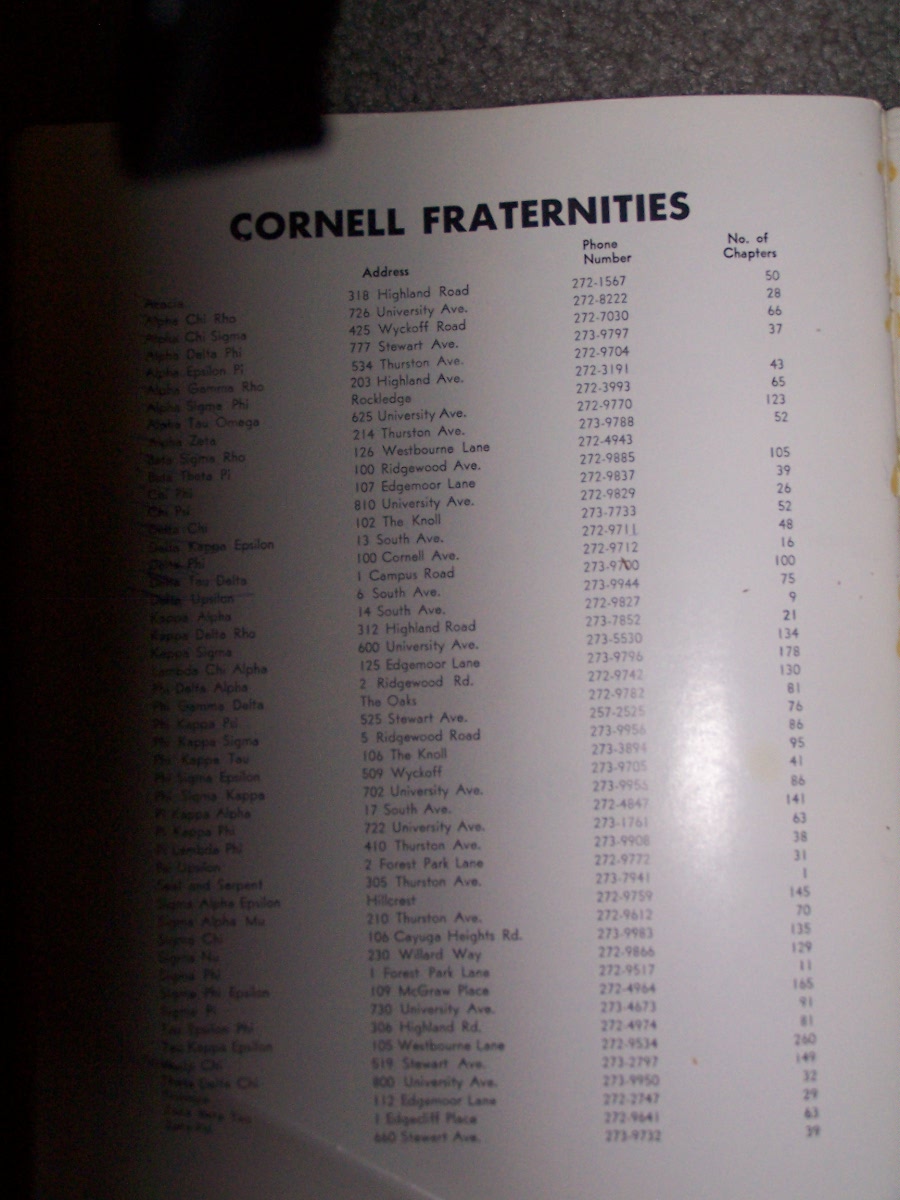
This was the list of fraternities on Cornell campus at the time of publication. There are 48 total, and the MGLC didn’t exist at this time either. This was published after Theta Xi announced it would close in 1971, but before Beta Sigma Rho and Pi Lambda Phi joined together in 1972-73. Kappa Alpha closed in 1990 (see the other entry concerning its recolonizing), and Triangle’s national council suspended Cornell chapter in 1985, never to return [1]. Phi Kappa Sigma closed in 1991, Theta Chi left in 1999, although they attempted to recolonize in 2003 [2] (my guess is that it didn’t work out), and Phi Sigma Epsilon merged with Phi Sigma Kappa in 1985 [3]. I’ve already gone over Alpha Chi Rho in a previous entry, so I think that covers the losses.

The Alpha Chi Rho entry for fall 1970. Please note that clicking the image enlarges it. It mentions how they’re experimenting with going without a house. I’d like to remind folks here that Alpha Chi Rho would close within a few years of this publication.

The old Alpha Zeta house. This was also back when the fraternity was still men only (It went co-ed in 1981).

The Beta Sigma Rho house in 1970. This was the side of the apartments that I didn’t take with my camera; I’m pretty sure that staircase is no longer there and its heavily wooded, which made that angle difficult to take pictures from.

That worn down house, 722 University Avenue? In 1970, it was Pi Kappa Phi’s House (like I mentioned previously, Alpha Chi Rho was next door at 736 for a time, and we can see they had no house at this point in time).

This is the house next door, 736 University Avenue. It was built in the 1920s.


[1]http://www.triangle.org/about/history/chronology/

[2] http://www.highbeam.com/doc/1P1-71478145.html
[3]http://en.wikipedia.org/wiki/Phi_Sigma_Epsilon


Cayuga Heights Photo Tour, 7/12

12 07 2008

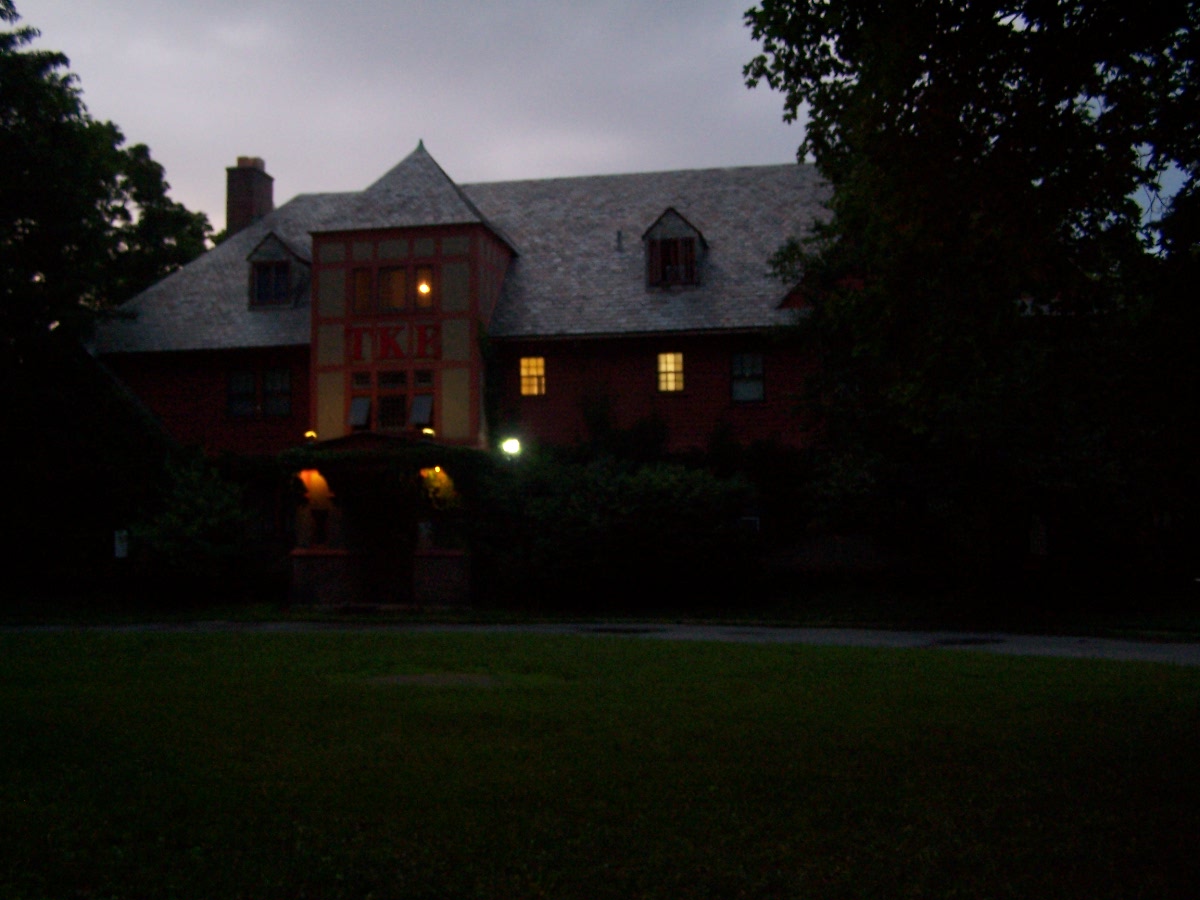
The house of the fraternity Tau Kappa Epsilon. The house has been occupied by the fraternity  since 1927. TKE was originally Kappa Psi, which became the Sigma Chapter of TKE in 1923. During this same time period, the local fraternity Scorpion was founded. The first TKE disbanded due to the hard times caused by the Great Depression, but Scorpion became the new affiliate of TKE (hence Scorpion chapter, which in my opinion is a really cool chapter name) in 1940. The fraternity Sigma Phi Sigma also merged with TKE in 1941 [1].

Farther up Highland we have the fraternity Tau Epsilon Phi. Um, their house could look better. I felt a little bad taking a photo of it and knowing I’d be putting it up, because it really was in shabby condition. The house was actually once the wing of the old house; they leased the property in 1949, and the wind was built in 1961. However, a fire “of unknown origin” destroyed the original house, so a new house was built connected to the relatively new wing in the mid 1960s. The building was last renovated in 1977 [2].

Speaking of which, this is the Kappa Delta Rho fraternity house. The house was built as an experiment by the architecture school in 1909 to teast the viability for poured cement for all the outside walls. KDR first occupied this property in 1952, and the new wing (the part on the left) was added in 1964 [3]. At least KDR is raising funds to repair the roof, it looks like it might need it.

So this was a treat to find. Today, this is the Westbourne Apartments building. Back in the day, it used to belong to a fraternity called Beta Sigma Rho. Beta Sigma Rho, or Beta Samach as it was originally called, was founded in 1910 by four Cornell students who were excluded from the current system because of their Jewish religion. By 1950, there were thirteen chapters. However, all good things come ot an end. Beta Sigma Rho’s Alpha Chapter, suffering from dwindling interest, merged with Pi Lamda Phi in 1972. The Pi Lams moved in to Beta’s house, and the organization adopted the name Pi Lambda Phi. The original Pi Lambda Phi house was closed (today, it’s the undergraduate admissions office). Then the Beta’s house was closed in 1978, and that ended their run at Cornell. One chapter survives; the Beta chapter at Penn state felt it would be better to go independent in 1975, so they did. Today, they have survived there as Beta Sigma Beta fraternity [4].

The house of Alpha Gamma Rho (AGR) fraternity. Originally known as Caduceus chapter,  (now Zeta- for those of you wondering, a caduceus is the double helix with the snakes [5]), Alpha Gamma Rho has occupied this property since 1916, with the current house being constructed in 1961 [6]. Alpha Gamma Rho is the other agricultural fraternity (AGR = agriculture…like we couldn’t figure that out.)


[1]http://www.scorpiontke.org/content/section/6/30/

[2]http://www.dos.cornell.edu/dos/greek/chapter_details.cfm?id=3271

[3]http://www.dos.cornell.edu/dos/greek/chapter_details.cfm?id=3251

[4]http://en.wikipedia.org/wiki/Beta_Sigma_Beta

[5]http://en.wikipedia.org/wiki/Caduceus

[6]http://www.dos.cornell.edu/dos/greek/chapter_details.cfm?id=4669


Random Photo Tour 7/6/08, continued

7 07 2008

The house of Alpha Sigma Phi Fraternity, known locally as Rockledge (which is the name of the house). The name fits because the house is built on the cliff overlooking Ithaca Falls. The house was built around 1900, with the fraternity moving in during 1913, four years after the chapter was founded. Cornell’s first president, A.D. White (1832-1918 ) was a member of the Yale Chapter during his college days [1].

The house of Omega Tau Sigma, a professional fraternity for veterinarians. I didn’t realize professional fraternities did this sort of thing. The house has been in their name since the 1920s. And in my opinion, for a small house, I really like the uncluttered appearance from the outside. It vaguely reminded me of Scandinavian houses. Until I looked it up just now, I honestly thought the house was a regular house that kept the letters as a throwback to history.

The former Redbud Woods site. I really don’t want to try and explain this, but a former patch of forest that was part of the old Treman Estate was bulldozed for a parking lot in 2005. The whole idea did not go over well. Student occupations of Day Hall, protestors from the college and city (including former mayor Ben Nichols), and a little backstabbing along the way. I’m not one for drama, I prefer my history untainted; and as you can see from the plaque that the city okayed but Cornell protested, the history is still a little too emotional for the local powers-that-be. for those who want to read the full story, here’s a wikilink: http://en.wikipedia.org/wiki/Redbud_Woods_controversy

Alpha Tau Omega fraternity house. The house was built in 1900 and has been continually in ATO’s posession. Major renovations were completed in 1989, and once again in the past year [2]. The house was originally designed by an alum of the house, although it used to have a mansard roof, judging from old photos. Due to renovation and structural issues, the chapter has not had a house in the past two years. Judging from this photo and the state of the grounds as I walked by, it looks like it will be reoccupied fairly soon.

The house of Phi Sigma Kappa. So, thankk you Phi Sig for making it such a pain in my arse to find information about your house. I can say this house was built ca. 1900, and has always been in the posession of Phi Sig. I only know that because I had to ask someone who’s in the house. It is in need of some repair, but at least the front side, with its columns, is still imposing.

722 University Avenue, built in the Colonial Revival Style around 1900. This house most recently served as a home to Alpha Chi Rho fraternity. Alpha Chi Rho was on campus from 1908-1978 (it was next door at 736 for some of that time), and when they tried to recharter in 1991-92, they lived here. I believe the chapter closed once again in 1997-98.

EDIT: Thanks to a tip from JB, I was able to find that the house was occupied by Lambda Upsilon Lambda, the Latino fraternity, as recently as 2004. The house is currently unoccupied.


[1]http://www.alphasig-rockledge.com/history.php

[2]https://www.atocornell.org/public1.asp

[3]http://www.bookrags.com/wiki/Cornell_West_Campus


Random Photo Tours, 7/6 Edition

6 07 2008

So, I decided to do a little photo tour in my spare time.  Just imagine it to be like a bus tour, without the bus and the annoying woman in front of you with the oversized sun glasses.

This house, 210 Thurston Avenue, served as Sigma Alpha Mu’s house from 1947-2004.  Today, the house serves as Phi Delta Theta’s annex. Phi Delta Theta, nationally known as a dry social fraternity, operates their chapter house as a dry house, and the annex as….well, not a dry house.

The house of Kappa Sigma fraternity [1]. The house was built by a German nationalist who fled at the onset of WWI. The house was then bought by Claude Smith, the president of the Ithaca Gun Company, and remained his residence until 1937. Sigma Alpha Mu occupied this house in the 1940s, and by 1952, the house has been sold to Kappa Sigma.

The house of Alpha Epsilon Pi. this house was built in 1957 [2]. With the except of reorganization periods, such as 2004, the house has been continuously occupied by AEPi.

The Delta Chi Fraternity house on The Knoll. Originally founded as a law fraternity at Cornell in 1890, Delta Chi’s house was built in 1914 [3], and extensively renovated in the past two years. the fraternity did not become open for all men to pursue membership until 1922. The Cornell chapter was reactivated in 2004, and lived in Sigma Phi Epsilon’s house and AOPi’s old house for the interim of renovation. Sig Ep reorgainzed around the same time, so the logistics of two fraternities in one house undoubtedly led to a couple of issues.

Tha Alpha Zeta Fraternity House [4]. Alpha Zeta is one of the two ag-based fraternities (membership is virtually all from CALS), the other being Alpha Gamma Rho. Alpha Zeta is nearly unique in that it is co-ed. The originally house was built in the 1880s, but torn down in 1991. The portion on the right was built in the 1950s as an addition to the old house; the portion on the left, built in 1992-93, is on the old house’s footprint.

Phi Kappa Tau Fraternity house, also on The Knoll. The house was originally built in 1901 for John Tanner, a Cornell mathematics professor. The house was sold to Phi Kappa Tau in 1910, when it was still a local fraternity, named Bhandu [5]. The local fraternity marged with another to form Phi Delta Sigma during WWI, and became a chapter of PKT in 1930. The fraternity closed for several years in the 1990s, during which it was rented to the Big Red Band. It was recolonized in 2000.

Alpha Xi Delta sorority house. AZD Cornell was rechartered in 2004 after a forty-year hiatus. It was selected from several bidding national sororities to replace the spot vacated bt the closure of two sororities in the early 2000s- Delta Phi Epsilon and Chi Omega. As a matter of fact, this used to be Delta Phi Epsilon’s house. (Chi Omega’s is now Sigma alpha Mu’s current house).


[1]http://www.dos.cornell.edu/dos/greek/chapter_details.cfm?id=3252

[2] http://www.aepibeta.org/FoundingTo1983.html
[3]http://www.cudx.com/cms/index.php?option=com_content&task=view&id=13&Itemid=28

[4]http://www.alphazeta-cornell.org/public2.asp

[5]http://www.cornellpkt.com/spage.php?id=1163279207&mainID=1159743751


Aerial of Collegetown, Ithaca

26 06 2008

Damn I love this photo.


http://freepages.genealogy.rootsweb.com/~springport/pictures146/27DV7522.jpg