Historical Fraternity Rush Booklet, Part 2 of 3

18 07 2008

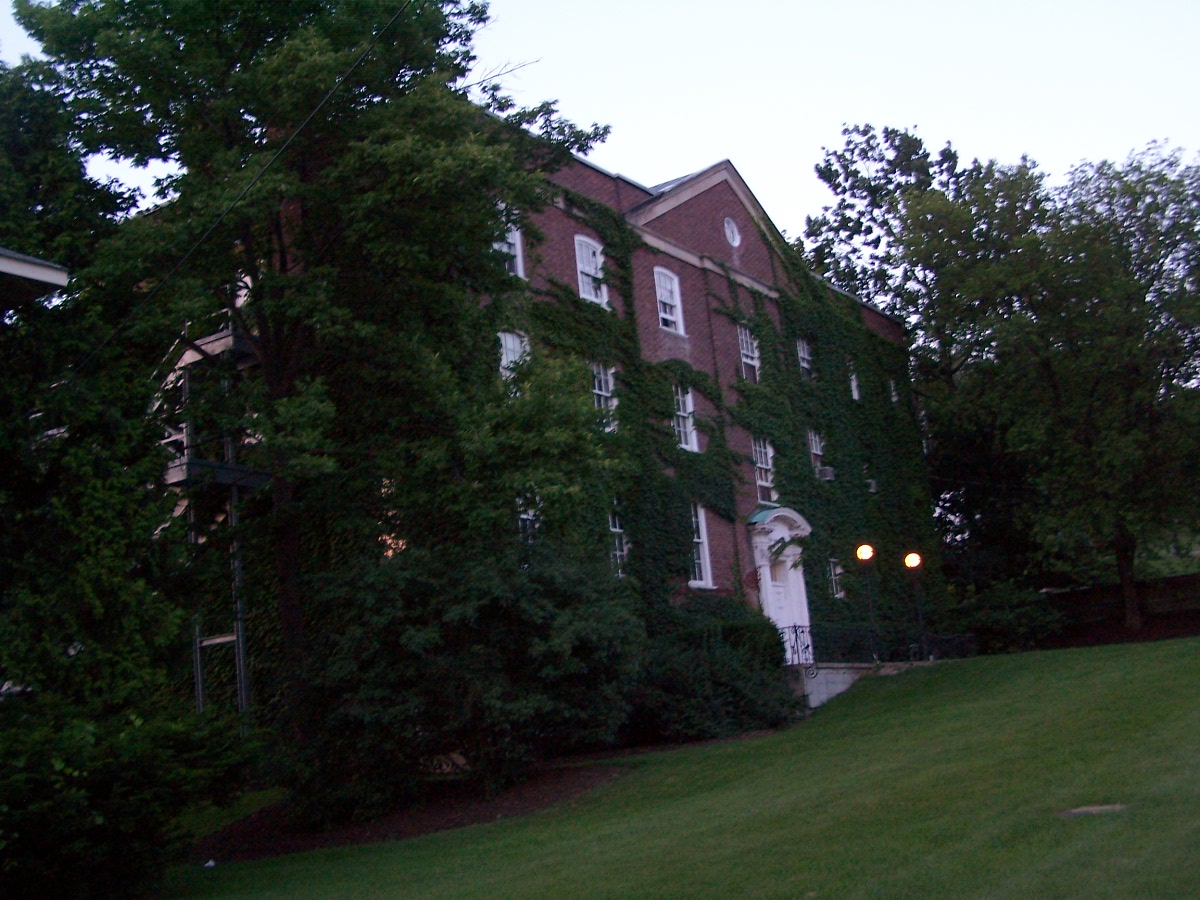
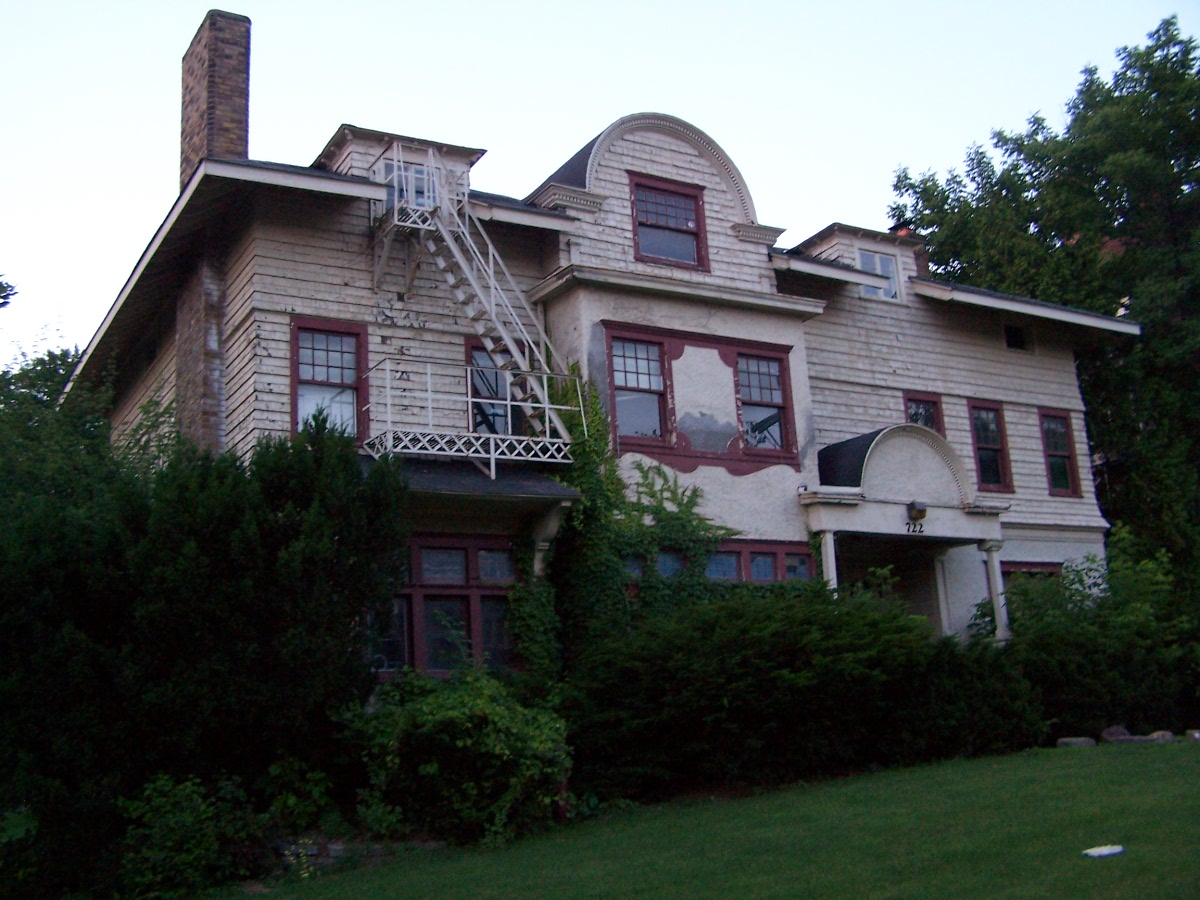
Going back to our fantastic fraternity guide from 1970, here’s the entry for Alpha Chi Sigma, the chemistry fraternity, located at 425 Wyckoff Avenue on North Campus (since 1955). According to the Tau chapter website, the house previously belonged to a sorority, and was built in the “silent-film era” [1]. The third floor rooms were added after the initial construction. The house became co-ed the year after this was published, in 1971.

The “demise” of Alpha Chi Sigma as an IFC Chapter is a bit unique. By the 1980s, the brotherhood consisted mostly of graduate students, and they lost interest in being a part in the IFC. From their website,

Tau lore suggests that the brothers nominated a dog to be their IFC representative at one point during this era.”

By the end of the 1980s, membership was virtually nothing, and the chapter withdrew from the IFC. By 1994, it was revived, but as a professional organization alone. Today, members still live in the house, but members of other frats can join, and it is not a member of the IFC.

***

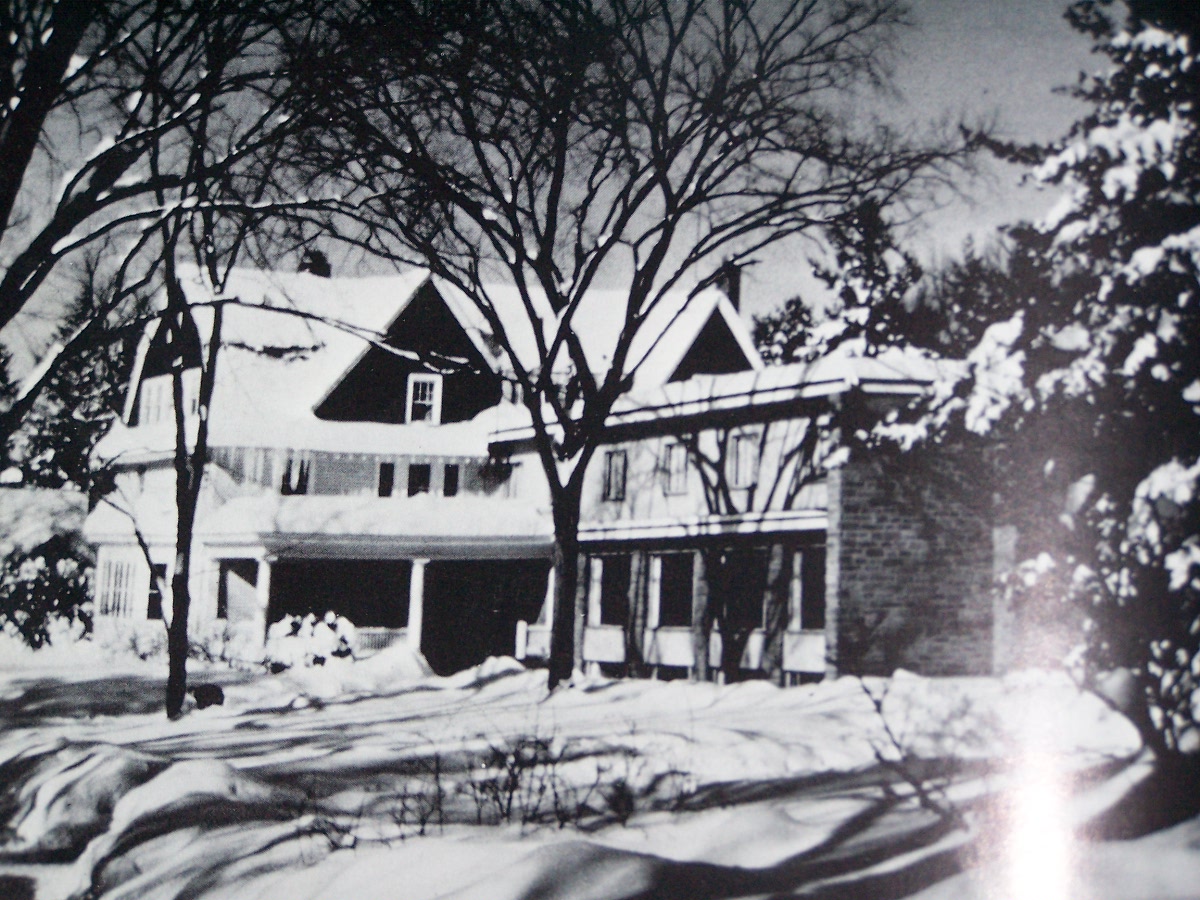
The above photo is that of the Phi Sigma Epsilon house in 1970. The fraternity and all of its chapters merged with Phi Kappa Sigma in 1985, one of the largest mergers of fraternal organizations ever recorded. In the case of Cornell, where both existed, the result was that ΦΣΕ closed its house.

The house belongs to Alpha Chi Omega Sorority today.

***

Between 1967 and 1984, when AEPi was inactive, Sigma Alpha Mu utilized their property. Here we can see that both of these houses on the 200 block of Thurston Avenue are technically “Sammy” houses; as history would have it, AEPi would regenerate in 1984, and SAM would move to the Phillips House by 2004.

The current house is known in some documents as Phillips House, but I am unable to locate the source of the name. Possibly, it has something to do with the former landowners of where the house, at 10 Sisson Place, sits now. It was built in 1956 for Chi Omega sorority [2], and functioned as their house (save for a period when Chi Omega didn’t exist) until they folded in 2003. Sigma Alpha Mu bought the property shortly afterwards. The hipped roof is a later addition to the house (the original roof was flat).

***

The house of Phi Lambda Phi Fraternity, in 1970. As mentioned previously, this historically Jewish fraternity merged with Beta Sigma Rho within a couple years of this publication (by 1972-1973). Well, the house was eventually used by Cornell for its undergraduate admissions office (imho, the happiness inside died with each rejected application—the place is rumored to be haunted [3]).

[1]http://rso.cornell.edu/alphachisigma/history.htm

[2]http://www.fs.cornell.edu/fs/facinfo/fs_facilInfo.cfm?facil_cd=4766

[3]http://en.wikipedia.org/wiki/Cornelliana


Historical Fraternity Rush Booklet (Part 1 of 3)

15 07 2008

So, as a special treat, I managed to get a hold of the 1970-1971 fraternity rush booklet. I figured it would be interesting to see some of the changes between the present Greek system and the system nearly forty years ago. I’m dividing it up into portion because there are some features I want to cover before I show them from a historical perspectives (i.e. certain photos have to be taken before I post the old photos). Sorry for the glare on the pages!

So, without further ado…

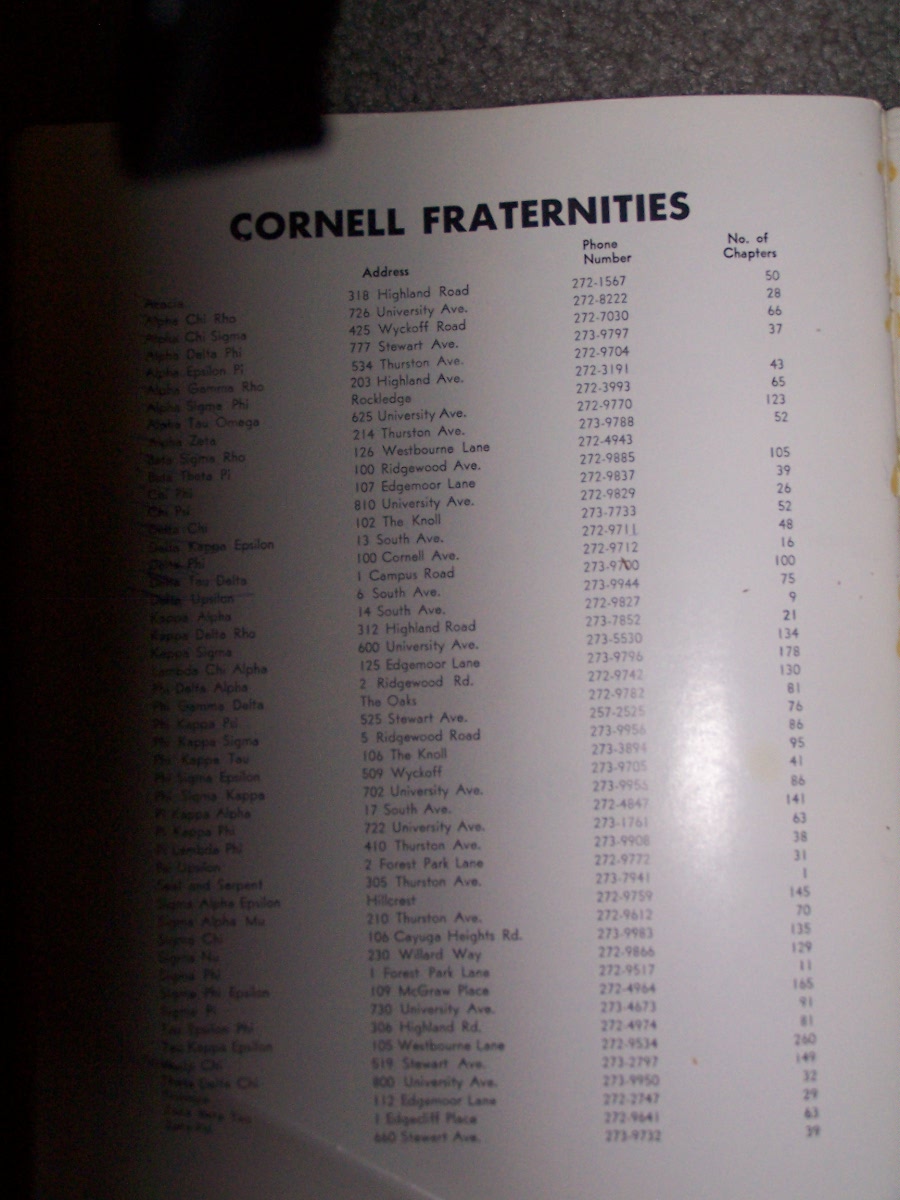
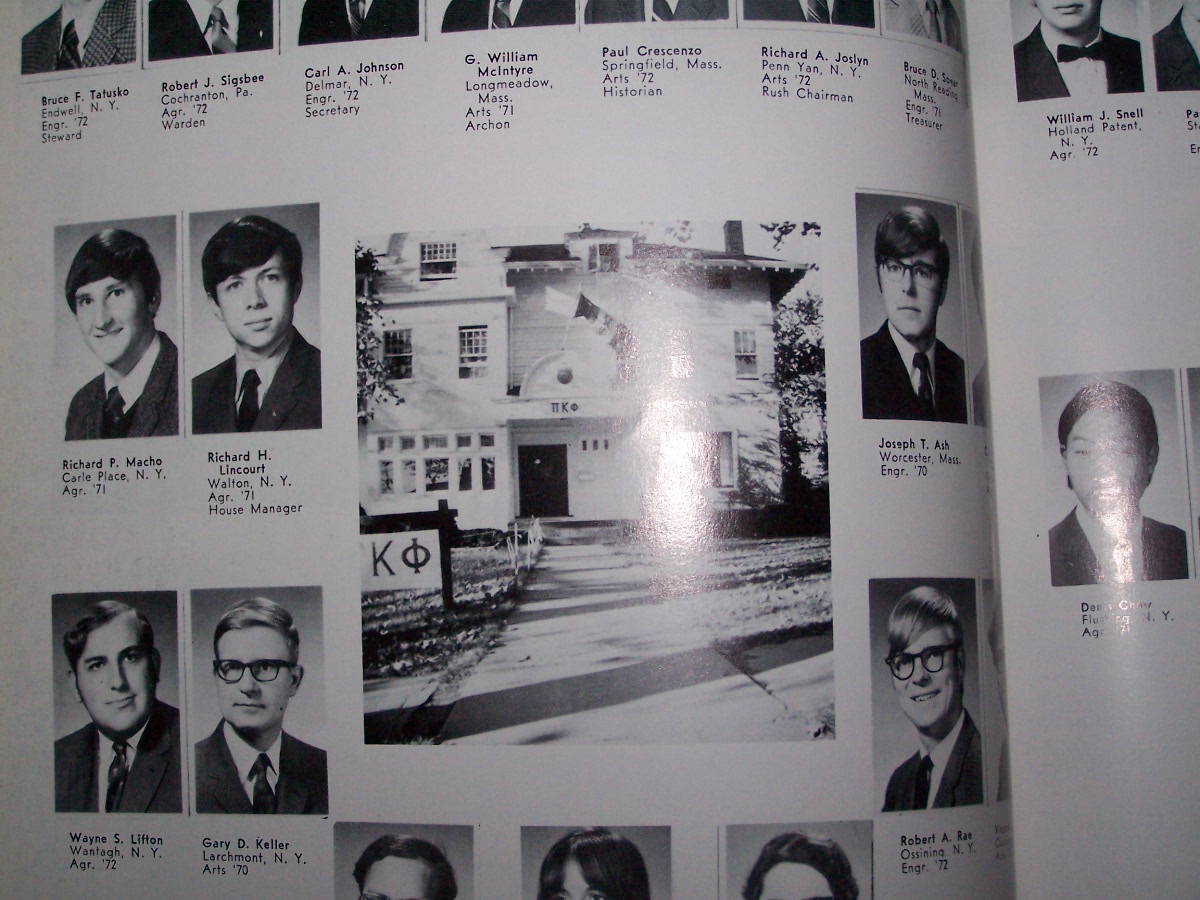
This was the list of fraternities on Cornell campus at the time of publication. There are 48 total, and the MGLC didn’t exist at this time either. This was published after Theta Xi announced it would close in 1971, but before Beta Sigma Rho and Pi Lambda Phi joined together in 1972-73. Kappa Alpha closed in 1990 (see the other entry concerning its recolonizing), and Triangle’s national council suspended Cornell chapter in 1985, never to return [1]. Phi Kappa Sigma closed in 1991, Theta Chi left in 1999, although they attempted to recolonize in 2003 [2] (my guess is that it didn’t work out), and Phi Sigma Epsilon merged with Phi Sigma Kappa in 1985 [3]. I’ve already gone over Alpha Chi Rho in a previous entry, so I think that covers the losses.

The Alpha Chi Rho entry for fall 1970. Please note that clicking the image enlarges it. It mentions how they’re experimenting with going without a house. I’d like to remind folks here that Alpha Chi Rho would close within a few years of this publication.

The old Alpha Zeta house. This was also back when the fraternity was still men only (It went co-ed in 1981).

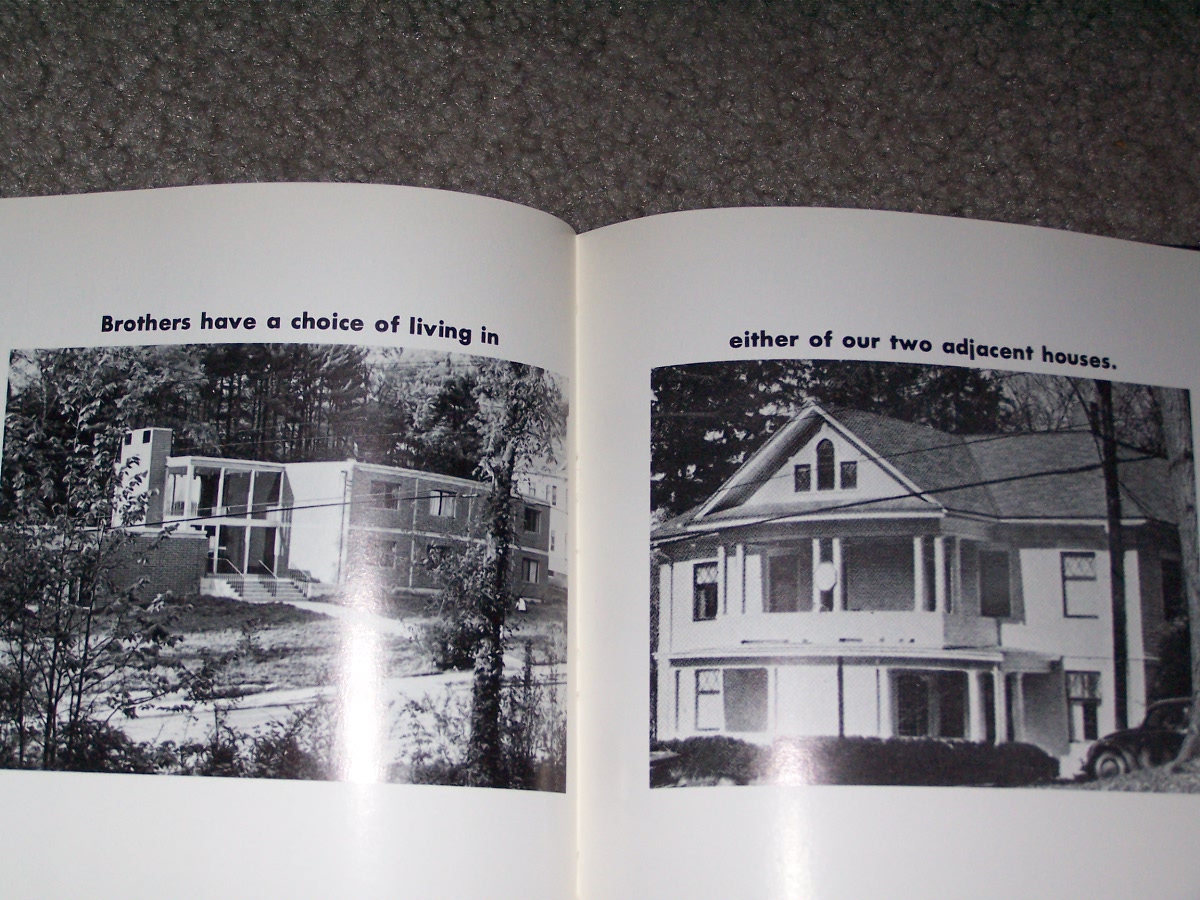
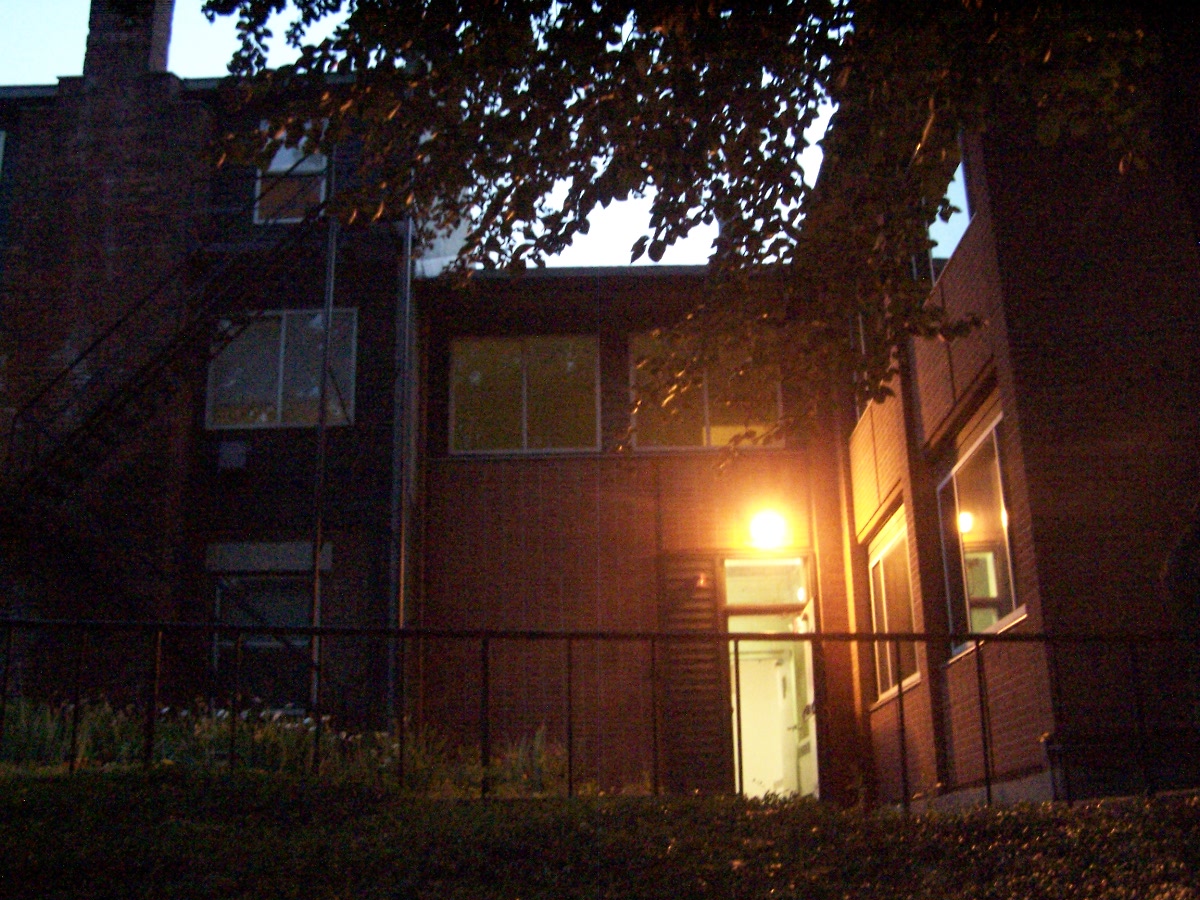
The Beta Sigma Rho house in 1970. This was the side of the apartments that I didn’t take with my camera; I’m pretty sure that staircase is no longer there and its heavily wooded, which made that angle difficult to take pictures from.

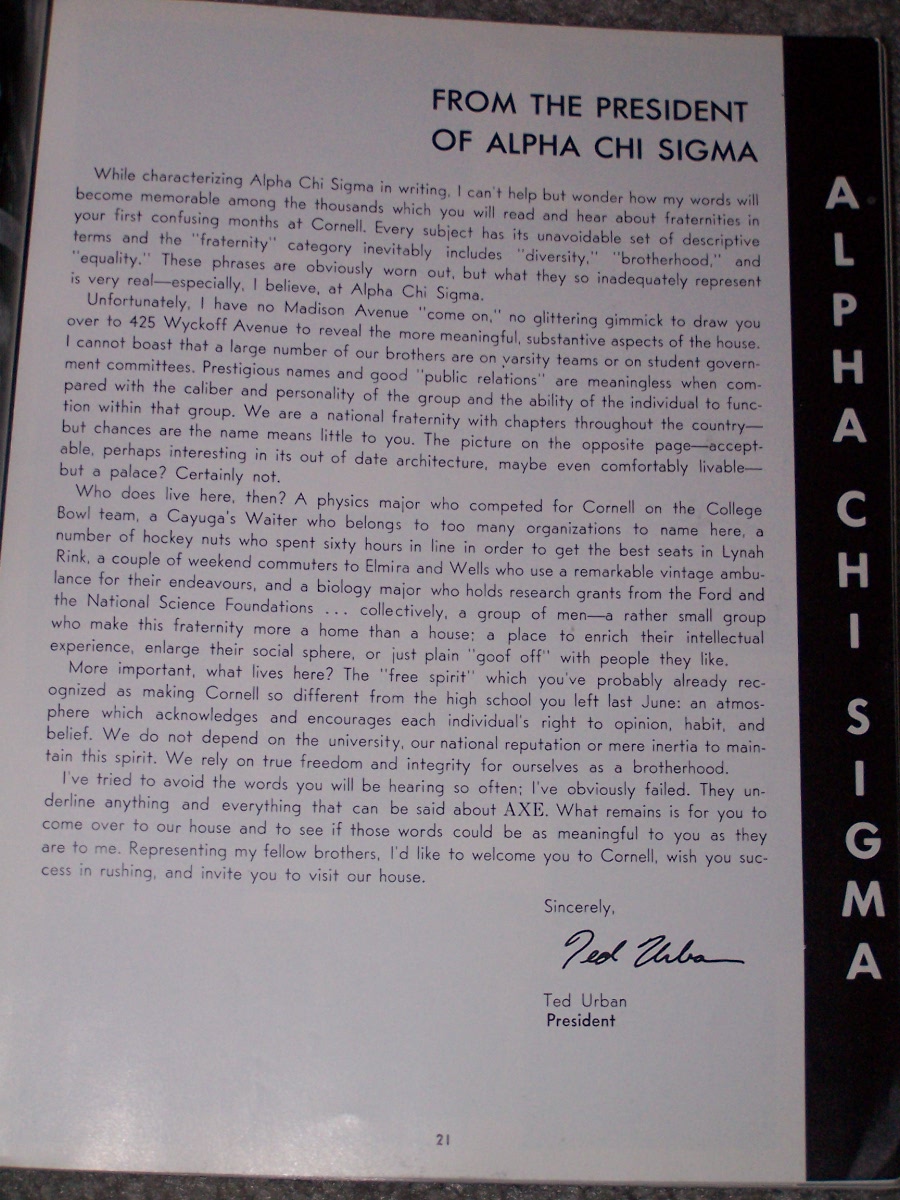
That worn down house, 722 University Avenue? In 1970, it was Pi Kappa Phi’s House (like I mentioned previously, Alpha Chi Rho was next door at 736 for a time, and we can see they had no house at this point in time).

This is the house next door, 736 University Avenue. It was built in the 1920s.


[1]http://www.triangle.org/about/history/chronology/

[2] http://www.highbeam.com/doc/1P1-71478145.html

[3]http://en.wikipedia.org/wiki/Phi_Sigma_Epsilon


When History Repeats Itself (Somewhat)

13 07 2008

So, I was glancing through the Cornell Sun website, and came across this article:

http://cornellsun.com/section/news/content/2008/07/06/alumni-board-deactivates-current-members-psi-upsilon-fraternity

July 6, 2008 – 10:37pm
By Sam Cross

In an attempt to protect the prosperity of the fraternity and the safety of its members, the alumni board of Psi Upsilon decided to shut down the fraternity until the board deems it fit. Though the members of the campus fraternity have been deactivated, the chapter maintains its official recognition in the eyes of the University.

“While Cornell University still recognizes Psi Upsilon as an active fraternity on campus, the alumni have de-activated all of its members,” said Travis Apgar, associate dean of students for fraternity and sorority affairs, in light of the recent events.

Mike Bergelson ’95, alumni president of the chapter, explained the alumni’s decision to temporarily suspend the fraternity.

“The principles of the fraternity are to foster intellectual and social environment,” Bergelson said. “While we don’t want to be too prescriptive, the alumni saw that a far too great emphasis was being placed on the social aspects and not the fraternity values of brotherhood, responsibility and democracy.”

Brothers of the fraternity did not respond to The Sun’s inquiries.

Bergelson said he did not see the decisive move as a surprise and said the alumni have been trying to resolve problems with its current members for over a year.

“Last year at our annual meeting, the alumni told the current brothers that the house had some problems,” Bergelson said. “The physical house was not being properly kept, many brothers were not involved, along with other things. We spent a lot of time with the undergraduates to help them keep the fraternity in good order. Toward the end of the year, the leadership of the fraternity came to us and it was clear that a significant change could not be established in the current environment.”

Bergelson recalled an alumni meeting two weeks ago, during which the group discussed the chapter’s members and their leadership abilities. According to Bergelson, the group decided they would begin by rebuilding the chapter around a few key members.

“The alumni saw the fraternity not moving in the right direction and had to do something to resolve the situation,” Bergleson said. “It could eventually have put brothers in harm’s way. Psi Upsilon can still be fun and social but the brothers must do it in a safe way.”

The alumni did see the fraternity heading down a slippery slope. Bergleson emphasized that this was a “pre-emptive or pro-active” decision and the undergraduates had not committed a terrible transgression. Instead, the alumni saw the potential for trouble and sought to eliminate this possibility before anything occurred.

The fraternity’s alumni saw that the process of instilling brotherhood in its members had to be fundamentally changed to ensure that Psi Upsilon was a safe environment.

“We want guys to bond but we could meet our objectives in a better way,” Bergelson explained. “Brothers can participate in other activities like wilderness trips or community service to bond … Some of the rituals of the fraternity need to evolve.”

The University, which is not playing a prominent role in the matter, supported the alumni in their decision, asserting that the alumni’s chief concern was the well being of their undergraduate members.

“Psi Upsilon has had some judicial problem in the past few years,” Apgar said. “The University is in a role of support and advocacy for the alumni’s decision.”

When looking towards the future of the fraternity, Bergelson explained that the alumni are planning on carrying out the fraternity’s reorganization.

“Through individual interviews with each brother, we will determine brothers who should be activated again and others who should not,” Bergelson said. “Many of the brothers, even those creating problems initially, have stepped forward jumped on board with the alumni’s goals of rebuilding. Others, however, who still counter the alumni’s philosophy, will have to remain de-activated.”

Since the fraternity has not been kicked off campus by the University, the fraternity could be up and running by the start of this year. The decision of when to resurrect the chapter, however, remains at the discretion of the alumni.

“The rebuilding process could take us the summer and Psi Upsilon could be an active fraternity by the beginning of the school year,” Bergelson said. “It could be ready by the first semester, the second semester, or maybe in a year. What is more important is that the fraternity is heading in the right direction, upholding the rules of the state and the University as well as the ideals of fraternity men.”

***

But, this is not the first time in recent history that the fraternity Psi Upsilon has been in trouble. Here’s a Dear Uncle Ezra letter from October 11, 1988 (okay, maybe not so recent history- that was the month I was born).

http://ezra.cornell.edu/posting.php?timestamp=592545600

DEAR EZRA,
WHY WAS THE FRATERNITY PSI UPSILON THROWN OFF CAMPUS ABOUT SEVEN YEARS AGO?

                                                    SIGNED, CURIOUS

Dear Curious,
According to Randy Stevens, Coordinator of Greek Life, Psi Upsilon was not actually thrown off campus by the University, but rather the Psi Upsilon National Organization removed their charter.  Psi Upsilon had various problems which led to this.  Their membership was dwindling, they were very destructive to their house (which the University owns), they had problems with alcohol abuse, and miscellaneous other “behavior problems”.  But, as you may know, Psi Upsilon is now back on campus.  After about 4 years they petitioned for their charter, and, according to Randy, have been doing very well since that time. It’s nice to know people can learn and recover from mistakes.

***

http://cdsun-test.library.cornell.edu/cgi-bin/newscornell?a=d&d=CDS19810210.2.1.3&e=——–20–1—–all

Indeed, as the Sun Archives state, Psi Upsilon was removed in June 1979 for two years due to a number of infractions. The house, which was primarily football players at the time, was removed for “noisiness, general rowdiness, and a deteiorated financial status”.

The primary difference between the two cases is that one was initiated by the national organization, and the other by the local chapter’s alumni. But compare these quotes:

The principles of the fraternity are to foster intellectual and social environment,” Bergelson said. “While we don’t want to be too prescriptive, the alumni saw that a far too great emphasis was being placed on the social aspects and not the fraternity values of brotherhood, responsibility and democracy.”  The physical house was not being properly kept…

“Psi Upsilon has had some judicial problem in the past few years,” Apgar said. “The University is in a role of support and advocacy for the alumni’s decision.” (2008 article)

Their membership was dwindling, they were very destructive to their house (which the University owns), they had problems with alcohol abuse, and miscellaneous other “behavior problems ( 1988 DUE)


This is why you know your history. So you don’t make the same mistake and let history repeat itself.


P.S. So, I know one of the IFC Exec Board members is a Psi Upsilon brother. How does this affect his status with the board? Anyone have an answer to that?

http://ifc.cornell.edu/eboard.htm

VP for Judicial:
Matthew Dubbioso ’09 ___@cornell.edu Psi Upsilon


Cayuga Heights Photo Tour, 7/12

12 07 2008

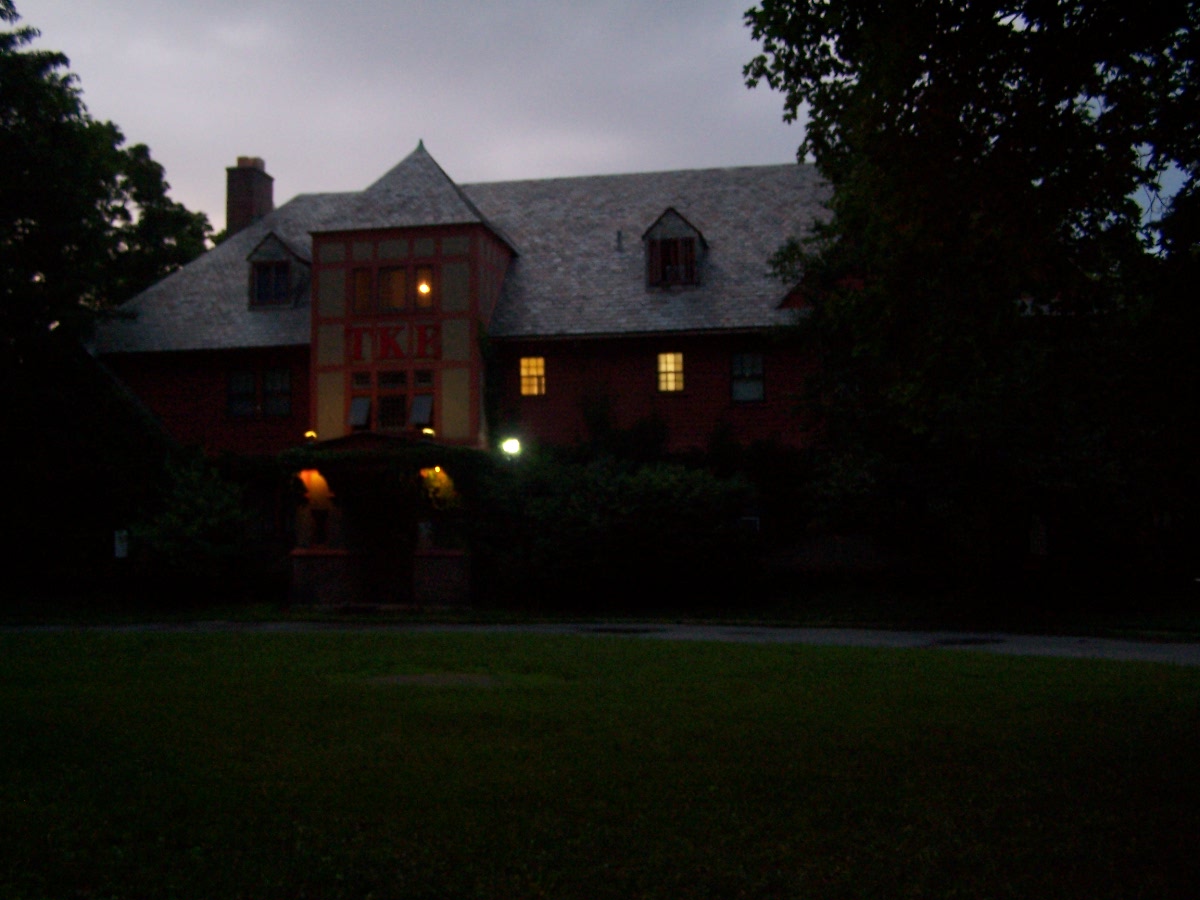
The house of the fraternity Tau Kappa Epsilon. The house has been occupied by the fraternity  since 1927. TKE was originally Kappa Psi, which became the Sigma Chapter of TKE in 1923. During this same time period, the local fraternity Scorpion was founded. The first TKE disbanded due to the hard times caused by the Great Depression, but Scorpion became the new affiliate of TKE (hence Scorpion chapter, which in my opinion is a really cool chapter name) in 1940. The fraternity Sigma Phi Sigma also merged with TKE in 1941 [1].

Farther up Highland we have the fraternity Tau Epsilon Phi. Um, their house could look better. I felt a little bad taking a photo of it and knowing I’d be putting it up, because it really was in shabby condition. The house was actually once the wing of the old house; they leased the property in 1949, and the wind was built in 1961. However, a fire “of unknown origin” destroyed the original house, so a new house was built connected to the relatively new wing in the mid 1960s. The building was last renovated in 1977 [2].

Speaking of which, this is the Kappa Delta Rho fraternity house. The house was built as an experiment by the architecture school in 1909 to teast the viability for poured cement for all the outside walls. KDR first occupied this property in 1952, and the new wing (the part on the left) was added in 1964 [3]. At least KDR is raising funds to repair the roof, it looks like it might need it.

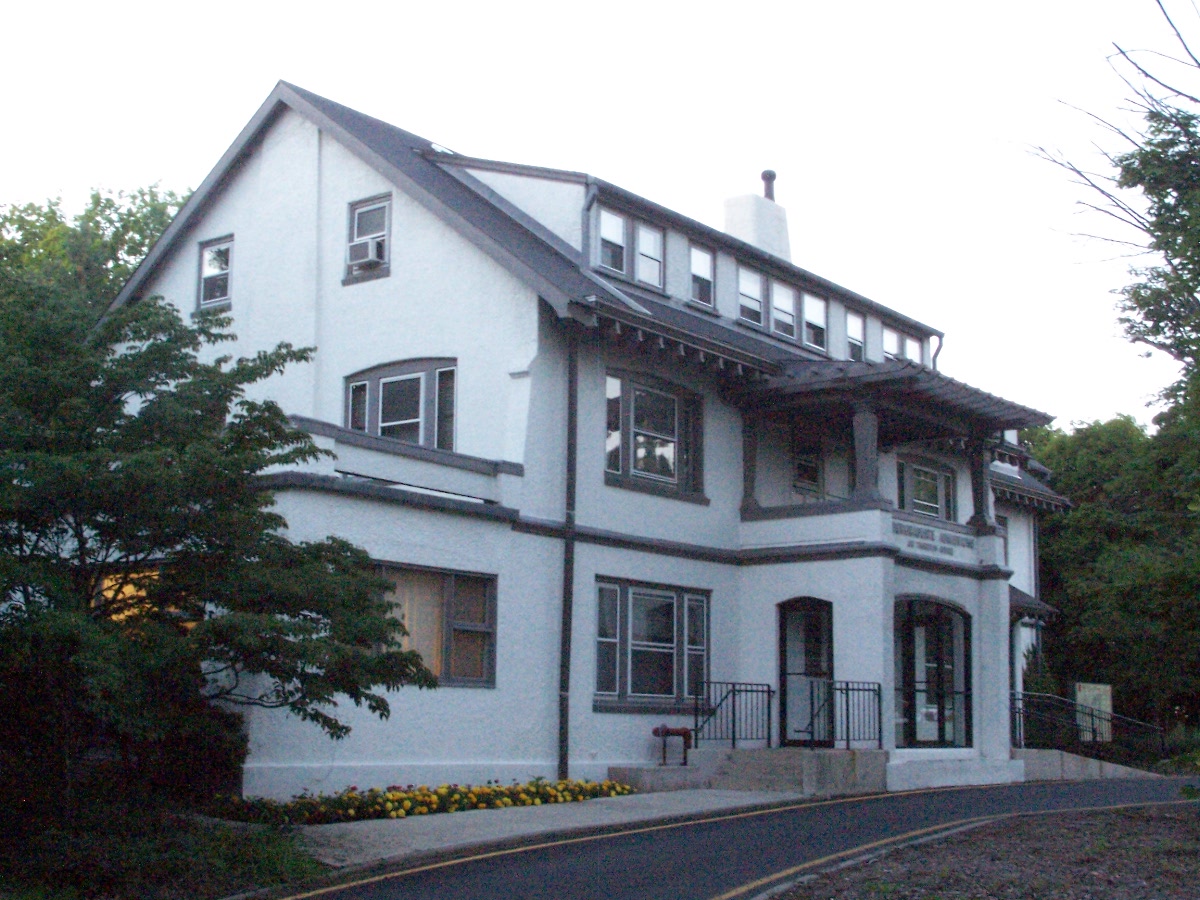
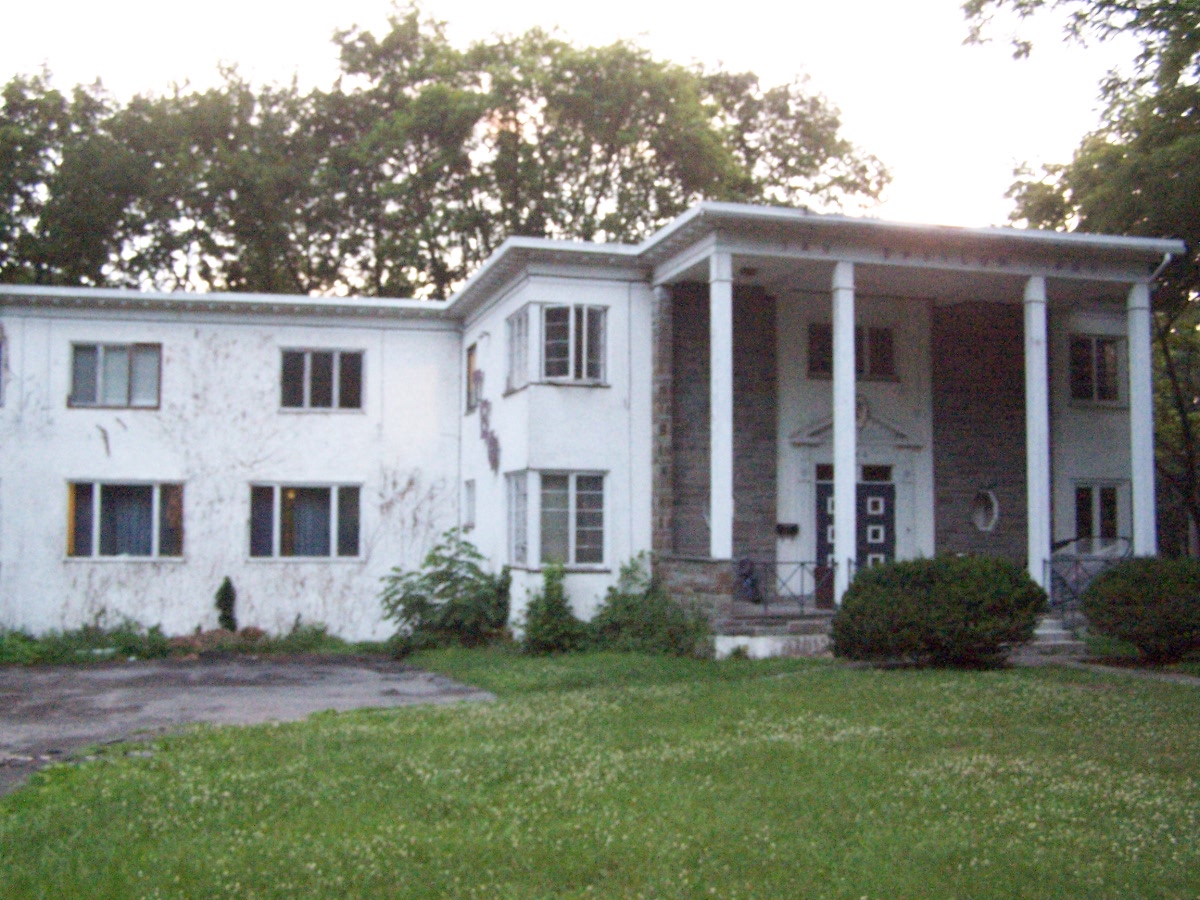
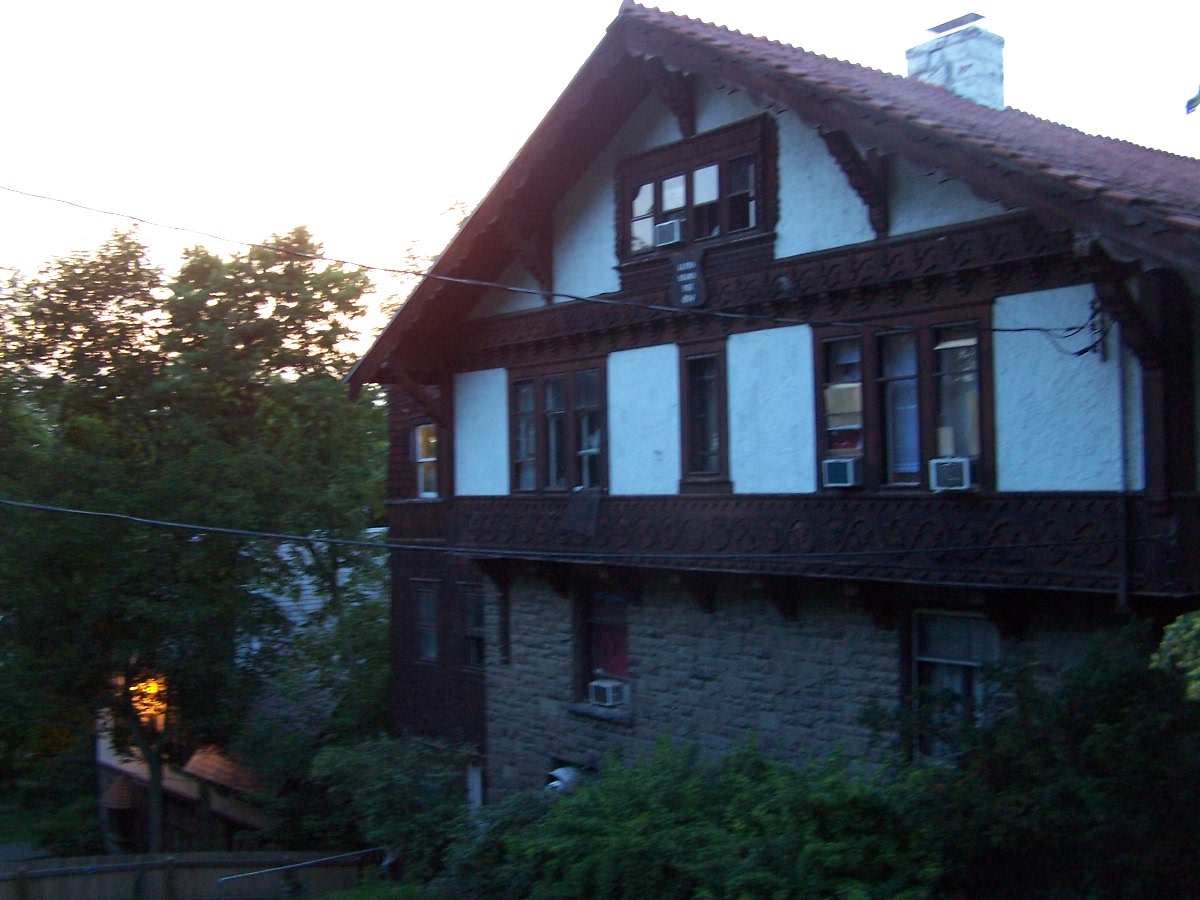
So this was a treat to find. Today, this is the Westbourne Apartments building. Back in the day, it used to belong to a fraternity called Beta Sigma Rho. Beta Sigma Rho, or Beta Samach as it was originally called, was founded in 1910 by four Cornell students who were excluded from the current system because of their Jewish religion. By 1950, there were thirteen chapters. However, all good things come ot an end. Beta Sigma Rho’s Alpha Chapter, suffering from dwindling interest, merged with Pi Lamda Phi in 1972. The Pi Lams moved in to Beta’s house, and the organization adopted the name Pi Lambda Phi. The original Pi Lambda Phi house was closed (today, it’s the undergraduate admissions office). Then the Beta’s house was closed in 1978, and that ended their run at Cornell. One chapter survives; the Beta chapter at Penn state felt it would be better to go independent in 1975, so they did. Today, they have survived there as Beta Sigma Beta fraternity [4].

The house of Alpha Gamma Rho (AGR) fraternity. Originally known as Caduceus chapter,  (now Zeta- for those of you wondering, a caduceus is the double helix with the snakes [5]), Alpha Gamma Rho has occupied this property since 1916, with the current house being constructed in 1961 [6]. Alpha Gamma Rho is the other agricultural fraternity (AGR = agriculture…like we couldn’t figure that out.)


[1]http://www.scorpiontke.org/content/section/6/30/

[2]http://www.dos.cornell.edu/dos/greek/chapter_details.cfm?id=3271

[3]http://www.dos.cornell.edu/dos/greek/chapter_details.cfm?id=3251

[4]http://en.wikipedia.org/wiki/Beta_Sigma_Beta

[5]http://en.wikipedia.org/wiki/Caduceus

[6]http://www.dos.cornell.edu/dos/greek/chapter_details.cfm?id=4669


Random Photo Tour 7/6/08, continued

7 07 2008

The house of Alpha Sigma Phi Fraternity, known locally as Rockledge (which is the name of the house). The name fits because the house is built on the cliff overlooking Ithaca Falls. The house was built around 1900, with the fraternity moving in during 1913, four years after the chapter was founded. Cornell’s first president, A.D. White (1832-1918 ) was a member of the Yale Chapter during his college days [1].

The house of Omega Tau Sigma, a professional fraternity for veterinarians. I didn’t realize professional fraternities did this sort of thing. The house has been in their name since the 1920s. And in my opinion, for a small house, I really like the uncluttered appearance from the outside. It vaguely reminded me of Scandinavian houses. Until I looked it up just now, I honestly thought the house was a regular house that kept the letters as a throwback to history.

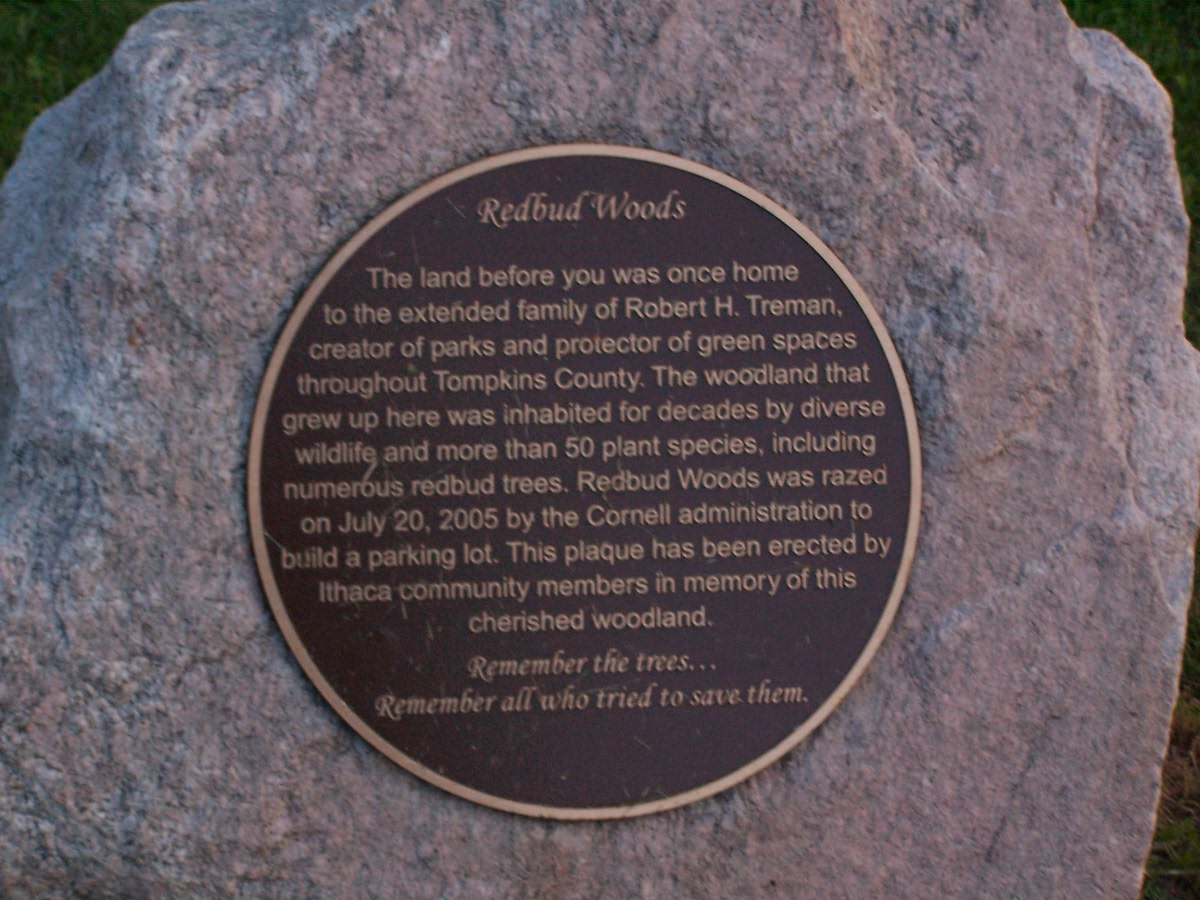
The former Redbud Woods site. I really don’t want to try and explain this, but a former patch of forest that was part of the old Treman Estate was bulldozed for a parking lot in 2005. The whole idea did not go over well. Student occupations of Day Hall, protestors from the college and city (including former mayor Ben Nichols), and a little backstabbing along the way. I’m not one for drama, I prefer my history untainted; and as you can see from the plaque that the city okayed but Cornell protested, the history is still a little too emotional for the local powers-that-be. for those who want to read the full story, here’s a wikilink: http://en.wikipedia.org/wiki/Redbud_Woods_controversy

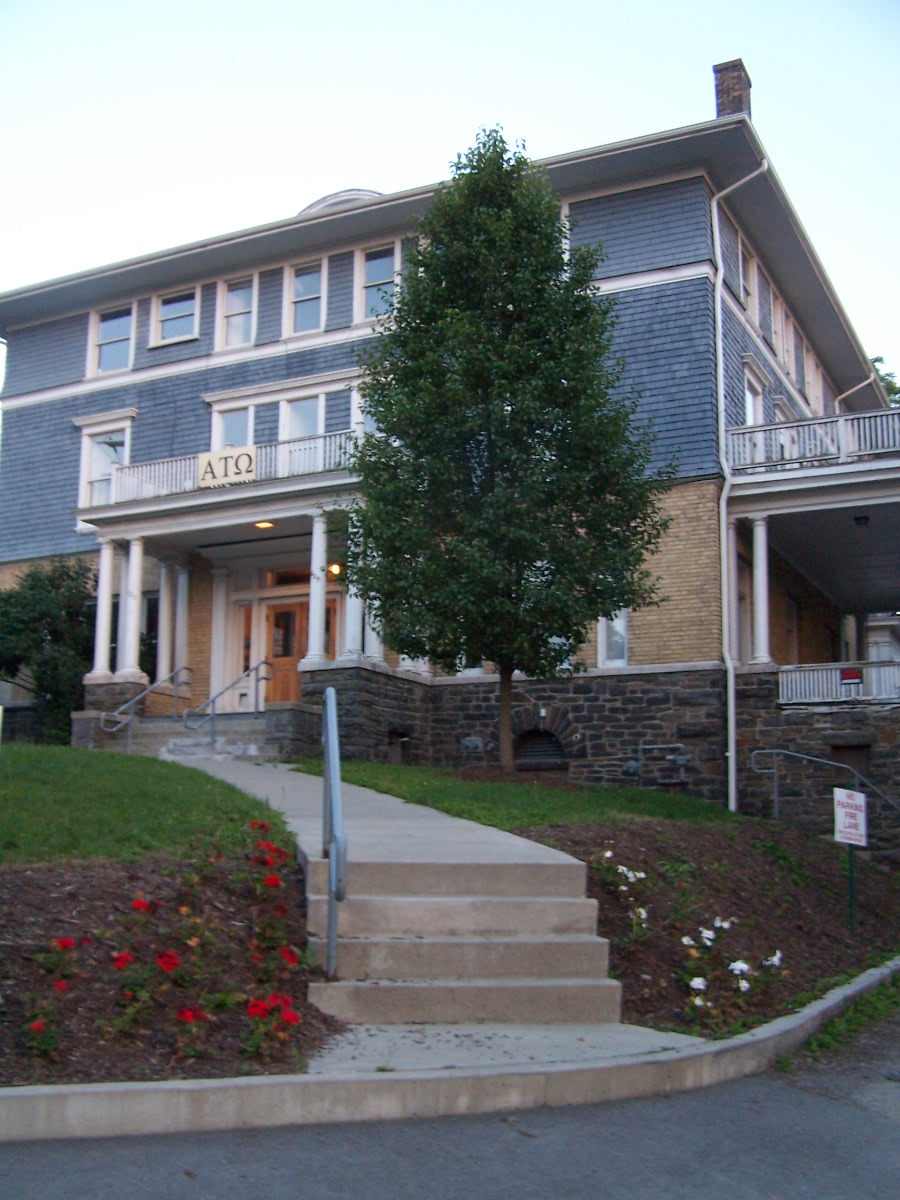
Alpha Tau Omega fraternity house. The house was built in 1900 and has been continually in ATO’s posession. Major renovations were completed in 1989, and once again in the past year [2]. The house was originally designed by an alum of the house, although it used to have a mansard roof, judging from old photos. Due to renovation and structural issues, the chapter has not had a house in the past two years. Judging from this photo and the state of the grounds as I walked by, it looks like it will be reoccupied fairly soon.

The house of Phi Sigma Kappa. So, thankk you Phi Sig for making it such a pain in my arse to find information about your house. I can say this house was built ca. 1900, and has always been in the posession of Phi Sig. I only know that because I had to ask someone who’s in the house. It is in need of some repair, but at least the front side, with its columns, is still imposing.

722 University Avenue, built in the Colonial Revival Style around 1900. This house most recently served as a home to Alpha Chi Rho fraternity. Alpha Chi Rho was on campus from 1908-1978 (it was next door at 736 for some of that time), and when they tried to recharter in 1991-92, they lived here. I believe the chapter closed once again in 1997-98.

EDIT: Thanks to a tip from JB, I was able to find that the house was occupied by Lambda Upsilon Lambda, the Latino fraternity, as recently as 2004. The house is currently unoccupied.


[1]http://www.alphasig-rockledge.com/history.php

[2]https://www.atocornell.org/public1.asp

[3]http://www.bookrags.com/wiki/Cornell_West_Campus


Greek System, pt. 1

1 07 2008


Traditionally, the Greek system at Cornell has seen several periods of growth and contraction (1). In the previous half century, primary periods of growth occurred in the 1950s, 1980s, and at the current time. Inversely, periods of contraction occurred in the 1960s and 1970s, and in the mid and late 1990s heading into the early 2000s.

From Gumprecht’s essay concerning Greek life:

Changing attitudes toward fraternities are having an impact. Nationwide, fraternity membership declined 30 percent between 1990 and 2000. At thedawn of the twenty-first century, “Greek life is . . . a tough sell,” according toRichard McKaig, director of the Center for the Study of the College Fraternityat Indiana University.


40 At Cornell, membership fell 11.2 percent between1996 and 2001. Three chapter houses closed. Cornell fraternity members refer to the time before the new social rules were implemented as “the good old days.”41 Nevertheless, Greek life remains an integral part of student life at Cornell,which had forty-four fraternities and twenty-one sororities in 2001. Roughly one-quarter of undergraduates were members. The continued importanceof fraternities and sororities, and the prominence of their chapter housesin the built environment (see Figure 8), suggest that the fraternity district willremain a distinctive attribute of college towns well into the future.

Numbers at Cornell fraternities have increased considerably since the publishing of Gumprecht’s paper in 2002. Documents obtained from the Office of Fraternity and Sorority Affairs at Cornell University (2) indicate that numbers have increased about 16.9% in the past five years. Sorority numbers, however, have reamined stable over the past several years, with a small peak in 2004-2005.


http://www.adphicornell.org/adphicor/files/FraternityRow.pdf – Dr. Blake Gumprecht, UNH 2002