Two Years Later

18 06 2010

So, times change but this blog is still here. It has been almost exactly two years since this blog was launched (give or take an hour).  I’m not big on statistics for the site, but here’s some numbers:

Number of hits: 90,730 (about 124 hits/day; that’s up from an average of 82 hits/day for the first year alone; so roughly speaking, the second year averaged 166 hits/day)

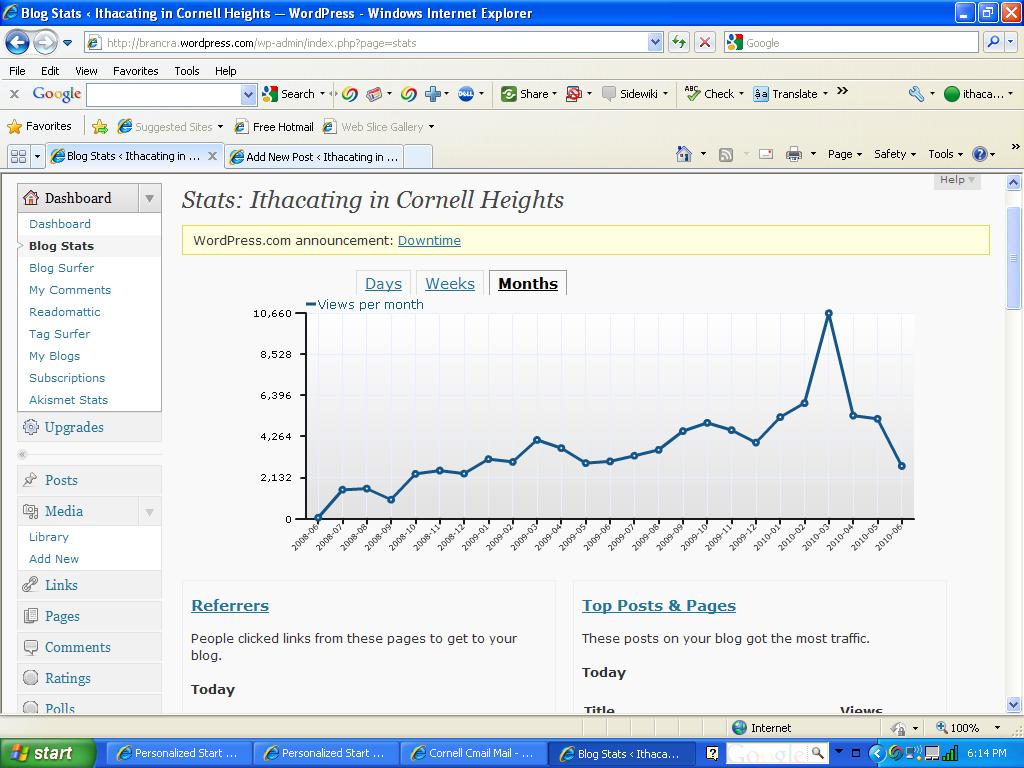
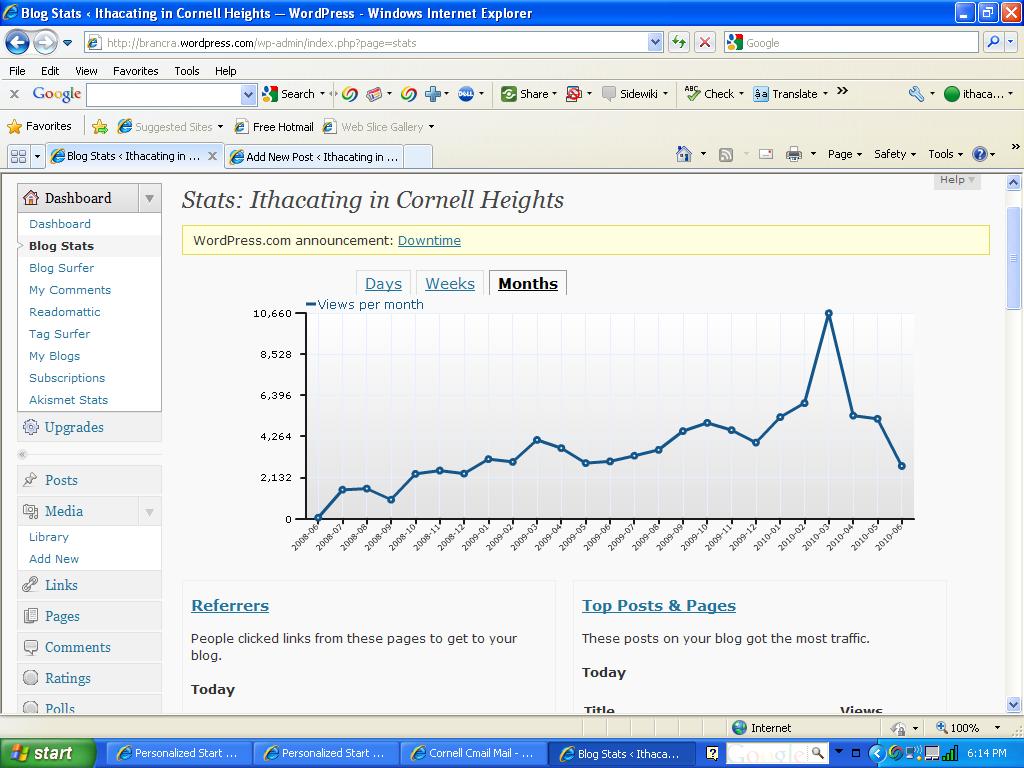
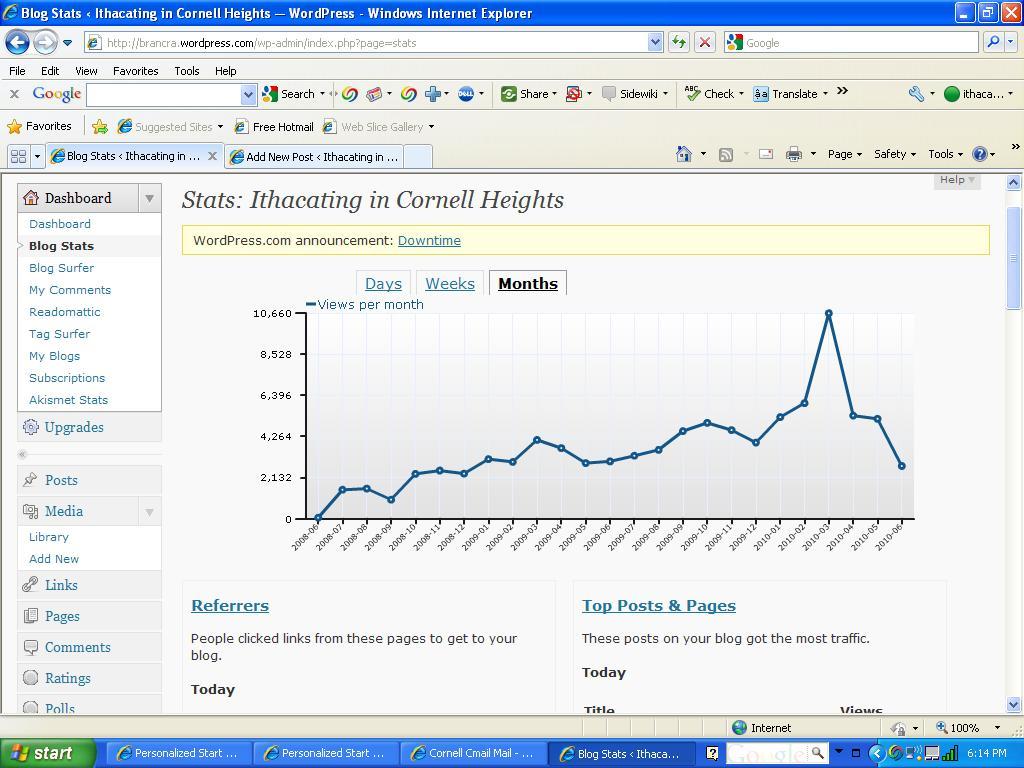
Monthly stats:

 The highest month, with 10,659 hits, was March 2010. It’s trailed off since then, just as it did the previous year. The drop was so steep because March was when the news about the recent tragedies was most publicized. Which was my cue to take a step back and let things run their course, given the sensitive nature of the events.

Consider the following (and not nearly complete list of) events from the past year:

~The new Physical Sciences building continued its slow but steady construction, nearly complete at this point, while the Hotel School’s 12,000 sq ft addition was completed. The last half of construction also occurred for the Animal Health Diagnostic Center, nearly done as of this writing. Stocking Hall’s reconstruction and renovation was formally announced, and Milstein Hall began to take shape, next to the gaping hole where the mostly underground Johnson Museum addition is currently being constructed. MVR North added a glassy facade while interior work continues to take place, and Gates Hall still floats around in the approved planning phases. According to Cornell’s latest financial report, Gates Hall will be a 70.000 sq ft building, slightly smaller than the 100,000 suggested almost two years ago.

~Over at I.C., the Circle Apartments expansion has been proposed and the indoor athletic facility began to take shape, highly visible even from its collegiate neighbor on East Hill.

~In the city, the Cayuga Green condos still await construction. The ten-story Hotel Ithaca has been approved but has yet to start construction, while the debate over the 1200-bed Collegetown Terrace project off of State Street continues. The Ithaca Gun redevelopment stalled and had to have money reallocated for further remediation, with the hope that work will finally start progressing again in the near future. The Carrowmoor project continued to be trapped in red tape hell, but a Cornell-affiliated proposal for West Hill was announced. It would seem like most of the major private projects stalled this year in light of the recession. However, not all new is bad – a new 5-story apartment building was proposed for 309 Eddy Street and approvals were given for a 4-story 25 -unit expansion of the Coal Yard Apartments off of Maple Avenue. INHS finished its 39-unit Cedar Creek apartment complex and had begun plans for a new project on South Hill.

~In Greek Life, news was not good. Pi Beta Phi and Alpha Delta Phi became fodder for the Ivy League tabloid blog Ivygate, leading to embarassment, and in Alpha Delt’s case, social probation. Kappa Sigma was deactivated for pissing off its national organization, and Pi Kappa Alpha’s rush-gone-wrong brought about their suspension, and later, the university’s announcement that the chapter would be shut down. Let’s see, where there even high notes?…Seal and Serpent hosting Bob Saget is not exactly going to win people over on the Cornell Greek System.

A lot changes within a year. This years seems to be worse than the one prior. I’m keeping my fingers crossed for improvement.

I can remember when I started this blog, I was sitting in my shared bedroom in my apartment, it was pouring on-and-off outside, and feeling bored in Ithaca after settling into my summer jobs. Last year, I wrote the anniversary entry from the Harvey Library of Hampton University, and was rushing to finish because I knew the library would be closing shortly. Now here I am, writing in a cheap subletted apartment in Albany, doing research prior to starting my stint as a grad student at the SUNY for my master’s. Times change, and if anyone had told me this was where my path in life would take me, I would’ve called “bullshit” on that statement. I had general ideas what would happen and what my plans were, but I had no clue this is where I would be two years after starting this blog, and I have no clue where I’ll be one year or two years from now.

However, while the news has changed and a little more has been added to Cornell’s 140+ year history, the message of this blog stays the same. I hope that this blog has helped answer questions that people may have concerning Cornell U and its environs. If this blog makes someone a little more knowledgeable or at least serves as an interesting diversion, then it has done its job.


Expecting A Warm Winter

4 10 2009

100_2434

Global warming completely aside, I think it might be worth noting that Ithaca can expect a warm winter for 2009-2010. This is because we’re in the middle of an El Nino year.

For those living under a rock, El Nino (or as meteorologists know it, the el Nino Southern Oscillation, often reduced to ENSO) is the much publicized periodic change in atmospheric and oceanic conditions highlighted by the shift of the eastern Pacific Ocean water temperatures to much warmer than usual conditions (typically most apparent off the coast of Peru). The effects on the Atlantic will lag somewhat behind the Pacific.

Well, El Nino conditions started to kick in during this past summer, around June. One effect that El Nino years (as they tend to last 12 to 18 months) have is that the Northeast is much warmer than usual during the winter. To illustrate this, I pulled the data for the last few El Nino years (Winter 06-07, Winter 02-03, Winter 97-98, and Winter 94-95, Winter 91-92) from the Northeast Regional Climate Center.

Month/Year Anomaly

Dec 2006 +8.0 F

Jan 2007 +5.6 F

Feb 2007 – 7.1 F

Dec 2002 -2.2 F

Jan 2003 -5.6 F

Feb 2003 -3.0 F

Dec 1997 +2.3 F

Jan 1998 +8.4 F

Feb 1998 +7.8 F

Dec 1994 +4.4 F

Jan 1995 +7.1 F

Feb 1995 -2.7 F

Dec 1991 +2.0 F

Jan 1992 +3.0 F

Feb 1992 +2.0 F

Data from pre-1995 is only available to those with research accounts. Thankfully, my senior thesis research has allowed me this perk. Anyways,  4 of the past 5 El Nino seemed to follow the typical pattern, and 2002-2003 did not. To be perfectly honest, that year is still under study as no one can really seem to explain what happened. A prevailing theory for a while was that it was another osciallation (the Pacific Decadal Oscillation) having an impact on El Nino, but that theory developed a big hole in it after a fairly typical 2006-2007 El Nino year. It takes 20-30 years for the PDO to change phases, so 2006-2007 should have been much the same, but it wasn’t.

Keep in mind this is all relative. Five degrees above normal during the coldest time of the year (late January) means a high of 35 and a low of 19. So don’t get too comfortable.


One Year Later

18 06 2009

So, here it stands. It has been almost exactly one year since this blog was launched (add about four hours, and we’re there).  I’m not big on statistics for the site, but here’s some numbers:

Number of hits: 29,800 (about 82 hits/day)

Monthly stats:

graph

 The highest month, with 4,080 hits, was March 2009. It’s trailed off since then, probably due to a number of reasons, most of which have nothing to do with this blog itself.

Consider the following (and not nearly complete list of) events from the past year:

~Weill Hall was formally dedicated, the last West Campus houses opened, Milstein was (formally?) approved, and the Animal Diagnostic Center, Hotel School Addition, and Physical Science building continue their trek to completion (as for the ERL project, I have no idea where that stands with regards to our economic issues). Speaking of which, a new construction freeze was announced, and $2 billion evaporated from the endowment.

~Over at I.C., the Williams Gateway building was completed, and the new indoor fitness facility is now awaiting the first signs of construction. IC and the city also learned that fireworks near the new Park School of Business building weren’t the best idea.

~In the city, the Cayuga Green Apartments were completed, while the condos still await construction. A 9-story hotel was announced for downtown, and the Collegetown moratorium expired, allowing the proposal of a 1200-bed project off of State Street. The Ithaca Gun plant was finally torn down, but not without persisting environmental concerns.

~In Greek Life, Alpha Omicron Pi deactivated its Cornell Chapter. Theta Xi moved around, and Psi Upsilon was reopened after its alumni had concerns with the current membership. Right now, it looks like Alpha Xi Delta might be moving around as well.

A lot changes within a year.


I hope that this blog has helped answer questions that people may have concerning Cornell U and its environs. To me, if this blog makes someone a little more knowledgeable or at least an interesting diversion, then it has done its job.


News Tidbits 2/15/09: The Collegetown Zoning Proposal

15 02 2009

http://cornellsun.com/section/news/content/2009/02/13/collegetown-neighborhood-council-details-building-plans

Collegetown Neighborhood Council Details Building Plans

It has been almost a year since consultants visited Collegetown to develop a vision for renewal and nearly six months since an entire book was compiled to lay out the plans that will bring make that vision a reality. Last night, the Collegetown Neighborhood Council devoted its bimonthly meeting to update the status of the Collegetown development plan.

The meeting had approximately 30 attendees. According to Mary Tomlan ’71 (D-3rd Ward), co-chair of the CNC, the meeting had a much larger turnout than usual, attesting to the interest on the development plan.

Tomlan introduced the meeting; she described the “wish to make Collegetown more lively, more diverse and more beautiful” and explained the complexity of the zoning plans. The proposed zoning includes requiring pitched roofs and side porches. Other proposed legislation includes reducing building heights from 40 ft to 35 ft, limiting the number of stories in a building from four to three and reducing the maximum percentage of lot coverage from 35 percent to 30 percent.

Leslie Chatterton, head of historic preservation and neighborhood planner, detailed the plan. She explained that a more diverse and a less cyclical population needed to be encouraged in order to attract more retailers. The plan is intended to significantly increase the density of central Collegetown while maintaining and restoring the residential feel of the outer Collegetown areas. It is also meant to improve the aesthetics of the area through the gradual lowering of buildings heights as one moves from central Collegetown towards the outer areas.

The building plan divides Collegetown into six areas. The center of Collegetown, which extends down to Catherine Street, is given the most attention. Building heights will be increased to 90 ft and there will now be a seven-story limit. It will also be mandatory that the ground floors of these buildings be used for retail, and it will be encouraged to make this central property and its rent the most expensive.

The second area in Collegetown discussed is called the Village Residential area. According to the plan, this area is supposed to adjoin townhouse styled homes with a four-story limit. Chatterton explained that this area is intended to attract graduate students, younger couples and new Cornell faculty, rather than undergraduate students.

The rest of Collegetown will be less dense and is meant to have a residential feel. Building heights will be limited to two-and-a-half stories and the structures of the houses are supposed to remain the same. However, Leslie Chatterton, historic preservation and neighborhood planner, also mentioned that many of these homes are rundown and need to be redeveloped for health and safety reasons.

Jennifer Dotson, a member of the neighborhood council and chair of the common council’s planning committee, spoke about the plan for the new transportation moratorium, which includes parking, busses and regular car traffic. The transportation subcommittee has not yet met, so few details are available.

Some developers at the meeting were unhappy with the plans. John Yengo, commercial manager of the Ithaca Renting Company, said that although he “support[s] growth and planning” he is frustrated by the length of time that the building rules are in limbo.

Sharon Marx, Property Manager of Ithaca Renting Company, agreed.

“It is very frustrating because developers can’t develop. The city has had a year and a half to do this and they still have not made their rules. In the meantime everyone’s hands are tied,” Marx said.

Yango explained that nobody wants to buy property because they are still waiting to see what the new rules will be.

Tessa Rudan ’89, a former Collegetown business owner who has lived in the area since 1967 said she did not trust the research of the hired consultants.

“It seems like they extrapolated a lot of data from all over the place and just applied it to Collegetown,” Rudan said.

Tomlan, however, seemed more optimistic.

“It has been a lot of work and I am hopeful that we will make Collegetown better than ever,” Tomlan said.

***

Well, considering the city and Cornell forked over $75,000 each, and Goody Clancy is a fairly reputable firm, I don’t think Ms. Rudan has to worry so much.

Now, for the sake if discussion, let’s consider the latest zoning guidelines derived from the plan (pulled from the city website [1]).

untitled

The zoning shown on the properties is for the maximum number of stories allowed on a proposed structure without having to request a zoning variance (which would give Mary Tomlan a heart attack cause a lot or red tape, possibly killing a project or dragging it out for years). The corresponding heights are given and explained in the red box below. Theoretically, the tallest building in Collegetown under the new guidelines would be either 7 stories OR 92 feet in gross height (this included any mechanical or decorative structures on the rooftop). This is relatively appropriate; commercial structures typically have 14/15 foot floor-to-ceiling heights per floor, and residential floors typically are around 10 feet (a 30-story condo tends to average around 290-320 feet, while a 30-story office building without decorative spires, etc. tends to be around 400-450 feet).

Approximately 24 properties fall into this highest category. Of these, roughly have are already developed into large structures. Since it doesn’t make a whole lot of sense to replace a five-story from the 1980s building with a six-story building, those properties are unlikely to be redeveloped in the near future (example properties: Eddygate Park, 402 College Avenue [Starbuck’s], Sheldon Court, the east block of 400 College Ave, Collegetown Plaza). Only a few instances of financially sound redevelopment could be proposed under the highest category (possible properties would be 404 College [M&T Bank], the old Kraftee’s building, the new Kraftee’s building, the Green Café [currently under construction on the corner], the liquor store, and perhaps the Korean restaurant). Keep in mind that beyond the fifth floor, a 12-foot setback is required before the building can continue adding floors.

Collegetown “canyon”? For about a 1,000 feet down the road, if you call seven stories a canyon.

The surrounding ~35 properties to this central core have a max height of 5 stories or 68 feet. Keep in mind, this is on the assumption that the building will be mixed use, meaning retail at the bottom (technically, office space counts towards mixed use too, but it seems odd to imagine office buildings in Ctown).

2

Most of the surrounding zones fall into the other two categories under the current zoning proposal: Village Residential (VR) and Traditional Residential (TR). OS is for open space, which considering the proximity to the gorges, someone would have to be out of their mind to build there anyway. Traditional residential represents single-family detached houses (in other words, no change to the current structures in those areas). These strcutues are expected to have porches and hipped roofs (I think I can hear the modernist architects crying from Rand Hall). Village Residential refers to townhouses, rowhouses, apartment buildings of comparable mass to rowhouses, and very large detached houses.

Notably, under these zoning laws, Cornell’s parking at the corner of Stewart Avenue and Williams Street would have to be VR- rowhouses or a lowrise (apartment style maybe?) dorm.

One more note: parking is largely reduced. The parking garage on Dryden might be expanded, but otherwise, it’s an at your own risk kinda thing. With higher density and more prominent mass transit to a denser living area, the need for cars tends to diminish anyway.

***

So, enough analysis. Here’s my opinion.

Tomlan graduated from Cornell in 1971. And she’s stuck in a Collegtown mindframe from 1971. When it was still largely a student slum of crappy tenement houses (like the ones on Linden, Cook and any other street close to the College/Dryden intersection). Development came. Demand came for luxury housing, and developers obliged.

Do I want to see Collegetown become a series of highrises? No. That was actually proposed in the late 1960s (which I mention elsewhere on this blog). but 90 feet is not going to end the world. It’s not going to make a whole lot of difference in a small, centralized area that’s largely developed anyway. Trying to preserve a bunch of dated, inefficient student slums by limiting developers’ ability to redevelop is not the way to go. I think the proposed plan is largely successful in fulfilling the needs of the area. The argument about mixed-demographics is off base; Cornell Heights, Bryant Park and later Cayuga Heights all developed thanks in part to the fact that many professors and staff prefer to live away from students, especially those with families. One group tends to prefer to get wasted at a bar on a Friday night, the other prefers to go out to a family restaurant and catch a movie. Students and permanent residents are inherently different in terms of schedules and needs from the ambient environment (ex. good schools, variety of shopping). Mixing the two will be like trying to mix oil and water, and it strikes me as a wasted effort. Families are not going to shop in Collegetown, that’s why we have Target at the mall and Wal-Mart down on the flats. The only place to two might mix is Fontana’s.

[1] http://www.ci.ithaca.ny.us/index.asp?Type=B_EV&SEC={36F5C077-C105-4305-8538-321DC13B1180}&DE={6998A392-D898-4BB1-B708-564C98F3F936}



The Issues of Sigma Pi and Panhel

14 12 2008

100_1700

So, I really find this issue to be the rough equivalent of a powderkeg in the Greek System at the present time.

I find it odd that the Ivygate blog [3] would attempt to cover it, though. Judging from the number of “insightful” (“inciteful” might be more fitting) comments, it’s just as much of a powder-keg as I expected it to be.

It is well known that they were booted from the IFC last year for an incident stemming from a Thanksgiving Feast gone horribly wrong that resulted in two freshman requiring life-sustaining medical treatment for alcohol poisoning [1]. Dumb, dumb mistake by Sigma Pi. It cost them their pledge class for 2008 and forced them to undergo an evaluation from their national and their own alumni organization. Looking at the OFSA annual reports, Sigma Pi had 87 members in the spring of 2007 and 64 that fall. They were at that point the largest house in the system.

So, being completely nosy, I talked with the only Sigma Pi brother I know about how the reorganization process is going and the mood was one of “don’t ask about it, it’s been bad enough”. Their national did a review of the house, as did their alumni, removing those that they felt didn’t contribute to the betterment of the house.

Let’s do some quick math. There were 64 in the fall. No pledge class. One can say that close or slightly more than one third of the house in the fall were seniors. So, that would be about 21 or 22. We’ll go with 22, since I don’t have any numbers to officially break it down. That leaves 44 who would still be here this fall.

But, they have 29. Seems the reviews conducted by the local and national were worth the effort in that respect.

So, on the 4th, they were up for review, and the IFC voted to make them associate members (not a full member, but they still have voting privileges). However, their rush will have to be dry. I wish them the best of luck with that.

The debate seems to stem from the feeling that they were let back too soon, and they haven’t had enough time to reform. I can definitely see where that comes from, and I do wonder perhaps if the intentions of those who voted for a dry rush for the Sig Pis wasn’t so much out of showing diligence to safety measures as it was those houses were afraid that Sig Pi would rise up and take away potential pledges. However, I had a project meeting that evening, so the substitute rep for my house went in my place. It’s hard to open a meeting I never went to up for discussion.

***

Meanwhile, the Panhellenic Association (the governing council of sororities), which in this blog I have been a critic of, has reported its lowest registration turnout in recent history, sparking a series of pro-sorority articles in the Sun (though, I suppose that wasn’t as interesting as the back-and-forth caused by a former sorority girl who wrote an article intensely critical of the sorority culture).

My reaction: “Oh, really? No sh*t. Can’t say I’m surprised.”

Maybe it’s a cultural thing. Maybe it’s just a simple statistical anomaly. Whatever the case, with AOPi closed, this spells trouble for the other sorority houses, especially the one that will fall into AOPi’s place as the least respected house. Which most of us have a pretty good who that will be, but to spare myself form the resultant bitching from the sisters who might run across this blog, we’ll leave them unmentioned.

But this won’t just affect that house. If numbers are low, fewer girls will be interested in each house in general. And their numbers will suffer as well.

So, lucky for me, I happen to have friends in both of the co-ed fraternities- Sigma Chi Delta and Alpha Zeta. One of them made this joke to me: “We always have trouble getting guys, but there’s always a lot of girls who come to the house. During rush week, we could open the door at any given time, and there’s always a girl there who says she’s interested in our house.” I do believe off-hand that both of these houses have more females than male members.

In another example, consider the co-ops. Most are co-ed (sans Wari—and Wait Ave. just went coed). Glancing through the list of members on their sites, though, most would appear to have more female members than male members.

My thought is that Panhel is just not doing something right somewhere. Maybe it is a cultural thing; sorority girls are stereotyped as being shallow, bubbly/bitchy, and easy; not exactly good for P.R. Perhaps they just simply don’t draw women like they used to. But I guess they’d better step up the effort, or we’ll be seeing more chapters close or shrink in the near future.

[1] http://cornellsun.com/node/26714
[2] http://cornellsun.com/section/news/content/2008/12/04/ifc-votes-re-recognize-sigma-pi-fraternity-house-will-be-required-ha
[3]http://www.ivygateblog.com/2008/12/sigma-pi-bros-promise-fewer-near-deaths-are-allowed-to-officially-return-to-campus/


News Tidbits 12/10/08: Ithaca’s “Fancy New” Wal-Mart

10 12 2008

So, recently, although the national and state economies are sinking like a stone in a lake, there has been one slight bright spot here in little Ithaca. The local Wal-Mart is continuing its expansion plans, and apparently the giant retailer plans to use Ithaca as its first test market for a more socially conscious image for the retailer. To quote the Ithaca Journal article:

“Wal-Mart is trying out a new branding campaign characterized by smaller signs, earth tones, and more pedestrian-friendly amenities like awnings outside the store, said Jim Gallagher, an architect with PB2 Architecture and Engineering and a Wal-Mart consultant.”

I’d post the Daily Sun photo if I could find it, but locating any image of the redesign has been a royal pain in the ass, so we’ll go without it for now.

A facadectomy isn’t going to change the image of a store so despised by fringe locals that they planted a bomb (yes, it was an actual improvised explosive device [3]). But, hey, if that’s how they want to spend their money, then let them do stonework and vestibules in the hope that people stop associating them with corporate greed.

A Wal-Mart was first proposed in Ithaca for the property in the early 1990s where the Home Depot sits today, but it was shot down by community opposition (the site was planned by Widewaters Development Group out of the Syracuse area). The current store wen through an untold number of hoops while trying to avoid the barbs of angry locals who did not want a Wal-Mart in the area, The current Wal-Mart, approved in 2002, opened in early spring of 2005 [6].

Meanwhile, Cornell is still planning the 6,000 sq. ft. Plantations Welcome Center [4] , and a new water tank off of Hungerford Hill Road. Student Agencies is seeking approval for the construction of a 10,000 sq. ft warehouse off of Sheffield Road to expand their capacity for the storage of student items during the summer months.

Apart from that, nothing really new from the planning board agendas of the town or the city. Some cosmetic work and a few more large parcels of land being subdivided for future house development.


[1]http://www.theithacajournal.com/article/20081029/NEWS01/810290317

[2] http://cornellsun.com/node/33711

[3]http://walmartwatch.com/battlemart/go/cat/crime_safety

[4]http://www.fs.cornell.edu/fs/projects/fs_project_overview.cfm?project_id=125

[5]http://www.ithacahours.com/archive/9406.html -Wal-Mart Attack

[6]https://cornellsun.com/node/12711


Off-Topic: The Keyword Bar, Second Edition

30 11 2008

Sometimes, the search engine keywords that bring people here are better than any entry I could come up with.

[1] kappa delta dagger during initiation (11-24-08 ); “pi kappa alpha” ritual salt (11-22-08 )

Really now? Here’s a tip: secret rituals aren’t likely to be found online. Here’s another tip: blogs will save your search terms.

[2]sit on grass (11-26-08 )

Yes, I think we all enjoy doing that in the warmer months. But I honestly have no idea how it would be part of a blog, let alone this one.

[3]should i join sigma chi or sae cornell (11-26-08 )

Not my realm of expertise. This blog strives to maintain neutrality. Also, would you honestly trust any information that you find online? This is as bad as the fraterntity rankings that someone put on the Cornell forum at College Confidental (which I won’t link to, because it goes against my commitment to neutrality).

[4] corten steel (206 times)

Okay, I referenced this but once, when I was talking about Uris Hall. Now this blog has become a magnet for queries about “corten stell”, the most popular search item, “corten” (#2, at 70 hits), and cor-ten (#7, at 26 hits).

[5] delta chi cornell (21 hits).

Reasonably, searching for cornell and a given fraternity or sorority is sure to bring up this site somewhere within the search. Delta Chi seems to be the most popular search of the bunch, followed by Chi Psi (20 hits) and Sigma Chi (17 hits) respectively (identified by the keywords “cornell ‘fraternity name'”). Perhaps a little bit to my disappointment, I’ve never seen my own fraternity come up in a search yet, one of maybe five that I’ve yet to see in my keyword bar history. The most popular sorority is Alpha Omicron Pi, with only 9 hits.

[6]natural resources sucks cornell (11-08-2008 )

Funny, I know three or four natty rys majors who would say otherwise. I’m sorry to hear that.

[7]olivia tjaden (11-10-2008 )

If you’re going to do a search, know what you’re searching. Granted, there’s the extremely remote possiblity someone was searching for an olivia tjaden and not Olive Tjaden 25’, but that’s about as likely as a car driving through my window.

[8]cornell off campus house for rent my fat (11-12-2008 )

Fill in the blank? Any takers? Does the search bar have a space limit, because if it does, that’s a real shame for this person.

[9]have lost hope in cornell’s greek system (11-13-2008 )

Speaks for itself.

[10] cornell nastys (11-18-08 )

Plus one point for using the colloquial term of a popular Cornell dining facility. Minus five for failing to spell “nasties” correctly. This becomes even more ironic when you consider the news tidbit on Metaezra concerning the Cornell student who can’t spell.


(Bad) Sign of the Times

30 10 2008

This is going to take away a fairly large amount of my writing material…

http://www.theithacajournal.com/article/20081030/NEWS01/81030012

Cornell announces hiring pause, construction moratorium
Moves in response to state budget news
October 30, 2008

 Cornell University is taking steps to prepare for blows to the budget, including a pause in hiring, a 90-day construction moratorium, and a university-wide review of all operations, Vice President for Communications Tommy Bruce said today.

The “pause” in hiring means no external applicants will be appointed to any open positions, according to a statement released by the university.

This is intended to provide slots for any employees who may be “dislocated in the near term” by funding cuts, and to find, through attrition, any positions that can be eliminated to minimize the need to lay off staff in the future.

Though a private university, Cornell operates four schools on the Ithaca campus established by the state and that receive public operating and construction funding. It is also New York’s land-grant institution and operates agricultural experiment stations in Ithaca and Geneva. Gov. David Paterson announced earlier in the week that the state faces a $1.5 billion budget gap for the current fiscal year and $12.5 billion for the fiscal year that starts April 1. About a fifth of state revenues are tied to the New York City financial industry.

Bruce emphasized that there will be no across-the-board cuts or layoffs, saying, “We have been having to deal with very real cuts coming from the state, and what we’re dealing with is loss of revenue in the wake of the Wall Street situation. What this means going forward is that we may be facing a situation in terms of reduced personnel. What we have to do at this point, not knowing the full impact of the current economic situation, is taking the precautionary step of pulling back on posting open positions and hiring externally.”

The hiring pause will be in effect until March 31 and applies only to non-professorial positions.

The 90-day construction pause will halt progress on any development project on which construction has not already started or which does not have a contract commitment on it.

Physical infrastructure, information technology capital investment, and local transportation and housing projects are included in the moratorium. Bruce said there will be a review of all projects to determine how to proceed most efficiently.

The university-wide review of operations will help the administration pinpoint areas that can be streamlined and where costs can be contained.

Bruce offered an example from his office, which produces more than 1,000 publications a year. These publications can be produced electronically, he said, saving the cost of paper and publication.

An electronic suggestion box has been set up at www.cuinfo.cornell.edu for members of the Cornell community to offer ideas.

~~~

City of Ithaca’s doing the same thing. The state’s severe defecits as a result of the crisis on Wall Street are finally hitting home…and it’s hitting hard.

http://www.theithacajournal.com/article/20081030/NEWS01/810300321

My question is which projects that are not underway have a contract commitment. I suspect Milstein is largely safe, but the addition to the Johnson Museum is likely shelved.


A few weather stats

29 10 2008

Courtesy of the Northeast Regional Climate Center [1]. Because the weather on Tuesday was just THAT sh*tty.

Highest recorded wind speed in Ithaca proper today: 36.2 MPH, around 4 PM. [2]

Highest wind gust, annually: about 60 MPH.

Highest recorded in area, ever: 84 MPH, from 1972.

Last time measurable snow occured in October: October 31, 1993. 3.7 inches. Prior to that, there were measurable snows in October 1988 (which had the most October snow recorded, at 6.5 inches) and October 1982; it was more common back in the day.

Most snow ever recorded from a single storm: 21 inches, in 1961. An unofficial record of 25.5 inches is claimed for January 1925 [3]. (for the record, most snow ever recorded in my hometown: 43.1 inches, in 1966).

Average amount of snow in a year: 67 inches.

Most snow ever recorded in Ithaca in a single season: 122.2, in the winter of 1977-78.

High on this day last year (2007): 63. Low was 40. Sunny.

Tuesday’s high: 38. Low 32. Not sunny.

Warmest October on record: October 2007: 7.8 degrees above normal.

Average temperature on a given October day in Ithaca: About 48 degrees (high 59, low 37).

Warmest October day ever recorded in Ithaca: 91, in 1953.

Coldest October day ever recorded in Ithaca: 15, in 1928.

Highest high ever recorded: 103, in July 1936.

Lowest low: -35, in February 1961.


[1]http://www.nrcc.cornell.edu/

[2]http://www.nrcc.cornell.edu/climate/ithaca/gfr_logger.html

[3]http://books.google.com/books?id=jUu9pDRhWjkC&pg=PA452&lpg=PA452&dq=lowest+snowfall+ever+ithaca+winter&source=web&ots=Mp__5eVss3&sig=j8j3mD5FbCx1OR2ussPMRm_zAyY&hl=en&sa=X&oi=book_result&resnum=3&ct=result


Going Downtown

3 09 2008

Information that might be worth knowing about Downtown Ithaca, so you can impress your friends by making it sound like you actually leave Cornell and Collegetown.

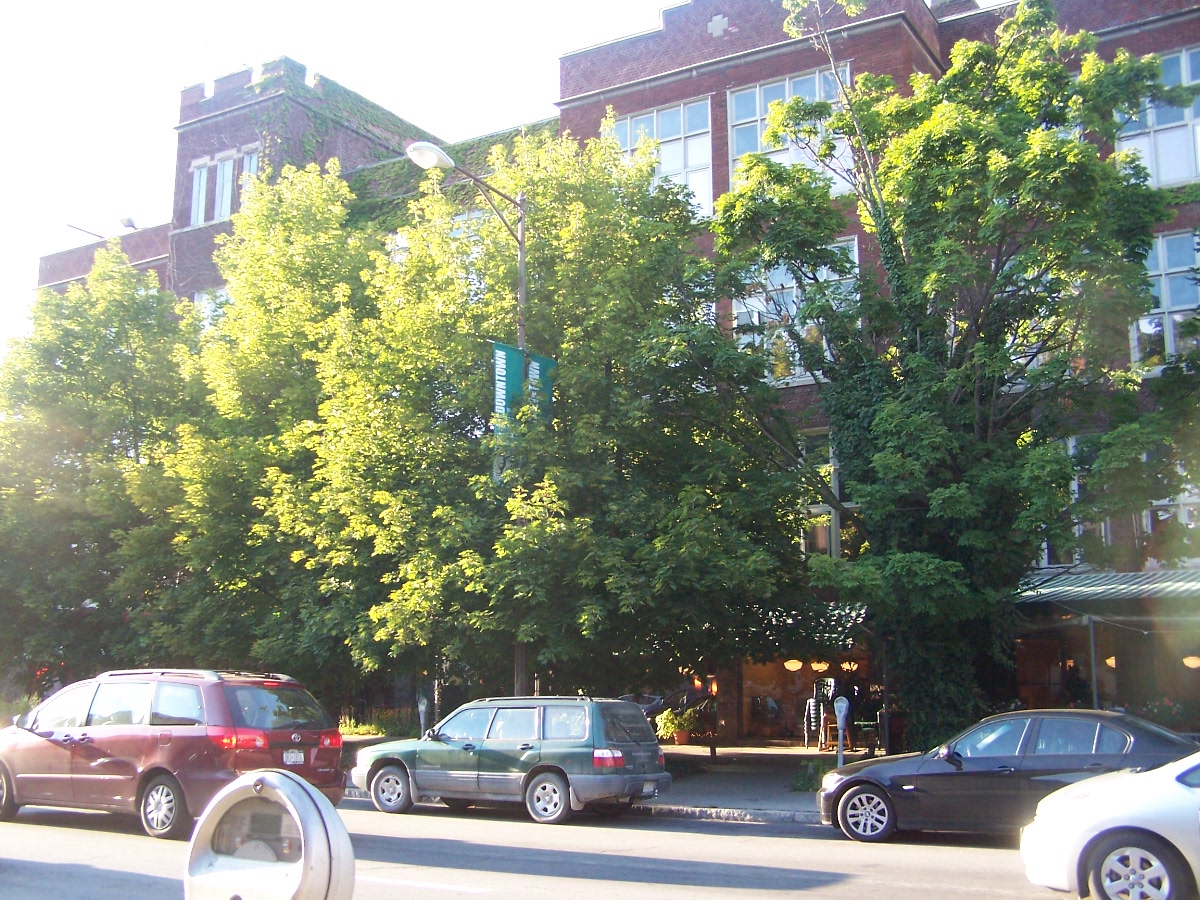
Built in 1914, the quirky DeWitt Mall (named for Dewitt Clinton) formerly served as the city’s high school before the new facility on Lake Street was built in 1960-61. Apart from having a bunch or quirky shops and stores, the building’s sub-street storefront is home to Moosewood Restaurant (est. 1973 [1]) of vegetarian dining fame.

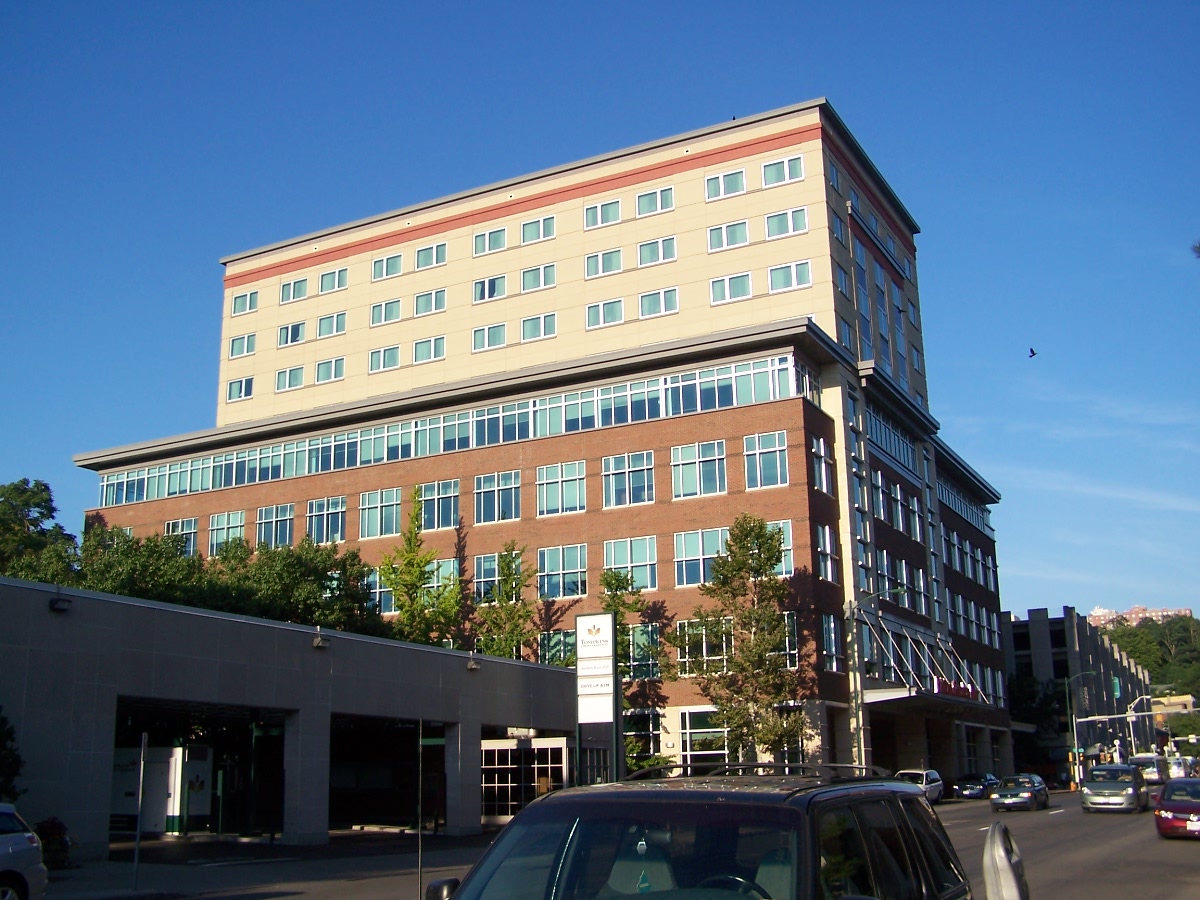
Seneca Place on the Commons is one of the largest buildings by gross area in downtown Ithaca. The 121-ft. tall, $32 million building was completed in 2005 by Criminelli Development [1]. It houses 100,000 sq. ft. of offices (Cornell is the primary tenant at about 70,000 sq. ft.) and a 104-room Hilton Garden Inn [2]. Starbucks and Kilpatrick’s faux-Irish pub make up the ground floor retail. The site was previous home to a parking area and two low-rise buildings.

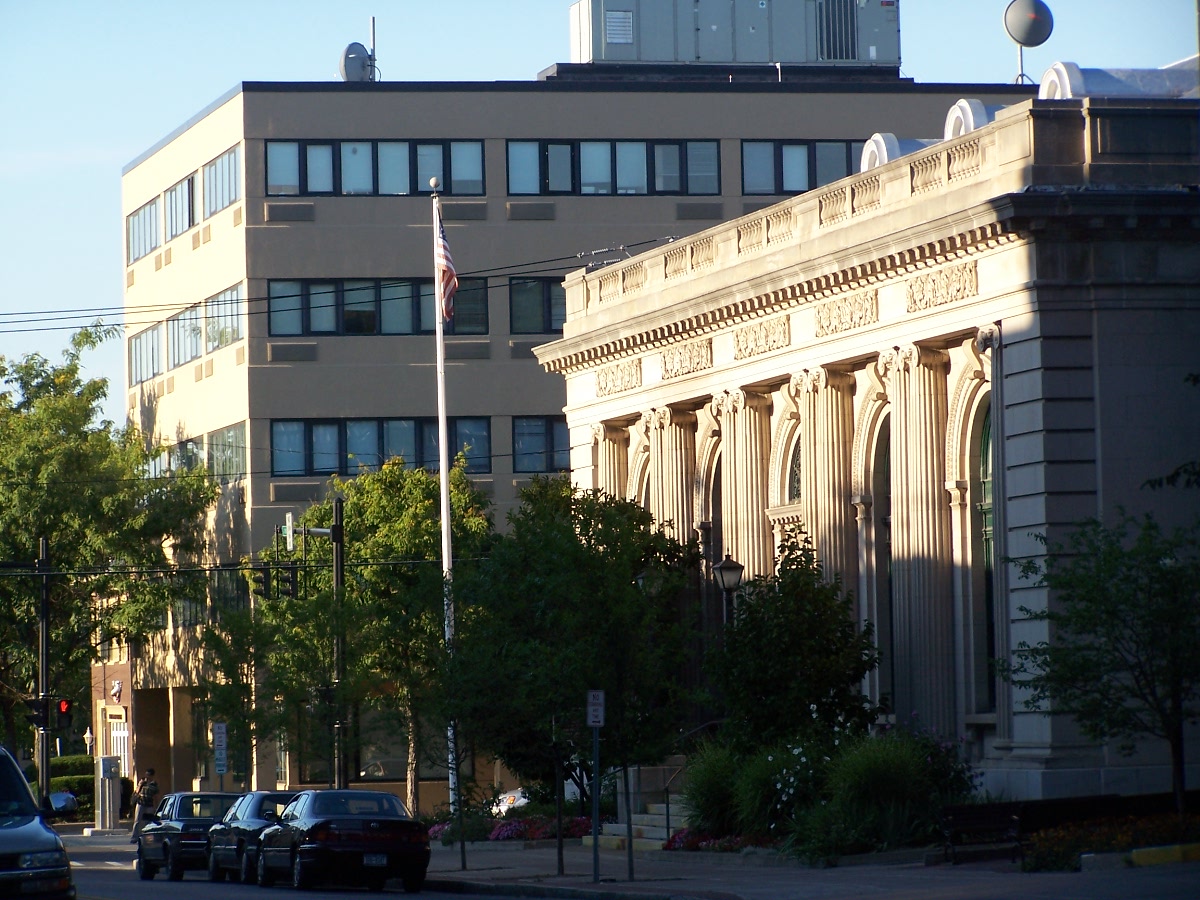
The beige box on the left is the Community Bank Building, which was built about 1981. The previous structure on the site, a four-story YMCA building, burnt down in a reported arson in 1978. The building on the right is the older portion of the Ithaca Town Hall (not that it’s not Ithaca City Hall, which is another building), which dates from 1858[3]. Prior to renovation in 2000, it was the (vastly underused) main Post Office in Ithaca.

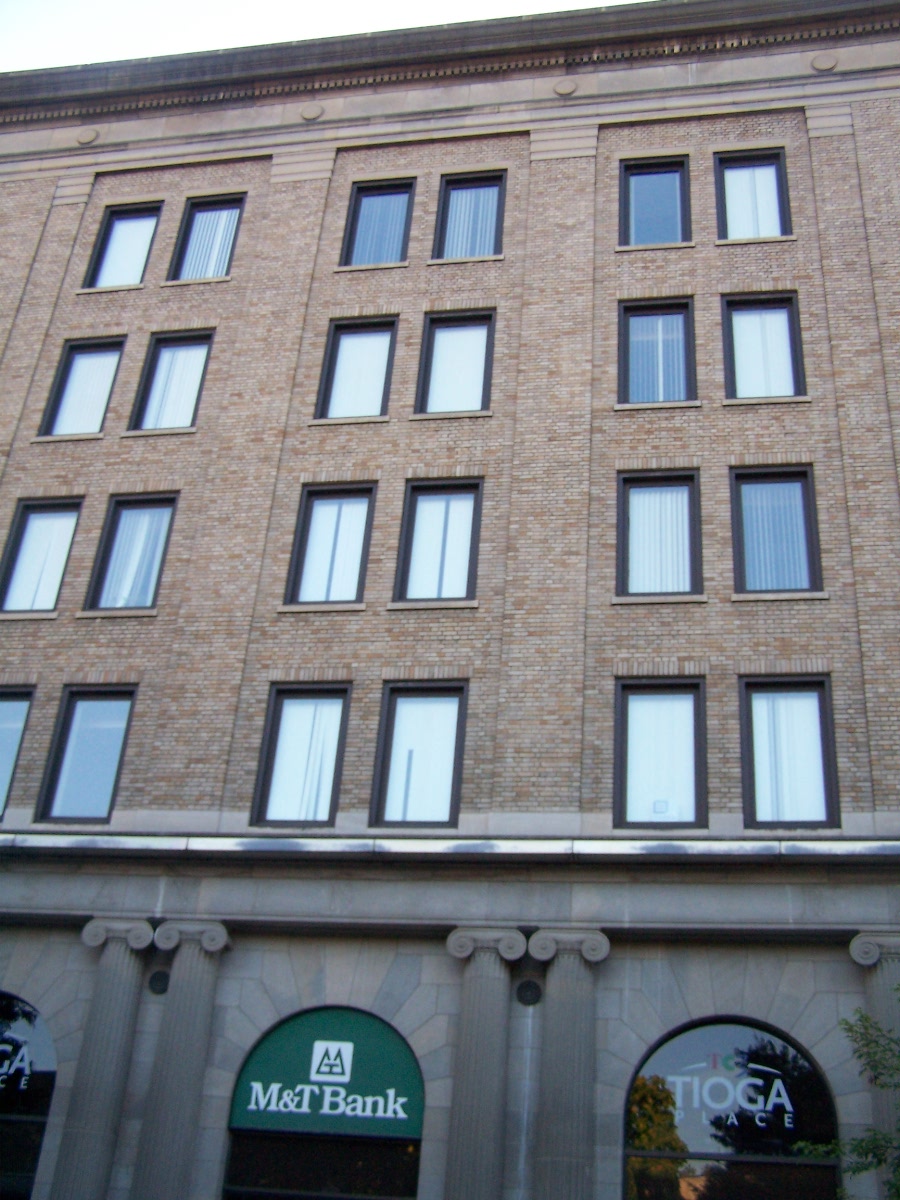
The M&T Bank Building, formally known as Tioga Place, was originally built in 1924 [4]. The awkward addition, like a piece of food stuck between someone’s two front teeth, was built on a half century later.

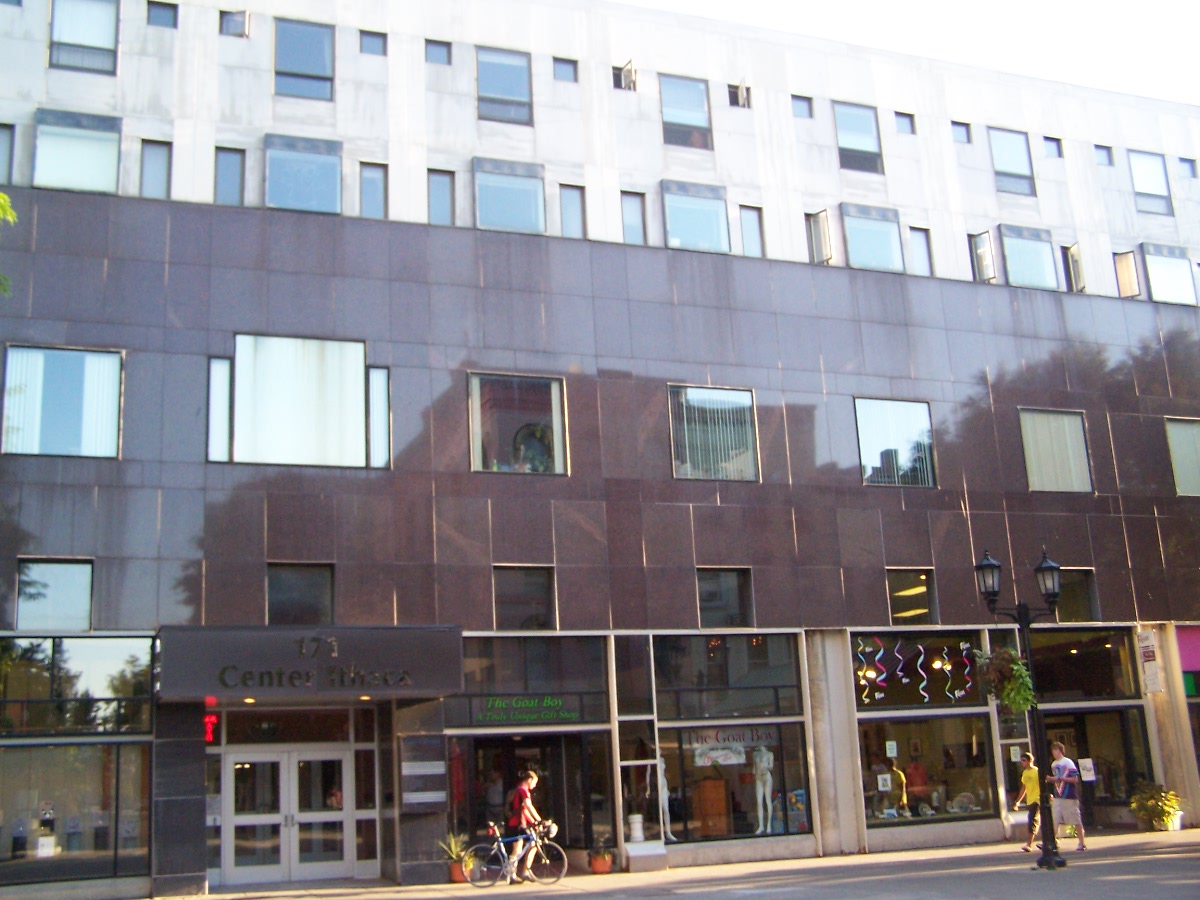
Center Ithaca, on the Commons. The building was built in 1981. It was an early attempt at a mixed-use structure designed to take advantage of the Commons and to make the area more lively. Well, didn’t really work out as planned. Rothschild’s, a department store that was the ground-floor anchor, closed early on. The 62 apartments were difficult to rent out at a time when downtowns were still considered dangerous places to be. And it ran over-budget, pushing its developer and the cash-strapped city into financial hell. Today, the building has worked out most of its kinks, but it didn’t fulfill its original goal, so it worked with mixed results.

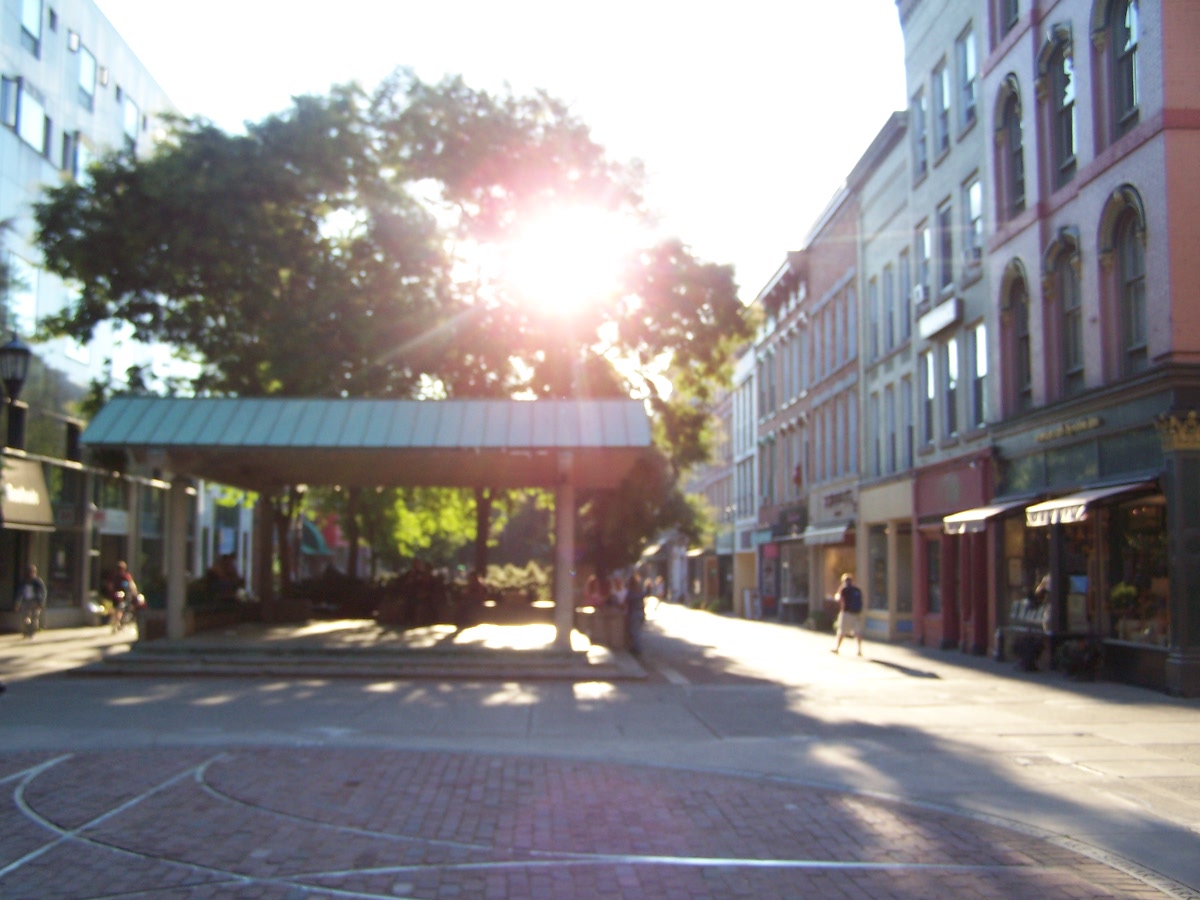
Token Commons shot. Completed in 1974 on what was a part of State Street, the Commons was the brainchild on Thys Van Cort, the recently-selected city planner. Pedestrian malls were all the rage in the 1970s; most closed down within a few years. Ithaca’s has persisted, much to the delight (or loathing) of locals. Talk around, and you’ll find some adore the Commons, and some want it turned into a street with parking on the sides. Whichever you prefer, it’s there for the time being. The tracks in the foreground mark where the streetcars used to turn in the downtown area before they closed in 1935/36.

The foreground building that houses Viva Taqueria is the Wanzer Block, which dates from 1905. The building that hugs it in an L-shape is the Roy H. Park building, which was built in the 1990s. Roy H. Park was an Ithaca-residing executive for Proctor & Gamble who was also a substantial donor and investor in Ithaca College and  the surrounding area.

For now, it’s a parking lot. By 2010, as long as things stay on schedule, this will be the site of a 9-story, $17 million,  102-room Radisson hotel by Rimland Associates (rumors have it to be a Radisson, but it will be a recognized chain that occupies the new building) [6].

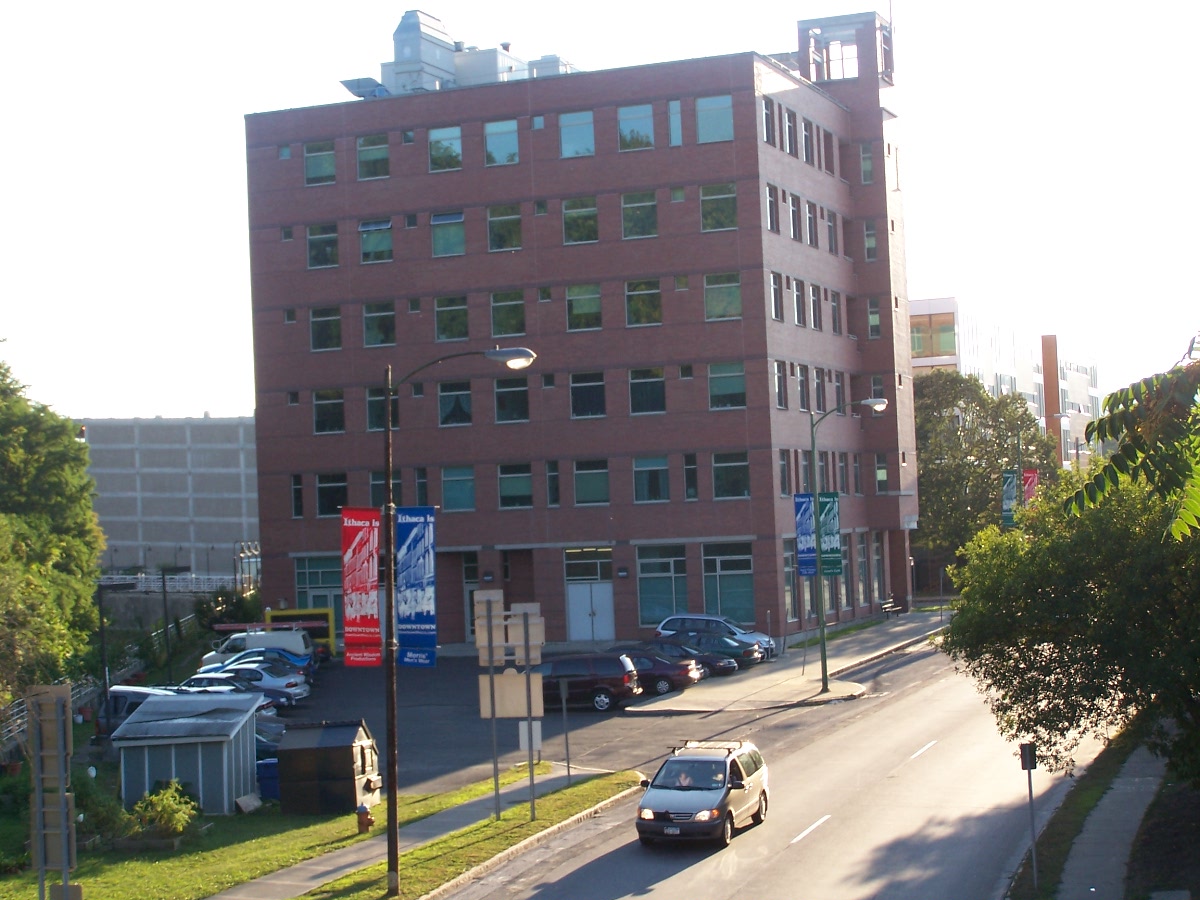
The center building is the Tompkins County Health Services Building, constructed in 1990 [7]. On the right is the nearly-finished Cayuga Green Apartments, a 59-unit building that will house Cinemapolis on the streetfront. The Parking garage on the left (built in 2005), will see the addition of a seven-story, 30-unit condo tower (Cayuga Green Condos) on the backside (the side facing this photo).

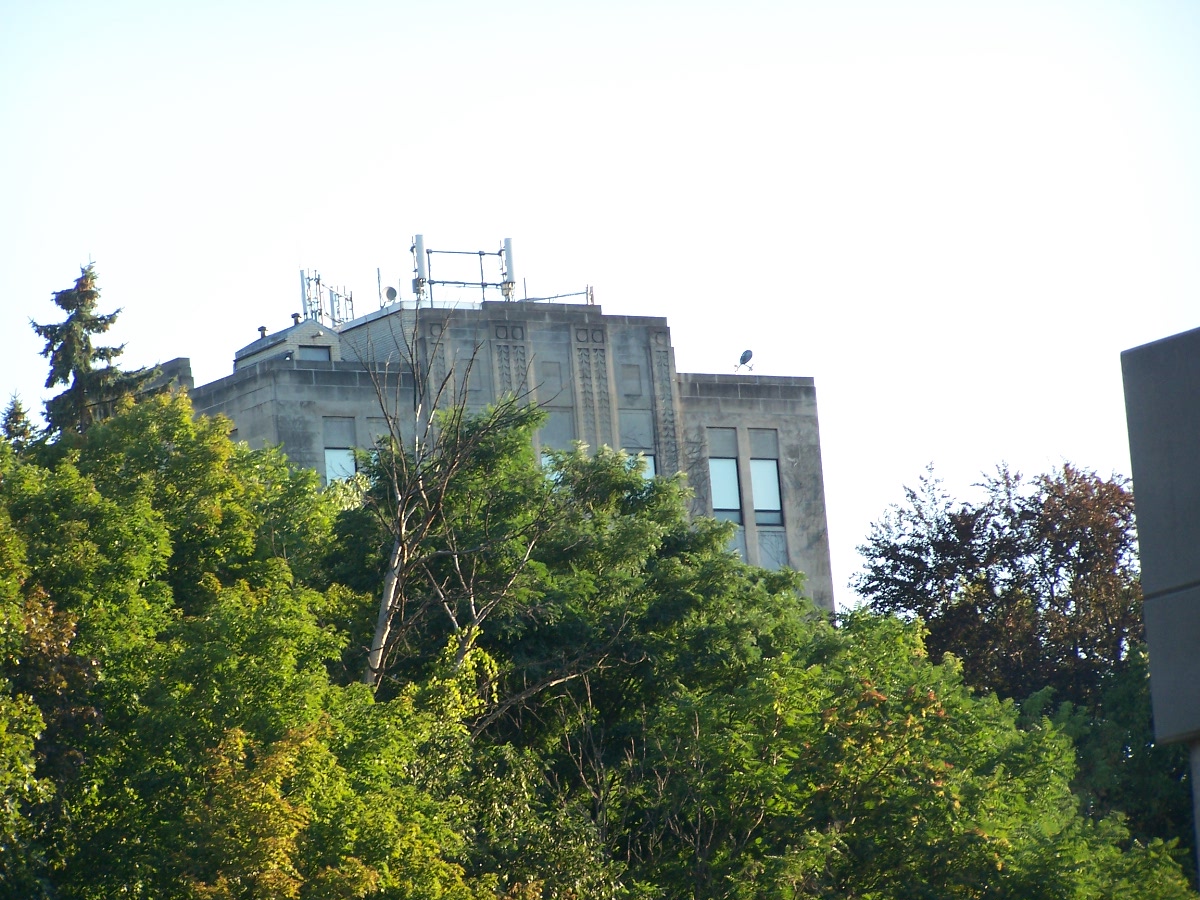
I know, bad photo, but it’s visible most everywhere else in Ithaca City. Limestone Tower, built in 1932, is slated for an apartment conversion and renovation by the Ithaca Rental Company and its head, Jason Fane. The building  was originally built for the G.L.F. Exchange Farmers’ Association.

Just outside of downtown is the William Henry Miller Inn. William Henry Miller, of course, was one of the first Cornell architect graduates, and also designed Uris Libe and Boardman Hall. He designed this house and its carriage house, which were built in 1880 and 1892 respectively [8].


[1]http://www.moosewoodrestaurant.com/aboutus.html

[2]http://www.re.cornell.edu/senecaplace.htm

[3]http://www.town.ithaca.ny.us/newtown.htm

[4]http://www.emporis.com/en/wm/bu/?id=tiogaplace-ithaca-ny-usa

[5]http://en.wikipedia.org/wiki/Roy_H._Park

[6]http://findarticles.com/p/articles/mi_qa3718/is_20080418/ai_n25443972

[7]http://www.kwikfold.com/Pictures-PhotoWork/Hascup.jpg

[8]http://www.millerinn.com/inn.htm