Rumor Mill: Alpha Xi Delta’s New House?

9 06 2009

Being in another part of the country sort of limits my ability to keep this blog as active as it usually is. That being said, occasionally some tip or rumor comes along, and if it piques my curiosity, I’ll sooner or later get around to addressing it.

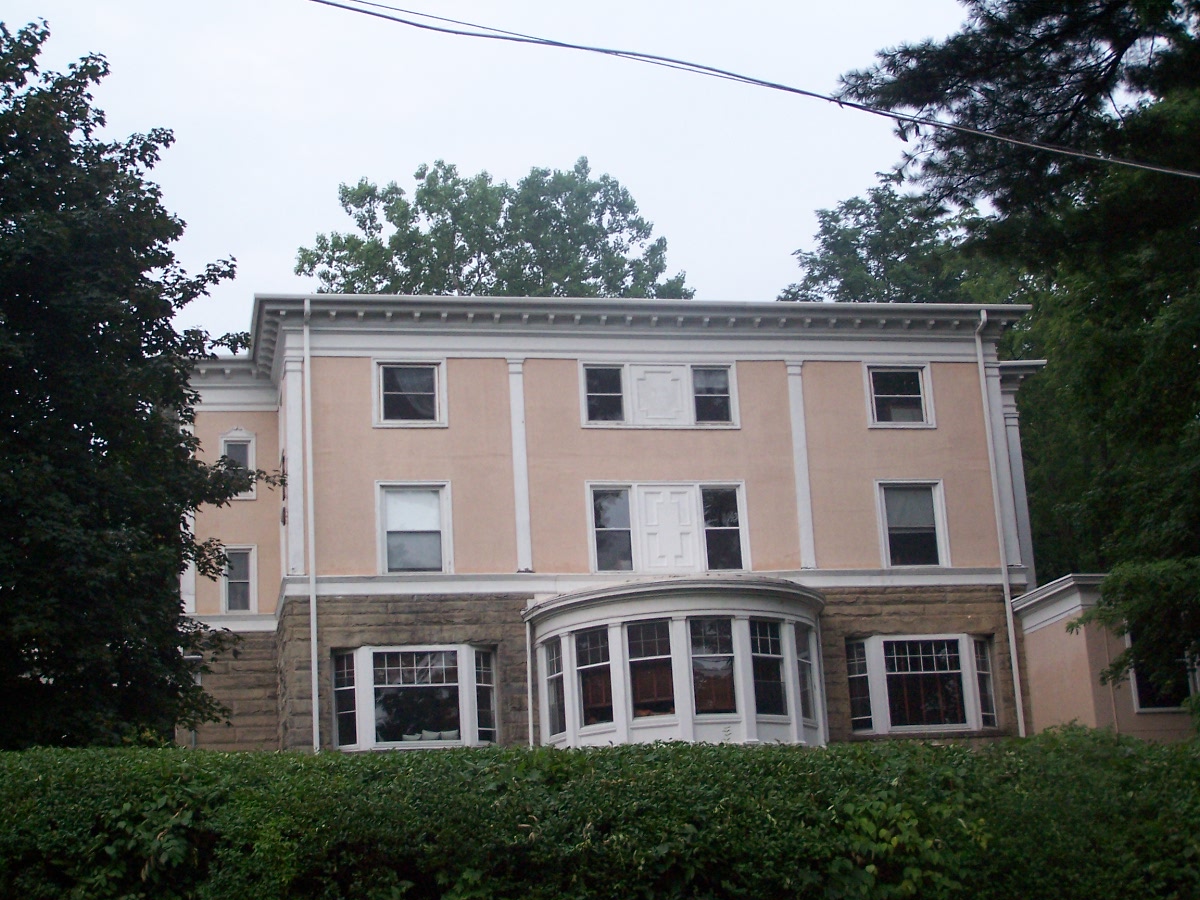
In this case, it would appear that popular rumor is ciruclating that Alpha Xi Delta sorority would be moving into Alpha Omicron Pi sorority’s old house. To make a long story short, AOPi closed this past year for a number of reasons, leaving their recently renovated (and rather luxurious, if I dare say) house on Ridgewood Road open. The house itself has a long storied history of being involved in the Greek system, with no less than four different Greek organizations calling at home at some point or another in its nearly one-hundred year history (see other entries).

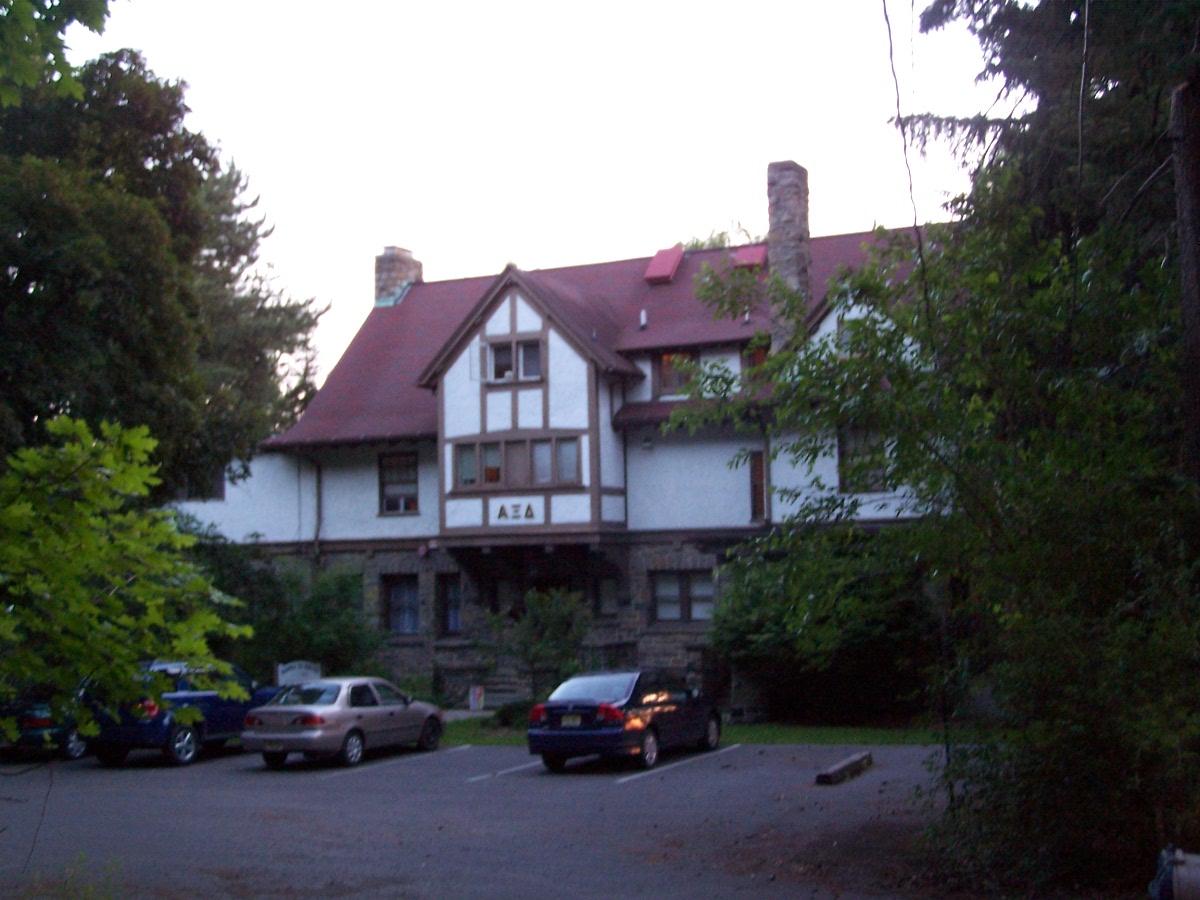
The rumor has its plausible points. For one, Alpha Xi Delta doesn’t own their house at 115 The Knoll. That house is still owned by Delta Phi Epsilon sorority, which closed about six years ago [1]. Rumor mill seems to suggest that Alpha Xi Delta’s moving to Ridgewood may not be permanent, as AOPi stated that once the last sisters graduate (2011?), the sorority is hoping to reactivate itself, persumably in the house it owns.

I guess my question is, if the rumor turns out to true, then what’s being done with 115 The Knoll? Is Delta Phi Epsilon reactivating, or is the house intended for another purpose? I s’pose only time will tell on this one.

 [1]http://www.rso.cornell.edu/DPhiE/DRhistory.html


Trouble At “The Castle on the Rock”?

20 04 2009

100_1611

EDIT – So, they’re not going dry or closing, but they are reorganizing. Their Recruitment Chair was kind enough to offer an explanation on the validity of the rumors in the comments section.

Normally, I shy away from rumors, but this one has been persisting for some time, and so I’m going to address it now so that hopefully fact can be pulled from the fiction.

Naturally, this deals with the Greek system that has been the topic of many an entry. This is the story that rumor mill has supplied me, with little variation, from four seperate sources:

Beta Theta Pi will be either closing or going dry at Cornell University. Rumor mill claims that their alumni visited them on a Tuesday to find many of the brothers drunk, and they weren’t too happy. Apparently they were given the ultimatum to either go dry or disband. At this point, two sources said they’re going dry and half the brothers deactivated, and the other two sources said the fraternity is closing completely.

This vague passage from their website doesn’t help matters: [1]

“2009 marks a new chapter in the history of our great house. Reorganized, reenergized, and refocused, we are committed to developing worthy individuals to be the best that they can be.”

I think it’s a shame if their’s truth to the closing. Beta has been at Cornell uninterrupted since 1879 (it changed it name over after the original fraternity, Alpha Sigma Chi, merged with Beta Theta Pi [1]).

Not too surprisingly, the brothers I know in that house are staying fairly quiet about the whole situation, apart from saying that they have been having some problems lately that are being addressed. I s’pose is there was any truth to the rumors, I’d be keeping a low profile too.

[1]http://www.betadelta.org/history.html


Warren Real Estate Tries to Sell a Frat House

4 03 2009

This was oddly funny to me. The house in question is 210 Thurston Avenue, covered in an entry last July.

http://www.warrenhomes.com/index.cfm?action=detailed_listing&mls=128574&menu=0

Photo Property of Warren Real Estate

“Walk to Cornell University from this 22 bedroom group house. The house is legal for up to 33 people. This s a unique opportunity to own a wonderful investment property. There are 6 full bathrooms (2 master suites), a commercial style kitchen, and parking for up to 15 cars. Over 7,000 square feet of living space on first & second floors. The full basement has a paved concrete foundation and significant additional living space featuring a rec. room and a dining area.”

Now here’s the history they skipped over. This house was built around 1900. The first fraternity to inhabit its halls was Delta Sigma Phi, which closed in WWII and never reopened. Alpha Omicron Pi made use of this house for a short while, and Sigma Alpha Mu moved in for 1947/1948. Sigma Alpha Mu maintained the property until they moved to Sisson Place in 2004. After that, the house became known as Phi Delta Theta’s annex (which, for being the dry house on campus, the real estate website’s photo of a large beer pong table in their annex does nothing for P.R.).

Like, really guys? Next time, throw a sheet over the table, it won’t be so blatantly obvious. Like the beer cans wedged between the second floor balconies.

Even better, it would appear that not only is this house for sale, but Theta Xi’s moving in [2]. From a Craigslist excerpt:

“Theta Xi Fraternity is moving into the old Phi Delta Theta annex at 210 Thurston Ave. for the 09/10 school year. We will have around 10 brothers in the house and need around 10 boarders. The cost will be 100,000 for 20 people for a 10-month lease, which is 500 a person. ”

For the curious, this 7,044 square ft. house has an asking price of $950,000. Maybe Theta Xi has some rich alumni they could appeal to.

Looks like the times are a changin’.

[1]http://www.sammybeta.com/history.php

[2]http://ithaca.craigslist.org/roo/1017046808.html


Fraternities You’ll (Probably) Never Visit

22 12 2008

So, Cornell is a campus that has had firm roots in Greek Life (one of the reasons why it is a frequent topic of discussion in this blog). Occasionally, you’ll look at an older campus map or even the current edition and notice some Greek houses you’ve never even heard of.

During the summer, I made an effort to write an overview all the IFC chapters (which I think was a successful endeavor). However, I also mentioned Omega Tau Sigma, mainly because I liked their house (I’m a sucker for tile roofs).

100_1364

As I cited previously, Omega Tau Sigma is a professional fraternity for veterniary students, with the house essentially functioning as a co-op.

A second example of this would be Gamma Alpha of Cornell. This was one of the two random Greek houses in Collegetown, with Gamma Alpha located at 116 Oak Avenue. Gamma Alpha is a professional fraternity for biological science graduate students [1]. I’m afraid I don’t have a picture of this one on me, but the house dates from the late 1800s.

The other Greek organization listed in Collegetown is Alpha Psi. Located at 410 Elmwood Avenue, I’ve had a damned hard time trying to locate any information about this organization, but it would appear that they are another professional veterinary fraternity that was founded at Cornell in 1907 [2].

Then, of course, we have fraternities that have long since left Cornell. I decided to explore part of this by using the 1928 Cornell Map, since my previous “where are they now” dates from about 1970, so I’m approximately covering the span between the two . Here’s the link to the 1928 map if you care to follow along:  http://reading.cornell.edu/reading_project_06/gatsby/cpa1.htm

Sigma Kappa Sorority (150 Triphammer) – discussed in an earlier entry, but long story short, closed in the mid 1950s, operated as Chi Gamma for a short while and eventually became the Triphammer Coop.

Eleusis (313 Wait) – Also covered in a previous entry. Local fraternity that would become part of Theta Kappa Nu in 1934/35, and merged with Lambda Chi Alpha in 1939.

Theta Kappa Phi (201 Heights Court) – The initials were tongue-in-cheek for “The Catholic Fraternity”. Founded at Lehigh in 1919, the Cornell chapter was established sometime in the 1920s. The Cornell chapter had closed by the time the national merged with Phi Kappa (another Catholic fraternity) in 1959 to become Phi Theta Kappa, which still operates on college campuses today [3].

Scorpion (105 Westbourne Lane) – Established in 1914 at Cornell [4], moved to Westbourne Lane in 1927. After the original Tau Kappa Epsilon closed due to the depression in 1936, Scorpion became the replacement Tau Kappa Epsilon chapter in 1940.

Delta Zeta (200 Highland Avenue) – This sorority still exists today with 158 chapters [5]. They were established at Cornell in 1908, and held an annual convention here about a decade later [6]. Delta Zeta closed in 1932, one of several organizations that shut its door during the Great Depression.

Rho Psi (212 Fall Creek Drive) – Established in 1916 as a Chinese fraternity. Closed in 1931. Article suggests Cornell’s Alpha chapter might have been the only one with a house. No chapter exists anywhere today. [7]

Delta Sigma Phi (210 Thurston Avenue) – The Theta chapter of Cornell was installed in 1907 [8]. The chapter went inactive during World War II. Their national still thrives today (notably, during its time at Cornell, the national fraternity wrote a Christian-only clause, thus formally excluding Jewish students. The policy would not be repealed until the 1950s).

Omicron Alpha Tau (934 Stewart Avenue) – According to Marianne Sanua, author of “Going Greek: Jewish College Fraternities in the United States”, Omega Alpha Tau was founded in 1912 at Cornell and was known as “the most Jewish” of fraternities, strictly maintaining a Kosher kitchen. The fraternity closed amid financial troubles in 1934. (Sanua, pg. 79)

Phi Delta Sigma (The Knoll) – A local fraternity that became a chapter of Phi Kappa Tau in 1930. Their Corporation Board is still called Phi Delta Sigma.

Sigma Phi Sigma (103 McGraw Place) – A local fraternity founded in 1910 that merged with Scorpion TKE in 1941 [4].

Sigma Upsilon (636 Stewart Avenue) – The most I can find suggests it was a literary honors fraternity [9]. However, according to Cornellians from that time period (1927, 1931, 1933, 1934), it was an independent fraternity founded in 1915, and closed permanently around 1933.

Phi Alpha (1953-1960), Phi Epsilon Pi (1911-1970) and Kappa Nu (1951-1963). Jewish fraternities that closed as a result of mergers. (Sanua 320).

Theta Alpha (618 Stewart Avenue) – Existed at Cornell from 1910 to the 1930s. A fraternity which had four chapters, including Alpha at Syracuse and Beta at Cornell (according to Baird’s Manual of 1920, pg. 374, and the 1927 Cornellian).  No chapter exists anywhere today.

Zodiac (515 Stewart) – A local fraternity established in 1904. According to ATO’s website, after an unsuccessful run with another national, the fraternity merged with Alpha Tau Omega in 1936 [10].

Phi Sigma Delta (102 Edgemoor Lane) – When Delta Sigma Phi began to “blackball” Jewish rushees, the disenchanted decided to get even by starting a rival fraternity for only Jewish men (note that their initials are Delta Sigma Phi’s only backwards). Cornell’s chapter was founded in 1912. The organization lasted until the mid-1950s, and in some sense evolved into Young Israel, now the Center for Jewish Living [11].

Beta Psi (505 Dryden Road) – Established in 1920. Apparently was a social fraternity, though no students in CAS. Closed by late 1934. Had four other chapters. This fraternity no longer exists.

Phi Delta Mu (301 Eddy Street) – Founded in 1925 as the Zeta chapter.  Alpha chapter of this Jewish social fraternity was at the City College of New York. There were eight other chapters before this one closed around 1934. It would appear this fraternity no longer exists today.

Iota Alpha Pi – A historically Jewish sorority that founded its Cornell “Beta Delta” Chapter in 1966. After the dismantling of Christian-only clauses in larger sororities, the chapter saw a rapid decline of its fortunes and the national, as well as the chapter, ceased to exist after 1971 [13]. The sorority was originally founded as J.A.P. (fanning the flames of Jewish girl stereotypes for years to come), but changed to Greek lettering shortly after its founding.

[1]http://en.wikipedia.org/wiki/Gamma_Alpha

[2]http://www.vet.cornell.edu/public/registrar/Handbook/new%20Student%20Life%2061%20update.indd.pdf  (page 6-14)

[3]http://en.wikipedia.org/wiki/Phi_Kappa_Theta

[4]http://www.lgbtrc.cornell.edu/dos/greek/chapter_details.cfm?id=3272

[5]http://www.deltazeta.org/Content/NavigationMenu/AboutDeltaZeta/History/default.htm

[6]http://www.sigmadeltatau.com/history.html

[7]http://en.wikipedia.org/wiki/Rho_Psi

[8]http://www.deltasig.org/about/history/timeline

[9]http://library.davidson.edu/archives/ency/honfrat.asp#su

[10]https://www.atocornell.org/public1.asp

[11]http://www.cornellcjl.com/about/history.aspx

[12]http://www.drexel.edu/studentlife/fsl/forms/history.pdf

[13]http://en.wikipedia.org/wiki/Iota_Alpha_Pi


The Issues of Sigma Pi and Panhel

14 12 2008

100_1700

So, I really find this issue to be the rough equivalent of a powderkeg in the Greek System at the present time.

I find it odd that the Ivygate blog [3] would attempt to cover it, though. Judging from the number of “insightful” (“inciteful” might be more fitting) comments, it’s just as much of a powder-keg as I expected it to be.

It is well known that they were booted from the IFC last year for an incident stemming from a Thanksgiving Feast gone horribly wrong that resulted in two freshman requiring life-sustaining medical treatment for alcohol poisoning [1]. Dumb, dumb mistake by Sigma Pi. It cost them their pledge class for 2008 and forced them to undergo an evaluation from their national and their own alumni organization. Looking at the OFSA annual reports, Sigma Pi had 87 members in the spring of 2007 and 64 that fall. They were at that point the largest house in the system.

So, being completely nosy, I talked with the only Sigma Pi brother I know about how the reorganization process is going and the mood was one of “don’t ask about it, it’s been bad enough”. Their national did a review of the house, as did their alumni, removing those that they felt didn’t contribute to the betterment of the house.

Let’s do some quick math. There were 64 in the fall. No pledge class. One can say that close or slightly more than one third of the house in the fall were seniors. So, that would be about 21 or 22. We’ll go with 22, since I don’t have any numbers to officially break it down. That leaves 44 who would still be here this fall.

But, they have 29. Seems the reviews conducted by the local and national were worth the effort in that respect.

So, on the 4th, they were up for review, and the IFC voted to make them associate members (not a full member, but they still have voting privileges). However, their rush will have to be dry. I wish them the best of luck with that.

The debate seems to stem from the feeling that they were let back too soon, and they haven’t had enough time to reform. I can definitely see where that comes from, and I do wonder perhaps if the intentions of those who voted for a dry rush for the Sig Pis wasn’t so much out of showing diligence to safety measures as it was those houses were afraid that Sig Pi would rise up and take away potential pledges. However, I had a project meeting that evening, so the substitute rep for my house went in my place. It’s hard to open a meeting I never went to up for discussion.

***

Meanwhile, the Panhellenic Association (the governing council of sororities), which in this blog I have been a critic of, has reported its lowest registration turnout in recent history, sparking a series of pro-sorority articles in the Sun (though, I suppose that wasn’t as interesting as the back-and-forth caused by a former sorority girl who wrote an article intensely critical of the sorority culture).

My reaction: “Oh, really? No sh*t. Can’t say I’m surprised.”

Maybe it’s a cultural thing. Maybe it’s just a simple statistical anomaly. Whatever the case, with AOPi closed, this spells trouble for the other sorority houses, especially the one that will fall into AOPi’s place as the least respected house. Which most of us have a pretty good who that will be, but to spare myself form the resultant bitching from the sisters who might run across this blog, we’ll leave them unmentioned.

But this won’t just affect that house. If numbers are low, fewer girls will be interested in each house in general. And their numbers will suffer as well.

So, lucky for me, I happen to have friends in both of the co-ed fraternities- Sigma Chi Delta and Alpha Zeta. One of them made this joke to me: “We always have trouble getting guys, but there’s always a lot of girls who come to the house. During rush week, we could open the door at any given time, and there’s always a girl there who says she’s interested in our house.” I do believe off-hand that both of these houses have more females than male members.

In another example, consider the co-ops. Most are co-ed (sans Wari—and Wait Ave. just went coed). Glancing through the list of members on their sites, though, most would appear to have more female members than male members.

My thought is that Panhel is just not doing something right somewhere. Maybe it is a cultural thing; sorority girls are stereotyped as being shallow, bubbly/bitchy, and easy; not exactly good for P.R. Perhaps they just simply don’t draw women like they used to. But I guess they’d better step up the effort, or we’ll be seeing more chapters close or shrink in the near future.

[1] http://cornellsun.com/node/26714
[2] http://cornellsun.com/section/news/content/2008/12/04/ifc-votes-re-recognize-sigma-pi-fraternity-house-will-be-required-ha
[3]http://www.ivygateblog.com/2008/12/sigma-pi-bros-promise-fewer-near-deaths-are-allowed-to-officially-return-to-campus/


Where Frat Houses Go To Die

29 11 2008

Okay, maybe not so much. Reasonably so, Cornell has seen many fraternities in its day, and while many still remain on campus, they often move during their tenure at the university. Other organizations have come and gone with the times. Well, the fraternity and its symbols may be gone to all but their alumni and the old yearbooks, but the houses…what happens to them?

It really depends on luck and the general mood of the times. The most common fate for Cornell fraternity houses is demolition, whether it be for a parking lot, an apartment building, or for a physical expansion of the campus. The Rabco Apartments (the rather worn-down brick buildings on the 300 block of Thurston) sit on the site of what was Phi Kappa Psi’s house. DTD’s old house is now a parking lot, as is Zeta Psi’s first house at Cornell (granted, it burnt down in a fire in the late 1940s). Kappa Alpha Society’s Victorian masterpiece was torn down for Hollister Hall in 1957.

100_1718

This view used to be blocked by DTD’s old house. But now it’s a very nice parking lot.

Rather than continue on that depressing tangent, some houses are fortunate enough to find a new life. Some are for university functions. Pi Lambda Phi, having closed in the 1970s, is now the Undergraduate Admissions office. Triangle’s house (pre-1985) is the dorm 112 Edgemoor, and 14 South was home to Kappa Alpha Society (they moved here right before the demo and remained until they closed in 1990). TriDelt’s house prior to 1965 is now the Alumni House on North Campus.Image courtesy of Cornell Facilities website (www.fs.cornell.edu).

14 South was AOPi's house from about 1992 to 2006. In 2012, it became the home of Phi Sigma Sigma.

Some are converted into private residences. The Westbourne Apartments in Cornell Heights are the product of a conversion of Beta Sigma Rho’s fraternity house (they closed in 1972). 210 Thurston, now a private annex house, was the home to Sigma Alpha Mu for decades. On the 300 block of Wait Avenue, the light purple stucco house with the tile roof has been home to two sororities and one fraternity (Eleusis fraternity in the 1920s [1], Chi Omega prior to 1953, and Phi Sigma Sigma from 1954 to 1969).100_2440

Having your house turned into a co-op is another popular option. Examples include-Watermargin: a former house of Phi Kappa Psi).Prospects of Whitby: former house of Alpha Xi DeltaTriphammer Co-Op: Former house of Sigma Kappa and Chi Gamma sororities.660 Wait Avenue co-op: former house of Zeta PsiHowever, The best reuses are the most awkward ones. Like when another fraternity or sorority resides in your old house. Here’s ten examples of that:Theta Xi: Zeta Psi alumni bought the property after Theta Xi closed in 1971. Then Zeta Psi sold themselves to Cornell for a $1 in the 1990s to avoid paying property taxes. Now Theta Xi wants their house back, and their pulling Cornell’s strings. I love real estate drama, especially when I get it first hand from the Zeta Psi brothers.Phi Sigma Epsilon: After they merged with Phi Sigma Kappa in 1985, the Cornell house was closed. Alpha Chi Omega sorority moved in some time afterwards.Beta Theta Pi: Their house prior to “Castle on the Rock” is now Pi Kappa Alpha’s house. Granted, this was prior to 1906, and Pika moved in around 1917, so this is a very old example.Phi Kappa Sigma: “Greentrees”, their house up until 1990, became the house of Pi Kappa Phi within a year of the Skulls’ closing. Delta Phi Epsilon: This sorority founded their Cornell chapter in 1962, and closed for a few years in the early 90s before closing completely in 2003 [2]. They still own 115 the Knoll, which is Alpha Xi Delta’s current house. I’d like to point out the irony that AXiD closed in 1964, right after DPhiE arrived, and they reopened in 2004, right after DphiE closed. Rumor mill likes to circulate that DPhiE is waiting for the right moment to reactivate Cornell chapter, which is a source of angst for AXiD sisters living in the house.Alpha Epsilon Pi: Their house was occupied by Sigma Alpha Mu as a “second house” during the 70s’.Pi Beta Phi: Prior to their current houses’ construction in 1956, they lived where Alpha Chi Sigma professional chemistry fraternity resides today.Theta Chi, or Tau Delta Phi: AOPi’s closing on Ridgewood is nothing new for that house. Theta Chi lived there when they closed in 1999, after living there for around twenty years. Also, the chapter was home ot the fraternity Tau Delta Phi until that chapter closed in 1969.Chi Omega: This sorority, which reopened in 1987 and closed again in 2003, lived in Phillips House on Sisson Place. Current students will be more familiar with this place as the location of Sigma Alpha Mu’s house.Kappa Alpha Theta: Tridelt moved from the Alumni House to Theta’s original house in 1965. It wasn’t even a year after Theta disaffiliated after having issues with their national.Last but not least: this house, former home of Alpha Chi Rho (defunct), Pi Kappa Phi and Lambda Upsilon Lambda, is still up in the air for renovation:100_1370

Anyone have any news on any plans for the building and possible redevelopment?[1]http://www.edgemoor.org/heritage/history/eleusis.html[2]http://www.rso.cornell.edu/DPhiE/DRhistory.html


The Ithaca College Greek System

24 11 2008

So, I’ve always found it vaguely amusing that although officially Ithaca College doesn’t recognize Greek fraternities and sororities, their letters still manage to appear at events like Relay for Life over at Barton Hall.

Officially, IC recognizes three professional music fraternities and a performing arts professional fraternity (which has since closed). In terms of the student population, these are a drop in the bucket when it comes to size and importance/recognition. [1, 2]

Not that it was always this way. Ithaca College once had a thriving if smallish Greek system. Thing is, Delta Kappa fraternity (which had only a few chapters anyway) brought the system down in 1980 with the death of a pledge. According to the book Wrongs of Passage:

A long-standing tradition of forcing pledges to perform calisthenics in a steamroom with the heat turned up high finally claimed a victim, Joseph Parella, 18.”

Which just goes to show you what can happen when people in charge of safety and planning exercise incredibly poor judgement.

Still, the system does exist in some weird underground sort of way. I don’t think they even had houses back when they were recognized, since Ithaca College is an all-residential college (meaning most students live on campus, with the exception of seniors in an apartment perhaps), and they certainly wouldn’t have them. A relatively thorough google search brings up some of the underground fraternities and sororities of IC:

Delta Kappa- Apparently it still exists, though merely as a shadow of its former self. [3]

Pi Lambda Chi

Phi Kappa Sigma

Alpha Epsilon Pi

Phi Iota Alpha (Latino interest fraternity)

Phi Mu Zeta (sorority)

Gamma Delta Pi (sorority) [7]

In conclusion, they’re underground; most of the IC students think they’re stupid or haven’t heard of them; and they barely manage to exist. If anything, this should be a lesson on what can go horribly wrong if due safety and precaution aren’t exercised.

[1]http://collegeprowler.com/colleges/ithaca-college/greek-life/

[2]http://fuse.ithaca.edu/1455/

[3]http://members.tripod.com/deltakappa/

[4]http://www.ithaca.edu/ithacan/articles/0412/02/opinion/3greek_l.htm

[5]http://www.ithaca.edu/ithacan/articles/0009/28/news/fraternities.htm

[6]http://en.wikipedia.org/wiki/Ithaca_College

[7]http://www.freewebs.com/gammadeltapisisters/currentsisters.htm


Number Judging

13 11 2008

I should really make it a point not to go to IFC elections. To maintain impartiality, I will not use the names of any candidates or any fraternities directly in this blog. That won’t stop the curious from going and looking them up, but that’s no concern of mine.

One of the positions I thought could be easier to determine if ones’ vote was the more appropriate choice is for the IFC’s recruitment position. The logic here is that looking at a fraternity’s membership intake over the past four semesters is a strong indicator of their abilities to recruit, what brought these individuals in and what they’ve been doing since then (in this case, one candidate is a junior, and although I can’t find anything on the other candidate’s fraternity website or on facebook, I would at least hope that he’s a junior. Otherwise, we all just made a terrible mistake, because a sophomore is in no way qualified for such a position).

So of course, the new OFSA report has been released [1] (yay!). As for the candidates, well say the first is from fraternity X, and the second from fraternity Y. Here’s their membership numbers:

Fall ’06, Spr ’07, Fall ’07, Spr ’08

X: 18, 37, 32, 45

Y: 40, 63, 44, 59

I’m inclined to think that fraternity X must have tried something new that was successful. I’m inclined to think Fraternity Y did roughly the same program both years, and it didn’t pay off as well last year. (Please don’t bother posting the “smaller number, better quality pledge” argument. We’ve all been around the block enough times to know that with the number of bids fraternities “bestow”, it becomes a game of chance with other houses and therefore that argument is a load of bullshit). We elected Y. Granted, you can’t exactly pull this information up in the middle of the meeting, and you don’t find out the candidates until the meeting in many cases. I s’pose what helped me make my choice is that Y wants to retry the failed “Meet for Greeks” program that I criticized in a previous entry. In a sense, this is looking back on the decision to see if it was a good one. For the system, it’s increasingly apparent that it wasn’t.

But hey, what do I know? I’m just letting statistics play a role in my judgment.

[1]http://www.lgbtrc.cornell.edu/dos/cms/greek/upload/OFSA-AR08-final.pdf


Greeks Freak…and it’s not the MGLC’s step show.

13 10 2008

So, I’m churning out two updates in one day. Yay.

For those who follow the trials and issues of the Greek system (which are probably very few in number, but nonetheless fascinating in its own twisted way), the big news in the system has been related to the Greek conference (Call To Action Summit) held in Appel last month. Quite simply put, Cornell and a coalition of alumni are threatening to remove Greek self-governance unless some changes are made. Now.

The first concern are academics. The fraternity system as a whole stands at 3.26. In the fall of 2007, it stood at 3.246 (sororities are at about 3.4, and higher than their non-Greek counterparts, so they don’t have the same issue).

I only have a paper copy of this past semester’s average, which is why the elctronic one is only the prior two semesters. Anyways, that upsets the alumni. The campus average is somewhere around 3.4. That is very upsetting. As one fraternity alum exclaimed, “Cornell Greeks could and should be smarter than non-Greeks”.

So, obviously, they launch into this whole sphiel about promoting academics and all that goes with it. Here’s my concern, as an attendee; we all know that certain schools are more rigorous grade-wise than others. ILR averages about a 3.8, while engineering is nearly a full point lower. For a generic house, where the have two rushees who are relatively the same in every characteristic except that one’s an ILRie and the other is an engineer, which one are they going to choose, as their independence in the system is under threat?

That’s my issue. The intended goal is smarter Greeks. GPAs don’t necessarily mean someone is smarter, but based off of statistics, one might think it is. I’m concerned those from more rigorous majors (my dept. averages a 3.2, which is why I feel every right to be concerned) are going to have a slimmer chance of getting into a house because the house will focus more on their course of study, thinking it more potentially attractive to give bids to those in majors with generally high GPAs (and I’ll be damned if someone steps up to say that would never happen, and can prove it).

The second topic was getting rid of the Greeks “party-and-kegger” image. This I can agree with more. I feel embarrassed if I wear my letters around campus because I get this awkward feeling that unfamiliar faculty and staff are looking down on me, as if they heard I’m drunk four nights a week. I think I’ve drank maybe four times this semester, and only one of those times was it even with anyone from my fraternity. So, I personally would love to do away with the party image.

Unfortunately, I’m also aware that parties are a primary source of “fresh blood”. The general view is that people aren’t as interested in a sense of camraderie and connections and cheaper housing; they’re visiting in the fall for the free booze. Fraternities who have used alternative method are generally looked down upon. To that extent, I’m aware of the two ag frats [AZ and AGR] doing events on the Ag Quad to attract attention to themselves and to get people interested, and Seal and Serpent posting flyers in high-traffic areas, but the aggies are considered off the wall anyway and Seal’s desperate for members.

So, the system is attempting an “informational” on the 26th. It seems like it will be a guided tour of the houses and a career fair style setup in the multipurpose room of RPU. I’ll be downright shocked if they have a significant turnout.

The third is the spectre of hazing. As someone who has been directly involved in overhauling parts of their own fraternity’s pledging to address the concerns, I can say that most of the ideas they were proposing were one’s we put into effect after hazing allegation went public in almost ten years ago. It took five years to put into place though, because some alumni vehemently opposed what they referred to as “taking the fun and character out of the pledge process”. They disaffiliated with us over the restructuring, but we did what we had to, and we’ve been the better for doing it (I won’t give exact numbers and details because I’m concerned they would give some others the information necessary to determine my afiiliation).

Meanwhile, Greek and non-Greeks alike are flipping out over the police distrubing dozens of $500 fines in a given weekend. Here’s the bad news folks—the locals are strongly supportive of the measures. And unless you plan on commuting from Lansing or Dryden, you’d better learn to deal with it, because as much as we’re upset, the support from the rest of Ithaca (excluding South Hill and IC) is staggering. Students are a captive market, and unless it can be proven otherwise, expect things to only get more stringent in the future.

EDIT: Speaking of MGLC, I take it this [1B] means Alpha Phi Alpha is active at Cornell once again? Congratulations gentlemen. Best of luck to you.

[1B]http://www.facebook.com/group.php?gid=29891094604&ref=nf


9/7/08 News Tidbits: Alpha Omicron Pi to shut Cornell Chapter

6 09 2008

AoPi sisters confirmed Friday that their chapter will be closed as of the first of October, due to declining numbers within sorority rush. All current members will be moved to alumni status and allowed to live in the house until graduation. Once all current sisters have graduated, the intention is to reopen the house under a new set of women (this has been done with fraternities in the past. Pi Kappa Phi closed in 1986 and reopened in 1990, and Phi Kappa Tau closed in 1994 and reopened in 2000).

So, the news, while unfortunate, isn’t surprising to anyone familiar with the Cornell sororities. AOPi was typically derided and demeaned, and as a result of the nasty jokes associated with the house, women tended to avoid having it as a choice on their bids. Also consider that sorority rush turnout was lower than usual this past year, and you end up with a situation where the house can’t get enough women to make minimum member quotas. I feel really sorry for the current active membership of that sorority house.

This should really be a wake-up call to PanHel that something is amiss in the sorority system. Delta Phi Epsilon closed in 2003, as did Chi Omega. with Alpha Omicron Pi shutting down, this results in a net loss of two sororities in the past five years (PanHel selected Alpha Xi Delta to open on campus in 2004). With eleven left, is this really the system that they want? When some sororities have 140 women, and AOPi is closing with about 30 members left, as regulated as the system is for women you’d think the numbers could be a little more balanced.