Better Late Than Never: 2009 OFSA Report Released

7 01 2010

It only took them until New Year’s to get it up on their website. What’s that, like six months since the numbers and data were finalized?

The PDF:

http://dos.cornell.edu/cms/greek/upload/OFSA_AnnualReport_0809.pdf

The cover is vaguely charming. I can see my fraternity’s pin on the cover. I also remember that our alumni board president didn’t know that the pins were for reunion, so we ended up putting them in storage for a while before giving them out to interested members.

Basic stats: Not a whole lot of change. Same number of chapters (AOPi closed and Alpha Phi Alpha reestablished itself). Roughly the same percentage of greek undergrads (more on that in a moment). Less community service hours, but about $6K more raised in philanthropies, but honestly no one really cares about that except when it comes time to say good (or bad, comparatively) things about the greek community.

Digging a little deeper into the IFC numbers, it looks like the percentage of Cornell male undergrads in fraternities has increased to 33.15% from 31.68%. Gross numbers, that’s about 143 more members (the total male undergrad population, Greek and non-Greek, increased by 126). Yet, the number of undergrad freshman males stayed nearly constant (up by 9), so the vast majority of the gains seem to be from upperclassmen who chose to pledge later in their college careers, and transfer students. Which is great, in my opinion; one of my best friends in my house chose to pledge as a sophomore, but I wouldn’t think of him any differently than someone that I pledged with as a freshman.

Sorority membership increased to 23.60% from 23.17%. Sororities had 78 more members in 2008-09 over the past year, but the total undergraduate female population increased by 190 students (including 120 more freshman women vs. the previous year). Average members per chapter from 73 to 81, but that’s because Panhel lost AOPi, so there were more ladies to go around.

As a guy, I think I lack the ability to understanding the dealings of Panhel. The idea of being in a chapter of 130 members isn’t too appealing, and I’ve definitely seen cases of girls in the same house not even remembering each other’s names. Whatever floats their boat, I guess.

Just stating this for the record, I write about OFSA figures and Greek life out of my own interest. No figures or statements in this blog are made with the purpose of influencing anyone towards a certain house.  This blog is only good for photos of the houses and for little history tidbits about the chapters. The only way you can figure the character of a fraternity is by visiting them and using solid judgment.


What the Hippies Are Driving These Days

23 12 2009

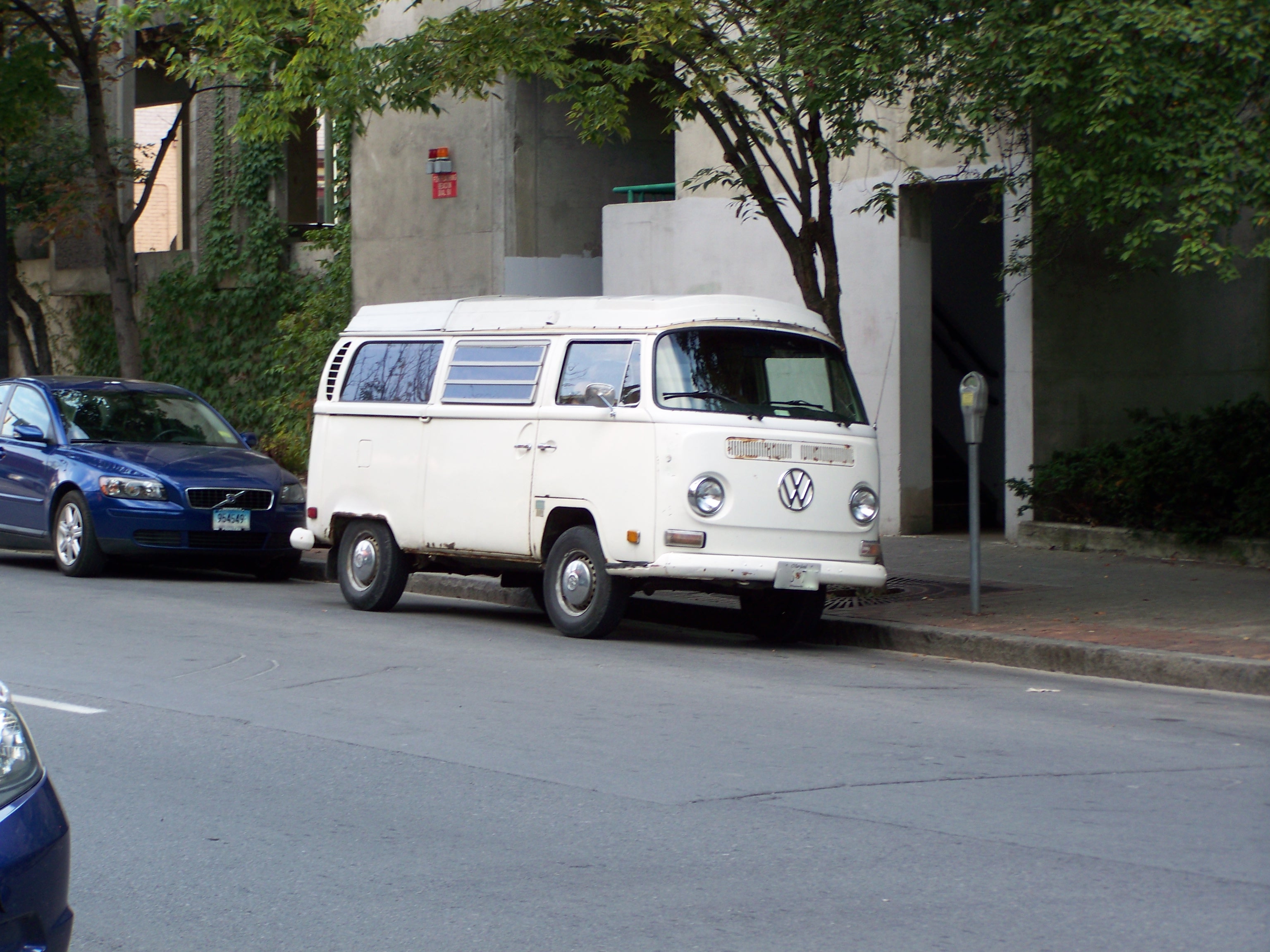
I figured that it would have been fun to do a little piece on the most common vehicle models in Tompkins County. Unfortunately, the statistics carried by the NYS Department of Transportation and the DMV only keep in track of the types of vehicle (basically, there are about 51,000 registered private vehicles in Tompkins County). Checking with the state department of finance didn’t reveal much, nor was there anything on the U.S. census data website (which is unusual, given that the census page usually has billions pf pieces of seemingly useless data). This is made even more frustrating when you consider that some states actually do bother to keep in track of this data, or that MSN had a “most popular vehicle by zip code” article that covered ten zip codes and then offered no means for anyone to check their own zipcodes. Lame.

It’s not like one can sit next to a window and keep track of the number of vehicles passing by. A green 2002 Honda Accord looks like any other green 2002 Honda Accord for the most part, so there’s little ability to distinguish whether two cars of the same make are genuinely unique or if it’s the same person driving by twice. Plus, most of the students driving around town aren’t registered through Ithaca zipcodes, they’re registered through their family’s permanent addresses (so, all those Audi A6s and BMW 3-series you see buzzing around campus are probably registered in Westchester, northern New Jersey or any token upscale suburb in the northeastern U.S.)

That being said, I’m willing to take a few somewhat educated guesses of the most commonly registered vehicles in Ithaca.  For one, the ubiquitous Volvos that can be found in the Ithaca area. If any particular models stand out, it’d probably be the 240 models from pre-1993, 800 series models from the mid 1990s and maybe some of the 900 series models of the later 1990s.  I’d be impressed if anyone travelling through the greater Ithaca area can go five minutes on the road without seeing the pride of Sweden in the next lane. Not to say that Volvos don’t have their attractions. They’re known for their safety and for great heating systems that prove useful for Ithaca’s long winters. Plus, in terms of cars defining people, Volvo tends to be one of those brands popular with the college faculty crowd, i.e. liberals with higher incomes.Volvos are so ingrained into the community culture that the Ithaca festival features a Volvo ballet, where they decorate the cars in “tutus” and perform on city streets.

Another brand of vehicles popular with the collegetown crowd would be Japanese automaker Subaru (fun fact of the day:  Subaru is the Japanese name for the Pleaides star cluster. This becomes readily apparent once you consider the Subaru emblem). The most popular model by my guess would be the Outback wagon of the mid 2000s or the post-2000 Subaru Forester.  What makes Subaru popular is that it tends to attract the same New Age crowd that Ithaca tends to attract. To quote a Denver paper that noted they were the most popular car in college town Boulder:

“More hip than a mini-van. Very useful. Great in snow. It’s a cool station wagon. Minivans aren’t cool. We know that. The Outback has all of the safety that an SUV doesn’t have and all the utility that the Camry does have. So I see it as a common middle ground kind of ride. It’s kind of like pilates mom instead of soccer mom…”

Lastly, if you consider things from a county level, then somewhere in the top five there have to be at least one of two truck models. Ithaca town and city make up about half the county’s populations, and probably less than half of the registered vehicles once you consider those that walk, bike or use public transit. The surrounding towns are more rural areas where agriculture is king, and many of these residents use Ford F-150s or Chevy Silverados to get around. Case in point, look in Alpha Gamma Rho’s parking lot, and you’ll see twenty trucks, five SUVs and an old Chevy Cavalier.

Seeing as their are no readily available figures, I’d love to hear other opinions on this one. Priuses, Accords, Saabs maybe? Write in and let me know.


Random Ithacana

18 12 2009

So, pardon the extraordinarily long break. Finals and research brought much of my outside life to a screeching halt, so this blog had to take a backseat for a couple of weeks. Oddly enough, site statistics didn’t really go down a significant amount, which probably says something about the consistent use of the historical info on this blog.

Anyways, during my holiday shopping, I happened upon a new little book that I felt the need to add to my collection. The book, Surrounded by Reality: 101 Things You Didn’t Know About Ithaca, NY (But Are About to Find Out) by Michael Turback, is a nice little book detailing some of the history and sights of the area. Some of the book entries share the same information that has previously been shared on this blog, but there was some new information to be garnered from its pages.

A lot of the book focuses on Cornell. Things that a lot of Cornellians already knew about the founder and A.D. White, but also some more obscure details. For example, a real description of Zinck’s. Theodore Zinck ran the “Lager Beer Saloon and Restaurant” out of the Hotel Brunswick at 108-110 N. Aurora (just off the current-day Commons) starting in 1880. Contrary to modern day bar-hopping, Zincl, while described as being a fatherly and caring figure who treated his customers with “Prussian high-handedness”. Customers could be thrown out of his bar, however, for drunkenness, bawdy songs, or derogatory references to the German Kaiser. The first Zinck’s operated until about 1903. That year, a typhoid epidemic rages through the city and claimed 85 lives, including Theodore Zinck’s daughter. Despondent, he drowned himself, effectively shutting down Zinck’s first incarnation. The bar reopened under his name in 1906 (which would be incredibly tasteless if he wasn’t regarded so affectionately), and continued in operation in some form in different names and places up to about 1967. Although, with the coming of the new Hotel Ithaca, it appears we may continue the local tradition of naming revered watering holes after a suicidal barkeep.

Another detail that the book referenced was the freezing over of Cayuga Lake. Cayuga Lake is about 435 feet deep, so usually the massive heat storage of the water keeps the lake from completely freezing over during the winter. However, that isn’t to say it can’t happen. Since 1796, the lake has frozen over about ten times (1796, 1816, 1856, 1875, 1884, 1904, 1912, 1934, 1961 and 1979). Wells College, a small and formerly all-female school located further up the lakeshore in Aurora, has a school tradition where if the lake is discovered to be frozen over, classes are cancelled for the day (there is no such tradition for IC or Cornell). According to the book, during the 1875 freeze one athletic young woman at Wells decided to celebrate the day off by skating down the lake and back. Not too shabby, once you consider that the lake is just under 40 miles long.

One last one for the road; most Cornellians are well aware of the legend that if a virgin crosses the Arts Quad at midnight, Ezra and A.D. White will step off their pedestals and shake hands in the center of the quad. Wll, as it turns out, Ithaca College has their won virginity legend. Outside of Ithaca College’s Textor Hall stands a 10-foot high ball sculpture mounted over a small pool of water. Their campus legend states that if a virgin ever graduates from IC, the “Textor Ball” will fall off its pedestal and roll down South Hill. According to Wikipedia, Ithaca College has 49,570 alumni, and I’m willing to bet most of them are from after the school’s 1960s expansion and relocation.


The Keyword Bar V

17 07 2009

100_0619

…because I’m too lazy at the moment to go from computer programming and into an entry that requires research on my part. Here’s a sampling of some of the search queries from the past few weeks.

1. “cornell honors fraternity” 7-17-09

Numerous and varied in their scope and goals. Like with social fraternities, the number of honors fraternities at Cornell seems to have decreased over the years as different organizations merged (often because they became co-ed and redundant) or closed. Here’s some current organizations that I can find (strictly professional fraternities are not included here):

A. Phi Sigma Pi – A general honors fraternity (3.0 standard) [1]

B. Alpha Chi Sigma – Honors chemistry fraternity (discussed previously in this blog)

C. Alpha Epsilon Delta – Pre-Med honors society

D. Eta Kappa Nu – Honors fraternity for compuer and electrical engineers

E. Golden Key – A general honors society for upperclassmen

F. Order of Omega – Honor Society for students in social fraternities or sororities. This one is more about who you know than it is about your GPA.

G. Phi Alpha Delta – Pre-Law honors fraternity

H. Phi Tau Sigma – Food Science honors fraternity

I. Pi Alpha Alpha – Honors Society for Public Administration and Affairs.

J. Pi Sigma Alpha – Government Honors Society

K. Psi Chi – Psychology Honors Society

L. Tau Beta Pi – General engineering honor society

For more info, just head over to http://sao.cornell.edu

2. “modern school no windows” 7-16-09

Windowless buildings have tended to be the product of kneejerk reactions to the energy crisis of the 1970s, or because they were (and in some cases still is) a relatively cheap way to maintain a climate-controlled facility (the lower floors of Bradfield, for example, which protect the plant genetics labs and cold-hardiness experiments). A personal example is that my mother went to a “new” high school in the 1970s that had no windows…by the time she graduated, they had already resolved that artificial lighting was too expensive in the long run, so they renovated it hardly five years after construction.

3. “cornell ilr looked down upon?” 7-13-09

Ask Matthew Nagowski over at MetaEzra. I look forward to his response.

4. “james gallagher, walmart architect” 7-13-09

Really? I didn’t realize Wal-Mart actually hired architects.

On a less facetious note, Wal-Mart has made attempts to diversify store facades to appease locals [2] — Ithaca’s is a good example [3].

5.”cornell couldiest place on earth” 7- 15-09

Ignoring the spelling, the question is still ridiculous. The number of cloudy days in Ithaca in a given year is 206 [4]. While there seems to be some debate as to the cloudiest place on earth, Anchorage, Alaska has 239 cloudy days in a given year, and St. John’s. Newfoundland records 255 cloudy days in a given year. From what I hear, Ben Nevis, a mountain in Britain, records about 290 cloudy days. As an atmospheric science major and as a CNY native, questions like this irritate the hell out of me.

6. “urban outfitters ithaca opening” 7-11-09

This question has appeared in some form about a dozen times in the past two weeks. based off of job postings, the target season seems to “Summer 2009”. According to the CNY Business Journal, the target date is/was July 2, so if someone wants to verify that, that would be great.

7. “redneck castle” 7-10-09

A double-wide trailer with turrets. The royal carriage is a rusted 1976 Chevy Nova.

8. “chi omega coming to cornell” 7-3-09

Possibly, possibly not. Logically, it wold make sense for either Chi Omega, Alpha Omicron Pi or Delta Phi Epsilon to revitalize their dormant Cornell chapter, as they were the last ones to leave campus. However, I’m fairly sure it depends on whether they submit intent to Panhel, who then chooses who they think would be best suited for campus. Using Alpha Xi Delta for example, the more recently closed sororities may not  be the ones invited back to campus. It’s something to keep an eye on in the upcoming year.

9. “married at sage chapel 2009” 7-9-09

Many, many weddings take place in a given year at Sage. I hear that getting a marriage set up in Sage is a bit like Thanksgiving shopping; the best days go to those who are ready earliest, which often requires hours of waiting in anticipation for the annual schedule to open. The rental fee is $300 [5].

10. “cornell’s secret societies” 7-5-09

I’m responding to both this and a comment from a reader suggesting I post them anyway. I was approached face-to-face, which was enough of an impetus for me to remove them. That being said, my work was copied by another website (without my permission, but I gave up trying to get them to remove it). If you look hard enough, you’ll find what you’re looking for, but it won’t be on this blog.

_____________________________________________________________

[1]http://rso.cornell.edu/psp/cms/?q=node/15

[2]http://www.interiordesignschoolreview.com/news/2004/06/walmart_uses_architecture_to_defuse_opposition.html

[3]http://cornellsun.com/section/news/content/2008/12/01/wal-mart-remodeling-moves-forward

[4]http://www.123syracuse.com/cloudycities.html

[5]http://www.cornell.edu/search/index.cfm?tab=facts&q=&id=630


The Halls of Presidents

7 07 2009

So, I was in an online correspondence with someone, and the comment was made that “apart from donating a s–tload of cash, the only other way to get a building named after you at Cornell is to be the [school] president”. Technically, that’s not true, as Lincoln Hall was named for Abraham Lincoln, and many other buildings were named for important college presidents, like Mann Library and Thurston Hall.

But, I decided to explore the topic a little further and check the “win/loss record” for Cornell presidents [listed at [1]]. Here’s the results.

1. Andrew Dickson White (1866-1885)

A.D. White is perhaps the most important president in this university’s history, so it seems fitting he had a building that was dedicated to him. North University Hall (built in 1866) was renamed White Hall in 1883 in his honor[2].

Result: WIN

2. Charles Kendall Adams (1885-1892)

Charles Kendall Adams was a student of A. D. White who served seven tumultuous years at the university. Unfortunately, although he was more than capable, no building was ever named for him. This could be for several reasons, according to Cornell historian Morris Bishop; for one, the trustees never really liked him; for two, the students weren’t particularly fond of him either. When he did resign, it was under strong persuasion from old Henry Sage, who had developed quite an interest in Jacob Schurman. On the bright side, Adams would accept the presidency at the University of Wisconsin, where a dorm was named after him[3].

Result: LOSS (for Cornell anyway)

3. Jacob Gould Schurman (1892-1920)

Jacob Schurman saw Cornell through the Gilded Age and a period of rapid growth, and during his presidency Cornell was for a short time the second largest college in the country (Bishop 352). However, the building that was named for him, Schurman Hall of the Vet School, was built in 1957 [4]. Jacob Schurman died in 1942 [1]. I guess this one is technically a win, but it’s not like Schurman lived to enjoy the recognition.

Result: WIN (postmortem)

 4. Livingston Farrand (1921-1937)

Our fourth president, while described as a very likable man in A History of Cornell (451), never had any building named after him. The Farrand Garden near A.D. White house is as close as one gets; even then, although it is formally dedicated to Mr. Farrand, his wife was a very avid gardener, so it might be seen as more of  homage to her [5]. 

Result: LOSS (but tell your wife Cornell says thanks)

5. Edmund Ezra Day (1937-1949)

A fairly obvious win on this one. Day Hall, the Cornell administrative building, was named for Edmund Ezra Day, right around the time he decided to retire due to ill health. Not bad, considering this time perios saw very little permanent construction. Up until his death in 1951, Day served as chancellor of Cornell, a largely ceremonial position [6].

Result: WIN

6. Deane Waldo Malott (1951-1963)

Deane Malott oversaw another construction boom on campus. Malott Hall is named in his honor, perhaps because the main person who financed its construction, William Carpenter 1910, already had a building named after him, so they opted to name the building for the retiring president [7]. Even better, Deane Malott had a building named after him on the University of Kansas campus (where he was president before coming to Cornell [8]), so he deserves a double win.  

Result: WIN

7. James Perkins (1963-1969)

For the record, James Perkins was not a bad guy. He just happened to resign in disgrace after the public relations disaster that was the Willard Straight Takeover [9]. Frankly, he was going up sh*t creek when he realized it was too much for him to handle.

Result: LOSS

8. Dale Corson (1969-1977)

Dale R. Corson, who made his nut working in the field of physics [10], dutifully served out close to a decade at Cornell, before resigning the presidency position, sitting in as chancellor for a couple of years before the trustees gave him title of president emeritus. Corson Hall, just off the ag quad, was named in his honor when it was completed in 1981 [11].

Result: WIN

9. Frank H.T. Rhodes (1977-1995)

Frank Rhodes, a 6’7” Englishman, served 18 years as president of Cornell university. Right as his retirement was approaching, the trustees voted to rename the Engineering and Theory Center building Frank Rhodes Hall in his honor (the building was completed in 1990 [13]).

Result: WIN

10. Hunter Rawlings III (1995-2003)

Hunter Rawlings overtook several large capital campaigns for the university’s endowment, and oversaw construction of much of North Campus [14]. The North Campus effort earned him his name on the large semicircular field between Helen Newman and CKB/Mews. Still, it’s not a building.

Result: LOSS (but only on technicality)

11. Jeffrey Lehman (2003-2005)

Well, serving only two years, and then resigning after citing irreconcilable differences with the trustees isn’t going to help your cause [15]. However, while the trustees may never allow a building to be named after him, the $1,000,000 of hush money they paid out to him in 2006 provides a little consolation.

 Result: LOSS (but enjoy the consolation prize)

So, our final tally indicates 6-5. If Skorton rides it out a few more years, maybe we’ll be hearing about the dedication of Skorton Hall someday in the alumni news.


[1]http://www.news.cornell.edu/campus/presidents.bios.html

[2]http://www.cornell.edu/search/index.cfm?tab=facts&q=&id=798

[3]http://www.housing.wisc.edu/halls/history.php

[4]http://www.fs.cornell.edu/fs/facinfo/fs_facilInfo.cfm?facil_cd=1150C

[5]http://en.wikipedia.org/wiki/Cornell_Central_Campus

[6]http://en.wikipedia.org/wiki/Edmund_Ezra_Day

[7]http://www.cornell.edu/search/index.cfm?tab=facts&q=&id=487

[8]http://www.kupedia.org/wiki/index.php?title=Deane_Malott

[9]http://74.125.47.132/search?q=cache:u79OrjoFVGkJ:en.wikipedia.org/wiki/Willard_Straight_Hall+willard+straight+hall+takeover&cd=1&hl=en&ct=clnk&gl=us

[10]http://en.wikipedia.org/wiki/Dale_R._Corson

[11]http://www.fs.cornell.edu/fs/facinfo/fs_facilInfo.cfm?facil_cd=1019E

[12]http://en.wikipedia.org/wiki/Frank_H.T._Rhodes

[13]http://www.cornell.edu/search/index.cfm?tab=facts&q=&id=624

[14]http://en.wikipedia.org/wiki/Hunter_R._Rawlings_III

[15]http://en.wikipedia.org/wiki/Jeffrey_S._Lehman


Campus Comodes

31 05 2009

The running title for this one was “The Best Seats on Campus”, but I thought that one was already used by the Sun. 

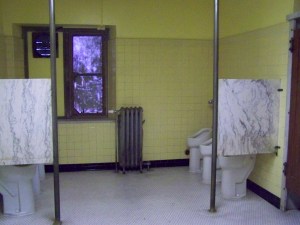
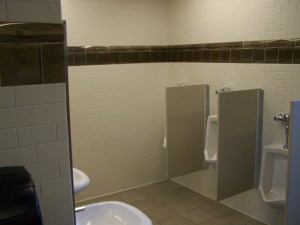
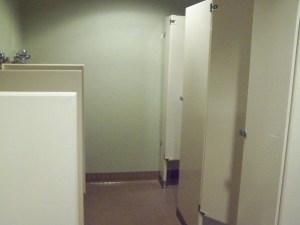
Anyone who has ever been on campus knows that at one time or another, nature’s calls have to be answered. It helps to have a completely subjective and not all that extensive guide to consider when using them. The idea for this entry came from an eight-mile run I went on last week, where somewhere on mile four I was hit with the intense pressures of the excretory system, which left me hobbling half a mile to the southeast edge campus, trying six different academic buildings before I could find an unlocked door and make my way to a bathroom to relieve myself (it was about seven p.m., hence the problem with the locked doors). But look, it provided a lovely conversation topic.

Unless otherwise stated, all bathrooms are first floor or the main bathrooms for a given building. All bathrooms are also mens’ rooms, since being arrested is not high on my list of things to do before I leave Ithaca.

For those who may recall, the Sun did a nice little piece rating bathrooms some time ago, which I’m unable to find a link for online (if anyone does know the URL, I’ll be more than happy to post it here). I’ll be using the same three-star system.

100_0655

100_0654

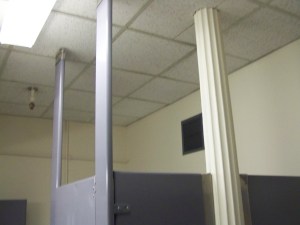
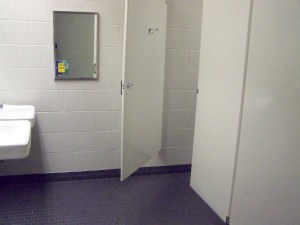
Our first pit stop is Olive Tjaden. Tjaden satisfies the basic needs by being a clean, well-lit room, and amply stocked. the decor is (surprisingly) sparse for an arts building, and the panoply of pipes up at the ceiling leaves something to be desired in terms of aesthetics. But holy crap does this room have a lot of space. Like, as much space as the big bathroom in Olin Libe that should really only be used by handicapped people, only this one you don’t risk getting yelled by some woman in a wheelchair as soon as you open the door.  I threw in Bishop’s History of Cornell book to give a sense of space.

Rating: * * *

100_0656

100_0657

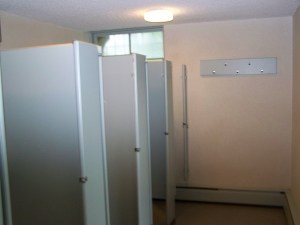
Likewise, McGraw is adequately equipped to handle bathroom needs, but lacks the spaciousness of Tjaden, and we all know that space can be a big plus if you’re carrying a lot of crap (no pun intended). However, it does have a nice cheap-looking pillar running throught the stalls, as if to make a half-hearted appeal to be different.

 Rating: * *

 100_0658

100_0659

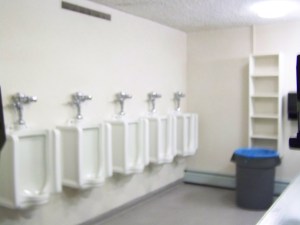
Uris Library is designed to be a high-capacity facility, so as a result, the frills are lacking. I maintain that the bookshelf against the wall of the urinals probably has some of the least-used shelves on campus. My one complaint is that on particularly wet and muddy days outside, all that just gets tracked into here, since the bathroom is so close to the entrance. Therefore, the rating changes depending on the day – decent (* *) on a good day, poor (*) on a messy day outside.

Rating: * * (dry weather day)  / * (wet and/or muddy day)

100_0660

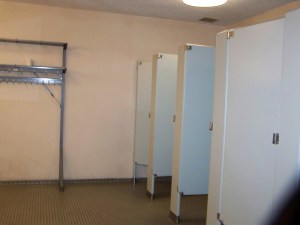
Getting a photo of Olin’s bathroom was notoriously difficult thanks to the high volume traffic, even during this time of the year (these photos were taken during last week). Olin Libe’s main bathroom is in the basement, so it benefits from being a farther walk, as people have a chance to shake the mud and water off their shoes before they make it to the bathroom. While most restrooms make use of a privacy hallway to prevent peepers, Olin makes use of a second door , which can be both a blessing and a curse if someone is coming from the other direction.

Of course, in the 1980s, Olin Library bathrooms were much more invasive; here’s a DUE from Janurary 1987 [1]:

“DEAR UNCLE EZRA:

WHY ARE THERE NO DOORS ON THE MEN’S ROOM STALLS IN OLIN LIBRARY?

                                            ????????


Dear Wondering About No Privacy,
Apparently, a few years ago a University Librarian learned that the downstairs public men’s room in Olin had become a preferred meeting place on campus for gay men.  This person freaked out and ordered the men’s room closed.  This was strongly protested by some of the male staff members. The compromise was to reopen the men’s room, but remove the doors from all the stalls so there wouldn’t be any privacy.
        When you raised this question, and I consulted a current member of the staff about the issue, he volunteered to write a letter to the new University Librarian, Alain Seznec, about this matter and see whether he will order the doors re-installed.  Hopefully, privacy may return to Olin. “
 
Yeah…so thankfully, we have stall doors.
 
Rating: * *
 
100_0664
100_0665
 
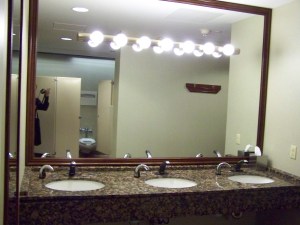
When Willard Straight was completed in 1925, not only did men and women have seperate bathrooms, they also had seperate entrances (women came in through the south entrance [2]).  The men’s bathroom is just tired-looking and worn down, the sole redeeming trait being the well-used antique scale sitting outside the main bathroom, in the corner of the privacy hallway. Really, if you can afford to wait, walk over to the other side of the building and you the cleaner and much more spacious unisex bathroom (be sure to lock the door). Be advised, the unisex room comes with a giant mirror, so you find yourself seeing more of yourself than you normally care to.
 
Rating: * (men’s room) * * * (unisex restroom)
  
100_0666
100_0668
  
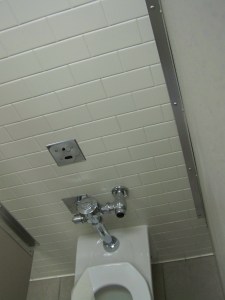
Here’s one for the engineers. As those who have had classes on the engineering quad may have noticed, men’s rooms outnumber ladies’ rooms by a considerable number (a fair guess is 3:1), thanks to the majority male engineering student population. That being said, the men’s rooms of Thurston have nice little assets like privacy barriers between urinals, but they also have those incredibly obnoxious sensors to flush the toilets. You know, the ones that go off as you stand up to wipe, or fail to go off at all and you’re left there trying to figure out how to finish business. I have a personal vendetta against automatic flushers, because I think the technology simply hasn’t been refined enough to be useful. Regardless, this is an adequate facility.
 
Rating: * *
 
100_0669
100_0670
 
The Statler Hotel is all about impressing the visitor. They do a great job with the bathrooms. The bathrooms are nothing short of luxurious, and make you feel like you’re somebody. There’s even a vanity mirror and polished stone counters. The trick to getting to using this bathroom is to walk in and appearing more like a guest and not a student; that way, the employees won’t give you dirty looks when you’re heading back out.
 
Rating: * * *
 
100_0671
100_0673
 
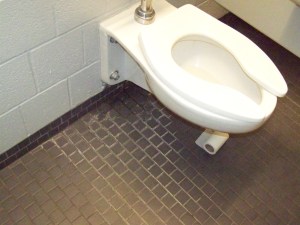
Somehow, I had this expectation going into Ives that the bathrooms would have extra safety and specialty features. To my dismay, they weren’t all that different from any other bathroom on campus. While the rooms were spacious, I can’t give three stars beceause of a slight amount of water damage to the tiles near where the toilet is hinged to the wall. Yes, the t.p. was under the toilet when I arrived here.
 
Rating: * *
 
 
100_0675
 
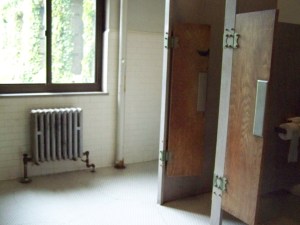
Plant Science must have the scariest bathroom on campus. Rotting tileworks, mildew stains, old fashioned doors and frickin’ bath towels hanging over one of the stalls were enough to give this room a bad rep. It doesn’t help that this was the bathroom that was claimed by some to have cockroach infestation issues not too long ago.  Let’s think about that for one moment. Cockroaches while you’re on the crapper.


 Use at your own risk.
 
Rating: *
 
100_0676
 
 100_0678
Last but not least, we come to our newest bathrooms, the ones installed on the first floor in Weill Hall. They’re installed rather conspicuously near the atrium, which might make for some uncomfortable rendezvous, but otherwise, they’re well appointed.
 
Rating: * *


[1]http://ezra.cornell.edu/posting.php?timestamp=538462800

[2]http://www.fs.cornell.edu/fs/facinfo/fs_facilinfo.cfm?facil_cd=2020


One Stormy Day on Campus, Continued

2 01 2009

Look at it this way; I’m not being paid to do this, and you don’t have to put up with a helicopter Mom asking twenty million questions about academics.

So, today I’m going through the engineering quad. Back in the day, the engineering buildings were Sibley, Franklin (Tjaden), Rand and Lincoln. By the early 1960s however, they had all shifted down to the present-day engineering quad.
100_2086

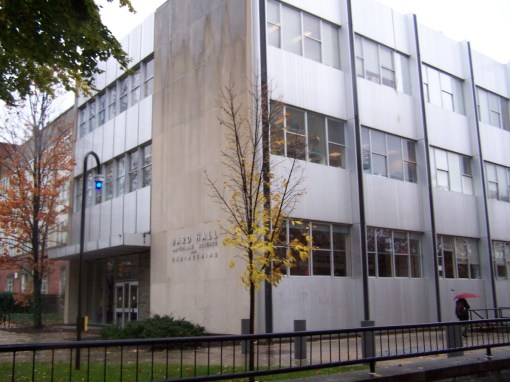
Bard Hall is one of the smaller inteconnected buildings that make up the engineering quad. The 50,000 sq. ft. building was completed in 1963 [1], 12 years after the construction of its neighbor Thurston Hall, but was designed by the same architects. Appropriately so, materials science is based out of this building, which is clad in brown Ithaca stone, limestone, glass, and aluminum. Bard Hall is named Francis Norwood Bard, Class of 1904  [2].
100_2087

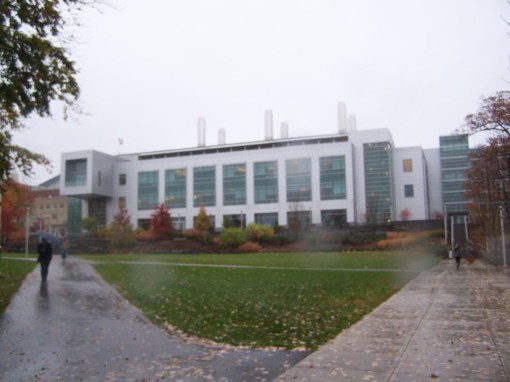
Don’t mind the rain spots. So, no review of the engineering quad would be complete unless I discussed Duffield Hall, the newest addition to the quad.

The plot of land that Duffield was built on was home ot some lanscaped quad space to the north, and the two-story white box that was the Knight Labs building to the south (the building was demolished and the labs were incorporated into Duffield).

Duffield Hall is named for Richard Duffield, Class of 1962. Duffield made his fortune by being the founder and president/CEO of the software company Peoplesoft [3]. The same Peoplesoft that screws everyone over for CoursEnroll.  
100_2093

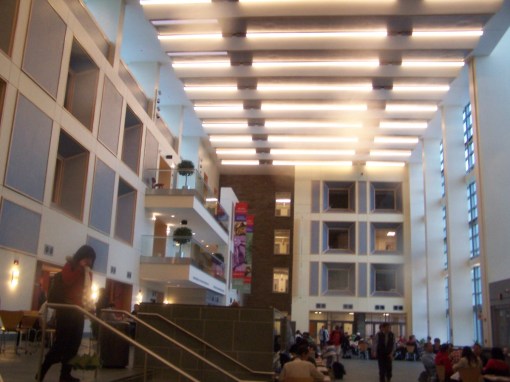
The building began construction in 2001 and was officially opened in October 2004.  The building has a usable area of about 130,000 sq. ft [4] and cost about $58.5 million. The building houses a small a la carte dining facility (Mattin’s), a large atrium, and Knight Labs (named for Lester Knight ’29) with its Cornell NanoScale Facility (CNF). Sorry, no photos of the folks in clean suits.
100_2088

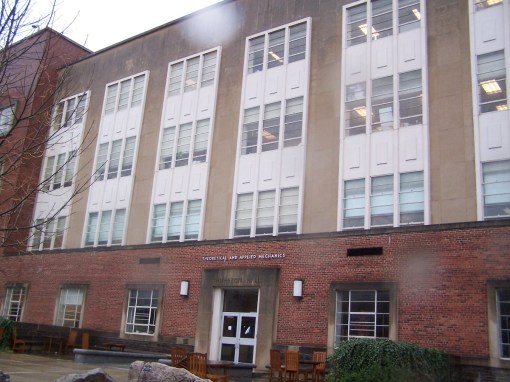
Thurston Hall is the centerpiece of the engineering quad. The building, designed in the Art Moderne style, was completed in 1951 [5]. This building technically has less usable space than Bard, but it depends on where you draw the line between it and Kimball Hall to the east, which was built at the same time. The building is named for Robert Thurston, an early Cornell engineering professor.

As you can see, the outside says Theoretical and Applied Mechanics (TAM). Technically, this department was merged with the school of Mechanical and Aerospace Engineering, effective yesterday (how convenient for this entry) [6].
100_2089

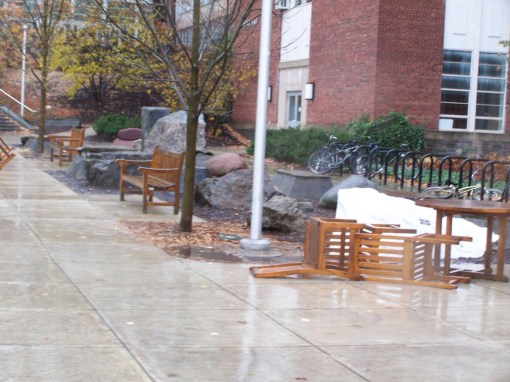
It was really windy.  Mother Nature just decided to  crap on Ithaca that day.

100_2091

The completely unobtrusive Kimball Hall. Technically, Kimball is recognized as “the Eastern pavilion of Thurston Hall”. Also completed in 1951, the building is 30,000 sq. ft. and originally housed the geology department on its upper floors [7]. The building is possibly named for Henry Kimball, Class of 1911, who was a state supreme court justice [8].
100_2092

Cornell’s 1950s Engineering Quad plan:

1. Design a completely boring structure. Because we’re overcrowded.

2. Find an alum willing to fork over enough cash to pay for it; slap their name on the building in return.

3. Repeat

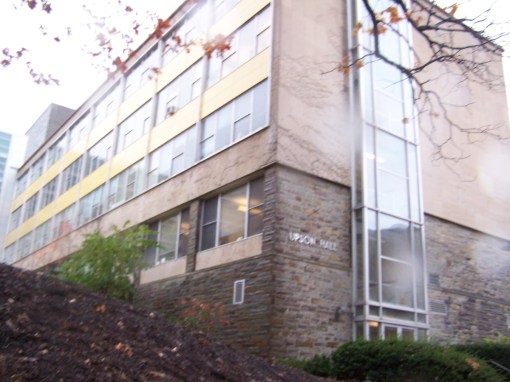
Upson Hall is a 160,000 sq. ft building completed in 1956 [9]. Upson Hall is named for Maxwell Upson, Class of 1899, and a longtime Cornell trustee [8]. The building serves as the central hub for the Computer Science department. This building could otherwise be known for a 24-hour computer lab that up until recently was a filthy lie (that damn thing was never open at night back in 07′).
100_2095

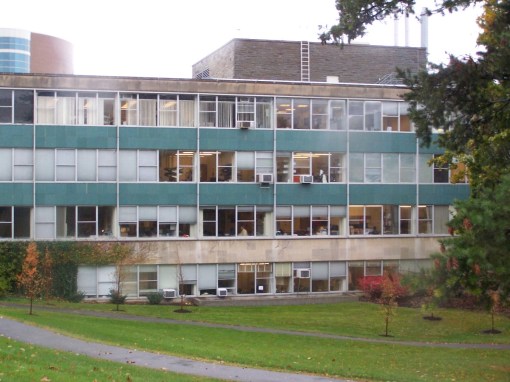
So, this is technically two buildings. The foreground box with the green window banding is part of Phillips Hall, a 100,000 sq. ft building built in 1955. The background structure (where the ladder is) is Grumman Hall, a 17,000 sq. ft building completed in 1957 [10]. Update: Or so I thought. It’s probably just another part of Phillips, but Grumman would be in the background if it was tall enough to be visible. Confusing, isn’t it?

Grumman is named for Leroy Grumman, Class of 1916 and founder of Grumman Aircraft (now Northrop Grumman [11]). Phillips Hall, named for Ellis Phillips 1895 [2], is home to the Electrical Engineering department, and Grumman houses some Aeronautics courses.
100_2099

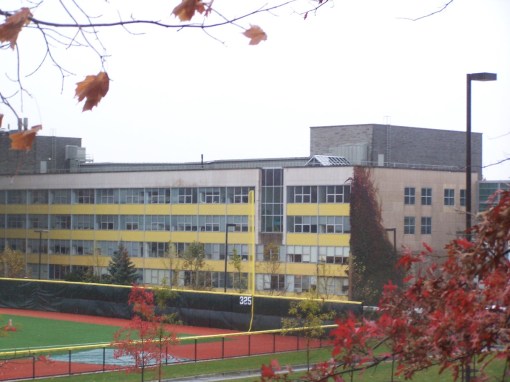
Update: Facilities calls this part of Upson. Apparently, the only way you can make a clear difference is the color of the window banding.   I s’pose it wouldn’t be as confusing if you’ve had classes here, but these are the only two of the main engineering quad that I’ve never had a course lecture or section.

(Thank Heaven.) 

UPDATE:

So, because I was using images and wordpress doesn’t allow imae attachments in comments, I figured it would just be easier to edit the original entry. As several readers (salem, Nagowski, and andrew) have noted, the physical seperations between Grumman, Upson and Phillips are very difficult to determine, since they are all interconnected. Consider the map below. 

up-gr-ph

The map would suggest that Grumman is the south wing of the complex, Upson is on the west, and Phillips on the north. However, going through the facilities websites, Phillips is listed as 100,000 sq ft (88,000 net), Upson as 160,000 sq ft (142,000 net), and Grumman is by far the smallest at only about 16,300 sq ft (14,500 net).

Back in the day, Grumman might have been much larger. Older images have suggested that there was a multi-story (~4 floors) box jutting out of the east side of the complex where Rhodes Hall stands today.

So, we then have the task of trying to determine what Cornell thinks are seperate building areas. Upson is undoubtedly the yellow banded building on the west (Upson Hall is clearly printed next to the staircase). However, it’s also the largest, yet its footprint (if we assume from the map) is seemingly small.

Here’s one issue: if you search Upson Hall on campus facilities, you get a photo virtually identical to my last photo, which I claim to be part of Phillips. http://www.fs.cornell.edu/fs/facinfo/fs_facilInfo.cfm?facil_cd=2045. Upson uses yellow trim, as does this wing of the complex. So, andrew is right on this one, it’s likely a part of Upson.

Phillips uses blue-green panels. Also, the corresponding facilities image is the north entrance next to Duffield. We could therefore say that Phillips is the foreground building in the image where I claim Phillips and part of Grumman are visible.

Courtesy of facilities, here’s their file photo of Grumman, which they describe as “A rectangular box with alternating horizontal bands of limestone panels, blue-green terracotta, and strip windows framed in aluminum.” :

The yellow banding of Upson is clearly visible, and Grumman is the building on the right, in the foreground of Rhodes. So, here’s a big question: at only 17,000 sq. ft, where does Grumman end and Upson begin? In the attached photos, I claim the background rooftop structure behind Phillips, with the ladder, is Grumman. However, it’s more likely another part of Phillips. Grumman is not in my images, and at such a small size, it’s not the easiest building to determine.

[1]http://www.fs.cornell.edu/fs/facinfo/fs_facilInfo.cfm?facil_cd=2070

[2]http://www.people.cornell.edu/pages/cre8/cudb/buildings.html

[3]http://www.duffield.cornell.edu/about.cfm

[4]http://www.fs.cornell.edu/fs/facinfo/fs_facilInfo.cfm?facil_cd=2000

[5]http://www.fs.cornell.edu/fs/facinfo/fs_facilInfo.cfm?facil_cd=2037T

[6]http://www.tam.cornell.edu/news/news-story.cfm?storyid=12537

[7]http://www.mssu.edu/seg-vm/bio_sidney_kaufman.html

[8]http://en.wikipedia.org/wiki/Sphinx_Head

[9]http://www.fs.cornell.edu/fs/facinfo/fs_facilInfo.cfm?facil_cd=2045

[10] http://www.fs.cornell.edu/fs/facinfo/fs_facilInfo.cfm?facil_cd=2043

http://www.fs.cornell.edu/fs/facinfo/fs_facilInfo.cfm?facil_cd=2039H

[11]http://en.wikipedia.org/wiki/Leroy_Grumman


One Stormy Day on Campus, Part II

19 12 2008

I’m snowed in in little Ithaca right now, so I might just as well kill some time.100_2080

The story of Barnes Hsll is a rather interesting one.  The architect, William Henry Miller (of Uris Libe Fame) produced two designs- a gothic design, and a Romanesque Revival design [1]. Although the Gothic design fits in better with Sage Hall and Chapel, the Romaneque design was considered more up-to-date, and was completed in 1888. The building is named for Alfred Smith Barnes, a publisher and (at the time) a Cornell trustee [2]

One goal of the building’s construction was to do away with Cornell’s image as a heathen school, being the first building in the nation specifically built for a college Christian association (in this case, the CUCA, Cornell U. Christian Association). The building also functioned as the first student union on campus, and he Cornell Store, then a co-op, was based out of its basement.

When it was first constructed, many believed that Barnes Hall was cursed. This was due to a series of unfortunate coincidences. Alfred Barnes passed in 1888, as the building was nearing completion. So did his daughter…and the superintending architect (not Miller)…and the contractor…the gas contractor…and the gentleman who did the stone carving died of consumption before it was completed (Bishop, “History of Cornell”, pg. 269). The “evil omens” ceased as the building was completed.

100_2072

McGraw Hall, the most prominent of the Old Stone Row. McGraw relatively utilitarian design comes from the tastes of old Ezra Cornell himself; he believed in function over form, so he wasn’t one to worry about ornamentation. The building was designed by Archimedes N. Russell, a prominent architect out of Syracuse (Russell designed one of Syracuse University’s most prominent buildings, Crouse College, which I happen to have a picture of).

12-21-07-014

McGraw Hall faces the wrong direction due to Cornell’s ever changing master plans. Frederick Law Olmsted (who also designed Central Park), designed the first master plan, with the general theme to be a “grand terrace” ovelooking Cayuga Lake. As plans changed over the years, the grand terrace was dropped, but the nod to Olmsted’s master plan is obvious with McGraw Hall [3]. 

McGraw Hall was the first new building to completed, with construction completed in 1872 [4]. The tower at the top originally housed the chimes until they were moved to the clock tower in 1891. The building is named for John McGraw, a wealthy lumber merchant and original trustee.

To quote the university’s website, “It is said that John McGraw and Henry Sage were so appalled at the exhausted look of A.D. White and Ezra Cornell at the opening ceremonies that they committed themselves to the University’s cause on the spot. [4]” The stone used in the original stone row was quarried from the base of Libe Slope.

Today, the building is home to the Anthropology, Archaeology and History Department, as well as the Knight writing institute. It was in this building that I had my “History of Cornell” class.

100_2082

Carpenter Library is the primary library for the Engineering school. The building was named for William Carpenter 1910, who made a $1 million donation towards its construction (which cost $946,662, meaning Cornell had money left over in some sense) [5]. Carpenter Library was completed in 1957, partially renovated in 2002, and is slated to be demolished under the current Cornell master plan.

Personally, if I donated money for two buildings on campus, and both of them were set to be demolished, my spirit would be pretty pissed.

100_2083

Anabel Taylor Hall is the second half of the Taylor complex. Completed in 1953 (shortly after the death of Anabel Stuart Taylor herself), the building was the long intended partner to the main structure, hence its relatively dated Collegiate Gothic design for the time. The tower on the right side is a memorial to those Cornellians who lost their lived fighting in World War II. Today, the building serves as the primary religious facility for campus (CURW the successor of CUCA, is besed out of Anabel Taylor Hall).

100_2085

Snee Hall is home to the geological sciences department. The building was completed in 1984 and is named for William Snee ’24, an entrepeneur in the oil and gas industry [7]. At a glance, the lare atrium and overly 80s design reminds me of  chain hotels in northern New Jersey, but the building does have some nice assets. A seismic vault for recorded earthquake data is stored below ground level.  Also, if you ever happen to find yourself in Snee, be sure to check out the very large hydrologic sedimentation and erosion display (essentially, a stream-and-silt machine). The building also houses the Heasley Mineralogy Museum [8].


[1]http://www.fs.cornell.edu/fs/facinfo/fs_facilInfo.cfm?facil_cd=2009

[2]http://www.cornell.edu/search/index.cfm?tab=facts&q=&id=53

[3]http://en.wikipedia.org/wiki/Cornell_West_Campus

[4]http://www.cornell.edu/search/index.cfm?tab=facts&q=&id=497

[5]http://www.cornell.edu/search/index.cfm?tab=facts&q=&id=109

[6]http://www.fs.cornell.edu/fs/facinfo/fs_facilinfo.cfm?facil_cd=2038

[7]http://www.cornell.edu/search/index.cfm?tab=facts&q=&id=665

[8]https://cornellsun.com/node/9051


One Stormy Day on Campus

15 12 2008

I’m not a holiday person. But I am halfway done with finals, which is reason enough to celebrate.

100_2109

Malott Hall, built in 1963, is named for Cornell’s sixth president, Deane Waldo Malott (1951-1963) [1]. The primary donor was William Carpenter ’10, but Carpenter Hall was built six years earlier, so apparently we went with the next best thing. The north building, pictured here, is classic 60’s architecture- notice the giant fishbowl lamps. Malott Hall originally housed the Johnson school until that moved to Sage in 1998; afterwards, the math department moved from White Hall to Malott. The rather Soviet looking north wing was part of a 1977 addition to the original structure. Malott is slated to be torn down under the Cornell Master Plan.

Old Deane Malott, who passed in 1996 at the ripe age of 98, was a conservative, even by 1950s standards. However, he is credited with significantly modernizing Cornell’s liberal arts programs, as well as overseeing a major construction period of the university’s history [2]. Prior to serving at Cornell, Malott was the president of the University of Kansas from 1939 to1951; as a result, they also have a Malott Hall (which houses their pharmacy school).

100_2107

It was a really blustery day.

For the record, this temp parking lot has only been here since the early 2000s, and the site is on the short list for development—after the economic crisis ends, of course. Originally suggested for a Bradfield-mass development (from Carol Kammen, author of Cornell Then and Now), the current master plan proposes a building of only one or two floors that offers general functions, like a visitor’s center.

 100_2106

 I never actually discussed Caldwell Hall in the previous Ag Quad entry. Caldwell was built with state money in 1913 [3]. Named for George Chapman Caldwell, an early professor of Agricultural Chemistry, the building housed soil sciences until it moved to Bradfield in 1969, and residual duties were picked up the entomology department in then-Comstock Hall. Today, Caldwell houses Cornell Abroad, the Cornell Institute of Public Affairs, and an LGBT resource center.

100_2104

Surprise! This went under the radar. In September, Cornell renamed this wing of the ILR Extension building in honor of Jonathan Dolgen ’66 [4]. So, we now have Dolgen Hall. Anyone want to take a guess at the price tag for this?

The building itself was built in 1911 [5], then part of the Vet School. ILR moved in during the late 1940s. The buildings underwent a significant renovation from 2002-2004, but because they were designated landmarks, the exteriors were relatively unaltered.

100_2102

Teagle Hall looks older than it is, in my opinion. The building opened as the men’s sports facility in 1954, and is named for Walter C. Teagle 1899. Apart from going co-ed, the building maintains much of its original use [6,7]. The building is faced with Llenroc and is designed to harmonize architecturally with neighboring Barton Hall. For those bold explorers out there, there is an underground tunnel connecting Barton and Teagle below Garden Avenue.

That’s a clock on the stone wall, by the way.


100_2094

100_20982

hotel-1

The Robert A. and Jan M. Beck Center  is a 35,000 sq. ft addition to the Hotel School that was completed in late 2004, at the cost of 16.2 million dollars [8]. The modern design is similar to the one currently being applied to the  south facade of the school (which is undergoing a 14,ooo sq. ft currently) [9]. Which make sense since both were designed by KSS Architects.

100_2097

Rhodes Hall was completed in 1990 as the Engineering and Theory Center building, and then rededicated to former president Frank Rhodes in 1995 [10]. The building is home to the Computing Theory Center, which housed at one time one of the most powerful supercomputers in the world. Today, I think it just barely cracks the top 500, but then again, pursuit of the most powerful supercomputer is a costly expenditure we probably shouldn’t be dabbling much with at the moment.

Rhodes Hall caused quite the complaint back in the day because of its size. Locals and some faculty/students complained that it overwhelmed the neighboring gorge and was too massive for the site. Not that the overbearing blank wall on the southwest side helps (but it is functional- that’s mechanical space ,and the supercomputer is on the other side of the wall, so they climate-controlled it a-la Bradfield, behind a windowless wall.


[1]http://www.cornell.edu/search/index.cfm?tab=facts&q=&id=487

[2]http://query.nytimes.com/gst/fullpage.html?res=9C05E3D6163AF930A2575AC0A960958260

[3]http://www.cornell.edu/search/index.cfm?tab=facts&q=&id=92

[4]http://www.ilr.cornell.edu/news/DolgenGift_2008.html

[5]http://www.news.cornell.edu/Chronicle/04/10.14.04/ILR_complex.html

[6]http://www.cornellbigred.com/sports/2007/7/30/TeagleHall.aspx

[7]http://www.fs.cornell.edu/fs/facinfo/fs_facilinfo.cfm?facil_cd=2611

[8]http://www.hotelschool.cornell.edu/about/facilities/beck/

[9]http://www.kssarchitects.com/content/project.php?type_id=33&project_id=238

[10]http://www.cornell.edu/search/index.cfm?tab=facts&q=&id=624

[11]http://ezra.cornell.edu/searched.php?search=theory%20center&question=&answer=&starttimestamp=&endtimestamp=&category_id=&offset=30&view=expanded

see:August 4, 1987


A few weather stats

29 10 2008

Courtesy of the Northeast Regional Climate Center [1]. Because the weather on Tuesday was just THAT sh*tty.

Highest recorded wind speed in Ithaca proper today: 36.2 MPH, around 4 PM. [2]

Highest wind gust, annually: about 60 MPH.

Highest recorded in area, ever: 84 MPH, from 1972.

Last time measurable snow occured in October: October 31, 1993. 3.7 inches. Prior to that, there were measurable snows in October 1988 (which had the most October snow recorded, at 6.5 inches) and October 1982; it was more common back in the day.

Most snow ever recorded from a single storm: 21 inches, in 1961. An unofficial record of 25.5 inches is claimed for January 1925 [3]. (for the record, most snow ever recorded in my hometown: 43.1 inches, in 1966).

Average amount of snow in a year: 67 inches.

Most snow ever recorded in Ithaca in a single season: 122.2, in the winter of 1977-78.

High on this day last year (2007): 63. Low was 40. Sunny.

Tuesday’s high: 38. Low 32. Not sunny.

Warmest October on record: October 2007: 7.8 degrees above normal.

Average temperature on a given October day in Ithaca: About 48 degrees (high 59, low 37).

Warmest October day ever recorded in Ithaca: 91, in 1953.

Coldest October day ever recorded in Ithaca: 15, in 1928.

Highest high ever recorded: 103, in July 1936.

Lowest low: -35, in February 1961.


[1]http://www.nrcc.cornell.edu/

[2]http://www.nrcc.cornell.edu/climate/ithaca/gfr_logger.html

[3]http://books.google.com/books?id=jUu9pDRhWjkC&pg=PA452&lpg=PA452&dq=lowest+snowfall+ever+ithaca+winter&source=web&ots=Mp__5eVss3&sig=j8j3mD5FbCx1OR2ussPMRm_zAyY&hl=en&sa=X&oi=book_result&resnum=3&ct=result