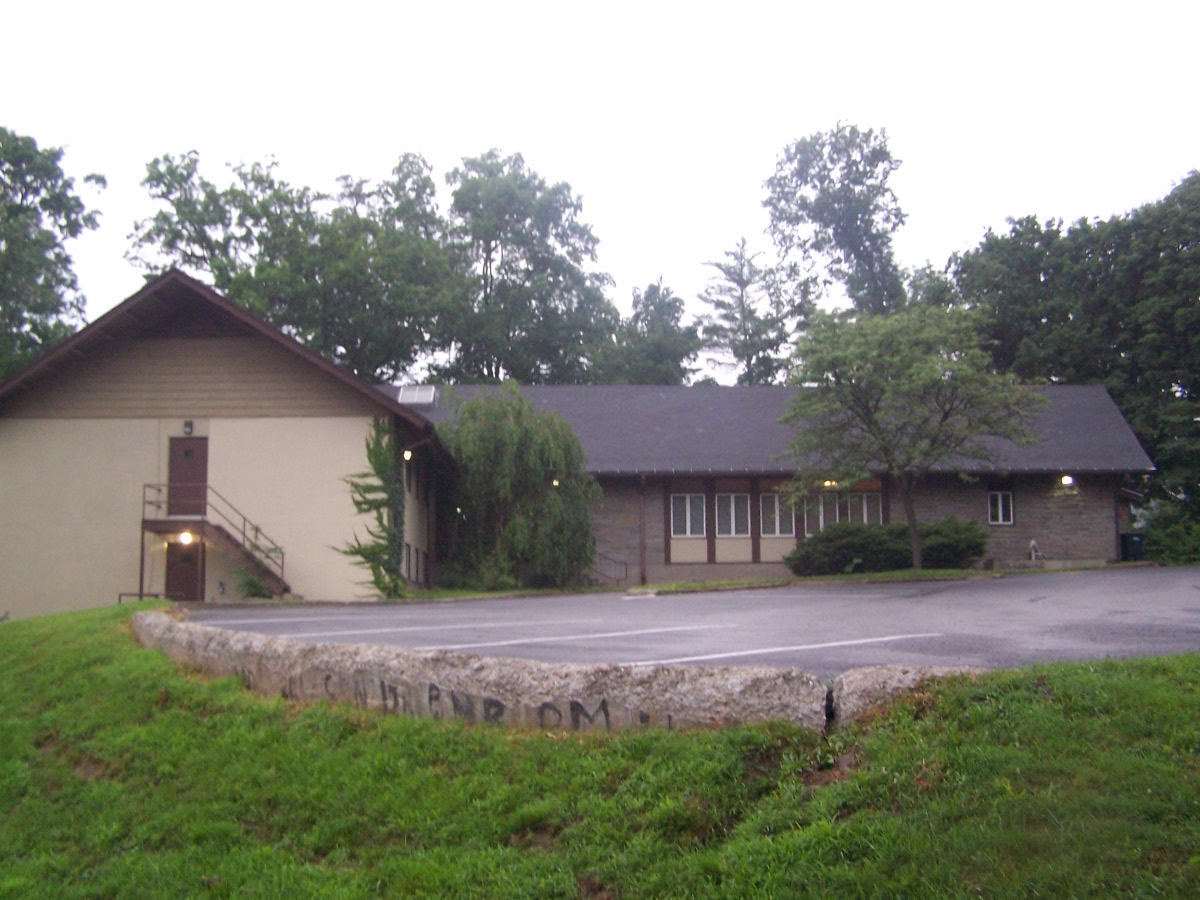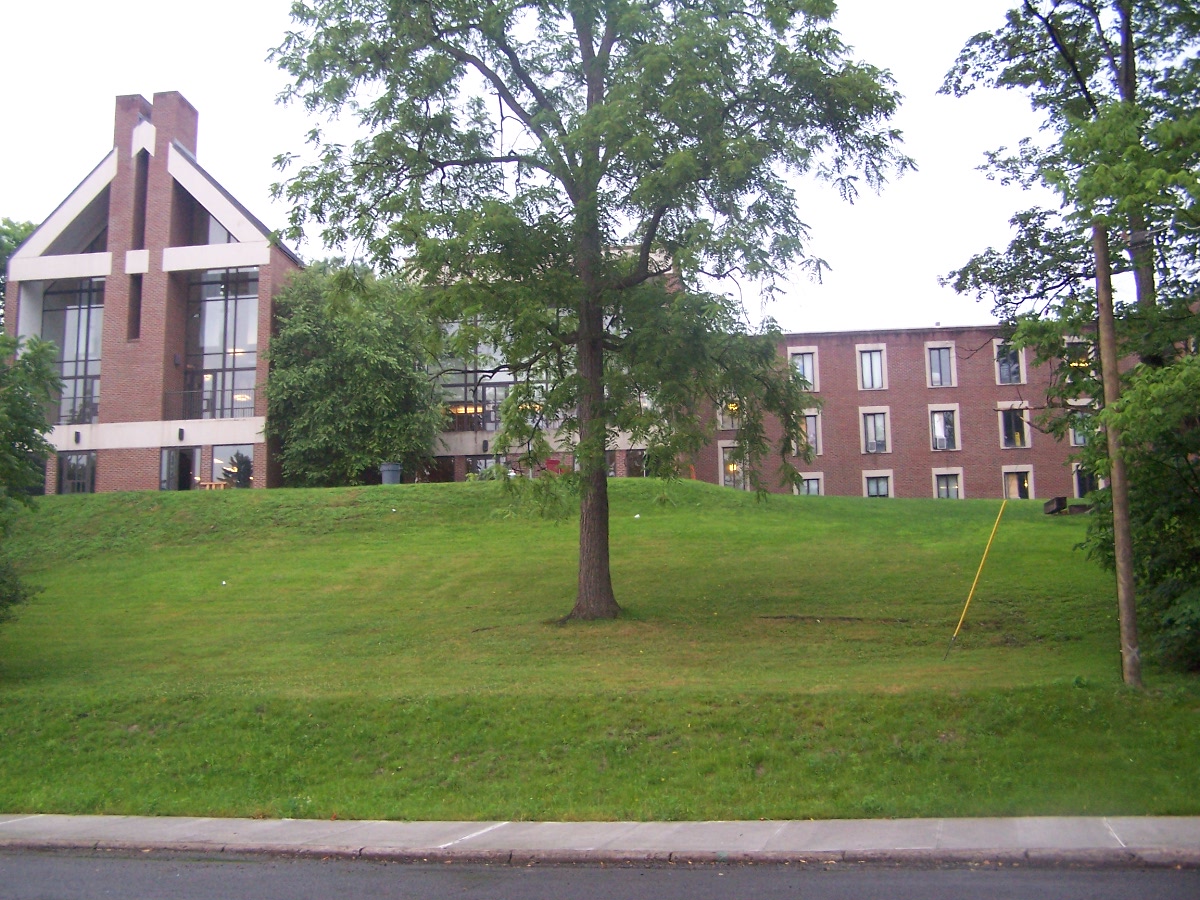
The Ithaca College Greek System

24 11 2008

So, I’ve always found it vaguely amusing that although officially Ithaca College doesn’t recognize Greek fraternities and sororities, their letters still manage to appear at events like Relay for Life over at Barton Hall.

Officially, IC recognizes three professional music fraternities and a performing arts professional fraternity (which has since closed). In terms of the student population, these are a drop in the bucket when it comes to size and importance/recognition. [1, 2]

Not that it was always this way. Ithaca College once had a thriving if smallish Greek system. Thing is, Delta Kappa fraternity (which had only a few chapters anyway) brought the system down in 1980 with the death of a pledge. According to the book Wrongs of Passage:

A long-standing tradition of forcing pledges to perform calisthenics in a steamroom with the heat turned up high finally claimed a victim, Joseph Parella, 18.”

Which just goes to show you what can happen when people in charge of safety and planning exercise incredibly poor judgement.

Still, the system does exist in some weird underground sort of way. I don’t think they even had houses back when they were recognized, since Ithaca College is an all-residential college (meaning most students live on campus, with the exception of seniors in an apartment perhaps), and they certainly wouldn’t have them. A relatively thorough google search brings up some of the underground fraternities and sororities of IC:

Delta Kappa- Apparently it still exists, though merely as a shadow of its former self. [3]

Pi Lambda Chi

Phi Kappa Sigma

Alpha Epsilon Pi

Phi Iota Alpha (Latino interest fraternity)

Phi Mu Zeta (sorority)

Gamma Delta Pi (sorority) [7]

In conclusion, they’re underground; most of the IC students think they’re stupid or haven’t heard of them; and they barely manage to exist. If anything, this should be a lesson on what can go horribly wrong if due safety and precaution aren’t exercised.

[1]http://collegeprowler.com/colleges/ithaca-college/greek-life/

[2]http://fuse.ithaca.edu/1455/

[3]http://members.tripod.com/deltakappa/

[4]http://www.ithaca.edu/ithacan/articles/0412/02/opinion/3greek_l.htm

[5]http://www.ithaca.edu/ithacan/articles/0009/28/news/fraternities.htm

[6]http://en.wikipedia.org/wiki/Ithaca_College

[7]http://www.freewebs.com/gammadeltapisisters/currentsisters.htm


Number Judging

13 11 2008

I should really make it a point not to go to IFC elections. To maintain impartiality, I will not use the names of any candidates or any fraternities directly in this blog. That won’t stop the curious from going and looking them up, but that’s no concern of mine.

One of the positions I thought could be easier to determine if ones’ vote was the more appropriate choice is for the IFC’s recruitment position. The logic here is that looking at a fraternity’s membership intake over the past four semesters is a strong indicator of their abilities to recruit, what brought these individuals in and what they’ve been doing since then (in this case, one candidate is a junior, and although I can’t find anything on the other candidate’s fraternity website or on facebook, I would at least hope that he’s a junior. Otherwise, we all just made a terrible mistake, because a sophomore is in no way qualified for such a position).

So of course, the new OFSA report has been released [1] (yay!). As for the candidates, well say the first is from fraternity X, and the second from fraternity Y. Here’s their membership numbers:

Fall ’06, Spr ’07, Fall ’07, Spr ’08

X: 18, 37, 32, 45

Y: 40, 63, 44, 59

I’m inclined to think that fraternity X must have tried something new that was successful. I’m inclined to think Fraternity Y did roughly the same program both years, and it didn’t pay off as well last year. (Please don’t bother posting the “smaller number, better quality pledge” argument. We’ve all been around the block enough times to know that with the number of bids fraternities “bestow”, it becomes a game of chance with other houses and therefore that argument is a load of bullshit). We elected Y. Granted, you can’t exactly pull this information up in the middle of the meeting, and you don’t find out the candidates until the meeting in many cases. I s’pose what helped me make my choice is that Y wants to retry the failed “Meet for Greeks” program that I criticized in a previous entry. In a sense, this is looking back on the decision to see if it was a good one. For the system, it’s increasingly apparent that it wasn’t.

But hey, what do I know? I’m just letting statistics play a role in my judgment.

[1]http://www.lgbtrc.cornell.edu/dos/cms/greek/upload/OFSA-AR08-final.pdf


Greeks Freak…and it’s not the MGLC’s step show.

13 10 2008

So, I’m churning out two updates in one day. Yay.

For those who follow the trials and issues of the Greek system (which are probably very few in number, but nonetheless fascinating in its own twisted way), the big news in the system has been related to the Greek conference (Call To Action Summit) held in Appel last month. Quite simply put, Cornell and a coalition of alumni are threatening to remove Greek self-governance unless some changes are made. Now.

The first concern are academics. The fraternity system as a whole stands at 3.26. In the fall of 2007, it stood at 3.246 (sororities are at about 3.4, and higher than their non-Greek counterparts, so they don’t have the same issue).

I only have a paper copy of this past semester’s average, which is why the elctronic one is only the prior two semesters. Anyways, that upsets the alumni. The campus average is somewhere around 3.4. That is very upsetting. As one fraternity alum exclaimed, “Cornell Greeks could and should be smarter than non-Greeks”.

So, obviously, they launch into this whole sphiel about promoting academics and all that goes with it. Here’s my concern, as an attendee; we all know that certain schools are more rigorous grade-wise than others. ILR averages about a 3.8, while engineering is nearly a full point lower. For a generic house, where the have two rushees who are relatively the same in every characteristic except that one’s an ILRie and the other is an engineer, which one are they going to choose, as their independence in the system is under threat?

That’s my issue. The intended goal is smarter Greeks. GPAs don’t necessarily mean someone is smarter, but based off of statistics, one might think it is. I’m concerned those from more rigorous majors (my dept. averages a 3.2, which is why I feel every right to be concerned) are going to have a slimmer chance of getting into a house because the house will focus more on their course of study, thinking it more potentially attractive to give bids to those in majors with generally high GPAs (and I’ll be damned if someone steps up to say that would never happen, and can prove it).

The second topic was getting rid of the Greeks “party-and-kegger” image. This I can agree with more. I feel embarrassed if I wear my letters around campus because I get this awkward feeling that unfamiliar faculty and staff are looking down on me, as if they heard I’m drunk four nights a week. I think I’ve drank maybe four times this semester, and only one of those times was it even with anyone from my fraternity. So, I personally would love to do away with the party image.

Unfortunately, I’m also aware that parties are a primary source of “fresh blood”. The general view is that people aren’t as interested in a sense of camraderie and connections and cheaper housing; they’re visiting in the fall for the free booze. Fraternities who have used alternative method are generally looked down upon. To that extent, I’m aware of the two ag frats [AZ and AGR] doing events on the Ag Quad to attract attention to themselves and to get people interested, and Seal and Serpent posting flyers in high-traffic areas, but the aggies are considered off the wall anyway and Seal’s desperate for members.

So, the system is attempting an “informational” on the 26th. It seems like it will be a guided tour of the houses and a career fair style setup in the multipurpose room of RPU. I’ll be downright shocked if they have a significant turnout.

The third is the spectre of hazing. As someone who has been directly involved in overhauling parts of their own fraternity’s pledging to address the concerns, I can say that most of the ideas they were proposing were one’s we put into effect after hazing allegation went public in almost ten years ago. It took five years to put into place though, because some alumni vehemently opposed what they referred to as “taking the fun and character out of the pledge process”. They disaffiliated with us over the restructuring, but we did what we had to, and we’ve been the better for doing it (I won’t give exact numbers and details because I’m concerned they would give some others the information necessary to determine my afiiliation).

Meanwhile, Greek and non-Greeks alike are flipping out over the police distrubing dozens of $500 fines in a given weekend. Here’s the bad news folks—the locals are strongly supportive of the measures. And unless you plan on commuting from Lansing or Dryden, you’d better learn to deal with it, because as much as we’re upset, the support from the rest of Ithaca (excluding South Hill and IC) is staggering. Students are a captive market, and unless it can be proven otherwise, expect things to only get more stringent in the future.

EDIT: Speaking of MGLC, I take it this [1B] means Alpha Phi Alpha is active at Cornell once again? Congratulations gentlemen. Best of luck to you.

[1B]http://www.facebook.com/group.php?gid=29891094604&ref=nf


9/7/08 News Tidbits: Alpha Omicron Pi to shut Cornell Chapter

6 09 2008

AoPi sisters confirmed Friday that their chapter will be closed as of the first of October, due to declining numbers within sorority rush. All current members will be moved to alumni status and allowed to live in the house until graduation. Once all current sisters have graduated, the intention is to reopen the house under a new set of women (this has been done with fraternities in the past. Pi Kappa Phi closed in 1986 and reopened in 1990, and Phi Kappa Tau closed in 1994 and reopened in 2000).

So, the news, while unfortunate, isn’t surprising to anyone familiar with the Cornell sororities. AOPi was typically derided and demeaned, and as a result of the nasty jokes associated with the house, women tended to avoid having it as a choice on their bids. Also consider that sorority rush turnout was lower than usual this past year, and you end up with a situation where the house can’t get enough women to make minimum member quotas. I feel really sorry for the current active membership of that sorority house.

This should really be a wake-up call to PanHel that something is amiss in the sorority system. Delta Phi Epsilon closed in 2003, as did Chi Omega. with Alpha Omicron Pi shutting down, this results in a net loss of two sororities in the past five years (PanHel selected Alpha Xi Delta to open on campus in 2004). With eleven left, is this really the system that they want? When some sororities have 140 women, and AOPi is closing with about 30 members left, as regulated as the system is for women you’d think the numbers could be a little more balanced.


Finish Line of Photo Tours: Eastern Cornell Heights

17 08 2008

This is the house of the sorority Pi Beta Phi, which is kinda far out on Triphammer Road. Pi Beta Phi started out as a local chapter called Beta Phi. By 1919, they had become the NY Delta chapter of Pi Beta Phi sorority, and they first met in Risley Hall, which was at the time an all-women’s dormitory. After moving around from Eddy Street and Wait Avenue, they settled at 425 Wyckoff Avenue in 1937. By 1955, they has sold this house to Alpha Chi Sigma, and they built the current house in 1955-56 [1]. At least one sorority has made it easy for me to dig up some historical information about them.

Token sculpture? Perhaps, but I’ll provide a little detail about it anyway. The sculpture is called “Richard Evans, 2nd, III”, and was created by Daniel Ben-Shmuel Barrett. It used to be located next to the art museum as part of an abstract art exhibit, but because they needed the space, it was moved to north campus in 2004 [2]. There are also sculptures next to Appel and near Akwewon.

Hurlburt House, or as it is more commonly known, EcoHouse. The building was originally constructed as a motel/travel lodge in 1953. Shortly afterwards (~1963) it was purchased by Cornell and renamed the Cornell Heights Residential Club. The building was used for graduate housing and for housing for students of an experimental accelerated PhD program [3]. On April 5, 1967, a devastating fire tore through one of the wings of the residence, killing eight students and a live-in faculty member [4]. Firemen said three bodies were found in the entrance lobby, one on the stairs between the first and second floors, one in a first floor room, and four in rooms on the second floor [5]. An investigation afterwards stated that inadequate fire safety (lack of fire escapes and alarms) combined with deadly toxic fumes released by the burning rubber-plastic furniture were the primarily factors in the devastating tragedy. In case you’re wondering, the PhD program was discontinued. As for the building, the wing where the fire took place was torn down, but several residents and visitors claim that the basement of the wing (which still exists) is haunted [6]. Haunted in this case means screaming, an oppressive heat, strange lights and the barking of a dog that dies in the fire. I’m going to stay skeptical on this one, and say it’s probably just some overactive imaginations. I’ve been inside only a couple of times, but I found the accomondations seemed luxurious compared to other dorms, and they were tightly-knit group.

This building is home to the Triphammer Co-Op. Built in 1912, the house originally housed a sorority known as Sigma Kappa. Around 1955, the sorority admitted an African-American woman, which was against their national’s rules and regulations (remember, this was at the beginning of the Civil Rights Era). The national ordered the women to get rid of her or risk being booted out of Sigma Kappa. Well, the Cornell chapter flipped their national the proverbial bird and became a ladies co-op. The co-op went co-ed in the early 1990s, and today houses 19 men and women in eleven singles and four doubles [7].

The co-op’s southern neighbor is the MGLC fraternity Pi Delta Psi (is this the only MGLC organization that maintains an official house right now?). The house itself dates from about 1915, but the house only came into the poession of the fraternity a few years ago, in 2003. Pi Delta Psi is an Asian-interest fraternity [8].

The house of Delta Delta Delta sorority, more commonly known as Tri-Delt. The Alpha Beta chapter here at Cornell began as the woman’s club “Sennightly” in 1895, taking their name from the fact that they held a meeting every seven days (heck, my fraternity barely manages to hold a meeting every two weeks without someone b*tching). The women petitioned a national sorority so they could stay in touch in later years as well as perpetuate their organization. By 1912 (yeah, missed the boat on that one), Tri-Delt national took interest, watched them as they threw a party, liked what they saw, and offered them a seat with their sorority. From 1912-1965, the house was on the 600 block of Thurston, in what is now the Alumni House; afterwards, they moved to this house on Triphammer with its Moorish influence [9]. The moorish house was home to Kappa Alpha Theta prior to their national disaffiliating them in 1965.

Right across the street from Tri-Delt is the sorority Delta Gamma. The sorority was established at Cornell in 1885 [10], but the current house dates from about the 1930s. My personal guess is that they were in the ladies’ dorms for a number of years and then lived in boarding houses until moving to their present location. The chapter was inactive from 1969 to 1975 (the Vietnam War era, when public interest in Greek life and other establishment groups waned significantly)

The house of Kappa Delta sorority. The Cornell Chapter was founded in 1916 by a transfer student who was a KD at her former institution. First based out of Sage and then out of a now-demolished house on Wait Avenue, the sorority purchased the land for their current house in 1923 and built on that property shortly thereafter, expanding several times over the years. [11]

[1]http://pibetaphi-cornell.org/public1.asp

[2]http://ezra.cornell.edu/searched.php Q5 2/7/08

[3]http://en.wikipedia.org/wiki/Cornell_North_Campus

[4]http://www.news.cornell.edu/stories/April07/1967Fire.kr.html

[5]http://www3.gendisasters.com/new-york/6971/ithaca-ny-dormitory-fire-cornell-university-april-1967

[6]http://ezra.cornell.edu/searched.php?search=haunted&question=&answer=&starttimestamp=&endtimestamp=&category_id=&offset=20&view=expanded

Q2 11/12/1992

[7]http://www.triphammercoop.org/place.php

[8]http://www.cornellpdpsi.com/version6/about.php

[9]http://www.rso.cornell.edu/tridelt/

[10]http://www.dos.cornell.edu/dos/greek/chapter_details.cfm?id=3277

[11]http://www.kappadeltaomegachi.org/kap2_about.taf


North by Northwest of Campus

12 08 2008

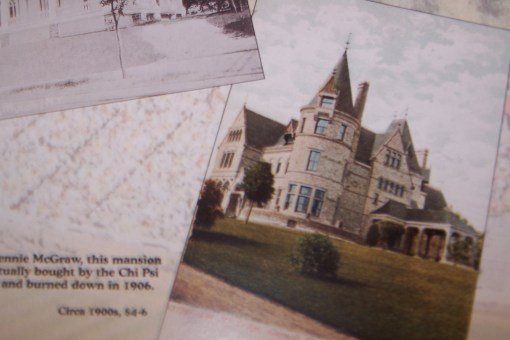
The house of the Chi Psi fraternity of Cornell University. Chi Psi has had a colorful if traumatic history in its century-plus long history here at Cornell. The Chapter at Cornell was founded in 1869. While they lived elsewhere, Jennie McGraw, the daughter of John McGraw, who was a wealthy lumber merchant and one of the first trustees of Cornell (for whom McGraw Hall is named) [1], fell in love with the first university librarian, Daniel Willard Fiske. She was old for loving at the time, pushing forty. She was also suffering from terminal tuberculosis. Regardless, she and Willard eloped and engaged in a whirlwind tour of Europe, while an opulent mansion was built on the edge of the gorge. She lived just long enough to see it with her own eyes, passing as they arrived home in 1881 [2]. Willard moved in, but his behavior was considered a little too exuberant for someone whose wife just died. Plus, due to some legal issues with Jennie’s will (which might make for a good entry another day), he and Cornell ended up on really bad terms, and he spent most of the rest of his life in Italy (on the bright side, he somewhat reconciled with Cornell in later years and donated his library upon his death in 1904 [3]).

That story is tangent to Chi Psi. Willard sold the opulent McGraw-Fiske mansion to the fraternity around 1881[4]. It was during the cold night of December 6th 1906 that the second deadliest campus tragedy in Cornell’s history occurred.

Sources tend to indicate it was caused by flammable polish being used on the floors. Others have gone as far to suggest that the house was cursed due to Jenny and Willard’s indiscretions. Regardless, the house caught fire. And in the days before real fire engines, any water to be used on the house (that wasn’t frozen) was a mere trickle. Of the twenty-six fraternity brothers living in the house, four died. When one of the exterior stone walls collapsed, it landed on volunteer firemen from the city of Ithaca, killing three of them. By the end of the night, the house was destroyed, and seven people were dead [5].

Photo Courtesy of "Greetings from Ithaca"

Photo Courtesy of “Greetings from Ithaca”

Through the tragedy, the fraternity persevered. They built the current house the following year (known as “The Lodge”), and have lived there since.

So, I took two photos partially to get a good idea of the shape and ornamentation of the house, but more because a woman in a towel came up from the gorge as I was taking photos…and I didn’t want to give the wrong idea. I ran south after a large guy appeared by her side, and she probably thinks I’m a creeper and pervert. I prefer photos of ornamental busts to women’s busts.

***

The Thurston Court Apartments is a 22-person university-owned apartment building with one and two-bedroom student apartments [6]. Primarily used for grad housing, in recent years the building has been opened up to undergrads as well. The building was built in 1932 (fun fact: the entire building was once painted white, including the ornamentation).

The house of Seal and Serpent fraternity, Cornell’s independent fraternity. The fraternity was founded in 1905, and the current house was built in 1929 in the Tudor Style [7]. In the past several years, the fraternity has suffered from a chronic shortage of interest; rumor mill says they only had three pledges last spring.

Maybe this has something to do with it:

“…Fraternities have a reason to fear such stereotyping. The Seal and Serpent society, a house which was primarily gay in the 1980s but now has just two gay brothers out of 16, has had some difficulty overcoming “the gay” label during rush…”

I s’pose this doesn’t help – I still hear this from a lot of people both in and out of the Greek community  (the quote is from a Nov. 2000 Sun article).  Going through this blog’s search bar history, there are over 200 hits for “gay fraternity”.  I’m willing to bet it’s not with good intention.


The house of Alpha Phi sorority. Alpha Phi Cornell was founded in 1889 with assistance from the Alpha Chapter at Syracuse University [8]. Originally based out of Sage College, they lived with Alpha Zeta for a year  and on their own in a couple different houses until they bought their current house from an Alpha Phi alum in 1921. The side wings were added in 1937, and a back wing (not pictured) was added in 1961. The chapter went under a reorganization sometime in the early 1990s due to low membership intake, but I’ve found nothing that indicates it ever closed. Currently, Alpha Phi has one of the highest sorority membership numbers at Cornell.

Hardly 500 feet away is the house of Kappa Kappa Gamma sorority. I know Kappa has been in the news lately; and it really sucks to be them right now (unless you like embarrassment over attention). The sorority’s Cornell (Psi) chapter was founded in 1883, and moved into the current house in 1921 [9]. The chapter was inactive from 1969 to 1977, a time period well-known for its anti-Greek sentiment.

Louie’s Lunch was founded in around 1918 by Louie Zounakos, who emigrated to NYC from Greece, and later moved up to Ithaca. The original Louie operated the truck up until 1955 [10]. The original truck was replaced in the late 1940s. The truck was then owned by the Machen family until 1997, and is now currently operated by Ron Beck. I do have a preference to one truck over the other, but I won’t say which.

100_3462

Photo courtesy of “Greetings from Ithaca”

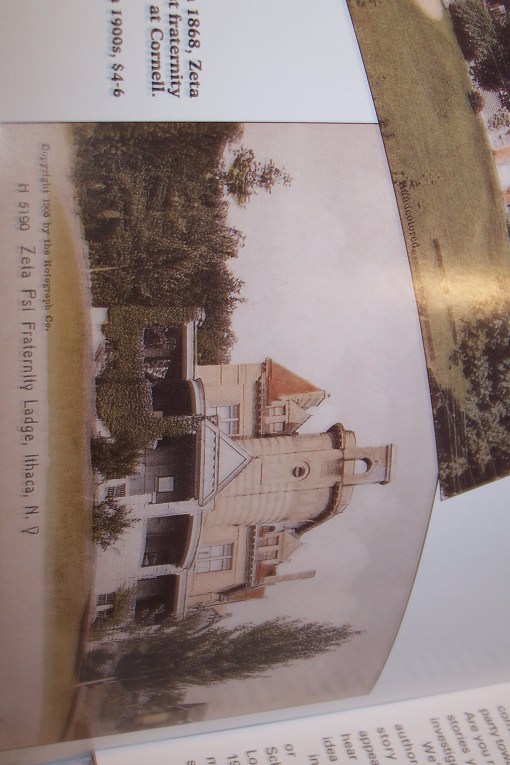
The house of Zeta Psi fraternity. The house, built in 1930, was originally that of Theta Xi. Zeta Psi, meanwhile, has the distinction of being the first fraternity founded by Cornell, even if it was decided by a coin flip (see the entry for Chi Phi). The chapter built a luxurious house in 1891 on the corner of Williams Street and Stewart Avenue, but moved out in the 1940s due to low numbers as brothers left to go fight in WWII. The original house burnt down in the late 1940s, and was replaced by a parking lot. In the meanwhile, Zeta Psi lived with Young Israel for a short while before moving into 660 Stewart Avenue in the late 1950s. A donation from a wealthy alumnus allowed them to buy the current house in 1972 [11].


[1]http://www.cornell.edu/search/index.cfm?tab=facts&q=&id=497

[2]http://en.wikipedia.org/wiki/Jennie_McGraw

[3]http://en.wikipedia.org/wiki/Daniel_Willard_Fiske

[4]http://www.adphicornell.org/adphicor/files/FraternityRow.pdf ***

***Page 10 has a picture of the McGraw estate in its heyday

[5]http://www.chipsi.org/news/6143/Cornell-Fire-Centenary.htm

[6]http://www.campuslife.cornell.edu/campuslife/housing/graduate/thurston-court-apartments.cfm

[7]http://www.sealandserpent.org/house.html#

[8]http://www.dos.cornell.edu/dos/greek/chapter_details.cfm?id=4679

[9]http://www.dos.cornell.edu/dos/greek/chapter_details.cfm?id=3280

[10]http://www.louieslunch.com/history.htm

[11]http://www.psiofzetapsi.org/History.html

[12]https://cornellsun.com/node/1720


Northwest of Campus

7 08 2008

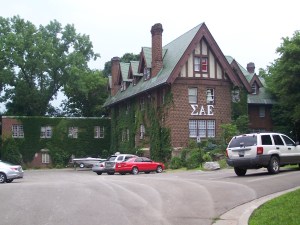
The house of Sigma Alpha Epsilon fraternity. Sigma Alpha Epsilon is one of those fraternities that tends to come to mind when people want to typecast the Greek system at Cornell. It’s large (~80 men), and prestigious, and is the subject of so many dirty rumors (true or not) that it would make Lindsay Lohan blush. The house goes by the formal name “Hillcrest”, and was built in 1915 [1]. An addition was built in the early 1960s (on the left side of the photo). This is the fourth house of SAE and the second “Hillcrest”, the first having burnt down in a spectacular fire around 1911. SAE and Chi Psi have a standing rivalry.
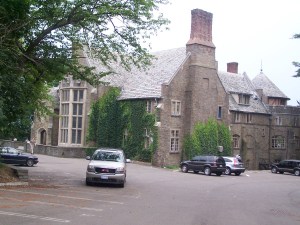
Next door to SAE is Alpha Delta Phi, colloquially known as Alpha Delt. The fraternity was established in 1868, and was among the first to build a chapter house, which was constructed in 1878 [2]. As students moved to different areas of campus, Alpha Delt launched plans to construct a new building in the prairie house style (which you can see on their homepage). This house was built around 1903, but due to electrical malfunctions, burnt down in a spectacular fire in February 1929. A new house, built in the collegiate gothic style (the current house) was built in 1931.
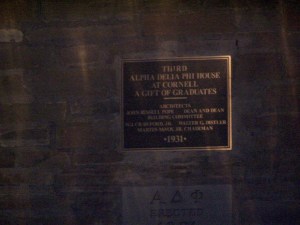
Alpha Delt has always struck me as a more upscale version of SAE. But, they’re not above visual humor; like their parking lot for instance.
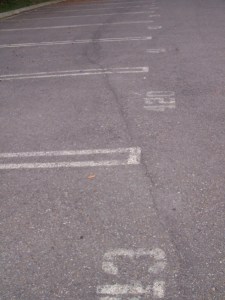
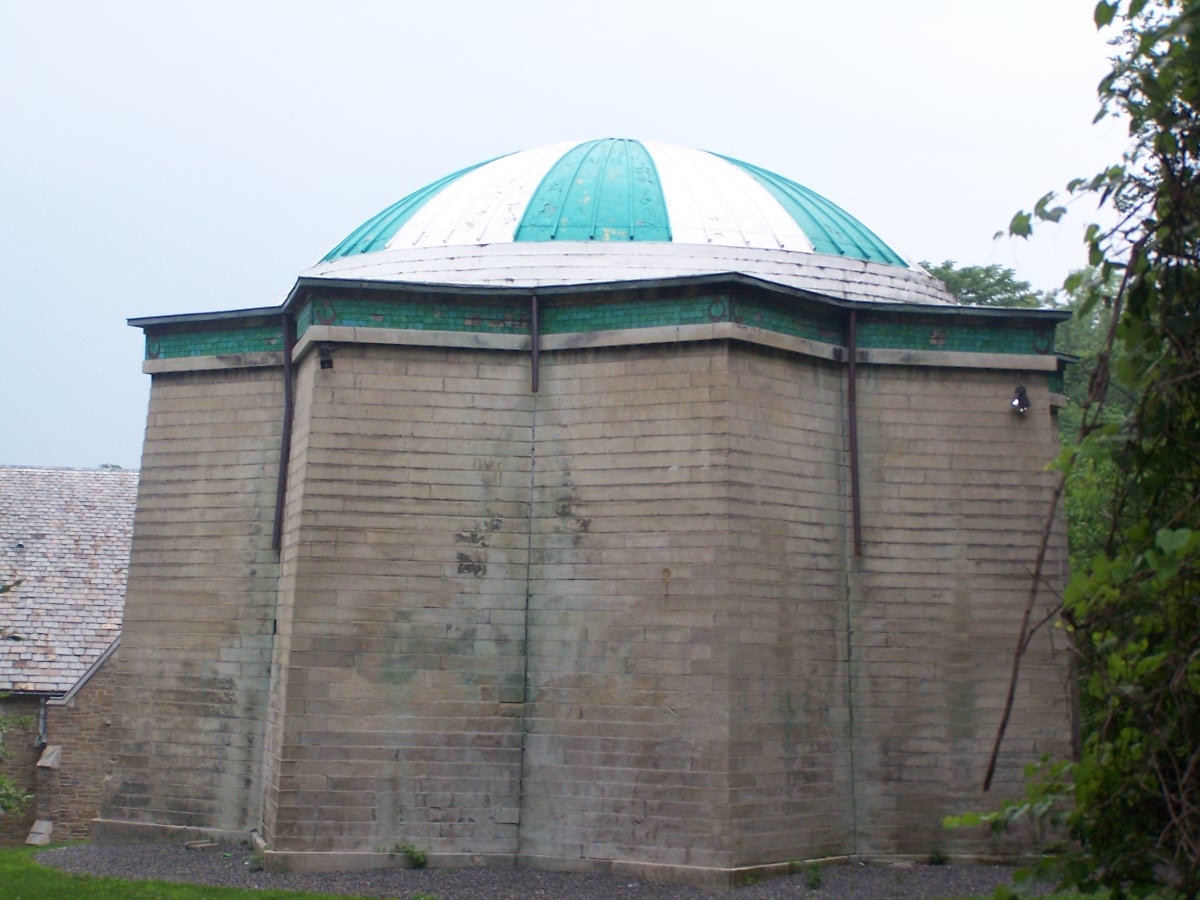
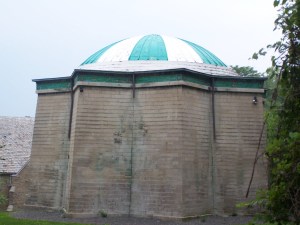
I wouldn’t be a good photographer if I didn’t get a photo of their super-sketchy windowless ritual building in front of the house.  Rumor mill says someone received third-degree burns in a ritual gone wrong two years ago at their initiation. Ah, so this is why fraternities like Delta Upsilon and Phi Kappa Tau were founded; to go against the cloak-and-dagger behaviors of other organizations.
***

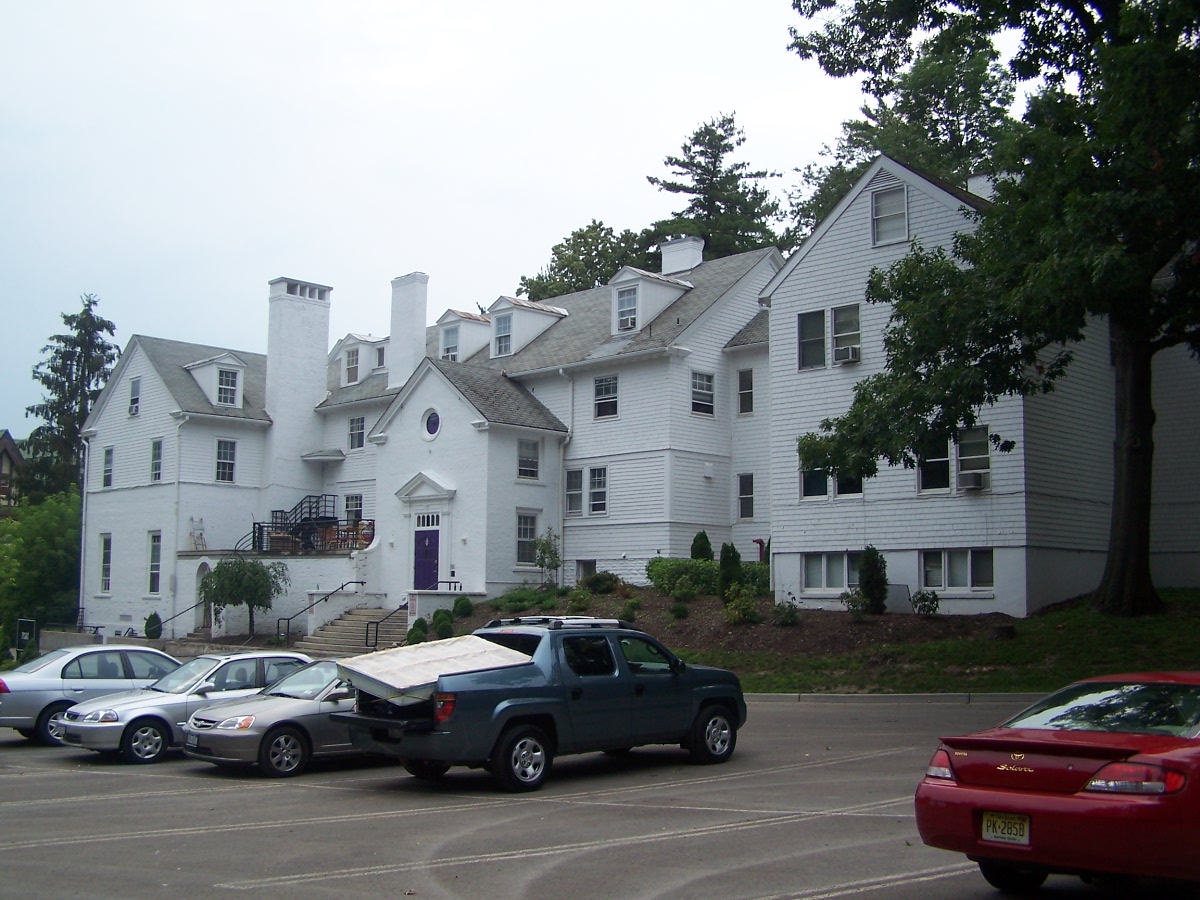
Although in a tightly packed area of high-profile houses, Phi Gamma Delta, or FIJI as it more commonly known, retains a distinct character. The house, known as “The Oaks”, is fairly nice-looking from the outside, especially since it was built around the 1900s. The original house, a private residence the fraternity bought,  looked like this before the extensive additions and modifications:
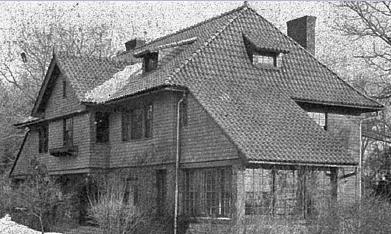
Throwing this disclaimer out there, I’m not a huge FIJI fan. The inside kinda scared me. That, and the Halloween party I went to there freshman year where some guy scantily-clad in leather was randomly hitting people in the crowd with a whip as he stood on a table. After the marks I received from that, I haven’t been inside since. Opinions aside, it’s a large house with a large membership.

One last thing…it rained shortly after I had taken the house photo. The mattress in the pickup was still there when I passed by a second time…and it was thoroughly soaked.

***
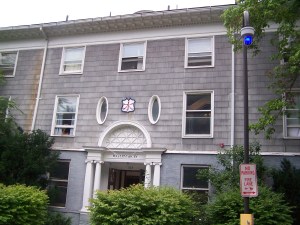
Mixed into the hodgepodge of frats is Watermargin, a co-op established in 1947 (co-ed since 1961/1968, the latter being the year it was formally approved[3]) by WWII verterans to promote undertanding and diversity in religion and race [94]. The name Watermargin comes from a Chinese Classical literary work, translated by Pearl Buck (All Men Are Brothers), in which fugitives fight the injustice of the Ming Dynasty at the water’s margin. Prior to 1947, the house served as a home for Phi Kappa Psi. The house was built in 1890 in the Colonial Revival style [5]. I’m still trying to determine what the house served as between 1912 and 1947.

Next door and contuinuing up University Avenue is Theta Delta Chi. They are colloquially known as “Thumpty”, or the much-maligned “Theta Drug”, supposedly because of the relative ease of obtaining drugs at the house. The house dates from the 1920s, making it one of the later constructions in the area. The running joke that I’m aware of suggests that its members are stoned all the time. Still, although they are the put of many jokes, they’ve managed to stay continuously active at Cornell since 1870, so they might as well take it in stride.
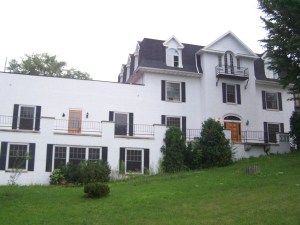
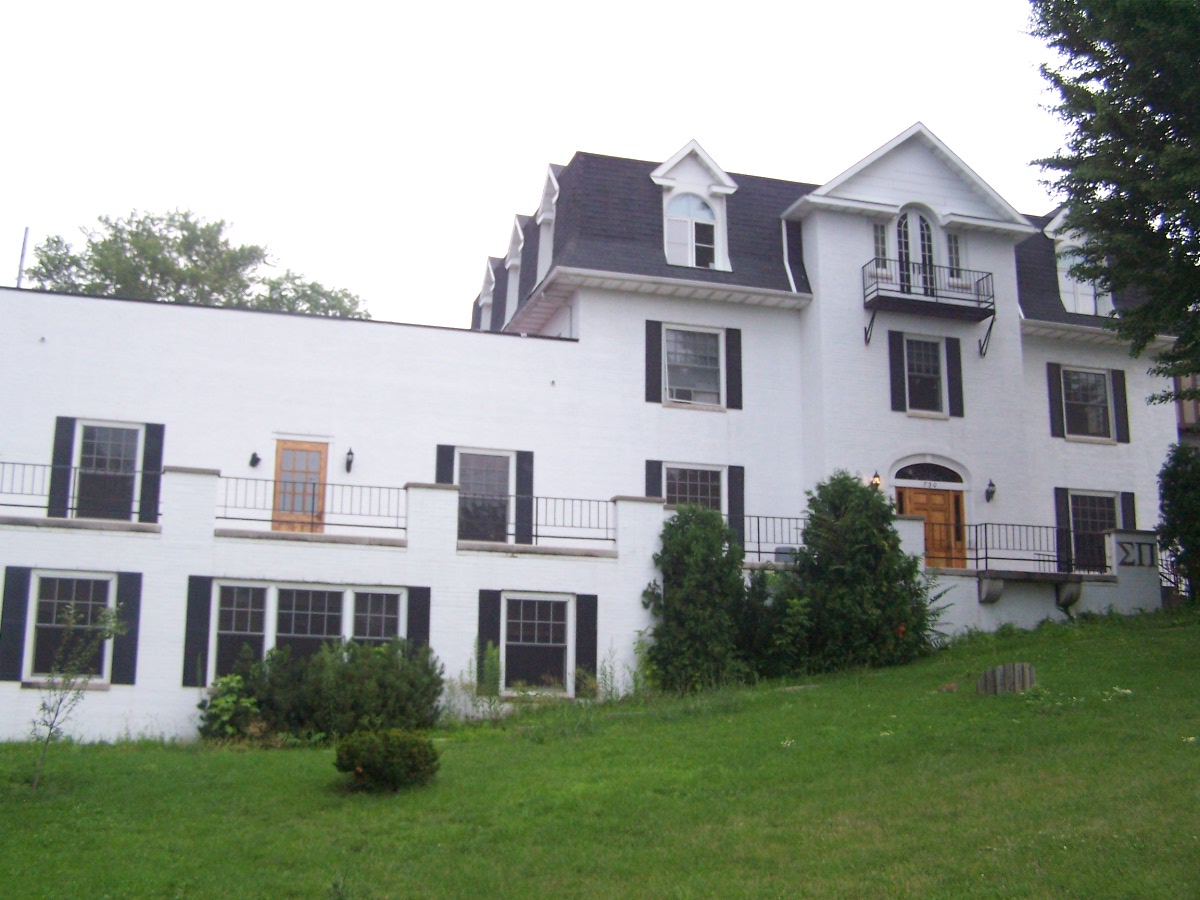
Sigma Pi is further up University Avenue. The original house on the property was built in 1870, burnt down in 1994, and a new, roughly-similar looking house, was designed by local architect Jagat Sharma and built in 1995 [6]. The fraternity was one of the largest at Cornell, until a nasty incident involving a Thanksgiving dinner gone wrong caused four freshmen to have to get their stomachs pumped[7], and Sig Pi losing recognition from the university (i.e. no pledge class). So, how about that fall rush…?
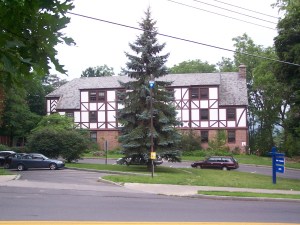
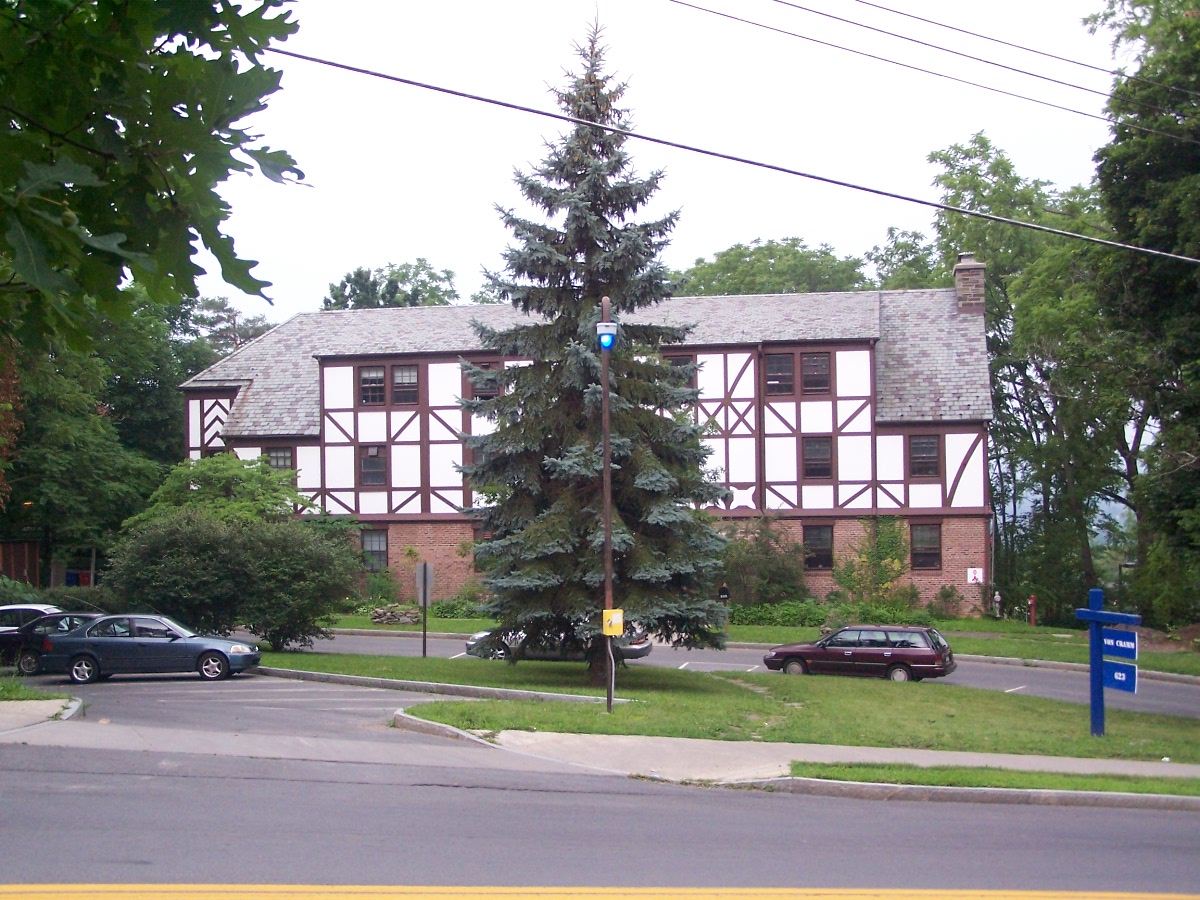
Going back the other way on University, we have Von Cramm Hall (I’ll hit Chi Psi at a later date). The co-op was founded in 1956 by an endowment from Thomas Gilchrist, in memory of his friend Baron Von Cramm. a Nazi German military officer who died trying to stop the Soviet retreat in 1941[8]. It is also the largest co-op, at 32 members. The house became open to women in the 1970s, and has a very strong leftist bent (Redbud Woods…). The house itself was built in 1955, standing on the property of one of the trio of homes owned by Robert Treman. The house, more of the textbook-style tudor, burned in 1944 [9].
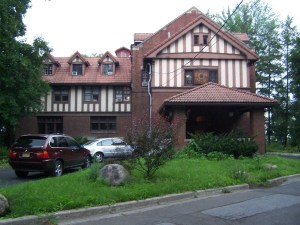
Sigma Nu’s house is tucked way at the end of Willard Way. The house dates from about 1910. The house is one of the more obscure ones to try and locate, but it has fantastic views of the West Hill in the town of Ithaca. Sigma Nu Cornell, founded in 1901, is a fraternity with a strong athletic presence.

Missed it the first time, not the second time. Sigma Phi Epsilon’s house on McGraw Place. The house was built in 1965 [10], replacing their former house at 112 Edgemoor Lane. After Sig Ep was gone in 2004 (google it, rumor mill had a field day with that one), ATO occupied the house, and Delta Chi shared it with them when they were rechaptered in 2006-07.

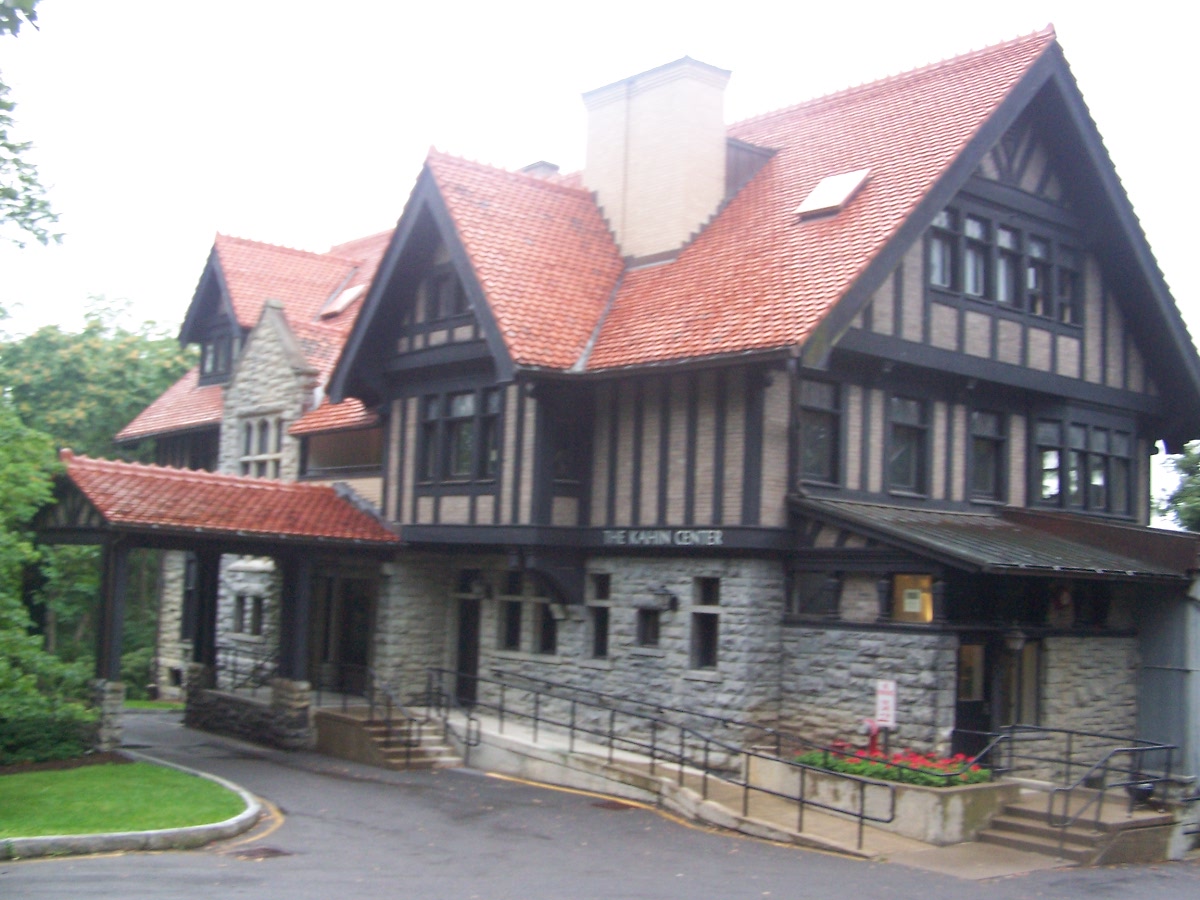
The Kahin Center is the second of the Treman trio. It was remodeled in 1945 as a lodge and as a communication arts center in 1970 [11]. It also mirrored the first house that burned in 1944.
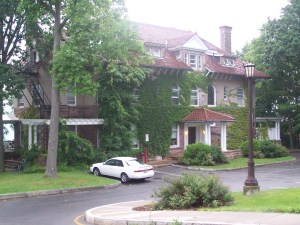
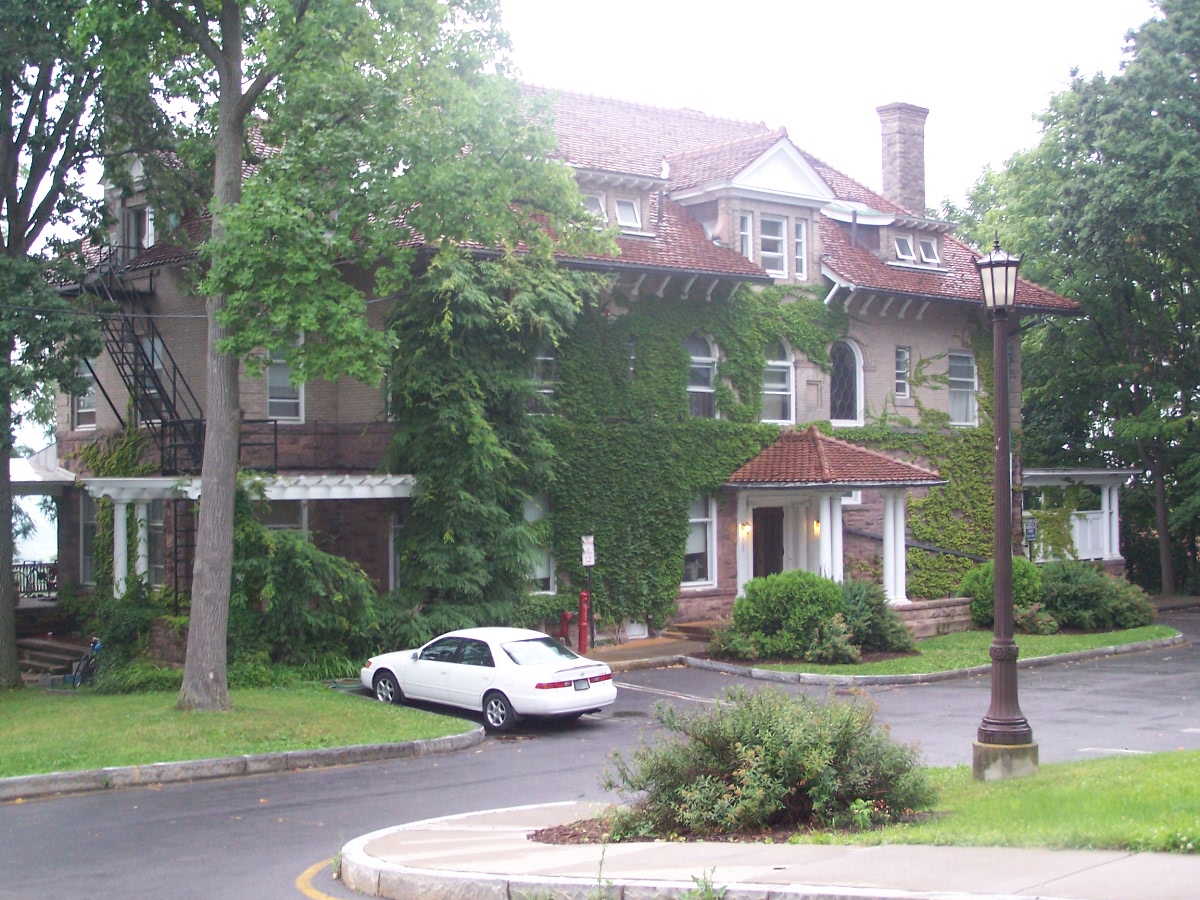
The last of the trio is 660 Stewart Avenue, built about 1902 as the home of Elizabeth Treman and her husband Mynderse Van Cleef [11b]. The house of Zeta Psi for a few decades ending in 1969, the house is currently a 27-person co-op. Unlike most co-ops, this one does not have a meal plan [12].
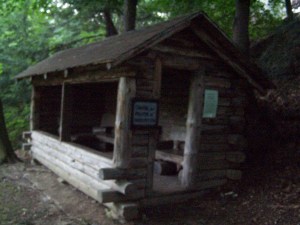
This was really cool, since it has polished wood and it provided shelter from a sudden rainstorm. “The Chapel for Prayer and Meditation”. And what a nice little chapel it is. On the outside was the posting for a service to Mahatma Gandhi on 9/11/07. And the other events that have happened on 9/11.

And it had a great view. And this is where I’ll leave off for now.

[1]http://www.sae-cornell.org/public6.asp

[2]http://www.adphicornell.org/public6.asp

[3]http://cornellsun.com/node/21924

[4]http://www.campuslife.cornell.edu/campuslife/housing/undergraduate/watermargin.cfm

[5]http://www.fs.cornell.edu/fs/facinfo/fs_facilInfo.cfm?facil_cd=4758

[6]http://sharma-arch.com/restoration.htm

[7]http://cornellsun.com/node/26714

[8]http://en.wikipedia.org/wiki/Von_Cramm_Coop

[9]http://www.fs.cornell.edu/fs/facinfo/fs_facilInfo.cfm?facil_cd=3121

[10] http://www.rso.cornell.edu/sigep/History.html

[11]http://www.fs.cornell.edu/fs/facinfo/fs_facilInfo.cfm?facil_cd=4736

[11b]http://cornellsun.com/node/24153

[12]http://www.campuslife.cornell.edu/campuslife/housing/undergraduate/660-stewart.cfm


Far West Campus, Second Photo Tour

4 08 2008

The house of the Cornell Chapter of Delta Upsilon fraternity. The house was built in 1890 in  the Queen Anne Style [1], and burned at least three times over the next thirty years [2]. The fraternity was founded to counter secret societies. Which, considering some members have most certainly been members of the Sphinx Head and the Quill and Dagger, is vaguely ironic.

Cornell’s Telluride House, located on South Avenue. The house was built in 1910 and originally housed electrical engineers working for Lucien L. Nunn, and who also attended Cornell [3]. The Cornell chapter was the first Telluride house. Telluride takes it name from the town of Telluride, Colorado, where Nunn lived most of his adult life [4]. The house’s website describes as an intense academic experience, and that members “enjoy tremendous autonomy”. So, I’m getting the impression of a fraternity, only much more academic and not nearly as social.
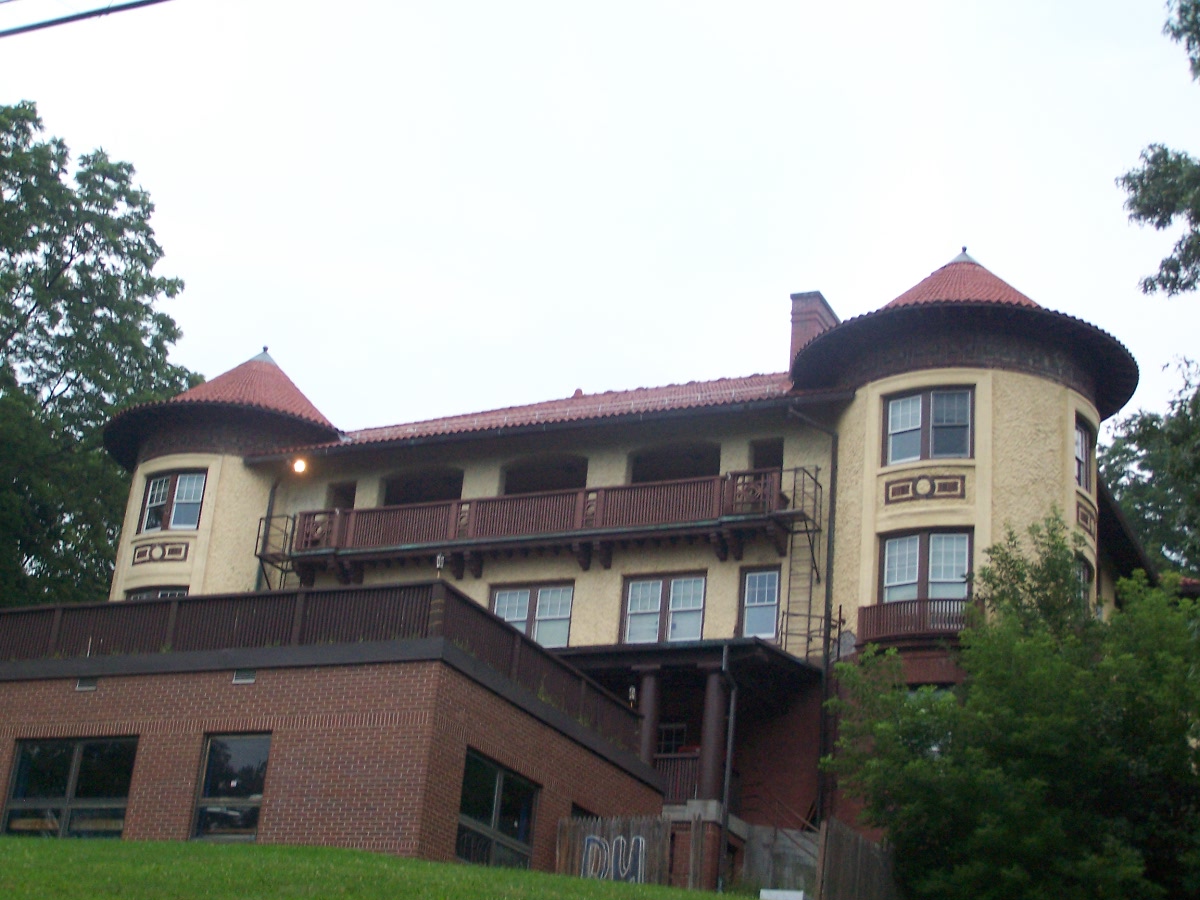
Photo Courtesy of "Greetings from Ithaca"

Photo Courtesy of "Greetings from Ithaca"

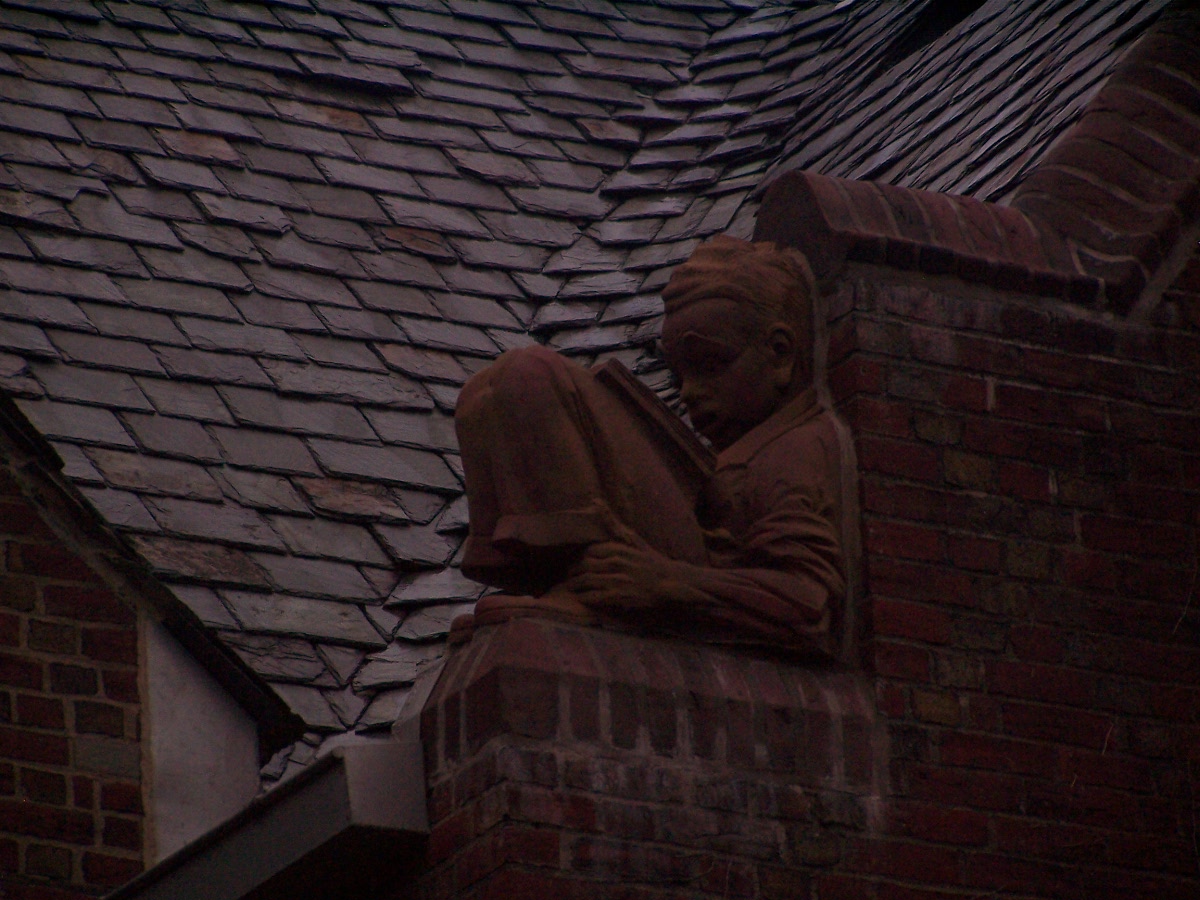
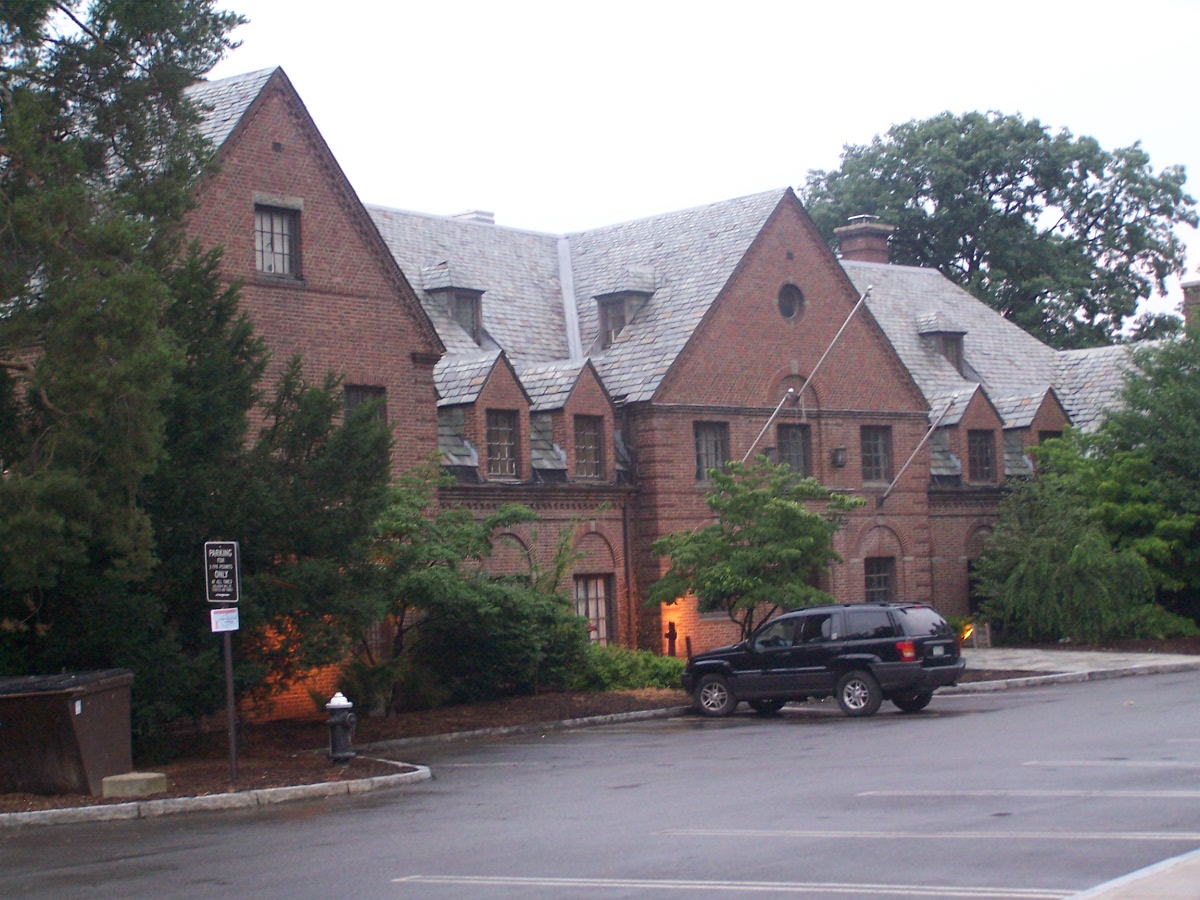
The house of the Sigma Phi Society. The first house was torn down to make way for the law school. The second and current house was built in 1932 and designed by Frederick L. Ackermann in the English Country House style. Ackermann also designed Psi Upsilon, the neighboring fraternity, and the relation between the two is obvious. If you can’t tell them apart though, you’ve probably had too many drinks at Sigma Phi and it’s time to go home. Detail-wise, the two differ considerably.


Although, one can never go wrong with the right ornamentation. I honestly thought that someone was sitting up there when I first glanced at it. No, I wasn’t drunk.

Psi Upsilon’s House was built in the same year. I believe this is also the fraternity that was known for having an indoor squash court, so Psi U. has a bit of a reputation of being wealthy. The chapter has also been booted off campus twice, the latest last month (the other case was in 1979). 

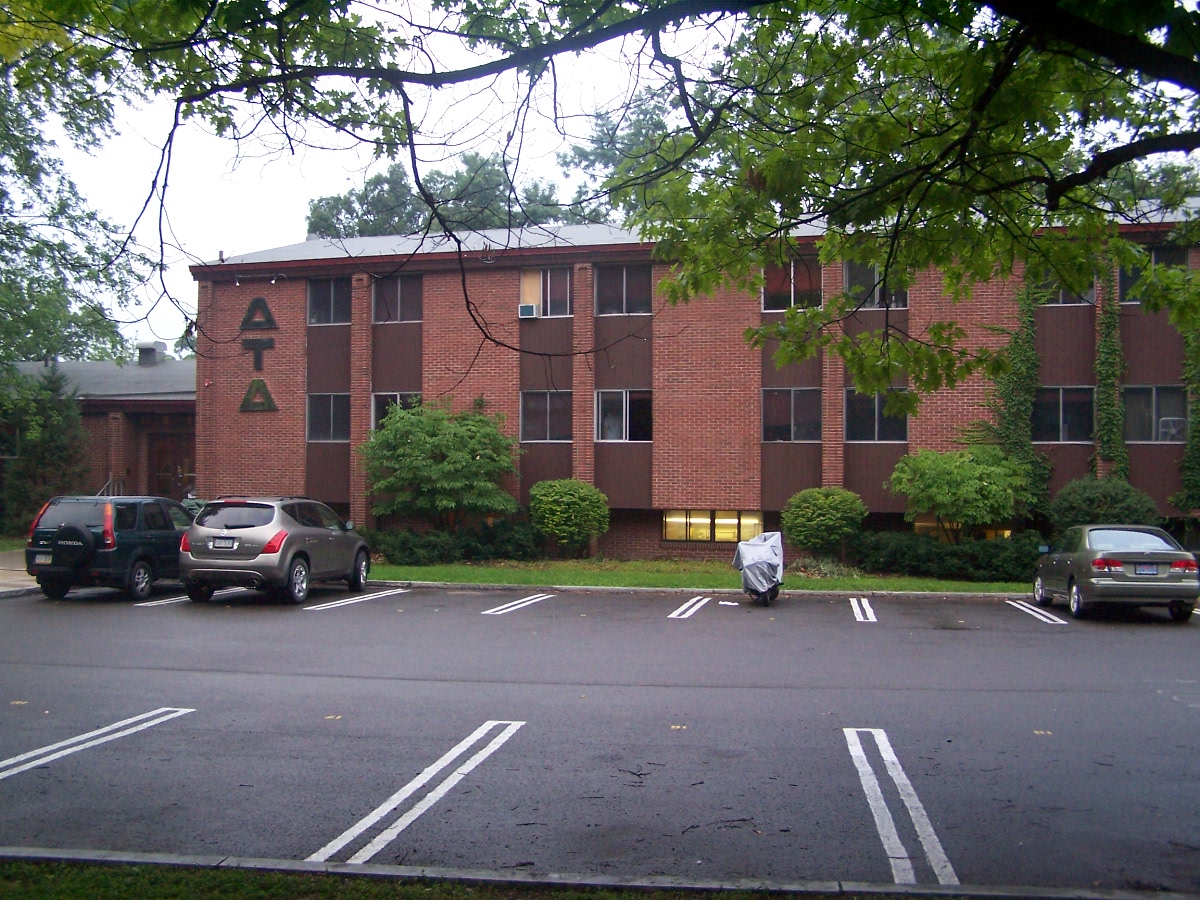
The house of Delta Tau Delta. The house was built in November 1965 [5], but they previously lived in a now-demolished house on Edgemoor Lane (the parking lot next to Theta is the site of their old house). The only reason I knew this house existed freshman year was that one of my roommates had a free magnet from DTD. Yeah, can’t say I care too much for that 60s archi-torture.

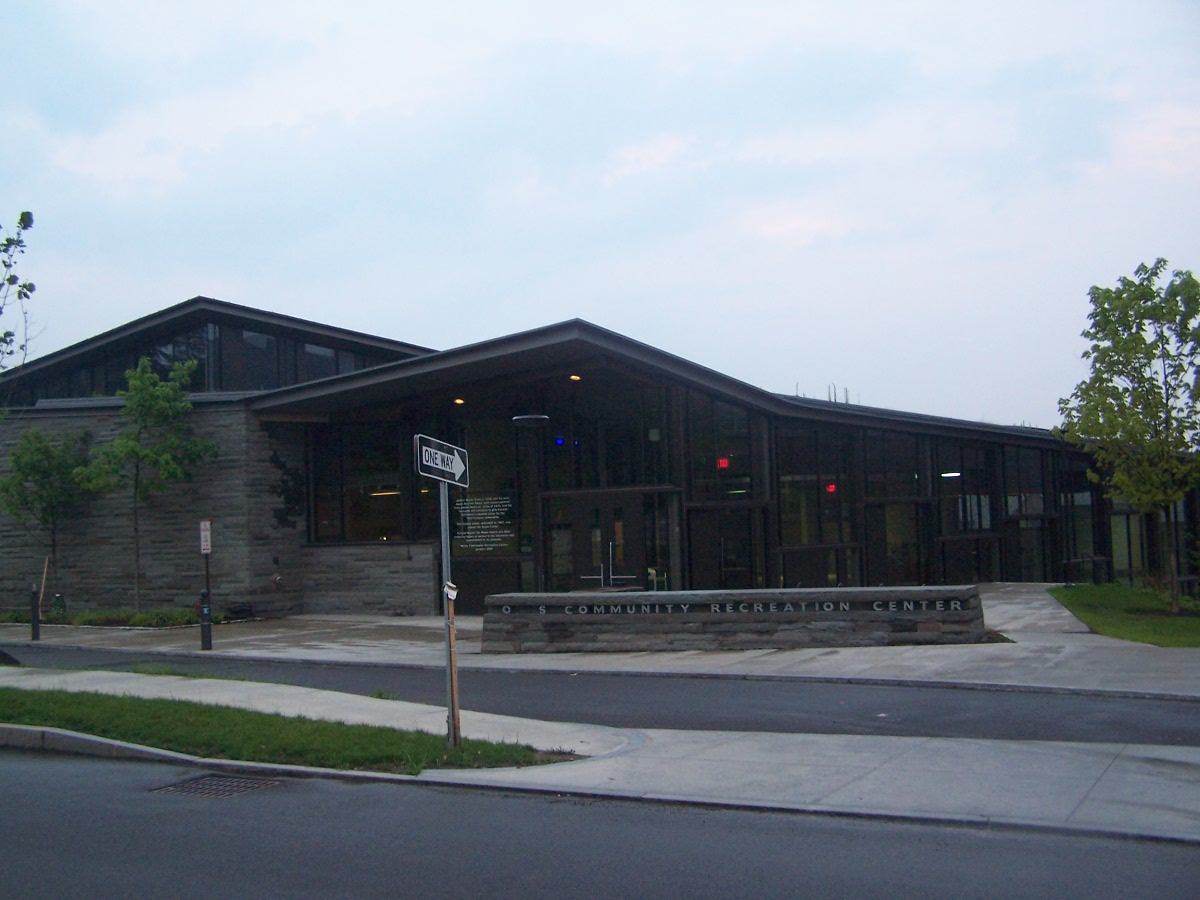
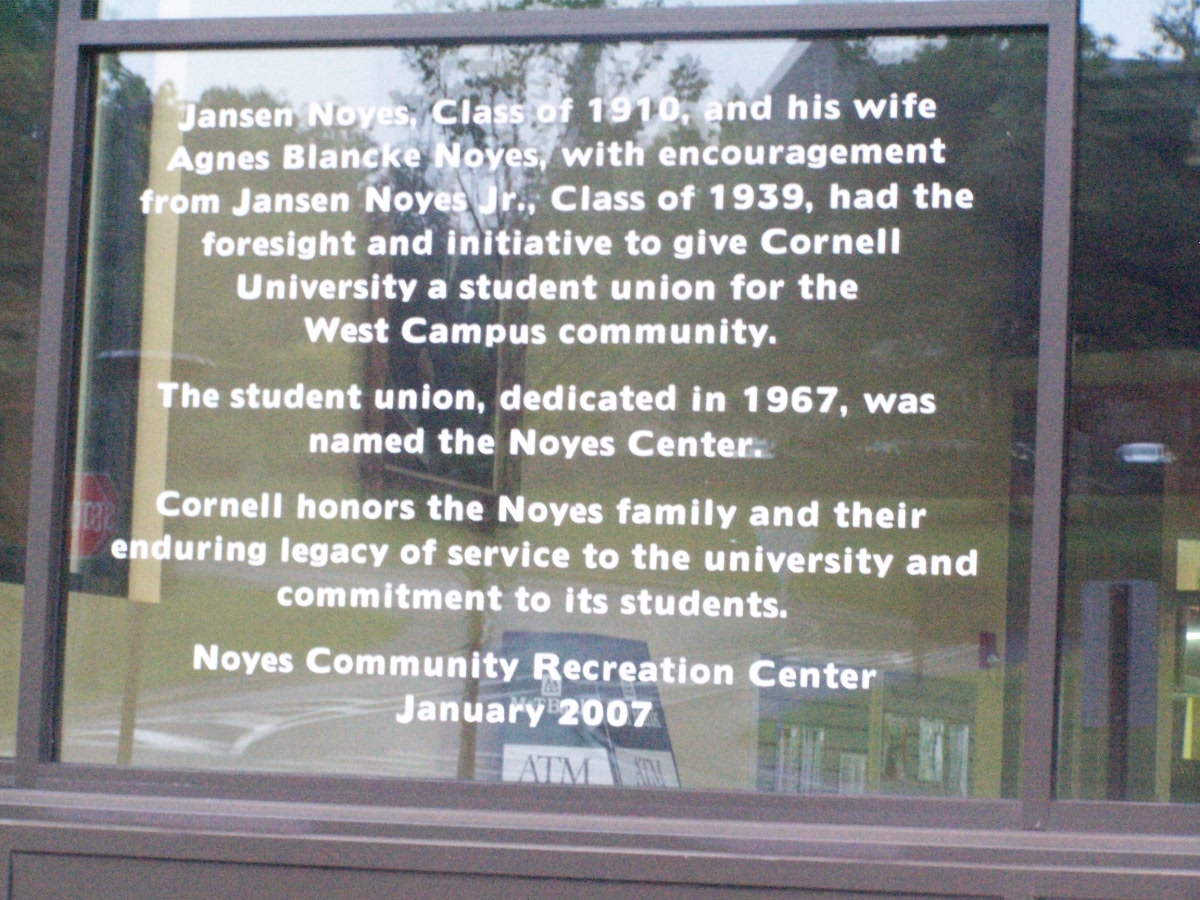
The new Noyes Center is about the only thing I like on the newly reconstructed West Campus. Completed in Janurary 2007, the building serves for community functions for West Campus (weight room, convenience store, etc.).

The original student union, a penal-style brutalist structure, was dedicated in 1967 to Jansen Noyes 1910. Before the legal drinking age was raised in 1986, it had a “pub” to serve students.

 (photo courtesy of http://andrew.loewer.name/musings/)


[1]http://www.fs.cornell.edu/fs/facinfo/fs_facilInfo.cfm?facil_cd=4722

[2]http://ecommons.library.cornell.edu/bitstream/1813/3536/23/021_18.pdf

[3]http://www.tellurideassociation.org/programs/university_students/cornell_branch/cb_general_information.html

[4]http://en.wikipedia.org/wiki/Telluride_Association

[5]http://www.fs.cornell.edu/fs/facinfo/fs_facilInfo.cfm?facil_cd=4776


Another Random Cornell Heights Tour

23 07 2008

The house of Acacia fraternity. It was built in 1907 for a prominent professor, and designed by architect Arthur Gibb in the Prairie House style.  Gibb was also responsible for the design of Baker Lab on campus (which was technically designed around 1910, even if it wasn’t completed until 1921) [1]. The house, called “Northcote”, was first occupied by Acacia in 1934, with an additional dorm wing constructed around 1958. Today, in terms of distance from campus, Northcote is probably one of the farthest.

Greystone Manor, the house of Sigma Chi fraternity. It is been my observation that Sigma Chi is probably one of the most low-key fraternities of Cornell. There’s only a flag to announce their existence at their house, they have no house web site, etc. However, this doesn’t mean that the house doesn’t have a history worth sharing. The house was the home of silent-film star Irene Castle around 1919, when the silent-film industry was still thriving in the Ithaca area. It was bought by Sigma Chi in 1923, and has been in their possession ever since.

EDIT: So, a kind reader was generous to share this extra bit of information about the history of the house:

“The Greystone house was built by Alice G. McCloskey (of the Nature Studies department and editor of the Rural School Leaflet) and another woman. By the time Alice died 19 Oct 1915 she was the owner of the house. She left the house to her assistant, Edward Mowbray Tuttle (my husband’s maternal grandfather). Edward married in October 1919 and sold the Greystone to the silent film start in 1919. So there is more history than you think.”

On that note, Irene Castle was married to one of Treman family, but left Ithaca (and him) in 1923.

Not a frat house, but this is an amazing looking house regardless. Zillow.com indicates it was built in 1910. It’s across the street from Sigma Chi.

The house of Phi Delta Theta Fraternity on Ridgewood Road. The house dates from the 19th century, but Phi Delta Theta has made it home for the vast majority of its life. Phi Delta Theta is a dry fraternity, meaning that in its house, there is no alcohol consumption; for that, they can go to their annex at 210 Thurston. The house went dry in 2000, and all 40 current brothers at the time resigned in protest. If any of you are familiar with author Scott Conroe’s It Takes Just Pride, then you’ll recognize that this is one of the fraternities covered in the book. I also want to say that this is one of the two houses where someone chased me off the property for taking photos. Someone was in a foul mood, I guess.

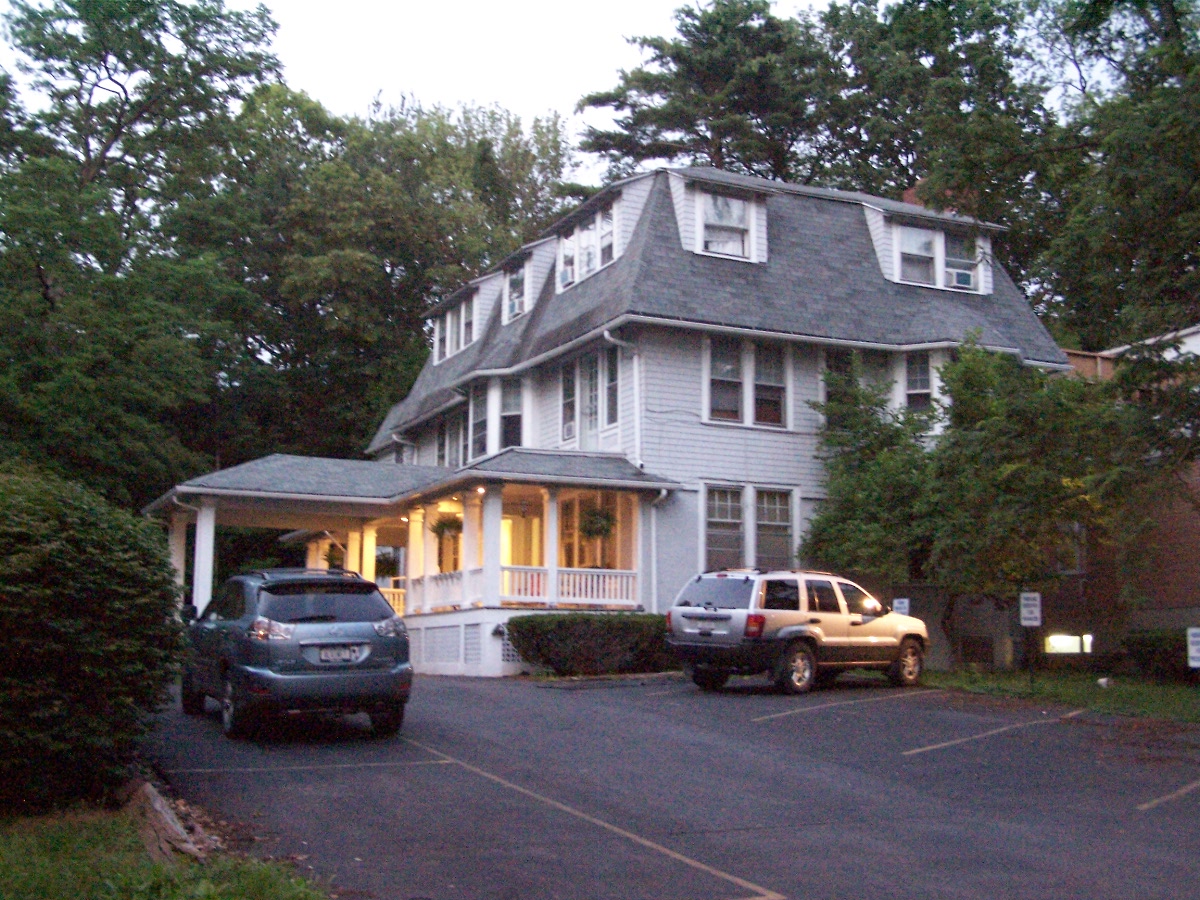
The house of Alpha Omicron Pi sorority. AOPi moved in in fall 2006. Prior to that, this house served as the home of Theta Chi for about 25 years. Theta Chi was expelled from campus in 1999, and then the house was briefly occupied by AEPi and former Theta Chi pledges, and finally AEPi moved back to their Thurston house in fall 2001. Theta Chi attempted a reorganization in 2003 but it did not last, and the house sat vacant until AOPi bought the facility. AOPi first came back to Cornell in 1989 after a 25-year hiatus; they lived briefly in AXiD’s house and 210 Thurston before moving into 14 South Avenue on West Campus in 1991 [2]. Prior to Theta Chi, this house was the home of a fraternity by the name Tau Delta Phi. While the house has been home to a number of GLOs, it was originally built in 1925-26 for Professor Ernest T. Paine[3].

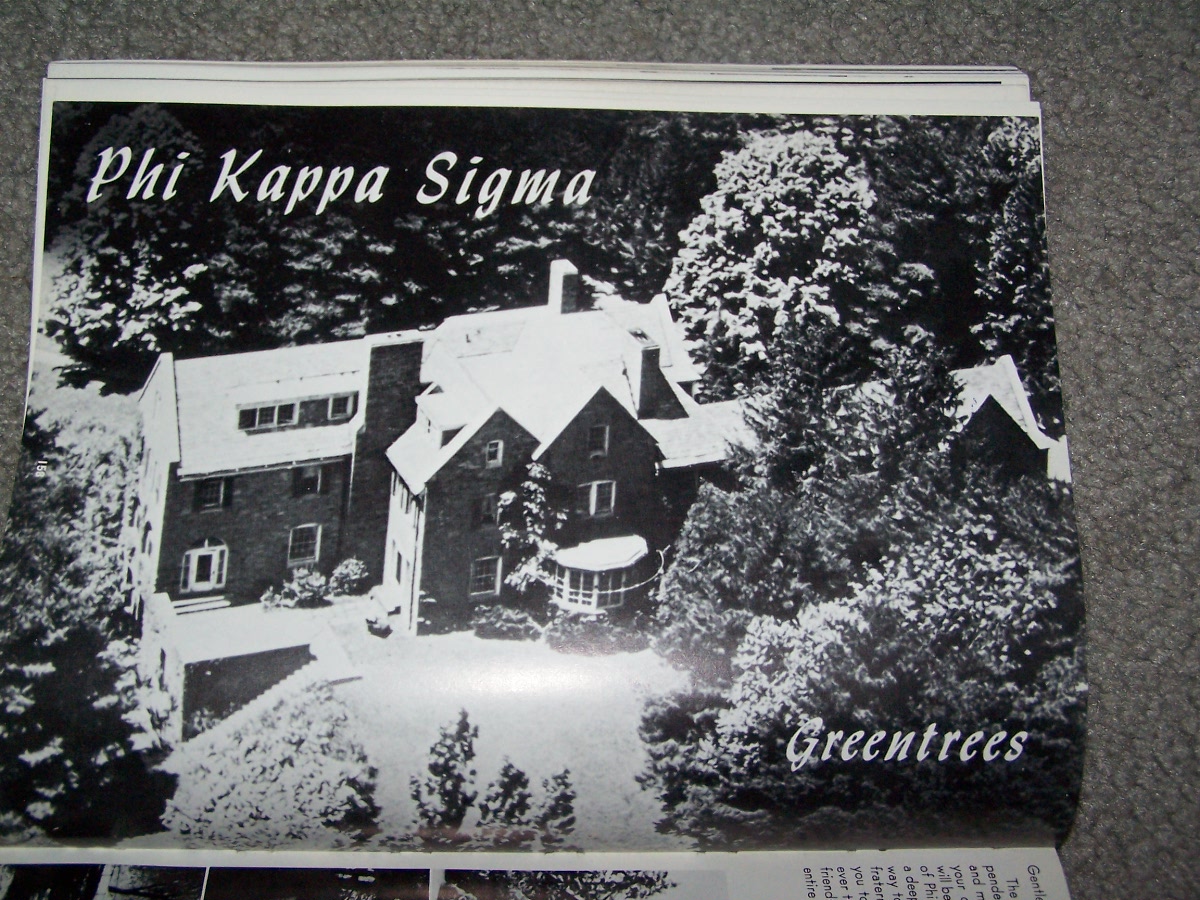
Continuing up Ridgewood is Pi Kappa Phi. The house is affectionately known as “Greentrees”, a name that hails from its days as the house of Phi Kappa Sigma before they folded in 1991. The name comes from the seven forested acres the house sits on. The property also at one point maintained an in-ground pool, a rarity for Ithaca. The house was originally home to George Morse of Morse Chain Company (now Emerson Power Transmission, a major private-sector employer in Ithaca). Phi Kappa Sigma, the Skulls, lived in the house from 1935 to 1991. In the meanwhile, Phi Kappa Phi lived at 722 University Avenue from 1949 to 1986, when the chapter closed; it was reorganized in 1990, and moved into this house the following year [4].

Across the street is Beta Theta Pi fraternity. Now, I must say that this house is spectacular from the outside; but I was appalled the few times I’ve been in there (a couple of my friends are brothers at Beta). Anyways, Beta (originally Alpha Sigma Chi), lived in Pi Kappa Alpha’s house until about 1906, when “Castle on the Rock” was constructed [5].

Venison Anyone?

Wrapping up Ridgewood is Sigma Delta Tau sorority. The Alpha chapter was founded in 1917 as Sigma Delta Phi, but changed when it was founded the letters conflicted with another organization (that seems to happen quite a bit) [6]. The house has a stunningly unattractive addition that probably dates from the 1960s, and I tried my best to not photograph it. The rest of the house looks very classy, dating from 1900-1910.

[1]http://www.cornellacacia.org/index.php?a=info

[2]http://www.aoiiepsilon.com/centennial.html

[3]http://www.news.cornell.edu/stories/Oct12/GreekTour.html

[4]http://www.cornellpikapp.com/history.php#Psi

[5]http://www.betadelta.org/about.html

[6]http://www.dos.cornell.edu/dos/greek/chapter_details.cfm?id=3282


Historical Rush Booklet, Part 3 of 3

21 07 2008

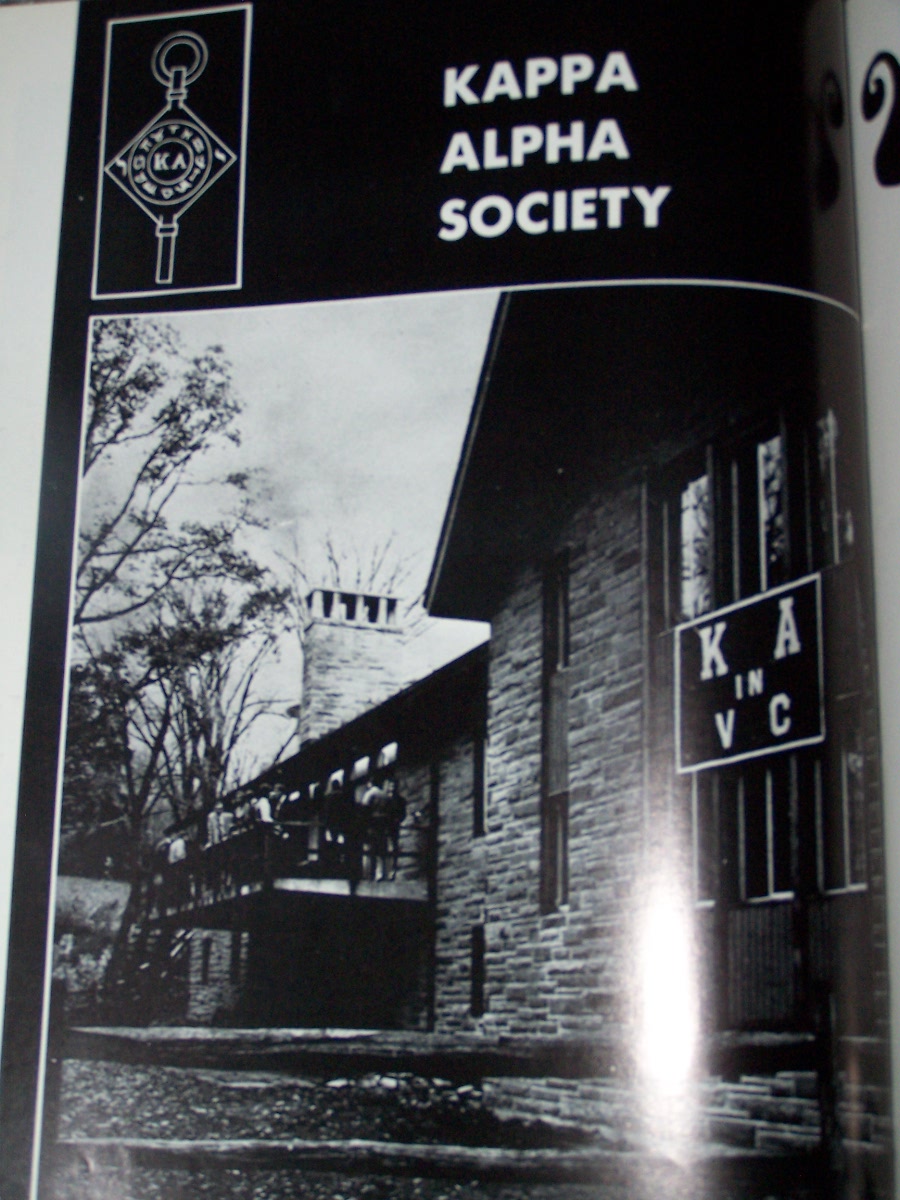
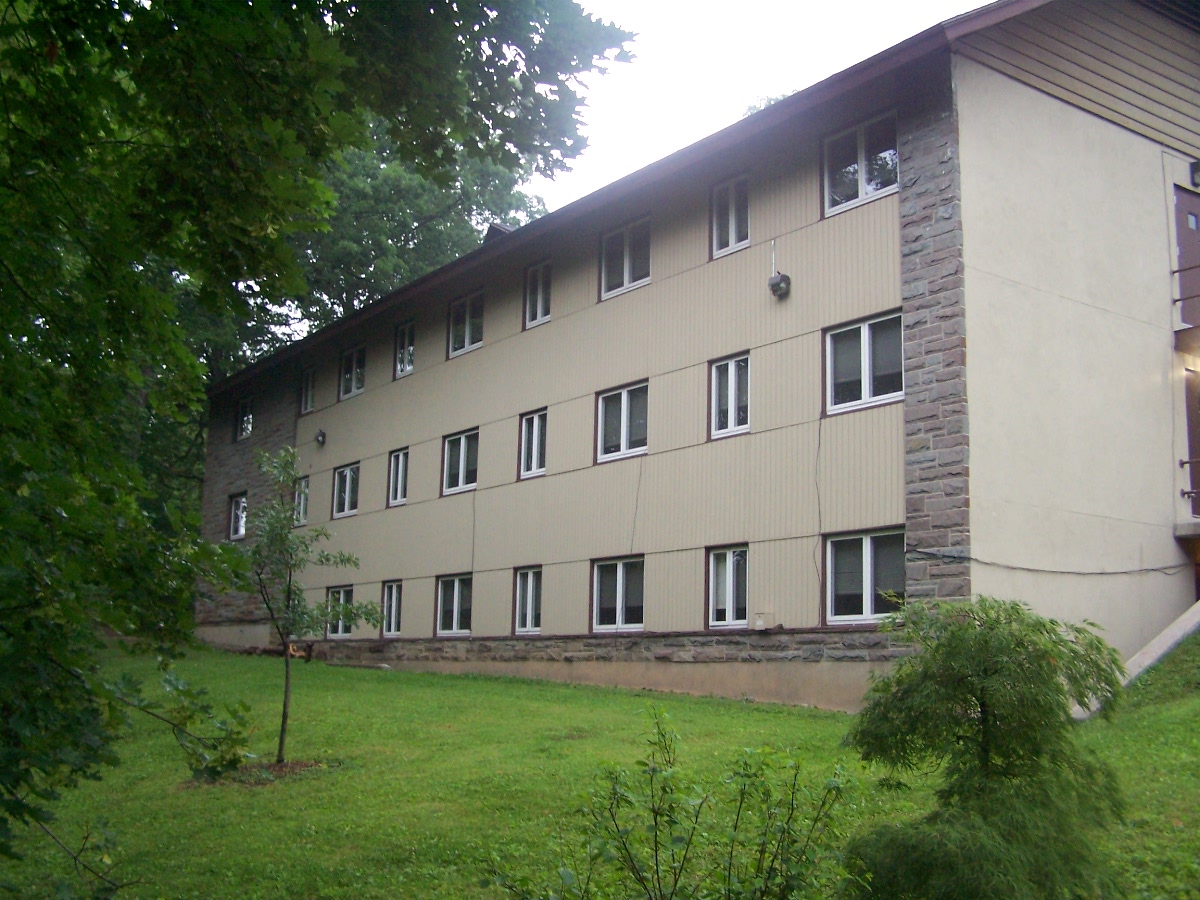
Kappa Alpha in 1970. At the time of this book’s publication, they were located at 14 South Avenue, which was designed by Vincent Cerasi and built in 1957 [1]. After they left in 1990, Alpha Omicron Pi sorority moved into the facility in 1991 and lived there for 15 years before moving to North Campus. Presently, the building is operated as a small dormitory by the university.

These are photos I have taken of the house. I took both photos to give an idea of the massing on the site. The building was designed to emulate the architectural style of a Swiss chalet.

~~~

A photo of Phi Kappa Psi Fraternity house in 1970. Yes, some truly god-awful structures were designed in the 1960s (1964, in this case [2]). Thankfully, the house was renovated substantially in the past several years.

I dare say that looks a bit better. They affectionately call the building “The Gables”.

~~~

The house of Phi Kappa Sigma in 1970, which they called “Greentrees”. This has to do with the house sitting on seven heavily forested acres (a nifty youtube video by a former Skull is where I draw that from [3]). The house also apparently had a pool. Today, the house is the property of Pi Kappa Phi, who purchased the 12,000 sq. ft property for $300,000 in 1991 (apparently though, renovations set them back another half million dollars [4]).

~~~

The house of Theta Chi Fraternity in 1970. The chapter had been here since 1924 [5]. Sometime afterward (between 1972 and 1993, from what I can find), they moved to their Ridgewood Road location. Kappa Alpha Theta moved into this house sometime after 1980 when they came back to campus. (My personal guess is 1980, but I was the idiot who thought he could just pull out a Cornellian and double-check at Olin Libe this evening. Ironically, Olin doesn’t have them right now).

EDIT: Apparently, I was also dumb enough to think I would find it through the Cornellian. Theta Chi never had a picture taken for the 1970s or early 80s, and Theta’s are all interior photos. It looks like a trip to Kroch’s Rare Manuscripts might be in order. If they weren’t open the same hours I worked…

~~~

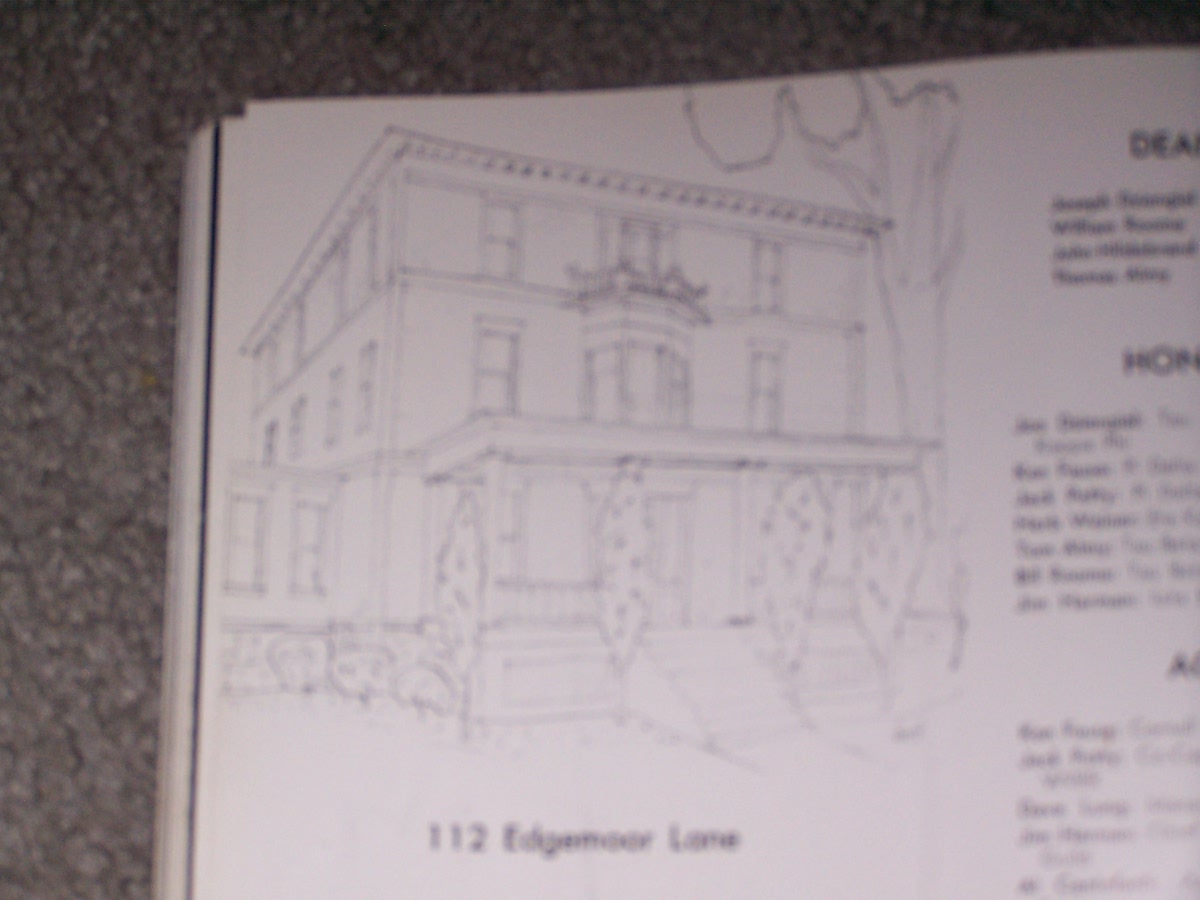
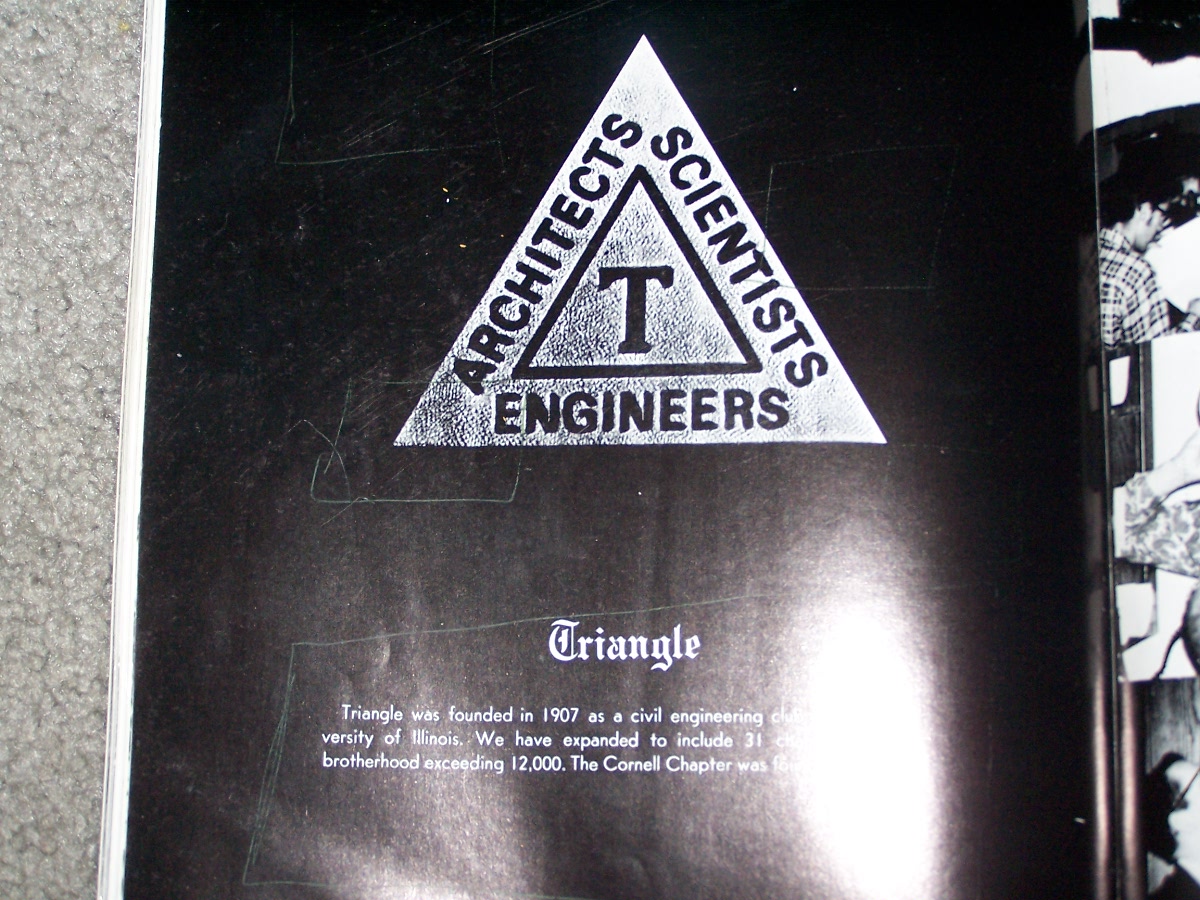
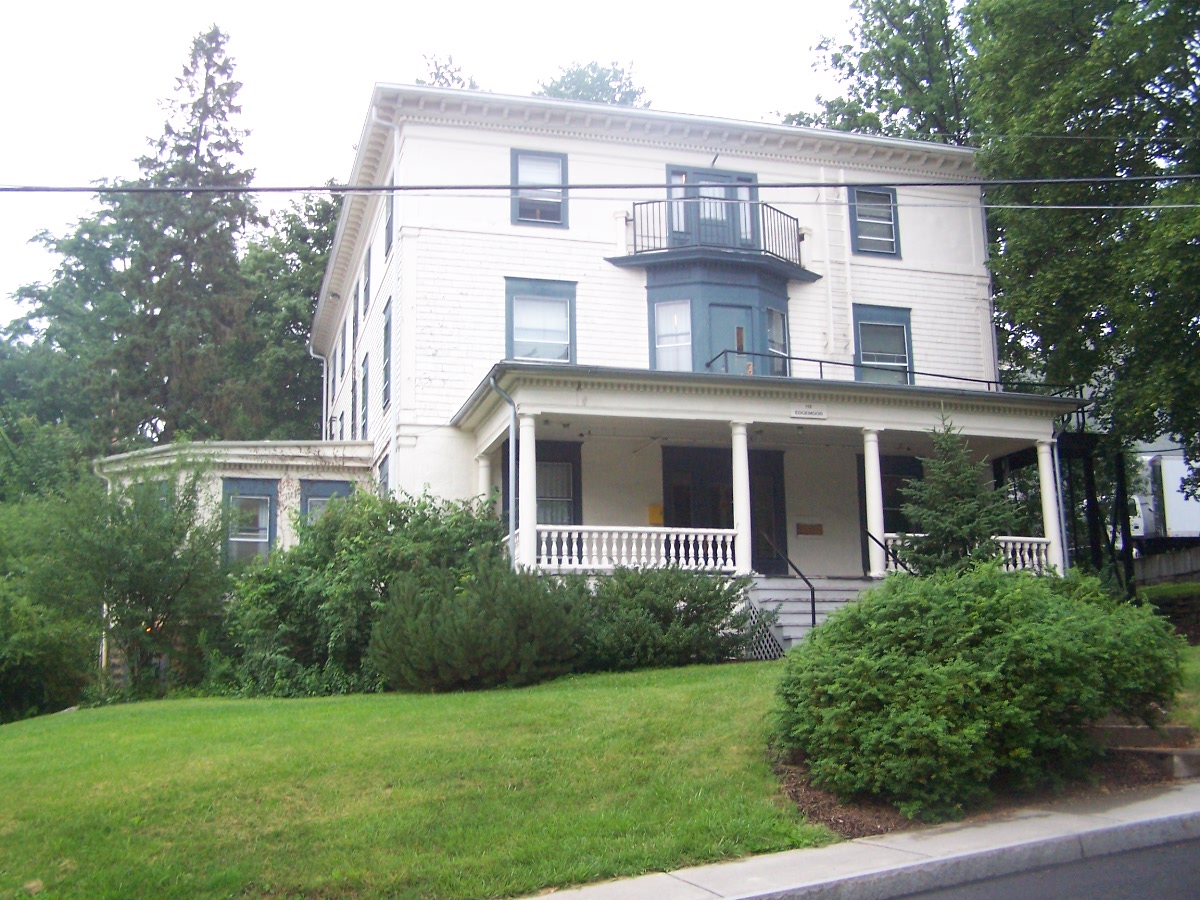
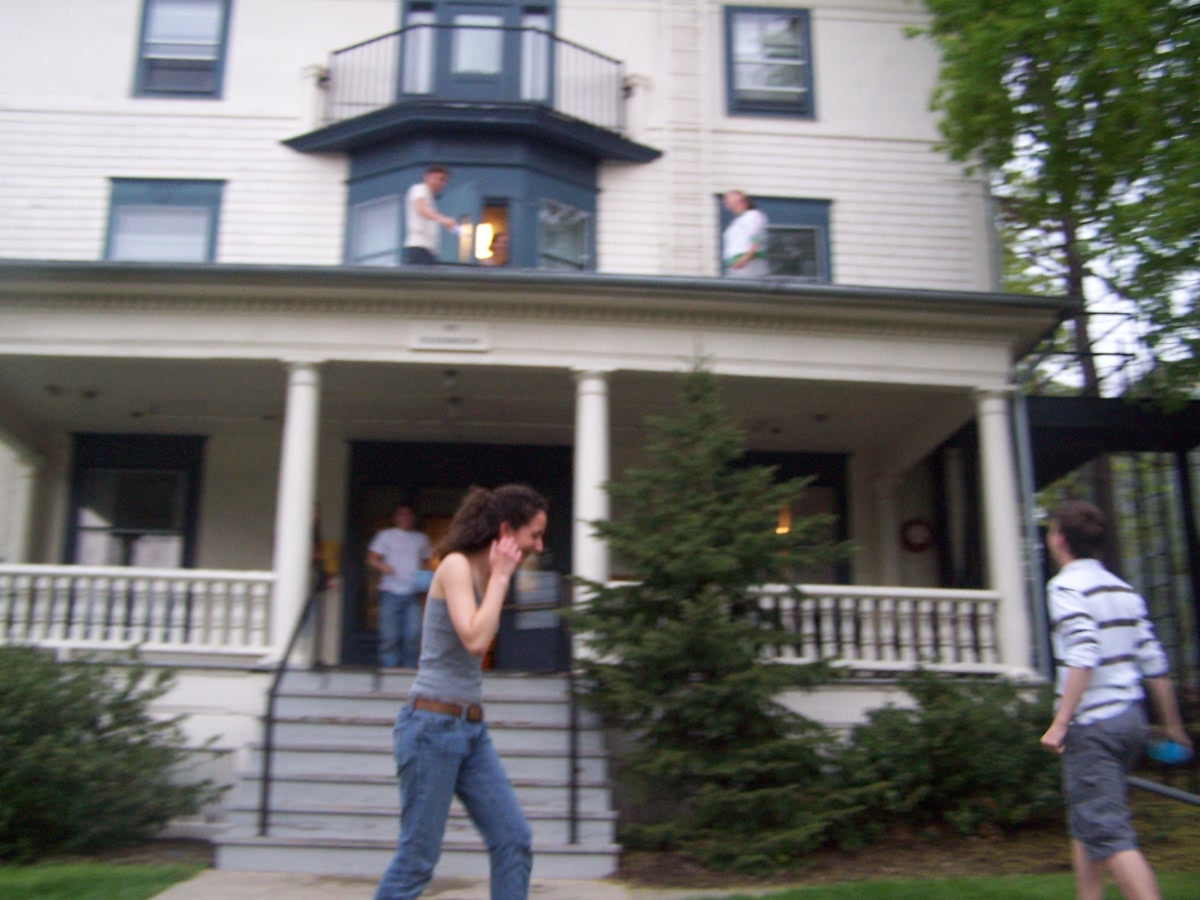
Triangle Fraternity was developed under an interesting premise. The fraternity was open to architects, “scientists”, and engineers. For example, an atmospheric science major could join, but a hotelie could not. Nor could biology students, for that matter. I’m sure it made for interesting arrangements in deciding if certain individuals were eligible. Regardless of the complexities of their membership, the fraternity resided at 112 Edgemoor until they folded in 1985 under order of their National, because their numbers were so low at Cornell (we’re talking single digits here). Today, 112 Edgemoor is a 21-person dorm owned by the university (and I spent a lot of time there; the ‘wife’ lived on the third floor, and I was in her room more than my own sophomore year. It helped that five people in my major called Edgemoor home during their sophomore year.

~~~

Lastly is Zeta Psi.  Zeta Psi was in the process of moving from 660 Stewart to Theta Xi’s old house in 71-72, so this was published just before the move [6].

Here is the same house today. It is currently used as co-op.

[1] http://www.fs.cornell.edu/fs/facinfo/fs_facilInfo.cfm?facil_cd=4724

[2]http://www.phikappapsi-cornell.org/public2.asp

[3]http://www.youtube.com/watch?v=jpC6vx7LTI4

[4]http://www.cornellpikapp.com/history.php

[5]http://www.thetachi.org/REPOSITORY/UNMANAGED_CONTENT/History/pdf/p147-p149%20Lambda_Cornell.pdf

[6]http://www.psiofzetapsi.org/History.html